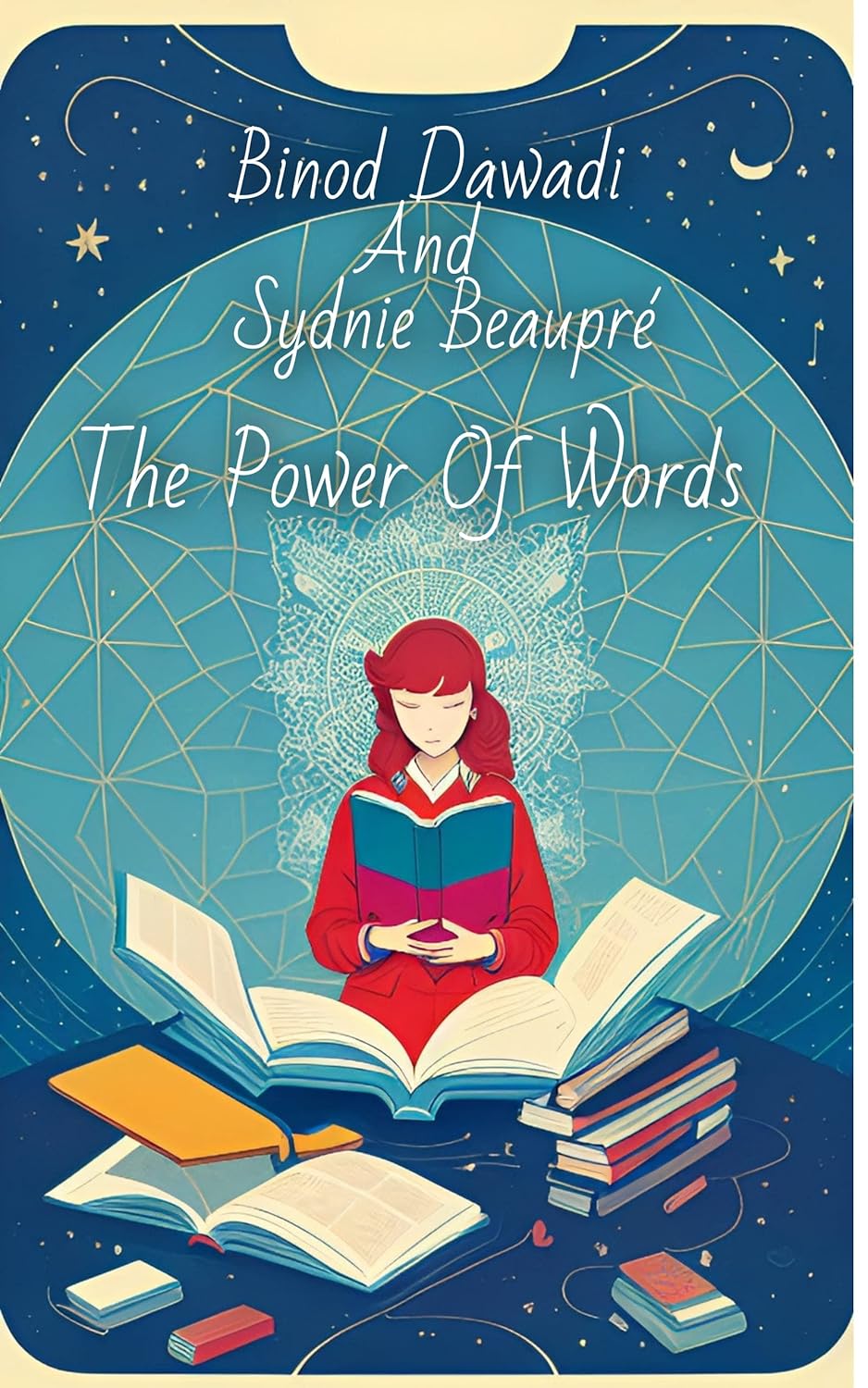
Critical Beauty of Words: The Power of Words
I am thrilled to have read “The Power of Words,” a poetry collection written by Binod Dawadi from Nepal and Sydnie Beaupre from Canada who doubles as editor. This collaboration of two poetic souls has created indelible marks on the sands of modern literature.
But it can also destroy human beings,
By its anger,
This is because human beings are,
Making earth their puppet and playing with it. (Earth) ( 24)
The above-mentioned poem titled “Earth” is a critical tribute to the mother earth. In this collection, there is a poem on war which calls for peace. The poems in this collection are comfortable, beautiful, not difficult to understand and peaceful. Readers of any age can find this book graspable. The discrimination between race, caste and gender should be stopped and the book stands with this idea. There is a path of guidance which is illuminating in this collection. Very precise and nurtured words take us to a journey in this book. Life is one and everyone has a precious life. When a poem is mentioning about life, it feels as if a larger-than-life idea is present in the depth of the poem.
Some spiritual elements are also part of this collection. There is a poem titled “Pancha Maha Bhautus.” The meaning of Pancha is also clarified in the poem which means five elements like fire, air, water, space and earth. Mentioning about these elements show how universal the poet thinks and perceives. He sees the world through his spiritual eyes and incorporates the universality. How fire is defined as a god in the Hindi language is also considered. This pious understanding of Binod Dawadi as a poet is his brilliance.
If you bathe in religious waters,
All your sins will be forgiven,
By God. (Pancha Maha Bhautus).
The poet is defining each of the five elements of the Pancha including water, fire, air, space and earth. The description is refreshing. It gives us wisdom and knowledge. Poetry is equally performing that task, here in this collection. Affection of words binds us as readers and it is equally motivating.
Space is nothing but,
A vacuum but it has energy,
Things called Gods, and sprits live in. (Pancha Maha Bhatus). (38)
The poet describes space as a vacuum which has energy. This thought carries a tremendous power. It is a wide ranging and flowering perception. To see that vacuum has energy is a powerful idea which can change the world, and open many doors of ideas. The universe is a larger picture and more than that our perception also descends from the firmament. This awareness is a larger picture, larger-than-life and it does not disregard our understanding of life and the world; it adds a consciousness. The poet is critical in his beautiful understanding. Defining each element seems like defining the world and understanding it by layers.
There is a poem titled “Melbourne” which states the famous places of Melbourne and why one should visit it. This poem takes us close to the aesthetics of Melbourne; the poem reads like a travelogue. It takes us to a literary journey through words and the desire to travel is stirred awake.
Also, there is an interesting poem in this collection titled “If I Were a God.” The poet says that he would be visible to all if he were a god. I found this idea very comforting. How artistic and crafty is his presentation, when he mentions this idea. It really means a lot and has a healing potential. A visible god can also mean that our prayer is heard by the almighty; this idea has a tremendous potential.
Furthermore, there is a poem on “Friendship and Friend” and also Corona. The humanity speaks through empathetic voices from poets in this collection—especially in the poem entitled “World Healing World Peace.”
The world is facing Corona,
In such conditions Corona,
Becomes greater than the 1st and 2nd world war,
People are dying of hunger,
They are searching for help (World Healing World Peace). (40)
The experience of poet Binod Dawadi as a student is also presented in his poem “College.” We get to know the author more closely through this poetry collection. The world will know him more genuinely. His ideas are time awakening and they speak of this modern world. The poet says that American dream is false, if you only have money for richness. The poet says that family values are more important.
This is the work of my ancestors,
The art of survival,
I am a farmer,
I am poor,
But I am happy. (Farmer) ( 81)
In the above-mentioned lines the poet sings the song of the soil. The farmer is brought to life; farming being the work of our ancestors. The relationship between human kind with farming is old. It is our ability to grow seeds on the soil; it has been feeding us from time immemorial. I am filled with contentment when I read this poem. I thank the poet for singing the song of the soil with this poem.
There is a poem titled “Fake Love” which is eye-opening. This is a diverse collection. I can go on elaborating on its titles. Poetry needs to be graspable and this collection has served that need. I am happy that the book has got international attention through an international editor jointly working on the book with a Nepali poet. I urge all the poetry lovers to enrich themselves with this eye-opening book of poetry written for modern times. The words in this collection “The Power of Words” are really powerful and it will continue to remain powerful forever. I wish all the luck for the poets of this anthology and wish them success of the book.
The poems in this collection are jointly written by Binod and Sydnie. Sydnie’s poems have capitalized titles. “APOLOGY” is a theme for her opening poem in the anthology, which I see as a forgiveness seeking theme. The urge to apologize is not gloomy, it is a quest for existing and making one’s space to survive.
I apologize
all of the time
for existing.
I’m sorry for
being alive,
for taking up
space. (Sorry). ( 159)
The poems by Sydnie have a psychological touch which is necessary for literature to express well. The feelings of the mind are precious. The inner depth of the surface is reached well. The surfacial feelings have found depth in most of Sydnie’s poems.
I’ve been dreaming of you,
the you that took my insides and
rearranged them like they were
some sort of internal decorations
that could be interchanged, the you
that turned me into somebody new. (Dreaming). (161)
The internal decorations which she talks about in the above-mentioned lines are the inner dimensions that wait to be engineered. Turning of the self to something new is a process. The poem might sound sad in the beginning, but it still has lot to say. Poetic expression is indeed a magic, how it can convey sadness and uplift it. I thank Sydnie for sharing this poem in the anthology. Her personal ideas have been universalized in this poem. Readers will make it immortal.
We don our masks and wash our hands
March in the streets against tyranny
Hold our loved ones close and hope
beyond hope that things will change.
Will they? (Change). (163)
In the above-mentioned lines, the loved ones are not neglected or abandoned when there is no hope. There is profound hope in the poem. Despite our masked self we still hold hands with our loved ones. This closeness of holding hands is our prayer for hope. I hope Sydney will enthrall us with her personal-turned-universal poetic expressions. I wish her all the best.
Continue Reading
Reviewer Sushant Thapa is an M.A. in English from JNU, New Delhi, India. He is a student in the Faculty of English at Nepal Business College, Biratnagar, Nepal.
WordCity Literary Journal is provided free to readers from all around the world, and there is no cost to writers submitting their work. Substantial time and expertise goes into each issue, and if you would like to contribute to those efforts, and the costs associated with maintaining this site, we thank you for your support.
Make a one-time donation
Make a monthly donation
Make a yearly donation
Choose an amount
Or enter a custom amount
Your contribution is appreciated.
Your contribution is appreciated.
Your contribution is appreciated.
DonateDonate monthlyDonate yearly WordCityLit