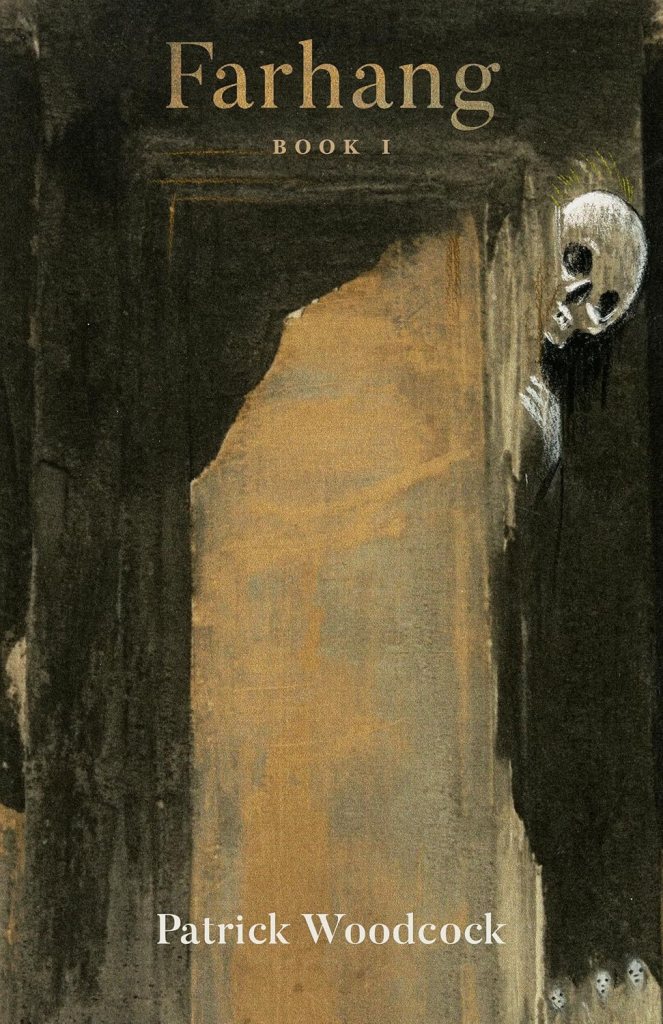
Book Review: Farhang, Book 1 by Patrick Woodcock
Published by ECW
In Farhang, Book 1, Patrick Woodcock, a seasoned Canadian poet and world wanderer, offers a profound and evocative collection of poetry that chronicles his three decades of living, volunteering, and teaching in some of the world’s most remote and complex regions. From Kurdistan to the hamlet of Paulatuk in the Northwest Territories, Woodcock’s poems are a rich collection of moments, some lost to time and injustice, brought vividly to life through his striking metaphors and similes.
Woodcock’s poetry is dense with historical, cultural, and geographical references, inviting readers to delve deeper into his multilayered subjects. His use of vivid imagery and piercing language evokes strong emotional responses, making the reader see, feel, and hear the world as locals do. The poems are not just read; they are experienced.
“Clouds as gashed as old kitchen pots, loitering in the sky/like what was once pushed out the crematorium we neared.”
Farhang is organized by time and geography, with themes and structures that evolve throughout the collection. Some poems cluster around specific ideas, only to give way to new themes as the reader progresses. This dynamic structure keeps the collection engaging and reflective of the varied experiences Woodcock has encountered.
One of the most compelling aspects of Farhang is its refusal to simplify or sanitize the complexities of the regions it covers. Woodcock does not impose Western standards or judgments upon the wounded landscapes of Kurdistan or the aboriginal communities in Canada’s north. Instead, he presents their realities with respect and sensitivity, free from self-importance or self-interest.
Despite its heavy and sometimes dark subject matter, the collection is not without moments of simple joy and beauty. These glimpses of light amidst the darkness offer a balanced portrayal of life, making the overall experience of reading Farhang both challenging and enriching.
Woodcock’s background is as diverse as the places he writes about. His experiences span Poland, Lithuania, Iceland, Bosnia and Herzegovina, Oman, Saudi Arabia, Azerbaijan, Kenya, Rwanda, and beyond. This extensive travel and deep immersion in various cultures provide a unique lens through which he captures the essence of the places and people he encounters. In Farhang, the poet does not merely visit these regions; he lives them, breathes them, and writes from within their core.
“This was his salvation. He had to watch what should die, dying.”
The collection is an intimate exploration of human connections and disconnections. It confronts the borders, races, and religions that isolate individuals, while simultaneously highlighting the universal threads that bind humanity. Woodcock’s powerful empathy allows him to adopt diverse perspectives, whether it be a Kurd, an Azeri, or even inanimate objects like statues or decaying buildings. This chameleon-like ability to inhabit various viewpoints adds depth and authenticity to his work.
The emotional weight of the collection is significant. The poems range from gut-wrenching to hilarious, each one demanding to be unpacked and considered. This is not a book for a quick read; it requires time, patience, and an open heart. The imagery deserves to be sat with, reread, and fully absorbed. For those willing to invest the effort, the rewards are profound.
“A cemetery of orbs, circular sculptures and fixed Pythagorean sails. A triangle was a limb, an arm, a knee or elbow. Orbs were terrifying to address; they were the bubbles within foam within mouth within children.”
In essence, Farhang, Book 1 is a poetic memoir, a travelogue of tragedy and triumph, a testament to the resilience of the human spirit. It is a living document that bears witness to the lives and places Woodcock has encountered. His writing is a powerful reminder of the importance of bearing witness, of not turning away from the world’s harsh realities.
Patrick Woodcock’s ability to see and convey the world from multiple perspectives makes him a poet of great empathy and insight. Farhang, meaning “culture” in Kurdish, is a collection that challenges the status quo, comforts, and assumptions, making it a vital read for anyone who values the power of poetry to illuminate the human condition.
In sum, Farhang, Book 1 is a remarkable achievement. It is a collection that not only showcases Woodcock’s skill as a poet but also his profound commitment to understanding and memorializing the diverse cultures and people he has encountered. This is poetry at its most powerful and poignant, a must-read for those who seek to be challenged and moved by the written word.
Return to Journal
Ava Homa’s novel Daughters of Smoke and Fire garnered attention in Roxane Gay’s Book Club and received acclaim from outlets such as the Wall Street Journal, the Independent (UK), and the Globe and Mail (Canada). It won the 2020 Nautilus Award for fiction and was a finalist for the 2022 William Saroyan International Writing Prize. Her short story collection, Echoes from the Other Land, was a finalist for the 2011 Frank O’Connor International Prize. Her short fiction and essays have been anthologized and published in outlets like the BBC, Literary Review of Canada, Open Democracy, and Literary Hub.
 WordCityLit
One thought on “Farhang, Book 1 by Patrick Woodcock. A Review by Ava Homa”