
ARRESTED SONG by Irena Karafilly
Calliope Adham – young, strong-willed, and recently widowed – is schoolmistress in the village of Molyvos when Hitler’s army invades Greece in 1941. Well-read and linguistically gifted, she is recruited by the Germans to act as their liaison officer. It is the beginning of a personal and national saga that will last for several decades.
Calliope’s wartime duties bring her into close contact with Lieutenant Lorenz Umbreit, the Wehrmacht commander. The schoolmistress is an active member of the Greek Resistance, yet her friendship with the German blossoms against all odds, in a fishing village seething with dread and suspicion.
Amid privation and death, the villagers’ hostility finally erupts, but the bond between Calliope and Umbreit survives, taking unforeseeable turns as Greece is ravaged by civil war and oppressed by military dictatorship. It is against this turbulent background that Calliope emerges as a champion for girls’ and women’s rights.
ARRESTED SONG is a haunting, sumptuous novel, weaving the private and the historic into a vivid tapestry of Greek island life. Spanning over three decades, it chronicles the story of an extraordinary woman and her lifelong struggle against social and political tyranny.


Poems: A Selected Reading – Album by Patrick Friesen – Apple Music

These loosely linked stories read like a novel. Lives are given form by the past but undergo change as the world reshapes beliefs and circumstances. Focusing on recurrent, related characters with a common reality: small town Mennonite life, this powerful collection connects us to the author’s own background and experiences.

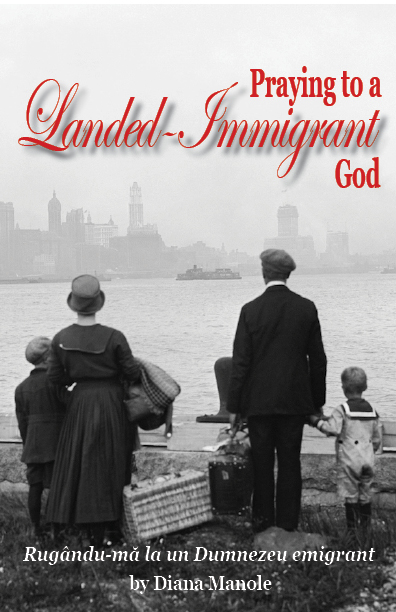
Poems about the Immigrant experience.

Circle Tour, Eva Tihanyi’s ninth poetry collection, seeks and celebrates beauty in the face of despondency. Its three sections (Outer Circle, Inner Circle, Centre) draw us in as we move from the “outside” world of politics, culture, and art to the “inside” world of relationships with family, friends, and lovers, to the “core” world of the self.
The book begins with a stark announcement of hope: “If you’re reading this, / you’re still here.” It then moves to engagement with (among other things) the pandemic, feminism, and artists such as Marina Abramovic while reinforcing the healing power of Nature throughout our experiences with external, beyond-our-control circumstances. In the more personal second section, Tihanyi writes about loss through death; the continuing influence of her grandmother; the end of one love moving into a new, more profound love; the importance of friends, reminding us that “each day we must be / lucid with mutiny against despair.” The final section focuses on the selfnot just the poet’s own but the universal human Self. It confronts the process of aging and its attendant contemplations, and once again reminds us of how Nature and art can help us in our “continuous becoming.”
The poems in Circle Tour invite a sequential reading as the book gathers force as it spirals upward. It takes us on a powerful journey that ends with the ultimate affirmation that leads us full circle to our present moment: “Enough on this day / to be enormously alive.”

Mennonites are often associated with food, both by outsiders and by Mennonites themselves. Eating in abundance, eating together, preserving food, and preparing so-called traditional foods are just some of the connections mentioned in cookbooks, food advertising, memoirs, and everyday food talk. Yet since Mennonites are found around the world – from Europe to Canada to Mexico, from Paraguay to India to the Democratic Republic of the Congo – what can it mean to eat like one?
In Eating Like a Mennonite Marlene Epp finds that the answer depends on the eater: on their ancestral history, current home, gender, socio-economic position, family traditions, and personal tastes. Originating in central Europe in the sixteenth century, Mennonites migrated around the world even as their religious teachings historically emphasized their separateness from others. The idea of Mennonite food became a way of maintaining community identity, even as unfamiliar environments obliged Mennonites to borrow and learn from their neighbours. Looking at Mennonites past and present, Epp shows that foodstuffs (cuisine) and foodways (practices) depend on historical and cultural context. She explores how diets have evolved as a result of migration, settlement, and mission; how food and gender identities relate to both power and fear; how cookbooks and recipes are full of social meaning; how experiences and memories of food scarcity shape identity; and how food is an expression of religious beliefs – as a symbol, in ritual, and in acts of charity.
From zwieback to tamales and from sauerkraut to spring rolls, Eating Like a Mennonite reveals food as a complex ingredient in ethnic, religious, and personal identities, with the ability to create both bonds and boundaries between people.

Shortlisted for the 2023 Fred Kerner Book Award
A Miramichi Reader Best Fiction of 2022
“Wan is a masterpiece. This beautiful, painterly, sublime, and sonically exquisite novel by Dawn Promislow is a work of utter genius.” – Kathryn Kuitenbrouwer, author of All the Broken Things
Narrated in a completely distinctive and mesmerizing voice, Wan is the story of Jacqueline, a privileged artist in 1970s South Africa. After an anti-apartheid activist comes to hide in her garden house, Jacqueline’s carefully constructed life begins to unravel.
Written in gorgeous and spare prose, this exquisite debut novel grapples with questions of complicity and guilt, of privilege, and of the immeasurable value of art and of life.

 WordCityLit