
From Africa with Love: Voices from a Creative Continent curated and edited by Kelly Kaur in conjunction with Wole Adedoyin, Director, IHRAF African Secretariat. A Publication of the International Human Rights Arts Festival (IHRAF), 2023.
From Africa with Love: Voices from a Creative Continent is a collective call for revival, a revolution churned through all genres of creativity by emerging young African human rights activists. The throbbing of the heart of these committed African writers to see that the continent is entirely liberated from the shackles of all forms of human rights violation is like magma hitting the bowels of Mount Kilimanjaro. From Kenya to Zimbabwe, Nigeria, Ghana, Malawi and across the rest of Africa, the writers seem to sing the same song, a song of sorrow, a lamentation and a prayer for change to come soon.
Once you start reading the book from the first piece, your hair stands at its ends and goose pimples become part of you until you slam close the last page of the book. The first story in the anthology, “Dying to Audrey” by Abugyer Muse Stephani highlights the ordeal of a married career woman who has to give up her job as a bank worker in order to become a house wife when baby Doofan is born. As it often happens in Africa, Audrey’s mother-in-law having convinced the family that Audrey’s excessive demands are responsible for sending her son to the grave snatches her two children, Doofan and Terngu, 5 and 3 years old respectively.
The scene becomes very dramatic as Mrs. Yali insults Audrey for feeding fat on her son’s money. Audrey has no chance to even say goodbye to her kids and she may never see them again. Consequently, she attempts suicide by drinking a mosquito repellant but her parents, Mr. and Mrs. Liga rush her to the hospital and she is rescued. Audrey thinks that she is a failure but her parents assure her that she can start life all over again. Her father has contacted someone in an oil company where Audrey can put her first degree in accounting to use again.
“Child Hawking” by Wole Adedogin portrays the plight of most children from poor homes in Nigeria who spend their childhood walking long distances in order to hawk for a living. The poet prays that the lives of these kids would be better tomorrow.
In “Police Brutality”, Wole castigates the maltreatment of the civilians in Nigeria by the police who are normally supposed to be the protectors of the masses. The excesses of the police brutality are appalling and the poet calls for an end to it.
Further in “Naira Scarcity”, Wole turns our attention to the economic crisis that Nigeria is currently undergoing. The country’s currency, “The Naira, once strong and proud has been reduced to nothing. Prices of things soar higher and higher, but Nigerians patiently hold on, hoping that better days will come.
The poet moves from the economic crisis in “Naira Scarcity” to the issue of terrorism in the poem he captions “Boko Haram”. Boko Haram is a terrorist group in Nigeria whose activities have caused pain, destruction, death and twisted the futures of many. The fight against this group is hard, but Nigerians won’t give up until the victory is won.
Akanni Kehinde in his artistic works “Face of the Goddess & Ori” portrays the social, economic and spiritual lives of the African peoples.
The book then takes us to “Home Pride”, a poem by Ugochukwu Anadi written in two parts. The first part venerates Achebe, one of Nigeria’s great writers who had died long ago. In part two of two poems, he venerates Soyinka, another great Nigerian writer whom the grave has also swallowed.
In his next poem, “The Patriotist Always Dies”, Anadi re-echoes the fate of a country whereby anarchy has taken over. He pathetically bemoans the fact that the quest for peace has ironically become chaotic and as such there is an impending war coupled with bloodshed leading to the death of the patriot.
“Who Pays Your Piper” is Anadi’s castigation of racism, domination and exploitation of the black race by the white race. He announces that the African has risen to take his or her place in the world.
One is taken to victor Eneojo Akwu’s “Rotten Fruit in the Dust” where he describes child/forced marriage, rape and all forms of gender-based violence through the sad story of an eleven-year-old girl, Zainab who is married to an old man, Haladu who rapes her from day one.
A few weeks later, Zainab succeeds in running away from home and returns to her father’s place where his business has been revived by the money he got from marrying Zainab and her two sisters.
Her father is enraged seeing her and when Zainab protests that she won’t go back to her husband, he beats both her and her mother, divorces her mother instantly and fetches a group of men to bundle Zainab back to her husband. He orders his wife to pack out the next morning for he will get a maiden who will neither look into his eyes nor talk back at him. Even when Zainab becomes pregnant, Haladu continues the nightly rapes. She fights back only to fall into the more aggressive hands of her father.
The reader is moved from Nigerian to Zimbabwean writer Mbizo Chirasha. In “Midnight City”, Mbizo lays bare the alarming moral decadence has engulfed his country likes a hydra. The entire city’s night activity portrays people whose lives have been bedeviled by crime, immorality and political corruption. Even the religious, appear to be all enmeshed in the sin of the city as we see an evangelist who is handcuffed by a police woman. This is an invitation for change in the society. This idea of religious hypocrisy and promiscuity is later chastised by Izunna Okafor in his short story “The Untold Might of Akwai Deity”.
One is further taken to Togo through Abdul-Ganiou Derman’s visual arts works whereby he portrays aspects of the African beauty.
Shina Fasanmi takes us back to Nigeria with her poem “Tussle for a Mint” in which she laments the economic crisis. She complains that the government in place is slow to act while the people starve from day to day. She is very pessimistic about the future.
In “The Window” she eschews the confinement of the widow for fourteen full moons, in solitude and is only allowed to go and fetch water at night fall. Her focus on gender-based violence is related to that of Abughyer Muese’s “Dying to Audrey”, Victor Eneojo’s “Rotten Fruit in the Dust”, Sumaila Isah Umaisha’s short story, “You Are Not My Husband”, Izunna Okafor’s “The Untold Might of Akwai Deity” where seven virgins are demanded for sacrifice to a deity, Prayer Life Nwosu’s “Tell No One” and “Songs of Joana”.
Further in “Terror’s Fang”, she laments about the terror that has overtaken the country and everyone is psychologically traumatic. However, the leaders remain indifferent.
Her “Owe Agba (The Proverbs of the Elders) Yoruba is a collection of Nigerian proverbs from Yoruba land. The proverbs portray the cultural life of the people.
In “The Untold Might of Akwai Deity”, Izunna Okafor portrays the clash of Christianity and the tradition of the people, religious hypocrisy, and promiscuity practiced by some priests. Because of this, Igwe Omenka rules that the only religion in Umuezeala would be idolatry. This is too bad as it demands ten virgins for sacrifice.
From another perspective, Trann Kaliah takes us to Makuiki with his poem “Suffer African Tales” tells of the plight of women and children whose husbands and fathers die in the mines in the south where they go to feign for a living.
Moreover, in “Tears in the Rain”, he criticizes corruption and moral decadence that has taken hold of the country at all levels. This he says, has angered the gods of the land. “Painful Lamentations” recalls the plunder of homes and rape of women by armed forces. In “The Last Cough”, he captures the horror and the struggle of mothers who give birth to albino children in Malawi, to guard their little babies against the cultural practices of killing every albino child in the land for rituals.
From Kenya, Dominic Maina recounts in his poem, “Restless Waves” the unlawful arrest and detention of Lauda, a human rights activist journalist and the masses gather to protest against it. At the end of the day, the president is overthrown and Lauda is freed.
We are again taken aback to Nigeria by Chigozie Mbadugha in her “I only See a Friend” short story, where she describes racial, ethnic and tribal discriminations of any sort.
From another stand point, Prayer Life Nwosu in the poem “Tell No One” portrays the life of a suppressed and oppressed young girl who has no one to save her from her torturer. In “Songs of Joana”, she presents the lamentation of a widow who is accused of killing her husband, forced to drink from the corpse, ripped of her inheritance and made to sleep on a gravel floor. “Late Darlington” is lamentation over a loved one who chooses to commit suicide due to failure in life, she proceeds in “Our Lost Right” to lament about the plight of the people who have sold their birth rights for money and are now wallowing in slavery.
On his part, Temidayo Olaleye in “The Cries of a Lover” urges human beings to embrace the spirit of love and oneness for a better world. In the poem “Evolution”, he laments the struggle for domination and power that has overshadowed the earth.
Bernice Adekeye from Nigeria in her poem “Outcast Minorities” proposes resistance to all forms of injustices. In “Leadership”, she satirizes the contradictory behavior of a leader who instead of protecting the people and bringing justice and peace, oppresses the masses and embezzles the national wealth.
In her short story, “Slaves and Masters”, Mnguember Vicky Sylvester recounts a story of a faithful servant girl, embezzlement and crime in the country Nigeria. In her story, good is rewarded while evil is punished. She also portrays the vulnerability of women in a collapsing society.
From another stand point, Marcus Ugboduma in “Restless Waves” criticizes the “corrupt, blind and visionless leaders, whose policies are unfriendly and detrimental to the nation’s economy” (131-132). There is fuel scarcity and the forceful introduction of the cashless economy. The fate of Papa Ade is more heart wrenching as he gives his last breath struggling in the terrible system.
Sumaila Isah Umaisha’s short story, “You Are Not My Husband” is about the social problems faced by children from a polygamous home. Sadiya’s education has been interrupted by a forced early marriage secretly fueled by her jealous childless step-mother. She is unhappy and disappointed in the slum in which she and her husband live in Lagos. However, both of them decide to change their situation through further education. The story boils down to the plight of the female child.
“Broken” is a short story by Stanley Umezulike that recounts the horrors of the war in Syria, how millions of people were killed and even Taria who struggles to the borders with Jordan is shot down by the Isis.
A voice from Ghana, Rachel Yram Perpetual Brain Tugbedzo in her short story, “Princess City” is based on love without prejudice, the reason for which Polliwog the ugly frog gains favor from Princess Zoophile. The work has a touch on environmental protection and wild life.
Sakinat Yusuf’s “Never Will I Ever” exposes the dangers of reckless driving.
In “The Front of the Past”, Omale Allen Abdul-Jabbar writes about the abject poverty in Nigeria in spite of its sixth position among the oil producing countries in the world. There is no cash, no fuel and no food. Amidst all of these, an old soldier laments the glories of the past, the wars he has fought and how hopeless life has become in present day Nigeria.
Return to Journal
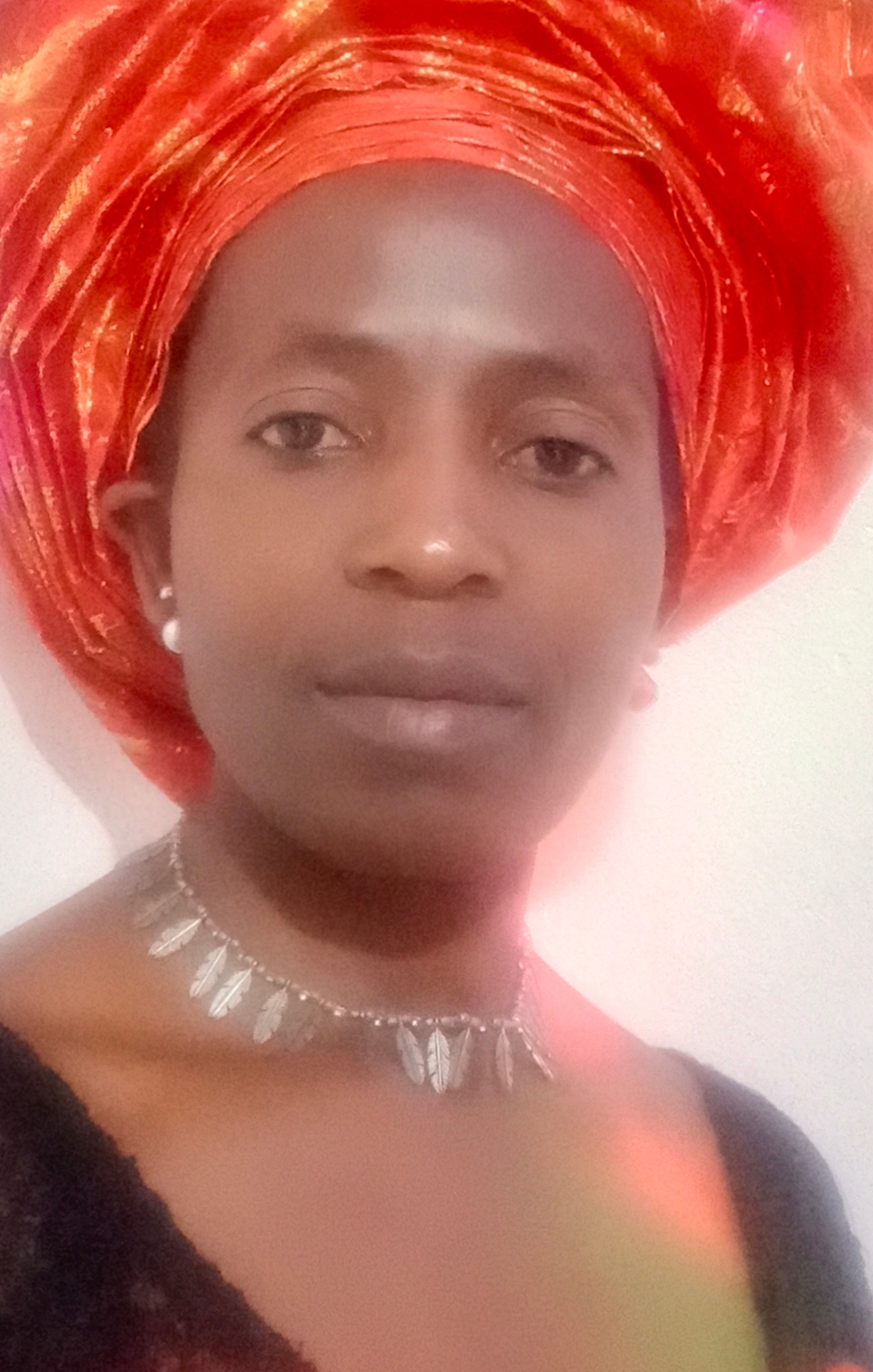
Dr Sinyuy Geraldine is a budding creative writer resident in the North West Region of Cameroon. Sinyuy trained as an English Language and Literature in English Teacher in the University of Yaoundé I in Cameroon. She earned her PhD in Commonwealth Literature from the same university in 2018. Dr Sinyuy started writing poems in her teens and most of her poems and folktales were read and discussed on the North West Provincial Station of the Cameroon Radio Television (CRTV) Bamenda where she was often a guest writer for the programme: Literary Workshop: A Programme for Creative Writing and Literary Criticism. She is a critical book review editor at WordCity Literary Journal. She is also does copy editing and proofreading under the cover of the comply she founded in 2022, ‘The Rising Sun Editing Company Ltd’.
Sinyuy Geraldine has had the following awards; Featured Change Maker at World Pulse #She Transforms Tech Featured Change Makers Program; Featured Storyteller on World Pulse Story Awards, May 2017; Prize of Excellence as Best Teacher of the Year in CETIC Bangoulap, Bangangte, 23 October, 2010; Winner of the British Council Essay Writing Competition, Yaoundé, 2007; Winner of Short Story Runner-Up Prize, Literary Workshop: CRTV Bamenda, 1998.
Her publications include: Music in the Wood: and Other Folktales (September 2020), Poetry in Times of Conflict (Eds. Meera Chakravorty and Geraldine Sinyuy, 2020), “Stripped” FemAsia: Asian Women’s Journal; “Invisble Barriers: Food Taboos in V. S. Naipaul and Samuel Selvon.” Tabous: Représentations, Functions et Impacts; “Migration related malnutrition among war-instigated refugee children in the northern part of Cameroon.” South African Journal of Clinical Nutrition; “Cultural Translocation in Three Novels of V. S. Naipaul.” International Journal of English Language, Literature and Humanities. Vol. IV, Issue XII; “Journey without End: A Closer Look at V. S. Naipaul’s Fiction.” International Journal of English Language, Literature and Humanities. Vol. IV, Issue IV; “Which Other Way? Migration and Ways of Seeing in V. S. Naipaul.” Migration, Culture and Transnational Identities: Critical Essays. She is a contributor in an international poetry anthology: Love Letters to Water which is pending release.
Some of her poems are featured in, WordCity Monthly, Time of the Poet Republic; Africa Writers Caravan; For Creative Girls Magazine; and Fired Up Magazine. Dr Sinyuy is an advocate for organic gardening and environmental care. She equally runs an online cookery group via WhatsApp where she teaches women how to cook good and healthy food for their families. She is also a lover of photography and spends her spare time taking photos. She is currently working on a collection of poems and her first novel. Above all, Sinyuy is philanthropist and has been working as a volunteer at the Garden for Education and Healing Orphanage (GEH) Bamenda since the early 2000.
WordCity Literary Journal is provided free to readers from all around the world, and there is no cost to writers submitting their work. Substantial time and expertise goes into each issue, and if you would like to contribute to those efforts, and the costs associated with maintaining this site, we thank you for your support.
Make a one-time donation
Make a monthly donation
Make a yearly donation
Choose an amount
Or enter a custom amount
Your contribution is appreciated.
Your contribution is appreciated.
Your contribution is appreciated.
DonateDonate monthlyDonate yearly WordCityLit