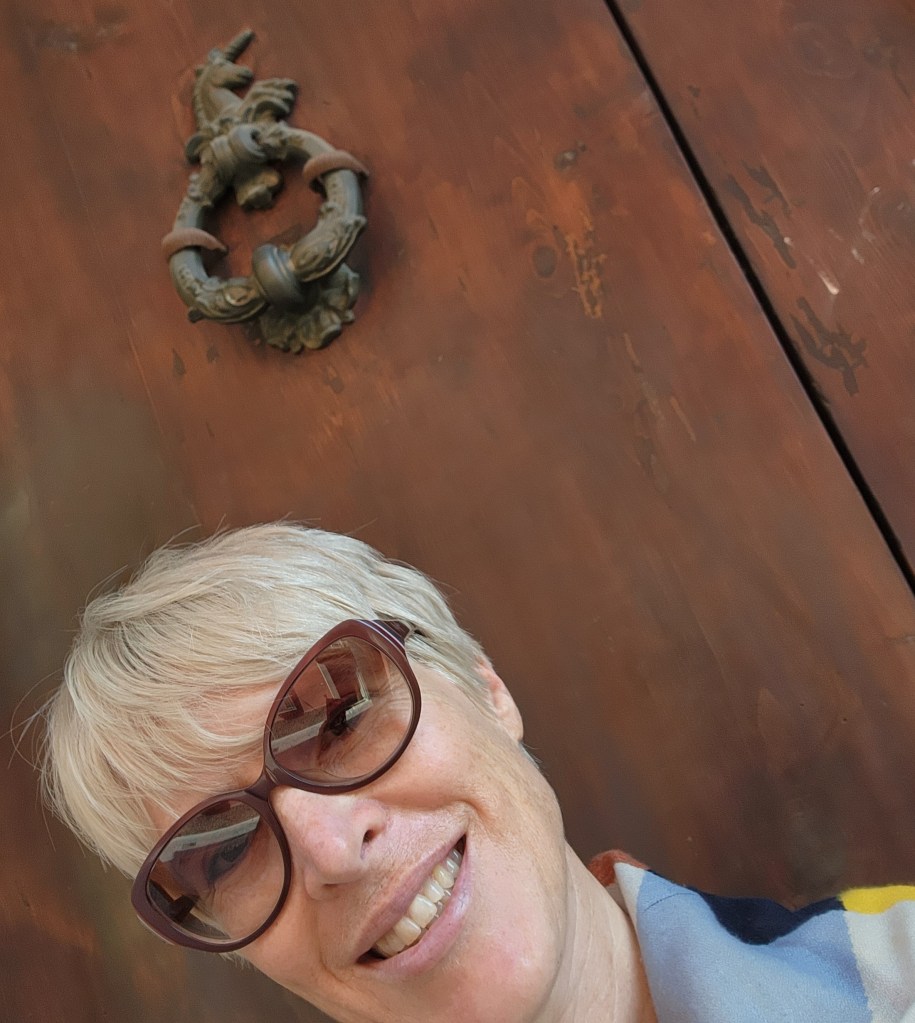
For this issue, I am delighted to be interviewing Lisa Pasold, a peripatetic powerhouse of a writer who defies definition!
Lisa, you are a very well travelled writer and I know you are based in both Paris and New Orleans as well as having grown up in Canada. So firstly, how did you become a writer? Did you know from early on that that’s what you wanted to do and did where you were living at the time feed into/influence your writing? What drew you to Paris? Was it the city’s rich associations with literature, language and culture or something else…?
I knew I wanted to be a writer from the time that I could read. The first book I read for myself was Dr Seuss’ Hop on Pop, a poetry classic of sorts. Growing up in Montréal, I heard many languages—two official ones, French & English, but also a great cosmopolitan range of other languages including Kanyen’kéha (Mohawk) the main Indigenous language of the area. My parents accumulated books in every room of the house, from Shakespeare to Sci-Fi paperbacks to multi-volume academic histories of Peru. Plus, while I was a kid, my mother was studying to get her Masters degree in Canadian Literature—a radical move in the 1970s, since Canadians traditionally studied “classics”, aka European writers. So, from the moment I understood books were a thing, I also understood that literature was alive, especially as I went with my parents to all kinds of readings—formal university author talks, bookstore launches, and wild hippy performance events. I started writing “officially” when I was six, making chapbooks out of left-over fabric and paper bags—my mum was very into recycle/reuse before it was cool, so there were always craft materials available. As for Paris, that was more of a chance encounter: my father is originally Czech, and when I was twenty, I wanted to rediscover my European roots; since I don’t speak Czech or German, I ended up in Paris for purely practical reasons—I can speak French. But then, I fell in love with the city.
That’s fascinating – to have been surrounded by such a rich mix of language from such a young age must have been so nourishing… Now, I know that you love research, and that you love libraries! Which is your favourite library and why? How do these scholarly places affect your writing?

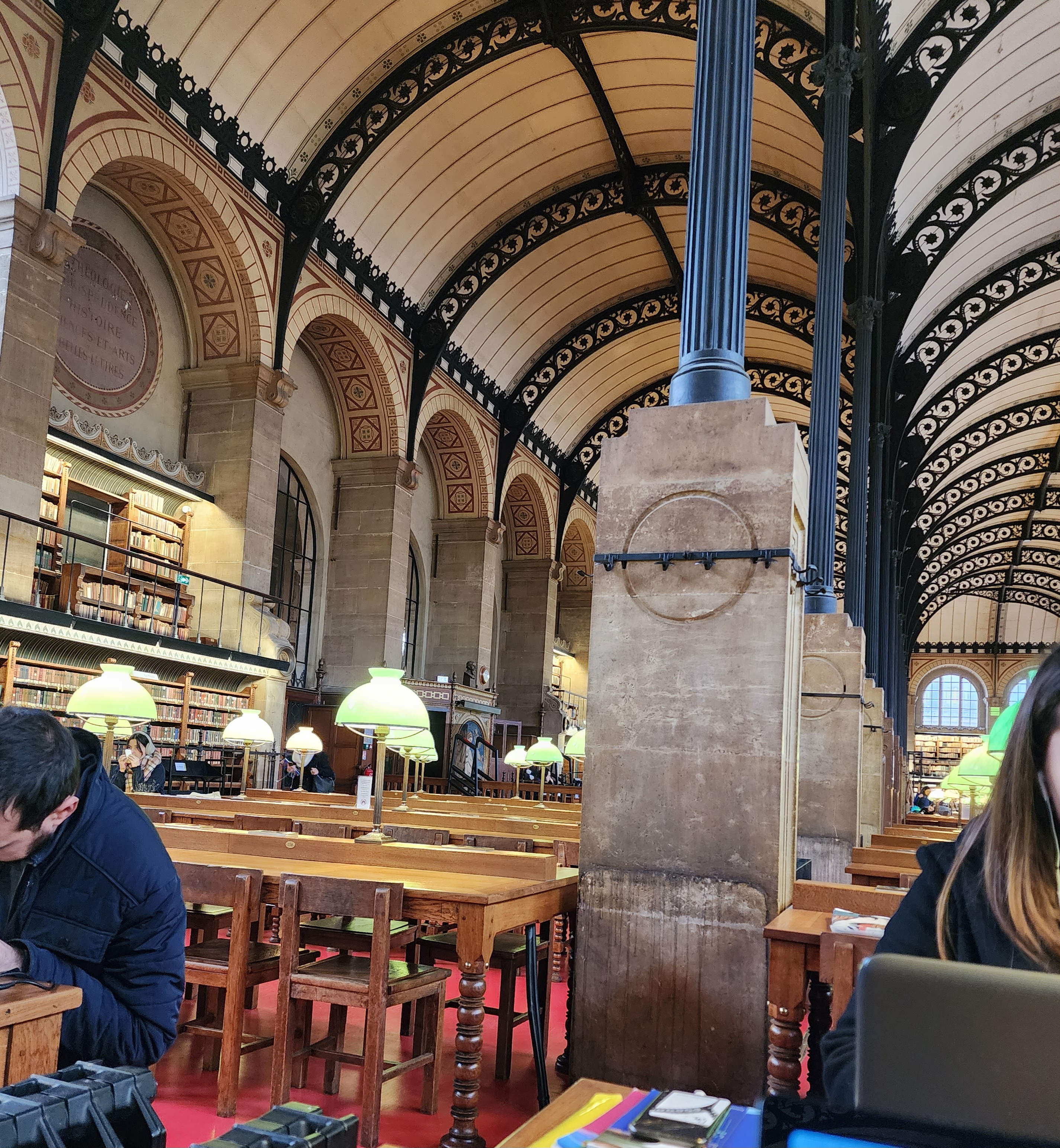
Oh, what a question! My mother worked in libraries, so they’re my home habitat. I love browsing in libraries—the way one book happens to be above another can lead to perfect juxtapositions and unexpected ideas. When I’m in Canada, my favourite library is the Toronto Reference Library, which is a big 1970s Sci-Fi fantasy of a building created by Canadian architect Raymond Junichi Moriyama—lots of natural light, the largest public reference library in Canada, and writing there is like going to work in a space station. I love it! In Paris, it’s the opposite vibe: I love to write in the Saint Geneviève library, named for a 5th century nun, one of the patron saints of Paris. At a time when most Parisians were worshipping a mélange of Christianity, Celtic river god and Roman household gods, Geneviève convinced the brand new leader of France—a violent 20-year-old Frank named Clovis—to become Christian. The Franks came from West Germany and claimed to be descended from a sea god. But Geneviève argued for the political advantages of Christianity, and at her death, Clovis and his wife founded an abbey in Geneviève’s honour. Manuscripts were copied, books collected, and the Ste-Geneviève librarians worked steadily through the Middle Ages, the Renaissance, and the Age of Enlightenment. The library survived the Revolution and in 1807, the books were moved to this purpose-built hall with beautiful light and cosy radiators near the work tables. That’s where I wrote all last winter. I am not religious but I do think there is something miraculous about the survival of this library.
Lisa, I know you write in a range of genres, and I’m interested that your poetry volumes are called “poetic narratives” – could you maybe talk a little about this choice and how the contents reflect this?
I tend to write book-length poems, and the work is a cumulative narrative. Definitely poetry, not fiction, not memoir, but often my long line and long form sits uncomfortably if readers are expecting a book of individual poems. This way, readers know what they’re getting.
Ah, that makes perfect sense, thank you! In your bio you say that in the course of research, you have been “thrown off a train in Belarus, eaten the world’s best pigeon pie in Marrakech, and been cheated in the Venetian gambling halls of Ca’Vendramin Calergi.” This sounds deliciously exciting! Tell us more!
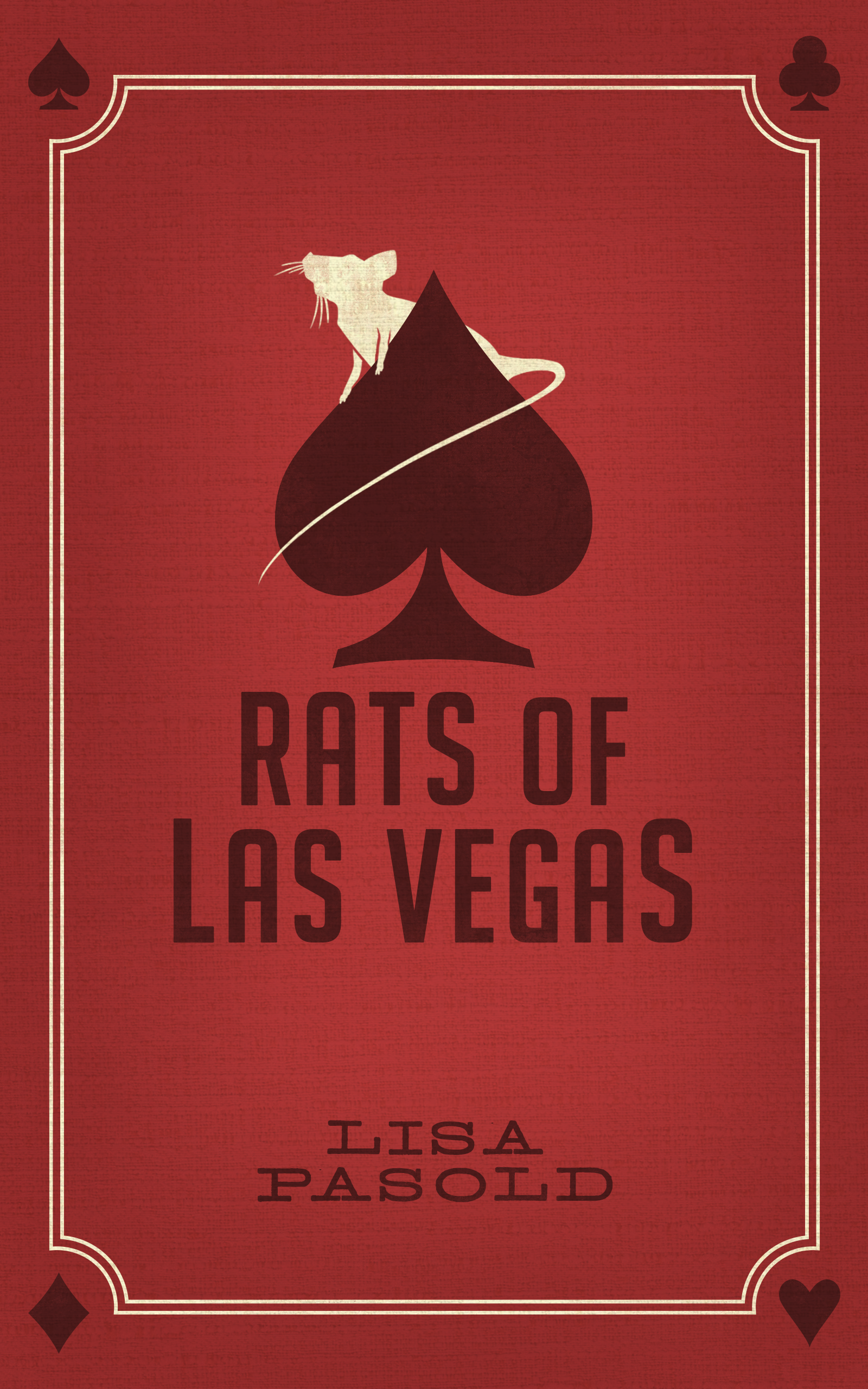
I worked as a travel writer for a while, which gave me the opportunity for great adventures, including a series of articles about casinos. One of those casinos is a stupendous former mansion on the Grand Canal in Venice—and while my husband and I were playing roulette (for tiny stakes) my number won. Before I could rake in my winnings, a slick stranger in an expensive suit grabbed my chips. And that was spotted by the pit boss, which led to a really tense half hour. So far as I know, no one was murdered, but buy me a Bellini sometime and I’ll tell you the whole story. I also briefly counted money in the back of a casino; no surprise, the dealers were fascinating characters. They inspired me to write a novel set in the 1940s about a woman card player, Rats of Las Vegas.
You are a journalist, lecturer and a podcaster on top of your novel and poetry writing. It sounds as if you are one of those rare and very eclectic beings for whom writing and research is a full-time career. I also know you are a great walker and have a podcast series called “Improbable Walks”. What is it about being a flaneuse that you find so appealing?
I’m very lucky to do what I love! To be fair, I’ve also written real estate fluff, ad copy, and edited annual reports, alongside the more glamourous gigs. Through it all, I’ve been able to explore my deep love of history. There’s so much we can learn from the past as we go forward in the now. I’ve always loved walking with people, especially in Paris, because history is easy to see—under our feet, in the buildings, in the layout of the city. We can feel the stories, and that’s the core of writing, really, to feel present in the story—whether you’re writing a poem, an article, or a novel. What’s more, walking has always been the best way to sort out my ideas, the best kind of mental therapy—I think better when I’m walking, wherever I am.
Louisa May Alcott wrote something along the lines of: “A stormy day withindoors, so I went out.” I can’t find the citation right now (ah, the internet—so much information and not what I need.) But for years, I kept this quote over my writing desk. My worst storms have always been indoors, by which I mean, in the tightly-claustrophobic space of my mind. Perhaps Alcott meant actual arguments between family members, but she’d also have understood the unrestful mind: Alcott wrote her way out of poverty, published thrillingly lurid gothic bodice rippers (yes, as well as her bestseller Little Women), nursed Civil War soldiers, suffered through mercury poisoning and its attendant hallucinations, and used to answer the door pretending to be the maid, in order to get rid of autograph-seekers. My life is much more mundane! But sometimes a person just needs to go for a walk. And that act—especially as a woman—is a political and cultural act, because each walker claims space in the public world, as Rebecca Solnit has examined in Wanderlust: A History of Walking. For instance, I’ve spent years walking in New Orleans, but I only take long solo walks in daylight. And in the Canadian North, I don’t walk more than an hour alone, because if I take myself further away from other people, I don’t have the outdoor skills to manage whatever problem could arise (a turned ankle, frostbite, wildlife.) So walking in Paris has a special place in my heart, because I’ve spent years working through ideas and problems, studying the history of the city as it is laid out under our feet. Walking the glorious spiral that is the design of the City of Light.
You are the host and co-writer of Discovery World’s TV Travel Show “Paris Next Stop” and, having seen you perform your work in Paris, I know how engaging you are as a speaker and presenter. How did this confidence and ability to beguile an audience come about, were you always a “performer” or did you start from shyer origins?! Any tips for those of us still finding our feet?!
At a party, I am the shy person awkwardly lurking in the kitchen, mispronouncing my own name because I’m nervous. But being a journalist was like a superpower: people actually had to answer my questions, and I had a purpose, a job to do! So that gave me the confidence I can now draw on, when on-camera or on stage. Of course, it helps that as I get older, I care less and less about looking silly.
That’s so true! One of the upsides of ageing! And so, finally, Is there anything you haven’t done as a writer that you are burning to do?
There are so many places to walk, people to walk with, and stories to read! I’d like to write more, collaborate more, and get more stories out into the world. Time! Time is really the problem!
Thank you Lisa, I could talk with you all day! And next time we meet, the Bellinis are definitely on me!
Return to Journal
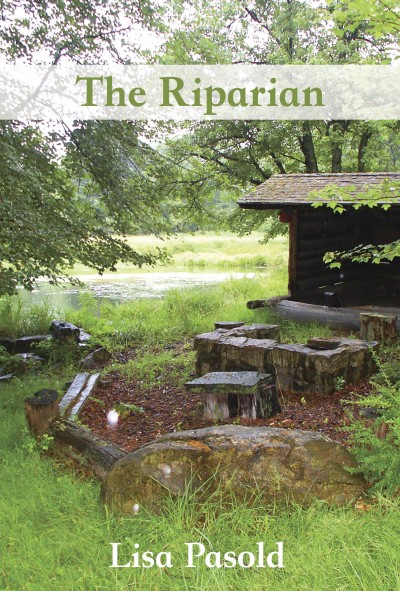
Lisa Pasold is a writer originally from Montréal. Her 2012 book of poetry, Any Bright Horse was shortlisted for Canada’s Governor General’s Award. Her first poetry collection, Weave, was called “a masterpiece” by Geist Magazine; her second, A Bad Year for Journalists was nominated for an Alberta Book Award and turned into a theatre piece premiering in Toronto. Her poems have appeared in magazines such as Fence and New American Writing. The Winnipeg Free Press called her 2009 historical literary novel, Rats of Las Vegas, “as glittering as the Las Vegas strip.” Her most recent poetry book, The Riparian, is an exploration of a river ghost story. “Pasold strikes a meticulous balance between the hideous and the sublime, a song with a love story and thirty tragedies, overheard on a piano ‘dismantled, marooned, With the river washing through its exposed strings,” says John Wall Barger. To develop her book-length works, Lisa has been writing daily poems as the touchstone of her creative process for nearly two decades. As a journalist, Lisa’s feature writing has appeared in diverse publications including The Chicago Tribune and Billboard. She is also the host and co-writer of Discovery World’s TV travel show “Paris Next Stop.” www.lisapasold.com
WordCity Literary Journal is provided free to readers from all around the world, and there is no cost to writers submitting their work. Substantial time and expertise goes into each issue, and if you would like to contribute to those efforts, and the costs associated with maintaining this site, we thank you for your support.
Make a one-time donation
Make a monthly donation
Make a yearly donation
Choose an amount
Or enter a custom amount
Your contribution is appreciated.
Your contribution is appreciated.
Your contribution is appreciated.
DonateDonate monthlyDonate yearly WordCityLit