A Murder of Crows: Co-Mingling Complex Mental Health Patients with Veterans and Seniors in Continuing Care Homes
On my way home from a meeting with a member of the Calgary Police Service recently, I saw two magpies and three crows, all dead in a long stretch of the same grassy median. That made me think about whether the five represented a group, but the crows form a “murder” and the magpies a “tiding” or a “gulp.”
Gulp. My meeting with CPS was in fact about criminal activities occurring in a Continuing Care setting among people with complex mental health (CMH) needs who are housed with Veterans and seniors. Together, the Veterans/seniors and the CMH patients constitute a co-mingled, Continuing Care group.
I have no idea of course why the magpies and crows lay dead in the grass a short distance from each other. I might assume they were hit by passing vehicles, but then again, all of them? Did they all fall from the sky at the same time? Or did something else entirely, something unwitnessed, happen to them?
Something else entirely — something that was never announced — has been happening in Continuing Care over the last few years in Alberta. As a result, folks over the age of 18 with complex mental health conditions are being housed together with seniors, including those with dementia, in what were historically known as long-term care nursing homes. These, and in fact all such facilities in this province, are now known simply as Continuing Care facilities.
One such facility is Carewest Colonel Belcher (CCB) in Calgary, which began housing CMH patients in 2021 to take the strain off our hospitals during the pandemic. The stipulation at the time, according to former Health Minister, Jason Copping, was that the CMH patients were to be housed there temporarily and separately from the seniors —that is, on different floors, or in unconnected units. At Carewest Colonel Belcher, this policy has never been adhered to. Instead, unsecured CMH patients have been admitted to units on the second floor where physically frail Veterans and seniors reside.
CMH patients who need to be secured, presumably for their own safety or for the safety of those around them, have been admitted to a code-accessible unit inside the already secured, memory care area on the first floor. The memory care area houses about 87 people. Today, 29 of those people are CMH patients over the age of 18. The rest are Veterans and seniors with various levels of dementia (early to late stage).
Have CMH admissions increased levels of risk at Carewest Colonel Belcher? Sadly they have. According to the Calgary Police Service, a staggering 240 calls for service were received from Carewest Colonel Belcher between January 2021 and July 2024. On August 6, 2024, there were at least two more calls for service to CPS. Two first-floor CMH patients exhibited behaviours that staff couldn’t manage. Code whites were called. Eight officers attended the site that day.
The Director of Operations, Yaro Kiselev, who oversees a number of Carewest continuing care facilities, has said that the housing of complex mental health patients in seniors’ homes absolutely introduces a higher risk of harm. He has also made clear, however, that this is a risk he/Carewest are willing to take.
Incidents do occur between residents in nursing homes, no question. My own father was assaulted twice by another dementia patient. What kind of incidents have occurred at Carewest Colonel Belcher since the introduction of younger folks with complex and high-risk behaviours? A 100-year-old Veteran was put in a choke hold. CPS have also attended an incident involving knives. A secured patient broke out of their first-floor room by smashing a window and escaping into the community. This has happened a number of times. Fire alarms have often been pulled because first-floor CMH patients know it’s a trick that unlocks all the secured doors. Seniors have been pushed, have fallen to the ground and sustained injuries. Staff have been assaulted. Additionally, verbal abuse directed at Veterans, staff and visitors are a daily occurrence. One secured, high-risk patient caused an all-day incident attended by CPS, Calgary Fire Department, and EMS.
Some long-term Veterans and aged residents are now spending most of their time in their rooms, because that’s where they feel safe. Sadly, this is all happening in a facility which was previously one of the most highly regarded Veterans’ long-term care home in the country.
Volunteers, families, advocates like me, and military stakeholders like Colonel Charles Hamel (Canadian Armed Forces, Retired), have been working tirelessly for three years in an effort to hold Carewest accountable and support the safety, security, and well-being of all the residents. That has been a difficult process.
There is no single Alberta Health department with the authority to act on behalf of communities like the one at Carewest Colonel Belcher. The Alberta Office for the Protection of Persons in Care handles individual cases of abuse. AHS Patient Relations refers complaints back to the facility in which they originate, as does the Minister of Health. The Alberta Continuing Care Licensing Office inspects facilities after folks go through a formal complaint process, but often their reviews look at on-site documentation, which says the facility follows a strict protocol. Unfortunately, what happens in practise does not follow that protocol.
Advocacy efforts have gone to the ministerial level without success. Last year we began corresponding with the NDP, Official Opposition Critics for Seniors and Mental Health.
As a result, on May 27, ,2024, with the help of the NDP, a press conference was held by two of the health critics, MLA Lori Sigurdson (Seniors Issues Continuing Care and Homecare), and MLA Janet Eremenko (Addictions and Mental Health). They, along with family members, military stakeholders, and advocates spoke for all who live at Carewest Colonel Belcher. A Google search will result in the relevant media coverage.
NDP Health Critics, Sigurdson and Aremenko, asked for a Ministerial Order to immediately stop the further admission of CMH patients to seniors’ homes in the Province of Alberta. Minister LaGrange didn’t put that order in place. She did, however, direct Alberta Health to undertake a full investigation of Caewest Colonel Belcher. The results of that investigative audit are forthcoming in the next few weeks.
Unfortunately, neither the Veterans/seniors nor the younger folks with complex mental health diagnoses living at Carewest Colonel Belcher are receiving the level of care and support they require in their daily lives. Staffing, appropriate staff training, appropriate onsite programs, safety, and security remain daily issues. Other areas include the management of personal care plans, and palliative care.
Why, you might ask, are these groups being housed together? The answer is at the least two-fold: first, there was the pandemic; and second, there’s the ongoing critical need to house folks with complex mental health diagnoses.
Housing the 29 folks with complex mental health diagnoses was to be a temporary situation that began in January of 2021. However, in November of 2022, an additional 29 folks with complex mental health diagnoses were admitted, again to both the first and second floors of the facility. Today, there are officially 58 CMH patients living at Carewest Colonel Belcher. Half of them are unsecured. Half are ‘secured’ on units inside the first-floor dementia area.
The original admissions were made before Alberta Health had any documented guidelines for what was called the “CMH Expansion Program.” Furthermore, despite numerous asks, Carwest has not provided a risk assessment. In fact, no risk assessment has been undertaken, either before or since the ‘expansion program’ was initiated. There was no community consultation with the likes of Foothills Academy, a school situated a very short distance from Carewest Colonel Belcher, or with the Parkdale community, into which secured CMH patients have escaped. In addition, at the outset of what was surely a well-intentioned plan, family members of residents living there were not made aware of the introduction of the CMH patients into the facility. Carewest claims families were advised of the CMH admissions, and that they were invited to move their loved ones elsewhere if they were concerned.
As someone who has gone through the process of finding long-term care placement for her parents, I can tell you that it’s an arduous journey. Unless one can pay for private care, the wait for a continuing care “bed” in Alberta is months long, and longer than a year if a loved one is already in care and would like to transfer to a different facility.
As a member of the Resident and Family Council at Carewest Colonel Belcher, as Co-Chair of the CMH Expansion Committee, and as an advocate for those who live there, I wrote to Carewest and asked for the admissions guidelines for the program in 2023. In response, I was sent a two-page document, which was not on Carewest letterhead or signed by anyone from Carewest. The document outlines a number of guidelines and conditions to be applied to the vetting of individuals being considered for the program. The accompanying email declared the information private and confidential, and advised me that as such, I could not share the contents with anyone. Since then, other advocates and members of the Resident and Family Council have requested the same document. Their requests have gone unanswered.
Between January 2021 and July 2024, Calgary Police Services have attended Carewest Colonel Belcher 240 times. While this is a high number of visits, they do not all relate to incidents involving the CMH population. Along with other advocates and Council members, I have been assured by Carewest that the number of visits CPS makes to Carewest Colonel Belcher is the norm for a long-term care/continuing care facility. I have not been able to substantiate this claim with another request for access to information. However, I can speak to the fact that in the years prior to the pandemic, while my Veteran father-in-law lived at Carewest Colonel Belcher (until just shy of his 103rd birthday in 2016), my family was not aware of a high number of CPS visits, or indeed of any visits by CPS to the facility.
Carewest is bound by provincial law, historically governed by various acts and currently governed by the new Continuing Care Act (April 1, 2024), to report publicly the number of incidents which occur at their facilities, including Carewest Colonel Belcher. However, until they were found non-compliant by Alberta Licensing and Compliance for not meeting that standard in 2023, they did not publicly report incidents involving their residents. Nor did they report those incidents or the calls for service made to CPS to Alberta Health.
In October 2023, along with the Chair of the Resident and Family Council, I met again with the Carewest Director of Operations, Yaro Kiselev. He told us that “reporting up to Alberta Health Services and Alberta Health is a grey area.” He added that “only incidents causing serious harm or death must be reported.”
Withholding data when a new program like the CMH Program is being trialed is surely poor practice, particularly when provincial policy and decision-makers require all relevant data to make informed decisions about the program, its longevity, and its inclusion in other Alberta Continuing Care facilities.
Sadly, some folks with a primary or secondary diagnoses of mental health conditions living at Carewest Colonel Belcher have been involved in reportable incidents. Those same incidents may not be documented by Carewest, never mind reported to AHS or Alberta Health. In a meeting with former Health Minister Jason Copping in February of 2023, Copping said he was aware of just one incident being reported to Alberta Health by Carewest since the inception of the CMH Program. One incident.
My first request for access to information from CPS following that meeting showed 56 visits by CPS to Carewest Colonel Belcher in a one-year period. I won’t mention any other annual numbers here because I simply do not have them.
Carewest refused to share any incident statistics until ordered by Alberta Health to do so. And, because of FOIP, I cannot compare what Carewest began posting publicly in the building with CPS stats showing the number of calls for service. The Carewest stats do not provide details or dates. The CPS stats do, but they do not indicate in detail what those visits involved except in the most general of terms.
Resident and visitor safety, and building security remain an issue at Carewest Colonel Belcher. Initially, Carewest employed one security guard, posted in memory care, to cover the secured CMH Unit. The first-floor common areas and the second floor were not manned by any dedicated security personnel.
There are currently two secured CMH Units housing 29 patients inside the memory care area on the first floor. A single security guard is often posted there. Until June 2024, a single security guard ‘covered’ the whole building. Two shifts, two different guards, were the standard during the day. No security guard was assigned to the second floor, where an additional 29 unsecured CMH patients are housed. Nor were there any security personnel on site overnight.
In May 2024, at a Resident and Family Council meeting, a family member recounted being on the second floor during an incident involving the escalated behaviours of an unsecured CMH patient. Staff had barricaded themselves in a kitchen area and called for the security guard. The guard took 20 minutes to arrive.
That was a non-violent incident. There are security company reports documenting accounts of other incidents, which involve physical and verbal harm, violence, and drug transactions.
Last May, I wrote a letter on behalf of the Resident and Family Council and its associated Safety Working Group to the same Carewest Director of Operations, to the Carewest Chief Operating Officer (COO) Barb Kathol, and to the current Health Minister Adriana LaGrange beseeching them to install additional security personnel. Multiple such requests had been made to the same individuals in conjunction with formal complaints to AHS Patient Relations and Alberta Licensing and Compliance to no avail over the course of the last two years. None of the requests resulted in the addition of any security personnel.
Following the May 27 press conference involving the Official Opposition Health Critics, Carewest responded to advocates’ concerns by issuing a letter saying that they have, as they always do, listened and responded to Council and families, and that temporarily (for a period of three months), they would be employing one additional security guard. That period was over at the end of August.
When asked what the go forward plan is to manage security following that, and how the patients involved in the August 6 incidents would be managed, Carewest Director of Operations cited FOIP and redirected my / Family Council’s questions to AHS Patient Relations. However, at the time of writing, another guard was engaged to work one-on-one with a patient for an undisclosed period of time. The patient was one of those involved in an August 6 incident.
On May 27, Health Minister, Adriana LaGrange, denied knowing anything about the safety issues caused by the CMH Program at Carewest Colonel Belcher. The next day, after being asked directly during question period in the final session of the legislature why she had given that response when her department had responded directly to both myself and to a member of the Canadian Air Force, LaGrange admitted that she had been aware of the situation at Carewest Colonel Belcher, but only since September 2023.
In the days following that, the Health Minister said that she would order an investigation of Carewest Colonel Belcher. I can only hope and pray that those compiling the findings will take all the information made available by staff, families, residents, and advocates in interviews with Alberta Health and Alberta Licensing and Compliance into consideration when they write their final report. Policy and decision-makers working under the auspices of the new Continuing Care Act need all the relevant data.
While the new Act proposes to streamline continuing care by being “inclusive,” those who are compelled by oath and by law to uphold its directives clearly need to reconsider what its tennents allow operators to do, especially when it comes to housing and support programs – for magpies and crows.
The worst-case scenario is that a lid is put on the findings of this investigation because any precedents set using them could have far-reaching implications for the Government of Alberta. These could be very costly indeed.
Simply providing housing is not in and of itself the solution to helping those with mental health diagnoses. We only need to look at what happened in Ottawa’s CMHA (Canadian Mental Health Association) Housing First initiative for evidence of that (see CBC Ottawa News, Robyn Miller’s report, published on May 2024). In that case, as with the CMH program at Carewest Colonel Belcher, those initiating it did not fully understand the degree or depth of obligation required to make it successful.
Investigating the situation at Carewest Colonel Belcher can present the Alberta Government and Alberta Health with the opportunity to create better care scenarios for everyone, and, more importantly, to pave the way for the right care to be offered in the right place, at the right time, for people with complex mental health care needs.
We know that no single initiative will completely prevent harm in continuing care facilities. Some folks living in them will have unpredictable behaviour. However, knowingly increasing the risks so as to ‘streamline’ care under the auspices of making it accessible and inclusive for all is at best irresponsible, and at worst dangerous enough to cause serious harm or death.
Recently I observed two magpies and three crows, all dead, lying in a long stretch of a grassy median.
I have no idea of course why the magpies and crows lay dead a short distance from each other. I could only imagine that they all met their end in some unwitnessed way. But then again, something else entirely may have happened.
Something else entirely is happening today in Alberta in continuing care and our Provincial government is bound by its own tennents to make it stop.
Return to Journal
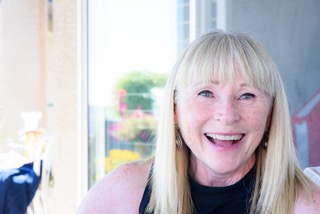
Anne Sorbie is a writer and an advocate. She has published four books, the latest of which is the (M)othering Anthology (Inanna 2022), which she co-edited with Heidi Grogan). Her work has appeared online at CBC Books, and in a range of Canadian magazines and journals. One of her latest and deepest commitments is volunteering as an advocate for folks in continuing care. As an act of social protest, she is currently at work writing about love and hope .
Photo Credit: Monique de St. Croix
 WordCityLit
One thought on “A Murder of Crows: Co-Mingling Complex Mental Health Patients with Veterans and Seniors in Continuing Care Homes. By Anne Sorbie”