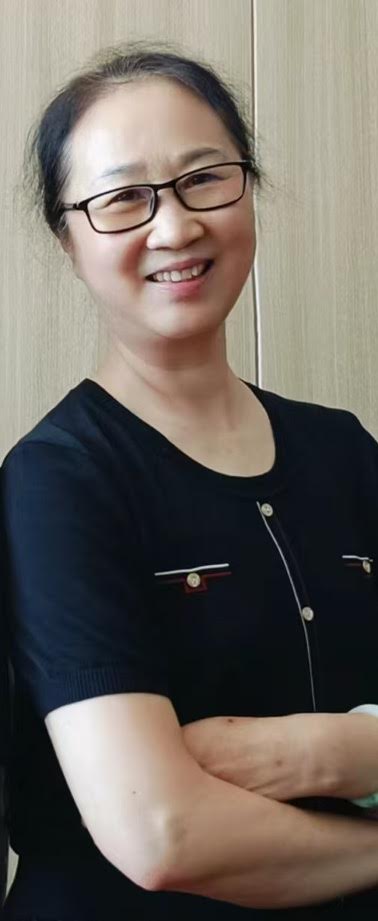
Emotional Curiosity
Ming is definitely sure he has fallen in love with Hua once again in their mythically entangled lives, at first sight during a recent encounter casually arranged by a common friend, at an age too old to enjoy the full dimensions of sexual love, more passionately than passion itself, though separated from her afar by the vast Pacific as well as by the vicious Pandemic, while he has been living quite happily with his beloved wife in Vancouver, the true earthly paradise of all Chinese diasporas as he sees it.
Despite his certainty about his own feelings for Hua, there are still many things he is not sure about: for example, what is it exactly that is so special about her? Why does he find her so irresistible? How much does she love him now? Does he love Hua and his wife at the same time, to the same extent, and in the same sense? Is his affection for Hua a “spiritual derailment,” a case of Platonic love, or something really immoral? How should he control, if he could at all, his clandestine relationship with Hua? Perhaps he ought to confess their intimacy to his wife? What if his wife finds it out for herself? But among a dozen more such questions, he is wondering, first and foremost, why on earth he has cherished such a long and strong affection for Hua. “What emotional spell has she cast over my poor soul?” Without getting a satisfactory answer to this question, he knows he will never “die with his eyes completely closed,” just as the Chinese proverb goes.
After doing much thinking, he finds that the best answer he can come up with lies probably in a variety of things working together at the same time.
1/ The First-Love Complex
It was at a schoolwide meeting held in the big auditorium in the county town of Songzi on a mid-summer afternoon that Hua happened to come and sit right before him on the bare floor made of hard mud. He was then 15 years young while she, as he learned decades later, was only 14, and a year before she would have her first menstrual experience. “Our school does have a really pretty girl after all,” he thought aloud upon spotting her. He was not sure if he developed a crush on her on the spot, nor did he have the slightest idea that she would function as the model of love or female attraction for him for the rest of his life, but he did feel something like sexual agitation for the first time in his life. Since then, he had become increasingly sensitive to female beauty.
People often say all Chinese men have a serious and persistent First-Love Complex: is his lifelong emotional attachment to Hua an unavoidable result of this very first encounter?
2/ The Native-Place Complex
Since ancient times, all Chinese are said to have cherished a particular feeling for the places where they were born and bred. No matter how far away or how long they are separated from their native villages or hometowns, they would mostly want to return to their “roots’ like fallen leaves, especially when they are old, either for the peace of their emotional beings or for the perfect taste of the local foods. However, Ming was even not sure which his native place exactly was. Lotus Flower Village was the place where he lived for five years as a foster child, but it had given him only bad memories, and Songzi, his birthplace, was no better, with its hellish climate, its people mostly hypocritical, insincere, snobbish, or vulgar – though quite smart. When he grew up, he had two explicit reasons to detest his native place, be it Songzi or Lotus Flower Village. As if somehow deeply traumatized by his early failures to learn English and get his poetry accepted before leaving the countryside to attend university in Shanghai, he could not say a single English word or write a single line of poetry, no matter how long he stayed there as a returning visitor, though English and poetry were the two most essential elements in his adult life: the former is the language he has chosen to make a living in, the latter his only lifelong hobby.
However, simply because of Hua or, more exactly, because of his feelings for her, he has recently found Songzi much more loveable than he’d used to think. “Love you, love your dog,” he often says to her. Since she likes the small town tremendously, he has become attached to it too, and all the more so now because it is the only place where he could hope to see and spend time privately with her, where they could eat what they both like most, such as salted diaozi fish, fried green chilis, xiangzi tofu, carp fish cakes and ciba paste.
Or, perhaps vice versa: it is precisely because he is so deeply attached to his native place without his knowing it that he finds Hua more attractive than any other women he has seen all over the world.
3/ The Zhiqing (Educated-Youth) Complex
As a unique sociopolitical movement in modern Chinese history, “Up to the Hills and Down to the Countryside” occurred between 1956 and 1978. Like millions of other educated youths of the time, Ming and Hua were compelled to answer Chairman Mao’s call to receive “re-education from the poor and lower-middle peasants” as soon as they graduated from high school. While slaving together in Mayuhe, the forest farm only steps away from the Yangtze River, they shared not only the same physical but also psychological hardships between 1974 and 1977. To end their lives as “earth repairers,” they competed fiercely at the youth station, a miniature of the Colosseum. With the local folks as the audience, every Zhiqing must fight to their best ability like a gladiator, whose gladius was no other than their own willpower, determination and physical endurance.
Now, with all their hardships faded into the white pages of time, they only remember what was sweet about the old days when he and she fought shoulder-to-shoulder for their futures like two comrades-in-arms having chemistry with each other in a real battlefield. Back then, he knew it too well that if he hadn’t hidden his feelings for her well, his indulgence in a romantic relationship or “petty bourgeois sentiments” would surely have thwarted all his efforts to leave the country. Before his reencounter with Hua in 2019, he did try to get information about her whereabouts, but never without any success. As a result, they remained totally lost to each other for as long as 42 years. Now as they became reconnected, his nostalgic affection for her was not only recovered but was gaining a new momentum, which, in Hua’s own words, “is a typical case of the zhiqing complex.”
4/ The Misconception-in-Love Complex
Unlike de Clerambault’s Syndrome, which is medically referred to as a kind of delusional disorder, what Chinese describe as zizuoduoqing (“自作多情”) is a quite normal psychological tendency to over-estimate one’s importance in a relationship. As such, it is not a morbid state of mind, but an emotional inclination, which seems to be much more common among the sensitive, the self-centered, the self-confident and/or the narcissistic than among people with other characteristic features. As Ming himself has admitted many times, he is particularly sensitive in emotional matters. For example, when Hua gave him a tuner in Mayuhe in the summer of 1975 (just to help him learn to play the erhu as she explained decades later), he over-interpreted her gesture and treasured the device as a token of love from her. The reason for this, as he sees it now, must have been underlined by a close interrelationship between his own deep feelings for her and his strong (mis)belief that she loved him as well. When Hua asked him to return it sometime in the following year, he thought she had found a new sweetheart, who he suspected was Pan Lihao, his major rival at the youth station. Until they found the truth eventually with the help of a mutual friend during the Chinese Spring Festival in 2022, he had remained unaware that a part of him had been living heavily on the delusion all the time.
Since then, he has been trying hard to find a cultural equivalent in English to describe such delusional indulgence, but surprisingly, no native speakers or writers of English or online source could offer him a set phrase, and the closest word he has dug up seems to be “erotomania,” which, like “de Clerambault’s Syndrome,” is far from an accurate description. After consulting several exceptionally talented translators in addition to some bi-linguists of the highest caliber, he realized there is no such equivalent in English at all, and the best translations they could render is “delusional fancy as someone’s love interest,” “emotionally self-flattering” and “misconception in love,” depending upon the specific context. They say “benign erotomania” might convey the basic meaning more accurately, but it sounds quite weird to people with little knowledge about the psychiatric condition. And this linguacultural difference keeps him wondering: how come such emotional tendency is so common among Chinese but not among English speakers?
Thinking along this line, he wonders if his affection for Hua may well have been an unconscious projection of his own delusional fancy as her love interest, or may it not?
* * *
While biding their time to join each other in body as in spirit, Ming just cannot stop searching for the ultimate truth about why he loves her in such a morbid manner, but the more he tries, the more he becomes confused and confounded. Perhaps he is either a unique victim fated to suffer from the Hua-Complex, or a common guy who has simply been in desperate need of love since childhood. Or, in a larger sense, is it all because he is living an aesthetic rather than an ethical life as Breton has defined the terms?
He is never sure, nor does anyone really care.
*This story is inspired by and devoted to Helena Qi Hong (祁红).
Return to Journal
Yuan Changming edits Poetry Pacific with Allen Yuan in Vancouver. Credits include 12 Pushcart nominations for poetry and 2 for fiction besides appearances in Best of the Best Canadian Poetry (2008-17), BestNewPoemsOnline and 2019 other literary outlets worldwide. A poetry judge for Canada’s 2021 National Magazine Awards, Yuan began writing and publishing fiction in 2022.
 WordCityLit
One thought on “Emotional Curiosity. Fiction by Yuan Changming”