Bread and Shame

I open my eyes but
I do not see the world.

I see a child
dreaming of rain
in a thirsty desert
that has forgotten
the moment.
And the song of its spring
wraps itself
in the cedar-shape-skirts
of little girls, forgotten in
a thousand-years-old-maze design
that has forgotten smiling.

The little children
that have never seen
themselves.

That have never tasted
love but shame,
impregnated with
the smell of bread.

I open my eyes and
I do not see myself


 Mine, Ours

The obscured myself
dribbles as a poem
from a melting iceberg
of the ritual patterns.

Let me feel slaked
after feeling my thirst.
And touch the clouds
with my full passions.

Let me feel my earthy veins.

Eloped and unconscious
like the flakes of a destroyed
warship after a repetitive
battle moved with ebbs
I feel the earth, the growing
plants, drizzles, and sunshine.

Poem plucks me
to replant
somewhere that I feel
it’s ours, mine.
Mansour Noorbakhsh writes and translates poems in both English and Farsi, his first language. He tries to be a voice for freedom, human rights and environment in his writings. He believes a dialog between people around the world is an essential need for developing a peaceful world, and poetry helps this dialog echoes the human rights. Currently he is featuring The Contemporary Canadian Poets in a weekly Persian radio program https://persianradio.net/. The poet’s bio and poems are translated into Farsi and read to the Persian-Canadian audiences. Both English (by the poets) and Farsi (by him) readings are on air. This is a project of his to build bridges between the Persian-Canadian communities by way of introducing them to contemporary Canadian poets. His book about the life and work of Sohrab Sepehri entitled, “Be Soragh e Man Agar Miaeed” (trans. “If you come to visit me”) is published in 1997 in Iran. And his English book length poem; “In Search of Shared Wishes” is published in 2017 in Canada. His English poems are published in “WordCity monthly” and “Infinite Passages” (anthology 2020 by The Ontario Poetry Society). He is a member of The Ontario Poetry Society and he is an Electrical Engineer, P.Eng. He lives with his wife, his daughter and his son in Toronto, Canada.
When I began to write this letter, it was March 8th: International Women’s Day.
Needing to drive to the city for an appointment, I ended up far from home, and without secure access to the internet until now. And while I intended to publish this, our 7th issue of WordCity, on a day made with meaning, it didn’t happen quite the way I wanted.
I’m late getting this to you. But what I wanted to write about here, the women I wanted to tell you about, are all still present: My friends. Colleagues. The women of WordCity.
Something that is out in the open, but perhaps not always noticed in this space, is that every editor here at this journal, spread out around the world, is a woman. Every editor a volunteer. Every one an accomplished writer, poet and/or scholar. A few are women with whom I was acquainted before we began this venture. Others, meanwhile, have come into my circle, and I into theirs, and each has made me richer for the knowing.
Sylvia Petter and Olga Stein represent our fiction and non-fiction departments from Canada and Austria, reading, curating and editing with a dedication to this creative space that reminds me every single month, even when I’m deep into layout glitches, that WordCity is so much more than just a journal.
Geraldine Sinyuy, from Camaroon, delights in each book review that comes across her desk, and never fails to send words of joy along with her edits. I look forward to them every month.
Nancy Ndeke and Clara Burghelea, in Kenya and from Romania and New York, read the volumes of poetry that come our way for each issue, making selections, curating for themes, and also advising and encouraging me in ways I cannot thank them for enough. They do it with love, and they do it with grace, and I could not do this without them.
Jane SpokenWord, our street poet from New Orleans, USA, creates our podcasts each month by seeking out and interviewing literary and human rights luminaries from continent to continent. She came alongside, like others, at my request, and I am amazed all the time that this fierce defender of peoples agreed to do what she does.
Sue Burge is the most recent addition to our WordCity family, and in the few months she’s been with us from the United Kingdom, Sue, with her warmth, has brought us literary news and writing advice that reads like a perfectly brewed cup of tea!
And Lori Roadhouse, a day trip away from me in Canada, whose name you see the least, but whose hands and soul are present in every issue, is my assistant managing editor. Lori not only picks me up when I fall down (which happens at least once a month), but also assists in making impossible choices, even working with writers to iron out wrinkles before their work goes to “press.” Lori is the calm to my storm.
And so, to each one of these remarkable women, these literary revolutionaries, I lay down my most profound and sincere bouquets of gratitude.
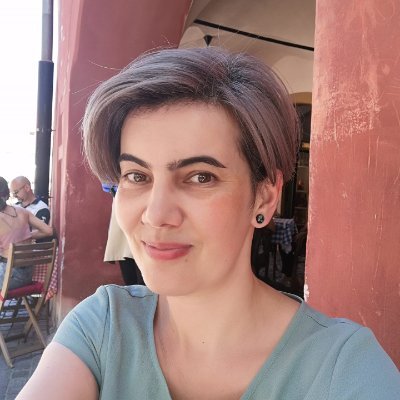
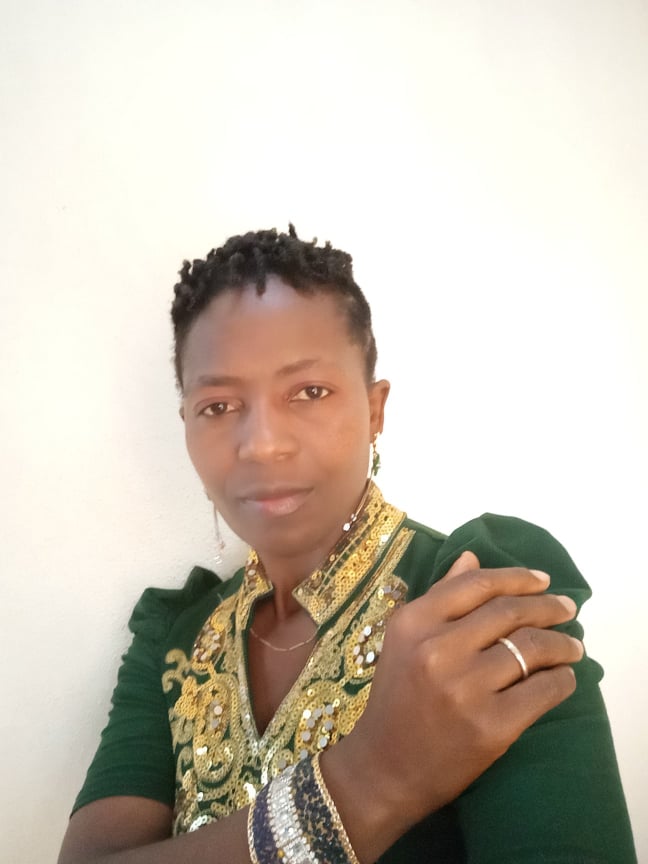
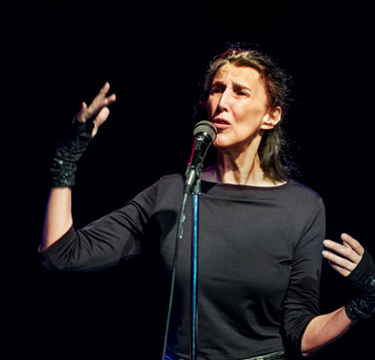
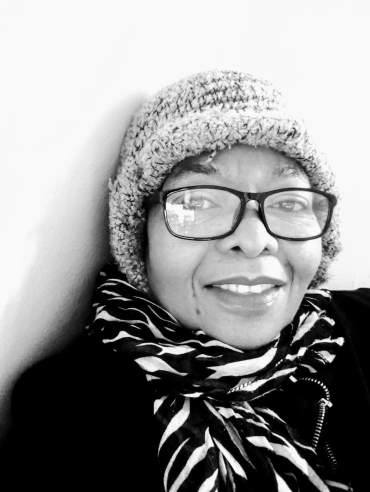
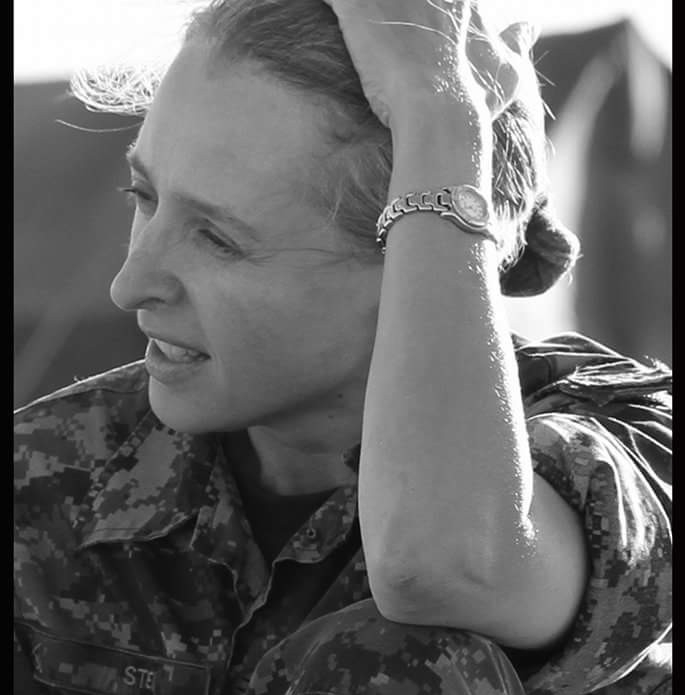
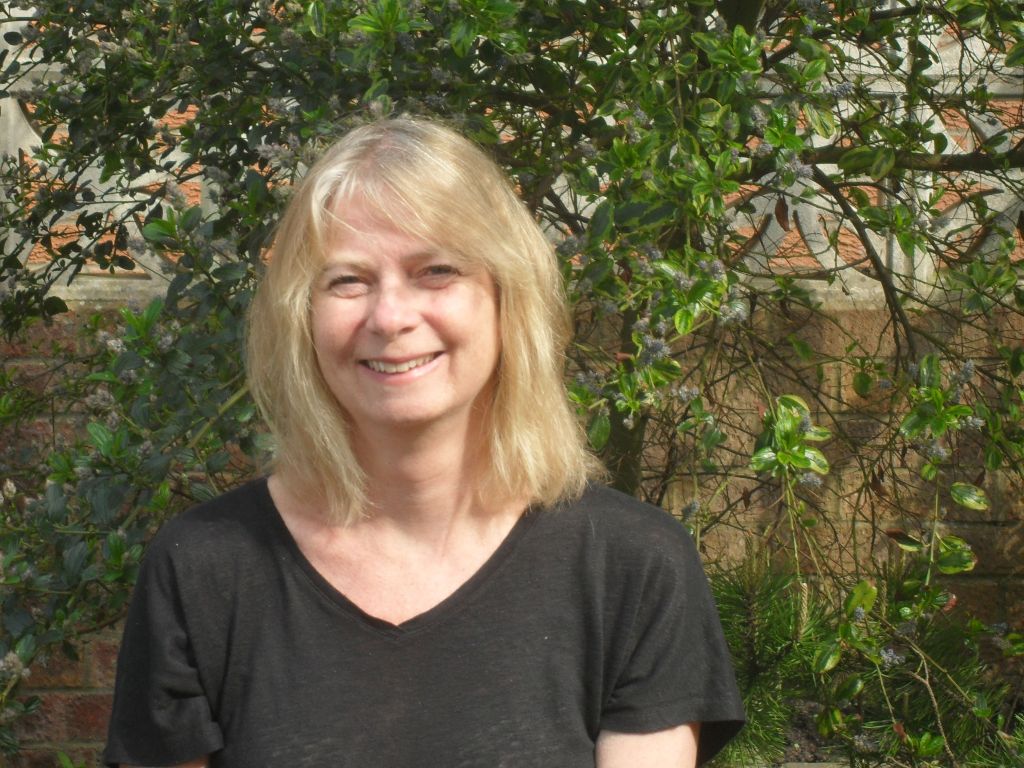
Sylvia, Olga, Geraldine, Nancy, Clara, Jane, Sue, Lori. You are all the beating heart behind everything we do here, and on what is no longer quite International Women’s Day, I celebrate each your for giving both of your time and your gifts to this thing we’re creating together, called WordCity. (In photographic order: Clara Burghelea, Sylvia Petter, Darcie Friesen Hossack, Geraldine Sinyuy, Jane Spokenword, Lori Roadhouse, Nancy Ndeke, Olga Stein, Sue Burge)
Podcast with Jane SpokenWord:
In this month’s podcast we introduce you to Adnan Mahmutović, a Bosnian-Swedish teacher, writer, and editor, who has written extensively on war, refugees, and immigrant experiences. Adnan became a refugee of in 1993 and landed in Sweden. He worked for a decade with people with brain damage while studying English and philosophy. He has PhD in English literature and MFA in creative writing, and he is currently a lecturer and writer-in-residence at the Department of English, Stockholm University. His stories have dealt with contemporary European history, and the issues of identity and home for Bosnian refugees. ~Jane SpokenWord
Adnan Mahmutovic in Conversation with Jane Spokenword
Adnan Mahmutović is a Bosnian-Swedish Writer who has written extensively on war, refugees, and immigrant experiences. His stories have appeared in a range of journals including Stand and The Battered Suitcase. Adnan Mahmutović became a refugee of war in 1993 and ended up in Sweden. He worked for a decade with people with brain damage while studying English and philosophy. He has PhD in English literature and MFA in creative writing, and he is currently a lecturer and writer-in-residence at the Department of English, Stockholm University. His stories have dealt with contemporary European history, and the issues of identity and home for Bosnian refugees.
This month we have two long pieces of fiction and some shorter ones as prose poems. We are pleased to bring a novel excerpt from Daughters of Smoke and Fire by Writer in Exile, Ava Homa, and Harper Collins; a long short story by Welsh writer, Alex Keegan, entitled „Spectacles, Testicles, Wallet and Watch“ from his collection Ballistics; three prose poems by Susan Tiberghien, author, teacher, and founder of the Geneva Writers‘ Group; and a prose poem aptly entitled We Didn’t Read the News by Vienna-based Irish poet, Neil McCarthy. ~ Sylvia Petter
Ava Homa
Daughters of Smoke and Fire Chapter 14
When his grandpa drew a yogurt mustache above Alan’s lips, the boy dissolved into giggles. Picturing himself with real whiskers thrilled Alan, who thought that facial hair might make up for being shorter than the other boys in his class.
“Your laughter woke me up, you cheeky monkey!” Uncle Soran, youngest of the six uncles and the only one awake, tousled Alan’s hair as he came onto the patio that opened to the yard. They sat around a nylon cloth spread atop a crimson handmade rug to eat breakfast.
Alan laughed again. “Bapir, I want handlebars, please.”
With a chapped finger, Bapir curled the ends of the yogurt mustache on either side of Alan’s puckered-up lips and planted a dab of the stuff on his nose too. Alan collapsed into laughter.
That June morning in 1963, Alan decided that Bapir was the most amusing person on earth. Perhaps he was the reason Alan adored older people and loved to listen to their stories of maama rewi, the trickster coyotes. It hurt Alan that most people with gray hair weren’t able to read or write, that their backs hurt and their papery hands trembled; his dream was to read stories into a loudspeaker for hundreds of elders while they relaxed in a large meadow filled with purple and red flowers.
Grandma brought out more nan, the thin, round bread she had baked in the cylindrical clay oven dug into the basement. Alan made his own “bulletproof ” sandwich: fresh honeycomb mixed with ghee. “After I eat this, I can run faster than the bullets,” he said.
“Our monkey is growing up, and yet we all treat him as if he is a young child!” Uncle Soran said, making his own bulletproof morsel.
A first photo shows him six months old, sitting in a small straw chair. A second photo show him one year old, upright, holding on to the back of the same straw chair.
He’s now two years old. We’re waiting at the airport. When we try to stand him on his own, he falls hard on the floor. The straw chair stayed behind in Saigon.
Spectacles, Testicles, Wallet and Watch Late February, 1991. Friday.
Friday afternoon, very cold, and Thomas Smith, sales manager, leaves his London offices for home. Tom has left a little early. Once a week he allows himself the chance to beat the crush of commuters travelling from Waterloo to the South Coast. He knows that the 15:30 train to Weymouth will be at worst three-quarters full, and that the one after that won’t have an empty seat. Tom hates to board anything later. He knows that any train after 15:45 will be little better than a cattle-truck.
As Tom walks across Waterloo Bridge he rehearses a new joke, one he heard today at lunch. The wind off the Thames is vicious but Tom’s eyes shine and he walks on. In December he had his first million-pound month and tomorrow his sales force are coming to a party to celebrate. That’s why Tom wants to remember the joke. He chants the punch-line almost like a mantra. Tom is 33.
While Tom Smith mutters and smiles despite the wind, in Amman, Jordan, Mohammed El-Hassi Siddiqi, 34, a physician, from Basrah, Iraq, is boarding a Jordanian 747 bound for London Heathrow Airport. El-Hassi is wrapped against the early evening chill and shivers, but it is not because of the cold. Elhassi is scared of flying. As the Jumbo Jet begins to roll, he prays.
Tom and El-Hassi are carrying briefcases and they both carry paperback books to read on their journey. When El-Hassi was studying in England he became a fan of the thriller-writer Dick Francis. He has Reflex to read on the flight, and is pleased, knowing he should finish it before the plane lands in London.
Tom Smith used to read every new Dick Francis but now thinks life’s too short. He is carrying Winning by Intimidation and a collection of poetry from soldiers of the Great War.
Tom and El-Hassi travel west. They do not know each other, nor will they ever see each other or touch each other, but they are destined to meet the following Monday in dark, unusual and desperate circumstances. On the Jumbo Jet, El-Hassi drinks orange juice and reads his novel. On the express to Southampton Tom first tries to read the business book, snaps it shut, then tries the poetry. But he can’t concentrate or get in the right mood. He drinks a second Bells & American to take the edge off the nagging ache in his gut.
I was at my usual booth, half a cold cappuccino in front of me, my daughter crawling over my lap in an attempt to crayon the paper I was reading. The man at the table across the floor looked like the prison warden from The Shawshank Redemption. Whatshisface. I’d seen him in a few things recently. He smiled. Stared just long enough for it not to be awkward. Probably had a flashback of his little one doing the same some forty years or so before. His wife lowered her newspaper too and looked over at my daughter, watery-eyed, as if picturing herself at the same age; not a care in the world and more concerned with colouring things in than reading
Rudy’s Instagram photo of the weathered driftwood poles on the sand got 12 ‘Likes’. It was a pinkish-grey sunset shot of Wreck Beach, in Vancouver—the kind of photo that makes you want to be there.
RT and I were yearning for the Pacific and a seagull or two after an icy winter storm hit Alberta in April. Of course, most Canadians crave a beach all winter long!
My three cousins were born in Alberta and then moved to Vancouver. In our landlocked province, we spent many holidays together as children. My family would visit Rimbey, Alberta at Xmas, Easter, and summer holidays. Small-town childhood memories were all there.
Long tables of turkey dinners, the playhouse outside, horses to ride, and trips to our grandparents’ farm in Grandpa’s big-finned car or trucks. The farm in the spring guaranteed muddy views of colts, appaloosas, palominos, pinto ponies, wild and unbroken. Horsemanship was not my habit, but my cousins and grandparents lived in that world.
They wore gumboots most of the year. My city shoes failed me in Rimbey. The foals and barn kittens, pussy willows, and Gramma’s spirit linger in my dreams.
Our ambitious grandparents operated the local theatre in the town. The Empress Theatre stood with an art deco façade on Main Street, next door to the Chinaman’s Café. They worked their farm by day and the theatre by night. Townspeople lined up outside for the nightly movie every day except Sunday.
Lillian, our Gram, controlled the white house lights, sold theatre tickets, and ran the concession, selling popcorn, candy and soft drinks. Grandpa Albert sat at his desk in his theatre office studying bills and receipts. He was ‘back of house’ and Lil was ‘front’. Above the office door was his name and a sign with ‘Proprietor’ on it. The red velvet ropes kept the other kids away from his office. Grandkids got in free.
MdS: Let me first express how tremendously honoured I am to be interviewed by you, Olga; I am truly blessed and grateful to have been invited to converse, here. I am sorry that my hand injury has prevented us from doing this sooner. Unfortunately, I can only type with my left hand and the index finger of my right hand. Luckily, my father met, by chance, the son of one of his ex-students (my father is a high school teacher of Languages), a young Bowen Therapist, named Justin D’Amico, whose Holistic Bowen and Fitness has not only changed my chances of restoring my hand, but even sectors my mind and soul. Justin has already restored about 75 percent of my hand, when other doctors wondered if true improvement was even possible. Justin D’Amico has been a godsend, and he believes my hand will be fully restored.
I think it is important to note that although manic-depression can be a disability, it can also be a super-ability, since medical researchers have concluded that there is a link between manic-depression and genius, when they discovered Neuregulin 1. At the same time, I cannot deny that my disability/super-ability, has been incapacitating. By the way, Not ALL people who are manic-depressives are geniuses. Still, manic-depressives, it has been proven, are more likely to possess a great creative gift—or genius—than people without manic-depression.
Stephen’s Landing by Gregory Vincent St. Thomasino, Adelaide Books, November 2020
Stephen’s Landing is a postmodern Bildungsroman, a complex fresco of cinematic positives and negatives, of multiple planes and universes, as the title itself suggests, for a neoromantic cosmic trope, characterized by a mix of enigma and possibility, weaves its way in and out of the book and protagonist Stephen’s thoughts. The connection between the name Stephen and the concept of the Bildungsroman is no coincidence: like St. Thomasino’s earlier “novel in parts”, Stephen’s Lake (xPress, 2004), this work of prose seems to be obviously inspired by James Joyce’s The Portrait of the Artist as a Young Man (whose own protagonist is named Stephen), using the same techniques of stream-of-consciousness, self-portraiture, and idiolect to create an ode to childhood and youth, though St. Thomasino is less picaresque and more ethereal than Joyce, and more of an impressionist than a radical experimentalist, in the sense that the narrative is fragmented in the way that an art exhibition is, in which the individual pieces come together to suavely and intuitively present a concept: “I can observe her dressing from my pillow. I am susceptible only to her hair. Wheat blond”, he writes (p. 5). Overall, it isn’t difficult to discern the tradition within St. Thomasino’s writing, but his chosen structure seems more akin to Théophile Gautier or Gérard de Nerval: “Susanna was sincerity. And now that I’ve remembered her for you, I miss her” (p. 51).
Literary Spotlight and Writing Advice with Sue Burge
Sue Burge with Elżbieta Wójcik-Leese
Photo by Peter Leese
Translanguaging: A conversation with Elżbieta Wójcik-Leese
This month I’m really excited to have the opportunity to talk to Elżbieta Wójcik-Leese, who is a multilingual poet, literary translator, editor, cognitive linguist, scholar, artist, and so much more! Elżbieta combines her experience of living and working with/in languages with a multitude of advice to writers, which will help us all to explore our one and only tool – language.
Elżbieta, how did you get into translating? Did you train as a translator or did it happen by default?
I’m 11, in Poland; my mum buys me Anne of Green Gables and I fall in love with the book. I know I’m reading a Polish translation; that’s why I decide to translate the book back into English, so that one day, when I can buy the original, I will be able to compare the two English versions. In case you wondered: I translated only a couple of pages, defeated by the plant names my dictionary didn’t list, but I did buy the original, many years later, in Prince Edward Island.
I’d say that my passion for reading (which I hope the opening anecdote illustrates) and my literature studies have prepared me for being a translator, though I didn’t attend a Translation Studies programme. There wasn’t such an option at the time when I went to the university in Kraków, Poland, but I chose to read English. I lived in the UK and USA; I taught literary translation at the Jagiellonian University; I cooperated with the British Council, Literature Across Frontiers, Scottish Poetry Library, European Literature Network, Modern Poetry in Translation and Poetry Wales; I organized poetry-in-translation readings and seminars, commissioned translations and reviewed translated poetry books. All these activities have supported me as a poetry translator – they’ve allowed me to engage with writers and readers to whom translation is equally important.
I often think that I had to become a translator in order to make sense of my own multiliterate biography. I was growing up in Poland, but English is my home language. In 2009 I moved to Denmark, which is practically bilingual. Here I can contemplate the global reach of not only English, but also Danish, the ‘dominant’ language of Scandinavia. Speaking of the presence of literary translation in my life: as a newcomer, I was learning Danish via English translations of, for instance, the poet Inger Christensen, to counteract the boredom of my Danish language classes that relied heavily on so-called grammar translation. Since I had four years of Latin in my secondary school, which I truly enjoyed, I could – rationally – appreciate the method, but I wasn’t persuaded by the grammar drills as the main form of engaging with the language I hoped to inhabit.
Tristiana

June today, and June’s days blossom one by one,
as does the rose’s miraculous swirl, and its shame,
and so do cruel amoebas and enchanted beetles,
and thoughts of every crazy kind, it seems
we model summer’s days from wet clay.

It seems that my mother, Cristiana, my mother, Tristia,
is already that legendary tuberose of ancient photographs,
but long a pillar of salt. The spirits that walk our house

make the oven twitch, and it seems I am afraid
to leave this prison, afraid of someone so free,
someone like me. It seems I am closer in June
than any other to our neighbors in the solar system.

Yes, in June, I’m closer to the whole solar system
than any other, following the paper airplane in the sky,
that bird with the iron beak, accumulating those distant
 lands in greed and hurry, the machine made to save me
against my uphill movement against the downhill spin
of the earth, under the moon’s rheumy eyeball...
Anastasis

She died at night
I mourned her three days,
then I lay beside her patiently
waiting for her to resurrect.

I was told
that someone among us,
who was a saint,
rose from the dead
on the third day
and then ascended into heaven.

She was a saint too, I thought,
and while I was waiting,
I had a heavy heart
and I feared that instead of staying
she too would ascend
into heaven.
A Wolf Howls: Or when the poet reads in Kurdish and I cry

The sounds are at once
both warmth and displacement.

A childhood memory in every line.

She asks me why I cried?

I miss my mother.
Her name: Full Moon.

I miss her light.

*

In the memory, our faces mirror—
quivering chin and wet eyes.

The gap between us
born out of her vision for me.

“You can have these pearls
when you get married.” As in
marry a man.

*

I make feta and date eggs
and then weep over the plate.

Every time I see a mother and teenage daughter
my throat closes.

*

She was a child toggling between two languages.
Only Arabic in public; Only Kurdish at home.

What happens when your language is a crime?

*

My beloved’s last name translates
to Light of the Full Moon.
Early on, I thought this was fate.

Even six years later, we say goodnight with the lights on.
Her love is tangible.

*

I cried because I’m torn in half—
A wolf howl stuck in my throat.
A date pit lodged.

A friend tells me about our family name—
Khoshnaw—a tribe known for both courage and
stubbornness.

The myth goes:
A man tries to hammer a nail
into the wall, but it won’t go through.
A Khoshnaw on the other side.

*

So, what happens then

when each person is praying

for the other’s heart

to change?
notes towards an operation


                      let my solitude see me off
a woman’s voice in the next room
hard as it may seem
                      I celebrate life in a blue room
awaiting laparatomy
                     ‘cos there is a big lump in my belly
like a watermelon
                 said an orderly
elated and
mildly sedated


                 all is well
like camus said
                at dawn before the firing squad


readiness is all
               the whole world and one’s own
                past and future
balled into one moment’s intensity
of perception
                when I cease to care
what either might hold in store
THE SCENT OF HOLOCAUST
For a long time I have been digging the hardness of the ground  With my nails I touch the paleness of the skin unknown
Wondering how they are my unmoving neighbours
Coldly rigid laying or curvely dead

I don’t know where you arrived from and when the death touched you
I feel your closeness from lands away
Pain and suffering  still screaming from your mouth
The strongest is the scent of holocaust of your burned souls
I count the pellets in a number of holes in head
Blood has already dried in empty eyes
With your bodies the earth is covered
As the food to some better words

Man is anyway the only being
That cruelly destroys himself alone

Hopefully from these dead bodies new ones could born
As these did not deserve this world.
The Word

za Anu

I met a man who sang of lilies down-spiralling on a bier garden—
who sang of ivory petals alighting ashen corpses and red dust—
who sang of dancers kicking up red dust into the atmosphere—
who sang of dancers banging glasses, splashing drinks on ashen corpses—
who sang of dancers unaware of any lilies anywhere.
He offered me his spirit which was carried on the word.
Have you ever met a spirit that was carried on the word?
In the beginning was the word.
I met a man who showed me the beginning.

Inside us grows a germ now broken from the primordial gyre,
which eyed itself on static water and, coming of age,
did not drown within the beauty of its own image.
Inside us grows a germ now spinning its own currents, which,
strengthening, kills the fang-toothed, the snake-haired,
to break from Mother’s constricting care.
Inside us grows a clever germ erecting worlds of stone
and steel and thought and word—
worlds raised out of a gentle womb left
razed within rotting encasements, entombed.
Inside us grows the lonely germ we have assumed.
Nocturnal Inspiration

White light spires
glow in magnificence
from one small candle.

Flickers of fallout
land on my lap
while writing
a brand new poem
in brilliant quietness.

One fanciful flame keeps me wakeful
between the fire and the flash,
between nightfall and morning.
Dusk Valley (Translated by Yin Xiaoyuan)

This nameless graveyard is overrun with weeds.
When I was strolling down here
I found a blue flower.
I do not know its name
or for whom it is blooming
so fiercely with its solitary colors
on the horizon at the end of the valley.
With abstract strokes like oil painted along it,
like some childish scribbles I had seen somewhere
recently.
There are pheasants crowing, echoing in the silence,
scattered under the trees
and on the cliffs.
A drop of swiftly condensed light
falls into the blood of my heart –
I recognize you
as the very first star
on the horizon.
A 21ST CENTURY POEM FOR GLORIA STEINEM

1.

Start with this: a man
on a sidewalk, a large man
on a narrow sidewalk, the sidewalk
in a midnight city, any season.

Across the street
a woman reaches her doorstep,
fumbles for keys in the darkness.

This could be 1972 or 50 years later.

Fear is timeless.

2.

No solace in windows
if there are no doors.

But when a woman understands herself,
she can bring down a world.

There is hope in this, always.

3.

I see my young self more clearly now
as one can see the whole forest
only from a distance.

She stands still as a tree,
her roots deepening.

Soon she will pull free, begin
her race toward comprehension.

Look at her run.

There is a fierce push in her.

She is intent on alighting.
The dreamery inshore

A  dreamed  ship has gone aground
at the most marvelous and dreamiest afterglow.
The mast adverts to orientation of
a tender Morning star.
Seafarers died at midnight
feeling the sea-like fantasy.
The wind wrenched a canvas,
such a Golden Fleece,
to the piratical islands.
The sea is waving in
the rhythm of siren-like
Terpsichorean art.
On the sandbank
a letter in bottle lies with
a sonnet to king Poseidon,
written by a dead sailor.
A rock inshore - like
a custodian of the eternity
is waiting for Apollonian dreams.
A cloud is as If it came from
the meek paradise-heaven,
it manifests a weird-like seriousness
of the moments.
the flypaper motel

she was six, maybe seven
unbuckled, back seat of the Catalina
John Coltrane on the radio
the first time that she passed it
the Flypaper Motel

words suspended like motes
Mother’s eyes averted
Father's look lingering long
as it receded to nothing
in the rear-view mirror
a speck on dry horizon
the Flypaper Motel

and there it remained
an insect caught in the web of memory
no co-ordinates, unmapped
until she ran away from home
at sixteen, maybe seventeen
the year her mother died
hitched a ride, nail polish
chipped, mascara smudged
army surplus bag slung
destination inconsequential

raining hard, hair wet, cold
on bare shoulder as she climbed
into the cab of the hauler
Pheromones

Shamelessly they quiver
in Spring breeze
like pink tongues
of panting dogs,
lust for sun,
breathe out those
invisible vapors
to seduce
their pollinating lovers:
no conscience,
those flowers,
or is there?

Animals flehm,
a grimace
on their faces,
curl their upper lip
like a smile,
bare their teeth,
not for aggression,
but for the scent of love.

It seems,
we, humans,
send those signals
without knowing.
Rice cake for Tết

It comes to you steaming on a plate,
tight wrapped,
a hospital-cornered cushion of leaves.

First you cut the strings – tied into a loop
so it could be fished out of boiling water.

Fingers inured to heat
you lift off the layers,
no need to be careful anymore.
You can peel them away in long thin strips
that turn stickier, hotter
until the last leaf
fused onto the mound of glistening rice,
squared, green-tinged and redolent.
IT IS TIME

It is time - I hear trumpet call
A new dawn has dawned
Let's smell the sweet fragrance of peace While dining on the table of humanity.

It is time we kiss the breeze of unity
And light up every corner with love

It is time to stitch our differences
While joining hands to stand firm
Without differences and misunderstanding

Let our covenant with God
Be renewed, protecting earth
With our might.

It is time
To redefine love objectively
Lest, it shall forever remain in dictionaries
-Abstract butt not real
Bread and Shame

I open my eyes but
I do not see the world.

I see a child
dreaming of rain
in a thirsty desert
that has forgotten
the moment.
And the song of its spring
wraps itself
in the cedar-shape-skirts
of little girls, forgotten in
a thousand-years-old-maze design
that has forgotten smiling.

The little children
that have never seen
themselves.

That have never tasted
love but shame,
impregnated with
the smell of bread.

I open my eyes and
I do not see myself
FOR OUR CHILDREN

Come, all
Like blacksmiths,
Shall we carve words
Capable of rearing rocks.

Come, all
Like the army
Shall we parade the world
To tell the message of peace

For your children
Shall we parade the world
To tell the message of peace

For your children
Shall we build a world
Made of emerald, devoid of bombings
Racism, extremism, violence

We our children
We shall die like Pythagoras
While preaching our messages
To build a tomorrow of love

We our children
We shall travel
Uncoil every footpath
To find grace and happiness

With words
Shall we project deep imageries
Founded on the pillar of love
That shall remain eternally

For our children,
Shall we build a better tomorrow
Devoid of violence
But filled with total bliss


LET'S REWRITE TOMORROW

Give me pen and ink
Not nuclear weapon
Let me rewrite our future
Devoid of fracture
The tormenting wars.

Tell the doves,
To sprinkle love over us
Tell the birds to chirp high
While we listen to the chimes
And dance to the melodies of love

The time we march
With vigour and valour
Not to flood the soil with blood
But plant the seeds of love
Deep down the heart of very soul

Summon the country crier
To convey this message
Of unity to the world
Preach the word,
Like the Quran, Bible and Torah.

But in the end, we shall smile,
So that our worries may die
And we shall forever sing these songs
Of love, harmony, unity in diversity.

The while learn to love
And the black to do likewise
Without lota of hatred
For other races......


IT IS TIME

It is time - I hear trumpet call
A new dawn has dawned
Let's smell the sweet fragrance of peace While dining on the table of humanity.

It is time we kiss the breeze of unity
And light up every corner with love

It is time to stitch our differences
While joining hands to stand firm
Without differences and misunderstanding

Let our covenant with God
Be renewed, protecting earth
With our might.

It is time
To redefine love objectively
Lest, it shall forever remain in dictionaries
-Abstract butt not real
From the heart of the Savannah, Zakaria Abdul-Hakim popularly known as Abdul Hakim Genius was born and bred in Tamale – Northern Ghana. His literary works are inspired by great sages of the village hut, from whom he believes his muse flow. He calls himself linguist to the ancestors; sweeper of the village hut and poet from the savannah. He writes to awaken spirit of Africa’s heritage, educate, motivate, inspire and give hope to people. He is both locally and internationally featured in anthologies.
Rice cake for Tết

It comes to you steaming on a plate,
tight wrapped,
a hospital-cornered cushion of leaves.

First you cut the strings – tied into a loop
so it could be fished out of boiling water.

Fingers inured to heat
you lift off the layers,
no need to be careful anymore.
You can peel them away in long thin strips
that turn stickier, hotter
until the last leaf
fused onto the mound of glistening rice,
squared, green-tinged and redolent.

Now you can bring down the knife
on pink meat and yellow beans,
release that last steam.
Let rise the colors and aromas
of New Years long gone.


White narcissus trained to bloom at midnight,
their scent mingling with wafts of incense
on food-laden altars.
Red and gold envelopes crackling
with bank-new lì xì gifts.
The bittersweet taste of sugared lotus seeds
lingering on the tongue.
Hunting for good omens in six-petaled flowers
among the bright yellow blossoms of mai.
Shuffling ankle-deep
through alleys strewn with firecracker debris.
The smell of gun powder hanging in the air.


Published in Notes from a Fragile Planet, Léman Poetry Workshop, December 2020.
Lang-Hoan Pham is a writer now living in Switzerland. Her poetry and short stories have been published in anthologies and local literary magazines. She is now completing a first novel.
Pheromones

 Shamelessly they quiver
 in Spring breeze
 like pink tongues
 of panting dogs,
 lust for sun,
 breathe out those
 invisible vapors
 to seduce
 their pollinating lovers:
 no conscience,
 those flowers,
 or is there?

 Animals flehm,
 a grimace
 on their faces,
 curl their upper lip
 like a smile,
 bare their teeth,
 not for aggression,
 but for the scent of love.

 It seems,
 we, humans,
 send those signals
 without knowing.


 The other spring

 There it is again,
 that flicker of fear
 when branches burdened
 with abundant bloom
 wrap you
 in their unbearable scent,
 showing off
 shameless fertility.

 There, among dandelions,
 the broken shell of
 a hatched sparrow egg,
 the finest pastel blue
 you’ve ever seen.

 Spring does not fit any longer,
 Inside, seeds of loss sprout.
 You feel inadequately barren.


 May Melancholy

 Why is the heart
 squeezed and tight
 in the heavy scented night,
 where love fulfilled
 among the ephemera bloom
 already wears a gloom
 of tomorrow’s wither,
 the longing  to hold the spring,
 on an unconditional string,
 of eternal human illusion,
 of entitlement and  right
 to feel carefree and light,
 casting a shadow ahead
 of  wasted reflection
 and anticipated retrospection,
 on few years yearning  left
 to enjoy and savour
 May’s derisory flavour
Marion de Vos-Hoekstra was born in the Netherlands and is married to a career diplomat. They both served in North Yemen, Tanzania, United Kingdom, Mali, Spain, South Africa and The United States and now in the Netherlands. She trained as a teacher of French and as translator French, English and Dutch. She is also fluent in Spanish and German, plays the piano and the guitar, is amateur ornithologist and makes drawings, aquarelles and oil paintings Nature, human nature and her nomad life are her main inspiration. She attended several poetry workshops in English among which a Masterclass in New York at Poetshouse and a course at the prestigious 92Y Institute. She is the author of five poetry collections (in English and Dutch), 4 with Demer Press, and is published in several group anthologies and magazines (25) all over the world. (South Africa, Australia, UK and US).
the flypaper motel
 she was six, maybe seven
 unbuckled, back seat of the Catalina
 John Coltrane on the radio
 the first time that she passed it
 the Flypaper Motel

 words suspended like motes
 Mother’s eyes averted
 Father's look lingering long
 as it receded to nothing
 in the rear-view mirror
 a speck on dry horizon
 the Flypaper Motel

 and there it remained
 an insect caught in the web of memory
 no co-ordinates, unmapped
 until she ran away from home
 at sixteen, maybe seventeen
 the year her mother died
 hitched a ride, nail polish
 chipped, mascara smudged
 army surplus bag slung
 destination inconsequential

 raining hard, hair wet, cold
 on bare shoulder as she climbed
 into the cab of the hauler
 bulldog on the hood, Desperado
 on the radio as the driver clasped
 a calloused paw upon her knee
 told her he needed to pull over
 get some sleep
 didn't look at her at all

 she lay awake, eyes open
 slime between her thighs
 in the blinking neon light
 she’d paid her way that night
 though she didn't have a dime
 the Flypaper Motel

 she's back there now, I‘ve heard
 26, 27?  grabbed her kid
 threw the hamster in its cage
 into the back of the rusty Monarch
 didn't leave a note, just hit the open road
 windows down, Sheryl Crow on the radio

 she'd look for a job waitressing or hairdressing
 or something; change her name
 whatever it took to get beyond
 the range of his long arm
 his sharp words, his
 stinging hand

 start over at this deserted place
 on a road nobody took anymore
 this unknown road going nowhere
 but the Flypaper Motel
a pearl in this diamond world … Josephine LoRe has published two collections: ‘Unity’ and the Calgary Herald Bestseller ‘The Cowichan Series’. Her words have been read on stage, put to music, danced to, and integrated into visual art. They appear in anthologies and literary journals across nine countries. https://www.josephinelorepoet.com/
The dreamery inshore

 A  dreamed  ship has gone aground
 at the most marvelous and dreamiest afterglow.
 The mast adverts to orientation of
 a tender Morning star.
 Seafarers died at midnight
 feeling the sea-like fantasy.
 The wind wrenched a canvas,
 such a Golden Fleece,
 to the piratical islands.
 The sea is waving in
 the rhythm of siren-like
 Terpsichorean art.
 On the sandbank
 a letter in bottle lies with
 a sonnet to king Poseidon,
 written by a dead sailor.
 A rock inshore - like
 a custodian of the eternity
 is waiting for Apollonian dreams.
 A cloud is as If it came from
 the meek paradise-heaven,
 it manifests a weird-like seriousness
 of the moments.
Paweł Markiewicz was born 1983 in Siemiatycze in Poland. He is poet who lives in Bielsk Podlaski and writes tender poems, haiku as well as long poems. Paweł has published his poetries in many magazines. He writes in English and German.
A 21ST CENTURY POEM FOR GLORIA STEINEM

 1.

 Start with this: a man
 on a sidewalk, a large man
 on a narrow sidewalk, the sidewalk
 in a midnight city, any season.

 Across the street
 a woman reaches her doorstep,
 fumbles for keys in the darkness.

 This could be 1972 or 50 years later.

 Fear is timeless.

 2.

 No solace in windows
 if there are no doors.

 But when a woman understands herself,
 she can bring down a world.

 There is hope in this, always.

 3.

 I see my young self more clearly now
 as one can see the whole forest
 only from a distance.

 She stands still as a tree,
 her roots deepening.

 Soon she will pull free, begin
 her race toward comprehension.

 Look at her run.

 There is a fierce push in her.

 She is intent on alighting.


 COURAGE

 My poetry wanted them
 and so they came, the tumultuous hours,
 the bouts of love, the obsessions
 like a fever.

 Throughout it all, there you were,
 friend of a lifetime, watching me
 wend my way to adulthood,
 my complex relationship with doors.

 But the capricious moods of time,
 inevitable, insistent as waves on rock,
 wash over us, wear us down.

 And the selves we were, less visible
 with each passing year, recede
 and diminish.

 You knew me then,
 you know me now.

 To the end this will sustain me.

 Come, let us link arms,
 whistle bravely
 into the gaining dark.


 EXPERIENCED MUSIC

 I can’t talk about my singing; I’m inside it.
                                                                              --Janis Joplin

 1.

 It didn’t work for you—the crowd love—
 in the end.

 Not possible
 to reconcile singular and plural,
 the I and all the others (and in that truce
 to find the no-rage of understanding).

 It was your time, and not your time.
 Your gift: to make of art an urgency.

 Decades later, still it drives
 a stake into the heart—your voice—
 cleaves it open.

 What you had in the end: the certainty
 of aloneness, no comfort
 in the stark aftermath of adulation.

 It  prevails: something alive
 caught in your throat,  howling.


 2.

 You didn’t trust romance, craved it just the same,
 your marrow a woman’s marrow sweet and raw with longing,
 your eye a woman’s eye reckless and burning through.

 Within the years of need, grief also.

 You contain, but refuse to be contained.
 The curse of hindsight: regret.
 As you always said, you get what you settle for.


 3.

 Euphoria: when the tribe dances at your feet,
 goddess of the profane and the deep wild.

 Note by note you live what they can’t.
 You bay at the world as if it were the moon.

 In the rude rebellious night, poised
 on the edge of your darkest dreaming,
 you are safe in your singing, holy animal.


 4.

 What is there to say?

 That there is no end to anything
 but eventually the endings.

 That we surmise and negotiate
 and give in to surrender.

 That the music offers a brief respite
 (glorious)
 from the tyranny of waiting.

 The day breaks already broken
 yet still we hope.

 Don’t feel sorry.

 Eat, and be comforted.
 Drink, and be comforted.
 The void is hungrier and thirstier
 than you can imagine.
 It cannot be consumed
 by you, or anyone.

 Strange day, when you realize
 there is nothing but strangeness.
Eva Tihanyi has published eight books of poetry, most recently The Largeness of Rescue (Inanna, 2016) which was awarded a Fred Cogswell Award for Excellence in Poetry. She has also published a collection of short stories, Truth and Other Fictions (Inanna, 2009). Currently she is working on Circle Tour, her new poetry volume. She lives in St. Catharines, Ontario. Visit her web site www.evatihanyi.com for more information.
The Encounter Between Snow and Cherry Blossoms

The melancholic should listen with more concentration
to a voice beyond words.
Descending from the heavens of the sophisticated gyri
the whispers sound so calm and limpid
like murmured prayers in the wind.
Melodies of the multi-voice hymns are usually undistinguishable
in the slumbering bass of this world;
only Bach’s fugue is immortal,
fascinating ever more lost souls as time elapses.
We should define objects as actions in static state,
prone to breaking away from their linear time track.
Think about it: connection with the majestic and the unknown.
The architectures around you would
stoop down like monsters when you do not notice them.
On days like this, showcases all over the world are filled with personified fables.
A dial is there before our eyes, showing how many
lives were exacted by the turbulence of time.
Calculable & decomposable, almost everything matches this model
I cannot be exempted either –
my inflaming throat is plagued by smog and haze,
the tick-tock of the digital city keeps circulating in my veins.
But sooner or later, signs sent by God from above
will polish my eyes with the effervescing ferment of weather.
At this moment, I have a letter at hand from a Japanese friend
in which he talks about tranquil places with fresh air in the mountains
and bells tolling from old temples in Kyoto.
He also mentions chagama, chawan and chasaku,
tells of Tea Rituals that require pious care
and their enormous genealogy. I never dare to touch
even a cup of tea rashly, just sit there pondering over
my cardiograph, which they have stirred. Did you know these words
and how they turned out to be corks against rising bile within me?
Vicissitudes endowed words with even stronger tacit power
and drove them into rotation, in a direction opposite that of modern machineries.
Our blood went through its sieve, left millions of
silver particles, dripping down
from the withering tree of spirits.

In an entangled net of clues, a blackbird started to sing
and a traveler happened to hear it.


Dusk Valley

This nameless graveyard is overrun with weeds.
When I was strolling down here
I found a blue flower.
I do not know its name
or for whom it is blooming
so fiercely with its solitary colors
on the horizon at the end of the valley.
With abstract strokes like oil painted along it,
like some childish scribbles I had seen somewhere
recently.
There are pheasants crowing, echoing in the silence,
scattered under the trees
and on the cliffs.
A drop of swiftly condensed light
falls into the blood of my heart –
I recognize you
as the very first star
on the horizon.


Crested Ibis

She was given an oracle, warned by the unknown:
her final destination was where the dodo resides now.
Dramatically, her white wings were fully spread at last;
she took off for a scarlet illusion at the end of her carefree flight.

The vast land was watching her from beneath.
There hung a gloom of reminiscence high over the earth,
on lofty trees where she used to perch –
the realms of her ordinary vagrancy –
they called her name and looked anxiously into the distance.

She did not understand why a band encircled her foot.
Did that mean that she was protected by the auspicious aura of God?
The aura shone deep in her amber eyes;
could it possibly be translated into immortality?

She was so elegant, at ease, innocent and fragile.
Though fallen from grace, an aloof cry rose from her red-tipped beak;
she bid adieu and then started her journey.
Her voice sounded exuberant, like her once matchless glory,
clinging on the edge of the decadent world.
The weight of feelings and impressions less obvious now
sublimated into substances elastic and durable –
the function of the universe was enriched and enhanced.

The connection between her and Nature, impossible to unravel,
traced back to 6000 years ago
to an oak forest in the Qin Mountains,
to the Upo Wetlands of Changnyeong and Toki Forest Park on Sado Island.

She was carrying the legend of a country on her back,
flying over the snow-covered world, lost herself in the ruby twilight.
This heavy load like a bow with which she shot an arrow
into the duality of existence

Yes, her shadow on the history of species was too small to be marked.
She was here to measure the land, the sea, the sky,
her little bones reflected into another longing soul.

This beautiful bird snatched a shrimp or a fish from the creek,
and as she did, she stopped briefly over the ripples.
She stared at her reflection, gilded by sunset.
At that moment, the linear serenity through all things
merged into the endless skyline.
Sun Qian is a Muslim poet, born in the 1950s in Bao Ji (“Cradle of bronzeware”), Shaanxi Province, China, while having roots in old imperial capital Luo Yang. He is the winner of Quyuan Poetry Prize (1992) and the 2nd ARTSBJ International Poetry Prize, as well as of several prizes for long poems. He has been engaged in poetry writing for more than thirty years, in a trident form of writing: a combination of neoclassical poetry, Islamic poetry, and artistic poetry. He published several books, including Book of Spiritual Strength (Yeqiang Publishing House 2003), The Crescent and Its Reflections (Ningxia Publishing Group 2013), The Muslim Trilogy (Fuchi Publishing 2013) and Sagittarius Rising (co-authored with internationally renowned artist Qiu Guangping (Chengdu Shidai Publishing 2012). Sun Qian also hosted several literary events, including a poetry recital and a new book release ceremony of Sagittarius Rising in White Night Culture Salon in Chengdu (March 2013). His works were translated into English, Japanese, Italian, Spanish, Portuguese, and Arabic, and published in China and abroad.
Translator
Yin Xiaoyuan (Yīn Xiǎoyuán, “殷晓媛” in Chinese) is an avant-garde, crossover epic poet, as well as a multi-genre and multilingual writer, founder of the Encyclopedic Poetry School (est. 2007), initiator of the Hermaphroditic Writing Movement and chief drafter of the Declaration of Hermaphroditic Writing. Yin Xiaoyuan graduated from the Beijing International Studies University. She is a member of the Writers’ Association of China, Translators’ Association of China, and Poetry Institute of China. She has published 11 books including 5 poetry anthologies: Ephemeral Memories (Dazhong Literature & Art Publishing 2010), Beyond the Tzolk’in (China Federation of Literary and Art Publishing House 2013), Avant-garde Trilogy (Tuanjie Publishing House 2015), Agent d’ensemencement des nuages (Encyclopedic Poetry School’s 10th Anniversary Series, Beiyue Literature & Art Publishing House 2017), and Cloud Seeding Agent (Pinyon Publishing, USA, 2020).
Nocturnal Inspiration

 White light spires
 glow in magnificence
 from one small candle.

 Flickers of fallout
 land on my lap
 while writing
 a brand new poem
 in brilliant quietness.

 One fanciful flame keeps me wakeful
 between the fire and the flash,
 between nightfall and morning.


 The Trucker on the 401

 Roadie in red shirt, black hat, yellow
 teeth and fingers
 rides the lane
 noisy rollicking steamroller
 will not be swayed.

 Sashays down the highway
 flicking sardonic ashes
 under exalted wheels
 with savoir faire.

 Pulls away
 my thoughts    trail
 smoke and exhaust
 rise in chorus
 sing to the cumbrous sawhorse
 cutting up the road.

 In the common calamity of road rage,
 hurled rocks, guns and hunting knives,
 the trucker on the 401
 rolled up
 shirtsleeves and windows
 continues to drive with reckless abandon.
I.B. (Bunny) Iskov – is the Founder of The Ontario Poetry Society, http://www.theontariopoetrysociety.ca. Bunny has several poetry collections. Most recently, her work is featured in TAMARACKS Canadian Poetry For The 21st Century, 2018. Bunny is the recipient of the Absolutely Fabulous Woman Award, 2017.







![Stephen's Landing: A novel by [Gregory Vincent St. Thomasino]](https://m.media-amazon.com/images/I/51y+8+eR22L.jpg)







 WordCityLit