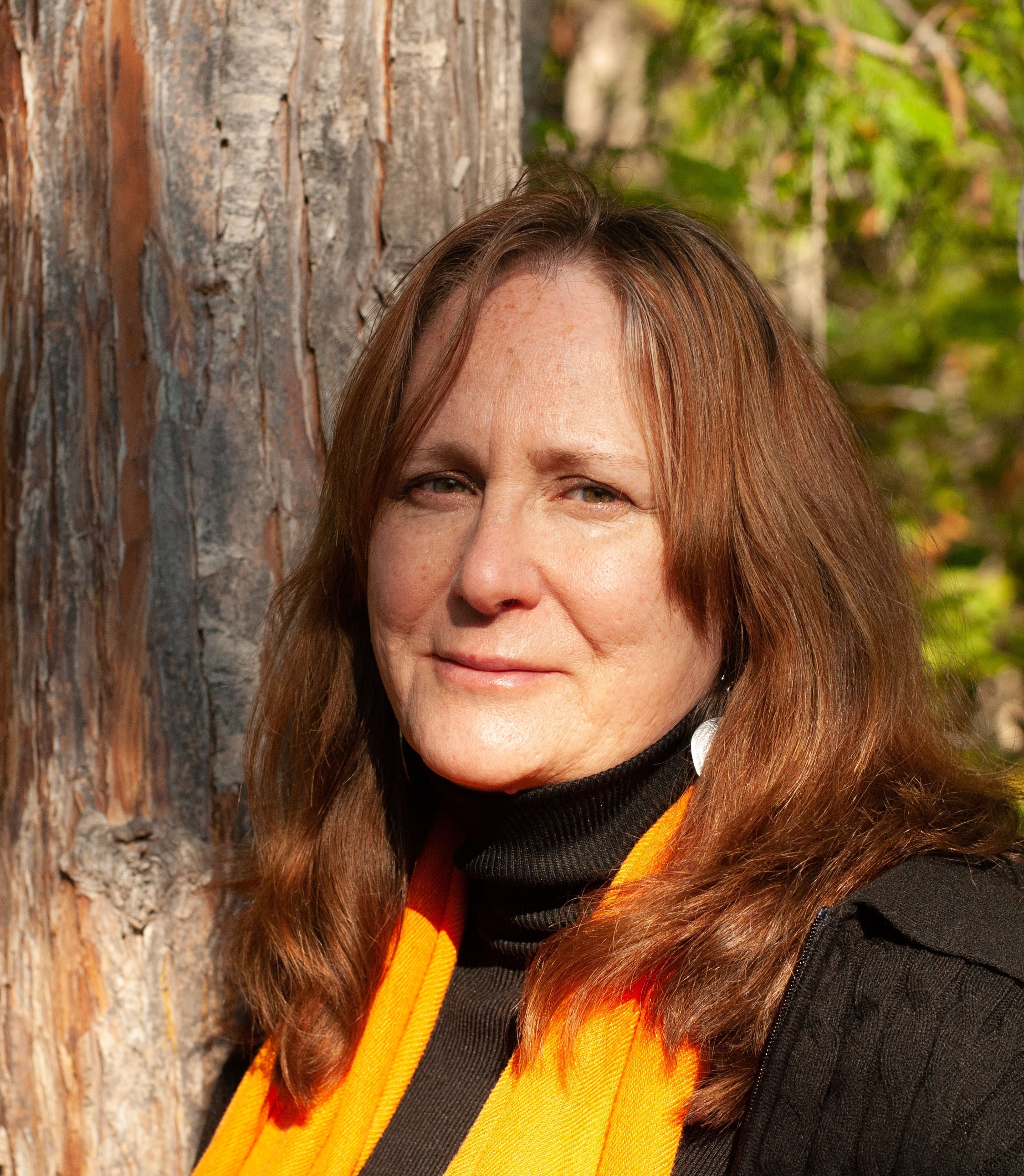
For this issue I am delighted to meet Canadian writer Gail Anderson-Dargatz. I’m not sure if there is a genre she hasn’t written in!
Gail, you are an extremely successful and experienced writer, working across most genres: poetry, short stories, novels and YA fiction. Within these genres you tackle everything from thrillers to historical dramas, all with gorgeously engaging titles. The Cure for Death by Lightning, your first novel, really shows your eclectic approach. It’s a coming-of-age story set in rural British Columbia during WWII that features magic realism elements and recipes throughout! I wondered what initially set you on the path to becoming a writer? Have you always written? When did you first think, “I’m a writer”?
My oldest sister tells me that when I was seven, I told her I wanted to be a writer. I even have a note written at the time to that effect. My sister was a writer, and my mother was a writer. More importantly, my parents were both big readers. I grew up in an environment where writing and reading were valued. So, I grew up writing. I just took it for granted as a pastime. I didn’t believe I could make a living at it (and I sometimes still don’t!) but I couldn’t think of anything I’d rather do. I bugged the editor of our local paper, The Salmon Arm Observer, to let me write stories in my teens, mostly about school stuff. Later I took a short journalism program and again bugged the editor of my local paper into hiring me as a cub reporter. During the time I worked there, I started sending my fiction stories out to literary magazines and contests. One of them won a competition judged by Jack Hodgins. He became my mentor as I entered the University of Victoria creative writing program. While there I continued to send stories out and one of them, pulled from a rough draft of The Cure for Death by Lightning, won the Canadian Broadcasting Company (CBC) short story competition. I met an agent at the gala who took me on and eventually sold the novel internationally, launching my career. It was something of a Cinderella story, as I was milking cows with my first husband at the time, but it was a Cinderella story that was ten years of work in the making.

It definitely sounds as if you were born with the writing gene! Out of all the many and varied characters you’ve created, who is your favourite?
That has to be the character I’m working on now, in my current project. She’s gifted, quirky, an odd duck who is just trying to find a place to belong in a world that doesn’t get her. In other words, she’s more like me than any character I’ve written to date. I’m gifted and have a family of gifted souls. Giftedness is not what most people think; it’s more about being hard-wired differently, experiencing the world differently, than about intelligence. I’m exploring this neurodiversity in this character, who I’ve already grown to love.
She sounds wonderful, I’m looking forward to meeting her! I was interested to learn that you started out writing poetry and short stories before becoming a novelist. How did those forms inform your novel writing? Did you find that the economy and tightness of the poetic and short story forms fed into your novel writing or did you let go and relish the freedom of more space to develop your words?
Many future novelists start out writing short stories and poetry. I think for a newbie it seems easier than wading into the intimidating novel. But I quickly learned that the novel is in many ways easier to write than a short story. At least it is for me. Short stories and poetry require more precision. A novel allows for more room to play, to explore. It just takes longer to write, and perhaps requires more of a commitment on the part of the writer. Or more to the point, writing a novel is an act of faith that the process will eventually take you where you need to go. That process can take years unless a writer learns about structure and outlines. That roadmap speeds up the process hugely. For example, The Spawning Grounds took me nine years to write. Nine frickin’ years! I went from concept to finished draft on my thrillers in less than two years.

The Young Adult market is one that has really taken off in recent years and J K Rowling is often credited with making reading popular again with her Harry Potter series. I notice your books are categorised as “hi-lo” or “literacy learner novellas” for both young adults and adults. How do you scaffold these books in order to help readers with their literacy skills?
Hi-lo books are high interest, low vocabulary or reading level books. They’re written for striving or reluctant readers, to help them improve reading skills. And they are highly challenging to write. The books are short, usually under 20,000 words, and sometimes only 6,000 words. Sentences are short, at no more than 15 words. Paragraphs and chapters are short. The cast of characters is usually limited to 5. There are no flashbacks and little in the way of the symbolism or intertextuality that readers usually take for granted, as these literary techniques confuse a struggling reader. As the books are often used by ESL readers, cultural references must be explained. In the editing process, every word and phrase is considered carefully. It took me some time to get the hang of them, but now I can write them very quickly, usually in under a month. I’ve written 14 hi-lo books to date, and this summer I’m working up my next.
Even though they are challenging to write, I’ve found hi-los the most rewarding of all the kinds of books I’ve written. For many who pick up the hi-lo, this is the first novel they have read. When I hear back that a hi-lo book helped a struggling reader fall in love with reading, well, that’s the best feeling ever.
You do a great deal of mentoring, running retreats and working with individual writers as well as providing wonderful writing resources on your website. How do you manage to balance nurturing your own creativity with helping others to explore theirs? I suppose I’m asking how you maintain your own writing wellbeing, always a difficult balancing act when you are in the process of “giving” for much of the time.
Hah! When I figure that one out, I’ll let you know! For so many of us the big juggle means our own creative life goes on the backburner. But of course, as a working writer, I have to keep my creative juices flowing. I find it’s not so much the workload that creates problems for me but switching gears from mentoring to editing to writing (and parenting) and back again. So, I have designated writing days which I try to protect. I keep my teaching and editing life confined to other days. That doesn’t always work, of course, but it’s the goal. I’m lucky that I have a creative family who understands and gives me my space. My husband recently built me a beautiful office where I have three designated desks: one for writing, one for teaching and mentoring, and one for administration. That really helps. When I sit at a given desk, I’m primed to slide into the right headspace for the task ahead.
I love the idea of three desks, that’s genius! Gail, what three essential pieces of advice would you give to emerging writers?
My first piece of advice would be to make writing play. I’m often asked how I discipline myself to write. I don’t! Or at least I don’t anymore. Writing works best when we’re having fun, when we’re in the flow. When we push our creative minds to work, they rebel. I do believe in habit, however. Again, creating a designated writing space, and working there at the same time each day, cultivating writing rituals that are your own, all contribute to creating that state of flow we’re looking for.
Second, believe in yourself. We need to have faith, a belief that we can, in fact, do this. At the same time, though, realize that no matter how accomplished a writer is, they will still struggle with self-doubt. And that’s okay. Our self-doubt can fuel our creative lives, push us to be better writers, and people. It really helps to have a community of writers to tap into, to talk to about our worries, struggles and fears. It helps to know we’re not alone.
But the best piece of advice I was ever given was from my mentor Jack Hodgins. He told me to resist the urge to publish too soon. There are opportunities to get our work out there, but once its published, there’s no pulling it back. And if it isn’t fully cooked, you’ve lost an opportunity to create something truly great. That goes for sending work out to an agent or editor. We often only have one chance to impress them, so we want to make our work the very best it can be. That means working first with alpha and beta readers, then investing in developmental edits if we can afford it. Agents and editors are now looking for highly polished work going in.
Very wise and helpful words, thank you. Could you tell us about two or three highlights of your writing life and maybe even share a low point and how you picked yourself up from that?
Oh, there have been so many highlights that I don’t know where to start. I’ve been so very lucky. I’ve met many of the writers that I admire, so that’s been huge. I suppose being on the short-list and at the gala of the Scotiabank Giller Prize not once but twice are my biggest professional highlights. But you know, I also remember standing there in those glittering rooms with the Canadian literary darlings all around me thinking, how did I fool all these people into believing I belong here? Total imposter syndrome. And the success I had early in my career, though wonderful, was also terrifying. I’m a highly sensitive introvert and, again, I was milking cows when my books took off internationally. I had no idea how to act and was overwhelmed by it all. I actually fell into a deep depressive episode during those years.
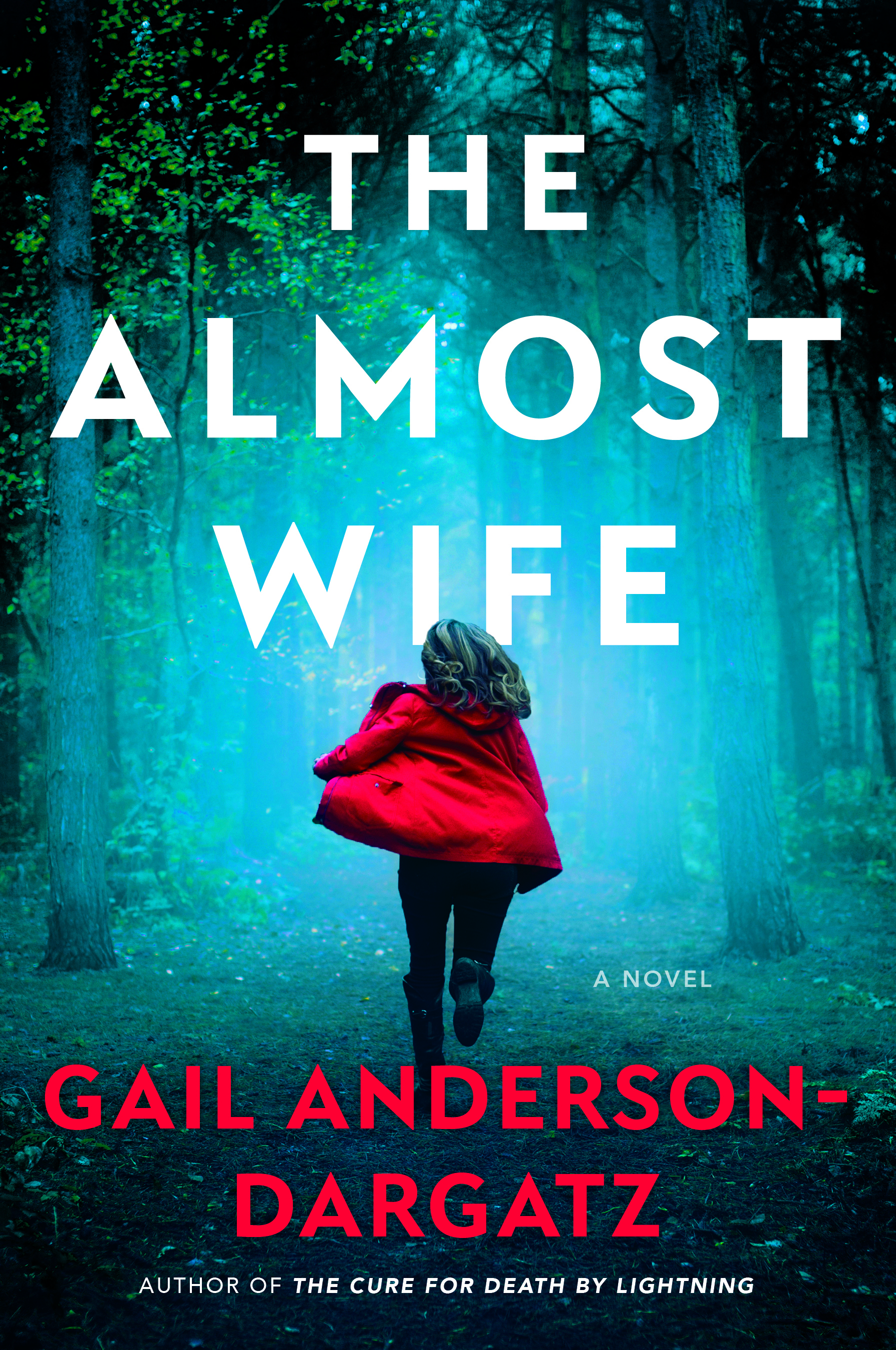
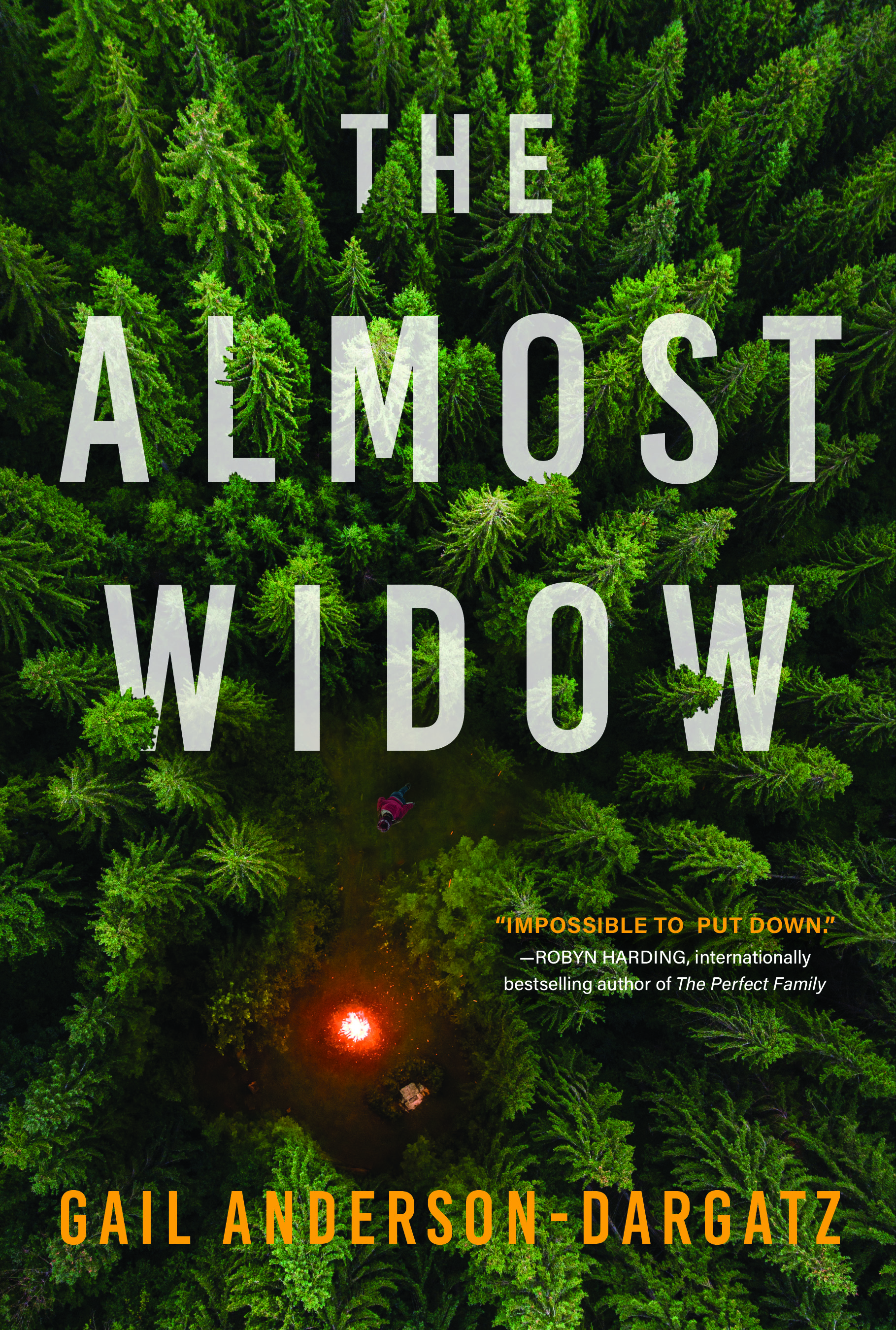
I also hit a point in my late forties, early fifties where I just didn’t want to write anymore. I think most of us hit that point in our careers where it loses its zest. Maybe we’re burned out. Or maybe it’s just: been there, done that. For me, writing had become work. But then somewhere in there I saw my kids writing for fun, and I remembered what that was like, to write not for publication or awards, but … just because. That was the point I asked my agent if she thought I could get away with writing a thriller. To my surprise she said yes and found me a supportive editor at HarperCollins. Writing that first thriller, The Almost Wife, and then this year’s release, The Almost Widow, rejuvenated my writing life. I found the play in writing again.
Thank you so much for sharing that Gail. It’s important to know that it’s not all plain sailing. Now, back to those wonderful three desks – you’ve lived up to my expectations as I always have a romantic vision of the places people write, even though I myself tend to write on scrappy bits of paper on trains! But tell us about the days before the desks! And how do you give yourself a break from writing?
Until our four kids (mostly) moved out, I had to find my writing space where I could. When they were little, that meant the back hallway where they ran back and forth to get inside and outside the house. It was crazy! It got so bad that my husband bought me a couple of traffic cones and instructed the kids to leave me alone when they were up, and I was writing. It sometimes worked, but mostly they just stood by the cones and argued with each other until I gave them attention.
So yes, I went on a lot of long, long walks to find peace and my creative mind. I learned to compose long passages of my project in my head as I walked. I still do that. Walking has become part of my daily writing routine.
Traffic cones! I love the creative solutions your husband comes up with! Do you have a specific process for your writing projects? Maybe different genres require different approaches?
I learned a whole lot from writing both the hi-lo and the thrillers that I’m applying to my literary work. I now start by writing a synopsis, which I brainstorm over with my husband, my son (who is my alpha and beta reader, and my copy editor), and then my editor. When I’m sure about the synopsis, I then create a chapter outline. When I think that’s working, I then move to the discovery draft. The planning really helps speed up the process but it’s in the discovery draft that surprises turn up. I incorporate those surprises back into the outline, which brings up new surprises, which I incorporate back into the discovery draft … Back and forth. It’s a very fluid process, neither ‘pantser or planner’ but both.
I hesitate to ask what’s next for you Gail, you seem to have covered all the bases! But, here we go, what’s coming up for you on the near and far horizons? Anything you can share?
I’m continuing to play with the next project. It’s a more upmarket novel this time, but I’m exploring the romance structure along with a little, mild, time travel. I’ve always wanted to write a time travel story, and here I go!
Thank you so much Gail, I’m so glad you have three desks, you achieve so much I’m convinced that there are actually three of you!
Return to Journal
GAIL ANDERSON-DARGATZ’s first novel, The Cure for Death by Lightning, was a finalist for the Scotiabank Giller Prize and won the UK’s Betty Trask Award, the Ethel Wilson Fiction Prize and the Vancity Book Prize. Her second novel, A Recipe for Bees, was nominated for the International Dublin Literary Award and was a finalist for the Scotiabank Giller Prize. The Spawning Grounds was nominated for the Sunburst Award and the Ontario Library Association Evergreen Award and short-listed for the Canadian Authors Association Literary Award for Fiction. Her thriller, The Almost Wife was a national bestseller in 2021, and her most recent novel, The Almost Widow, just released in May 2023, also hit the Globe and Mail bestseller list.
Gail also writes young adult and hi-lo books for the educational market. Her book Iggy’s World was a Junior Library Guild Gold Standard Selection and shortlisted for the Chocolate Lily Book Awards. The Ride Home was short-listed for the Sheila A. Egoff Children’s Literature Prize, as well as the Red Cedar Fiction Award and the Chocolate Lily Book Award.
She taught for nearly a decade in the MFA program in creative writing at the University of British Columbia and now mentors writers online. Gail Anderson-Dargatz lives in the Shuswap region of British Columbia.
http://www.gailanderson-dargatz.ca/
Return to Journal
Sue Burge is a poet and freelance creative writing and film studies lecturer based in North Norfolk in the UK. She worked for over twenty years at the University of East Anglia in Norwich teaching English, cultural studies, film and creative writing and was an Associate Lecturer in Creative Writing with the Open University. Sue is an experienced workshop leader and has facilitated sessions all over the world, working with a wide range of people – international students, academics, retired professionals from all walks of life, recovering addicts, teenagers and refugees. She has travelled extensively for work and pleasure and spent 2016 blogging as The Peripatetic Poet. She now blogs as Poet by the Sea. In 2016 Sue received an Arts Council (UK) grant which enabled her to write a body of poetry in response to the cinematic and literary legacy of Paris. This became her debut chapbook, Lumière, published in 2018 by Hedgehog Poetry Press. Her first full collection, In the Kingdom of Shadows, was published in the same year by Live Canon. Sue’s poems have appeared in a wide range of publications including The North, Mslexia, Magma, French Literary Review, Under the Radar, Strix, Tears in the Fence, The Interpreter’s House, The Ekphrastic Review, Lighthouse and Poetry News. She has featured in themed anthologies with poems on science fiction, modern Gothic, illness, Britishness, endangered birds, WWI and the current pandemic. Her latest chapbook, The Saltwater Diaries, was published this Autumn (2020) by Hedgehog Poetry Press and her second collection Confetti Dancers came out in April 2021 with Live Canon. More information at www.sueburge.uk
WordCity Literary Journal is provided free to readers from all around the world, and there is no cost to writers submitting their work. Substantial time and expertise goes into each issue, and if you would like to contribute to those efforts, and the costs associated with maintaining this site, we thank you for your support.
Make a one-time donation
Make a monthly donation
Make a yearly donation
Choose an amount
Or enter a custom amount
Your contribution is appreciated.
Your contribution is appreciated.
Your contribution is appreciated.
DonateDonate monthlyDonate yearly WordCityLit