Table of Contents
Letter from the Editor. Darcie Friesen Hossack

Dear Readers,
Welcome to our final issue of WordCity Literary Journal, the Mental Health Issue.
Fittingly, it’s not for lack of success, but for the sake of my own mental wellness, that I’m bringing our beloved journal to a close. And yes, I am seeing a therapist.
We began WordCity in the autumn of 2020, mid-pandemic, pre-George Floyd, before Russia brutally invaded Ukraine, before terrorist Hamas members swarmed over Israel’s border and murdered 1,200 people, before Israel’s horrific retaliation that has seen the loss of tens of thousands innocent lives and destruction of so many more. Before the grave humanitarian crisis in Sudan that barely makes the news in the West. Before the fall of Roe v. Wade in the United States.
It’s been a lot. And WordCity has rallied to each cause and so many others, in attempts to shine the light of poetry and prose into places and subjects that are dark.
In doing so, we’ve created a community of readers and writers. Friendships have resulted. Emerging authors have received their first publishing credits. Established writers have graced us with their work and their time. And we are grateful beyond the ability to put our own words to the page.
What, at first, was a pandemic project, is coming to a close as something people love enough to mourn. Love enough to revisit and reread. Love enough to tell us what WordCity has meant to them these four years.
And for that, we thank each and every one of you.
Sincerely,
Darcie Friesen Hossack
Fiction. Edited by Sylvia Petter
Helen Mason
Maybe Yes, Maybe No
Chapter 1
I’m sitting in one of my favourite places, our balcony overlooking Mud Lake. Afternoon rays warm my skin. A green smell wafts up from the trees that stretch as high as my floor. Birds I don’t recognize sing nearby. For once, the loud voices in the apartments around me have fallen silent. And then, music sounds from the heat vent just inside the door. Heavy metal. Like the vent. But it’s muted, as though someone’s speakers aren’t working. I’ve been hearing sounds like this for three, maybe four, months. My head nods, and my feet tap to the beat. Someone in one of the apartments must have a high-end system. Probably stolen.
I grab an apple and a granola bar from the kitchen. Taking a bite of apple, I stuff the bar into my hoodie pocket and head for Britannia Beach. It’s a great place to swim, except that, every year, idiots get caught in the current and swept downstream. I’ve seen the Zodiacs go out looking for them—and come back with lumpy body bags.
Sticking to the bike path, I walk as far as the picnic shelter. Khalid’s already there, left leg forward as he does some post-run stretches. His dark hair shields his face with its shaped eyebrows, smoky eyes, and purple-tinged lips. Khalid and I have been best buds for as long as I can remember. I used to worry that our friendship would get all mixed up with the boy/girl thing, but I don’t anymore. Two years ago, when we were fifteen, Khalid told me a secret I’m not allowed to tell anyone else—until he’s ready.
Hey, I made a promise, and I’ve kept it.
Khalid finishes his stretches, and we head toward the pier. Today, Khalid jitters like he wants to talk. I don’t ask what about because I need a smoke. Hands trembling, I search through my pockets. Only lint because I promised Mom I’d quit when she insisted smoking would make me more likely to get type 2 diabetes like her. Also, she claimed that watching me savour a cigarette made it harder for her not to reach for one.
So, I stopped. At least around Mom.
I don’t smoke cigs anymore. But I mooch them, mainly from Neil, who hangs out on the street and in the woods around Mud Lake.
“Come on.” I grab Khalid’s hand and drag him onto the Mud Lake trail. A bunch of little kids block the path, all with their hands over their heads. They stand straight and still, holding out black sunflower seeds on flat hands.
A chickadee flits to one girl and pecks a seed from her outstretched palm. I grab my cell to try for a pic. Just when I’m focused, a kid’s hand blocks my shot. Damn. But shit, they’re just kids.
Continue Reading
Eva-Maria Ehrhardt
Tuesday morning
It’s been one of these mornings. The best laid-out plans could not meet their goal. Instead of getting ready and going to the mother-child group where your child could play and interact with other children of the same age and where you, the mum, could meet up with other mums– talk to adults, feel less lonely, but instead feel inspired and connected, feel your social battery recharge, feel like someone is listening to you again; that what you say matters; you are seen as a woman, an adult as well as a mum – instead, the child that you love more than anything else in the world, that you carried through nausea, constipation, frequent urination, heartburn and other aches, that you birthed in a 27 hour process, which has left your partner and you with trauma, that has changed your body and mind forever; this child decides to fight the diaper change. Maybe your child just wants more play time or has not slept well. The full diaper smells and then eventually leaks, leaving three small puddles of pee in the flat – again something to clean, you feel; you know, you can neither clean it all nor catch up to the hills of laundry anyway. Shrug it off. So, you tried to get your child to cooperate by playing, explaining, yes, bargaining, too – knowing it is the wrong move – but also by reading books, listening to music, even dancing – but still no successful diaper change. No brushing of these tiny teeth. Your child is not dressed; no hair has been combed, yet. And the clock is ticking. Wow, already so late. Even if we changed the diaper now, we would have to undergo the bathroom routine and then we both must put on clothes…Too late.
Continue Reading
Nasser Yousefi
My Kind Father
Good morning, dear father of mine…
What?… Yeah… I slept well last night… a lot.
I had some funny dreams too… How about you?
Wow, what a wonderful breakfast you prepared… bread… cheese… walnuts… milk… tomatoes…
I adore these breakfasts that you make for me every day…
What?… You like the smell of fresh bread… Me too.
Come and sit next to me… right here… a little further…
You’re wearing such vibrant clothes today… sky blue… You know, blue suits you so well… it makes your face even kinder.
But how do you find your colorful clothes?… What?… Do you touch and feel?
I’m clearing the breakfast dishes…
You too, go and pack up so we can get ready to go… It’s great that my school and your workplace are so close.
Continue Reading
Ivan deMonbrison
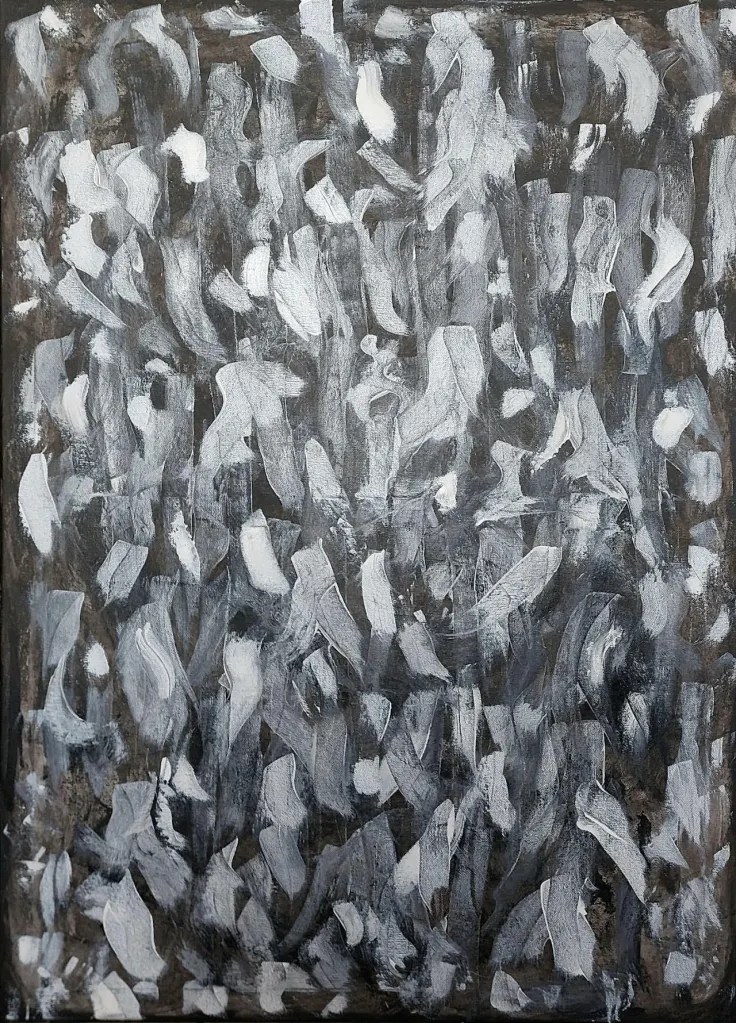
Painting: White shade n°21
Walled up
– You know that you should never reveal anything about you, that is to THEM.
– This is what we should always all be able to do, whatever it might take.
– Just never stop hiding out from them, to finally become totally undetectable. And in order to do this, you need to live inside a wall, to disappear for good.
– Who knows, maybe that would work out? Yes, you must allude them at all costs, find the other path, the one that nobody ever takes, unaware of its very existence and of the mere possibility of even using it.
What struck him that day was especially the crazy people. There are way too many weirdos hanging out everywhere, at least in his eyes.
– But, perhaps it’s not the very ones that all think about in the first place who are really truly insane in the end?
Continue Reading
Chantal Lavoie

Morning Star
Caked in rich mud, it lies in the husband’s gloved hand, plucked from the garden with an accidental carrot and a deliberate handful of weeds. It smells green. He hoses it off at the side of the house and carries it into the kitchen. He hands it to her, her own hand coming out of the dishwater to take it. The blue-grey stone is vaguely egg-shaped and egg-sized.
“A fossil?”
“Not sure. Maybe. Sure was close to the surface.”
She sets it on the windowsill alongside a fragment of driftwood, shells they gathered with their grandchild, and a small alien made of Playdough with bent toothpicks for antennae.
The next day she sets it on the piano between a family photo and a potted plant. An hour later she moves it to their bedroom, alongside her jewellery box on the pine dresser. Then it’s a paperweight in the small office, holding the month’s receipts against the desk. This position doesn’t last the day before she picks it up again.
The doorbell sounds while she deliberates. She shoves her hand into the pocket of her embroidered woolen vest. She answers the door to so-and-so selling this-or-that. When she removes her hand from her pocket, the egg stays behind.
Continue Reading
James Moran

My Deer Eye
I was sitting on the roof of my Volvo, right outside my apartment, smoking a hand-rolled cigarette and drinking a non-alcoholic Clausthaler when I saw him.
I had been imagining what I would say to the pretty waitress if she emerged out of the back of El Tapatio. I was searching for a way to say “my heart is broken” in Spanish. But I thought she spoke English so I could just say “my woman left me and my heart is broken.” That could elicit a response. Or not; I didn’t care. I decided I would say “Perdi mi ojo venado (I lost my deer eye).”—My favorite line from the band Jaguares. Maybe she would know it. Maybe she wouldn’t. The voices cackling as if drunk behind the frenzied banda music blaring just inside the door of the restaurant were probably the voices of the clean-up crew. It was 1:30am. I wasn’t confident she remained on the job this late.
The figure all in black spotted me from outside the fence and sauntered into the parking lot. He said to me, “Got an extra smoke,” so softly that had it been a daylight hour I could never have heard him from my high perch.
“Yeah,” I mumbled as I dug the tobacco pouch out of my pocket.
Continue Reading
Abhishek Udaykumar
Kashmiri Pulav
But when I reached Honia’s street I saw that the power was out, and that the evening there seemed duller than the rest of the city. The heat had slowed me down. There was a skinny shopkeeper with spectacles dropping fish food into his tank, his pet store was invisible beyond the entrance and its birdcages and shelves of fish bowls. A woman stood in the corridor outside her flat and spoke to a woman in the balcony of the next building. A group of children took turns running up a concrete slope, showing off their skills in the lightless gully. I reached the corner with the iron lady and her cart, but I still couldn’t remember where Honia lived. The street looked different there, it seemed less chaotic than the rest of the locality. The old apartments sat on an elevated plaza, their ground floors had been turned into barber shops, pharmacies, jewelers, bakeries and grocers, breaking off at intervals where the street was intersected by finer alleys. A staircase ran through the heart of each building, leading up to the flats. I was fatigued when I finally found her waving from her third-floor balcony, it was darker now and it struck me that she had yelled my name when I was on the street, I didn’t realize it until I turned into her landing and heard her say my name again.
‘I’ve started collecting candles now,’ she said, leaning against her kitchen counter and biting into a breadstick. ‘I use the plain ones mostly, though. I sometimes don’t realize when the power comes back.’
She snacked on a few more breadsticks before we went up to the terrace. I could see that she had been working all day and I wasn’t sure about when to tell her. There was a plant growing out of a crevice and a pink plastic ball in the corner that caught my eye.
Continue Reading
William Baker

The Last First Friday
First published in Literally Stories, 2/2016.
Brandt Colson watches his frenetic daughter as she flits around the room in her usual style. She is talking about ten different things at once, fussing over details and generally majoring in the minor. Brandt notices the bored and frowning, mostly grown grandson as he leans against the wall at the apartment entry. The boy takes no pains to hide his brooding impatience.
The daughter stops talking and pauses in front of the chair. Brandt looks up. “There is plenty to eat and all laid out. Your list is on the counter. Are you sure you feel up to it, Dad?”
“I feel fine,” he says. The stroke is a jumbled memory now.
Continue Reading
Rod McConkey

A Parent’s Love
A loud crash and the sound of glass shattering brought Noah out of the book he was reading.
“Is everything okay, Matthew?” Noah called out.
“Um…” Matthew said.
Noah set the book aside and got up off the couch.
“Don’t move, I’ll be there in a second,”
“Don’t! There is broken glass everywhere,” Matthew said with a hint of something in his voice.
“What broke?” Noah said as he made it next door.
Matthew pointed at the destroyed picture frame that was lying on the ground.
“How did that happen?”
“I…” Matthew started to say but burst into tears.
“Come here Matthew,” Noah said as he sat in a chair. When Matthew came close enough, Noah grabbed him and pulled him onto his lap.
“Matthew, I won’t be mad,”
Noah waited patiently while Matthew calmed down.
“I was playing with the soccer ball and accidentally kicked it too hard,”
Continue Reading
Navraj Sandhar
Family Feud
The soft sizzle of buttered bread on the pan filled the kitchen with a comforting scent. David, standing in a worn apron, expertly flipped a slice of French toast as Megan, still rubbing sleep from her eyes, entered the room, drawn in by the enticing smell. She reached for the coffee pot with her gaze fixed on David.
“Good morning. Why are you up so early?”
“Morning! Just cooking some breakfast,”
The sizzling continued, Megan arched an eyebrow, “You woke up just to make breakfast, what’s the occasion?”
“Nothing special. I wanted to make breakfast for you and Jane. I thought you deserved to sleep in and wake up to your favorite.”
The golden hue of morning sunlight painted the kitchen in warmth. David worked at the stove; the lazy Sunday morning smell of French toast wafted through a shared space. Today though, the atmosphere was different.
“Okay… thanks. You’re being weirdly nice today. What do you want?” Megan’s skepticism filled the room like a subtle challenge.
Continue Reading
Yuan Changming
Emotional Curiosity
Ming is definitely sure he has fallen in love with Hua once again in their mythically entangled lives, at first sight during a recent encounter casually arranged by a common friend, at an age too old to enjoy the full dimensions of sexual love, more passionately than passion itself, though separated from her afar by the vast Pacific as well as by the vicious Pandemic, while he has been living quite happily with his beloved wife in Vancouver, the true earthly paradise of all Chinese diasporas as he sees it.
Despite his certainty about his own feelings for Hua, there are still many things he is not sure about: for example, what is it exactly that is so special about her? Why does he find her so irresistible? How much does she love him now? Does he love Hua and his wife at the same time, to the same extent, and in the same sense? Is his affection for Hua a “spiritual derailment,” a case of Platonic love, or something really immoral? How should he control, if he could at all, his clandestine relationship with Hua? Perhaps he ought to confess their intimacy to his wife? What if his wife finds it out for herself? But among a dozen more such questions, he is wondering, first and foremost, why on earth he has cherished such a long and strong affection for Hua. “What emotional spell has she cast over my poor soul?” Without getting a satisfactory answer to this question, he knows he will never “die with his eyes completely closed,” just as the Chinese proverb goes.
Continue Reading
Michael Edwards

The Strange Wonderful Life of Lakeesha Rydell
Also Known As
(The Dearly Beloved) Sister Cecilia
Formerly of Detroit, Michigan
In Detroit, Lakeesha Rydell is a legend. To this day. It’s all in the record, of course, but let me retell it right here, in writing, one last time. To honor her.
As you may already know, Lakeesha was American. She was black, and she was lesbian. And the world was too much for her, so she became a nun. A Catholic nun. And oh, that is a story in itself, but let me move along. I can circle back, later on.
The Mother Superior of that order had taken a special interest in Lakeesha, from day one, and had helped her through the entire process. It took quite a while, but Lakeesha finally made her vows. She had now taken on a new life, and she was, therefore, given a new name: Sister Cecilia.
And then she went back into the neighborhood, to make a difference. First of all, to convert the drug dealers. Because she knew: they were a plague upon the neighborhood. And a torment to the people. After all, she said to herself, Saint Francis had tried to convert the King of Babylon. And Lord Jesus had tried to convert the Jews. Not to mention, all things are possible with God. All things are possible to one who believes.
But then, after a great deal of missionary work in the streets, Lakeesha realized that she would, first, have to convert the drug kings, at the top. They were the source of the problem. And the agents of Satan. But, however she tried, (and she did try, in every way she knew), she couldn’t reach them. They wouldn’t even give her an audience. The Pope, himself, might have given her an audience, in Rome, but not the drug kings. In their pride.
Continue Reading
Abbigale Kernya

Dead Dog in a Time Machine
December 12, 2021
I’m up to my neck with all the love I never got to give you. I don’t know how to give it back.
A bubble from the beige water jug behind the pews rises in rhythm with the gasps from your mother. My black jacket still smells like smoke. My hands are cold and vacant by my side.
December 12, 1995
“Why do I have to be on the truck?” I said, whining and cold.
“It’s the Santa Clause parade. Your grandparents want to see you, and there is a friend I want you to meet,” said my father, buttoning up my blue snowsuit. It was too big and still smelled like my older brother and I hated it. We drove to Lindsay. I kicked my father’s seat, I stared out the window, my brothers fought, the seatbelt rubbed too hard against my neck.
The bed of my uncle’s pickup truck was laced in red cloth and a flimsy Ho Ho Ho gold banner wrapped around it. My father picked me up and sat me down and told me to be good. Behind me, my brothers stood and chucked candy canes at people passing by. A girl lifted herself up beside me. Her hair was smooth and long and I had never seen a kid wear glasses before. She looked at me, then back at my brothers—unbothered by a stranger on our truck—and at me again.
Continue Reading
Non-Fiction. Edited by Olga Stein
Olga Stein
Editorial: Closing Remarks
Dear Readers,
As we appear to be on the last edition of WordCity, I want to take a moment to thank all of you for your support and attention to our magazine. We started this project in 2020, at the height of a world-shattering pandemic, and we’ve continued it through events that even the pandemic couldn’t have prepared us for — Russia’s brutal invasion of Ukraine, Hamas’s barbaric attack on defenceless Israelis on October 7, 2023, Hamas’s hostage-taking of hundreds of civilians, including infants, and the ensuing war on Gaza, a state whose two million people have paid a terrible price for being governed by Hamas, a proxy for the theocratic and ideologically imperialistic dictatorship of Iran.
We started this magazine as a way to offer writers a platform that was inclusive and supportive. Our aim was also to counter the effects of the COVID pandemic by doing something productive and creative (look up my editorial on the connection between writing and well-being in our March 2022 issue: https://wordcitylit.ca/2022/03/18/editorial-by-olga-stein/). Importantly, our editors saw an opportunity to help other writers get published, whether experienced or new to their practice. This is no small public service, especially at a time when a vast number of people were confined to homes, and watched with horror the rising number of COVID’s victims.
For our Canadian contributors, WordCity turned out to be a boon. Canada’s CanLit community has a genius for gatekeeping on the one hand, and incestuousness on the other. Many Canadian writers debuted their work in this magazine because we made a point of being welcoming to all. Authors from the Indian and African subcontinents also had the chance to reach North American readers — many of for the first time — because of WordCity. Of note is that a number of our editors are non-Canadian, and this allowed us to forge friendships across national borders and continental divides. These literary networks and associations feel entirely normal today, but five years ago, they stunned me by rendering whole continents accessible for frequent conversations with fellow editors and contributors.
Continue Reading
Anne Sorbie
A Murder of Crows: Co-Mingling Complex Mental Health Patients with Veterans and Seniors in Continuing Care Homes
On my way home from a meeting with a member of the Calgary Police Service recently, I saw two magpies and three crows, all dead in a long stretch of the same grassy median. That made me think about whether the five represented a group, but the crows form a “murder” and the magpies a “tiding” or a “gulp.”
Gulp. My meeting with CPS was in fact about criminal activities occurring in a Continuing Care setting among people with complex mental health (CMH) needs who are housed with Veterans and seniors. Together, the Veterans/seniors and the CMH patients constitute a co-mingled, Continuing Care group.
I have no idea of course why the magpies and crows lay dead in the grass a short distance from each other. I might assume they were hit by passing vehicles, but then again, all of them? Did they all fall from the sky at the same time? Or did something else entirely, something unwitnessed, happen to them?
Something else entirely — something that was never announced — has been happening in Continuing Care over the last few years in Alberta. As a result, folks over the age of 18 with complex mental health conditions are being housed together with seniors, including those with dementia, in what were historically known as long-term care nursing homes. These, and in fact all such facilities in this province, are now known simply as Continuing Care facilities.
One such facility is Carewest Colonel Belcher (CCB) in Calgary, which began housing CMH patients in 2021 to take the strain off our hospitals during the pandemic. The stipulation at the time, according to former Health Minister, Jason Copping, was that the CMH patients were to be housed there temporarily and separately from the seniors —that is, on different floors, or in unconnected units. At Carewest Colonel Belcher, this policy has never been adhered to. Instead, unsecured CMH patients have been admitted to units on the second floor where physically frail Veterans and seniors reside.
Continue Reading
Gordon Phinn

Psychedelics and Mental Health
Years ago, I had the great good fortune to come across a short yet comprehensive cultural history of madness and its treatments as a review assignment for a literary journal. Roy Porter’s Madness, A Short History, while barely 50,000 words, felt almost encyclopedic, such was the grasp of this professor of social history of medicine from University College, London. Later I discovered his Mind-Forg’d Manacles: A Social History of Madness (1987) to round out my already blooming appreciation of his talent and insight. In this current expedition into the land of neurosis, psychosis and the smorgasbord of treatments I shall quote from it shamelessly.
The mad, not to put too fine a point on it, like the dismally poor and appallingly rich, have always been with us. For despite the optimistic jingles of those enamored of that post-enlightenment magic spell, progress, the apostles of the ever-onward and upward, the broad spectrum of societies — whether autocratic, democratic or barely surviving in shambles — repeatedly accumulate all manner of casualties, citizens unkempt and curiously off-kilter. It’s the rest of us, strong willed and seemingly stable, who earn the privilege of where to park the eternal problem of ‘madness’ while we shirk and shop elsewhere. This is a privilege we can neither avoid or ignore.
No fair might well be the righteous complaint, but the millennia-length trek through the mosaic of motivations and moves, from desperate and callous to empathetic and well-considered, convinced me that all solutions were temporary at best, and verging on hopeless at worst. This applies equally to all ‘solution,’ — whether outright denial, bemused toleration, familial restraint, varieties of exorcism, visitations by angelic spirits at the temple and genteel country lodge, the horrific city asylum, that barbed womb of restraints and ready cruelty, regimens of exercise, gardening and general community uplift, cooperative communities or sadistic incarceration, electroshock, lobotomies and drugs to repress, calm and stupify. What we end up with more often than not are zombies on the streets, suicides in the attics, loved ones straitjacketed with despair.
Madness, as I discovered, like many a behavior, is as old as mankind. The Babylonians, Mesopotamians, and Greeks held to various forms of ‘supernaturalism,’ spirit invasion and demonic malice. The individual, that weak vessel, who’s prey to passions and wild impulses, was ever open to possession. If the psychic civil war from hubris and ambition didn’t get you, some badass dude from hell would. Epilepsy was some sacred disease, to be countered with praying and sacrifices at the right temple, despite Hippocrates treatise On The Sacred Disease (approx 400 BCE), where he insisted it was no more sacred than any other malfunction. Blaming the god Hera for convulsions and ‘goat-like behaviour,’ and Ares for kicking and foaming at the mouth, was just plain ignorant and naïve, Hippocrates concluded.
Continue Reading
Eva Salzman
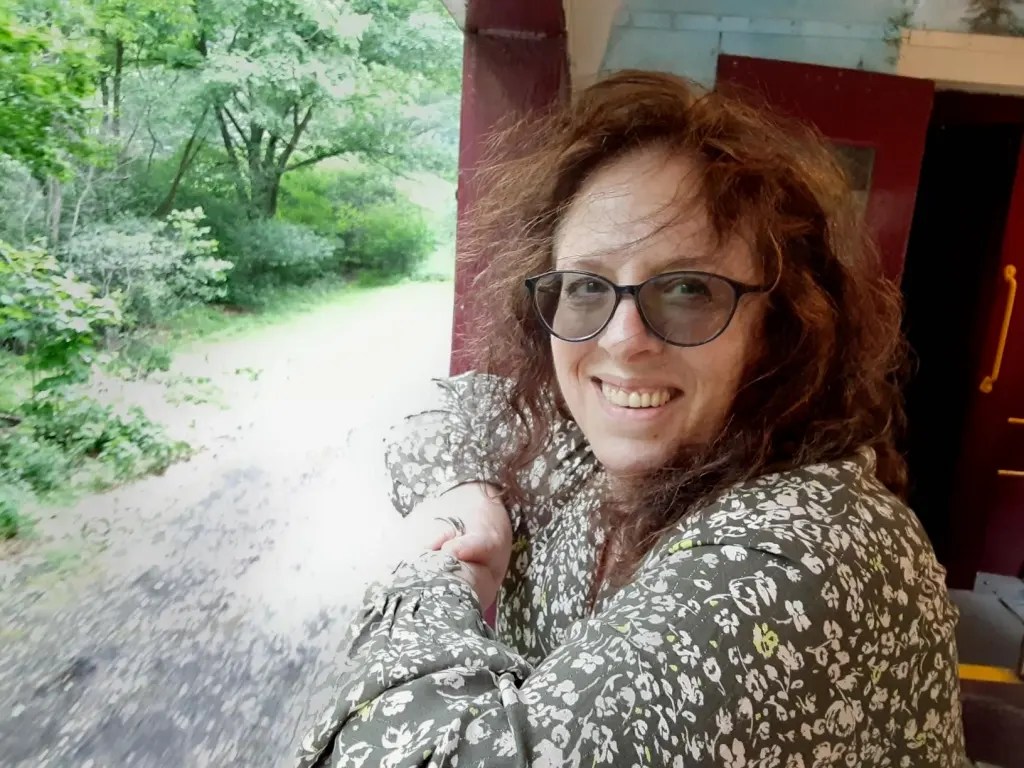
IN MEMORIAM: SARAH HANNAH
In May 2007, the talented and vibrant poet Sarah Hannah died tragically young, leaving behind a small but impressive oeuvre, her bereft family and friends (including this author), and many devoted students. As a person and a writer, Sarah was complex and exceptional: erudite and down-to-earth, strong and fragile, scathing and compassionate, her profound humanity undiminished by a caustic brilliance. To understand her personality’s exhilarating — and difficult— marriage of contradictions is to begin to understand her writing too.
Having received her B.A. from Wesleyan University, and a Ph.D. from Columbia University, Sarah taught at Emerson College in Boston. Her first book, Longing Distance (Tupelo Press, 2003), a semi-finalist for the Yale Younger Poets Prize, received widespread acclaim from leading poets for its formal dexterity, its verbal play and emotional potency. Her second volume, Inflorescence (Tupelo Press, 2007), published posthumously, confirmed the promise of the first. Longing Distance established her formalist credentials, although I suspect Sarah herself would have squirmed uncomfortably at a categorization implying some dry, toilsome, Casaubon-like endeavor, or a practice borne solely of ideology, and therefore at odds with her sensuous love of language and what she would have seen as the writer’s instinctive urge to understand how sound, rhythm, music, and a “precise manipulation of syntax, rhyme and structure” (to borrow her own phrase) distil meaning in poetry. Adherence to tradition can arise out of a sense of obligation, a fondness for linguistic exercises, or as a reactionary gesture. Alternatively, form can be understood not merely as an intellectual construct, but as the inevitable outcome of an organic process, starting with the basic components of rhythms and sounds, which ultimately progress to those forms because they most profoundly express otherwise inexpressible depths. Sarah’s engagement with literature was as much visceral as intellectual.
These matters were often the subject of our conversations, right from our first meeting, when she was my student at Wesleyan Writers’ Conference. She brought me a sonnet, knowing I share her love of the form. We laughingly referred to ourselves as ‘sonnet junkies’; we laughed a lot, and we both often laughed with bite. She was the kind of student who makes you forget your next appointment, although that teacher-student relationship was almost instantly supplanted by a deep kinship on many levels, and an enduring friendship.
Continue Reading
Literary Spotlight with Sue Burge. On Hiram Larew: A voice in the darkness

For this final issue of WordCity Literary Journal I’m delighted to be pinning down the powerhouse activist, writer and academic Hiram Larew. Hiram is actively engaged with what is happening in the world and his writing and writing projects reflect that. He has an uncanny ability to draw people in to the issues he is concerned about in a kind, non-judgemental way that is much more effective than the endless political ranting we have become accustomed to!
Welcome to WordCity Hiram! So, what first drew you into the writing world? Did you always know you wanted to be a writer? And what particularly draws you to poetry? Did your chosen career reflect your interest in writing or nourish it in any way?
I’ve always enjoyed working with plants. And as I think back, it seems that in their silent way, plants drew me into poetry. As a kid, my eyes were always amazed as what green could do. Some of my first poems were about the mystery of trees and vines — and how I loved them. From there, I began to ramble through poems that held secrets, poems that were confused with adolescence, first love poems and the like. Said slightly differently, one of my very best friends while I was sprouting was poetry. And, during my working years in the natural sciences, poetry was a steadfast companion — both a balm and spark. To this day, surprise in poetry delights me.
As a writer, what/who are your greatest influences, your muses?
Muses change with time. At lease, mine have. I can recall, for example, that in my 20’s and 30’s, my muses were centered on people. What was he or she thinking? Why did they act that way? When would they arrive? More and more, my muses are now focused on history, nature and gratitude, or as I say, time, mud and savor. And yes, questions are still important, of course. But now, they tend to be the open-ended, unanswered ones that are wrapped up in Maybes, What-Ifs, and Well, Okays. And, in terms of poets who steadfastly inspire me, I look to those who your readers, I imagine, also admire — e.e.cummings, Emily Dickinson, Dylan Thomas, James Weldon Johnson, Walt Whitman. They amaze me with their inventiveness, and give us all permission to experiment.
What advice would you give poets who are starting out in the world? Did anyone help/mentor you in a memorable way when you were starting out?
There isn’t a map or formula. There’s simply you. And so, a mentor should encourage your intent, your bravery and your instinct. And you should trust yourself as you write. And of course, that trust includes writing the strongest, longest-lasting lines that are in you. What do you want readers decades or centuries from now to hear and learn from you?
Continue Reading
Books and Reviews. Edited by Geraldine Sinyuy
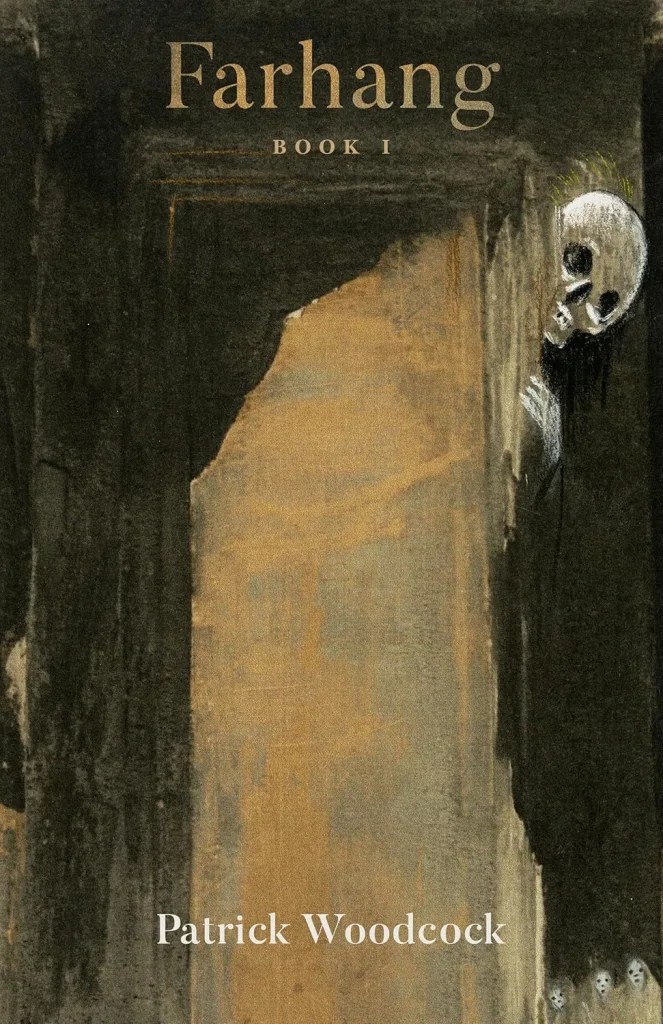
Book Review: Farhang, Book 1 by Patrick Woodcock. Review by Ava Homa
Published by ECW
In Farhang, Book 1, Patrick Woodcock, a seasoned Canadian poet and world wanderer, offers a profound and evocative collection of poetry that chronicles his three decades of living, volunteering, and teaching in some of the world’s most remote and complex regions. From Kurdistan to the hamlet of Paulatuk in the Northwest Territories, Woodcock’s poems are a rich collection of moments, some lost to time and injustice, brought vividly to life through his striking metaphors and similes.
Woodcock’s poetry is dense with historical, cultural, and geographical references, inviting readers to delve deeper into his multilayered subjects. His use of vivid imagery and piercing language evokes strong emotional responses, making the reader see, feel, and hear the world as locals do. The poems are not just read; they are experienced.
“Clouds as gashed as old kitchen pots, loitering in the sky/like what was once pushed out the crematorium we neared.”
Farhang is organized by time and geography, with themes and structures that evolve throughout the collection. Some poems cluster around specific ideas, only to give way to new themes as the reader progresses. This dynamic structure keeps the collection engaging and reflective of the varied experiences Woodcock has encountered.
One of the most compelling aspects of Farhang is its refusal to simplify or sanitize the complexities of the regions it covers. Woodcock does not impose Western standards or judgments upon the wounded landscapes of Kurdistan or the aboriginal communities in Canada’s north. Instead, he presents their realities with respect and sensitivity, free from self-importance or self-interest.
Despite its heavy and sometimes dark subject matter, the collection is not without moments of simple joy and beauty. These glimpses of light amidst the darkness offer a balanced portrayal of life, making the overall experience of reading Farhang both challenging and enriching.
Continue Reading
Contentious Conversations. A Review of Books by Gordon Phinn
Books referenced:
Manipulating the Message, Cecil Rosner (Dundurn 2023)
The Devil’s Trick: How Canada Fought the Vietnam War, John Boyko (Knopf Canada 2021)
Open, Nate Klemp (Sounds True 2024)
I Heard Her Call My Name, Lucy Sante (Penguin 2024)
A Memoir of My Former Self, Hilary Mantel (Harper Collins 2023)
Some People Need Killing, Patricia Evangelista (Random House 2023)
Naomi Klein, Doppelganger (Knopf Canada 2023)
Breaking And Entering, Don Gillmor (Biblioasis 2023)
The Book of Grief and Hamburgers, Stuart Ross (ECW 2022)
There Is No Blue, Martha Baillie (Coach House 2023)
Conversations With a Dead Man, Mark Abley (Stonehewer 2024)
Thick Skin, Hilary Peach (Anvil Press (2022)
Cathedral/Grove, Susan Glickman (Signal Editions 2023)
Songs of a Psychic Seahorse, Stephen Roxborough (NeoPoiesis Press 2024)
In the Bowl of My Eye, Keith Garebian (Mawenzi House 2022)
Blood Belies, Ellen Chang-Richardson (Wolsak & Wynn 2023)
*
It is no longer shocking or dispiriting to hear of public relations press releases becoming the first, and often the final, draft of the daily news. We expect it. But unless some serious investigative journalist takes a deep dive later, either for a media outlet with big pockets and a reputation to maintain or a courageous solo effort, the PR, with its built-in spin and questionable research favouring whoever happened to foot the bill, those studies and reports with their slants, stats and self-styled experts, elects itself to the accepted position du jour. Whether issuing from governments, corporations, militaries or security forces, all of it is subject to a full laundry of spin doctors and think tank operatives, who of course vastly outnumber the ever-shrinking teams of journalists, many of whom would investigate if they had any time to spare as they check the social media for trending narratives to feed the 24hr news cycle.
If you suspect the news is as much entertainment as information, if not more so, you are not far wrong. The evidence, as patiently gathered and offered by former Fifth Estate producer Cecil Rosner in Manipulating the Message, is wide ranging and more convincing than most of the spin doctored infomercials that pass themselves off every day of the week and every week of the year, not to mention every year of the century. He agrees with other observers and critics who trace it back to the publicity experiments conceived and then adopted by Edward Bernays in the 1920’s as the tobacco companies saw a hole in their market share that could be filled if women could smoke in public and still be respected. In this connection it is useful to recall, as does Rosner, that Bernays “began crystalizing his theories about public relations after the first World War when American authorities used propaganda to demonize the enemy and mobilize public support for the war effort, working directly for the wartime ‘Committee on Public Information’. As Bernays noted at the time, “It was of course the astounding success of propaganda during the war that opened the eyes of the intelligent few in all departments of life to the possibilities of regimenting the public mind”. Later this, – “The conscious and intelligent manipulation of the organised habits and opinions of the masses is an important element in democratic society. Those who manipulate this unseen mechanism constitute an invisible government which is the true ruling power of our country”.
Continue Reading
Poetry. Edited by Clara Burghelea
Susmit Panda

To Whom It May Concern

From the bridge’s end a voice: Much sorrow,
   much grief there is—or where we live
is not the world, and we should jest and jive
as if the feet had shed their marrow.

Dead, you think you won’t die again.
   Rocks like a flame your lifted hair.
In time the woods will catch, and everywhere
   burnt dust will suffocate your pain.

What then?! I do not come an orphan
   to pledge togetherness by grief:
two dying could not love each other to life.
If Love is Fair, not all, my dolphin,

is fair in love. Love’s tread is certain,
   if light; his purpose just, if slow;
His will, that one should find a berth more low
than one’s ill-hoping heart to hurt in.
Continue to 2 more poems
Olga Stein
Your Blues Become Me
The room that is ours is shades of watercolor blue.
There’s light and air, but no angels.
In our suburban sanctum,
when the blues come as murmurs,
we work on forgiving ourselves.
At times, the walls turn turbid, somber,
Muffling thought and speech.
The past seeps in like newly-spilled ink,
staining everything.
Then the room grows dense with memories.
We lie side by side, holding hands,
waiting for the grace of dawn, its palliating light.
Continue Reading
Fabrice B. Poussin
Charity

She cried when they laughed at her despair
alone for the holidays on her street corner
witnesses unintended continued on the stroll
leisurely to the next shopping mecca.

He thought he screamed within when
those powerful ones in mourning suits
in unison clamored their customary no
as the man pleaded for a little compassion.

Married to rules secret to their identities
they grin with the pleasure of Gods
as if gifted with infinite latitude
to do as they fancy without a care.

For the harm they cause or
the joy they withhold for a mere reason
that they have given themselves ultimate
rights to create their laws.

They might be undertakers behind the pulpit
hiding under the uniform, design their
unequaled cruelty when even their God
frowns in disgust as they smile pridefully.
Continue to 2 more poems
Aiden Quinney

To The Man Who Holds My Heart

I watch you lead the knights to battle again.
A tear stings my cheek as I remember our youth,
taking that sword, you proved you were someone
and you taught me an important truth.

You stumbled through the puzzle of a
crumbling nation. You always got back up,
showing me that failure was not falling.
Failure is staying down when I fall.

Your story got me lost in a dark forest of feelings.
I navigated that forest, I fell and fell,
I got back up each time, remembering
you would do the same.

I watch you stand against a knight of dread,
I know how your fight ends, it’s on the cover.
You face down that chilling specter, the tears
sting my face again, you can’t leave, I’m not
ready for an adventure without you.

I know you must go now, it’s on the cover.
Goodbye. And thank you, my dearest Arthur.
Continue to 2 more poems
Joan Mazza

Mimeomia*

I’ve fallen into a stereotype, typecast
as the little old lady, gray haired, looking
at her feet, wearing clunky sneakers
and mom jeans, pigeonholed into a small box
on a shelf with broken paperclips, dull
pencils, and exhausted rubber bands.
The young ignore adages that link age
with wisdom, tune out ripened warnings
seasoned with experience. Only one clerk
at the grocery asks, How do you cook this?
when she sees artichokes or escarole
in my cart. In this cubbyhole of conjecture,
no one asks now what I did for a living,
how many careers I had, sure my life
was easy, carefree, where I made my own
schedule. They don’t know about the years
I worked three jobs, didn’t have time
to read or write in a journal. In that era
before computers and cell phones, I wrote
letters on rare days off. Why this belief
that people over sixty can’t think, don’t know
what’s going on, don’t follow the news,
don’t have the acumen of the long view?
Forget me? Dismiss my words? Read me
before I’m invisible. Ask me for a list
of topics I’d choose for my TED Talk.

*Mimeomia. Noun. the frustration of knowing how easily you fit into a stereotype, even if you never intended to, even if it’s unfair, even if everyone else feels the same way—each of us trick-or-treating for money and respect and attention, wearing a safe and predictable costume because we’re tired of answering the question, “What are you supposed to be?” from The Dictionary of Obscure Sorrows by John Koenig.
Continue to 2 more poems
Dr. Rickey Miller

Can you see that little boy?

Can you see that little boy?
He stands amid the rubble that was once his world
He sees the mangled bodies of his mother and father, his sisters and baby brother, scattered in blood-soaked heaps
His house lies in ruins, the remaining walls crumbling as he looks on
He hears the explosions, the bullets flying furiously in every direction
He is unable to flee
The terror holds him hostage

It is easy to look away
Even easier to be blind
To fall willingly into the thick fog of churning, powerful currents of passion and ideology
Finding comfort in the ever-tightening binds of tribal identity
Reaffirming carefully crafted logical justifications for his plight

Can you feel his horror? His pain? His grief?
Continue Reading
Anthony David Vernon
KeyStone

Spring is in transition
Some trees are starting to hold out their flowers
While others are still mere bones

No conclusions do not always need to reach an end
Can we be content returning to our loops?
The spring will be here soon returning to its own loops
Continue to page
Mari Angelica Galangco

what is love?

I asked my mother once, on a cloudy
afternoon. She was scrubbing a plain,
white shirt with her thin, cold hands–
rough like the powdered detergent she
bought from the dollar store with a
toonie she found in between the seats
of the late-night bus, she would take
to go home after a day of scrubbing
toilets and mopping floors with other
gray-haired, single mothers who spoke
less English than the 3-year-old toddlers
with fat fingers living in the houses
they called their workplace. She sighed,
plunged the shirt under the basin full
of bubbly water before wringing it
out and checking for the black stain
she’s been scrubbing off for the past
hour. She tsked, reprimanded me for
asking about nonsense things,
		and kept on scrubbing.
Continue to page
Rhonda Melanson
After The Egg Comes Sunshine And More
i)
I flip the memory, over and over. The easy lesson of eggs.
Poached, Grandma used to make. A white blob, struggling
to stay afloat. Squiggly tentacles paddling anxiously in simmering
ocean. Pathetic, to some people. How its tiny trauma bubbles,
splashing onto the fire.
My own hot mess crying. I’m so hungry! Eat! Before they get cold!
I gobble too fast, those pierced yolks, ignore all that sunshine spilling
over my toast. I forget all about the kindness.
There were many more breakfasts.
Time and over again.
Continue Reading
Marthese Fenech

Writer’s Block

Tea leaves scattered,
jasmine across the table
The scent of plumeria
swirling
An open notebook
Empty
A glint of sunlight
A blank page
Old scars
Bleeding
Continue to page
Mykyta Ryzhykh

***
You can hope you never get cancer
You may not understand how you can lose your left leg
You can trust that your daughter won't strangle you in the middle of the night
One may consider the Holocaust unthinkable, but thoughts are only an imprint of matter
Everything will happen one day
Everything will happen again one day
And everything will be the same
But it doesn't matter anymore
After all, we know that there is never anything new
Every time Jesus dies anew in every tree and Nazi ghetto
And in each new round of history his body becomes more and more dilapidated
But why? Why can't he die completely?
Death? Immortality? Because it's not death?
Death exists only in our consciousness (why does Jesus die so often?)
Death is just a stop of time in an immobilized mirror.
The Holocaust may be considered unthinkable, but thoughts are only an imprint of action.
One may consider the Holocaust unthinkable, but thoughts are only an imprint of inaction
And a red-light flashes in the eyes of someone walking along the road
Continue to 2 more poems
Josephine LoRe
A Single Leaf

this poem is a leaf
falling from a tree

this poem is the stillness
after the last echo sounds

the pause between an exhalation
and the next inhale

this poem is gravel
embedded into knee

an offering of thanks
for a crust of week-old bread

this poem is the rumble
of armoured trucks
a deluge of debris

this poem is every story
every footfall walking
further from belongings
step by step toward the safety
beyond borders

this poem is a pacifier
in the dead grasses
by the roadside

family photos
curling in the flame

this poem is fingers
playing a white piano
for the very last time
Continue Reading
CS Venable
First They Came, An Elegy for Hind Rajab

"Six-year-old Hind Rajab spent three hours on the phone with Palestinian emergency services, crying for help, stranded in a car under Israeli fire in Gaza. Her relatives were killed while trying to escape. Twelve days later, she was found dead. What happened after Hind’s phone line went dark?" - Al Jazeerah, February 19th, 2024

Come take me. You will come and take me.

They came in a cloud of dust.
They took her sister. They took her parents.
But the soldiers, they did not take her.

Come take me. You will come and take me.

They came resplendent in red and white.
Wedding dresses stained with blood.
In the silence that followed the dust,

They came as constellations.
They took the casings and the shells,
But the medics, they could not take her.

Come take me. You will come and take me.

They came in black veils of mourning,
At that time of the night when the moon
And the stars yield to the darkness;

They came with a length of bent rebar
Resting on their shoulder. Their scythe
Confiscated at the last armed checkpoint.

They came to what remained of the car,
And They said to the little girl,
"Come, Hind, I have come to take you."

Then they came, and there was no one left.
Continue to 2 more poems
WCLJ Poet in Residence Mansour Noorbakhsh
And into your ears only
For WordCity Literary Journal
I need to lurk rather than walk.
I’m forced to lurk if I am still thinking of you.
We were content to read a poem aloud.
And to an inhalation of a loud laugh.
We have been forced to remain silent,
in honor of the generic products’ anthem.
Wine doesn’t aspire to livelihood these days.
Although we’ve lived within our whispers of wisdom.
And in the smell of old books of love stories.
The eternal inhaling of poisonous wine and honey.
Drunkenness and freedom.
I’ll whisper into your ears and into your ears only,
if I could calm my dizziness on your shoulders.
And on your shoulders only.
A deliberate poem and a deliberate poem only
helps me to breathe.
Even without inhalation of a loud laugh.
While we’re lurking to escape predators.
Share your whispers with me.
Continue to 1 more poem
D.R. James

If god were gentle

Let us believe in a strong god,
who makes the oceans
roar and the wind crack about our ears…
For we are envious of this, and to
believe in a gentle god,
therefore, does not become us.
—John Haines, “Pictures and Parables, IV”

                 But if god were gentle,
           here’s what would become us:
           bluest sky, the sun-warmed porch, both
                 beholding a glorious afternoon;
           a couple of hummers buzzing
           one another and synthetic flowers strung
           from the eaves of drowsy cottages
                 in their staggered, settled rows;
           patches of heat, patches of swifter cool,
           gulls and butterflies riding
           the easy overlap; the oblivious bees
                 busiest among the wine-red geraniums;
           the breeze-borne pine;
           the near swish along a length of shore.
                 This perfect day—
           and then a doze, a little more
           of sailing the muddling resubmergence
           into all of a life that’s come before—
                 a convergence too complex
           to register, though no less corporeal
           for its mysteries, for its streams,
           for its coursing through the
                 unwished, the essential, sorrows.
Continue to 2 more poems
Peter Mladinic
A Green Leaf

A green leaf of a Dutch elm
looks nothing like a safety pin.
A branch of the blue spruce
out my window, a bristled branch
looks like a cylinder brush.

The closed pin holds up a diaper.
The leaf sways in the wind,
on a branch above a river
moving on, like hands of a clock.
Continue to 1 more poem
Tom Pennacchini
A good clean break
realities routine's are a stone crusher
all of it
the jobs
the relationships
the striving
the failing
the achievements (I'm guessing)
and more begets more
all the do's of you hafeta do
you can get tired beyond exhaustion
tired of your self
your thoughts (if you are inclined to that sort of thing)
and relief is much needed
some quiet
a long walk
to
the middle of
nowhere
some surcease
the compassion of a dog's eyes
Continue to 2 more poems
Lynn White
A Rose For Gaza

Gaza is a garden full of roses.
Stone roses.
Rock roses.
No petals to crush and bruise
to release their fragrance.
Only dust.
Dust and the stench
of death.
No green space left.
No sweet tranquility,
peace or quiet.
No escape.
No garden of Eden here.
No gateway to paradise.
Rubble and rock roses.

So I shall plant a rose for Gaza
in my green space,
in my tranquil garden.
I won’t bruise it,
just gently sniff its fragrance
and hope that one day
fragrant roses will bloom again
in the garden of Gaza.

What else can I do?


First published by Poets Haven, Vending Machine in Poetry                            for Change Anthology 2014
Continue to 2 more poems
Mike Madill
Maybe Tomorrow

Don’t judge when you picture me
with my feet up in a La-Z-Boy, nestled
amongst fluffy cushions, my boy Elmo
sprawled across my lap, furry snore.

Instead, stop my latest sulk over
the time squandered since Covid moved in
next door, dodgy back and lost work
now my own endless lockdown.

Oh hell, where’s the chocolate?
Maybe grab some pretzels or cheezies,
while you’re up. Whatever it takes
to forget the day: all that wasn’t

accomplished, everything I could’ve done
better. Somebody change the damn channel.
Stuck here in limbo with a dash of
self-loathing, and yet the recliner always

lures me back to its outstretched arms,
bless my soul. Too often, the outtakes
from the next blu-ray off the pile outrank
the feature, but even escape is overrated.
Continue to 2 more poems
Yuan Hongri. Translated by Yuanbing Zhang
Cherish The Memory of the Heaven

Today I would like to thank the world that looks like the hell.
It makes the fire that cherish the memory of the Heaven burning inside me;
it reminds me of the precious fruit of the sweet golden tree.
Those palaces and towers swirling music from outer space,
those giants whose bodies are limpid and happy,
those oceans are blue cocktails,
those rivers are the nectar of the soul;
However those mountains float in the sky like clouds, layer upon layer.
None of stone has no transparent smile.
The wind pass through the body and sings mysterious words.
None of flowers will wither,
as if old sun is both eternal and young.
8.26.2020

怀念天堂

今天 我想感谢这地狱的人间
它让我体内燃起怀念天堂的火焰
让我回忆起甜蜜的黄金之树的宝石之果
那飘洒着天外乐曲的宫殿楼阁
那身体空明而欢喜的巨人
那海洋是蓝色的鸡尾酒
那河流是灵魂的琼浆
而那山岳如云朵般飘浮
在层层叠叠的天际
没有一块石头没有透明的笑容
风穿过身体吟唱 神秘的词语
没有一朵花会凋谢
仿佛古老的太阳 永恒而年轻
2020.8.26
Continue to 4 more poems
Alene Sen

on the way. . .

          do not pause
  do not think
     stop my task
              grab a drink
                        no regrets
                               play and start
               for my brain
  for my heart

get up and dance
       get up and prance
                                   shake my legs
                shake my hands
          move to the beat
                         move to the groove
               move like i got
       something to prove
Continue Reading
John Grey
AMARYLLIS BELLADONNA

I sometimes wonder
how death resides so amicably
in this lovely pink lady-lily.
Atop a long, naked stem,
funnel-shaped flowers flutter like any other,
but the plant is an adder with roots.

Deer avoid it.
But cows know no better.
Its virulent poisons
thin the herd from within.

In the meadow, a child is pulled away
from a clump of the amaryllis,
as a mother points with stern face
and then shakes that same finger.
The little girl will learn that
what looks like a safe place
can be something else entirely.

And yet, in some countries,
the belladonna is a soldier
in the war against malaria.
It’s the invidious mosquito
against the lethal petals.
It takes a killer to know a killer.
Continue to 2 more poems
Michael Shoemaker

Belongingness

When our eyes meet
sheer innocence
magnificence
tenderness
fearless
finds.

When our hands narrow
the space between canteros,
warm fingers interlace,
embrace
bliss.

When our lives entwine
thrilled hearts
and minds
flourish and fly.

Note: “canteros” in Spanish can be translated into English to the word “flowerbeds”.
Continue to 2 more poems
Anne Sorbie
The Moth
I.
The son you never birthed
has torn himself from the cocoon
Gone west to greener pastures
near a town famous for the hippie-flip
II.
Why does the moth fly toward the flame
anticipating the intensity of impending burns
Is the answer: because the heat hasn’t killed him yet
Or, is it the pleasure / pain rush
when wings go skyward again and again and again
Continue to page
Kenneth R. Jenkins
Evening Sky

The day has gone
 passed another day
 Of hustle and bustle of another day
 And the struggles of the day
 The trials of the day.

Then the evening sky appears
With it's stars dancing in yonder skies
And lighting up the night so wonderfully.
Splendor is the beauty of it all
As the night darkens the skies
And the loveliness of it all
Suddenly defines in wonderness.

The peacefulness brings on silence
And the life of the night comes alive
With the city shinning below
As a diamond glittering glowing.
Suddenly the night gives way to the day
As daylight shows its face once more...
Continue to Page
Lillian Tzanev
Teammates Against the Buffoons

In another life, we were bear cubs
brothers that wouldn’t stop biting each other.
We were jagged leaves of the same cluster
sisters of the same branch.
In this life, we’re stuck with occasional signals
sent across miles since we’re just loosely acquainted
a pair of intellectual assholes
teammates against the buffoons.
From the moment we met
we laughed for lost time
like cracks in the concrete
unaware of the roots underneath.
Continue to 2 more poems
Michael Roque
Air Raid Sirens

During a 60-second air raid siren-
Pompeii becomes the norm of society.
With an eruption,
fire flashes across the sky,
bringing shopping bags to concrete,
crawling traffic to stop
and bustling streets to be abandoned for shelters,
where huddling neighbors meet.
boom-
BOom-
BOOM!
Up above.

During a 60-second air raid siren-
people left outside lie flat on the ground,
while the foundation of the city shakes.
A life of a million sounds
is replaced with a single song
sung by Chaos
with a chorus of booms,
distant and closing in-
boom-
BOom-
BOOM!

Following a 60-second air raid siren-
someone lies entombed
beneath a ceiling that failed to secure them-
A household of memories ripped apart,
while all else embrace silence and relief
in the hours until the eruptions restart-
until again faced with Pompeii-
air raid sirens,
bigger booms, hopes and racing hearts.
Continue to page
Patrick Connors
Teenager

Look out the wind-blown window
Through the evergreen tree gone bare
Sun unseen lights the grey sky
Of air so cold even time is slowed
Until a bitter, vengeful gust
Threatens to take down the tree
The snow-covered roof of the house -
All which is on the horizon;
Try to sink deeper under the covers
And feel secure in knowing this
Is the most peaceful moment of the day
 WordCityLit
Thanks to Publisher/Editor Hossack and to poet angel, Sue Burge, for this chance to be included in the final WordCity Collection. It’s a special treat to be surrounded by work from Mansour, Josephine and many other wunder poets.
LikeLike