Poets Die (V2)

Why do poets die;
linger in youth
addicted to death.
They create culture
but so crippled.
They seldom harm
except themselves—
why not let them live?
Their only crime is words
they shout them out in anger
cry out loud, vulgar in private
places like Indiana cornfields.
In fall, poets stretch arms out
their spines the centerpiece
on crosses on scarecrows,
they only frighten themselves.
They travel in their minds,
or watch from condo windows,
the mirage, these changing colors,
those leaves; they harm no one.


Poets Out of Service (V6)

Like a full-service gas station
or postal service workers
displaced, racing to Staples retail
for employment against the rules of labor,
poets are out of business nowadays, you know.
Who carries a loose change in their pockets?
Who tosses loose coins in their car ashtray anymore?
iPhones, smartphones, life is a video camera
ready to shoot, destroy, and expose.
No one reads poets anymore.
No one thumbs through the yellow pages anymore.
Who has sex in the back seat of their car anymore,
just naked shots passed around online?
Streetwalkers, bleach blonde whores,
cosmetic plastic altered faces in the neon night;
they don’t bother to pick pennies
or quarters off the streets anymore.
The days of surprise candy bags for a nickel
pennies lying on the countertop for
Tar Babies, Strawberry Licorice Laces
(2 for a penny), Wax Lips, Pixie Sticks,
Good & Plenty are no more.
Everyone is a dead-end player; he dies with time.
Monster technology destroys crump fragments of culture.
Old age is a passive slut; engaging old age
conversations idle to a whisper and sleep alone.
Matchbox, hand-rolled cigarettes,
serrated, slimmed down, and gone.
Time is a broken stopwatch gone by.
Life is a defunct full-service gas station.
Poets are out of business nowadays.
Michael Lee Johnson lived ten years in Canada, Vietnam era. Today he is a poet in the greater Chicagoland area, IL. He has 244 YouTube poetry videos. Michael Lee Johnson is an internationally published poet in 43 countries, several published poetry books, nominated for 3 Pushcart Prize awards and 5 Best of the Net nominations. He is editor-in-chief of 3 poetry anthologies, all available on Amazon, and has several poetry books and chapbooks. He has over 536 published poems. Michael is the administrator of 6 Facebook Poetry groups. Member Illinois State Poetry Society: http://www.illinoispoets.org/. Do not forget to consider me for Best of the Net or Pushcart nomination!
Thank you for reading, appreciating and sharing the stories, poems, interviews and podcasts brought to you each month by the editors of WordCity Literary Journal. If you would like to donate to keep our work going, our Stripe account accepts contributions below.
I had a student who fell totally in love with me or, rather, not so much with me as with what I had my students do during those fifty minutes they spent in my class. Usually, we would read a short play, each student playing the character of his or her own choosing, and once their imaginations were sufficiently tickled, I would tell them to write their own play. And they did. Without being told how to do it, without boring lectures on the structure of a play, they wrote short plays, usually about kids their own age in the throes of “a problem” with a parent, another kid, or…well, a bear or wolf. Soon enough they were writing not only short plays but also poems and stories. It all happened naturally, without my forcing them to do it, or explaining how it is done. Monica, the student I mentioned in the first sentence here, seemed so much in love with writing that I didn’t know how to stop her when the bell rang. First, she wrote only in my class, then she started writing at home, and she would report on her home writing activities on our way from their main classroom to mine with so much zest that I had to temper it somehow. She wrote during summer vacation, and when she came back in September, she showed me a folder which seemed to be bursting at the seams: “See, how much I wrote, Miss Nina!” She would write stories and poems and plays, and when I stood in front of a class, she smiled when I smiled, laughed at all my jokes, even not very funny ones, and looked at me with adoration, which I thought was almost too much. That’s why I was a bit surprised when her parents, during one of our usual parent meetings, told me that Monica was just wasting time in my class and that they want her to stop coming to me. “But she loves to write,” I said, perhaps a bit more defensively than I should have. “She is missing a science class,” they said, “and certainly science is more important than writing little plays and poems that no one needs, and which will not bring her any income in the future. “Ask her,” I said, “whether she wants to stay in my class. I’m sure she wants to stay; she loves writing. And it’s generally not a good idea to do anything against a child’s will.”
I don’t know what happened at Monica’s home, what sort of conversations the parents had with their daughter, but one day, when I came to work, I saw a letter from the homeroom teacher in my mailbox (not an email, but a real one: they still exist). The letter said that the parents decided to pull their daughter from my class as they didn’t want her to miss science. That day, when I came to pick up my group, I waved to Monica and said, “I can’t take you anymore because your parents…” She nodded and stayed in her seat. In the following days and weeks, when I came to pick up her group, she didn’t just remain in her seat — she didn’t even look at me. At first I wondered about it. How can this be? I thought she loved my class, loved to write, and she adored me to the point which seemed to be almost too much. And now she didn’t seem to remember that she came to my class every Tuesday and Thursday for two years, writing all those “little plays and poems that no one needs,” as her father put it. Ah, parents’ influence! It’s a thousand times stronger than that of any teacher, no matter what they say.
…………………………………………………….
2. LOVE THY MOTHER
Before I tell you what happened, I have to tell you that my mother is very old, and like many old people, she needs help with sitting up, lying down, eating, all the usual daily functions, except standing, because with or without help, she is not able to stand, period. When she lived with us, she had to have a home care aide at our home all day. If you never lived with a complete stranger in the middle of your rather small living space, you wouldn’t understand why it was hard, so just take my word for it. We couldn’t use the kitchen or the bathroom; as the aide was always doing something with my mother in the middle of the apartment–no matter what part of the apartment they actually were in—it felt like a “middle”, because our place was small.
After my mother—like most Russian speakers, I call her “mama”—fell down in our bathroom two and a half years ago, she was taken to our local hospital. Doctors told me that she had broken several bones. A week later she was transferred to a rehab to receive physical therapy. To make a very long short, she was not able to do anything in physical therapy; she couldn’t even swing her legs while seated in her wheelchair. She certainly wasn’t able to return to the timorous perambulation of the period before her fall. Without my knowledge, she was transferred from the sixth floor to the fifth: the same place that was called “rehab” was now called “nursing home.”
I go there so often that I know every nurse and every aide by name; I know all patients by name and how often they are visited. Some are visited by their grown children every Sunday, or Saturday. Most are not visited at all. Mama is lucky: she is the only one on the entire floor who is visited every day. I’m not going to tell you what a good person I am or that I feel about my visits what Sisyphus must have felt about his rock: my visits do nothing, yet I’m condemned to go there and spend several hours a day in this place of shadows.
Mama had a roommate who was somewhat younger than her, which doesn’t mean that she was young. Valentina had two things that made her situation much worse than mama’s: she was in an advanced stage of Alzheimer’s, and she was never visited. She had two grown daughters, a son, and six grandchildren. I saw their photos on a wall near her bed, but I never saw any of them in person. When I was in the room, she would ask me to give her a glass of water or to turn off her light. One time an aide saw me bring a paper cup to Valentina’s mouth. She said not to do this, insisting that the lady didn’t want water, she wanted attention. Sitting by mama’s bed I would hear Valentina mutter: “Where did I go wrong?” or “Wasn’t I a good mother to them?” There were evenings when she mistook me for one of her kids and asked about her grandchildren. When it first happened, I told her I was visiting my mama, but the next time I remained silent. Why disillusion a person who has nothing left?
One day I saw Valentina lying with an oxygen mask on her face. I had seen plenty of patients attached to machines, so this sight was nothing special to me. Valentina was lying with her eyes closed, like usual, as if the oxygen mask wasn’t even there. That month she seemed too depressed to say anything at all; even confusing me with her children seemed beyond her strength.
She seemed to be struggling with a cord connecting her to the machine. This could be dangerous, I thought, and when she tried to pull the oxygen mask off her face, I went to call a nurse. There was no nurse on the floor, but an aide followed me into the room, untangled the cords, and placed the oxygen mask back on Valentina’s face.
When I came to see mama the next evening, Valentina’s bed was empty. She was probably taken to a hospital, I thought. The bed remained empty on my subsequent visits; after a few days, I asked a passing aide what happened to Valentina.
“She died,” the aide said. She added that Valentina’s kids had a Health Proxy, which meant they had a right to tell the nursing home staff to take her off her medications. The nursing home explained to them that she would die without her meds. They knew their mother was dying, since they themselves, basically, had engineered her death, and knowing this, they didn’t come to be with her in her last days.
That night I left at eleven thirty. When the staff came into the room at midnight, she was gone. I was the last person she saw.
………………………………………………
3.
A SHOP IN DUBROVNIK
When I was in Dubrovnik a couple weeks ago, I did the touristy thing: I went to see the old town. Walking down narrow streets filled with tourists, I didn’t stop at any souvenir shops because I had promised myself not to spend money and time on nonsense. I was doing pretty well until I saw a shop that looked like an artist’s studio, or a gallery. Unusual artworks, half paintings and half collage, were everywhere—on tables, on shelves, and on the floor. All the works had Jewish themes: synagogue doors, old Jews in kippahs and tallit and so on. There was only one person there, a youngish woman who was pacing the shop as she talked on the phone, and when she hung up, I asked her about the artist and why all the pictures had Jewish themes. The artist was her mother, she said, and she used Jewish themes in her works because this—she made a sweeping gesture—used to be the Jewish quarter, and over there—she waved to her right—was a synagogue… And, she added as an afterthought, people buy these paintings because they want something to show that they saw the Jewish quarter. Her mother was Croatian, not Jewish Croatian, just Croatian, and although under different circumstances I wouldn’t have cared about her mother’s roots (I make a point of not caring about such things), now I was confronted by a realization that this woman and her daughter were making money on art with Jewish themes in the old Jewish quarter that no longer had a single Jew because Croatian Jews had been wiped out in the Holocaust. I asked her point-blank about it, saying something about how the artwork made Jewish life in Dubrovnik look like a kind of glowing picnic, instead of how it was in reality. The Jews in Dubrovnik had been killed, so why didn’t the art hint at what really happened? Last but not least, why were they making money by selling images of people who had been murdered?
To mitigate the harshness of my words, I used a soft voice, but she was offended anyway.
“My mother and I did not kill anyone,” she said.
“No,” I said, “Of course not. But you’re making money off the victims.”
I wanted to add a few more things, but it was hopeless; my words didn’t reach this lady, they simply irritated her, so I left the shop.
Moscow born, Nina Kossman is a bilingual writer, poet, translator of Russian poetry, painter, and playwright. Her English short stories and poems have been published in US, Canadian and British journal. Her Russian poems and short stories have been published in major Russian literary journals. Among her published works are two books of poems in Russian and English, two volumes of translations of Marina Tsvetaeva’s poems, two collections of short stories, an anthology, Gods and Mortals: Modern Poems on Classical Myth, published by Oxford University Press, and a novel. Her new book of poems and translations has just been published. Her work has been translated into Greek, Japanese, Dutch, Russian, and Spanish. She received a UNESCO/PEN Short Story Award, an NEA fellowship, and grants from Foundation for Hellenic Culture, the Onassis Public Benefit Foundation, and Fundacion Valparaiso. She lives in New York.
There is not a particle of life that does not bear poetry within it. -Gustave Flaubert
Like the spring wildflowers (which are still a month away where I live), this spring edition of WordCity is bursting with colour.
One of the living things now making its way into the world is a new book of poetry by our own Sue Burge, who curates and creates each issue’s offerings of Literary News and Writing Advice.
In this month’s Book Reviews section, Geraldine and I have created a page full of books that celebrate all of our editors. Sue is there with another of her titles, but I want to use my space here to say how proud I am of her for this spectacular accomplishment! As this is our official Spring issue, with threads of the season, including Passover, Easter and Ramadan running through it, this book feels like the first flower to push its way up through the soil.
Here are a few words about Sue from Julia Webb:
In the 1980s Sue Burge worked at the Royal Academy of Dancing and witnessed the effect of AIDS on the world of dance. Confetti Dancers investigates her memories of this era. It begins with a mythic, psycho-geographic journey to Russia and Eastern Europe where dancers feature amidst a wider cast of brides, witches, film-makers and lovers before moving to a very different poetic landscape to explore the intimacy and universality of loss.
“The mythological and the very real collide in this startling and profoundly moving collection by Sue Burge. Subjects as diverse as modern Russia, the AIDS epidemic among ballet dancers in the eighties, family history and lockdown are skilfully woven together – managing to walk a delicate line between the profoundly personal and the worldly. This is a collection that reaches inside you and twists you up. These poems spoke to me and changed me a little – which is what a good collection should do. Burge does not shy away from the difficult stuff, but there is an optimism here too, that shines through and left me with an overarching sense of hope.” Julia Webb
So check out this link to Confetti Dancers, then be sure to visit our page of books. Also, don’t miss Sue’s writing advice for this month, which is to create a Writer in Residency program right where you are, with or without permission.
Thanks to Sue, I’m going outside to pin a poem to a tree!
Podcast with Jane Spokenword
In this month’s podcast we introduce you to Australian author Sylvia Petter. “More of a sharer than a teacher” she writes short, long, serious, sexy and fun. Her stories, poetry, articles, and book reviews appear online, in magazines and anthologies, at Ether Books and on her blog website. ~ Jane Spokenword
Sylvia Petter in Conversation with Jane SpokenWord
The fiction this month connects Europe and the USA and represents a spring awakening of sorts to a variety of modes and impulses.
First there are some “Miniatures” by the Austrian writer Günther Kaip, translated into English by Hillary Keel, who used to live in Vienna and is now back in the US. Hillary has a poem in this issue.
Then there is an excerpt from American-born Swiss writer DL Nelson´s, Triple Decker, a novel about how the individual members of a three-generation Irish-Catholic family living in a triple decker on Mission Hill, Boston, experience the effects of the Iraq War.
Finally, I trace the steps of American Nathan Horowitz from Vienna back to the USA, and discover that he is well into his quadrilogy called Nighttime Daydreams on the Adventures of another gringo who wanted to be a shaman of which the first two volumes contain “in-flight magazines” and two chapters of the second volume are also audios. ~Sylvia Petter
Günther Kaip, Translated by Hillary Keel
Take The Feather from The Ox
Take the feather from the ox to stroke the crescent moon in your lap. Try not to tickle it as things are imaginably bad : rocks break off from the mountains and fill up the valleys, trees die off and the rivers drown in the seas. Do you hear that subtle grinding? It’s the sand grating the air until it’s sore. Then there’s the taunting howl of the winds—the choir should sing of your ending.
The pea underneath your skin is no longer useful. The crow’s nest in your lung offers no protection and the abused confession in your spleen is blessed by a dung beetle in search of its shoes. Here! Catch the house flying by as its inhabitants lie awake in their beds and refuse to fill the night with their dreams. They don’t care and many hope they will no longer wake up, they’ve become so numb.
Let the flies out of your breast, let them span threads in the air and climb up them higher and higher and shake up the clouds floating by. Wave to the crescent moon, assure it you will return and that it will always have a place in your lap. Wave to the crying rooster standing all alone on the dung pile, wave until your arm hurts. Then glide down the flies’ threads, lay the crescent moon back in your lap, take the shadow from your arm and spread it flat on the floor in order to throw him over any passers-by, to warm or cool it according to the weather, and from the crescent moon you will pull an umbrella embellished with shells and bright corals. Don’t be shocked if this includes dead fish.
The first limousine held Peggy, her parents Patrick and Bridget, her surviving son Sean, her niece Jess, and her brother the priest Desmond. The rest of the family were in the second. Friends, neighbors and the press followed. The cars, their headlights lit, crawled through the cemetery gates.
The snowstorms that had battered Boston repeatedly in the last two weeks hid the gravestones. The cemetery looked like an open white field dotted with rocks, but the rocks were the top of the grave markers. At least today the skies decided to hold their snow, but the rippled grey sky made everything bleak.
“Is everything ready?” Peggy whispered to Jess as the car stopped. Her hands shook until her niece covered them with hers.
The funeral director and driver Ed got out of the hearse. He tapped on the window, which Patrick lowered. “Wait here until we get the coffin in place, please.”
Adventures of another gringo who wanted to be a shaman
I was going to do a Q/A with Nathan Horowitz on his writing, but then I saw that everything I wanted to know was all there on his website at https://nathandhorowitz.com
I first met Nathan in Vienna at the open mic sessions at Café Kafka in 2006. I´ll never forget when he read a super “poem” which turned out to be nothing more or less than his Visa bill. This could have been the first hermit crab piece I had ever heard.
I lost touch with Nathan and then bumped into him here and there when he was teaching Business English at the University of Vienna. He was going to return to the US and his wife and daughter who I’d bump into at readings were soon to join him.
Passover Reflections: On Taking Oppression Personally
Each year, during the Passover seder, we are asked to reflect on the enslavement and oppression of the Hebrews in ancient Egypt, which is estimated to have taken place around the 13th century BCE, as a condition that is relevant to our own lives. Thus prompted, each year I begin with a survey of my own life and experiences, looking for anything to which something like oppression or enslavement applies. Well, then, broadly speaking, who am I? I am a woman in her 50s, one who is in the early stages of a career as as university and college instructor. I was born to Jewish parents in Russia, and emigrated from there with my parents in 1971. This personal history is not unique, and I’m no one exceptional. I do feel exceedingly fortunate, however, in being well acquainted with many people—writers, poets, scholars, artists—who are. Also, crucially, I’m a mother, partner, and close friend to people I care about deeply. What I know comes from the books I read, the places I’ve been to, my lived experience, and what I learn from the lives of others, especially people I’m close to. I know enough to understand the challenges I’ve faced and the reasons for them, and I’ve done enough reading and observing to grasp that racialized communities were and continue to struggle against oppression and race-based violence that is real and, too often, fatal. Pharaoh is the white supremacist and his enablers. Likewise, Pharaoh is the person in charge of hiring, who refuses to acknowledge an applicant’s qualification for a job because they are female, or not white, or no longer 30 something, or an immigrant. Sadly, I’ve encountered Pharaohs in many places, and among different people—including my own.
Furthermore, as someone who delves into various ideologies as an academic, I also know that we, as members of western nation-states, are in thrall to values and beliefs that have us buying things we don’t need, always to prove something to people who don’t care. Our fixation with having and achieving more than others is a state of mind. We’ve given in to ideology, and as with many of capitalism’s unsavoury and destructive features, it shackles us. We have all been turned into Olympic contenders—except that the training for some unspecified event never ceases, and we never get to bring home a medal. Nor do we get recognized or rewarded for helping others cross the finish line. To use yet another figure of speech, we are still in Egypt.
All of this has already been said by others, but it bears repeating during Passover. It’s an exercise in consciousness-raising, after all—the kind I’m assuming we’re encouraged to try by the Book of Exodus. Since we’re at it, allow me to suggest another exercise which I deem essential to present-day seder gatherings. I’m speaking of making a conscious effort to host friends who aren’t Jewish. Nowadays, the non-Jew may be a member of one’s family, someone whose presence wouldn’t be questioned, and whose ‘otherness’ would hardly be noticed. In that case, we should invite a man or woman who isn’t a member of our family, but at the seder, we must treat them as if they were. Almost everyone we know has endured hardship or is part of group or community that has suffered. Let that individual remind us to assist, not oppress, others, and let their presence encourage us to join them in the fight against all remaining Pharaohs. For me these are the essential aims of understanding and learning from the story of Passover.
We are very pleased to offer reflections on Passover in this issue of WordCity Monthly by Tomasz Herzog and Lesley Simpson, as well as an excerpt from an original Haggadah, the sort referred to by Simpson in her lively depiction of this tradition. We hope that J Stein’s “Escape from New York” will give readers an inkling of how the original narrative of escape has been reimagined to entertain youngsters in every generation, as well as raise awareness, as Herzog does, of contemporary forms of oppression. We thank these contributors! ~OStein
Lesley Simpson
Passover Essay
I remember the Seders at the home of my uncle Jack and Aunt Joy in Brantford, Ontario when I was a child. My aunt made a lineup of gravity-defying sponge cakes, lined up like trophies on cake plates. Their dining room was set with a pressed white cloth, fine china, and crystal wine glasses. I remember red carpet and heavy drapery along the tall windows, a dining room that radiated formal, and the unspoken be careful not to spill your juice. My uncle Jack Brown, my mother’s brother, used to say each Jew should regard himself or herself as if he/she/they had personally come out of Egypt. In the story, Egypt is the place where the Jews were oppressed as slaves and cry out. This idea was something embedded into the book itself, the book called The Hagaddah. What that meant was that this story about civil disobedience was one that you were supposed to take personally. I didn’t know then that there was an ancient papyrus document that told the story of slaves fleeing from a palace, which is now housed at the Jewish Theological Seminary in New York. My uncle made this comment, but he did not elaborate about how he understood taking it personally. I didn’t ask. I was shy.
My question remained unanswered for decades. What exactly did it mean to feel as if you had left Egypt? What did it mean to be free?
We pick up in medias res, which, for those who don’t know their Aristotle, means in the middle of the action. It was an unholy hour, around 5AM, and not a ray of sunshine was yet in sight. All the Jewish people of the Upper West Side were being pursued through the shadowy streets by the elite commando forces of Pharaoh Corp, straight down Broadway through Times Square, and on into lower Manhattan. Schmoses’s people had enlisted hundreds if not thousands of taxicabs to flee the evil henchmen to whom Thutmose had paid blood money in order to capture the fleeing tenants and force austerity and other punishments on them.
A sea of yellow cabs rushed through the streets followed by jeeps and military vehicles that were painted black and camo. There was Thutmose, standing upright in a souped-up Jeep, in hot pursuit with binoculars dangling from his neck. The roads and side streets were eerily empty of everyone except our freedom-bound Jewish brothers and sisters fleeing from Thutmose’s hired guns. Thutmose raised the binoculars to his eyes and spied a yellow cab with a strange-looking flag planted on its trunk blowing in the air. The flag was white, but it wasn’t a flag of surrender. Thutmose couldn’t see it clearly, yet he noticed the flag contained crude blue geometric shapes and two horizontal lines at the top and bottom. Wouldn’t you know it? There was Schmoses in the backseat.
Pesach or Passover, one of the major Jewish holidays, fascinates, inspires, and instructs me about the world and myself. Some may wonder why this is so. I don’t have just one answer and those I do have are equally important to me. Before I try to explain it, I want to say that mine isn’t and can’t be viewed as any regular theological exegesis. I’m not a theologian.
When I think of Pesach, when I look at it, I do it through the lens of who I am and my own life experiences. I’m a Jew. I’m a Polish Jew living in America. Therefore, first and foremost, Pesach to me is the festival which commemorates the exodus of the children of Israel from Egypt, the foundation story of Jewish peoplehood. It is the first major festival instituted in the Torah that not only celebrates national liberation but dramatizes the critical belief, recurrent throughout the Bible, that God hears the cries of the oppressed.
Every year I look forward to a Seder and to reading the Haggadah. The Passover Seder is full of unique and memorable rituals and traditions. However, the Maggid is the heart of the Seder. The Maggid is comprised of various biblical and rabbinical texts which recount and expound upon the Exodus from Egypt, the meaning of Passover, the value of freedom, the gift of divine providence, and the importance of Jewish tradition. It isn’t just a celebration of the past long gone, or a commemoration of the deeds and legacy of our forefathers. As Judaism teaches, that story didn’t end, it continues. As a Jew, I’m part of it too.
Despite their deserved reputation for exaggeration and artfully contrived deception, the memoir form has always intrigued me. If the author is sufficiently famous you can always trawl for the lies and obfuscations in later biographies, a rabbit hole I’ve sometimes fallen into over the years. Still, with the modern fashion of confessional memoir running rampant beyond the sober confines of print into the slash and burn of social media one is less inclined to enter the fray between righteous accuser and crew of bruised targets. Sometimes, however, the circus of saintly victimhood cannot be avoided.
Tara Westhover’s Educated, a searing account of an ultra-conservative, rural Mormon childhood in the Idaho of the 1980s, pulls out all the stops in its depiction of ignorance and abuse. Several reviewers trumpeted their personal outrage as well as utter absorption. Arriving in 2018, just two years after J.D. Vance’s equally shocking Hillbilly Elegy, it set the standard for the phoenix-like rise from the ashes of that brutal dysfunction in which America’s underclass seems to specialize. Westover’s version emphasizes the blinkered ignorance of rigid religiosity coupled with a survivalist paranoia—one that views schools and hospitals as no more than the creeping seductions of Satan’s kingdom. That same outlook advises that God ordained, generally through patriarchs patrolling the perimeter of their cowed families, that a woman’s place is in the home, that herbs alone are God’s pharmacy, and doctors are mere pawns of man’s impudent arrogance, steered by some magical conspiracy of socialism and, wait for it, the Illuminati.
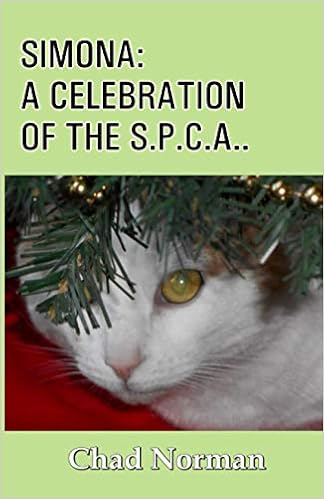
An Interview with Chad Norman about Simona: A Celebration of the S.P.C.A.
Chad Norman’s poetry has been featured here in both Time of the Poet Republic with Mbizo Chrirasha, and in WordCity. This months, in honour of a book he published to support the Society for the Prevention of Cruelty to Animals, we are talking to the poet and taking a look inside his collection.
This month, Geraldine Sinyuy and Darcie Friesen Hossack decided to introduce you to a selection of titles from the editorial board members of WordCity Monthly! We are so proud of everyone’s accomplishments.
We’ve already visited Sue Burge’s latest offering (see letter from the editor), so by the throw of a dice, we’re starting here with Clara Burghelea, one of our poetry editors. Please click the link below to find the rest.
“The title of the collection is expressive of my preoccupation with the flavor of the other: the other home, the other self, the other geography, the other as a human being. One way of looking at our identity is from the perspective of belonging: to a place, a landscape, a culture, a language, another human being. How do we make sense of ourselves when suddenly deprived of access to these familiar spaces? How do we restore the bruised, lost self? Poetry is one of the answers. These poems pivot back and forth between the communist Romania of the 1980s and present-day New York, looking closely at love, loss, nostalgia, home, and the in-between spaces that we inhabit and allow to inhabit us.” ~Clara Burghelea
Literary Spotlight and Writing Advice by Sue Burge
JEAN ATKIN – THE UNCHAINED POET
This month I’m very excited to catch up (at a run!) with Jean Atkin, a poet I’ve always admired for her energy, optimism and unique way of looking at the world. For Jean, writing is not about sitting at a desk, it’s about engagement with the external environment in profound and far-reaching ways. Jean lives in a beautiful area of the UK and our conversation brought me a welcome breath of different country air (I live on the opposite side of the UK) in these locked down times where travel has become taboo.
Jean, I always associate you with quite quirky projects! I remember at a conference doing a falconry handling session followed by a poetry workshop on the experience with you. What is the most unusual workshop you have run to date?
I do love a bit of quirk, and I definitely remember the falconry experience! Nothing is quite like the thump of an owl landing on your writing arm. In the past, I’ve run a workshop on a beach and learned from some kids there how to creep up on a limpet; made and performed site-specific poetry to particular Shropshire trees; and made poems with a village community high on their local Iron Age hillfort. One of the weirdest and most curious was a series of public workshops I led in Ludlow Museum Resources Centre. I called it ‘Writing in the Museum Vaults’ and it involved unlocking, then exploring, the catalogued, bottled, and taxidermied past, all housed in padlocked basement climate-controlled stores. Perhaps the strangest and most downright unnerving was writing in the eerie Fluids Room, where pale creatures float in alcohol in glass jars in the half-light.
Inspired by Jean Atkin’s unusual use of place in her work I thought this month I would turn to the concept of Writer-in-Residence and see how that can help to freshen up our own writing. A residency is like being a Laureate for a particular place or organisation and can be loosely interpreted or come with quite a weight of responsibility. You might just be in this place to write and research in order to meet your own goals. Or you might be asked to run workshops, create a publication based on your residency, run a competition, interact with visitors and employees. You might have included these ideas in your initial proposal to a place you’ve had firmly in your sights for some time, or you might have been invited to be writer-in-residence because you have a special connection to this place.
Poetry Edited by Nancy Ndeke and Clara Burghelea with Consulting Editor Lori D. Roadhouse
Hillary Keel
cooking risotto (or why i love my life)

—a new recipe small pieces
of asparagus & shrimp lemon juice
prepared in separate pan & I think
of G.—when did I last cook risotto when
did I last eat asparagus in March
of which year

I am transported to Austrian spring
crispy temperature a field of brooks
where we pick birds’ lettuce
we hike we cook
there is sex there is spring
& asparagus some cress &
birds’ lettuce picked at the brook
I stir risotto & think how this recipe
diverges from G.’s—to place inch-sized
asparagus pieces in bowl of ice water
I’ll try but remember
The door

Because I lost you
On the first lunar line of the month of Shawwal
Search the moon very well

You are the full entity in our separation
And I
I start new one from imperfect water droplets

 In your worship,
My free heart and self-awareness stays awaken ...

After remembering you
When everyone will be enjoying in the light of the festival,
Then I will touch
the door of your closed chapel with my hand.

By reading my destiny,
written in the palm of my hand,
May make you mercy on me again

I'm tired of people's fake love!
Inside the Nova Scotian Statistical Average

(For Eric Trethewey)

The Hants County gypsum mines—
the white-dust, black-lung-disease quarries—
is drill-pocked cadavers.

Many cast-off miners could be saints
if they didn’t gotta throttle bottles
to try piss the disembowling grime

out their throats, lungs, schnozzles, eh?
Some retailiate for toxic gaspin
by stabbin wives, stranglin small fry….

The daily poisonin triggers
a hard squall of blood, a tsunami, eh?
Ain’t not too bad money, right—

dem pick-axe jobs down the mines!
Every man says, “I need this, this, this, this,
n this!” How else ya gonna get it?

Too many can’t live like ya want,
but wallow in jails:  Take a swallow
of med-sin, get embedded behind bars.

Tons of hooch flood, much blood leaks.
Pounds of blood!  It keeps soakin
through bandages like coffee through

filters, eh?!  Fights hourly!  You bust
yer hands; your face be raw hamburger!
Teeth all jump out.  The big shits

just thunk and knock ya bout.  (In
the hoosegow, you’s so close,
you get to tell exact the aroma

of each other’s piss.)  When yer freed,
partyin is Bible—chapter n verse.
Y’ain’t goin back in the quarry?

Rather cut yer throat in a hurry!
The rains now softly fall
And the fields jubilate.
The eye beholds the beauty of low green fields,
And the lilies smile.
The white birds fly against the blue sky,
The Risen Lord is here.
Oh let mankind join the music of nature,
That so freely praises and portrays,
Without hesitation,
The wonders of our God,
The generous hand,
For sure spring will never delay,
The covenant He keeps.
And the rain waters the dusty roads,
And gives life to thirsty seeds.
And now that Christ is Risen,
Deep down to the grave
He carried with him all pandemics,
He arises with healing,
Let the world be healed.
Down to the grave,
Buried with him
Are COVID-19,
Wars,
Starvation,
Strife.
Now let the hills rejoice and man proclaim
Love,
Health,
Peace.
And the miracles of rabbits laying eggs,
Yes, all things are possible.
Easter is here,
All is restored.
Golden Giant

Who is sitting in the heavens and staring at me?
Who is sitting in the golden palace of tomorrow?
Who is smiling?
Golden staff in his hand
flashes a dazzling light.
Ah, the flashes of lightning-
interweave over my head...
I walked into the crystalline corridor of the time-
I want to open
the doors of gold.
Lines of words in the sun-
Singing to me in the sky-
I want to find
the volumes of gold poems
on the shores of the new century
to build the city of gold.

Laozi with rosy cheek and white hair-
Smiles at me in the clouds,
A phoenix dances trippingly
and carries with it, a book of gold.

Lines of mysterious words
made my eyes drunken,
countless giant figures
came towards me from the clouds.
As liberal as the air

Air is a traitor.
It entered the enemy.
It reddened his blood.
It filled his lungs,
expanded his ribs
Made him puff up
his chest and then
left to inform you,
that you could have
the blue blood
that you would have
to exhale all the hate
you held in your
thoracic cage.
All the vitality
sucked out of you
as the air didn't
see you as a mirror.
Its eyes were
none and several
So it saw through you,
the whole world,
naked and didn't
raise a finger.
Its gaze didn’t waver.
It didn't read
the Bible, the Geeta
or the Koran.
It flowed freely
and spied on all
but never let a
secret out as
it sang its own tune,
its own language.
It dried your skin
even as you shivered.
Where all scampered
to be segregated into
varied families,
It knew all were
in the same boat,
only looking on
to different shores.
TIME OF RENEWAL

Spring is coming
days are growing lighter
brighter
shadows are shorter
in the middle of the day
and the warm sun
whispers promises of renewal

You are leaving us

just as we begin to hope again
just as the earth
reawakens
from a long cold sleep

We will miss you

Miss the light and warmth
you bring to these drab walls
and dim hallways
For you shine your light
upon all you touch
like the rays of springtime sun

We honour you today for
the lives you brighten
with the gifts you share

It is a time of renewal


Time for you to go -
refresh your spirit
with new experiences
refill your soul
with wondrous sights
replenish your body
with the nourishment
you take in on your journey

Then
just as winter approaches
and the days begin to
grow short and dark again
just as the earth retreats
into blinding whiteness
harsh and stark and cruel
just as doubt begins to set in

You will return to us
renewed and rejuvenated
full of rich experience
and cleansed from a season or two
away

You will return again
to shine your light upon us
to bless us with your warmth
and sunny presence

You will bring
springtime again
As winter approaches
BY THE BAY
Breeze of the sea, smell of the sand, its been awhile. Since I last work on my tan, as thing divert, not according to plan, finding yourself, in no man’s land, all this time, I got away and ran then I questioned myself, until when?
Feeling at lost, sitting by the bay, searching for WHY, under this hot midday, sound of crashing waves, coming my way, leaving to embrace, come what may, up to them, what ever they want to say, as we are all humans, made of clay
Break the walls down, bring down the gate, time to rise up, above all the hate, a new song, in my mind it serenades, so be strong, to endure fate, tomorrow will be better, so don’t be afraid, pick yourself, its time to create.
Danga Bay, 26/12/2020
Transhumance

At the crossing of rivers intertwining
scarves, people migrate and birds
camels, elephants and jute sacks.
Under harsh shadow of torn skies
in baskets women carry
the cries of fathers and knives
in the eyes of children. Replicating
traces of love in a different horizon
on the route of far away delusions.
History is a meandering vein, digging
craters on the face. An offering
of lotus flowers to extinguish the mark
of angular horror, and we harvest dreams
poured on sand. A wrinkle in the wind
leaves no trace.
Pandemic vs Utopia

The cracked eggshell of
your certainty spills Viruses,
excuse me Plato
we need social distancing and
disinfecting the Forms and Ideas
to pass the faith over.

The destiny of humankind, now, puzzled,
loses the intensity of an entire summer
while people must keep their distances
but flowers are blooming
and fruits are ripening.
Nearby the poppies
Anxious to open their core
Suddenly they blush
16.5. 2020


Woodpecker´s delight
Beetles sing: Here comes the sun
There, out in the sticks
3.9. 2020
Reading a poem to my father

One evening
to ward off the inertia
stemming out of
current pandemic
I read aloud to my father,
one of my favorite poems
from Yuyutsu Sharma’s
The Lake Fewa and a Horse.

A high blood pressure
and a chronic diabetics patient,
though he can
read only the headlines
of a newspaper,
his glare can be as rigid
as a row of commas
on a page of my poems;
he can hush us all
by just clearing his throat.

There is nothing lyrical about him.
His emotions are packed full
as the groceries on the supermarket shelves.
Often it’s not easy to recite poems
in front of him and my reading
that lonely evening was scratchy
as I was shaking from it.
THE GREAT FOOLS

Man,
The great conqueror,
And the great divider
Dispersing power while dispersing nations
Like a displaced union, at peace, but at war

Time,
The great construct of man
A great myth that we follow like sheep
And praised like a deity
It scatters the masses
Sky

Maybe
Somewhere up there
Skyward
High
Beyond the distant clouds
And stars
And moon
Maybe
Somewhere up there
Where planets hang in place
The Heavens above
Where Earth meet sky
And all in between
Of what there is
Sky.
RAMZAN

Night of power it holds
Crescent to crescent, blessings
Miraculous  time.

Ramzan world over
Evil curbed, evil cleansed
In thought, word and deed.

Fast, pray, forgive, feed
Purify  soul, inculcate
Gratitude, make peace.

Duty fulfilled
Solemn thanksgiving, as one
We share treats on Eid.
RAMAZAN

Night of power it holds
Crescent to crescent, blessings
Miraculous  time.

Month of Ramazan
Evil curbed, evil cleansed
In thought, word and deed.

Fast, pray, forgive, feed
Purify  soul, inculcate
Gratitude, make peace.

Duty fulfilled
Solemn thanksgiving, as one
We share treats on Eid.
Miracle in the Month of Ramazan
Every year, Ramazan, the obligatory month of fasting for Muslims, showers its profound blessings and reveals its amazing miracles. The year 2018 was no exception, but for me it became special. Ramazan was passing through June, and I, a Gemini (although not sure whether Castor or Pollux), was fasting on my birthday.
The weather was hot, and there was no chance of any party or family gathering happening, but the Creator who made us always remembers. That is the miracle.
It was my special day, the 20th of June, just a few minutes before ‘Iftaar’. It was the opening meal time of the fast. The sun began to set, and darkness gradually engulfed the twilight. My thoughts began to turn the pages of memories.
I saw my parents with presents, a friend’s surprise party, and my mother-in-law coming from another city with a gift box tied with a broad red ribbon. The I saw my own children with a homemade cake. I looked around me, but there was no one, only silence.
With a sigh I raised my hands to pray, when suddenly I heard a loud banging on the gate. A man holding a large covered tray was standing outside. Quietly he handed it over. Once inside, I removed the covers, and I beheld two large pieces of caramel sponge cake, some dates, and some pieces of fruit cut in a small bowl.
The Almighty remembered me. It was His gift. The man who brought the tray had no knowledge of my birthday, nor did the family that sent him. He came from some house in the neighbourhood, and he never ever showed up again.
I cried with gratitude and happiness. The muezzin began the call for prayer. The fast was over. I celebrated my birthday in holy light.
Kashmir, Migrant Pakistani. Educated at St Anne’s Presentation Convent Rawalpindi. MA in English Literature & American Studies. CPE Certificate of Proficiency in English Cambridge UK British Council LSE.
Writing poems, articles and stories since 1980. Published Poet. Won Poet of Merit Bronze Medal Semi Final International Award 2000 USA.Worked as Creative Writer Teacher Trainer. Educational Consultant by Profession. Freelance Writer.
Sky

Maybe
Somewhere up there
Skyward
High
Beyond the distant clouds
And stars
And moon
Maybe
Somewhere up there
Where planets hang in place
The Heavens above
Where Earth meet sky
And all in between
Of what there is
Sky.
THE GREAT FOOLS

Man,
The great conqueror,
And the great divider
Dispersing power while dispersing nations
Like a displaced union, at peace, but at war

Time,
The great construct of man
A great myth that we follow like sheep
And praised like a deity
It scatters the masses
Using sun and moon to exhibit its grip on the world
To be worshipped, it is fierce
And to stay sacred, it punishes those who don’t abide by its laws

Humanity,
A species where the powerful are thick,
And the poor suffer at their hands
Controlled by the myth of night and day,
Abiding by the flaws of a social construct
Sean Fredrick Ragoi is an upcoming poet and author who is in love with the idea of poetry. Sean views poetry as an escape from reality, and a way to describe the indescribable. The ability to turn emotion into words is what beckoned Sean into writing. His love for the arts has been present for as long as he can remember, which is a short time considering he is 15 years old. The arts are Sean’s way of express what can’t be put into words. Sean sees poetry as a powerful and indestructible force that needs to be tapped into.
Reading a poem to my father

One evening
to ward off the inertia
stemming out of
current pandemic
I read aloud to my father,
one of my favorite poems
from Yuyutsu Sharma’s
The Lake Fewa and a Horse.

A high blood pressure
and a chronic diabetics patient,
though he can
read only the headlines
of a newspaper,
his glare can be as rigid
as a row of commas
on a page of my poems;
he can hush us all
by just clearing his throat.

There is nothing lyrical about him.
His emotions are packed full
as the groceries on the supermarket shelves.
Often it’s not easy to recite poems
in front of him and my reading
that lonely evening was scratchy
as I was shaking from it.

Sensing my anxiety,
he grabbed the book
from my hands
and lifting it to his eyes
to discover Yuyu’s affair
with the Himalayas.
After industriously reading a few poems,
I noticed a  flame of joy liven up
his dark silvery eyes.

He nodded his head and smiled,
“Oh yes, this I remember,
and this too, how we washed
our clothes in the river,
and cooked on an open fire.
We had straw mats instead
of dining tables and for brunch
we often had beaten rice flakes and curd,
and families gathered before the fire
united before the sunlight left us
for a long cold night.”

As the day’s last thumping kiss
painted the sky,
my father perched on the side
of the antique sofa,
smiled. ‘I feel as if Yuyu’s poems
has unfastened my past.
His verses have struck
in me a trumpet of triumph,
a yearning to return and
sweet smell the soil from which I’ve sprung.

Son, I can feel it.
His poems has triggered
the sensations of hope in my aging heart.
They’ve fed me with a gusto
to smile evermore.

I wish I could read
this book on and on
but my eyes won’t permit.
I have one request:
Would you call Yuyu
and ask him to come out with
a recording of his poems for his readers like me.

I was ecstatic--
a happy, hopeful father!
Can there be anything more lyrical
than a father’s smile streaming all over our horizons?

The line was drawn that day,
a turning point ensuing
my father’s newfound health.

For making my father smile
and sprouting in our
Kathmandu courtyard
the hidden seeds of his long
forgotten hillside paths.
I salute you poet, I salute you!
Nepalese poet Bhuwan Thapaliya works as an economist and is the author of four poetry collections. His poems have been widely published in international magazines and journals such as Kritya, Foundling Review, FOLLY, WordCity Monthly, Poetry and Covid: A Project funded by the UK Arts and Humanities Research Council, University of Plymouth, and Nottingham Trent University, Trouvaille Review, Journal of Expressive Writing, Pendemics Literary Journal, Pandemic Magazine, The Poet, Valient Scribe, Strong Verse, Ponder Savant, International Times, Taj Mahal Review, Poetry Life and Times, VOICES (Education Project), Longfellow Literary Project, Poets Against the War, among many others. Thapaliya has read his poetry and attended seminars in venues around the world, including South Korea, India, the United States, Thailand, Cambodia, and Nepal.
Nearby the poppies
Anxious to open their core
Suddenly they blush
16.5. 2020


Woodpecker´s delight
Beetles sing: Here comes the sun
There, out in the sticks
3.9. 2020


A murder of crows
On parade at the skyline
Must be Mardi Gras
16.2. 2021
Austrian, born in Lower Austria, Reinhold Stipsits spent most of his academic career as professor for social pedagogics at the University of Vienna. He was Visiting Scholar at the University of Texas in Austin, served as a reviewer of study programs in Lithuania, Croatia, Bosnia.
He was fortunate to meet and work with distinguished people in the field of psychology such as Douglas A. Land, Carl R. Rogers and John M. Shlien.
As author and as a person-centered psychotherapist he is committed to trust the process. Therein he considers himself as a tour guide into the amusement park of life. He pursues a goal to share experiences and encounters in all kind of habitat. He writes poetry, mainly haiku, short stories and semi-fictional reportages.
Pandemic vs Utopia

The cracked eggshell of
your certainty spills Viruses,
excuse me Plato
we need social distancing and
disinfecting the Forms and Ideas
to pass the faith over.

The destiny of humankind, now, puzzled,
loses the intensity of an entire summer
while people must keep their distances
but flowers are blooming
and fruits are ripening.

Let’s leave Utopia to animals
and take refuge to our loneliness,
groping blindly,
by feeling the limbs of
dissected mirages,
the inexorable laws.

Still what if coincidentally
we touch the palm of a
dissected-admirable-intuition,
and an unfocused grief appears
among the feverish questions?
perhaps about the common weal.
Mansour Noorbakhsh writes and translates poems in both English and Farsi, his first language. He tries to be a voice for freedom, human rights and environment in his writings. He believes a dialog between people around the world is an essential need for developing a peaceful world, and poetry helps this dialog echoes the human rights. Currently he is featuring The Contemporary Canadian Poets in a weekly Persian radio program https://persianradio.net/. The poet’s bio and poems are translated into Farsi and read to the Persian-Canadian audiences. Both English (by the poets) and Farsi (by him) readings are on air. This is a project of his to build bridges between the Persian-Canadian communities by way of introducing them to contemporary Canadian poets. His book about the life and work of Sohrab Sepehri entitled, “Be Soragh e Man Agar Miaeed” (trans. “If you come to visit me”) is published in 1997 in Iran. And his English book length poem; “In Search of Shared Wishes” is published in 2017 in Canada. His English poems are published in “WordCity monthly” and “Infinite Passages” (anthology 2020 by The Ontario Poetry Society). He is a member of The Ontario Poetry Society and he is an Electrical Engineer, P.Eng. He lives with his wife, his daughter and his son in Toronto, Canada.
Transhumance

At the crossing of rivers intertwining
scarves, people migrate and birds
camels, elephants and jute sacks.
Under harsh shadow of torn skies
in baskets women carry
the cries of fathers and knives
in the eyes of children. Replicating
traces of love in a different horizon
on the route of far away delusions.
History is a meandering vein, digging
craters on the face. An offering
of lotus flowers to extinguish the mark
of angular horror, and we harvest dreams
poured on sand. A wrinkle in the wind
leaves no trace.


In the Absence - a Boat named Hope

No moon tonight. The voracious belly
of the sea nurses on dreams
and meat. A boat forgiven
is tainted by shadows
while furrowing the waters.
The promised destiny is distant.
A woman's face is suspended
in the absence. Behind
the taste of home and native land.
Disdainful beaches
tomorrow.


Psalmody

Rock-a-bye baby my cinnamon girl
it tinkles in silver your smile of milk.
Swing, my little on the seesaw
and gather the infinite plan of the game.

The hour thickens it stretches its hand.
The name crumbles. The rope breaks.
You are the queen bride. You are a child bride
my green almond covered with gold.
Agonizing the violin - it screeches
it harvests the silence.

Wake up, wind bending the reeds
unchain a storm of sand and of ice.
Grab her, wind filling the spikes
let her not feel, let it be light.
Dissolve her, wind spreading the seeds
take her off flying in sunny fields
of wheat that is golden of stars and of flakes.

Open the doors tear up my womb
the night is red destroyed, amphisbena.
Open the doors and pour in the honey
her name is written in spices.
Open the doors and give her dolls.

Open the doors tear up my belly.
Open the doors.
Open the doors.
Born in Cassino, Lucilla Trapazzo lives in Zurich. After a degree in German literature at “La Sapienza” University in Rome, a MA in Film & Video at the “American University” of Washington, D.C., and a continuing education in art and theater, she works as actress, critic, and translator. Her activities range among poetry (recipient of different prizes, publications in International anthologies and art books, and Festivals), theater (teaching workshops, directing, acting), video-installations, and literary critiques. In her works she longs for a synthesis of all the different artistic languages. Her works have been shown at several International exhibitions and festivals.





 WordCityLit