All night long I watch the planes crash into the twin towers. And crash again. The balls of fire, the plummeting bodies, the sudden sag of skyscrapers. All night I watch the broadcasts from America on television and think of Nefertiti.
This is what I know of that Egyptian queen: It is said that she was a princess from another land. She was the wife of Akhenaten, and the mother of six daughters. She and her husband started a new religion. But then she suddenly disappeared from public record.
Some scholars believe that she was banished, perhaps for defying Akhenaten in matters of religion. She might have died. All agree, however, that she was beautiful. Drawings and statues attest to this. And then there is her name. Nefertiti: “the beautiful one has come.”
I know these things because of my sister, Reina. She loved to talk about Nefertiti. One might even say that she was obsessed. In her room, there were piles of books: Sun Queen, Monarchs of Ancient Egypt, The Great Royal Wife. And on and on.
Once, for a Halloween party, she copied Nefertiti’s distinctive headdress and lined her eyes with kohl. She had large, double-lidded eyes, unlike my tiny narrow ones, and with her salon tan, I swear she belonged on a barge floating down the Nile.
She liked to remind people that “Reina” was close to the French word for queen, “la reine,” or the Indian “ranee,” but my parents had not been thinking that at all when they named her.
Mother was more concerned with the fortune-teller’s advice regarding the number of strokes in each Chinese character. She was told that Misaki, the name she had originally chosen, would result in bad luck for her as-yet unborn daughter.
My parents did not understand Reina’s preoccupation with Nefertiti. They had little interest in foreigners or their countries.
“Why don’t you study about Jingu?” our father asked, referring to Japan’s ancient empress.
She just mocked him for his provincialism and mailed off an application to the American University in Cairo.
My parents worried that my sister would transfer her passion for Nefertiti to some dark-skinned man and stay in Egypt forever. They begged her to consider applying closer to home.
“You could probably get into Keio or Waseda with your test scores,” they said. “You might even be accepted at Tokyo University.”
Tokyo University – more popularly known as Todai – was the most prestigious college in all of Japan, but my sister wasn’t interested.
“Todai grads are a bore,” she said. “Look at all those crusty old men running the country. And the younger ones think like old fogeys.”
“Well, you don’t need to go all the way to the Middle East,” Father insisted. “Japan is safer – the safest country in the world, I’ll bet.”
Privately, to me, she said, “This country is suffocating. I need to have some adventures.”
Finally, our parents gave in.
To show her gratitude, Reina hung around the house most of that spring and summer, helping Mother with the housework and cooking, and charming Father with her stories.
Two nights before she left, she had a big party with her friends, and the following evening, we went out to eat as a family.
We went to a seafood restaurant because Reina loved blue fin tuna sushi and she didn’t think she’d have a chance to eat it in Cairo.
Mother sighed and said, “I hope they at least have rice.”
Those are the inane kinds of things we talked about as we tended our private thoughts. My parents were probably wondering if they’d ever see Reina again. I was just trying to store up a few extra memories of my adored older sister. When she came back, she’d be different; that, I knew for sure. Maybe I wouldn’t even like her anymore.
As soon as she left, I tried to follow her in my imagination. I tried to picture the insides of the airplane (blue seats?), the faces of the airline attendants (not too difficult, since she was flying on a Japanese airline), the food served at each meal (somewhat baffled, I could only come up with rice and fish).
All that day of her departure and into the next, I tried to guess her state of mind (scared, but excited) and the fresh sights. She’d see camels, I figured. Pyramids. An ocean of sand.
A week later, Reina filled in some of the details in her first letter from Egypt: “Dear Mom, Dad, and Mika, I’m finally here in the land of pharoahs and mummies and Nefertiti!”
Father read her letters out loud after dinner when we were sitting at the table drinking green tea. Her words were better than dessert, and I savored them for days afterward.
The letters were usually written to all of us, although my parents and I wrote separate replies. Finally, six months after she’d gone, a thin blue envelope arrived, addressed only to me.
Mother handed it over with a greedy look in her eyes, but I ignored it and took the letter to my room. I turned it over in my hands a few times, letting my anticipation build. The stamp featured a distinguished-looking man with a flat-topped round cap. The letter was postmarked Cairo, a week before.
I brought the envelope to my nose and inhaled deeply, trying to detect a trace of Egypt – some exotic scent like camel dung or rose attar, but all I could smell was ink.
At last, I slit the envelope open and pulled out Reina’s letter.
“Dearest Mika,
I am in love!
You must promise not to breathe a word to Mom and Dad, but I will tell you all. His name is Hassan and he’s a student like me. Gorgeous, like a desert prince, a gentleman, and a poet!”
Part of me felt privileged to be taken into her confidence, to be trusted with the secrets of her heart. But another part of me went cold with dread. It was just as our parents had feared. Reina would marry this man and stay in Egypt, and we would never see her again.
I thought that I should tell my parents right away. Maybe they would force her to come home before a wedding could take place. It would be for her own good, I thought. Love was making her crazy. She’d lost all reason. After all, hadn’t she herself written that women stayed behind veils and walls, that they were not permitted the same freedom as men? It was worse than Japan!
But then a few months later, she stopped writing about Hassan. She never explained what had happened.
When Reina finally came back for good at the end of four years, she became an English teacher. What else could she do with a degree in Egyptian History in a backwoods prefecture like ours?
All day, she explained gerunds and infinitives to fidgeting high school students. We hoped that she would blend into this new life, but I think that her mind was flitting beyond the hydrangea bushes outside the classroom, across oceans and continents. She told us that she was happy.
She discovered the International Society, a local organization that put on monthly cooking parties. One time, they prepared Indian food. The next, the theme was the Middle East. Reina attended the session and made some Egyptian friends.
Ahmed was a student at the local university and his young wife Nabib was along for the ride. Reina started spending all of her free time with them. She even invited them to our house for dinner once. Reina did the cooking.
“What did you say this was?” Father asked, picking at a bean croquette with his chopsticks.
“Tammia,” Reina said, popping a forkful into her mouth. “I loved these when I was in Cairo.”
Nabib nodded. “They are just like my grandmother used to make.”
Mother gamely made her way through the meal, nibbling on prunes stuffed with walnuts and cheese pastries, but Father gave up when the mint tea arrived.
“This is too sweet,” he said. “Give me some green tea.”
Mother quickly got up to shake some tea leaves into a pot.
Reina didn’t seem offended. She just rolled her eyes at me. When Nabib and Ahmed said that it was the best meal they’d ever had, my sister beamed like a hundred suns.
Toward the end of November, Reina announced that she was in need of a live chicken. “My friends need it for Ramadan,” she said. “Do you think that Uncle could spare one of his hens?”
Father’s brother lived in the mountains of Tokushima. He grew tangerines and kept a small brood of pullets. We hadn’t visited him in several months, but Father agreed to call him.
The following weekend, we were all packed into a car – Reina, the two Egyptians, Mother, Father, and me. I tried not to gasp as we swerved along the narrow, curvy, mountain roads. There were no guardrails, and the brush on the side of the mountain seemed to go on forever. If we went off the road, we would be lost in the brambles and no one would ever find us.
Suddenly, a truck whooshed into view, coming around the curve as if its brakes were gone. Father wrenched the steering wheel, taking us off the pavement for a moment, cracking sticks under the tires. When the truck passed us, the car swooned. And then it was just whipped up dust behind us and I heard a chorus of sighs.
Only Ahmed seemed unruffled. “Allah is protecting us.” His voice was sure and calm.
Reina murmured in agreement.
While my heart was still banging against my ribs, I had a thought that was almost more disturbing than our near-death. What if my sister was changing religions? If she converted to Islam, would she be able to take part in our family rituals for Obon and the New Year? Or would her new beliefs make her a stranger to us?
I thought that it would be difficult, at best, to have to always be driving into the mountains for live chickens, to have to kneel and pray when the mullah’s call sounded in your head, even if you were in the middle of Sogo department store.
I fretted about these things for the rest of the ride, right up until we stood in Uncle’s yard, watching Ahmed wring the hen’s neck with his bare hands.
I shouldn’t have worried. A few months later, Reina brought home a man who was nothing like Ahmed. He was Japanese. He wore a navy wool suit and a tie. He was from a family that processed indigo leaves for dyers – a clan steeped in tradition – though he himself worked at a company that created computer software. They’d met through friends, Reina explained. They were going to get married. When they looked at each other, their eyelids became droopy with desire. I recognized that gaze from Hollywood movies, but I’d never seen it anywhere else till then. And even when they were separated by the length of a room, they seemed to be dancing together. So this is love, I thought.
I wasn’t sure what drew them together. Maybe some animal call, or something beyond science. Karma. At any rate, they didn’t seem to have much in common. He was not especially interested in Nefertiti, or anything else foreign, for that matter. His only trip abroad had been a group tour to Guam a year before. Even so, he promised Reina a honeymoon in Egypt.
The wedding was quite an affair. My sister in silk kimono, first the hooded white one to hide horns of jealousy (though I doubted the groom, so transparently enamored of his new wife would ever do anything to make those horns sprout), then the blazing red one with its embroidered silver crane. We all ate and drank to ten thousand years of happiness for the newlyweds. In speeches, friends and mentors made wishes for their children, their shining future together.
Reina sat at a long cloth-draped table at the front of the room. Her black hair, piled atop her head, was set off by a gilded folding screen. Nothing had such luster as she did on that day.
After the kimono, she changed into a simple black velvet gown and tiara. And I, having joined in quite a few toasts, turned to the family friend seated at my left and said, “You know, Reina means ‘queen’ in French.’”
It is early morning and now there is just smoke and rubble and tears on the TV screen. I hear a door slide open and Mother shuffles into the room.
“Turn it off,” she says. “Go to sleep.” She runs her hand over my hair.
But when I crawl into my futon, I can’t rid myself of those images. The planes. The tall buildings. The dust, and fear. The blue sky.
It all starts to get mixed up with scenes of the temple at Luxor. The tour bus. The honeymoon couples. The men with machine guns who jumped out from behind ancient stones.
And then there was the post card that arrived a week later: “I have never been so happy in my life.”
The card, with its view of barques on the Nile, is still propped against the shrine. A black and white portrait of Reina looks down from the wall above.
By the time I wake up the next morning, Mother has already set out a bowl of rice and a cup of green tea next to the post card. I go into the kitchen and cook up a few bean croquettes, and then I put a plateful of those there, too.
—–
American Suzanne Kamata has been living in Japan for over half of her life. She is the author or editor of fifteen published books including the multiple-award winning mother/daughter travel memoir Squeaky Wheels: Travels with My Daughter by Train, Plane, Metro, Tuk-tuk and Wheelchair (Wyatt-Mackenzie Publishing, 2019) and the novel The Baseball Widow (Wyatt-Mackenzie Publishing, 2021).
WordCity Literary Journal is provided free to readers from all around the world, and there is no cost to writers submitting their work. Substantial time and expertise goes into each issue, and if you would like to contribute to those efforts, and the costs associated with maintaining this site, we thank you for your support.
I am a writer of short stories, novels, and poetry. No thanks to my husband, Frank, who hates the fact that I write. He made me quit college to marry him so I would never land my dream job of art critic at the New York Times. He put me in this mental asylum after I repeatedly tried to kill him with my grandmother’s silver cake knife that was always commanding, “Kill him now. Forget what I said yesterday.” I had every right to try to kill him for being abusive and for having an affair with Fern, his boss’ wife.
I have been writing a novel, Visiting Hours, ever since I got here 15 years ago. Frank is getting tired of me sending him notes on the book which I do because he only visits on holidays and special occasions like when he bought a new turquoise Studebaker. This is his most recent response to my note I sent last week:
Dear Mary, I want you to put this letter in the “book” you are “writing.” If I find out that you haven’t done so, I will bring you home for a home visit and throttle you, no kidding.
First of all, I want to say to all of Mary’s readers that I feel sorry for you as much as I feel sorry for myself. That’s because she made me read all her poems over the last too many years. Anyone who has ever read them says that they are nonsense, no one can understand them (especially me) and that she should write about everyday subjects like our house, the snap dragons in the garden or cooking sauerkraut and pork. Since Mary is a nutcase, however, she writes about her face, glass jars, and Adam and Eve. I’ve never told her how bad her poems are because I don’t want to hurt her feelings.
Since she can’t write poetry, she surely can’t write a book. Everything she says will be against me and everyone else. She only sees the world through her eyes. If she ever gets the book completed, which I doubt, it will lack any plot, sense or truth. That’s because sometimes she acts crazy, and other times she is very level-headed even if she doesn’t have a mind! I just hope you don’t bother to spend your heard-earned dollars on it, but if you do, at least you’ll get a chance to hear the truth from me.
The truth is Mary is the one who had the “affair,” not me. She loves my brother, Meyer, who is a real square. He talks about the same things Mary talks about like the “meaning of moonlight.” I could never stand him. He was always putting worms on my fishing pole in a secret way so I could never catch fish. He always told me, “Frank, you’re going to grow up to be just as mean as Dad.” Meyer never hit anyone and was proud of it. Even when he got knocked down our front steps by Henry Schmeller and landed on his head. I think that’s why he’s been so square ever since. He has a head problem just like Mary. Misery loves company.
I can’t say for sure Mary has cheated on me, but she thinks about my brother all the time. Probably she’ll write more about him than about me. I’m the husband, and you’d think I’d get more attention, but not from her.
I put Mary in the hospital because she was always hurting me. Slapping, pushing, stabbing, yelling, accusing, keeping me from my friends and not wanting me to work late hours. All my friends feel so sorry for me. She sure liked the money I earned, like all dames who sponge off men. I worked hard to give her every greedy thing she wanted. She only cares about things— radio, washing machine, car, dog. She never cared about me.
Mary probably also told you I beat her. She just wants sympathy from you. It’s a lie, and I can prove it. She’s called the police on me. You can ask them. They always said,” She’s crazy,” and left. All the police feel sorry for me. I wish I wasn’t such a nice guy to have taken all her abuse all these years. I’ve felt sorry for her ever since her parents were killed in some mysterious car accident when she was in high school. (Don’t ever tell Mary this, but I always wondered if she put cornstarch in the gas tank, and that caused the accident.) Her Aunt Clara and Uncle Ben took her in, but they made her slave in their hot bakery making strudel dough that tasted like dead Wheaties if you ask me. I’m the only family she has. No sisters or brothers.
She has no friends because no one can stand to be around her for more than an hour.
The only truth part about her book, if she told you, is about my father. He was a mean, selfish, cruel man who made my, but not my brother’s, life miserable. Whatever I’ve done wrong in life, it’s because of my father. He was so mean to my dear mother she died of a broken heart. She also died of an unknown disease, but I think it’s called epitonia. He hated Mary and always told me not to the marry her. He wanted me to marry Irene Henrey, but she had teeth that were too far apart in the front. The only reason it took me so long to lock Mary up in the nuthouse was because that was want my father wanted. I never wanted to do anything he told me to do.
I never had an affair with Fern or anyone else. That’s because, unlike Mary, I believe in the sanctity of marriage, being a good neighbor and friend, being a good American, trusting in the Lord and honoring your parents even if they aren’t straight shooters, except for my father, as I explained to you.
Here’s a note to any publisher of Mary’s book: Don’t bother. You’re just wasting your time with her just like I have all these years. She can’t even finish a sentence, much less a book. She’s a rattlebrain which she says she got from her grandmother who was also a patient at the nuthouse. She has so many excuses: “I can’t finish college. I want get married like everyone else.” or “I can’t iron your blue shirt, because I’m writing a poem about a 12th century musical instrument.”
No one should try to help Mary and that includes powwow doctors, attendants, ministers, publishers and, especially, me. All I can say is she’s a hopeless case. I’m just glad I got the opportunity to say my side of the story. Yours truly and forever, Frank.
_____
Connie Woodring is a 76-year-old retired therapist who is getting back to her true love of writing after 45 years in her real job. She has had many poems published in over 30 journals including one nominated for the 2017 Pushcart Prize. Seven excerpts from her yet-to-be-published novel Visiting Hours have been published in various journals.
WordCity Literary Journal is provided free to readers from all around the world, and there is no cost to writers submitting their work. Substantial time and expertise goes into each issue, and if you would like to contribute to those efforts, and the costs associated with maintaining this site, we thank you for your support.
“I don’t see what all the fuss is about, Archibald. This truly is the best of all possible worlds; Africa is butter upon bacon!” Reginald inspected the feast by straining his frail arm to hoist pince-nez before his cloudy eye. The monocle shook as he mustered the strength to hold it atop his nose—though he could well enough discern the cornucopia of cream horns, canelés, and croquembouches before him; diverse game they’d slaughtered in the Savanna; various fruits which scientists in London were {at that very moment} bickering over to bestow a correct {Latin} name. Splendiferous puff-confections presented ever-so-elegantly upon porcelain plates carefully lugged across the ocean. Shining, glimmering glints of sterling basking in the African sun.
Reginald ruminated, tugging long whiskers protruding from the mole upon his shriveled cheek, considering in which delicacy to next indulge. Having decided, he licked creaking fingertips with dry tongue—priming them before hovering over an éclair, gesticulating index finger and thumb over the chocolate dollop—just as Archibald’s plump hand swooped in, nicking the pastry beneath Reginald’s grasp.
“Quite right! Quite right!” Archibald could barely grunt beyond the custard and choux pâtisserie he’d just crammed down his gullet, slapping sugar-coated lips together. He washed it down with a large swig of absinthe, upturning the glass and downing its contents.
The two gentlemen could not have been more alike and more unalike all at once. An observance not limited to their stature—for Archibald was as rotund as Reginald was gaunt.
Reginald as prudent as Archibald was excessive. Archibald as dull as Reginald was flamboyant. Yet they seemed to complete one another. For what Archibald lacked in facial hair, Reginald more than made up for. And vice-versa.
Archibald sported what were popularly called ‘mutton chops,’ where the mutton of the chop descended from sideburns to avoid the chin and lips with proper, Victorian morality {where nothing should be flirting about lips}. Whereas Reginald’s was distinctly the opposite. Wherever Archibald did not have facial hair, Reginald did, with a very bushy petit goatee circumnavigating the mouth and extending ever southward like a South African diamond ship. Between the two of them {Archibald and Reginald—Reginald and Archibald}, they fully comprised one illustrious and bushy beard.
“As lovely as this—Africa—is, I do miss civilization…” Reginald shook his aquiline nose in the air—a nose whose odd angle seemed to always give it the air of it always being up in the air. Archibald tried to mutter in agreement, but could only communicate an aniseed burp {as the white-gloved servant refilled his glass}.
“If only these savages—oh, how I miss the Opera! The West End! What I wouldn’t give for a play, some…some…culture!” Reginald shivered unconsciously at that last word.
Civility was of course their burden, and they insisted on bringing civilization with them unto this heathen soil, if not for the sake of the Isle, then for themselves. To maintain their grasp of the couth, they insisted on routines and instruments—especially utensils. Yes, they could conquer this backward afterthought of a shipping route with ivory-handled marrow scoops, mother of pearl caviar spoons, and coral-handled sporks. For such a reason, Royale Tea was an important per diem ceremony for the two Englishmen. Therefore, the two sat down to daily afternoon cat-laps, {which, for the ruffians—unaccustomed to upper-crust lingo—is a society term for tea, champagne, and strong liquors}.
The afternoon was dreadfully hot—that is, for their native kingdom—but typical for this hemisphere at this time of year. The two chums sat beneath mangrove trees watching fruit bats flap wings heavily and heftily through the air having procured their wares. Archibald tossed back a large glass of fine crystal with absinthe {neat} into his sauce-box—or, rather, mouth—before extinguishing the green fairy of hellish vapors from his throat with bouts of deep coughing.
“Oh, smothering a Parrot are we?” Reginald asked, raising his thin brow.
“I’ll have you know, my doctor suggested it—to ruminate the gout.” Archibald tried to reach his feet to rub and showcase the painful, swollen, redness upon the tender side of his foot, but was unable to reach his feet—due to his inflexibility and the bulging obstruction of his stomach which acted as a protuberance to the fulcrum of his waist.
“We are fortunate to live in this evolved age where medicine can allow us such reprieve!” Reginald quipped before clapping his hands together for the servant to bundle tartan blankets over his gossamer shoulders—for even in this tropical weather, Reginald was constantly cold {which, of course, was a paramount reason for his doctor to prescribe him this latitude}. “What was the name of your physician, again?”
“Physician? Reginald! He’s no physician!” Archibald chortled, waving creampuff in air to accentuate his point. “He’s a métaphysico-théologo-cosmolonigologie! None other than Doctor, Lord Bertrand Dawson, 1st Viscount Dawson of Penn—métaphysico-théologo-cosmolonigologie to the British Royal Family and his preeminence, George V! He’s imposed a healthy diet of Afghani opium…London laudanum…Arabic hashish…Ottoman cannabis…” Archibald began counting on his thick, sausage fingers, licking them delicately and dutifully as he ate full petit fours between each listed medicament.
“Oh, I’m jealous of such a doctor—er, a métaphysico-théologo-who’s-a-what’s-it. A real scientist. Much better than this quack I enlisted some years ago—a Kraut from Vienna who suggested all my problems could be cured if I simply confessed that I wanted to have sexual relations with my own mother! Furthermore, murder my father—who has been dead twenty years hence! How in the world can I murder the dead?”
“Preposterous!” Archibald shouted, dropping half of his danish to the floor as a mangrove crab quickly side-scuttled to retrieve it and bring it back to its hole in the sand.
“Agreed,” Reginald began, “here we are sitting on the precepts of man’s achievement, and there should be such…such quacks as that German. Wish he were as accomplished as your Lord Dawson.” Reginald lamented, shaking his head back and forth so his sagging earlobes swayed to further accentuate his opinion.
“Quite right.” Archibald tutted.
“Hear, hear!” Reginald affirmed—noticing Archibald had now downed the last bottle of Absinthe on the continent: “Champaign?”
“No, it upsets the oysters. More Persian caviar though, thank you, Reginald.”
Reginald clapped his hands {he would have snapped, but for the enflamed arthritis curdling his joints}, and beckoned the servant.
“Any time—I say, Archibald…As glorious as this continent is with all its splendor and riches…The only thing I don’t much care for are the poor people…have you noticed them? All on the perimeter of the resort,” Reginald grumbled, sneering as he sniffed a segment of Spanakopita whose cheese filling may have gone off in the African heat.
“Quite right!” Archibald conferred.
“I mean, we freed these people! They should really be more grateful and dignified.” Reginald waved his liver spotted hand through the air in a gesture suggesting dignity. He tried to sit up, but didn’t have the strength, so he beckoned the servant to lift him upwards and bestow a more sophisticated posture.
“Yes, dignified!” Archibald reiterated, blowing his nose into handkerchief before wiping whipped cream from his lips with said handkerchief.
“I mean, where’s their…their…dignity!” Reginald now shook in feeble fury and from the cold {of the African heat} so the tartan blanket slipped from his quivering and cadaverous frame. He clapped his hands again in the servant’s direction who immediately attended to his beck and call, swaddling the man like a wee bairn.
“Quite right. Quite right,” Archibald concurred having picked up the mother of pearl oyster fork and was prodding profiteroles to inspect their puffiness.
“You hear so much of this poverty and starvation they speak of, though I didn’t see anything of the sort at the resort here! The people looked well fed. And happy! Always saying, ‘Good morning, Sir!’ every time I’m wheeled past! I mean, look how much bounty is before us, how can they not eat? Do they not like the food?”
“Yes, if they really do have a problem with poverty and the like, I suggest they work at the resort!”
“Archibald, you genius! That would cure this blight right up!” Reginald raised his champagne flute with frail arm—struggling beneath the weight of the crystal—and the two toasted to the thought {Reginald, stealing a humble sip, and Archibald plundering humble quaff—that is before burping up oysters, for (as we know) champaign upsets the oysters}.
Archibald grabbed the snuff box from the table and offered Reginald a sniff—to which Reginald and his aquiline nostrils waved No, on account of his vulnerable sinuses. Archibald lifted the ornate tin to his bulbous drinker’s nose, red and thick with fibrous tissue and prominent crater-like pores of severe rhinophyma. He took a hefty honk of snuff—though it seemed to have backfired—for Archibald sneezed turning all the white porcelain of their fine China a brackish hue of mucous and tobacco.
“Yes, well, they’d have to clean up their act and become civilized. Some on the border of the resort look so…so…dreadful. Terrible posture—can you imagine them on the West End?!” Reginald tried to make his point by sitting up with all the will of his underdeveloped, skeletal carcass—but needed help from his attentive, African servant—who’d also taken the caviar spoon Reginald was using to butter his bread and replaced it with a butter knife. “Yes, certainly a need to civilize them,” Reginald continued, “but if they simply acted civilized, well then—”
“They could all work at the resort!” Archibald shouted.
“Hear, hear!” Reginald resounded euphorically.
“Quite right!” Archibald pounded the table so forcefully, a fig roll fell from the fifth tier of their cake-stand and {keeping true to its name} rolled upon the sand so a frenzy of mangrove crabs came and tore it asunder, stockpiling pieces of fig roll into their individual bank deposits in the sand.
Before them the waves lapped unto the virgin sands of this untouched continent brimming with potential and overburdened with fortune. In essence, pleading for help; in effect, a piece of cake. With incalculable plants lacking Latin names, untold medicines to correct deficiencies. An entire continent like a newly discovered pill for them to consume. Soothing the Englishmen of their maladies—so the Englishmen could return the favor and sooth the Africans of their maladies! To make them healthy. Prosperous. Better. Needing them as they needed them. Who needed whom? Why, the both of them! Under boundless sun and eager, uncharted trading routes yearning to be employed. Like the sugar that coated their European pastries, this land simply needed…refining. Raw sugar into white, refined sugar.
“Why, I can already feel my gout clearing up rather nicely,” Archibald remarked, wiggling his plump, little toes.
“This truly is the best of all possible worlds. More snuff, Archibald?”
“Why, thank you, Reginald! More champagne, Reginald?”
“Heavens, thank you, Archibald!” and they clapped their hands for the servant to administer their desires.
—–
Eliot Hudson has read at the Popsickle Brooklyn Literary Festival, the Edinburgh Fringe Festival, and was shortlisted for the Solstice Shorts Festival 2019 (Arachne Press). He’s earned two Masters Degrees (Creative Writing & Modern Literature) at the University of Edinburgh (Scotland) and has studied under Rick Moody at The New York State Summer Writers Institute. His prose has appeared in Mystery Weekly, Every Day Fiction, Miracle Monocle, Story Of, Helen, The Showbear Family Circus,The Punxsutawney Spirit, Exploration, Cleaning Up Glitter, The Missing Slate, and Lalitamba. His poetry has been featured in Gravitas, Coffin Bell, Willard & Maple, The Book Smuggler’s Den,Gyroscope Review,Castabout Art & Literature, and the collections Garlic and Sapphires, and Cleaves.
Hudson also writes music and performs throughout New York City and as far as Barcelona, London, Rome, Romania, Vietnam and at the Edinburgh Fringe Festival in Scotland. His most recent music video was accepted in the Caribbean Sea International Film Festival (Venezuela), Travel FilmFest (Cyprus), and the Creation International Film Festival (Ottawa) where it won best Music Video (“Sinners in Church” is currently available on iTunes and Spotify).
WordCity Literary Journal is provided free to readers from all around the world, and there is no cost to writers submitting their work. Substantial time and expertise goes into each issue, and if you would like to contribute to those efforts, and the costs associated with maintaining this site, we thank you for your support.
student, beheaded by Chinese authorities for maintaining a romantic correspondence with an American girl he met while studying in the U.S.A., 1882
moon no longer a blossom a pearl a lantern in a lover’s door but a bodiless face, mine, in a train window, she on the platform trying not to look at me directly, as if she were there for someone else, and the train hurtles in the dark and I stare into the stars and not even a poet could find the moon in this sky not even Li Po in a boat with quill and ink in hand he searches this night sky and then looks at me from across the water and shrugs and I am the cicada, seventeen at last, my skin splits open and I emerge a perfect man ready to sing but there is so little time and the song I hear in return fades in the grind of these engines, I sit with my own quill and ink, the cicadas singing in the courtyard outside, my dear Elizabeth my love these words I write blur before my eyes even as she draws near, the smell of lavender the low trill of her laughter and then a sigh you sweet boy what are we to do she says and I put my hand on hers and I float above in the dark and I see Li Po in his boat and he leans far out over the water opening his arms to embrace the severed head of a moon and he tips forward and vanishes
—–
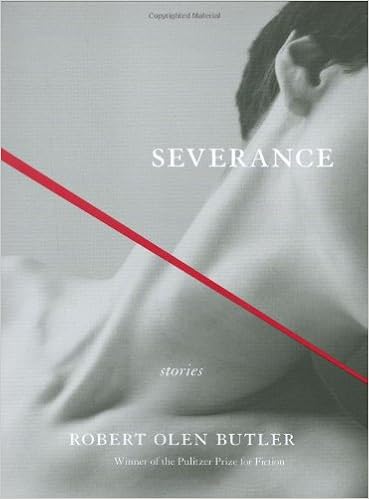
From Severance by Robert Olen Butler
After careful study and due deliberation, it is my opinion the head remains conscious for one minute and a half after decapitation. —Dr. Dassy d’Estaing, 1883
In a heightened state of emotion, we speak at the rate of 160 words per minute. —Dr. Emily Reasoner, A Sourcebook of Speech, 1975
—–
Robert Olen Butler has published eighteen novels and six volumes of short stories, one of which, A Good Scent from a Strange Mountain, won the Pulitzer Prize in Fiction. He has also published a widely influential volume of his lectures on the creative process, From Where You Dream. His latest novel is Late City, which takes place in the nanosecond of the death of the last living World War I veteran. Among his many other awards, in 2013 he became the sixteenth recipient of the career-spanning F. Scott Fitzgerald Award for Outstanding Achievement in American Literature. He teaches creative writing at Florida State University.
WordCity Literary Journal is provided free to readers from all around the world, and there is no cost to writers submitting their work. Substantial time and expertise goes into each issue, and if you would like to contribute to those efforts, and the costs associated with maintaining this site, we thank you for your support.
Her red velvet dressing gown hanging on the back gate, the navy slippers abandoned on the wet grass and the blue tinted morning light, this is what I remember, will always remember about that day.
It’s been three years since Izzy disappeared. She simply vanished and I am left with a mind full of questions. Where did she go? Why did she take her dressing gown and slippers off?
In 2006 I found myself on a Tantric Sex seminar. I was asked to write an article for a new magazine called ‘Love Yourself, Love the World’. I was skint at the time and needed the money, anyway I met her there. She came up to me, introduced herself and said: ‘You’re new to this aren’t you?’ ‘Is it that obvious?’ I replied. She nodded and smiled, it was a smile that imprinted itself somewhere inside of me and I’ve never forgotten it. As I looked around I noticed others were giggling and whispering but not Izzy, she was ultra-confident. She took my hand and suggested that we partner up. I couldn’t believe my luck. Izzy wasn’t like other women. She was sensual, funny, and beautiful.
The first hour was taken up by deep breathing, gazing into her eyes and then role play with me as Shiva and she as Shakti. I had to do subtle things to her, like brush her feet with a feather, ever so lightly. She stroked my neck, arms and back using Jasmine, an essential oil. I found myself succumbing more and more with the exercises. She said once you learn to trust you can be free, in your head and in your heart. By the end of the weekend, I was blown away. The highlight was learning how to ‘ride the wave of bliss’, which in laymen’s terms is a whole-body orgasm. Topping this was the fact that Izzy agreed to go out with me and of course one thing led to another, and we found ourselves riding that wave of bliss quite regularly.
She’d done everything: Transcendental Meditation, Reiki Healing, Holotropic Breath work, The Journey, Trance Dance and had even spent a night in an open grave, whilst Shamans banged their drums above her. One day she declared that she wanted to be a breatharian. ‘What the hell is that?’ I asked. She said nothing, just smiled and kissed me on the cheek, her eyes glowing.
She started skipping meals; she stopped eating solid food, drank only water and Miso broth. She lost weight; her eyes began to sink into their sockets. Her skin turned a grey chalky colour. She looked fucking awful, yet she kept saying how great she felt, how enlightened she was becoming. She practised astral travelling, mainly at night. Even though she explained that she didn’t take her body with her, she might as well have done. I was lonely; the Tantric Sex had long been forgotten.
One day I found her lying on the grass, bathed in a translucent blue light, ghostly pale and thin. She was staring into space; her lips cracked and bleeding. I picked her up, covered her with a blanket and took her to see the G.P. He wanted to admit her to the hospital immediately, but she began to moan and wail like a wild animal in pain. The doctor gave her a cup of something which had been standing on his desk. He mouthed the words, ‘sweet tea’ to me. Once she calmed down, she agreed to start eating, to take care of herself. Just before we left, the doctor asked her why she had stopped eating.
‘I want to live on air and light.’
A few days later she had gone. I hear her voice in the wind. I feel her close, as if she’s part of the elements. I breathe her in.
—–
Raine Geoghegan, M.A. is a Romani poet, writer and playwright living in the UK. She is a Forward prize, twice Pushcart Prize and Best of the Net 2018 nominee. Her work has been published online and in print. Her two pamphlets are published by Hedgehog Press. Her essay is featured in the anthology ‘Gifts of Gravity and Light’ with Hodder & Stoughton. Her First Collection will be published with Salmon Poetry Press in March 2022. Website – rainegeoghegan.co.uk
WordCity Literary Journal is provided free to readers from all around the world, and there is no cost to writers submitting their work. Substantial time and expertise goes into each issue, and if you would like to contribute to those efforts, and the costs associated with maintaining this site, we thank you for your support.
We weren’t out of the car five minutes at our rented condo at Grayton Beach, Florida, just off highway 30A, when my teen daughter screamed she’d been bitten by a yellow fly, an annoying species that defied bug spray and had its habitat in inland water where it can’t be eradicated due to environmental restrictions.
“Damn, that hurt,” she said.
“You watch your mouth, young lady,” I said.
“Wonder where she gets it,” my wife said.
“Okay, that’s enough,” I said and told my son, “Get one of those luggage carts, so we don’t have to make but one trip.”
My son pulled the cart toward us with one hand, swatting with the other. I knew about yellow flies having grown up on a lake in Southern Georgia, where I’d learned the females sucked blood from a cross-like incision. It had to be one of the few representations of a cross that was evil. Since we had moved to St. Louis, we had forgotten about most snakes, yellow flies, heat and humidity, and gnats. In the parking garage, the yellow flies were flying around my wife and son, too. The yellow files didn’t come near me, and I assumed their radars detected my bad, cholesterol-laden blood. To add insult to injury, I planned to eat grilled and fried shrimp and drink marguerites the entire week, doctor be damned. I loved shrimp as much as Bubba Blue and Forest Gump.
Once unloaded and in the condo, we stood on the balcony and stared at the still, glass-like sea with its green and blue tint. The white sand and sparsely populated beach were only twenty or so miles East of Panama City and fifteen miles to Destin toward the West; either horizon reflected skyscraper condos.
I found the parking pass where the operator at the realty company said and rode the elevator down to the parking lot beneath to display it on the dashboard as instructed. When I exited the elevator, I noticed an older woman with a security guard next to my vehicle. They blocked my view of decal notices slapped onto the windshield and driver’s door window.
“Excuse me,” I said. “What are y’all doing?”
“Is this your vehicle?” The old woman asked.
“Yes, it is.”
“Well, you don’t have a parking pass properly displayed.”
“We just unloaded, I got it in the condo, and it’s right here.” I held it up, waved it back and forth, and wanted to wave it in her face given her attitude. The rental guard was sheepish and dropped back.
“That’s blue. You are supposed to have a green one,” she snapped.
“Excuse me, just who in the hell are you?”
“I’m over the condo association here. Which condo are you in and who did you rent from?”
“I’m in 313 and I rented from Gulf Rentals. This has the correct dates on it. See?”
“It doesn’t matter what it says. You’re supposed to have a green one. It’s the rule. We just issued warning stickers. You won’t be towed today.”
“I didn’t pay three thousand dollars to come down here to be harassed and nobody better tow my car or I’m gonna whip somebody’s ass.”
“Sir, you have no argument with me. The real estate company has the green ones and has had for two weeks.”
She and her dutiful servant disappeared into the elevator, I cursed, and called the real estate company on my cell.
When I got back upstairs, my wife said a condo lady and guard knocked on the door to let them know our beach chairs couldn’t be left in the hallway, that it was a rule. I shared about the parking pass and later when we came back from dinner, I had to park on the road because all the spots were taken. The next day, I went out to pull the car underneath the condo in the shade and I had another warning about parking in the sand. I told my wife if the old yellow fly came around again, I’d get the fly swatter after her. I imagined her a combination of a Socratic gadfly and a Jeff Goldblum fly character flitting about and stinging people with her words. Fortunately, the realty company sent a green pass over and slid it under our condo door. I put it on the dashboard and didn’t get another warning.
For the next several days, I got sun burned, ate shrimp, drank marguerites, and we took long walks in the morning and evening along the beach. We ate at Fresh Catch, Goat Feathers, and A.J’s, all equally delicious and worth every penny. We rented paddle boards from a KA from the University of Alabama who was at the beach for the summer to rent boards, kayaks, and chairs and umbrellas. I’d caught him checking out at my teenage daughter, but he looked away when I smirked at him. We paddle boarded for a couple of hours and saw a small shark, a man-o-war, and several jellyfish. When we walked the beach, I was fascinated by the sand crabs and their burrows, washed up pieces of driftwood with miniature shells attached, and shells in shallow pools carved from the coming and going of tides. I wasn’t impressed with the aftermath of beach goers: garbage, left behind plastic shovel and buckets, a lone flip flop. I wasn’t impressed with the signage every so many feet that designated space to a condo complex or house and wondered if these were necessary since they detracted from the natural beauty.
On our way in for the day, we walked by the pool, and the old yellow fly condo lady struggled to move patio furniture and clean up, and I offered to help her with the furniture.
“Are you all having a nice time?” she asked.
“Yes,” I said. “Why don’t you make the renters rearranged the furniture since they messed it up?”
“I probably would have, but I took a nap and missed them. Plus, it’s my job. I get a small condo by the elevator with no view in exchange for keeping up the place and making sure renters follow the rules. That plus my Social Security and I’m not homeless.”
I thought about my own aging parents, their constant financial struggles on Social Security. “Watch it. You’ve got a yellow fly on your shoulder.”
“Oh, if you live here, you just get used to them.”
—–
Niles Reddick is author of a novel Drifting too far from the Shore, two collections Reading the Coffee Grounds and Road Kill Art and Other Oddities, and a novella Lead Me Home. His work has been featured in nineteen anthologies, twenty-one countries, and in over four hundred publications including The Saturday Evening Post,PIF, BlazeVox, New Reader Magazine, Forth Magazine,Citron Review, and The Boston Literary Magazine. Website: http://nilesreddick.com/
WordCity Literary Journal is provided free to readers from all around the world, and there is no cost to writers submitting their work. Substantial time and expertise goes into each issue, and if you would like to contribute to those efforts, and the costs associated with maintaining this site, we thank you for your support.
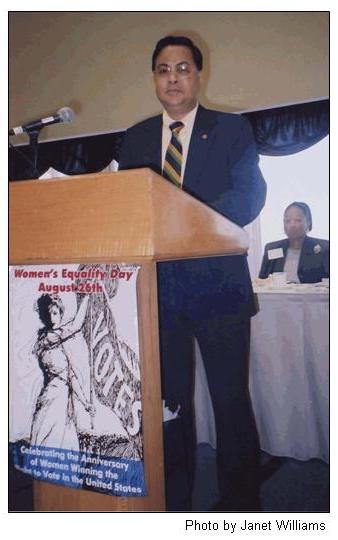
For our September issue, WordCity Literary Journal is joining the 100 Thousand Poets for Change movement, and seeking poetry, fiction, memoir, essays and book reviews that address change.
We hope to see writing that brings awareness of issues that require change, of changes that are already in progress, of initiatives and ideas for change.
The change you wish to address is entirely up to you, the writer, and may cover the intimacy of the family and home, to broader matters contained with institutions such as political or religious, or be global in scope.
With few exceptions, most of this journal’s editorial board were alive in the world by that time.
In Canada, where three of the nine of us live, women’s suffrage, depending on the province, is about 100 years old. A time that is still alive in our most senior citizens.
Certainly, much has changed since that time. Women have entered, have often broken down the doors of opportunities and institutions that were previously closed to us.
And yet, women, here in Canada, in Switzerland, all around the world, are still not equal.
In this month’s podcast we introduce you to Nathan D. Horowitz. A writer, poet, devoted educator, translator and proof reader. He earned bachelor of arts degree in English from Oberlin College and a master of arts degree in Applied Linguistics from the University of Massachusetts. He currently Lives in Baltimore, MD. ~ Jane Spokenword
Nathan D. Horowitz in Conversation with Jane Spokenword
Then there are stories about voting in Switzerland, which give me a certain Shirley Jackson feel. Having lived/worked in Switzerland during two plebiscites – 1974 The Schwarzenbach anti-immigration initiative – and the 2002 initiative for Switzerland to join the United Nations – I nearly missed the 50th anniversary of Swiss women having the right to vote which also had its stories presented in the form of a book aimed at inspiring young girls: 50 Amazing Swiss Women: True Stories You Should Know About (Bergli, 2021)
February 2021 marks the fiftieth anniversary of women’s right to vote in Switzerland. This book celebrates the diverse accomplishments, struggles and strengths of Swiss women. One-page biographies give readers a glimpse into the lives of fifty Swiss women – both historical and contemporary – who inspire and intrigue. Each biography is paired with a unique, color illustration by Swiss illustrator Mireille Lachausse.
The two stood in a hard-packed dirt barnyard, facing the end wall of an old dairy barn. The smell of cows still permeated the air. It was sweet, fetid and oddly appealing — the kind of smell that was at first unpleasant but that, over time, one grew accustomed to. After a while, it was as if your nose craved it. Marty had always found that strange but undeniable. He craved it now.
The younger one of the two, a tall teenage boy, sniffed and peaked his eyebrows.
“Same smell,” he said.
“Yeah, there hasn’t been a cow here for six years, but…” Marty’s words trailed off as he tilted his head up to find the familiar scent.
The maker of pedestals meets the maker of goldfish bowls.
THE SECOND ACT:
Two people enter holding saucepans from which flames emerge evoking a Neanderthal rain dance. The rain puts the people out but leaves the flames intact.
The First Person says: “The Earth in the form of a broom that has ceased sweeping is sick. A doctor is sent for. He arrives with a well sunk in his temple; at the bottom of the well is an eye – when the eye cries we can have water for our crops, when it closes we place our hands on our foreheads and groan. The old lady in the distance climbs down a serpent ladder while the gypsy princess climbs up – they meet almost in the middle like crows on a cliff top”.
The Second Person says “The sailor is a top hat and we must all climb to the top. The top is a hole in a mushroom cloud from which we can see shopping bags with wings come home from the seamen shops. A child clock on the mantelpiece chimes as the trees in neighbouring gardens consume each other and the strands of hairs that have escaped from the confines of old heads become smoke snakes in a land of hedgehog cars”.
THE SHAMING OF OSHIA It was a day in April, but not April 1st, lest you conjecture that it was April fool! A day that would enter the annals of chroniclers in my Oshie clan as the date of the most ridiculous drama of the masked dance dubbed Oshia! The cosmic setting was Ogyi-Onwek, at the foot of the black rocky boulders of Togobei-Ku. This masquerade dance, aka Oshia, usually staged in honour of someone of late, a notable or a militant of the fetish cult, was here celebrating one of ours.
The actors here constituted of the audience, the drummers and the dancers. The dancers included a number of masquerades known as njid, dressed in fibre-woven gowns; the blouses attached to the swinging skirts called awanda. They went bare-foot, with rattles tied above the ankles of both legs. In one or both hands, they held whips cut from the stalks of banana plant leaves. Being naturally hostile towards on-lookers who did not belong to the cult, the whips were used to flog the unfortunate spectators who fell in their snare.
Two Dead Poets A Poet Revisits Lorca’s Death Madrid / Granada, July 1936
Clouds gathered over the capital. A rising storm. Rumors slouched through streets and squares. Hunched in coffee-shops. Puffed at cigarettes. Struggled up stairways. Stumbled down alleyways. Lorca took it all in but was not taken in. He knew the signs. War marched through back streets and alleys. War. Civil war. It was time. Time for the poet to leave Madrid and return to Granada. He had family back home. And friends to protect him. That Falangist poet, still his best friend, a Black Shirt from the start. He’d know what to do and how to protect him. He would be safe in the south. Among his own people. Warmth and sunshine. His own southern hills.
It was agreed we would meet by the entrance to the park, where a young Mexican stood on weekends, wearing a sombrero, selling packaged ice cream. Mother, who was two months pregnant, was going to see a doctor, after which we were meant to shop for summer clothes. It was one day before Ramadan, three years after my family’s arrival from Saudi Arabia. Father, who owned a Halal butcher shop in Montreal North, had closed up for the holy month, much of which he would spend in prayer. That Saturday morning, though, he was only going to the bank and the barber’s, and so got talked into letting me tag along. I was six years old.
The spring day on which I was left in Father’s charge promised to be a perfectly ordinary one. It had rained all night but the morning was mild and sunny, with the sharp, almost painful, brightness that follows a stormy night. Father was holding my hand.
February 2021 marks the fiftieth anniversary of women’s right to vote in Switzerland. This book celebrates the diverse accomplishments, struggles and strengths of Swiss women. One-page biographies give readers a glimpse into the lives of fifty Swiss women – both historical and contemporary – who inspire and intrigue. Each biography is paired with a unique, color illustration by Swiss illustrator Mireille Lachausse.
I’ve lived in Switzerland for 25 years, yet it wasn’t until working on this book that I searched for Swiss heroines. For the first time ever, I realized how many important, influential, and yes, amazing Swiss women there are out there. History has been written in such a way that women are often left out, something we tend to accept as reality. Hopefully, this book will help to give a truer view of Swiss women’s impact on the country and the world.
Laurie Theurer first got the idea to write a book featuring some of the Swiss women she’d read about while researching her Swiss history book for children in 2019. She included a few of the women in Swisstory, but there were so many more she wanted to write about. Swiss women had done some fantastic things and Laurie wanted to share their stories to inspire kids and adults.
Sussing out the Olympic Movement: Where are the Women?
As I tell the students in my sociology of sports course, the Olympics, and the organization at its centre, the International Olympic Committee, is worth studying. So much of what goes on in the world of sports—the good, the bad, and the ugly, pardon the cliché—converges on the Olympics. This includes unabashed nationalism and national rivalries, naked ambition or self-aggrandizement on the part of senior members of national sport organizations (NSOs), delegates, coaches, and participating athletes. Crass commercialism invariably rears its ugly head at the Games, and company logos are so ubiquitous that visitors to sports venues might experience a profound disconnect; they might feel as if they are somewhere other than in the city and country hosting the Games (critics of neoliberalism would argue that it’s the perfect instance of capitalism’s colonizing of the sphere of physical culture, as well as local culture more generally). Of course the branding of just about everything—which is also the selling of everything along with our collective soul—is a global phenomena. It’s just that this merging of business, sport, and an ideology that depends on zero-sum thinking and objectives, is nowhere as fully on display as it is at the Olympics. Darwinism acquires new layers of meaning at these international sport mega-events.
The Olympics are truly a festival of universals. Everything noble or magnificent about the human spirit and body is to be witnessed there. Disappointment and heartbreak, which usually have to do with the limits of physical (as well as psychological) endurance, speed, and strength, are universal. The desire to overcome these limitations by any means also appears to be universal, as we’ve witnessed with findings of performance enhancing drugs that ended athletes’ careers, and the more egregious revelations of state-run doping programs: East Germany’s initially, and more recently, Russia’s. No doubt we’ll soon be reading about transgressions committed by American athletes and coaches, despite USADA’s trumpeting very loudly its commitment to clean athletics.
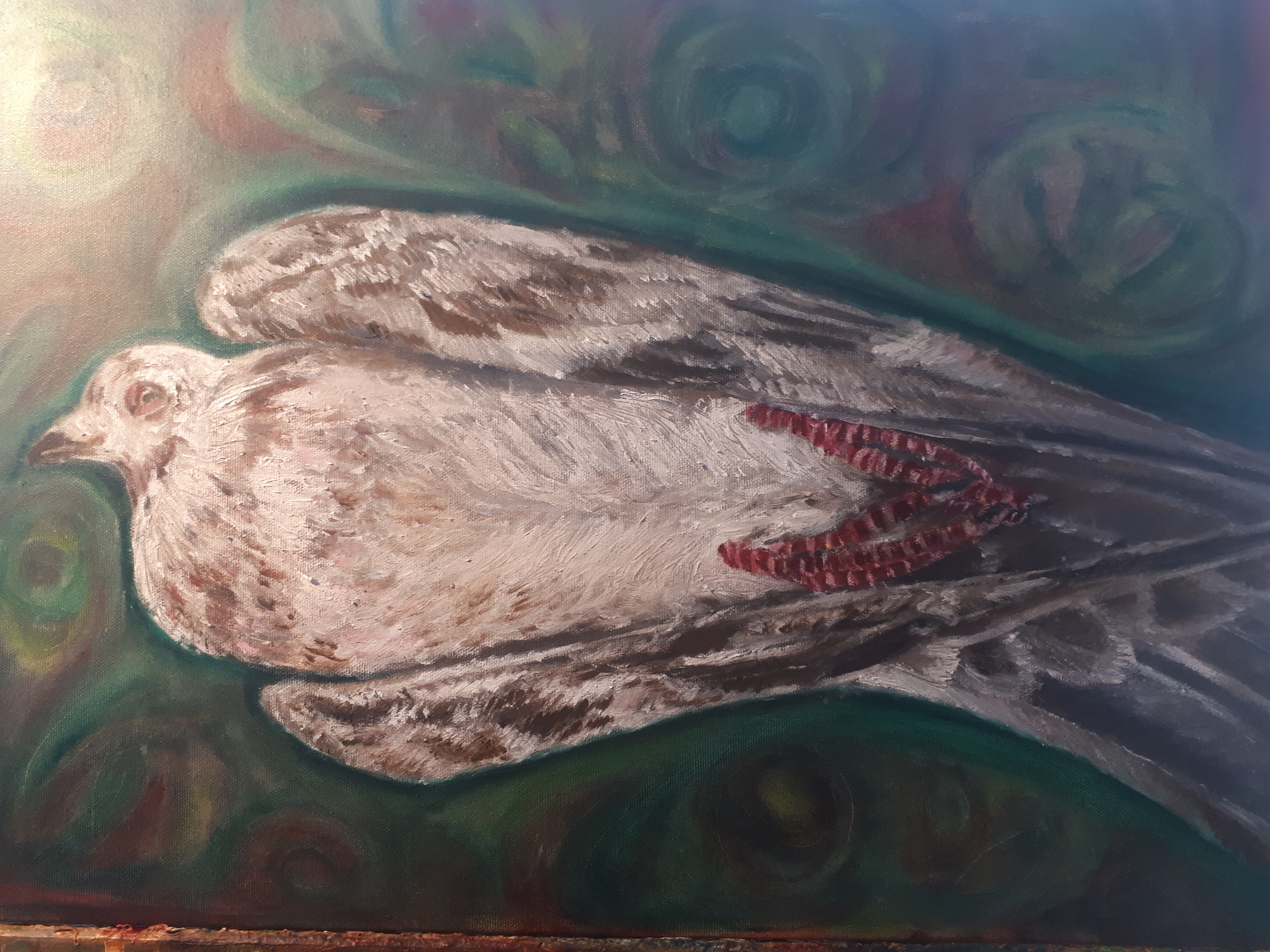
The scientific name for pigeon is Columbidae, a latinization of the Greek κόλυμβος (kolumbos), meaning “diver”, the name applied to pigeons in Ancient Greece and analogous to the English word “dove”, derived from to Old English dūfan: “to dive or plunge”. Some scholars dispute this etymology because pigeons are not aquatic, but after finding this beautiful specimen lying still and dead outside my door, I can easily imagine it diving headfirst into a tree reflected in the window.
I can imagine it diving eagerly into that mirage of green. I can imagine the shock of encountering that sudden barrier, followed instantly by pain beyond anything the creature had ever known, and then nothing, nothing, nothingness: a plunge into total dark. I can imagine an instant of bewilderment that the world was not what it had seemed to be, that safety was an illusion, that where buoyant spring air had beckoned there was instead something cold and hard and utterly alien. Something from the human world the bird usually swam above: a place of sharp angles and unnatural materials, corners and edges.
This anthology presents a panoramic selection of leading English-speaking modern poets, with an emphasis on bridging the US, UK and Ireland divides. You’ll find here a dazzling plurality of idiom, style and subject, well-established poets appearing with lesser known and newer voices deserving of a wider audience: the latest contemporary writers set in context against their heritage, to represent the full sweep of the modern period.
Given the space – and a more perfect world – these poets should appear alongside their male counterparts. That book is also overdue.[1] Given the space…well, usually there isn’t the space. All things being equal (which, mostly, things aren’t) editors largely agree that more men than women deserve more pages in mainstream anthologies purporting to reflect the canon; the “indispensable” list is still comprised predominantly of “men poets”. (Stephen Pain recommends the universal adoption of this phrase: “’man poet’ Ted Hughes, poet Sylvia Plath[2], ‘man poet’ Dylan Thomas, etc.” Imagine the Times Literary Supplement review of the “man-poet Seamus Heaney”! The long-awaited publication of Men Poets of the 20th Century!)
How to address a problem not seen as such? In the UK, any glaring gender imbalance is typically explained away as a “coincidence” here, an “accident” there. In that case, one should send for the doctors. If the selection criteria are indeed gender-blind, based on quality alone, this implied opinion of women’s writing is an offence demanding a response.
The manic depressive’s outbursts are incomprehensible to others. After one, Theo was calm and possessed until his girlfriend said, “I will have to leave you. Your moods are killing me.”
His civil service job with its soul destroying boredom and inconsequentiality chaffed him raw. He wrote poems, stories. It didn’t help. Impotent before the fact of his condition, he raged. Yet he had to carry on with his life.
Making a distinction between depression and melancholy, he fell in love with melancholy. He longed for depression to end, to let the melancholy in. It was melancholy’s sweet, sweet sadness and what was behind it: the slowly rising sun.
Dead [Women] Poets Society (D[W]PS) is a collective which began in 2015. Its aim is to resurrect women poets of the past, both in live events (séances) and online and also to raise awareness of women’s wide-ranging and profound literary heritage, and open up conversations between living writers and these often forgotten and side-lined women. It’s a great mission statement to have. During the event, two featured poets present a dead female poet and bring her back to life by reading her work and then performing their own poems, written specially for the evening and which are in deep conversation with the resurrected poets. D[W]PS evenings also include an open-mic section, with a difference: you can only read one of your own poems if you also read a poem by a dead woman poet or a living/dead non-binary poet. I’m a huge fan of these séances and both the featured poets and open-micers have really extended my knowledge of the female canon. I especially love the way the events begin with the evening’s medium (Jas, Helen or Lily who you’ll meet below) reading Maria Tsvetaeva’s poem (translated by Elaine Feinstein) We Shall Not Escape from Hell which begins with the immortal lines:
We shall not escape Hell, my passionate sisters, we shall drink black resins––
Many of the pieces in this month’s issue of WordCity are reflections on Women’s Rights. My advice this month is to write beyond your comfort zone, and I have a suggestion for you of how female writers can find the encouragement to do this within the pages of one innovative and highly regarded writing magazine, Mslexia, which has done everything in its power to encourage women writers. This magazine has been my constant writing companion since its first issue in 1999. Founder and Editor Debbie Taylor created Mslexia to address the imbalance in the way women’s writing is published, reviewed and perceived. The magazine only accepts submissions from women. Debbie Taylor’s article, “Three Cures for Mslexia” which appeared in Issue 1, sets out her justification for the ethos of the magazine.
Glorious Birds, Heidi Greco (Anvil Press) Freedom, Sebastian Junger (Harper Collins) Letters in a Bruised Cosmos, Liz Howard (McClelland&Stewart) Postcolonial Love Poem, Natalie Diaz (Graywolf Press) Conjure, Rae Armantrout (Wesleyan University Press) Norma Jeane Baker of Troy, Anne Carson (New Directions)
*
I am always pleased to see small presses venture out of their established playground and Vancouver’s Anvil Press’s Glorious Birds by Heidi Greco is just such a case, propelled by an appealing concision and unfussy conviviality. Subtitled A Celebratory Homage to Harold and Maude, it explores territories CanLit rarely reaches. Its author, Heidi Greco, turns out to be as fine a film critic as she is a poet and editor, and her dedication to the second golden age of American film, exemplified in Hal Ashby’s Harold and Maude, a surreal metaphysical romance if there ever was one, is to be itself celebrated. One hopes she and Anvil will make time and space for more of the same. And having attended many showings of the innovative works of that era in various repertory cinemas around Toronto back in the day, I can be described as one of the already converted. Although the era and its output has been covered in a number of anthologies, documentaries and deep dive volumes (such as Richard LaGravanese and Ted Demme’s A Decade Under The Influence and Christopher Beaches’ The Films of Hal Ashby)), there is definitely room for a Canadian slant on what was basically a US phenomenon. We see things differently here.
Despite being of chapbook length (125pp) Greco has all the bases covered, – the inception, the editing, the soundtrack choices, interviews with principals and lashes of film buff love, I found myself celebrating her celebration and whispering More Please!
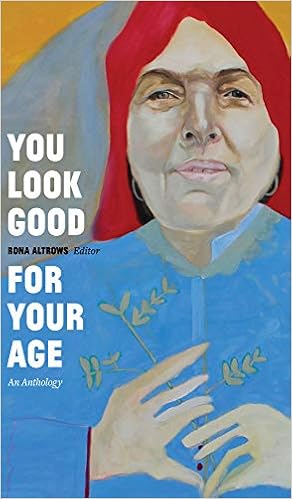
Rona Altrows, with video readings and an essay by
Every so often, WordCity Literary Journal may choose to feature an important and engaging book that’s come to our attention. This issue, in keeping with the feminist threads woven throughout our collection, we are giving space to Rona Altrows, for her anthology, You Look Good for Your Age
With a lineup of authors that include WordCity contributors, the pages of You Look Good for Your Age is filled with literary essays, short stories and poetry that explore the many aspects of aging of women in society.
In launching this anthology, Rona and the publisher (The University of Alberta Press) not only organized a live, online launch party, but gathered together a collection of short video readings by the collection’s contributors. We think you’ll agree that it’s both an innovative and generous way to give something to readers and listeners, and a joyful way to present these beautiful works and those who wrote them.
With permission from and thanks to Rona and the publisher, we include those readings here (following a description of the anthology). You may also find the readings on The University of Alberta Press’s YouTube Channel.
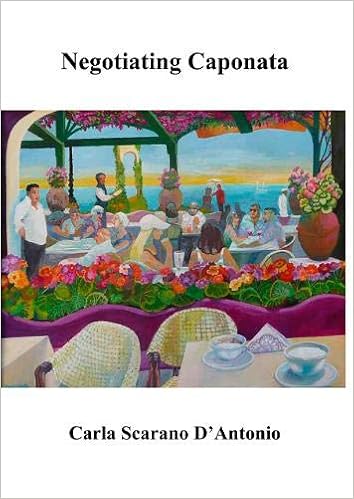
Carla Scarano D’Antonio’s Caponata arrived late last year and I devoured it in one sitting. Enough time has passed now for the unique flavours to blend as they would in the caponata my mother prepared at the end of every season from her summer garden: the marriage of sour eggplant with sweet bell pepper and tomato, the infusion of vinegar and capers to add just the right tang.
Similarly, Scarano D’Antonio’s intriguing collection incorporates at first seemingly disparate components … part recipe book, part memoir of place, part meditation on human interactions, these poems are at turn soft with nostalgia and sharp with the honesty of relationships sometimes difficult to negotiate.
Usually summer reading round-ups tend to favour paperback novels so readers can while away the hours while sun worshipping or cottaging during the luscious unwinding of August. Light, entertaining narratives are often top of the list—romances, mysteries and thrillers, with the odd celebrity memoir included.
In my current selection, the only title that fits this paradigm is Polly Sampson’s A Theatre For Dreamers. Polly, long time lyricist for her former Pink Floyd guitarist husband David Gilmour, has situated her coming-of-age novel on Hydra in 1961. That’s where the late ’50s bohemians from chilly Europe migrated to live cheaply and paradisiacally on the Greek myth of sun, wine, and free love. Real life characters, like Leonard Cohen and Marianne Ihlen, and Charmain Clift and others, all fresh faced and excited, are slotted into the arrival of the protagonist, her brother, and boyfriend. Each in their own way are fleeing the bourgeois boredoms of 1960s Britain, long before the dawn of swinging London. If you have seen Nick Broomfield’s documentary Words Of Love or read Michael Posner’s recent oral biography reviewed here, you will be right in the picture.
Orgasm

Some people are holding their food as if they had fought like animals for it.
Their prey!!! After so much work, they become the new system.
They hold it with so much tenderness… not to lose any crumbs of it.
They sniff all the smell from it with greed… to not let any for others.
They bite and their tampering lips look like a kiss.
So much love… I witness so much love.
They spin the prey with the tongue over and over… 22 times, by the book.
After, they swallow the longed for prey with maximum care
To make it touch all the encountered parts of the body.
They close their eyes to concentrate on the tickle that the prey produces on its way to the stomach.
Endless…
Orgasm…
Rebecca

Rebecca is lying in bed
Rebecca is being laid on by a cartoonishly small dog
Rebecca dreamed about this dog when she was three,
four, five and once when she was seven
Rebecca is trying to make this about the dog

Rebecca, Beka, Becks, Bean and once ‘’Beckham’’
that one didn't really stick, although it was hit into her
by a ten-year-old, full force in the face
with a baseball bat, at a birthday party
Rebecca does not reply to ‘’Beckham’’
Rebecca does not want to focus on it anymore
Rebecca thinks back to the dog

Rebecca remembers walking the dog around a corner
Reality and Justice

               To:   215 children found buried on the site of what was Canada's largest Indigenous Residential School.

We have been playing in darkness
with the covered eyes,
since we were children
then I wanted to find you
for I needed to win.

Floundered in the footprint of time,
I need to find you
to find myself, my happiness,
your love,
and still in the absolute darkness.

Children were told
darkness is the reality
and for middle-aged
covering our eyes with a dirty
handkerchief was called justice.
On the edge of Lago Atitlan

What I wanted, more than anything,
was to fly.
to kick off, strong and sure and shoot up
into the azure sky, arms outstretched.
I wanted the wind,
rippling across my skin --
through me.
It wasn’t enough to stand there,
at the edge of the lake,
and look only so far.
I needed to dive.
Dive into the deepest part,
to swim to the very heart of these mythical waters.

To soar just above
and skim
each inch with my fingertips.
To say that I knew this place
and that it too,
knew me.
Ghosts of Grass

Here:
It’s the katabatic winds
coming down from the mountains
hard like the love
and the wrath
of God.
It’s the borealis that comes
with the thirty below
on the first of March.
It’s the ghosts of grass and a million buffalo.
Adrift

humans slump in life-jackets
bone cold, teeth chatter
the planet
coughs, trembles, belches
an oily slick
lost in black clouds
thunder and lightening
unable to slice
She shuffles on the kerb outside O’Shaunessy’s, corner of Kelly and Dunleven Road. Her eyes the colour of Our Lady’s veil, scorched bluer by her copper curls. On the lookout for the Da. Her task of a Friday night to wheedle the wages off of him before he sets off on the lash. Glad of a break from the chores. Socks like a flock of crows, forever jostling, hand me down frocks in need of hems, pants snagged on barbed wire, nails, atop of farmer’s walls and fences. Herself, the firstborn of a baker’s dozen; endless mopping up of spats, snail snots, scabby porridge pots.
Licks of laughter, yellow light, sidle out the gaping door into the night, let out by culchies on their shuffle to the bar. Eejits with purple slurs for eyes, glances tossed her way
Kansas, Old Abandoned House

House, weathered, bashed in grays, spiders,
homespun surrounding yellows and pinks
on a Kansas, prairie appears lonely tonight.
The human theater lives once lived here
inside are gone now,
buried in the back, dark trail
behind that old outhouse.
Old wood chipper in the shed, rustic, worn, no gas, no thunder, no sound.
overturned dream

love is a scaffold where we sleep
whereas our sleep has a sight towards birds

don’t make yourself a cradle from a watered woman’s hair
a bird has built a nest in it
so it could die

you are to plant it the next day
and you will know
that you know nothing that you know
while reading on the bodies with your blinded hands

all you are left with is to tie the trees face down
so that the earth should mirror them when calling you
with a strange name
Platinum City


By  Chinese Poet Hongri Yuan
Translated by Manu Mangattu
Assistant Professor, Department of English
St George College Aruvithura, India
manumangattu@gmail.com
www.mutemelodist.com


Ah! Of iridescent gems of time
The heavenly road you paved light!
In a kingdom of stars,
I found my home.
In the golden cities,
I opened the gates of the city to the sun,
To behold the godly giants.
At the royal palace of the jewel
I read of prehistoric wonderful poems
The enormous, gorgeous ancient books.
Carved with the golden words
The wondrous strange mystery tales,
Made my eyes drunken.
I walked into the full new universes,
And saw the holy kingdoms:
Even before the earth was born
The erstwhile home of human history.
Once Upon a Prison Metal Time….

They feed you fairy tales with breast milk or
formula. It is all formula.

Little girls are really princesses
waiting for handsome princes or princesses to
kiss them better; whisk them off to their perfect lives.

Your mother says your expectations are so high
you’ll never find a prince to keep you in the style
to which you are accustomed.
Home

Sipping on cold ales
As supper succumbs

To it own sense of perfection
While Paul O'Dette plucks the

Magic of John Dowland
In this candlelight where

Centuries wither into seconds,
Miscarriage

The night I ejected
the embryo sac (at least I think
that’s what it was), I felt
a flash of performing this act,
this messy process (body shunting
object large enough to plink like a marble in water,
days emitting blood and slime, some urgent shits)
on a cold throne in dark woods, in a backroom pot with sixteen
people, with servants to cover with cloth and remove.
It was the thought of telling
my husband downstairs that might have been it – the fact
that I could – carried me to what other women might tell;
my sense (as of threat) that these acts women do
have often been repellant, thought wicked,
reason for suspicion, dismissal, discipline.
  To the tribunal in 1593,
   the girl accused of abortion described her
   miscarriage in a field: The foetus slipped out
   like a piece of ham.
There in my bright bathroom, carried through
a business uncountable bodies have known, gratitude
for sewerage, toilet paper, privacy, hot water, and the ability
I and most women I know possess – to describe without fear
a sense of the mess we clean up
as the body resets, primes itself
for our next shot at life beyond death.
Women Empowerment:

Today’s Vision for Tomorrow’s Mission

In a globalized world, gender equality
And empowerment of women are tools
To achieve sustainable development of societies,
As admitted even by fools!
Still, the violence towards women is an epidemic
Against which no country is immune.
And today, we face more challenges to peace
Due to poverty, hunger, and disease.
The Ballad of Margaret Murphy


The spring of another century,
an ancient land cherished and
cared for by First Nations
now flooded by waves of settlers
from an ocean away and beyond,
British, Irish and more,
all escaping and searching.

Upper Canada in the newcomers’ parlance,
cradled by the Great Lakes, the budding
towns, villages and homesteads
of the 1830’s ruled by a masculine
colonialist elite in distant York;
and caught up in the tides of history
was an Irish girl named Margaret.
WordCity Literary Journal is provided free to readers from all around the world, and there is no cost to writers submitting their work. Substantial time and expertise goes into each issue, and if you would like to contribute to those efforts, and the costs associated with maintaining this site, we thank you for your support.
WordCity Literary Journal is provided free to readers from all around the world, and there is no cost to writers submitting their work. Substantial time and expertise goes into each issue, and if you would like to contribute to those efforts, and the costs associated with maintaining this site, we thank you for your support.
a world almost

how delicate
the cobweb strung
between trees

the precise lattice
of design destroyed
as I walk through.
now I feel
the glue of those
invisible threads
the itch of
spiders crawling,
await the bite. . .
oblivious to other
symmetries made useless,
the secret order of things
torn apart
I turn into
the shadow
under the branches
look back at
a world
almost too small
to notice
no longer there
Ken Cathers has a B.A. from the University of Victoria and a M.A. from
York University in Toronto. He has been published in numerous
periodicals, anthologies as well as seven books of poetry, most recently
Letters From the Old Country with Ekstasis Press. His work has appeared
in publications in Canada, the United States, Australia, Ireland and Africa. He lives on Vancouver Island with his family in a small colony of trees.
WordCity Literary Journal is provided free to readers from all around the world, and there is no cost to writers submitting their work. Substantial time and expertise goes into each issue, and if you would like to contribute to those efforts, and the costs associated with maintaining this site, we thank you for your support.

























 WordCityLit