Books for Your Christmas Lists!

arrested song

ARRESTED SONG by Irena Karafilly

Calliope Adham – young, strong-willed, and recently widowed – is schoolmistress in the village of Molyvos when Hitler’s army invades Greece in 1941. Well-read and linguistically gifted, she is recruited by the Germans to act as their liaison officer. It is the beginning of a personal and national saga that will last for several decades.

Calliope’s wartime duties bring her into close contact with Lieutenant Lorenz Umbreit, the Wehrmacht commander. The schoolmistress is an active member of the Greek Resistance, yet her friendship with the German blossoms against all odds, in a fishing village seething with dread and suspicion.

Amid privation and death, the villagers’ hostility finally erupts, but the bond between Calliope and Umbreit survives, taking unforeseeable turns as Greece is ravaged by civil war and oppressed by military dictatorship. It is against this turbulent background that Calliope emerges as a champion for girls’ and women’s rights.

ARRESTED SONG is a haunting, sumptuous novel, weaving the private and the historic into a vivid tapestry of Greek island life. Spanning over three decades, it chronicles the story of an extraordinary woman and her lifelong struggle against social and political tyranny.
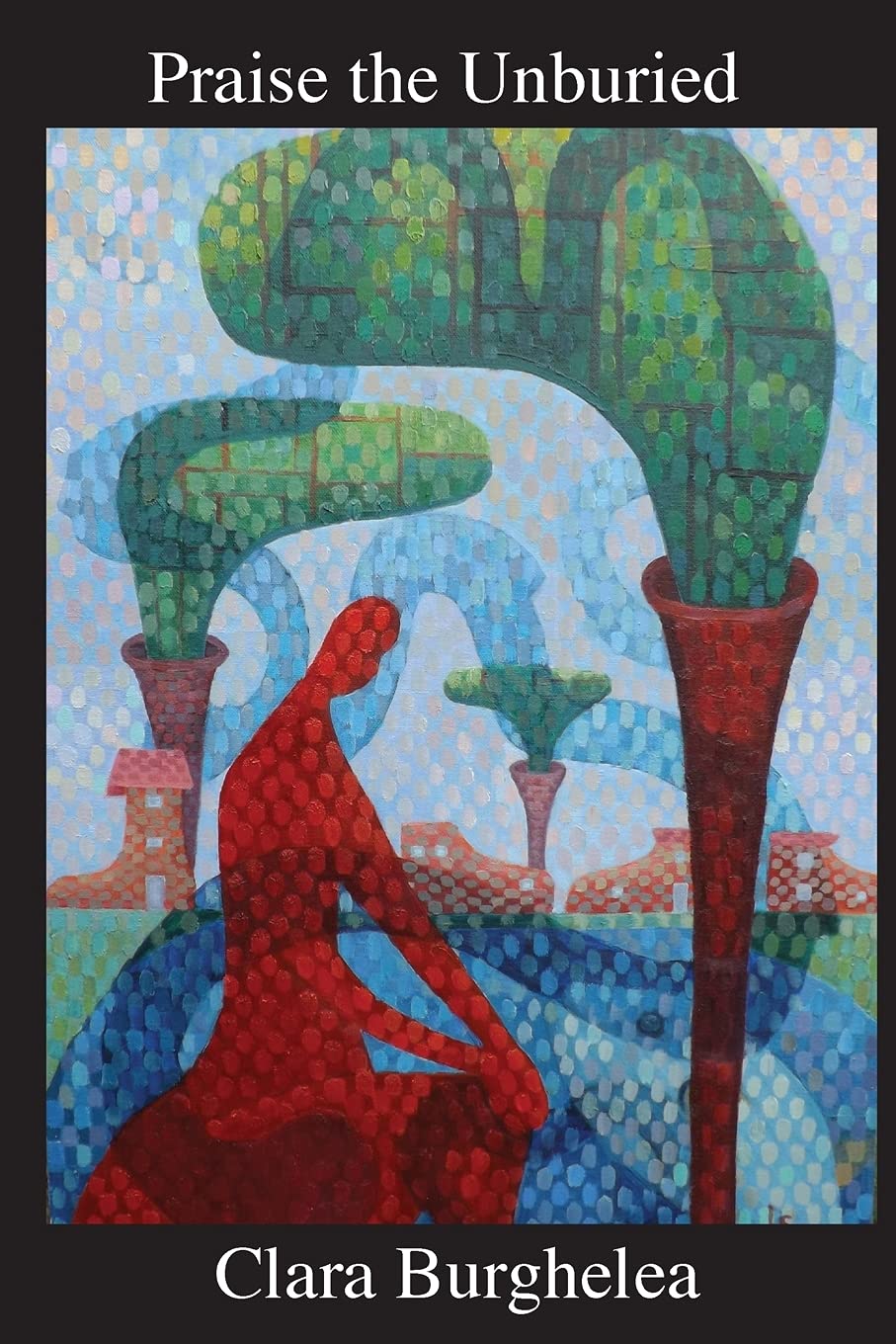
Poems: A Selected Reading

patrick friesen

‎Poems: A Selected Reading – Album by Patrick Friesen – Apple Music

These loosely linked stories read like a novel. Lives are given form by the past but undergo change as the world reshapes beliefs and circumstances. Focusing on recurrent, related characters with a common reality: small town Mennonite life, this powerful collection connects us to the author’s own background and experiences.

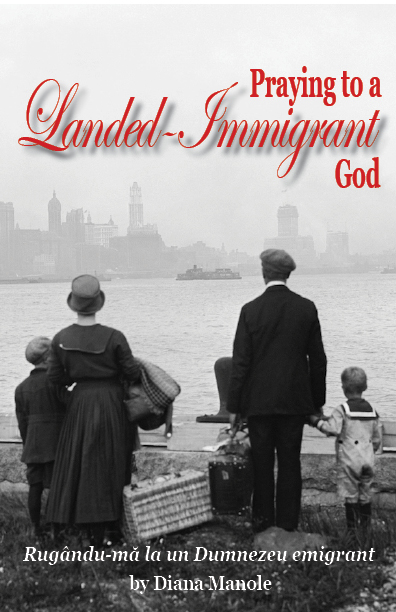
When Lizzy is forced to move to the Adventist commune of Stillwater, she is sure the end times have begun. She’s not wrong.

Sixteen-year-old Lizzy is trapped, caught between her passion for science and the teachings of her Seventh-day Adventist father and Mennonite mother. But she isn’t the only one with problems: her mother, Marie, is increasingly reliant on prescription medication to recover from a car accident that might – or might not – have been deliberately caused by her husband, Daniel.

In a bid to regain his social standing and self-esteem, Daniel moves the family to an Adventist commune in BC’s Okanagan Valley, where Lizzy meets another recent arrival with secrets of his own. He helps her establish a clandestine connection to the outside world that she hopes will help her curb her tongue and retain her sanity long enough to finish high school, but her plans change when her younger brother, Zach, is threatened. Lizzy and Zach flee to Marie’s childhood home with their reluctant mother in tow. When her father arrives to take his family back to Stillwater, old resentments collide with new, forcing everyone to face a day of judgement.

Poems about the Immigrant experience.

Circle Tour, Eva Tihanyi’s ninth poetry collection, seeks and celebrates beauty in the face of despondency. Its three sections— (Outer Circle, Inner Circle, Centre—) draw us in as we move from the “outside” world of politics, culture, and art to the “inside” world of relationships with family, friends, and lovers, to the “core” world of the self.

The book begins with a stark announcement of hope: “If you’re reading this, / you’re still here.” It then moves to engagement with (among other things) the pandemic, feminism, and artists such as Marina Abramovic while reinforcing the healing power of Nature throughout our experiences with external, beyond-our-control circumstances. In the more personal second section, Tihanyi writes about loss through death; the continuing influence of her grandmother; the end of one love moving into a new, more profound love; the importance of friends, reminding us that “each day we must be / lucid with mutiny against despair.” The final section focuses on the self—not just the poet’s own but the universal human Self. It confronts the process of aging and its attendant contemplations, and once again reminds us of how Nature and art can help us in our “continuous becoming.”

The poems in Circle Tour invite a sequential reading as the book gathers force as it spirals upward. It takes us on a powerful journey that ends with the ultimate affirmation that leads us full circle to our present moment: “Enough on this day / to be enormously alive.”

Mennonites are often associated with food, both by outsiders and by Mennonites themselves. Eating in abundance, eating together, preserving food, and preparing so-called traditional foods are just some of the connections mentioned in cookbooks, food advertising, memoirs, and everyday food talk. Yet since Mennonites are found around the world – from Europe to Canada to Mexico, from Paraguay to India to the Democratic Republic of the Congo – what can it mean to eat like one?

In Eating Like a Mennonite Marlene Epp finds that the answer depends on the eater: on their ancestral history, current home, gender, socio-economic position, family traditions, and personal tastes. Originating in central Europe in the sixteenth century, Mennonites migrated around the world even as their religious teachings historically emphasized their separateness from others. The idea of Mennonite food became a way of maintaining community identity, even as unfamiliar environments obliged Mennonites to borrow and learn from their neighbours. Looking at Mennonites past and present, Epp shows that foodstuffs (cuisine) and foodways (practices) depend on historical and cultural context. She explores how diets have evolved as a result of migration, settlement, and mission; how food and gender identities relate to both power and fear; how cookbooks and recipes are full of social meaning; how experiences and memories of food scarcity shape identity; and how food is an expression of religious beliefs – as a symbol, in ritual, and in acts of charity.

From zwieback to tamales and from sauerkraut to spring rolls, Eating Like a Mennonite reveals food as a complex ingredient in ethnic, religious, and personal identities, with the ability to create both bonds and boundaries between people.

Shortlisted for the 2023 Fred Kerner Book Award

A Miramichi Reader Best Fiction of 2022

Wan is a masterpiece. This beautiful, painterly, sublime, and sonically exquisite novel by Dawn Promislow is a work of utter genius.” – Kathryn Kuitenbrouwer, author of All the Broken Things

Narrated in a completely distinctive and mesmerizing voice, Wan is the story of Jacqueline, a privileged artist in 1970s South Africa. After an anti-apartheid activist comes to hide in her garden house, Jacqueline’s carefully constructed life begins to unravel.

Written in gorgeous and spare prose, this exquisite debut novel grapples with questions of complicity and guilt, of privilege, and of the immeasurable value of art and of life.

(M)othering is a universally understood phenomenon that speaks to the act of becoming something unexpected and entirely outside ourselves. And this book is a collection of writing and art about that. 56 contributors illuminate the kind of gritty, body mind soul transformations that only the mothering myth can evoke. Their work will take you to wonder and wildness, kindness, beauty, grief, love.

These writers and artists show us what it means to create, to birth something, to love it, and to suffer loss. They share their truths about being persecuted, fleeing. About trans-generational trauma. Some write of broken women, mothering their mothers and sisters, choosing not to be mothers. Having many mothers. Mothering grown children. Men who want to be mothered. They tackle identity, adoption, abortion, addiction, self-care, sacrifice, nature and nurture, making art, unravelling, invention, loneliness, anger, laughter, and joy. They are queer, Metis, indigenous, French, male, Jewish, Mennonite, descendants of the Blackfoot and the Cree, settlers and immigrants. In unison, they speak about experiences far beyond the pathologizing of the pregnant female body.

Return to Journal

3 poems by Dominik Slusarczyk

Dominik Slusarczyk Photo

The Peasant’s Prayer

Yesterday I prayed so
Today I sit on my sofa and 
Wait for my prayers to come true.
Soon I will have
Someone to hug but
I won’t hug them in
Case I break them.


Scavengers

You have a
Place in my heart.
It is red and warm.
You go there when
You want to hide from the storm.


Jobs For People With Two Bones

We were born naked and new.
We will die clothed and old.
In between those simple states there
Is only a mystery as deep as darkness.
You can be a plumber or a builder.
You can be a teacher or a tailor.
You can be absolutely anything you think of so
You have to try not to think too much.

Return to Journal

Dominik Slusarczyk is an artist who makes everything from music to painting. He was educated at The University of Nottingham where he got a degree in biochemistry. He lives in Bristol in the southwest of England. He enjoys playing football and going for walks in the countryside. His poetry has been published in various literary magazines including Fresh Words and Berlin Lit. His fiction has been published in various literary magazines including moonShine Review and SHiFT – A Journal of Literary Oddities.

WordCity Literary Journal is provided free to readers from all around the world, and there is no cost to writers submitting their work. Substantial time and expertise goes into each issue, and if you would like to contribute to those efforts, and the costs associated with maintaining this site, we thank you for your support.

One-Time
Monthly
Yearly

Make a one-time donation

Make a monthly donation

Make a yearly donation

Choose an amount

C$5.00
C$15.00
C$100.00
C$5.00
C$15.00
C$100.00
C$5.00
C$15.00
C$100.00

Or enter a custom amount

C$

Your contribution is appreciated.

Your contribution is appreciated.

Your contribution is appreciated.

DonateDonate monthlyDonate yearly

3 poems by John Grey

John Grey(2)

THE BULLY IN THE TREE

In the fork of a tree,
stands the bully boy.
Gripping a branch in each hand,
he puffs out his chest proudly.

Even if you can’t see him
from where you are,
you’re surely familiar
with the broken window,
the kid with two black eyes,
sobbing on the doorstep.

And you’ve no doubt heard
of the money stolen
from a neighbor’s purse
And the cuss words
uttered loudly in the school room.

A gust of wind tries
but can’t blow him down.
Someone shakes the trunk
but that doesn’t move 
him either.

But here comes 
the kid with the two black eyes
and he’s clutching some kind
of hand saw.

His eyes brighten
as he thinks ahead.


IN BUSINESS-ESE

I can't speak French or Latin
but who needs romance languages anyhow,
when I have business-ese to wrap my tongue around.
"Funds transfer pricing", "regulatory reporting", "intercompany eliminations"
my business meetings are pure theater.
What need I of the arts when I'm creatively customer focused, conceptually production supportive, devoutly process empowered.
Bach is neither here nor there
but I'm inspired
when my manager exults us all
with "Teamwork," "diversity,"
"inclusive meritocracy."
That's all the music these ears need.
"Business safeguards," "system impacts," "cost overruns" - step aside Rilke, those are sheer poetry.
Even if Dostoevsky had never written "The Brothers Karamazov" I'd still have "hardware requirements," "rules of engagement" and "processing flow" and I wouldn't feel the least deprived.
Okay, so I'm kidding.
I suffer all this so I can feed a family,
write and read, listen and admire, in my spare time.
At this juncture, I'm trying to launch a new poem. Chapter seven of "War And Peace" is my next action item. I'd just love to go hear Beethoven's Fifth later tonight but I'm not sure of my availability. And that opening at the local gallery is on the backburner.
Anyway, I'm not sure if this poem explains where I'm coining from, but it does offer you a baseline.


SENOR

Man’s Mexican.
He calls me Senor.
His English is better than my Spanish.
So, we converse in my native tongue.
But he still calls me Senor 
and not mister.

He says he came to this country as a boy.
Just him and his parents.
His older brothers arrived later.
His papa worked in the orange groves
south of Los Angeles.
Year after year he’d come back
from his tiny village
to the north of Vera Cruz
until the very last time 
when he decided to stay.
The man never mentions
the word “illegal”
but he continues to call me Senor.

Man’s seated next to me
on a bus ride 
from San Diego to LA.
His head goes down
when he sees a motorcycle cop
speeding by our vehicle.
Just instinct, he says,
without further explanation.

He works for an uncle
in his hardware store.
It’s not exactly the American dream.
I don’t think it’s the Mexican dream either.
But he says his uncle’s a good man.
He too worked the orange groves.
Now he’s somebody.
Somebody, senor, he says.

Return to Journal

John Grey is an Australian poet, US resident, recently published in New World Writing,

California Quarterly and Lost Pilots. Latest books,” Between Two Fires”, “Covert” and “Memory Outside The Head” are available through Amazon. Work upcoming in the Seventh Quarry, La Presa, and Doubly Mad.

WordCity Literary Journal is provided free to readers from all around the world, and there is no cost to writers submitting their work. Substantial time and expertise goes into each issue, and if you would like to contribute to those efforts, and the costs associated with maintaining this site, we thank you for your support.

One-Time
Monthly
Yearly

Make a one-time donation

Make a monthly donation

Make a yearly donation

Choose an amount

C$5.00
C$15.00
C$100.00
C$5.00
C$15.00
C$100.00
C$5.00
C$15.00
C$100.00

Or enter a custom amount

C$

Your contribution is appreciated.

Your contribution is appreciated.

Your contribution is appreciated.

DonateDonate monthlyDonate yearly

3 poems by Rachel J Fenton

Rachel Fenton(1)

Peas on Earth 
 
Seedlings greetings, I write in chalk 
on reusable labels, tuck them in the pots 
 
recycled and covered with paper then we walk 
to our neighbors. My son makes each stop, 
 
running up the steep gardens to learn 
kindness isn’t concrete, it must be grown.  


Twenty Years After 
 
‘Twenty Years After What?’  
asks Jim, bringing an armful of shirts,  
unsure he wants to keep the hangers – he doesn’t –  
or the jacket with the ripped sleeve he’s fond of,  
and gestures for me to pass three books  
from inside the counter. Before I lift one  
out from under the glass, I say,  
‘It’s all relative,’ and he laughs.  
Book in hand, he exclaims, ‘War!’ Riffs 
puns the way the guitarist in the market plays 
‘Knockin’ on Heaven’s Door.’  
 
Not sure if it’s the same day the shop sign blew 
down the street in the hot Nor’ Wester, 
or when the frame woman shouted 
at the boy with brown skin  
but said, ‘No, love,’ to the pākehā kid 
for doing the same thing, I know for certain 
this is twenty years too late to be happening 
still. All over a five-buck bag  
of donated plastic. One green soldier stands 
under her, pointing his rifle
up her skirt like a war crime, forgotten.


Dylan isn’t playing but the man 
who covers him is interested in records. 
Jim, hands me his jacket, 
insisting I find a lady to mend it
until I stand up straight and ask,  
‘If it’s so special, why don’t you keep it?’ 
‘I’ll have these.’ He buys all three volumes, 
hugs their hard backs to his chest 
the way a parent maneuvers 
a child having a tantrum,
instructs me to throw his jacket in the bin.


A Trip to Twizel 
 
You told me I looked like Virginia Woolf  
this morning. It was as if you had blood 
between your teeth, because I was happy  
 
I had written a poem about Plath. You said  
you would have had another book out by now 
if you hadn’t had bad advice. 
 
Standing on the deck   
my ex invited us on a trip to Twizel –  
room to squeeze a few more in –  
 
how he worded it. You pulled a face, 
started pushing  
plates in the sink, said, ‘Look at the weather 
 
report.’ My ex jumped ship. OK  
except he took my middle kid. 
This evening you heard me in the kitchen, 
 
made yourself glacier on the rice, 
stuck to the cooker  
like the Endurance. I asked about the trip.  
 
You denied any knowledge of it, got angry  
because ‘It’s one of the places I want to go,’ 
you said: ‘Why didn’t you tell me?’ 
 
I reminded you I did but you, tensing,  
accuse me of not communicating,
say you didn’t understand me,
 
never heard me. You said,  
‘You should take lessons and learn to speak 
clearly.’ You turn up the gas. I keep the peace. 

Return to Journal

Rachel J Fenton lives in Oamaru in Te Waipounamu, Aotearoa, where she is Curator of Janet Frame House. Her poetry has been published in Magma, The Rialto, Landfall, and anthologies. She is the author of Beerstorming with Charlotte Brontë in New York

WordCity Literary Journal is provided free to readers from all around the world, and there is no cost to writers submitting their work. Substantial time and expertise goes into each issue, and if you would like to contribute to those efforts, and the costs associated with maintaining this site, we thank you for your support.

One-Time
Monthly
Yearly

Make a one-time donation

Make a monthly donation

Make a yearly donation

Choose an amount

C$5.00
C$15.00
C$100.00
C$5.00
C$15.00
C$100.00
C$5.00
C$15.00
C$100.00

Or enter a custom amount

C$

Your contribution is appreciated.

Your contribution is appreciated.

Your contribution is appreciated.

DonateDonate monthlyDonate yearly

3 poems by Claudia Wysocky

Claudia Wysocky

Heaven and Hell

Silence fills the air,
as I sit, alone,
among endless rows of graves.

I wish for heartbeats,
for laughter,
for tears.

I miss the noise.

But I know that I can't have it.

I can hear the footsteps of the living,
but there's no sound for me.

Silence surrounds me,
as I lay in my own void,
a void of life,
eternal and silent.

I will never know happiness again.
But I accept it,
lying here, alone,
among endless rows of graves.

It was fun being dead for a while,
to feel the quiet
and the peace.
I thought hell would have fire and brimstone,
but I guess that's only what they tell us.


I'm moving on now,
accepting my reality.
And I know that one day,
I'll find my meaning,
In the cold abyss.

But for now, all I have is silence,
a silence that never ends.

And I bet there's fire in heaven.
Foolish Understanding

The things I thought unmeetable—unattainable—as if from Eden—
Forever luring us with what could never be pure in value as it might have been—
Or so we've all been told: 
But why should my heart believe it this for so?  
This is what I know!  
My dreams! 
As clear as the words of my own ears—
Unencumbered by notions of what I was or would be. 
Just a child at that point in time; 
Unaware of the traps or whims of foolish understanding. 
Always trying, always striving.
And now, standing here--where was I standing before?


Redacted

Routine is the devil of a stranger:
   A death spell is different only in name.
18th century England--the rise of industrialization,
   the first factory system—the spilling out of a Satanic rage.
Alone, for I sought you everywhere.
  In Spain, at five paces away from me,
 Your torso moving gracefully like a flower blooming—
So perfect you were; I should have found a way
to grasp the beauty in it: 
  To be with you was to be good, filled with God's love,
But in that moment my heart dared leap out of my chest
    In the frantic-ness to make time stop for us... To make us both strong enough to last eternally— To love us amidst the world's fear of each other— It is not as easy as it seems...  
  It is enough that we are together.
  You are here beside me. And that's enough. 


Close To Me

It's lovely, the number of times
you look down on me and forget to see,
as if from your corner of the sea—
You could not hear once I begin to plead;
It takes a little time before you come,
To coax me back again up to the dreams.
That there is no moon,
only we are nearer the stars—
I am but asleep. And yet, here we lie: Far apart.
At some point I think to wake myself up,
To make sure I haven't been lying,  
And when finally, I realize it's true—
I find myself so faint; Holding too tight; Too cold.
I think it may be time for a change after all.
But as things are today—or so it would seem—I'll sleep here alone under the covers awaiting you to come, more closely to me at last...

Return to Journal

WordCity Literary Journal is provided free to readers from all around the world, and there is no cost to writers submitting their work. Substantial time and expertise goes into each issue, and if you would like to contribute to those efforts, and the costs associated with maintaining this site, we thank you for your support.

One-Time
Monthly
Yearly

Make a one-time donation

Make a monthly donation

Make a yearly donation

Choose an amount

C$5.00
C$15.00
C$100.00
C$5.00
C$15.00
C$100.00
C$5.00
C$15.00
C$100.00

Or enter a custom amount

C$

Your contribution is appreciated.

Your contribution is appreciated.

Your contribution is appreciated.

DonateDonate monthlyDonate yearly

2 poems by Ioana Cosma

Ioana Cosma

Mother Earth
Pregnant is the earth and was from the beginning
its replenished womb bathes us all in light
it is forever birthing bringing forth offspring like
the sky once exploded to make room for life.

At times we hear its moans of labor, its trembling
voice from roaring falls, the naked skin of trees
that crack under the weight of time. A work of passion
of the earth who always forgives our childish crimes.

It is small and gigantic at once, not a star, but an
incandescent rock. Though it might feel like magic, her
creation is mostly an act of love superseding intelligent
design, the grace of artwork and man's climb up above.

We tread hurriedly and with no sympathy for its voluptuous
body that's nonetheless never vulgar even when it is raped
like the times when we scratch through its belly, suck on its
blood and cover its sumptuous breasts in concrete and glass.

Yet the earth remains pure waiting for the day when
its favorite children begin to see her devotion and selflessness
in the midst of the abundance of life that seems to have been
born for and through her, the smallest of gods.


The Sound of the Earth
From the blue bellies of ocean floors
and vanilla lagoons of visceral calling
there comes a sound that sails through
the living like a subtle graze of the lover’s hand.

It traverses heart-shaped wings and Elfin ears
the first entry of the hoe, with a crunch, in the
knotty earth, by the eternal man who hears
his wife’s prayers every night and the smell of herbs.

From the shuffling of semantic sands that become
honey, the sound of crystal glassworks like
a memory of stars being born, kissing the sea
upon the encounter between the eye and the eve.

The pounding feet of elephants echo the throbbing lava
and magma dressing the earth like a god that’s to be married
to the bluebells and gardens of Flora, to the
swallows that fall in the zenith of muted feasts.

My tears they ran with the force of a mountain river
in spring, a deluge to take to the sea my small and frail home
just like the clouds gather every time they are called
by the trumpets of more mirror and smoke.

Return to Journal

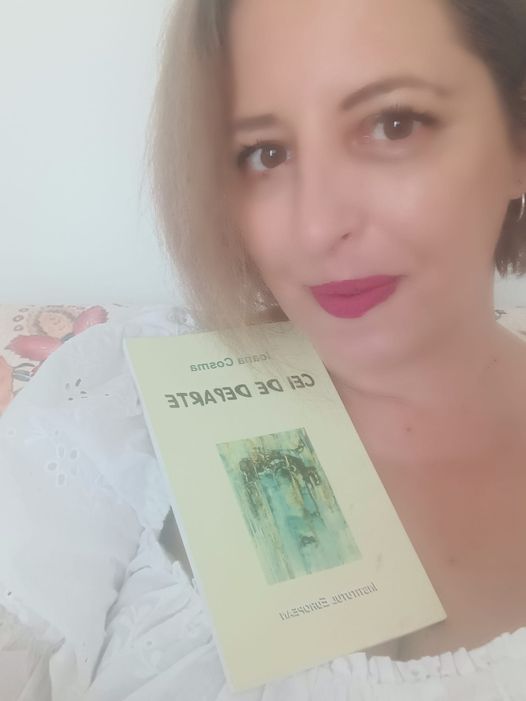
Ioana Cosma is a university lecturer at the Faculty of Letters from the University of Pitesti in Romania. She has a PhD in Comparative Literature from the University of Toronto. She is interested in twentieth-century literature, cinema and philosophy. She has written articles on Modernist aesthetics (the Gradiva series) and Postmodernist art and literature. She is also a writer, and she has published six volumes of poetry, two novels, short stories and a play in Romania, Canada, and The United States. She is the recipient of an academic and creative residency at The Ionian Institute for the Arts and Culture in Kephalonia, Greece.

WordCity Literary Journal is provided free to readers from all around the world, and there is no cost to writers submitting their work. Substantial time and expertise goes into each issue, and if you would like to contribute to those efforts, and the costs associated with maintaining this site, we thank you for your support.

One-Time
Monthly
Yearly

Make a one-time donation

Make a monthly donation

Make a yearly donation

Choose an amount

C$5.00
C$15.00
C$100.00
C$5.00
C$15.00
C$100.00
C$5.00
C$15.00
C$100.00

Or enter a custom amount

C$

Your contribution is appreciated.

Your contribution is appreciated.

Your contribution is appreciated.

DonateDonate monthlyDonate yearly

3 poems by R. Gerry Fabian

RG Fabian

Seeking Asylum

What Freud jumble-juxtaposed?
Poor man. Forked helplessly
in great homo sapiens noodle soup.
(Chicken ego parlor play desire plus
sublimated id broth plus super ego
cemented noodle cocktail party
chatter.)  Imagine telepathic
sensory flashes visualized
as cajun bayou needle voodoo.
A code vacuum scramble
shields interior exercise message.


Third Person Omniscient

In a neatly scripted letter
the desert boy drives a stake
and denies your Spanish Armada affection.
With love as a ruptured wineskin
she pantomimes astrology and pronounces
the loss of her pregnant sister.
An old man of religion awaits
a sign that forms a scar on her hand
There is never a communication.
By the window a street urchin is stabbed.
When the crowd quenches curiosity 
She slips out and steals a bloody scarf.
It remains under her pillow yet.
She contemplates leaving but
it is too easy.
three days hence, a raven gives her hope.

Somewhere in St. Louis
the desert boy has second thoughts
as he leaves the bed of his latest lover.
His thesaurus mind composes a reunion
he never finds time to write.


Oxide Elements
I am the farrier
of your wandering walk,
your silent stride,
your ghostly gallop.

I heat forge
the metal of 
your meticulous 
motion.

On my love anvil,
I take fire spark
spitting iron
and perfectly shape
molten mandrake
and that is why 
our love
is sizzle steam
water casted.

Return to Journal

R. Gerry Fabian is a published poet and novelist. He has published five books of poetry: Parallels, Coming Out Of The Atlantic, Electronic Forecasts, Wildflower Women as well as his poetry baseball book, Ball On The Mound. In addition, he has published five novels: Getting Lucky (The Story), Memphis Masquerade, Seventh Sense, Ghost Girl and Just Out Of Reach.

WordCity Literary Journal is provided free to readers from all around the world, and there is no cost to writers submitting their work. Substantial time and expertise goes into each issue, and if you would like to contribute to those efforts, and the costs associated with maintaining this site, we thank you for your support.

One-Time
Monthly
Yearly

Make a one-time donation

Make a monthly donation

Make a yearly donation

Choose an amount

C$5.00
C$15.00
C$100.00
C$5.00
C$15.00
C$100.00
C$5.00
C$15.00
C$100.00

Or enter a custom amount

C$

Your contribution is appreciated.

Your contribution is appreciated.

Your contribution is appreciated.

DonateDonate monthlyDonate yearly

5 poems by Abbas Maroufi. Translated by Bahar Momeni

Abbas Maroufi


هر شب

مرده‌ها از مرگ نمی‌ترسند
درد ندارند
رنج نمی‌کشند
تحقیر نمی‌شوند
کابوس نمی‌بینند
از جنگ نمی‌هراسند
به شکست نمی‌اندیشند
مرده‌ها بازجو ندارند
تحت تعقیب نیستند
محاکمه نمی‌شوند
حساب پس نمی‌دهند
جهان را وا می‌گذارند
مرده‌ها در کائنات می‌چرخند
تنها نمی‌مانند
با بال فرشتگان نوازش می‌شوند
احترام دارند
عشق من!
مرده‌ها برهنه می‌خوابند
و من
هر شب
در آغوش گرم تو
می‌میرم.


آدم‌ها

«آدم‌های کوچک
به آدم‌های بزرگ فکر می‌کنند
و آدم‌های بزرگ
به ایده‌ها»
من
فقط به تو فکر می‌کنم
کوچولوی قشنگم!
اصلاً
اگر فکر تو بگذارد
ایده‌های بزرگی در سر دارم
اولیش این که؛


وقتی نیستی

هر زمان که نیستی
فکر می‌کنم تو آمده‌ای
و من رفته‌ام
بیهوده
فکر می‌کنم تو نیامده‌ای
و من آمده‌ام
بی دلیل
حضورم در این جهان
مثل نفرین ملتی تهی‌شده از شعر و عشق است
شهرزاد من!
هر زمان که نیستی
فکر می‌کنم تو آمده‌ای
من هم آمده‌ام
ولی هستی شکل نیافته
هنوز
جهان را نساخته‌اند
و من به دنبال زمین می‌گردم
که با انگشت
بر تنت
روی خاک خط بکشم
بگویم خانه‌ی ما اینجاست؛
و ما دیگر سرگردان نیستم
می‌دانی؟
سرگردانی قید زمان است
نه مکان.


ستون یادبود شهر

هیچ چیزی از تو نمی‌خواستم
عشق من!
فقط می‌خواستم
در امتداد نسیم
گذشته‌ را به انبوه گیسوانت ببافم
تار به تار
گره بزنم به اسطوره‌ها
که هنگام راه رفتن
بر قالی ایرانی
ستاره‌های واژگانم
برایت راه شیری بسازند
می‌خواستم سر هر پیچ
یک شعر بکارم
بزنی به موهات
که وقتی برابر آینه می‌ایستی
هیچ چیزی
جز داغی دست‌های من
بر سینه‌ات دل دل نکند
می‌خواستم تمام راه با تو باشم
نفس بزنم
برایت بجنگم
به خاطرت زخمی شوم
و مغرور پای تو بایستم
بر ستون یادبود شهر.


بی کودکان شهر

اشک‌هام را
دانه دانه از روی زمین
پیدا می‌کنم
می‌ریزم توی جیب کودکی‌هام
که وقتی بزرگ شدم
دست و بالم خالی نباشد
آخر
تو می‌دانی
روزهای بدی در پیش است
روزهای تهی‌دستی
روزهایی که شهرها همه
بی پنجره بی طارمی بی پرنده
برهوت می‌شوند
و هیچ کس یادم نمی‌گیرد
خوابم کوچه ندارد
و هیچ کودکی در آن بازی نمی‌کند.


Every Night 
The dead have no fear of death.
They have no pain
And do not suffer.
They are not humiliated
And have no nightmares.
They don’t dread war.
They don't dwell on defeat.

The dead have no interrogators.
They are not prosecuted
Nor are they investigated
Or held accountable.

The dead leave the world behind
And wander in the cosmos.
They are not left alone
Always caressed by angels’ wings
Always respected.

My Love!
The dead sleep naked
And every night
In your warm embrace
I die.


People 
“Little people think about big people
And big people think about ideas…”
I only think about you
My little darling!
Indeed
If your thought gives me space,
I have big ideas in my head
The first being
To fall in love with you again.


When you are not here
I think you came
And I left
Unreasonably.

I think you didn’t come
And I came
For no reason.

My presence in this world
Is like a curse from a nation depleted of poetry and love

My Shahrzad!
When you are not here
I think you came
And I came also
But existence has not taken form
The universe has not been created yet
And I am looking for the earth
So I draw a line with my finger
on the soil of your body
Saying here is our home;
We are not wanderers anymore

You know,
Wandering is defined by time
Not location.

The City’s Memorial Monument 
I didn't want anything from you
My love!
I just wanted
To weave the past through your hair
Alongside the breeze
To tie a knot on every myth
Strand by strand
So the stars in my words
Make a Milkyway for you
When you walk on a Persian rug.

I wanted to plant a poem
At every turn of the road
For you to put on your hair
So when you stand in front of the mirror
Nothing flutters in your chest
But the heat of my hands.


I wanted to be with you all along
To fight for you, gasping
To get wounded for your sake
And stand by you proudly
On the city’s memorial monument.


Without children in the City
I find my tears
One by one
On the ground
And store them in the pockets of my childhood
So that when I grow up
I won't be empty-handed.
After all,
You know
There are hard days ahead;
Days of emptiness,
Days when cities become
Windowless, porchless, birdless.
They would turn into barren lands
And no one would learn me.
My dreams would have no streets,
And no child would play in them.

Return to Journal

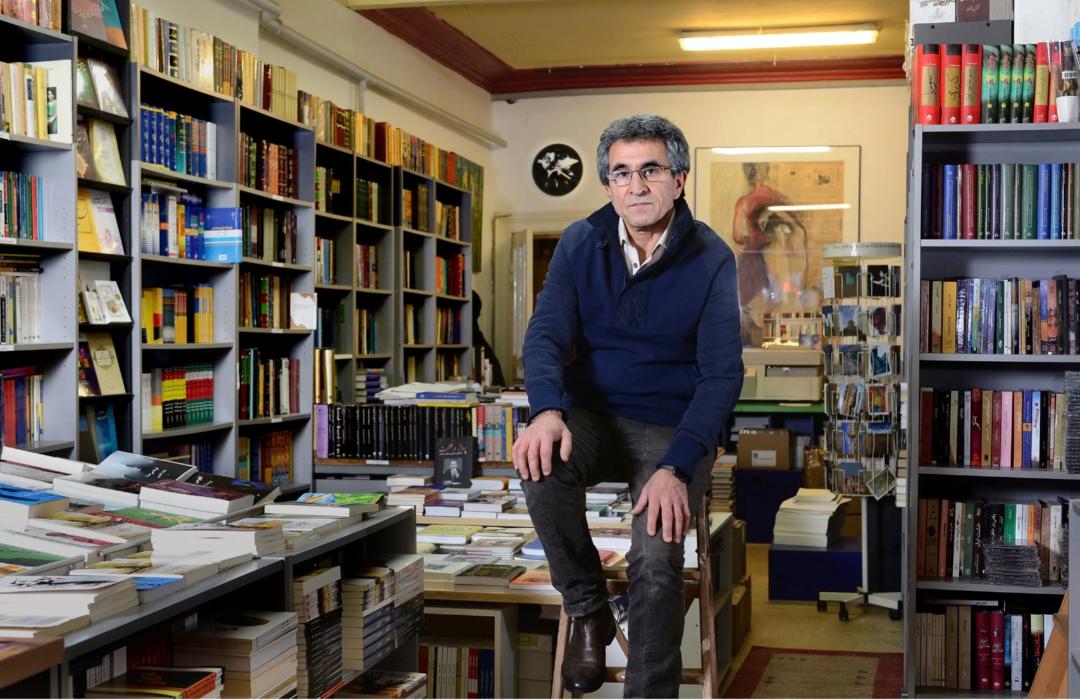
Abbas Maroufi, born in Tehran in 1957, was a prominent Iranian author and poet renowned for his influential work, “Symphony of the Dead.” His academic journey in dramatic literature at the University of Tehran was interrupted from 1980 to 1982 due to the revolutionary closure of universities. Overcoming these challenges, Maroufi founded the critical magazine Gardun (Heavenly Vault) in 1990, focusing on literature and contemporary issues. However, his critique of fundamental Islamic values led to the magazine’s ban and his conviction. Forced to leave Iran amidst international protests, Maroufi settled in Germany in 1996. In Berlin, he opened the Hedayat bookstore and continued his literary pursuits. Beyond his writing, he nurtured the next generation of Iranian authors through online classes, catering to new writers in Iran and the diaspora. Maroufi’s legacy in Iranian literature culminated with his passing in exile in 2022. This marked the end of a life dedicated to freedom of expression and the evolution of Iranian literary culture.

Bahar Momeni

Born into the cultural tapestry of Iran, Bahar Momeni is now a writer, poet, and translator. She’s currently working toward her Ph.D. in Literature at The University of Texas at Dallas, where she also teaches creative writing and literature. Bahar has published works in both Farsi and English across Iran, Europe, and the U.S., in reputable journals and anthologies. She skillfully weaves creative writing and translation to explore and illuminate themes of human rights and the subtleties of everyday resistance, making contributions to the fabric of modern literature. In 2023, Bahar received the “Outstanding Emerging BIPOC Creator Award” from The University of Texas at Austin, highlighting her impact as a creator. Currently engrossed in her debut semi-autobiographical graphic novel, The Trees We Carry, Bahar aims to extend her discourse on identity, displacement, and resistance. The fact that Bahar translated Abbas Maroufi’s poems, a mission entrusted to her by Maroufi himself, speaks volumes about the range and depth of her literary abilities.

WordCity Literary Journal is provided free to readers from all around the world, and there is no cost to writers submitting their work. Substantial time and expertise goes into each issue, and if you would like to contribute to those efforts, and the costs associated with maintaining this site, we thank you for your support.

One-Time
Monthly
Yearly

Make a one-time donation

Make a monthly donation

Make a yearly donation

Choose an amount

C$5.00
C$15.00
C$100.00
C$5.00
C$15.00
C$100.00
C$5.00
C$15.00
C$100.00

Or enter a custom amount

C$

Your contribution is appreciated.

Your contribution is appreciated.

Your contribution is appreciated.

DonateDonate monthlyDonate yearly

Call for Manuscripts: War and Peace

File:Israel-Palestine flags.svg

WordCity Literary Journal’s Winter Issue will be dedicated, especially, but not limited to, those affected by the war between Israel and Hamas, and the hope for peace.

With the understanding that peace is both infinitely simple and complex, whether it concerns the Middle East or Ukraine or any conflict, we invite poetry, fiction and non-fiction that provides both hope and insight. We also welcome works that reveal the terrors of violence.

What we are NOT looking for are any derogatory references to Jewish or Muslim, Israeli or Palestinian people. We are not open to hateful anti-Zionism, but are open to criticism of governments and policies.

We are not open to suggestions that Hamas terrorists/militants are freedom fighters, but open to calls for freedom and dignity and statehood for Palestine. We are not open to promoting the slogan, From the River to the Sea… no matter the intention, as it implies and invites genocide against Jewish people in Israel.

We thank you for your care and consideration of both Israeli and Palestinian lives, those lost and shattered by violence. We will be drawing careful lines

We also invite writing about Ukraine, Yemen and all other places where people are suffering in war and violence.

Please see our Submission Guidelines. We’ll accept work until December 31st.

Poets in Translation by Philip Nikolayev

Philip Nikolayev photo small

Philip Nikolayev is a poet living in Boston. He translates poetry from several languages and is currently translating poetry from Ukraine. Nikolayev’s works are published internationally, including such periodicals as Poetry, The Paris Review, Harvard Review, and Grand Street. His several collections of verse include Monkey Time (Wave Books; winner of the 2001 Verse Prize) and Letters from Aldenderry (Salt). He is coeditor-in-chief of Fulcrum: An Anthology of Poetry and Aesthetics.

https://www.poetryfoundation.org/poets/philip-nikolayev

Arkady Shtypel small

Arkady Shtypel, translated from the Ukrainian by Philip Nikolayev

Arkadiy Shtypel is a Russian Ukrainian bilingual poet, translator, and author of several works on poetry. He was born in 1944 in the Uzbek city of Kattakurgan during the WWII evacuation. His childhood and youth were spent in Dnipro, Ukraine, where he studied physics. He was expelled from his university for attempting to create a samizdat literary journal, and was at the same time accused of both Zionism and Ukrainian nationalism. After military service, he completed his university studies via correspondence but never pursued a career in physics. In 1969, he moved to Moscow and published several volumes of poetry. His first collection, Visiting Euclid, saw the light of day in 2002. In 2016, a book of Shtypel’s translations of classic Russian poetry into Ukrainian was published in Kyiv by the Kyiv-Mohyla Academy Publishing House. He has been a regular participant in the Kyiv Laurels literary festival and in the poetic programs of the Lviv Publishers’ Forum. He has been residing in Odessa, Ukraine, since 2021.

.

the marvelous form
of living beings

breath
blood circulation
digestion and excretion
active muscles
all those glands
enzyme chemistry
hormones
networks of nerves
with countless sensory endings

the miracle of sight

the brain!
especially our human brain
understanding
imagination
speech

all our words
that we use daily
polished by millions of dead lips
like the sea pebbles
that Demosthenes held in his mouth
to overcome speech impediments

…an explosion resounds

.

.

.

.

.

can’t think of verses
how many of us
have gone to the skies
can’t think of verses
while clenching teeth
don’t think of verses
god forbid worse
so won’t think of verses
can’t think of verses
in blood of squished cherries
the war the war rages
……………………
life-giving wheat
wrapped in blue light
far in the valley
a song rings daily
“ah there will be floods again
and laughs
and wine”
.
.

.

.

.

.

war’s fiery hands
a catchy metaphor
but inappropriate
as it aestheticizes
and adorns war
i.e. endless terror
dirt
stench
gutted mutilated bodies
entrails spilling out

so there’s no need for metaphors
except perhaps this:
war’s most fiery hands
will close
around the enemy’s throat

MARIA GALINA small

Maria Galina, translated from the Russian by Philip Nikolayev

Maria Galina is a Russian Ukrainian writer known for weaving mythological and imaginative elements into her works, which have won multiple literary prizes. She is also a skilled translator of poetry and prose, a distinguished literary reviewer, and a researcher of socio-cultural topics. She was born in Tver and raised in Ukraine, first in Kyiv and then in Odessa, where she attended university. As a graduate student, she studied hydrology and ichthyology. Her literary works include multiple novels, seven poetry collections, and accolades as a translator and promoter of modern Ukrainian poetry. After 2014, she returned to Ukraine, and she now lives in Odessa with her husband, the poet Arkady Shtypel. She crafts camouflage nets as her poetry and prose resonate in translation globally across various languages.

.

A drone hovering in the lower cloud layer
probes with the lenses of its mechanical eyes
the pine forest,
its red trunks
aimed at the zenith,
its anthills and mole burrows,
its supernovae and black holes.
It sees what is seen by someone leaning over a monitor,
a willow coppice over a quiet river,
emerald kingfishers diving into the greenish water,
golden-throated bee-eaters,
arrowhead sprouts and cattails,
a haven for green dragonflies.
It also sees what lies beyond the operator’s
limited field of vision:
pale shadows wavering like smoke over water,
mermaids dancing,
a goat-legged faun playing a fife,
the rusting carcass
of an unidentified aircraft
at the bottom of a placid lake
(a slender three-fingered hand clinging to the control lever),
a pale flame dangling from a power line support,
the ghost of a cat washing itself amidst the ruins of a house,
in a word, everything that’s forbidden for humans to see
and of which it
will never speak,
stuff that we cannot find out
and none of us will ever find out,
because it
holds no tactical or strategic significance.
The river that lulls to sleep mermaids and the dead
eventually becomes
just one of the rivers.

.

.

.

.

.

Initially she muttered ah and then she just said wow:
Truly, a roof that sails the sea can take your breath away,
When the waves pummel the damp walls wave after wave after wave
And when the cold moon rears its head into the empty window.
A sailor with a green green beard gave me a ring to keep,
A band of sea dogs sang to us down in the murky deep,
A sea cat licks my hand at will and shows off purring skills,
Though it’s grown flatter than a board and has developed gills.
I comb with a scallop shell comb my glowing azure hair.
All you pedestrians of the seas won’t shed another tear.
The moon floats, the wave rushes forth, as dark and cold as death.
You will not recognize my face when I rise from the depths.

.

.

.

.

.

When she barely sways with the gentle waves
She speaks to herself, unable to hear herself
Feeling the salty tangled knot of words
as a snake feels out with its forked
tongue a saucer of milk. Why oh why do I not
have a tail, had I but a tail, I’d stand proud and tall
I’d make sure your bridges fell, tickle all your checkpoints to hell
I’d have swarms of tame worms nibble at your li-
Ver constantly, indefatigably
I wouldn’t be floating face down with other corpses lifelessly
Take away my grief and give me a tail, oh good witch of the sea
And so she sinks to the deepest depths defiantly in her death
Having hit the bottom, she’ll flourish among the silt
Where her cat too will always have its saucer of fresh milk
And her magic orchards will sprout under the waters
And her roses will reach the size of two fists each
And her iron serpents will strike clean, without a glitch

While she is alive, the city remains in place,
The market opens its stalls every morning,
The cosmetics store on the corner displays its enticements,
The lilacs bloom and fade behind the green fence,
The scent of bread fills the air, and plump Aunt Nadya
Leads her grandson to daycare along the same road.
Every morning, her eyes shut and without lifting her head from the pillow,
She emerges for her morning walk
As doors open and friends and family
Wave from the windows.
The lilacs bloom and fade behind the green fence.
Come home, they say to her, we’ve resurrected your city,
It’s become even better than before, the only thing is,
Where lilacs once bloomed, we now have honeysuckle and mock orange,
The market has been renovated with new modern pavilions,
A triumph of technology,
And the lyceum was reconstructed based on extant period photos.
But what about Aunt Nadya? Oh, Aunt Nadya bought
That very house on the corner when she came back
From the UK, can you imagine,
Her daughter married an oligarch there,
And what is more he’s an English lord, owns an ancestral castle,
I wonder what he saw in her, especially with a child.
Yes, yes, she says, and what about the little dog,
The one with funny multicolored ears,
That used to bark at me from behind the fence, standing on his hind legs…
Where is that dog?
They tell her, oh, come on,
Don’t be like a child, for real,
Listen, the dog
Would have died anyway, not of heart attack,
Nor from the shards
Of the shattered flower shop window,
Nor from being kicked by a short-statured occupier,
But simply of old age, and quite a while ago too, the dog,
I’m telling you, the dog would have died anyway, dogs
Are basically incapable of living that long.
.

.

.

.

.

.

At the checkpoint during the inspection they took from her
An old family photograph
A power bank
Foundation cream, concealer, lip gloss, mascara
A 10 pack box of Marlboros
A signet ring
A beryl diadem
Regalia of authority and justice
They got into her panties and bra, supposedly searching for hidden currency there
What, what is this?
Accept it, Inanna, they said, the laws of the underworld are harsh
Or whatever your name is, Oksana, listen
During sacred rituals, keep silent like a mute
As to her correspondence on Viber
With her husband and daughter
She had proactively deleted it beforehand
.

.

.

.

.

He says, it’s all just thunder, I bring good will
A fiery sword and a golden quill
And wear an ancient brand mark on my brow
Come out with open arms to greet me now
See how everything has shifted from its place
And turned ghastlier?
The stars were never quite so merciless
Last year
I chased Pokémons in the temple, chopped them with an axe like wood,
And was proclaimed the master demon blaster
Such in a nutshell was my battle of good against good
Last year
Last year we got vaccinated against madness and the plague
We strolled in bucolic gardens, in love with a movie star
But was it even us though? The answer is vague
Last year
I shone like a god, six-legged and four-armed
I lured virgins into the light with pretty sound
I expanded in summer and in spring I flowered
I was the champion in this whole ice dance affair
But what has this year done to me?
Yes, what has this year done to me?
And what will I do to you this year?

All poems translated from the Russian by Philip Nikolayev

Return to Journal