To celebrate Canadian trans women poets’ work and creativity, the Feminist Caucus (FC) of the League of Canadian Poets will feature poets Trish Salah and Jennifer Wenn during April, the National Poetry Month. The event will include poetry readings and a short panel, followed by a dialogue with the audience.
To support all emerging and professional writers, a limited number of open-mic spots (3 minutes each) is available to all poets who self-identity as trans women and would like to share their work and volunteer their time. If interested, please submit three poems and a two-line bio, which would be published on Eventbrite and social media, to Dr. Diana Manole at dianamanole@trentu.ca, the FC Chair, by 15 April 2023. We look forward to reading your poems!
WordCity Literary Journal is pleased to announce that we’re changing our schedule to a quarterly format. This move is meant to allow our editorial team more time for personal projects, while keeping WCLJ sustainable into the future.
Please note that we will now publish in January, April, July and October of each year, and our planned March 2023 collection will move to April accordingly. Please visit our Submission Guidelines for information on deadlines.
If you’ve already submitted for March, accepted pieces will appear in April.
From the beginning, the success of WordCity Literary Journal has been something of a miracle. We didn’t know if it was too much to hope that writers from around the world would find and trust us with their work. Or if readers would follow. But you did.
On this, our third January issue, we thank everyone who has submitted writing and visual art, and everyone who visits and follows this global collection of voices and editors. We are truly grateful.
Fiction. Edited by Sylvia Petter
The stories in this issue deal with relationships and their perceptions – past, present, what could have been and what was, sometimes combining viewpoints.
“Faculty Lounge” by Paul Germano introduces an array of characters, each struggling with their own human condition.
“How the Tree Leaves Helped the Poet” by Dilan Qadir is a gentle story evoking the cyclical, in which things do not turn out as expected.
“The Clockwork Trinity” by Brian Hughes recounts how a boy‘s Christmas gifts finally miss their mark.
“Finding Transcendence into an Upside-Down World” by Marzia Rahman affords another way of looking at things.
Olga Stein’s story “Couples,” about various creative relationships — some symbiotic, others not — echoes one of this issue’s prominent themes. What do writers and other artists gain from intimacy with one another, and is there a tendency for one side of such an arrangement to benefit, even exploit the other — that is, as we see in Stein’s story “Couples,” to syphon off the creative élan of a partner? Certainly, this is what Irena Karafilli’s story “A Poet’s Widow Writes to Her Late Husband” suggests.
Finally, “Morning Star” by Chantel Lavoie recounts how an aging couple oscillates between emotions marked by their perceptions of a lodestone, an egg in a dish sharing their rooms, to finally through their pain find to each other again. ~ Sylvia
Paul Germano
FACULTY LOUNGE
Blue-eyed social studies teacher Claire Peabody pushes open the door to the faculty lounge, letting herself in and shutting out the sweaty stink of youth that permeates the middle school’s hallways.
Inside the lounge, the air smells inviting, thanks to an autumn breeze blowing through a propped-open window that intermingles with the rugged woodsy scent of a colleague’s cologne and a freshly brewed pot of Hazel Nut coffee.
Two of the three tables, each smallish and round, are occupied. Claire says her “hellos” to three teachers sharing a table near the door, then nods at Alex Fuentes, the colleague wearing the woodsy cologne. Alex, who teaches Spanish, is sitting alone at the table by the propped-open window, munching on a Bartlett pear and going over his notes for an upcoming lesson. Alex looks up, pushes his wavy hair away from his face and gestures for Claire to join him. “What a happy coincidence that you’re taking your break now too,” he says, flashing his pearly whites and feigning surprise, even though there’s nothing surprising to him about her arrival.
Claire fixes herself a cup of coffee, grabs her lunch from the refrigerator, crinkles her button nose at something funky inside and slams the door shut. “Why do people leave their old lunches behind in the fridge like that?” she grumbles with true irritation. But her mood shifts to sheer delight as soon as she settles herself in at the table with Alex. She takes a small bite of her Anjou pear and a big bite of her turkey sub, then sips at her coffee. Under the table, she rubs her foot against Alex’s leg.
He gladly told everyone—sometimes volunteered unsolicited—of the first time he met her at a poetry reading. It was the evening of March 21st, International Poetry Day. He was invited to a reading at a neighbourhood library in North Vancouver. Back then he was working at a clothing store as a shop assistant, but he was also trying to make a name for himself as a poet. He often told his friends that he wished he had time to write as many poems as the many shirts and pants he folded each day at his job.
He read a few poems in Sorani—a Kurdish dialect—and at the end of the reading a girl walked up to him and introduced herself. She had attractive lips that deftly pronounced all the labial consonants, sharp inner eye corners, long black silky hair, and a graceful body that she was blessed with because—he thought—she was one of God’s favourites. She was, in one word, beautiful.
Her name was Mila. She was born and raised in Vancouver, but parents were from northern Iraq, the poet’s home region.
“Your Kurdish was impeccable!” Mila told him, her eyes wide open with delight. It was not clear to him if she meant the choice of words in his poems, or, more likely, that she was fascinated that he spoke a second language fluently. Which he did, but not in the way she assumed; Kurdish was his first language.
Michael had a box of parts that he had bought and salvaged with the idea of building a remote control car. That box was as far as the project got. Some of the pieces had cost him a lot of money but most of them had been bought at garage sales, from projects like his that had never gone ahead. His friend Sam suggested that he take them to a hobby store on north Main Street by Cathedral Avenue, they might buy them.
He phoned the store and after explaining it all he was transferred to the owner and he explained it all over again. The owner said, “Bring them down, but I have to warn you, some will be worthless, some a little, and the very best is only going to go at fifty cents on the dollar.”
He took the bus downtown and transferred to the North Main route. It was cold, cold enough to make the snow squeak higher than you could whistle, he had to curl his hands into fists inside the palms of his gloves to keep his fingers from freezing, and there was a wind blowing. Once he got on the bus it took five minutes for his hands and thighs and ears to go from numb to aching and to something like normal.
When he got to the store the owner looked in the box, “Like I said, most of this is junk.” He pulled a model airplane engine out, “This is old, and maybe worth something just for that.” He pulled a control transmitter, then a receiver and he sorted through the servos, “This is the only stuff I can sell, sixty-five bucks.”
“Can you chuck the rest of it, I don’t want to carry it back.”
When I woke up this morning, I looked out of the window and found the world upside down. I didn’t say anything. I didn’t think much of it. I didn’t want to puzzle myself. I carried on making breakfast; I made toasts and scrambled eggs and a cup of tea with one spoon of milk and half-spoon of honey and tried very hard not to peek outside.
When my husband woke up, I watched him keenly. He walked to the window with newspaper on one hand and reading glasses on the other. He threw a brief look outside; his expression didn’t change a bit. He had the same grumpy look he’d been carrying since his boss caught him with his secretary, cheating. On papers. Some kind of financial fraudulence. The office made an outcry, called it an ‘outrageous’ act, sacked the secretary and hushed the whole thing.
After an hour or so, I blurted out, “Have you seen the view?”
“What view?” he said.
“Haven’t you looked outside?”
He looked puzzled and said nothing.
“It’s different.” I said.
“What’s different?”
I shrugged and sighed. There was no point talking to him. Had we ever agreed on anything? Ever reached a consensus. And then again, we were the strong believers of science and physics, we worshipped them, but we never analyzed them.
More than a decade has passed since the events I’m about to recount took place. It’s important to state this at the outset because the early 2000s seem like a different world. It was possible then not to know things. It was conceivable that a writer could ‘borrow’—ideas, even characters—without committing a theft, and without stepping uninvited into another person’s life. The world has changed.
We often hear that a bit of distance from one’s work is necessary for any writer. Some reflection or rethinking of what a story was meant to do—all that tends to be beneficial. Perhaps I’m doing it here. On the other hand, I’m still convinced that my intention was to write fiction. No amount of self-questioning would change that, and after all this time, and a whole lot of distance, I am both without guilt and satisfied with the story I told.
When I cribbed Henry Webster from Jason, a fiction writer and my ex-partner, Henry had only a fragmentary existence in a green leather-bound notebook. Jason wasn’t aware of my occasional forays into his notes, although I doubt he’d have minded then. He wasn’t vain. Some artists are careful to let others see only their finished work. Not Jason. He simply thought the notes wouldn’t be of interest to anyone. He wrote them out by hand, and kept them on top of his writing table as if he had nothing to hide. They were, in his words, “just bits and pieces, scattered thoughts on characters and plot lines.” They helped him get started. Or else he’d work out problems, hurdles that would be there during a period of incubation. Sometimes a solution to a problem would just present itself, seemingly out of nowhere, but more often he’d have to word hard, searching for it along diverse lines of story and character development.
Henry Webster, when I first encountered him, was just an idea. Jason would return to him sporadically. There would be notes on other things Jason was working on, and then Henry would appear. Details were added each time. He was a composer, living in New York. He was married to a younger woman. His wife, a beauty, was involved with another man.
Caked in rich mud, it lies in the husband’s gloved hand, plucked from the garden with an accidental carrot and a deliberate handful of weeds. It smells green. He hoses it off at the side of the house and carries it into the kitchen. He hands it to her, her own hand coming out of the dishwater to take it. The blue-grey stone is vaguely egg-shaped and egg-sized.
“A fossil?”
“Not sure. Maybe. Sure was close to the surface.”
She sets it on the windowsill alongside a fragment of driftwood, shells they gathered with their grandchild, and a small alien made of Playdough with bent toothpicks for antennae.
The next day she sets it on the piano between a family photo and a potted plant. An hour later she moves it to their bedroom, alongside her jewellery box on the pine dresser. Then it’s a paperweight in the small office, holding the month’s receipts against the desk. This position doesn’t last the day before she picks it up again.
The doorbell sounds while she deliberates. She shoves her hand into the pocket of her embroidered woolen vest. She answers the door to so-and-so selling this-or-that. When she removes her hand from her pocket, the egg stays behind.
Over the course of the day, despite its weight, she feels lighter. She wipes out the spice drawer, empties the toaster tray of crumbs and makes it shine with vinegar and newspaper. He comes in from walking the dog to find her on her knees scrubbing the floor. For years they have used a mop.
“My fingers are doing great,” she says, holding her hands up and wiggling the digits. “The glucosamine must finally be working.” But the next day, she notices her kneecaps aching once more, and she has to ask him to open the jar of jam.
There was an unusual mix of submissions for the non-fiction section of the Jan 2023 edition. Two pieces came from men who have lived through traumatic circumstances in their native countries. The psychological dimensions of trauma are so palpable in Diary Marif’s “My battle scars,” that I doubt there’s any need to point out the double meaning of the title. Afghanistani photojournalist Ahmad Fadakar’s description of Kabul’s fall to the Taliban is equally distressing, with its emotional response — personal and collective — to the withdrawal of Western forces plainly yet eloquently communicated. We are beyond grateful for these contributions.
A very different kind of theme is developed with pieces by Eva Salzman’s, “Writers’ Wives,” and Suzanne M. Steele’s “If She Must Be a Myth.” While Salzman’s essay comments incisively and with great wit on the hazards of being a woman writer in a marriage with another writer, Steele’s piece functions as both a review of Heather Clark’s Red Comet: The Short Life and Blazing Art of Sylvia Plath, and a memoir of Steele’s introduction in Mallorca to — coincidentally —the wife of a writer, the very accomplished poet, Ruth Fainlight. Steele’s very smart piece is a meditation on the all-too-easy assumptions we tend to make about creative women labouring, often entirely unjustly, under the shadows of their celebrated husbands. I will it to readers to note how simpatico these pieces are, but I would also like to draw readers to two short stories that likewise zoom in on the dynamics of relationships involving two creative people. Irena Karafilly’s “A Poet’s Widow Writes to Her Late Husband,” literally (and poetically) explodes a relationship. My own story, “Couples,” also explores the pros and cons of creative couplings.
It’s a joy for an editor to watch as a theme is developed across a number of submissions and across genres. I hope you enjoy this through line as much as we have at WordCity.
Diary Marif
My battle scars
A scar the size of a small spider mars the left side of my head. It holds the memory of a four-year-old boy, who only knew war for the first four years of his life. His playground was an empty field and his toys were cannonballs, found among the ruins.
One day, the boy fell into a deep sewer and slit the left side of his face. He cried hysterically while his mother frantically searched for him. When she finally found him at the bottom of the hole, he was unconscious, severely hurt, with a deep cut that required stitching.
I was that boy, and I have the scar to prove it. It looks menacing, with a tail like a scorpion, full of poison. It earned me stares, cruelty from the kids at school, and eventually the nickname Scorpion.
Every scar that mars my body tells a similar story. I am a child of war, born in the middle of the eight-year Iraq-Iran war, which lasted from 1980 to 1988. My family had to move from one place to another since we lived at the epicentre of the war. Additionally, the Kurds tried to hide the identity of their males to avoid them being forced to join the Iraqi army. Being born as an unidentified person, coupled with the battle scars I had collected, traumatized me.
Barbarity and brutality became a routine part of the life of the country; people, including children, turned against each other. Most of my generation has several battle scars. The scars are so clearly visible that I’m still embarrassed by them after three decades. I counted the spots: one, two, and three… I found ten. Each scar represents war and has a deep tragic memory.
I don’t see Kabul anymore. Kabul doesn’t have its own blue sky anymore. And the girls of this city can no longer wear their flowery dresses and skirts. They’ve forgotten their laughter.
It was a dark day for Kabul and its people. I didn’t think at all that the Taliban would take over Kabul, and it was hard for me to even imagine it. Unfortunately, this is what happened. On Sunday morning, August 15th, I went to the German-language class as usual, and I didn’t suspect at all that the Taliban would arrive.
The Victorian writer’s equivalent of a Reader’s Wife photo might resemble Coventry Patmore’s homage to his first wife, Emily, that “Angel in the House”, which is also the title of a work for which he should surely be remembered. Men like Millais, Ruskin (who was shocked on this wedding night by his wife’s pubic hair), and Tennyson all shared Patmore’s enthusiasm for a particular kind of wife. According to Katherine Moore, author of Victorian Wives, she had to be “without self-pity or rebellion or reproach or any hint of ugliness or failure. She did not have much sense of humour perhaps, but this was not required of her.” However, adds Moore, Milton’s “He for God only, she for God in him” didn’t really work in Eden either.
Patmore had two more wives (the first one died decorously young and beautiful). Then, at the age of 70, he fell in love with a poetess — an intellectual who was totally unsuited to domesticity and wife-hood, as he and a whole lot of Victorian stuffed shirts understood those terms. Shame.
Coleridge married Sarah, but Asra was his muse. H.G. Wells stayed good and married even while falling in love with and carrying on his affair with the more literary and, no doubt, altogether more challenging Rebecca West. Boswell, in search of a wife, discounted some who yet did splendidly as mistresses.
‘If She Must Be a Myth’. a review of Heather Clark’s Red Comet: The Short Life and Blazing Art of Sylvia Plath. by Dr. Susanne M. Steele
The old comparisons to Medea and Electra no longer hold. If she [Plath] must be a myth, let her be Ariadne, laying down the threads, leading us out from the centre of the labyrinth. Let us not desert her.
~ Heather Clark, Red Comet (937)
I’m just finishing this brilliant yet very heavy (literally at 1100 pages, and figuratively) biography of Sylvia Plath by the American biographer, Heather Clark. To say it is a tour-de-force is an understatement. And yes, it does what Clark sets out to do, and that is shift the focus from her death, despite its ever-presence in the collective literary conscious, to a rich, rich life filled with good and loyal friends, people who cared for her deeply with friendship (and financial assistance), even to her final days/hours. The carefully detailed description of this care certainly corrected my previous understanding of Plath as a woman I had been under the impression had been left wholly abandoned, sick, to die alone; many people were absolutely present for her, even hours before her death 24/7, and this speaks of how worthy people felt she was.
The miracle of Plath, I realize as I read this 1100-page hard cover book (ouch, I had to use a pillow on my lap), is that she wrote anything lasting at all, never mind what many believe to be the very best of 20th century poetry, given the circumstances of her post-marriage, quotidian life and her times as a woman of the 1950s – early 60s. And of this poetry — the very best of her best— she wrote while weighted down by tremendous grief and loss at her husband’s desertion and the knowledge of his comparatively breezy life with another woman/women, coupled with his increasing fame and rising financial fortune. And oh, the irony that a woman’s best work comes from a man’s absence.
What I remember most vividly is the scent of dying chrysanthemums. It was Labour Day weekend. We sat together on the sundeck steps, in that nameless season between seasons, breathing in the piercing smells of rain-soaked earth and stunted vegetation. After a while, a beautiful grey cat padded out of the night and settled between our thighs. That seemed wonderful for some reason.
You were still a virtual stranger. One of my creative writing profs had been granted tenure and decided to throw a party. The McGill Ghetto House was too small for so many guests: faculty and students, neighbours and relatives.
You were my prof’s cousin, an English graduate student. Everyone seemed to be drinking too much, talking at the same time. We decided to stay outdoors, smoking and chatting, idly stroking the wantonly purring cat. You’d just had two poems published and were in high spirits. Remember?
I recall being hugely impressed. When I told you I hoped to have my work published some day, you asked whether you could read my stories, and I blushed and said, “Sure. Though I’ve barely written half a dozen. I’m too obsessive to be prolific.”
I gave you my phone number, which you wrote on the flap of your cigarette box, and also on the back of a bookstore receipt — just in case, you said. At that moment, a gust of wind rose from the river and the cat bolted, vanishing among the shuddering trees, as if pursued by malevolent spirits. We both burst out laughing, like doting parents over a toddler’s caper.
Literary Spotlight. Marthese Fenech in conversation with Sue Burge
LITERARY SPOTLIGHT: MARTHESE FENECH – STORYTELLING HISTORY
For this issue I was lucky enough to hook up with Marthese Fenech, who writes historical fiction, a genre I devour and admire! I love all of Mar’s answers below, she answers my questions as a true and natural storyteller and is the polar opposite of the stereotypes relating to historical researchers – there’s not a mote of dry academic dustiness here but instead an endlessly curious, lively and engaging mind. If you’ve ever wondered how historical novelists manage to breathe life into their chosen eras and characters, read on!
Mar, lovely to meet you! You are most well-known for your epic historical novels set in sixteenth century Malta and Turkiye. Both your parents are Maltese, although you grew up in Toronto. Did you have a strong sense of your heritage from very early on or was this interest something that came to you as an adult?
From the time I was three months old until well into my late teens, I spent more summers in Malta than at home in Canada. I grew up with one foot firmly planted in each country. In fact, I spoke fluent Maltese before English. Frequent visits to the island piqued my interest in its opulent history (and its delectable ice cream).
Life under the rule of the Knights of St John fascinated me most. The Maltese Islands lend themselves very well to literary descriptions—gifted with four compass points of natural beauty, the smell of the sea constant no matter how far inland one might venture, ancient temples that predate the pyramids of Egypt. It’s easy to find oneself swept up in its architecture and narrow lanes.
In July 2000, I travelled to Malta for a pre-college vacation. I intended to spend my days at the beach, my nights bar-hopping, and every second belly-laughing with old friends. I checked off every box, every day.
But that particular trip became so much more when my Dutch friend suggested we go to the capital city Valletta to check out the Malta Experience, an audio-visual masterpiece that showcases the island’s incredible seven-thousand-year history. The moment the Great Siege of 1565 played out on the screen, everything changed. Suddenly, the battle I’d heard so much about came to life for me as never before.
The Siege tested the resilience and fortitude of this little island and its people in ways I could hardly comprehend. It’s an underdog story for the ages. And just like that, the idea to write a novel based on this epic battle took root. Only it turned into a trilogy because there was far too much to pack into a single book.
Green Horses on the Walls by Cristina A. Bejan. Finishing Line Press, May 27, 2020. 46 pp
Cristina A. Bejan’s debut collection, Green Horses on the Walls (Finishing Line Press, 2020), is a 2021 Independent Press Book Award Winner and the 2021 Colorado Authors’ League Book Award for cover design which is also the author’s creation.
A spoken-word poet named Lady Godiva, Cristina A. Bejan, confers her collection the rhythm and beat of her performative act. Her reading at the Romanian Cultural Institute in March 2022 was an enthusiastic tour de force where Cristina A. Bejan’s acting skills complemented her poetry. Despite the easiness of her performative body language and enunciation, Cristina A. Bejan’s poems require a vulnerable and open heart since they address uncomfortable topics such as the crimes of communist Romania, mental health, and sexual assault. Blending Romanian, French and English, the author portrays the immigrant story of her family and through extraordinary acts of rebuilding, celebration and longing, her hyphenated identity reveals its richness.
Filled with visual and narrative streaks, her poems illustrate figments of a life that was shaped by immigration, separation, communism, trauma, while constantly negotiating the much-needed space to find balance. In her poem, “A Tricky Diaspora”, there is an accumulation of such earnest pieces that pull into forging the joint American-Romanian identity:
This Is Assisted Dying, Stephanie Green (Scribner 2022) The Philosophy of Modern Song, Bob Dylan (Simon & Schuster 2022) Gangsters of Capitalism, Jonathan M. Katz (St. Martin’s Press 2021) They Knew, Sarah Kendzior (Flatiron Books 2022) Untold Stories: How The Light Gets In, Michael Posner (Simon & Schuster 2022) The Animals, Cary Fagan (Book*Hug 2022) A Factotum in The Book Trade, Marius Kociejowski (Biblioasis 2022) Beloved Revolutionary Sweetheart, Beatriz Hausner (Book*Hug 2020) Shadow Blight, Annick MacAskill (Gaspereau Press 2022)
*
When a friend recently recommended Dr. Stephanie Green’s very personal account of her interest in, and commitment to, medically assisted dying, I knew I had to get my hands on it.
The issue had been of great interest to me over the years of terminal patients petitioning the authorities to change the rules and being refused, on through those with sufficient funds travelling to Switzerland where the procedure had long been legal and thence to Oregon where the north American ice had been broken, while those without that recourse settled for anonymous local assistance groups to provide the helium regularly used for party balloons to ease the transition. That and the likes of Jack Kevorkian, Dr. Death as he a came to be known, following their vision and finding themselves in the legal spotlight. Having some measure of dignified control over your death as well as your life seemed a primary human civil right to me, one from which all others sprang.
Of course this is a very contentious issue for many, perhaps even eclipsing the abortion debate, and its legalisation in Canada, 2016, was a triumphant celebration for some and an ethical disaster for others. But for the early adopters, as we like to say, the clinicians who felt the call, there were the far more practical matters of studying the government’s guidelines on eligibility and proper procedure. Dr. Green, it should be noted, had been a maternity nurse for nigh on twenty years and was beginning to wonder what other opportunities might be beckoning from around the corner when the choice presented itself.
Based in Victoria on Vancouver Island on Canada’s west coast, where it turns out, the highest number of requests for end-of-life services has now been noted, she began accepting referrals from doctors whose patients were at the end of their ropes and more than ready to take advantage of the new federal legislation of that spring. Her memoir of that first year, This Is Assisted Dying, is a remarkable document, and will, I predict, be seen someday as a landmark in Canadian medical history. She carefully illustrates the variety of family situations she encountered in her quest to aid the eligible to end the anguish of incapacitation and suffering that their conditions remorselessly dictated, whether fading away in hospice or home. While the decision to bring their suffering to a halt, under Canada’s new law, rested entirely with the patient, spouses and adult children often pushed for a last minute reversal, pleading and sometimes bullying for what they thought was sensible and ethically defensible, with the patient’s agonies somehow kicked to the bottom of the list of priorities. All the patients, I might add, were unconditionally grateful to have their wishes finally acknowledged by the system in which the doctors operated, some going as far as demanding the outraged promptly remove their passionate declarations of faith from the room.
Love Letters to Water. excerpts from an anthology by Claudiu Murgan
A note from the editor: Claudiu Morgan
“Love Letter to Water” anthology has been a personal challenge that started in 2019 while taking part in the ‘Word of The Street’ book fair in Toronto. I noticed children playing a game, Love Letters to Your City. An interesting idea, I thought, and filled it in my mind. Then, in 2020 I started a podcast called ’Spiritually Inspired.’ I interview medical doctors, nutritionists, authors, shamans, energy healers, empaths, in general, individuals that are deep into their personal spiritual journey.
What I had observed during these interviews was that at one point, the discussion turned towards the guest’s affinity to water. Childhood or adulthood experiences involving water brought forward deep feelings of gratitude.
I realized that my guests could be the contributors to the anthology. Most of them responded enthusiastically, and two years later, the anthology morphed into its physical shape. Thirty-four contributors from 14 countries sharing their connection to water through fiction, non-fiction, and poems.
The global importance of water to human life cannot be overstated and it is my hope that you, the reader, will gain further insight into this essential life force via the shared thoughts of our impressive list of expert writers from around the world.
YOU ARE NOT A BIRD

Sorry
but your bones aren’t air-pockets.

You’ve no beak, no claws,
No wings or feathers.

A leap of three feet in the air
is followed by a similar drop.

You’ve not the lightness
to keep your ascent going.

And your descent
is like your life.

It will never break
with gravity.
Orison

our memories
spread across
uneven eons
a second-hand tapestry of woes

naked shame
clothe thy name

genuine prayer can drill
a sacred screw into the poisoned blood
like viscous iron
smelting the night

between the eyes
it climbs a fence
like caged ivy

on Vena Cava Lane
even Joey Gentile drops
her digital pacifier

awakened
we charge thee
with apocryphal bible belt bullshit
in the south

rumor consumer ads
squirt like fish through an endless
stream of consciousness

heading north
in the swimming pool

he jumped headfirst
but before each length
he read a stanza from a poem
and during each fifty meters
he engraved each stanza in his brain

as many stanzas
as many lengths

when he finished
he recited the poem
to those present
at the pool’s cafeteria

he left damp pages
from his notebook
in the locker room trashcan
Requiem for Edwin Chiloba

Some whom he loved
banished him for years.
Do they think of him
now with tears?

Petals spread
before smashed to ground.
For hideous reason
his body was found.

Yes, his body was found
in a metal box, dumped like trash
on a Kenyan road
by a sick mind to implode.

He was born the son
of LGBTQ mirth.
He found a family
by fashioning earth.
left or right

it doesn't
really matter
which side
of the circus
we each choose
to stand on
because either way,
the donkeys
and elephants
will just end up
trampling over
everyone.
CATALYTIC

Swimming upstream is a talent. Movement abstracted from a particular situation is an exercise and not a particularly useful one.  For instance, when I was born , a man leaned over me with a silver dollar on his chest. It gleamed with possibility, I was told. Intention counted for something then. His disappointment shone brighter than currency, which my mother tried to temper. She waved her hands as if shooing a flock of jewel –like birds , which had nothing better to do than flap wildly with bird-like exclamation.  My father dozed with his eyes at half-mast, a characteristic we’d become used to and for which he was known.  The blood red Trillium along the border of the narrow house, he’d cultivated for two generations. If he was lucky, there would be a third. Even pre-cognitive, the smell of death wafted my way. It would always be like this. I could discern the timing of things. They called it a gift. The variables were always shifting, but I managed to find the right angle to things. That egress window was a portal to safety or it was nothing at all.  Decorative was not in our nature.  I would have given my life for the idle abstractions of my own family history, a way to do it properly, or just end it all together, but the story dictates we were always ever on our own. Assurances sucked noisily on a wayward breast.  There is a ghostly foreshadowing linked forever to the the knife that is sharp, but destined to rest in the linoleum lined drawer, no matter what it is capable of.
Lost Poems

I feel at peace
among the thick woods,
tall swirling ferns,
the bird’s songs,
and the humming creeks.
Here in the secret of the forest
I pinch myself to see
if I am a human
and then I hear myself
humming an old pastoral song
over and over again.
The birds are wheeling
 all around the sky
Promise of Birch

Below winter’s crust
the earth gestates
the kind of life we’ve
come to expect of her

We see her anticipation
in the arms of trees
reaching east and west
embracing the most

wuthering winds
accepting their dull roar
as they have for centuries
Their roots

umbilical by nature
grow beneath the protection
of ever greening cedars
The birch knows

birthing and rebirthing
brings forth life
in spite of
difficulty or danger

offers boughs of hope
unfurling sweet buds of joy
even though the danger
of annihilation lurks

The birch knows
her most difficult
challenge
is living

	under the threat
	of blight
	climate change
	war

And still she gives rise
after
birth
to spectacular silver shimmer

arrays of leaves
that applaud her existence
her resilience
her bravery


Her earthly bearing
depends upon
her steadfast
vascular fan

a subsurface braiding
outspread and reaching
for the circumference
of her verdant crown

and its otherworldly promise
of spring’s delight
Golden Paradise

Golden birds ah!
Flew above my head
A golden ribbon
Spreading out to me from the sky
I saw the golden mountains
Smiling at me in the distance
The layers of airy pavilions and pagodas
Standing in the purple-red clouds
The gardens in the sky ah!
The exquisite pagodas
The bridge of golds and gems ah!
Arched across the vast expanse of the Milky Way
I saw a giant
Waving to me in the sky
Stood on the propitious clouds
Shining millions of rays

The huge figure ah!
Like a high mountain
The golden dragons!
Fluttering around him

A round of sun ah!
Shining above his head
The golden robe ah!
Burning in the halos
Birth of a Girl

Among desert-roaming nomads
one evening the downcast sickly-yellow Sun
collected her wares, gathered her skirts
and hurried towards the dark

The tent was black, the woman in pain,
her soul on fire, consumed, yet cold
Once more, it’s a girl—What an end
to nine months of fear and hope

Not a gunshot to announce good news
Nor a torch to grace the space
The midwife—not rewarded—
cast a shadow on her face

I was that unwanted girl
the disgrace of the tribe
For my ancestor, the chief,
a girl was cause for shame
The Meaning of Joints

The night,
grapples with the buttons of my garment
in the repetition of a battle between the meaning of
my fingers and the numbness of the cold.

I am not afraid of death
My fear is the repetition of death and its multiplication.
I have died many times before
in the teeth stained with blood and pain that
have repeated a single word.
Like the farewell kisses.

Like chewing the cold
and the tremble of
numb fingers.
That prevents recognition of
the buttons from the night.
Plaything

Zip it! Don’t tell me that the world’s a hard place, man.
I am the youngest of the Matryoshka clan.

Don’t let no demon child dismantle, one by one
The mother, daughter and the baby son.

She sees, on my behalf, the dark, dark sky;
She sees, on my behalf, how human beings cry.

She dreams, on my behalf, of gee-gees whipped and drowned,
Of chariots shattered, tumbled to the ground,
Forest Eulogy

I choose a druid oak
to oversee your journey,
rest my back
against its gravelled spine,
sense its heartbeat
syncopate with mine.

A winter past,
we savoured wine
sparkled to rubies
by flickers in the grate,
crackling bark, guzzling

logs, bone chips
and ash silky
as the apple blossom talc
you loved.

Next day, you watched
me fork the log’s dregs
beneath your favourite David Austen.

Your last choice patience,
you rest now
beside the grate
in a copper urn.

Dawn sweeps away the night
as I gather ash
and flecks
in a shovel
arthritic with rust,

cradle your pot,
pad a Gretel trail
of golden dapple
to your guardian tree,
sprinkle ash
about its knuckley roots.

Lift my head to the echo
in a blackbird’s eulogy
of your song.
BOY MEETS GIRL AFTER BATTLE 1

Pretty in the morning
Disfigured by afternoon,
The girl lies under rubble
Where a soldier spots her,
Not realizing that three hours earlier
Everything else being equal,
He would have felt differently
And their meeting,
Crump-thuddy
And shot-staccatoed,
Would had led to something more,
A sequel.
This Is Assisted Dying, Stephanie Green (Scribner 2022) The Philosophy of Modern Song, Bob Dylan (Simon & Schuster 2022) Gangsters of Capitalism, Jonathan M. Katz (St. Martin’s Press 2021) They Knew, Sarah Kendzior (Flatiron Books 2022) Untold Stories: How The Light Gets In, Michael Posner (Simon & Schuster 2022) The Animals, Cary Fagan (Book*Hug 2022) A Factotum in The Book Trade, Marius Kociejowski (Biblioasis 2022) Beloved Revolutionary Sweetheart, Beatriz Hausner (Book*Hug 2020) Shadow Blight, Annick MacAskill (Gaspereau Press 2022)
WordCity Literary Journal is provided free to readers from all around the world, and there is no cost to writers submitting their work. Substantial time and expertise goes into each issue, and if you would like to contribute to those efforts, and the costs associated with maintaining this site, we thank you for your support.
“Love Letter to Water” anthology has been a personal challenge that started in 2019 while taking part in the ‘Word of The Street’ book fair in Toronto. I noticed children playing a game, Love Letters to Your City. An interesting idea, I thought, and filled it in my mind. Then, in 2020 I started a podcast called ’Spiritually Inspired.’ I interview medical doctors, nutritionists, authors, shamans, energy healers, empaths, in general, individuals that are deep into their personal spiritual journey.
What I had observed during these interviews was that at one point, the discussion turned towards the guest’s affinity to water. Childhood or adulthood experiences involving water brought forward deep feelings of gratitude.
I realized that my guests could be the contributors to the anthology. Most of them responded enthusiastically, and two years later, the anthology morphed into its physical shape. Thirty-four contributors from 14 countries sharing their connection to water through fiction, non-fiction, and poems.
The global importance of water to human life cannot be overstated and it is my hope that you, the reader, will gain further insight into this essential life force via the shared thoughts of our impressive list of expert writers from around the world.
Poetry
LET WATER LIVE
Geraldine Sinyuy (poet), CAMEROON


Water is life
Water is love
Water for life,
Water for the seeds to grow
Water for the fishes in the seas,
Water for transportation
Water for cleansing
Water for restoration.

No water, no life.
No water, no food,
No water, no sea transport
No water, no trees
No water, no fish,
No water, no beauty.
Save the water, save lives.
Pollute the water, you pollute life.
No water no firmament,
The water existed before mankind,
Honour water, respect water.


No water, no castles high and huge
No water, no chemistry and apothecary,
No water, no beer, no wine, no juice.
Water is needed by both great and small,
It’s the most basic need of mankind, fauna and flora.
No water, no Timbuktu,
No water, no trees, no voyages by ship,
Life would be impossible without water,
And all would be deserts,
Human beings baked
Like sand in the desert,
And all entrails crushed
and crumbled under touch
like soaked chalk.

Without water all would be wild storms of dust
Unleashed from the bowels of an enraged nature!
Wind and sun go rampage
Thus drought in the land!
Hungry starveling and thirsty souls
Skeletal dehydrated ghosts
Gape in the heavens
Eyes sunk deep in dryness,
Lips unable to pray
Clipped together for lack of saliva!

Fish and hippos forever united
To sand and mud
No surgical separation possible!
This will be the fate of man without water?
Let water live!

Before

Before you waste a glass of water,
Think about a weary traveler in the desert.
Who longs to have just a drop on his lip.
Before you waste a bucket of water,
Think about those who travel a thousand miles
And dig a million metres
Just to get a cup of water.
Before you waste hours in a shower,
Think about those who haven’t bathed for months.
Before you pollute water,
Think about those who depend on it,
The people, the fish
And life aquatic
Before you toss away that bucket of used water,
Think about recycling.
Before you let the rain water waste,
Think about the drought.
Cameroonian born Sinyuy Geraldine trained as an English Language and Literature Teacher at the University of Yaoundé in Cameroon where she obtained a Secondary and High School Teacher’s Diploma in 2005. Geraldine earned her PhD in Commonwealth Literature from the University of Yaoundé in 2018 and currently teaches English Language and Literature at Government Bilingual High School, Down Town Bamenda.
She is a book review/contributing editor at WordCity Monthly Journal; co-editor/contributing author of the poetry anthology, Poetry in Times of Conflict; and author of Music in the Wood: and Other Folktales.
Sinyuy passionately advocates for organic gardening and environmental care.
She has had the following awards; Featured Change Maker at World Pulse #She Transforms Tech Featured Change Makers Program.
Featured Storyteller on World Pulse Story Awards, May 2017.
Prize of Excellence as Best Teacher of the Year in CETIC Bangoulap, Bangangte, 23 October, 2010.
She is also Winner of the British Council Essay Writing Competition, Yaoundé, 2007, and Winner of Short Story Runner-Up Prize, Literary Workshop: CRTV Bamenda, 1998.
LOVE LETTERS TO WATER
Rainey Marie Highley (author, coach, yoga teacher), USA


Inside...
         You have journeyed with us.
         For eons. Unnoticed. Unrecognized.
Finally.
Our conscious union begins...
         We sing.
         You move.
               Masaru Emoto taught me that.
         Sacred geometric dancing...
         Creates the energetic conditions.
Alchemical Transmutation.
         Trans-form
               Frozen
                     now melting
               Liquid
                     evaporating
         Mist in between
               Steam
 	 	     It’s all moving, you see.
               Plasma
                     You read about the 4th phase, right?
               What is that, you say?
         Liquid Light
         That’s right
We ascend.
         Transcend.
               Trans-form
                    The human condition a distant dream...
               Memories flooding back.
               Respect, reverence, realization
               Your sacrifice etched forever...
                    Engraved in every molecule,
                    Imprinted on our souls...
Love
     and
         Gratitude
     Always
Love
     and
         Gratitude.
Rainey Marie Highley is an award-winning metaphysical author of over seven published books including two #1 Amazon bestsellers and the award-winning book, The Water Code: Unlocking the Truth Within. As a Spiritual Life Coach, Soul Tribe Teacher & Guide, Rainey helps clients shed societal programming, accelerate their spiritual growth, awaken to their soul’s mission, and grow in happiness, confidence, strength, and courage. Rainey is based in Sedona, Arizona USA. For more, go to www.4authenticity.com.
Fiction
THE STORY OF THE SEVEN LAKES
Claudiu Murgan (author, podcaster), CANADA
The story of the Seven Lakes surrounding the peaks of the Sacred Mountain had immemorial roots.
Word-of-mouth that had survived generations now extinct said that God had created Adam and Eve as giants, and that was the place where they had first walked as living beings.
The heaviness of their bodies had left deep recesses on the moist soil that later filled with the water with which God had blessed the land after that important creation.
Shaken by the awareness of who they were, Adam and Eve had knelt down to face each other, pushing up the ground that was now the Sacred Mountain, but only Adam’s left knee had touched the ground. The other one had kept its footing, pressing hard for balance. Adam’s Right Foot lake is the deepest, and some say, the most treacherous.
The mountain’s dizzying heights and jagged edges were never conquered by mortal climbers on their way to fame. Millenia had passed, and humans had learned to stay away for their own safety and gaze at the threatening peaks from a distance, getting their satisfaction by their daily fulfilment of mundane goals.
Rumors spread throughout the communities at the foot of the mountain, that the wisdom and teaching transmitted orally from gurus to yogis, were much more potent than the written ones.
Stories rolled into myths like timid spheres of snow that, when reaching their tipping point, become devastating avalanches. The few touched by the teaching neither confirmed nor denied the validity of the primordial creation or what happened after Adam and Eve were, mesmerized by the love beaming from their physical shells.
How could love and the realization they had been spirit molded into physicality, shrunk to allow for procreation and the nimble integration into what they understood was Mother?
Why had they kept to themselves the knowledge about the healing powers of their tears that, when stored in vials the size of a thimble were enough to bring health and prosperity to a whole family?
Was it true that God had imprinted the Water of the Lakes with innate intelligence and awareness as if it were a fluid-vigilante over humankind?
Historians had yet to uncover any words Adam, Eve, or of their descendants, for that matter, had written about Water’s role in its time-forsaken hide-out.
Openings the size of a peephole on the sides of the six of the lakes allowed for the trickle of a whisper of the water to find its way down the slopes, hopping over stones and fallen logs, clearing layers of leaves with lost identities, resting along its arduous journey in clear puddles.
Humans and animals alike quenched their thirst from the liquid veins traversing Mother in all directions, but only a handful of them appreciated the gift of life through open prayer and thankful thoughts.
Centuries had passed before inquisitive minds acknowledged the omnipresence and omnipotence of Water. It played so many characters at once: fluid in the shape of oceans, rivers, and ponds; vapor in the invisible state of humidity and flying rivers; solid in monumental ice sculptures attached to the side of unforgivingly steep mountains and aged icecaps.
Over time, the spirituality and scientific inquiries stirred in the cauldron of evolutionary thinking, raised the unthinkable question: was Water another form of God?
Heads nodded equally in agreement and denial. Were they afraid to elevate Water to such an inconceivable level? Was it sacrilege? Water seemed to know it all, to record in its fluid molecular structure the rise and the fall of life on Earth from its inception.
Naturally, another query dropped into the pool of human consciousness: if the awakened Water seeped from the Sacred Mountain, would it contain the biological imprints of Adam and Eve?
Thoughts scattered in all directions like a beehive under a bear attack and then quieted, appalled by their intrusion into seeking the bond between God and Water. The mystery remains unsolved.
Is Water God?
Claudiu Murgan is enthralled by our consciousness and the notion of our place in the enormous wheels of the multiverse. His settings as science fiction, fantasy or eco-fiction, focus on describing the beauty of Mother Nature, who demands action from all of us.
Claudiu’s experience in various industries such as IT, renewable energies, real estate and finance helped him create complex, realistic characters that bring forward meaningful messages.
Claudiu is the author of three Science Fiction/Fantasy novels: The Decadence of Our Souls, Water Entanglement, and Crystal Cloud. His short stories have been published in anthologies in the USA, Canada, Italy, and Romania.
Wade Davis (ethnographer, author, filmmaker), CANADA
We are born of water, a cocoon of comfort in a mother’s womb. As infants our bodies are almost exclusively liquid.
Even as adults only a third of our physical being has solidity.
Compress our bones, ligaments and muscle sinew, extract the platelets and cells from our blood, and the rest of us, nearly two- thirds of our weight, stripped clean and rinsed, would flow as easily as a river to the sea.
We live on a water planet. Two atoms of hydrogen bonded to an atom of oxygen, multiplied by the miracle of physics and chemistry are transformed into clouds, rivers and rain.
A droplet in the palm of a hand rolls about, fortified by surface tension, a wall of oxygen atoms. Spilled to the ground, it changes shape to match whatever it touches, yet adheres and bonds to nothing save itself.
The unique physical properties of water alone allow tears to roll down the skin, perspiration to bead in the nape of the neck, menstrual blood to flow.
Breath condenses, soft as mist. Rainwater runs as rivulets through cracks in the clay. Rivers of ice harden and flow. Streams slip away to the sea.
Water can be a crystal matrix, solid as glacial ice, as delicate as a snow flake. It falls from the sky as rain, sleet or hail. It disappears as vapor only to reappear as fog. It pools in great caverns beneath the surface of the world, erupts in geysers, cascades over the highest of escarpments, sweeps as oceans above the tallest of mountain ranges.
Water can shift states, becoming gas, solid or liquid, but its essence can be neither created nor destroyed.
The amount of moisture on the planet does not change through time. The water that slaked the thirst of dinosaurs is the same as that which tumbles to the sea today, the same fluid that has nurtured all sentient life since the dawn of creation.
The sweat from your brow, the urine from your bladder, the very blood in your body will ultimately seep into the ground to become part of the hydrological cycle, the endless and infinite process of evaporation, condensation and precipitation that makes possible all of biological existence.
Water in this sense has no beginning and no end. To slip one’s hand into a pool, a lake, or an ocean is to return to the point of origins, to connect across the eons to that primordial moment, impossibly distant in time, when celestial bodies, perhaps frozen comets, collided with the earth and brought the elixir of life to a lonely, barren planet spinning in the velvet void of space.
Wade Davis is a writer, photographer, and filmmaker whose work has taken him from the Amazon to Tibet, Africa to Australia, Polynesia to the Arctic.
Explorer-in-Residence at the National Geographic Society from 2000 to 2013, he is currently Professor of Anthropology and the BC Leadership Chair in Cultures and Ecosystems at Risk at the University of British Columbia. Author of 23 books, including One River, The Wayfinders and Into the Silence, winner of the 2012 Samuel Johnson prize, the top nonfiction prize in the English language, he holds degrees in anthropology and biology and received his Ph.D. in ethnobotany, all from Harvard University.
His many film credits include Light at the Edge of the World, an eight-hour documentary series written and produced for the NGS.
Davis, one of 20 Honorary Members of the Explorers Club, is the recipient of 12 honorary degrees, as well as the 2009 Gold Medal from the Royal Canadian Geographical Society, the 2011 Explorers Medal, the 2012 David Fairchild Medal for botanical exploration, the 2015 Centennial Medal of Harvard University, the 2017 Roy Chapman Andrews Society’s Distinguished Explorer Award, the 2017 Sir Christopher Ondaatje Medal for Exploration, and the 2018 Mungo Park Medal from the Royal Scottish Geographical Society.
In 2016, he was made a Member of the Order of Canada.
In 2018 he became an Honorary Citizen of Colombia.
His latest book is Magdalena: River of Dreams, Knopf, 2020.
WordCity Literary Journal is provided free to readers from all around the world, and there is no cost to writers submitting their work. Substantial time and expertise goes into each issue, and if you would like to contribute to those efforts, and the costs associated with maintaining this site, we thank you for your support.
What I remember most vividly is the scent of dying chrysanthemums. It was Labour Day weekend. We sat together on the sundeck steps, in that nameless season between seasons, breathing in the piercing smells of rain-soaked earth and stunted vegetation. After a while, a beautiful grey cat padded out of the night and settled between our thighs. That seemed wonderful for some reason.
You were still a virtual stranger. One of my creative writing profs had been granted tenure and decided to throw a party. The McGill Ghetto House was too small for so many guests: faculty and students, neighbours and relatives.
You were my prof’s cousin, an English graduate student. Everyone seemed to be drinking too much, talking at the same time. We decided to stay outdoors, smoking and chatting, idly stroking the wantonly purring cat. You’d just had two poems published and were in high spirits. Remember?
I recall being hugely impressed. When I told you I hoped to have my work published some day, you asked whether you could read my stories, and I blushed and said, “Sure. Though I’ve barely written half a dozen. I’m too obsessive to be prolific.”
I gave you my phone number, which you wrote on the flap of your cigarette box, and also on the back of a bookstore receipt — just in case, you said. At that moment, a gust of wind rose from the river and the cat bolted, vanishing among the shuddering trees, as if pursued by malevolent spirits. We both burst out laughing, like doting parents over a toddler’s caper.
Soon, we found ourselves sharing our own foibles. You thought irrational fears defined human beings more significantly than their aspirations. I did not agree. I told you I couldn’t sleep with my feet exposed, no matter how hot the weather. Ever since I was three years old, I’d feared some nocturnal creatures might creep up from under the bed and nibble on my toes.
“I doubt this says anything significant about me.” I was gnawing on a stubborn hangnail, making a worm of blood seep along my thumbnail. You noticed and made a face. You confessed that you were trying to get over a lifelong aversion to the sight of blood. A week earlier, you had tried to give blood to the Red Cross but ended up vomiting in public. You told me this and averted your eyes. I, too, disliked the sight of my blood and was rattled when, during our first night together, the leg I’d cut, shaving it for your hand, bled and bled. You concluded I was not a virgin. You went so far as to write about it later.
Oh, time has shaken out dozens of fragmented poems. My favourite — the one that eventually earned you your first literary prize — was inspired by our Newfoundland honeymoon. The poem was titled “Gift.” It was long, but I still remember the bewildering final line. We had arrived in St. John’s on a radiant fall afternoon, rented a convertible, and the setting sun, you later wrote, had turned my head into a gorgeous wound. “Oh!” was all I could say on first reading it. “A wound?!”
Years went by. I finally published my first short story, written when our son was born, extracted with flashing forceps from my howling flesh. You were in the delivery room with me, but somehow managed not to throw up or faint. Your growing reputation seemed to be strengthening your resolve. It was odd how exquisitely you wrote about our marriage, considering that you never seemed to pay much attention. You had become a university professor, busy with papers, exams, departmental meetings.
I learned to talk in questions, note the distances between embraces, mark the intervals between your occasional escapades with some avid student. Each time the scalpel cut a little deeper, flooding my mouth with blood, and drowning words.
You wrote about that too. Your reputation grew. You dedicated a book to me, your eternal muse, your inscription said. I knew you would never leave me. My blood had become your ink. The more you wrote about us, the more redundant my own words became.
Perhaps to compensate, you took to complimenting me extravagantly in front of colleagues and dinner guests. We learned to praise each other, the way others might praise a holiday resort, each vacation perfect as only photographs can make it. But in the distance, beyond the camera’s eye, lay vast, murmuring forests, a tundra of pulsating silence broken only by one of your dazzling stanzas. For years, that was how you communicated your innermost feelings. And now, four and a half decades since our hands met over a purring cat’s back, it is all I have left of you: nothing but your incandescent words to illuminate the thickening darkness.
Both my vision and my hearing are starting to fade. My voice, too, seems to be changing. Five years after your death, I still catch myself adopting your speech patterns, your facial calligraphy. Some nights, I drift off recalling the glint of silver at the back of your mouth whenever you laughed, and how the moon would shape your knotted, nocturnal smile.
For mysterious reasons, I seem to dream more vividly these days. Even after all these years, you still surface in my sleep, sometimes surprising me with your words or actions. One night, you and I have the following exchange.
“I’m getting drunk,” I say in my dream.
“Drink,” you say, “and pretend to be drunker than you are.”
Did this weird conversation ever take place? Is it something I’ve read somewhere? I don’t recall our having this exchange, but it sounds vaguely familiar and this worries me. Is my mind, too, out to betray me now? I ask myself this question virtually every day, feeling myself being robbed of my only weapons, my dwindling cache of words, minted long before my neurons began to show signs of entanglement.
So here I am, writing to you on this bittersweet anniversary: words meant to punch you like a marble fist, to rouse your ashen heart like a child’s caress.
A few days ago, after granting permission to reprint one of your poems, I wept in my sleep, mentally towed toward a private family dance where our cellist son kept playing the same mournful tune, and our daughter’s limbs helplessly swayed to our own doomed refrain.
And that’s how it had been in the early years. But slowly, slowly, my watchful eyes grew dull with the veil of indifference. You had gradually grown so cunning. Your aging legs kept retreating, then coming back, always coming back, kicking their way into a storm of indignant protests, until one day there could be no more denials. Much too late, you clasped my hands — my innocent, spurned hands — and begged my forgiveness.
It was too late. Instead of offering forgiveness, I wrote my first short story in years. In the story, my mind tossed up the memory of a blind cat I’d spotted outside a Greek taverna. We had flown to Athens to celebrate our thirtieth anniversary and stopped to have lunch around the Acropolis. We ordered a huge platter of seafood and ate it outdoors, on a flower-festooned terrace, surrounded by jolly diners. It was a fine, extravagant lunch. The sun was so dazzling I almost forgot that, in recent months, I’d come close to telling you I was planning to leave you. I couldn’t muster the courage, but as we were walking away from the restaurant, I saw the sightless cat pause, sniffing, outside the hectic entrance, trembling with apprehension. The stray was sluggish with hunger and blind with mucus, but both the smell of grilled fish and sound of waiters’ boots came from the same direction.
The story was published in a national magazine, the year I reached menopause. It was also the year you found yourself for the first time unable to write a single stanza and blamed it on me. My censorious eyes, you claimed, robbed you of the peace of mind you needed to do your work.
My story eventually won a prestigious award. Of course, you congratulated me. You bought me an expensive gift. But when I finally told you I’d decided to leave you, you looked like a child whose cookie had been snatched away just as he was about to bite into it.
You said, “But why? I mean, after all these years?”
“After all these years,” I echoed. A year had gone by since you begged for forgiveness, promising change. You hadn’t kept your promise. I made no reference to this. “I’ve decided to give myself a special gift this year,” I said, and achieved a smile.
“Very funny,” you said.
And then you spun around and went into your study and slammed the door. I thought you were probably struggling with a poem. As it turned out, you did not write a single line, but all the same managed to have the last word. When the ambulance came, you had been gone for hours, hunched over your desk, your head resting on a blank sheet of paper.
I’ll never know what it was your wayward heart could not withstand: my decision to leave, or your own failure to shape your rage into beguiling words. The truth is, your reputation was on the wane. Unlike some of your colleagues, you had never taken to the bottle but had, in recent years, begun to swallow a multitude of prescription pills.
Of course, I wept. Everyone assumed it was wifely grief.
I thought my heart was too atrophied for that. But then, just last night, you surfaced again, repeating your tearful apology, your pores oozing blood. The dream must have been triggered by the Labour Day anniversary, but perhaps, too, by a magazine article, from which I learned that some quantum physicists had advanced a theory of backward-flowing time. Though I did not really understand physics, the idea of defying time has taken hold of my imagination. What if…?
Hence this long letter; hence a preposterous question I suddenly find myself compelled to ask on this solitary holiday weekend. If there really were such a thing as backward-flowing time, and you could see your memory-smitten widow burning your poems on her rooftop terrace, would you hasten to return from your bitter exile; would you try to rewrite all those gouging poems?
No answer. I am still lucid enough to know there will be no answer between now and the ultimate silence. How exquisite, though, are autumn’s dying trees; how wounding the setting sun.
Irena Karafilly is a Canadian writer, poet, and aphorist. She is the author of several acclaimed books and of numerous stories, poems, and articles, published in both literary and consumer magazines, as well as in various North American newspapers, including the New York Times and the International Herald Tribune. Her short stories have been widely published, anthologized, and broadcast, winning literary prizes such as the National Magazine Award and the CBC Literary Award. Her latest novel, Arrested Song, will be published in the UK in March, 2023. She currently divides her time between Montreal and Athens. For more information, please visit: irenakarafilly.com
WordCity Literary Journal is provided free to readers from all around the world, and there is no cost to writers submitting their work. Substantial time and expertise goes into each issue, and if you would like to contribute to those efforts, and the costs associated with maintaining this site, we thank you for your support.
Caked in rich mud, it lies in the husband’s gloved hand, plucked from the garden with an accidental carrot and a deliberate handful of weeds. It smells green. He hoses it off at the side of the house and carries it into the kitchen. He hands it to her, her own hand coming out of the dishwater to take it. The blue-grey stone is vaguely egg-shaped and egg-sized.
“A fossil?”
“Not sure. Maybe. Sure was close to the surface.”
She sets it on the windowsill alongside a fragment of driftwood, shells they gathered with their grandchild, and a small alien made of Playdough with bent toothpicks for antennae.
The next day she sets it on the piano between a family photo and a potted plant. An hour later she moves it to their bedroom, alongside her jewellery box on the pine dresser. Then it’s a paperweight in the small office, holding the month’s receipts against the desk. This position doesn’t last the day before she picks it up again.
The doorbell sounds while she deliberates. She shoves her hand into the pocket of her embroidered woolen vest. She answers the door to so-and-so selling this-or-that. When she removes her hand from her pocket, the egg stays behind.
Over the course of the day, despite its weight, she feels lighter. She wipes out the spice drawer, empties the toaster tray of crumbs and makes it shine with vinegar and newspaper. He comes in from walking the dog to find her on her knees scrubbing the floor. For years they have used a mop.
“My fingers are doing great,” she says, holding her hands up and wiggling the digits. “The glucosamine must finally be working.” But the next day, she notices her kneecaps aching once more, and she has to ask him to open the jar of jam.
Her vest hangs in the closet for ten days before she wears it again. She doesn’t remember the egg in the pocket until the evening, when it’s been there all day—another easy day in which her body creaks less and she stands up from her chair without a groan. The line between her eyes that comes from slight grimaces of pain seems less noticeable when she looks in the mirror. She takes the stone outside that evening, places it on the back porch railing, and considers adding it to the pebbles that keep the weeds in front of the shed at bay. It sits on the rail as she clips coupons the next morning, holding her cup of coffee with fingers that cramp and swell, veins like twisted rivers threatening to overwhelm their banks.
She finds excuses to have it nearby. She wears the vest most days, puts the egg in the pocket of loose slacks at other times, or the pocket of an apron when she decides to make a pie. For two weeks each day, she holds a store of energy, almost youth. Walking the dog is no longer a chore, and she is faster than he is now.
One night he kisses the top of her head, setting a cup of tea beside the computer where she types an email to their daughter.
“I’m glad you’re doing so well, sweetheart.” The cup, in its saucer, rattles a little as he sets it down. He turns to pick up a tea towel, wincing from the pivot to his hip.
“So, this is going to sound odd . . .” she begins, drawing it out of her pocket.
He listens and smiles. At her urging, he keeps the stone in his own pocket the next day, and the next.
On the third, he loops a leather thong around the stone and knots the ends together so that it can be worn around the neck. They take turns—one day on, one day off. It remains close against their skin, under their shirts, warm when the air is chilled, cool when the air is humid. Sometimes one has the greater need.
“You wear it today, sweetheart. You tossed and turned all night.”
“No, love. Your knees have been bad. And I wore it yesterday.”
It has no effect at night. Only once the sun is rising does it begin to do the wearer good, calming the blood pressure, easing joint pain. They set their alarm to the next day’s sunrise. She gives it a name. Morning Star.
While they stretch, creak, and rise from the flowered sheets, they start to eye the stone in the copper dish on her dressing table, sun-bright. The egg grows smoother, polished by their skin.
In the fall, bulbs; in the spring, seeds, and squirrels digging to gnaw at the bulbs. Another summer brings sweltering and swelling. The dog, vomiting and whining, has to be put down. Even sharing the stone back and forth, they feel the stoneless days more deeply as seasons elapse.
Their flesh and its weakness distract them from kindness.
They begin to start their day with lists of pain: her lower back (since pregnancy and childbirth); his neck (rear-ended by a texting driver); her swollen knuckles (genetic); his knee (hockey in his forties); his right testicle; her scalp sore from hair elastics.
They almost compare. They almost compete.
One morning—his morning—he looks smug, sitting across from her on the edge of the bed. She sees his hand resting against his chest, curved around the slight bulge under the shirt he has just put on, as though his were a sacred heart. They had both awoken in pain. She stands up and fumbles to zip up her pants, shaky, humiliated.
The air around her awkward movements is tense, visible in her shoulders. She does not say good morning, and neither does he. Instead, he walks (spry, she thinks) out the door and down the stairs. The roots of her hair hurt when she runs the brush through the white strands. Her gnarled fingers hurt, and her wrists. He is pouring coffee by the time she joins him in the kitchen. She lifts the cup without thanking him and sets it down untasted.
“When I found the stone—” she begins. She can see it clearly, before she hosed it off and brought it into the house. Her muddy gloves. Her fingers wrapped around it.
“Then you must have handed it to me,” he retorts. “Is that how it happened?” His wife’s pinched face, the aggrieved eyes now above the rim of the cup, hold no memory of beauty. What did he ever see in her? Why didn’t he leave years ago?
Other calculations: his eight more years on Earth; her caring for his mother in those months while their daughter was young, money was scarce, and the office wouldn’t let him go before nightfall. The potatoes, finger-peeled in cold water. The mowed lawns and strained shoulders. The sleepless nights. The fall on the stairs. The surgery. The other man she might have married. The offer once made to him at a conference. Come hither.
If the egg in the dish were not sharing their room, one of them would move out, polite as a guest. Instead, they lie awake in the minutes before the alarm clock on the bedside table rings, before the sun through the curtained window illuminates the tiny golden flowers on the curtains. Tears stream down into pillows at night, and no words are spoken across the wide bed in the morning as someone reaches for the egg.
Until one night, something stronger than proud pain. One of them moves to the centre and puts a warm hand on the other’s hip. They remember, upon waking, that bodily pain is not always the worst thing. She kisses his shoulder; his hand brushes her hair behind her ear. Eyes meet and forgive.
They are aging more slowly than their friends, who die one by one until those who remain are all a decade younger. Their skin is lined, but not as it might be. Their movements are slow, except on days when they are not. The wearer, kind on his or her day, does most of the chores and speaks softly, while the other, heart pumping in a chest protected by nothing but cloth, walks slowly and rests often. They take turns with buttons and watch straps, afternoon tea, and reading fine print. They are never well together, never weak at the same time in the day.
At night, pain comes to bedevil the soft and hard parts of them both, chips its teeth on their bones. At night, they are weak together.
When he is diagnosed, the turn-taking stops. He lies in their room on the flowered sheets and breathes in, breathes out. The doctor is impressed he can manage at home with how seldom he refills the prescription. The nurse on the phone tells his wife to get enough rest herself, assumes unabated care. But days are quite peaceful, largely spent in sleep for them both, apart from her pushing his chair up the ramp to a door, holding his hand in a waiting room. There is pain, but it abates.
The Morning Star is always around his neck, and at night too, albeit useless, so as not to miss a second of the morning. Except for a few minutes. After the sun goes down and before they sleep, she boils water, steeps the stone egg as though into a broth or an elixir, clear as water. Dutifully, he lifts the cup in both hands, the porcelain chattering against his teeth as he swallows. There is nothing silly to their way of thinking, nothing they would call impossible.
But the nights are hard. They curl up together beneath the sheet garden, watch the moonlight through the opening in the curtains, carefully touching fingers, toes in their stockings, under the golden flowers.
“I love you,” they say, without knowing which one of them spoke; they say it so often. Her body is still breaking down, as is his, while the growth inside him expands. Sometimes they speak of it as the dark star, the black hole. The momentous and the mundane, it turns out, are much the same.
It is he who wakes. She is cold beside him.
There is air moving in the room, dust motes in the sunshine, and air too floating in and out of him. He buries his face in the crook of her neck, smells her powder, faint on top of no pulse.
His hand fumbles to press the egg into her palm, and curves her fingers around it, now that the sun has come again.
Chantel Lavoie lives in Kingston, Ontario, where she is Associate Professor in the Department of English, Culture, and Communication at the Royal Military College. In addition to having work in journals like Arc and Prairie Fire, she has published three collections of verse, Where the Terror Lies (2012), This is about Angels, Women, and Men (2021) and (with Meg Freer) Serve the Sorrowing World with Joy (Woodpecker Lane, 2021). “Morning Star” was previously published as the Humber Literary Review Spotlight piece in March, 2022.
WordCity Literary Journal is provided free to readers from all around the world, and there is no cost to writers submitting their work. Substantial time and expertise goes into each issue, and if you would like to contribute to those efforts, and the costs associated with maintaining this site, we thank you for your support.
More than a decade has passed since the events I’m about to recount took place. It’s important to state this at the outset because the early 2000s seem like a different world. It was possible then not to know things. It was conceivable that a writer could ‘borrow’—ideas, even characters—without committing a theft, and without stepping uninvited into another person’s life. The world has changed.
We often hear that a bit of distance from one’s work is necessary for any writer. Some reflection or rethinking of what a story was meant to do—all that tends to be beneficial. Perhaps I’m doing it here. On the other hand, I’m still convinced that my intention was to write fiction. No amount of self-questioning would change that, and after all this time, and a whole lot of distance, I am both without guilt and satisfied with the story I told.
When I cribbed Henry Webster from Jason, a fiction writer and my ex-partner, Henry had only a fragmentary existence in a green leather-bound notebook. Jason wasn’t aware of my occasional forays into his notes, although I doubt he’d have minded then. He wasn’t vain. Some artists are careful to let others see only their finished work. Not Jason. He simply thought the notes wouldn’t be of interest to anyone. He wrote them out by hand, and kept them on top of his writing table as if he had nothing to hide. They were, in his words, “just bits and pieces, scattered thoughts on characters and plot lines.” They helped him get started. Or else he’d work out problems, hurdles that would be there during a period of incubation. Sometimes a solution to a problem would just present itself, seemingly out of nowhere, but more often he’d have to word hard, searching for it along diverse lines of story and character development.
Henry Webster, when I first encountered him, was just an idea. Jason would return to him sporadically. There would be notes on other things Jason was working on, and then Henry would appear. Details were added each time. He was a composer, living in New York. He was married to a younger woman. His wife, a beauty, was involved with another man.
Henry Webster was slowly being coaxed out of nothingness, drawn into life with copious notes on his and his wife’s apartment in Manhattan’s East Village, on the new work he had been commissioned to compose in celebration of a prestigious music hall’s centenary, and on the reasons for his wife’s unfaithfulness. I read these sketches, at first mainly because Jason and I were heading for a breakup. I was curious to see whether Jason was projecting what he surmised about my feelings onto Henry’s wife. But there was nothing like that, I soon realized. Beautiful Liudmilla, a red-head born in St. Petersburg, Russia, wasn’t at all like me. She had immigrated to America as a 10-year-old in the 80s. Her parents, both engineers, found work quickly, and since she was an only child, they indulged and encouraged her. She studied piano, took dance and singing lessons.
By the time Liudmilla turned twenty-eight, she was a jazz singer à la Diana Krall, with a career about to take off. Jason described her as being involved with an unnamed writer. They had met at an airport in Los Angeles. She had been on her way to an audition, and he had just finished a book promotion tour.
The Websters’ situation was altogether different from ours. After five years of living together, Jason and I were winding down without drama or resentment. We had always been good friends. At some point we simply conceded that there would never be more to our relationship. Jason had been passionate towards me at the start. He would rev me up, he promised, and I agreed to move in with him. He tried. But finally, it was as if he himself had caught my sangfroid, my inability to unwind and focus on the personal instead of everything else.
We had known all along that it might not work. Jason grasped that I wasn’t drawn to him physically. I acceded to his request to live together because I cared for him—not romantically so much, but in other ways I believed mattered. Most importantly, there was his writing, his remarkable inventiveness, and while I feared that I myself wasn’t capable of such work, his achievements never failed to make me proud—of him, and of us. This is what it means to be a couple, I told myself. We share the pain and the glory.
Jason was good natured, considerate, always tactful and soft spoken. The old-fashioned word, gentleman, was a fitting description of him, I thought. Being with a successful writer had other perks. It guaranteed a certain amount of excitement in my otherwise uneventful life. I sensed in him a creative urgency that stimulated and cheered me. I also savoured the company of his literary friends, the joyful, snappy banter of our get-togethers. There were soirées with novelists and poets, visual artists, musicians, intellectuals of all stripes. We talked, drank great wine, martinis, and liqueurs, ate copious amounts of hors d’oeuvres. Afterwards, Jason and I made the kind of love we should have been making whenever we made love. Such nights, and the quiet, softly lit ones, when Jason read drafts of his work to me, were the highlights of our life together.
I was an editor, mostly of biographies and memoirs. I had never attempted to write fiction. At the time I was working on my own manuscript, a biography of Michel Arpant, the illegitimate son of Auguste Rodin. His story should be vaguely familiar to most people. It isn’t hard to summarize. Although the famous French sculptor would visit Michel and his mother throughout his childhood and youth, Michel never suspected Rodin was his father. His mother was from a sprawling, well-to-do merchant family. There were many cousins and Michel saw them often. He had thought of Auguste as a distant, kindly relative. He learned the truth just before he turned forty.
Michel’s mother had been suffering from a devastating illness. She wished to unburden her conscience before dying. She wrote him a long letter, explaining that her parents had known from the start, but agreed to not tell anyone, including Michel, out of reluctance to cause harm to Auguste’s reputation. Auguste, in turn, accepted his obligations towards his son and his former mistress, Michel’s mother, without any lack of enthusiasm. He loved the boy, but could do nothing else in the way of public acknowledgement. Auguste had a terribly jealous companion, Rose Beuret, and there were other relationship problems with another woman, the artist Camille Claudel.
Camille Claudel had been institutionalized in an asylum. She had met Rodin in her late adolescence in the studio of Alfred Boucher. She became Rodin’s student and model, and then his mistress. Camille learned a great deal from Rodin. An artistic Eve, she siphoned off some of his creative élan, and used it to turn herself into a sculptress in her own right. It goes without saying that she didn’t get the attention she deserved as an artist during her lifetime, but the tragedy of her life went deeper than that. She never managed to separate herself emotionally from Rodin. They were involved for nearly twenty years, but Rodin wouldn’t leave Rose to marry her, and Camille, neglected and brokenhearted, fell ill. Her brother and mother committed her to a psychiatric hospital. She remained in an asylum for 30 years. It’s unclear that her condition justified her being institutionalized in the first place.
Michel’s story is a happier one. By the time he discovered his real connection to Rodin, he was already a well-respected surgeon. He was known in the medical community for his excellent hands and sharp eyes. He had drawn well in his youth, but was encouraged by his mother, her kind but stern father, and by Auguste himself, to study medicine. When the truth was finally spoken, and after his mother died, Michel stopped practicing medicine and began to sculpt. Auguste was furious until he realized that like him, his son had extraordinary talent. Even though he had started too late to make a reputation for himself, Rodin was satisfied that it wasn’t a waste of time, and that in any event, his son’s creativity couldn’t be suppressed. He was even flattered by a certain imitative streak in Michel’s work.
There was nothing shabby about either Auguste or Michel. Why, then, was I drawn so irresistibly to Henry? I still ask myself this question because for a long time Henry was insubstantial—a mere idea. He was an outline I decided had to be filled in.
As Jason described him, Henry was fifteen years Liudmilla’s senior. He was serious, dedicated to his work. He was also self-centred, with a limited interest in other people. He loved his wife, but his work and his routine were important to him. The composition of music, particularly in the competitive world of New York’s music industry, required focus, stamina, and above all, lots of quiet time for experimentation — for trying, scrapping, then trying again.
Liudmilla had been in awe of Henry when she met him at 23 years of age. At 28, she was growing frustrated with Henry’s reluctance to go out or entertain friends. Now that Liudmilla had the chance, she wanted to see Manhattan’s nightlife from the glamorous vantage points of the music business. She wanted to experience what others like her, her immigrant girlfriends for one, could only dream of, or glimpse on Start TV, or Entertainment Tonight. This was the real beginning of her life she thought, and Henry, she realized with growing disappointment, wasn’t going to be there with her — or never willingly. He was digging in his heels already, and here she was only at the starting point of her career.
Soon after noticing Jason’s notes on Henry, I felt I could elaborate on the basic profile. Jason, as usual, had drawn faint portraits of a man and a woman. He had sketched in some personality traits, but it was impossible to say how he felt about either of them. By contrast, I liked Henry from the start. He was someone I recognized, like a familiar figure glimpsed from a distance. My own musician father had been similarly involved with his work. He had a way of gently ignoring people around him. As I matured, I understood that my father was immensely gifted, and, moreover, that he had the steely discipline to succeed as both performer and composer. He was also confident and assertive in a way that drew people to him. Henry, as I imagined him, was my kind of man: independent, retiring, set in his ways, but full of deep, nuanced emotions that he could channel brilliantly into his compositions.
And that is why I decided to appropriate him, to use him as a character in the novel I’d always hoped to write. It was a kind of theft, and I knew it. No matter how sketchy and tentative a life he had in Jason’s notes, Henry was Jason’s. Yet it was me Henry charmed — more like seduced with possibilities. He was an artist. There was his artist’s life, with his wife and her tryst, her final departure, and its impact on Henry and his music. I could imagine all of it, especially Henry’s resolve to keep working despite the rupture. The resulting music would polygraph his feelings with meandering, discordant melodies, abrupt pauses, or sudden noisy cacophonies of sound, ending with an indecipherable, reverberating crash. There would be a prolonged silence after, and then a new, delicate melody would emerge like the budding of a leaf.
I was intrigued by the problem of the main theme. How would I describe it in order to make it work on both musical and narrative levels? How would it have to be developed to mirror the spirit of a contemporary artist like Henry, with a fondness for unconventional forms, elusive patterns, and dissonant arrangements that were intellectually challenging, emotionally remote? It took a while to figure it out, but nine months after Jason and I separated, Henry was alive and kicking in my half-finished manuscript. He spoke to me in my dreams, played his compositions for me, and I responded with unqualified praise for his music.
My publisher, Sandra Birk, was reluctant to entertain my idea for the novel. “You’re a biographer,” she said bluntly. You’re fortunate. You have readers. Why confuse them with fiction? And why would you want to wade into all that, seriously.”
“It’s stuck in me,” I explained. “I can’t get past it, and I won’t be able to write anything else until I get it out of my system.” Besides, I told myself, it’s not just a story about a couple that comes apart. It’s also a paean to what Jason and I had together, our slightly odd relationship, one that was actually happy in its own way. Ultimately, Sandra agreed to read the completed first draft, and afterwards she was excited for me. She even admitted that with the right kind of marketing and cover design the book would sell and more than cover the cost of publication.
All things considered, there’s nothing extraordinary in this small tale of genesis. A writer takes an idea from another writer, runs with it in a whole new direction, develops it into something it never was at conception. Is it theft or inspiration? Whatever it is, in the literary world it happens often. Why make a scene of it? So here is where we come to the important part, that bizarre twist where life outpaces fiction.
Jason and I had stayed in touch. We spoke on the phone regularly, and got together for coffee every few months. I mentioned that I was working on a book, but told him it was my usual kind of project. I was silent about the rest. Then, nearly two years after moving out of our apartment, I found myself back there one afternoon, knocking at Jason’s door. I was overcome with a desire to confess in advance and apologize before my publicist said something to his publicist at some literary fest.
Jason let me in, looking a little discomforted. He had company. A woman with golden-red hair was stretched out with a book on his sofa. She stood up when I came in.
“Hello,” I said, “Sorry to barge in like this. I’m Jason’s ex, Rachel.”
“Rita,” she held out her hand, “a friend from New York.”
“Are you crashing here Rita?”
“Yes, and I’m so thankful. I’m booked for singing gigs in Toronto. Jason invited me to stay. Otherwise, I’d be at a hotel now. There have been way too many of them lately for me.”
Rita had a barely perceptible Russian accent. She appeared to be still in her twenties and striking. I noticed that she looked at home on Jason’s couch. “So you travel often?” I asked.
“Aha! All the time now. I’m touring, trying to promote my first CD. I’m really tired of it. It’s been five months already. I love the work of course, and I feel super lucky to do it.”
“That can’t be easy.” As if in a trance, I motioned to the wedding band on her finger. “What about your partner? Doesn’t he miss you?”
“I don’t think so,” she said pouting a little, and with a dismissive waive added: “Perhaps after we split up. That was last December. Maybe then, sure, for a while. But now he’s probably at his computer screen, working. He’s a composer, a very good one actually.”
“Oh? Is he well known?” I hoped I wasn’t sounding too eager or coming across as strange. “So much is being done with electronic composition these days. I’m interested in this stuff. ”
Rita nodded. “You might have heard of him. He’s famous in certain circles. Harold Wexler.” She shrugged. “He’s phenomenal really, and so original. Everyone who knows him says so.”
“He sounds inspiring. Don’t you miss him?”
“Sure, a little. But I have to tell you, it wasn’t easy living with him.” She looked at me intently, then rolled her eyes up. “He’s a workaholic. No one knows what it’s like being married to someone like that. He wasn’t into any of the usual things people do. I gave up a lot when we were together.”
“Oh? If you don’t mind me asking, what do you mean?” I realized that I was prying. Normally, I wouldn’t ask a stranger about her private life, but I couldn’t stop myself.
“He didn’t like socializing—you know, going out for dinner, drinks with friends, going on trips. I nearly went koo-koo in our apartment with him.” She made a small circular motion with her index finger at the side of her head. “It felt like a cage. Anyway, Harold likes being alone, doing his work.”
I must have looked puzzled. “But surely he realized how lucky he was to have you. He must be devastated.”
Rita smiled. “Rachel, every man wants an attractive wife, but not all of them know what to do with one.” She winked at Jason. “When you’ve been married for a while, things change. Sorry, I know that’s a cliché.”
She lowered herself back onto the couch, and continued, “Harold wanted me to listen to his stuff, sure, to cook meals, do laundry, keep our place tidy. But when things started getting serious with my singing — well, then, suddenly I was causing problems, as he saw it. I’d be on the phone with my agent, and he’d start shouting, ‘Rita, get off the phone. I’m hungry.’ Can you imagine it? I was trying to build my career.” She turned to Jason, “Sorry sweetheart, you’ve heard this a million times.” Then looking at me and shaking her head she said, “I was supposed to accept that — being there for him, his work, not mine. I decided, no way. And here I am.” She looked satisfied with herself, maybe even gleeful.
“Yes, here you are.” I smiled back at her. “Rita, I get it, and I’m happy for you. By the way, Jason is the best, and he’s a great writer.”
“I know.” She looked over at Jason with a tender smile.
My own smile at that moment wasn’t the least bit forced. I felt elated. I wished Rita luck with her singing career, hugged and said goodbye to Jason without giving anything away. Then I walked home, feeling entirely guilt-free. I hadn’t felt as serene in a long time. My thoughts were already on my manuscript, on the final changes I’d have to make to names and settings, and the need for a disclaimer.
Olga Stein holds a PhD in English, and is a university and college instructor. She has taught writing, communications, modern and contemporary Canadian and American literature. Her research focuses on the sociology of literary prizes. A manuscript of her book, The Scotiabank Giller Prize: How Canadian is now with Wilfrid Laurier University Press. Stein is working on her next book, tentatively titled, Wordly Fiction: Literary Transnationalismin Canada. Before embarking on a PhD, Stein served as the chief editor of the literary review magazine, Books in Canada, and from 2001 to 2008 managed the amazon.com-Books in Canada First Novel Award (now administered by Walrus magazine). Stein herself contributed some 150 reviews, 60 editorials, and numerous author interviews to Books in Canada (the online version is available at http://www.booksincanada.com). A literary editor and academic, Stein has relationships with writers and scholars from diverse communities across Canada, as well as in the US. Stein is interested in World Literature, and authors who address the concerns that are now central to this literary category: the plight of migrants, exiles, and the displaced, and the ‘unbelonging’ of Indigenous peoples and immigrants. More specifically, Stein is interested in literary dissidents, and the voices of dissent, those who challenge the current political, social, and economic status quo. Stein is the editor of the memoir, Playing Under The Gun: An Athlete’s Tale of Survival in 1970s Chile by Hernán E. Humaña.
WordCity Literary Journal is provided free to readers from all around the world, and there is no cost to writers submitting their work. Substantial time and expertise goes into each issue, and if you would like to contribute to those efforts, and the costs associated with maintaining this site, we thank you for your support.
When I woke up this morning, I looked out of the window and found the world upside down. I didn’t say anything. I didn’t think much of it. I didn’t want to puzzle myself. I carried on making breakfast; I made toasts and scrambled eggs and a cup of tea with one spoon of milk and half-spoon of honey and tried very hard not to peek outside.
When my husband woke up, I watched him keenly. He walked to the window with newspaper on one hand and reading glasses on the other. He threw a brief look outside; his expression didn’t change a bit. He had the same grumpy look he’d been carrying since his boss caught him with his secretary, cheating. On papers. Some kind of financial fraudulence. The office made an outcry, called it an ‘outrageous’ act, sacked the secretary and hushed the whole thing.
After an hour or so, I blurted out, “Have you seen the view?”
“What view?” he said.
“Haven’t you looked outside?”
He looked puzzled and said nothing.
“It’s different.” I said.
“What’s different?”
I shrugged and sighed. There was no point talking to him. Had we ever agreed on anything? Ever reached a consensus. And then again, we were the strong believers of science and physics, we worshipped them, but we never analyzed them.
Did I see it wrong? I looked out again.
It was still topsy-turvy: the sky was down, the land up and the upside-down trees dangling its upside-down leaves. And the road running between the trees looked like a grey tiled roof. Where would we put out feet now? How would we walk, or should we learn to fly now?
I thought it would soon pass. Maybe it was just a phase, a cycle. Or maybe, it was a new abstract sphere where everything would be same, and everything would be different.
As time went on, it began to seem normal. A distinctive rhythm began to take shape. I even enjoyed having the sky closer, just across my window, the clouds moving and tossing gingerly. Trying to enter the living room. Sometimes I kept the windows open and let the clouds seep in, filling the room with wet dreams.
Sometimes, I forgot that I was in my living room. In a way, I was no longer here. I took respite from my body and disappear. And this was how, I found transcendence.
Marzia Rahman is a Bangladeshi writer and translator. Her flashes have appeared in 101 Words, Postcard Shorts, Five of the Fifth, The Voices Project, Fewerthan500.com, WordCity Literary Journal, Red Fern Review, Dribble Drabble Review, Paragraph Planet, Six Sentences, Academy of the Heart and Mind, Potato Soup Journal, Borderless Journal, The Antonym, Flash Fiction Festival Four and Writing Places Anthology UK. Her novella-in-flash If Dreams had wings and Houses were built on clouds was longlisted in the Bath Novella in Flash Award Competition in 2022. Her translations have appeared in a number of anthologies. She is currently working on a novella.
WordCity Literary Journal is provided free to readers from all around the world, and there is no cost to writers submitting their work. Substantial time and expertise goes into each issue, and if you would like to contribute to those efforts, and the costs associated with maintaining this site, we thank you for your support.
Michael had a box of parts that he had bought and salvaged with the idea of building a remote control car. That box was as far as the project got. Some of the pieces had cost him a lot of money but most of them had been bought at garage sales, from projects like his that had never gone ahead. His friend Sam suggested that he take them to a hobby store on north Main Street by Cathedral Avenue, they might buy them.
He phoned the store and after explaining it all he was transferred to the owner and he explained it all over again. The owner said, “Bring them down, but I have to warn you, some will be worthless, some a little, and the very best is only going to go at fifty cents on the dollar.”
He took the bus downtown and transferred to the North Main route. It was cold, cold enough to make the snow squeak higher than you could whistle, he had to curl his hands into fists inside the palms of his gloves to keep his fingers from freezing, and there was a wind blowing. Once he got on the bus it took five minutes for his hands and thighs and ears to go from numb to aching and to something like normal.
When he got to the store the owner looked in the box, “Like I said, most of this is junk.” He pulled a model airplane engine out, “This is old, and maybe worth something just for that.” He pulled a control transmitter, then a receiver and he sorted through the servos, “This is the only stuff I can sell, sixty-five bucks.”
“Can you chuck the rest of it, I don’t want to carry it back.”
“All right, seventy bucks.”
He stood at the bus stop for half an hour, the sun was setting and it was starting to get dark before he got on. When they passed under the CPR tracks, the Christmas lights, a procession of curlicues strung between the street light standards, came on. As they passed Logan Avenue the driver slammed on the brakes and the bus skidded to a slightly crooked stop.
A shirtless and shoe-less man had staggered oblivious to block the curb lane under the festive lights. There was blood running from his nose and he made threatening gestures to the bus driver and threw out flip-offs to the passing cars that dared to honk. A man in the seat across offered up an obscenity and a racial slur. The bus driver spoke without turning, “If you want to stay on the bus you better settle down.” A woman came and coaxed the shirtless man to the sidewalk and the bus moved on. Michael got off four stops later.
He walked to Arthur Street and found the little hole in the wall toy shop. He wandered in the narrow aisles among the science kits and magic tricks and the toys that would have been craved by children of a hundred years ago. He found a painted stamped metal clockwork mouse and a clockwork dog and cat that matched it. They were carefully constructed, with intricate motions and were not cheap. Three gifts and that covered the three gifts he wanted to offer to his obligations at Christmas; sister, mother and father, and all for $62.57, including taxes. It was his idea to buy these gifts, his thinking was that he old enough and he wanted to prove that he was.
He walked to Graham Avenue and caught his bus just before it pulled away and got home in time for dinner.
There was a small let down on Christmas day. His parents had only a few presents to open and opened his gifts right away. The idea behind the mechanical dog and cat was not understood. His two and a half year old sister had many gifts and when the mouse was unwrapped and wound up and let go, Caitlin ran screaming, convinced that it was attacking her. She was soon brought around and claimed all three wind up animals. She assigned a preciousness to them that was foreign to Michael. When he was that age he thought a good toy should be played with to the breaking point and beyond. They were placed on a high shelf and she liked to be lifted up to look. A glass fronted box was made for them so she could look on her own. The collection presented like a shrine, a sort of trinity for a family that never went to church.
Brian Hughes was born in South Africa and came to Canada with his family as a young child. He has lived in Manitoba ever since.
WordCity Literary Journal is provided free to readers from all around the world, and there is no cost to writers submitting their work. Substantial time and expertise goes into each issue, and if you would like to contribute to those efforts, and the costs associated with maintaining this site, we thank you for your support.
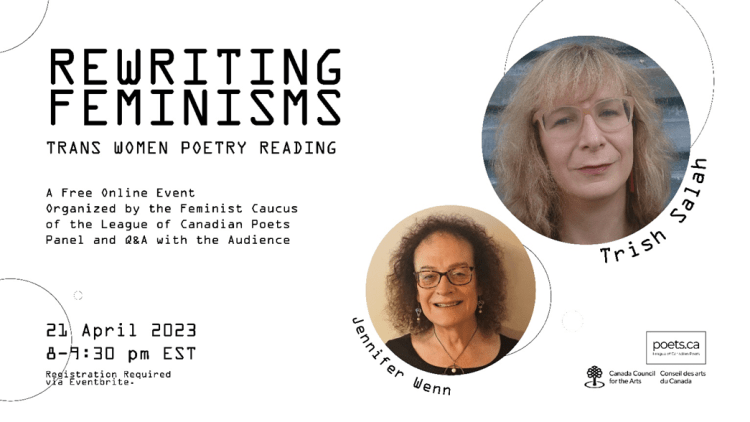
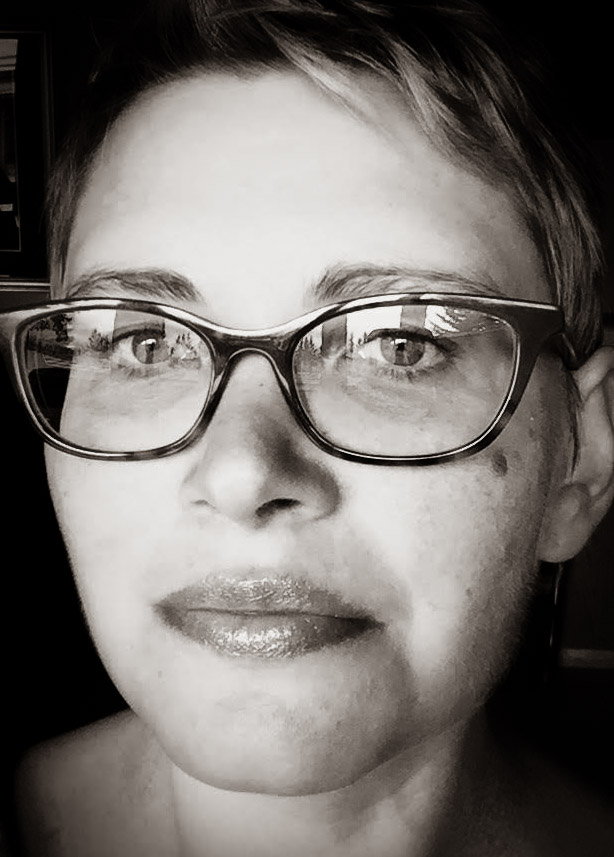

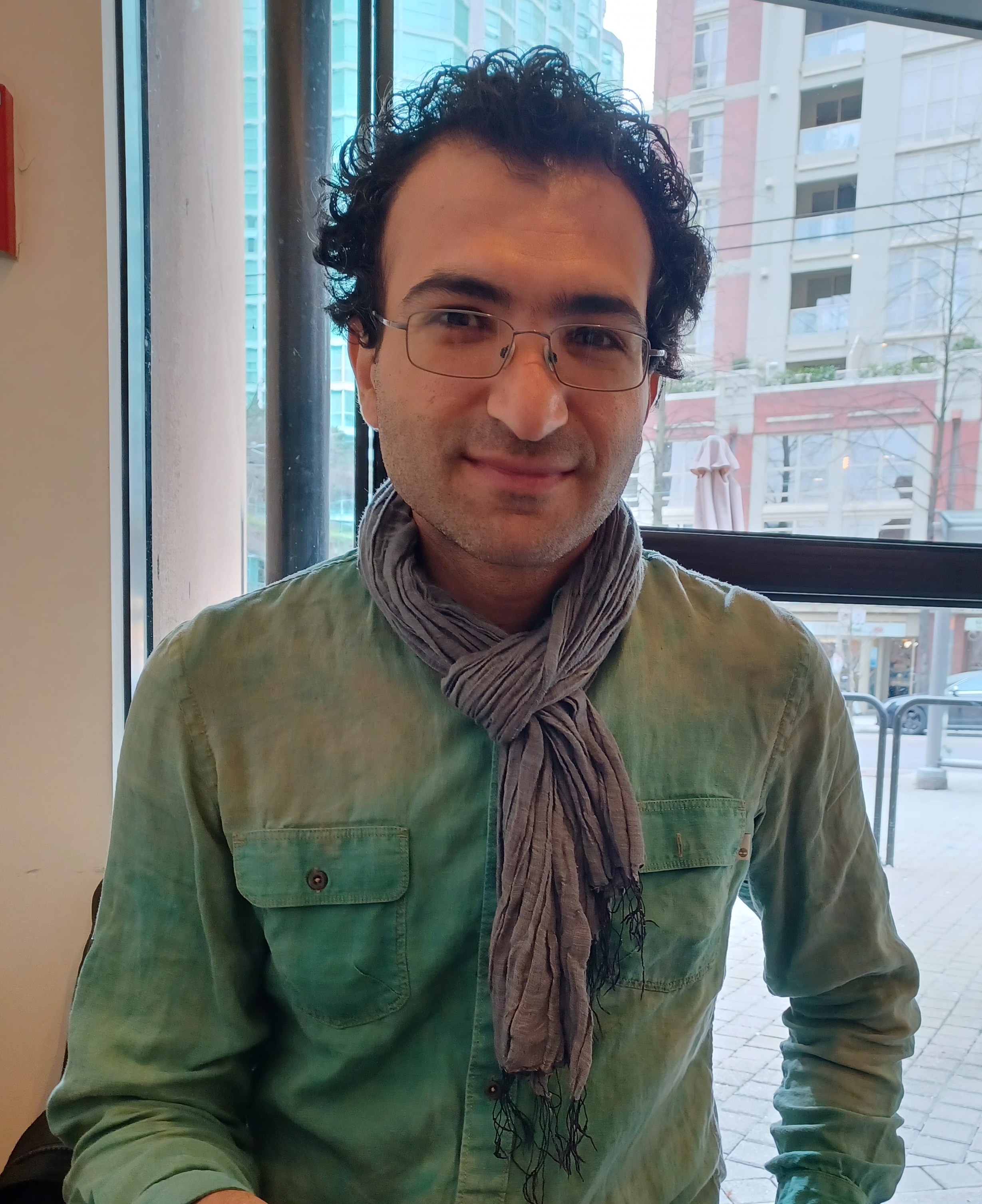


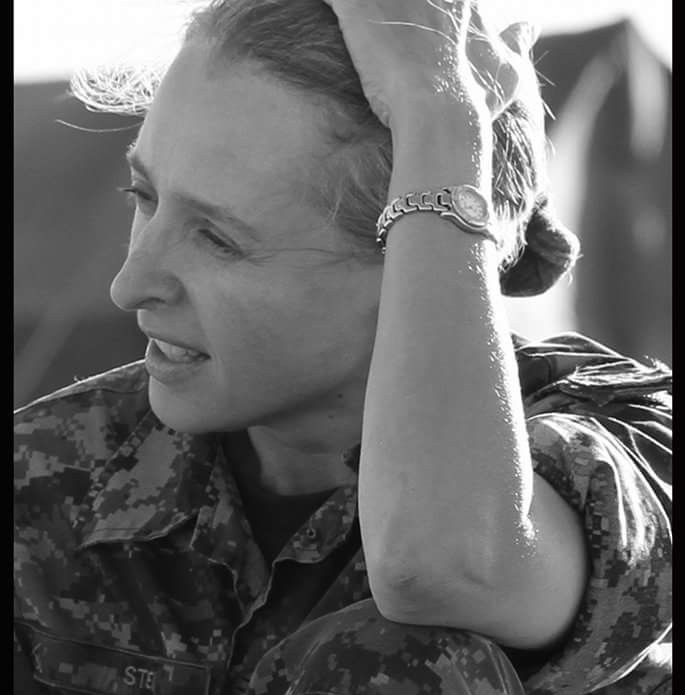


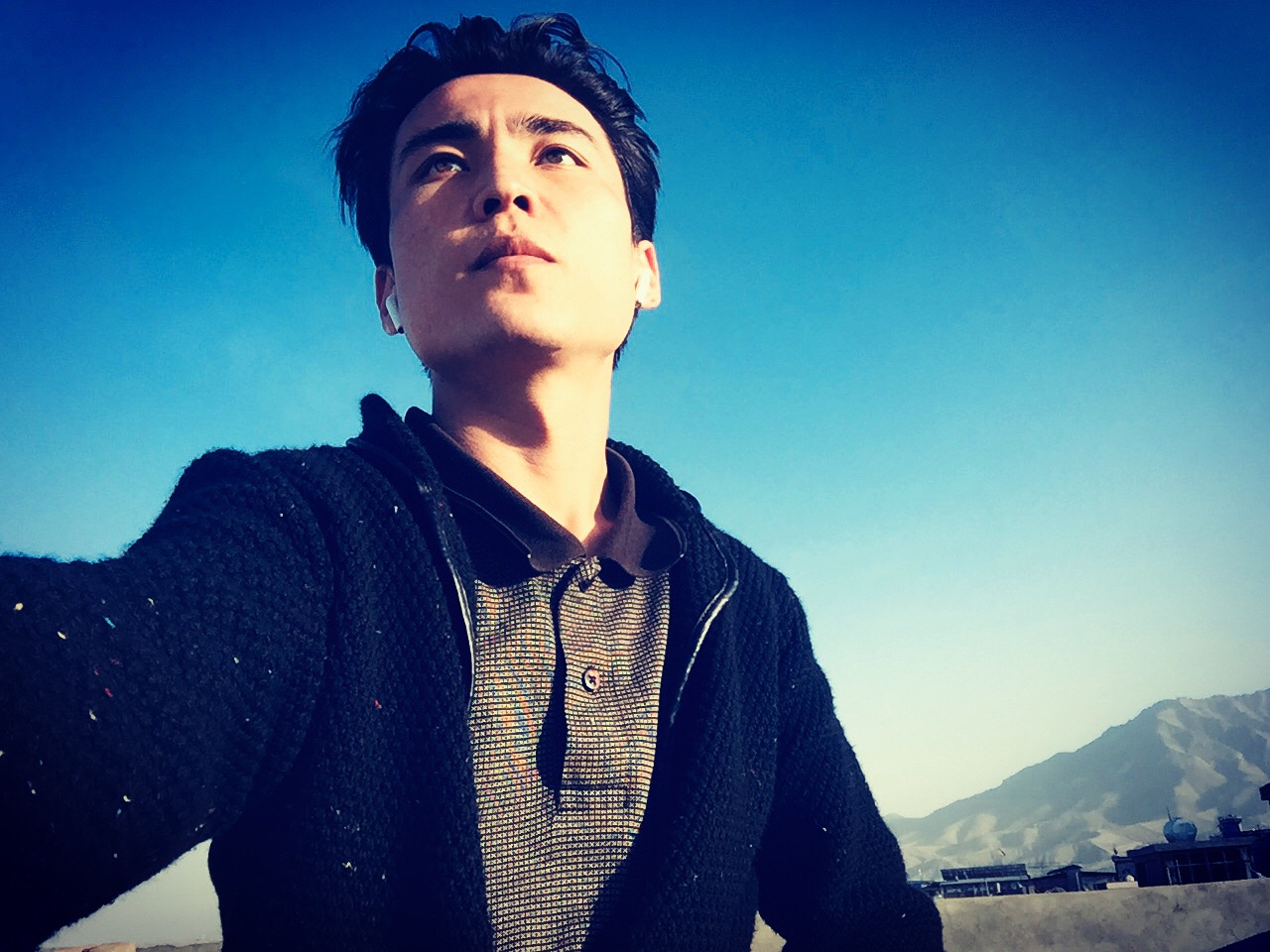

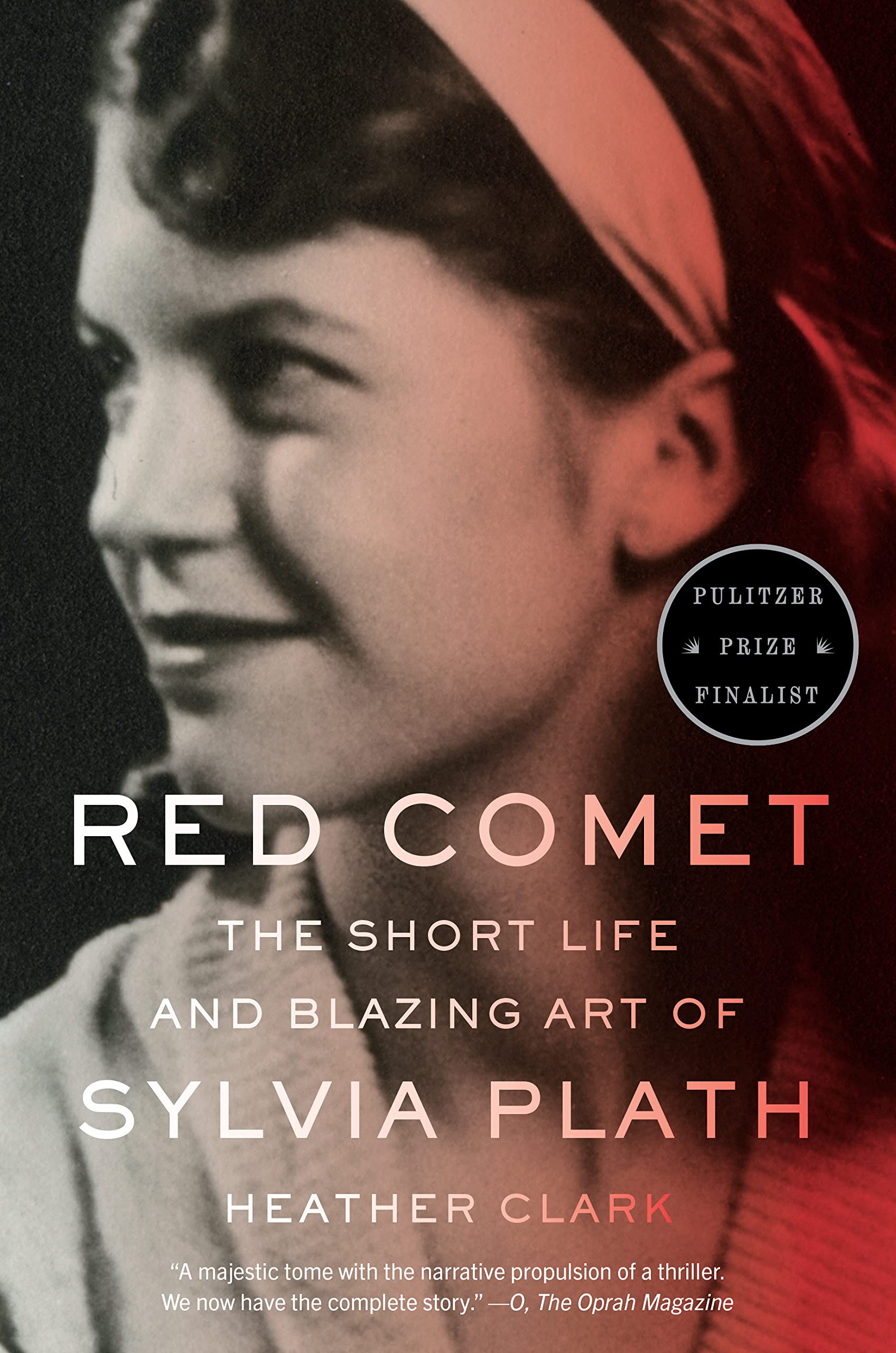

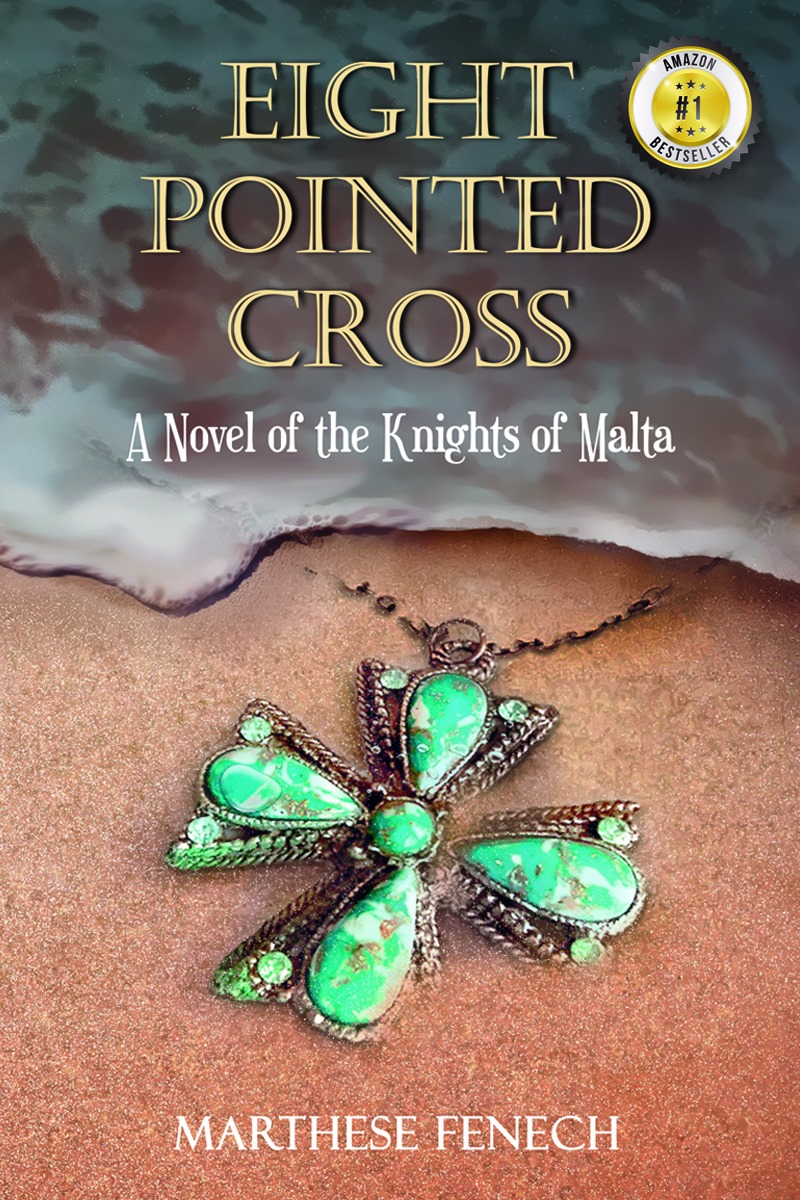

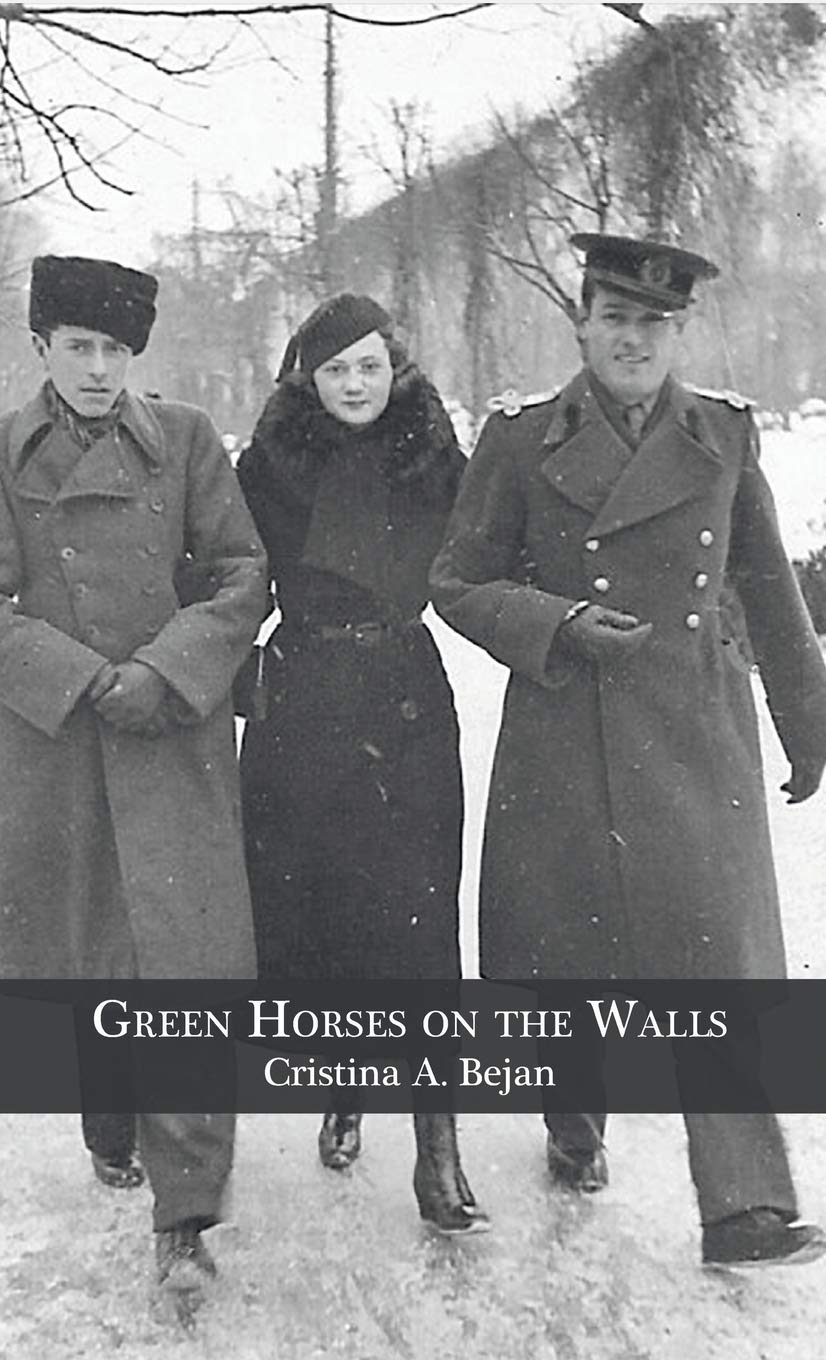
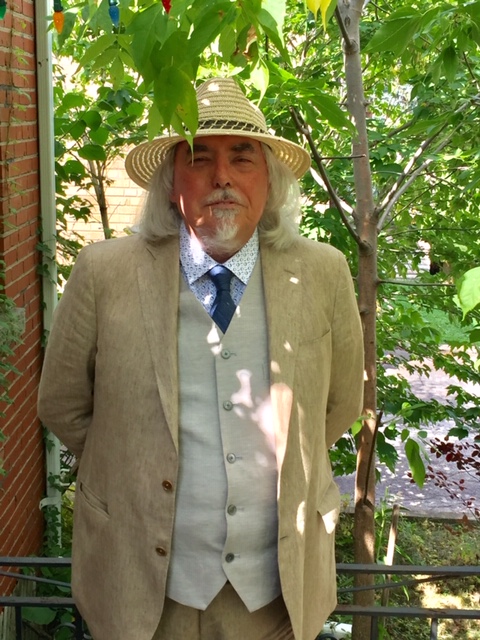
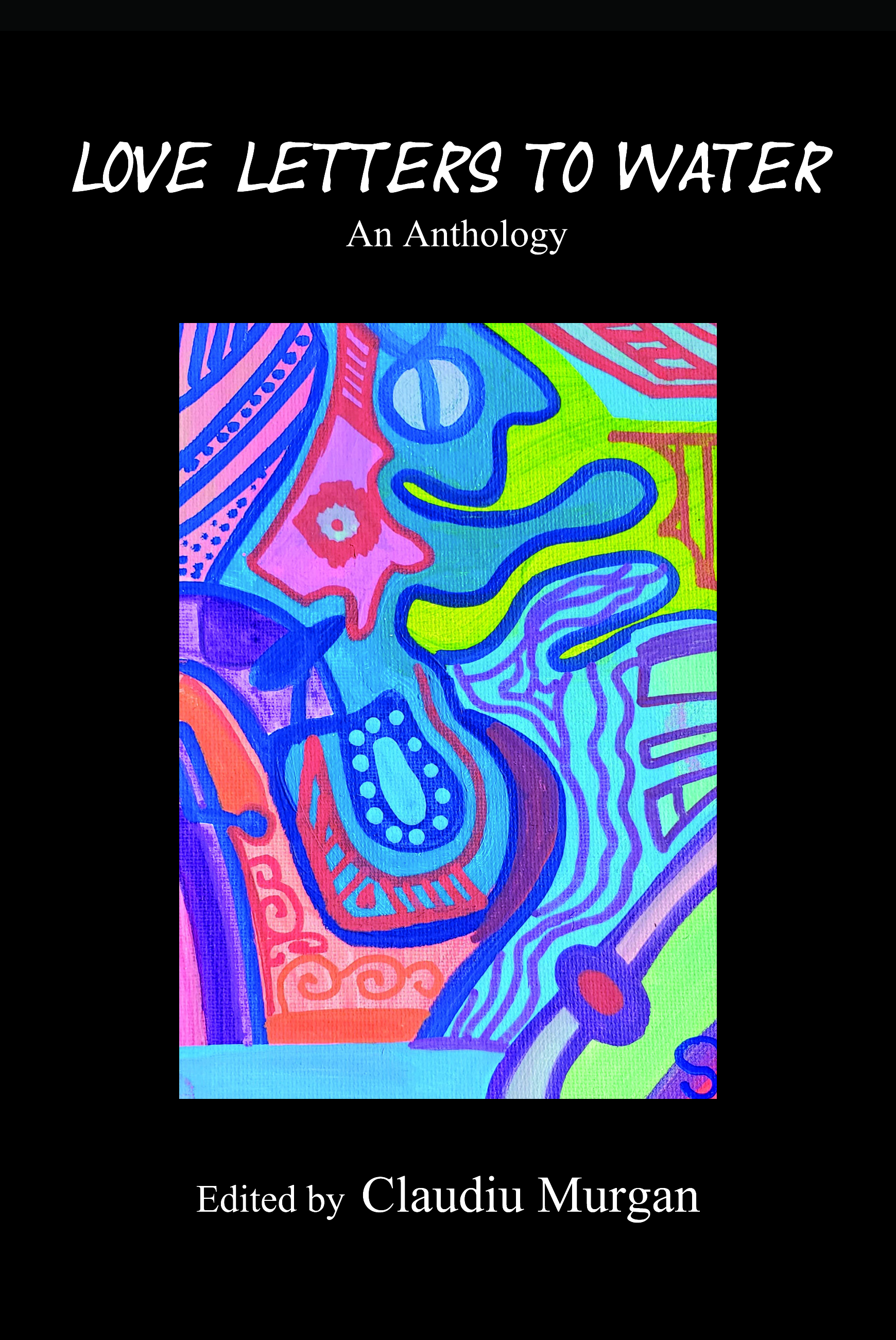


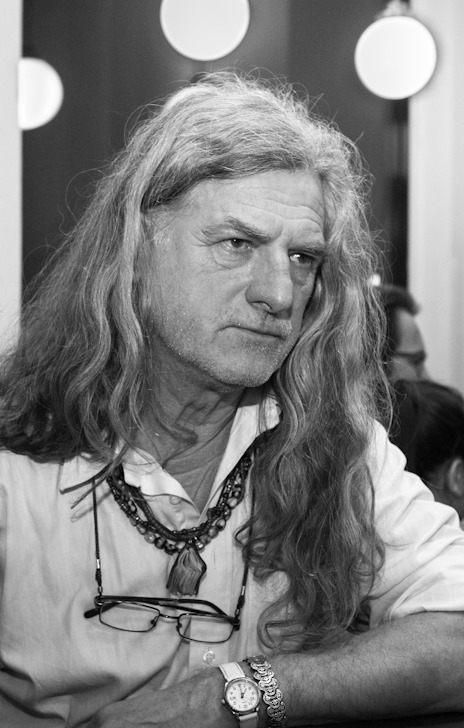








 WordCityLit