Air Raid Sirens. A poem by Michael Roque

Michael Roque

Air Raid Sirens

During a 60-second air raid siren-
Pompeii becomes the norm of society.
With an eruption,
fire flashes across the sky,
bringing shopping bags to concrete,
crawling traffic to stop
and bustling streets to be abandoned for shelters,
where huddling neighbors meet.
boom-
BOom-
BOOM!
Up above.

During a 60-second air raid siren-
people left outside lie flat on the ground,
while the foundation of the city shakes.
A life of a million sounds
is replaced with a single song
sung by Chaos
with a chorus of booms,
distant and closing in-
boom-
BOom-
BOOM!

Following a 60-second air raid siren-
someone lies entombed
beneath a ceiling that failed to secure them-
A household of memories ripped apart,
while all else embrace silence and relief
in the hours until the eruptions restart-
until again faced with Pompeii-
air raid sirens,
bigger booms, hopes and racing hearts.

Return to Journal

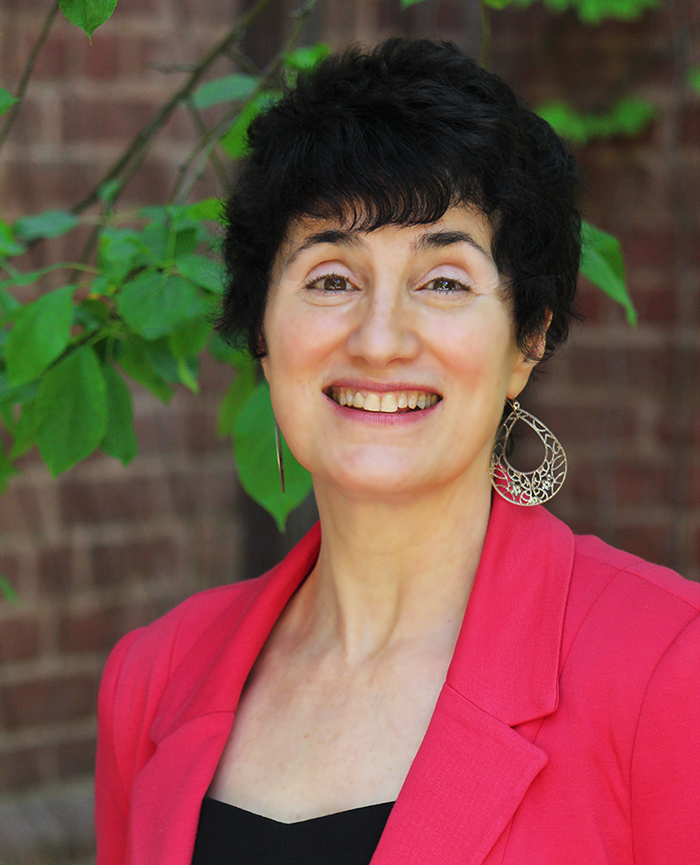
Michael Roque, a Los Angeles native, now residing in the Middle East, embarked on his writing odyssey amidst the bleachers of Pasadena City College. His literary voyage has traversed continents, gracing the pages of esteemed publications such as Aurora Quarterly, Veridian Review, and CascadeJournal. 

5 poems by Patrick Connors

LINDAKOOLURISDOBBS

Teenager

Look out the wind-blown window
Through the evergreen tree gone bare
Sun unseen lights the grey sky
Of air so cold even time is slowed
Until a bitter, vengeful gust
Threatens to take down the tree
The snow-covered roof of the house -
All which is on the horizon;
Try to sink deeper under the covers
And feel secure in knowing this
Is the most peaceful moment of the day


Madness
For Suds

Einstein defined insanity
as doing the same thing

over and over again, while
expecting different results.

Yet here I am in the same predicament
I hoped to avoid

before, during, and after
becoming an adult.

Answering the call, I cater
to a ravenous, raging creature—

a starving need that cannot be sated,
only made hungrier by more, more, more—

bloated by excess with no escape
under the guise of helping myself.

The only thing
which keeps me sane

is the other life I live
during a few treasured moments

and the dream that one day
it will be the only one.


The New Normal

The world reaps a harvest of desolation -
sickness and ruin are all around.

As you cocoon in the name of health
you grow obsessed by a cinema of thought.

You have nothing but time to rehearse
all you have ever said and done.

The director running the scene yells,
"Cut!", and you replay it from the top.

No matter how many takes
you just can't seem to get anything right.

Yet it is safer to stay in this nightmare
than to live the reality going on outside.

You are haunted by the past, terrified
of the present, and can't imagine a future.

Then comes the turning point -
you try to escape the trap you created.

But, just as you think you are free
the hellish screenplay loops in your mind.

Such is how you pass your hours.
And the hours become days.

The days become weeks, the weeks
become months, without any resolution.


Panic

Your heart pounds against your ribcage
hopelessly trying to break free.
Your brain and eyes ache from the pressure
of blank thoughts beyond focus.

Your hands shake restlessly.
Your stomach churns and turns
as if you had consumed
something sour or tainted.

Your muscles tense until cramped.
Your hands and temples bead with sweat.
The harder you try, the harder it is
to catch your panting breath—

as you run an internal race
you cannot imagine ending
while to all external appearances
you are merely sitting still.


Recovery

It took oh so long to get myself straight
Doubtfulness delaying all the right things
Herbal teas, mysticism, oral fixations
Wise words written by those from before me

Take lots of advice, some good, some not;
Whatever you do don’t try to heal too fast
Except if you accept or grin and bear it
Growth and change are inevitable

Played the fool by truth that was yet not truth
No one will take pity on feeble attempts
Such contrived representations: unless you
Want them to, and you don’t want them to

Picked myself up and dusted myself off
Chose to contradict - to deny my demise
Sang my song out loud without audience or reason
Smiled and laughed and revelled in it all

Ready to live for the here and what’s next
Forsake the past, the need to make right by
Fulfilling adolescent fantasies
Made of cathartic Hollywood endings

I had to look within while I was doing without
We all need to find one another but
The key to my recovery lay in
The discovery of what makes me me

Notes on Prior Publication

Among other publications, “Teenager”, “Madness”, “Panic”, and “Recovery” were published in The Other Life by Mosaic Press in 2020.

Among other publications, “The New Normal” was published this year in The Long Defeat by Mosaic Press.

Return to Journal

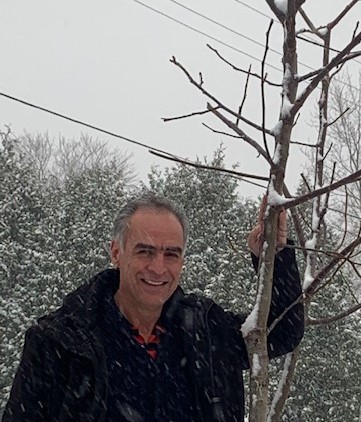
Patrick Connors first chapbook, Scarborough Songs, was released by Lyricalmyrical Press in 2013, and charted on the Toronto Poetry Map.

Other publication credits include: The Toronto Quarterly; Spadina Literary Review; Sharing Spaces; Tamaracks; and Tending the Fire.

His first full collection, The Other Life, was released in 2021 by Mosaic Press.   

His most recent chapbook, Worth the Wait, was released in 2023 by Cactus Press.

His latest collection, The Long Defeat, is newly released by Mosaic Press.

Facebook: https://www.facebook.com/patrick.j.connors.3

Instagram: https://www.instagram.com/patjtconnors/

Twitter: https://twitter.com/81912CON 

Call for Manuscripts on Health and Mental Health ~ Final issue of WordCity Literary Journal

From the desk of managing editor, Darcie Friesen Hossack:

With a mixture of gratitude and no small amount of team sorrow, we announce our final issue of WordCity Literary Journal.

As readers and contributors to our journal might imagine, an all-volunteer project like WordCity is an immense undertaking.

For my part, as managing editor, carrying the weight of our often devestating topics, along with the overall communications and the enormous job of layout, cannot be done indefinitely, and the time has come to wind things down.

Perhaps tellingly, our final issue will face matters of health and mental health.

As ever, we will approach this topic broadly, allowing writers to take the subject as they will. We invite works that touch on and dive into personal and world events, into mental wellness and illness, into physical health and illness and the intersectionality of all of the above and anything and everything we have and haven’t considered.

We invite matters of LGBTQ2+ health, mental health, bodily autonomy and solidarity. And we ask only that no matter how anyone approaches any entry point, that respect is considered and given, above all.

We thank each and every reader and writer, poet, artist, supporter, champion and everyone who has made a small donation to help with operational costs to pay for the cost of this keeping this website alive. We hope that this work has inspired, helped and offered hope where needed, and that others might pick up where we leave off.

The final issue will be released in September 2024 to allow for my own writing and judging deadlines coming up this spring and summer. Our deadline will be July 31st 2024. Please visit out guidelines (in this website’s header) for email addresses and other details.

With so much gratitude,

Darcie Friesen Hossack and

the entire team at WordCity Literary Journal

Table of Contents. WordCity Literary Journal. Winter 2024

Letter from the Editor. Darcie Friesen Hossack

Fiction. Edited by Sylvia Petter

Reckless. by William Cass

Dad’s Work. by Maria Saba

Non-fiction. Edited by Olga Stein

Conversation. Olga Stein and Yahia Lababidi

Woman, Life, Freedom: Reflections on the Anthology and on Activism in the Arts.
by Cy Strom

Literary Spotlight. Lisa Pasold in Conversation with Sue Burge

Books and Reviews. Edited by Geraldine Sinyuy

Winter’s Reward of Words. A Review of Books by Gordon Phinn

Diana Manole’s Praying to a Landed-Immigrant God.
A review by Adriana Onita

Poetry. Edited by Clara Burghelea

A Moment of Silence. by Alexia Kalogeropoulou

One Malignant Spirit. by Jennifer Wenn

3 poems by Antony Di Nardo

These Hands. by Lisa Reynolds

3 poems by Adrienne Stevenson

2 poems by Mona Mehas

3 poems by Marsha Barber

3 poems by Carole Giangrande

Untitled, it is. by Jay Yair Brodbar

3 poems by Poet in Residence Mansour Noorbakhsh

2 poems by Jameson Chee-Hing

3 poems by Sheila E. Tucker

4 poems by Masayuki Tanabe

The Meditation of a South Sudanese Refugee. by Geraldine Sinyuy

In the Slips. by Pratibha Castle

Shaheed شهيد by Adriana Onita

Shavasana. by Marthese Fenech

Return to Journal

WordCity Literary Journal is provided free to readers from all around the world, and there is no cost to writers submitting their work. Substantial time and expertise goes into each issue, and if you would like to contribute to those efforts, and the costs associated with maintaining this site, we thank you for your support.

One-Time
Monthly
Yearly

Make a one-time donation

Make a monthly donation

Make a yearly donation

Choose an amount

C$5.00
C$15.00
C$100.00
C$5.00
C$15.00
C$100.00
C$5.00
C$15.00
C$100.00

Or enter a custom amount

C$

Your contribution is appreciated.

Your contribution is appreciated.

Your contribution is appreciated.

DonateDonate monthlyDonate yearly

WordCity Literary Journal. Winter 2024

©®| All rights to the content of this journal remain with WordCity Literary Journal and its contributing artists.
Table of Contents

Letter from the Editor. Darcie Friesen Hossack

Another child is dying in Gaza as I type. Another one now. And now. And now.

A mother slides into the blood of what’s left of her son, her daughter, and picks up a severed hand to hold, one last time. A father gathers the pieces of his children into a Ziploc bag so they can have a grave that isn’t under their shattered home.

In Israel, women wait, wail for their husbands, their sons, to come home. Will they? Will they still be themselves if they do? And what is happening to the women and girls still held by Hamas, who slink through their tunnels, paid for with bread money, meant to feed their people?

Does anyone outside Israel remember the music festival now? The kibbutzes now? The murdered families? The hatred that was ejaculated into women, into girls, before a shot to their heads?

And Ukraine. Do we still weep for Ukraine two years into Russia’s invasion? Or think of Sudan, ten months into a war of unspeakable violence that must be spoken and loudly, for all the world to know. A war that’s been invisible to the West, including myself. With gang rapes (there are always gang rapes). And the killing of parents in front of their children (there is always killing of parents in front of their children). 1.7 million refugees have fled their homes.

In Russia, Navalny is dead. Who will fight for a different vision of Russia now? Who will dare oppose power now?

For those of us at WordCity Literary Journal, the poetry and most of the prose in this issue deal with war. It is dedicated to those lost to and lost in the violence of humankind’s collective failure to love one another enough not to take aim and kill. It is an indictment of our failure to elect (where that is possible) leaders who understand that the loss of one innocent life is one too many. A memorial to our human failure to see ourselves and our loved ones in the faces of the “other.”

We have no solutions here.

Terrorists and authoritarians and the corrupt, those who have destroyed their own humanity for the sake of power, and hide from the consequences of their own crimes, will not stop and will not surrender.

At the same time, on the streets of our cities, in our shops and workplaces and schools, we throw sticks and stones with our words, too foul to repeat here. Too foul, too, to close our ears and refuse to hear.

Antisemitism is on the rise. Islamophobia, too. And instead of reaching to one another with compassion and mutual sorrow, to many of us tighten our fists with hate for one other and for each other’s flags.

Stop. Just stop.

That’s what we ask.

Take this time to read. Read aloud, even. Listen. And really listen to the words in this issue. To what those who are in pain have to say. And then go out and love your neighbour, knowing that everyone is your neighbour.

Please.

Fiction. edited by Sylvia Petter

William Cass
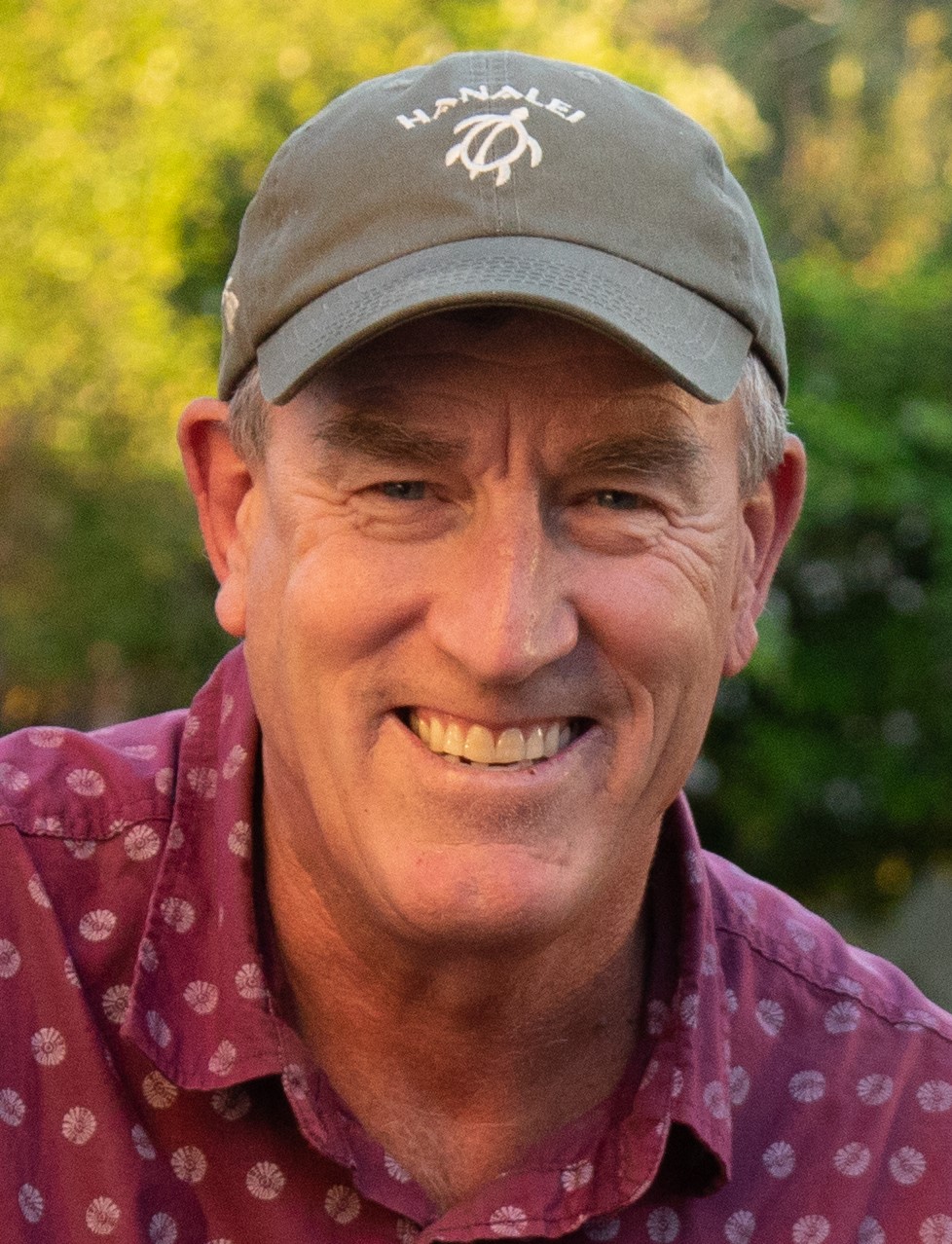
William Cass

Reckless

When I was a little boy, I lived for a short time with my uncle’s family while my mom, his younger sister, spent a stint in rehab.  He had a big house on a lake in a wealthy enclave of Detroit and stayed home most of the time, so I was never sure what he did for work.  Besides his wife, who I remember as grim and generally invisible, my cousin, Gary, also lived there.  I was nine at the time, and Gary was a few years older.  He wasn’t happy about me moving in and treated me with open disdain.  As a result, I avoided him and sequestered myself in the bedroom they put me in.  The room had a small roll-top desk, antique and mahogany, that I loved and which my uncle had owned since before he was married.  I was intrigued by all its little nooks and hidden crannies; for some reason, it felt both exotic and cozy to me.  My uncle knew how I felt and held a similar affinity for the desk, and it created a kind of quiet bond between us.

            My mother’s rehab stint, which was finally a successful one, ended after six weeks, and I returned with her to Cleveland where they’d grown up and where she’d secured a job in a halfway house.  Even with our proximity to my uncle’s family, we had no real contact with them again that I was aware of aside from Christmas cards.  My mother eventually ran several halfway houses in the area, and I matriculated through college there, too, before beginning my career as an elementary school teacher in an older suburb nearby.  My brief marriage ended abruptly when my wife left me for another man, but I filled my time afterwards outside work as best I could with activities like long walks, baking, and trying to learn to play the clarinet.  My mother passed away not long after my divorce, just after I turned thirty, and several years later, I received an email at work from Gary telling me that his mother and father had died, too, in a car accident.

            “I located your email address on your district’s website,” he wrote.  “I remembered from one of your mom’s Christmas cards that you’d been teaching in Middleburg Heights.  Anyway, I wanted you to know about my parents’ deaths and that my father left you that old roll-top desk of his in his will.  I don’t have your home address, so I shipped it to your school.  Hope that’s okay.”

            I was in my classroom during a lunch break as I read his message and sat back shaking my head when I finished.  I frowned as I re-read it and wasn’t sure how to reply, so just typed, “Okay, thanks.  Very sorry for your loss.”  Then I logged off and stared out over the empty student desks.  It was raining, I remember, the sound of it mingling with student voices from the cafeteria down the hall.  I’d already begun imagining which important items I’d store in the desk and how I’d arrange them.

Continue Reading

Maria Saba

maria-saba-3-web-crop

Dad’s Work

My mother sews. She buys yards and yards of white fabric, cuts them into long pieces, which she stiches together to make large sacks. Once, when she was out, I went into one and rolled around on the floor. I couldn’t see her coming because I was inside the sack. I heard her scream and tried to unwind myself. She pulled me out and then she squeezed me in her arms and made me promise never to do that again. I didn’t understand why but promised just to stop her tears.

My father shoots. On the last Friday of each month my father takes me to work. We carry these white sacks and place them on a shelf. Then my father takes his gun from a cabinet and goes to the prison courtyard. I spread my notebook and crayons on his desk at the office. I tear up a page and put it aside to keep a ledger.

Yek, do, seh. Bang.

I hear a thud and draw a line on my ledger and then a two-storey brick house with four windows, two on each floor, and a purple door.

Yek, do, seh. Bang.

I hear a thud and add a line to my ledger and a chimney to my house. Smoke goes out of the chimney toward a yellow sun with rays spreading in all directions.

Yek, do, seh. Bang.

Continue Reading

Non-Fiction. Edited by Olga Stein

Olga Stein and Yahia Lababidi

Conversation

He who fights monsters should see to it that, in the process, he does not become a monster.

                                        — Nietzsche

Open Letter To Israel 


By Yahia Lababidi


Tell me, what steel entered your heart,

what fear made you rabid,

what hate drove out pity?

How could you forget

that how we fight a battle

determines who we become.

When did you grow reckless

with the state of your soul?

We are responsible for our enemy.

Compassion is to consider the role

that we play in their creation.

If you prick us, do we not bleed?

          If you poison us, do we not die?

And if you wrong us, shall we not revenge?

Strange, how one hate enables another;

how they are like unconscious allies,

darkly united in blocking out the Light.

          Yes, we can lend ideas our breath, but ideals —

          Peace, Justice, Freedom — require our entire lives,

          and, all who are tormented by such ideals

          must learn to make an ally of humility.

          Truth and conscience can be like large, bothersome flies —

          brush them away and they return, buzzing louder:

          30,000 souls lost, 2/3 of whom are women & children …

          these are unbearable casualties to ignore.

          To speak nothing of the intangible casualties:

          damage done to our collective psyche, trust, and sleep.

          No more nightmares. Please, give us back our dreams.

          We can still begin, again, and must.

          Wisdom is a return to innocence.

* * *


I do not love you right now


By Olga Stein

I do not love you right now,

though one day I may.

Right now, I do not love the you with angry eyes,

intense and beautiful.

(Pardon me, for the unintended exoticizing;

and for nearly writing exorcizing, by mistake.)

I see you standing across the street

beneath the arched doorway with colourful stones,

announcing the gateway to a home.

You remind me of a panther, with eyes that watch,

wait for me to lower my guard,

so you can spring and tear me to shreds.

I do not love this you.

You do not acknowledge the beauty in me/us.

One day, when you begin to love me back —

when you smile and call me sis or aunt or your Rita —

then I will love and honour you

perhaps more than myself.

* * *
Continue Reading

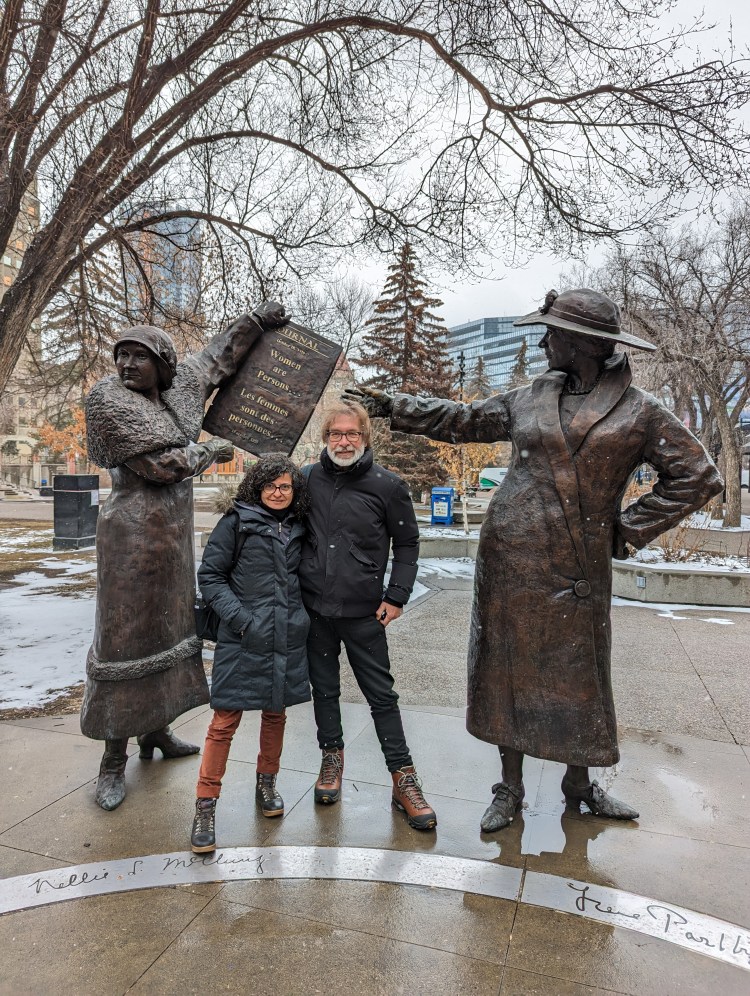
Cy Strom with Bänoo Zan

This image has an empty alt attribute; its file name is banoo-and-cy-in-calgary-with-the-famous-five-2023.jpg

Woman, Life, Freedom: Poems for the Iranian Revolution

Reflections on the Anthology and on Activism in the Arts

I have been thinking for a time of what I’m about to say from an outsider’s perspective. Well, the world is small enough to make all of us insiders.

This is another insider’s perspective.

Iran is on the other side of the world. Ukraine, on the other hand, is a little bit closer to us here in Canada, and if anyone here has been transfixed by the war in Ukraine, they will most likely know that Russia uses Iranian drones against Ukraine’s cities. Similarly, Iran’s Revolutionary Guard army has sent thousands of Syrian refugees our way with the part it played in viciously suppressing the uprising against Syria’s dictator.

If Canadian citizens can’t always count on their safety in China, as we saw with the imprisonment of the two Michaels, Canadians also can’t count on being safe in Iran, where twenty years ago the journalist Zahra Kazemi, a Canadian citizen, was tortured to death in Tehran’s Evin Prison. 

There’s all that to ruminate on at a time like this, and there’s also the simple reality that women’s rights are human rights. A Nobel Peace Prize laureate spoke here in Toronto in September 2023. This was Shirin Ebadi, an Iranian woman.[1] She was a judge in Tehran before the Islamic Republic swept her and other women off the bench. So she resumed her career as a human rights lawyer, and she’s now forced to live in exile. What Shirin Ebadi told her Toronto audience was that democracy in Iran would come in through the gate of women’s rights.

We can no longer imagine a working democratic government anywhere on earth where one-half of the population are second-class citizens and all leadership positions are reserved by law and custom for men alone. And we can’t imagine a benevolent, humane, or even workable society that marginalizes its women.

Put simply, it has been 44 years since the revolution that led to the Islamic Republic, and a large part of Iran’s population has had enough. We would say that the regime has lost its legitimacy: its aims and ideals no longer ring true for the people, and its systems and methods don’t serve any desirable purpose for them. You can compare this disillusionment and frustration with the level of alienation the populations of Eastern Europe felt towards their own governments before the Berlin Wall fell.

But a government that has lost its legitimacy can still carry on if it has cold steel in its heart.

Over the years there have been periodic waves of protests in Iran. Many of these were quashed with rivers of blood, sometimes targeting the country’s minorities for special violence. The protestors complained about things like the government raising prices of necessities, or the national election commission falsifying the count in the presidential election. Yet it took one atrocity against a single woman, Mahsa Jina Amini, to spark the revolution (no mere protest) happening now, which is a call for an end to the system, not for its reform.

The slogan chanted by the demonstrators in Iran and by their supporters outside Iran is now recognized worldwide: Woman, Life, Freedom. It encompasses hopes and ideals for all people everywhere. The poetry anthology we are publicizing and supporting aims to echo the cry “Woman, Life, Freedom,” and to spread it.

Continue Reading

Literary Spotlight. Lisa Pasold in Conversation with Sue Burge
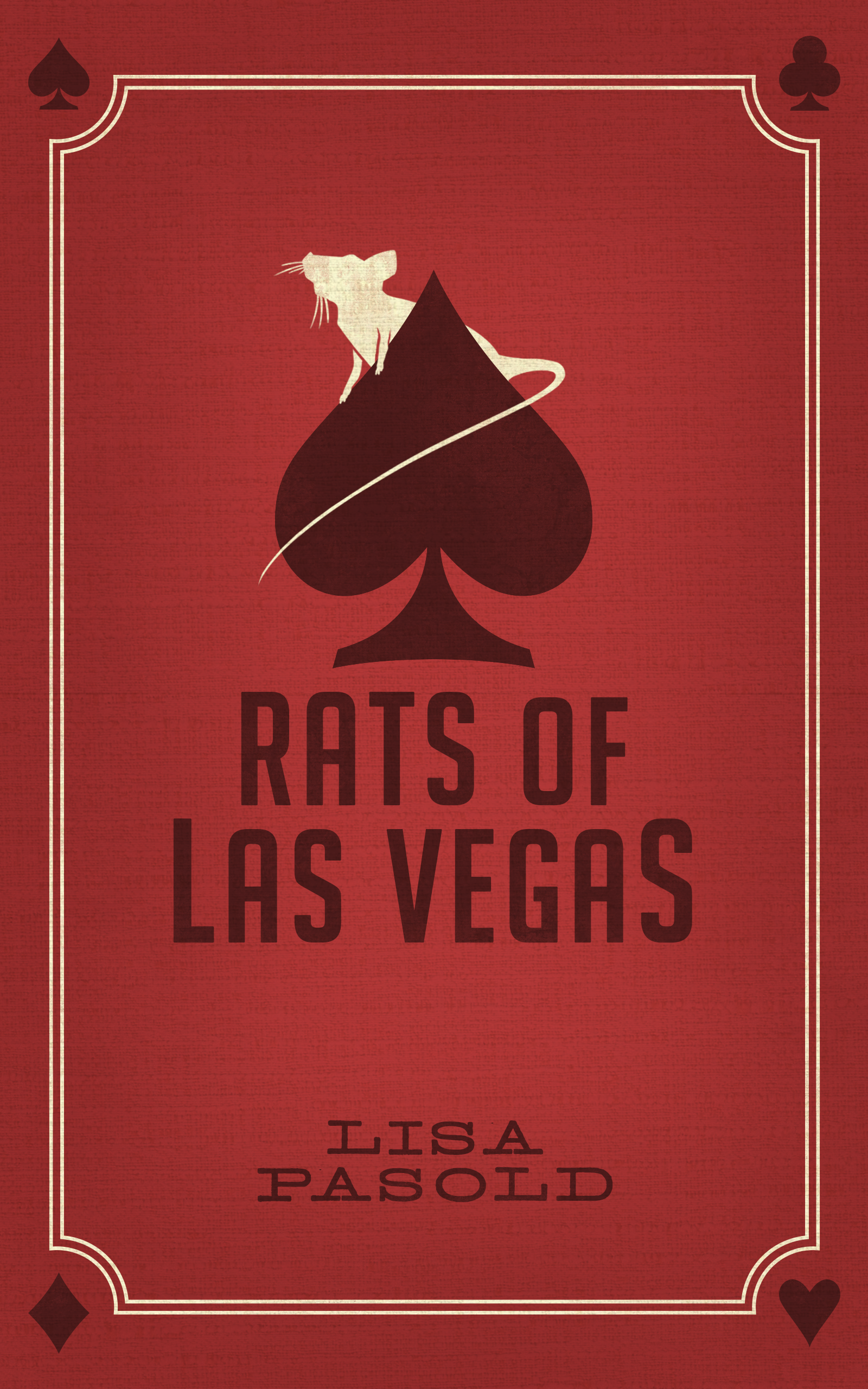
V2 ROLV ebook 2560 x 1600

For this issue, I am delighted to be interviewing Lisa Pasold, a peripatetic powerhouse of a writer who defies definition!

Lisa, you are a very well travelled writer and I know you are based in both Paris and New Orleans as well as having grown up in Canada.  So firstly, how did you become a writer?  Did you know from early on that that’s what you wanted to do and did where you were living at the time feed into/influence your writing?  What drew you to Paris?  Was it the city’s rich associations with literature, language and culture or something else…? 

I knew I wanted to be a writer from the time that I could read. The first book I read for myself was Dr Seuss’ Hop on Pop, a poetry classic of sorts. Growing up in Montréal, I heard many languages—two official ones, French & English, but also a great cosmopolitan range of other languages including Kanyen’kéha (Mohawk) the main Indigenous language of the area. My parents accumulated books in every room of the house, from Shakespeare to Sci-Fi paperbacks to multi-volume academic histories of Peru. Plus, while I was a kid, my mother was studying to get her Masters degree in Canadian Literature—a radical move in the 1970s, since Canadians traditionally studied “classics”, aka European writers. So, from the moment I understood books were a thing, I also understood that literature was alive, especially as I went with my parents to all kinds of readings—formal university author talks, bookstore launches, and wild hippy performance events. I started writing “officially” when I was six, making chapbooks out of left-over fabric and paper bags—my mum was very into recycle/reuse before it was cool, so there were always craft materials available. As for Paris, that was more of a chance encounter: my father is originally Czech, and when I was twenty, I wanted to rediscover my European roots; since I don’t speak Czech or German, I ended up in Paris for purely practical reasons—I can speak French. But then, I fell in love with the city.

Continue Reading

Books and Reviews. Edited by Geraldine Sinyuy

Winter’s Reward of Words. A Review of Books by Gordon Phinn
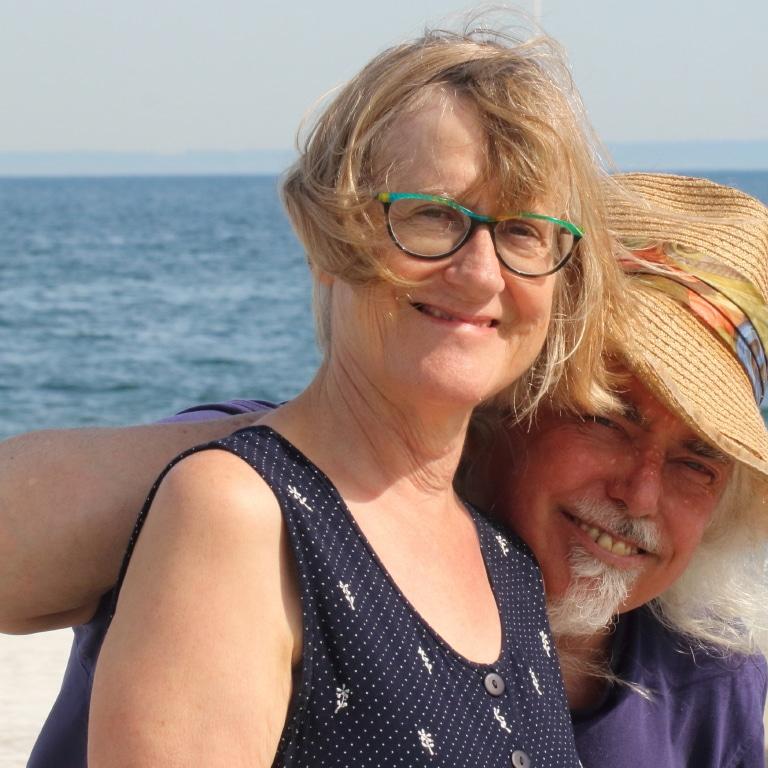
Gordon Phinn

Books Referenced:

Dirty Money, Financial Crime in Canada, Christian Leuprecht & Jamie Ferrill, (McGill/Queens 2023)
The Scent of Flowers at Night, Leila Slimani (Coronet, 2023)
Stray Dogs, Rawi Hage (Knopf Canada 2023)
The Syrian Ladies Benevolent Society, Christine Estima (Anansi 2023)
Imagining Imagining, Gary Barwin (Wolsak & Wynn 2023)
We Could Have Been Friends, My Father and I, Raja Shehadeh (Other Press 2023)
Like Figs in Autumn, Ben Bastomski (Delphinium Books 2023)
Instead, Maria Coffey (Rocky Mountain Books 2023)
And The Andes Disappeared, Caroline Dawson (Bookhug Press 2023)
Two Purdys, A Double Portrait, Brian Purdy (Pottersfield Press 2023)

Some would say summer at the cottage or the beach, while others might argue for the cool departures of autumn, and yet others the front porch with the first tastes of spring sun, coffee, toast, fruit of one’s choice, but for me winter is the optimum season for postponing one’s life with all manner of narrative detours, the poetry of exhilaration, exhaustion and all points in between.  Those long hours of dark can become a contagion of cozy once the burden of indoor chores is shoved aside.  Skiers and skaters need not apply, while domestic pets are required to sleep by one’s slippers.

     Now that that is taken care of let’s plunge into the snake pit of Dirty Money, where moral compasses always point to cheating, a sobering compendium of financial skullduggery right here in our home and native land.    With chapters like “Washing Money In A Canadian Laundromat”, “Taken To The Cleaners: How Canada Can Start To Fix Its Money-Laundering Problem”, “Underground Banking In Canada”,  “Canadian Cryptocurrency Conundrums: A Socio-Technical Systems Analysis of Crypto Laundering In Canada” and “Task Specialization in Organized Crime Groups: Money Laundering and the Montreal Mafia”, you can see the breadth of the investigative scope involved.  If you found yourself satisfied with the one or two articles and scandal scooping you may have come across in the popular press, then go no further.  This worthy collection is aimed at those involved in the field as analysts, investigators and ambitious thesis architects.  It belongs on reference shelves where it can be consulted for the deep dive it provides.  Make no mistake though, our beloved country is up to its neck in financial irregularities and illegalities, despite the continued efforts of those involved in its discovery, exposure and eradication.  If I may go all Zen on you for a moment, both problems and their solutions arise simultaneously out of the void, ready to be activated.  Life invites you to cheer for whatever team strikes your fancy, and it has lately come to my attention that purveyors of lies and fraud seem to be doing awfully well in the heroes and villains’ stakes.

Continue Reading

Diana Manole’s Praying to a Landed-Immigrant God.
A review by Adriana Onita
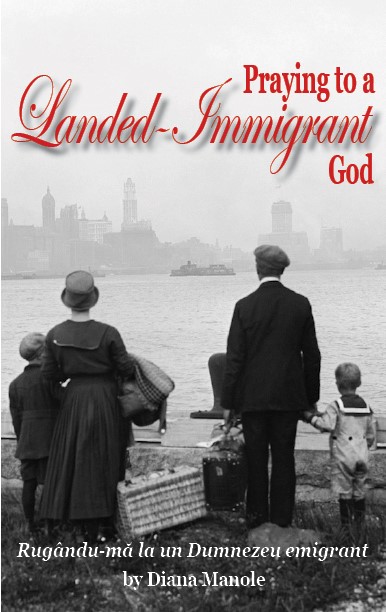
Praying, Front Cover, Priscilla, 13.01.2023, FINAL

“Stubbornly I keep writing poems in Romanian”: Review of Diana Manole’s New Dual-Language Collection

Diana Manole immigrated to Canada in 2000, but she never stopped writing in her mother tongue. After twenty-three years in the country, her seventh poetry book, Praying to a Landed-Immigrant God / Rugându-mă la un Dumnezeu emigrant (2023), found a home with Niagara Falls, Canada-based indie publisher Grey Borders Books. This English-Romanian dual-language edition surprises the reader with every turn of the page:

               Mă încăpăţânez să scriu versuri în româneşte

               şi mă îndrăgostesc de fiecare cuvânt


                                                                   Stubbornly I keep writing poems in Romanian

                                                                   and falling in love with every line

Manole wrote all but three of the autobiographical poems in this collection in Romanian and then co-translated them into English with her long-time collaborator, Adam J. Sorkin. The book is curated into seven parts, with six of the sections corresponding to different periods of the author’s new life in her adoptive country. Baring captivating section titles such as Diana-canadiana în lumina albastră / Diana-Canadiana in the Blue Light (3 August 2000 – 16 August 2002), this collection invites the reader into an intimate story of immigration, with lush yet precise, flirtatious yet brutally sincere language.

Continue Reading

Poetry. Edited by Clara Burghelea

Alexia Kalogeropoulou
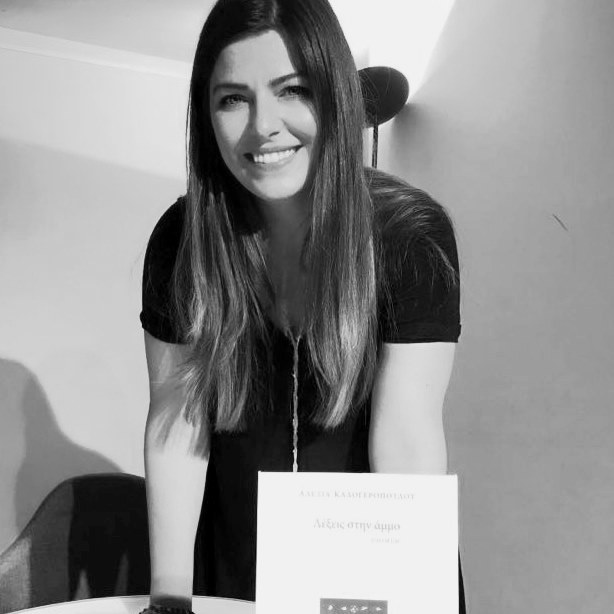
alexia_kalogeropoulou_bw(1)

A moment of silence

A moment of silence
for the human masses
that boarded once
on the trains
with etched skin
and then they disappeared
from visible
and invisible death machines.

A moment of silence
for the innocent
who are buried today
in holy lands.
For the children
of Palestine
who are looking for their mother
among the ruins
with crimson wounds
in the soul and the body.

A lifetime of silence
for the human suffering
that corrupted mouths are encouraging
from wealthy apartments,
and Pontius Pilate's silence allows.
They are not numbers, they are persons
like you and me.
And their life is sacred,
like yours.
Where did the memory of death go?

Continue to Bio

Jennifer Wenn

Jennifer Wenn(1)

One Malignant Spirit

Like waves on the ocean
they crest and roll past,
always another in their wake,
tragic echoes of a timeless truth:
just one malignant spirit in power is needed,
       lusting to warp the world
       around hallucination,
       each name a poisonous desecration
       that will not be written here,
just one clawing at all and sundry
       to draw in and corrupt,
       to reveal and empower depravity,
just one to accrete a mob,
       together spawning a
       river of murdered voices
       as singular as bread-line prey of a sniper,
       as multiform as victims in a mass grave.

Continue Reading

Antony Di Nardo

Among the Trees
What kind of times are these
when a conversation about trees
is almost a crime
because it implies silence
about so many atrocities.

—Bertolt Brecht

You add a teaspoon of honey,
amber and gold, to the headlines you read
and stir until you have an opinion

You pick sides
like I pick a trail through the woods
where I live on the same side as the trees

apples and cherries, rivers of larches,
maples and hemlocks,
woodlands for keeping things quiet

You know the smell of concrete, of rubble
and blood, rebar and death, the stench
of bullets and blades

You’ve been to Beirut and back to the past,
back to Aleppo and the wailing of walls,
back to the future that has come and has gone

You pick sides like I pick the colours of autumn,
amber and gold, the scarlet of maple,
ruby and red like the blood in our veins

You pick sides—green apples or cherries,
half empty or full, your left from your right,
how we should live and who we let die—

as I step into the woods
where the trees are at peace
and I walk among them

Continue to 2 more poems

Lisa Reynolds

Lisa Reynolds

These Hands

These hands have touched the dead

Mothers, fathers
Little ones I can’t bear
To speak of – but carry

Life should not be like this
Not end like this

Cries echo
Can you hear them
Hear their disbelief

Continue to Bio

Adrienne Stevenson

Adrienne Stevenson

Target Practice

when as children we played games
we could always touch home
and be free

home the lodestone of our lives
sanctuary and comfort
welcoming, secure

now, engage empathy, consider
homes not all that far away
turned upside down

no longer shelter, warmth, rest
pinpoint-shattered peace
only rubble remains

lest we feel complacency
those same places turned unawares
into a rapid-fire future

Continue to 2 more poems

Mona Mehas

Mona Mehas

Report 

Tyrant's forces left country a shambles
world court demanded he pay
he scoffed at arrest warrant
flew through the dark
to conceal damages
turned a deaf ear
to mothers' pleas
empty arms
hardened hearts

How many more must suffer
as hawks and doves argue?

Continue to 1 more poem

Marsha Barber

Marsha Barber photo from Ryerson websiteRESIZED (1)

Raw

What use is poetry
except to say
our hearts hide

in safe houses—
burned alive,

in kibbutzim—

babies slaughtered, fed
to fire,

in the desert—
girls raped near corpses
tortured and defiled.

What use is poetry
as captives lie
in their blood,
no light, no warmth, no balm.

We stumble through
this darkness,
ruined, raw

our only hope—
to clutch
our bloodied pens.

First published in Am Yisrael Chai anthology, ed. Rabbi Menachem Creditor, 2023

Continue to 2 more poems

Carole Giangrande

CaroleHeadshot2021

Doctor and Cat
Gaza; heard on BBC

It doesn’t matter whose side he’s on.
Forget sides. I can’t help thinking

of this doctor, stunned, soul pierced
by suffering; how, dazed, he searched

for his terrified cat; knowing the touch
of his bloodied hand would comfort

a frightened creature, knowing her softness
would bring him rest. In time, he found her,

cradled her, child-innocent; tiny cries
against the terrible darkness; how I imagine

his whisper, there now, murmuring
humble words she could not grasp,

hoping his voice, at least, could calm her,
hoping his gentleness mattered,

having forgotten what battle
he’s supposed to fight, lost as he was

among the dead, holding
in his arms inchoate sorrow, cry

of this earth, our grief.

Continue to 2 more poems

Jay Yair Broadbar

Jay Yair Brodbar

Untitled, it is

too raw on the eye,
too raw for the pen.
The seen cannot
be unseen.

A crib—emptied save a small
teddy sodden in curdles of blood.
The young woman yanked out
of an armored jeep, her back
to the screen, cherry-red
splotches congealed on her jeans.
A wall lined with family photos—
young marrieds, elders bearded
in old country sepias, a smile
at the tractor’s wheel:
all mute, untouched—
all else uprooted, over-
turned. Strewn. More
blood. More bullet holes.

Continue Reading

Mansour Noorbakhsh

Mansour-Snow-2020 (resized)

How Come? 
After, "Prayer For Sunset" by Leonard Cohen.

Today could still be a good day.
Believe in occasional love.

A hunter, a friend of mine,
spent a whole night atop a tree coaxing a bear
that followed the smell of burnt honey to its death.

“How come?” I asked him.
“Leave a door open for imagination.
A chance to love.”

“Bear symbolizes rebirth
because of its hibernation
and re-emergence.” He answered.

Weapons run out like death itself.
Prayers come to back up the shortage.
What does not end is the disturbed sleeps
of explosions.

There is a market that trades imaginations for weapons.
Where the imagination of love is sacrificed
by the myth of rebirth.
Rebirth, a used excuse to justify wars.

Continue to 2 more poems

Jameson Chee-Hing

Jameson Chee-Hing(1)

A Fallen Sun

The sun shines
We do not see
Blinded by rage
Wars
Senseless slaughter
We hurt each other

The sun shines
Darkness in our hearts
Consumes us
There is goodness in us
We do not see
That light so bright
Burning like a thousand suns
But buried
Veiled
Like a fallen sun
Why must it be this way?

The sun has fallen
It may never rise again
Why should it?
Why would it?
When will we ever learn?

Continue to 1 more poem

Sheila E. Tucker

Sheila E. Tucker

knitting socks

how much more can I hear and see

of our macrocosm
seared onto tv screen
blasted into newspaper
cellphone tablet radio

mother of two naked
lying face down dead
metal screws hammered into torso
bullets through saturated pelvis
husband’s body nearby
except for his head
which rolled down a ditch
eyes and mouth wide open

how much more can I hear and see

children crushed under concrete
bullets tearing through teenagers
grandmothers’ limbs trapped
boys stiff from hypothermia
fathers carrying dead daughters
cheek bones prominent
jaw line sharp

how much more can I hear and see

through centuries past and future
invasion torture subjugation
iconoclasm suppression appropriation
enslavement then and now
one-percenters then and now
apathy fury revolution war
then and now
then
and
now

how much more can I hear and see

oh yes you say but many are kind
think of doctors without borders
church ladies knitting socks
food kitchens shelters
second-hand sneakers
charities and don’t forget
a simple smile
will brighten someone’s day
no! not enough I tell you
not enough

Continue to 2 more poems

Masayuki Tanabe

Masayuki Tanabe Picture

The Little Girl in a Bomb Shelter

As Putin’s war rages
Like the fire of the netherworld
A little girl sings “Let it go”
In a bomb shelter
To lift the dampened spirits
Of the people there
If I could speak to her heart
I would say
“Keep singing brave child
Don’t let your heavenly voice be silenced
And encourage others to burst into song
No matter how infernal life gets
You are the Anne Frank of your generation
The world needs people like you
To inspire them
To douse the flames of their indifference
History will remember you
As a bastion of hope
And an emblem of courage
If you don’t let dire circumstances
Slay the beautiful cherub within you”

Continue to 3 more poems

Geraldine Sinyuy

from Africa with Love

The Meditation of a South Sudanese Refugee

Why has the ground under my feet become so shifty?
Why has the comportment of the government become so dirty?
When and how did we get here?
Why are the mountains grumbling like a charged diarrhea?
How long shall I walk these winding roads of displacement?
I behold cracked feet and broken faces,
Starveling children clinging to dehydrated mother’s breast,
Can’t you see the eyes baked white in hunger?
Oh you that cause this displacement,
Tell me,
Can one person occupy a whole nation?
Why can’t you let the people be?
I mourn the loss of loved ones
Slashed by the swords of the enemies,
Swarming in on humans like bees,
The senseless helpless gun bearers,
How long will you wait to repent?
You soldiers
of death!
How long will you torment the innocent with your charged irons?
How long will you keep doing wrong?

Continue Reading

Pratibha Castle

Pratibha Castle(1)

In the Slips

While the world watches,
Violetta, clad in years
the measure of a week,
journeys from Odessa
with her doll and cat

and a Granny, face
a crumpled map
of lifetime drills
framed by a scarf
the colour of loss
compels a soldier boy
put this flower in your pocket

hopes his flesh, rotted
into trampled mud
bone and blood
transmutes to
a claggy womb,
will birth a crop
of smiling sunflowers

and a mob
of men in black
as if spectators
at a cricket match
watch a tank
grizzle over cobblestones
across the city square
while a man
sprints into its path
scoops up a hand- grenade
underarms it
at a pile of stones
the dog-end
dangling from his lip
a red-eyed fuse

Continue to Bio

Adriana Onita

This image has an empty alt attribute; its file name is adriana-onita-1e28094credit-shawna-lemay-1.jpg

Shaheed شهيد

"As you prepare your breakfast, think of others."

— Mahmoud Darwish

Today, I learned a new word.

شهيد Shaheed. Witness.

One letter separates martor from martir.

One who knows / One who knows the truth.

* *

Reem—a cerulean laugh when your grandfather Khaled

tosses you into the air.

Hind—two pigtails, braided with almond blossoms.

A high-pitched voice on the phone: come and get me, please come.

* *

Israel kills five children in Gaza every hour.

You tell me: This line isn't necessary.

A poem should be a refuge.

Continue Reading

Marthese Fenech

Marthese Fenech - Author

Shavasana

And how can the light in me

Honour the light in you

When my light burns so dim

Because I can’t hold

Downward dog for fifteen seconds

Without thinking about the

Fifteen children

Who have lost limbs and lives to rockets

In the time it takes me to get the pose

Right

Or when I stand in Vrksasana and stretch my arms

Like branches to the sky

I do not see the stars

Just a constellation of scars

And I think of all the olive trees

Uprooted like so many lives

And child’s pose

How do I rest in child’s pose

When

When

When

Continue Reading

WordCity Literary Journal is provided free to readers from all around the world, and there is no cost to writers submitting their work. Substantial time and expertise goes into each issue, and if you would like to contribute to those efforts, and the costs associated with maintaining this site, we thank you for your support.

One-Time
Monthly
Yearly

Make a one-time donation

Make a monthly donation

Make a yearly donation

Choose an amount

C$5.00
C$15.00
C$100.00
C$5.00
C$15.00
C$100.00
C$5.00
C$15.00
C$100.00

Or enter a custom amount

C$

Your contribution is appreciated.

Your contribution is appreciated.

Your contribution is appreciated.

DonateDonate monthlyDonate yearly
Winter 2024. Letter from the Editor. Darcie Friesen Hossack

Another child is dying in Gaza as I type. Another one now. And now. And now.

A mother slides into the blood of what’s left of her son, her daughter, and picks up a severed hand to hold, one last time. A father gathers the pieces of his children into a Ziploc bag so they can have a grave that isn’t under their shattered home.

In Israel, women wait, wail for their husbands, their sons, to come home. Will they? Will they still be themselves if they do? And what is happening to the women and girls still held by Hamas, who slink through their tunnels, paid for with bread money, meant to feed their people?

Does anyone outside Israel remember the music festival now? The kibbutzes now? The murdered families? The hatred that was ejaculated into women, into girls, before a shot to their heads?

And Ukraine. Do we still weep for Ukraine two years into Russia’s invasion? Or think of Sudan, ten months into a war of unspeakable violence that must be spoken and loudly, for all the world to know. A war that’s been invisible to the West, including myself. With gang rapes (there are always gang rapes). And the killing of parents in front of their children (there is always killing of parents in front of their children). 1.7 million refugees have fled their homes.

In Russia, Navalny is dead. Who will fight for a different vision of Russia now? Who will dare oppose power now?

For those of us at WordCity Literary Journal, the poetry and most of the prose in this issue deal with war. It is dedicated to those lost to and lost in the violence of humankind’s collective failure to love one another enough not to take aim and kill. It is an indictment of our failure to elect (where that is possible) leaders who understand that the loss of one innocent life is one too many. A memorial to our human failure to see ourselves and our loved ones in the faces of the “other.”

We have no solutions here.

Terrorists and authoritarians and the corrupt, those who have destroyed their own humanity for the sake of power, and hide from the consequences of their own crimes, will not stop and will not surrender.

At the same time, on the streets of our cities, in our shops and workplaces and schools, we throw sticks and stones with our words, too foul to repeat here. Too foul, too, to close our ears and refuse to hear.

Antisemitism is on the rise. Islamophobia, too. And instead of reaching to one another with compassion and mutual sorrow, to many of us tighten our fists with hate for one other and for each other’s flags.

Stop. Just stop.

That’s what we ask.

Take this time to read. Read aloud, even. Listen. And really listen to the words in this issue. To what those who are in pain have to say. And then go out and love your neighbour, knowing that everyone is your neighbour.

Please.

Reckless. Fiction by William Cass

William Cass

Reckless

When I was a little boy, I lived for a short time with my uncle’s family while my mom, his younger sister, spent a stint in rehab.  He had a big house on a lake in a wealthy enclave of Detroit and stayed home most of the time, so I was never sure what he did for work.  Besides his wife, who I remember as grim and generally invisible, my cousin, Gary, also lived there.  I was nine at the time, and Gary was a few years older.  He wasn’t happy about me moving in and treated me with open disdain.  As a result, I avoided him and sequestered myself in the bedroom they put me in.  The room had a small roll-top desk, antique and mahogany, that I loved and which my uncle had owned since before he was married.  I was intrigued by all its little nooks and hidden crannies; for some reason, it felt both exotic and cozy to me.  My uncle knew how I felt and held a similar affinity for the desk, and it created a kind of quiet bond between us.

            My mother’s rehab stint, which was finally a successful one, ended after six weeks, and I returned with her to Cleveland where they’d grown up and where she’d secured a job in a halfway house.  Even with our proximity to my uncle’s family, we had no real contact with them again that I was aware of aside from Christmas cards.  My mother eventually ran several halfway houses in the area, and I matriculated through college there, too, before beginning my career as an elementary school teacher in an older suburb nearby.  My brief marriage ended abruptly when my wife left me for another man, but I filled my time afterwards outside work as best I could with activities like long walks, baking, and trying to learn to play the clarinet.  My mother passed away not long after my divorce, just after I turned thirty, and several years later, I received an email at work from Gary telling me that his mother and father had died, too, in a car accident.

            “I located your email address on your district’s website,” he wrote.  “I remembered from one of your mom’s Christmas cards that you’d been teaching in Middleburg Heights.  Anyway, I wanted you to know about my parents’ deaths and that my father left you that old roll-top desk of his in his will.  I don’t have your home address, so I shipped it to your school.  Hope that’s okay.”

            I was in my classroom during a lunch break as I read his message and sat back shaking my head when I finished.  I frowned as I re-read it and wasn’t sure how to reply, so just typed, “Okay, thanks.  Very sorry for your loss.”  Then I logged off and stared out over the empty student desks.  It was raining, I remember, the sound of it mingling with student voices from the cafeteria down the hall.  I’d already begun imagining which important items I’d store in the desk and how I’d arrange them.

~

When I was passing through our school’s front office a few afternoons later, our attendance clerk pointed to a large cardboard box in the corner and told me that it had been delivered for me earlier that day.  I saw that it had come from Detroit, tried its weight, and was able to carry it awkwardly to my truck in the staff parking lot.  I got it into my house and unpacked it in my living room.  It looked exactly the same as I remembered it, right down to its dark, faded finish.  Even the dust accumulated in its corners appeared unchanged.  I settled it against the wall in an open spot next to my wood stove, moved an extra dining room chair in front of it, and tried the lid.  It opened easily, making the little ratcheting sound I recalled fondly as it did.  But I was surprised to see that none of its contents had been removed.  Those, too, seemed to be identical to the dim memories I had of them as a boy: stacks of letters in envelopes yellowed with age in the same slot behind a sliding false wall, rusted paper clips in a tiny dish, fountain pens arranged by size in a felt-lined drawer, old black-and-white photographs scattered under the leather blotter, and a smattering of other items exactly as I last recalled seeing them when I was nine years old.  They retained, as well, the same musty smell that I remembered from all those years ago.  Why hadn’t Gary emptied it before shipping it to me?  Had he even looked inside it before doing that?  Had he ever?

            I took out a handful of the weathered envelopes and saw that they all had an identical return address in Toledo scrawled in neat script.  As I read a few of the letters inside, a flush spread through me; they all expressed my uncle’s undying love for a woman named Rita.  I rifled through the stack examining the postmark dates, which comprised a period of about a year before my uncle had married my aunt and then had Gary.  All were unabashedly romantic; many included sexual references.  There were more than fifty of them.

            I turned next to the photos under the blotter.  There was only a dozen or so of those, and each featured the same young woman.  Some also included a younger version of my uncle with his arm around her or holding her hand.  She was taller and slimmer than my aunt, very attractive, and always wore a smaller smile than my uncle’s.  A few had her name, Rita, on the back and dates that approximated those on the envelopes. 

            I finished studying the last of the photos, then sat back in my chair and wondered what to do.  Sending the letters and photos back to Gary seemed somehow a violation of my uncle’s privacy.  Similarly, I was reluctant to replace them with items of my own, then storing them away somewhere instead of the home they’d silently, and it appeared secretly, occupied over those many years.  I didn’t remember anyone else in their family using that bedroom I’d been given in my uncle’s house when I’d been there, and I imagined him entering that room by himself from time to time, closing the door behind him, sitting at the desk, re-reading those letters, fondling those photos.  After a while, I realized it had begun to rain again outside.  I closed the lid on the desk, patted it once to be sure it was secure, and went into the kitchen to start dinner.

~

I did nothing about the roll-top desk’s contents except ponder for the next couple of weeks.  I spent some time clearing space in the crate where I’d stored my ex-wife’s things after she left – lingering over the framed photos from our wedding, the few clothes that still retained her scent, the snow globe that I’d bought her for our last anniversary, the brief note from her that was waiting for me on the kitchen counter the day she’d left.  There was room in the crate afterwards for the desk’s contents, and I considered the symmetry of a joint sanctuary of loss for my uncle and me, but in the end, to put them there seemed somehow irreverent.  I thought, too, about not doing anything at all with them, but then the desk would serve nothing but an ornamental purpose for me to stare at in my still, silent living room.  I did, instead, eventually read all the letters and arranged the photos in the most accurate chronological manner I could manage; their abrupt ending puzzled me.

            In mid-November, an idea finally occurred to me.  I knew the prospects were unlikely that Rita was still connected to the return address on the envelopes or that, already in her mid-sixties, she was even alive anymore, but I still took a chance and wrote to her.  I simply explained who I was, how I’d come to obtain the desk, about the letters and photos, and asked her if she’d like to have them.  I was surprised to receive a letter in reply from her in just over a week.  She thanked me for reaching out to her and said that my letter had been forwarded to her by a college roommate who still lived in the house they’d shared at the time.  She said she’d love to take me up on my offer and was coming to Cleveland for the Thanksgiving holiday.  Could she possibly, she asked, stop by to pick them up then?  She included a cell phone number.  I had nothing at all going on for Thanksgiving, so I sent her a text and we quickly agreed upon a time for her visit.

~

Rita was scheduled to come by at ten o’clock the morning after Thanksgiving.  Overnight, Cleveland had its first snowfall of the season, only a dusting, but I’d made a fire in the wood stove and put on a CD of chamber music at low volume to soften the mood.  I wasn’t sure what to expect, and I found myself growing strangely anxious as the time for her arrival approached.  I changed sweaters three times, settling on a heavy cardigan in an attempt to make my appearance as welcoming as possible.

The front doorbell rang at precisely ten o’clock.  When I opened it, Rita stepped back revealing an old station wagon parked in my driveway behind her.  Though her hair was almost all gray and she stooped a little, I recognized her immediately from the photos: the pleasing, angular features, the thin carriage, the gentle eyes, the same small, sad smile.  I asked her in, took her coat, and hung it from a peg on the wall.  My entryway opened directly into the living room, and when I turned back around, I saw that she’d already taken a few steps towards the desk and was staring directly at it.

            “I gave that to him,” she said softly.  “It had been in my grandmother’s attic before she died.  No one in my family really cared about having it.” 

            I felt my eyebrows raise and said, “That so?”

            She turned to me with pursed lips and nodded.  “Yes.  Winter of 1971.”

            “No kidding,” I said and pointed to the desk where I’d already pulled out the chair in anticipation of her arrival; I’d left the lid closed. “Why don’t you go ahead and sit down?  The letters are still stacked inside.  He’d kept the photos under the blotter, but I’ve arranged them on top of it for you.”

            I watched her nod again, swallow, then go over to the desk and rub her hand, almost longingly it seemed to me, across its lid.

            “That lifts,” I told her.  “It’s not locked.”

            She lowered herself onto the chair, keeping her hand and eyes on the lid.  I asked, “How about some tea?”

            “All right,” she said.  She hadn’t turned around.  “That would be nice.”

I went into the kitchen and started the kettle, but didn’t turn it on high; I wanted to give Rita some time alone.  I fixed two mugs with tea bags, then stood looking out the kitchen window into the backyard with its thin carpet of fresh now.  It covered the mound of earth my ex-wife had used as a garden but that I’d left untouched since she’d left.  The hummingbird feeder we’d bought together hung empty from a lower branch of the bare maple tree in the corner; I hadn’t filled that since she’d been gone either.  Just outside the window, the windchimes she’d made from sand dollars and fishing line dangled from the eave and tinkled gently on the small, cold breeze. 

Several minutes passed before the kettle began a soft whistle.  I turned down the heat, waited a bit longer, then fixed our tea and brought the mugs into the living room.  Rita was turned my way with the stack of envelopes on her lap, but she’d only opened and gotten through a handful of the letters inside.  She wiped at the corner of one of her eyes and managed one of her small smiles when I set her mug down next to the blotter; as I did, I could see that the photos had been sorted through.

“Thank you,” she said.

I sat on the edge of the couch across from her and held my mug between my legs.  She left hers untouched and looked down at the letters in her lap.  A log cracked in the wood stove.

“Well,” I finally said.  “Looks like you found things okay.”

She nodded and sighed.

“So,” I said.  “If you don’t mind my asking, what happened with the two of you?  Back then, I mean.”

She blew out a longer breath, looked from the letters to me, and said, “We were in love.  Deeply.  I actually met him here in Cleveland through your mother while we were in high school together.  She and I were close friends at the time, and I used to visit her at their home while he was still living there.  Then he was drafted, went off to Vietnam, and we started dating after he returned.  We were only together here a short time before he moved to Detroit to work with an Army buddy he’d served with and I started college in Toledo.  But we still saw each other almost every weekend.”  She paused and looked away.  “For a while.”

I waited a moment before saying, “And then?”

She kept her head turned towards the wood stove and said, “He told me he was drunk one night, slept with the woman who eventually became your aunt, and she got pregnant.  Both their families were Catholic, hers devoutly, so he did what he said he had to do: he married her.”  She looked back my way and shrugged.  “End of story.”

I felt a little shiver thinking back to how my aunt and uncle hardly spoke to each other.  I thought, too, about how I’d only learned about my ex-wife’s affair in that short note she’d left for me on the counter.  I watched Rita take the mug and set it on her lap on top of the letters, its steam curling upward.  She didn’t drink from it.

“Wow,” I said, “and you never saw each other again?”

She shook her head.  “Not after his last visit when he told me…what had happened.”

For some reason, a memory from when I was hardly more than a toddler invaded my mind of a possum who’d lived for a while under our back deck.  It was one of my earliest memories, and my father was still living with us at the time.  He wanted to get rid of the possum

and had heard somewhere that it would not cross a line of flour sprinkled around its domain.  So that’s what he did.  The specific memory I returned to at that moment was of getting up late one night when I heard the possum outside, looking out my bedroom window, watching it in the moonlight nose around the line of flour, hesitate, then crawl away: expectations suddenly and inexplicably dashed.  My father left soon thereafter, and I never saw him again.

Rita blew out another breath, set her mug down on the woodstove’s brick hearth, and said, “Well, I should get on my way.”

As I watched her begin shuffling letters back into envelopes in her lap, I thought about things that are irretrievable.  She was more than twice my age, so I supposed that she had many more of those than I did, although I couldn’t be sure of that.  Like everyone, though, her life had been filled with events – meaningful, joyous, regrettable, mundane – of that, I was certain.  I became vaguely aware of the chamber music changing from one piece to another.

After a few moments, I said, “Why don’t you just put those back inside, close the lid, and take the whole desk?  I’ll carry it to your car.”

Her eyes widened with a kind of quiet joy.  “Really?”

I nodded, set my own mug on the coffee table in front of me, and stood up.  She readied the desk while I got her coat.  Then I hoisted the desk up against my chest like I had bringing it

in, followed her out to her station wagon, and got it situated it in back.  She closed the hatch, and we stood looking at each other.  It had begun to snow again lightly.

“What exactly did my uncle do for a living?” I asked her.

She made a sound that was something between a small chuckle and a snort.  “Fenced stolen property.  He and his Army pal.  Antiques.  Mostly jewelry, but other things, too.”  She gestured with her chin towards the desk.  “He was going to sell that.”  I watched her blinking become rapid.  “Then he decided not to.”

I said, “I never knew that.”

She gave a small shrug.  “We were all pretty reckless then.  Your mom, your uncle, me.  Your aunt, I suppose.  Lots of young people were in those days.”

“Not sure that’s changed much.”

“Maybe not.”  She gave me another of her small smiles.  “I still subscribe online to the Cleveland newspaper online and read about your mother’s death.  I’m sorry.  She was a wonderful girl, a free spirit.  So sweet.”

“My mom?”

“Yes.  I’m very glad she got her life straightened out.”

I made a small shrug of my own.  When she reached out her hand, I took it, and she clasped her other on mine.  She nodded once and said, “Thanks so much.”

I watched her car creep down the driveway in the snow and make its careful way up the street, exhaust bouncing off the pavement, until it turned at the next corner.  The breeze picked up and the snow began to blow sideways, but I didn’t go back inside for several minutes.  When I did, I stood staring at the space where the desk had briefly stood.  At that moment, if I could have, I would have called or written to my ex-wife just to ask how’d she’d been, to see how she was doing.  Despite the way things had gone, I hoped she was well.  But there was no way for

me to contact her; I had no idea where she was or how to reach her.  So instead I just stood looking at that empty spot against the wall listening to the quiet music, the wood stove’s hiss, the knock of the wood chimes, and let my thoughts tumble over themselves.

Return to Journal

William Cass has had over 300 short stories accepted for publication in a variety of literary magazines such as december, Briar Cliff Review, and Zone 3.  He won writing contests at Terrain.org and The Examined Life Journal.  A nominee for both Best Small Fictions and Best of the Net anthologies, he has also received five Pushcart Prize nominations.  His first short story collection, Something Like Hope & Other Stories, was published by Wising Up Press in 2020, and a second collection, Uncommon & Other Stories, was recently released by the same press.  He lives in San Diego, California.

WordCity Literary Journal is provided free to readers from all around the world, and there is no cost to writers submitting their work. Substantial time and expertise goes into each issue, and if you would like to contribute to those efforts, and the costs associated with maintaining this site, we thank you for your support.

One-Time
Monthly
Yearly

Make a one-time donation

Make a monthly donation

Make a yearly donation

Choose an amount

C$5.00
C$15.00
C$100.00
C$5.00
C$15.00
C$100.00
C$5.00
C$15.00
C$100.00

Or enter a custom amount

C$

Your contribution is appreciated.

Your contribution is appreciated.

Your contribution is appreciated.

DonateDonate monthlyDonate yearly

Dad’s Work. A short story by Maria Saba

maria-saba-3-web-crop

My mother sews. She buys yards and yards of white fabric, cuts them into long pieces, which she stiches together to make large sacks. Once, when she was out, I went into one and rolled around on the floor. I couldn’t see her coming because I was inside the sack. I heard her scream and tried to unwind myself. She pulled me out and then she squeezed me in her arms and made me promise never to do that again. I didn’t understand why but promised just to stop her tears.

My father shoots. On the last Friday of each month my father takes me to work. We carry these white sacks and place them on a shelf. Then my father takes his gun from a cabinet and goes to the prison courtyard. I spread my notebook and crayons on his desk at the office. I tear up a page and put it aside to keep a ledger.

Yek, do, seh. Bang.

I hear a thud and draw a line on my ledger and then a two-storey brick house with four windows, two on each floor, and a purple door.

Yek, do, seh. Bang.

I hear a thud and add a line to my ledger and a chimney to my house. Smoke goes out of the chimney toward a yellow sun with rays spreading in all directions.

Yek, do, seh. Bang.

Grass covers the front yard of the house.

Yek, do, seh. Bang.

A river flows in front of the grass, with pebbles in the bottom and swimming red and yellow fish.

Yek, do, seh. Bang.

There is an apple tree on the left of the house, with red apples hanging from its branches.

Yek, do, seh. Bang.

An apricot tree on the right, with four orange apricots fallen on the grass. I fill out the leaves with my green crayon and the branches and trunks with brown crayons.

Yek, do, seh. Bang.

A cat on the bank of the river, his eyes following the fish. A boy staring at the stones at the bottom of the river.

The shots stop. I kneel on a chair by the window and open the shutter a crack. Two men carry the bodies in wheelbarrows. My father returns to the office and the smell of something smoky and something sour drifts in. He locks his gun in a cabinet. A man enters and takes the white sacks away. I have forgotten to fill my ledger. My father glances at my drawing and pats my head. “Is that you by the river?”

“Yes.”

“Where are we then? Your mother and me?”

“Inside.”

 My father nods. We go into another room, where he collects his money. We leave.   

We are on time for breakfast. My mother turns up the heat in Samovar. “How was work today?” she asks.

“Good. A very good year,” My father says, and slurps his tea.  

My mother puts two sugar cubes in my glass. I stir my tea, take a sip, and ask for more sugar. She smiles. I pour some milk into my tea and watch it swirl around until it hits the bottom of the glass. 

 My father tears a piece of lavash and dips it into sour cherry jam. “Next time you draw us too, son,” My father says.    

“Us at a picnic,” My mother says.

“That’s it son. Do a picnic one,” My father says, and we begin planning a picnic by the river outside the town.

Return to Journal

Maria Saba is a writer, storyteller, and arts educator, writing in both English and Persian. Maria’s short stories and personal essays have appeared in Ambit Magazine, The New Quarterly, The Bombay Review, and  the Cosmonauts Avenue.  Her short story collection, “My First Friend” was a semi-finalist for the Iowa Short Fiction Prize, and the title story published in Scoundrel Time, won the Editors’ Choice Award and was nominated for the Pushcart Prize in 2017. Maria won the 2023 Joy Kogawa Fiction Award and excerpts of her novel, “There You Are” were shortlisted for the Exeter First Novel Prize and long listed for the Joy Kogawa Award for Fiction. Maria’s novella, “The Secret of Names” was long listed for the 2020 Disquiet Literary Prize.

Maria has received grants from Canada Council for the Arts, Ontario Arts Council and the City of Ottawa in English literature and served on various art juries. The winner of PEN Canada Scholarship for Writers in Exile and Wallace Stegner Grant for the Arts and an alumnus of Banff Centre Writing Studio (2016) and Bread Loaf Writers’ Conference (2022), Maria has a PhD in theoretical chemistry from the University of Toronto.

http://mariasabaye.blogspot.ca

https://www.facebook.com/maria.sabaye

WordCity Literary Journal is provided free to readers from all around the world, and there is no cost to writers submitting their work. Substantial time and expertise goes into each issue, and if you would like to contribute to those efforts, and the costs associated with maintaining this site, we thank you for your support.

One-Time
Monthly
Yearly

Make a one-time donation

Make a monthly donation

Make a yearly donation

Choose an amount

C$5.00
C$15.00
C$100.00
C$5.00
C$15.00
C$100.00
C$5.00
C$15.00
C$100.00

Or enter a custom amount

C$

Your contribution is appreciated.

Your contribution is appreciated.

Your contribution is appreciated.

DonateDonate monthlyDonate yearly

Conversation. Olga Stein and Yahia Lababidi

Conversation

He who fights monsters should see to it that, in the process, he does not become a monster.

                                        — Nietzsche

Open Letter To Israel 

By Yahia Lababidi


Tell me, what steel entered your heart,

what fear made you rabid,

what hate drove out pity?

How could you forget

that how we fight a battle

determines who we become.

When did you grow reckless

with the state of your soul?

We are responsible for our enemy.

Compassion is to consider the role

that we play in their creation.

If you prick us, do we not bleed?

          If you poison us, do we not die?

And if you wrong us, shall we not revenge?

Strange, how one hate enables another;

how they are like unconscious allies,

darkly united in blocking out the Light.

          Yes, we can lend ideas our breath, but ideals —

          Peace, Justice, Freedom — require our entire lives,

          and, all who are tormented by such ideals

          must learn to make an ally of humility.

          Truth and conscience can be like large, bothersome flies —

          brush them away and they return, buzzing louder:

          30,000 souls lost, 2/3 of whom are women & children …

          these are unbearable casualties to ignore.

          To speak nothing of the intangible casualties:

          damage done to our collective psyche, trust, and sleep.

          No more nightmares. Please, give us back our dreams.

          We can still begin, again, and must.

          Wisdom is a return to innocence.

* * *


I do not love you right now

By Olga Stein


I do not love you right now,

though one day I may.

Right now, I do not love the you with angry eyes,

intense and beautiful.

(Pardon me, for the unintended exoticizing;

and for nearly writing exorcizing, by mistake.)

I see you standing across the street

beneath the arched doorway with colourful stones,

announcing the gateway to a home.

You remind me of a panther, with eyes that watch,

wait for me to lower my guard,

so you can spring and tear me to shreds.

I do not love this you.

You do not acknowledge the beauty in me/us.

One day, when you begin to love me back —

when you smile and call me sis or aunt or your Rita —

then I will love and honour you

perhaps more than myself.

* * *


For Israel, Palestine & the Human Family

By Yahia Lababidi


To regain our innocence, we must surrender
our cherished degree in demonology

renounce all intimate familiarity

with those wily spirits of destruction.

In our defense against the howling
seductive entreaties of the night
we might clutch childhood’s mascots,
fiercely against our trembling chest.


10/08/2023


What to say, first

By Yahia Lababidi


say silence
say longing
say awe
say spirit
say light

say pity
say humanity
say humility
say helpless
say ignorance
say patience

say repentance
say sacrifice
say forgiveness
say mercy
say obedience
say grace
say peace

say atone
say work
say charity
say hope
say praise
say belief
say faith
say devotion

say love
say surrender
say rebirth
say trust
say holy
say miracle
say amen

before you can
say religion
or utter the word:

G_d.
 
10/17/2023


* * *


Title: Moses ben Maimon and Ibn Rushd 

By Olga Stein


Let’s imagine that we are Maimonides and Averroes,

(may their legacies endure through the ages).

Somewhere in Andalusia, the scent of Dama de noche

drifts in through high, arched windows.

On a divan side by side,

we recline like intimates,

drinking sharbat in the flickering, dulcet dusk.

Our cups, perched on two octangular tables

inlaid with sparkling taluses,

we converse in Arabic, the tongue of sages,

finding such harmony and accord!

First, we discourse on the art of healing,

agreeing that every instance of creation, 

is the sacred handiwork of the Lord,

accordingly, deserving life-saving ministration.

Likewise with laws, derived from a hallowed scroll.

Eye to eye, in the glimmer of light granted us all,

we see that reason bends laws to reasonable ends.

Hence, to forfend blindness to Truth that transcends

narrow self-regard, perverse, cruel inhumanity,

we say in unison, let cogitation, charity, and empathy

be our guide, when jurisprudence is being shaped,

since — in sooth — each nation claims to abide

by commands the One lent all humanity,

while hoarding, with the other hand,

bards and their prophesy.

Night upon us now, candlelight fading,

in hushed tones and consonant notes,

on sublime sublimity we touch,

concurring that each of us can latch

onto a luminous fragment of the Most High,

by contemplating infinite time and space,

the shimmering heavens, the human race.

Such paragons of creation all espy.

Each is a sign and wondrous spark

of the fathomless Allah-Elohim above,

who lights our way out of the dark.

We say, Adorn His work with all-embracing love!


 * * *


Resume

By Yahia Lababidi


No matter how exalted your mission statement

Servant of an Inscrutable God,
Restorer of historical injustice
Protector of a Chosen People,
Champion of Existence’s underdogs

there are two small words that will spoil
the most aspirational resume
and forever tarnish your reputation

Those damning words are: child-killer.

10/13/2023


Eros & Thanatos

Yahia Lababidi


We live, love and create
as best as we can
but, sometimes, in haste
— lest we succumb
to the siren call
of self-destruction.  


Walls

by Yahia Lababidi


Walls cannot contain
the human spirit —
they cannot hold back love
or keep out hate…

Humanity exists on either end
and it’s a violence
against the human family
to pick a side

Those who build walls
and condone them
do not understand
the limitless heart.

10/10/2023


 * * *


Department of Lives Lost

By Olga Stein


Here, at the department of lives lost —

of young lives especially, those of children and youths —

we don’t discriminate. We inventory all,

meticulously counting each soul,

each sapling or flower shockingly torn

from the earthly realm and all that was cherished and close.

In this place, we do our work in the exact same way.

It matters not to us what they wore on their heads,

or how they covered their bodies when alive.

Here, we treat the taking of each single life as theft,

a wicked transgression of a sacrosanct right

to love, beauty, tears, laughter, maturity, and more.

We make a record of every precious lost one.

But make no mistake: we don’t welcome

their arrival, since each is a life extinguished.

Down below is the rightful place for the young,

where each was planted, a seedling

willed to birth in familial soil.

Against those who rip them out without qualms,

we scream in outrage, A pox on both your houses!

Return to Journal

Yahia Lababidi is the author of 12 books of poetry and prose. Lababidi’s forthcoming book is Palestine Wail (2024) a collection of poems dedicated to the ongoing genocide of Palestinians. As a way of coping with the carnage since the dreadful October 7th, Lababidi regularly posts short video readings — political, literary and spiritual — on his YouTube channel.

Lababidi’s recent works include a book of his meditative aphorisms, Quarantine Notes (2023); a love letter to the deserts of Egypt, Desert Songs (2022); and spiritual reflections, Learning to Pray (2021).

Olga Stein holds a PhD in English, and is a university and college instructor. She has taught writing, communications, modern and contemporary Canadian and American literature. Her research focuses on the sociology of literary prizes. A manuscript of her book, The Scotiabank Giller Prize: How Canadian is now with Wilfrid Laurier University Press. Stein is working on her next book, tentatively titled, Wordly Fiction: Literary Transnationalism in Canada. Before embarking on a PhD, Stein served as the chief editor of the literary review magazine, Books in Canada, and from 2001 to 2008 managed the amazon.com-Books in Canada First Novel Award (now administered by Walrus magazine). Stein herself contributed some 150 reviews, 60 editorials, and numerous author interviews to Books in Canada (the online version is available at http://www.booksincanada.com). A literary editor and academic, Stein has relationships with writers and scholars from diverse communities across Canada, as well as in the US. Stein is interested in World Literature, and authors who address the concerns that are now central to this literary category: the plight of migrants, exiles, and the displaced, and the ‘unbelonging’ of Indigenous peoples and immigrants. More specifically, Stein is interested in literary dissidents, and the voices of dissent, those who challenge the current political, social, and economic status quo. Stein is the editor of the memoir, Playing Under The Gun: An Athlete’s Tale of Survival in 1970s Chile by Hernán E. Humaña.

Woman, Life, Freedom: Reflections on the Anthology and on Activism in the Arts. By Cy Strom

Cy Strom with Bänoo Zan

Woman, Life, Freedom: Poems for the Iranian Revolution

Reflections on the Anthology and on Activism in the Arts

I have been thinking for a time of what I’m about to say from an outsider’s perspective. Well, the world is small enough to make all of us insiders.

This is another insider’s perspective.

Iran is on the other side of the world. Ukraine, on the other hand, is a little bit closer to us here in Canada, and if anyone here has been transfixed by the war in Ukraine, they will most likely know that Russia uses Iranian drones against Ukraine’s cities. Similarly, Iran’s Revolutionary Guard army has sent thousands of Syrian refugees our way with the part it played in viciously suppressing the uprising against Syria’s dictator.

If Canadian citizens can’t always count on their safety in China, as we saw with the imprisonment of the two Michaels, Canadians also can’t count on being safe in Iran, where twenty years ago the journalist Zahra Kazemi, a Canadian citizen, was tortured to death in Tehran’s Evin Prison. 

There’s all that to ruminate on at a time like this, and there’s also the simple reality that women’s rights are human rights. A Nobel Peace Prize laureate spoke here in Toronto in September 2023. This was Shirin Ebadi, an Iranian woman.[1] She was a judge in Tehran before the Islamic Republic swept her and other women off the bench. So she resumed her career as a human rights lawyer, and she’s now forced to live in exile. What Shirin Ebadi told her Toronto audience was that democracy in Iran would come in through the gate of women’s rights.

We can no longer imagine a working democratic government anywhere on earth where one-half of the population are second-class citizens and all leadership positions are reserved by law and custom for men alone. And we can’t imagine a benevolent, humane, or even workable society that marginalizes its women.

Put simply, it has been 44 years since the revolution that led to the Islamic Republic, and a large part of Iran’s population has had enough. We would say that the regime has lost its legitimacy: its aims and ideals no longer ring true for the people, and its systems and methods don’t serve any desirable purpose for them. You can compare this disillusionment and frustration with the level of alienation the populations of Eastern Europe felt towards their own governments before the Berlin Wall fell.

But a government that has lost its legitimacy can still carry on if it has cold steel in its heart.

Over the years there have been periodic waves of protests in Iran. Many of these were quashed with rivers of blood, sometimes targeting the country’s minorities for special violence. The protestors complained about things like the government raising prices of necessities, or the national election commission falsifying the count in the presidential election. Yet it took one atrocity against a single woman, Mahsa Jina Amini, to spark the revolution (no mere protest) happening now, which is a call for an end to the system, not for its reform.

The slogan chanted by the demonstrators in Iran and by their supporters outside Iran is now recognized worldwide: Woman, Life, Freedom. It encompasses hopes and ideals for all people everywhere. The poetry anthology we are publicizing and supporting aims to echo the cry “Woman, Life, Freedom,” and to spread it.

***

Bänoo Zan and I, the anthology’s editors, invite all poets everywhere who take inspiration from this slogan to contribute poems. We will read the submissions blind—that is, anonymously—to select the best ones to publish.

We are assembling this anthology to mark a world-historical moment: the first ever feminist revolution. In Iran, poetry is a national treasure; imagine a culture that has six Shakespeares (or more), in terms of the poets’ stature and people’s familiarity with their lines. Amid human societies everywhere, words that are spoken may be forgotten, books of essays may lie unopened on the shelf, but lines of poetry live and speak forever.

Bänoo and I are eager to discover new voices. We hope that the international contributors to the anthology will become a virtual community, and that their interest will be transformed into activism. We aim to raise awareness of the women’s revolution in Iran and demonstrate to the world that this cause is alive and will not be put down.


An Anthem

The Iranian revolution that began in September 2022 responded to no political manifesto. Instead, it flared up in response to an unforgettable line of people’s poetry: the slogan Zan, Zandeghi, Azadi! This is what the slogan “Woman, Life, Freedom” sounds like in Persian. In Kurdish, the language in which this slogan was first spoken, it goes Jin, Jiyan, Azadî!

Within days, the revolution also found its anthem. Amidst Persian-language reworkings of the World War II partisan song, “Bella Ciao” (which kept its wildly incongruous Italian refrain), and the 1970s’ insurgent chant, “El Pueblo Unido Jamás Será Vencido,” a string of found poetry began to sound out in Iran, artfully arranged and set to music by singer-songwriter Shervin Hajipour. The people in the streets quickly taught themselves to sing this winding melody, which begins as a murmur but gathers force until a last intake of breath pushes out the words Azadi! Azadi! (Freedom!).

Hajipour assembled the words to this song, which he called “Baraye,” from people’s tweets. Some of these were political slogans, some were complaints, some were sweet dreams: “For a dance in the alley . . . For the dreams of the dumpster kids . . . For the jailed beautiful minds . . . For the tranquilizers and insomnia.” The title, “Baraye,” means “for the sake of.” The song is said to have gained 40 million views in 48 hours, and it earned Hajipour six days in prison with the promise of more to come.[2] In February 2023 “Baraye” also earned the first ever Grammy awarded for the best song for social change.

Bänoo and I are looking for poems that themselves somehow join in the struggle for social and political change being waged by the women of Iran, not unlike Servin Hajipour’s creation. We hope that these will be voices that call back and forth across uneasy borders to proclaim transnational solidarity.


The Role of Poetry in Iran

The link between poetry and struggle is nothing new in Iran.

Here is the English title of a political poem that was put to music early in the 20th century: “Tulips Bloom from Youths’ Blood.” Aref Qazvini (1882–1934) composed it to salvage shreds of hope from the wreckage of Iran’s Constitutional Revolution, a series of events extending from 1905 to 1911. The poem’s stanzas are a litany of desolate landscapes and desolate souls, including the poet’s own.

The following are lines taken from Bänoo Zan’s translation from the Persian[3]

            Tulips have bloomed from the blood of the youths of our land

            Lamenting those cypresses, Cypress can no longer stand

            A mourning nightingale creeps under Rose’s shadow

            And Rose, like me, has torn her robe in sorrow


And the refrain:

            How vicious are you, Heaven!

            You’re headed to vengeance, O Heaven!

            You have no faith

            You have no creed—no creed

            O Heaven!


But note the image that Qazvini leaves us with: “the tulips are in bloom.”

On a late September day in 2023, on the one-year anniversary of Mahsa Jina Amini’s murder, hundreds of marchers assembled in downtown Toronto, carrying posters with the photos of dead Iranian protestors against a white background. Red droplets showed against the white, and as they fell, these drops of blood sprang up as stylized red tulips in the lower register of the poster. The words of Qazvini’s poem have arced over more than a century and returned in 2023 as a visual on a series of protest posters.

The chants and slogans called out on the streets and in the squares of Iran and across the globe are themselves a kind of poetry of the masses. In the heat of the struggle, they motivate activists, transmit information, proclaim solidarity—and construct solidarity where it used to be hard to find. We can call these chants an artistic performance of revolt.

Let’s reflect on this. The subtitle of this anthology is “Poems for the Iranian Revolution.” We need to ask ourselves what we mean by “poems for a revolution.”

We sent out our call hoping to bring in poems that spring out of the present moment. We expect to find denunciations of injustice, laments for the fallen, and bitter curses. We expect prayers, examinations of a poet’s own conscience, celebrations of life, lyrical musings, autobiographical fragments, and visions of a better future.

We want this collection to uncover the dimensions of the Iranian revolution and the meaning it has for the people of Iran, and the whole world. We want this to be a book in the shape of a revolution.

But what does a book of poems do “for” a revolution? Does it stand up and participate? Does it mark the occasion? Bear witness? Lend a hand? The answer is that its best, an anthology like this brings together a community of creators and readers whose support for the revolution goes beyond the borders of Iran. To reiterate, this is the world’s first feminist revolution, and it’s a beacon for the human race. Perhaps one of the poems we select will speak to people reading it a hundred years from now.

***

Let us remember that we are fortunate in that we can publish these poems and speak them freely here where we are assembling this anthology. There are lands and languages in which the poems would be suppressed and the poets punished. By publishing these poems in English, regardless of where or in whichever language they were composed, we intend them to reach an international audience and encourage activists around the world.

No one questions the power of the word. Dictators and oppressors of all kinds fear and despise it.

We want the selections in this anthology to be poems that trouble oppressors. We are looking for poems that breathe freely and speak their mind without fear.


Call for Assistance

Guernica Editions has agreed to publish this anthology. They have accepted to open submissions to the international community of poets. However, this international focus means that Guernica expects to lose the opportunity to receive government credits and Canadian content cultural grants for this title; it’s the kind of financial support that Canada’s small independent publishers depend on. Beyond printing and promotion, the costs of publishing this book would fall on Bänoo and me as co-editors. We would have to cover costs from the calligraphy to be incorporated into the cover art, the honorariums to contributors, and even the postage to mail them their copies.

That is why we have opened a GoFundMe account, which you can reach through Guernica Editions’ submissions web page, as well as directly here: Fundraiser for Cy Strom by Bänoo Zan: Woman Life Freedom Anthology (gofundme.com). We thank all our volunteers and participants.

***

At the first couple of marches we attended in Edmonton last year, where Bänoo was the University of Alberta’s Writer-in-Residence, the crowd wasn’t yet used to the call-and-response chanting of the typical protest rally. The responses, and even the calls, were pretty ragged, whether in Persian or in English. Finally, one of the rally organizers came out with a simple chant—just three words. One word, actually, repeated in rhythmic triplets. The organizer stamped his right foot in the dirt as he led this chant. It’s the Persian word for “freedom,” repeated three times. It goes like this: Azadi Azadi Azadi

__________

Link to submissions and GoFundMe campaign: Submissions – Guernica Editions

What kind of poems are we looking for? https://www.linkedin.com/pulse/what-kind-poems-we-looking-b%C3%A4noo-zan

Article in Asymptote journal (January 4, 2024): https://www.asymptotejournal.com/blog/2024/01/04/poetry-and-resistance-in-iran/#more-33317

Shab-e She’r Facebook page: https://www.facebook.com/ShabeSherTO

Link to the series of protest posters discussed in the talk: https://linktr.ee/diasporairan


NOTES

[1]In October 2023, Narges Mohammadi, another Iranian woman, was awarded the Nobel Peace Prize. In the words of the Nobel committee, she was recognized “for her fight against the oppression of women in Iran and her fight to promote human rights and freedom for all.” The Iranian High Council for Human Rights condemned the committee for awarding the prize to “a criminal.” Mohammadi is serving a long sentence in Tehran’s Evin Prison. See https://en.wikipedia.org/wiki/Narges_Mohammadi.

[2] And it came. See https://www.cnn.com/2024/03/01/middleeast/shervin-hajipour-iran-jail-intl/index.html.

[3] Tulips Bloom from Youths’ Blood | Poetry In Voice.

Return to Journal

Cy Strom works professionally as an editor. He holds MA and MPhil degrees from Columbia University in early modern European history and has published in academic and other areas, including a chapter in the dazzling art monograph Oscar Cahén. He edits in different genres and sometimes languages, and has had a role in developing professional editorial standards and educational materials. A draughtsman and painter, for years he ran a drop-in session at an art studio. Cy and Iranian-born poet Bänoo Zan are co-editors of the forthcoming poetry anthology Woman, Life, Freedom: Poems for the Iranian Revolution (Guernica Editions, Canada).