Adrift. A poem by Rose Willow

Rose Willow

Adrift

humans slump in life-jackets
bone cold, teeth chatter
the planet
coughs, trembles, belches
an oily slick
lost in black clouds
thunder and lightening
unable to slice

slap, slap
wake-up, wake up
 
her heart shudders
the last button
comes undone

the earth not fit
for even the meek
to inherit

Rose Willow lives and writes near the Salish Sea on Vancouver Island. She is the author of Cultivated Time a collection of poetic memoir. Her poetry and short stories have appeared in literary magazines including Portal, Spring, The Society, Transitions, and Ascent Aspirations. Committed to Lifelong Learning, Rose writes and edits material for the VIU ElderCollege course calendar.     

Return to Journal

WordCity Literary Journal is provided free to readers from all around the world, and there is no cost to writers submitting their work. Substantial time and expertise goes into each issue, and if you would like to contribute to those efforts, and the costs associated with maintaining this site, we thank you for your support.

One-Time
Monthly
Yearly

Make a one-time donation

Make a monthly donation

Make a yearly donation

Choose an amount

¤5.00
¤15.00
¤100.00
¤5.00
¤15.00
¤100.00
¤5.00
¤15.00
¤100.00

Or enter a custom amount

¤

Your contribution is appreciated.

Your contribution is appreciated.

Your contribution is appreciated.

DonateDonate monthlyDonate yearly

Ghosts of Grass. A poem by Steve Passey

Ghosts of Grass

Here:
It’s the katabatic winds
coming down from the mountains
hard like the love 
and the wrath 
of God.
It’s the borealis that comes
with the thirty below
on the first of March.
It’s the ghosts of grass and a million buffalo.
It’s Red Crow and
Joseph Smith and
coyote songs and
horseflies and
a woman in a dress
come up from the river,
walking in her bare feet,
carrying her sandals
by their straps in
her left hand.

Steve Passey is from Southern Alberta. he is the author of the collections Forty-Five Minutes of Unstoppable Rock (Tortoise Books, 2017) and Cemetery Blackbirds (Secret History Books, 2021) and many other individual things.  

Return to Journal

WordCity Literary Journal is provided free to readers from all around the world, and there is no cost to writers submitting their work. Substantial time and expertise goes into each issue, and if you would like to contribute to those efforts, and the costs associated with maintaining this site, we thank you for your support.

One-Time
Monthly
Yearly

Make a one-time donation

Make a monthly donation

Make a yearly donation

Choose an amount

¤5.00
¤15.00
¤100.00
¤5.00
¤15.00
¤100.00
¤5.00
¤15.00
¤100.00

Or enter a custom amount

¤

Your contribution is appreciated.

Your contribution is appreciated.

Your contribution is appreciated.

DonateDonate monthlyDonate yearly

On the edge of Lago Atitlan. A poem by Maryangel Chapman

On the edge of Lago Atitlan

What I wanted, more than anything,
was to fly.
to kick off, strong and sure and shoot up
into the azure sky, arms outstretched.
I wanted the wind,
rippling across my skin --
through me.
It wasn’t enough to stand there,
at the edge of the lake,
and look only so far.
I needed to dive.
Dive into the deepest part,
to swim to the very heart of these mythical waters.

To soar just above
and skim
each inch with my fingertips.
To say that I knew this place
and that it too,
knew me.

What I wanted
more than anything 
was to belong.
Here.

Maryangel Chapman is a writer, editor, and creative writing coach. Her work has appeared in several publications including CommuterLitFiction on the WebTDS InsiderThe Medium and Screamin Mama. Born in Guatemala and immigrating to Canada at the age of six, she has been writing ever since. Find me on Instagram @marys_bookish_musings

Return to Journal


WordCity Literary Journal is provided free to readers from all around the world, and there is no cost to writers submitting their work. Substantial time and expertise goes into each issue, and if you would like to contribute to those efforts, and the costs associated with maintaining this site, we thank you for your support.

One-Time
Monthly
Yearly

Make a one-time donation

Make a monthly donation

Make a yearly donation

Choose an amount

¤5.00
¤15.00
¤100.00
¤5.00
¤15.00
¤100.00
¤5.00
¤15.00
¤100.00

Or enter a custom amount

¤

Your contribution is appreciated.

Your contribution is appreciated.

Your contribution is appreciated.

DonateDonate monthlyDonate yearly

Reality and Justice. A poem by Mansour Noorbakhsh

Reality and Justice

               To:   215 children found buried on the site of what was Canada's largest Indigenous Residential School.

We have been playing in darkness
with the covered eyes, 
since we were children
then I wanted to find you
for I needed to win.

Floundered in the footprint of time,
I need to find you 
to find myself, my happiness,
your love,
and still in the absolute darkness.

Children were told
darkness is the reality
and for middle-aged 
covering our eyes with a dirty 
handkerchief was called justice.

The Morse code of victory, 
pacing in darkness with covered eyes,
lifetime of seeking each other, while
they were hiding our feelings.

Mansour Noorbakhsh writes and translates poems in both English and Farsi, his first language. He tries to be a voice for freedom, human rights and environment in his writings. He believes a dialog between people around the world is an essential need for developing a peaceful world, and poetry helps this dialog echoes the human rights. Currently he is featuring The Contemporary Canadian Poets in a weekly Persian radio program https://persianradio.net/. The poet’s bio and poems are translated into Farsi and read to the Persian-Canadian audiences. Both English (by the poets) and Farsi (by him) readings are on air. This is a project of his to build bridges between the Persian-Canadian communities by way of introducing them to contemporary Canadian poets. His book about the life and work of Sohrab Sepehri entitled, “Be Soragh e Man Agar Miaeed” (trans. “If you come to visit me”) is published in 1997 in Iran. And his English book length poem; “In Search of Shared Wishes” is published in 2017 in Canada. His English poems are published in “WordCity monthly” and “Infinite Passages” (anthology 2020 by The Ontario Poetry Society). He is a member of The Ontario Poetry Society and he is an Electrical Engineer, P.Eng. He lives with his wife, his daughter and his son in Toronto, Canada.

Return to Journal

WordCity Literary Journal is provided free to readers from all around the world, and there is no cost to writers submitting their work. Substantial time and expertise goes into each issue, and if you would like to contribute to those efforts, and the costs associated with maintaining this site, we thank you for your support.

One-Time
Monthly
Yearly

Make a one-time donation

Make a monthly donation

Make a yearly donation

Choose an amount

¤5.00
¤15.00
¤100.00
¤5.00
¤15.00
¤100.00
¤5.00
¤15.00
¤100.00

Or enter a custom amount

¤

Your contribution is appreciated.

Your contribution is appreciated.

Your contribution is appreciated.

DonateDonate monthlyDonate yearly

Rebecca. A poem by beam

189700089_954814025333877_8765863948044149801_n.jpg

Rebecca

Rebecca is lying in bed
Rebecca is being laid on by a cartoonishly small dog
Rebecca dreamed about this dog when she was three,
four, five and once when she was seven
Rebecca is trying to make this about the dog

Rebecca, Beka, Becks, Bean and once ‘’Beckham’’
that one didn't really stick, although it was hit into her
by a ten-year-old, full force in the face 
with a baseball bat, at a birthday party
Rebecca does not reply to ‘’Beckham’’
Rebecca does not want to focus on it anymore
Rebecca thinks back to the dog

Rebecca remembers walking the dog around a corner
and a stranger bending down to ask ‘’oh who is this?’’
Rebecca remembers the stranger looking up at her
Rebecca remembers thinking ‘’I need to wear my glasses’’
Rebecca remembers recognising the stranger 
as one would recognise ice heat in your hand 
as it seals itself burnt onto the range

Rebecca remembers
Rebecca does not want to

Rebecca finally, finally, finally 
remembers current boo 
was also there 
walking said dog 
as dog licks the hand of last year’s lover

What a meet cute
for two people who 
will eventually realise
Rebecca wasn’t worth it

Rebecca is in bed with the dog
that cannot leave
that must love her
that is totally content with
Rebecca

beam is a 26-year-old woman from Ireland, a new poet and a recent MA graduate in vocal performance. At the moment beam is working on her first collection after being published on Spilling Hot Cocoa Over Martin Amis. Recent work includes surviving the pandemic and several disappointing sourdough loaves. You can find more of her poetry @personalbeam on Instagram.

Return to Journal

WordCity Literary Journal is provided free to readers from all around the world, and there is no cost to writers submitting their work. Substantial time and expertise goes into each issue, and if you would like to contribute to those efforts, and the costs associated with maintaining this site, we thank you for your support.

One-Time
Monthly
Yearly

Make a one-time donation

Make a monthly donation

Make a yearly donation

Choose an amount

¤5.00
¤15.00
¤100.00
¤5.00
¤15.00
¤100.00
¤5.00
¤15.00
¤100.00

Or enter a custom amount

¤

Your contribution is appreciated.

Your contribution is appreciated.

Your contribution is appreciated.

DonateDonate monthlyDonate yearly

3 poems by Ileana Gherghina

Ileana Gherghina


Old but gold

It’s old life on earth
All are bored now
They are making life a hell
To the newborn man.
They promise a ride in the car
A bag full of smiles
A diploma in science
Freedom to think
A punnet of plums at payday
A sandwich to grab at midday
Fortified cereals at breakfast
A flu correction
Competitive salaries
Shoes that can fly
Questions with many answers
Haircuts for boldness
Fun at every corner
You just need to be there in time
To pick gold quietly
With a perfect face
No wrinkles
No big noses
No funny nostrils
Just perfect thinking.
Be complex, be versatile, be simply you!


Pretzel

I’ve seen Bosch paintings going around
They walk, they talk, they think,
They are taking over the world,
They talk to me, they talk to you, 
They even shake hands and talk about money. 
Once I wanted to bite from a pretzel
 When one of Bosch’s humans approached me
And cried that one pretzel won’t make his life full. 
He wanted 2… No, 10… No, 87… No, 200 pretzels
 He’s got all the pretzels!
 I can’t swallow mine… it’s stuck in my throat. 
I put my hand down the throat and take it out
We are saved.


Orgasm

Some people are holding their food as if they had fought like animals for it.
Their prey!!! After so much work, they become the new system.
They hold it with so much tenderness… not to lose any crumbs of it. 
They sniff all the smell from it with greed… to not let any for others. 
They bite and their tampering lips look like a kiss. 
So much love… I witness so much love.
They spin the prey with the tongue over and over… 22 times, by the book. 
After, they swallow the longed for prey with maximum care
To make it touch all the encountered parts of the body. 
They close their eyes to concentrate on the tickle that the prey produces on its way to the stomach. 
Endless…
Orgasm…

Ileana Gherghina Bio:

I trained as a theatre actor and director but have drifted towards performance art and live art in the past seven years. I have founded a company that produces theatrical work with a strong performance art, video and visual art influence (Nu Nu Theatre). I also work with poetry, photography,video and dramatic texts. I am part of LAPER (Live Art and Performance Group) Oxford.  

 I have presented my pieces in the UK (where I live and work) and across Europe.

Return to Journal

WordCity Literary Journal is provided free to readers from all around the world, and there is no cost to writers submitting their work. Substantial time and expertise goes into each issue, and if you would like to contribute to those efforts, and the costs associated with maintaining this site, we thank you for your support.

One-Time
Monthly
Yearly

Make a one-time donation

Make a monthly donation

Make a yearly donation

Choose an amount

¤5.00
¤15.00
¤100.00
¤5.00
¤15.00
¤100.00
¤5.00
¤15.00
¤100.00

Or enter a custom amount

¤

Your contribution is appreciated.

Your contribution is appreciated.

Your contribution is appreciated.

DonateDonate monthlyDonate yearly

Summer 2021 Reading Highlights. Gordon Phinn

GordonPhinnPhoto

Books reviewed and referenced

Polly Sampson, A Theatre For Dreamers (Harper Collins)
Margaret Lawrence,  Short Non-Fiction (Nora Foster Stovel, ed)  (McGill/Queens)
Clinton Heylin, The Double Life Of Bob Dylan: A Restless, Hungry Feeling, 1941-1966 (Little, Brown)
Salman Rushdie, Languages Of Truth  (Knopf)
Bardia Sinaee, Intruder (Anansi)
Stephen Roxborough, I Feel You Doughnut Pain (Optimistic Press)
Stephen Heighton, Selected Poems, 1983-2020 (Anansi)
Susan Glickman, What We Carry (Signal Editions)
Lillian Necakov, il virus (Anvil Press)

Usually summer reading round-ups tend to favour paperback novels so readers can while away the hours while sun worshipping or cottaging during the luscious unwinding of August.  Light, entertaining narratives are often top of the list—romances, mysteries and thrillers, with the odd celebrity memoir included.

In my current selection, the only title that fits this paradigm is Polly Sampson’s A Theatre For Dreamers. Polly, long time lyricist for her former Pink Floyd guitarist husband David Gilmour, has situated her coming-of-age novel on Hydra in 1961. That’s where the late ’50s bohemians from chilly Europe migrated to live cheaply and paradisiacally on the Greek myth of sun, wine, and free love. Real life characters, like Leonard Cohen and Marianne Ihlen, and Charmain Clift and others, all fresh faced and excited, are slotted into the arrival of the protagonist, her brother, and boyfriend. Each in their own way are fleeing the bourgeois boredoms of 1960s Britain, long before the dawn of swinging London. If you have seen Nick Broomfield’s documentary Words Of Love or read Michael Posner’s recent oral biography reviewed here, you will be right in the picture.

Sampson evokes the time and place with delicacy and obvious love, if not perhaps always the finest literary acumen. She moves through her romance in paradise amongst the artists and poseurs soured by disappointment, disillusionment, envy, and deception—all of it included in the bohemian bed-hopping, back-scratching and blame-gaming, as young bucks posture and preen and the would-be sirens shush their songs for the sake of some husband hunting. Sampson eventually comes to herself, the real girl just beneath the starry-eyed one, as all protagonists ought in such circumstances, sadder but wiser. A fine, absorbing and dreamy escape for any who seek it.

McGill-Queens Press has done us proud by commissioning and publishing Nora Foster Stovel’s exhaustive collection of CanLit icon Margaret Lawrence’s short non-fiction writings. Included are speeches and introductions, more than a few of which are previously unpublished. And a very illuminating read it makes. While rarely as powerful as her much-loved long-form fiction, such as the acclaimed novels The Stone Angel and The Diviners, each selection adds to our understanding of the woman and artist, and how she helped shape what we now know as the literary character of Canada. And while these unearthed missives from an almost antique era in CanLit might, if pursued, lend an eager newcomer insight into the Lawrence oeuvre, I can’t imagine any longtime Lawrence lover not being enthralled.

Before moving on to some outstanding current poetry collections, I’d like to make passing reference to two other new non-fiction titles out this summer: Clinton Heylin’s The Double Life Of Bob Dylan, a biography that covers the years 1941-66, and takes advantage for the first time of the new official and reportedly huge Dylan archive. Unlike some other recent entries in the Dylan sweepstakes that fall under the moniker ghost-written-sloppily-researched-rushed-to-market, this exhaustive study quickly impresses, as the author balances his reverence for the composer’s genius with a sharp cynicism bred from the artist’s earlier sloppy and dishonest ramblings in Chronicles: Volume One.

Also worthy of mention is Salman Rushdie’s essay collection, Languages Of Truth, a surprisingly jaunty collection of essays and speeches. This comes from a novelist whose big, baggy, all-inclusive narratives always left me floundering and frustrated, but whose shorter forms, as in the earlier Imaginary Homelands, pleased me with their thoughtful and witty discipline. With his musings on Heraclitus, Cervantes, Shakespeare, Osama Bin Laden, and Carrie Fisher, Rushdie cuts a wide swathe. There are stretches in the current collection which could be praised for their epithetic scintillating precision, particularly the memoirs of playwright Harold Pinter and novelist Philip Roth.

And if the fragrant breath of high culture charms you, then perhaps the following poetry collections will tempt. They certainly did me. Stephen Heighton’s Selected Poems, while leaving out two of my personal favourites, remains a fine introduction to a perhaps unfairly neglected Canadian poet in mid-career. Mid-career, that slough of despond between the shooting stardom of youth and the grand-old-man-of-CanLit status, is populated by more than a few sculptors of the stanza selflessly serving the muse (hardly any of whom you’ll find on Instagram)—poets who have long since slotted themselves into the tradition of their choice and are occupied with the precise evocation of an oeuvre. Of the many examples herein, let me recommend the following:


                An Elegy, Years After Sarah

So her ceiling a map of stars. First time we made love
late afternoon, late winter, and after as she slept
how her room fogged up with dusk
and paper stars she’d stuck up there in childhood
came out in strange constellations
and I missed the earth
till her room was night her breath deepening the stars
cooling down: I said come closer and her eyes,
half-open, flashing back whatever light there was — went out.

Susan Glickman is a Toronto-based editor and writer. Her newest, What We Carry, continues a lyric and philosophic tradition, one that I was already enjoying when I revisited her 2004 Running In Prospect Cemetary some months back. A compact and concise missive from the pen of one who often sees the world as a visual artist, these poems exemplify the eternal quest of the lyric to lasso the ineffable with metaphor and image into something mysterious yet as recognizable as a dragonfly on a leaf. Below is a perfect Illustration:

                How’s It Going?

Determined to cross before the light changes,
bent at the waist, neck turtling up, arms rigid,
she wills her heavy legs to lift and fall.
The seconds tick down, flashing orange;
impatient drivers inch ahead.
No one honks,
though a single cyclist slips by
agile as a fish and a child in a cozy stroller
asks his mother why that old lady is so slow
before being hushed.

Bardia Sinaee’s Intruder, his first for Anansi, reflects his origins in Iran and adult residence in Toronto. With two chapbooks behind him, he has forged an original and sometimes unsettling vision that I feel quite transcends the immigrant experience we’ve seen in a number of other titles these past few years. This is certainly an impressive debut, and one that bodes well for that enigma we call the future.

Deposition

How harrowing the prospect
there may be no clandestine agency after all,
only our clamouring until we’ve built
something we’d sooner take up arms for
than name. By now there ought to be
some sort of saying for it:
to march all day through toppled statuary,
surprised to find oneself inclined
towards such hopefully destructive sentiments
as might find expression
in a goose step chant.
I love my people, even you
who harbour a private vision
of the future, one that alarms even you,
that scales your fortitude
then pleads for understanding

The political and cultural concerns given voice by Bardia Sinaee virtually explode on the page in Stephen Roxborough’s I Feel Your Doughnut Pain. With this, his fifteenth publication, Roxborough evokes the rebellious spirit of the Beat generation and the passionate denunciations of Abbie Hoffman (who was recently portrayed in the film Trial of The Chicago Seven) with what one might call ‘diatribes in the time of Trump.’ While one senses a live reading would be their perfect expression, perhaps with a gospel-ly call and response from a flushed audience, let me offer a taster:

tip for amerikans

sit with yourself in stillness
turn off the gismos and gadgets
those ubiquitous screens
& buzzing bulbs of terror
Turn them all off
& listen to your thoughts
Who is doing the thinking?
Who is having this dualistic experience?
Happy unhappy high low hot cold
Rich poor material spiritual
Body soul calm storm
None of it real
You are already holy
A god or goddess divine
You do not need to go anywhere
Chase or flee anything
Do or get anything
Except
Listen to the silence

Lillian Necakov’s il virus covers the year of our plague-imposed restraints in an often surreal catalogue of poetic reflections and meditations. For me it’s her most accomplished outing since her 1997 Polaroids. Or maybe just my favourite. The 113 short lyrics span the weeks and months in flashes of intimate sparkle. Like circles in a stream radiating out from the plop of inspiration, the experiences of one soul become shared moments for us all.

91

Forget the grand jury secrets,
The hailstones, the street that is not my street
I’ve been standing on this small typo
braving the deep night
in search of the corn planting moon
like a broken chimney
I’ve had chaos for breakfast
lunch and dinner
watched my hair grow
into an insectarium
and yearned for the sophomoric
laugh tracks of
I Love Lucy
I’ve grown phantom limbs
and a wooden leg
I’ve baked every number
and voice you love into
midnight bread
to be eaten with apples
I’ve been asked
but it’s hard to dance on one leg
I’ve been bled of my hooliganism.

As all of us breathe a little easier this summer, swimming in lakes, supping on patios and snoozing on deck chairs, let us be grateful that literature continues to challenge and charm, despite the world being poisoned in panic, and whose reverberations seem to conspire against even the most meagre of profits and audience.

Gordon Phinn has been writing and publishing in a number of genres and formats since 1975, and through a great deal of change and growth in CanLit.  Canada’s literary field has gone from the nationalist birth pangs of ’65 – ’75 to its full blooming of the 80s and 90s, and it is currently coping as well as it can with the immediacy and proliferation of digital exposure and all the financial trials that come with it. Phinn’s own reactions was to open himself to the practices of blogging and videoblogging, and he now considers himself something of an old hand. His Youtube podcast, GordsPoetryShow, has just reached its 78th edition, and his my blog “anotherwordofgord” at WordPress continues to attract subscribers.

Return to Journal


WordCity Literary Journal is provided free to readers from all around the world, and there is no cost to writers submitting their work. Substantial time and expertise goes into each issue, and if you would like to contribute to those efforts, and the costs associated with maintaining this site, we thank you for your support.

One-Time
Monthly
Yearly

Make a one-time donation

Make a monthly donation

Make a yearly donation

Choose an amount

¤5.00
¤15.00
¤100.00
¤5.00
¤15.00
¤100.00
¤5.00
¤15.00
¤100.00

Or enter a custom amount

¤

Your contribution is appreciated.

Your contribution is appreciated.

Your contribution is appreciated.

DonateDonate monthlyDonate yearly
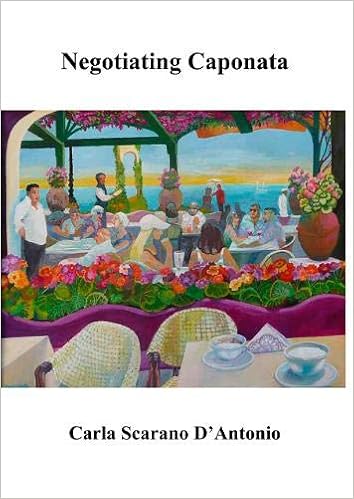
Negotiating Caponata. A Book Review by Josephine LoRe

Negotiating Caponata

Carla Scarano D’Antonio   https://www.carlascaranod.co.uk

Dempsey & Windle

2020

ISBN 9781913329228

£ 8.00

https://www.dempseyandwindle.com/carlascarano.html

Negotiating Caponata … a review by Josephine LoRe

Carla Scarano D’Antonio’s Caponata arrived late last year and I devoured it in one sitting.  Enough time has passed now for the unique flavours to blend as they would in the caponata my mother prepared at the end of every season from her summer garden:  the marriage of sour eggplant with sweet bell pepper and tomato, the infusion of vinegar and capers to add just the right tang.

Similarly, Scarano D’Antonio’s intriguing collection incorporates at first seemingly disparate components … part recipe book, part memoir of place, part meditation on human interactions, these poems are at turn soft with nostalgia and sharp with the honesty of relationships sometimes difficult to negotiate.

*

The themes and mood of this debut collection (fact-check) are alluded to in the prelude, a quotation drawn from Proust’s Swann’s Way: “after the people are dead, things broken and scattered, taste and smell alone remain poised, remembering, waiting, hoping …”  (a free translation).

The collection is arranged in three movements proceeded by Pajarita, a tender and thoughtful poem that perhaps teaches us how to approach the works in the collection. How rich to learn that pajarita denotes three things:  a small bird, a bow which ties things together, and a piece of origami.

My thoughts are tiny ideograms

inked on wrapping paper,

hidden in the folds of my paper bird …

How gentle the unfolding to find Scarano D’Antonio’s subtle poignancy?

*

In the first section of Negotiating Caponata, it is revealed that this is not simply a guide to cooking; there are darker undertones:

Negotiating Caponata

Simmer for one hour or two.  Stir.

The aloofness at times.

The body has no protection

when the light dims.

Cooking betrayal

Who knows what he thought.

Who knows what you concealed under the lids.

Smoothie

The skin yields easily

under the penetrating bade,

the flesh is soft and juicy.

Special Carbonara

The dizziness of the beaten eggs

mixing with black pepper and parmigiano.

[…]

filling the kitchen with thick vapour

in a bellicose conversation.

Only a cake

It is in the beating of the yolks plus sugar,

The egg cream where frustration releases

Its poisoning stings

Along with this laden language, Scarano D’Antonio uses lush, evocative descriptions, a feast for the eyes and the other senses:

What I was leaving

Before the weather changes

into mist and dim light,

the trees turn gold and vermillion

purple and burnt sienna.

[…]

The full moon is ricotta cheese in a sea of blueberry juice.

[…]

Their scent warms the house in reassuring airy blankets;

we walk through it as if it’s all we have longed for.

*

Some of the mystery of the tension and the unknown “he” of the first section become revealed in the second section, My Father’s Death.

Early Flight

I’m leaving to go back home

as light as a butterfly.

Your illness

was sudden and ferocious

[…]

A wounded hawk

clutching his branch.

Flying

you knew we would scatter

into the dangerous world

when you’d gone.

At the hospital

in the dim light of the hospital room

the sounds like bat wings measuring space.

This section ends with the poignancy of a difficult leave-taking, negotiating a leave-taking, uncertain if the situation will ever truly be resolved:

Dispersing your ashes

The ashes whirl in the wind, unstrained

mix in the roaring waves of the backwash

[…]

They splash on my legs

soak my skirt to the waist.

I wonder if they will leave stains

*

The third section In Touch releases us like the father’s ashes and we travel in time and place, before memory through an idyllic childhood tinged with the cruelty natural to children in Snake Eggs, via a poem to a daughter living in Tokyo, to a final place of tranquillity in Surrey, England, where Scarano D’Antonio now lives.

Grandad Ciccio and Grandma Orsola

Sitting serene like ancient Roman statues

[…]

He in grey uniform and high boots, she in black dress and hat

This poem’s structure is unique … ten verses which then are offered backwards, giving a sense of travelling forward and backward in time.

Mum during the war

You picked up dead branches, insignificant twigs

piling them up, imagining to build a shelter

that would defy bombs

Volcano

The city sinks into torrid August.

Sounds brood within,

murmurs beneath closed lips.

She is a sealed volcano.

Snake eggs

We scooped them with care

and set them on a slab,

then crushed the soft white shell with stones

In Cyclamens for my mother, the theme of being uprooted and transplanted in a new environment are explored through verse:

Cyclamens for my mother

You were surprised they were blooming in summer

in my English house,

purpurascens from the Mediterranean

Although in this same poem as in a good caponata, there linger hints of the bittersweet:

The dead are calling you

I’ll hold your hand walking the last steps of the journey

The final poem in this section has an almost haiku quality, a capture of the moment and timelessness:

The new house

has unfilled spaces

I measure with my thoughts

*

Which takes us to the epilogue of this collection, a different leave-taking, from the South of Europe, the warm Mediterranean to an arrival in England and all that North contains within its letters

Sailing North

branches torn bare

frozen.  North:

thorn, torn, horn

ton, not

*

As in any good amalgam, this collection of poems is stronger than the mere compilation of its distinct pieces.  The poems speak to each other, to the poems which proceeded and the poems which follow, and the overall effect is richly satisfying.  Arriving at the end has made me want to start again, this time savouring more intently each individual taste, ultimately learning the secret to Negotiating Caponata.

a pearl in this diamond world … Josephine LoRe has published two collections:  ‘Unity’ and the Calgary Herald Bestseller ‘The Cowichan Series’.  Her words have been read on stage, put to music, danced to, and integrated into visual art.  They appear in anthologies and literary journals across nine countries. https://www.josephinelorepoet.com/

Return to Journal

WordCity Literary Journal is provided free to readers from all around the world, and there is no cost to writers submitting their work. Substantial time and expertise goes into each issue, and if you would like to contribute to those efforts, and the costs associated with maintaining this site, we thank you for your support.

One-Time
Monthly
Yearly

Make a one-time donation

Make a monthly donation

Make a yearly donation

Choose an amount

¤5.00
¤15.00
¤100.00
¤5.00
¤15.00
¤100.00
¤5.00
¤15.00
¤100.00

Or enter a custom amount

¤

Your contribution is appreciated.

Your contribution is appreciated.

Your contribution is appreciated.

DonateDonate monthlyDonate yearly

You Look Good for Your Age. Rona Altrows

Every so often, WordCity Literary Journal may choose to feature an important and engaging book that’s come to our attention. This issue, in keeping with the feminist threads woven throughout our collection, we are giving space to Rona Altrows, for her anthology, You Look Good for Your Age

With a lineup of authors that include WordCity contributors, the pages of You Look Good for Your Age is filled with literary essays, short stories and poetry that explore the many aspects of aging of women in society.

In launching this anthology, Rona and the publisher (The University of Alberta Press) not only organized a live, online launch party, but gathered together a collection of short video readings by the collection’s contributors. We think you’ll agree that it’s both an innovative and generous way to give something to readers and listeners, and a joyful way to present these beautiful works and those who wrote them.

With permission from and thanks to Rona and the publisher, we include those readings here (following a description of the anthology). You may also find the readings on The University of Alberta Press’s YouTube Channel.


Description: “I returned to the same respiratory therapist for my annual checkup. I told her that her words to me, ‘You look good for your age,’ had inspired a book. ‘Wow!’ she said. ‘You wrote a whole book about that?’ ‘Twenty-nine kick-ass writers wrote it,’ I said. She gave me a thumbs up.” From the Preface

This is a book about women and ageism. There are twenty-nine contributing writers, ranging in age from their forties to their nineties. Through essays, short stories, and poetry, they share their distinct opinions, impressions, and speculations on aging and ageism and their own growth as people. In these thoughtful, fierce, and funny works, the writers show their belief in women and the aging process.

Debbie Bateman reads from “The Art of the Scarf”
Jane Cawthorn reads from “Shuffle”
Elizabeth Haynes reads from “Back to the Garden”
Paula Kirman reads from “Adult Tween”
E.D. Morin reads from “Well Preserved”
Laura Wershler reads from “Aging in Three-Year Increments”
Dora Dueck reads from “How I Got Old”
Madelaine Shaw-Wong reads from “Lilly’s Funeral”

Contributors: Rona Altrows, Debbie Bateman, Moni Brar, Maureen Bush, Sharon Butala, Jane Cawthorne, Joan Crate, Dora Dueck, Cecelia Frey, Ariel Gordon, Elizabeth Greene, Vivian Hansen, Joyce Harries, Elizabeth Haynes, Paula E. Kirman, Joy Kogawa, Laurie MacFayden, JoAnn McCaig, Wendy McGrath, E.D. Morin, Lisa Murphy Lamb, Lorri Neilsen Glenn, Olyn Ozbick, Roberta Rees, Julie Sedivy, Madelaine Shaw-Wong, Anne Sorbie, Aritha van Herk, Laura Wershler

Book details

Publication date: May 2021

Series: Robert Kroetsch Series
Keywords: women; woman; female; age; ageing; ageism; senior; seniors; young; old; image; beauty; mother; daughter; grandmother
Subject(s): Literary essays, women; woman; female; age; ageing; ageism; senior; seniors; young; old; image; beauty; mother; daughter; grandmother, Canadian Literature / Women’s Studies, LITERARY COLLECTIONS / Canadian, Anthologies: general, Literary essays, Modern & contemporary fiction, Modern & contemporary poetry (c 1900 onwards), Coping with ageing, Canadian Literature, Women’s Studies, Literary Nonfiction
Publisher(s): The University of Alberta Press


Return to Journal


WordCity Literary Journal is provided free to readers from all around the world, and there is no cost to writers submitting their work. Substantial time and expertise goes into each issue, and if you would like to contribute to those efforts, and the costs associated with maintaining this site, we thank you for your support.

One-Time
Monthly
Yearly

Make a one-time donation

Make a monthly donation

Make a yearly donation

Choose an amount

¤5.00
¤15.00
¤100.00
¤5.00
¤15.00
¤100.00
¤5.00
¤15.00
¤100.00

Or enter a custom amount

¤

Your contribution is appreciated.

Your contribution is appreciated.

Your contribution is appreciated.

DonateDonate monthlyDonate yearly

Writing Advice with Sue Burge. Mslexia

Mslexia

Many of the pieces in this month’s issue of WordCity are reflections on Women’s Rights.  My advice this month is to write beyond your comfort zone, and I have a suggestion for you of how female writers can find the encouragement to do this within the pages of one innovative and highly regarded writing magazine, Mslexia, which has done everything in its power to encourage women writers.  This magazine has been my constant writing companion since its first issue in 1999.  Founder and Editor Debbie Taylor created Mslexia to address the imbalance in the way women’s writing is published, reviewed and perceived.  The magazine only accepts submissions from women.  Debbie Taylor’s article, “Three Cures for Mslexia” which appeared in Issue 1, sets out her justification for the ethos of the magazine.  You can read it here:

https://mslexia.co.uk/magazine/blog/three-cures-for-mslexia/

In 2017 Taylor updated the issues which had led to the initial idea for the magazine and found the publishing world still wanting in many respects.  Her 2017 follow-up article, “Mslexia: are we cured yet?” can be found here:

https://mslexia.co.uk/magazine/blog/are-we-cured-yet/

So, this is a call for solidarity.  I’m not sure this brilliant magazine is that well-known outside the UK.  It covers all genres, including scriptwriting and performance. It explores ways you can market your writing.  It constantly strives to address issues of diversity and representation. The current issue, number 90, has articles on writing and dementia, why rejection hurts so much, how lockdown has welcomed disabled writers, how to make a living from copywriting, and much more.  There are comprehensive lists of places where you can submit your work both in the UK and globally (why not submit beyond your geographic comfort zone too?!), writing tips, interviews with writers, poetry and short fiction reviews, indie press highlights and the widest set of submission opportunities for inclusion in Mslexia itself.  There are three opportunities to submit narrative non-fiction.  Readers are encouraged to pitch articles; there are poetry submissions, including an eco-poetry challenge (Poems for the Planet, curated by Climate Writer Linda France); regular fiction submission opportunities include a bedtime story for a child, a flash challenge and The World’s Wife – a monologue in the voice of a wife, mistress, sister, mother of a famous real or fictional person.  These challenges will surely inspire you to new writing or to attempt a new genre (again, let go of that comfort zone in a safe and encouraging space)!

The magazine is quarterly and two of the issues have themed submissions for both poetry and fiction, judged by top names in the industry and beautifully showcased. There are also annual competitions: memoir, novel, short story, flash fiction, writing for children, poetry and poetry pamphlet (chapbook) with good prize money and great opportunities for the winners.  You can subscribe from anywhere in the world, both digital and paper options are available.  Some of the submission opportunities are only open to subscribers but most are open to all.  The magazine encourages readers to write short pieces for inclusion on regular themes such as blogging, submitting, writing rituals etc.   Every reader is treated as a potential contributor to the magazine.  It’s a very inclusive exclusive experience which I hope you will enjoy:

https://mslexia.co.uk/

Sue Burge is a poet and freelance creative writing and film studies lecturer based in North Norfolk in the UK.  She worked for over twenty years at the University of East Anglia in Norwich teaching English, cultural studies, film and creative writing and was an Associate Lecturer in Creative Writing with the Open University.  Sue is an experienced workshop leader and has facilitated sessions all over the world, working with a wide range of people – international students, academics, retired professionals from all walks of life, recovering addicts, teenagers and refugees. She has travelled extensively for work and pleasure and spent 2016 blogging as The Peripatetic Poet.  She now blogs as Poet by the Sea. In 2016 Sue received an Arts Council (UK) grant which enabled her to write a body of poetry in response to the cinematic and literary legacy of Paris.  This became her debut chapbook, Lumière, published in 2018 by Hedgehog Poetry Press.  Her first full collection, In the Kingdom of Shadows, was published in the same year by Live Canon. Sue’s poems have appeared in a wide range of publications including The North, Mslexia, Magma, French Literary Review, Under the Radar, Strix, Tears in the Fence, The Interpreter’s House, The Ekphrastic Review, Lighthouse and Poetry News.   She has featured in themed anthologies with poems on science fiction, modern Gothic, illness, Britishness, endangered birds, WWI and the current pandemic.  Her latest chapbook, The Saltwater Diaries, was published this Autumn (2020) by Hedgehog Poetry Press and her second collection Confetti Dancers came out in April 2021 with Live Canon.  More information at www.sueburge.uk

Return to Journal


WordCity Literary Journal is provided free to readers from all around the world, and there is no cost to writers submitting their work. Substantial time and expertise goes into each issue, and if you would like to contribute to those efforts, and the costs associated with maintaining this site, we thank you for your support.

One-Time
Monthly
Yearly

Make a one-time donation

Make a monthly donation

Make a yearly donation

Choose an amount

¤5.00
¤15.00
¤100.00
¤5.00
¤15.00
¤100.00
¤5.00
¤15.00
¤100.00

Or enter a custom amount

¤

Your contribution is appreciated.

Your contribution is appreciated.

Your contribution is appreciated.

DonateDonate monthlyDonate yearly