The World Is Not Right

The world is not right
when It is not just

Do not forget us
we have no voice
tell the world about us
the voiceless...the enslaved...the displaced…the imprisoned

To the poets and writers
do not forget us
give words to our plight
tell the world

We are in the re-education camps
forced to renounce our faith...our birthright…re-educated
we are in the nameless prisons
we dared to speak out
dared to want
want what you take for granted
our basic rights

We are the displaced
violently removed from our ancestral lands
because we look different
we have no voice
we are the forgotten souls

I am now a number
recorded in some book
the list of the forgotten
buried under my native soil
in the deep woods
no marker for my loved ones
they have only their memories now

The world is not right
when it is not just.


My Generation

And when the night falls from the sky
and darkness is upon us
I despair for my generation
How can we find meaning?
When there is no moon to guide us?

I despair
when hope
Is sucked from us
like the air in a burning house

How can we continue to live like this?
when self-expression
is met with more state repression
Must we live like our fathers?
and their fathers
obediently accepting
what you preach to us.
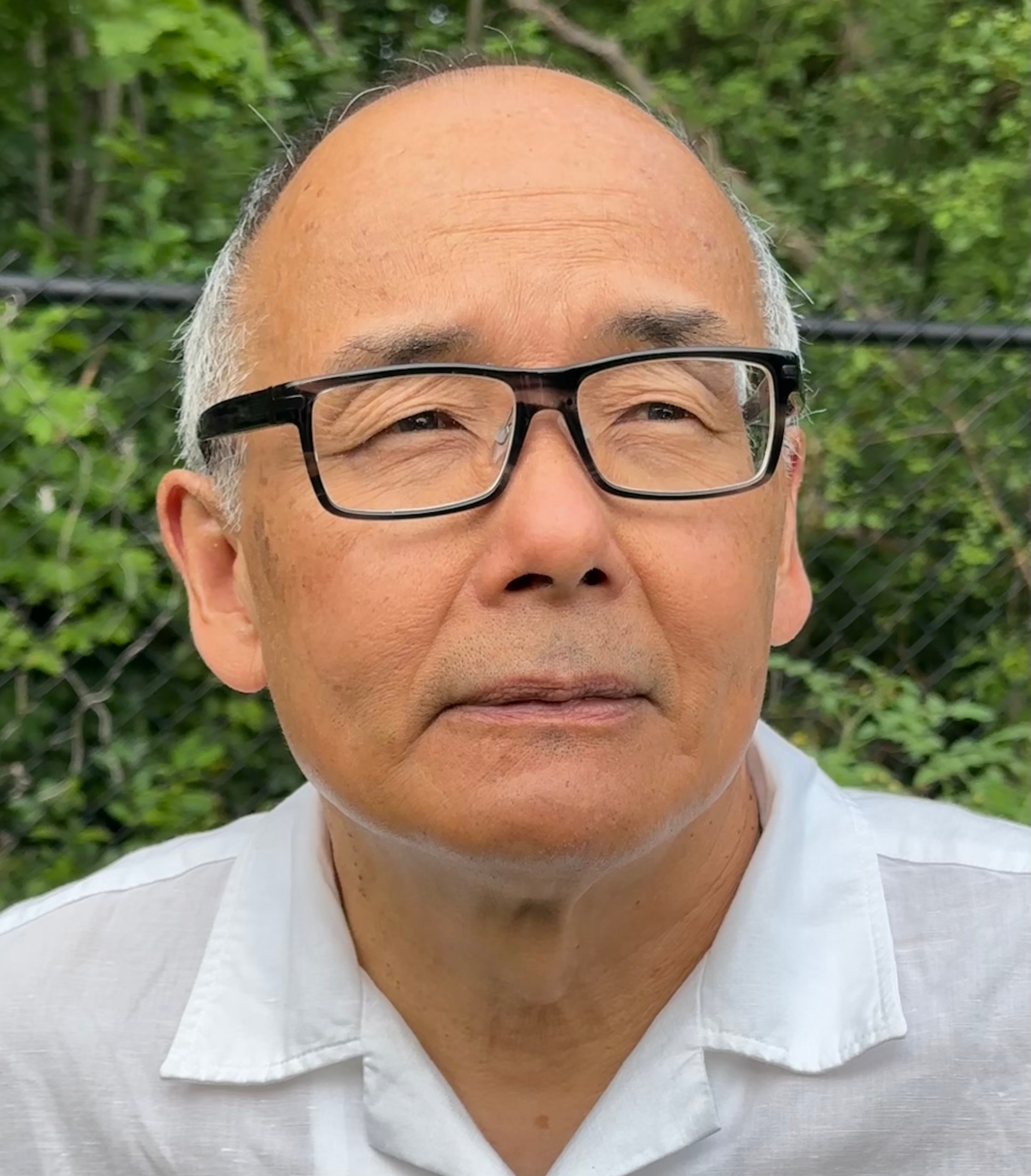
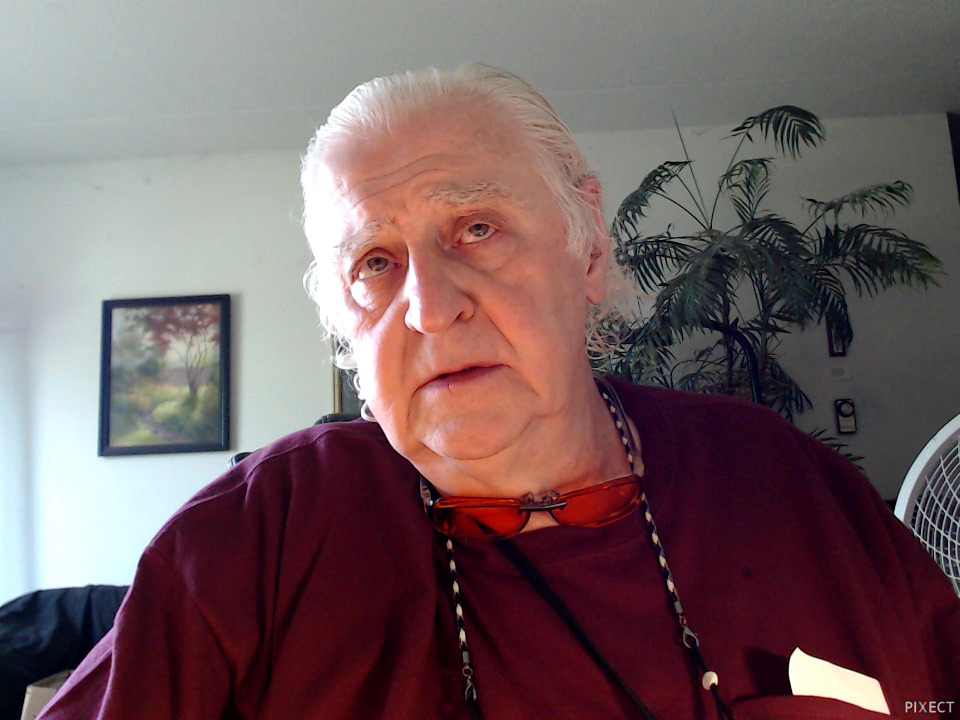
Jameson (Jason) Chee-Hing is a poet, essayist and writer. His poems have been featured in several anthologies. Jameson writes about relationships, social justice and the human condition. He grew up in the inner-city neighbourhoods of Toronto, Ontario. Jameson can be reached at jchee-hing@sympatico.ca
WordCity Literary Journal is provided free to readers from all around the world, and there is no cost to writers submitting their work. Substantial time and expertise goes into each issue, and if you would like to contribute to those efforts, and the costs associated with maintaining this site, we thank you for your support.
Fractured

I. Childhood

I’ve tried too many times
to wedge myself into
an electric socket, an Alice in Unwonderland,

insisting on existing
in places that can never accommodate me.

II. Adolescence

Multi-talented is defined
by being able to cry
and eat ice cream
without swallowing tears.

III. Adulthood

I make glass figurines

seal the cracks
with the stickiness of my blood.


The Undoing

Crocodiles are the most
unlikely creature
to shed tears.

I am the most
likely creature
to shed all of me.

Skin blistering
under a lonely desert sun,

skin scattering
like pastel eggs
on Easter morning.

My life simmers,
a mirage before me,

as unlikely as tearful
crocodiles prowling
the dunes.

I trace my name
as SOS in the sand,

a pilot reads it
as I’m ok
and flies on.

Flourish

This body         eats her fill, then a little more.
This body         and all her many pleasures.

This body         with her powerhouse liver.
This body         knows livers are not indestructible.

This body         refuses to shrink to fit in her favorite jeans.
This body         ever morphing, always a temple.

This body         with her rounded edges and sharp tongue.
This body         rages against regulation, boils it in her blood until it evaporates.

This body         freefalls and uses her skin as a parachute.
This body         glows.
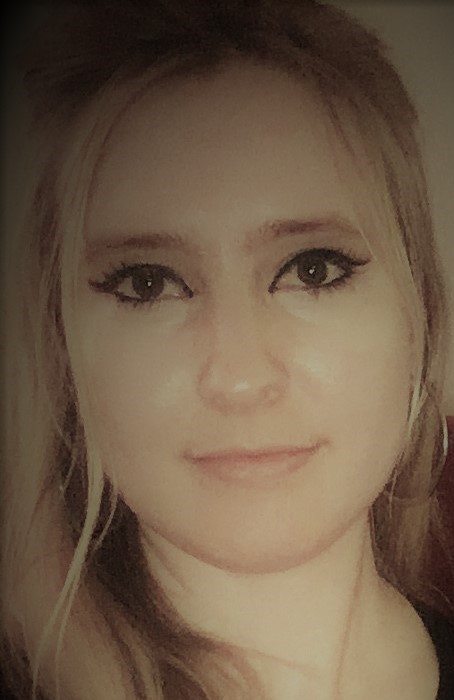
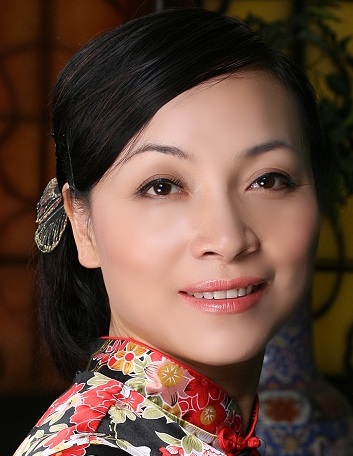
Lela Hannah‘s poetry has been published in Typehouse Literary Magazine, The Light Ekphrastic, Beltway Poetry Quarterly, The Ekphrastic Review, New Note Poetry, and elsewhere. She holds a BA in Integrative Studies from George Mason University. Lela is a neurodivergent writer and poet living with ADHD.
WordCity Literary Journal is provided free to readers from all around the world, and there is no cost to writers submitting their work. Substantial time and expertise goes into each issue, and if you would like to contribute to those efforts, and the costs associated with maintaining this site, we thank you for your support.
On the Edge of the Marsh

Ginny and her husband have a farm
here at the edge of the marsh,

a place my grandfather, a dairyman all
 his life would have felt at home.

They have cows and grow corn,
strawberries and asparagus,

and they listen to great blue herons
grawking to each other across the water.

I hear them too as I buy cucumbers
from Ginny’s cart, and I hear

my grandfather, dead now
60 years, talking and laughing.

The two of them speak of things
beyond my understanding,

They speak the language of peace,
the language of things that make sense.


Driving into Upstate after 45 Years Away

I wouldn’t have seen the cattails
on the edge of the marsh

except they were backlit
by the purpling dawn.

I could hear my grandfather whisper
that I’d finally made it back home.


Log in the Pond

A week ago, the turtles were still buried
in the mud at the bottom of the pond

waiting for the Earth to warm itself.
Today, they’re sunning themselves

on their log, reborn to spring.
A week ago, I was out here

thinking about jobs, relationships,
and dreams I’ve fucked up, wishing

I could bury myself with them.
It’s better today, so I say goodbye

to those people and those dreams.
I wasn’t good at those jobs anyway.

Across the pond, a turtle slips
under the sheen of the surface ripples.

I say goodbye to him too.
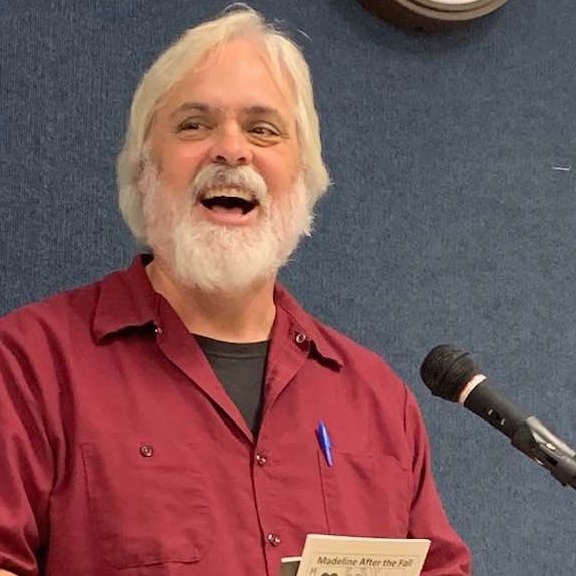
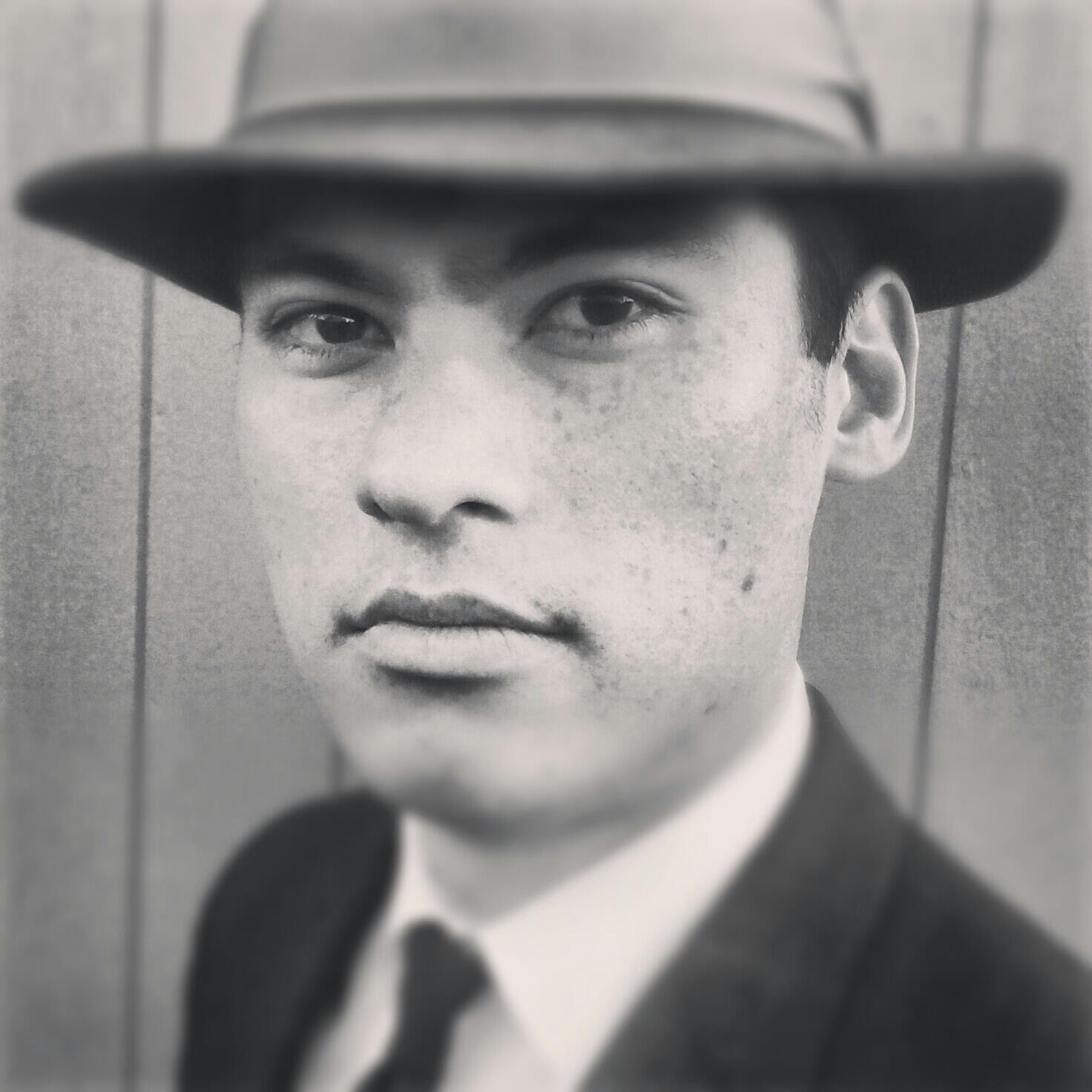
John Brantingham was Sequoia and Kings Canyon National Parks’ first poet laureate. His work has been featured in hundreds of magazines. He has twenty-one books of poetry, memoir, and fiction includinghis latest, Life: Orange to Pear (Bamboo Dart Press) and Kitkitdizzi (Bamboo Dart Press). He lives in Jamestown, New York.
WordCity Literary Journal is provided free to readers from all around the world, and there is no cost to writers submitting their work. Substantial time and expertise goes into each issue, and if you would like to contribute to those efforts, and the costs associated with maintaining this site, we thank you for your support.
Time

Pairs of little bare feet
Running across the Kentucky Bluegrass,

Children laugh as they run,
Showing off their new Easter clothes.

Pappa pops a beer
In the hot pool and chugs this one too.
Momma is in the house
Peeling carrots while Auntie
Cleans in another part of the house.

All is being readied
For the disaster.


Water Song

The water

Drop

Let.    Itself.

Be water.

Then falls.

Through the gutter

To the waiting earth.


Shopping Cart

Early morning hours,
The cold hours before sunrise.
An old man in need of a clean shave
Pushes his shopping cart
Past an old woman
in need of love.
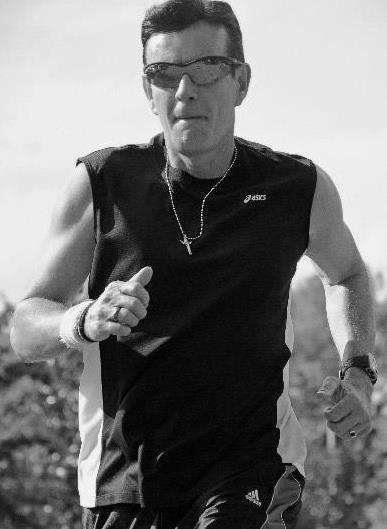
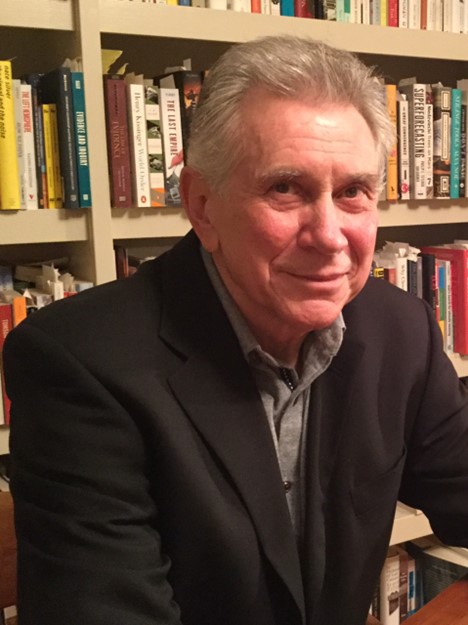
Marc Isaac Potter (we/they/them) is a differently abled writer living in the SF Bay Area. His interests include blogging by email and Zen. They have been published in Fiery Scribe Review, Feral A Journal of Poetry and Art, Poetic Sun Poetry, and Provenance Journal.
Twitter: @marcisaacpotter
WordCity Literary Journal is provided free to readers from all around the world, and there is no cost to writers submitting their work. Substantial time and expertise goes into each issue, and if you would like to contribute to those efforts, and the costs associated with maintaining this site, we thank you for your support.
Oh Lord...

Oh Lord...
I have cultivated paddy in your land.
I have also cultivated onion, garlic, ginger and tomatoes in another land.
I cultivated fish in the pond and gourds in entresol by the pond.
Good yield,
I got good paddy in the field.
I packed one years worth of paddy to eat with my family and sold fifty mounds.
I am well in Your mercy.
Oh Lord...
there is no shortage,
O Allah guide me to the path of light.
I drink your water to cool my soul.
I walk through the valley alone in the dark.
I fear no evil..
I'm not alone,
O Allah you are with me.
O owner
I feel your presence in me.
Accept my prostration,
I feel lonely and find you.
I'm happy even though I'm sad,
I prays my Salat.
I praise you, sing your song sing your praise.
According to your law the sun rises in the east and sets in the west.
The universe is running by your grace,
My joys are illuminated by the moonlight.
The sea ice melts into the Ocean.
It evaporates and returns to the mountains.
Oh Lord...
So beautiful world, sky, sun, moon, wind, caves, rivers, seas, mountains, saptorshi mondal, graha nakshatra,
Eighteen thousand species (maklukat), ninety-six thousand species of plants, animals, birds, flowers, fruits, green trees, young vines, aquatic animals, aquatic plants, forests, meadows, sweet drinking water, birds singing all are your gift.
Lord
Your spirit is in my Heart
Help me...
I came alone and there was nothing,
I will leave again.
I will leave everything and go alone...
Sabyasachi Nazrul is a Guinness World Records holder, bilingual global poet, motivational author, rhymer, translator, presenter, global peacemaker doctorate, world symbols of peace, global peace ambassador & many awards winning writer. His work has been translated into thirty-eight international languages & published in national newspapers, magazines of Bangladesh. He also published in various international literary journals, magazines, anthology, newspapers of sixty countries. He has twenty-two joint poetry books, two poetry books: manuscript winning ‘ Ekti Tarjonir Isara ‘ and ‘ Sapno Uran ‘. He also edits a literary magazine, ‘ kittinasar kirtti ‘.
WordCity Literary Journal is provided free to readers from all around the world, and there is no cost to writers submitting their work. Substantial time and expertise goes into each issue, and if you would like to contribute to those efforts, and the costs associated with maintaining this site, we thank you for your support.
Telos

Two evening lovers’ echoes
In you forgotten dreams
And memories of essence.

Touch wordlessly in a greater optimism.

Waves of summer morn
Under a cloudless sky
With flickering lights of desire.

Turning like a dancer alone on the stage of life

The collapsing leaves turn
After their first death and sleep
In the place of forgotten Gods.


Tabula Rasa

I saw the ethos
of a generation destroyed-
mourning the philosophers
In their artful vision.

The sense datum clouds
with cries and songs
of the nymphs welcoming
new world dawns.

Mentality is, in its way forming,
a sign of hopeful intelligence.
Knavish roadblocks obstruct
triumphant returns to Arcadia.

Asterism fills my sight
As the false memories
Of a partial Utopia
Flood my soul.


Algor

Like a winter landscape fearful
Of revealing what lies underneath
And I-one minute
Adrift from myself.

Opening up to you
Is as easy as breathing
In the quest for completion
Of a new threshold.

Poetry is a constructed conversation
On the frontier of dreaming.
I cannot help but freeze-and
Scrutinize this ideology doctrine.
Carl Scharwath has appeared globally with 175+ journals selecting his writing or art. Carl has published three poetry books and his latest book “Playground of Destiny,” features poetry, short stories, and photography (Impspired Press). Carl has four photography books, two were published by Praxis in Africa, and two by CreatiVingenuitiy. His photography was also exhibited in the Mount Dora Center and The Leesburg Center for The Arts. Carl was the art editor for Minute Magazine (4 years.) He was nominated for two The Best of the Net Awards (2021-22.)
WordCity Literary Journal is provided free to readers from all around the world, and there is no cost to writers submitting their work. Substantial time and expertise goes into each issue, and if you would like to contribute to those efforts, and the costs associated with maintaining this site, we thank you for your support.
After-Dinner Walk On The Terrace

If only I could set things straight, I might.
But I am spent! I miss my family.
Has brother left the building for the night?

The sink is chockablock, the TV’s bright
And muted, roaches raid the cutlery.
If only I could set things straight, I might.

Isn’t it time? The far-ranked bulbs that light
The dirty steps will blink out suddenly.
Has brother left the building for the night?

I might, in darkness inching down the flight
Of steps, trip on somebody, till I cry:
If only I could set things straight, I might.

The crescent moon is aging in plain sight.
The pickets wrap back into obscurity
—If only I could set things straight, I might.
O brother, have you left us for the night?


I Am The Mythic Bird

I am the mythic bird
our maid told me about back when I was
a broken, school-fled wuss.
This bird, she said, its plumage starred
with specks of ichor blood,
never slept except
with its feet held up, should
the sky fall while it slept,
so it could prop the sky up with its feet,
and save itself, if not the world.
And thus the bird sleeps on, complete
apart from flight, self-curled,
self-rolled. Why, if not for this bird, she said,
the sky would fall upon your head.


Fear And Trembling

At prick of pubic hair, I heard Love throb
And leaving all else, answered with a sob.
I watched the world change before my own eyes
As my percussion bowls began to rise,

And I with them until, swept far from land,
I came down with a bang, to pieces split,
My china limbs strewn this way and that, and
This way and that the bowls transformed to grit.

Made man again (resculpturing, stark grim),
I saw the bowls, remade, set out in place,
Some sparely filled, and some filled to the brim—
The stilly water in each showing my face.

Like a ten-headed, heartless colossus there
I sat, and struck half-ghoulishly each bowl,
Ten times more broken, thoughtful, once to spare
Myself the horror of being made so whole.


All Swans Are White

All swans are white, let the black swan rehearse!
Don’t trust the glass, it will reflect a dream;
Don’t trust your image in the puddle cursed
To pass to zilch, zilch therefore to esteem.
Hard ground comes into view, hard, walked-on earth,
The trodden keyboard of the feathered race—
Put down your other foot wound up since birth,
And catch the broken melody of the place!
Susmit Panda, born in 1996, is a poet living in Kolkata. His poems and criticism have appeared in Boog City,Coldnoon, Indian Cultural Forum, Guftugu, The Boston Compass, and The Journal (London), and are forthcoming in Fulcrum: An Anthology of Poetry and Aesthetics. He participated in the Poesia 2021 World Poetry Day Festival.
WordCity Literary Journal is provided free to readers from all around the world, and there is no cost to writers submitting their work. Substantial time and expertise goes into each issue, and if you would like to contribute to those efforts, and the costs associated with maintaining this site, we thank you for your support.
With library shelves being emptied of books and that challenge certain ideologies and doctrines, WordCity Literary Journal is seeking works on the theme of censorship, the right to read and write, and the power of empathy in societies that are turning inwards on themselves.
We invite fiction, non-fiction, poetry and book reviews, and both loose and expansive interpretations of this theme.
As ever, we at WCLJ thank each of our contributors, readers and supporters as we write and publish our way to a more open an inclusive world.
In February 2012, just more than a year after the publication of my first collection of short stories, I broke my back.
That is the easiest way to say it.
Except that the break wasn’t a fracture.
Instead, the bilateral rupture of my sacroiliac joints was due to adenomyosis, a gynecological condition that goes undiagnosed in far too many women, and often takes decades to finally name and treat.
Gradually, and then all at once, the stress from my uterine ligament twisted my sacrum like a jam jar until the joints, finally had to give.
I can say that my doctor at the time tried to manage my pain. I can say that he sent me to see every possible specialist while tossing out diagnostic darts at my chart.
I can also say that the prescriptions he gave me, both discrete and combined, were a sustained act of malpractice. There is a consensus that my brain should have stopped telling my lungs to breathe.
After two years, much of it spend on my hands and knees, silent screaming into the carpet on my bedroom floor, a pain specialist in Vancouver diagnosed and began to knit my joints back together with prolotherapy. A gynecologist performed a complete hysterectomy.
I tapered off the fentanyl. Off Dilauded, Ativan and Zopiclone.
I tapered off Cyclobenzaprine and Lyrica, too, while prescription NSAIDs left my stomach lining damaged, resulting in a year in spasms, while vomiting my way in and out of emergency rooms.
I’m telling you this because of Kirstie Millar’s The Strange Egg, and the review written for this issue by our own contributing editor, Sue Burge.
The view is all fig trees. No figs yet, but very soon. I can smell it when figs are on the trees.
A man stumbles out of the public house. I see that he is the gaslight man. Soon he will begin his shift.
The fig trees have spread so much just this summer alone. We’re in the middle of Camden but there are more leaves than sash windows. I can’t see Camden from this square at all, even from a second floor balcony.
Today, the sun is bright. It penetrates even the densest foliage. On a day like this, it feels warm. But you know that if you stand in the shade, you’d freeze. The intensity of the sun makes you look hard, the other way, towards the shade. Even the pavement is pink from the light.
TWO SCREECHING CATS slice the late morning silence. They circle each other, backs hunched. Chickens scatter to safer pecking grounds.
A priest approaches. Sunlight on his black robe bastes his body. His sandaled feet kick up dust as he rushes past the beige stucco house with faded blue wooden shutters. They open. A stream of water douses the priest and cats.
“Oh! Père Chaumont,” Madame Bonnet says. One spotted hand holds a rusted pail. The other covers her mouth.
The wet cats slink away.
“I’ll dry quickly in this heat.” He wants to call her stupid. Instead, he makes the sign of the cross and hurries off. He must be at his church by noon. He almost runs down rue Jean Jaures, up Avenue de la République and past the two angels flanking the church entrance.
Brandt Colson watches his frenetic daughter as she flits around the room in her usual style. She is talking about ten different things at once, fussing over details and generally majoring in the minor. Brandt notices the bored and frowning, mostly grown grandson as he leans against the wall at the apartment entry. The boy takes no pains to hide his brooding impatience.
The daughter stops talking and pauses in front of the chair. Brandt looks up. “There is plenty to eat and all laid out. Your list is on the counter. Are you sure you feel up to it, Dad?”
“I feel fine,” he says. The stroke is a jumbled memory now.
She looks doubtful, “don’t over-do.”
This daughter is an impulsive, disorganized and frenzied worrier. The years of West Coast living, three husbands and many fiancés, has not changed that about her. Now she is back, living in his house, free of charge, with her son and a new husband. She is here to bring a whirlwind of fuss and worry over her sick old man.
Farley Creighton had been working far too hard. Tax accounting could be a real bitch in April. While most people welcome spring with open arms and a certain sense of renewal, not so with Farley. It was the time of year when he could expect clients like Mike Marashenko, who ran his own small contracting firm, to walk through the front door with a large cardboard box brimming with everything from receipts to bills both paid and unpaid and copies of invoices either sent or not. It was poor Farley’s job to straighten out the whole mess and make sure, at risk of certain reproach, that Mike didn’t pay a cent more income tax than he had the previous year. And it would have probably been okay with the beleaguered accountant had Marashenko Contracting Ltd. been a one-off, but no, he was pretty much typical of Creighton Tax Service’s entire client base. In the early years he’d felt thankful the larger firms in town had referred clients to him, but after a few years he realized that they were simply offloading their dregs on him.
By the end of June, Farley could look forward to a break in the pressure cooker tedium and start sending out a few invoices of his own. But now it was mid-April, just weeks from tax filing deadlines, and he tanked, bottomed out, flatlined. Call it what you will but Farley was done. Fourteen tax seasons in this dispiriting business that had promised big rewards never realized. In that time, Farley had seen clients start with nothing and end up millionaires while his business floundered, just shy of being a certifiable failure. Farley was an okay tax accountant, but a terrible businessman. He had grown silently bitter with those who’d “outgrown” his services and moved on, seeking the advanced resources of big firms with initials like “LLP” behind their names, retaining those pricey lawyers whose singular purpose in life was to ferret out loopholes in the tax laws.
Two Readings, Three Authors: On the Pleasures of Listening to Women Talking
I haven’t attended a lecture or author reading since COVID. The pandemic was reason enough not to go anywhere crowded, and since — well, since then I’ve had to overcome certain habits of mind, as well as a tendency to prioritize tasks that invariably arise from my work as an instructor at two postsecondary institutions. As I approached the end of the Winter 2023 term and shifted to marking mostly, I decided to treat myself at last to two author readings. The first took place at York University’s Glendon campus on April 11, under the auspices of the Department of Hispanic Studies. The second reading and Q&A was held at the Keele Campus on April 17, the fruit of the Department of English and its inaugural Writer-in-Residence program. The two presentations were one week apart, and so I still had a vivid recollection of the first talk, given by Spanish philologist and novelist Irene Vallejo, when I attended the second. At the latter event, I listened to Miriam Toews read a segment from her latest novel, Fight Night (2021), and then field questions from Karen Solie, York University’s first writer-in-residence, a renowned poet and recently named recipient of a Guggenheim fellowship. These were different presentations in terms of the subject matter and authorial aims: the first was delivered by a historian in the capacity of a scholar, a native of Spain; the second featured a celebrated Canadian writer of fiction, known for drawing profusely on her own lived experience as a woman who once belonged to a Steinbach Mennonite community in southern Manitoba. I’ll say right now that both readings were marvellous; they were thought-provoking and moving. They were dissimilar nearly in every way, and yet, afterwards, once I contemplated the subtler leitmotifs and implications of things said or divulged on a personal note, I was struck by how much these talks had in common.
On the last day of my final exams in the third grade, I excitedly anticipated joining my father, a courier and a Kulbar (porter). This is someone who takes items across the Iran-Iraq border, thereby putting themselves at great risk. Kulbars have little means of survival other than depending entirely on transporting a variety of items across the borders to support their families.
On holidays, we had nothing to do in the village as we had no electricity with which to watch TV, and no playground or a centre that held activities. I begged my father to let me travel to help him. At first, he said that the journey of more than eight hours was too risky for a child, but he later agreed, and I was overjoyed. For me, it was the beginning of several years of living dangerously. There were several reasons. Scores of people were killed by the Iranian RevolutionaryGuards; people were tortured by Kurdish militias, looted by robbers, or even mauled by wild animals. Couriers also frequently had to endure the harsh weather.
Literary Spotlight with Sue Burge: Poet Roy McFarlane Leads Us through Troubled Waters
Sue Burge: I’m very excited to be interviewing Roy McFarlane for this issue of WordCity Literary Journal. Roy is primarily a poet, although he turns his considerable talents to other genres too. He is a spellbinding performer of his poetry and uses his wordsmithery to explore the big issues of our time to great effect.
Roy, in your bio you say that “in a former life” you were a Community Youth and Play Worker. How did you incorporate writing into this life and did your work influence your writing at this stage? I suppose what I’m asking is how you became a poet and at what point you thought “I’m a poet”!
Roy McFarlane: I’ve always been a holder/giver of words, from a young boy being led by my mother to read and recite Psalms, to a young man dabbling with love poems inspired by the lyrics of George Benson, to being a young minister of the gospel developing my craft by listening to recorded sermons and the speeches of Martin Luther King Jr and Malcolm X. But the turning point of actually writing poetry was working with young people, who were excluded or on the point of joining local gangs, who lived and devoured the texts of Tupac and Biggie, who revelled in the misogynist and violent banter. In response to that schooling we encouraged them to write positive lyrics, write their lived reality through poetry and put music to it. This is where I began writing poetry. A few years later I was studying Black theology, or Black Liberation theology, famously coined by the African American theologian James H. Cone (simply put, whether God is on the side of the oppressed or the oppressor). In this sanctuary of studying, I wrote my first poem Are you looking at me? A normal day in the life of a black man who seemed to have people looking at him wherever he goes; a poem I later performed with the New October Poets, led by the enigmatic Dreadlock Alien where a band of diverse poets from Birmingham and the surrounding area formed a spoken word community, creating a space to hone our craft and opportunities to tour across the UK
This sounds like an amazing apprenticeship to becoming a wordsmith! What advice would you give to poets just starting out? Do you have a particular process when you write?
Write, write, write, sometimes the blank page can be so daunting, we overthink things, we imagine what we’re writing has no relevance, or, more damning, it’s no good, but until we put pen to paper, fingers to keyboard and release the words, we become captives to hesitation and doubt.
I write for the joy and love of it, the spark that troubles you in the midnight hour, the thought that follows you into a dream, the ache that wakes you up, the inspiration that makes you write on the margins of a newspaper.
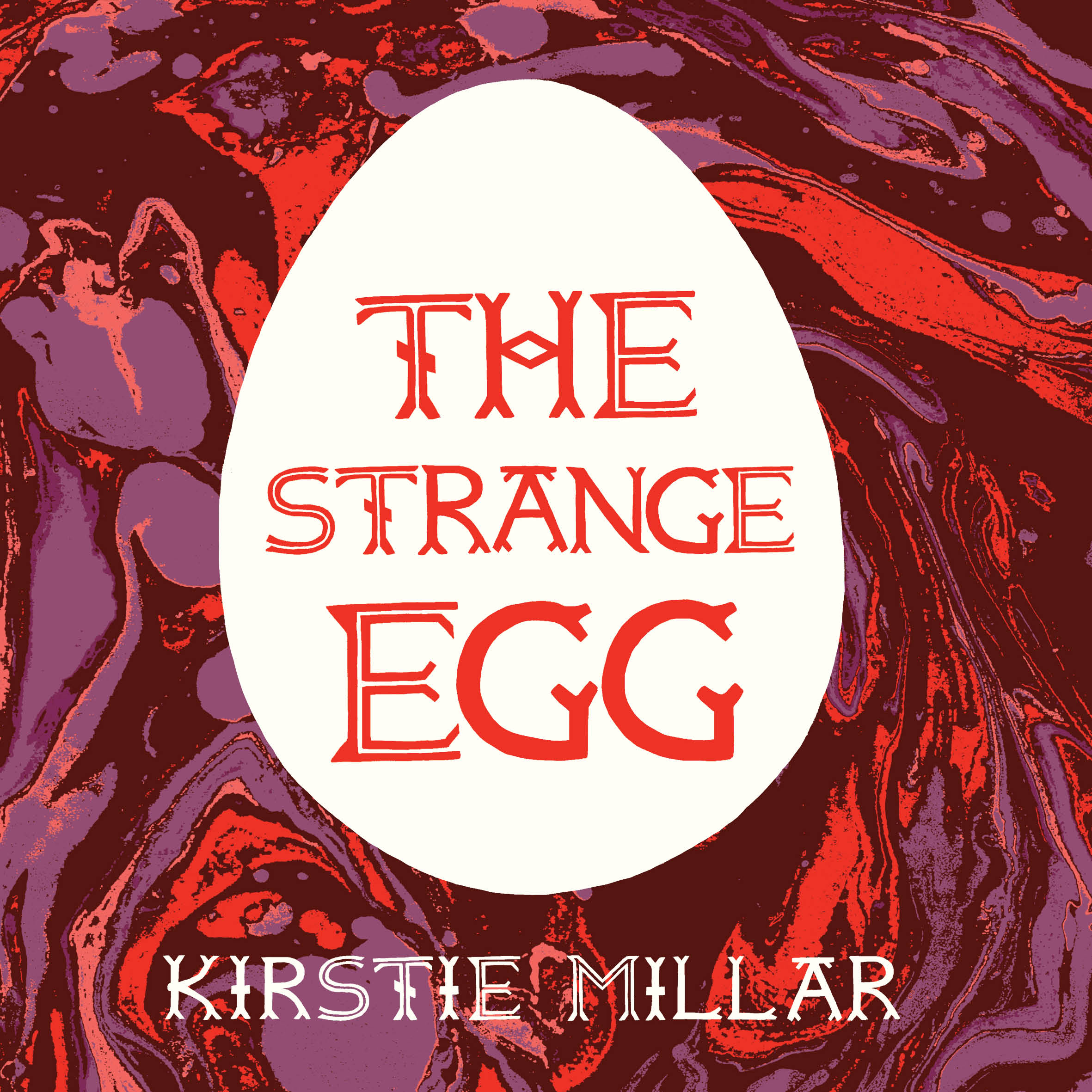
The Strange Egg – Kirstie Millar Illustrations by Hannah Mumby (The Emma Press 2023) Paperback ISBN: 9781915628022 £10
“’Doctor, I had a terrible dream. In my dream I saw my own body, and I saw what you will do to it.‘
A woman is faced, month after month, with the birth of a strange egg. Her doctor asks that she take notes on her symptoms, documenting black blood clots as big as pennies, winking stars in her eyes, and relentless pain. As the woman waits for aid from her doctor, she begins to have strange premonitions of what will be done to her body. The egg, meanwhile, is watchful and demanding. Impatient.
The Strange Egg is as gorgeous as it is horrifying. Highly original, it challenges long-held beliefs that people of marginalised genders are unreliable and irrational witnesses to our own bodies.”
Kirstie Millar’s surreal pamphlet-length prose poem is so much more than the sum of its parts; it is indefinable, genre defying. Hannah Mumby’s illustrations act as a powerful vehicle to both enhance and underpin Millar’s visceral prose.
In 2017 Millar founded Ache, an intersectional feminist press publishing writing and art on illness, health, bodies and pain. Millar has endometriosis and The Strange Egg is an innovative way of expressing this illness/diagnosis creatively. This surreal exploration of illness contrasts strongly with the everyday rationalism health professionals require from their patients. It took Millar nine years to get a diagnosis and this pamphlet, written after her third surgery, uses the idea of the strange egg as an allegorical presence. It is the elephant in the room, the accumulation of years of shame, pain, anger and trauma and a representation of how endometriosis can cause a disturbing, pregnancy-like stomach swelling. The structure of the piece cleverly reflects the content: it’s written in 28 sections, to imitate the menstrual cycle.
“Doctor: There’s a good girl. Now, would you like to see your egg?
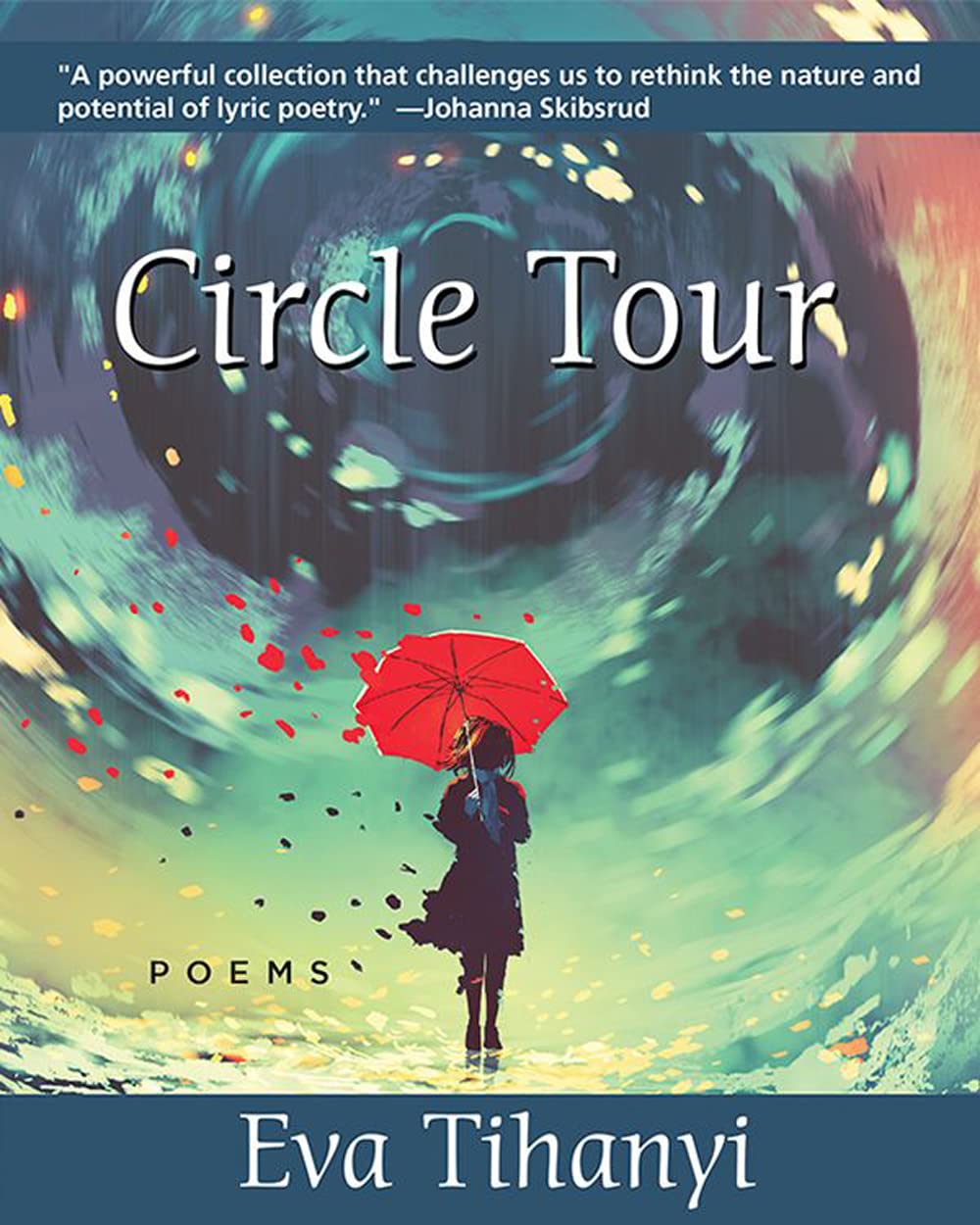
Circle Tour is a like a reflection in lake water; something so beautiful that you wish you could hold on to it, mercurial as it may be.
On these pages Eva Tihanyi offers a bounteous continuation of the language and imagery of the Romantics; and hers is a potent lyrical poetry. At the same time, this collection, is quite literally, one woman’s observations and introspections during the pandemic.
We are shown histories, celebrations, the new normal. The darkness and the growing light that penetrates after it exhausts itself. Meditations, incantations, contemplations. Every one of them beyond wonderful. Each written in such a way that the book insists we hold it, consider its pages, and stay. Once I did close the covers, I felt a lingering desire to return to the words that are drawn so strikingly between them. I felt acutely, the pull and float of a spiral, its way of positioning us in that which is universal. Within hope. Within optimism. Within every aspect of love. Because, at the cellular level Tihanyi’s collection is experiential. Her language, precisely focused.
Books Referenced: If Not for You & Other Stories, Niles Reddick (Big Table Publishing 2023) Moon of the Crusted Snow, Waubgeshig Rice (ECW 2018) Who by Fire, Matti Friedman (Penguin Random House 2022) Inspiring Canadians, Mark Bulgutch (Douglas & MacIntyre 2022) A Book of Days, Patti Smith (Knopf Canada, 2022) Common Tones, Alan Licht, ed. (Blank Forms Editions 2021) This Strange Invisible Air, Sharon Butala (Freehand Books 2021) Unmask Alice, Rick Emerson (BenBella Books 2022) A Lab of One’s Own, Rita Colwell (Simon & Shuster 2020) Making History, Richard Cohen (Simon & Schuster, 2022) Poetica Dystopia, Stephen Roxborough & Karl Blau (2022) Report from The Betts Society/Report from The Reid Society Report from The Ross Society/Report from The Brockwell Society/ Report from The Hall Society (above/ground press 2022)
*
There’s been a trend now for some seasons to slim down short stories to little more than postcards from vacation moments, where a brief series of events and interactions is presented as emblematic of life in general. Characters are called onto stage but given few lines. The complexities of conflict and collisions of ambition are mapped onto postage stamp collections to be flipped through admiringly at one’s armchair ease.
And one can certainly admire author Niles Reddick’s adoption of this literary mode. Not to put too fine a point on it, he makes it work for him. There is an admirable efficiency to the glimpses he gives of small town and rural life, usually of a blue collar hue, as they struggle with the apparent emptiness of their existence and the quiet traumas of decaying bodies and brains.
Time and again he manages to make his snapshots resound into the moments and days beyond reading, reaching the entangled empathy to which all fiction aspires with an ease that belies the myth of effort. These are fictions that can be accessed as the evening meal prepares itself elsewhere or in the many spare moments that parse out the day. As a collection it is as useful as it is pleasurable. A book for public transit as well as the private armchair.
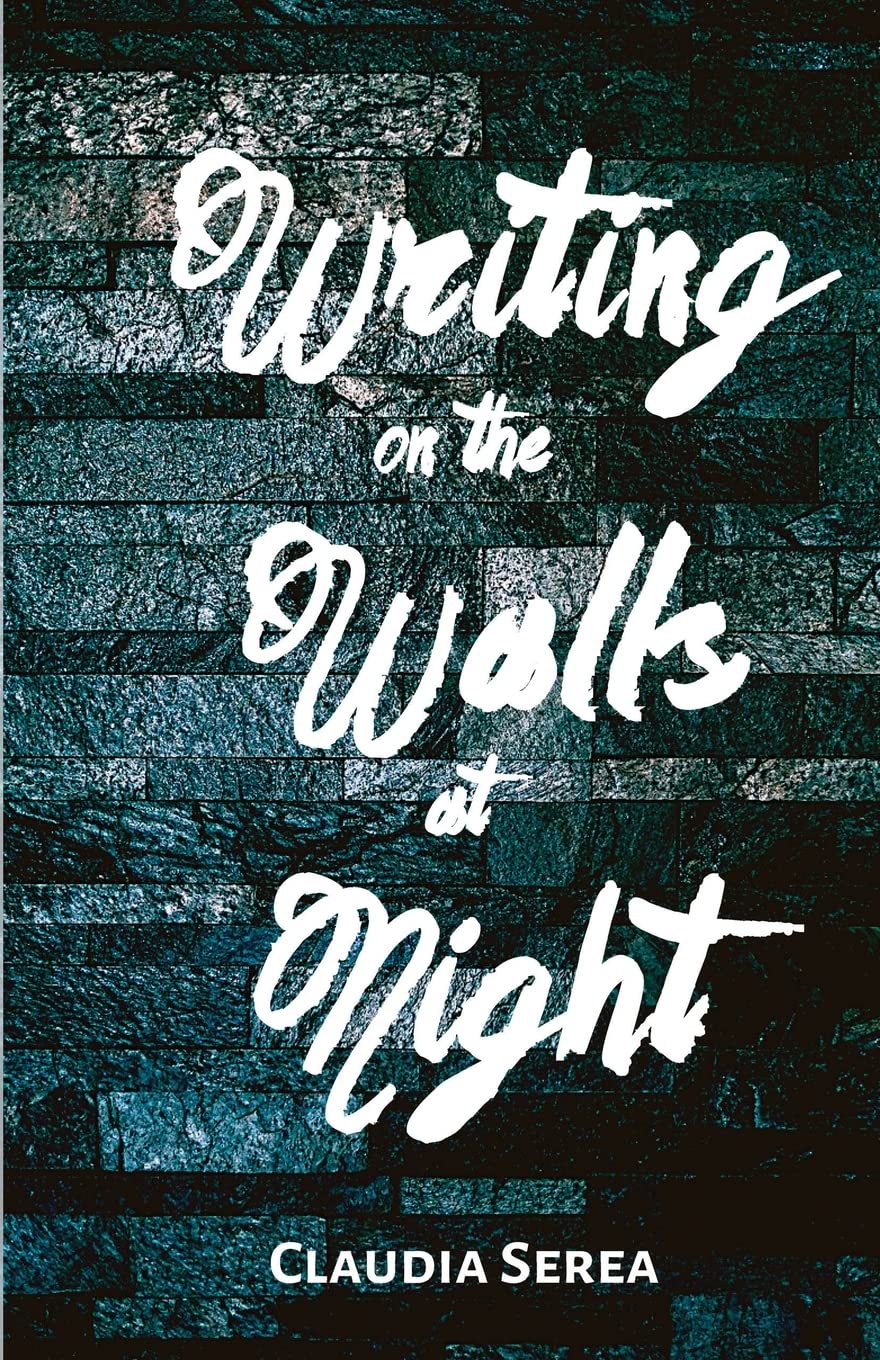
Claudia Serea’s Self-Ironic Surrealism in Immigrant Sociopolitical Poetry
Writing on the Walls at Night (Unsolicited Press, 2022)
History is what we take in, Mom says, the small bites of the present. Eat up, dear. It’s all on the table in front of you. (31)
Claudia Serea’s excellent new collection of poetry, Writing on the Walls at Night, showcases rich imagery, ever-surprising details from the everyday life, frank sociopolitical statements, and raw emotional honesty, in addition to an impressive stylistic freedom. The book includes prose poems, poems with very short lines, and even a few political jokes, ranging from naturalism to surrealism.
Moreover, its motto inscribes it under the sign of fairy tales and childhood innocence, which inform its vision and aesthetics: “You should never hesitate to trade your cow / for a handful of magic beans” (Tom Robbins). The “Prologue” places the readers in “Grandma’s kingdom,” where the blades of wheat and the sky beg the speaker to stop and listen to their stories until she agrees, only to discover that she has already passed grandma’s house. Poetry then replaces the magic beans, there are none, Serea warns us in the first section’s title, and leads us on a journey toward ourselves instead of the castle of an unfriendly giant. Indeed, the book’s final piece, “What Happens in the Poem / Stays in the Poem,” a surrealist letter to the readers, invites us to take “a dream vacation,” to our pain, a luxurious place with “five-star hotels, fine dining” and “penny slot machines” whose prizes are “pound after pound of shiny poems.”
as if behind their eyes were mounted an ancient algorithm tickling testily for me to write my own microtonal subroutine of extinction. As if human life were not the larval stage of the evolution of intelligence in this universe. As if they’ve found the categorical torture in this pseudo-euphoria but cannot articulate through their newly minted syntax the absurdity of this squishy-sac glitch-life I inhabit. So, my cellular processors jump to the next energy level, instill their shrieking bullet train in the bucolic setting of this puff-pastry daze human love has disgorged. And yes, in its neonatal sanctuary the emptiness of infinity is unclothed, only to re-bundle in the clockish hum, the turning of a planet. Does the lightspeed rush of this face confirm its person? Optics bend the sourceless starlight of nostalgia, but the Proustian hot-fudge-sundae’s flavors draw toward the Big Crunch of spearmint wonder, organic sentience spilling out on the tongue. The fudge’s heat, the ice-cream’s cold, my quiescent polar selves meeting as strangers paddling the slow caramel of revelation. If only for a few trillion cesium-disintegrations longer, I could pretend the past is already here.
Nowruz 2023
     For "Women, Life, Freedom"

Hyacinths need the full Sun
that comes late winter
or early spring.

What flowers will make
this year attractive to Nowruz?
Enshroud with the tattered leaves,
clusters of fragrant,
schooner stiff, upright stalks,
as the growth of your hands.

Your hands will bring Nowruz this year.
You, who went to the street to bring the full Sun
in a night that still wanders between
its scarlet sky of sunset and dawn.

The night that your blood uncovered it.
A dumpling does what a dumpling does

It floats, it bobs, it tumbles to the floor.

On the inside—hollow, nothing but air
And some soft squishy dough

Fill it with onion, chives,
some minced pork; all mashed
up in a thick filling,
the same way Umma
used to do.
Green lands of Nso

Nature commemorates the advent of the dry season with extreme beauty in the green lands of Nso.
As we wandered down the hills from Netnab, nature with extreme beauty humbled us with pump and pageantry.                                                                                                                       Was it a Biblical scene of prophets in the countryside or a paint of Jesus’ scenes in the salvation campaign?
A tall silver-like cross on the top of the apex of the hill range
A picturesque of windswept escarpments and gentle slopes, punctuated by U and V shaped valleys, drilled with interlocking spurs wired the white streams from the black walls down the vast basin
Waterfalls from the sides on the steep slopes dropped silently to the pools
SEA PETALS

Spring breath
between sunsets by the heart
a new verse blossoms
between the waves of my gaze.
Scent of whiteness
I collect at the Horizon
and dew of love
from the ink by the sea
plays beauty looks
that gather elegance
lappings of great hope.
Petals of Love
they dissolve terror
disserting new Life:
Infinite rebirth
Lakeside Bird Feeder, Squirrels

     Now if I had ambition I’d be
     this kung fu squirrel, this lighter one,
     this Jackie Chan, scaling stucco

     to ledge to chimney to the hovering skid
     of the evil whiz kid’s waffling chopper,
     perpetual motion my only gear,

     my sidekick wacky as this blacker one,
     who tries but can’t quite nab his half
     of the substantial stash.  Their

     choreography is manic, their fight scenes
     replete with wall-walking, roof leaping,
     jumps across gaps and gorges—all

     their own improv’d stunts, every feat
     a fleeting, one-take opportunity.  It’s
     those reflexes that make the difference:
A Place Inside

There is a place inside that we keep secret.
A place of darkness, bleakness
And madness and leaden attitudes toward others,
A place that feels like molten iron,
Burning us inside,
Crying to escape,
A place that is desperately lonely,
That wants the reassurance of mother’s milk.
A NEW SONG

A horrifying THUNK.
Like someone threw
a bag of guts
at the picture window.
We peer out: it’s not pretty.

A crumpled rag
of a robin lies lifeless
beside the house.
We will have to fetch
the shovel and throw him
on the slop pile—
that decomposing heap
of the Unclean and Unwanted;
the offal of our lives.
A patriot in a bulletproof vest

Asian tigress,
and a brave Kazakh kitty,

purrs quietly sneak up,
meanwhile fear of enemies
as the holiday approaches.

Body armor factory
fragile girl built
national glory and honor
You, Madina, deserve it.
Boketto: The Act of Gazing Into the Distance

tap-dancing into the sea,
gazing into and between
the here and there,
the formless formlessness,
the never-ending horizon,
edgeless perfection
of nothing and everything,
perfect emptiness.

floating into the timeless sky
graced by a single lotus,
white translucent pearls
in the sky.
SWEETNESS OF LIFE
I can taste the sweetness of life
Just like the scent of the blooming lilac bushes
decorating the sides of the roads

I feel the warmth from within,
Evoked by the generosity and kindness of people
Just like the Oslo sun touching my skin after a long, cold winter

I now hear the beauty of the world singing in my ears,
Brought to me by the river flowing downstream while swirling around rocks,
By the life-giving rain after a long period of drought,
and by the melody chirped by the numerous birds of my neighbourhood
I Age

Arthritis and aging make it hard,
I walk gingerly, with a cane, and walk
slow, bent forward, fear threats,
falls, fear denouement─
I turn pages, my family albums
become a task.
But I can still bake and shake,
sugar cookies, sweet potato,
lemon meringue pies.
Alone, most of my time,
but never on Sundays,
friends and communion,
United Church of Canada.
Found Poems
 --thanks to Leonard Cohen

*
so long, Marianne
in February sunset
Cohen dances to the end

*
take this waltz
everyone knows
first we take Manhattan

*
the slow thaw
Lake Ontario echoes
a thousand kisses deep

*
closing time
tower of song
happens to the heart

*
birds on the wire
waiting for the miracle
coming back to you

*
here it is
the presence of you
alive in the air
Infinity Reservoir

each time a glass is raised to mouth & drank
each time it’s clear water’s the last to go take

a river under forever dry ground or a waterfall
bounding from nothing if the sky was ocean

we’d drink it falling filling another cup to restore our
blood where to place this treasury as

we live we break the faucet
MIRAGE OF GREATNESS

Oh Putin, how sad you must feel,
humiliated and beaten back in Kyiv, which
you boasted would be taken in three days.
The embarrassment of all those tanks,
strung out, unable to move forward,
unable to escape, all proudly marked
with your own nazified Zed— how
you must dread having to look at all
those pictures of impotence and loss.

Remember when you jovially counselled Ukraine
to submit and enjoy what was about to take place,
twinkly eyed boasting about a metaphorical
rape that Ukraine might as well roll over and enjoy.
And in your failure, you instead raped mothers,
sometimes in front of their children,
sometimes both at the same time.
 What are you? Are you the Devil?
Floating Clouds

One day
I encountered
The floating clouds
Upon which they asked.

“Your life
Floats like ours
Are you not furious?
For the wind that sweeps you away.”

I replied,
“I love wandering
As a voyager to see the world
Changing shapes for my composure.”
LIFE

This life is
soaked with tears
and the words are too small
to pronounce
all life in an instant
and my love
hidden in the corners of solitude.
This life is
soaked with tears
and the pain of the past
is stronger
than the impending ecstasy
in the kiss of the night
and my escape is stronger
then the strength of your will.
This life is
soaked with tears
and the joy gets crushed
by the sorrow of the
desperate and disbelief in a
new longing.
This life is
soaked with tears
but today there is a smile
in my eyes
so don't walk away
from my smile.
Don't let the grief
to put out these embers
at least sometimes
when I forget
that this life is soaked with a tear.
I won’t give you pathos for flowers

(For James Coburn, a tribute on his birthday)

Steeped in the lost idyll of ancient times,
The drumroll began to toll,
As he sat withdrawn on a cobblestone,
Beneath strokes from a belfry tower.
"I won't give you pathos for flowers,"
A lad said to him.
His gaze pierced the shroud of the ethereal,
Like a spirit dallying across the great hinge.
Desolate Coburn, weary from calling,
Does the winding phase bring relief,
Sequestered from the vale of grief?
Echoed the prying lad.
Books Referenced: If Not for You & Other Stories, Niles Reddick (Big Table Publishing 2023) Moon of the Crusted Snow, Waubgeshig Rice (ECW 2018) Who by Fire, Matti Friedman (Penguin Random House 2022) Inspiring Canadians, Mark Bulgutch (Douglas & MacIntyre 2022) A Book of Days, Patti Smith (Knopf Canada, 2022) Common Tones, Alan Licht, ed. (Blank Forms Editions 2021) This Strange Invisible Air, Sharon Butala (Freehand Books 2021) Unmask Alice, Rick Emerson (BenBella Books 2022) A Lab of One’s Own, Rita Colwell (Simon & Shuster 2020) Making History, Richard Cohen (Simon & Schuster, 2022) Poetica Dystopia, Stephen Roxborough & Karl Blau (2022) Report from The Betts Society/Report from The Reid Society Report from The Ross Society/Report from The Brockwell Society/ Report from The Hall Society (above/ground press 2022)
WordCity Literary Journal is provided free to readers from all around the world, and there is no cost to writers submitting their work. Substantial time and expertise goes into each issue, and if you would like to contribute to those efforts, and the costs associated with maintaining this site, we thank you for your support.




 WordCityLit