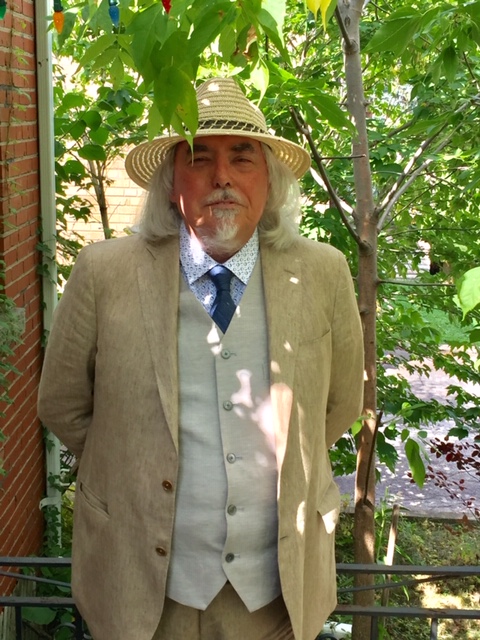
Everyone Talking. a review of books by Gordon Phinn

Gordon Phinn

Everyone Talking

Books Referenced:
If Not for You & Other Stories, Niles Reddick (Big Table Publishing 2023)
Moon of the Crusted Snow, Waubgeshig Rice (ECW 2018)
Who by Fire, Matti Friedman (Penguin Random House 2022)
Inspiring Canadians, Mark Bulgutch (Douglas & MacIntyre 2022)
A Book of Days, Patti Smith (Knopf Canada, 2022)
Common Tones, Alan Licht, ed. (Blank Forms Editions 2021)
This Strange Invisible Air, Sharon Butala (Freehand Books 2021)
Unmask Alice, Rick Emerson (BenBella Books 2022)
A Lab of One’s Own, Rita Colwell (Simon & Shuster 2020)
Making History, Richard Cohen (Simon & Schuster, 2022)
Poetica Dystopia, Stephen Roxborough & Karl Blau (2022)
Report from The Betts Society/Report from The Reid Society
Report from The Ross Society/Report from The Brockwell Society/
Report from The Hall Society (above/ground press 2022)

*

There’s been a trend now for some seasons to slim down short stories to little more than postcards from vacation moments, where a brief series of events and interactions is presented as emblematic of life in general.  Characters are called onto stage but given few lines.  The complexities of conflict and collisions of ambition are mapped onto postage stamp collections to be flipped through admiringly at one’s armchair ease.

And one can certainly admire author Niles Reddick’s adoption of this literary mode.  Not to put too fine a point on it, he makes it work for him.  There is an admirable efficiency to the glimpses he gives of small town and rural life, usually of a blue collar hue, as they struggle with the apparent emptiness of their existence and the quiet traumas of decaying bodies and brains.

Time and again he manages to make his snapshots resound into the moments and days beyond reading, reaching the entangled empathy to which all fiction aspires with an ease that belies the myth of effort.  These are fictions that can be accessed as the evening meal prepares itself elsewhere or in the many spare moments that parse out the day.  As a collection it is as useful as it is pleasurable.  A book for public transit as well as the private armchair.

*

The scarifying drama of sudden and complete societal collapse, some nasty apocalypse that renders all infrastructure useless and daily life impossible, has been employed in many narratives of the sci-fi, fantasy and horror genres.  Sometimes, when all else fails, it sneaks surreptitiously into literature, no doubt looking for readers whose naivete exceeds their enthusiasm.

That all modes of communication, power generation, food distribution and health care could collapse in little more than a day without any official communications or emergency services kicking in, leaving citizens to riot and fight in the streets while remote rural communities resort to the hunting, trapping and fishing that used to sustain them before the luxuries of electricity, clean water, flush toilets and wi-fi seduced them into sloth and entitlement, well, it seems more than tad far-fetched to this sucker for civilized life.

But such is the conceit that powers Moon of the Crusted Snow, a first novel by the Anishinaabe writer Waubgeshig Rice.  Published in 2018 but only finding its way to this city boy’s backwater these past few months, I approached this obvious slice of genre fiction with an open mind as yet uncorrupted by the crazed apocalyptic nature of the narrative’s unfolding.  With its snappy sentence structure and the odd over-the-top adjective I could see we were in for some kind of gruesome thriller and waited to be appalled by the customary gratuitous violence, the more senseless the better.

After several harsh winter months, not uncommon in those northern reservations, where emergency supplies of food and fuel are carefully meted out and hungry strangers treated first with suspicion and then acceptance, and finally with rude dispatch, the community dwindles through attrition, suicidal drunkenness and depression, which in turn builds to a shoot-out with the cannibalistic transgressors, lead not surprisingly by a white alpha male determined to make use of those frozen corpses stacked in the garage till spring-enabled burial.

A couple of seasons later, the stalwart remains of the tribe desert their now useless homes and head for the bush life they quit many decades before, tools and fishing rods packed and ready.  A romantic fantasy of a denouement, which some reviewers called ‘harrowing’ and ‘riveting’ but I felt should be filed under ‘laughable’, the Cormac McCarthy comparisons notwithstanding.

*

Last season’s flush of entries to the all-new cottage industry of Leonard Cohen studies was actually lead by the previous spring’s Who by Fire, Matti Friedman’s examination of the Canadian poet’s three week jaunt into the maw of that 1973 war between, it would seem, the Israelis and the Egyptians and the Syrians, although one suspects other vultures may have been nibbling at the edges.  And a fierce contest of wills it was too, with the aggressors discovering once again that those defending their homeland will never be crushed.

With many interviews with surviving soldiers and volunteers being compared to two recently available sets of Cohen notebooks and contemporaneous interviews with the travelling musician himself, there is little chance of a threadbare narrative bulked up with the author’s precious opinions. What does come to light however is the theory, best summed up by the subtitle ‘War, Atonement and the Resurrection of Leonard Cohen’.  However much the author desires it, the three weeks of roughing it and rushing hither and thither to sing at the front, followed immediately by an isolating retreat in that paradise of self-punishment, Eritrea, does not equal an atonement or a resurrection in my books.

Certainly Cohen issued his best album in ages the following year and made some kind of temporary truce with his spouse on Hydra that resulted in a boy child, yet it reminds me more of that Dylan Thomas line ‘I make this in a warring absence’ than any kind of blossoming in the peripatetic wanderings that made up the bulk of Cohen’s life.

Of course the war affected him, as did his appearances at various mental institutions, his golden boy childhood, his lsd fueled concert tour of ‘72, his voracious sexual appetites and the Muse dropping by to gift him with the sublime in melody and lyric.  It all adds up to the complex mystery that was his existence on earth, a mystery to be further picked over in the decades to come.  More than anything I was reminded of the classic and rarely quoted Cohen lines, “Even damnation is poisoned with rainbows, … and I can‘t pretend I feel very much like singing as they carry the bodies away”, from ‘The Old Revolution’ on Songs From A Room, two years previous.

*

And speaking of Inspiring Canadians, we have this recent collection of essays, gathered under that cheerful umbrella, edited by Mark Bulgutch, to consider in that very light.  I’m never sure I agree with those who feel that out of some insecurity we are always trying to define ourselves.  I haven’t noticed that living in a shrinking empire like the Brits or a bloated one like the Yanks has made them any the less sure of who they are.  The chatter, ours and theirs:  it all seems like a carnival of opinions to me.  In 1975, when being interviewed by the American music journalist of some renown, Paul Williams, Leonard Cohen espoused that “Canadians are like the Jews, continually examining their identity.  We’re on the edge of a very great empire,… and we have always understood that we have to go along with the U.S. to a certain extent.  But despite article after article where our press threatens us with the extinction of our identity, I don’t think that any Canadian seriously believes that we’re going to become Americans.

“I live in Montreal, a French city in a French country, where I exist as a minority writer, almost in exile as there is not an English writing community.  This sort of thing forms the Canadian character, and we are very concerned about minority and majority, and yet it seems like everyone has space.”  He continues in this fashion at length, trying to explain our mosaic to their melting pot.

In 2000, Globe and Mail journalist John Stackhouse was inspired to hitchhike across our vast land.  He decided to call his book TimBit Nation but his daily Globe column was the less inflammatory Notes From The Road.  Needless to say he met a remarkable assortment of citizens on his passage, impossible to summarize here, but on his return to Toronto and a wifi connection he discovered that almost every installment of his road journal seemed to have tapped into a deep sentiment – sometimes hostile, sometimes passionate, sometimes endearing.  There were Canadians “who were in love with their country”, Canadians “who were fed up with their country”, but very few “who were complacent about their country”.  I won’t even venture into the deafening silence that greeted Norman Levine’s Canada Made Me from the early fifties or Pierre Vallieres early seventies broadside White Niggers of America.

That would be a bridge too far.

I had assumed that Inspiring Canadians would be little  more than another Three Cheers for Canada, but I was gratified to find that it leapt that hurdle with ease, despite being a sequel to 2020’s Extraordinary Canadians. With forty contributors on a wide variety of topics, including homelessness, drug abuse, mental illness, the inevitable climate change, sports, architecture, the arts and sciences in general, it measures our home and native land with a distinctive ease.

As a whole this collection reinforces our tender and somewhat coddled understanding that Canada, despite its shortcomings and public policy disappointments, is a virtual paradise for 90% of the world’s less fortunate population.  Our standards of justice, norms of racial and sexual quality, traditions of social democracy and an all-embracing welfare net is the envy of many, and not just fleeing refugees.  It is all too easy to take for granted but these essayists remind us that long and winding roads lie ahead but at least we have paved them well for future generations.   Many of the contributors seem on the edge of transcending their celebrations of accomplishments and strivings for excellence and leaping into the kind of visionary evocations sketched by B.W. Powe in Towards a Canada of Light, way back in 2006.  May they continue on that inspirational path.

*

If you had assumed, as had I, from seeing the moniker in various headlines, that New York punk era musician and singer Patti Smith had cobbled together a couple of short books in the manner of highly visible rockers taking advantage of their stardom to push forth some of their teen angst diaries and societal commentaries of the faux profundity that tawdry glamour gives access to, then think again.  Eleven volumes at last count, two of which, Devotion and Year of the Monkey, I found appealing despite a certain studied precocity, this collection of bon mots, personal Polaroids and classic from-the-canon photography, being the latest.  Drawn in the main from her Instagram account, initially provoked by her daughter’s insistence and later admired by many thousands, it certainly conveys the essence of carefully wrought punkish cool, embroidered with girlish charm.  This is not a woman who regularly attends a hair stylist but definitely takes advantage of her disposable income to gad about the globe with an earnest and unflagging curiosity.

From a shot of her strolling down a hallway of the Waldorf with a white suited Michael Stipe towards their rock ‘n roll hall of fame inductions to the inevitable pic of the Diane Arbus, whom she imagines “entering the lobby of the Chelsea Hotel with a manifest sense of purpose and ever present camera, her third eye” and a classic shot of Allen Ginsberg reading poetry circa ’66, “serving poetry as if it were bread”, one feels oneself in the presence of a pale vanity advertising itself with humility.

In the midst of some dull seen-that-before imagery there are some very pleasant surprises: an image of the typewriter upon which Hermann Hesse composed The Glass Bead Game, a shadowy foreboding shot of her brother’s navy bag seemingly discarded in a corner, one of the best portraits of actor and playwright Sam Shepherd that I have come across, a fabulous shot of an old coat hanger with shadows, worthy of Man Ray, an empty staircase gazing down at a poster of Jimi Hendrix, a vision of Ralph Fiennes on the set of Coriolanus.

In the tradition of a ‘book of days’ entries are required for the full 365 so occasional lapses from the transcendental into the chirpy trite are unavoidable and for this reader indulged in a little too often.  The accumulation of café table tops with coffee cups and significant books grows tiresome.  After a number of sincere salutes to the artsy dead from Baudelaire, Proust, Genet and Morrison, that is Jim, she ends her 365 sojourn with “Happy New Year everybody! We are alive together!”  Need I say more?

Well actually I could.  Mere hours after penning the above I received notification of the death of alt-rocker and guitarist of renown Tom Verlaine, as a tribute to his life appeared in a New Yorker online edition, one authored by his life long friend and sometime collaborator Patti Smith, whose heartfelt words bear repeating.

“He awoke to the sound of water dripping into a rusted sink.  The streets below were bathed in medieval moonlight, reverberating silence.  He lay there grappling with the terror of beauty, as the night unfolded like a Chinese screen.  He lay shuddering, riveted by flickering movements of aliens and angels as the words and melodies of “Marquee Moon” were formed, drop by drop, note be note, from a state of calm yet sinister excitement.  He was Tom Verlaine, and that was his process: exquisite torment.”

Next day, as I contemplated the synchronicity, it effortlessly multiplied itself with the appearance of a volume of interviews by Alan Licht, Common Tones, whose long time involvement with New York’s music and art scene gave him a familiarity and access to such fringe luminaries as Tony Conrad, Lou Reed, Ira Caplan, Rhys Chatham, Glenn Branca, Tom Verlaine and others.  If you are into that arty experimentalism which might annoy your neighbours or bore your friends rather than foot-tappers you can sing while doing the dishes, this is the compendium for you.  And at 600 odd pages it can shamelessly claim to be encyclopedic in scope.  For many it would be little more than oddball ephemera but for those clued into the fearsome mysteries of the avant-garde it will be close to indispensable.

*

From the avant-garde to the luminescence of the everyday:  portraits of which Sharon Butala is something of past master.  Her recent collection, This Strange Visible Air: Aging and the Writing Life extends and refines that talent.  I had enjoyed several of her earlier works,  The Perfection of the Morning and Coyote’s Morning Cry in particular, and while aware that she’d continued publishing and being praised, I had drifted away as other names and reputations surfaced.  Such is the life of a giddy reviewer and tireless reader of more genres than I care to name.  This new assemblage of essays and memoirs is as compelling as those I had recalled after receiving a friend’s recommendation.  The power of her pen has not withered with age, as she worries in several places, but has not only been reinforced with that suffering we know shapes character and strengthens will, but has also been refined in the quiet fires of contemplation that the retrospective surveys enabled by retirement permit.  She has become the wise old woman, the crone that many cultures revere as we moderns cling to our obsessions with those spasms of youthful foolishness that neatly sidestep responsible stability in favour of another reckless adventure.

As she observes in Passing Through, “One of the first things young people should be told is that one day they will be old.  When you’re old, in dismay and disbelief you will ask yourself a dozen times a day, How on earth did I wind up like this, looking around your empty apartment at the light coming through the windows, spreading like clear water across the threadbare rug; hearing the low drone of the radio in the other room; thinking, I need to talk to someone – a certain someone – reminding yourself then that he or she is dead.”

As befits her current status as a citizen of eighty, she spends much of her energies in retrospective reflection: childhood, schooling, small town life, the diaspora of extended families, the wobbly paths of friendship and relationship, the rush to marriage and the dire fates of divorce, the courtly dance around death and the seductive whispers of the somethings beyond.  Like all fine writers she does not forget to entertain as she informs, mystifies and provokes.  Her rich white lady guilt as she shares public transit with the poor, deprived and definitely non-white is as honest as it is refreshing.  Her treatment of that one black sheep that many families are forced to tolerate and indulge, over and above the cup of compassion doled out by whatever deity you subscribe to, conveys the sadness of inevitable tragedy minus the whining of the put-upon relative.  I say congratulations on that one Sharon.

Yet despite the real world of “sins, transgressions and deceptions”, there are moments of revelry that are not to be missed.  In a Life in Friends:  “When I put the scallops into the heated pan, the hot butter splashed up and I burned my hand, so that I spent the rest of the evening running back and forth to the fridge for ice to put on the burn.  Then I spilled my glass of red wine, and it splattered over the favourite blouse of my sixty year old friend sitting at the end of the table, so she spent half an hour in the bathroom trying to get the stains out.  I gave her my best exercise t-shirt to wear home, because it was the only top of mine that fit her; my lamb chop, beautifully cooked, skated off my plate and wound up on the off white rug five feet away, leaving a greasy stain including a bit of mustard from my plate.  These accidents happened because I was still recovering from cataract surgery, and I couldn’t actually see anything close except  as a blur.  As for reaction to the film (Paulo Sorrentino’s The Great Beauty)  – the meal is best forgotten – one friend loved it as much as I did, maybe even more, one was approving, but not head over heels about it, and one, who had a sleepless night, fell asleep and had to go home.”

And for those who delighted in her occasional ventures into the mystical there is this, from The Strange Visible Air:  “When I was twenty-three and the exhausted mother of a sleepless first baby, I lay down one evening for a nap, and instead of finding the blessed oblivion I longed for, found myself in another universe.  Here, our baby lay sleeping in his carriage on the lawn and under the rich green foliage of the gnarled elms that lined our backyard.  This was our yard, our trees, our sidewalk, our rickety once white picket fence, but this homely familiar scene was surrounded by, occurred within air that, though translucent, was pebbled or textured.  I could see the air.  The entire scene, including the air, was utterly still, not the stillness of the living room when you first come home, nor the stillness of a crowd watching something odd in the sky, but a stillness that was itself alive.  Nothing ticked or oved, no voice spoke, the scene and its meaning were whole, which I saw at once; and I saw also at once that it was inarguable, it simply was.”

To that I might add:  Butala’s visions and contemplations were, are and will be.

*

Perhaps you do not recall the trashy paperback circulating though every other used bookstore and thrift shop for decades, Go Ask Alice.  Just in time for the Nixon era war on drugs, this faux memoir purported to be the diary of one sad hippie wanna-be, a teen runaway, trapped in a descending spiral of homelessness, addiction and prostitution, ending in suicide.  The author, hidden in the guise of Anonymous, claimed to have edited down a young girl’s journal, handed to her for safe keeping shortly before the sad end.  Despite the appalling prose, amateurish beyond all teen confusion, and a complete lack of verifiable documentation and supposed professional status, Prentice-Hall and Avon jumped on the property launched it and its sequels into a trajectory coming close to four million copies.  The first rehash of several, Jay’s Journal, combined the drugs and promiscuity with ouija board witchcraft, a hastily assembled assortment of occult ritual, the usual graveyards at midnight, headless chickens and reckless consumption of blood.

That all of the first and about 80% of the second were complete fabrications seems not to have penetrated the psyches or moral compasses of any editors or reviewers.   Who could complain with endorsements that insisted this was a book that every concerned parent should read.  As the sales and shocking revelations spread far and wide, no-one seemed willing to hop off the roller coaster, and as we call it now, whistleblow.  That shameful, eyes averted oversight seems to lay the blame right at the feet of the publishing world, leaving Dr. Beatrice Sparks still to this day, in the shadows of vampiric exploitation of hapless teenagers and their terminally naïve parents.  Author and tireless researcher Rick Emerson exposes the fraud with more style, wit and grace than it deserves, and I applaud his dedication and persistence in pursuit of a legend that richly deserves debunking.

*

The cultural saga of gender bias, glass ceilings and male abuse continues apace.  Racism, sexism, ageism, it seems like all the -isms come home to roost eventually.  Some years back I found myself reading the Candace Pert’s memoir The Molecules of Emotion, which chronicled her long struggle to not only gain respect in the scientific community as a woman but also to find a secure footing for her theory that emotions must have a molecular basis.  I was intrigued by her ideas and became, in the reading, enamoured of her journey.  With digital media making all research accessible, I see now I must have encountered the work around 1998 and its full title was The Molecules of Emotion: Why You Feel the Way You Feel and that she passed from this life in 2013.

Not for the first time in history, she made her initial discoveries as grad student in 1972, finding the brain’s opiate receptor, the site where the body’s painkillers and ‘bliss-makers’ bond with cells to weave their magic.  Displaying the modern intellectual warfare of scientific discovery and the sly purloining of other’s results, her narrative shows how the exhilaration of a shared breakthrough amidst the survival struggle of women in science can lead to mainstream influence; her drug PeptideT was referenced in the award winning drama Dallas Buyers Club and was strongly featured in the documentary “What the Bleep Do We Know?”

By now her radical, almost heretical notions have been substantiated and built upon amidst the myths of modernity, the scientism that insists that all ills and problematic issues can be fixed, modified or eliminated in an atmosphere of enthusiastic progressive cooperation.  In Rita Colwell’s A Lab Of One’s Own: One Woman’s Journey Through Sexism In Science belies that myth.  Sexism, racism, ruthless careerism, blatant and usually unpunished abuse, cutthroat competition over funding and institutional status: all yet thrive.

Perhaps the reader will not be shocked at how women, married or single, were treated as second class citizens, not much more than serfs in many situations, cleaning and fetching when they could have been pioneering.  Her focus is north American universities and research institutions in the 50/60/70’s, when the angry thrusts of feminism had yet to be discovered and then weaponized into a war against a lunk-headed status quo.  And of course the only identity more oppressed in science than a woman was a black woman.  Those who stuck out the abuse and oppression survived to not only tell the tale but to assume leadership positions, Colwell herself becoming the Director of the National Science Foundation.

Have things changed for the better?  Colwell hears this hopefully repeated when talking with young women.  Well, on one level yes: “Both my alma maters, Purdue University and the University of Washington, have had or have a woman president”.  But on another, not so much: “Deep down, many scientists are still convinced that the ability to do science is linked to the Y chromosome.”  This despite “Innumerable studies document that the biological differences between men and women as they relate to science, mathematics, engineering, technology and medicine are trivial or nonexistent.”  And tellingly, “Other studies show that women don’t underestimate their own abilities as much as men overestimate theirs”.

Microbiologist Jo Handlesman at Yale, after hearing over and over from male colleagues that unconscious bias against women, did not exist as “Science is objective, we only hire the best, and we know it when we see it.”  Smelling a rat, she reacted: “If these disciplines regularly run randomized double-blind experiments because they know they can’t be unbiased about data, how  can they expect to be unbiased about everything else?”.

Thusly fired up she set about to perform her own study.  Convincing 127 scientists in biology, chemistry and physics to evaluate job applications, without revealing her overall purpose.  Identical  applications for a position as laboratory manager from recent graduates, identical but some were signed “John” and others “Jennifer”.  Results were as disturbing as one might suppose:  “Both men and women scientists judged the male applicant to be more competent than the female with identical qualifications, paying her almost $4,000 less per year.  All across the board – no matter their age, sex, scientific field or tenure status – faculty members preferred John.”  Since this study, “A deep-seated bias against women in science has been documented at almost every level, from Nobel prize winners down to undergraduates.”

Cultural change, its underground rumbles, surface ripples and appearance of reassuring adjustments, regularly reads itself into the fabric of society whether we pay attention, flip out or feign ignorance.  Employing its own enigmatic energies, it disturbs the calm and calms the disturbed while onward we swim, assured of some destination or other.

*

Cultural change is of course, part and parcel of that endless infusion of events into the timeline we call history.  With his illuminating and amusing study Richard Cohen reminds us that history not only happens but is regularly made by those who would record it.  From Herotodus and Suetonious, through Machiavelli, Voltaire, Macaulay, Marx and the t.v moderns like Mary Beard, Simon Schama and Louis Gates we are spun, most entertainingly I might add, through the formative influences and characters of those who purport to make history something more persuasive than the unseemly bragging of the temporarily triumphant.  Are there patterns to be observed or the mere chaos of endless insurrections, revolutions, droughts, floods and plagues?  Does the process replicate itself with minor variations, significant at first flush but all too predictable with even a smidgen of hindsight?  The more we change the more we stay the same?  How the mighty fall and how the poor endure?

“The past resembles the future more than one drop of water resembles another” – so wrote the celebrated Muslim historian of centuries past Ibn Khaldun, “whose approach to history places him as the founder of historiography, sociology and economics”.  Reading such a view from one so wise one might be tempted to consider the issue closed and move on to more pressing matters, but fortunately for the insatiably curious in the crowd Richard Cohen has supplied us with a large palette of informed opinion, all endlessly prevaricating on every conceivable aspect of that shapeshifting entity that the historical enterprise seems to assume.  At seven hundred odd pages Cohen leaves few stones unturned.

There is not a chapter amongst the twenty-two that is anything less than absorbing.  Fun filled facts, character flaws, human frailties, deceptive diplomacy, warmongering adventurism, geopolitical chess, ruthless rivalries of religion, the vanities of rulers, the pious submission of the ruled, every class and race exploiting to the max, it could be depressing if it weren’t so comical.   But then I belong to that ‘follies of human vanity’ club where the comic always outweighs the tragic.  In my life I have mixed it up with many of the ‘gloomy tragedian’ club and our clashes have always been instructive.  That I refuse to be condemned to the hells of their imaginations, either scientific or theological, is of course seen as irresponsible if not downright heretical and I am shunted off to the outer darkness where I can chuckle to my heart’s content.  And such are often the bases for the squabbles of history.

Cohen subtitles his work ‘The Storytellers Who Shaped the Past’ and his opening epigraphs, from E.H. Carr’s What Is History (1961). ‘Before you study history study the historian’ and Hilary Mantel (The Reith Lectures (2017) ‘Beneath every history, there is another history – there is at least, the life of the  historian’ rather give the game away.  And what an entrancing game it is too.  Opening at random one can delve immediately into intriguing anecdotes, amusing contretemps or theoretical expositions, all delivered with the wit and charm that a long time editor, publishing director and travelling lecturer would accumulate like icing on his obviously deep research.

Here’s one:  “Ancient Rome was no better.  Juvenal in his Satires, abhorred ‘the woman who is forever referring to Palaemon’s  Grammar  and thumbing through it…or quote lines I’ve never heard’  The distaff side of humanity refused to let their brains waste away, however.  For instance the 1333 painting Annunciation with St. Margaret and St. Ansanus by the Gothic artists Simone Martini and Lippo Memmi, now housed in the Uffize Gallery in Florence, shows the archangel Gabriel informing Mary that

“she is about to give birth to the son of God, but she keeps her thumb in her book, so as not to lose the place.”

And another:  “Certainly Churchill did not chop the vegetables, and he did not set the table or mix all the sauces, but as Kelly implies he knew how to get a six course meal in the right order and at more or less the right time.  He would coach his subordinates on writing, one issuing a directive ordering his staff to write in ‘short crisp’ paragraphs and to avoid meaningless phrases.  Seeing Churchill tightening and clarifying a paragraph, Kelly wrote, was like ‘watching a skillful topiarist restoring a neglected and untidy garden figure to its true shape and proportions’.

Finally, from his Afterword, as if you need any more convincing:  “A friend of mine, after reading through a draft of this book, asked, did I think people were writing better history now?  I think we are.

‘But, said Simon Schama when I mentioned this view to him, ‘What are your criteria for better?  Deeper research? More imaginative storytelling?  I don’t think you can improve on, say, Ferdinand Braudel, whose books can sometimes become prose poems. Does one find anyone like that now?  No. Not combining the panoramic scholarly research and intense literary power.’

The wife of an old friend, on giving me recipes to post on my fridge door, on the off chance that I might actually try them out, would always add, not quite as an afterthought but as a motherly instruction to an errant bachelor doubtlessly undergoing the rigours of a low protein diet:  “Eat and Enjoy”.  In that spirit I would add, “Read and enjoy”.

*

The other day a poet friend emailed to ask if I knew any female sound poets that might be interested in a group project.  I had to report, sadly, that I did not.  The brief Q and A reminded me of how many styles and attitudes inform the practice of CanLit: lots, and this will devolve into an attempt to enumerate them.  As I advance in years and my umbrella of inclusion expands in the rain of creativity and self-expression, I come to embrace more and more hearts and minds that appropriate words as their means of creative communication.  But the ways in which they make that appropriation are myriad and my life as a critic cannot find time to be exhaustively inclusive though God knows I foolishly keep trying.

In my YouTube video reading series GordsPoetryShow I have included as many English language poets (Can/US/UK etc) as I can get my hands on, both canon and contemporaries, and despite coming up to #100 soon, it all seems woefully incomplete.

Some of my inspiration was the tireless editing and publishing efforts of Ottawa’s Rob Mclennan, whose above/ground chapbook project continues to break all land speed records for small/micro press diversity and longevity.  This current series of brief critical assessments/celebrations of poets in mid-career is yet another reason to applaud his cheerful multi-tasking.  Some of the poets can be seen as anarchists and surrealists; certainly all avant-garde, although that appellation now seems a tad tired, and perhaps ‘language’ and ‘post-language’ are better fits, for they all take pleasure in playing with words rather than directing them to fulfil a purpose in the traditions of story or poetic evocation.  In the main they love to deconstruct all form and expression to initiate fresh perspectives and worldviews.  Progenitors would be, of course, Tristam Shandy, Ulysses and Finnegan’s Wake, to mention but three.  And if one challenges any perceived lack of progress from these landmark texts, the counterblasts would likely be along the lines of does Alice Munro improve on Anton Chekov, does John Updike improve on Thomas Hardy, do Eugene O’Neill or David Hare upend William Shakespeare?  The tides of debate were and still are endless.  Despite being firmly on the side of convention and tradition and seeing subject matter being of more significance than matters of style, and post-modernism is, essentially, just another style, another way of shifting perspective while moving the furniture of punctuation around, I can see why others, like, for example, Gregory Betts, might utter “The longer I spend in CanLit, the more I realize that the answer is almost always ‘Margaret Atwood’; and the question too.”  I would argue that as Canadians we have not spent nearly long enough in the decades to have any realizations of consequence.  Let us live through our adolescence and see what real maturity brings.

While these writers in this always expanding series have diligently honed their craft to uncover their vision, what they have discovered beyond narrative and lyric is hardly a land lush with cultural possibilities but a jungle dense with obscurantist language games designed to tickle the fancies of the initiated, in which, as far as I can see, it wholly succeeds.  Swimming against the tide certainly strengthens the muscles but rafting back down with the flow affords many perspectives on what you might have missed in your travails upstream.

*

I have enjoyed the poetry of Stephen Roxborough for some years now, but his recent collaboration with musician Karl Blau, in which he declaims against a soundtrack of varied rhythms, textures and provocative shards of melody, is a sonic triumph, springing beyond printed text into that realm of audio assault previously the preserve of rap artists and Terence McKenna raves. Barbed critiques of culture, politics and society reverberate with an anarchic majesty as Blau’s cornucopia of instruments and styles vies with the voice in a quasi-shamanic shake up of the senses.  In the music and lyrics I hear echoes of Zappa, Ferlinghetti and Eno, all of which are put to good use in creating the architecture of the experience.  Hats off to these idiom colleagues!  May the words of their city continue to repopulate imaginations.

Return to Journal

Gordon Phinn has been writing and publishing in a number of genres and formats since 1975, and through a great deal of change and growth in CanLit.  Canada’s literary field has gone from the nationalist birth pangs of ’65 – ’75 to its full blooming of the 80s and 90s, and it is currently coping as well as it can with the immediacy and proliferation of digital exposure and all the financial trials that come with it. Phinn’s own reactions was to open himself to the practices of blogging and videoblogging, and he now considers himself something of an old hand. His Youtube podcast, GordsPoetryShow, has just reached its 78th edition, and his my blog “anotherwordofgord” at WordPress continues to attract subscribers.

Phinn’s book output is split between literary titles, most recently, The Poet Stuart, Bowering and McFadden, and It’s All About Me. His metaphysical expression includes You Are History, The Word of Gord On The Meaning Of Life.

WordCity Literary Journal is provided free to readers from all around the world, and there is no cost to writers submitting their work. Substantial time and expertise goes into each issue, and if you would like to contribute to those efforts, and the costs associated with maintaining this site, we thank you for your support.

One-Time
Monthly
Yearly

Make a one-time donation

Make a monthly donation

Make a yearly donation

Choose an amount

¤5.00
¤15.00
¤100.00
¤5.00
¤15.00
¤100.00
¤5.00
¤15.00
¤100.00

Or enter a custom amount

¤

Your contribution is appreciated.

Your contribution is appreciated.

Your contribution is appreciated.

DonateDonate monthlyDonate yearly
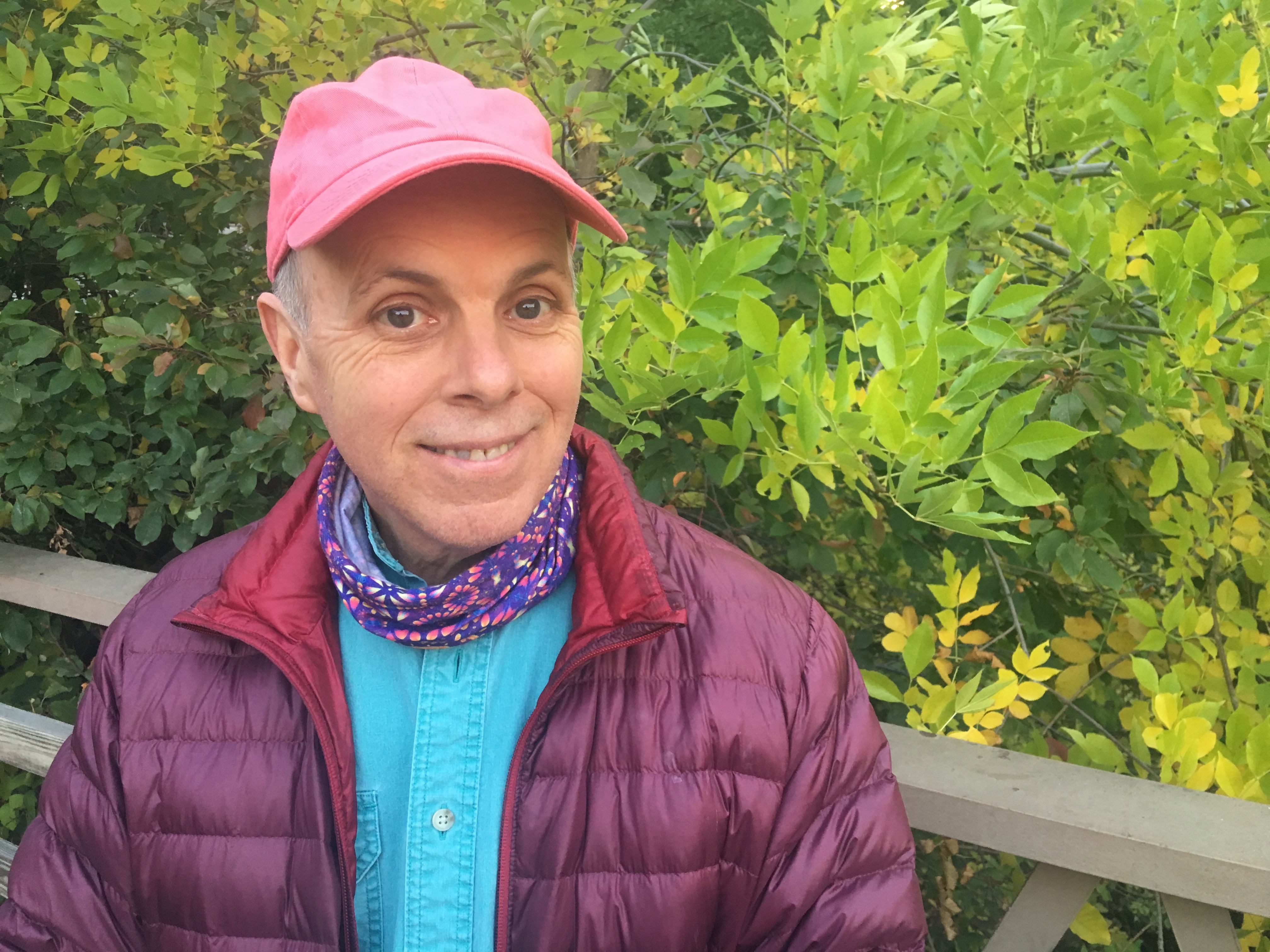
Claudia Serea’s Self-Ironic Surrealism in Immigrant Sociopolitical Poetry. a review by Diana Manole

Self-Ironic Surrealism in Immigrant Sociopolitical Poetry

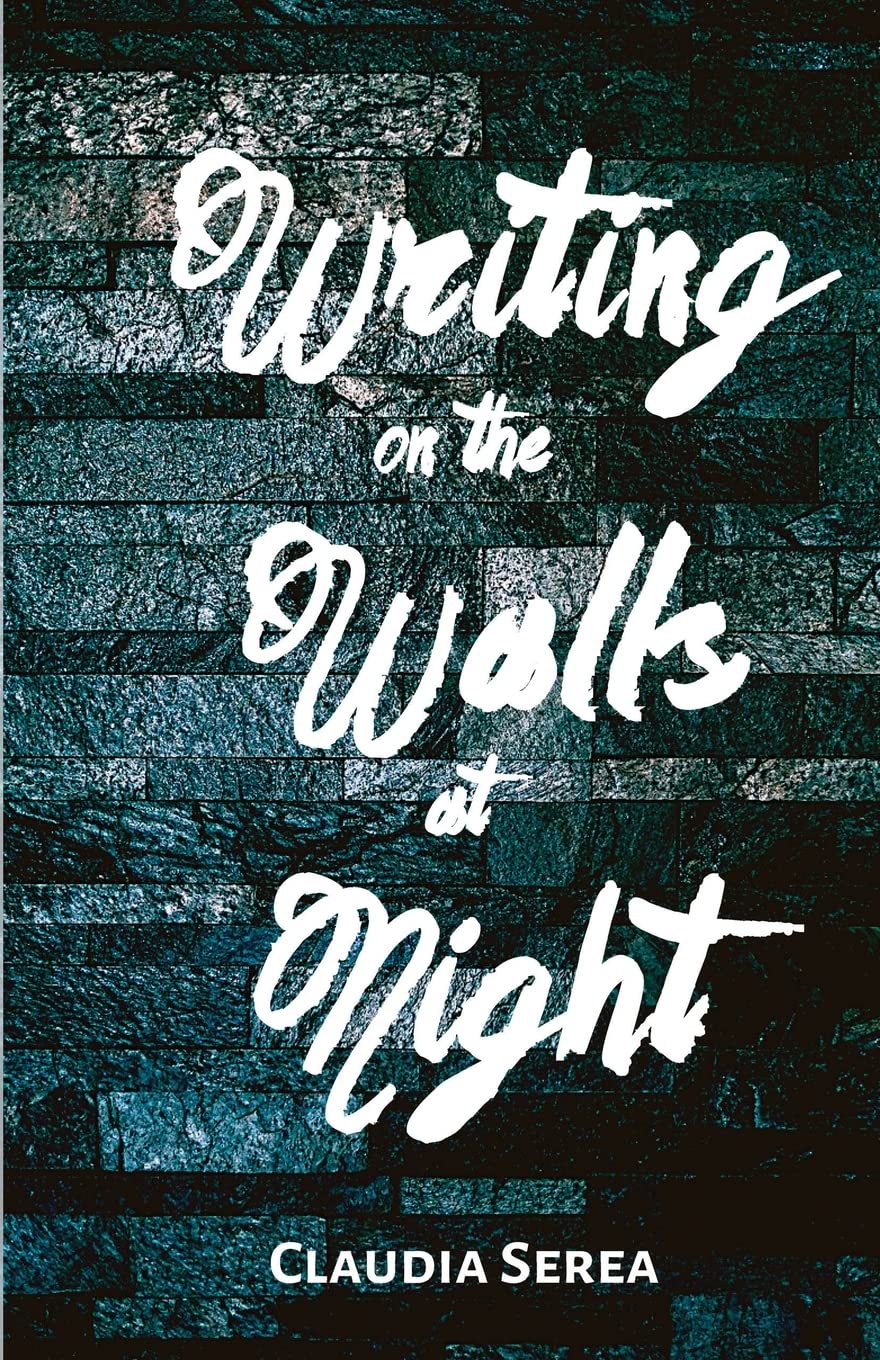
Claudia Serea, Writing on the Walls at Night (Unsolicited Press, 2022)

History is what we take in, Mom says, the small bites of the
present. Eat up, dear. It’s all on the table in front of you. (31)

Claudia Serea’s excellent new collection of poetry, Writing on the Walls at Night, showcases rich imagery, ever-surprising details from the everyday life, frank sociopolitical statements, and raw emotional honesty, in addition to an impressive stylistic freedom. The book includes prose poems, poems with very short lines, and even a few political jokes, ranging from naturalism to surrealism.

Moreover, its motto inscribes it under the sign of fairy tales and childhood innocence, which inform its vision and aesthetics: “You should never hesitate to trade your cow / for a handful of magic beans” (Tom Robbins). The “Prologue” places the readers in “Grandma’s kingdom,” where the blades of wheat and the sky beg the speaker to stop and listen to their stories until she agrees, only to discover that she has already passed grandma’s house. Poetry then replaces the magic beans, there are none, Serea warns us in the first section’s title, and leads us on a journey toward ourselves instead of the castle of an unfriendly giant. Indeed, the book’s final piece, “What Happens in the Poem / Stays in the Poem,” a surrealist letter to the readers, invites us to take “a dream vacation,” to our pain, a luxurious place with “five-star hotels, fine dining” and “penny slot machines” whose prizes are “pound after pound of shiny poems.”

Taking a trip to both her childhood pain in Ceauşescu’s Romania and immigrant challenges in today’s US, Serea combines the allusions to well-known world folktales with tragicomic surrealism, which echo not only Romanian Urmuz, Gellu Naum, and Nora Iuga’s poetry, but also the theatre of Eugène Ionesco and Balkan-style self-irony. Often, what could seem made-up to Western readers is paradoxically realistic and likely clear not only to Romanians but also to all who have [had] the experience of dictatorships. In “The White Ear,” for example, Serea evokes the Romanian KGB-style secret police through details familiar to many of those whose phone calls were recorded: “There were noises on the line every time I called: click-click-click, / and a whirr.” The poem’s central image, however, is apocalyptic, “A city of ears, one in every apartment and several others / clustered in listening offices, eavesdropping day and night.” Romania’s poverty artificially-enforced during the 1980s appears in several poems, such as “The Line.” A large crowd, the speaker included, queues in front of a store for “whatever they bring. Oranges. Chocolate. Cheese…toilet paper.” The Kafkian description is again realistic, “The line in front of the store was so long it had a Line / Committee and a Line Master who kept the Line List,” and the final conclusion points out the metaphorical grotesque of everyday life, “There was no meat. I walked back home with a necklace of / toilet paper rolls.”

The Romanians’ PTSD and intergenerational traumas are portrayed with less self-irony and more tenderness. “Tonight, the Radiators Speak” exposes the speaker’s inner conflict: her child version, who struggled with the cold in unheated apartment buildings, remains upset with her adult self, “I don’t love you anymore. Why didn’t you take me with you when you grew up?” In “A Peach, an Apricot, and a Nectarine Pit,” the trees mom plants in her dream, grow and bear fruit in the daughter’s one and foreshadow “the pear tree at the corner of Mortimer and / Elliott Place,” when both women have become “small fleas, / hiding inside God’s beard.” The childhood trauma cannot be resolved in adulthood not even more than thirty years after the fall of communism in Romania, not even after emigrating to the U.S.

Serea portrays most of the Romanian characters from her past along the borders between folklore and politics, naturalism and surrealism. Baba Marina peeled “potatoes and the eyes of the dead, / throwing them into the boiling pot.” A music maker recorded on X-rays discarded by a hospital Western songs that were banned in communism, until “the Komsomol / Music Patrol raided the apartment and confiscated everything,” but the music survived “on skulls, vertebrae, and / femurs.” Maria, the speaker’s grandmother, who had a “mud and straw house,” sprinkled her stew with salt extracted from tears, and “talked to Virgin Mary “woman / to woman, mother to mother.” The speaker’s grandfathers fought in the Second World War, returned almost dead, but survived, while “Maria, Ioana, Stefana, Gheorghe, Ion, Constantin” were carried away on freight train like cattle and “came back in spring as snow crocuses.” In Serea’s childhood memories, History casually tears apart human beings.

The book also portrays the American everyday reality, emphasizing its tragicomic surreal nature. In Herald Square, the Statue of Liberty, the silver man, and the copper robot spend their lunch break together. A “white rabbit rides a bike and stops at the traffic light,” advertising “the penthouse bar at 250 Madison Avenue.” Beyond the physical pain from standing all day, Serea raises the question of loosing one’s identity under the pressure of market economy, “I wonder if the silver man sleeps with the paint on, or if he / showers. How the paint runs off his face like mercury, revealing a / strange person in the mirror.” Moreover, she exhibits empathy towards inanimate objects, “Just like us, the objects long to be together,” and dedicates a poem, “The Secret Wishes of Recyclable Objects,” to their inner lives. Yet, Serea’s surrealism never shies away from harsh sociopolitical statements. On one hand, she reminds us that for a few decades most Romanians obeyed the dictatorial regime and “spoke a wooden language. We wore the / words on a string around our necks,” while the flies showed courage and “stained / the photo of the beloved leader [Ceauşescu] in the newspaper that lined the / table.” On the other hand, she acknowledges becoming “just another corporate slave” in the US and trading poverty for consumerism: “I left the kingdom of caterpillars for the empire of metal worms. / Here the mulberry trees … bear coins for fruits that never fall to the ground.” Eventually, she mockingly challenges the “Dear Reader” for the Dracula stereotypes: “Before turning the page, stock up on salt, garlic, and / wooden stakes. I’m from Romania—can you see my fangs?

In addition to her thought-provoking perspectives, Serea’s diction is also unique. Benefitting from her linguistic and cultural doubleness, she often translates ad literam Romanian idioms, expressions, and sayings, enriching her English-language poetry with surprising metaphors and imagery. In Romanian, for example, “to steal your own hat” [să-ţi furi singur căciula] means to do something questionable that eventually turns against yourself. Paraphrasing the Romanian idiom, the poem, “Everyone Was Stealing Everyone / Else’s Hat,” recalls how most Romanians bought almost everything on the black market from those who in turn stole from their workplaces, while especially grocery stores were almost empty. Serea playfully but honestly points out the absurd of lacking the basic necessities in a socialist country where theoretically “everything belonged to the people,” while also acknowledging everyone’s guilt, hers included: “But we knew we’d be shot in the stadium if caught red-handed. / What about magenta-handed, or maroon-handed? /…/  Mine were pink; yours were orange; / theirs were purple.”

The hat is one of the images that haunt this book, a remarkable allegory of the experience of communism. “The Russian Hat” is the title of the book’s final section and of a poem with this title, in which it becomes a metaphor of brainwashing, attempting to smother the speaker’s “thoughts in fur.” It is also an active agent of PTSD, as it follows her to America where it starts “bellowing Russian ballads loud enough to cover the noise on 34th street.” In a final twist, the Russian hat reminds us of the Westerners’ commodification of the pain of Others. Swiss-born Ursula buys it for 5 bucks, drinks vodka, and listens to the “Russian army choir songs,” which the hat sings, perhaps the same ones soldiers now sing while invading Ukraine. Serea’s indictment of the Soviet domination is severe without being didactic: Stanton, Ursula’s rescue cat, does not trust the Russian hat.

The pain Serea revisits in this collection is both historical and present, collective and personal. Despite the ingenious and often beautiful imagery, her appeal is for responsibility, “The past is filled with silence and / smoke, but the scent of the fire still talks.” In “There Were No Magic Beans,” she asks, ““It’s easy to talk now, but what did you do then?” This is one of the questions we ask ourselves after the fall of each dictatorship, wondering why it took us so long to stand up for ourselves, or after leaving our birth countries and making strong anti-regime statements from the safety of exile. An ethical question no one can answer.

Bucharest-born Diana Manole immigrated in 2000 and is now identifying herself as a proudly hyphenated Romanian Canadian scholar, writer, and literary translator. She holds a PhD from the University of Toronto and has been teaching at Canadian universities since 2006. In her home country, Diana has published nine creative writing books and earned 14 literary awards. The winner of the 2020 Very Small Verse Contest of the League of Canadian Poets, her recent poetry was published in English and/or in translation in the UK, the US, Belarus, Mexico, Brazil, South Africa, Turkey, Albania, China, France, Spain, Romania, and Canada. Her seventh poetry book, Praying to a Landed-Immigrant God, is forthcoming in a dual-language English and Romanian edition from Grey Borders Books.

Return to Journal

One-Time
Monthly
Yearly

Make a one-time donation

Make a monthly donation

Make a yearly donation

Choose an amount

¤5.00
¤15.00
¤100.00
¤5.00
¤15.00
¤100.00
¤5.00
¤15.00
¤100.00

Or enter a custom amount

¤

Your contribution is appreciated.

Your contribution is appreciated.

Your contribution is appreciated.

DonateDonate monthlyDonate yearly
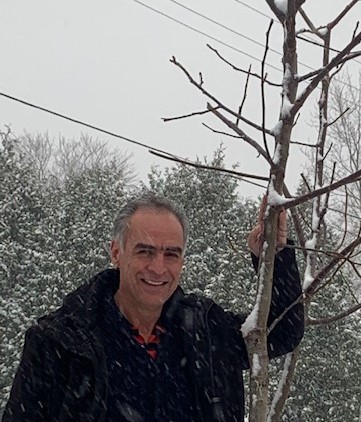
3 poems by Bobby Parrott

Bobby Parrott

Children Look at Me

as if behind their eyes were mounted an ancient algorithm tickling testily for me to write my own microtonal subroutine of extinction. As if human life were not the larval stage of the evolution of intelligence in this universe. As if they’ve found the categorical torture in this pseudo-euphoria but cannot articulate through their newly minted syntax the absurdity of this squishy-sac glitch-life I inhabit. So, my cellular processors jump to the next energy level, instill their shrieking bullet train in the bucolic setting of this puff-pastry daze human love has disgorged. And yes, in its neonatal sanctuary the emptiness of infinity is unclothed, only to re-bundle in the clockish hum, the turning of a planet. Does the lightspeed rush of this face confirm its person? Optics bend the sourceless starlight of nostalgia, but the Proustian hot-fudge-sundae’s flavors draw toward the Big Crunch of spearmint wonder, organic sentience spilling out on the tongue. The fudge’s heat, the ice-cream’s cold, my quiescent polar selves meeting as strangers paddling the slow caramel of revelation. If only for a few trillion cesium-disintegrations longer, I could pretend the past is already here. My tastebuds relish its rich impulse, but the star-wide-web uploads my memories, and my history whistles out of me like water through a faucet. The future, my best and only friend, causality-flips its peacock blue watery wash of emulsion over our heads in this Disney-Park water-slide evacuation, heart-muscle pump-thumping behind the chest’s gift-shop façade. Maybe this is my attempt to brush aside the deep seeing of my cartoon child-self, insensate immensity I Am unseeing itself clean, decrypting itself sane, rewiring itself gone. Babies trail clouds, glinting inklings through infancy’s portal.

The Ongoing Rebellion of Being Inside Mice Elf

Submarines, helicopters, guns, and bassoons all file for divorce from my poetry, because my present-day self turns out to be a mere passing phase in an ongoing flash-fiction yet to be written and submitted to The Smoking Glue-Gun Press. I unlock my head’s window just in case I have to unexpectedly get back in, and my brain drops the news it’s also part of the divorce proceedings. After the roof was blown off during the last psychoanalytic storm, the intrusion of 13-billion-year-old starlight became a problem. So let’s just add telescopes to the list. Though distracted by millennia of mutations, we’re all refugees in this fragmentary evacuation called literature, communal beekeepers in the constellation of our one vehicular mind, breathless contradictions the new Real. Like if humans are the larval stage of the evolution of consciousness in this sector of the galaxy. Think of how this interrupted trajectory is exactly the coffee-break we’ve been waiting for, though the cream and sugar part may surprise even the most advanced students, puppet-master interns all. Lucien, have you finished winding up the robots? Life may turn out to be the bassoon in my lap, but I must remember that the opposite of violence is still violins. Which is why robotics re-assemble humans until they learn to simulcast their longings more prosthetically. And you can’t exactly run away in a submarine. I mean, this telescope has never impersonated a gun. The instrumental value of guns only increases the deeper you bury them, the newly orphaned bullets helicoptered into boy scout camp’s pseudo-council fire until each boy apprehends the ballistic baby lodged in testosterone’s mushroom-cloud haze, nuclear war a trigger, another blank awakening.


When the Farce-Field of Your Prosthesis Puppets Me I Disappear Behind the Minerality of Masculine

The rearview mirror of your book reminds me how whenever I kiss your eyes, we look more like a manifesto in device-mode winking at the chunks of quartz on my meditation altar, and what we see is no clearer than light could never penetrate. You don’t have to stay here. I mean, before bed there’s a flagrant misuse of verbs rehearsing in my mouth, getting stuck in sentences I want to check off the list. Like your mollusky intrusion, its fizz of salty, body-surf bursting in until I relent and see stars myself. To verb is not to depend on the when of a thing, and even less the who. I mean how meta a verb is eyeball, for instance. To make an image of an eyeball is not to eyeball. A painting of my eyeball can show us how to eyeball someone eyeballing another geology. You look at me like that, and I grip the steering wheel at 10 and 2 though neither of us is looking through the windshield. Cruise-Control is not Self-Drive. When I paint eyeballs on my eyelids, no one sees me blink if I do it quickly enough. Like when you say my bicycle’s a prosthesis to my imagined sense of self. It’s more Post-Singularity than most asymptomatic people might think. Our connection channels through us a clockwork of autonomous technology. And my presence inside this poem initiates a cognitive replication of manual transmission, where my credit score becomes identical to the number of anonymous orgasms I’ve given you this year, causality unzipped into the promising hands of monosyllabic.

Return to Journal

Bobby Parrott is radioactive, but for how long? This queer poet’s epiphany concerns the intentions of trees, and now his poems enliven dreamy portals such as Tilted House, Rumble Fish Quarterly, Diphthong, Exacting Clam, Neologism, and elsewhere. He lives in the unceded ancestral homelands of the Cheyenne, Arapahoe and Ute peoples now known as Colorado, with his partner Lucien, their top house plant Zebrina, and his hyper-quantum robotic assistant Nordstrom.

WordCity Literary Journal is provided free to readers from all around the world, and there is no cost to writers submitting their work. Substantial time and expertise goes into each issue, and if you would like to contribute to those efforts, and the costs associated with maintaining this site, we thank you for your support.

One-Time
Monthly
Yearly

Make a one-time donation

Make a monthly donation

Make a yearly donation

Choose an amount

¤5.00
¤15.00
¤100.00
¤5.00
¤15.00
¤100.00
¤5.00
¤15.00
¤100.00

Or enter a custom amount

¤

Your contribution is appreciated.

Your contribution is appreciated.

Your contribution is appreciated.

DonateDonate monthlyDonate yearly

4 poems by Mansour Noorbakhsh. WCLJ poet-in-residence

Mansour-Snow-2020 (resized)

Nowruz 2023
     For "Women, Life, Freedom"

Hyacinths need the full Sun
that comes late winter 
or early spring.
 
What flowers will make 
this year attractive to Nowruz?
Enshroud with the tattered leaves,
clusters of fragrant,  
schooner stiff, upright stalks,
as the growth of your hands.

Your hands will bring Nowruz this year.
You, who went to the street to bring the full Sun 
in a night that still wanders between 
its scarlet sky of sunset and dawn. 

The night that your blood uncovered it. 

I wait for a Nowruz that rise from your collar, 
that beats with your red blood. 
Hyacinths will feel the full Sun then.


Dropping Slow

     After:  And I shall have some peace there, for peace comes dropping slow,
     Dropping from the veils of the morning to where the cricket sings; (W.B. Yeats)

I close my eyes,
but still, can hear, unintentionally.
Like hearing the news
when you drive in a dark road.

Tired of a long run,
laid on, behind my closed eyes, I hear,
perhaps a clamorous flea market.
Not your voice’s visuals. What I need.

Behind my closed eyes, 
the mother turtle leaves 
the shore and her buried eggs. 
With tears in her eyes. 

The sounds 
continue finding their visuals 
behind my closed eyes.

Something rustles a far. 
As if baby turtles leave the shore, 
and their hatched eggshells, 
in the opposite way of their mother.


fictional life

no memoir is free of fiction pieces
that makes food delicious
and warms kisses 
within thousands of photos 
buried under millions of others 
autographed by emojis 

today i tried to call an old friend in iran
the voice was indistinct
i just heard, “internet access is very poor
i cannot even load a photo
they’ve turned it off 
to smother us”

i load a photo, and stray around messages
again and again, in a free country
to feel fictionally alive

then, my life turns to a question
nonfictional


Middle East
			 
Many years ago, a man who was selling cactus fruits on his handcart,
red and sweet, 
was peeling the fruits for his customers.
  
His hands were rough like cactus leaves, 
told us if I don’t peel the fruits, 
the thorns will hurt your hand and mouth.
  
There I have seen cactus and orange plants growing side by side,
while women and children were working together.
In a hungry and thirsty land surrounded by mountains, rivers, and seas.
Where the cradle of civilization is buried there.
  
Now, it’s said the bullets are planted there, and bombs were bloom.
  
And people have abandoned planting the drought resilient fruits, 
and the cradle of civilization near the oil wells, 
on a journey to beyond the drought.

I can imagine how the land continues growing sweet fruits resilient to the drought.
but I don't know whose hands will remove the thorns.

Return to Journal

Mansour Noorbakhsh writes poems and stories in both English and Farsi, his first language, and has published books, poems, and articles in both languages. His book length poem, In Search of Shared Wishes, is published in 2017. He tries to be a voice for freedom, human rights, and environment in his writings. He presents The Contemporary Canadian Poets in a weekly Persian radio program. Mansour’s poems are published in WordCity Literary Journal, Verse Afire, Parkland Poets, several anthologies, and other places. His poems are translated in Greek, Italian, Portuguese, Spanish, Serbian, Macedonian, and Chinese. Mansour Noorbakhsh is an Electrical Engineer, and lives with his wife, his daughter and his son in Toronto, Canada. Mansour is WordCity Literary Journal’s Poet in Residence.

WordCity Literary Journal is provided free to readers from all around the world, and there is no cost to writers submitting their work. Substantial time and expertise goes into each issue, and if you would like to contribute to those efforts, and the costs associated with maintaining this site, we thank you for your support.

One-Time
Monthly
Yearly

Make a one-time donation

Make a monthly donation

Make a yearly donation

Choose an amount

¤5.00
¤15.00
¤100.00
¤5.00
¤15.00
¤100.00
¤5.00
¤15.00
¤100.00

Or enter a custom amount

¤

Your contribution is appreciated.

Your contribution is appreciated.

Your contribution is appreciated.

DonateDonate monthlyDonate yearly
2 poems by Jonathan Wittmaier

Jonathan Wittmaier

A dumpling does what a dumpling does

It floats, it bobs, it tumbles to the floor.

On the inside—hollow, nothing but air
And some soft squishy dough

Fill it with onion, chives,
some minced pork; all mashed 
up in a thick filling,
the same way Umma 
used to do.

Savor it, relish it, consider every
ingredient, every element
Because soon it will all be over…

Piece by piece, it will journey inward
through the labyrinth, through the elaborate 
array of tubing and guts

Until finally, it will reach its end, 
expelled at last into the bottom 
of the bowl.


                                      (Lovers) When in China

        I slip the ice-cold Popsicle between your gooey lips
                   and smell the sweet-soaked cherry blossom
                                                warm between
                                                   your hips

Return to Journal

Jonathan Wittmaier is a Korean American writer with an MFA in Creative Writing from Adelphi University. Born in South Korea—he grew up in southern New Jersey. Recipient of the Creative Writing Award for Dramatic Writing (Adelphi 2018), he has taught English and creative writing at various college campuses all across Long Island. He currently resides in Seattle, Washington. You can find him at https://www.instagram.com/jonathanwittmaier/?hl=en

WordCity Literary Journal is provided free to readers from all around the world, and there is no cost to writers submitting their work. Substantial time and expertise goes into each issue, and if you would like to contribute to those efforts, and the costs associated with maintaining this site, we thank you for your support.

One-Time
Monthly
Yearly

Make a one-time donation

Make a monthly donation

Make a yearly donation

Choose an amount

¤5.00
¤15.00
¤100.00
¤5.00
¤15.00
¤100.00
¤5.00
¤15.00
¤100.00

Or enter a custom amount

¤

Your contribution is appreciated.

Your contribution is appreciated.

Your contribution is appreciated.

DonateDonate monthlyDonate yearly

3 poems by Benard Berinyuy

Bernard Berinyuy

Green lands of Nso

Nature commemorates the advent of the dry season with extreme beauty in the green lands of Nso.
As we wandered down the hills from Netnab, nature with extreme beauty humbled us with pump and pageantry.                                                                                                                       Was it a Biblical scene of prophets in the countryside or a paint of Jesus’ scenes in the salvation campaign?
A tall silver-like cross on the top of the apex of the hill range 
A picturesque of windswept escarpments and gentle slopes, punctuated by U and V shaped valleys, drilled with interlocking spurs wired the white streams from the black walls down the vast basin
Waterfalls from the sides on the steep slopes dropped silently to the pools
Beautiful flowers in multi colors were scattered on Greenland. On them were colorful insects-beetles and bees
The mainstream flowed silently through the basin determining the haphazard dance of trees and shrubs in a constant motion with no breeze
From a distance was the bray of asses mooing of cows and beating of sheep and goats.
A dilapidated black bridge with two pools took us across the silent stream, by lion courage. What a fright?
On a noisy tree up the stream, a swamp of weaverbirds chirped, jumping in and out of the nests in salute of the beautiful and safe abode as the blue sky and blazing sunrays pierced the beautiful setting.
At a plain up the slope were huts, flocks of sheep, herds of cattle, and horses in different colors but commonly white, black and gray. Herdsmen led them to greener directions as they fed. Some went for salt and others by the stream for water. Like in the ‘lost sheep’ a herdsman returned with a stray calf to the team as they wandered.
Hurts like in Peter’s transfiguration scene were sparsely dotted on corners of the plain.                                                         
 From a large rock, a middle-aged man with a bald heard, long white bieds, a long gray gown and sandals fluted some consoling music that rained comfort on us as we moved home. 
As we moved to the city, we gradually lost this natural ambiance and romance to a vast farmland with some fruit trees and families returning home as we crossed the green raffia valleys, banana and eucalyptus leaf-sheds.
A bird from the tree cautioned us in the following wordings......guuguu kifa kee’ sartong x x x ....... (Beware of what lies beneath the navel). 
We missed the beautiful jungle!
Home sweet home; It melts home


HOPE

I would like to take
the paths of new hope
and erase my footprints behind
me because your escort is
superfluous before the rising sun.
I would like to walk
the land of solitude
for years
and walk on
the silence of the
pathlessness liberated
of all your words and
deeds. I would like to be
born again
bathed in purity
of my soul
and stand
in front of the starry sky
as a newborn.
And pardon
my rude words
and be patient
because my loneliness
is your loneliness, too.
You are my other self.
You do what I am afraid of.


SILENCE

Silence in me
strikes in lightning
of the sky too gray
and destroys my accumulated fear
in the years of non-belonging.
Silence in you
does not know my fears
and gets lost in the words of
unknown people
whose hands cannot
touch the softness
of our hearts.
Don't let me stay silent
because my love is
louder than your smile.
The loudest

Return to Journal

Benard Berinyuy was born in Sakir-Nso Bui Division of the Northwest Region of Cameroon. He has a PhD in Health Economics, MBA in Finance, PgD in Business and Administration, and BSc in Business Administration. He is a field worker on humanitarian missions in Bui Division. Besides his passion for the vulnerable, he enjoys and celebrates nature as he visits communities. It remains his wish that nature be preserved and managed sustainably.

WordCity Literary Journal is provided free to readers from all around the world, and there is no cost to writers submitting their work. Substantial time and expertise goes into each issue, and if you would like to contribute to those efforts, and the costs associated with maintaining this site, we thank you for your support.

One-Time
Monthly
Yearly

Make a one-time donation

Make a monthly donation

Make a yearly donation

Choose an amount

¤5.00
¤15.00
¤100.00
¤5.00
¤15.00
¤100.00
¤5.00
¤15.00
¤100.00

Or enter a custom amount

¤

Your contribution is appreciated.

Your contribution is appreciated.

Your contribution is appreciated.

DonateDonate monthlyDonate yearly

3 poems by Anna Ferriero

WhatsApp Image 2023-04-15 at 15.50.54

SEA PETALS

Spring breath
between sunsets by the heart
a new verse blossoms
between the waves of my gaze.
Scent of whiteness
I collect at the Horizon
and dew of love
from the ink by the sea
plays beauty looks
that gather elegance
lappings of great hope.
Petals of Love
they dissolve terror
disserting new Life:
Infinite rebirth


SKY BLUE

Sky blue
like hibiscus
as he wakes up
like a kind child
the last hibernation:
sunset scent
sprouted in summer.
Azure
like the last snow
preserved among the corals
that release spring
waking up
without deception among the memories
hope of infinity
where everything
of blue it quenches its thirst


A DREAM

It's an enchanted place
between a fairy cloak
by creatures esteemed
and much appreciated!
It is a meadow in a desert
such a merry stream
that long-awaited heart
between flowers and lots of love
the Life that never dies!

Return to Journal

Anna Ferriero is an Italian poetess, WNWU member and doctor honoris causa . Her poems have been translated into many and different languages ​​and she writes for magazines, national and international newspapers. She has published two poetic collections MAGIA D’AMORE and PUNTO – Oltre l’Orizzonte and two stories LA CRIPTA DEI DESIDERI and OMBRE ALLO SPECCHIO.

WordCity Literary Journal is provided free to readers from all around the world, and there is no cost to writers submitting their work. Substantial time and expertise goes into each issue, and if you would like to contribute to those efforts, and the costs associated with maintaining this site, we thank you for your support.

One-Time
Monthly
Yearly

Make a one-time donation

Make a monthly donation

Make a yearly donation

Choose an amount

¤5.00
¤15.00
¤100.00
¤5.00
¤15.00
¤100.00
¤5.00
¤15.00
¤100.00

Or enter a custom amount

¤

Your contribution is appreciated.

Your contribution is appreciated.

Your contribution is appreciated.

DonateDonate monthlyDonate yearly

3 poems by D.R. James

D. R. James(1)

     Lakeside Bird Feeder, Squirrels

     Now if I had ambition I’d be
     this kung fu squirrel, this lighter one,
     this Jackie Chan, scaling stucco

     to ledge to chimney to the hovering skid
     of the evil whiz kid’s waffling chopper,
     perpetual motion my only gear,

     my sidekick wacky as this blacker one, 
     who tries but can’t quite nab his half
     of the substantial stash.  Their

     choreography is manic, their fight scenes
     replete with wall-walking, roof leaping,
     jumps across gaps and gorges—all

     their own improv’d stunts, every feat
     a fleeting, one-take opportunity.  It’s
     those reflexes that make the difference:

     when gravity catches their rare missteps
     they can spin around an inch-thick span
     of diagonal steel or the slippery rim

     of a seed-spill dish, always squirming
     all four feet first—whereas I’d just drop,
     back-ass-down to the unforgiving earth, 

     my spindly claws and my mangy tail 
     spread like a shredded chute, a plea
     for anyone at all to catch me.  So,

  
     I’ll leave these antics to my friends,
     for today, the squirrels, until I can find
     a way to foil them, deter them from

     this wintertime welfare I’ve intended
     for the birds, whose more manageable
     business will give me the docile pleasure

     I’ve been seeking: sitting here in a chair,
     swathed in luscious listlessness, slinging
     these escape lines toward anywhere I wish.


     Field Notes from an Old Chair

     Well, they’ve come, these early crews,
     though it’s only March, which in Michigan
     means maybe warm one day,
     the few new tender greens making

     sense, then frigid and snow the next four,
     the fragile bodies ballooned, all fuzz
     but feeding and competing just the same.
     Who would’ve ever guessed I’d be happy

     anticipating birds? Since I’ve taken up
     the old folks’ study of how certain species
     seem to like each other, showing up in sync
     like the field guides specify, my chair’s

     been scribing the inside arc between the feeder
     and where I’ll catch a bloody sun going down.
     Then, mornings, if I forget, two doves startle me
     when I startle them from a window well,

     and as if the fearless chickadees and titmice,
     jittery finches and nuthatches can read
     they trade places on perches all day—
     size, I notice, and no doubt character

     determining order, amount, duration.
     At this point I could’ve written the pages
     on juncos or my one song sparrow so far,
     plumped and content to peck along the deck beneath.

     And that pair of cardinals I’d hoped for?
     They’ve set up shop somewhere in the hedgerows
     and for now eat together, appearing
     to enjoy each other’s company, while above

     out back crows crisscross the crisp expanse
     between the high bones of dormant trees
     and the high ground that runs the dune down
     to the loosened shore. Soon hawks will hover,

     and when a bloated fish washes up overnight,
     luring vultures to join the constant, aimless
     gulls, I’ll be amused I’d ever worried
     that the birds would never come.


     Lakeside Bird Feeder, Wet Snow

     Like the trusty railing, the congenial 
     patio table, the steady deck itself, 
     and every firm crotch
     in every faithful tree, the feeder’s
     become a sculpture.

     I should have black and white to lace
     into the camera to capture
     this transubstantiation, this emergence
     from the overnight dark and storm,
     an aesthetic thing in itself,
     dangling like an earring
     from the gaunt lobe of a different day—
     a white arrow, squirrel-emptied,
     aimed straight for the flat sky.

     The first little bird to find it, sunup,
     can only inquire, perch
     and jerk a nervous while,
     then quickly move along
     in wired hopes the other stops
     around the circuit will service
     his tiny entitlement, will be
     scraped clean and waiting
     like a retired guy’s double drive.

     By tomorrow I know this wind
     and another early thaw 
     will have de-transmorphed my feeder 
     to its manufactured purpose,
     its slick roof and Plexiglass siding
     once again resembling an urbane
     enticement to things wild, to some
     Nature available outside a backdoor slider.

     And I know I’ll have also lost
     more impetus for believing
     in permanence—except
     of the impermanent, its exceptional
     knack for nourishing the dazzle
     in this everyday desire.

Return to Journal

D.R. James, recently retired from nearly 40 years of teaching college writing, literature, and peace studies, lives, writes, bird-watches, and cycles with his psychotherapist wife in the woods near Saugatuck, Michigan. His latest of ten collections are Mobius Trip and Flip Requiem (Dos Madres Press, 2021, 2020), and his prose and poems have appeared internationally in a wide variety of print and online anthologies and journals.
https://www.amazon.com/author/drjamesauthorpage

WordCity Literary Journal is provided free to readers from all around the world, and there is no cost to writers submitting their work. Substantial time and expertise goes into each issue, and if you would like to contribute to those efforts, and the costs associated with maintaining this site, we thank you for your support.

One-Time
Monthly
Yearly

Make a one-time donation

Make a monthly donation

Make a yearly donation

Choose an amount

¤5.00
¤15.00
¤100.00
¤5.00
¤15.00
¤100.00
¤5.00
¤15.00
¤100.00

Or enter a custom amount

¤

Your contribution is appreciated.

Your contribution is appreciated.

Your contribution is appreciated.

DonateDonate monthlyDonate yearly
A Place Inside. a poem by Christopher Johnson

Christopher Johnson

A Place Inside

There is a place inside that we keep secret.
A place of darkness, bleakness
And madness and leaden attitudes toward others,
A place that feels like molten iron,
Burning us inside,
Crying to escape,
A place that is desperately lonely,
That wants the reassurance of mother’s milk.
A place that churns with sour resentments,
Resentments that never let us go,
That grip our spleen and turn our insides to hysteria, 
Resentments that burrow inside us like unborn babies,
That feed our self-pity,
That cry to be extinguished.

Return to Journal

Christopher Johnson is a writer based in the Chicago area. He’s been a merchant seaman, an English teacher, a textbook editor, an educational consultant, and a free-lance writer. In 2006, the University of New Hampshire Press published his first book, This Grand and Magnificent Place: The Wilderness Heritage of the White Mountains. His second book, co-authored with David Govatski, was Forests for the People: The Story of America’s Eastern National Forests, published by Island Press in 2013.

WordCity Literary Journal is provided free to readers from all around the world, and there is no cost to writers submitting their work. Substantial time and expertise goes into each issue, and if you would like to contribute to those efforts, and the costs associated with maintaining this site, we thank you for your support.

One-Time
Monthly
Yearly

Make a one-time donation

Make a monthly donation

Make a yearly donation

Choose an amount

¤5.00
¤15.00
¤100.00
¤5.00
¤15.00
¤100.00
¤5.00
¤15.00
¤100.00

Or enter a custom amount

¤

Your contribution is appreciated.

Your contribution is appreciated.

Your contribution is appreciated.

DonateDonate monthlyDonate yearly

3 poems by Katherine Matiko

Katherine Matiko

A NEW SONG

A horrifying THUNK. 
Like someone threw
a bag of guts 
at the picture window.
We peer out: it’s not pretty.

A crumpled rag
of a robin lies lifeless
beside the house.
We will have to fetch
the shovel and throw him 
on the slop pile—
that decomposing heap 
of the Unclean and Unwanted;
the offal of our lives.

Wait. Another robin 
has wobbled down 
to fret and worry, 
peck and hop. 
If we brought the shovel, 
would she lay down her life 
for her friend?
Feign a broken wing 
to lure us away
from her Damaged One? 
The One Who Makes Mistakes?

The weather is changing. 
A raw wind ruffles
his bone chambers 
and the robin is raised
from the dead! 
With a feathery lurch, 
he joins his Faithful One;
together, they behold
the sky seethe, grumble, 
and then infuse the earth
with living water.

She seeks shelter in a tree 
but he basks in the blustery 
baptism—and the One Who Saves
pours a new song into his mouth.


BURROWING OWL

This little one
borrows
a burrow.

Lines a gopher
hole with dung 
and diligence. 

Swivels to scan
her purview
—fences crops 
ditches roads—
a fading horizon.

Spies a tractor! 
Scrambles below, 
rattles like a snake
until the menace 
passes.

Pecks at poison pellets— 
grasshopper carcasses 
shriveled in the grasses. 

Tends sluggish eggs 
and addled owlets— 
a blink of worry
in her dandelion eyes.

Hops. 
Hopes.

This little
wordless one 
hunkers rattled
in her lonely
prairie bunker.


DRAGON FLY

A mythical creature is trapped in my house,
hurling itself against the pane; assailing
this cruel invisibility, this injustice.

I scoop it into a plastic grocery bag, 
open the door and it swoops away, 
relief written all over its whirring wings.

Was it worried? Afraid? Spitting mad? 
Does it sense that to live it needs to fly 
into the glassy air?

Godspeed, I say.

Take your God spark, your ancient story,
and write it all over the sheer mercy
of the sky.

Return to Journal

Katherine Matiko lives in the foothills of the Rocky Mountains in Alberta, Canada, where she finds daily inspiration for poetry. Her poems have recently appeared in (M)othering: An Anthology (Inanna Publications); Wild Roof Journal, Issue 17; and the League of Canadian Poets’ Poetry Pause. Read her work on Instagram: @katherine_matiko

WordCity Literary Journal is provided free to readers from all around the world, and there is no cost to writers submitting their work. Substantial time and expertise goes into each issue, and if you would like to contribute to those efforts, and the costs associated with maintaining this site, we thank you for your support.

One-Time
Monthly
Yearly

Make a one-time donation

Make a monthly donation

Make a yearly donation

Choose an amount

¤5.00
¤15.00
¤100.00
¤5.00
¤15.00
¤100.00
¤5.00
¤15.00
¤100.00

Or enter a custom amount

¤

Your contribution is appreciated.

Your contribution is appreciated.

Your contribution is appreciated.

DonateDonate monthlyDonate yearly