Erie is no joke. A Janus lake—calm and tempestuous, wildly unpredictable—it was the lake that gave me the story I’ve been telling myself for years in defence of my otherwise lifelong pursuit of complacency.
For three summers I traveled the Great Lakes to the sort of backwaters tourists don’t mark on maps. I worked on shoebox ships for poor wages as an engine room cadet. On graduation from a satellite college with a degree in marine engineering, I went to the M.O.T and wrote my ticket, but I knew I’d never hack it. A career in seasickness is no life. Instead, I took a position offered by an uncle in a Toronto bank. And when it was over—my fling with the romantic life—I couldn’t say I missed any of it except Erie, and not for the lake itself but for a woman who’d seen something in me.
The summer I was nineteen, I signed ship’s articles on the Georges River, a cementer that ran regular contracts between Toronto and Carol’s Beach, Ohio. Carol’s Beach was as nowhere as you could get, but it had a bar called Hawthorne’s that really shouldn’t have been there. It was too imposing, too rich: tall ceilinged, with a massive oaken bar and cathedral windows overlooking Lake Erie. Imagine a Bay Street bar in Gimli or Come By Chance. You didn’t need a suit to get in. It was enough to be there to feel like you were wearing one.
Early in the summer I found myself infatuated with a married woman I met at Hawthorne’s. It started as conversation. She was impressed I was a sailor. I was impressed she was married and talking to a sailor. She was beautiful. I was not, and I had the unattractive quality of being at least five years her junior. A kid by her standards. Through June and July we met as regularly as the Georges River could crisscross Ontario and Erie. Always when I arrived she was at the same table by one of the tall windows.
When I asked, “Do you wait for my ship?” she denied it.
Nevertheless, in August we fucked.
The next trip, my last of the season, I waited alone at our table perilously long without seeing her and only just made it in time to the ship to help the deckhands pull up the gangway.
“Lucky,” they said.
“Not this time,” I replied.
I never went back, never saw her again. But in memory she was always there at the table we’d shared, the woman who taught me that whatever else I’d do, whatever compromises I’d make, I am capable of breaking rules.
A couple years later at the bank, to make myself interesting, I would tell people about my summer adventures which, when I edited out the mundane rituals that predominate a sailor’s life, left little to say. It didn’t matter. Most people don’t have a clue how banal the job is, but to say you were a sailor is to side with antiquity, and to unimaginative people antiquity is inexhaustibly interesting. I never forgot the view from Hawthorne’s big windows and at times I would talk about that—minus the affair—and I would talk about the water in the mannered way of sailors, even though I’ve never gotten it. Water has always just been water to me: no more poetic in a lake than in a bathtub. I was performing a poem that someone else had written and that I didn’t particularly feel, but at least I knew the words.
And I recited it until, one day, someone stopped me.
“Carol’s Beach? That can’t be right. Carol’s Beach is in Wisconsin.”
The speaker was changing money at my wicket and had engaged me in a conversation about a trip he was taking to Toledo. I didn’t want to be strident with a client, even one straightjacketed and sweating in a cheap navy suit, so I put on a practiced expression meant to reassure him I didn’t take offence at his error and let the matter pass.
The next time it happened, again at work, I felt I ought to say something: “I’m certain it’s on Lake Erie. I used to…”
“Lake Michigan, you mean. My brother-in-law’s from Carol’s Beach.”
“I use to work on lake boats.”
“What ship were you on—the Flying Dutchman?” It was the sort of statement a man makes and looks around to see who’s impressed.
Privately, I bristled. Bank policy is to defer when being insulted. I tried for a whimsical tone.
“Who knows? I worked in the engine room.”
“Then you wouldn’t know.”
What sort of logic was that? Clients at other wickets, engaged in their own affairs, took no notice; still I was rattled by the man’s confidence. Was it conceivable I was wrong?
Anyone can see my great metamorphosis in life has been from whatever a child is into a plodder, and I don’t care. I can find no poetry in the faces of bank customers who come on in waves of impatience. I find no beauty on my walk home from work past hungry people, some with briefcases. My bar is a chain restaurant. Its principle charm is that it’s safe. I know everyone, know the things they say. I see no point in being political, having observed that our causes are usually reactions.
Or I do care, but I acknowledge that we all lose something.
The third time I was corrected it was by a woman I’d met through an internet dating service. Her profile indicated she wanted “Someone sensitive. No head games.” She arrived to our date formally attired. We were at Starbucks where I was trying to come across as the man of her ads when she stopped me cold: “Bullshit. Carol’s Beach is in Wisconsin.”
I watched her walk stiffly out of sight, marvelling at my disaster, at her anger. That night I googled Carol’s Beach.
It was in Wisconsin, a state I’d never visited, not even by car.
I felt the chill of evaporation, like something inside of me had disappeared suddenly: a woman whose name I no longer remembered; a woman who suggested the only transcendence I’ve ever experienced.
What others find in nature I’d found in her. Every social label that would keep us apart—her married status, the fact she was American, the first American to confide in me, the fact I was a Canadian sailor and not particularly good-looking—had dissolved into the purely animal. And now that I sided with being a clerk, the ability to document that experience was gone. In absence of evidence I had the memory of a memory of a memory…strands of the ephemeral. Touch and taste that, like rungs on a ladder, receded into darkness.
I stood at my open apartment window looking out onto the pitch black form of Lake Ontario. The view revealed no waves but I knew that they were there, and riding them the occasional lights of lakers. Everywhere something was happening that would leave no record. Everything moving. Audible to the imagination only.
I imagined the colossal roar of engines under bobbing lights dampened in the distance to silence. I could smell nothing outside my apartment, but I knew the lake. It was that time of year when the lake smell is a dead fish smell—the perversely green odour of an August shore. Skimming the shoreline. Breezing past signs warning not to fish, not to swim.
Who was she? Someone who wore a Princess Di haircut to meet a young sailor in an ostentatious bar. That was real. I knew it. But something was wrong. I tried to arrive at her name, imagined it was something I could approach at the end of a downward ladder in a crowded room of false memories…of…
“Sandy,” I heard myself say.
She looked up from her fist. She’d been debating. Something.
I heard her ask if I’d ever committed a crime. I was a sailor after all.
“I jaywalked.”
“Imagine if you’d been arrested. Not just once but every time you jaywalked. Imagine if you’d been convicted of every small crime you ever fucking committed. Do you know what you’d get?”
“What?”
“Life.” She tilted. “Our small crimes give us life.” She pressed her chin awkwardly against her fist.
All the same, she assured me an hour later, “It doesn’t mean anything.”
Probably she knew I wanted to say that I loved her. That’s the usual way a man makes sense of his sins. We were in the alley behind Hawthorne’s where I felt fearfully exposed. My pants around my ankles, I was trying to keep clean.
“Say it.”
“Say what?”
“Say it doesn’t matter. And keep saying it.”
“The whole time?”
“Yes.”
I chanted “It doesn’t matter,” with the rhythmic insistence of a lover, but not for long. What I came to imagine as my moment of transcendence was just that. When I pulled on my pants they were potched with alley shit.
“Sandy?”
No reply.
Beach?
There was no beach. I remembered how the water slapped the rocks.
Why would the town be called Carol’s Beach when it had no sand? A clerk’s mind generally isn’t so given to transference.
I did what I should have done from the start. I googled Hawthorne’s and found my bar in Carol’s Cove, Ohio, a town with a dock for unloading cement. That was the answer: my mind had played a neat trick, writing her name, Sandy, on the landscape—translating Carol’s Cove into Carol’s Beach.
In the ad I clicked, Hawthorne’s is as big as I left it. It hasn’t shrunk as things do when you revisit them after many years. Clearly visible in the photograph, a man and woman a bit older than me sit at what was once my table—our table—the man preoccupied with his food, the woman staring out into a flat, blue horizon with an anxious expression.
André Narbonne is the reviews editor of the Windsor Review. His writing has been anthologized in Best Canadian Stories and won the Atlantic Writing Competition, the FreeFallProse Contest, and the David Adams Richards Prize. A short story collection, Twelve Miles to Midnight (Black Moss Press), was a finalist for the Danuta Gleed Literary Award.
WordCity Literary Journal is provided free to readers from all around the world, and there is no cost to writers submitting their work. Substantial time and expertise goes into each issue, and if you would like to contribute to those efforts, and the costs associated with maintaining this site, we thank you for your support.
After celebrating their sixth anniversary with a hearty meal at the Denny’s over on Erie Boulevard, Ed Pruitt is behind the wheel of his Honda Civic with his wife Bonnie at his side, driving on the boulevard at a furious speed, with blaring sirens in fast pursuit.
“What’s wrong with you? Slow down!” Bonnie shouts in a panic.
Ed laughs and scratches at the side of his face. “Cops can’t give me a speeding ticket if they can’t catch me.”
“Speeding ticket? I’m not worried about a damn speeding ticket!” Bonnie shouts, her voice still in a panic. “Stop the car! Please Ed, just stop the damn car before you kill us both!”
“That’s the plan sweetie, that’s the plan,” Ed says, a bitter smirk spreading across his long narrow face.
Ed weaves wildly through traffic, then swerves sideways, abruptly turning off Erie Boulevard and heading for the quiet residential streets, just beyond Syracuse’s city limits. With his thin fingers tightly gripping the steering wheel and his work boot pressing down hard on the gas, Ed continues at a furious pace, speeding through the winding roads of an affluent suburban neighborhood, with sirens still in fast pursuit.
Ed’s Honda Civic screeches around a corner and crashes hard into a large oak tree in the front yard of a cheerful yellow house where the Goldsteins, a family of four, are quick to come running out through their front door. The father dials 9-1-1 and the mother shields their two young boys. “Don’t look,” she says, tilting her head down and placing her hands on the two boys’ skinny shoulders. But the younger boy looks anyway. “You don’t need to call the police Daddy,” he says, “they’re already here.”
“An ambulance is needed,” the father says in a somber voice. Then, in a whisper, he turns to his wife and says, “Honey, better take the boys inside.” She nods in agreement and the older boy says, “Yeah Mom, let’s go inside.” She grabs both boys by their little hands, quickly ushering them away from the accident, with the younger boy still looking over his shoulder as his mother forcefully nudges him into the house.
Nine days later, in her hospital bed, Bonnie Pruitt; her light brown hair disheveled, her thin face full of exhaustion; is surrounded by a handful of her co-workers from the grocery store, doing their best to cheer her up. Bonnie doesn’t want to say too much about the accident, fully aware that there was nothing accidental about it, but she does feel obligated to offer some sort of an explanation.
“Ed was a troubled man,” she tells them, “he was driving so fast and I couldn’t get him to stop.” She pauses, licks at her lips. “He told me, ‘Cops can’t give me a speeding ticket if they can’t catch me’ and um, well, that was that, those were Ed’s last words.”
One of the co-workers, Colleen from the Deli, grabs Bonnie’s hand and gives it a tight squeeze. “Oh Bonnie, that’s so sad,” she says and then squeezes Bonnie’s hand even tighter. Another co-worker, DeAndre from Produce, steps closer to the bed. “Well, if there’s anything you need, anything at all, I’m here for you,” he says. The other four co-workers including the woman still squeezing Bonnie’s hand, echo DeAndre’s sentiment, each of them chiming in, one by one, with their own words of empathetic support.
Today, after nearly three weeks in the hospital, Bonnie Pruitt is finally going home. She desperately wants to put all thoughts of the so-called accident behind her, but she’ll have a permanent limp in her left leg as a constant reminder.
A deep-voiced nurse with ashy skin and dark brown eyes chats pleasantly with Bonnie who sits uncomfortably in a wheelchair. “I appreciate your help,” she tells him, “but I really don’t need to be wheeled out of here. I’m quite capable of walking on my own.” The nurse shakes his head and offers up a laugh that’s just as deep as his voice. “Hospital rules,” he says with that deep voice of his.
The nurse wheels Bonnie through the hospital’s doors into the fresh outside air where a dark blue sedan, with Vince Henley behind the wheel, is waiting for her.
Vince, a tall guy with neatly trimmed short blond hair, a strong jawline and pale blue eyes looking through trendy eyeglasses, is quick to jump out of his car and step up onto the curb. “I’ll take over from here,” he tells the nurse. The nurse smiles in an unfriendly sort of way and refuses to let go of the wheelchair. Vince rushes over to the passenger’s side, flings the door wide open, then both Vince and the nurse, gently help Bonnie ease into the car.
Vince pulls slowly into traffic and makes a conscious effort to drive at a snail’s pace, which doesn’t go unnoticed by Bonnie who sits uncomfortably in the passenger’s seat with her arms crossed and resting against her breasts. “I feel so nervous,” Bonnie says in a soft voice. “This is my first time riding in a car since the accident, so um, well, I just feel so nervous about it.”
Vince turns his head sideways for a quick look at Bonnie. With his pale blue eyes fully focusing on her, he says in a reassuring voice, “The worst is over; everything is going to be okay.”
“You think so?” Bonnie mumbles.
“I know so,” Vince insists.
After what Bonnie deems to be an appropriate amount of time, she starts introducing Vince Henley as her “new boyfriend.” But there’s nothing “new” about the tall guy with those pale blue eyes looking through trendy eyeglasses, nothing “new” about him at all.
Paul Germano lives in Syracuse, NY; with his dog April, a beautiful, strong and lovable Pit Bull mix. Germano’s fiction has been published in roughly 40 print and online magazines including *The Aroostook Review, Boston Literary Magazine, Bright Flash Literary Review, The Drabble, The Fictional Café, Flash in a Flash, Foliate Oak Literary Magazine, Free Flash Fiction, Microfiction Monday Magazine, Sledgehammer Literary Journal* and *VIA: Voices in Italian Americana.* In his nonfiction adventures, Germano has worked as an editor/writer for Le Moyne College, Syracuse University and *The Catholic Sun* and as a freelance writer for *Syracuse New Times, The Post-Standard* and *Stars Magazine.* His CNF piece, “All Shook Up” appears in *WordCity Lit’s* September 2021 issue.
WordCity Literary Journal is provided free to readers from all around the world, and there is no cost to writers submitting their work. Substantial time and expertise goes into each issue, and if you would like to contribute to those efforts, and the costs associated with maintaining this site, we thank you for your support.
The afternoon has cleared up at last And the rain is thoroughly falling Or maybe it fell. Rain is a thing That indeed happens in the past.
Jorge Luis Borges, The Rain
It had been a long time since I went to parties. I secluded myself in my beach house and took up painting, a hobby that I had neglected for decades because of my job as a literature teacher. For years, I tried to imbue my students with the benefits of critical reading of universal classics and the correct use of metaphors, oxymora, pleonasms, hyperboles and the flow of consciousness in monologues.
Most of them were excited to hear me talk about Hemingway’s iceberg theory, which says that a good writer should not show or explain absolutely everything, as happens with that semi-submerged ice mountain that leaves only a part of the whole in view, with most of its volume hidden below the surface of the water. I even drew the iceberg floating on the ocean, as if it were stalking the Titanic.
However, I suspect that the great Ernest’s striking personality as a tough, bellicose and adventurous individual accomplished the miracle rather than my words. I climbed the iceberg to the top hand in hand with the great master.
Consequently, since I had retired, eight years ago, I dedicated myself full time to painting. My thing was figurative art, the beach, the sea, the seagulls, the multi-coloured little boats of fishermen returning at sunset with their nets sometimes empty. In the background, the pine forests of the Pacific provided the perfect setting.
So. when Dennis insisted that I attend his birthday party at his house, my first impulse was to refuse. The years of confinement had made me a happy hermit.
“You have to come, Benjamin. It is not a big thing. Lifelong friends will attend along with others who have just joined my circle, like you. Not in vain are we neighbours.”
Dennis and Theresa’s house faced the sea like mine, only two hundred yards away. The only difference was that my house was much more modest, almost a cabin, a lonely and cosy haven. Instead, his was sheer ostentation, starting with size.
“I have no clothes for a special occasion like this,” I complained.
“Not that you were a bride! Here on the beach the style is informal. Besides, no one is going to look at the clothing of an inveterate bachelor and curmudgeon like you.”
I did not want to go into detail about his concept of my single status. Anyway, I had no choice but to accept.
I was wondering what to bring Dennis as a gift. A shirt could be a troublesome item, because I did not know his preferences and I would have to go shopping. The obvious would have been to steal a bottle of some great California wine from my cellar, say a Napa Valley Cabernet Franc or a Sonoma County Pinot Noir, but I never did like the obvious.
I rummaged in my closet until I found a miraculously clean white crew neck T-shirt. I completed my outfit with black jeans, a navy blue two-button sport coat and some basketball shoes. I trimmed my grey beard, which was messy. I looked at myself in the mirror and judged that I looked reasonably presentable.
I went out at dusk, carrying my gift. The waves were rolling gently up the beach and the foam glowing phosphorescent guided me through the wet sand. The starry sky began to cover with storm clouds, announcing rain.
It took me no more than fifteen minutes to arrive. String lights lit the wooden descent to the beach at Dennis and Theresa’s. Mellow party music was playing.
Theresa came out to meet me with a glass of champagne in hand.
“Thanks for coming, Ben! What are you bringing there?”
“A surprise for your husband.”
We entered the house, already full of guests. Dennis came up to me smiling and hugged me.
“We have brought the old lone wolf out of his lair!”
I gave him his gift, wrapped in Kraft paper, with no ribbon or bow. He opened it, intrigued, and stared at it in amazement.
“One of your paintings! I didn’t know you painted that well!”
Then Dennis gestured for the music to stop, led me to the centre of the room, and proclaimed, holding up my painting, “Meet Mr Benjamin Randall, the best painter on the west coast!”
Everyone present celebrated with laughter and cheers, raising their glasses.
Then Dennis took me to a corner and said, “I want to introduce you to an old friend of mine who has something in common with you: she is a literature teacher, too. However, I didn’t ask her if she also paints. Her name is Margaret Seymour …”
A sudden chill pierced my heart. It could not be her! How long had he not seen her? Fifteen, eighteen years?
Moments later, he was with a glass of white wine in hand, on the wide veranda overlooking the beach, feeling the moist sea breeze mixing with a few drops of rain that threatened to turn into a downpour. Next to me was Margaret, a magnificent Greek statue, imperturbable and more beautiful than I remembered. I found myself staring at her hypnotized, trying to say something that was not stupid. I started with the first thing that occurred to me, “How are you?”
Margaret Seymour looked at me a little uneasy with her deep-sea blue eyes.
“What’s your name? Ben, I think that’s what Dennis said. I really liked your marina drawing at sunset. You paint really well.”
My soul fell to the ground. Has she forgotten me? Was she playing a joke on me? Just in case, I continued with his game.
“No one, not even the rain, has such small hands,” I recited, from the famous poem by e. e. Cummings. Even more famous since Woody Allen had included it in his movie Hannah and her Sisters. Last time it had become half joking in our private code of conversation.
“I see there are several of us who have watched the same movie,” she said casually. Or has the rain inspired you now?”
Damn Maggie. She was making it difficult for me. I started reciting:
“Lady, crying at the crossroads / would you find your love / in the twilight with his greyhounds / and the hawk in his glove?“
She looked at me intrigued.
“Wystan Hugh Auden?”
“Yes. One of your favourite poets, if I remember correctly. And I think you also liked the music of Charles Mingus.”
Maggie looked at me even more intrigued.
“Did we know each other before?”
Again that stabbing pain in the middle of the chest, a little deviated to the left. For me that night in the Seattle hotel, after the presentation of Philip Roth’s latest novel, so long ago, had been unforgettable. It was difficult for me to find the right words to recall our fleeting encounter.
“Sometimes, in the infinity of time and space, we coincide …”
Now Margaret Seymour looked at me flattered and curious.
“You must be mistaking me for another lady. Maybe Auden’s.”
“That’s a literary lady. You are more than real.”
“In reality until recently I was living with the man of my life. Which sadly is gone. And everyone here knows that I was always faithful to him.”
I looked at her for a hint of doubt in her statement.
“You never told me his name,” I countered.
She smiled at my insistence without blinking.
“Surely our relationship was not so important as to tell you all the details, my mysterious painter and poet of the marine coast.”
“It certainly wasn’t like that at the time. But I will never forget cobalt blue eyes like yours, Maggie.”
Suddenly Margaret blushed. Her face turned the colour of cadmium vermilion red and then paled.
“I hope we haven’t gotten involved in an embarrassing matter.”
“The only embarrassing thing about that night was that we were both routinely married and happily drinking. Moreover, we both had copies of The Plot against America signed by the author. By the way, I was also a literature teacher.”
“Then we have where to start, again.”
At that very moment, Theresa appeared with a large birthday cake with lots of candles. Someone turned the music down and we sang the Happy Birthday song. Excited, Dennis started to blow out the sixty candles that threatened to be too many. Finally, he succeeded.
The night flew by with Maggie. We laughed, we drank wine and we talked about poetry, about music, about love fantasies. She swore she still did not remember me. I swore I had never forgotten her.
We talked about Baudelaire and the cursed poets, Hemingway and Gertrude Stein, Truman Capote and Harper Lee and Italo Calvino and his Invisible Cities and how twisted and delicious Chuck Palahniuk was to us. She even recited a poem by Jorge Luis Borges that talked about the rain, in her imperfect high school Spanish. I refrained from telling her that I had learned the language of Borges while studying the work of the blind bard in Buenos Aires.
When we said goodbye to Dennis and Theresa at midnight, bringing us a cold unopened bottle of Sauvignon Blanc, no one was surprised. We slipped down the beach, running across the sand, taking advantage of the fact that the rain had subsided.
A polychrome night of old and new memories awaited us, punctuated by the marine rain that happened outside, the nostalgia of Borges recalling a minutely shredded rain that maybe resided in the past, the delicate hands of Cummings and the layered counterpoint of Mingus jazz, outlined by impetuous brushstrokes of titanium yellow, chrome oxide green, toasted Sienna earth, drunken laughter of joy and Egyptian cotton sheets.
(Excerpt from the poem The Rain by Jorge Luis Borges translated by the author)
Marcelo Medone (1961, Buenos Aires, Argentina) is a fiction writer, poet and screenwriter. His works have received numerous awards and have been published in magazines and books, individually or in anthologies, in multiple languages in more than 40 countries.
He currently lives in San Fernando, on the outskirts of Buenos Aires.
WordCity Literary Journal is provided free to readers from all around the world, and there is no cost to writers submitting their work. Substantial time and expertise goes into each issue, and if you would like to contribute to those efforts, and the costs associated with maintaining this site, we thank you for your support.
I have cousins who hated their fathers, I never did. I never went hungry because my old man had spent a week’s wages in the pub on a Friday night. I was never belted for looking at my Dad the wrong way when he was pissed, but I did live close to those realities.
I have cousins who knew the humiliation of both hunger and abuse, and at one time, I envied them. I was jealous because their parents laughed or roared or raged. My father did none of those things; he simply got on quietly with the business of living and eventually the business of dying.
Da came from a family that were either staunch pioneers or belligerent alcoholics. Of eleven brothers and two sisters, he was the only one who seemed capable of indifference to drink; he was neither opposed to it nor addicted to it.
Dad was not a drinker. He enjoyed an occasional glass of cold ale, but he never drank spirits. On those few occasions I remember him drinking, it was sitting on the headland of a field recently harvested or on the concrete steps of the greenhouse where he grew deliciously sweet tomatoes. I guess he considered those drinks a sort of reward for work done. But I’m not sure. The truth is, Dad was unknowable. He came from a generation of men who were cut from stone, never speaking about feelings or emotions. Except, that one time…
That one time when my cousin, Paul O’Neill, came running to our house, distraught because my uncle William who was Da’s eldest brother, was on the roof of the house standing dangerously close to the edge and shouting abuse at passersby.
We stood on the ground, looking up at William O’Neill walking along the edge of loose capping stones, his arms wide as though he were a preacher and those below his flock. Da told Paul and my Aunt Polly that Willy was a bloody fool, and then, he climbed up on the roof beside him and sat down. William, having found a new target for his bile, immediately started to hurl abuse at him,
but, Da paid him no mind; instead, to my surprise, he took a bottle of whiskey from his inside pocket and unscrewed the cap. He eyed Willy and held the bottle out towards him.
‘Well, Will, what do you say? She’s open now; she’ll have to be drank.’ He tossed the gold screw top over his shoulder.
‘There’s no going back now, Willy, lad,’ he spoke, and I understood that it was a challenge.
Uncle William, who was walking a fine line between the slate roof and thin air, regarded Da, then he looked at the bottle.
‘It’s open right enough,’ he bellowed, ‘But are you man enough to drink it, Robert. Sure you’re no fucking drinker, no fucking man either.’
Da shrugged, then lifted the bottle to his lips. I watched as his Adam’s apple bobbed up and down three times, and then he set the bottle down beside his legs which hung over the edge of the building and rubbed his mouth.
‘Are you going to have a drop, Will?’ He looked towards his brother. ‘Or am I drinking it all myself?’
I’d never heard my father use course language, nor had I seen him drink whisky. I was frightened but at the same time, thrilled by his daring.
‘You won’t, Bobby, you’re too fucking…fanny whipped.’ William staggered a step closer to Da.
Da smiled, though I was sure William’s words infuriated him. ‘I’m drinking now,’ he answered, ‘But fuck it all, Will, I’m drinking on my own, and that’s no good, is it?’ he lifted the bottle again and took another long swallow.
‘That’s half of her gone now,’ he held the bottle up to the light.
‘What’s he at, for Christ sake!’ Aunt Pauline was at my shoulder, her eyes dark with worry. I shrugged. I had no idea what my father intended. I watched as he swung the bottle; I heard the clink of it as he slowly tapped it on the wall between his dangling legs.
‘You’re right, Will,’ he said. ‘I’ve been too soft on that woman of mine, letting her dictate to me.’ His jaw hardened as he glared at William. ‘If I want to go for a drink on a Friday evening, haven’t I the right?’
‘Fucking well you do.’ William took another tentative step towards Da, who held the bottle out toward him.
Come on,’ he roared. ‘Have a drink with me.’
‘I will.’ William said, his hand reaching out, his legs uncertain under him and I grew tense, imagining William pitching forward, falling and pulling Da from the roof. But Da was too quick for him. I saw his hands move, saw the whisky bottle drop in the same instant as Da caught William by the sleeve.
‘Easy now, you big bollox.’ Da stood, slowly and carefully, his grip on William’s sleeve tight.
‘You let it fall,’ William’s voice was full of mournful longing. ‘Ahh for fuck-sake, Bobby.’
‘Don’t fret now.’ Da’s voice was softer, his enunciation slurred and I knew the whisky was taking hold of him. ‘I’m sure you have some in the house, haven’t you?’
Aunt Pauline hissed as though releasing a held breath. ‘No way, Robert O’Neill, you’ll do no more drinking in my house, not you or your drunk of a brother.
‘Da stood, his grip on William’s arm now firm as he peered down on the three of us, Me. my Aunt, and my cousin, Paul who had been struck dumb. Then, finally, he turned to his brother. ‘What’s that your woman is saying, Willy? Is she telling you what you will and won’t do in your own house?’
‘By Jesus, she better not be.’ William reeled closer to the edge, and I heard my Aunt’s gasp of terror.
‘He’ll kill himself,’ she yelped.
‘Divil the bit of it,’ Da shouted down to her, sure all he wants is a drink, Polly, you won’t deny him that, will you?’
Pauline O’Neill’s shoulders slumped.
‘Come down,’ she pleaded. ‘Bring him down, Bobby, please.’
‘Good woman,’ Dad nodded and turned towards William. ‘Did you hear that, Will? She’s a great woman altogether.’ William was tottering, his head bowed forward, his chin resting on his chest.
‘The very best,’ he slurred as his legs buckled.
Da grabbed his shoulder and steadied him.
‘It’s what you do for those you love.’ Da said quietly.
The whisky was sharp on his breath as he leaned towards me.
He had all but carried his brother down from the roof and to his bed, shushing Aunt Pauline, reassuring her. And then we’d left. It was almost dark, the sky the dark blue of late summer twilight.
Da stood up straight, trying to regain his balance, his face in shadow.
‘I’ve always looked forward to seeing you become a man, Joseph, he said, unexpectedly. His eyes grew unfocused again, as though he was speaking to someone or something distant, and I stood mute. It was the closest my father ever came to saying he loved me. I nodded because I didn’t have the vocabulary then to respond to such a declaration.
‘Here, let me lean on you,’ Da said, his body swaying. ‘I’m somewhat the worse for the drink.’
He giggled, it was the first and only time I heard him laugh, and as I supported him, I felt something swelling in my chest.
Before we turned in towards our house at the end of the lane, Da stumbled and almost fell. I managed to keep him upright.
‘You’re a good lad,’ he whispered. ‘The very best.’
‘Why did you do it, Da. Why did you go up on the roof with that bottle of whisky?’
Da was standing in front of me, swaying.
‘It was the only way to get him down,’ he responded.
‘But it was dangerous,’ I said, finally allowing the fear I had felt to settle on me. ‘You could have fallen.’
‘Divil the bit of it,’ he answered before pitching forward towards me. I grabbed him, placing my shoulder under his arm. I turned toward the house, walking my father home drunk, because it’s what you do for those you love.
Return to Journal
Dave Kavanagh is a writer and publisher based in Co. Dublin, Ireland. His work is widely published both in print and online. As well as writing, Kavanagh is passionate about growing food in a sustainable manner and when he is not at his desk writing, he manages a large home garden where he grows vegetables and fruit for his extended family. The Tangle Box is his first novel came out in 2021 and has been well received. He is working feverishly on a second.
WordCity Literary Journal is provided free to readers from all around the world, and there is no cost to writers submitting their work. Substantial time and expertise goes into each issue, and if you would like to contribute to those efforts, and the costs associated with maintaining this site, we thank you for your support.
Lettuce leaves, like cockle shells layered on each other, circled the edges of the plate. Coming round from the opposite direction were slices of ham. Tomatoes, beetroots, and cucumber slices filled in the middle space. Sometimes there were also halves of boiled egg. It was all held together by large dollops of thick Heinz salad cream. A glass bowl of onion rings in vinegar (mother’s favourite touch) stood in the centre of the table to add at will. A fleet of bread and butter spread across a large plate.
But Sundays were different. We had a proper roast.
On another plate were a dozen freshly baked jam tarts. These were tasty right now, still warm with the red raspberry jam shining and glossy. The uneaten ones were put back into the sideboard cupboard. They came out again, day after day until by Wednesday the last ones had become rock-hard and a hazard to teeth. Even the jam had solidified. The glass bowl of vinegar rings kept them company on the dark sideboard shelf alongside the wedding-present silver salt and pepper pots and the drying mustard in its little blue glass container.
“Bung us the salt,” Vin said. (He was called after St Vincent de Paul as his father was brought up in an orphanage.)
“Oh, Vin,” Celie said. “Let’s have less of that shipyard talk at the dinner table.” (He worked in the offices of a shipyard.) He started up, dramatically throwing his knife and fork on the floor where they clattered on the black and red tiles. The dog yelped in fright.
“You want to be treated like a queen! You wear the trousers then!” He threw his keys onto the floor, shoved his chair aside and whirled into the hall. Stomp of footsteps and slam of the front door. It was a wonderful performance. I watched the skillfulness as well as being startled. Mother burst into tears.
She cried in my arms, as innocently as a child. They were like two children, playing at mummies and daddies, trapped by the solid furniture.
“It’s all right for you,” she sobbed, “You can leave when you’re twenty-one, but I’ve got to stay here forever.” I counted from sixteen to twenty-one. |Five more years to go. Over her shoulder I caught the eye of The Laughing Chevalier as he watched these goings-on from over the mantelpiece. Since the new fireplace was installed, he had been brought in from isolation in the unheated sitting room and hung in the living room as another member of the family. He watched in amused disbelief.
Father returned, with a knock on the door not long after. The pubs were all closed and all the streets around were quiet in their usual Sunday after-dinnertime-hush. I was sent to open the front door as liaison work. He hung up his coat in the hall and sat back at the table again. She said nothing, putting his dinner back on the table on its warmed-up plate and then going into the back kitchen to make a fresh pot of tea. I sat down again, opposite her, to give support. We two talked across his fuming silence with self-conscious false bits of true news. We were well-practised in this. The storm had subsided, at least on the surface. I did not know what was going on. An adjustment in the power play. But it wasn’t play. It was real life.
Later, after we did the washing up and returned all the crockery and cutlery and remnants to their proper places, she went off for her rest. She was exhausted. This was always a mystery. Every Sunday afternoon she disappeared off to bed right after dinner as if after a major battle. She would not reappear until after five p.m. He would collect more coal into the fireside scuttle and then perhaps go next-door to visit his mother or go over his stamp collection. The multi-coloured stamps stomped across the pages like tiny soldiers in various battalions.
After tea, a lack-lustre event, something like cheese on toast, he would disappear again as soon as the pubs opened again at seven. Or he sat, tense, doing nothing, by the fireside, looking into the flames. She would suggest going to Benediction with me (from a wide selection of churches in walking distance) or getting the bus up to her mother’s in Penny Lane. This time I asked her as we waited for the bus,
“Why don’t we have a salad, then, for Summer Sundays? Then you wouldn’t need to go through all the cooking, all the oven and the meat spitting and all the peeling vegetables and all the pans all steaming, boiling over and their lids jumping up and down and the kitchen clouded with steam and then all the washing-up.” She looked at me in shock.
“You can’t say that. It’s not at all possible! A proper Sunday dinner has to be done, there’s no other way.” It was all a ritual. Society would break down otherwise. We had to continue all through summer with a proper roast beef. Sometimes it was pork or lamb, depending on what was available at Mr Price’s butchers down Leece Street.
Summer evenings, the bedroom window open, the dark green wartime blind rattling gently in a gentle breeze, the curtains moving slightly, I laid in bed listening to the sounds of the street. Late on, Jimmy Moran would come along, whistling happily in the empty summer street. He was courting a girl along Pilgrim Street and often came home late. He did not go in the front door up some steps opposite; he would use the side door that led direct into their low kitchen with its black grate and dark walls, its outside toilet through the scullery.
Next door from the Moran’s was a stable where a trader kept his pony and cart, with a litter of straw and harnesses. After that there was Mrs Cook’s lodging house. There was a saying that any Chinaman in a taxi was going to Mrs Cook’s; we often saw their amazed face as they regarded the street and landed at her door. Mrs Cook’s little grandson had a habit of stealing out of the house, walking round to the 73 bus stop and, blending in with a group of passengers, get onto any passing bus. By the time the conductor found out the child was not attached to any of the adults, little Sammy would have travelled quite a few stops before he was found out. They then had to get in touch with the police to see him home and gradually all the conductors got to know his scheme and they thwarted his getting on in the first place.
The two extremes; horse and cart, straw-filled stable and the bus stop with regular Corporation double-deckers; nineteenth and twentieth centuries combined a few houses apart. And all along, the summer Sunday roast that kept the neighbourhood together, with its remains reconstituted into a Monday stew.
Pat Jourdan is a painter from Liverpool College of Art. Winner of the Molly Keane Short Story Award and second in the Michael McLaverty Award, won the Cootehill, Poetry Pulse and Veterans Awareness prizes, published in 200 magazines, with 4 self-published novels, 5 short story collections and 6 poetry collections. Mentioned in Ian McEwan’s Saturday, p137 as “Pat Jourdan, a little-known poet of the Liverpool School.”
Lived in Galway for 10 years; divorced; 2 sons; now lives in Suffolk down a country lane.
WordCity Literary Journal is provided free to readers from all around the world, and there is no cost to writers submitting their work. Substantial time and expertise goes into each issue, and if you would like to contribute to those efforts, and the costs associated with maintaining this site, we thank you for your support.
He ran—on the loudspeaker, “SQ 63, gate E7, now open for boarding”—his shoes tapped the floor—not her flight, there’s still security—an old couple appeared in his path, the husband helping his wife into a wheelchair, dim sum pastry bags swinging on handles—the older man’s eyes widened seeing him, would he knock them over?—he swerved, the scent of mothballs rose from the couple’s rarely worn wool suits—an image appeared of his mother handing him folded maroon cloth for his new monastic life, her hands cradling his face, Ama-la, I promise—the old woman shouted just as he passed, her wheelchair rolling away, he grabbed her before she fell. “Ai-ya, so strong! Just like you were once, husband, this good boy!” Cold hands patted his cheeks. He lifted her into the wheelchair as Husband nodded, “Ho! Ho!” crying out in Cantonese, they praised him mixing languages, “Good! Good! Strong young man,” “Handsome like you once, Husband!”, “Haha! Ho! Ho! Thank you! Faidi, Faidi, hurry, don’t miss your plane—” They gave him permission, he waved, placed palms together and ran on…. Then he saw her, next to her aunt, her cousin arriving kissing both her cheeks, she searched the crowd while talking—then—she saw him, tiny smile. Sweat rolled down his spine, he wiped his face, composing himself.
Her mind swirled—Do what you’ve been taught never to do—she pressed her aunt and cousin aside, running toward him. She tripped. He caught her, bumping heads when standing. Thousands of sparkling tiny buddhas scattered in their eyes.
She greeted him in his language, “Tashi Delek, Jaz.”
Annie Bien has published flash fiction, poetry, and translates the Buddha’s teachings to gain perspective on the world. She is a flash fiction winner and finalist of the London Independent Story Prize, a Pushcart Nominee, and English translator of Tibetan Buddhist scriptures at 84000, Translating the Words of the Buddha. This flash is an excerpt from an upcoming flash novel, Rain at Fragrant Harbour. http://anniebien.com
WordCity Literary Journal is provided free to readers from all around the world, and there is no cost to writers submitting their work. Substantial time and expertise goes into each issue, and if you would like to contribute to those efforts, and the costs associated with maintaining this site, we thank you for your support.
When we decided to create an Autumn and Winter Holiday-themed issue of WordCity for December, we had hoped to gather together a celebration of as many religious, cultural and seasonal offerings as possible. We hoped. We held our breath. And then, poets and writers began to respond.
We had known to expect Christmas offerings, but when we received, one by one, stories and poems of Hanukkah and Diwali, and Solstice, as well, we understood that what we were compiling was going to be so much more than a collection of separate, holy-day-themed works. Instead, what we had was a coming together of people and places, where our editors and writers and readers wouldn’t just be celebrating each our own cultures, while giving an interested nod to others. We knew that this season, WordCity would be a meeting place of love and wonder, across lines that are not always, or eagerly, crossed.
With that in mind, a few of our writers this month have also helped us to set a table.
Scattered here and there throughout the journal, you’ll find the occasional recipe, sometimes built into a story or a poem, or added afterwards to further lift a grandmother out of the words that contain her, and into your home.
Mitch Toews does exactly this with his Christmas story, bringing us a Mennonite family cookie recipe. And I mention Mitch in particular, because he and I come from the same place: our Mennonite grandmothers’ kitchens.
This month, we’re also bringing you a holiday gift-buying guide in the form of mini book reviews.
There you’ll find everything from a Young Adult novel with a strong female protagonist, to a motorcycle journey, to books of poetry, to another novel that’s a humorous look at life in a small Mennonite town on the Canadian prairies.
As always, we begin with an audio interview by Jane SpokenWord, who speaks this month to Cécile Savage, a remarkable woman who has made her way through, and made her mark on, the male-dominated world of jazz.
Just before that, however, I’d like to introduce you to my own grandmother, Anna Friesen, long since passed, with the first of our seasonal recipes:
Rollkuchen
When my Mennonite grandmother was alive, I asked her how to make rollkuchen. “I’ll show you,” she said, and handed me
a chipped enamel bowl and a fork. Three eggs from an ice cream pail, fresh from Uncle Bill’s chickens;
Grandma, delighted when I could crack them with just one hand.
“Some cream,” she said, and gave me a jar from Uncle Harry, so thick I needed a spoon to get it out.
Without measuring, Grandma pinched salt and baking soda, placed the fork in my hand, took my hand in hers, and
we whisked
flour from the hundred pound barrel in the cold room downstairs. A little, then a little more
until the mixture came together.
On Grandma’s table I pushed the dough away with the heels of my hands, then with my fingers, gathered it back towards me.
Just for a minute, while Grandma set a pot of lard onto the back of the stove to melt, then turn hot enough to burn down the house.
“Listen,” she said, and tipped a spoonful of water into the pot, causing it to hiss and scream
as though the devil himself had been dropped into the fat.
We rolled out the dough, cut it into rectangles with a butter knife,
cut slits into those, and folded the dough through to make each into a knotted rag.
Two at a time, the rollkuchen fried in the lard, while Grandpa came inside with
a watermelon that could never be anything but sweet.
Rollkuchen 3 eggs ¾ cup cream 1 cup milk 2 ½ tsp salt 1 Tbs baking powder 4 ½ (approx) cups flour
Chill dough before rolling out. Heat a pot of lard to 375F. The rollkuchen are done when they’re golden on both sides. Serve with thick slices of ripe watermelon.
In the Spring, we look forward to bringing you Ramadan and other beloved celebrations. Thank you so much, dear readers, dear writers and editors, for everything you’ve done to make WordCity a place for love and life in 2020.
Cécile Savage in Conversation with Jane SpokenWord
In this month’s podcast we introduce you to Cécile Savage, a jazz musician, composer/improviser, singer, poet, and single mother. In our interview she shares her personal experience of parenting a bi-racial child and shattering the glass ceiling of the role of women in jazz. Throughout history, women have made significant contributions to this male dominated field without recognition. Women, especially professional single mothers have often been overlooked, undervalued and dismissed. At the forefront of the Feminist art movement of the 60’s and 70’s Ms. Savage openly addresses the role of women in jazz, how she is perceived, evaluated or appropriated according to gender and parental stature. ~ Jane SpokenWord
Cécile Savage in Conversation with Jane SpokenWord
The call for the December issue was to celebrate world religions – Christmas, Hannukah and beyond. Therefore, we are pleased to bring you fiction by Moscow-born writer and poet Nina Kossman, namely two chapters excerpted from The Hasmonean Chronicle, as well as three short stories from the extended edition of a 2008 novel by former Soviet -born Mark Budman, entitled My Life at First Try, which Robert Olen Butler calls “smart and funny and compelling”. Lakshmi Kern Devadass of Switzerland shares a flash of Diwali, and Canadian Mitchell Toews returns with a short story entitled “Our German Relative”. And recipes can be many things, as AstridL´s “Cherry Strudel” shows. ~ Sylvia Petter
Lakshmi Kern Devadass
Diwali
Diwali is the Indian puja with oil lamps burning luminous at dusk Fireworks burst, color paint the sky with dreams for tomorrows
Joy, hope, children and families feast and dance everywhere Singing boisterous mantras for happiness
Crowds of flames leaping higher opening heaven’s gates Inviting the Goddess of Diwali to homes made sparkling for her
Judah, son of Mattathias, entered Jerusalem limping. He didn’t think a severed toe was a big sacrifice, considering the might of the Seleucid army and all those finely sharpened swords that outnumbered both swords and men in his own army. There was the further disadvantage of his men refusing to fight on the Sabbath, while it was precisely on the Sabbath that Antiochus IV had ordered his army to attack the Jews. He was smart, that Antiochus. He knew the piety of the Jews was an impregnable fortress that would bury them. A thousand of them were slaughtered that day: men, women, children, all letting themselves be pierced by Greek swords. Better death with God than life without Him, they reasoned, and burned like candles in the night.
It was known well beyond the boundaries of their land that the Sabbath of the Jews was untouchable and that made them all the more touchable themselves. On another Sabbath, when the Greeks expected another easy victory, they thought a band of disheveled, poorly armed men was a vision sent to them by Dionysus, the god who gifted them with much drink and merriment the night before. It’s a vision, Antiochus’s men cried as they fled, while Judah, son of Mattathias, son of Hasmon, was more of a vision than others, walking in front of his men, a sword in one hand, a stick in another, and a toe cut in half, leaving a bloody trail. He stopped only when they reached a village where his family temporarily stayed. He signed to the one who walked directly in his bloody footsteps and with words, “Nehora will do it!” dispatched the man to bring his wife.
When Nehora appeared, her black hair cascading down her shoulders and her white robe delineating her charming form, he offered her his foot as a greeting. He knew her so well that he was certain of her response. She took his foot with its hanging toe and surveyed the haggard troops with their swords and sticks and stones.
Lights were dimmed, candles lit. Out came the platters of Christmas cookies from the warmth of Grandma’s oven. Fresh baked, we had been smelling them since the stories began, all of us waiting for them to arrive. I will never forget the candy taste of the pink icing, the buttery aroma with just a hint of vanilla. I can still see the glint of the crystal sugar in the candlelight. Best of all, dee tjinja got first pick from the overflowing trays!
Grandma began her special story once everyone had their cookies and we chewed as quietly as we could to listen. The room hushed as Grandma rose and drew herself up tall, her back straight, to tell our favourite story.
Lucia loved food. She loved the look, the taste, the feel, the smell, even the sound of it as she kept it that second longer in her mouth before she let it slip away. Maybe the reason she loved sex was because the first time she was seduced, her hands were deep in some pearly dough.
Lucia worked in a restaurant kitchen, learning, among other things, to knead the dough for strudel. Bruno, the Austrian cook, had convinced the restaurant owner that strudel—not just apple strudel, but cherry strudel, plum strudel and even rhubarb strudel—would be novel additions to the dessert menu of The Hungry Taste Bud.
Bruno was an artist and like most artists preferred to get on with the creative part, leaving the routine of preparing the strudel dough to the kitchen help. Yet he always kept an eye the preparation of the dough.
‘250 gm of flour, Lucia. Mix it with one eighth of a litre of water.’ Bruno paused in his instruction as the girl in her white wrap-around apron gingerly measured the flour, tipped it into a bowl and added the liquid.
Lucia glanced up at the man. She needed him to give her time, time to see that it didn’t matter if some of the flour powdered onto the marble top counter.
It’s 1954. I am four. My mother in her black fur coat and valenkies, felt boots, pulls me in a sled over the crisp Siberian snow. Fur is still cheap at this latitude. My two-year-old brother sits behind me. His mittened hands are clutching my sleeves.
I am a reindeer driver. I sing a song about what I see. I sing about a tractor pulling a wooden pole behind it to clear the road of snow. I sing about the general store where a giant poster the color of squished strawberries shows a worker and peasant hammering enemies of the state. I sing about a man lying on the sidewalk with his face down. He’s probably drunk, but I sing that the enemies shot him for defending the village. I sing about two men hitting each other in the face. They must be boxers in training, ready to defend my country. I sing about a policeman in his squirrel hat, its earflaps down, in his greatcoat made of deerskin, criss-crossed by shiny leather belts. A rifle is slung over his back. He says, “Move along, folks, move along,” to the people who watch the boxers. He is one great-looking warrior. If I were in charge, I would give him a medal. I sing about a girl in another sled, who lifts the scarf from the bottom of her face momentarily to stick her tongue out at me. I think it’s a girl because she wears a red coat while my brother’s and mine are black. I also have a scarf over my mouth. My words come out garbled, as if I am a foreigner, which I am not yet.
When I learn the alphabet, I’ll write this song down.
In “Christmas at Kakuma,” WordCity Monthly’s own Nancy Ndeke sets her poetry and activism aside to contribute a documentary-style piece on Kakuma, the largest extant refugee camp in the world. The camp is located in northern Kenya, but is a temporary home for those who fled wars in South Sudan, and brutal fighting or unrest in larger Congo, Eritrea, and Somalia. Ndeke writes: “Kakuma is a loose Swahili word that stands for ‘Nothing’. Looking closely, one sees that nothing presents itself in many forms.” These lines encapsulate perfectly the human tragedies, the scarred bodies and psyches, that crowd Kakuma and many places like it. Kakuma is rife with more recent tragedies, particularly those of female children and adolescents, who become commodities traded by desperate (or greedy) fathers to older men willing to pay for young wives. In giving us an overview of Kakuma, Ndeke also makes certain to commemorate two adolescent girls who took their own lives rather than allowing themselves to be bartered into arranged marriages. Ndeke ends her account on a somewhat hopeful note. While the tragic deaths of the girls reverberate through the camps, its inhabitants force themselves to welcome Christmas anyway. The holiday is a reminder for Kakuma’s various refugee groups that—whether due to religious beliefs, or communal bonds and traditions—some kind of celebration must take place. But also that for members of each community that they must go on, if only to make certain that their own daughters will get a chance at a better life in the future.
The theme of holidays, in all of their religious and tradition-shaped diversity, is woven with care and sensitivity through this issue. Rona Altrows’s “The Fifth Night,” recounts Altrows’s earliest childhood memory of Hanukkah. Altrows was four years old, and only just becoming aware of the significance of a Jewish holiday. That particular Hanukkah, which began with the joyful celebration of this very old holiday, was shattered by the unforeseen death of a young relative. Altrows’s story, like Ndeke’s account, serves to memorialize not just the tragic loss of a young person, but also the act of remembering itself through the medium of the holiday. A traditional holiday becomes an occasion, for Altrows, for observing a newer, more personal and deeply meaningful tradition.
The story of the origins of Hanukkah is given to us through excerpts from Nina Kossman’s novel Queen of the Jews (NL Herzenberg, the name on the book, is one of Nina Kossman’s pen names). Published by Philistine Press in England, the novel as a whole is set partly in contemporary New York and partly in 2nd century BCE Judea. In the contemporary part of the novel, a Jewish woman living in New York City is writing a book about the ancient Hasmonean dynasty. The excerpt we include in this issue is from the very beginning of that book within a book, “The Hasmonean Chronicle.” A blend of history and witty, whimsical reimagining, her account centres on Judah Maccabee (or Judas Maccabeus), a heroic figure and the founder of the Hasmonean dynasty. History and surreal fable are deftly combined here, sending the reader on a journey back in time to when the ancient Israelites were fighting the Syrian Antiochus IV for their survival as a people beholden to one God. That is the historical context for the miracle of Hannukah.
Chris Corbett’s “A Conversation with Ram Dass on Finding Hope in a Dark World” is an important reminder that spiritualism and personal enlightenment can be found through any number of religions. Corbett’s conversation introduces us to Buddhism, Indian philosophy, and one of their most beloved and respected practitioners. According to Ram Dass, the centre of awareness—and of everything that exists, as I interpret it—is love. Awareness of love, and the overarching requirement to be loving (much easier said than done), is one way to survive the darkness—in the current time and always. What better lesson is there during the holiday season?
And because gifting books is largely about love, it is a great pleasure to include Gordon Phinn’s mini book reviews, as well as two longer pieces, which are excerpted from his recently published collection of literary essays, It’s All About Me. Let me say first that Phinn is a stalwart supporter of Canadian literature. He has been reading and writing about its poets, essayists, and writers of fiction for a long time. His judgement is very good; this is to say that I recommend taking his book recommendations seriously. Second, I have to point out, blushing slightly, that many of the book reviews and essays in It’s All About Me appeared in the literary review, Books in Canada, while I was editor. It has been a pleasure to rediscover them in Phinn’s book. They remind me that the writing (and writers) in BiC were good, and that we did right by Canadian lit culture.
It is with some amusement then that we present Phinn on Harry G. Frankfurt’s On Bullshit, a book that was published in 2005, and which originally appeared as an essay in 1986. Bullshit and bullshitters never go away, and Phinn’s take on it is as fresh as the day it was published. It is crucial for us to see that in the past four years bullshit has increased exponentially, and that accusations of “fake news” are themselves almost always full of it. Sadly, too, given the number of votes Trump managed to get, it is clear that too large a part of the American electorate still needs lessons in discernment. Among other things, Phinn’s essay proves that some types of conversation are always worth having.
Finally, we welcome aboard Mark Budman, a Russian-born novelist and writer of flash fiction who lives in the US. His first of three semi-autobiographical short stories, excerpted from the extended edition of My Life at First Try, begins, appropriately, with a scene in the winter of 1954, when the protagonist is a four-year-old, and living in Siberia with his parents and grandparents (“Stalin sent my grandparents here to chop wood, and my parents volunteered to live with them,” he explains with the conviction of a child who makes due with a ‘romantic’ version of events). What follows is a series of hilarious observations of life in a gulag village (or forced labour camp). Yes, there were children there. They went to school, and were subjected to heaps of ideological bullshit. But not everyone bought the official version of the new Russia. Budman’s little Siberian resident confides: “When I see Stalin’s portraits, I whisper, mothersucker. He’s got a big mustachio, so he probably tickles his mother’s tits. I’ve never seen her portraits, but she deserves it because she raised a son like that.” Along with suffering and death in this desolate place, there was also budding life, resilience, and some occasions for feeling joy: “And Now, my breath settles on my scarf and turns to ice as fast as I exhale…I am a happy reindeer driver.”
Happy holidays dear readers!
O Stein
Nancy Ndeke
CHRISTMAS AT KAKUMA
At this corner of the Northernmost frontier region of Kenya—touching on one side, South Sudan, a little bit of Ethiopia, then Uganda at the point furthest North—is what is infamously known as the largest refugee camp in the world. Hosting close or slightly more than two hundred thousand individuals, the site is as humbling as it’s touching. Here, people live in close proximity in plastic tents. Turkana, the County under which the camp is situated, is a dry zone where water is a scarce commodity. Winds carrying dust from all of the neighboring countries blow into the furrowed brows of many an adult staring into space, dreaming of a different time and place.
No Christmas carols are to be found around this settlement. No music of any sort either. The Christmas noises here are loud arguments from disgruntled youths, who are drunk on local brews. The elders just sigh and stare out in silence.
Kakuma is a loose Swahili word that stands for ‘Nothing’. Looking closely, one sees that nothing presents itself in many forms.
My mother taught me that at the moments of our greatest joy we must still remember that people suffer. That’s one reason a traditional Jewish wedding ceremony ends with the shattering of a glass. But a person may create a new ritual to represent the convergence of emotional opposites, a ritual that holds significance only for the person and her family. Does the observance of that ritual, from year to year and generation to generation of that family, count as a tradition? And how do tradition and ritual fit in with the growth of awareness?
The first Chanukah I remember arrived two months after my fourth birthday. In later years I would come to understand the significance of the holiday as an assertion of identity in defiance of oppression, and as a celebration of religious freedom. But at four, what I cared about was fun, food, family. For supper my mother would grate and add and strain and fry as she cooked latkes, luscious potato pancakes, which we slathered with sour cream. She would say a blessing over brightly coloured candles—red, yellow, blue, orange. For each of the eight nights of the holiday, an additional candle would be added, always being lit from the shamas, the helper candle.
My father and my older brother taught me how to spin a dreidel, a little four-sided top with a Hebrew letter printed on each side, and we played lots of dreidel games. I wasn’t a good spinner and got anxious about that, but my father said not to worry—that I’d catch on with time and practice. It turned out that I was already showing signs of the poor eye-hand coordination that has been a hallmark of my life. Still, I revelled in the dreidel games, and my parents treated my brother and me to Chanukah gelt—gold-foil-covered chocolate coins. What’s more, I loved winter, and this was a wintry December in Montreal. Could life get any better?
A Conversation with Ram Dass on Finding Hope in a Dark World
I was first introduced to the book Be Here Now in 1972 by the big sister of my high school sweetheart. I had already been reading books like Autobiography of a Yogi, Christopher Isherwood’s book on Indian philosophy, and anything else I could get my hands on relating to Buddhism, Zen, Sufis, and Western mystics. Still, there was something special about this book by Ram Dass, which brought everything together with a Western sensibility and playfully confirmed the value of a spiritual life. His book inspired many people to look in the same direction, like Steve Jobs, who, after reading the book as a teenager, went to India in search of a teacher.
Ram Dass was continually active in pointing the way to inner peace until he sadly passed away in 2019. I had the good fortune to have a couple of hour-long video chats with him as I was writing my novel Nirvana Blues, and his insights and knowledge were most valuable. Listening to the recordings brought back a flood of good memories. We were constantly laughing, taking turns cracking each other up. It was like having a conversation with a New York stand-up comedian who had studied Eastern philosophy most of his life.
This month, we have a small library of gift suggestions from our editors and other writers. We have everything from a humourous novel about life in a small Mennonite town, to a Young Adult selection featuring a smart, strong girl making a life for herself, to a novel about a woman reckoning with her family’s past in World War Two-era Europe.
Here’s a look at just one of our picks!
Once Removed Andrew Unger (Turnstone Press)
Review by Jeremy Robinson
With a humorous and folksy style, Once Removed is a fond look at the foibles of small town life. Timothy Heppner is a struggling ghostwriter whose experience is set in a fictionalized Mennonite town in southern Manitoba. As he struggles with a feeling of helplessness and his own lack of self-confidence, he also grapples with sinister local politicians led by Mayor BLT Wiens – convenient villains who seem to be responsible for all of the town’s ills. However, the politicians’ very cartoonishness serves to indicate that they are merely representatives of a more widespread, much more insidious evil. As Timothy Heppner soon learns, even while we intend to do good and try to live well, we are forced into economic and moral compromises. Can tradition and progress coexist? Is remembering the past still worthwhile as we move towards a hopeful future? What should we preserve? What should we change? Is our economic necessity an excuse for our complicity in a corrupt and self-destructive system? Questions such as these are not easy to answer. And yet, Unger’s light-hearted approach is hopeful and life affirming. The gentle humour of the novel reassures the reader that things can come out right. As Timothy Heppner grows and develops throughout the novel – a bildungsroman of sorts – the reader, too, is challenged to move towards constructive personal action. This is not heavy handed advice, but rather kindly forgiving of Timothy’s (and our) frequent failures. And, underneath it all, the comedic elements of the novel also serve as an act of defiance, mocking and resisting the dominant narratives of progress, and encouraging us along our way.
Introducing two new books by Time of the Poet Republic founder, Mbizo Chirasha, together with James Coburn, Nobel Peace Prize Nominee David Swanson and WORLDBEYONDWAR.ORG
The poets in this book are from many corners of the globe, a lot of them from places with wars. What does it feel like to be “collateral damage”? Does the violence the world gives you surge past the poverty the world gives you in your list of immediate obsessions, does the violence of war differ from the violence that follows wherever war has been, does the hatred needed for war dissipate faster than the chemicals and radiation, or is it redirected less gruesomely than the cluster bombs?
As do the souls of Men reflected on their actions and words in this arena of the incessant flow of the River of life that answers to humanity. From the land of the Brave (USA) and other accolades from history, comes James Coburn, a world acclaimed master story teller in verse. From the heart of Africa, the cradle of man, is the great griot black poet Mbizo Chirasha who has remained a fugitive from his home country of Zimbabwe for his courage and bravery in daring to question the leaderships in office about corruption and human rights abuse. What a twosome!!
In a recent New Yorker I discovered, much to my amusement, the unvarnished truth about the book-summarizing service Blinkist, whose users care not to lumber through such tomes as Michael Wolff’s Fire and Fury, Michelle Obama’s Becoming or Ghislaine Maxwell’s 500-page deposition for her upcoming trial. Fans recounted the huge benefits of gulping down texts in a 15-minute Uber ride. Recalling the ten-line summary of Homer’s Odyssey in Aristotle’s Poetics, professor Jonathan Arc commented, rather wryly I thought, “This is a new version of an old way of reading.” The real shocker is that Blinkist has fifteen million subscribers. Run for the fire exit if that brings you comfort.
In the following I hope to encourage you to buy and read with lasting pleasure the poetry and prose under consideration. All four seem to be fine, if not damn near perfect, gifts in this season of kindness and good cheer.
The Story of a Long-Distance Marriage by Siddhesh Inamdar
Review by Geraldine Sinyuy
As I walked in the book section of a mall on Hosur Road, Bangalore, India on January 12, 2019, searching for interesting books to take back home to Cameroon, my curious eyes fell on Siddhesh Inamdar’s novel: A Story of a Long Distance marriage. My eager hands immediately reached out for a copy and I shoved the attractive book into my shopping basket and raced towards the counter. Siddhesh Inamdar’s TheStory of a Long distance Marriage was released in 2018. The plot of the novel is so intriguing that one will not put it down until he/she reads the last line of the story.
Set in Delhi and New York, the story line revolves around the marriage and love relationship of a newly wedded couple, Rohan and Ira. The novel points to some of the throes that a couple who are both career persons have to undergo if they must make ends meet and also attain their career goals. The author begins the novel with an exacerbating shock and an excruciating pain because just a year after their wedding, the couple has to part for some time as Ira has to travel to the United States of America for further studies. She has just been granted a partial scholarship in “the Department of Arts History at a prestigious university in New York”(4). This offer comes just a single month after Rohan and Ira’s wedding anniversary. In spite of Rohan’s sadness with regards to the fact that Ira will have to be away for one year, Ira is determined to fulfill her dream.
This month’s literary news is very exciting – there’s a new poetry retreat experience available to black poets of African descent. It’s called Obsidian Foundation and its founder is Nick Makoha. Nick is frantically busy fine-tuning the Obsidian Foundation experience ready to receive its first batch of students so I was delighted that we were able to speak. Nick is a Ugandan born poet, playwright and creative entrepreneur. He has lived in Kenya and Saudi Arabia and is now based in London and is a strong presence in the UK poetry scene. His latest poetry collection “Kingdom of Gravity” (Peepal Tree Press 2017) is a hard-hitting examination of the civil war in Uganda which ousted Idi Amin.
Poetry. Edited by Clara Burghelea and Nancy Ndeke with Lori Roadhouse
Dawn Promislow
What I (roundly) made, a prose poem
This is a mandarin cake, I made it. It’s orange as you see, the brightest, deepest orange, and it’s made with four whole mandarins (or two whole oranges, or four clementines), one-and-a-half cups of ground almonds, two tablespoons of orange blossom water (which comes from Lebanon), and a couple of other things, less important.
My mother made this cake in Florida, where oranges are abundant as you know and where the sun shines all the time, and she gave me the recipe. Then later, in the snows, I found the recipe or a version of it in a book about Spanish cakes, or Mediterranean cakes, or Sephardic Jewish cakes, something like that. I don’t remember exactly what book it was, it was a book on a shelf in a snowed-in house, a white shelf.
The orange blossom water I found in a Lebanese shop down a street which was also snowy, bowed under with snow, but the orange blossom water comes in a bottle, a slim glass bottle with black-curling Arabic script and a picture of trees stencilled on, perhaps they’re orange trees. The oranges are blossoming, or the blossoms are oranging, and the bottle is now on a white shelf in a white cupboard in my snowy kitchen.
Wheelchairs and daybeds pushed into the main lounge Patronizing smiles of local touring songsters bob condescendingly, fearfully, up and down to jingling bells lights twinkling in odd syncopation fruitcake doled out to those without restricted diets Virgin Mary and virgin eggnog Raise a toast in palsied hands and swallow your meds, please Fresh pine in the foyer cannot mask the reek of age-related accidents Former choir director in her finest sweatsuit flailing St. Vitas arms lurching antlers for Rudolph and his gang Reclusive withered man from down the hall suddenly stands and Harks the Herald
Solstice Song
 bury me in ashes
 bury me in bone
 bury me in mountainland
 a thousand miles from home

 bury me the depth of my height
 the width of my wonderment and want

 toss yellowed roses onto freshdug mound
 let each poet stand and speak one single syllable
 unutterable truth

 for I have lived my seasons each
I spelled its name in my mind, extatic, eyes on the fresh visa in my Romanian passport: A M E R I C A. I hadn’t foreseen crossing a baseball diamond on foot in Lawrence, Kansas, the shortcut to the University bus station. Early morning. Snow up to my knees. No one told me the first things I needed: a driver’s license, a vehicle, winter tires. I wrap my neck, my chin in the scarf my grandmother knitted, hid in my suitcase. I touch my cheeks, expecting to see blood on the tips of my fingers, after the wind gust that slapped me. I part my lips: A M E R I C A. Each letter sound drops at my feet, an icicle, or a snowflake.
The Numbering at Bethlehem

After Pieter Bruegel

They have not gathered to enjoy themselves,
their full pockets will soon be emptied.

A mother struggles to hold her little boy
next to the tax gatherer’s desk.

A woman cooks outside,
her two children play nearby,

her husband hurries to help;
the axe on the long trunks.

Some other men, husbands no doubt,
stop working to chat. The pond is crowded

with ice-skating kids and men
with backs bent by baskets.

On a mule’s back, a woman in a blue mantle
and a man slip in among the others.

The carts left outside overnight
are covered with a mantle of snow.
Festival of Dashain

 Dashain comes again in Canada
 from the back alley of busy routine
 on a Monday
 watches my two hands multiplied ten
 a battle of usual weekdays

 to my daughters, Dashain is a story I tell them
 in the car, until we reach the school
 every year, the same story ends to different stops
 their curiosity demands details
 on goddesses riding lions, about multiple hands
 of the mothers

 their tiny hands clap sharp
 on the celebration of victory
 their faces gleam for the day
Damascus

 there was a time
 I thought
 it would all
             make sense

 the mysteries unravel
 a secret knot revealed
 on the inside spindle
 of everything.

 was sure there was
 a certain age  when
 magic tricks and miracles
 became transparent.
Winter Solstice

 Rose-colored burnishes bright
 By the western wall,
 Majestic mauve clouds
 Sweep the sky.
 Hues wax radiantly,
 Glow momentarily,
 Coalesce,
 Vanish into voids.
 Immense stars
 Gather
 Into ancient patterns
 Night materializes.

 Silver flings her mantle
 Over all creation.
 Horses, fields, flower
 Stand frozen in white time.
 Shifting pearly fog
 Enamels frigid air,
 Etching frosty snowflake
 As it freezes.
 Suddenly the sun streaks
 Blinding flashes, pointing to
 Pink paths.
 Day emerges.

 Day and night
 So fragile, so finite
 Til the time
 The sun implodes
 And no one is left
 To linger.
Christmas Letter

Drowsy leaves of pine-
Olive forest-
December-snow has become the white page
Across Europe -
There, I'm writing a letter.


Letter, engraved on the ice
While my hands are getting frozen.

You are searching, on the way to Bethlehem
Walking and walking, many decades before.

Still I have no idea
If my letter, written on ice will reach the destination
Towards your country of pebbles.
Solstice

 I hate this season of aerosol
 expectations, too much
 chocolate, stale traditions,
 efforts to saturate teens
 with nostalgic spirit
 when one family evening
 is a lifetime stolen
 from their real world of friends.

 I cling to outgrown games to slow
 my daughters’ inevitable drift
  —empty arms.
 What ballast can I add?
Awesome Autumn

Taste the auburn smell of autumn glance,
Different shades of coloured leaves that dance,
Flowing rhythm of striptease in a trance,
The last leaf persists, awaiting its last chance.

Flowers gaze at elusive beauty of leaves,
Half green, half yellow carpeting on streets,
Enduring grace of drying petals crease,

Broken branches float in brooks at ease.

Perfect blossoms now a grieving pale,
Enchanted weather of most soulful season
Amen
 Long time ago, once the star war started.
 I quit beholding the sky, Moon
 and planets around it, and in silence
 uttered a dreaming heaven

 Rain for me and sea for you
 I fled with burning feathers.
 AmI afraid of falling in love?
 What about you?
 Choose either absurdity or pain.
 Live without any pretext
 in this giant circus.

 I need someone todream for me
 If it’s impossible to dream of heaven
 let it be in its very primitive shape.
 Rough eyes and fiercely look,
 such as the sweat of wine and liquor
 that could be smelled from the armpits.
 Like the freshness of grape vines in a misty garden,
 as if some galloping horses had left there;
 dust, sweat and manure.
Opal Jewelry and Beckoning Bread For NanaShe was old, at least
As if that won’t be us tomorrow.
As if life continues on forever
and doesn’t snap shut—
a screen door while you’re still on the threshold.
She wasn’t in her right mind
As if the times she watered tulips
or mixed up paint in Styrofoam bowls
weren’t consequential, didn’t carry over with her
into days emptying out on yellowed linoleum.
She’s at Home now
As if I’m not remembering how I always felt
peaceful around her, the self-contained pool—
timidly gathering brown eggs beside her calm body.
As if I can just continue to go on without her
saying my name or giving me orange sherbet.
The Christmas Scene
 Mothers rush in and out of kitchens
 Each making her best to present the best meals.
 Fathers rush in and out with chickens
 Each making sure the chicken’s neck is ringed.

 Children keep themselves busy with Christmas trees.
 Lights blink on the trees; it comes on and off.
 Sweets and balloons hang like oranges on the tree.
 The shop-keeper’s safe is full of red coins
 Gotten from sweets and balloons.

 Business people swell the prices of goods,
 It is Christmas, it’s time to make profit, they say.
 Transporters double the transport fares,
 Yet, desperate passengers fight to pay,
 It is time to be with family, they say.

 Quarrels break out in some homes.
 Two or more girls scramble for a dress.
 “Mother loves you more than me”
 One says to the other.
The Tourist Visa


 “The North Pole is melting
 so where do we go?"
 "Why, off to the Jungfrau,
 she's covered in snow.
 I'll call myself Rudi,"
 the last reindeer said,
 "and we'll fly down to earth
 and just park our sled."
 "But what about visas?
 They're sticklers, I hear.
 We can't say we do chimneys
 and spread loads of good cheer."
THAT GLORIOUS SONG OF OLD


 Wheelchairs and daybeds pushed into the main lounge
 Patronizing smiles of local touring songsters
 bob condescendingly, fearfully, up and down to jingling bells
 lights twinkling in odd syncopation
 fruitcake doled out to those without restricted diets
 Virgin Mary and virgin eggnog
 Raise a toast in palsied hands and swallow your meds, please
 Fresh pine in the foyer cannot mask
 the reek of age-related accidents
 Former choir director in her finest sweatsuit
 flailing St. Vitas arms
 lurching antlers for Rudolph and his gang
 Reclusive withered man from down the hall suddenly
 stands and Harks the Herald
 astonishing attendants on duty with a surprisingly strong baritone
 Golden Horizons is rocking, rocking,
 rockin’ round the Christmas tree tonight
 Back to the future childlike wonder on senile faces
 Every time the front doors open all heads that are able
 turn with habitual expectation
 clouded eyes shamefully retreating into resignation
 learned from weeks, months, years of loneliness
 Why should tonight be any different?
 This is family now
 nurses, doctors, volunteers
 tend feeble, incontinent, tremulous souls
 Wizened bodies slowly curling back
 into fetal shapes before their final pilgrimage
 Following that star of Bethlehem
 Home.
Lori D. Roadhouse is a Calgary writer, poet, aphorist and singer. She is involved with many poetry organizations and is a Board member of the Single Onions Poetry Series. From 2008-2010 she was co-artistic director, performer and MC of Lotus Land at South Country Fair, and was the 2009 Poet-in-Residence for Radiant Lights eMagazine. Lori co-created the Writing Toward the Light Poetry Contest and Concert. She was the Poet Laureate for the 2015 Peter Gzowski International PGI for Literacy event for CanLearn Society. She is a featured reader at poetry and spoken word events, and has been published in many anthologies, magazines, newsletters, websites, radio programs, and CDs. Most recently, Lori has participated as a consulting editor for WordCity Monthly.
Lakshmi Kern Devadass is a passionate Bharathanatyam dancer from
Coimbatore, Tamil Nadu, South India. Originally from Coimbatore, she
currently lives in Muri bei Bern in Switzerland.
A founder member of the Writers’ Group Berne, Lakshmi has published
poems with the Writers’ Works Berne and The Geneva Writers Group, among
other publications. She writes poetry and freelance non-fiction.
Besides performing Bharatha Natyam, South Indian classical dance,
Lakshmi conducts Bharatha Natyam classes in Bern.
Lakshmi loves travelling, exploring new places, hiking, balcony
gardening and cooking.
In this month’s podcast we introduce you to Cécile Savage, a jazz musician, composer/improviser, singer, poet, and single mother. In our interview she shares her personal experience of parenting a bi-racial child and shattering the glass ceiling of the role of women in jazz. Throughout history, women have made significant contributions to this male dominated field without recognition. Women, especially professional single mothers have often been overlooked, undervalued and dismissed. At the forefront of the Feminist art movement of the 60’s and 70’s Ms. Savage openly addresses the role of women in jazz, how she is perceived, evaluated or appropriated according to gender and parental stature. ~ Jane SpokenWord
CécileSavage in Conversation with Jane SpokenWord
Cécile Savage was born in Martinique, French West Indies, and raised in Paris, a musician/composer/chanteuse, and poet, she has toured throughout Europe, Africa and North America. Currently living in Chicago, she has also made NYC and New Orleans her home. She holds a Bachelors degree in Jazz studies from Roosevelt University in Chicago, a Masters in Education from DePaul University and a Masters in Music Education from Vandercook College of Music.
Jane SpokenWord
Street poet Jane SpokenWord’s performances represent the spoken word as it is meant to be experienced, raw, uncensored and thought provoking. From solos, to slams, duos, trios, and bands, including a big band performance at The Whitney Museum with Avant-Garde Maestro Cecil Taylor which garnered All About Jazz’s Best of 2016. Other collaborations include: Min Tanaka, Miguel Algarin, Beat Poet John Sinclair, her son HipHop musician/producer, DJ Nastee, and her partner in all things, Albey onBass. Combining the elements of spoken word, music, sound and song “Like those of the Jazz poets, the Beats, The Last Poets, Gil Scott-Heron and others – she is usually accompanied by Albey onBass Balgochian’s moaning, groaning, rumbling contrabass – adding double the gut-punch to her words.” (Raoul daGama) To preserve the cultural heritage of wording to document life, and foster a broader collective community, she brings her poetry and spoken word to a diverse set of venues including museums, festivals, libraries, slam lounges, art galleries, clubs, busking street corners and living rooms everywhere. She has authored two books of poetry with art and music by co-author Albey onBass: Word Against the Machine and Tragically Hip. Publications include: TV Baby A collection of Lower East Side artists – OHWOW, Shadow of The Geode, Bonsia Press, Stars in the Fire and Palabras Luminosas – Rogue Scholars Express and We Are Beat in theNational Beat Poetry Anthology.
A special thank you to Albey ‘onBass’ Balgochian for the sound engineering in the prelude and postlude of the audio. Albey’s performances range from the Bowery Poetry Club to the Whitney Museum of American Art, his résumé includes many distinguished artists including Nuyorican Poet Miguel Algarin, Beat Poet John Sinclair, Darryl Jones (Miles Davis, Rolling Stones,) and the Cecil Taylor Trio & Big Band (“Best of ’05, ’09, ’16” All About Jazz) https://albeybalgochian.com/

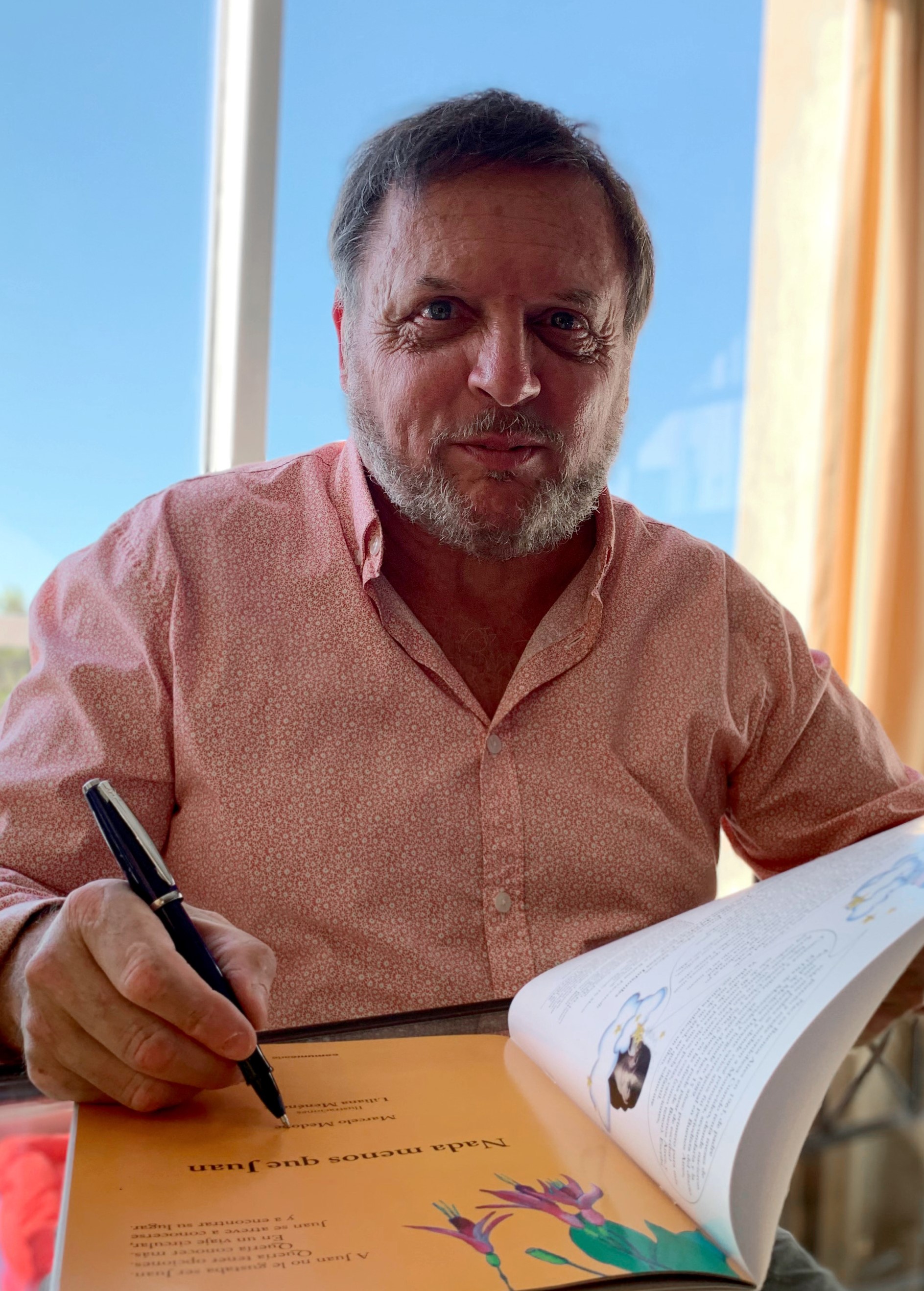

![ABien_@Nicholas Vreeland[1]](https://wordcitylit.ca/wp-content/uploads/2021/11/abien_40nicholas-vreeland1.jpg)


 WordCityLit