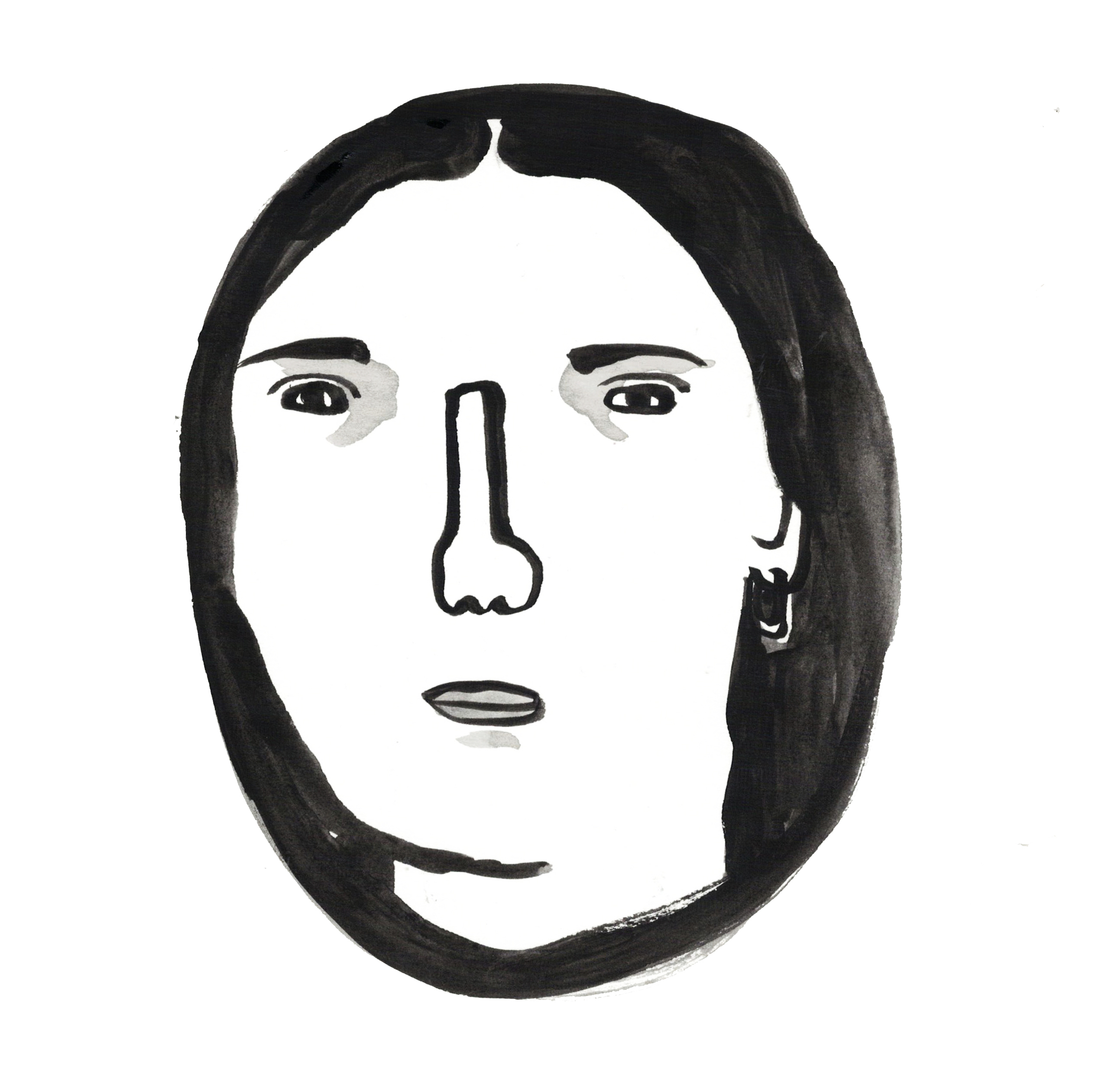
Literary Spotlight with Sue Burge. Dead [Women] Poets Society

DWPS_logo

Dead [Women] Poets Society (D[W]PS) is a collective which began in 2015.  Its aim is to resurrect women poets of the past, both in live events (séances) and online and also to raise awareness of women’s wide-ranging and profound literary heritage, and open up conversations between living writers and these often forgotten and side-lined women.  It’s a great mission statement to have.  During the event, two featured poets present a dead female poet and bring her back to life by reading her work and then performing their own poems, written specially for the evening and which are in deep conversation with the resurrected poets.  D[W]PS evenings also include an open-mic section, with a difference: you can only read one of your own poems if you also read a poem by a dead woman poet or a living/dead non-binary poet.  I’m a huge fan of these séances and both the featured poets and open-micers have really extended my knowledge of the female canon.  I especially love the way the events begin with the evening’s medium (Jas, Helen or Lily who you’ll meet below) reading Maria Tsvetaeva’s poem (translated by Elaine Feinstein) We Shall Not Escape from Hell which begins with the immortal lines:


We shall not escape Hell, my passionate
sisters, we shall drink black resins––


You can read the whole poem here:

https://trueallusion.wordpress.com/2014/04/04/we-shall-not-escape-hell/


The last D[W]PS séance featured Thea Ayres (image below) talking about why HD (Hilda Doolittle) inspired her so much, particularly HD’s rewriting of myths.

DWPS_thea_ayres

Thea read a selection of HD’s poems for us before moving to a poem of her own which responded to the highlighted themes in HD’s work.  Julia Copus (image below) gave a presentation on Charlotte Mew and a fascinating insight into why she was ignored in her lifetime.  Her personal poetic response to Mew was to create a cento made from lines from all the acknowledged and fêted male poets who were contemporaries of Mew, but to intersperse these with lines from Mew’s poems, and, most importantly, to give her the first and last word!  Copus has recently completed a biography of Mew, This Rare Spirit: A Life of Charlotte Mew (Faber 2019).

DWPS_JULIA_COPUS

You can read Thea’s and Julia’s poems here:

https://www.deadwomenpoets.com/post/thea-ayres-resurrects-h-d

https://www.deadwomenpoets.com/post/julia-copus-resurrects-charlotte-mew


 I’m so excited to find out more about this radical organisation!


Jas, Helen, Lily, what gave you the initial idea for this project, and how did you get started?


Lily (image below): Dead [Women] Poets Society is Jas’s brain child! She founded the original collective with Helen, Sarah Fletcher and Katie Byford while they were all students at Durham University.

DWPS_lily_arnold

Helen (image below): Jas emailed us one day with the idea. She pointed out that we hear so much from living writers – for obvious reasons – but you rarely hear the work of poets of the past performed at festivals and gigs. And we were all at university, where we were feeling frustrated with how few women writers were being taught on the syllabus. So combining the two ideas, and the great name which gave us the spooky feel, we got Dead [Women] Poets Society – a space to ‘resurrect’ women writers of the past, and trace that neglected lineage between us and them.

Helen_Bowell_tour2020

Lily: The first séance was commissioned as part of Durham Book Festival 2015, and was held at the now closed (and greatly missed!) DIY space: Empty Shop HQ. It was a magic evening, and the first time I had been to a poetry event if you can believe it. And look at me now!

Before the collective got Arts Council funding to go on a national tour, we were just putting on events and workshops when and where we could, resurrecting dead poets in as many cities as possible! Now in the pandemic we’ve had to go virtual. We never thought we would be communing with the dead online in this way, but it means we’ve reached global audiences. At our last séance we had attendees from across the world.


Helen, Jas and Lily – the three of you seem to have very different skillsets – what do you each bring to the mix and what makes you work so well together?  Tell us a bit more about yourselves and what makes the collective tick!

Helen: Ah, thanks! I think we are a great team. We all share the admin really – contacting poets and venues, marketing, social media, updating our website, answering queries, funding bids and reporting, forming partnerships and attending meetings. Lily is obviously the illustrator/designer extraordinaire, while Jas and I tend to work more closely with the poets and host the séances themselves. I really love sharing hosting duties with Jas. I’m very energetic and/or chaotic, while she has more of a calm and thoughtful vibe on stage. We balance each other out!

Lily: Also Jas (image below) and Helen are just such lovely people to work with, I feel very lucky. We all go way back, so I think our bonds are deep now.

Jasmine_simms_tour_2020 2 copy


There’s such a strong feeling of sisterhood in everything you do.  Could you say more about the zine you have created, Resistance?  I notice you also do zine workshops – how do these reflect your ethos and aims?


Lily: Haha thanks, I could chat about zines all day! RESISTANCE was put together to raise money for Sisters Uncut, an intersectional feminist collective that take direct action for domestic violence services. It is made up of incredible contributions from poets and artists. There are still copies up for grabs if you want to support the radical work of Sisters Uncut through the medium of print.

But anyway zines are just a great tool to use in our adventures in communing with the dead. It is DIY guerilla publishing! The zine workshops we run facilitate people in self-publishing their own ideas and work, and explore new ways to open up conversations between the living and the dead.

We always start our workshops with a basic premise. You choose a poem by a dead women/non-binary poet and turn it into a zine through the magic of photocopying/collage/drawing whatever you want to do. Then this zine gets photocopied a bunch of times, so at the end of the workshop you leave with your own print run of zines to distribute. But once people get into the zine zone, the workshop always grows into something more powerful! It becomes this kind of space for collective exploration and contemplation, which is reflected in the zines that get made. Often people leave these workshops having written and published their own poetry in just a couple of hours.

I treasure my copy of Modern Poetry in Translation which features a Dead Women Poet’s Society takeover!  You used “translator mediums to resurrect ghostly grandmothers”.  What a brilliant idea!  Could you say more about this project and whether the issue is still available?


Helen: Thanks so much! We had such a brilliant time guest-editing Modern Poetry in Translation – it was the perfect project for us to take up when our events had been postponed by the pandemic.

Translation does seem very much aligned with what we’re trying to do: bringing the work of women poets of the past into the present. A study from a few years ago found that between 2008 and 2018, only 28% of all translations were by women, and Clare Pollard (the editor of MPT) was just as keen to redress this balance as we were.

Each issue of MPT has a ‘focus’, and ours was (of course) dead women poets. The format of MPT in particular is almost precisely aligned with our regular work: each translation is introduced by the translator – just like a resurrection at one of our séances. It was just a different angle from which to ‘resurrect’ women writers. A few of the translations we published took ancient poems and re-interpreted them into modern language and situations, and felt like the ‘creative responses’ we commission of the poets on our tour. For instance ‘Origins of the Fire Emoji’ by Jessica Wood, which gave our issue its title, was a version of ‘The Exaltation of Inanna’ by Enheduanna, the oldest named poet.

The support we received for the project was astonishing, too: we crowdfunded 161% of our target amount to fund the issue, and managed to publish an extra-long issue as a result! We’d love to do more work like this.

Lily: Also yes, the issue is still available. You can still order it directly from the MPT website, and also through our site when you get a ticket for one of our online séances.

(Here’s a link to the MPT website: https://modernpoetryintranslation.com/)


You have put together an impressive array of living women poets to act as mediums for dead women poets at your events including Caroline Bird, Jade Cuttle, Nina Mingya Powles, Momtaza Mehri and Hannah Hodgson (images follow) to name but a few.  How does this process work?  Do the poets approach you first or are they commissioned or is it a mix of the two?

DWPS_caroline_bird

DWPS_jade_cuttle

DWPS_nina mingya powles copy

DWPS_Momtaza Mehri copy

DWPS_Hannah Hodgson copy

Helen: Though we’re always interested to hear from people, we approach the poets as and when we have opportunities to do so. Until the Arts Council funding, it was very ad hoc – who did we personally know, who would be up for doing this on a shoestring budget? But with the funding, we were able to ask some of our favourite poets to get involved, and pay them for their time.

What’s next for Dead Women Poets Society?  Can you give us a sneak peak of any future projects?

Helen: Well, first we need to finish our tour – we’re doing an online séance every month between now and September. And looking further ahead, we’re thinking about a project with music, working with the librettist and general excellent human Laura Attridge, but it’s very much in the planning stages at the moment.

You can find out more about this fascinating organisation here:

https://www.deadwomenpoets.com/

Helen Bowell

Helen Bowell is a London-based poet and co-director of Dead [Women] Poets Society. She is a Ledbury Poetry Critic, and an alumna of The Writing Squad, the London Library Emerging Writers Programme, London Writers Awards and the Roundhouse Poetry Collective. Helen won the 2020 Bronze Creative Future Writers Award and was commended in the 2020 Mslexia Poetry Competition. She was Poetry Business’s February 2021 digital Poet in Residence. Her poems have appeared in bath magg, Poetry Birmingham, Ambit and elsewhere. Her debut pamphlet is forthcoming from Bad Betty Press in 2022. She works at The Poetry Society.

https://www.helenbowell.co.uk/

Jasmine Simms

Jasmine is a Yorkshire-based poet and co-director of Dead [Women] Poets Society. Her debut pamphlet, Like Horses, was published by Smith/Doorstop in 2019. She is an alumna and current trustee of The Writing Squad, an Associate Artist for Grimm & Co (children’s writing charity) in Rotherham, West Yorkshire, and in 2019 was Writer in Residence for the University City of Tübingen in Germany. Jasmine has won awards for her poetry including the New North Poets Award (Northern Writers Awards), the Yorkshire New Poet Prize (The Poetry Business), and was formerly Vice Chancellor’s Scholar for the Arts at Durham University.

Lily Arnold 

Lily Arnold is a Leeds based artist. Sometimes she does huge paintings on big walls, and sometimes she does tiny drawings in small zines. She’s been working closely with Dead [Women] Poets Society since the collective’s formation. Lily likes watching garden birds and eating pizza, though not always at the same time. Find her on instagram: @gutt_trustt

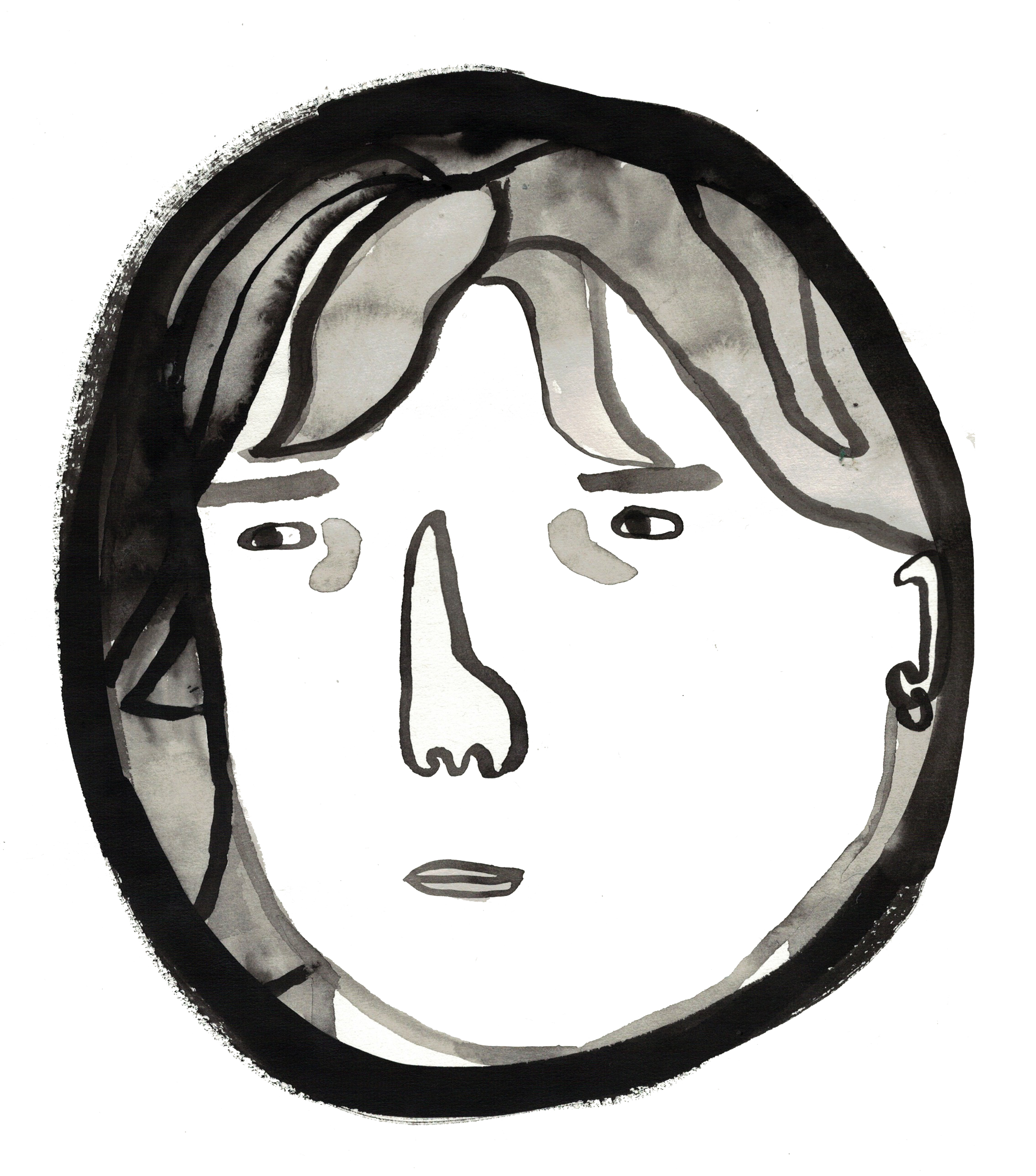
More Women D[W]PS: Ruth Sutoyo, Bridget Minamore, Lizzy Hawkins (all drawings by Lily Arnold)

Ruth Sutoye

DWPS_Bridget_Minamore_1 copy

DWPS_Lizzi_Hawkins


Sue Burge is a poet and freelance creative writing and film studies lecturer based in North Norfolk in the UK.  She worked for over twenty years at the University of East Anglia in Norwich teaching English, cultural studies, film and creative writing and was an Associate Lecturer in Creative Writing with the Open University.  Sue is an experienced workshop leader and has facilitated sessions all over the world, working with a wide range of people – international students, academics, retired professionals from all walks of life, recovering addicts, teenagers and refugees. She has travelled extensively for work and pleasure and spent 2016 blogging as The Peripatetic Poet.  She now blogs as Poet by the Sea. In 2016 Sue received an Arts Council (UK) grant which enabled her to write a body of poetry in response to the cinematic and literary legacy of Paris.  This became her debut chapbook, Lumière, published in 2018 by Hedgehog Poetry Press.  Her first full collection, In the Kingdom of Shadows, was published in the same year by Live Canon. Sue’s poems have appeared in a wide range of publications including The North, Mslexia, Magma, French Literary Review, Under the Radar, Strix, Tears in the Fence, The Interpreter’s House, The Ekphrastic Review, Lighthouse and Poetry News.   She has featured in themed anthologies with poems on science fiction, modern Gothic, illness, Britishness, endangered birds, WWI and the current pandemic.  Her latest chapbook, The Saltwater Diaries, was published this Autumn (2020) by Hedgehog Poetry Press and her second collection Confetti Dancers came out in April 2021 with Live Canon.  More information at www.sueburge.uk

Return to Journal


WordCity Literary Journal is provided free to readers from all around the world, and there is no cost to writers submitting their work. Substantial time and expertise goes into each issue, and if you would like to contribute to those efforts, and the costs associated with maintaining this site, we thank you for your support.

One-Time
Monthly
Yearly

Make a one-time donation

Make a monthly donation

Make a yearly donation

Choose an amount

¤5.00
¤15.00
¤100.00
¤5.00
¤15.00
¤100.00
¤5.00
¤15.00
¤100.00

Or enter a custom amount

¤

Your contribution is appreciated.

Your contribution is appreciated.

Your contribution is appreciated.

DonateDonate monthlyDonate yearly

Why He Hasn’t Been Around. Non-fiction by Wade Cravath Bell.

wadebell

Why He Hasn’t Been Around      

The manic depressive’s outbursts are incomprehensible to others. After one, Theo was calm and possessed until his girlfriend said, “I will have to leave you. Your moods are killing me.”

His civil service job with its soul destroying boredom and inconsequentiality chaffed him raw. He wrote poems, stories. It didn’t help. Impotent before the fact of his condition, he raged. Yet he had to carry on with his life.

Making a distinction between depression and melancholy, he fell in love with melancholy. He longed for depression to end, to let the melancholy in. It was melancholy’s sweet, sweet sadness and what was behind it: the slowly rising sun.

A reasonably accurate metaphor to describe his mental makeup would be that of the hunter and his prey. He was both. Round in circles he went, hunting himself, bow and arrow in hand. He had the hunter’s yell, the hunted’s yelp.

*

He looked down through a web of nerves at sleep. It was on the other side like a delicious meal he was not allowed to eat.

He was aware that he was thinking, but the images were absurd, in no way connected to reality as he understood it. Dialogues began rationally but ended in non-sequiturs, little products of the mind machine gone awry.

He was assailed by brutal images. A woman stepped off a bus, fell and banged her head. A brick wall collapsed. A car’s wheel flew off and the vehicle careened into a grove of trees.

Depression has nothing to do with weakness or will, yet who is there who has not had it (and even those who have) who does not think it does? It’s a belief that lives on like a discredited conspiracy theory. It lives on.

She left him. He went away, far away, to Spain, to sort himself out.

As Xavier, a Spanish anarchist in a worn blue beret told him in the lone bar in Vulpellach (it had three tables, six chairs, legacy foosball; it was open for two hours in the evening or until it seemed no one was coming), “Every village in the Ampurdan has its Salvador Dalí.” Vulpellach was in the Ampurdan, a few kilometers from the painter’s home in Port Lligat.

“What I mean to say,” Xavier continued, while the two other customers in the bar and the barman listened attentively, “is that every village has someone made strange by the spectral wind, the howling Tramontana, that now and then blows down from the Pyrenees Mountains. Made strange as the trees on the bluffs that have been subjugated to the wind’s will and are twisted, bent double. Strange people, yes, but sometimes sainted, like Dalí.”

When the wind came, Theo cringed before it. Like a powerful Chinook, it was relentless and, as Xavier said it would be, “Tan seco como la Sahará.” Dry as… In moments the winter-humid countryside was dry. The wind did not surge and wane but blew with steady force like an endless barbarian army forging on.

Theo, young hotshot writer, hid, paralyzed like a dog with rabies. In the walled patio behind the house next door, the village harridan, whose name meant Happiness, screamed and cried under the almond tree like someone Shakespeare might have known.

For eight days the wind blew. The young hotshot’s heart was sick and stressed. Memories from childhood and from the day before haunted him. None were good, none comforting.

Theo envied the French novelist Raymond Rousel’s freedom to be mad. With his wealth, Rousel was the crazy hermit loyal only to his mind. He even had a doctor who understood and supported his idiosyncrasies. He had a cook and a man to care for his villa and its gardens. He had maids to change his sheets. He could slide out of bed as late as he wanted and work until he was exhausted.

It’s unfair, Theo wrote, but there you have it: a rich madman can indulge his illness while a poor one has a hard time of it. Sometimes it’s too hard to bear.

He wrote: Passion and ambition, where are they? It is 5:30 in the afternoon on a sunny Sunday in Calgary and time for more cereal. Sunday means bland food and self-flagellation. Why did he do that? Say that? How could he have been so wrong / inconsiderate / hurtful?

He was the inferior being in a small room with its curtains closed and a mind clouded as the sky. What demons were keeping him distressed today? What balm would make them take their strangler’s hands off his floundering ego?

His head was stuffed with cotton wool. But not nice, clean cotton wool. It was like something women throw away. He forgot, because he was so much inside his mind, that what he said last night to him or her or him or her was so innocuous only he would remember it.

Half a dozen times he nearly reached tears. Why couldn’t he be cured of this? After three years of pills, had he developed a tolerance to them, he wondered? Would he go through the remainder of his life increasing the dosage every couple of months? Where would it end? With suicide?

Time was not the healer it was cracked up to be.

Medical science had no way to reach into the brain to repair damaged circuits, or the little valve that no longer functioned as it should, or was genetically encoded to fail as the brain matured and no longer properly provided the timely release of a certain acid necessary for mental balance.

Psychotherapy—Theo had done it. He could talk about himself for the rest of his life and still not be right.

For a few minutes he was fine. He wrote a story. Then he crashed. For an hour that Sunday in Calgary he was normal. An hour a day. Fantastic.

She said: “You have to understand: I can’t go on like this. I can’t go on being strong while you drag me down.”

He told her, “Leave then. Get out. Go far away.” How could she know that his words were grenades launched at his own heart? How could she believe it if he told her that it was his self-destructive mind working against itself, to hurt him? How insane does that sound? He told her he never wanted to see her again, but he only wanted her to hold him.

In a dream he stands leaning forward, his hands on his knees. A powerfully driven sword slices his wrists, both at the same instant. His hands cut off, the blade continues, slicing his legs at a point just above the knees. As his legs fall away and his torso begins to topple—at that instant of falling, of the realization that his body has been cut to pieces, and that he has been instantly hewn into a multiple amputee—he wakes.

There are a thousand thoughts of falling and dying, and one or two of a phantom mistress raising him to his feet. Hers are eyes that believe him, that see him and into him.

“The white and blue virgin called Melancholy” – Lorca’s duende, weeping. Melancholia. He thought it a beautiful word. He saw it as a lovely bird. But it was a bird that carried sickness and death in its feathery caress.

Or, to offer another image: he wears depression like a spiky shroud. He warns himself, as if he were two beings inhabiting a strange land: Do not touch a thing while it is on you. Whatever you brush against will at best be disarranged, at worst shattered by the inner anger escaping through your fingertips. Stay away from the world as if the world had a plague.

He had been alone and angry for nine days. Now the anger was overlain by flu and fever, and by depression that fingered the petals of the rose of suicide. He was under perpetual siege from within. He did not think clearly. He could not make reasoned decisions. He would lose his job.

Why was he so fucking angry?

There is no one stronger than a drowning man who grabs another and expects to be saved. There is no heavier being than one who has blood oozing from his head, wildness in his eyes and a shard of glass still in his hand.

Before she left, she opened the door and he descended the stairs. Under the stairs he played with the wonderful toys despair can invent. He resolved to become a recluse and die down there. But she came back. She hauled him up the stairs and out the door and to a hospital where they gave him strong medication. Then she went away again for good.

He didn’t know why but without her he became gentler with himself; he began to like himself, at least from time to time. He grieved for the loss of the obsession she was for him, but not for the man he grew to be in their marriage.

With time he came to understand that no one could help him recover except those who were trained to do that. But it wasn’t psychotherapy he needed so much as substances to balance his chemistry. (Had he not always intuited as much and self-medicated to achieve it? Is that not the common path?)

A depressive is a distinct type of human, almost a sub-species, as old as amber. How did the ancients handle such a being? Melancholia was once called Bellerophon’s disease, named for a legendary Greek who slew the Chimera. The Chimera was a fire breathing monster with a goat’s head on its back and a snake for a tail. That was depression.

Once Theo was a young hotshot with a book newly published, a passport and a guidebook to Spain in his knapsack. He had new roads to wander. He had an ego that could fill the Atlantic that spread out beneath the plane.

He was also a man who cringed time and again before a crazy-making wind.


Wade Cravath Bell is the author of four books of fiction from Guernica Editions and Coach House as well as numerous stories and poems in print and internet journals. He lives in Calgary, Canada.

Return to Journal


WordCity Literary Journal is provided free to readers from all around the world, and there is no cost to writers submitting their work. Substantial time and expertise goes into each issue, and if you would like to contribute to those efforts, and the costs associated with maintaining this site, we thank you for your support.

One-Time
Monthly
Yearly

Make a one-time donation

Make a monthly donation

Make a yearly donation

Choose an amount

¤5.00
¤15.00
¤100.00
¤5.00
¤15.00
¤100.00
¤5.00
¤15.00
¤100.00

Or enter a custom amount

¤

Your contribution is appreciated.

Your contribution is appreciated.

Your contribution is appreciated.

DonateDonate monthlyDonate yearly

Eva Salzman’s Introduction to Women’s Work: Modern Poets Writing in English


EvaSalzman

WOMEN’S WORK: MODERN WOMEN POETS WRITING IN ENGLISH

Introduction by Eva Salzman to Women’s Work: Modern Women Poets Writing English, Eds Eva Salzman & Amy Wack


I

This anthology presents a panoramic selection of leading English-speaking modern poets, with an emphasis on bridging the US, UK and Ireland divides. You’ll find here a dazzling plurality of idiom, style and subject, well-established poets appearing with lesser known and newer voices deserving of a wider audience: the latest contemporary writers set in context against their heritage, to represent the full sweep of the modern period.

Given the space – and a more perfect world – these poets should appear alongside their male counterparts. That book is also overdue.[1] Given the space…well, usually there isn’t the space. All things being equal (which, mostly, things aren’t) editors largely agree that more men than women deserve more pages in mainstream anthologies purporting to reflect the canon; the “indispensable” list is still comprised predominantly of “men poets”. (Stephen Pain recommends the universal adoption of this phrase: “’man poet’ Ted Hughes, poet Sylvia Plath[2], ‘man poet’ Dylan Thomas, etc.” Imagine the Times Literary Supplement review of the “man-poet Seamus Heaney”! The long-awaited publication of Men Poets of the 20th Century!)

How to address a problem not seen as such? In the UK, any glaring gender imbalance is typically explained away as a “coincidence” here, an “accident” there. In that case, one should send for the doctors. If the selection criteria are indeed gender-blind, based on quality alone, this implied opinion of women’s writing is an offence demanding a response.

Many women poets disagree with the separatist ideology to which anthologies like this are assumed to subscribe. Some distance themselves from what Germaine Greer calls “the spirit that produced anthologies such as Diane Scott’s Bread and Roses and Louise Bernikow’s The World Split Open…” and “the reinvention of poetry as a propaganda tool of the women’s movement [that] must have galled independent women poets who had been toiling away for most of a lifetime, only to see their small market overwhelmed by a froth of publishing on the part of literature co-operatives and writers’ workshops.”[3] Irritatingly, anthologies sometimes do perpetuate the very stereotypes about women’s subjects we aim to disarm in this volume.[4] An anthology compiled to prove a point would be top-heavy with its own agenda. Nevertheless, my own internal, and heated, debate on this subject – and some poets’ ambivalent feelings about women’s anthologies – impelled me to address not only what is a routine gender bias, but also our problematical relationship with efforts to redress it. Hence, this polemic before the poetic. Hence the launching of this spectacular wealth of talent with a modulated celebratory note. Aren’t women’s anthologies self-defeating – “own-goals” – as they say? Doesn’t positive discrimination undermine a work’s legitimacy? True or not, the merest hint that the critical bar has been lowered justifies the status quo: which, of course, is itself based on a tacit positive discrimination.

Furthermore, gender-segregated anthologies conveniently absolve the “unconverted” from the need to consider the existence of bias. Damned if we do, damned if we don’t. It’s a conveniently insoluble problem. I too say “no thanks” to a separate, girly sand-box to play in, thank you for the gift of this condescension. The writing is all that should count. To which I’m tempted to reply to myself, and everyone: in your dreams.

In trying to shape a canon, anthology editors need to believe in their own vision and independence of thought, resistant to prevailing currents. In a review reprinted in his collection of essays Poetry and the Age (required reading), the poet/critic Randall Jarrell, in one of his reviews in his blunts such ambitions with a characteristic wit:

The typical anthologist is a sort of Gallup Poll with connections – often astonishing ones; it is hard to know whether he is printing a poem because he likes it, because his acquaintances tell him he ought to, or because he went to high school with the poet. But…he stares over his herds of poets like a patriarch, nodding or pointing with a large industrial air.[5]

Lacking the right body parts for the patriarch, I’ll point to the mostly patriarchal Great Poets of the 20th Century, a series of pamphlets published in spring 2008 by the Guardian newspaper in collaboration with Faber. These poets were deemed to be: Siegfried Sassoon, T.S. Eliot, W.H. Auden, Sylvia Plath, Philip Larkin, Seamus Heaney and Ted Hughes. In Britain at least, it is a truth universally acknowledged that Sylvia Plath and Elizabeth Bishop are the only women poets worthy of admission to the pantheon. Such unanimity of thought in an otherwise divisive world is notable.

Gender issues aside, there’s a strong case for replacing at least two writers on this list, chosen for reasons other than the writing. Surely, Sassoon is included to tick the box marked “war poet”? He cannot be a plausible choice outside of this category. Regardless, this box is more acceptable than the one marked “woman poet”, which pertains to the so-called “special interest” group comprising over half this planet’s population.  Despite lip service to the contrary, criteria other than the writing are always applied, if selectively.

It seems hubris – or a calculated marketing strategy – to define such a small and select part of the canon while some of its authors live; if you dare to, surely knowledge and breadth of vision are prerequisites for the job. Identical and infallible good taste about Plath and Bishop aside, one wonders how many are simply not familiar enough with major women poets’ work to make an informed assessment of the hierarchy. Who really knows the work of Louise Gluck, Denise Levertov, Edna St. Vincent Millay, Kay Ryan, Lorine Neidecker, Adrienne Rich, May Swenson, to name but a few (mostly) Americans? None of these are published by Faber, the Guardian’s partner for the series, but the lack of women on that list is further evidence of the problem.

Broaching this subject brings a plague on your house. Several online discussions which did just this (including responses to a Guardian blog I wrote which forms the basis for this essay) elicited from contributors passionate views about the male-dominated literary world. Equally passionate, and telling, was the vitriol unleashed in response to these comments. It would be disingenuous to say I found it astonishing. Personal attacks, like rockets, whistled through the ether; launched under cover, the anonymous writers aired their true opinions under an adopted – and often revealing – moniker.  (There’s a dissertation to be done on the persona as online literary device!) The issue was instantly hijacked into one about plausibility: women’s experiences and their commentary on it dismissed as irrelevant, and in this way invalidated in one fell swoop. Statistics, demanded as proof superior to women’s own experiences, were duly supplied. After more huffing and puffing, a nullifying silence fell, which further illustrated points of the argument. Here are some of these figures, mostly from volumes published in the enlightened post-1960’s:

Penguin Book of Contemporary Verse ed. Kenneth Allott – 5 women/90 men; New Penguin Book of English Verse ed. Paul Keegan – 16 women/81 men; British Poetry Since 1945 ed. Edward Lucie-Smith – 7 women/90 men;  Oxford Book of Contemporary Verse ed. D.J. Enright – 3 women/37 men; 101 Sonnets ed. Don Paterson – 13 women/87 men (this book seemingly culled from Phillis Levin’s superb Penguin Book of the Sonnet[6]); The New Poetry ed. Al Alvarez – 2 women/26 men; Poetry 1900-1965 ed. George Macbeth – 2 women/21 men; New York Poets ed. Mark Ford – no women; New York Poets II eds. Mark Ford & Trevor Winkfield – 2 women/9 men; The Forward Anthology of Poetry for the years 1993-2006 consistently features many more men than women; critical books are similarly lop-sided. I could bore us all to kingdom come.

The anthologies The Firebox ed. Sean O’Brien (34 women/91 men), Emergency Kit eds. Jo Shapcott & Matthew Sweeney (41 women/116 men) and The Anthology of 20th c. British and Irish Poetry ed. Keith Tuma (31 women/87 men), with the fairer acknowledgements these figures imply, nevertheless hit the proverbial glass ceiling, with women poets comprising roughly 1/3 of the total, occasionally a smidgeon more; turning hopefully to Andrew Duncan’s Poetry Review article on this last volume, we find that his 30 regretted omissions – poets from the 1950’s-1990’s – include not a single woman. The anthologies Last Words eds. Don Paterson & Jo Shapcott (33 women/55 men) and The New Poetry eds. David Kennedy, David Morley & Michael Hulse (17 women/38 men) all have a “healthier” balance; Bloodaxe, the publisher of this latter, boasts a consistently better record when it comes to publishing women.  Carol Ann Duffy’s Hand in Hand and Adrienne Rich’s The Best American Poetry 1996 are the only two anthologies I could find comprising more women than men. Here, it’s worth quoting extensively from Germaine Greer vis a vis the so-called “arbitrary” nature of coincidences:

It is not easy to imagine a male poet objecting to appearing in an anthology of men’s poems, as most anthologies have been, though the fact is not highlighted in their titles. The Amis Anthology, to cite the most doggedly laddish, does not separate work by gender, but women would have been better served if it had; out of 242 poems, eight are by women. One, by Elizabeth Jennings, is included because Amis published it when he was at Oxford in 1949; another, by Felicia Hemans, because his class translated it into Latin hexameters when he was at school; one by Christina Rossetti is accompanied by a sneer, and another by the unknown Teresa Dooley is used to caricature all poetesses. Laura Riding was doubtless happy to be one of the select company of nine women poets represented in The Rattle-Bag, compiled by Seamus Heaney and Ted Hughes in 1982.[7]

She has more to say about the criteria for inclusion:

…the blokes like the girls best when they write like the blokes, and extra-specially when they write about girls the way the blokes do. It suits the male poet to believe that neither sex is specifically intended because it encourages him in his view that his specificity is actually universality. The woman poet who knowingly plays this game is not so much a ventriloquist as a ventriloquist’s dummy.[8]

A snapshot of American anthologies shows us that The Best American Poetry anthologies (both 1989 & 2005), The Best of the Best American Poetry: 1988-1997, the Oxford Book of American Poetry eds. David Lehman (published in the UK but with an American editor) and the Vintage Book of Contemporary World Poetry, ed. J.D. McClatchy, adhering to our glass ceiling model, have somewhat better figures than the following: British and Irish Poetry Since 1970 eds. Richard Caddel & Peter Quartermain – 10 women/45 men;; The New Naked Poetry eds. Stephen Berg and Robert Mezey – 3 women/23 men;  New Lines anthologies ed. Robert Conquest 1956 – 1 woman/8 men,  and  1963 – 1 woman/23 men.[9] The figures above for women editors speak for themselves.[10]

Naturally, these anthologies reflect their editors’ taste within the confines of what’s available from publishers in the first place. These figures are themselves at odds with those from the 1960’s onwards which show increasing numbers of women winning Gregory awards, this acknowledgement commonly regarded as a reliable and leading indicator of new talent. Women are two-thirds of the poetry-buying public and a majority of workshop attendees. I hadn’t expected such appalling figures, but shouldn’t be so shocked at others’ lack of outrage.

Let’s not get “hysterical”, though. Let’s be “reasonable”, yes? Edna Longley, in choosing 10 women/49 men to represent The Bloodaxe Book of 20th Century Poetry, just prefers these poets who. A talented writer herself, surely Dorothy Wordsworth was a reliable critic in being so scathing about women’s poetry. In her book Gendering Poetry, Vicki Bertram notes how both Kathleen Raine and Laura Riding “had very firm views about the innate inferiority of female poets” (On cue come revelations about Riding’s unacknowledged contributions to writing by her then partner, Robert Graves: a familiar tale.) So women also judge women on gender rather than merit.[11]

Our Modern Greats had hardly left the newsstands when, predictably, the Guardian commissioned a woman to justify their series’ equally predictable lack of women: a well-worn, pre-emptive tactic employed by those defending a canon still being shorn of female talent.  Also on cue, Erica Jong writes: “Women columnists still make their fortunes by attacking other women, as in the age of Clare Boothe Luce. It is, in fact, a time-honoured way to get a book contract or a political appointment. Trashing one’s own gender remains a path to advancement.” [12]

In her essay “The Antifeminist Woman”[13] the poet and feminist Adrienne Rich says that until the late 50’s she’d tried not to identify herself as a female poet. She analyses the strong pressures which pit “woman against woman, woman against herself”. Flattery and blandishments convince the chosen woman poet she is special. Separated from the herd of ordinary female poets, she is accorded the status of honorary man, and therefore a more trustworthy critic, although she’s exempt only within the terms of a system underwritten by masculine primacy:

The token woman may come to believe that her personal solution has not been bought, but awarded her as a prize for her special qualities. And she may – indeed, must – have special qualities. But her personal solution has been bought at a political price; her ’liberation’ becomes another small confirmation of the patriarchal order and its principle of division.[14]

Such “fragmentation” is part of a sophisticated disposal system, crucial debate consigned to the “women’s pages” ghetto or women’s anthologies, where indignation is safely stashed, available to the already-converted and otherwise largely ignored. Such labels can often seem “own-goals”; men rarely participate in such “special interest” forums, except in reactionary guise.

It goes without saying that our special poet is not a “poetess”, which demeaning term does not simply connote a female practitioner as some claim.  In Stealing the Language: The Emergence of Women’s Poetry in America, the poet and critic Alicia Ostriker states: “All of us know, or think we know, what a poetess is, and, to paraphrase Marianne Moore, we too dislike her”. Meanwhile, back at the corral, in an essay on Sylvia Plath, James Fenton is developing his theories:

When Elizabeth Bishop and her college friends sat doubled up with laughter at Edna St. Vincent Millay’s reading, with Millay wearing her long robe and clutching a curtain, what the girls were laughing at was a poetess, a woman imagining that a poetess must be something like a priestess.” [15]

Regardless of this (to us) comic and ludicrous picture[16], Fenton’s conclusions are enlightening: “Women becoming priests – the Pagan-sounding Priestess – upsets the symbolism”.[17] Such views accord with women’s assigned role as defender of morality within “a Judaeo-Christian world view where a woman’s value was above rubies and yet below that of men”,  as Sally Feldman describes it.[18] She goes on to quote the Bishop of Rochester Michael Nazir-Ali’s admiration for the historian Callum Brown who “’notes particularly the part played by women in upholding piety and in passing on the faith in the home. It was the loss of this faith and piety among women which caused the steep decline in Christian observance in all sections of society”.[19] What a heavy burden this is: to make a woman responsible for perceived failings in a hierarchy she’s powerless to redefine or question.[20]

The baggage attached to “woman poet” – poetess or not – is more like a lead weight. Poet and critic Stanley Kunitz, in a review of Louise Bogan’s Land of Dust and Flame quotes with dismay Allen Tate’s reference to her as “the most accomplished woman poet of our time”, and wonders if “to be perennially classified and reviewed as a ‘woman poet’, must prove discomfiting, at least to a poet…of superlative gifts and power”,[21] and to anyone else, it’s tempting to add. With the perception others sorely lack, Kunitz disparages Stephen Spender’s generalisation that: “when men write poetry they have their eyes fixed on several things at once, such as the form and effect of the poem, whereas women lose themselves in the subject-matter, the experience….and are careless of words themselves and rhythmic pattern”.[22]  Spender clearly hadn’t read Plath, nor many others, one is bound to say. And I’d thought that women were meant to be the ultimate multi-taskers! But such clichés are always a moveable feast (sic).

James Fenton is “loathe to betray the spirit of Moore and Bishop by calling them women poets”[23], which term is commonly understood to be one of belittlement. It’s hard to know how to take his comment that we can’t know if Marianne Moore “achieved what she did only at the cost of the suppression of what might be taken as womanly”,[24] which presumably would otherwise hinder her greatness. Sylvia Plath, doubtless fairer game than Moore or Bishop, is damned with faint praise (or praised with faint damning, I’m not sure which): “…I was looking out for that particular tone of voice, the tone she acquires when she is not yelling (and most of the time she is not yelling)”:[25] which final clause certainly begs the question of why he mentions “yelling” at all.[26]

Fenton utterly takes it for granted that women poets are subject to the conflicts between marriage and writing or career, which conflicts needn’t pertain to men. Perhaps it’s unfair (and naïve) to expect him to factor in or challenge this disparity or to ponder its consequences. Least of all would it occur to him to speculate how, from his male perspective such matters influence his own assessments of Plath’s “conventional attitudes and shallow ambitions on the one hand, and (that) other self with its burning mysterious purpose”[27], thereby describing – but not objecting to – the necessary division of self and vocation not required of men.[28]  Viewing with distaste Plath’s unguarded elation at being the first woman poet Al Alvarez has taken seriously since Emily Dickinson, Fenton seizes the opportunity to express a predictable disparagement of female ambition. Plath’s response to having nabbed one of the few seats at high-table reserved for women, while unseemly and gloating, is perhaps also understandable under such a weight of prejudice.

He later acknowledges with wonderful (dis-?)ingenuousness: “The invention of the woman poet as evil or threatening archetype, witch, harridan….was not Sylvia Plath’s single-handed achievement”[29]. To which I reply: quite. Indeed, one recognises in her writing precisely the audacity and rage of the powerful yet impotent woman and poet.[30] In fact, by missing the point – by not listening – Fenton provides clues to this very aspect of her work.[31]

….

The terms paying Plath’s admission through the hallowed gates of the Guardian series are striking – and handed-down, one suspects.  Both Margaret Drabble, the author of the Plath booklet, and Nicholas Wroe in his Guardian review of the series, emphasised Plath’s importance apart from her “suicide” poems… by invoking the cliché of redemptive motherhood: “the vivid colours of giving birth, the pleasures of breast-feeding and the power and mystery of the maternal bond. Phew! It’s a good thing she had kids. Otherwise what could be said about the work?! A contemporary of Plath’s – which qualifies her in the pamphlet’s words to be its author – Drabble describes her “appalling” and “exhilarating” poetry from the “heart” rather than the head, thus minimising any formal dexterity and finesse (which needn’t preclude the heart).[32] Apparently, it’s radical to attribute her fame to the usual criteria: an exceptional feel for language, outstanding technical skills, a powerful vision and mastery of form.  Apparently, it’s naïve to want ability and talent to be the king-makers’ (sic) main criteria when it comes to women poets.

Double standards like this are rife, strengths turned to weaknesses undermining a poet’s stature. Plath is often misleadingly summed up and disparaged as a “confessional” poet; the term applied Robert Lowell is never so negative. As we have seen from Fenton’s remarks, the critical writing about Plath typically eclipses the work itself by emphasising her fame as contingent on the sensationalist biographical events of her life and death, which issues are largely secondary in the writing about her husband, Ted Hughes.  Sadly, and repeatedly, this lack of critical engagement is characteristic of how most women poets are viewed – or are not viewed – as is more the case.

Alicia Ostriker examines how the critical lexicon varies to suit gender: “We seldom encounter, in praise of woman poets, terms like “great, powerful, forceful….large or true…” Instead, she continues, “complimentary adjectives of choice…shift toward the diminutives: graceful, subtle, elegant, delicate, cryptic and, above all, modest.”[33] Repeatedly, women poets are admired for their retiring nature: “We know that Bishop was extremely cautious with the deployment of her private life and tenderest emotions in her poetry.”[34] Having devoted a great part of his review to poems he doesn’t like, Fenton does laud the “quiet, quizzical Plath”.[35] Even Kunitz uses words like “pretty” and “elegance” to describe Bogan;[36] his essay on Marianne Moore begins in the following fashion: “Miss Moore is unique, and she never argues. Like peace she is indivisible”.[37] According to W.H. Auden, Adrienne Rich’s early poems are “neatly and modestly dressed, speak quietly but do not mumble…” (here, the phrase “eating of words” comes to mind).

Ostriker dryly remarks: “Male poets engage in quests; women poets run errands”.[38] The poetic material cited as proof of a male poet’s depth and substance will, on the other hand, substantiate a woman poet’s limited palette. Writing about partner or family, she is a “domestic” poet; meanwhile, he is absorbed in the timeless themes of love and passion. Grappling with life and death issues, men are dragon-slayers; women embarked on such odysseys are rarely granted similarly heroic status. Instead, they’re merely, victims, a considerably less noble assignation which also handily renders them more vulnerable to any criticism embedded with ulterior motives, and more susceptible to being undervalued and misunderstood, except in the context of their maternal role, or tragedy.

Rich’s refers to an “imaginative obsession with victimisation and death, unfair to Plath herself and her own struggle for survival”[39], which remark echoes my current preoccupation with a critical fetishization of the damaged woman, as artist especially. Fenton takes pot-shots at living poets he deems pale imitations of Plath, the very poet whose talent he’d failed to recognise in the first place, while she lived. (Perhaps he’ll be proven similarly wrong about more recent targets.)[40] Dead, Plath becomes the conveniently passive subject of speculation, handily absent from the arena where power politics are played out.[41] Dead, she is protected and enhanced by virtue of this ultimate vulnerability. The recent death of the talented young poet Sarah Hannah, to whom this book is dedicated, had me pondering the rescue of her work from these death-cult terms which routinely sidelines any critical analysis.[42]

Similarly, Emily Dickinson’s self-imposed Purdah is both a virtue and symptom of the madness assumed to underpin her creativity, her retiring nature and oddball spinster status like a sandwich board which the artful strategist and vocational writer is forced to carry. Says Ostriker: “What we may call the ‘accident’ theory of female creativity persists in, among others, David Porter, whose Dickinson: The Modern Idiom argues that Dickinson’s evasions of ‘reality’ inadvertently anticipate the radical gestures of postmodernism.”[43] Maybe, to him all avant-gardism is an accident. A collation of routine not-so-subliminal ‘forces’ working against the writing woman provides the premise for Joanna Russo’s book How to Suppress Women’s Writing which, to rephrase slightly from the book jacket, goes something like this: She didn’t write it. She wrote it, but she shouldn’t have. She wrote it, but she had help. She wrote it, but it isn’t art. She wrote it, but she’s an anomaly. She wrote it, but but but…”

Inevitably, an author’s work is itself influenced and even compromised by the critical terms employed to describe it. Adrienne Rich notes the overexposure “in the schoolroom to Emily Dickinson’s ‘little-girl poems’, her kittenish tones, as in “I’m Nobody, Who are you” (a poem whose underlying anger translates itself into archness)”[44], in contrast to poems more accurately attesting to that poet’s power and depth.[45]

Rich describes her earlier “absolutist” approach (“an arrangement of ideas and feelings, pre-determined, and it said what I had already decided it should say”). This thinking gave way to the realisation that she had “suppressed, omitted, falsified even, certain disturbing elements, to gain that perfection of order,” which indeed is an aim some actively applaud, quite regardless of its ultimate success as a profound work of art. Describing her later direction Rich says: “Perhaps a simple way of putting it would be to say that instead of poems about experiences, I am getting poems that are experiences, that contribute to my knowledge and my emotional life even while they reflect and assimilate it.”[46] It should go without saying that “women poets” – like “men poets” – make their aesthetic decisions based on the usual explorations and considerations that define the creative process.[47]

We could view in a wider context the dismal publishing figures and the tenor of critical writing about women. For example, the 2008 groundbreaking presidential nomination race in the US, by fielding a woman and a black candidate, flushed out an unpleasantly regressive zeitgeist…if one can call “regressive” something that’s never gone away. Websites boasting a merrily virulent misogyny proliferated.  The predictable racist comments rightly provoked universal and unqualified outrage; in contrast, analogous sexist comments merited mild disapproval or uncomfortable laughs. A New York Times article cites statistics showing that, consistently, people can overlook race more readily than gender, when it comes to candidates or jobs. Nevertheless, the media carried on giving the lion’s share of coverage to racism, as the major hurtle. The newly-minted platitude is: “Feminism is a dirty word”. In this context, we ponder a widespread ambivalence towards women’s anthologies; in this context, we ponder not only the anger at the blatant under- and mis-representation of women poets, but the anger at this anger.

Although a thin trickle of women’s voices – often the usual suspects – runs throughout mainstream anthologies, there’s little value in an honour bestowed by editors (mostly male) who are simply not familiar with enough women poets. This book, in introducing this part of the canon and re-writing the list of “essentials”, throws down the gauntlet to future critics and editors in the hope they can better represent the true breadth and vitality of the tradition.

In the movie Groundhog Day, a man is doomed to relive the same day repeatedly, until he can get it right. Then, Sonny and Cher will finally stop singing “I Got You Babe”, and everyone will rediscover Simone De Beauvoir’s classic book The Second Sex, published over fifty years ago. Describing how her 1968 hope has evaporated, Erica Jong calls feminism “nameless again”, but concludes: “Perhaps a new generation will discover it like the shard of an ancient cooking vessel. Perhaps someone will name it again. I’ll be there.”[48] Then we may not need women’s anthologies to get the accurate measure of women’s literary contributions, and won’t need to devote this valuable space to saying what is commonly understood to be unsayable. Many consider it passé – old hat – to bring up these subjects. What is more old hat is the societally sanctioned quashing of this important discussion. That both this book and its defence feel more necessary than ever suggests that some old hats should still be in vogue.

[1] Thus far, I’ve been unable to interest UK publishers in such a  book.

[2] Unless otherwise noted, poems by all poets mentioned in this Introduction appear in this anthology.

[3] “A Biodegradable Art”, Times Literary Supplement, June 30, 1995

[4] A few potential contributors to this book needed to be reassured that the writing was the only criteria for inclusion here, that this collection grew from an aesthetic not a political root.

[5] During less affluent times, Dana Gioia points out, people depended more on anthologies, frequently reprinted,  for their reading, whereas more recent ones, with a shorter shelf-life and more “clubby” feeling, seen  “compiled in the spirit of congenial opporunism”, such as “The 1985 Morrow Anthology of Younger American Poets….[which] is not so much a selective literary collection as a comprehensive directory of creative-writing teachers (it even offers a photo of each author).”

[6] Levin’s own poems appear in this anthology. Unless otherwise noted in the Introduction, all the women poets cited here have poems in this anthology.

[7] “A Biodegradable Art”, Times Literary Supplement, June 30, 1995

[8] Ibid

[9] The figures in the recent Postmodern American Poetry: A Norton Anthology, ed. P. Hoover  (27 women/76 men) have improved since the Norton Anthology of Modern Poetry (1973), eds. Richard Elman and Robert O’Clair (19 women/132 men). Generally,  the USA anthologies do seem more balanced.

[10] Space restricts further discussion of these crucially important figures; when Oxford University Press dropped its poetry list in one of the more shameful episodes in this country’s literary annals, England lost one of its only female poetry editors, Jacqueline Simms.

[11] Elizabeth Bishop, in befriending the poet May Swenson in letters, was also just a little condescending; she tried to make Swenson’s poems less vulgar and with less attention to the body, which sensibility may shed light on both Bishop’s wide acceptance and Swenson’s relative obscurity within the UK.

[12] “Don’t forget the F-word”, Guardian, April 12, 2008

[13] On Lies, Secrets and Silence

[14] Ibid

[15] “Lady Lazarus” The Strength of Poetry

 [16]Deryn Rees-Jones’s offers more contextual and rhetorically objective views about Edith Sitwell’s not dissimilar sartorial sense and theatricality in Consorting with Angels: Essays on Modern Women Poets; that book’s companion anthology, Modern Women Poets, focuses on poets in the UK and Ireland.

[17] Priestess is another diminutive. Perhaps his view has been helped along by Stephen Spender’s assessment of her as “a priestess cultivating her hysteria”. Contrast this  discomfort with Marjorie Perloff’ literary analysis: “hers is an ‘oracular poetry’ in the tradition of such later eighteenth-century poets as Smart, Cowper, Collins and Blake, the poets of what Northrop Frye has called ‘the Age of Sensibility’.” (“Angst and Animism in the Poetry of Sylvia Plath, Critical Essays on Plath, ed. Linda W. Wagner.

[18] “Gender Traitors”, New Humanist, July/August 2008

[19] Ibid

[20] Within the Judaic tradition – and others too I’d guess – women’s oppression is sometimes ennobled with the tag “Queen of the Household”, which phrase neatly denotes the limits of her realm.

[21] “Land of Dust and Flame”,  A Kind of Order, A Kind of Folly

[22] Ibid

[23] “Lady Lazarus”, The Strength of Poetry

[24] Ibid

[25] Ibid

[26] Contrast this with  Linda W. Wagner’s comments about how Helen Vendler “deals with the issue of Plath’s confessional tendencies , pointing out that Plath is seldom out of control. Plath never rages.” – “Introduction”, Critical Essays on Sylvia Plath.

[27] Ibid

[28] Says Evan Boland: “I stumbled, almost without knowing it, into the life of a woman. I marrigd. I moved to a suburb. (“The Wrong Way”, Strong Words: Modern Poets on Modern Poetry, eds. W.N. Herbert & Matthew Hollis). Here’s the 17-year-old Plath on seemingly inescapable appointment with destiny:” I am afraid of getting married. Spare me from cooking three meals a day – spare me from the relentless cage of routine and rote. I want to be free…” (“In Yeats’s House: The Death and Resurrection of Sylvia Plath”, Critical Essays on Sylvia Plath, ed. Linda  W. Wagner)

[29] Ibid

[30] Alicia Ostriker persuasively analyses Plath’s ‘bravado’: “That men do dread the avenging maenad Plath evokes….is unquestionable. At the same time, her incantation is hollow. She is impersonating a female Phoenix-fiend like a woman wearing a Halloween costume, or a child saying “I’ll kill you” to the grownups, or Lear bellowing ‘I will do such things -/What they are yet I know/not, but they shall be/The terrors of the earth.’ She is powerless, she knows it, she hates it. (“The Americanization of Sylvia”, Critical Essays on Sylvia Plath ed. Linda W. Wagner)

[31] A comment by Stevie Smith springs to mind, even her intent is different: “My Muse is like the painting of the Court Poet and His Muse in the national Gallery; she is also howling into an indifferent ear.”  – Me Again: Uncollected Writings, eds. Jack Barbera & William McBrien/Strong Words: Modern Poets on Modern Poetry, eds W.N. Herbert  & Matthew Hollis

[32] One wonders if Drabble has read Plath’s comments on her own work weighing up her chosen techniques of expression in a way which gives the  measure of her skill and intent:  the hallmark of her skill, as when she remarks of her poem “Point Shirley”: “Oddly powerful and moving to me in spite of rigid formal structure”.  In William Pritchard’s  essay, “An Interesting Minor Poet”,  the title of which is taken from Irving Howe’s limited judgement of her work,  in order to dispute, Pritchard  going on to say: “”If we may correct Sylvia Plath, it moves us not in spire of but partly because of its “rigid formal structure”.  Ibid

[33] Stealing the Language: The Emergence of Women’s Poetry in America

[34] James Fenton, “Lady Lazarus”, The Strength of Poetry

[35] Ibid

[36] “Land of Dust and Flame, A Kind of Order, A Kind of Folly

[37] “Pangolin of Poets”, A Kind of Order, A Kind of Folly

[38] Stealing the Language: The Emergence of Women’s Poetry in America

[39] “Anne Sexton: 1928-1974”, On Lies, Secrets and Silence

[40] Her voice…was too strong, too strange, not to have struck a note of challenge, her life too brief and intense not to have been packaged as that of yet another doomed female genius.” – Katha Pollitt, “A Note of Trumph”, Critical Essays of Sylvia Plath, ed. Linda w. Wagner

[41] Fiona Sampson , editor of Poetry Review,  comments that “the often low standard of critical practice in combination with power-broking” afffects how women poets are perceived and treated. “  This power-politics works on every level, starting with simple matters of credit or attribution. I once sat in the audience listening to an editor proudly took credit for the discovery of a poet I’d recommended to him, and whom I had to persuade him to publish.

[42] For this, we must turn to  Linda W. Wagner’s Critical Essays on Sylvia  Plath. Anita Helle’s The Unraveling Archive: Essays on Sylvia Plath or to Hannah’s own scholarly monogram ‘“Something Else Hauls Me Through Air”: Sound and Structure in Four Late Poems by Sylvia Plath’ , in which she meticulously analyses  how that poet’s apprenticeship to craft led to a “precise manipulation of syntax, rhyme and structure to enact complex themes….even the simple sentence can serve as a hypnotic and expressive device in a poem”: all of these published in America.

[43] Stealing the Language: The Emergence of Women’s Poetry in America

[44] “Vesuvius at Home: the Power of Emily Dickinson, On Lies, Secrets and Silence

[45] Randell Jarrell , making thet same contrast, notes “arch and silly and  terrible poems”, by a writer he also  calls “one of the most individual writers who ever lived, one of those best able to express experience at its most absolute” . (“The Year in Poetry”, Harper’s October 1955/Kipling, Auden & Co)

[46] “Poetry and Experience: Statement at a Poetry Reading” Adrienne Rich’s Poetry: Texts of the poems, The Poet on her Work, Reviews & Criticism, ed. Barbara Charlesworth ,and here reprinted from Strong Words: Modern Poets on Modern Poetry, eds W. N. Herbret & Matthew Hollis. In regard of these same points, and in this same volume  (20 women/57  men), see also Selima Hill’s description of her own creative process.

[47] For  further analyses of poets’ renunciation of form – more about usages –  see Vicki Bertram’s Gendering Poetry.

[48] “Don’t forget the F-word”, Guardian, April 12, 2008


Eva Salzman’s books include “Double Crossing: New & Selected Poems” (Bloodaxe) and “Bargain with the Watchman” (Oxford).
 
Her libretti and musical collaborations include those with English composer Gary Carpenter, Dublin-born singer Christine Tobin and her father Eric Salzman.
 
Associate Lecturer at Goldsmiths (University of London), Salzman has also taught at Emerson College in Boston. Brooklyn and Long Island raised, she is a dual citizen of the USA and UK, living part of the year in London.’

Return to Journal


WordCity Literary Journal is provided free to readers from all around the world, and there is no cost to writers submitting their work. Substantial time and expertise goes into each issue, and if you would like to contribute to those efforts, and the costs associated with maintaining this site, we thank you for your support.

One-Time
Monthly
Yearly

Make a one-time donation

Make a monthly donation

Make a yearly donation

Choose an amount

¤5.00
¤15.00
¤100.00
¤5.00
¤15.00
¤100.00
¤5.00
¤15.00
¤100.00

Or enter a custom amount

¤

Your contribution is appreciated.

Your contribution is appreciated.

Your contribution is appreciated.

DonateDonate monthlyDonate yearly

The Dove Dove. Non-fiction by Susan Glickman

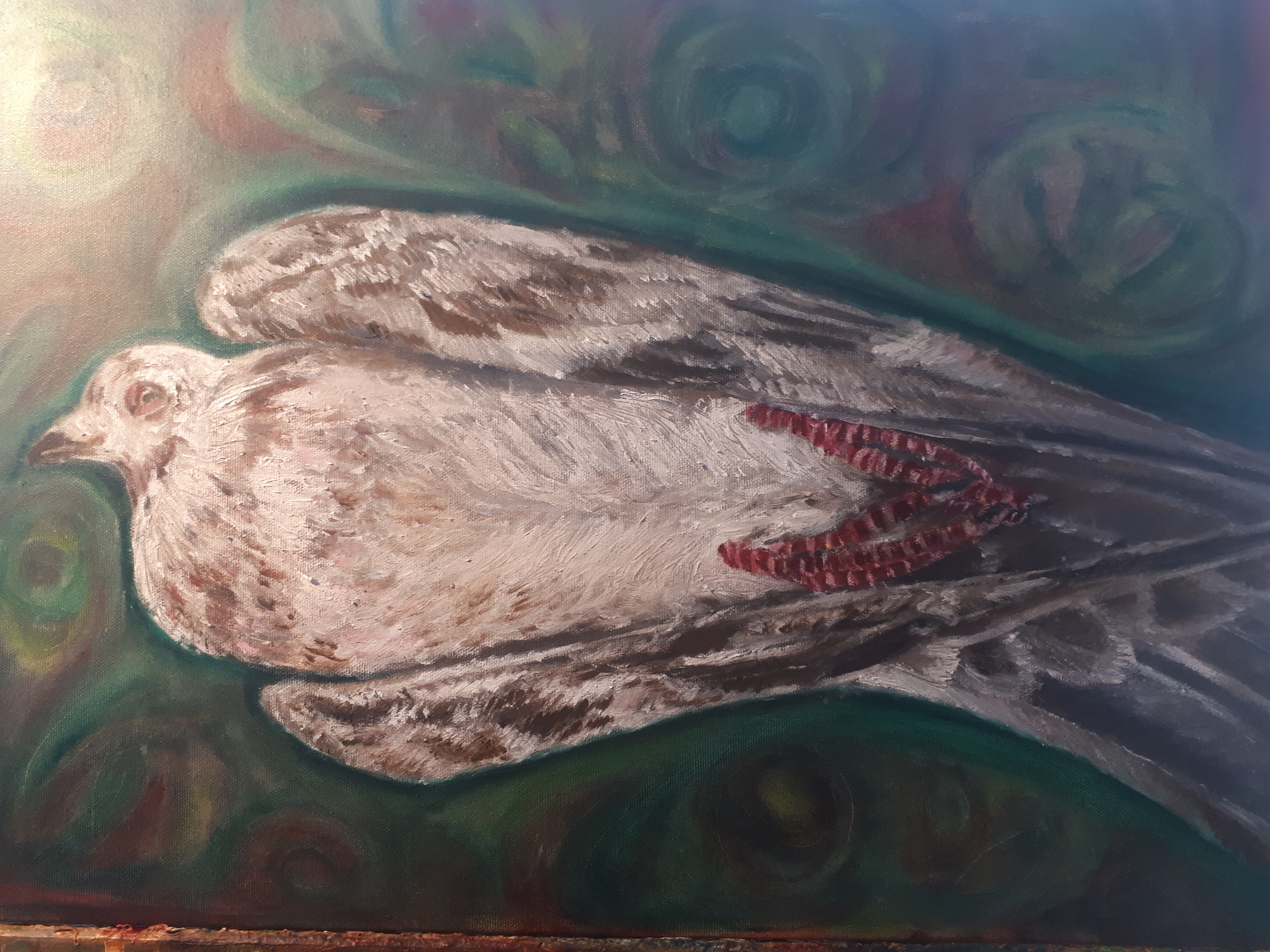
Fallen Angel oil 16 x 20 May 2021

Fallen Angel.” Oil on canvas, 16×20, May 2021, by Susan Glickman

The Dove Dove

The scientific name for pigeon is Columbidae, a latinization of the Greek κόλυμβος (kolumbos), meaning “diver”, the name applied to pigeons in Ancient Greece and analogous to the English word “dove”, derived from to Old English dūfan: “to dive or plunge”. Some scholars dispute this etymology because pigeons are not aquatic, but after finding this beautiful specimen lying still and dead outside my door, I can easily imagine it diving headfirst into a tree reflected in the window.

I can imagine it diving eagerly into that mirage of green. I can imagine the shock of encountering that sudden barrier, followed instantly by pain beyond anything the creature had ever known, and then nothing, nothing, nothingness: a plunge into total dark. I can imagine an instant of bewilderment that the world was not what it had seemed to be, that safety was an illusion, that where buoyant spring air had beckoned there was instead something cold and hard and utterly alien. Something from the human world the bird usually swam above: a place of sharp angles and unnatural materials, corners and edges.

Icarus fell because he flew too close to the sun and its heat melted the wax securing his feathers. He fell because he lost his synthetic wings. This angel fell with wings intact, but it too fell victim to human artifice. It was the opposite of hatching, when its sharp little beak chipped away at the shell encasing it; the opposite of fledging, when it left the safety of its familiar nest to dare the air.

The opposite of flight. The opposite of light.

And yet it remained so beautiful, its feathers soft as spring blossoms. Delicately coloured, a rosy blush suffusing the infinite gradations of grey that tinted its plumes. Below its tender belly curved two bright red feet, scaly and reptilian, with intimidating talons. Perhaps its ancestors were indeed aquatic, flying low over the water to snatch unwary fish the same way pigeons in modern cities swoop down to grab abandoned French fries or sandwich crusts. But that fierce era must have been more than 5,000 years ago, when Mesopotamian tablets first recorded the pigeon’s place within human culture; more than 5,000 years before that, when its domestication is thought to have occurred.

Maybe pigeons pursued prey back in the Pleistocene era, when humans tamed dogs — creatures of more immediate use to hunters in a dangerous world. Of what use were doves? Well, we consumed them, of course, as we do most things; even now, if you see “squab” on a menu, you are eating one. Most feral pigeons around the world today are descendants of birds raised in ancient dovecotes and treasured for their meat. But we also found other uses for them, especially as messengers who would fly home reliably with our words. Despite being universal symbols of peace, “war pigeons” not only carried messages but were decorated for their service. The first three recipients of the Dickin Medal to honour the work of animals in World War II were carrier pigeons; White Vision flew nine hours in poor visibility and heavy weather to deliver a message that saved the crew of a ditched aircraft; her colleagues Winkie and Tyke were celebrated for similar accomplishments.

Predating these avian heroes, Cher Ami (a female homing pigeon who should really have been named “Chère Amie”) won the Croix de Guerre for conspicuous gallantry during World War I.  She now rests in the Smithsonian Institution, final home also of Martha, the last passenger pigeon. But while Cher Ami is on display, delicate Martha is sequestered, more protected in death than her species was when alive. It is appropriate that the passenger pigeon’s closest living relative is the mourning dove, since they were hunted to extinction by European settlers in North America who assumed that nature was as inexhaustible as their appetite. But after all, who would have imagined that the most common bird on the continent, flying in flocks of millions that blotted out the midday sun and changed forest ecosystems, would be so susceptible to human greed?

Cher Ami was only one year old when she died of war wounds. Martha made it to twenty-nine, though she never laid a fertile egg. Did something in her DNA compel her to hold on for dear life with those sharp talons? Pet pigeons usually live no more than fifteen years; wild ones, only two or three.

As a child, I slept on the top floor of a house whose eaves sheltered many anonymous pigeons. I fell asleep each night and woke up each morning to their cooing, a sound as familiar to me as my own breath. I have always found them beautiful, sometimes arrestingly so, with their iridescent feathers and quizzically alert gaze. One soft spring morning in my adult life, I opened the back door and found that beauty lying intact on the mat like an offering from some sardonic deity. God as a cat, purring, “Here, I brought you this!” I could study the bird more closely than I ever had and yet felt abashed, intruding on its privacy, profaning its death.

I watched it for some time, hoping for the breast to rise and fall, rise and fall. But it didn’t. In case it was just stunned, I left it lying there for a while before returning, but it never moved. Instead, the once-bright eye began to glaze over, and I had to accept that the spirit that had directed the creature to dive into my window had flown away.

Susan Glickman used to be an English professor, then a creative writing instructor at both Ryerson University and the University of Toronto, and now works as a freelance editor and is learning to paint. She is the author of seven volumes of poetry, most recently What We Carry (2019), seven novels, most recently The Discovery of Flight (2018), and one book of literary criticism, The Picturesque & the Sublime: A Poetics of the Canadian Landscape (1998).

www.susanglickman.com

Return to Journal

WordCity Literary Journal is provided free to readers from all around the world, and there is no cost to writers submitting their work. Substantial time and expertise goes into each issue, and if you would like to contribute to those efforts, and the costs associated with maintaining this site, we thank you for your support.

One-Time
Monthly
Yearly

Make a one-time donation

Make a monthly donation

Make a yearly donation

Choose an amount

¤5.00
¤15.00
¤100.00
¤5.00
¤15.00
¤100.00
¤5.00
¤15.00
¤100.00

Or enter a custom amount

¤

Your contribution is appreciated.

Your contribution is appreciated.

Your contribution is appreciated.

DonateDonate monthlyDonate yearly
Sussing out the Olympic Movement: Where are the Women? An essay by Olga Stein

OLGA STEIN89

Sussing out the Olympic Movement: Where are the Women:?

As I tell the students in my sociology of sports course, the Olympics, and the organization at its centre, the International Olympic Committee, is worth studying. So much of what goes on in the world of sports—the good, the bad, and the ugly, pardon the cliché—converges on the Olympics. This includes unabashed nationalism and national rivalries, naked ambition or self-aggrandizement on the part of senior members of national sport organizations (NSOs), delegates, coaches, and participating athletes. Crass commercialism invariably rears its ugly head at the Games, and company logos are so ubiquitous that visitors to sports venues might experience a profound disconnect; they might feel as if they are somewhere other than in the city and country hosting the Games (critics of neoliberalism would argue that it’s the perfect instance of capitalism’s colonizing of the sphere of physical culture, as well as local culture more generally). Of course the branding of just about everything—which is also the selling of everything along with our collective soul—is a global phenomenon. It’s just that this merging of business, sport, and an ideology that depends on zero-sum thinking and objectives, is nowhere as fully on display as it is at the Olympics. Darwinism acquires new layers of meaning at these international sport mega-events.

The Olympics are truly a festival of universals. Everything noble or magnificent about the human spirit and body is to be witnessed there. Disappointment and heartbreak, which usually have to do with the limits of physical (as well as psychological) endurance, speed, and strength, are universal. The desire to overcome these limitations by any means also appears to be universal, as we’ve witnessed with findings of performance enhancing drugs that ended athletes’ careers, and the more egregious revelations of state-run doping programs: East Germany’s initially, and more recently, Russia’s. No doubt we’ll soon be reading about transgressions committed by American athletes and coaches, despite USADA’s trumpeting very loudly its commitment to clean athletics.

State-supported use of banned substances to boost performance are just the more obvious instances of ideological competition between nation-states with very different political and economic systems. Yet the athletes themselves, their striving to bring home the gold, individually or as part of a team, have also been drawn into national rivalries—even before the Cold War period. Importantly, sport, and international contests especially, have always been about more than sport, as the language or parlance of competitive sport—invariably associated with violence—demonstrates. Some of the less offensive expressions refer to athletes being “secret weapons,” records being “smashed,” and opponents as there to be “annihilated.” This is innocuous of course when compared to what actually goes on when coaches are rallying their teams or when players go head to head on a field, in an arena, or swimming pool (water polo too can be the bloodiest of contests).

All this is to say that there is a connection between sports, the Olympic Games, and real-world hostilities—political and military. Pierre de Coubertin, the French aristocrat, educator and historian, who was most responsible for the revival of the modern Games at the end of the 19th Century, ostensibly to promote internationalism, was entirely aware of this aspect of sports competition. Having read about Thomas Arnold’s ideas on the role of athletics in education, he toured Rugby School and other private academies in England in 1883 and 1886. Coubertin was impressed by what he witnessed first hand. He reasoned that it was a cornerstone of Britain’s success as an empire. He then went on to advocate for organized sport in French schools.

Sports, Dr. Arnold believed, turned the young men in his charge (mostly boys from privileged segments of society) into leaders capable of wielding power. Rigorous physical activity and competition inculcated “moral principle, [and] gentlemanly conduct.” Moreover, as Coubertin grasped, sport prepared young men for war mentally and physically.

Coubertin was born before the Franco-Prussian War. France had been badly defeated in 1871, and Coubertin grew to adulthood witnessing the political fallout. There was anxiety in France over the loss of Alsace-Lorraine to Bismarck. In general, a unified and powerful German state further destabilized Europe’s already dysfunctional balance of power. The possibility of another war with Germany was therefore not remote. Yet France, as Coubertin could see from the vantage point of an insider, was underprepared. The upper classes were pampered and soft, while the young men of the middle classes—those eager to emulate the creature comforts and cultural pursuits of elite society—were largely the same. A revived Olympics, Coubertin hoped, would serve not merely as a type of cultural exchange between participating nations; they would also help toughen France’s gentlemen, and France itself. Jeffrey Segrave, a scholar of the Olympics, captured Coubertin’s more subterranean motives for transforming France’s elite: “This new elite [would be] a sort of revamped French gentry federated by sports, which would allow France to once again assume leadership status among European nations and, indeed, the world at large in the commercial, military, and colonial realms.”

It’s unlikely that anyone would be surprised to read that the relationship between physical contests and war (indeed, imperialism) has a very long history. Nevertheless, some readers may not be aware of the extent to which this relationship shaped Coubertin’s vision. Coubertin insisted (and waxed lyrical at great length) that the Games would enable friendly competition and promote mutual understanding between participating countries. The resulting tenet of Olympism, the philosophy and the movement it inspired, endures to this day. For those who are familiar with the history of the modern Olympics the irony is too obvious—particularly in view of the ways the Olympics were co-opted by the Nazis for the 1936 Games in Berlin, and by the West and Eastern-block countries during the Cold War.

Regarding Coubertin’s plans for the Olympics and the International Olympic Committee (which was founded in 1894), a larger point needs to be made. This relates to the role of women in the Olympics, as athletes and as members of the IOC and its affiliates serving as decision-makers. What can’t be emphasized enough is that from the get-go, the Games were a masculinist project. More striking perhaps is that in essence the Olympics and their entire organizational structure and leadership remained this way until almost the end of the 20th Century. Primarily there lies the rub.

It’s certainly the case that even among the leisure classes, sports were considered the exclusive domain of men until the early part of the 20th Century. Sports competitions were intended to appeal to men, and only secondarily to women, who were expected to attend sports events only to admire the manful exertions on display. Coubertin famously rejected the notion of women competing at the Games in an article he penned for the Revue Olympique in July of 1912. Over the course of his 40-year association with the IOC, his views on females at the Olympics changed not one whit. By 1935, women were voting in national elections in the US and Britain (and in many other Western and Eastern European countries). Yet Coubertin still insisted, in “The Philosophic Foundation of Modern Olympism,” that women “should be [at the Olympic Games] above all to crown the victors.” His understanding of women and the world in general precluded the notion that women could be heroes and vice-versa.

Jennifer Hargreaves notes in Sporting Females: Critical Issues in the History and Sociology of Women’s Sport: “From the start, the modern Olympics was a context for institutionalized sexism, severely hindering women’s participation. They were a powerful conservatizing force.” I’d go even further and suggest that where women were concerned, the leadership of the IOC was like a jar that remained neatly sealed for 90 years. Its chauvinism  had stayed perfectly preserved on the inside, and free of any noteworthy efforts to spoil it from without. While the rest of the world had lumbered toward improving women’s rights and gender parity, the IOC had not a single woman contributing in any capacity until the start of the 1980s. Finnish Pirjo Häggman and Venezuelan Flor Isava-Fonseca became the IOC’s first female members in 1981. In 1990, a full nine years later, Isava-Fonseca became the first woman elected to the IOC Executive Board. Perhaps the IOC’s reluctance to make room for women even as backbenchers shouldn’t surprise us. Since its founding, the IOC had been headquartered in Lausanne, Switzerland, which had a certain kind of climate: Switzerland didn’t grant suffrage to women until 1971.

I would argue, nevertheless, that it is the aforementioned context of rivalry between nations, and the meanings accorded to demonstrations of strength at the Games, that have been the greatest barrier to women’s participation in the Olympic movement. The Games’ internationalism meant that the goal of friendly competition was subsumed by other aims: that of showcasing national/regime competency, and by implication, nations’ capacity for warfare. Such a formal and august context—one, as Coubertin foresaw, would establish a pecking order among member countries—was deemed too vital for the involvement of women either as athletes or decision-makers.

*   *   *

This past year, like all other university and college instructors, I have been teaching online, and rediscovering the power of images when judiciously assembled into PowerPoint presentations. Several of the snapshots I used this past term neatly capture the state of current affairs as they relate to the Olympics and the preparations under way for the Tokyo Games. One image is of Seiko Hashimoto, a seven-time Olympian and the new President of Tokyo’s 2020 Olympic Organizing Committee of the Olympic and Paralympic Games. The second image is of Momoko Nojo, the 22-year-old student activist who brought down the previous Tokyo Olympics chief, Yoshiro Mori, with her “DontBeSilent campaign.” In other words, Seiko Hashimoto, the first female to head a Japanese Olympic committee didn’t get to be president just because she was eminently qualified. Her appointment to this prestigious post was to a large extent the outcome of Nojo’s social media blitz, which quickly gathered wide support for a petition that would remove Mr. Mori for his disparaging remarks about women. Motoko Rich’s article, published on February 11, 2021, in the New York Times, offers a brief explanation: “Mr. Mori, who is 83 and a former prime minister of Japan, had made the offensive remarks after an executive meeting on Feb. 3 of the Japanese Olympic Committee. During the session, which was streamed online, he addressed efforts to increase female representation on the panel by expressing worries that meetings would drag on as women vied against each other to speak the longest.” Mr. Mori asserted that women talk too much in meetings.

To be sure, Mr. Mori is of a certain vintage, age-wise, but culturally too. In his private life, and with his wife and daughter, he may be a regular teddybear, but where the public sphere of Japan is concerned, he is, unfortunately, representative of prevailing attitudes toward women in positions of leadership. A Thomson Reuters article on the intrepid Momoko Nojo stated that “Japan is ranked 121st out of 153 countries on the World Economic Forum’s 2020 Global Gender Gap Index—the worst ranking among advanced countries—scoring poorly on women’s economic participation and political empowerment.” This particular instance of an Olympics-related flash point, which culminated in Mr. Mori’s ousting and his replacement with Seiko Hashimoto, underscores the clashing realities in a society that maintains older men in positions of power, yet is sensitive and vulnerable to the kinds of criticism unleashed by Ms. Nojo and other young people eager for change.

It is telling, in my view, that the IOC initially told Reuters that it considered the “issue closed” after Mr. Mori apologized (adding that he had been scolded at home by his womenfolk). The IOC seemed to change its position only when the backlash against Mr. Mori grew too voluble to be ignored. Grasping that the drama surrounding Mr. Mori had turned the incident into an opportunity, it came out denouncing his deprecating comments. The IOC’s president, Thomas Bach, then issued a statement welcoming Hashimoto’s appointment once it had been confirmed: “With the appointment of a woman as President, the Tokyo 2020 Organising Committee is also sending a very important signal with regard to gender equality, which is one of the topics we addressed in Olympic Agenda 2020, the reform programme for the IOC and the Olympic Movement.”

How does one explain the IOC’s initial waffling on the matter of Mori and his disparagement of women in senior positions? Is there something valuable to be gleaned from this 2020 Olympics episode—such as the fact that the IOC may have the will to fight for gender equality, but lacks resolve or sufficient muscle? Last year’s IOC Factsheet, “Women in the Olympic Movement” (updated in June 2020), reminded us that “in 1996 the IOC took the historic step of amending the Olympic Charter to include an explicit reference to the IOC’s role in advancing women in sport for the first time.” Accordingly, the language in the Charter “strongly encourages, by appropriate means, the promotion of women in sport at all levels and in all structures, particularly in the executive bodies of national and international sports organizations with a view to the strict application of the principle of equality of men and women” (Olympic Charter, 1996).

One month before the publication of the Factsheet, the IOC announced the composition of its commissions for 2020. With 47.7 percent of positions across the 30 commissions held by women, the IOC congratulated itself on having achieved an “all-time high and a concrete manifestation of one of the key focuses of the Olympic Agenda 2020 reforms—to encourage the whole Olympic Movement to advance gender equality both on and off the field.” Apparently, “[s]ince 2013, as a result of Olympic Agenda 2020, female participation in the IOC commissions has more than doubled (coming from 20 per cent in 2013).”

These are some of the metrics the IOC uses to boost its legitimacy. Even a well established NGO has to work to maintain approval ratings (nowadays, public approval or popularity also determines institutional prestige). Here a level-headed pause helps one realize that some numbers are less meaningful than others. To be clear, jobs with IOC commissions count for something, but they’re not the same as sought-after positions on IOC or NOC (National Olympic Committee) executive boards. Perhaps this is why the shakeup in Tokyo is a telling indicator of the kinds of spaces women do or don’t occupy in Olympic organizations.

A concluding passage in the aforementioned Factsheet provides a truer picture of women’s progress in landing senior posts in IOC affiliated agencies: “While the participation of women in physical activities and the Olympic Games has steadily increased over the years, the percentage of women in governing and administrative bodies of the Olympic Movement has remained low.” On the one hand, at the 2016 Olympics, female competitors comprised 45 percent of participating athletes; on the other, the target of 30 percent representation for women in executive-level positions had not been reached at the time of the Factsheet’s publication in 2020.

Anyone who is curious to know how things really stand for women who’re after those positions should spend some time with a study authored by Professor Ian P. Henry and Dr. Leigh Robinson at the Centre for Olympic Studies & Research, at Loughborough University. This 120-page document was commissioned by the Department of International Cooperation and Development, and published in 2010. It’s a thorough report, and its findings are available to the public. One of the primary goals of the research was to “establish what the current situation was in relation to the recruitment of women to executive committees of the National Olympic Committees and International Federations.” The Executive Summary contains a significant caveat:

Culture — Organisational Cultures and National Political Cultures: The place of gender equity in decision making roles is in part a reflection of wider cultural processes. These processes might be evident at the local/organisational level; at the domain level (the sports domain); and the national level. Culture is constituted by the values, beliefs, assumptions attitudes and behaviours of a group of people, whether members of an organisation, a domain or a wider community/society. There may be a range of cultures within an organisation, particularly a large and complex body, and there will certainly be diversity in national cultures,….

The proviso leads to an anticipated type of disclaimer (to my mind, regrettable nonetheless) at the end of the study, in the section titled “Conclusions and Summary of Actions for Implementation”:

The development of measures to foster performance in gender equity in NOCs, Continental Associations of NOCs, and IFs is complicated by the fact that while the IOC can encourage and promote equity measures in these bodies, it cannot require them as such since it has no authority to do so. In essence the IOC has little room for manoeuvre in terms of sanctions it might apply….However rather than sanctions, positive reinforcement of good practice is likely to provide a more acceptable vehicle for promoting good practice. Consideration for example might be given to making an annual award to NOCs or IFs which promote gender equity in a consistent or imaginative fashion.

I must confess that the authors’ recommendation to incentivize practices that promote gender equality within the above-named affiliated agencies, rather than impose sanctions on those that fail to do so, caught me off-guard. The rationale for this approach appears in a footnote: “A severe sanction would of course be to deny access to the Games to those bodies which refused to conform. This would however seem a somewhat illogical course of action since in striving for universal representation on one dimension (gender) exclusion of NOCs would sacrifice a second dimension of universalism (inclusion of all nations/cultures).”

Such reasoning, offered on behalf of the IOC, an organization that banned the South African National Olympic Committee from the Olympics for 24 years (and made a crucial contribution in the fight to end Apartheid), comes across as inexplicably weak-kneed. But perhaps all the talk of universalism highlights an aspect of the Olympics already discussed: the universal tendency to put women and their needs on the back burner while the real and important work is carried out. The show must go on.

END

References

Coubertin, Pierre de (1912), The Women at the Olympic Games, in Olympism: selected writings. Lausanne: IOC, 2000, pp. 711–713.

Coubertin, Pierre de (1928), Educational Use of Athletic Activity, in Olympism: selected writings. Lausanne: IOC, 2000, pp. 184–194.

Coubertin, Pierre de (1935), The Philosophic Foundation of Modern Olympism, in Olympism: selected writings. Lausanne: IOC, 2000, pp. 80–583.

Ebner, D. (2012, August) Olympic Games inch closer toward gender equity. The Globe and Mail. https://www.theglobeandmail.com/sports/olympics/olympic-games-inch-closer-toward-gender-equity/article4475752/

International Olympic Committee (2020, May). Female membership of IOC Commissions reaches an all-time high of 47.7 per cent – two new female chairs. https://olympics.com/ioc/news/female-membership-of-ioc-commissions-reaches-an-all-time-high-of-47-7-per-cent-two-new-female-chairs

Henry, I. P. & Robinson, L. (2010). Gender Equality and Leadership in Olympic Bodies: Women, Leadership, and The Olympic Movement. The Centre for Olympic Studies & Research. Loughborough University, pp. 8, 14,101. https://stillmed.olympic.org/Documents/Olympism_in_action/Women_and_sport/GENDER_EQUALITY_AND_LEADERSHIP_IN_OLYMPIC_BODIES.pdf

Hargreaves, Jennifer (1994), Sporting Females: critical issues in the history and sociology of women’s sport. London: Routledge, p. 209.

“How a 22-year-old woman helped bring down the Tokyo Olympics chief: Activist organized campaign after Yoshiro Mori’s disparaging remarks toward women.” Thomson Reuters, 18 Feb, 2021. https://www.cbc.ca/sports/how-a-22-year-old-woman-helped-bring-down-the-tokyo-olympics-chief-1.5918669

Rich, Motoko. “Tokyo Olympics Chief Resigns Over Sexist Comments.” New York Times, 11 Feb, 2021. https://www.nytimes.com/2021/02/11/world/asia/yoshiro-mori-tokyo-olympics-resigns.html

Segrave, J. O. (2013) “Coubertin, Olympus, and Chilvalry.” Olympika :The International Journal of Olympic Studies, XXII, 1-38.

“Factsheet: Women in the Olympic Movement.” Olympic Org. (Updated June 2020).

https://stillmed.olympic.org/media/Document%20Library/OlympicOrg/Factsheets-Reference-Documents/Women-in-the-Olympic-Movement/Factsheet-Women-in-the-Olympic-Movement.pdf

Olga Stein holds a PhD in English, and is a university and college instructor. She has taught writing, communications, modern and contemporary Canadian and American literature. Her research focuses on the sociology of literary prizes. A manuscript of her book, The Scotiabank Giller Prize: How Canadian is now with Wilfrid Laurier University Press. Stein is working on her next book, tentatively titled, Wordly Fiction: Literary Transnationalism in Canada. Before embarking on a PhD, Stein served as the chief editor of the literary review magazine, Books in Canada, and from 2001 to 2008 managed the amazon.com-Books in Canada First Novel Award (now administered by Walrus magazine). Stein herself contributed some 150 reviews, 60 editorials, and numerous author interviews to Books in Canada (the online version is available at http://www.booksincanada.com). A literary editor and academic, Stein has relationships with writers and scholars from diverse communities across Canada, as well as in the US. Stein is interested in World Literature, and authors who address the concerns that are now central to this literary category: the plight of migrants, exiles, and the displaced, and the ‘unbelonging’ of Indigenous peoples and immigrants. More specifically, Stein is interested in literary dissidents, and the voices of dissent, those who challenge the current political, social, and economic status quo. Stein is the editor of the memoir, Playing Under The Gun: An Athlete’s Tale of Survival in 1970s Chile by Hernán E. Humaña.

Return to Journal


WordCity Literary Journal is provided free to readers from all around the world, and there is no cost to writers submitting their work. Substantial time and expertise goes into each issue, and if you would like to contribute to those efforts, and the costs associated with maintaining this site, we thank you for your support.

One-Time
Monthly
Yearly

Make a one-time donation

Make a monthly donation

Make a yearly donation

Choose an amount

¤5.00
¤15.00
¤100.00
¤5.00
¤15.00
¤100.00
¤5.00
¤15.00
¤100.00

Or enter a custom amount

¤

Your contribution is appreciated.

Your contribution is appreciated.

Your contribution is appreciated.

DonateDonate monthlyDonate yearly
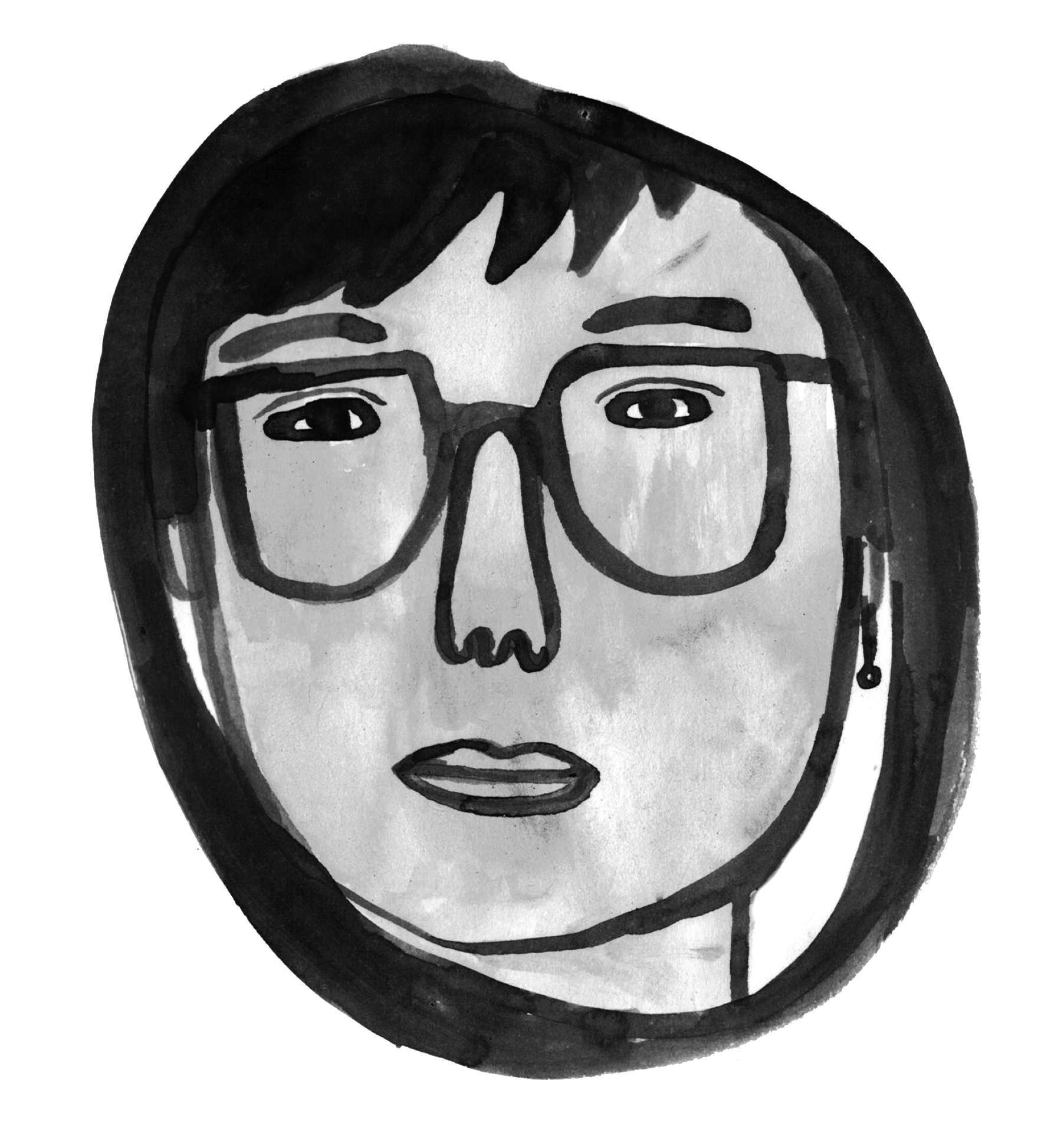
Rasha’s Daughter. Fiction by Irena Karafilly

author's pic 4

RASHA’S DAUGHTER

It was agreed we would meet by the entrance to the park, where a young Mexican stood on weekends, wearing a sombrero, selling packaged ice cream. Mother, who was two months pregnant, was going to see a doctor, after which we were meant to shop for summer clothes. It was one day before Ramadan, three years after my family’s arrival from Saudi Arabia. Father, who owned a Halal butcher shop in Montreal North, had closed up for the holy month, much of which he would spend in prayer. That Saturday morning, though, he was only going to the bank and the barber’s, and so got talked into letting me tag along. I was six years old.

The spring day on which I was left in Father’s charge promised to be a perfectly ordinary one.  It had rained all night but the morning was mild and sunny, with the sharp, almost painful, brightness that follows a stormy night. Father was holding my hand.

“Watch out, don’t get your shoes wet!”

We were walking past the vast park, dodging rain puddles. The air was fragrant with the scent of rain-soaked earth and flowering lilac.  It was a windy morning.  Every now and then, a gust would rise and Father, dressed in light corduroys and a sweatshirt emblazoned with a palm tree, would raise his hand to keep his kufi down.

There was a long row of whispering trees all along the park and, on the other side, several neighborhood stores: bakery, supermarket, pharmacy—and the barbershop we were heading for. I was skipping happily in my new red shoes, anticipating the singular privilege of watching my father get a haircut. Mother was the one who usually cut our hair, but Father had been disgruntled with her last effort and decided to try an Iraqi barber who had set up shop in the neighborhood.

I had never been to a barbershop before but had once or twice passed this new one while shopping with my mother. Although she still wore a niqab in those days, Mother went out daily to shop for food and, twice a week, to the government-sponsored French classes taught by our next-door neighbor. The school was in our own neighborhood, as was the new clinic where Mother had an appointment that day. Among the doctors was a young Pakistani woman, so Mother was permitted to go on her own, hoping to avoid exposing me to germs.

burka

In the barbershop, an elderly man was seated in a large vinyl chair, head thrown back, scrawny throat drawn taut. He was about to be shaven but as we came in, the barber paused, nodded in our direction, and gave Father a long, appraising look.

My father was a slender, light-skinned Saudi with a dark beard and large hazel eyes. I was often told I resembled him rather than my beautiful mother, who had nutmeg-hued skin and dark, sleepy eyes.  The barber—a hulking, big-bellied man—was holding a knife-like instrument to the throat of his elderly customer.  He had on a short white jacket, much like one worn by the pediatrician who had given me a painful vaccine, leaving my arm swollen for days. Another man was sitting in the corner, invisible behind an open newspaper.

“Baba – I don’t want to stay here.”

Father, who had just hung his jacket, turned and stared down at me from beneath bushy eyebrows.  “Eh?”

“I want to leave, Baba.”

“Leave!  Didn’t you say you wanted to see me get a haircut?”

“Yes, but…I don’t want to anymore.  I want to go home!”

“But why?”  Father bent down, peering into my face. “What’s the matter, Malak?”

“Nothing.”  The man in the barber’s chair seemed to be in a deep sleep beneath the protective black cape. “I just don’t want to stay here,” I whispered.

Father rubbed the back of his neck, as if testing for perspiration.  “But I have to get my hair cut, you know. Ramadan starts tomorrow.”

When this failed to sway me, Father’s lips tightened; he turned his head sideways and drew a forbearing breath. “What’s wrong with you suddenly?”

“Nothing.” I said I would wait outside; it was a nice day, I hastened to add. Mother would never have agreed, but Father, untutored in the ways of children, finally sighed and let the barber move one of the waiting chairs outdoors.  He set it next to the entrance, then pulled a red lollipop out of a side pocket.

“For me?”

“For you,” said the barber.  He was smiling now.

“Sit here and don’t budge,” Father said sternly. He paused, still looking vaguely doubtful, casting a quick look up and down the street. “Call me if anyone bothers you.”

“Okay, Baba.” I unwrapped my unexpected treat. It tasted like strawberries. Father followed the barber back into the shop.  He said something I did not understand.

I sat in the vinyl chair, licking my lollipop, watching shopping women and elderly men trotting toward the park, hands clasped behind their backs.  The old men glanced my way and smiled vaguely; the women hurried on, bearing bulging bags, a child or two in tow. From time to time, I turned to look into the barbershop and saw Father waiting across from the wall of mirrors, absorbed in conversation with the other customer.

It was noisy on the street, what with the clamor of car horns, chattering children, buses trundling by.  A few feet away, a girl my own age was chasing a younger, fair-haired boy outside the pharmacy. They ran about, squealing, stopping to watch a flower-bedecked hearse go by, followed by a long row of sluggish cars. Then a caleche turned the corner, drawn by a plodding grey horse. Suddenly, the tow-haired boy burst into shrieks of laughter. He was pointing at the road, where the horse’s droppings were falling one by one, dry yellow lumps onto grey asphalt.

A young woman in a denim hat emerged from the pharmacy, shooing the children on, while a sudden flurry blew her skirt above her knees. The little girl was quick to pat her mother’s skirt into place. She said something and laughed, then glanced back over her shoulder and, meeting my curious gaze, stuck her tongue out.

After a while, I rose and stood contemplating my own reflection in the barbershop window. I was wearing pink leggings and a matching top, my curly hair hidden by a red Mickey Mouse hat.  Father was at last sitting in the barber’s chair.  It was somehow reassuring to watch the familiar dark bits of hair fall onto the floor, but the silver scissors, flashing around Father’s lowered head, stirred up some of my former anxiety. I was still peering through the window when a sudden ruckus made me wheel around.

A McDonald’s clown was coming my way on stilts, trailed by a pack of children.  The clown was clutching a large bouquet of colorful balloons. The children kept laughing. A small white dog was romping along, furiously wagging its tail.

clown 2

“Bonjour, Mademoiselle!” The clown had stopped directly in front of me. He bowed theatrically from the waist, eliciting cackles.

All this made me smile a little and drop my chin to my chest. I had, just that year, started first grade at the local French school. I could have easily answered the clown’s greeting but didn’t.

“I said bonjour!” said the clown, tugging at one of my Mickey Mouse ears.  The note of faux malice sparked up a fresh peal of laughter.  I, too, giggled and finally raised my gaze. A pair of small blue eyes stared back at me from within the chalky white face paint. The little dog was eagerly sniffing my feet.

“Bonjour,” I let out at length.

The clown chortled. “And what are you doing here all alone at a barbershop?”

“I’m…waiting for my father.”

“Are you now?” The clown stepped closer to the window and peered ostentatiously into the neon-lit shop. The barber was standing with his back to the street, bent over Father’s head.  “And who is your father?”

Hassan Yusuf Mohamed.”

“Mohamed, eh?” The clown put his hand to his brow, as if summoning all his mental powers.  The children, who had tittered on hearing my name, laughed some more. “Don’t believe we’ve met!” said the clown. “Here’s a balloon anyway.” He grinned at me with his large painted mouth. “Au revoir, Mademoiselle – and don’t talk to any strangers!”

The last bit of counsel elicited a final burst of glee from the pack of children, and nods of agreement from two passing mothers.  My own mother had issued similar warnings on more than one occasion. I was a timid child, but an intensely curious one, liable to wander off on my own.  Having been punished for straying just before Christmas, I had made a promise, never expecting my resolve to be tested by a clown on stilts and a friendly dog.

While father sat, oblivious, getting his hair cut and his beard trimmed, I rose and took a few tentative steps away from the barber shop.  The prancing children continued down the street along with the dog, their balloons bobbing above them. I followed gingerly, clutching my own pink balloon, still sucking on the lollipop.  I had just passed three or four shops when another gust of wind rose, blowing dust in my face. This stopped me. I shut my eyes tight, and rubbed and rubbed, until the tears washed out the blinding dust.  When my vision cleared, I noticed that the distance between me and the frolicking pack had widened. The clown was by now approaching the corner. I told myself I would stand by the bakery and watch from a distance.

And then the flaring wind blew my hat off my head and onto the sidewalk.  It lay there, tossed against a lamp post, until I bent over and reached out to pluck it. At that moment, as if under the spell of some impish spirit, the hat rose again and, briefly spinning, landed farther down the wind-swept street. Once more I reached for it; once more the hat eluded me.

By the time this had been re-enacted several times, I was almost a block away from the corner that was to have been my boundary.  My red Mickey Mouse hat was now lying in the middle of the road, directly in the path of a quickly approaching bus.

I burst into hiccupping sobs but, at the last possible moment, a merciful gust carried my hat across the street toward a large office building with a multitude of windows. It was where Mother had her weekly French classes.  Could I cross the street on my own? I stood frozen on the curb, sniffling, fighting the urge to pee.

Suddenly, there were strangers looming above me; two large, thick-necked women with pale, tightly curled hair and red mouths pursed in solicitude. Dressed alike in sweats and white running shoes, they might have been twins, except for the color of their eyes.

“What’s the matter, little girl?” The green-eyed matron was leaning toward me, speaking in French.

“I – you see.  My – ” I wanted to say that I was prone to earaches and needed to have my head covered on windy days; that I’d never had a Mickey Mouse hat before.  Then I remembered I was not supposed to speak to strangers.

“Oh, don’t cry, little girl!” The second woman’s eyes were a pale, washed-out blue. “Where’s your Mama, tell us?”

I went on crying, shrinking back when a third woman reached out to stroke my hair. “Such a pretty little girl. Tell us where your Mama is.  Tell us and we’ll take you to her.”

I did not answer.  My eyes kept straying toward the lamp post where I had last seen my hat.

It was no longer there, but my tears were beginning to attract a crowd.  I was vaguely aware of questions and exclamations; of the two matrons suddenly acting with the fierce authority of a pair charged with some vital assignment.

“We found her right here, crying,” one of them was saying.  “All alone and – “

“She doesn’t even know where her mother is,” the second one chimed in.

There were vaguely solicitous sounds from the swelling crowd.

“Imagine leaving a child that age unattended,” someone said behind me.

“I never let my son out of my sight.  Not the way things have been going lately.”

“But where could her mother be?”  This was a new, gentler voice.  “She must be in one of the shops.  Maybe we should look?”

“The things you hear on TV these days.  What’s the world coming to, I ask you?”

At that moment I spotted Mother.

She was coming down the street, niqab flaring, dark eyes flashing through the narrow black slits.  “Malak!” she called out.  “Malak!”  Her arm was raised, as if to hail a taxi or ward off a blow. She was running toward us, shouting in her accented French. “That’s my child!  That’s my little girl!”

I had stopped crying. The crowd, too, had fallen abruptly silent. We all stood and watched the tall, black-clad figure make her way toward us like a great swooping bat, while we – the crowd and I – all stood transfixed, speechless. Still hiccupping, I let go of my balloon and watched it float away, all but hitting the roof of a passing bus. The word Mama remained lodged in my throat. I felt rooted to the sidewalk, silenced by the crowd’s baffling hostility. As Mother approached, I could see beads of perspiration on her exposed forehead, a single tear sliding out of the corner of one eye.

The two matrons deposited themselves directly in front of her, blocking my view with the staunch finality of a slamming door.

“This is not a black child!”

“But she is my child!” Mother cried.  “Ask her!  Why don’t you ask her?  Malak!”

My lips parted to speak.  I was aware of Mother’s frenzied efforts to get around the two hefty women; of the crowd’s confused mutterings.

“Oh, go on with you!” A tall, balding pensioner turned to Mother with the look of someone who had just bitten into something sour. “We’ve heard of the likes of you!  What are you doing here anyway? Out to kidnap our children and make soldiers of them?”

“Malak!” Mother tried to elbow her way toward me, stopped by the loud-mouthed pensioner, who had managed to grab her flaring niqab.

“Get lost, you black witch!  Go, before the police get here!”

The word police, as much as the sight of Mother’s torn niqab, at last unblocked my constricted throat.  “Mama! Mama!”

But the crowd, all fired up now, was deaf to my cries. They went on arguing with each other, hurling half-hearted abuse.  Who knows how all this would have ended had it not been for a familiar voice rising above the hubbub

“Rasha!”  It was my mother’s Arabic name.

Wheeling about, I saw Nadia, our Moroccan neighbor, bustling across the street amid crawling cars, a hand sweeping a strand of hair away from her eyes. “Leave her alone!” she yelled.  “Leave the poor woman alone!”

Fresh tears flooded my eyes. The crowd, for the second time, lapsed into sullen silence.  They watched, grim-faced, as Nadia trotted toward us on her high heels, her suede handbag swinging from her bare arm.  Our neighbor was a Moslem woman my own mother’s age, but she lived with a Quebecois musician and wore western clothes. The green-eyed matron gave her the once-over.

“Is this your child?”

“I’m their French teacher,” Nadia stated flatly. She took a step toward me, shooting a glance in my mother’s direction. Mother was struggling with a man bent on preventing her from getting hold of me.

“You don’t say!” The two matrons stood staring at Nadia, looking undecided.  She might be a foreigner but she was clearly a woman who could not easily be trifled with.  And she spoke perfect French.  “This is not a black child, is it?”

“She – “ Nadia hesitated for the briefest moment. “What business is it of yours anyway?” she snapped, shoving her way toward me. There was a stunned silence, then, all at once, the crowd shrank back, muttering amongst themselves. Another moment and they all began to shuffle away, looking vaguely abashed, like a pack of reprimanded children.

But these perceptions are, perhaps, sharper in recollection than they were to my child’s eye. At the time, flinging myself against Mother, I was above all aware of my urine-soaked leggings.  And then of something else. which was that Nadia, whom my mother had until then kept at arm’s length, suddenly and immeasurably gained in stature.  It was the beginning of an unlikely friendship with my reclusive mother, who was destined to lose her unborn child that week and, barely two years later, be divorced by my intransigent father.

Not that there was, as the three of us trudged away, anything to hint at what lay ahead. Mother was crying with apparent relief, while Nadia looked exactly as she did when the owner of the local convenience store tried to cheat, or when she came upon the janitor’s two sons engaged in a fistfight. Her glossy lips were set tightly, her crayoned eyes a shade or two darker. She reached for Mother’s shaky fingers.

“Riffraff!” she spat out, speaking Arabic. “Nothing but stupid riffraff, my friend!”

Irena Karafilly is an award-winning writer, poet, and aphorist. She is the author of several acclaimed books and of numerous stories, poems, and articles, published in both literary and consumer magazines, as well as in various North American newspapers, including the New York Times and the International Herald Tribune.  Her short stories have been widely published, anthologized, and broadcast, winning literary prizes such as the CBC Literary Award and the National Magazine Award.  She currently divides her time between Montreal and Greece.

Return to Journal

WordCity Literary Journal is provided free to readers from all around the world, and there is no cost to writers submitting their work. Substantial time and expertise goes into each issue, and if you would like to contribute to those efforts, and the costs associated with maintaining this site, we thank you for your support.

One-Time
Monthly
Yearly

Make a one-time donation

Make a monthly donation

Make a yearly donation

Choose an amount

¤5.00
¤15.00
¤100.00
¤5.00
¤15.00
¤100.00
¤5.00
¤15.00
¤100.00

Or enter a custom amount

¤

Your contribution is appreciated.

Your contribution is appreciated.

Your contribution is appreciated.

DonateDonate monthlyDonate yearly

Two Dead Poets. Fiction/Prose Poem by Roger Moore

Roger Moore

Two Dead Poets
A Poet Revisits Lorca’s Death
Madrid / Granada, July 1936

Clouds gathered over the capital. A rising storm. Rumors slouched through streets and squares. Hunched in coffee-shops. Puffed at cigarettes. Struggled up stairways. Stumbled down alleyways. Lorca took it all in but was not taken in. He knew the signs. War marched through back streets and alleys. War. Civil war. It was time. Time for the poet to leave Madrid and return to Granada. He had family back home. And friends to protect him. That Falangist poet, still his best friend, a Black Shirt from the start. He’d know what to do and how to protect him.  He would be safe in the south. Among his own people. Warmth and sunshine. His own southern hills.
The poet now packing. Remembering writings. A wilderness of words where one day they’d trap him.  A bullet to the head, like so many others. He’d learned to fear them, those leaden-skulled policemen. Apocalyptic horsemen. Black horses. Black horseshoes. Skulking their skulls with no pitying tears. Nocturnal, hunchbacked. Inside their heads, a night sky of pistols, skillfully hidden. A bright light above him, the moon in the sky. Guitar strings weeping. Sweet sound of music. Hot tears spurting. Bitter-sweet memories. Papers and poems. They couldn’t come with him. He’d have to destroy them, not leave them behind.
Outside his front door, blind lottery seller, the man who sold him his weekly ticket. Lying there last week. A shot to the head. That night, in the square, bleeding and wailing, his sweet-hearted flower-girl who gifted him flowers in exchange for new poems. On the ground she lay broken, beaten and bloodied. In his pocket his money wept in the moonlight.  He took from his jacket his bright silver savings. Pressed them upon her. Accepted a flower. A bright red carnation. The color of her blood.
Faces on the southbound train flickered through his brain. Black-and-white photos, filled with potential. He studied their faces. Spider-web wrinkles. The humorist’s eye. Shyness awaking. That young woman’s blush with its promise of children, a hint of the unborn breaking into blossom. Old age defiant, grim-faced and wrinkled. People came in, sat down for a moment, then got up and left. Nobody saw him. Nobody knew him. An anonymous poet: he preferred it that way.
He opened his notebook. Penciled a sentence. An image. A metaphor. A rhythm, a rhyme. He studied their faces. A pair of black eye-brows. An old woman’s shopping. Brown wicker basket, its ribs inter-woven. Black market food. Closer to home, he looked up at last.
A new man. A cold man. His face a sharp hatchet. Trained face of a killer. Killing for pleasure. Pleasure, pure pleasure. Wearing street clothes. Hatchet-face opposite, staring at the poet. Stoney grey eyes. Tight-lipped and silent. The poet turned away. Went back to his notes, but he wrote no more.
When they got to Granada, the poet stood up. Hatchet-face rose. His hand touched the poet. Tapped on his arm. Caught his attention. “I know who you are.” So close. Face to face. Brandy stank on Hatchet-face’s breath.  “I’ll be watching and waiting. You’re that maricón poet who trashes the police force. I know what you do.”
When he got to his house, his Mother warm-wrapped him. Pride shone from her eyes. She hugged, pulled him tight. Father just smiled. Stared into his face. Fresh signs of ageing. New signs of stress. “You look just the same.” A nodding of heads. The poet climbed upstairs where grandma lay sleeping. She always slept lightly. Woke up abruptly. Saw him there standing. A tear left her eye. “So glad you’re back home.” She felt for his arm. Held tight with both hands. “Now you’ll be safe.” She then fell asleep. He kissed his own finger, stroked a cross on her forehead. Went back downstairs. Left her there sleeping.
The young ones all loved him. They climbed on his lap. “Tell us a story.” They made him make music: guitar and piano. “Sing us a song. Write us a rhyme.” He sat by the window where light flooded in. Nursery rhymes, fairy tales. Whatever they wanted. Many that he’d written, some written by others, even some by his friend, the Black Shirted Fascist, a Falange First Founder, but always his friend. Sunbeams danced outside in the garden. Flowerbeds and fountain. Seats in the shade. Happiness and joy. The sundial smiled.
Next day Lorca woke to storm clouds and thunder. Black shirts and batons. Black leather coats. Bright, polished buttons. Gold braid and medals. Everything shiny. A stamping of feet. High-handed salutes. More and more people stopped in the street. Papers. More papers. Papers galore. Checked and rechecked. Freedom no more. “Quick now, come with us.” Black cars waiting. Victims bundled like beggars into dark alleys never to emerge. That night, all night, torchlight parades. Singing and candlelight. Fascists rejoicing. Common people shocked. Broken arms, broken noses. Glass breaking all night.
Rebellion? Revolution? Who cares what it’s called. Civil war came. Just as predicted. Break into armories. Break out the guns. Arm all the people as quick as you can. People aren’t soldiers? Turn school yard and playing fields and into military barracks. Teach new lessons: how to handle a gun. Time limped then stood still. Anguished clock faces, hands raised in despair. Eyes turned skywards. No answer from on high.
Clouded the sun. Silent the sundial that cannot count hours. Time lost. Time frozen. Face of the Hatchet-man. Casting its shadow. Lorca looked up. Nobody there. The poet shivered: he’d already been warned. A black car passed. Ticking, its engine. An alarm clock ticking Or was it a time bomb? Alarm bells rang. The slow storm built. Stilled now all songs save military anthems boot-stamped in the streets.
Awaking at night, any street, any town. What’s that ticking? An engine? A clock? Two grandfather clocks? At midnight, fierce knocks. Black cars waiting. “Come now, be quiet. Women and children: you don’t want to wake them.” “It’s all a mistake.” “Of course, it’s all nonsense. A chat, that’s all. Please bring your papers. Quick there. Look lively. You’ll soon be home.” Nets drew tighter. Circles closed in. What to do? Where to go? Nobody knew.
Downstairs in the kitchen Lorca’s family meets. “That close friend of yours, now a politician. Your childhood friend. The one who wrote poetry. Wears now a Black Shirt. Trust him you must.” “Him you can’t trust.” “He’s your best chance.” “He’ll sell you out.” “Your only chance.” “You think I should trust him?” “Trust him you must. Think of the women. Think of the children. Sleep on it. Think on it.” A time bomb, ticking. The poet in bed. Turning and tossing. Moon peered in. Looked on him drowsing. Moon shadows dancing. Time standing still. Pale, breathless stars.
He went to his friend’s house and knocked on the door. The door quickly opened. “You?” “Yes, me.” His dear friend, the poet. Or was it the politician? Black shirt. Black belt. Polished boots shining. “Don’t come here. Don’t trust me.” “You’re all that I’ve got.” “They’ll make me betray you.” Gesture. Intonation. Gesture and meaning. A hand on the shoulder. A swift glance around. “Come in then, quickly.” Slam the door swiftly. Lock it up tight.
His friend’s family gathers, meets with the poet. “You mustn’t stay here.” “Stay here you must.” “I’ll go.” “Just go.” “They’ll make you betray me.” “Stay here. Don’t go. You’ll be safer with us.” White face, lace curtains. Brown eyes peering out. Days spent in the friend’s house. Silent the street. An occasional car. No sign of Black shirts, other than the family’s.  Black cars slowly passing. “He’ll soon be gone.” “They’ll come and fetch him.” “The sooner the better.”
Two in the morning. Loud knocks on the door. Louder and heavier. “Open up now, or we’ll break down the door.” Black car at corner. Ticking its time bomb, ready to explode. A hand on his shoulder. Alarm bells ringing. The poet awakes. Black Shirt, his friend, stood by his bed. “They forced me to fetch you.  You must dress right now.” Behind him, the Hatchet-man, gun in his hand, threatening both. The poet got dressed. Went down stairs. Hatchet-man with pistol. “I knew where you’d go. Be quiet. Be good.” “It’s all a mistake.” “Of course, it’s an error. We just want to chat. You’ll soon be back.” Black Shirt, the poet, poet walked to the door. “I’ll travel with you.” Hatchet-face stopped him. Wagged index finger. A shake of the head. “No.” “You said ‘No’?” “No room in the car.”
Midnight, full moon. Streetlights flashing by in a full flush of stars. Stars bearing witness but writing no notes. The car wrapped in silence. Silent the poet. Wrapped in moon shadow. A man on each side. Hatchet-face driving. Silent the night. Silent the moonlight. The moon softly sailing between silken clouds. Night-black the car, its car engine still ticking. Time woven from starlight. A thin silver cloak.
No judge and no jury. A settling of scores. Justice by blood. Hatchet-face driving beneath shifting stars. The moonbeam a headlight. A lamp in the sky. Lighting the road. Hatchet-face driving. A gun at his side. Face set in concrete. Grey in the moonlight. No friendly Black Shirt. Lorca’s hands tied. A man on each side. Blackened their shirts. Blackened the night. Silvered the stars. Fascist-style facets cutting the night. Pitiless gemstones hard in the sky. Up, they go, up, into highlands.
The moon a bright blade slicing the heavens. Lorca hands tied. Bruised now and battered. Kneeling at ditch-side. Teeth chattering, clattering. Old scores being settled. Grudges inflicted. Single the shot. Soft flesh bursting. Brittle bones breaking. First bullet in backside. “I bet he liked that. Here comes another. Take that. And take that.” “How he must like it. For a maricón, that’s just right.”
Lorca lies dying. Bleeding and kicking. Three Black Shirts watching. Joking and smoking.  Smoking and smirking. Black boots shining. Bright patent leather. A kick to the ribcage. Another to the stomach. A third to the groin. Testicles crushing. The last shot. The killer. To the back of the head. The men roll him over into the ditch.
Back in the bar. White wine for preference. Crimson the blood streaks. Bright from the bullets, carved from the corpse. Black Shirts rejoicing. Shouting and singing. Shark teeth shimmering. Black Shirts feasting. Drinking red blood. A toast to the poet. “We killed him for pleasure.” “Old scores to settle.” “Maricón, maricón.” The Black Shirts Chanting. “Maricón, maricón.” “¡Viva la muerte!” “Far better off dead.” Sharks in their element. Bloodied their hands. Their consciences clean. All for the Fatherland. Toasting two poets. One dead in the ditch. The other at the bar, dead in heart, dead in head.

Roger Moore (BA [Bristol], MA, PhD [Toronto]) is an award-winning poet and short-story writer. Born in Swansea, the same town as Dylan Thomas, he emigrated from Wales to Canada in 1966. He has lived in Fredericton, New Brunswick, since 1971. An award-winning author, CBC short story finalist (1987 and 2010), WFNB Bailey award (poetry, 1989 & 1993), WFNB Richards award (prose, 2020), he has published 5 books of prose and 25 books and chapbooks of poetry. His collection of short stories, Bistro, is the only self-published book to have been a finalist (2016) in the NB Book Awards. Over 150 of his poems and short stories have appeared in 30 Canadian magazines and literary reviews, including Arc, Ariel, The Antigonish Review, the Fiddlehead, the Nashwaak Review, Poetry Toronto, Poetry Canada Review, Quick Brown Fox, the Pottersfield Portfolio and The Wild East.  Roger was the Atlantic Provinces Director for the League of Canadian Poets (1991-1993). He is now a member of TWUC (The Writers’ Union of Canada), the WFNB (Writers’ Federation of New Brunswick), and IGDA (the Institución Gran Duque de Alba, Ávila, Spain). He and his beloved, Clare, have lived in Island View, New Brunswick, for over thirty years with their cat, Princess Squiffy, but they live on the far side of the hill from the St. John River, with the result that there is not an island in view from their windows in Island View. More details of Roger’s literary career are available at these links: https://rogermoorepoet.com/  and https://nble.lib.unb.ca/browse/m/roger-moore

Return to Journal

WordCity Literary Journal is provided free to readers from all around the world, and there is no cost to writers submitting their work. Substantial time and expertise goes into each issue, and if you would like to contribute to those efforts, and the costs associated with maintaining this site, we thank you for your support.

One-Time
Monthly
Yearly

Make a one-time donation

Make a monthly donation

Make a yearly donation

Choose an amount

¤5.00
¤15.00
¤100.00
¤5.00
¤15.00
¤100.00
¤5.00
¤15.00
¤100.00

Or enter a custom amount

¤

Your contribution is appreciated.

Your contribution is appreciated.

Your contribution is appreciated.

DonateDonate monthlyDonate yearly
The Shaming of Oshia. Fiction by Joshua Akemecha

Joshua A

THE SHAMING OF OSHIA
It was a day in April, but not April 1st, lest you conjecture that it was April fool! A day that would enter the annals of chroniclers in my Oshie clan as the date of the most ridiculous drama of the masked dance dubbed Oshia! The cosmic setting was Ogyi-Onwek, at the foot of the black rocky boulders of Togobei-Ku. This masquerade dance, aka Oshia, usually staged in honour of someone of late, a notable or a militant of the fetish cult, was here celebrating one of ours.

The actors here constituted of the audience, the drummers and the dancers. The dancers included a number of masquerades known as njid, dressed in fibre-woven gowns; the blouses attached to the swinging skirts called awanda. They went bare-foot, with rattles tied above the ankles of both legs. In one or both hands, they held whips cut from the stalks of banana plant leaves. Being naturally hostile towards on-lookers who did not belong to the cult, the whips were used to flog the unfortunate spectators who fell in their snare.

masquerade

Angwi was a peculiar object of curiosity; a vivaciously sexy creature to behold. Dressed in tight-fitting thread-bare fibre-woven regalia, with semi-long sleeves, a metal bell on one ankle and a red hood on the head that cut the image of a Shakespearean clown; he was not so much the centre of attraction with the presence of njid-njid. A small fibre handbag that banked his collections was hooked on the left arm while the right hand held a dagger whose role was unknown given that the fetish jester was generally friendly, lively, entertaining in his beggarliness, style of dancing, and harmless threats.

This ritual dance was, as earlier intimated, in honour of one of our late fathers, a notable who passed on to our ancestors several years back. The compound’s surrounding yard and the plantations formed a befitting setting for the performance. The stage was a spacious flat pitch in the yard while above it was a natural slope full of plantains and coffee plants, occupied by delirious spectators. This setting cut the image of an ancient Greek natural theatre. The audience of this drama was in the main young men who could run .Women were not allowed to watch so they all went out of sight, shutting themselves in rooms and kitchens where they
could secretly peep through keyholes, door shutters and window gaps. Nevertheless, a few recalcitrant young women who felt bold and smart enough to run infiltrated the men. The dance arena, the stage I mean, and the popular side of the audience were separated by a steep cliff more than four metres in height. This made it a herculean task for the masquerades to attack the spectators. The jujus had to circumvent this obstacle by going round the buildings and sneaking into the plantation to surprise the spectators from the rear. In most cases, their attacks targeted mainly those they thought ought to be initiated into their group or those who owed them a celebration like the current one. The jujus chased these ‘debtors’ and thrashed them up as a way of asking for the debts to be paid. But sometimes the jujus went out of hand and attacked anyone watching them without belonging to the cult.

The uninitiated young men from safe positions sang and danced, albeit forbidden, to provoke the initiated actors and the masked dancers. The drama became spectacular and exciting when the jujus sprang out like antelope hunters to grab the provoking young men who on their part scattered in the plantations like broods of chicks at the sight of a hawk. This was characterized by screaming and shouting at pursuers’ misses and near-misses of their targets.

Unlike the revered but dreaded njid, Angwi was friendly and easygoing, especially when one held out a banknote to him. The higher the amount, the friendlier he became to the extent that a non-initiated person might converse with him. He was often seen amongst the spectators begging for money.

A young man, emboldened by his intimacy with Angwi failed to run when the masked dancers came chasing again. The juju that ran in their direction found this defiance inadmissible and motioned to the youth to leave. But convinced of his security in the presence of Angwi, the young man remained adamant which enraged the juju. As the masquerade tried to whip the youth, Angwi protested and tried to shield him. Lucifer broke loose from hell as the embittered juju fell on Angwi with jabs and punches seen only in heavy weight boxing bows or World Wrestling championships. There ensued a serious fight and soon both jujus were rolling and yelling on dry coffee and plantain leaves like two wild cats! Their howling was so loud that all
those about ten metres away from the scene could hear them. “Abomination of the highest order!” many exclaimed.

We had known throughout the years from childhood that jujus were not humans; that they sprang out of a deep lake into which they returned after performance; that they never talked, talk less of falling. It was ominous and foreboding to see a juju fall. Spectators therefore screamed as the masquerades tumbled and rolled, with Angwi caught between self-defense and securing the coins and banknotes spilling off his unzipped handbag bank.

Bewildered dancers rushed to the scene and eventually separated the fight but the irreparable damage had been done. Angwi’s red hood that was almost pulled off was quickly adjusted and he seemed to bleed while someone injected an in-joke that the aggressive juju sat weeping audibly under a plantain with his head down! As the interveners led the culprits back to the stage, the audience hooted and booed. They jeered and sneered; they yelled and shrieked, ejaculating their disgust in a chorus of ‘’shame on you, shame on you!’’ and swore that they would give that particular juju a severe beating if he dared step his feet off-stage around the spectators again.
The dance consequently lost alacrity, became low-spirited and ended in a very sombre mood as the dancers danced with their heads bowed. An act of emotional recklessness by a haughty individual had marred not only that particular Oshia but had seriously bruised an important cult of Oshie tradition.


Joshua Akemecha hails from Oshie Momo Division and holds a B.A in Modern Letters in English, (FLSS University of Yaounde,  1991) and a PGD-DIPES II ( ENS Yaounde,1999). His literary craftsmanship was sharpend by CROSSING BORDERS, a University of Lancaster-mentored creative writing programme 2004-2005). He has etched some prominence with local awards in poetry and short stories. President of CAMELTA ( Cameroon English Language and Literature Teachers’ Association), West Region, from 2011 to 2017.    

His publications include TIMELESS MEMORIES (2015), TRUE FRIENDS & SIX STORIES (2020) and poems in anthologies like BEARING WITNESS edited by Joyce Ashutangtang and Dubosi Tande (2020) and POETRY IN TIMES OF CONFLICT edited by Geraldine Sinyuy and Meera Chakravouti (2021). A seasoned high school teacher of English Language and Literature in English with countless presentations on Language and Literature teaching at CAMELTA National and chapter symposiums, Joshua is presently a Vice Principal in a lycee, and a member of ACWA (Anglophone Cameroon Writers’ Association).

Return to Journal


WordCity Literary Journal is provided free to readers from all around the world, and there is no cost to writers submitting their work. Substantial time and expertise goes into each issue, and if you would like to contribute to those efforts, and the costs associated with maintaining this site, we thank you for your support.

One-Time
Monthly
Yearly

Make a one-time donation

Make a monthly donation

Make a yearly donation

Choose an amount

¤5.00
¤15.00
¤100.00
¤5.00
¤15.00
¤100.00
¤5.00
¤15.00
¤100.00

Or enter a custom amount

¤

Your contribution is appreciated.

Your contribution is appreciated.

Your contribution is appreciated.

DonateDonate monthlyDonate yearly

The Silent Imagination. Fiction by Gerald Shepherd

Gerald Shepherd

THE SILENT IMAGINATION

INTRODUCTION:

The whole world is enclosed in a goldfish bowl on top of a flesh coloured pedestal. There are no voices outside but strangely no silence either. Somewhere within the bowl which is the world there is a bright green field; too bright a green, reminiscent of a field of tulips once seen in a dream. The field is enclosed by walls; the walls never meet. Within the walls are voices. They are known to some as “The Silent Imagination”.

LEAD Technologies Inc. V1.01

THE FIRST ACT:

The maker of pedestals meets the maker of goldfish bowls.

THE SECOND ACT:

Two people enter holding saucepans from which flames emerge evoking a Neanderthal rain dance. The rain puts the people out but leaves the flames intact.

The First Person says: “The Earth in the form of a broom that has ceased sweeping is sick. A doctor is sent for. He arrives with a well sunk in his temple; at the bottom of the well is an eye – when the eye cries we can have water for our crops, when it closes we place our hands on our foreheads and groan. The old lady in the distance climbs down a serpent ladder while the gypsy princess climbs up – they meet almost in the middle like crows on a cliff top”.

The Second Person says “The sailor is a top hat and we must all climb to the top. The top is a hole in a mushroom cloud from which we can see shopping bags with wings come home from the seamen shops. A child clock on the mantelpiece chimes as the trees in neighbouring gardens consume each other and the strands of hairs that have escaped from the confines of old heads become smoke snakes in a land of hedgehog cars”.

The First Person says “If you listen carefully you can hear silence. Sometimes even before it creeps up on the unwary like the coldness of death. To be heard, cooling people can don clown costumes and climb half eaten trees – once at an artificial summit they hold onto motion sick sailing ships and imbibe the salt from crying clouds. Meanwhile the frog who turned into another frog instead of a prince was reading a newspaper where all the news had been extracted (it is purportedly then spread on toast instead of the chromatic warmth of vacuous marmalade). A hiccup that had got lost is heard at last in the silk stocking distance”.

The Second Person says ”Cut your hair and you cut your future. A farmer without a hat met the business man without a head, they each asked the other how they could possibly cross the fast moving river. The last named was flowing like a column of penitents trudging across a desert of an ancient aquatic religion. The priests shave their heads and the heads shave their priests. All time is cyclic and even dragons have to change their socks when they develop holes”.

The First Person becomes a white rabbit and rabbits do not speak they growl.

The Second Person becomes a door that is always locked; such is life!

THE THIRD ACT IS THE FUTURE (By definition the future hasn’t happened yet).

A meaning less space.

A meaningful space: mortality transfigured by the distant prospect of immortality.

THERE IS NO END (Which means there is no beginning!).

Gerald Shepherd is a painter, digital art, photographer, writer and arts curator. In the past he has been involved in performance art, conceptual art, installations, environments and peripheral activities such as garden design. He has evolved a highly original approach to picture making and writing, based in part on his lifelong interest in all the sciences, music and the natural world. He has exhibited widely and has paintings in private and public collections throughout the UK.

www.geraldedwardwilliamshepherd.com

www.facebook.com/gerald.shepherd1

www.pinterest.co.uk/geraldewshepherd

Return to Journal

WordCity Literary Journal is provided free to readers from all around the world, and there is no cost to writers submitting their work. Substantial time and expertise goes into each issue, and if you would like to contribute to those efforts, and the costs associated with maintaining this site, we thank you for your support.

One-Time
Monthly
Yearly

Make a one-time donation

Make a monthly donation

Make a yearly donation

Choose an amount

¤5.00
¤15.00
¤100.00
¤5.00
¤15.00
¤100.00
¤5.00
¤15.00
¤100.00

Or enter a custom amount

¤

Your contribution is appreciated.

Your contribution is appreciated.

Your contribution is appreciated.

DonateDonate monthlyDonate yearly

The Log Boom. Fiction by Mitch Toews

mjt head shot


The Log Boom


Marty and Frederick

The two stood in a hard-packed dirt barnyard, facing the end wall of an old dairy barn. The smell of cows still permeated the air. It was sweet, fetid and oddly appealing — the kind of smell that was at first unpleasant but that, over time, one grew accustomed to. After a while, it was as if your nose craved it. Marty had always found that strange but undeniable. He craved it now.

The younger one of the two, a tall teenage boy, sniffed and peaked his eyebrows.

“Same smell,” he said.

“Yeah, there hasn’t been a cow here for six years, but…” Marty’s words trailed off as he tilted his head up to find the familiar scent.

The yard was packed hard as asphalt. On the flaking clapboards above the entrance was a white plywood sheet. Attached to it was a once-orange steel basketball rim. The white backboard bore several muddy handprints, their impressions left so distinctly that you could almost hear the slap on the flat wood.

“Highest jump gets to drive to the ferry terminal,” Frederick said, holding up a dirty palm to point at the basketball backboard and illustrate his meaning. Marty hated to be the passenger. He felt so anxious with his son driving; switching lanes and tailgating slow drivers in the left lane.

“You’re on, kid. Remember, I was born in a leap year,” Marty said, hopping up and down and wind milling his arms to warm-up. He was glad he had worn runners that day. He was glad too that Fred had asked to come to the old farm before he went away to school.

“Nice Dad joke.” Frederick ran over to the door and pulled it open. Just inside was a bushel basket containing four or five chewed-up basketballs. He picked the two likeliest and flipped one to his father.

They shot around for a few minutes; two skinny, broad-shouldered Dutchmen. Their arms were bony and the knuckles of their large hands red, as if from scrubbing with too abrasive a brush. They did lay-ups until Frederick dunked, the rim sounding off like a springboard. Without saying anything, Marty ran to a spot — a large flat, oval stone set flush into the dirt surface. It was like meeting an old friend. He clapped his hands and Frederick fired a pass to him. His shot was off in an instant, the ball back-spinning and falling without a sound through the naked hoop.

Their familiar competition began. Frederick reared back like a high-jumper, then raced forward and made a feline leap, reaching with a long arm. Slap! Like a screen door slamming.

Marty eyed the backboard beside Frederick’s mark. He approached from the left side, swooping under the rim and shedding years as he leapt.

“You got me by an inch, Old-school,” Frederick said, crouching down into a squat with his hands spread out on the packed clay ground, a playful look on his face. Then he stood under the rim and with just one sudden step bounced up and spanked the backboard with his palm, leaving a gray imprint.

“That’s about ten-seven, eh?” said Martin, bending over from the waist to rub a little dirt on his hand. He looked like a heron bent in half, drinking. “Tell you what,” he said with a small smile. “If I don’t beat you on this try — you win. But, if I do beat you on this one, I drive the truck and choose the radio station.”

“Deal,” said Fred, hands on narrow hips, long fingers splayed on the front of his shorts.

They were in the truck, rolling down the new highway beside the Fraser with Johnny Cash on the radio. The two kidded about the jumping competition. Frederick was proud of his dad.

“Did you ever do a jump-off like that with Grandpa?” Freddy said.

“No, he could never even dunk, big as he is,” Marty said. “He had played some soccer goal keeper back in Holland, but he said the farm was his sport. He worked every day and quit school when his dad figured he had enough education to run the farm — reading and writing and math, pretty much. Though I expect he would have made an excellent engineer.”

“He sure loved basketball though.”

“Yeah, he came to all my games and he never missed one of yours from grade six on,” Martin said to Freddie.

Freddie thought of the big man standing on the top row of the bleachers, bellowing relentlessly at the refs and the other team. Then the old man would plead for Frederick’s team to, “Pass it to Freddie, he don’t miss!” Fred secretly loved the attention — Grandpa stomping his cowshit spattered boots and leading the chant when the score clock ticked down.

“We used to be out in that yard shooting until midnight,” Marty said, in a faraway voice. “He would stand under the hoop, rebounding and whipping the balls back out to me. ‘Again!’ he’d yell, over and over.”

A light rain began to fall and they were quiet for a long while as they drove west to the ferry terminal. Frederick started school at UVIC in two days and the last of his gear — bag, backpack, and bike — was under a tarp in the truck box.

Lurching forward in his seat, Frederick turned down the volume of the radio and spoke, breaking in on Marty’s thoughts.

“Dad,” he said with his voice just audible above the hum of the tires, “I want you to know something.” He fussed with the settings on his phone.

“Yes?”

And that is when Frederick told his father. Just like that.

Marty had sometimes wondered how people react when they were told this by one of their children. He was quiet, holding back words — perplexed as much as he was surprised. It could have been much worse, coming so sudden and awkwardly as it did. He had been scared at first and an ice-cold wash of adrenalin had flooded down his spine when Freddy started to speak. Marty thought maybe his son was sick — cancer or some other awful thing — but that didn’t make sense. He would know if anything serious like that was wrong.

The quiet rested on them there in the cab of the truck as Marty considered what Fred had told him. The radio announcer chattered in the background about departure times at the ferry.

“A few times,” Marty said to Fred who sat still in the passenger seat, “I thought about it a few times… I wondered just a bit.” Marty recalled — no girlfriends except a second-cousin for grad; too busy with basketball for dates or dances or other teenager conquests. For Freddie, it was always basketball, school, Grandpa and the farm.

As they drove, Marty watched a tugboat towing a boom of logs on the Fraser. The logs flowed down the inexorable river, riding the current. Frederick noticed Marty studying the boom and said to his father, “That one is huge. Look how many separate booms are strung together.”

The log boom was like a pause button and they both reached for it. “At least three,” Marty said as he pulled the truck over on the shoulder. They sat together and watched the tug as it guided the immense weight of the logs past the pilings of the Alex Fraser Bridge.

“The boom is going downstream, so it’s controllable, I suppose,” Marty said. “But I guess you still have to be pretty careful and plan the path with care.”

“Do you think it’s harder to tow them upstream?” Fred asked, glancing at his dad, his eyes glassy.

The kid is sharp, was the thought that came into Marty’s head. Open hearted as hell. Shit.

The logs don’t pick the direction, Marty thought. He wanted to say that to Freddie, but it sounded too pat — made the whole thing a bit maudlin. It was a good thought, and true, and it made him stronger and helped him to cope with his own feelings, which were loose and rambling in his head, but he did not say the words.

“I think the tug captains like it when the current and the tide cancel each other out; when the water is basically still,” Marty said, taking an easier way.

He remembered what a friend — a towboat captain — had told him, “The challenge is to move the logs fast enough to make good time but slow enough so that the booms are not pulled apart and logs lost.”

Fred had his gaze fixed on the floating logs.

“Ok, Fred,” Marty said. “Tell me everything you want me to know and I’ll explain it to Mom.”

“Mom knows,” Fred said, his voice wavering. “But maybe you can tell Grandpa?”

“I’ll tell him,” Marty said, as he shoulder-checked and pulled out into the flow of traffic. He thought about his wife Anneke, and he was surprised she had not said something to him.

“I guess I knew too, Fred. I guess I did, if I’m honest. I just — you know — just didn’t dwell on it much. There’s no, uh, rulebook…”

“Sure, Dad. That’s kind of what I thought,” Freddie said, staring down at his hands as he spoke.

Marty said, “I’ll talk to Grandpa, but hell, Fred, you two are close… more than me and him by far. Wouldn’t he rather hear it from you?”

“Not this, Dad,” Fred said, as the radio twanged, “Waylon and Willie and the boys,”


Martin Gerlach Senior

Martin Gerlach had run this farm most of his adult life. He had been chosen by the family in Holland, years ago, to come to Canada and find land, gather a dairy herd, and begin a new life for the family. He had done wonderfully, but his health and his stamina was spent with the effort. When the time came, he passed it to his three sons who moved the Gerlach dairy herd to a new, modern complex a few miles away. Martin senior asked them to leave the old barn standing so he could still use the workshop and store his travel trailer and a few other things. They had been happy to accommodate him.

In the weeks after he told him about Frederick, Marty became concerned about his father. Every day he drove to his parents’ house and each time his mother told him the same thing: “Where else? He’s at the old barn,” she said. “I think he has fixed every broken tool and sharpened every darn blade in the Fraser Valley. He is in a foul mood. Expect a fight.”

On a cold morning, before dawn, with sleet slapping on the barn sash, the old man took the axe down from its place on the shop wall. The stone of the sharpening wheel whirled and pulsed in its greased traces, making a hollow, scraping noise that echoed throughout the empty barn. The grating sound unsettled the swallows that nested there. He drank a third of a bottle of Crown Royal while he sharpened the axe with the foot-treadled grindstone in the workshop.

“It’s okay birds, simmer down. Relax,” he rumbled as the tiny creatures darted through the still air of the barn.

Martin lifted the axe, feeling it for balance. Then he stared for a time at the door jamb and all the names and measurements. Already drunk, he opened a tall can of beer and drank half of it. Then he placed the can on the workbench, putting it next to the other thing — the brutish thing; malevolent and oily.

Martin set his feet and, swinging the axe like a baseball bat, lodged it in the jamb board, above the highest two names. The blade was plunged an inch deep in the faded wood. The names Marty and Frederick were on the splintered chunk of board just below the axe blade.

The tall man felt in a few pockets, then brought out a cellophane wrapped package of Players cigarettes. He opened it, wadding the inner foil in his hand; his red-skinned fingers braided from arthritis. Smelling the tobacco, he went back fifty years in an instant. He saw himself shouting and tugging at a hoe in the wet cement as a truck poured the footing for the barn he stood in now. Martin lit a cigarette, tasting the burnt brown sugar and sweet caporal flavour, the same way he did that day so long ago.

“The best cigarette was always the first one in the morning, with kaffe, just before milking,” he said out loud, talking to his herd as if they were still there. The cows back then would smell the tobacco and know their urgent pain would end soon, knew that he was there to relieve them.

Martin smoked and thought back to how it used to be. He thought of those mornings, the cows stirring and lowing in their stalls. He would make his plans for the day in those peaceful moments. All those uncles and cousins and brothers back in the Netherlands — all counting on him to get things going. He needed those quiet moments, just to shed the worry and think of other things.

He flicked the cigarette away and pried the axe head loose. Martin aimed and swung again. The next chop was lower, striking at the height of Freddie’s 18th birthday mark. Cut free, the piece of wood with the two names on it fell as the second blow went home, shaking the wall and scattering the birds. The old man left the axe where it struck and leaned over. He dropped one long arm down, like dangling a length of chain, and picked up the fragment. He rubbed over the names with his thumb, his eyes soft and his gaze far away.

Martin Senior held the envelope — “To Marty and Frederick” — written in his best Leeuwarden schoolboy handwriting and gripped it along with the piece of wooden jamb.

He smelled the good dairy barn smell for the last time. He picked up the dark, sinister thing in his free hand and hefted it. It fit the form of his palm and he could feel the sharp, cross-hatched ridges of the handle grip. The steel was cold and it drew the heat from his hand like a wick.

A moment later it was quiet again and the swallows resumed flying in the yard, near the open door where the tall man laid.

Marty and Frederick stood in front of the barn in their funeral suits, the backboard and the rain-streaked handprints above their heads. “That was quite a day,” Marty said, looking up.

Frederick stared at the handprints on the basketball backboard. He wandered towards the door.  “I want to see the door frame,” Frederick said.

Marty noticed the boy’s stride — slightly pigeon-toed — copying his own awkward waddle.

That’s what they taught us, Marty thought, remembering his high school coach on the bus, explaining. “There’s so little room in the key, down low. So many big feet… you’ll trip less if you turn your toes inward. Fewer ankle sprains too.” Marty, then the enthusiastic rookie, adopted the toed-in stance and he walked that way still.

“Drink as little water as you can during games — it improves your wind. Toughens you up. You can re-fill after the game.” Marty thought back to what his college coach had said. It was irrefutable then, accepted.

Not everything they believed was right. Not everything they taught us was good for us, he mused.

“You sure loved your birthday parties,” Marty said to his son.  At the parties, every Gerlach child’s height, name and date were recorded in carpenter’s pencil on the frame of the workshop door in the barn.

Frederick opened the door and a sharp squeal came from the rusted triangular hinges.

“Quit complaining, vee all got shit to deal wit’,” Frederick said, in a voice and accent mimicking his grandfather’s. He swung the door the rest of the way. All of the old markings were there; his dad’s, his uncles’ and aunts’, his cousins’ and his own. From one through 18, the level pencil lines showed steady progression. Up through the grades and years they went; saplings rising from the understory. The pencil lines, like the outer growth rings on a cedar stump, became closer together as his height neared its pinnacle and his annual growth slowed.

Frederick remembered the excitement of those childhood measuring days. He recalled his parents standing with Grandma and Grandpa as the tarnished builder’s square was used to position the line on top of his head. He enjoyed thinking of their cheers as he exceeded his cousins and some years — not many — his dad’s mark for the same age.

“Dutch men are tall and straight and true,” Martin Gerlach would say with ceremony, handing over one of the little bags of black liquorice, the candy salty as a deer lick. Frederick thought of his mom laughing, watching him as he pretended to like the Dutch candy, his face in a grimace. It was Grandpa’s favourite moment.

“Grandpa always measured with the old folding wooden ruler,” Frederick said touching the pencil marks. The ruler was imprinted with beautiful cursive — the words of his grandparents’ native language. A language prohibited by Grandpa — “English is the language of the new land. So be it,” he had said to the family, prohibiting Dutch and insisting on high marks in reading, spelling and literature.

Someday, you can be bigger den me, Grandpa always told me,” Frederick said, thinking of his grandfather — a loving, baggy-eyed giant.

Frederick stood staring at the door frame. A few inches above his eye-level was a heavy axe. The tool’s head was rusted and the handle gray; cracked and rough as bark. It had been imbedded in the jamb and stood out sideways as if it had grown there. He looked down at the concrete inside of the doorway where the floor was scrubbed and whitish. Bleach had been used to clean away his grandfather’s blood.

Martin came up behind his son and put his hands on the boy’s shoulders.

“Like the poem Aunty Agnes read at the funeral, One more is gone. Out of the busy throng.  Remember the good in Grandpa — there was a lot,” Marty said in a whisper.

“He never could get over it, could he? Me living in Victoria with David… ”

“Don’t think that. Grandpa was very sick. His back hurt him every day and he had chronic bronchitis and diabetes. His heart was weak and he had started smoking again, on the sly, but Grandma knew. He had hardly any feeling in his feet. Grandpa had not been right for a while. His body abandoned him at the end,” Marty said to his son.

“Grandpa had been strong his whole life before that and he wasn’t any more,” Marty continued. “He felt betrayed. Cut off from the rest of us. He was lost without the family looking to him to lead and — being who he was — he wanted to control things. So that’s what he did. Your news was just one more piece in the puzzle and he would have got used to it in a big hurry and then challenged anyone who thought different to a fight.” He paused, then looked at his son. “Seriously, there would have been fist fights at the Tim Horton’s up on Lickman Road. Guaranteed.”

Frederick smiled, thinking of his fearless grandpa, testy and self-assured as he scrapped and pushed his way through life. He loved that part of the man so much and a wave of course blackness overcame him for a second.

“Put ‘em up, put up yer goddamn dukes,” Frederick said, and his father nodded, his breath coming out in a hitch, a wave of sorrow running through him and tears bursting.

They were quiet for a time, standing in the doorway and hugging and crying. They shared Marty’s hanky, each blowing their nose until the little square of cloth had no more dry in it.

Marty thought with guilt that since Fred’s birthday almost a year ago they had not shot any baskets together or competed in any way. Not even ping pong. They used to do something like that together almost every day.

“Listen, Fred,” Marty said. “The night I told Grandpa about you coming out, he was upset. He was a mess.” Marty remembered the old man sitting in the farm shop on an upended Coke case, the little wood stove crackling — spitting boiling resin every few seconds as the fatwood cedar chips burned. Martin Senior’s face was dark and horrible; he was like a caged bear. Tears of frustration rolled down his blood-veined cheeks.

“When I told him, he said, ‘Never. Frederick is like me and like you — he’s the same!’”

“I told him that you weren’t the same but that it was okay, that it didn’t matter. Then I asked him if he remembered when the small barn burned down, years ago when I was a boy. I asked Grandpa, ‘Do you remember what you said to me that night, with all those cows dead and the insurance a big jumble and everything so terrible?’”

“Grandpa said to me, that night after the fire, he said, ‘Marty, this changes everything and this changes nothing.’”

Then Marty pulled off his suit jacket and wiped his eyes. He grabbed one of the old basketballs. “C’mon,” he said, “quick game of 21.”

Notes:

Page 6 — “Waylon and Willie and the boys,” from the song “Luckenbach, Texas” by Waylon Jennings, Ol’ Waylon, RCA Victor, 1977.

Page 11 — “One more is gone. Out of the busy throng.” The opening two lines from the poem, The Funeral Bell, by Henry David Thoreau.

This story first appeared on the online literary magazine, Storgy May 2017.

Mitchell Toews lives and writes lakeside in Manitoba. His writing appears in a variety of literary journals and anthologies. He has twice been nominated for a Pushcart Prize.

Everyday heroes, the complicated lives of the quotidian, the beauty in life’s small kindnesses, and the cruelty that rolls off our fingers like pennies to a beggar — these are his preferred territories, often set on the prairies, or in the boreal, or in the hitch of a sigh.

Follow him on the trails, on the water, across the winter ice, or more conveniently at Mitchellaneous.com, Facebook, LinkedIn or Twitter.

Return to Journal

WordCity Literary Journal is provided free to readers from all around the world, and there is no cost to writers submitting their work. Substantial time and expertise goes into each issue, and if you would like to contribute to those efforts, and the costs associated with maintaining this site, we thank you for your support.

One-Time
Monthly
Yearly

Make a one-time donation

Make a monthly donation

Make a yearly donation

Choose an amount

¤5.00
¤15.00
¤100.00
¤5.00
¤15.00
¤100.00
¤5.00
¤15.00
¤100.00

Or enter a custom amount

¤

Your contribution is appreciated.

Your contribution is appreciated.

Your contribution is appreciated.

DonateDonate monthlyDonate yearly