WordCity Literary Journal. Summer 2023

©®| All rights to the content of this journal remain with WordCity Literary Journal and its contributing artists.

Table of Contents
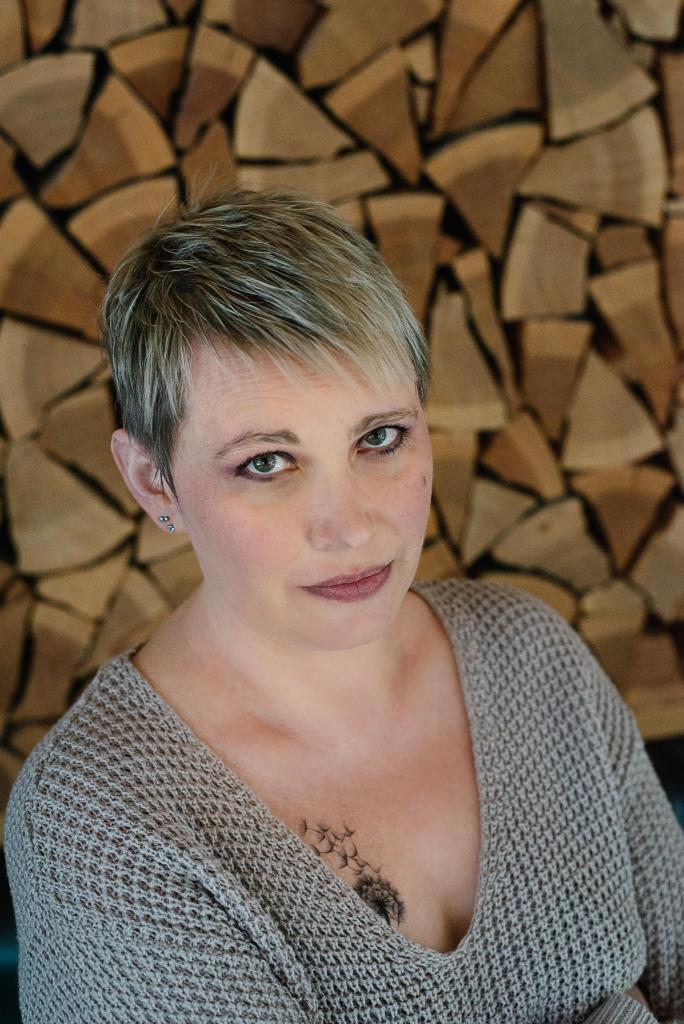
Letter from the Editor. Darcie Friesen Hossack

For this issue, we asked writers to delve into The Right to Read.

For writers, this right is also, inextricably, linked to the right to write. And this, with the right to safely, and with dignity, enter spaces that exist to promote our written words.

I know that am fortunate to live in Canada. To be able to write about difficult, even controversial subjects, without my government getting to have a say in whether my books are either published or burned. I am fortunate because most of my fellow citizens agree this should be so. And I am fortunate because, in too many other places in the world, just putting pen to paper can be a subversive, dangerous act. Danger, magnified exponentially by each and any number of layers of political and societal prejudice, by draconian policies and laws (see: Florida) and the associated threats of verbal and physical violence that may be meted out by governments intent on maintaining a status quo of inequalities.

But governments are not the only issue.

I cannot speak from any experience but my own. So in this space, I am going to speak from the experience of being a woman in what is still a jealously patriarchal world. I am white woman, to be sure, which comes with privileges of its own. But also with one glaring, persistent, often terrifying disadvantage in a world (both in Canada and abroad) where the gates are still being guarded by (*not all*) men.

Not All Men™

Not all. Just, for example, the TheoBros over at The New Evangelicals. A place that was the closest I’d come to attending church in more than a decade. The New Evangelicals, who in the last several days, made the decision to ban dozens of women from their Facebook platform for the sin of objecting to TNE’s presence at the soon-coming Theology Beer Camp (aka: “White Bro Summer”), after the camp decided to platform a known, narcissistic, domestic abuser and theologizer of “spiritual wives” as a workaround to marital infidelity.

Thanks to the work of many, many Jezebels, TNE’s presence there will not be a comfortable one. But TNE and other white men in power have made it clear that there are still no safe spaces for anyone but them.

And then, at the same time of my own banning from The New (Same Old) Evangelicals, came a certain TV interviewer. An interviewer who scheduled me to talk about my work, on air, before I had even agreed to appear.

In a pre-interview conversation, this educated, erudite man soon veered from the literary, into my reproductive choices (Had I definitively ruled out having children? How could I possibly say such a thing?), my appearance (“You look splendid, dear Darcie…dazzling”) and a request regarding my appearance on the day of our then-upcoming television appearance (“Could you not wear your glasses so you can look more dazzling and less like a nerd?”). And my favourite: “Your entire WordCity editorial board is made up of women? Is it a cult?”

This man, who held the gate to an international literary audience, then also asked why so many people in North America hate Donald Trump (on which point, I was glad to elaborate), and by the end, expressed a by-then predictable disdain and disappointment for the fact of my having included an LGBTQ+ character in my most recent novel, Stillwater.

I cancelled my appearance.

But? Why not stay and be part of the change and push back on air?

First, I would not be the one driving the course of the on-air conversation. And second, because the right to being taken seriously, as a full human being, in a space where others are respected both in front of and behind the camera, is not negotiable.

Which brings me back to the right to write including the right to safely exist in promotional spaces being as important as it is to being published at all. It is as essential as a writer’s right to not be banned by governments, schools. Or, as I once found myself, too, banned by a public library directed by a religiously conservative board.

It is this right to write, for storytellers and poets and truth-tellers to have their voices heard, that drives us to keep here working on WordCity Literary Journal. This mission won’t go on forever, but it will go on for now and for a time to come. Because, in this space, we aim to provide a platform for writers who are telling stories at the various margins of our societies. And that is something we all agree is worth our collective time and talent.

And on that note, we especially want to honour and give our gratitude to a particular group of poets who have joined us for this issue. A group whose courage we hope to continually work to deserve, for as long as we create this space. Our featured contributors: Trans Women Poets from the League of Canadian Poets, beginning with Rebecca Gawain.

Rewriting Feminisms:
Trans Women Poets from the League of Canadian Poets

Rebecca Gawain
(photo unavailable)

***

I hope when she looks at me
Glint of recognition in her eyes
She doesn’t bring it up
We don’t have to talk about the terrors
Our shared dating pools
Who hates us most
I don’t want to know your twitter handle
I don’t want to go to your potluck
Don’t tell me about scramz or hyper pop
I hate that Swedish shark

***

Time does not pass
Between December and December next
I still see you with the gleam of sun in your Eye
Boots against the ice, fur trim of your coat
I’m sorry I didn’t make it back from Christmas
That I weighed my organs this Easter against my sins
And was found wanting

***

Set a table for three
Leave an empty chair for memories
Yours, not mine
You absolve yourself with gifts
Time an arrow forward
Present me like a grotesquerie to your
Cousins, god parents…
Your new girlfriend mocks you
She speaks in hushed suggestions
You’re paying the bill
Anyway

Continue to Collection

Fiction. edited by Sylvia Petter

This fiction issue begins with a story by Jen Ippensen, Three Things You Should Know About Jarod J Brinkley III. In keeping with the times, there’s an element of “comeuppance”.

Then there is a flash by Cheryl Snell, allowing for Multiple Choice.

The havoc invisible illness can wreak is addressed subtly in Danila Botha’s story, There’s Something I’ve Been Meaning to Say to You.

Dave Nash’s flash, That’s My Baby in The Echo Chamber lets us see the hope invested in caring for an autistic child.

Finally, Rachel Fenton’s flash Words Written on a Thrown Vase is about truth, lies and the betrayal of confidences, alluding to much darker happenings.

Jen Ippensen
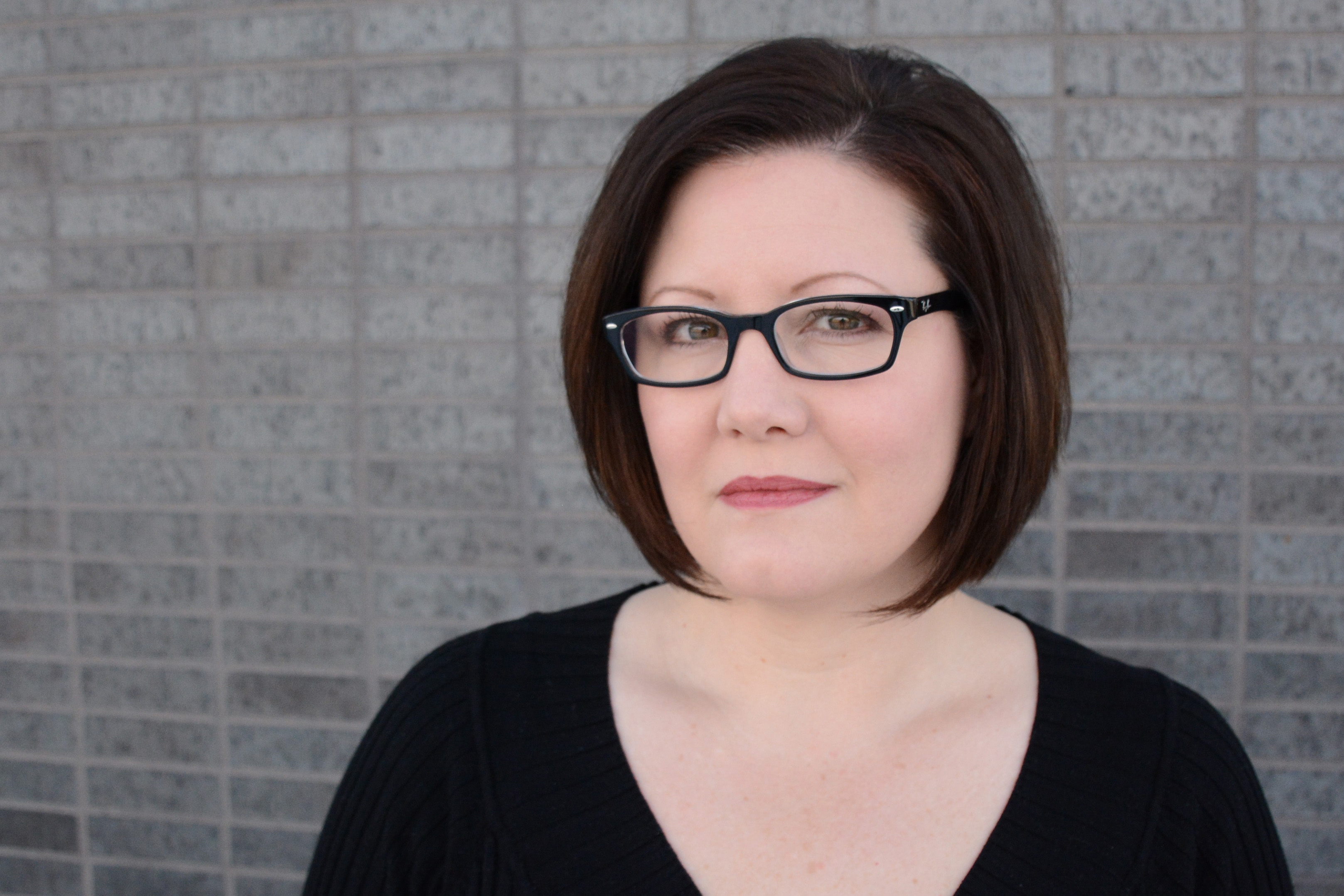
Jen Ippensen_Photo_

Three Things You Should Know About Jarod J. Brinkley III

after Lindsay Hunter

CW: Sexual Assault

One. Jarod J. Brinkley III has a 6th grade spelling bee trophy on a shelf above the desk in his private room at the Quads on campus at Wesleyan, his first choice of private schools where, because his father and his father’s father are alumni of the college, he enjoys a few minor perks as a legacy student, like a gold-plated lapel pin and early access to the dining hall on Sundays and several long-term members of the administration addressing him as Bud or Buddy or Old Chap or making time in their busy schedules when he needs a favor, like that time he missed the drop/add deadline and wanted out of Trigonometry to avoid a failing grade on his transcript. Of course no one at Wesleyan knows it’s an old spelling bee trophy. Jarod J. Brinkley III pried the brass name plate off the base years ago.

Continue Reading

Cheryl Snell
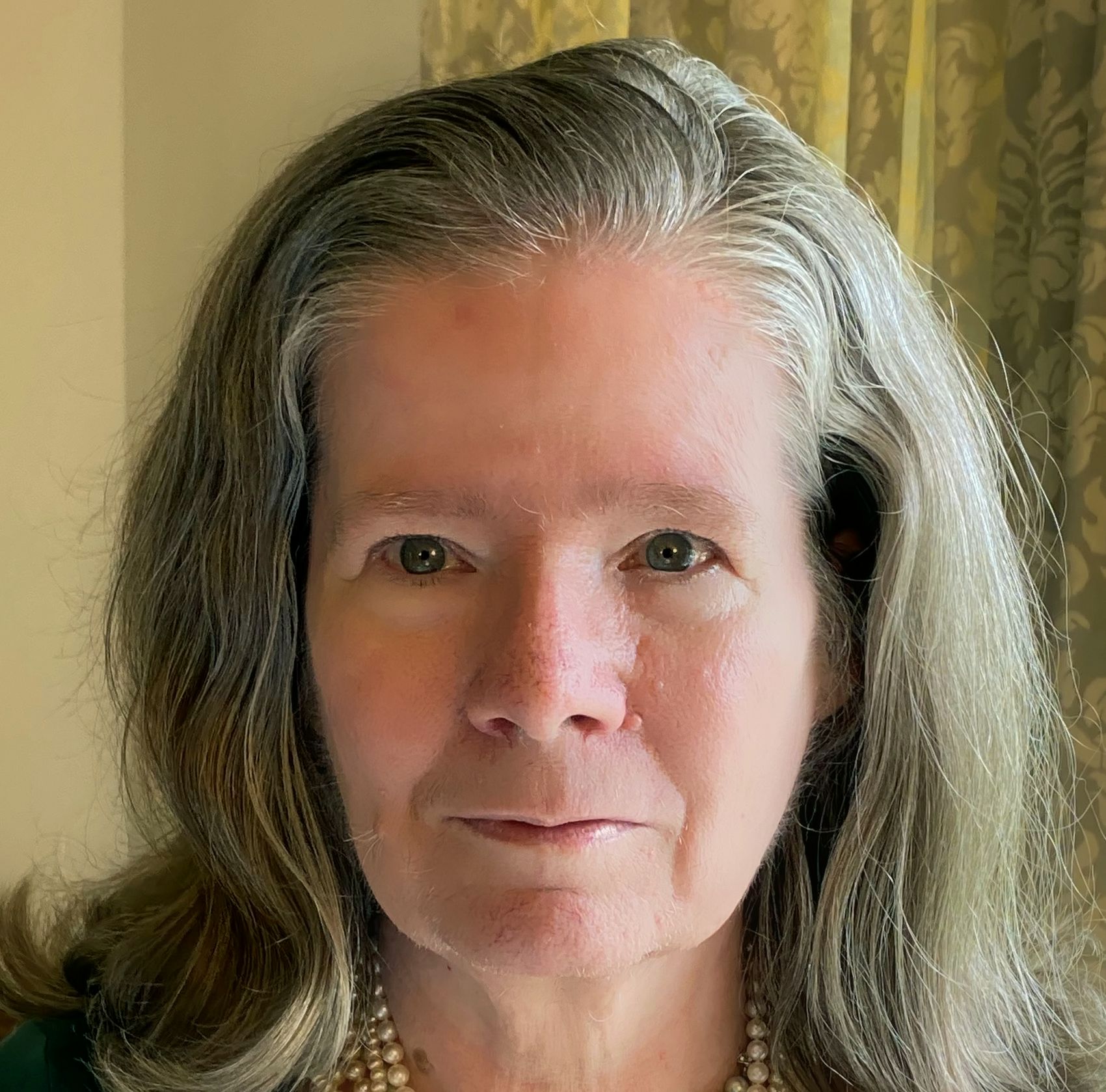
Cheryl Snell

Multiple Choice

A novel/short story/ poem are lost in a library. A student/scholar/amateur rescues them and checks them out, but will not share with her classmates/professors/ habitués of coffee shops. They upend/shake out /Heimlich her newfound knowledge from her, but find she has already eaten/swallowed/assimilated it. The knowledge is her, she is the knowledge. They ambush her anyway, brandishing weapons/ placards/ backwards caps.  Suddenly, a jackfruit/fig/mulberry tree breaks through the concrete. The trunk grabs/saves/protects the girl. The tree enfolds her, she inhabits the tree, the tree is she. Authorities decide she is a thief/sociopath/fraudster. They try to prune/ transplant/ cut her down, but her roots have caught them by their ankles and aerated/delved/turned them over into the soil.

Continue Reading

Danila Botha
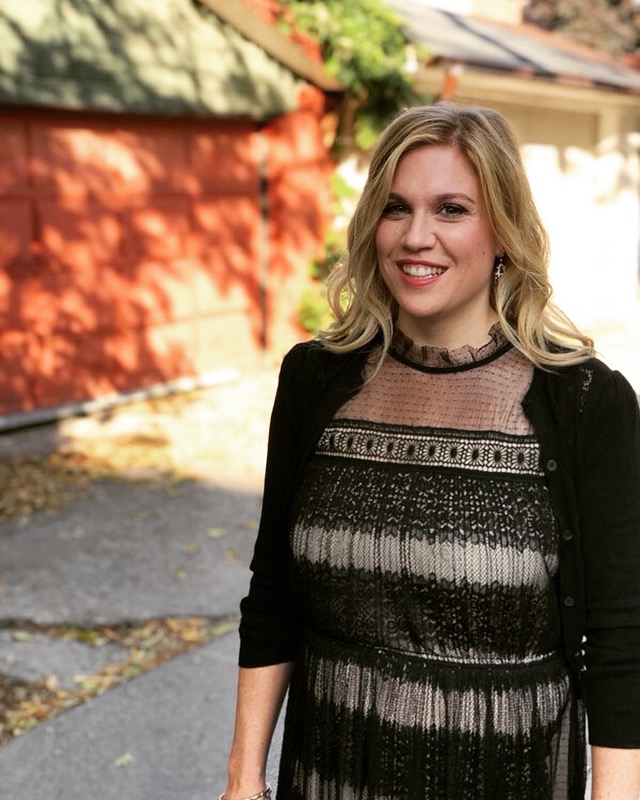
Danila Botha

There’s Something I’ve Been Meaning to Say To You

“I just laughed, what else could I do? And her friend chimed in singing get a clue/

 Get a life, put it in your song/ There’s something I’ve been meaning to say to you…”

~Brendan Benson, Metarie


I wrote my first message and displayed it in my kitchen window, which anyone passing my ground floor apartment could see easily. It was a long sign, in black pen, in my sloping handwritten script, and it was a huge contrast to all the people who’d colorfully thanked first responders in the first wave and never bothered to take their signs down.

There’s something I’ve been meaning to say to you. Sometimes I miss the things we used to do together. Going to farmer’s markets full of local craftspeople selling overpriced infinity scarves and handmade moisturizer made in someone’s bathroom that smelled vaguely of lemongrass and lavender, that you insisted on buying for me. I miss the vegan organic restaurants you’d drag me to that I thought would be terrible, but often weren’t. I miss you taking me for walks on Woodbine beach, where that’s all we did. I miss you taking me to Fringe festival plays that I didn’t think were funny, or music showcases where you complained that the guitarist’s E string was flat, and I nodded like I understood what you meant. I miss watching you eat deep fried shrimp and fries while you never gained a pound. I miss going to Kensington and spending our last five dollars and change for something we’d never end up wearing from Courage My Love. I miss secretly reading your diary, where you were freer and more confident than you ever were in real life. I miss watching you show off gold jewelry your boyfriend bought you, so proud I’d almost forget that he’d cheated on you.

Continue Reading

Dave Nash
Dave Nash

That’s My Baby in the Echo Chamber

No. We didn’t pay extra so he could yell the whole plane ride down from Newark to Orlando. We never ceased to be horrified and embarrassed and concerned for him. Since you don’t want to believe me, I’ll tell you a corroborating story.

I was walking him yesterday because that’s the only thing that works. And there’s this traffic light. We’re used to people being distracted because of cell phones and not seeing the light when it changes so we might think it’s a good idea to honk.

It’s not.

A three-hundred-pound woman got out of the car. She yelled that she was on her way home from her mother’s funeral. And she hadn’t spoken to her mom in five years. And now she was dead and so not talking. This lady who must have had a Derringer in her glove compartment because she’d been robbed too many times laid into the honking dude. Then she got back in the car, waited for the light to turn red and took that left.

Continue Reading

Rachel J Fenton
Rachel Fenton

Words Written on a Thrown Vase 

Teen was a word still used to describe her when you met her at the university library,  your place of work. Teen is the word that describes the number of years you are older than her. I called you a predator when I worked that out, but you disagreed because you said she’d already fucked a man who was older than you were at the time. You didn’t say if he had children too. You didn’t agree with my assertion that being fucked by a man who was older than you when she was younger than she was when she met you only made her a victim of two predators.

Continue Reading

Non-Fiction. Edited by Olga Stein

Non-Fiction: Editor’s note on Censorship and its Erasures
olga-stein89

Our Summer 2023 issue is finally here, and I, along with all of our editors, wish to thank contributors and readers for their continuing interest and patience. The theme of censorship is an important one, as the news reaching us daily from the United States and Russia makes evident. In both countries, those with the most power want to control history as it unfolds, as it’s recorded, and as it’s recounted. Those who control history, shape society and politics of the present, and its forms in the future. Censorship is therefore a crucial tool for those who hope to maintain such control. In the US, current efforts to censor books and school lessons pertain to historical facts/truths about the capture and enslavement of people from the African continent, and the subsequent oppression of former slaves and their American-born descendants. In Eastern Europe, censorship entails the execrable attempt by Russia to justify its invasion of Ukraine, a sovereign nation. Russia is aiming for nothing less than the erasure of Ukraine as a nation, while eliminating any and all voices who oppose this blatant and brute imperialism.

          Russia has always been authoritarian. Its authoritarianism has waxed and waned over the centuries (depending on who controlled the state apparatus), but censorship was always part of the incumbent regime’s playbook. Still, until now, nothing could compare—in degree and scope of iniquity—with Stalin’s regime, and Stalinism as political strategy to maintain total authority by wiping out all dissent, all differences of opinion and approach, in every sphere of professional and private life.

Nina Kossman’s elegiac memoir, “Lysenko, Enemy of Soviet Science, and a Dissertation Left on a Windowsill,” is a testament to the pernicious effects of censorship in science during Stalin’s era. Soviet biologist Trofim Lysenko waged war on Mendelian genetics and science-based agricultural techniques (denouncing them as bourgeois pseudoscience or imperialist genetics), which resulted in the dismissal, imprisonment, or death of thousands of mainstream biologists.

Continue Reading

Nina Kossman
Nina Kossman photo. 3

Lysenko, Enemy of Soviet Science, and a Dissertation Left on a Windowsill

In memory of my mother, Maya Borisovna Shternberg

Back in the seventies, people emigrating from the Soviet Union were not allowed to take with them certain things, such as books published before 1917 (the year of the Bolshevik revolution), manuscripts, typescripts, works of art, and so on. Since the Soviet Union did not have diplomatic relations with Israel, and 99% of hopeful emigrants were going to Israel, the only country to which it was possible to apply for permission to emigrate in those years, the way to take forbidden items out of the USSR was to give them to a Dutch Consul, who would return the items to their owners once they were outside the Soviet Union—i.e., in Israel. There was, however, a limit to how many items prospective emigrants were allowed to give to the Dutch Consul.

            My parents wanted to give my mother’s academic dissertation to the Consul, but I said I would not leave without my watercolors, and since even children’s pictures had been classified as “art” by the state apparatus, my parents had to choose between my watercolors and my mother’s dissertation. They were loving parents, and they decided in favor of my watercolors. This was how, and why, on the day we left the Soviet Union forever, a cardboard box with my mother’s dissertation remained on a windowsill of our empty apartment, next to a smaller cardboard box with my father’s WWII medals. It doesn’t take much imagination to visualize the contents of both boxes—the dissertation and the medals. These were treated like garbage by those who moved into our apartment after we had left. I know for a fact that my father never regretted leaving his war medals on that window sill. He had never shown them to us anyway, except once, when I asked him to, and he took them out of the box for just a second, saying that it’s nothing to be proud of, and that being a soldier in the war that had killed millions, including most of his family, was not a matter of pride or wearing medals, like so many believe, but of grim necessity. As for my mother’s dissertation, this was a different matter; I have no doubt that my mother regretted leaving it.

Continue Reading

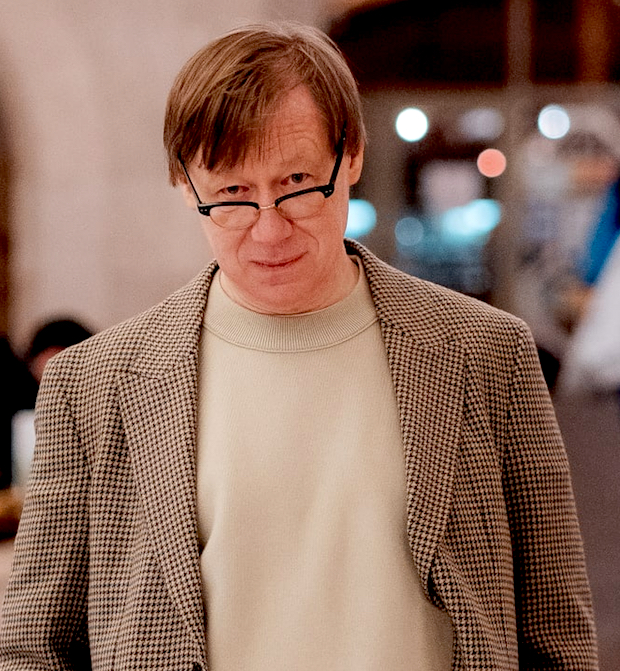
Poets in Translation by Philip Nikolayev
Philip Nikolayev photo small

Philip Nikolayev is a poet living in Boston. He translates poetry from several languages and is currently translating poetry from Ukraine. Nikolayev’s works are published internationally, including such periodicals as Poetry, The Paris Review, Harvard Review, and Grand Street. His several collections of verse include Monkey Time (Wave Books; winner of the 2001 Verse Prize) and Letters from Aldenderry (Salt). He is coeditor-in-chief of Fulcrum: An Anthology of Poetry and Aesthetics.

Arkady Shtypel, translated from the Ukrainian by Philip Nikolayev

Arkadiy Shtypel is a Russian Ukrainian bilingual poet, translator, and author of several works on poetry. He was born in 1944 in the Uzbek city of Kattakurgan during the WWII evacuation. His childhood and youth were spent in Dnipro, Ukraine, where he studied physics. He was expelled from his university for attempting to create a samizdat literary journal, and was at the same time accused of both Zionism and Ukrainian nationalism. After military service, he completed his university studies via correspondence but never pursued a career in physics. In 1969, he moved to Moscow and published several volumes of poetry. His first collection, Visiting Euclid, saw the light of day in 2002. In 2016, a book of Shtypel’s translations of classic Russian poetry into Ukrainian was published in Kyiv by the Kyiv-Mohyla Academy Publishing House. He has been a regular participant in the Kyiv Laurels literary festival and in the poetic programs of the Lviv Publishers’ Forum. He has been residing in Odessa, Ukraine, since 2021.

Continue to poets in translation

Olga Stein

olga-stein89

Mikhail Iossel’s Love Like Water, Love Like Fire: The Soviet Jew in Full Colour

Mikhail Iossel’s collection of memoir and lyrical pieces, Love Like Water, Love Like Fire, bears witness to a particular kind of experience — that of living and identifying as a Jew in the Soviet Union (now former Soviet Union) during the 20th Century. To be more precise, the majority of these autobiographical stories deal with Iossel’s own past before 1986, which is when he immigrated to the USA. Highly literary and genre-blending, they serve up a kind of anti-paean to a life Iossel left behind in a country and part of the world whose ideological fashioning differs vastly from the one we’ve been socialized in as Westerners. As these stories suggest, the Soviet-era world is so utterly unlike ours, so prosaic and unsettling at once, that literature aiming to convey this strangeness requires its own narrative strategies. In Love Like Water, Love Like Fire, characters and situations are more the stuff of phantasmagoria than memoir or “realistic” autofiction. Yet Iossel’s artistry is such that anyone born and raised in this country and its paranoia-inducing regime, any reader with an understanding of its mind-numbing, grim totality, would think these stories, their content and form, not just apt, but true to life.

            As a whole, the collection testifies to Iossel’s keen sensibility and unmistakable erudition. There are moments of sly and overt intertextuality, and unmistakable literary panache. One piece, simply titled “Sentence,” and dedicated to the writer and language poet Arcadii Dragomoshchenko, unfolds as an interior monologue in, to be sure, a single sentence. It recalls an semi-illicit gathering of dissident writers in an otherwise empty building in a central part of Leningrad (St. Petersburg since 1991). This piece gives expression to different registers of emotion; part nostalgia and elegy for a bygone youth in a resplendent metropolis, known the world over as “Venice of the North,” it nevertheless homes in on the narrator’s awareness of and anxiety elicited by the city’s governing ethos and of the country as whole.

Continue Reading

Literary Spotlight with Sue Burge: Gail Anderson Dargatz

The Almost Widow: A Novel by [Gail Anderson-Dargatz]

For this issue I am delighted to meet Canadian writer Gail Anderson-Dargatz.  I’m not sure if there is a genre she hasn’t written in! 

Gail, you are an extremely successful and experienced writer, working across most genres: poetry, short stories, novels and YA fiction.  Within these genres you tackle everything from thrillers to historical dramas, all with gorgeously engaging titles. The Cure for Death by Lightning, your first novel, really shows your eclectic approach.  It’s a coming-of-age story set in rural British Columbia during WWII that features magic realism elements and recipes throughout!  I wondered what initially set you on the path to becoming a writer?  Have you always written?  When did you first think, “I’m a writer”?

My oldest sister tells me that when I was seven, I told her I wanted to be a writer. I even have a note written at the time to that effect. My sister was a writer, and my mother was a writer. More importantly, my parents were both big readers. I grew up in an environment where writing and reading were valued. So, I grew up writing. I just took it for granted as a pastime. I didn’t believe I could make a living at it (and I sometimes still don’t!) but I couldn’t think of anything I’d rather do. I bugged the editor of our local paper, The Salmon Arm Observer, to let me write stories in my teens, mostly about school stuff. Later I took a short journalism program and again bugged the editor of my local paper into hiring me as a cub reporter. During the time I worked there, I started sending my fiction stories out to literary magazines and contests. One of them won a competition judged by Jack Hodgins. He became my mentor as I entered the University of Victoria creative writing program. While there I continued to send stories out and one of them, pulled from a rough draft of The Cure for Death by Lightning, won the Canadian Broadcasting Company (CBC) short story competition. I met an agent at the gala who took me on and eventually sold the novel internationally, launching my career. It was something of a Cinderella story, as I was milking cows with my first husband at the time, but it was a Cinderella story that was ten years of work in the making.

Continue Reading

Books and Reviews. Edited by Geraldine Sinyuy

Lori D. Roadhouse reviews Debra Black’s
“love, lust, existence and other ephemeral things”

I read these poems first in order, then backwards, and also randomly. Each poem exists on its own merit, as a breath in time. The breaths come faster, or more slowly, depending on the subject matter, and depending on the order in which they are read. It’s almost a meditation, a rocking chair, representing the rhythms of life.

This, in the middle of a love poem, as the subject imagines making love with both Pablo Neruda and her real lover, Death. The poem begins with caresses of tender words, rises to a quickening and climax, then resolves back into wistful tenderness. Languid, gentle breaths in nature morph into panting, lusty inhalations of sexual fantasy and physical exertions. The ever-changing tidal motion in this book is at times comforting, at other times perplexing, often very sensual and unapologetically sexual.

Continue Reading

Sweating and Reading.
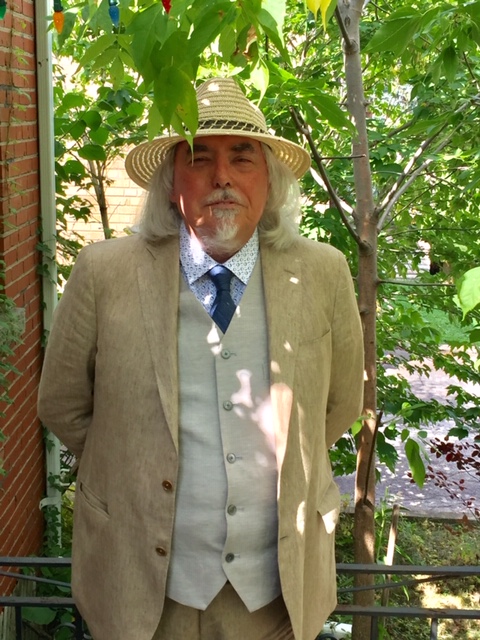
an essay of books by Gordon Phinn
Gordon Phinn

Books Referenced:

Into the Soul of the World, Brad Wetzler (Hachette Books 2023)
The Man Who Hacked the World, Alex Cody Foster (Turner Publishing 2022)
Still Pictures, Janet Malcolm (Farrar, Straus & Giroux 2023)
Ghosts of the Orphanage, Christine Keneally (Public Affairs 2023)
We Were Once a Family, Roxanna Asgarian (Farrar, Straus & Giroux 2023)
Just Once, No More, Charles Foran (Knopf Canada 2023)
Strange Bewildering Time, Mark Abley (Anansi 2023)
Tautou, Kotuku Titihuia Nutall (Anansi 2023)
Darke Passion, Rosanna Leo (Totally Bound 2023)
Lost Dogs, Lucie Page (Cormorant Books 2023)
Duck Eats Yeast, Quacks, Explodes, Gary Barwin & Lillian Necakov (Guernica 2023)
Seeing the Experiment Changes It All, Dale Winslow (NeoPoiesis Press 2021)
Surface Tension, Derek Beaulieu (Coach House 2022)
The Garden, A.L.Moritz (Gordon Hill Press 2021)
As Far As You Know, A.L.Moritz (Anansi 2020)

*

     Imagine Brad Wetzler graduating and quickly finding an internship at a nationally famous magazine and within months moving up through the ranks to an editorial position which gave him easy access to famous adventure travel writers, many of whom he held in great regard, and gradually realizing his secret ambition to be an adventure travel writer himself, pitching ideas here and there, getting the green light, fulfilling his ambitious plans and publishing in Outside, George and the New York Times, pulling in six figures per annum while enjoying a fruitful partnership with a lovely and talented editor in the rarified air of Sante Fe, New Mexico.  Just imagine:  it all seemed like living the dream and it was, as long as he ignored the wounded child, lousy self esteem hidden inside his welcoming smiles and soulful camaraderie shared with colleagues and friends.  Ah yes, wouldn’t you know it, the culprit was that poisoned chalice of the nuclear family in which a few manage to swim, flotation devices attached, but many fail to survive.

     All clichés of the modern autobiography, the memoir with those gaping wounds of the psyche that always, in the end, have to be attended to if depression, drugs and romancing suicide are to be skipped rather than surrendered to.  A familiar tale of woe, and if the author is not careful, a hefty dose of woe-is-me.  And with Wetzler I’m afraid the latter is the case.  One does not require the details of every insult, slight, defeat and failure to see how he failed to settle the scores necessary for survival.  He repeatedly seeks approval instead of demanding the respect that psychotic families will never give.

Continue Reading

From Spagin (Lecce, Italy). a review by Marcello Buttazzo. translated from the Italian by Bruce Hunter
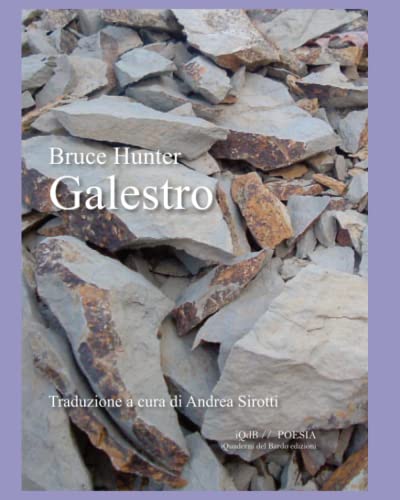
From Spagin (Lecce, Italy) by Marcello Buttazzo. Translated from the Italian by Bruce Hunter.

Bruce Hunter is a great Canadian poet and writer. In 2022 his book A Life in Poetry (based on his Two O’clock Creek- poems new and selected) was published in Italy. Bruce was deafened as a child and suffered from low vision for much of his adult life. He grew up in Calgary, in working-class Ogden, in the shadow of Esso’s Imperial Oil refinery. After high school, he worked as a laborer, equipment operator, Zamboni driver, gardener, and arborist.

In his late twenties, his poems earned him a scholarship to the Banff School of Fine Arts. His poetry, fiction and creative essays have appeared in over 80 international blogs, magazines and anthologies in Italy, Canada, China, India, Romania, the United Kingdom, the United States. Among the various awards we remember, in 2010, the Acorn – Plantos Peoples’ Poetry Award for Canada. Bruce Hunter is a life member of the Canadian Hard of Hearing Association (C.H.H.A.) and the Canadian National Institute for the Blind (C.N.I.B.). Recently, in February 2023, a book of his verses entitled Galestro was released for the Quaderno del Bardo editions.

The title of the volume is emblematic. Galestro is a sandy soil, rich in minerals, found in the Chianti vineyards in Tuscany, where Bruce Hunter made a meditative journey. We humans are children of the stars. We are products of the collapsing stars; we are made of their stuff. As Carl Sagan writes, “the nitrogen in our DNA, the calcium in our teeth, the iron in our blood, the carbon in our apple pies were produced inside collapsing stars.”

Continue Reading

Poetry. Edited by Clara Burghelea

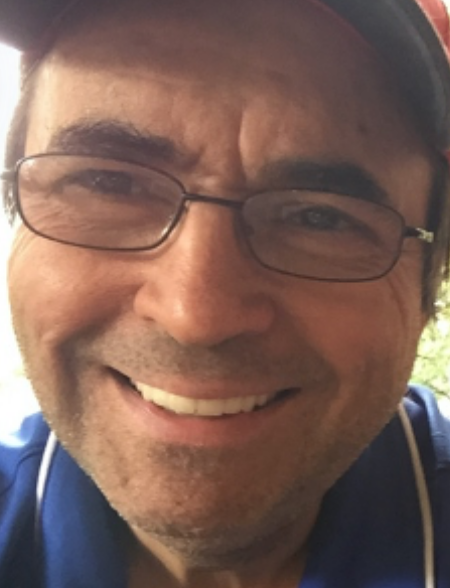
Fabrice B. Poussin
Fabrice B. Poussin

Trail conversations

“How you doin’? she asks
not waiting for the conformist answer
too busy taking a sip of her holy water
wrapped in plastic and early morning dew.

“Good mornin’!” they claim in bright accents
from North to South and other climes
boasting those ivory smiles
as if tomorrow would never come. 

“Have a good day!,” the gentleman softly speaks
in the path of a wife of fifty years
but she seems more interested in this lonely sight
as I snap another memorable landscape with a superzoom.

Voices echo as if words were spoken centuries before
in my head as they shake my achy muscles
ignorant of my inner thoughts, friends for a moment and
soon I ceased to exist for the chance encounters of these elusive friends.

It is an odd realization, albeit for a mere second
to feel human in the midst of a universe
that does not care too much 
whether they think you good or bad. 

Continue to 2 more poems

Geraldine Sinyuy
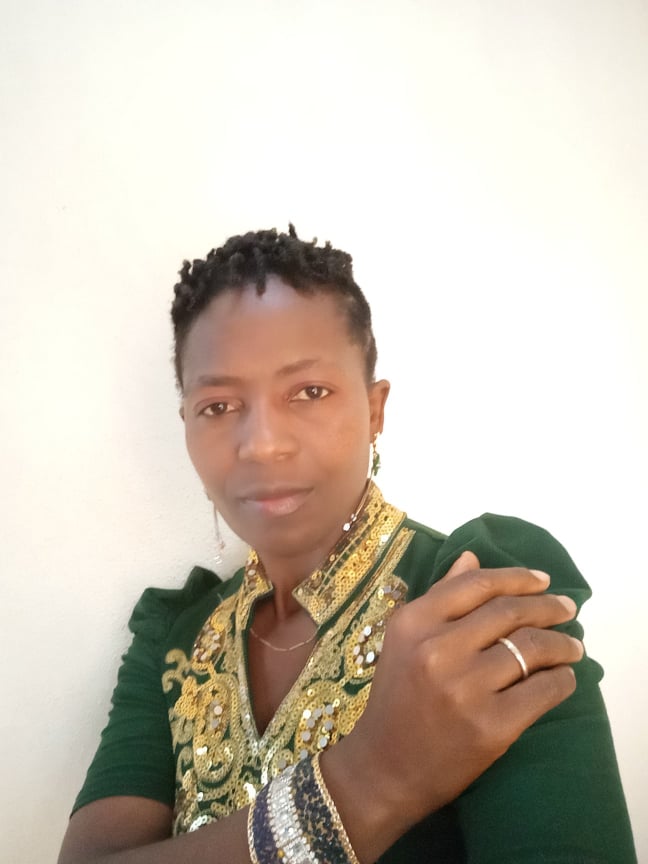
ge500

Plant a tree

Walk today with those who will walk with you,
Should they leave you half the way, 
Plant a tree for them and mark the day,
So that if ever the road leads them back to  you again, you'll have at least a shelter to offer if not a fruit.
Walk on and as many as part ways with you
Keep planting trees
So that every embarrassment becomes a tree

Continue Reading

Mansour Noorbakhsh
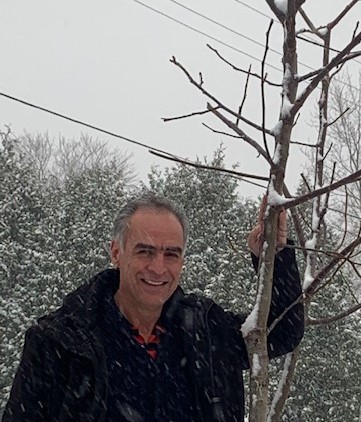
Mansour-Snow-2020 (resized)

Sometimes ponder why the sky looks blue

You force me to read your books. 
As you warn me from reading others. 
I’m wondering have you ever looked at the sky, 
at the bushes on your way, 
or at the sand and soil. 

Look at everything again. 
Sometimes stand under the rain 
till it washes your whole body 
including your eyes.
Then maybe you will realize that 
what you force me to read and believe 
has been considered forbidden words somedays.  

Those days that your ancestors were killed 
for reading forbidden words and believing them. 

Sometimes sit next to a stream
and stare carefully into the water 
that reflects your face. And your eyes too.
Maybe you will realize thus, 
you look more like the murderers of your ancestors 
than the ancestors whom you inherited your faith from.

Sometimes trust yourself and ask why the sky looks blue.

Continue to 3 more poems

Catherine Zickgraf
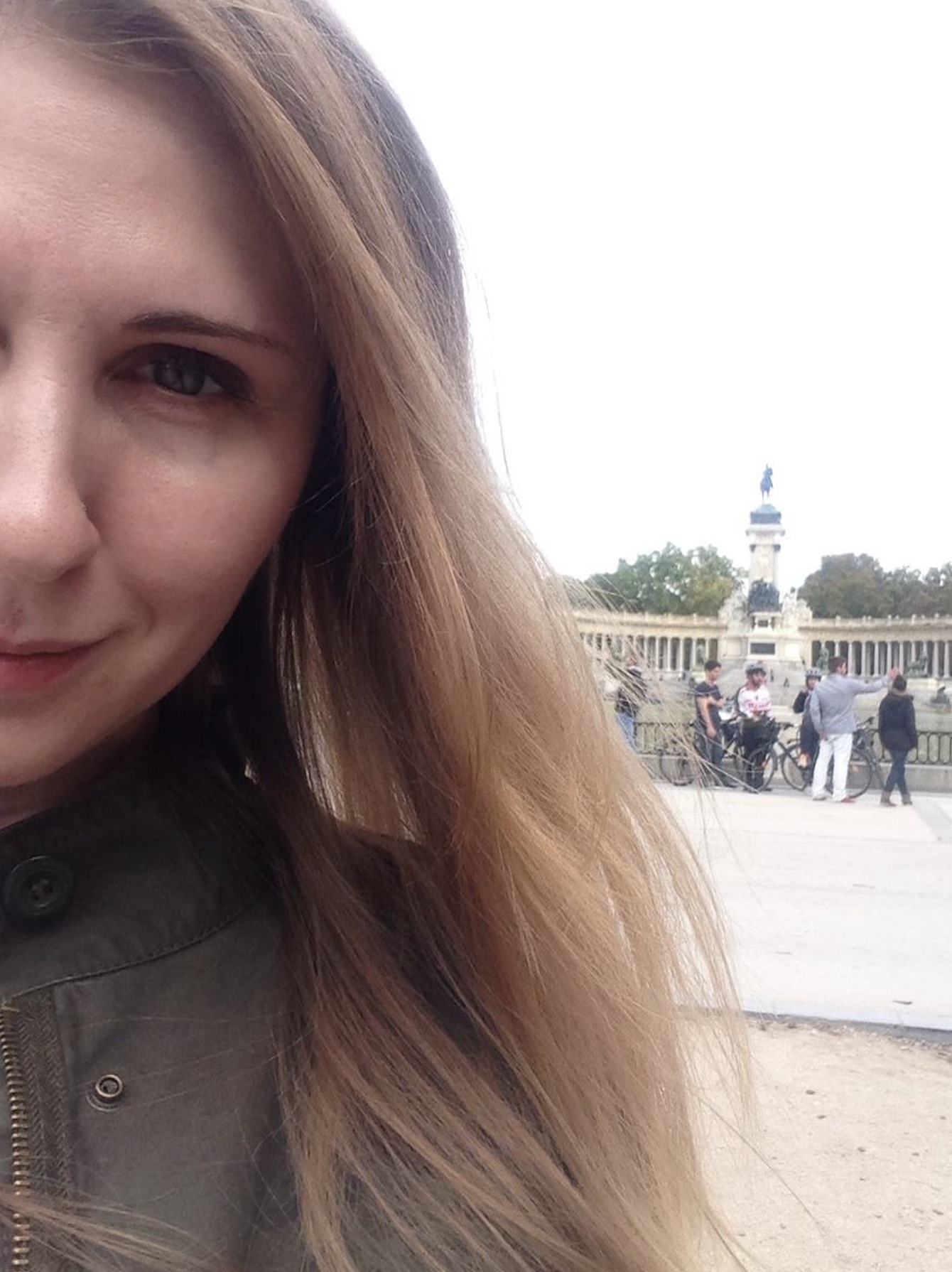
Catherine Zickgraf

Violining

Gusts blow wild sky off its clothes line,
and fog soaks into my coat.
I lift the gate latch, enter under 
a canopy of greens and into the courtyard.	

I stay this January in Carmen de la Victoria,
the stone and oak guest house 
of the Universidad de Granada. 
Halfway up the river valley,
I come home to the ghosts of former guests. 

I’m comfy now in a dry sweater.
The ladies feed me fish soup and red wine. 
This pale afternoon I settle into the dining room,
facing windows that gaze down the hill.

Continue Reading

Jameson (Jason) Chee-Hing
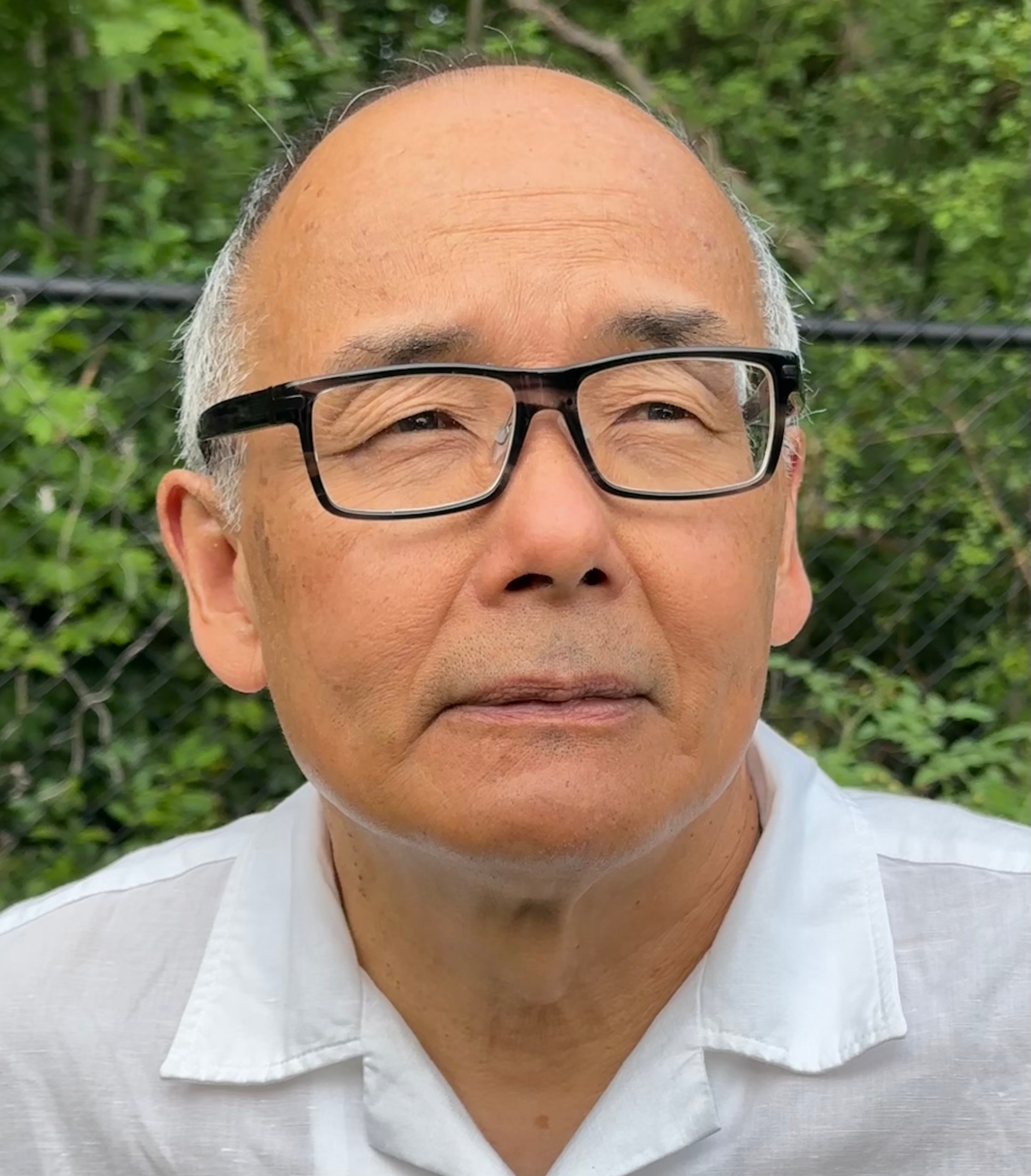
Jamesons Chee-Hing

The World Is Not Right

The world is not right
when It is not just

Do not forget us
we have no voice
tell the world about us
the voiceless...the enslaved...the displaced…the imprisoned

To the poets and writers 
do not forget us
give words to our plight
tell the world

We are in the re-education camps
forced to renounce our faith...our birthright…re-educated
we are in the nameless prisons 
we dared to speak out
dared to want
want what you take for granted
our basic rights

We are the displaced
violently removed from our ancestral lands
because we look different
we have no voice
we are the forgotten souls

I am now a number 
recorded in some book
the list of the forgotten
buried under my native soil
in the deep woods
no marker for my loved ones
they have only their memories now

The world is not right 
when it is not just.

Continue to 1 more poem

Lela Hannah

Lela Hannah

Fractured

I. Childhood

I’ve tried too many times
to wedge myself into 
an electric socket, an Alice in Unwonderland, 

insisting on existing 
in places that can never accommodate me.

II. Adolescence 

Multi-talented is defined 
by being able to cry 
and eat ice cream 
without swallowing tears. 

III. Adulthood

I make glass figurines 

seal the cracks 
with the stickiness of my blood.

Continue to 1 more poem

John Brantingham
John Brantingham

On the Edge of the Marsh

Ginny and her husband have a farm 
here at the edge of the marsh,

a place my grandfather, a dairyman all
 his life would have felt at home.

They have cows and grow corn, 
strawberries and asparagus, 

and they listen to great blue herons 
grawking to each other across the water.

I hear them too as I buy cucumbers
from Ginny’s cart, and I hear 

my grandfather, dead now 
60 years, talking and laughing.

The two of them speak of things 
beyond my understanding,

They speak the language of peace,
the language of things that make sense. 

Continue to 2 more poems

Marc Isaac Potter

Time
 
Pairs of little bare feet
Running across the Kentucky Bluegrass,
 
Children laugh as they run,
Showing off their new Easter clothes.
 
Pappa pops a beer
In the hot pool and chugs this one too.
Momma is in the house
Peeling carrots while Auntie
Cleans in another part of the house.
 
All is being readied
For the disaster.

Continue to 2 more poems

Sabyasachi Nazrul

Oh Lord...

Oh Lord...
I have cultivated paddy in your land.
I have also cultivated onion, garlic, ginger and tomatoes in another land.
I cultivated fish in the pond and gourds in entresol by the pond.
Good yield,
I got good paddy in the field.
I packed one years worth of paddy to eat with my family and sold fifty mounds.
I am well in Your mercy.
Oh Lord...
there is no shortage,
O Allah guide me to the path of light.
I drink your water to cool my soul.
I walk through the valley alone in the dark.
I fear no evil..
I'm not alone,

Continue Reading

Carl Scharwath
Carl Scharwath

Telos

Two evening lovers’ echoes
In you forgotten dreams 
And memories of essence.

Touch wordlessly in a greater optimism.

Waves of summer morn
Under a cloudless sky 
With flickering lights of desire.

Turning like a dancer alone on the stage of life

The collapsing leaves turn 
After their first death and sleep
In the place of forgotten Gods.

Continue to 2 more poems

Susmit Panda

SusmitPanda

If only I could set things straight, I might.
But I am spent! I miss my family.
Has brother left the building for the night?

The sink is chockablock, the TV’s bright
And muted, roaches raid the cutlery.
If only I could set things straight, I might.

Isn’t it time? The far-ranked bulbs that light
The dirty steps will blink out suddenly.
Has brother left the building for the night?

I might, in darkness inching down the flight
Of steps, trip on somebody, till I cry:
If only I could set things straight, I might.

The crescent moon is aging in plain sight.
The pickets wrap back into obscurity
—If only I could set things straight, I might.
O brother, have you left us for the night?

Continue to 3 more poems

Letter from the editor. WCLJ summer 2023

From the desk of WCLJ Managing Editor, Darcie Friesen Hossack

For this issue, we asked writers to delve into The Right to Read.

For writers, this right is also, inextricably, linked to the right to write. And this, with the right to safely, and with dignity, enter spaces that exist to promote our written words.

I know that am fortunate to live in Canada. To be able to write about difficult, even controversial subjects, without my government getting to have a say in whether my books are either published or burned. I am fortunate because most of my fellow citizens agree this should be so. And I am fortunate because, in too many other places in the world, just putting pen to paper can be a subversive, dangerous act. Danger, magnified exponentially by each and any number of layers of political and societal prejudice, by draconian policies and laws (see: Florida) and the associated threats of verbal and physical violence that may be meted out by governments intent on maintaining a status quo of inequalities.

But governments are not the only issue.

I cannot speak from any experience but my own. So in this space, I am going to speak from the experience of being a woman in what is still a jealously patriarchal world. I am white woman, to be sure, which comes with privileges of its own. But also with one glaring, persistent, often terrifying disadvantage in a world (both in Canada and abroad) where the gates are still being guarded by (*not all*) men.

Not All Men™

Not all. Just, for example, the TheoBros over at The New Evangelicals. A place that was the closest I’d come to attending church in more than a decade. The New Evangelicals, who in the last several days, made the decision to ban dozens of women from their Facebook platform for the sin of objecting to TNE’s presence at the soon-coming Theology Beer Camp (aka: “White Bro Summer”), after the camp decided to platform a known, narcissistic, domestic abuser and theologizer of “spiritual wives” as a workaround to marital infidelity.

Thanks to the work of many, many Jezebels, TNE’s presence there will not be a comfortable one. But TNE and other white men in power have made it clear that there are still no safe spaces for anyone but them.

And then, at the same time of my own banning from The New (Same Old) Evangelicals, came a certain TV interviewer. An interviewer who scheduled me to talk about my work, on air, before I had even agreed to appear.

In a pre-interview conversation, this educated, erudite man soon veered from the literary, into my reproductive choices (Had I definitively ruled out having children? How could I possibly say such a thing?), my appearance (“You look splendid, dear Darcie…dazzling”) and a request regarding my appearance on the day of our then-upcoming television appearance (“Could you not wear your glasses so you can look more dazzling and less like a nerd?”). And my favourite: “Your entire WordCity editorial board is made up of women? Is it a cult?”

This man, who held the gate to an international literary audience, then also asked why so many people in North America hate Donald Trump (on which point, I was glad to elaborate), and by the end, expressed a by-then predictable disdain and disappointment for the fact of my having included an LGBTQ+ character in my most recent novel, Stillwater.

I cancelled my appearance.

But? Why not stay and be part of the change and push back on air?

First, I would not be the one driving the course of the on-air conversation. And second, because the right to being taken seriously, as a full human being, in a space where others are respected both in front of and behind the camera, is not negotiable.

Which brings me back to the right to write including the right to safely exist in promotional spaces being as important as it is to being published at all. It is as essential as a writer’s right to not be banned by governments, schools. Or, as I once found myself, too, banned by a public library directed by a religiously conservative board.

It is this right to write, for storytellers and poets and truth-tellers to have their voices heard, that drives us to keep here working on WordCity Literary Journal. This mission won’t go on forever, but it will go on for now and for a time to come. Because, in this space, we aim to provide a platform for writers who are telling stories at the various margins of our societies. And that is something we all agree is worth our collective time and talent.

And on that note, we especially want to honour and give our gratitude to a particular group of poets who have joined us for this issue. A group whose courage we hope to continually work to deserve, for as long as we create this space. Our featured contributors: Trans Women Poets from the League of Canadian Poets, beginning with Rebecca Gawain.

Return to Journal

WordCity Literary Journal is provided free to readers from all around the world, and there is no cost to writers submitting their work. Substantial time and expertise goes into each issue, and if you would like to contribute to those efforts, and the costs associated with maintaining this site, we thank you for your support.

One-Time
Monthly
Yearly

Make a one-time donation

Make a monthly donation

Make a yearly donation

Choose an amount

C$5.00
C$15.00
C$100.00
C$5.00
C$15.00
C$100.00
C$5.00
C$15.00
C$100.00

Or enter a custom amount

C$

Your contribution is appreciated.

Your contribution is appreciated.

Your contribution is appreciated.

DonateDonate monthlyDonate yearly

Rewriting Feminisms: Trans Women Poets from the League of Canadian Poets

From WCLJ Managing Editor, Darcie Friesen Hossack:

Trigger Warning for introduction: violence against trans community

In April of this year, during National Poetry Month, I was invited to Rewriting Feminisms: Trans Women Poetry Reading. Generously funded by the Canada Council for the Arts and the League of Canadian Poets, the event showcased the work of Trish Salah and WCLJ poet Jennifer Wenn. Rewriting Feminisms was initiated and designed by Diana Manole, who organized the reading with support from Feminist Caucus members. Diana also curated this collection for WordCity from a panel of open mic readers, whose works were also read aloud that night in April.

In that same hour, that evening in April, as I listened to brave women read lines excavated from their own experiences, in a world committed neither to their freedom nor their existence, I received a news alert. A trans woman, Rasheeda Williams, had been found murdered in Atlanta. A 17-year-old was later arrested.

We present these poems, these poets, in the hope of creating a safer, more loving and accepting world.

Rebecca Gawain
(photo unavailable)

***

I hope when she looks at me 
Glint of recognition in her eyes 
She doesn’t bring it up
We don’t have to talk about the terrors
Our shared dating pools
Who hates us most
I don’t want to know your twitter handle
I don’t want to go to your potluck 
Don’t tell me about scramz or hyper pop
I hate that Swedish shark 


***

Time does not pass 
Between December and December next 
I still see you with the gleam of sun in your Eye 
Boots against the ice, fur trim of your coat
I’m sorry I didn’t make it back from Christmas 
That I weighed my organs this Easter against my sins 
And was found wanting 


***

Set a table for three 
Leave an empty chair for memories 
Yours, not mine 
You absolve yourself with gifts
Time an arrow forward 
Present me like a grotesquerie to your 
Cousins, god parents… 
Your new girlfriend mocks you
She speaks in hushed suggestions
You’re paying the bill 
Anyway

Rebecca Gawain is an emerging poet living in Tiohtià:ke / Montreal. She is fond of the work of Notley, Mishima, Bourdieu, and works on a collection of short stories about Taste, drawing on her experiences as butch trans woman. She can be reached at gen_writes@riseup.net.

Madi Lentine Johnstone

Madi Lentine Johnstone

A List of Concerns
1:
A lover discovers I chose not to take
hormones and leaves me,
believes me a liar
by omission. Omits me
from their story.

2:
I find someone who loves me
anyway, she says, but my
stubble slices her thigh, and I
disgust her.

3:
I ask a man to bed. I make-believe
he’ll need me, enjoy himself
inside me enough to stay.
He “stealths” me and leaves.
At a clinic, I wait on a bench
hunched over my hands. My fingers prune
with sweat as they crumple a pamphlet.
My thumb sponges up ink
from the letters H.I.V.

Two men on the far side of a windowpane
break stride. They crumple like the pamphlet
laughing: What a dog!

4:
My pregnant wife is filing for divorce
because I’ve been too needy after both
my parents died, within months of each other.
I lose my job at U of T. I lose my three
homes. Tearfully I fulfill
outreach engagements, touring local schools
begging parents Please
love your children.

I give what seems
a hollow talk now, evidencing
my sentiments with names and dates.
Foucault means I don’t know
where I got this idea, just believe it.

Technology of the Self, I say.
I let it hang there.
All selves are technological.
Gender transition is a natural way
of becoming. I prattle on
about robots and God,
pathologized neurologies, disabled bodies…
We are what we make of the parts we are given.
For God’s sake, love your children.

5:
In a sun dress I stand in a tractor-beam of sun
that tries to abduct the dust from my kitchen.
I bathe in my
vapourized self, swing my hips like a censer,
billow my scent through dripping-wet air.
Red daisies I’ve embroidered on my dress
waft pumpkin, guava, soil, tea, and milk.
The scent of the real thing
steeps through a wire mesh screen
overlooking a garden. I peer at the pollinators
my children made in school:
foam and sequin butterflies bejewel
an open kitchen window.

The air drips wet with steam from stewed green lentils.
Red daisy dew condenses on my brow,
trickles
through hairs above my lip and enters
my mouth like earth and blood.

I sing to keep the steam from blinding me.
My breath digs out a trowel-shaped space
for my face. In the universe
my song plants a seed.
I have planted the world
in which I swing and stew and sing and breathe.

The sun shines through my dress, plants
shadow daisies on the floor. I
become more and more.

My children unlock the door and enter the foyer
with an unexpected guest, who cranes his neck to spy
What’s that stench? He’s never tried lentils. Tugging off shoes
he’s never untied, he says Why’s your dad in a dress?
He a fag or something?

Or something, I say. My children redden.
My eldest grabs the offender.
Not today, I say, with my eyes.
I don’t need a hero. I am my own.

That stench is good for you, I say.
You’ll eat it. You’ll like it. And if you don’t,
you can walk away.

Madi Lentine Johnstone (They/She) is a poet, aspiring novelist, and linguistic anthropologist from Toronto. They recently came out as trans, and they’ve been writing furiously to make up for lost time, to rise to the challenges that hid them from themself. Madi’s interests include robots, cooking, and disco dancing.

Misha Pensato
(photo unavailable)

after the family

the stars look down on their reflections
in little blue pools blotched across a sphere
an impossible distance from their business
of swinging round the planets in a fiery waltz

down here, I work on the farm commune
milk yams for the gals’ daily doses

before we didn’t practice astrology for personal insight
more as a reminder that the stars had not yet gone out
now we look up at them every night
read just by pointing

the roofline is leaking and storms
get a bit worse every year

the future blinks

I see something shift behind the clouds
neither a plane nor lightning, but a faint shimmer
        circular movement
that my eyes were not trained to see


the girls in the waiting room go dancing

a girl walks into a clinic to be told she is a girl

a girl sits down at a bar and bursts into song
& then tears. in the bathroom, she strips off
the suit she is wearing, it is her high-school graduation

another girl sits down to join her

naturally, the too-cool indie kids who smoke Belmonts
and play in pop-punk bands depart the stage
as girls

the audience gasps in arousalencouragementhorror

the stage picks itself up and follows

a girl gives up reading other girls who say her body is a prison
or maybe a weapon:used against herself(?) she finds
better books about being a girl

a girl wears leather & rides a bicycle
& keeps a whip at her side
for fun(!)

Misha Pensato is a trans writer and activist from Winnipeg. She is an editor at Midnight Sun Magazine and is currently working on her first poetry manuscript. You can find her poems and essays in CV2, Xtra!, Briarpatch, openDemocracy, and elsewhere. She can be contacted at mishapensato@gmail.com.

Helen Robertson

Helen Robertson_2023.05.09, PHOTO

Siren

We find our wings plucked —
Each feather a quill for another
To write their version of us.

“Look at the damage you’ve done”
They cry as we open our mouths;
Dash their bodies before we speak,

See our plundered smooth skin,
Say we’re of the sea, and craft theory
As to why we look how they made us.


Michelle Pfiffer | Catwoman

Hewn from a child’s understanding
The inspiration of gesture
Is their ability to find
A goddess to inhabit

Every girl told their pain
Is for their own tissue skin
Wishes to feel powerful
Despite the brittle armor they’re given

Which domain will be yours
Reinvention perhaps or rather
Survival — die as many times as you need
To shed propriety and expectation

Find the stitching of your skin
Unable to contain the whole of you
Each mouth a wound repeating
You are more than your hurt

Is it any wonder that you were the first
Goddess and gesture made
By that little girl interred
In the soft earth of boy.

Witch, bitch, and full-time disaster, Helen Robertson is a trans, bisexual, genderqueer woman, moving through the lifelong process of accepting how lucky she’s been; using poetry to excise their ire and sorrow — hopefully turning it into something worthwhile. Her poems have appeared or are forthcoming in various Canadian and American journals including The New Quarterly, Olney, The Fiddlehead, and This Magazine. She was longlisted for the 2019 Vallum Award for Poetry. Their debut chapbook is available online at www.theblasredtree.com. They have had two chapbooks and several poems published as a member of the collaborative poetry collective VII. helen.robertson@helen-robertson.com Twitter: @HelenDestroys

Katrina Stephany

Katrina Stephany, Photo, 15.05.2023

Touching the Stars

As a child I read
about shamans who could slip 
outside their bodies as the world
lay asleep.
        Wandering through the stars
          as their body waited below
            until dawn found them again
and feeling reunited to form.
Always return, they said,
or vivacity unboxed would be lost and alone.

How I longed to travel those same stars,
       to rush in pure ecstasy as I left the embodiment 
                                                far beyond,                                                                                                                          
                  to forget for a time the figure
                   I had learned to despise.
                            Each night I would try 
                                  as I lay in my bed,
                                      to allow my essence to be free
               and forever leave my casing behind
    like a corpse
 fading into forever.

                 Still, each morning I would be 
         once again trapped in the semblance
                 that was never me.
            Weeping rivers of pain 
        for the who I could not know.
      Eventually coming to find
    that the reason to return 
was the need to tell others of what I had learned.

Flying unfettered and free
can only be shared through
touch, sound, and sight.
The melodies I sang needed arrangement for speech,
even if the soma felt strange to the song.
       I had learned in the night, as the world lay asleep,
                      that my shape won’t define who I am,
                             and my soul teaches my body through me.

Katrina Stephany is a trans woman and writer who turned to poetry after she came out, to heal and re-discover herself. When not writing, Katrina is hard at work with her non-profit, Q&T Human Rights Education Consulting, and hard at play performing on stage, painting, and singing with the Rainbow Chorus of Waterloo-Wellington.

https://www.facebook.com/QTHumanRights 

https://www.instagram.com/qtconsult/

https://www.tiktok.com/@qtconsulting?lang=en

Sofie Vlaad

Sofie Vlaad, PHOTO

THE HOLE IN THINGS

“I am the hole in things, Bruce. The enemy, the piece that can never fit, there since the beginning.” 
                                              —Dr. Hurt, Batman #681

we are all familiar with the scene
an eight-year-old boy
loses his parents
because of some punk with a gun
it begins as it ends
with a bullet wound
the hole in things
the riddle with no answer
the joke with no punchline
the mystery that can never be solved
we know that Batman does not use guns
even when he does
in fact
use guns
a Conundrum
like the rainbow creature
dysphoric ghosts
of Zur-En-Arrh
in need of space medicine
or HRT
after all
isn’t Batwoman
the transsexual reflection
of Bruce Wayne
getting a sex change in Gotham City
is like donning a cape
and fighting crime
the narrative demands it
autobiography is creative writing
and we are all fictional characters
waiting for resolution
Batman is just as real as Elvis Presley
ideas in the mind of God
dreams in the fifth dimension
which is imagination
of course
how could it be a dream
when i hold the Bat-Radia
in my hands
a surreal souvenir from another world
a hole in space
some holes never close
some wounds never heal
two empty graves and a deadname
three tickets to Zorro
we leave the theater underwhelmed
having guessed the twist
it ends as it begins
our heroes always die
an eight-year-old boy
loses his parents
because of some punk with a pen
we are all familiar with the scene

 
STARFISH CONSTELLATIONS

my body is haunted
visions of gender
sexually remaindered spirits
Pollack might say

        i am six years old and         i am thirty-one years old and 
my ceiling is a galaxy          my ceiling is a wound
glow in the dark starfish            a hole that heals
 constitute its constellations      a place to store my memories
like Tiresias i provoke snakes
with intention
like Hermaphroditus i am Not One
but several
This Sex Which Is
beyond and across
a multiplicity unknown
transsexed and interwoven
like a tapestry made of silk
i am sixteen years old and
feverishly femme
my sex is a sickness
diagnosed at birth
i am twenty-four years old and
a mirror covered in dust
a stage for the haunted house
that is my body
a mirror staging fracture
fragmented ray of a starfish
7 years of bad luck
or
7 years a woman
my reflection reforms as
my equilibrium shifts
an estrogen powered operating system
my server is severed and
my code rejects binary
on the other side
i am alone but
from a single ray
a new starfish can grow

Sofie Vlaad is a poet and an academic philosopher based in Kingston, Ontario. Her poetry brings together diverse influences such as hyperpop music, radical feminist theory, trans poetics, and experimental/visual/digital forms of writing to create pieces that are loud, layered, and provocative. She is currently working on “GLITTERPUNK,” a co-authored manuscript that brings together abstract art and surreal ekphrastic poetry. Her twitter handle is @sofiephilosofie. 

Return to Journal

Bucharest-born Diana Manole immigrated in 2000 and is now identifying herself as a proudly hyphenated Romanian Canadian scholar, writer, and literary translator. She holds a PhD from the University of Toronto and has been teaching at Canadian universities since 2006. In her home country, Diana has published nine creative writing books and earned 14 literary awards. The winner of the 2020 Very Small Verse Contest of the League of Canadian Poets, her recent poetry was published in English and/or in translation in the UK, the US, Belarus, Mexico, Brazil, South Africa, Turkey, Albania, China, France, Spain, Romania, and Canada. Her seventh poetry book, Praying to a Landed-Immigrant God, is forthcoming in a dual-language English and Romanian edition from Grey Borders Books.

WordCity Literary Journal is provided free to readers from all around the world, and there is no cost to writers submitting their work. Substantial time and expertise goes into each issue, and if you would like to contribute to those efforts, and the costs associated with maintaining this site, we thank you for your support.

One-Time
Monthly
Yearly

Make a one-time donation

Make a monthly donation

Make a yearly donation

Choose an amount

C$5.00
C$15.00
C$100.00
C$5.00
C$15.00
C$100.00
C$5.00
C$15.00
C$100.00

Or enter a custom amount

C$

Your contribution is appreciated.

Your contribution is appreciated.

Your contribution is appreciated.

DonateDonate monthlyDonate yearly

Words Written on a Thrown Vase. fiction by Rachel J Fenton

Rachel Fenton

Words Written on a Thrown Vase 

Teen was a word still used to describe her when you met her at the university library,  your place of work. Teen is the word that describes the number of years you are older than her. I called you a predator when I worked that out, but you disagreed because you said she’d already fucked a man who was older than you were at the time. You didn’t say if he had children too. You didn’t agree with my assertion that being fucked by a man who was older than you when she was younger than she was when she met you only made her a victim of two predators. At the very least there was a power imbalance, I said. No. You were adamant. You didn’t say she was on a school trip, when you met her, visiting the university library as a prospective future student, or that you gave a talk to her class, singled her out in front of her teacher, but perhaps she wasn’t the only one you made eyes at on that occasion. Your skill for making eyes at people is remarkable, I suspect you of having compound vision. What do you think of that? You like science fiction. You like to write about the future. Did you see this coming? I could write a book about what you liked. You liked to mark my work even though I wasn’t one of your students. Once, in bed, after reading Keats to me but before you almost dislocated my hip, you told me I still looked like a teenager. We have a similar age difference but you looked just ten years older than me when I was forty. You never liked my inability to lie. You lied to make people refuse to listen to me because you couldn’t stop the truth from spilling out of me. Even so, I will not repeat what you said, about her to me in your attempt to distract me from asking her what you had told her about me, unless she asks me to tell her, what specifically you found so ugly that even you who would fuck anyone could not bring yourself to put it there, to her face. I was not the only one you spoke of her to. You discussed her with your special friend in the mail that you sent the morning after you met me. We broke up briefly when I discovered that. But you always found a way to draw me back in, by making me think I was losing parts of myself that only you could fix. Like kintsugi, I could be remade beautiful in your hands. But Keats understood more about beauty in his young life than you and your special friend have gathered from your century in university libraries, all the books you’ve quoted: ‘Truth is beauty, beauty truth.’ A vase can be formed in three pulls, is made of earth. You can’t break this. 

Return to Journal

Rachel J Fenton won the New Zealand Society of Authors Laura Solomon Cuba Press Prize with her first novel, Between the Flags. She lives in Te Waipounamu where she is Curator of Janet Frame House and works in an Op-shop. 

WordCity Literary Journal is provided free to readers from all around the world, and there is no cost to writers submitting their work. Substantial time and expertise goes into each issue, and if you would like to contribute to those efforts, and the costs associated with maintaining this site, we thank you for your support.

One-Time
Monthly
Yearly

Make a one-time donation

Make a monthly donation

Make a yearly donation

Choose an amount

C$5.00
C$15.00
C$100.00
C$5.00
C$15.00
C$100.00
C$5.00
C$15.00
C$100.00

Or enter a custom amount

C$

Your contribution is appreciated.

Your contribution is appreciated.

Your contribution is appreciated.

DonateDonate monthlyDonate yearly

Three Things You Should Know About Jarod J. Brinkley III. fiction by by Jen Ippensen

Jen Ippensen_Photo_

Three Things You Should Know About Jarod J. Brinkley III

after Lindsay Hunter

CW: Sexual Assault

One. Jarod J. Brinkley III has a 6th grade spelling bee trophy on a shelf above the desk in his private room at the Quads on campus at Wesleyan, his first choice of private schools where, because his father and his father’s father are alumni of the college, he enjoys a few minor perks as a legacy student, like a gold-plated lapel pin and early access to the dining hall on Sundays and several long-term members of the administration addressing him as Bud or Buddy or Old Chap or making time in their busy schedules when he needs a favor, like that time he missed the drop/add deadline and wanted out of Trigonometry to avoid a failing grade on his transcript. Of course no one at Wesleyan knows it’s an old spelling bee trophy. Jarod J. Brinkley III pried the brass name plate off the base years ago. The origin story of the trophy changes depending on who’s asking and what Jarod J. Brinkley III wishes he had accomplished at the moment. Truth, being difficult to come by these days, may likely no longer be an expectation, and while it has perhaps become a luxury or an alternative option or a commodity sold to the highest bidder, still, it may behoove us to note that the 6th grade spelling bee trophy in question is not even truly a spelling bee trophy, nor was it bestowed upon him by Andrew Jackson Memorial Middle School at which Jarod J. Brinkley III was, in factual actuality, a 6th grade student. Jarod J. Brinkley III did not participate in the 6th grade spelling bee. On the day of the classroom competition, which was a Thursday and therefore the worst school lunch day of the week, Jarod J. Brinkley III was involved in an incident in the cafeteria.  He was unfairly, he would tell you if he were to talk about it which he will not, he was unfairly detained. The exact events of the situation are not agreed upon, but what is not up for debate is that Samantha Robinson did end up with cold tuna casserole in her hair. As you can imagine, there were no lasting effects of said tuna casserole in Miss. Robinson’s hair, one helpful detail during a conference call with the principal, the district foundation director, and Mr. Brinkley; the other being the increased amount of the Brinkley’s tax-deductible monthly electronic transfer to the foundation. Nevertheless, Jarod J. Brinkley III having already been, unfairly, detained for questioning by the cafeteria supervisor and subsequently by the assistant principal, and being unable to travel back in time, no matter who his parents were, missed his opportunity to participate in the classroom bee, thereby allowing Tommy Baker to become the classroom champion and advance to the next level of competition, where he was easily trounced as Jarod J. Brinkley III would tell you if he were to talk about it which he will not. So, what of the trophy above his desk? Jarod J. Brinkley III was so downhearted about missing the classroom bee and so insistent that he would have been not only the classroom champion but also the building, district, and regional champion and would have advanced to the state competition where he would have likely come out on top, that his parents stopped by to see Patricia Jorgensen who worked part-time at Ellington’s Custom Awards & Trophies over on Riverside Drive and who served on the social committee of the local PTA with Mrs. Brinkley. Patricia Jorgensen was, of course, happy to help make things right by putting a rush on their special order. By the next Monday, after almost spelling S-P-A-G-E-T-T-I and M-E-E-T-B-A-L-L-S correctly at the dinner table but prior to the next round of the actual spelling bee, Jarod J. Brinkley III had in hand an eighteen-inch trophy, featuring an astute, metallic young man and a brass name plate that read: Jarod J. Brinkley III / Honorary 6th Grade Spelling Bee Champion. He did realize it wasn’t the same as having won the real spelling bee, but that wasn’t the point.

~ ~ ~

Two. During high school, Jarod J. Brinkley III ran on the cross country team with a boy whose name was not Tommy Baker but it might as well have been. This boy, this freshman when Jarod J. Brinkley III was a sophomore, this could-have-been-Tommy-Baker boy somehow managed to finish ahead of Jarod J. Brinkley III, edging him out of placing position at every meet during the first half of the season. Coach Oligmueller, Coach O as the kids called him, sensed a rivalry between the boys and tried to capitalize on it by pairing them up or pitting them against one another whenever possible. That boy’s stride was, admittedly, long and smooth just the way a stride should be and he kept his shoulders loose and his hands open and his arms pulling hard. And Jarod J. Brinkley III, always slightly behind this boy, would watch and have to remind himself to unclench his fists, would remind himself to stride out as they came up on the turn where Coach O sat in his golf cart with a bull horn and, even though Jarod J. Brinkley III was stretching his legs as far as they would go and pulling hard with his arms, hands recently relaxed, Coach O’s voice would come through that bull horn saying, Stride, stride, stride! Stride out, JJ!, a nickname Jarod J. Brinkley III detested. By the end of September, while Not Tommy Baker still offered words of encouragement and high-fives, Jarod J. Brinkley III was sick and tired. Sick and tired of that boy’s voice, his stride, his loose hands, his easy manner, and the way people were drawn to him. People like that girl. Pamela, Jarod J. Brinkley III thought her name might be though maybe it was not. She ran too and they finished their workouts around the same time and he’d seen her hanging around with Not Tommy Baker after practice a few times. The weather was turning cooler and Jarod J. Brinkley III thought if he could accidentally bump into her, when they were both fresh from the showers, he might slip his arm around her as they walked to the parking lot together, and he thought, he would smile nice and wide at Not Tommy Baker, maybe even offer him a high five. If he were to talk about the incident which he will not, that’s what he’d say he wanted to do: simply put his arm around that girl and make sure everyone saw it, especially Not Tommy Baker. After practice, on a day when he felt certain he would have caught up in the last two hundred if it weren’t for that stupid soft spot in the trail, Jarod J. Brinkley III hurried his exit from the locker room and stepped around the corner where he could wait. Then at the right moment he would happen to be accidentally walking the same direction as that girl whose name might not even be Pamela when she came by and he could fall into step and maybe say something funny or charming or cool. But when she came around the corner, she was already walking with Not Tommy Baker. Something inside Jarod J. Brinkley III went hot and cold at the same time. He kicked at the ground throwing up a dust cloud and then kicked through the dust until his shoe thudded against Not Tommy Baker’s shin bone. And then, and this is what really did it, Not Tommy Baker withheld what would have been a satisfying cry of pain. Instead of vocalizing his pain, proving that Jarod J. Brinkley III had gotten the best of him, he simply leaned forward to grab his leg and crinkled his forehead in what Jarod J. Brinkley III interpreted as disapproval. A double shot of hot-cold flashed through his veins and he did not hold back. His hands whipped toward Not Tommy Baker and he shoved with all his might. If the other boy had not been leaning forward, clenching his shin, he may have fallen backward, may have even fallen to the ground. As it was, however, he did not. He merely stumbled to the side and into the girl whose name might not even be Pamela who caught him with her hands around his arm, an infuriating arm that stayed loose and pulled hard. And she steadied him with her chest pressed against his back, a back that Jarod J. Brinkley III knew all too well. And before he finished steaming over the misplacement of that girl’s small-but-perfectly-formed breasts, Coach O’s voice blared through the bull horn. JJ! My Office! Now! he barked, obviously having witnessed the incident as he pulled his golf cart alongside the school building under the awning where he parked in case of rain, and obviously mad as hell. To make matters worse, that girl’s friends, who had been following close behind, gathered around Not Tommy Baker to pout their glossy lips and cast critical glances over their sun-kissed shoulders and ask if it hurt or if he would be all right. When his father arrived twenty minutes later, Jarod J. Brinkley III left Coach O’s office and waited in the gym. He never knew what was said behind that door, but he didn’t really care. He was back on the team and Not Tommy Baker was out for the next meet with a bruised shin, which meant that he, Jarod J. Brinkley III, had a chance. And that weekend he did actually place and bring home his first big time medal, well, okay, junior varsity medal, significantly smaller than a varsity medal but a medal all the same, and junior varsity being a fact neither he nor his parents would mention when they proudly told the story over dinner with the Carltons on Saturday night and again during brunch with his grandmother on Sunday. Jarod J. Brinkley III kept that medal tucked inside his wallet with his father’s credit card and a condom he’d swiped from an upperclassman in the locker room, its worn wrapper crumpled at the corners.

~ ~ ~

Three. Jarod J. Brinkley III is not a fan of chick flicks. Still, on Throwback Thursday he had, at the request of his date and without complaint, endured Titanic, which by the way has a running time of three hours and fourteen minutes. Three hours and fourteen minutes for god’s sake. And that’s after Jarod J. Brinkley III sat through a meal where he’d convincingly said things like, No, really, I’d love to hear more about your sister, and where he’d generously insisted on paying for dinner with his father’s credit card and, though she had offered to buy, again for tickets and popcorn at the theatre, him saying, Please, let me, I want to treat you right. Later, when Jarod J. Brinkley III took her home, he didn’t remember the name on the card, only his own hand reaching out toward one cashier and then another. The same hand traveled up her ribs until it cupped the underside of her breast and Jarod J. Brinkley III moved his thumb like a wiper blade, feeling the lace of her bra through her shirt. She moved his hand down and stepped inside, saying, Thanks, and It was fun, and Good night, before the door clicked shut between them. His dick, having been hard far too long, rubbed against the zipper in his jeans as he drove across campus and it took forever to find a goddamn parking space. Jarod J. Brinkley III cussed, not for the first time, about how fucking ridiculous it was that he was not allowed to pay extra to secure a reserved spot in the nearest lot until next year when he would officially be an upperclassman. Back at the Quad, jerking off in the shower, he gritted his teeth thinking of the way that girl wrapped her fingers around his and pulled down. A smooth move. The downward sweep of her hand and backward step so perfectly choreographed he bet she fucking practiced it. Behind that door, she still had popcorn on her breath. The next weekend, though, it wasn’t popcorn on her breath, it was whiskey. At a frat party three Quads over, Jarod J. Brinkley III stood across the room from her, the heavy bass pounding through his stiff dick. He watched her hips swaying to the music and her hair brushing against her breasts when her head, heavy with drink, fell forward. She tripped and took two big stumbling steps to catch herself. It reminded him vaguely of the past. He knew if he put his hands on this girl’s shoulders and pushed, unlike Not Tommy Baker, she would fall backward. Finally, Jarod J. Brinkley III weaved his way through the throng, slid up beside this girl, slipped his arm around her shoulder, and leaned in close to her ear. Raising his voice to be heard over the stereo and the loud crowd, he said, Hey there, crazy running into you here! Like a gentleman, he got her a drink and then another and then offered to make sure she got home all right. Jarod J. Brinkley III guided this girl through the tightly packed room, pushing past people dancing and singing and shouting to one another over the blaring stereo. He led her outside, where the night sounds seemed distant in the sudden and relative quiet and where they could be alone. He propped her up, her slurred speech muffled against his shirt, and helped her walk three Quads over and into his private room where his trophy sat on a shelf above his desk. Jarod J. Brinkley III placed his hands on her shoulders and, slowly, turned her toward him, backing her up against the bed. Gently, he pushed until she tipped and then toppled to the bed, bouncing beneath him. Clenching her fists, she strained against his chest. Blood beat against his eardrums in time with a bull-horn voice in the back of his mind: Stride, stride, stride! Stride out! as he spread his knees between her thighs wide, wide, wide. Whiskey breath hot in his hand, he said, Shhhh. Shhhh, he said. His veins sung with ecstatic freezing heat. His head flooded with the full satisfaction of metallic gleam. If he were to talk about it which he will not, he might tell you he did not notice the voices outside, did not register the knocking at his door. Later, Jarod J. Brinkley III did not refuse his right to remain silent. He simply sat, waiting to make a call.

This story was previously published at Collective Unrest

Return to Journal

Jen Ippensen lives and writes in Nebraska. She holds an MFA in creative writing from the University of Nebraska. You can find her at www.jenippensen.com or on Twitter @jippensen.

WordCity Literary Journal is provided free to readers from all around the world, and there is no cost to writers submitting their work. Substantial time and expertise goes into each issue, and if you would like to contribute to those efforts, and the costs associated with maintaining this site, we thank you for your support.

One-Time
Monthly
Yearly

Make a one-time donation

Make a monthly donation

Make a yearly donation

Choose an amount

C$5.00
C$15.00
C$100.00
C$5.00
C$15.00
C$100.00
C$5.00
C$15.00
C$100.00

Or enter a custom amount

C$

Your contribution is appreciated.

Your contribution is appreciated.

Your contribution is appreciated.

DonateDonate monthlyDonate yearly

Multiple Choice. fiction by Cheryl Snell

Cheryl Snell

Multiple Choice

A novel/short story/ poem are lost in a library. A student/scholar/amateur rescues them and checks them out, but will not share with her classmates/professors/ habitués of coffee shops. They upend/shake out /Heimlich her newfound knowledge from her, but find she has already eaten/swallowed/assimilated it. The knowledge is her, she is the knowledge. They ambush her anyway, brandishing weapons/ placards/ backwards caps.  Suddenly, a jackfruit/fig/mulberry tree breaks through the concrete. The trunk grabs/saves/protects the girl. The tree enfolds her, she inhabits the tree, the tree is she. Authorities decide she is a thief/sociopath/fraudster. They try to prune/ transplant/ cut her down, but her roots have caught them by their ankles and aerated/delved/turned them over into the soil. With such fertilizer, the tree can’t help but grow. Its roots spread out and lift the buildings out of the ground, except for the library. All summer the tree produces enough fruit to feed the desperate citizens in the ruined town; but when autumn comes, it buries the whole village under an avalanche of falling flowers/fruit/and leaves like pages of a book.

Return to Journal

Cheryl Snell’s books include the novels of Bombay Trilogy, and poetry collections from Finishing Line, Pudding House, and Moria Books. Her new series is called Intricate Things in their Fringed Peripheries and includes a volume of flash fiction, a collection of poems, and a novelette. Her work has been included in anthologies such as a Best of the Net and Pure Slush’s Lifespan series. Most recently her work has appeared in Gone Lawn, The Drabble, Ilanot Review, Cafe Irreal, Roi Faingeant, Literary Yard, New World Writing, and elsewhere. A classical pianist, she lives in Maryland with her husband, a mathematical engineer.

WordCity Literary Journal is provided free to readers from all around the world, and there is no cost to writers submitting their work. Substantial time and expertise goes into each issue, and if you would like to contribute to those efforts, and the costs associated with maintaining this site, we thank you for your support.

One-Time
Monthly
Yearly

Make a one-time donation

Make a monthly donation

Make a yearly donation

Choose an amount

C$5.00
C$15.00
C$100.00
C$5.00
C$15.00
C$100.00
C$5.00
C$15.00
C$100.00

Or enter a custom amount

C$

Your contribution is appreciated.

Your contribution is appreciated.

Your contribution is appreciated.

DonateDonate monthlyDonate yearly

There’s Something I’ve Been Meaning to Say To You. fiction by Danila Botha

Danila Botha

There’s Something I’ve Been Meaning to Say To You


“I just laughed, what else could I do? And her friend chimed in singing get a clue/

 Get a life, put it in your song/ There’s something I’ve been meaning to say to you…”

~Brendan Benson, Metarie


I wrote my first message and displayed it in my kitchen window, which anyone passing my ground floor apartment could see easily. It was a long sign, in black pen, in my sloping handwritten script, and it was a huge contrast to all the people who’d colorfully thanked first responders in the first wave and never bothered to take their signs down.

There’s something I’ve been meaning to say to you. Sometimes I miss the things we used to do together. Going to farmer’s markets full of local craftspeople selling overpriced infinity scarves and handmade moisturizer made in someone’s bathroom that smelled vaguely of lemongrass and lavender, that you insisted on buying for me. I miss the vegan organic restaurants you’d drag me to that I thought would be terrible, but often weren’t. I miss you taking me for walks on Woodbine beach, where that’s all we did. I miss you taking me to Fringe festival plays that I didn’t think were funny, or music showcases where you complained that the guitarist’s E string was flat, and I nodded like I understood what you meant. I miss watching you eat deep fried shrimp and fries while you never gained a pound. I miss going to Kensington and spending our last five dollars and change for something we’d never end up wearing from Courage My Love. I miss secretly reading your diary, where you were freer and more confident than you ever were in real life. I miss watching you show off gold jewelry your boyfriend bought you, so proud I’d almost forget that he’d cheated on you.

At first no one said anything about the sign, but then neighbors I’d never properly met, people who lived in the building or even in some of the nearby houses, people whose names I’d never learned even after six years of living here, started talking to me. It had always been weird to rent an apartment in one of the two low rise buildings in a sea of very expensive houses and condo units. It was a safe neighborhood, with beautiful ravines, and green spaces, where everyone was polite but I still didn’t have a single friend.

Suddenly people started telling me about their break ups, and we’d stand on the sidewalk outside my building, smoking or drinking cold coffee, exchanging stories about our lives. Maybe the pandemic had made us all lonelier, and more eager to share. Maybe we were all thinking too much, desperate to share our new epiphanies.

I decided to keep going. I went to the dollar store and got two boxes of the thinnest sidewalk chalk I could find. I went out into the back parking lot after midnight, using the flashlight on my phone. I wrote all over every empty parking spot. Some were immediately smudged and erased when cars were parked in them, others were judiciously avoided.

There’s something I’ve been meaning to say to you. I’ll never forgive you for the way you dropped me. I’d worked so hard to be a presence in your life and boy, did you make me earn it. Your childhood traumas don’t justify your behavior. Lots of people have shitty parents or get bullied; some people learn that in life there’s only an aggressor and a victim, and nothing in between. I wish it had made you more self-aware and more empathetic. There’s a great scene about this in A Tree Grows in Brooklyn. I wish we were still friends so we could still talk about books. I miss the way you analyzed movies. I loved the Virgin Suicides until you said it seemed like Coppola had a girl crush on Kristen Dunst, the book had so much more depth, you argued. Remember when we were fifteen, and we went to see the movie Titanic at the movie theatre in Yorkdale? Neither of us liked it. We were like two pop culture voyeurs, watching something teenagers were supposed to like, just to say we actually did it. Remember when we were thirteen, and you said it was embarrassing that I liked the Spice Girls, and then you explained to me what a prefabricated group was? Remember when we were seventeen, driving around in your car, listening to the Doors? Blasting Jim Morrison’s lyrics embarrassed me.

I walked around the neighborhood and noticed all the signs on telephone poles, for dog walkers and babysitting and window cleaning and housekeeping. I envied people who could still work, while I sat inside, immunocompromised from the biologics I had to insert into my arm once a week with a spring- loaded needle. While I waited for my next vaccine, I read online about autoimmune conditions like mine, Ankylosing Spondylitis and Covid and why people thought if something happened to me, it would be because of my “pre-existing condition.” I read about people’s resentment that they had to keep thinking about people who were probably just going to die anyway.

I scribbled on a blank piece of paper and borrowed a heavy duty stapler from Amy in the apartment next door.

There’s something I’ve been meaning to say to you.  When we were friends, I was the definition of insane, trying so hard, again and again hoping things would be different. I blocked you on one social media platform, you blocked me on two others. I didn’t think you still thought about me, but I bumped into a former friend of yours and she said you talked about me all the time. She said you were obsessed with my career. She also called you a narcissist and something in me released. I stopped focusing on lies I knew I’d told you, on the stupid ways I’d created to save face around you because you made me feel so inadequate. I didn’t know how different we were. It was okay for you to have a persona, to exaggerate your successes, to inflate yourself so your achievements hung over everyone like the shadow of a punctured balloon, but it wasn’t okay for anyone else.

There’s Something I’ve Been Meaning to Say to You. When we had coffee in that café on Roncesvalles, a flourish of your stiff, blazer jacketed arms, a sweep of your impossibly long legs when you offered to pay for me, but were forty minutes late. All I cost you was five dollars and twelve cents. All I could think about was the time we met at your house in the Annex where you were moving, years earlier. I didn’t see your offhand callousness coming. After that, If I saw you around, you were friendly, but pretended not to really remember me. Then you acted like I mattered, again if only briefly. When you grilled me about my past you forgot to ask me one important question: what I learned from it. Here’s the answer you wouldn’t have wanted to hear: I learned not to trust people like you.

On one of my walks I passed a wet, newly paved sidewalk. I grabbed a stick and before anyone noticed I carved in There’s something I’ve been meaning to say to you. When you find a way to contradict me, when you try to poke a hole in my perception, it makes me pity you. I waited for someone to complain or someone to call the city, but no one did.

A week later, there were three little kids who’d set up a lemonade stand two houses down from my apartment. Summer was over, so it was a little weird, but the schools were still closed and I guess the kids were bored. I bought a cup, and a chocolate chip cookie, and kept walking. They left the stand out over overnight, so they were set up for the next day. That night I scribbled something down on a small piece of notebook paper and taped it to the side.

There’s something I’ve been meaning to say to you, my goals are meaningful to me. I don’t like to talk about them, I prefer to just get them done.

For Halloween, none of the kids were allowed to trick or treat, but all the houses decorated their lawns with gravestones and skeletons. My favourite was the giant house on the corner, with a gravestone that said I did my own research.

I bought a smaller, pale beige gravestone decoration from the Dollar store down the street, wrote on it with a thick, black Sharpie, then snuck onto their lawn, and put it right beside it.

There’s something I’ve meaning to say to you. I see your out of control, unmedicated anxiety. You probably can’t see my autoimmune disorder. I go to great lengths to hide it. Stop treating me, and people like me like our lives our disposable, like we’re weak, like we did something wrong because what we want is to continue to exist.

I didn’t know if I had gone too far, if people had started to get angry, if I’d gotten too intensely into all of this. I was having dreams about becoming a graffiti artist, writing sentences on bridges and freeways.

I decided to do one more. I cut a piece of blank paper into a small heart, like the glowing neon heart lights I’d seen in windows all over the city. I wrote on it and put it in the corner of my bedroom window, where anyone who passed the building could see it.

There’s something I’ve been meaning to say to you. I cried when people criticized my work in the past, but I cried more thinking about you not bothering to think about it or read it. All I wanted was for you to see me.

Return to Journal

Danila Botha is the author of three short story collections, Got No Secrets, For All the Men…which was a finalist for the Trillium Book Award, The Vine Awards and the ReLit Award. Her new collection, Things that Cause Inappropriate Happiness will be published in March 2024 by Guernica Editions. She is also the author of the novel Much on the Inside which was recently optioned for film. Her new novel, A Place for People Like Us will be published by Guernica in 2025. She teaches Creative Writing at University of Toronto’s SCS and is part of the faculty at Humber School for Writers. She is currently writing and illustrating her first graphic novel.

WordCity Literary Journal is provided free to readers from all around the world, and there is no cost to writers submitting their work. Substantial time and expertise goes into each issue, and if you would like to contribute to those efforts, and the costs associated with maintaining this site, we thank you for your support.

One-Time
Monthly
Yearly

Make a one-time donation

Make a monthly donation

Make a yearly donation

Choose an amount

C$5.00
C$15.00
C$100.00
C$5.00
C$15.00
C$100.00
C$5.00
C$15.00
C$100.00

Or enter a custom amount

C$

Your contribution is appreciated.

Your contribution is appreciated.

Your contribution is appreciated.

DonateDonate monthlyDonate yearly

That’s My Baby in the Echo Chamber. fiction by Dave Nash

Dave Nash

That’s My Baby in the Echo Chamber

No. We didn’t pay extra so he could yell the whole plane ride down from Newark to Orlando. We never ceased to be horrified and embarrassed and concerned for him. Since you don’t want to believe me, I’ll tell you a corroborating story.

I was walking him yesterday because that’s the only thing that works. And there’s this traffic light. We’re used to people being distracted because of cell phones and not seeing the light when it changes so we might think it’s a good idea to honk.

It’s not.

A three-hundred-pound woman got out of the car. She yelled that she was on her way home from her mother’s funeral. And she hadn’t spoken to her mom in five years. And now she was dead and so not talking. This lady who must have had a Derringer in her glove compartment because she’d been robbed too many times laid into the honking dude. Then she got back in the car, waited for the light to turn red and took that left.

So, it’s like that.

My son is autistic. You might think I’m lying but I know that lady dressed in her church clothes on a Friday wouldn’t lie about her mom’s death. We didn’t pay extra for the ticket, but we’ve paid extra his whole life: starting with the hospital stays because first he didn’t want to come out and then he wouldn’t nurse so he didn’t poop so they wouldn’t release him, and now he poops all the time but, in his pants, or diaper and I still must wipe his ass. And he has more doctors, medicines, and therapists and that is all extra. Not to mention the food – gluten free, casein free isn’t cheap, or the diapers.  And that doesn’t count getting up in the night, the strain this puts on my relationship with my wife or my ability to hold a demanding job.

So, we´re going to Disney World because we went four years ago with the inheritance my wife got when her father died. And he stood for an hour at the Finding Nemo aquarium and that’s what we do: just keep swimming, just keep swimming.

Return to Journal

Dave Nash listens to jazz music sampled in hip-hop hits while he types. Dave is the Non-Fiction Editor at Five South Magazine and has words that can be found in places like Jake, Atlantic Northeast, Midwestern Heat, Roi Faineant Press, and Boats Against the Current. You can follow him @davenashlit1

WordCity Literary Journal is provided free to readers from all around the world, and there is no cost to writers submitting their work. Substantial time and expertise goes into each issue, and if you would like to contribute to those efforts, and the costs associated with maintaining this site, we thank you for your support.

One-Time
Monthly
Yearly

Make a one-time donation

Make a monthly donation

Make a yearly donation

Choose an amount

C$5.00
C$15.00
C$100.00
C$5.00
C$15.00
C$100.00
C$5.00
C$15.00
C$100.00

Or enter a custom amount

C$

Your contribution is appreciated.

Your contribution is appreciated.

Your contribution is appreciated.

DonateDonate monthlyDonate yearly

Non-Fiction: Editor’s note on Censorship and its Erasures. Olga Stein

olga-stein89

Non-Fiction: Editor’s note on Censorship and its Erasures

Our Summer 2023 issue is finally here, and I, along with all of our editors, wish to thank contributors and readers for their continuing interest and patience. The theme of censorship is an important one, as the news reaching us daily from the United States and Russia makes evident. In both countries, those with the most power want to control history as it unfolds, as it’s recorded, and as it’s recounted. Those who control history, shape society and politics of the present, and its forms in the future. Censorship is therefore a crucial tool for those who hope to maintain such control. In the US, current efforts to censor books and school lessons pertain to historical facts/truths about the capture and enslavement of people from the African continent, and the subsequent oppression of former slaves and their American-born descendants. In Eastern Europe, censorship entails the execrable attempt by Russia to justify its invasion of Ukraine, a sovereign nation. Russia is aiming for nothing less than the erasure of Ukraine as a nation, while eliminating any and all voices who oppose this blatant and brute imperialism.

          Russia has always been authoritarian. Its authoritarianism has waxed and waned over the centuries (depending on who controlled the state apparatus), but censorship was always part of the incumbent regime’s playbook. Still, until now, nothing could compare—in degree and scope of iniquity—with Stalin’s regime, and Stalinism as political strategy to maintain total authority by wiping out all dissent, all differences of opinion and approach, in every sphere of professional and private life.

          Nina Kossman’s elegiac memoir, “Lysenko, Enemy of Soviet Science, and a Dissertation Left on a Windowsill,” is a testament to the pernicious effects of censorship in science during Stalin’s era. Soviet biologist Trofim Lysenko waged war on Mendelian genetics and science-based agricultural techniques (denouncing them as bourgeois pseudoscience or imperialist genetics), which resulted in the dismissal, imprisonment, or death of thousands of mainstream biologists. This particular form of censorship severely delayed and obstructed scientific work in cellular research, neurophysiology, and many other biological disciplines for decades. For Kossman, however, the tragic consequences of Lysenkoism during the late 1940s still resonate on a personal level. Lysenkoism ended the career of her mother, Maya Borisovna Shternberg, who was a young and promising biologist at the time. Kossman’s writes from the perspective of a daughter who grieves the loss of her mother, and grieves even more her own failure to get past her mother’s reticence and learn about this important part of Maya Shternberg’s life when she was alive and able to share that experience with her daughter.

          Renowned poet and translator, Philip Nikolayev (https://www.poetryfoundation.org/poets/philip-nikolayev) has contributed some translations of poetry by two highly accomplished Ukrainian poets, Arkady Shtypel and Maria Galina (their biographies appear below). Husband and wife, Shtypel and Galina live in Odessa, Ukraine. Each in their own way is grappling with the moral imperative to attest to the devastations of war: to find ways of articulating the scarred psychic and real terrain of a country, their home, under attack. These poems, written in Ukrainian, and Nikolayev’s translations, can be viewed as a countermove; intense, mystical and haunting, they are a challenge to the cultural and linguistic erasure Russia is hoping to perpetrate.

          Finally, I offer here my essay on Mikhail Iossel’s Love Like Water, Love Like Fire (published in 2021), which won the 2021 Paragraphe Hugh MacLennan Prize for Fiction. Iossel is the author of another collection of stories, Every Hunter Wants to Know, and is the editor of two anthologies of contemporary Russian writing. Love Like Water, Love Like Fire is an important addition to Canadian literature. It gathers autobiographical stories, which describe Iossel’s life in the former Soviet Union as a child, teenager, and young adult. In singular fashion, Iossel confronts and satirizes the former Soviet Union’s ingrained and pervasive anti-Semitism, its social dysfunctions, as well as the regime’s eerie, insidious propaganda and censorship machine. To understand the workings of Soviet-style censorship, one has to read these insightful, funny, and beautifully crafted stories. The essay will be accompanied by a recorded interview with the author. Thank you for reading WordCity!

Return to Journal

Olga Stein holds a PhD in English, and is a university and college instructor. She has taught writing, communications, modern and contemporary Canadian and American literature. Her research focuses on the sociology of literary prizes. A manuscript of her book, The Scotiabank Giller Prize: How Canadian is now with Wilfrid Laurier University Press. Stein is working on her next book, tentatively titled, Wordly Fiction: Literary Transnationalism in Canada. Before embarking on a PhD, Stein served as the chief editor of the literary review magazine, Books in Canada, and from 2001 to 2008 managed the amazon.com-Books in Canada First Novel Award (now administered by Walrus magazine). Stein herself contributed some 150 reviews, 60 editorials, and numerous author interviews to Books in Canada (the online version is available at http://www.booksincanada.com). A literary editor and academic, Stein has relationships with writers and scholars from diverse communities across Canada, as well as in the US. Stein is interested in World Literature, and authors who address the concerns that are now central to this literary category: the plight of migrants, exiles, and the displaced, and the ‘unbelonging’ of Indigenous peoples and immigrants. More specifically, Stein is interested in literary dissidents, and the voices of dissent, those who challenge the current political, social, and economic status quo. Stein is the editor of the memoir, Playing Under The Gun: An Athlete’s Tale of Survival in 1970s Chile by Hernán E. Humaña.

WordCity Literary Journal is provided free to readers from all around the world, and there is no cost to writers submitting their work. Substantial time and expertise goes into each issue, and if you would like to contribute to those efforts, and the costs associated with maintaining this site, we thank you for your support.

One-Time
Monthly
Yearly

Make a one-time donation

Make a monthly donation

Make a yearly donation

Choose an amount

C$5.00
C$15.00
C$100.00
C$5.00
C$15.00
C$100.00
C$5.00
C$15.00
C$100.00

Or enter a custom amount

C$

Your contribution is appreciated.

Your contribution is appreciated.

Your contribution is appreciated.

DonateDonate monthlyDonate yearly