Lysenko, Enemy of Soviet Science, and a Dissertation Left on a Windowsill. Memoir by Nina Kossman

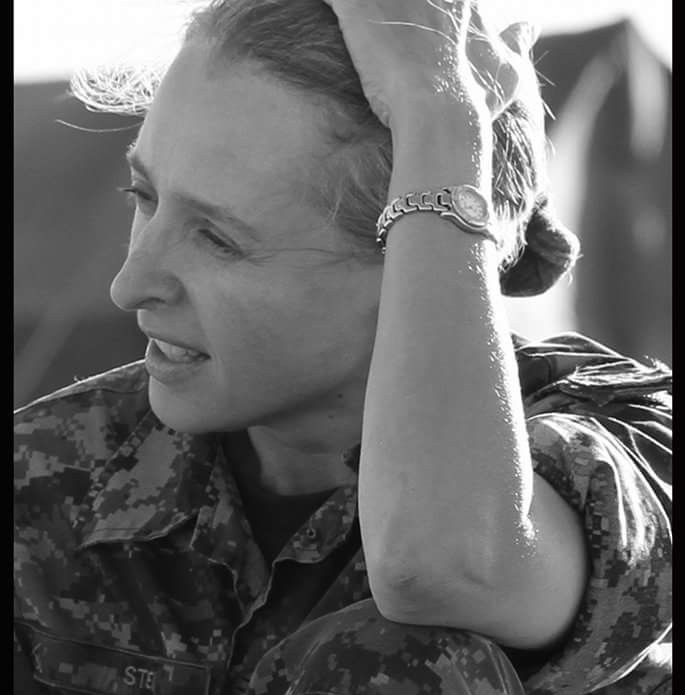
Nina Kossman photo. 3

Lysenko, Enemy of Soviet Science, and a Dissertation Left on a Windowsill

In memory of my mother, Maya Borisovna Shternberg

Back in the seventies, people emigrating from the Soviet Union were not allowed to take with them certain things, such as books published before 1917 (the year of the Bolshevik revolution), manuscripts, typescripts, works of art, and so on. Since the Soviet Union did not have diplomatic relations with Israel, and 99% of hopeful emigrants were going to Israel, the only country to which it was possible to apply for permission to emigrate in those years, the way to take forbidden items out of the USSR was to give them to a Dutch Consul, who would return the items to their owners once they were outside the Soviet Union—i.e., in Israel. There was, however, a limit to how many items prospective emigrants were allowed to give to the Dutch Consul.

            My parents wanted to give my mother’s academic dissertation to the Consul, but I said I would not leave without my watercolors, and since even children’s pictures had been classified as “art” by the state apparatus, my parents had to choose between my watercolors and my mother’s dissertation. They were loving parents, and they decided in favor of my watercolors. This was how, and why, on the day we left the Soviet Union forever, a cardboard box with my mother’s dissertation remained on a windowsill of our empty apartment, next to a smaller cardboard box with my father’s WWII medals. It doesn’t take much imagination to visualize the contents of both boxes—the dissertation and the medals. These were treated like garbage by those who moved into our apartment after we had left. I know for a fact that my father never regretted leaving his war medals on that window sill. He had never shown them to us anyway, except once, when I asked him to, and he took them out of the box for just a second, saying that it’s nothing to be proud of, and that being a soldier in the war that had killed millions, including most of his family, was not a matter of pride or wearing medals, like so many believe, but of grim necessity. As for my mother’s dissertation, this was a different matter; I have no doubt that my mother regretted leaving it.

            The dissertation that we left on that windowsill on our last day in the Soviet Union was the only copy of a document whose significance I would understand many years later. In fact, I came understand it only a few months ago, when I opened an email from a Russian physicist, one whose research interests—in addition to his research in physics—included biographies of scientists who had been victims of Lysenkoism. Among other things, he asked me about my mother’s dissertation: whether it was lost, or whether I had a copy of it?

            All I could tell him was that my parents had left it on the windowsill of our empty Moscow apartment when we were emigrating. It was from this Russian physicist that I learned that while in the last forty-some years duplicate copies of all dissertations were kept in Leninka (Moscow’s main library named after V.I. Lenin), in the long-ago days of Mother’s dissertation, such duplication wasn’t yet being done. No copies of any dissertation were brought to the library in those days, which means that the copy of the dissertation my parents had left on our windowsill when we emigrated in 1972 was the only one. It was the only copy. And because I, the stubborn fool that I was at that age, had insisted on taking my silly watercolor pictures, my Mama was forced to leave her dissertation on the windowsill, next to my father’s war medals. My pictures were given to the Dutch Consul, and I still have them, although I never look at them and never take them out of a large manila envelope which gathers dust in my basement. The only copy of Mother’s dissertation is gone forever.

            Four long decades later, I would learn the whole story surrounding my mother’s work, although now and then I did hear bits and pieces of it during her lifetime. Mama hardly ever spoke about herself, probably because she thought that none of it was important or interesting to us, and because the events of her youth taught her reticence and humility. Only now do I understand this period of her life, one I had never bothered to inquire about. During this period, she was a young biologist. Unfortunately for her, it coincided with the worst phase in the history of Soviet science.
            Here’s what I’ve learned. I will intersperse my findings with excerpts from Yudif Tselniker’s memoir. Tselniker was a biologist who studied and worked with Mama, and although Mama appears in Yudif’s memoir in random episodes, this memoir is the only record of her life in that period; and it’s not simply a record of her life, but of her work in science.

            There was one name that I did hear from Mama, despite her reticence. That name was Dmitry  Anatolyevich Sabinin.

From Yudif’s memoir:
His first lecture on plant physiology, our main specialty, amazed us. A short man with a mop of thick, disheveled hair and a pile of books under his arm, rushed into the auditorium and began the lecture on the run. It was Dmitry Anatolyevich Sabinin. His manner of lecturing was very different from what we were used to. Lectures on all other subjects were read to us in an “academic” manner: we were given ready-made knowledge on this or that subject in a lifeless, static way. The task set by Dmitry Anatolyevich was different: he wanted to show us how this or that knowledge was produced so that we would learn to think and analyze facts independently. He drew tables, on the blackboard, with results by various authors and explained how these scientists interpreted the results, what were their mistakes in setting up experiments and interpreting the results, and whether their conclusions were wrong. At such lectures, one could not miss a single word; otherwise, one would lose the thread of reasoning and evidence, and all the time one had to follow the lecturer’s logic intensely and think.”[i]

~~~

            The few times Mama mentioned the name of her mentor, Dmitry Anatolyevich Sabinin, her recollections were brief and low-key. That was simply because that’s how she was by the time I was born. When I was a child, she mentioned the expedition to Georgia (Gruzia). I have photos of Mama studying leaves at a tea plantation in Georgia. But I did not know any of the details—none whatsoever. I did not even know what the expedition was about, what research was she involved in, or who the other people were in the photos. I never asked. I never thought about it. It never occurred to me that someday I would have a reason to regret her silence, or the fact that I made no attempt to break through it. Had I asked, she would have told me. I am sure of it. But I never asked.

            Yudif Tselniker writes in her memoir:        

When I came to the Kafedra[ii] in early January 1944, I met Galya Shocklender. She asked me if I wanted to go on an expedition to Georgia. It turned out that Dmitry Anatolyevich Sabinin (D.A.)[iii] had signed a contract with the Glavchaya Committee to do research work on tea, citrus, and tung tree by the Kafedra. D.A. agreed to take me on if I would write my thesis in a short time before departure and pass the mandatory exams.

Soon we left for Georgia. There were five of us: D.A., N.G. Potapov, Galya Shoklender, my classmate Maya Shternberg,[iv] and myself. The trip took a very long time.  The train to Tbilisi took seven days by detour route, through Stalingrad, because there were still Germans in Kharkiv. For a full day’s journey to Stalingrad, and a little after, everywhere the eye could see broken tanks in the steppe. In Stalingrad itself, which we passed without stopping, we could see empty boxes of broken buildings with broken windows.

Everything in West Georgia seemed new and surprising to us – the subtropical vegetation and the red soil and weather. D.A., who had been there many times, introduced us to the peculiarities of the climate as well as to the plants. It seemed very strange to us that at this time of year, with temperatures of 10-15 degrees Celsius, it was very humid all the time. In the morning, getting dressed, we discovered our clothes and shoes were soaking wet. [….]
       Soon Maya fell ill with
rozha, probably contracted in a sulfur bath where she slipped, fell, and lightly scraped her leg. She was admitted to a hospital in Batumi. To visit her, we had to take the local train.”
~~~

            Mama never even told me that she had gotten sick with something called “rozha” during the Georgia expedition, and that her condition was so severe that she had to be hospitalized in Batumi. Mama, why didn’t you tell me? You did not want to burden me with your past, is that why? Of course, I heard this word “rozha” before, but it was its fraternal twin, a homonym, I knew. It had the same sound, but a totally different meaning: “rozha” is a crude word for face (mug). It has nothing to do with the clinical “rozha,” which, as I know now, comes from the Polish word róża, and is related to the old Slavic root for red or pink. The original name for the disease is Erysipelas, and according to Wikipedia, “Symptoms may include redness and pain at the affected site, fevers, and chills. Erysipelas requires treatment with antibiotics to prevent the spread of infection.”

 You did not tell me about it, Мama, because you thought these details of your youth were so unimportant that they simply did not matter, and that your life did not interest me. Now it matters. Now every detail matters. And now I don’t have any details because you were too shy to talk about yourself. You are gone, and people who study the history of Soviet science want me to write about you. They tell me: “Write about your mother! Write everything you know about her past, her life in biology! Who were her friends? Her colleagues? Every detail, every little thing you can remember is important!” When I tell them that I know next to nothing, they think that I’m being reticent. Reticent, like you, Mama. Of course, there is no way for them to know that you were the reticent one; only I know that. That’s one of the things about you that I know very well. But unlike you, I’m not reticent. I simply don’t know. I know too little, next to nothing.    

~~~
“Soon Maya Shternberg and I left for Tsikhisdziri. We didn’t even know how to research trees. We decided to start just by sketching large branches and smaller shoots. After our long and quite fruitless attempts to sketch the trees, it suddenly dawned on us that, according to the nature of development, shoots are divided into several types, and there is a regularity in their arrangement on the tree. From that point on began our systematic study of tree crown structure. A long and tedious counting of the number of shoots of various types.”
~~~

            Mama, remember that time, when I was in my 20s, and you said you didn’t want me to write about you, ever! And I said, vaguely, okay. And then you added: “But then, if you do, you will write only good things (‘tol’ko khoroshee”) about me, right?” To this I responded with “Of course!” Remember? Actually, you didn’t say “about me.” You said “about us,” meaning you and Papa (“o nas s papoi”). But I omitted “Papa” here, and I’m sure you know why. The answer is simple: Papa spoke and wrote about his life himself, so when I write about him, I don’t feel as though I’m trespassing or doing something against his will. Yet when I try to write about your life—as I was urged to, more than once, by people who are convinced that certain events of your life have significance beyond the personal, I feel that I’m going against your wishes. In a nutshell, Mama, it is very hard, almost impossible for me to go against your request to not write about you. I hope you will understand and forgive me.  I write about you only because there are voices of other people urging me to write about you. They insist on the importance of events about which you were silent precisely because they affected you so deeply. But these voices fade into irrelevance when I’m confronted with your words “Don’t write about me.”

~~~

“At the end of May, Maya and I went to Moscow to take our state exams. This time the trip was shorter: the train went through Voronezh instead of Stalingrad.”

~~~

            I wish I could see you, Mama, or at least imagine you looking out of a train window as it passed Voronezh, a beautiful medieval Russian town, half-destroyed by the war.  But the young woman looking out of a train window at Voronezh is the same young woman—my future mother—looking out of that same train window at Stalingrad, completely destroyed by the war. This young woman does not know me yet, just as I don’t know her.

~~~

“Maya and I were assigned to work permanently at the VNIIChPiSK.[v] But D.A. wanted to keep us at the Kafedra. He had positions for us in the graduate school, but he was told by the university rector’s office that Jews could not be enrolled in the graduate school. So instead, he decided to enroll us at the Kafedra as freelance lab assistants. 

Two third-year students, Vera Smirnova and Rita Tyurina, came to help Maya and me. Maya and I did our research, Maya on the tung tree, and I on citrus, and the younger students helped us. We worked, first, in Anaseuli, then in Tsikhisdziri, and we were surveying yields in other kolkhozy (state farms) as well.”
~~~

          I want to go on writing, but my hand, the one I write with, freezes in mid-air. I feel paralyzed. I can’t write. You were a small woman, Mama. You were physically small, and by the time I was born, you were a shy woman, but to me, your word was law, and even though I went against it in my youth, it was still law, and I knew that by going against your word, I went against you, as this law, this rule, was set by you. I went against it not only when I was a teenager, as teenagers do to separate from their mothers, but also later, yes, later, too, I went against it, not once, and not twice, but many times.

            I don’t know why I rebelled against you, even when you were very old and sick, and I was taking care of you, I still went against your law, which was so deeply ingrained in me that it felt more like a religion than your law. And although, in reality there was no law whatsoever, and you never set any law, still I had to trespass it, to break it, to feel free. Do you know that it was much harder for your daughter to rebel against you than it was for most young people to rebel against their parents? Not only because your “law” did not really exist, and because it was nowhere except in your daughter’s mind, but mainly because you were never harsh or threatening, but kind, defenseless, and soft. Maybe that’s why my going against what I perceived as your “law” made me feel crude and heartless.

            It must have seemed awful to you, Mama, so awful as to have been almost unbearable. And now I must break your law once again: I must write about you. I must write about you because it’s important. And yes, mama, I remember your words, and I will write about you tol’ko khoroshee (only good things), because even if I wanted to, I would not be able to find any “bad” things to write about you. Surely, you never really thought that I would write anything “bad.” Was it that you simply feared the loss of privacy? This is understandable: you did not want your life to be made into a public story. Fear not, Mama. You were so reticent, so silent about the effect of the 20th century on your life, that I find it very hard to write anything about you at all.

            Less than two months after Mama had defended her dissertation on growth processes of the tung tree, there was the so-called VASKhNIL, an infamous August session of the All-Union Lenin Academy of Agricultural Sciences, at which Trofim Lysenko, an anti-scientist backed by Stalin, attacked geneticists and biologists who had “betrayed” the Soviet motherland by following in the footsteps of bourgeois science. Just as the whole Western world was the enemy of our Soviet world, he said, the fake science of so-called genetics was the enemy of our Soviet “Michurin agrobiology,” as well as of everything our glorious Soviet science has achieved and would achieve. My young mother and Yudif Tselniker, her colleague and the future author of reminiscences quoted here, had been planning to start working on an exciting new project led by Dmitry Anatolyevich Sabinin. But when my mother and Yudif came to the Kafedra, they learned that their positions no longer existed, and that Professor Sabinin himself was no longer head of the Department of Plant Physiology at MGU. There was a price to pay for standing up to Lysenko, and included in that price was not only Sabinin’s own life but the lives of his young assistants, Maya Shternberg (my mother) and Yudif Tselniker.

~~~

“On June 15, 1948, Maya and I defended our Ph.D. dissertations. Dmitry Anatolyevich wanted to invite Prof. M. Kh. Chaylakhyan, who was one of our opponents, but Chaylakhyan received a call “from the authorities” and was advised not to oppose the thesis. He complied. He was replaced by Prof. A.V. Blagoveshchensky. The chairman of the Scientific Council was Lev Ivanovich Kursanov.

Much has been written about the session and what began after it in biology. Therefore, I will not dwell on this here. I will only write about what happened at the university and what I witnessed.

 On August 12, 1948, a general assembly of the Department of Biology was held in a large Zoology auditorium on Herzen St. The meeting was opened by the then Rector of the University, Academician A. N. Nesmeyanov. He said approximately the following: “You know that Academician Lysenko is supported by the party and the government. The staff of the biology department has made several mistakes in the past, for which Dean S. D. Yudintsev has been removed from his position. I present to you the new dean, I.I. Prezent (Lysenko’s closest assistant and ideologist). You should carefully consider your future behavior and if you make the right conclusions from everything that happened, I will try to keep the staff of the Department of Biology intact. I do not require that you speak now, everyone needs to think and determine their line of conduct, and in a week we will meet again. After him, Yudintsev spoke, reading in a monotone voice from a piece of paper, admitting that he had made a mistake by assembling a meeting on intraspecies struggle and by supporting Lysenko’s opponents and that he considers his punishment fair. Nesmeyanov wanted to close the meeting, but suddenly Dmitry Anatolyevich asked to speak. He began to speak, while still running down the stairs in the rostrum: “I believe that the whole so-called Lysenko doctrine is sheer nonsense and I will prove it to you all now.”

He was interrupted by Nesmeyanov: “Dmitry Anatolyevich, stop, do not get excited, think about the risk of it all!,” but D.A. continued: “I have been teaching plant physiology for 40 years and have been thinking about these questions for many years. There’s nothing that I need to think over. I know what I’m risking by speaking out, but I would not consider myself a decent man and a real scientist if I did not honestly say everything that I think.” Nesmeyanov did not give Dmitry Anatolyevich a chance to speak further and urgently closed the meeting.
      His staff dejectedly gathered in the department. When Dmitry Anatolyevich got there, I went up to him and said, “Why did you do that? If you did not pity yourself, you should have felt sorry for the department, which you had put together yourself, with so much effort. After all this, they will get rid of all of us!”
     To this D.A. replied, “My children, understand, I could not do otherwise! And anyway, my views are well known, and I will not change them. After all, this scoundrel (i.e., Prezent) drank tea with me!”

At this time two female students from another department came into our Kafedra. They cried profusely and muttered, through tears, “Let me shake your hand, you are the only real man among all these cowards!”

~~~

            The Department of Plant Physiology (Kafedra) was emptied of its people, once its heart, Dmitry Anatolyevich, aka Professor Sabinin, had been forcibly removed.  When Mama arrived at the Kafedra after the VASKHNIL session, she found a lock on Professor Sabinin’s office. She read in a postanovlenie[vi] that the department members had been stripped of their positions as punishment for betraying principles of socialist science, and realized that her life in science was over. Two years later, far away from Moscow, in the resort town Golubaya Bukhta, Sabinin would shoot himself. He had been exiled there, and ordered to head the Black Sea Station of the Institute of Oceanology of the USSR Academy of Sciences. This assignment was as much a taunt as anything; oceanology was a crumb thrown to him in place of his true love and profession, plant physiology.
            I wish I knew more, but due to Mama’s reticence, this is all I know.

ENDNOTES

[i]All the quotes are from the memoir by Yudif Tselniker, my mother’s colleague in those years.
 Yudif Lvovna Tselniker: Reminiscences. (“Юдифь Львовна Цельникер. Воспоминания”)

[ii]Kafedra—i.e., department (in this case, the Department of Plant Physiology at MGU, Moscow             State University)

[iii]D.A., Dmitry Anatolyevich or Dmitry Anatolyevich Sabinin, aka Professor Sabinin, (1889–1951) – Soviet botanist, plant physiologist, Vice-Rector (1923-1924), Head of the Department of Plant Physiology of Moscow State University (1932-1948), an original thinker in the field of plant physiology who made many discoveries and inspired a generation of students.

[iv] Maya Shternberg  (or, Maya Borisovna Shternberg) – my Mama

[v]VNIIChPiSK or All-Russian Research Institute of Breeding Fruit Crops

[vi]Postanovlenie  – decree.

Return to Journal

Moscow born, Nina Kossman is a bilingual writer, poet, translator of Russian poetry, painter, and playwright. Her English short stories and poems have been published in US, Canadian and British journals. Her Russian poems and short stories have been published in major Russian literary journals. Among her published works are two books of poems in Russian and English, two volumes of translations of Marina Tsvetaeva’s poems, two collections of short stories, an anthology, Gods and Mortals: Modern Poems on Classical Myth, published by Oxford University Press, and a novel. Her new book of poems and translations has just been published. Her work has been translated into Greek, Japanese, Dutch, Russian, and Spanish. She received a UNESCO/PEN Short Story Award, an NEA fellowship, and grants from Foundation for Hellenic Culture, the Onassis Public Benefit Foundation, and Fundacion Valparaiso. She lives in New York.

WordCity Literary Journal is provided free to readers from all around the world, and there is no cost to writers submitting their work. Substantial time and expertise goes into each issue, and if you would like to contribute to those efforts, and the costs associated with maintaining this site, we thank you for your support.

One-Time
Monthly
Yearly

Make a one-time donation

Make a monthly donation

Make a yearly donation

Choose an amount

C$5.00
C$15.00
C$100.00
C$5.00
C$15.00
C$100.00
C$5.00
C$15.00
C$100.00

Or enter a custom amount

C$

Your contribution is appreciated.

Your contribution is appreciated.

Your contribution is appreciated.

DonateDonate monthlyDonate yearly
Essay on Mikhail Iossel’s Love Like Water, Love Like Fire. by Olga Stein

olga-stein89

Mikhail Iossel’s Love Like Water, Love Like Fire: The Soviet Jew in Full Colour

Mikhail Iossel’s collection of memoir and lyrical pieces, Love Like Water, Love Like Fire, bears witness to a particular kind of experience — that of living and identifying as a Jew in the Soviet Union (now former Soviet Union) during the 20th Century. To be more precise, the majority of these autobiographical stories deal with Iossel’s own past before 1986, which is when he immigrated to the USA. Highly literary and genre-blending, they serve up a kind of anti-paean to a life Iossel left behind in a country and part of the world whose ideological fashioning differs vastly from the one we’ve been socialized in as Westerners. As these stories suggest, the Soviet-era world is so utterly unlike ours, so prosaic and unsettling at once, that literature aiming to convey this strangeness requires its own narrative strategies. In Love Like Water, Love Like Fire, characters and situations are more the stuff of phantasmagoria than memoir or “realistic” autofiction. Yet Iossel’s artistry is such that anyone born and raised in this country and its paranoia-inducing regime, any reader with an understanding of its mind-numbing, grim totality, would think these stories, their content and form, not just apt, but true to life.

            As a whole, the collection testifies to Iossel’s keen sensibility and unmistakable erudition. There are moments of sly and overt intertextuality, and unmistakable literary panache. One piece, simply titled “Sentence,” and dedicated to the writer and language poet Arcadii Dragomoshchenko, unfolds as an interior monologue in, to be sure, a single sentence. It recalls an semi-illicit gathering of dissident writers in an otherwise empty building in a central part of Leningrad (St. Petersburg since 1991). This piece gives expression to different registers of emotion; part nostalgia and elegy for a bygone youth in a resplendent metropolis, known the world over as “Venice of the North,” it nevertheless homes in on the narrator’s awareness of and anxiety elicited by the city’s governing ethos and of the country as whole.

….there, on the rooftop level of that uninhabited, condemned five-floor building on Chernyshevsky Prospect, a stone’s throw away from the vigilantly guarded U.S. consulate….we, a small gathering of momentarily silent, semiunderground young people….in the middle of a sprawling, empty, dusty loft up at the top of a condemned and otherwise unpeopled Dostoyevskian building, in the stark yellow light from a couple of bare lightbulbs suspended from the concave cracked ceiling…..momentarily silent and not even dragging on the lighted Belomors in our mouths, peering intently out of the dusty and forever winterized yet still drafty cracked old window and into the immense pitch-dark outside, the unconquerable, boreal Leningrad wintry darkness, made darker still by the tiny yellow dots of thousands of windows in apartment buildings near and far, just a small gathering of ten or twenty of us….peering in silence into that great and boundless yellow-dotted darkness that enveloped our part of the vast and great and terrible country to which we solely belonged, the largest and darkest and strongest and strangest and most terrible country in the world, which we likely knew would never let go of us, never release its mortal grip on us, because it owned us by birthright, chapter and verse, body and soul, …and in the end it probably would kill us, too, just have us suffocate to death on its immense darkness and unimaginable gravity of the black hole that it was, even if it was populated by hundreds of millions of people, our fellow citizens, whom we didn’t really know or understand, even though we spoke the very same language….(57-9)

            For the most part, this collection foregrounds the author’s vivid memories and impressions. Iossel is a master of interiority. It must be pointed out, however, that what readers encounter in this collection isn’t confined to the psychological spaces of one narrator — as child, young adult, or older author. Rather, Iossel aspires to represent the psychosocial reality of Soviet society as a whole. This is ambitious but risky at the same time, since both exaggeration and generalization can come across as clichéd. Iossel avoids these and other pitfalls by continually shifting focus, zooming in and then out of a particular scene, narratorial subjectivity, or time frame.

            I can account for the collection’s success as both memoir and illuminating social commentary in two ways. First, its author knows Russia, its people, their beliefs and attitudes. His vantage point is that of someone who understands what makes this leviathan tick.[i] Iossel reached adulthood in a pervasively anti-Semitic country, where many Jews, his parents and grandparents included, nevertheless achieved sizeable professional recognition. A member of the Soviet intelligentsia at one time, he continues to associate with Russian-speaking writers and artists, expats and those still living there. He was a contributor to samizdat publishing, and survived for several years with the liminal status of a “refusenik” (someone prevented from leaving the Soviet Union by its government, but treated as a political undesirable). In other words, he writes as both insider and outsider, an “ex-centric,” in the manifold sense of the term. Second, while Iossel is clearsighted and seemingly dispassionate regarding the good, the beautiful, and the ugly, he consistently brings these antithetical, discordant features of Soviet-era culture and quotidian life into uneasy correspondence; by design, then, these stories generate friction, a frisson if you will, that results either in artfully depicted moments of cognitive dissonance, or tragicomic situations of marvellous and affecting irony.

            Love Like Water, Love Like Fire consists of twenty pieces of varying length. The point of view shifts between the narrator’s precocious childhood and cultivated adult selves as the author interacts with family, friends, and a colourful array of fellow denizens of Leningrad, quite a number of whom spew anti-Semitic vitriol. At times, a much older Iossel, by now an American citizen, interrupts the narrative with meta-commentary to ruminate on life’s unpredictable turns, its many ironies — for instance, the very fact that he’s composing these stories in a country denounced by the Soviet regime as a capitalist hellhole. “Some of the World Transactions My Father Has Missed, Due to His Death on September 14, 1999” amounts to a catalogue of events and famous last words (literally), some trivial, others weightier or momentous. Here too the mood alternates between elegy for a deceased father and wry humour. Among other things, Iossel’s stocktaking is proof that the Soviet government was wrong in its predictions that the West would self-destruct. The West, and America in particular, is still here, at least for the time being; capitalist democracies are not over yet, though that might well come to pass at some foreseeable point in the future, as Iossel intimates, just not in the ways the Soviets anticipated.

            Throughout the collection, the mature Iossel’s authorial intrusions are intended to highlight and satirize only the most glaring of the above-mentioned contradictions, the parts that don’t stand up to scrutiny, or that fall manifestly short of the state’s oft-reiterated assertions that the Soviet Union is the most equitable, contented, and successful of human societies (compared with which the Capitalist West is an unmitigated failure). From what the young narrator observes, overhears, or is told by his relations, we quickly gather that there’s a great deal more amiss in this self-styled utopia. There’s widespread alcoholism and moral turpitude, for one thing. There’s a shortage of housing and personal privacy, as citizens, including those with young children, have to make due with single rooms in communal apartments, where they share kitchens and bathrooms with strangers, who are as likely to be drunks or damaged, embittered people, as rising professionals. To Iossel’s credit, the broken-down folk we encounter in these stories are mostly empathy-provoking personae, providing both singular portraits of people crushed by life’s vicissitudes and instantly recognizable types (as readers who are from the former Soviet Union would undoubtedly concur).

            The former Soviet Union of these stories is a dysfunctional nation-state, a casualty of its own mythmaking, its deep-seated beliefs, prejudices, and the inscrutable, eerie machinations of an authoritarian regime. Moreover, it’s a society showing signs of collective trauma. As already suggested, the affective potency of these pieces hinges on the juxtaposition of mutually incompatible elements. This is most apparent when the rational, truth-intuiting self brushes uncomfortably against state-sponsored dogma, shared beliefs and bromides of Soviet society. “Moscow Windows” is a superb example of the young narrator’s unnerving encounter with the inexplicable and sinister just below the surface of quotidian life.

            In “Moscow Windows,” a teenaged Iossel is staying with relatives in — by the standards of that time — a posh apartment. It’s night time, and Iossel is happy to be in Moscow, “the movable feast of [his] childhood and adolescence.” He reflects on his own sense of pleasure:

Oh, those lovely, warm, cozy Moscow windows, memorialized unto all-USSR collective awareness, by the celebrated composer Tikhon Krennikov and the famed, lyrical poet Mikhail Matusovsky in the eponymous song, “Moscow Nights,” performed on the radio typically by the beautifully voiceless yet soulful Vladimir Troshin, who sounded, somehow, like an old friend of all the Soviet people at once: How I loved them, in my imagination — those yellow- and blue-lighted Moscow windows in the dark, in the tender, gentle, teeming Moscow night! There, beyond those windows, lived and loved and suffered and rejoiced and moved about aimlessly and dreamed abstractly and held hand for hours and stared off into space blankly the regular Muscovites: the ordinary Soviet people just like me,…

     O the soft, comforting glow of Moscow windows in the night! O Moscow, the warrantor of my well-being, the unwitting guarantor of my eternal salvation!

     O this! O that!

     “But why, Marat — why in the world did [Lev Konstantinovich] decide to come back to the Soviet Union?”  I asked, unexpectedly even to myself, puncturing the comfortable silence between us (108-109).

            The Lev Konstantinovich fifteen-year-old Iossel is asking about had only hours before turned up unexpectedly at his relatives’ door. He’s wild-looking, an uncommunicative man who makes baffling pronouncements. Iossel’s cousin, sixteen-year-old Marat, supplies the hair-raising backstory: In the 1930s, Konstantinovich was a brilliant young Jewish physicist. He studied with his Soviet mentor in England, where he married an Englishwoman and had a son with her. Soon after WWII broke out, he was ordered to return to the USSR (“and this is where the story gets murky,” explains Marat). Just days after landing in Moscow, he was arrested and sentenced to twenty-five years of hard labour in a gulag in either the Magadan or Kolyma region for being a British spy. His wife, who had accompanied him back to Moscow, committed suicide. Their son was “was placed in an orphanage of the enemies of the people,…and subsequently transferred to a mental institution, his permanent residence ever since” (100).

            For the teenaged Iossel this tragic story of a man, now a mere shell of his former self, fails to add up. For one thing, why would anyone who was actually guilty of spying return to Russia to face certain arrest?[ii] Konstantinovich is an anomaly, out of keeping with Moscow itself and with his relatives’ well ordered life. Iossel can’t parse or justify Konstantinovich’s ruined life to himself. His cousin’s explanation only serves to exacerbate his unease, for according to Marat, Konstantinovich had his entire “permanently concussed brain removed,” after a near-fatal accident near his prison camp, and replaced “as part of some supersecret experiment” with a “completely empty one,” that left him “a perfectly blank slate of a human being.”

            Unlike the more enlightened reader of Love Like Water, Love Like Fire, the young narrator has no knowledge of, say, Arthur Koestler’s Darkness at Noon, or the climactic torture and interrogation scenes in George Orwell’s 1984, or Yevgeny Zamyatin’s dystopian We, whose first Russian-language edition wasn’t published in the USA until 1952 and wasn’t made available in the USSR until 1988 (such works, in addition to percipient witness accounts, more overtly underpin the harrowing title piece at the end of the collection). “Moscow Windows” operates outside of this literary frame of reference. On the other hand, the teenaged Iossel in “Moscow Windows” would probably have known of the Jewish writer Isaac Babel, and of the circumstances surrounding his arrest in May of 1939 and execution on January 27, 1940 (indeed, Babel’s influence is discernible throughout the collection). He’s also familiar with Aleksandr Solzhenitsyn. Subtly referenced in “Moscow Windows” are Solzhenitzin, Nikita Khrushchev, his amnesty for political prisoners, and the “Secret Speech” he gave in 1956, on the occasion of the 20th Congress of the Communist Party of the Soviet Union, where he criticized Stalin’s purges. In the last decade of Stalin’s rule, these purges increasingly targeted prominent Jewish writers, artists, and senior apparatchiks.[iii]

            Toward the conclusion of “Moscow Windows,” the impressionable Iossel is profoundly troubled by the very notion that Konstantinovich is “a man with no past” (101-2), as Marat puts it. Deep down he suspects that this pitiable man was falsely accused and unjustly punished. This is disconcerting for a young person who has been inculcated to believe in Lenin’s and Stalin’s moral superiority and spotless leadership. Thus preoccupied, unable to sleep, the narrator suddenly recalls the terrifying story Marat had told him five years earlier about Giordano Bruno and Jan Hus, both burned at the stake for heresy. It had such an effect on his overactive imagination that Iossel, ten years old at the time, started to “scream, completely out of [his] mind with horror” (114). At fifteen, the narrator isn’t perturbed to the same extent, but he can’t stop dwelling on the meaning of memory and its loss in a manner that brings to mind Eric Voegelin’s concept of Metaxy, denoting two antipodal and irreconcilable states of existence:

I lay silently in the dark,…I wondered what it would feel like — at some point in your life, just out of nowhere — to forget everything about your past, lose all memories of yourself as a child, as a young man….with no recollections preceding the moment of your death, no memories to rely on for your eternal salvation, how odd, how terrible! … when the past is all we have and all there is….Forgetting was inconceivable to the one who remembered, as death made no sense to the one still alive (115-6).

            Though the majority of the stories in Love Like Water, Love Like Fire are narrated from a limited first-person perspective, a number are framed by or fold into themselves stories of relatives, chiefly Iossel’s parents and grandparents. Such pieces as “Our Entire Nation,” “April 1st, Sunset Hour,” and “First Death,” as well as the title story, present a more expansive social, historical, and psychological canvas or context for the characters we encounter in the collection. These portrayals are microcosms of lives lived, of Jewish and non-Jewish Russians, following the Communist Revolution, during Stalin’s reign and the succession of politburo leaders after his death.[iv]

            Leningrad (now St. Petersburg) itself functions as an essential part of the historic and cultural backdrop in Iossel’s narratives. It’s Russia’s most majestic and most dolorous of large cities — an erstwhile capital that, as Iossel explains, should never have been built. Founded by Peter the Great, a determined and brutal ruler, on a marshland and floodplains with forced labour, St. Petersburg became known as the “city built on bones.” The city bears the scars of recrudescent violence, and its people manifest their own brand of historical trauma. This is especially true of post-World War II Leningrad, the period of Iossel’s youth, since the process of recovering and rebuilding from the 900-day siege by German forces took several decades.

            What’s pertinent here is that the city shaped Iossel’s cultural imaginary, and this comes across in the ambience he evokes in his stories.[v] Leningrad has a marked atmosphere, never failing to provoke a mixture of awe and estrangement in the narrator. Iossel is drawing on literary modernist and symbolist forerunners like Andrei Bely’s Petersburg (1913-16). The farcical piece “Klodt’s Horses” revolves around the Bronze Horseman, a statue of Peter the Great, which is an ominous presence in Bely’s novel. Iossel’s appropriations — the use of symbolism and stream-of-consciousness devices, the suggestion of a lurking, demonic menace — come with a noteworthy twist, then, and for this too there are literary models. Among them is the long-censored masterpiece, The Master and Margarita, by Mikhail Bulgakov (composed between 1928 and 1940, but not published until 1969). Additionally, there is Isaac Babel’s oeuvre, and the lesser known Summer in Baden-Baden, Leonid Tsypkin’s luminous novel (published in 2001, twenty years after its completion). Iossel is clearly drawing on Babel’s use of symbolism and mood in “Flying Cranes” (more on this below). I believe, moreover, that any writer wishing to engage fully with Love Like Water, Love Like Fire must attend to the literary and moral aims of a book like Summer in Baden-Baden.[vi]

            Tsypkin’s novel is a study of Dostoyevsky, his life in St. Petersburg, and the time he spent in Baden-Baden, the gambling capital of Germany. Significantly, this stylistic coup of a novel, despite elements of homage, is by no means a tribute to Dostoyevsky; instead, its Jewish author’s main objective was to cut down to size, to ridicule, one of Russia’s most venerated literary figures, who also happened to be a pernicious anti-Semite. Tsypkin achieved this by using Dostoyevsky’s own tropes against him. Summer in Baden-Baden is a brilliant and stunning act of subversion, a turning of the tables on Dostoyevksy and the larger ambient aspects of Russian culture with its tradition of anti-Semitism and persecution. In Tsypkin’s novel, Dostoyevsky is a character endowed with many of the unseemly qualities he himself used to depict Jews in his novels.[vii] It’s crucial to recognize, then, that Iossel is working within what by now should be considered a literary counterculture: it’s one that attempts to reclaim and recoup an ethnic identity diminished through centuries of denigration by the dominant culture, and that employs intertextual means to connect with similar acts of literary contestation, or to cast doubt on “national” literature, principally its ingrained anti-Semitism.

Jewish Identity and the Reclaiming of “Otherness”

In Love Like Water, Love Like Fire, instances of dissonance or inner turmoil are the foci of authorial attention. The narrator reflects variously on Communist dogma, the mysterious workings of the Politburo, and perennial anti-Semitism. These nagging questions are fundamentally about “truth,” faith, and, most significantly, personal identity. They are also the layers of conscious and subliminal sediment that accumulate over decades, so that we recognize the narrator’s statements in a number of the pieces as the product of genuine grappling with notions like citizenship, loyalty, betrayal, and, relatedly, Jewishness.

            Iossel uses a combination of approaches to emphatically assert his Jewish identity. Given Russia’s historic antipathy to Jews, this acts as a form of contestation in and itself. Some of the references to Jewishness appear innocuous on the surface. For example, in the aforementioned “Moscow Windows,” the narrator muses: “Still and all, I wondered whether or not I would remember my present, fifteen-year-old self, many eons into the future — just a sleepless little Jewish Soviet kid from Leningrad lying quietly flat on my back late at night in Moscow and thinking of whether or not he would be able to remember that very precise moment” (117). Yet the reference to the danger of “not remembering my previous selves” in the concluding section of the story also plays, in light of Konstantinovich’s lost memories, on the possible loss of Jewish identity and more than three thousand years of collective history.   

            In “The Night We Were Told Brezhnev Was Dead,” the narrator’s recollection of his visit to Lithuania causes him to meditate on the Soviet government’s official policy towards Jews, which was meant to effect an erasure of their distinct ethnicity. The following passage describes the policy, which includes silencing of discussions that pertain to the Holocaust:

…what with all but a tiny percent of Lithuanian Jews murdered during the first year of World War II — something I and many other Soviet Jews did know, if without quite knowing how we knew it, even though….the school history textbooks made no mention of [the Holocaust] whatsoever, or of that very word, Holocaust, unfamiliar to the absolute majority of Soviet people. [And the very word, Jew, incidentally, was one that anyone, and especially the Jews themselves, was supposed to be embarrassed by a little, ashamed of a bit, sort of, as if having been born a Jew in the USSR was a sin…which it was, actually, in the eyes of the country’s rulers and many millions of its people — even though we were nominal Jews, strictly speaking — Jews in designation only, so to speak, since hardly any of us knew the first thing about Jewish history or a single word of the Jewish language, which was called Hebrew, and which was banned from private study, under penalty of law, and…(83-84)

            More overt demonstrations of prevailing anti-Semitism take the shape of insults directed  nonchalantly at the child narrator. Random strangers disparage him, but also those who appear to be close to the child. In “Our Entire Nation,” Lyuba, the nanny, a simple country girl charged with the child Iossel’s daily care, says to him in a moment of exasperation: “God, you son of a bitch, you stupid little kike….I’ll kill you” (147). Anti-Semitism is ever-present in the Soviet psyche even when it’s just below the top layer of awareness; it’s just waiting, Iossel wants readers to see, for some trigger to manifest itself.

            A cleverly constructed homage to Isaac Babel’s Red Cavalry, “Flying Cranes” starts with the injury and death of a pet turtle who escapes onto the balcony of the family’s new apartment and falls five stories down. When the boy narrator descends to the courtyard to look for his fallen pet, he’s immediately subjected to a verbal lashing from two loquacious old women. In this layered narrative, instead of Kirill Vasilyevich Lyutov, an educated, bespectacled Jewish journalist in charge of pro-Soviet propaganda being browbeaten by commanders and soldiers in the Cossack Division of the Red Army, it is the eight-year-old Iossel, a child who only half-comprehends the anti-Semitic pejoratives and hostility directed at him.

“You look like a Jew. Are you one?” One of them asked…. “The bane of humankind, that’s who they are. Human locusts!” She said bitterly off into space. “They are everywhere, like rabbits! Like locusts! Their men ought to be neutered!” (150).

            “Flying Cranes” recapitulates the theme of cruelty toward humans and animals in the sketches collected in Babel’s Red Cavalry — “Salt,” for example, and “My First Goose” in particular. The image of animals being speared, killed, or captured, skinned, and consumed, is a recurring one in the story. Moreover, the narrator’s peregrinations outside then inside the building he and his parents have just moved into (in a part of Leningrad that’s under construction) turn into a series of surreal, phantasmagoric encounters with neighbourhood delinquents and thuggish workers hired to complete the drywalling and painting of the building’s units. These men, who are boorish in ways readers from the FSU would immediately recognize, nevertheless demonstrate a modicum of native intelligence when commenting on their country’s politics (in fact all of the alcoholics and average Joes in Love Like Water, Love Like Fire possess a degree of wry humour and common wisdom that make their pronouncements on life in the old Soviet Union facetious and insightful). At the same time — with an apparent nod to the Cossacks of Babel’s tales — the workers in “Flying Cranes,” exude barely suppressed violence. They terrify the boy narrator, threatening to kill his mother if he doesn’t immediately bring them alcohol they assume is plentiful in his family’s apartment.

            “Flying Cranes” ends in a movie theatre with further references to Babel (a woman with a swaddled baby at her breast is in the audience). The “beautiful death” of the hero shown at the end of the film, the mention of his “heartbroken fiancée,” are ironic allusions to the tensions Babel injected into his narratives, as well as to the author’s own execution. Babel was arrested by the NKVD, in the presence of his common-law-spouse, Antonina Pirozhkova, on trumped up charges. He was killed by the very regime and the very ideology he supported with his journalistic work during the civil war that followed the Communist Revolution.

            The front cover of Love Like Water, Love Like Fire displays a blurb by George Saunders: “Iossel is an intense and thoughtful force for decency in the world.” I would agree, except that willingness to stand up for and against those who oppress an entire people isn’t only a matter of decency. For many Jews from the FSU, the urge to defend Jewishness is a full-blown, intensely felt moral imperative. In “National minority, national mentality, and communal ethnicity,” sociologists of migration, David Mittelberg and Nikolay Borschevsky, account for this perceived exigency. They explain that according to available theories of ethnicities, the boundary or line of separation between “us” and “them” is crucial to the sense of distinctness — in this case ethnicity. They also highlight the fact that negative and objectionable categorizations are imposed from outside the group. This occasions pushback from the inside:

The boundary…reifies group identification on both sides of the boundary. Thus, a thorough analysis of ethnicity must take into consideration both the internal group definition, which takes place inside the ethnic boundary and the external classification, which occurs outside or across [it]. External group definitions(s) or categorizations are generally negative in content, based solely on arbitrary factors such as physical traits, language, or cultural differences, and are usually imposed by a dominant ethnic group” (91).

            One recognizes, then, that a reigning motive in Love Like Water, Love Like Fire is the desire to both affirm Jewishness and expose, satirize, and ridicule the commonplace deceits and hyperbole of government propaganda. Iossel likewise attacks the frame of mind — widely held beliefs and attitudes — that perpetuated Soviet-era anti-Semitism. Several of the stories in Iossel’s collection do this conspicuously, but none so well as “Necessary Evil,” which is piquantly subversive and stylistically tuned to capture the sense of disorientation experienced by the six-year-old narrator upon being informed by his parents that he’s Jewish. “Necessary Evil” is serious and funny:

“Why are Jews? Because. Because we are. Because we are not not-Jews…..Only six! How time flies! Then only—when you see that little word, Jew, glaring at you, with mocking jauntiness, from your hammer and sickle’s front page—will you, too, become the real, genuine, no-nonsense, true-blue, irreversible Soviet Jew: one who only is a Jew because he knows he’s a Jew, and also because he knows in his bones that he is a Jew solely for the reason of having been chosen at random, designated to be one, a Soviet Jew….Knowing is tantamount to being….You become it….Think about it: We, Soviet Jews, are no different from anybody else in the Soviet Union, in any meaningful way—well, maybe, indeed, as you mentioned earlier, our noses are bigger than most other people’s, and we tend to speak Russian a little better and excel at sciences more—and yet, at the very same time, we are very different, and how, because we know we are different, we have been told so! ….Moreover, …this feels like an important thought, actually we are substantively different, at this point, too, because the process of absorbing and internalizing the knowledge of our being different, and as a result of that process, we have, willy-nilly, become different” (34-5).[viii]

            The humour is quintessentially Jewish because it’s self-deprecating but also serves as satire directed at the “rulers-schmulers” of the Soviet government, who categorically define their citizens’ identities by designating them “not not-Jews.” At the same time, for the child narrator, the revelation that he’s a Jew, given the tautological nature of his parents’ explanation, is confusing and disturbing. The child has never connected himself with those people — the ones Soviet people ubiquitously describe in derogatory terms, always marking them out for being Jewish, as if it’s common knowledge that they’re evil. The conversation turns increasingly hallucinatory for the child until the trope of the diabolical Jew begins to play out on several levels at once:

“Being Jews, in other words, is the extremely important and secret quest and whatnot we have been on ever since:…tirelessly to serve the eternal cause of humanity and so on, as the covert agents of that cosmic force for good we just mentioned, only — and there’s the rub, so to speak — disguised as the collective embodiment of, you guessed it, human evil, deep inside the enemy territory, yes, of humankind’s darks side. Pretty neat, huh? Thus, simply put, throughout history we Jews have been performing the crucially important function of being, you know, the universally agreed-upon, by all the peoples, object of hatred….We, collectively, are humankind’s punching bag,….Necessary evil. That’s right. The opposite of evil, but perceived by many if not most, as evil. The secretly good evil….”

     Their words were the shining, lightning-quick little black snakes flitting and darting to and fro on the inner side of my eyelids before shooting upward without a trace into my brain (39-41).

            At the thought that he too is “the necessary evil,” the child Iossel is at first horrorstruck,  imagining that his body is filled with “black, viscous, tar-thick, foul-smelling blood” (44). However, he quickly comes to accepts his new identity and mission. In the middle of the night, he gets up and checks his reflection in the frosted kitchen window. He sees a withered, vampiric version of himself: “I regarded it — that infinitely old, dead face — with some grim satisfaction” (46). He has become the it his parents had spoken of. The internalization process is complete: “‘I am a magnet for evil,’ I said, winking at the dead old me in the windowpane. ‘I am the necessary evil.’” (46). One senses the author’s winking at the reader in every piece of this collection.

Note: Like Water, Love Like Fire is the 2021 winner of The Paragraphe Hugh MacLennan Prize for Fiction

Bibliography

Anderson, Benedict. Imagined Communities: Reflections on the Origin and Spread of Nationalism. Rev. ed., Verso, 2006, pp. xv–xv.

Babel, I. (Isaak), and Boris Dralyuk. “My First Goose.” In Red Cavalry. Translated by Boris Dralyuk, Pushkin, 2014.

Kat︠s︡is, L. F., et al. Jewishness in Russian Culture: Within and Without. Edited by L. F. (Leonid Fridovich) Kat︠s︡is et al., Trans from Russian by Elen Rochlin. Brill, 2014: 123–131.

Kurbonov, Tohir Hamdamovich. “The Concept of National Mentality and Its Main Functions.” Methodological Research Journal. Vol 2, no. 7, 2021, pp. 32-32, https://it.academiascience.org/index.php/it/article/view/109/97.

Mittelberg, David, and Nikolay Borschevsky. “National Minority, National Mentality, and Communal Ethnicity: Changes in Ethnic Identity of Former Soviet Union Jewish Emigrants on the Israeli Kibbutz.” International Migration, vol. 42, no. 1, 2004, pp. 89–115, https://doi.org/10.1111/j.0020-7985.2004.00275.x.

Kellman, Steven G. “The Birth of a Batterer: Isaac Babel’s ‘My First Goose.’” Bucknell Review, vol. 44, no. 1, 2000, p. 10.

Perla, Hector. Latin American and Latino Studies 1. United States, Santa Cruz. 31 Mar. 2011 Speech.

 Schmidt, Camacho Alicia R. Migrant Imaginaries: Latino Cultural Politics in the U.S.-Mexico Borderlands. New York: New York UP, 2008.

Hall, Stuart. Representation: Cultural Representations and Signifying Practices (Culture Media and Identities Series). London: Sage Publications, 1997.

Rubenstein, Joshua., et al. Stalin’s Secret Pogrom:The Postwar Inquisition of the Jewish Anti-Fascist Committee. Yale University Press in association with the United States Holocaust Memorial Museum, 2001.

Solzhenit͡syn, Aleksandr Isaevich. One Day in the Life of Ivan Denisovich. Revised ed. -, Bodley Head, 1971.

ENDNOTES

[i]I have in mind here something like the concepts of “national mentality” and “national psyche.” These concepts are useful in any analysis of literary works dealing with a country’s culture, politics, and history because they are imprecise, hard to define concepts, as are the very features of a nation they wish to address. Yet there is such a thing, just as one can point to a reigning zeitgeist. In “The Concept of National Mentality and Its Main Functions” (July, 2021), Tohir Hamdamovich Kurbonov contributes to the conceptualization of these terms. See Kurbonov.

[ii]The question becomes relevant once more, given Alexei Navalny’s return to Russia in January 2021, and his immediate detainment on accusations of violating parole conditions, as well as fomenting civil unrest.

[iii]See “Doctors’ Plot,” and Joshua Rubenstein and Vladimir P. Naumov’s book, Stalin’s Secret Pogrom: The Postwar Inquisition of the Jewish Anti-Fascist Committee. See also Solzhenitzin’s novel, One Day in the Life of Ivan Denisovich, published in 1962 with Nikita Khrushchev’s approval.

[iv]To clarify, people living in Ukraine were called “Russians.” Until 1991, Ukraine was officially the “Soviet Ukraine” or Ukraine SSR. Many Jews from the “Pale Settlement” (1791 – 1917) migrated to the lager Russian state after 1917. The Pale of Settlement was a designated area that included all of modern-day Belarus, Lithuania and Moldova, much of Ukraine and east-central Poland, and small parts of Latvia.  See the history of the Pale of Settlement.

[v]I’m referring to Stuart Hall’s and Benedict Anderson’s concepts of the “imaginary” and “imagined communities.” Hector Perla, a professor at the University of California, Santa Cruz, provides a succinct and relevant description of an imagined community with reference to Latin American identity. He writes that this identity is “socially constructed through narratives, myths of origins, symbols, rituals, and collective memory…[and] imagined by people who see themselves as part of that group….” There are signs of several imagined communities in Lossel’s work, including the imagined community of the country as a whole, in which Jews are subjected to feelings of “unbelonging,” a word used to theorize the alienation of immigrants and Indigenous peoples in Canada. Alicia Camacho’s descriptions of the migrant community in the U.S. can likewise be applied to Russian Jews and the ways they imagine themselves “in a space neither here nor there.” In Love Like Water, Love Like Fire, Leningrad evinces a shared history and purpose, that of rebuilding after the siege. Yet Jews never entirely fit in with the rest of the city’s dwellers, despite having suffered through the siege along with everyone else. Their Jewishness continues to elicit distrust and resentment among ordinary people.

[vi]In the essay, “The Discussions on Fedor Dostoevsky at the Moscow Branch of the St.-Petersburg “Free Philosophic Association” as a Russian-Jewish Dialogue,” Leonid F. Katsis writes that “Andrei Bely was not a philo-Semite at all. He was the author of the key Russian symbolist novel Petersburg (1916), which was based on the idea of a combination of the so-called “yellow” danger (concerned with Japan and China), and the Jewish one, which could destroy Russia and even the rest of Europe along with it).” See Katsis’s essay. See other essays in the book by scholars who treat the figure of the Jew across several centuries of Russia’s literary output, such as “‘Diabolic Delight’: New Materials to the Jewish Theme in Russian Romanticism” by Mikhail Weisskopf, and “A Philo-Semitic Narrative in the Anti-Semitic Discourse: The Case of Vyacheslav Ivanov” by Vladimir M. Paperni.

[vii]From my review-essay, “Loving and Hating Dostoyevsky”: We’re inclined to wonder what motivated Tsypkin to spend three years researching and writing a book about Dostoyevksy. Couldn’t his efforts also be construed as “unnatural”? The answer is to be found throughout the book. Tsypkin viewed Dostoyevsky as immensely gifted. The heroes and villains of Dostoyevksy’s books weave in and out of Tsypkin’s narrative as if they were real—living proof of his genius. And yet, Tsypkin took it upon himself to turn the table on the man who wrote so unflatteringly about his fellow Jews…. And finally, Tsypkin turns him into his own grotesque creation:

…[Dostoyevsky] walked to the big looking-glass…to straighten his appearance, but instead of himself in the mirror he saw the puny figure of Isaiah Fomich, without any clothes on and with the breast of a chicken – and he recoiled, and, Isaiah Fomich recoiled, too – and he started to bombard Isaiah Fomich with the sandwiches he had stuffed in his pockets at the station where he had shouted about the short-changed franc with the piercing scream of a money-lender”  (Tsypkin 119).

[viii]The hammer and sickle’s front page is reference to Soviet-era passports, which displayed the nationality of the holder on the front page. This identifying information was always potentially damaging to the passport’s owner.

Return to Journal

Olga Stein holds a PhD in English, and is a university and college instructor. She has taught writing, communications, modern and contemporary Canadian and American literature. Her research focuses on the sociology of literary prizes. A manuscript of her book, The Scotiabank Giller Prize: How Canadian is now with Wilfrid Laurier University Press. Stein is working on her next book, tentatively titled, Wordly Fiction: Literary Transnationalism in Canada. Before embarking on a PhD, Stein served as the chief editor of the literary review magazine, Books in Canada, and from 2001 to 2008 managed the amazon.com-Books in Canada First Novel Award (now administered by Walrus magazine). Stein herself contributed some 150 reviews, 60 editorials, and numerous author interviews to Books in Canada (the online version is available at http://www.booksincanada.com). A literary editor and academic, Stein has relationships with writers and scholars from diverse communities across Canada, as well as in the US. Stein is interested in World Literature, and authors who address the concerns that are now central to this literary category: the plight of migrants, exiles, and the displaced, and the ‘unbelonging’ of Indigenous peoples and immigrants. More specifically, Stein is interested in literary dissidents, and the voices of dissent, those who challenge the current political, social, and economic status quo. Stein is the editor of the memoir, Playing Under The Gun: An Athlete’s Tale of Survival in 1970s Chile by Hernán E. Humaña.

WordCity Literary Journal is provided free to readers from all around the world, and there is no cost to writers submitting their work. Substantial time and expertise goes into each issue, and if you would like to contribute to those efforts, and the costs associated with maintaining this site, we thank you for your support.

One-Time
Monthly
Yearly

Make a one-time donation

Make a monthly donation

Make a yearly donation

Choose an amount

C$5.00
C$15.00
C$100.00
C$5.00
C$15.00
C$100.00
C$5.00
C$15.00
C$100.00

Or enter a custom amount

C$

Your contribution is appreciated.

Your contribution is appreciated.

Your contribution is appreciated.

DonateDonate monthlyDonate yearly
Literary Spotlight. Gail Anderson Dargatz in conversation with Sue Burge

Gail Anderson Dargatz

For this issue I am delighted to meet Canadian writer Gail Anderson-Dargatz.  I’m not sure if there is a genre she hasn’t written in! 

Gail, you are an extremely successful and experienced writer, working across most genres: poetry, short stories, novels and YA fiction.  Within these genres you tackle everything from thrillers to historical dramas, all with gorgeously engaging titles. The Cure for Death by Lightning, your first novel, really shows your eclectic approach.  It’s a coming-of-age story set in rural British Columbia during WWII that features magic realism elements and recipes throughout!  I wondered what initially set you on the path to becoming a writer?  Have you always written?  When did you first think, “I’m a writer”?

My oldest sister tells me that when I was seven, I told her I wanted to be a writer. I even have a note written at the time to that effect. My sister was a writer, and my mother was a writer. More importantly, my parents were both big readers. I grew up in an environment where writing and reading were valued. So, I grew up writing. I just took it for granted as a pastime. I didn’t believe I could make a living at it (and I sometimes still don’t!) but I couldn’t think of anything I’d rather do. I bugged the editor of our local paper, The Salmon Arm Observer, to let me write stories in my teens, mostly about school stuff. Later I took a short journalism program and again bugged the editor of my local paper into hiring me as a cub reporter. During the time I worked there, I started sending my fiction stories out to literary magazines and contests. One of them won a competition judged by Jack Hodgins. He became my mentor as I entered the University of Victoria creative writing program. While there I continued to send stories out and one of them, pulled from a rough draft of The Cure for Death by Lightning, won the Canadian Broadcasting Company (CBC) short story competition. I met an agent at the gala who took me on and eventually sold the novel internationally, launching my career. It was something of a Cinderella story, as I was milking cows with my first husband at the time, but it was a Cinderella story that was ten years of work in the making.

It definitely sounds as if you were born with the writing gene!  Out of all the many and varied characters you’ve created, who is your favourite?

That has to be the character I’m working on now, in my current project. She’s gifted, quirky, an odd duck who is just trying to find a place to belong in a world that doesn’t get her. In other words, she’s more like me than any character I’ve written to date. I’m gifted and have a family of gifted souls. Giftedness is not what most people think; it’s more about being hard-wired differently, experiencing the world differently, than about intelligence. I’m exploring this neurodiversity in this character, who I’ve already grown to love.

She sounds wonderful, I’m looking forward to meeting her! I was interested to learn that you started out writing poetry and short stories before becoming a novelist.  How did those forms inform your novel writing?  Did you find that the economy and tightness of the poetic and short story forms fed into your novel writing or did you let go and relish the freedom of more space to develop your words?

Many future novelists start out writing short stories and poetry. I think for a newbie it seems easier than wading into the intimidating novel. But I quickly learned that the novel is in many ways easier to write than a short story. At least it is for me. Short stories and poetry require more precision. A novel allows for more room to play, to explore. It just takes longer to write, and perhaps requires more of a commitment on the part of the writer. Or more to the point, writing a novel is an act of faith that the process will eventually take you where you need to go. That process can take years unless a writer learns about structure and outlines. That roadmap speeds up the process hugely. For example, The Spawning Grounds took me nine years to write. Nine frickin’ years! I went from concept to finished draft on my thrillers in less than two years.

The Young Adult market is one that has really taken off in recent years and J K Rowling is often credited with making reading popular again with her Harry Potter series.  I notice your books are categorised as “hi-lo” or “literacy learner novellas” for both young adults and adults.  How do you scaffold these books in order to help readers with their literacy skills? 

Hi-lo books are high interest, low vocabulary or reading level books. They’re written for striving or reluctant readers, to help them improve reading skills. And they are highly challenging to write. The books are short, usually under 20,000 words, and sometimes only 6,000 words. Sentences are short, at no more than 15 words. Paragraphs and chapters are short. The cast of characters is usually limited to 5. There are no flashbacks and little in the way of the symbolism or intertextuality that readers usually take for granted, as these literary techniques confuse a struggling reader. As the books are often used by ESL readers, cultural references must be explained. In the editing process, every word and phrase is considered carefully. It took me some time to get the hang of them, but now I can write them very quickly, usually in under a month. I’ve written 14 hi-lo books to date, and this summer I’m working up my next.

Even though they are challenging to write, I’ve found hi-los the most rewarding of all the kinds of books I’ve written. For many who pick up the hi-lo, this is the first novel they have read. When I hear back that a hi-lo book helped a struggling reader fall in love with reading, well, that’s the best feeling ever.

You do a great deal of mentoring, running retreats and working with individual writers as well as providing wonderful writing resources on your website.  How do you manage to balance nurturing your own creativity with helping others to explore theirs?  I suppose I’m asking how you maintain your own writing wellbeing, always a difficult balancing act when you are in the process of “giving” for much of the time.

Hah! When I figure that one out, I’ll let you know! For so many of us the big juggle means our own creative life goes on the backburner. But of course, as a working writer, I have to keep my creative juices flowing. I find it’s not so much the workload that creates problems for me but switching gears from mentoring to editing to writing (and parenting) and back again. So, I have designated writing days which I try to protect. I keep my teaching and editing life confined to other days. That doesn’t always work, of course, but it’s the goal. I’m lucky that I have a creative family who understands and gives me my space. My husband recently built me a beautiful office where I have three designated desks: one for writing, one for teaching and mentoring, and one for administration. That really helps. When I sit at a given desk, I’m primed to slide into the right headspace for the task ahead.

I love the idea of three desks, that’s genius!  Gail, what three essential pieces of advice would you give to emerging writers? 

My first piece of advice would be to make writing play. I’m often asked how I discipline myself to write. I don’t! Or at least I don’t anymore. Writing works best when we’re having fun, when we’re in the flow. When we push our creative minds to work, they rebel. I do believe in habit, however. Again, creating a designated writing space, and working there at the same time each day, cultivating writing rituals that are your own, all contribute to creating that state of flow we’re looking for.

Second, believe in yourself. We need to have faith, a belief that we can, in fact, do this. At the same time, though, realize that no matter how accomplished a writer is, they will still struggle with self-doubt. And that’s okay. Our self-doubt can fuel our creative lives, push us to be better writers, and people. It really helps to have a community of writers to tap into, to talk to about our worries, struggles and fears. It helps to know we’re not alone.

But the best piece of advice I was ever given was from my mentor Jack Hodgins. He told me to resist the urge to publish too soon. There are opportunities to get our work out there, but once its published, there’s no pulling it back. And if it isn’t fully cooked, you’ve lost an opportunity to create something truly great. That goes for sending work out to an agent or editor. We often only have one chance to impress them, so we want to make our work the very best it can be. That means working first with alpha and beta readers, then investing in developmental edits if we can afford it. Agents and editors are now looking for highly polished work going in.

Very wise and helpful words, thank you.  Could you tell us about two or three highlights of your writing life and maybe even share a low point and how you picked yourself up from that?

Oh, there have been so many highlights that I don’t know where to start. I’ve been so very lucky. I’ve met many of the writers that I admire, so that’s been huge. I suppose being on the short-list and at the gala of the Scotiabank Giller Prize not once but twice are my biggest professional highlights. But you know, I also remember standing there in those glittering rooms with the Canadian literary darlings all around me thinking, how did I fool all these people into believing I belong here? Total imposter syndrome. And the success I had early in my career, though wonderful, was also terrifying. I’m a highly sensitive introvert and, again, I was milking cows when my books took off internationally. I had no idea how to act and was overwhelmed by it all. I actually fell into a deep depressive episode during those years.

I also hit a point in my late forties, early fifties where I just didn’t want to write anymore. I think most of us hit that point in our careers where it loses its zest. Maybe we’re burned out. Or maybe it’s just: been there, done that. For me, writing had become work. But then somewhere in there I saw my kids writing for fun, and I remembered what that was like, to write not for publication or awards, but  … just because. That was the point I asked my agent if she thought I could get away with writing a thriller. To my surprise she said yes and found me a supportive editor at HarperCollins. Writing that first thriller, The Almost Wife, and then this year’s release, The Almost Widow, rejuvenated my writing life. I found the play in writing again.

AlmostWife_002

AlmostWidow (002)

Thank you so much for sharing that Gail.  It’s important to know that it’s not all plain sailing.  Now, back to those wonderful three desks – you’ve lived up to my expectations as  I always have a romantic vision of the places people write, even though I myself tend to write on scrappy bits of paper on trains!  But tell us about the days before the desks!  And how do you give yourself a break from writing? 

Until our four kids (mostly) moved out, I had to find my writing space where I could. When they were little, that meant the back hallway where they ran back and forth to get inside and outside the house. It was crazy! It got so bad that my husband bought me a couple of traffic cones and instructed the kids to leave me alone when they were up, and I was writing. It sometimes worked, but mostly they just stood by the cones and argued with each other until I gave them attention.

So yes, I went on a lot of long, long walks to find peace and my creative mind. I learned to compose long passages of my project in my head as I walked. I still do that. Walking has become part of my daily writing routine.

Traffic cones!  I love the creative solutions your husband comes up with!  Do you have a specific process for your writing projects?  Maybe different genres require different approaches?

I learned a whole lot from writing both the hi-lo and the thrillers that I’m applying to my literary work. I now start by writing a synopsis, which I brainstorm over with my husband, my son (who is my alpha and beta reader, and my copy editor), and then my editor. When I’m sure about the synopsis, I then create a chapter outline. When I think that’s working, I then move to the discovery draft. The planning really helps speed up the process but it’s in the discovery draft that surprises turn up. I incorporate those surprises back into the outline, which brings up new surprises, which I incorporate back into the discovery draft … Back and forth. It’s a very fluid process, neither ‘pantser or planner’ but both.

I hesitate to ask what’s next for you Gail, you seem to have covered all the bases!  But, here we go, what’s coming up for you on the near and far horizons?  Anything you can share?

I’m continuing to play with the next project. It’s a more upmarket novel this time, but I’m exploring the romance structure along with a little, mild, time travel. I’ve always wanted to write a time travel story, and here I go!

Thank you so much Gail, I’m so glad you have three desks, you achieve so much I’m convinced that there are actually three of you!

Return to Journal

GAIL ANDERSON-DARGATZ’s first novel, The Cure for Death by Lightning, was a finalist for the Scotiabank Giller Prize and won the UK’s Betty Trask Award, the Ethel Wilson Fiction Prize and the Vancity Book Prize. Her second novel, A Recipe for Bees, was nominated for the International Dublin Literary Award and was a finalist for the Scotiabank Giller Prize. The Spawning Grounds was nominated for the Sunburst Award and the Ontario Library Association Evergreen Award and short-listed for the Canadian Authors Association Literary Award for Fiction. Her thriller, The Almost Wife was a national bestseller in 2021, and her most recent novel, The Almost Widow, just released in May 2023, also hit the Globe and Mail bestseller list.

Gail also writes young adult and hi-lo books for the educational market. Her book Iggy’s World was a Junior Library Guild Gold Standard Selection and shortlisted for the Chocolate Lily Book Awards. The Ride Home was short-listed for the Sheila A. Egoff Children’s Literature Prize, as well as the Red Cedar Fiction Award and the Chocolate Lily Book Award.

She taught for nearly a decade in the MFA program in creative writing at the University of British Columbia and now mentors writers online. Gail Anderson-Dargatz lives in the Shuswap region of British Columbia.

http://www.gailanderson-dargatz.ca/

Return to Journal

Sue Burge is a poet and freelance creative writing and film studies lecturer based in North Norfolk in the UK.  She worked for over twenty years at the University of East Anglia in Norwich teaching English, cultural studies, film and creative writing and was an Associate Lecturer in Creative Writing with the Open University.  Sue is an experienced workshop leader and has facilitated sessions all over the world, working with a wide range of people – international students, academics, retired professionals from all walks of life, recovering addicts, teenagers and refugees. She has travelled extensively for work and pleasure and spent 2016 blogging as The Peripatetic Poet.  She now blogs as Poet by the Sea. In 2016 Sue received an Arts Council (UK) grant which enabled her to write a body of poetry in response to the cinematic and literary legacy of Paris.  This became her debut chapbook, Lumière, published in 2018 by Hedgehog Poetry Press.  Her first full collection, In the Kingdom of Shadows, was published in the same year by Live Canon. Sue’s poems have appeared in a wide range of publications including The North, Mslexia, Magma, French Literary Review, Under the Radar, Strix, Tears in the Fence, The Interpreter’s House, The Ekphrastic Review, Lighthouse and Poetry News.   She has featured in themed anthologies with poems on science fiction, modern Gothic, illness, Britishness, endangered birds, WWI and the current pandemic.  Her latest chapbook, The Saltwater Diaries, was published this Autumn (2020) by Hedgehog Poetry Press and her second collection Confetti Dancers came out in April 2021 with Live Canon.  More information at www.sueburge.uk

WordCity Literary Journal is provided free to readers from all around the world, and there is no cost to writers submitting their work. Substantial time and expertise goes into each issue, and if you would like to contribute to those efforts, and the costs associated with maintaining this site, we thank you for your support.

One-Time
Monthly
Yearly

Make a one-time donation

Make a monthly donation

Make a yearly donation

Choose an amount

C$5.00
C$15.00
C$100.00
C$5.00
C$15.00
C$100.00
C$5.00
C$15.00
C$100.00

Or enter a custom amount

C$

Your contribution is appreciated.

Your contribution is appreciated.

Your contribution is appreciated.

DonateDonate monthlyDonate yearly

Sweating and Reading. an essay of books by Gordon Phinn

Gordon Phinn

Books Referenced:

Into the Soul of the World, Brad Wetzler (Hachette Books 2023)
The Man Who Hacked the World, Alex Cody Foster (Turner Publishing 2022)
Still Pictures, Janet Malcolm (Farrar, Straus & Giroux 2023)
Ghosts of the Orphanage, Christine Keneally (Public Affairs 2023)
We Were Once a Family, Roxanna Asgarian (Farrar, Straus & Giroux 2023)
Just Once, No More, Charles Foran (Knopf Canada 2023)
Strange Bewildering Time, Mark Abley (Anansi 2023)
Tautou, Kotuku Titihuia Nutall (Anansi 2023)
Darke Passion, Rosanna Leo (Totally Bound 2023)
Lost Dogs, Lucie Page (Cormorant Books 2023)
Duck Eats Yeast, Quacks, Explodes, Gary Barwin & Lillian Necakov (Guernica 2023)
Seeing the Experiment Changes It All, Dale Winslow (NeoPoiesis Press 2021)
Surface Tension, Derek Beaulieu (Coach House 2022)
The Garden, A.L.Moritz (Gordon Hill Press 2021)
As Far As You Know, A.L.Moritz (Anansi 2020)

*

     Imagine Brad Wetzler graduating and quickly finding an internship at a nationally famous magazine and within months moving up through the ranks to an editorial position which gave him easy access to famous adventure travel writers, many of whom he held in great regard, and gradually realizing his secret ambition to be an adventure travel writer himself, pitching ideas here and there, getting the green light, fulfilling his ambitious plans and publishing in Outside, George and the New York Times, pulling in six figures per annum while enjoying a fruitful partnership with a lovely and talented editor in the rarified air of Sante Fe, New Mexico.  Just imagine:  it all seemed like living the dream and it was, as long as he ignored the wounded child, lousy self esteem hidden inside his welcoming smiles and soulful camaraderie shared with colleagues and friends.  Ah yes, wouldn’t you know it, the culprit was that poisoned chalice of the nuclear family in which a few manage to swim, flotation devices attached, but many fail to survive.

     All clichés of the modern autobiography, the memoir with those gaping wounds of the psyche that always, in the end, have to be attended to if depression, drugs and romancing suicide are to be skipped rather than surrendered to.  A familiar tale of woe, and if the author is not careful, a hefty dose of woe-is-me.  And with Wetzler I’m afraid the latter is the case.  One does not require the details of every insult, slight, defeat and failure to see how he failed to settle the scores necessary for survival.  He repeatedly seeks approval instead of demanding the respect that psychotic families will never give.

     How dare you challenge our illusions of success you little shit, seems to be the mantra he falls for over and over again.  We’ve perfected our avoidance mechanisms thank you.  Ah, the traumatized child says the psychiatrists as they dole out the popular pills of the day.  For years he was taking around eight per day.  Legal drugs, illegal drugs, they all latch on to the psyche, spirit and cellular structure and won’t let go not without a ferocious tug of war.  The victim/vessel is a reluctant guest at the painless hotel, the chemistry a seductive temptress of ancient lineage.  Myth, legend and fairy tale all warn of the wizard’s magic potion, now we speak of pills, scripts, midnight queues and street corner trades.  Lithium, opium, and all the rest of big pharma’s clever concealment of symptoms, do you need the list?

     Of particular interest is the way in which Wetzler falls back on religion to solve his problems.  From an evangelical boyhood where Jesus is invoked as personal saviour and the bible is the roadmap to salvation, through abandonment of spirit for the sake of career and adventure to the pilgrimages that salve the midlife crisis, all set him up for the surrender to Shiva, the temple treks to India and the holy men in caves.  It is said that all paths lead to the same place and for Wetzler that place is self acceptance and self love, Hindu style. The journey to enlightenment takes as long as it takes, – five years, fifty years, five lives.  Yet the tortuous path of the narrative could easily have been straightened and smoothed.  Sometimes a sympathetic editor is an author’s worst enemy.

*

    Another author who is allowed to run wild with his enthusiasms is Alex Cody Foster, whose attempted biography of the now notorious tech wizard cum degenerate billionaire John McAfee regularly tempts the reader to recoil in disgust at the altogether unwholesome details of the blaggard’s life on the run from Caribbean gangsters, dark intelligence agency operatives, the reach of the IRS and his own well earned karma.  Well it’s either that or disgust of the author’s repetition of the tedious and predictable.  It’s the sort of guy adventure on the dark side that Hunter Thompson would have found irresistible in his day. And I don’t doubt Foster lost no time in harnessing himself to the template once the invite was extended. After all his resume was entirely built on ghostwriting novella length sequels to successful mystery/thriller series on Kindle, a messy corner of the publishing world I had previously been protected from by my own abysmal ignorance.

     The first half of this 438 page door stopper is taken up with the tawdry details of Foster’s none too pretty childhood and cross country hitchhiking adventures, supposedly to illustrate his readiness for the wild ride with the McAfee entourage.  That and the crazy-as-batshit mom and alcoholic abusive dad, all staples of the post-modern cynic staving off suicidal depression.  To get the ghostwriter gig he manages to tick off as many boxes as seem necessary.  His idea of effective reportage seems to be doing what he’s told by McAffee’s chief gofers and kissing the ass and the bombastically assured ego of his subject.  It’s been a long while since I witnessed such a crew of deplorables gathered in one place.  Sometimes an entourage, sometimes a posse, grievously wounded outlaws all.  The Netflix documentary “Running with the Devil”, with all its amateurishly jiggly hand held camera work aping the esthetic of cinema verite, appears to be a companion piece to this deliriously extended text.  If you were tantalized by the documentary and are up for more, The Man Who Hacked the World may be just what the doctor ordered.  Heaven knows, I fell for it.

     Life on the edge, a well upholstered edge at that, given McAfee’s billionaire bubble, – a scattering of mansions, fancy car fleets, yachts, private jets, rotating retinues of yes men and women, – if that’s your toe-dipping fancy, then be my guest.  I should talk, having watched the doc and read the book.  Look at me, the ethics censor wanna-be disdaining the circus of those operating without any moral compass other than the one they invoke to justify their latest outrage.  McAfee, bullshitter in chief, makes a compelling case for the morally bankrupt Zen master, taking up a noxious position far beyond any fascist guru currently on file.

     “It’s just existence.  There’s no I here, there’s no me, there’s no observer.  That’s why we can’t judge, no observer… that is what I am and it constantly changes from moment to moment.  But there is no me here, there‘s no McAfee here.  That’s something that does not exist.  An illusion created by a mind that has deluded itself into thinking there is an I and a not-I.  There is just this.  Minds have created an I through the process of thought.  You have thought yourself, the I, into existence.  A thought, nothing else.  There is no reality to you or me, there is just this here and now and nothing else.”

     The ghostwriter asks if that is “Buddhist Nirvana”.

      “See this is how thought creates the I.  The process of naming.  But there is no name for anything, just the mind and thought masturbating into infinity.  God is a mind observing itself, but there’s no thing behind the observation.  That’s not so difficult if you take away the I from I observe.  Then there is nothing doing the observing.  The universe is nothing but a collective of observation, the means God uses to know itself, the means the universe uses to validate its own existence.  Because without observation there are no planets, galaxies, suns, oceans, trees.  And so that observation reaches a point where the mind gets tired of observation, it wants to be something, and that creates the I – I saw, I did, I think, I love.  Again just a thought, and if you drop that thought then life flows in all its magnificence and fills that empty space which the I is trying to protect.”

     The traditional manipulators of such metaphysical chatter are customarily setting up the easily impressed to be subscribers to the cause while scrubbing up the ashram for next year’s students, the Hindu/Buddhist branch of Religion Inc., while their Christian/Muslim colleagues usurp their respective holy books for new secrets to be shared with the elect.  Poor old McAfee just wants to be the center of attention, the narcissist who knows it all and acts with assumed impunity.  Here’s where the ghostwriter falls for the outlaw glamour and the pretzel logic of partially digested mysticism:

     “I look at John differently now.  Maybe he didn’t murder Gregory Faull, but according to those in the know he certainly murdered his own father, the abusive, alcoholic wife beater.  Do people like that deserve death, and if not, what do they deserve?  John’s mad logic sends my head in a tailspin of existential questions: whose worse, the hitman who tortures the child, or the parents who allow the child to be tortured?  What is good, what is evil?”  This references Belizian gangsters trying to steal the local dealers drug stash and cash, earlier offered as evidence in AcAfee’s post-Nietzschian court case.

     The ghostwriter tussles with the challenge of living beyond good and evil: “Who am I to sit on the beach while the man I’m supposed to emulate talks about the torture and death of small children as ‘normal’, what does that say about me?”  I’d say it’s the classic dilemma of the journalist: Is the story worth the shit you have you go through to get it?  Many have essayed an answer, the best of which might be Janet Malcom’s The Journalist and the Murderer, the intricacies of which I’ll trouble you with later.  Of course passionate promoters of empires upgrading the savages and generals defending democracy against all comers would have a different take.

     Okay, call this misadventure a guilty pleasure.  We have to call it something, being observers of ourselves.  That’s if you can stand to drag your ass all the way through.

*

    To say I was relieved to fall helplessly into the welcoming arms of Janet Malcolm would be the understatement of the week.  Her posthumously published epistle of mercifully brief and unassumingly effective reflections on sundry aspects of her life aroused by a surprise discovery of a cache of dull and undistinguished family snapshots, Still Pictures, rounds off an exemplary career of elegant literary expression, perhaps equaled only by her contemporary Joan Didion.

     Having enjoyed her reportage, profiles and essays for decades, I can only report that no diminishment of observation, pithy wit and analysis is to be detected herein.  The joys of the sly nudge and subtle reference are present in full measure.  Yet through all that self-perforating poise we can still see a soul bemused by her own shortcomings, as if the frailties of action and indignant reaction effectively comprise the character we admire.  Here is one who while cleverly building an admirably robust wall can effectively dismantle the structure by removing a brick or two at eye level.

     The family snapshots, as dull and undistinguished as any one might find tucked and forgotten at the back of a closet, evoke many memories, some sharp, some vague, some barely registering, but an essayist of Malcolm’s caliber renders even the pale shadows effectively.  As a Czech speaking refugee in forties Manhattan she struggled, almost silently, to comprehend the mysterious movements about her.

     “Perhaps the most pathetic example of my hit-and-miss, mostly miss, attempts to grasp English was this:  At the end of each day, the pretty kindergarten teacher would say ‘Goodbye children’.  I had formed the idea that Children was the name of one of the girls in the class, and I harbored the fantasy that one day I would become the favorite to whom the teacher addressed the parting words – she would say ‘Goodbye Janet’.”

     Public school, summer camps, an arts and humanities high school, the varied fates of the expat Czech community, neighbours, schoolgirl crushes, the helpless slide into boyfriends and the complexities of relationships, all find themselves in the flickering spotlight for some crystalline moments, becoming on reflection, tiny jewels in some velvet lined box, to be cautiously removed and admired.

     “Sites of idleness and wasted time like the Czech school are fertile breeding grounds for the habit many of us form in childhood of always being in love with somebody.  Eros was in the air of Slecna’s unruly classroom.  I had a crush on a boy named Zdenek Mateyka and experienced my first taste of sexual jealousy.  The object of that lowering emotion was a girl named Anna Popelarova.  She had all the mythic attributes of desirability: she was beautiful, vivid, self contained, I envied everything about her, not least her blue jeans which were faded and soft, unlike my own immutably dark, stiff one, – in those days you couldn’t buy prefaded jeans, you had to earn the light blue colour and softness.  I was part of the background of ordinary girls, who secretly loved, and, unbeknownst to ourselves, were grateful for the safety of not being loved in return.  The pleasure and terror of that would come later.”

     Later she speaks of “the habit of love we form in childhood, the virus of lovesickness that lodges itself within us, for which there is no vaccine.  We never rid ourselves of the disease.  We move in and out of states of chronic longing.  When we look at our lives and notice what we are consistently, helplessly gripped by, what else can we say but ‘me too’?”

     Later still she speaks of her “first visit to France, that produced my own chronic case of Francophilia. I don’t know what kind of impervious boor you have to be not to notice that everything in France looks better than things look anywhere else.  There is some sort of atavistic aestheticism embedded in the French soul.  The smallest objects of daily use are touched with beauty.”

     While I trust these quotes will convey the pleasures of her expression, it’s her retelling of her libel trials against Jeffrey Moussaieff Masson, who objected to her portrayal of him in her study In the Freud Archives, and her reliance on a vocal coach, one Sam Chwat, to polish up her diction, delivery and appearance for the second lawsuit resulting from a hung jury, that rings the most resonant bell. Chwat regularly coached actors out of their Bronx or Akron accents into that required of a role in Shakespeare or Chekov but in this case he also demonstrated to Malcom the benefits of eye contact with the jury and some sincere plain speaking in outlining her predicament, one peculiar to journalists, who, in seeking the truth a story must interact sympathetically with a subject they may not care for that the telling details will helplessly emerge in an atmosphere of trust and fellow-feeling.

     Malcolm’s portrayal of the theatrical game playing of lawyers, witnesses, juries and lawsuit rivals is as precisely revealing as one might expect.  Chwat had inserted minor but not unimportant particulars into a new concept of herself as a guileless performer.  Clothing was not to be subdued but tasteful: to give jurors the feeling that I wanted to please them, the way you want to please your hosts at a dinner party by dressing up pastel coloured dresses and suits, silk stockings and high heels and an array of pretty scarves.  The jurors would feel respected as well as aesthetically refreshed.”

     On hearing of her coach’s passing many years later, Malcom recalls his work with her with “undiminished gratitude and pleasure”.   And that his “unspoken but evident distaste for the New Yorker posture of indifference to what others think, and his gentle correction of my self-presentation at trial from unprepossessing sullenness to appealing persuasiveness took me to unexpected places of self-knowledge and knowledge of life.”

      In the same chapter she reflects on her earlier comments in The Journalist and the Murderer (1990), where she saw herself “taking a very high tone, putting myself above the fray and looking at things from a glacial distance.  My aim wasn’t to persuade anyone of my innocence, it was to show off what a good writer I was.  I am full of admiration for the piece’s irony and detachment and appalled by the stupidity of the approach.”  That book concerned itself with the trial of Jeffrey MacDonald, who as a convicted wife and child murderer, found time while incarcerated to sue his biographer Joe McGuinness in the book Fatal Vision, which like many true crime narratives was a best seller, accumulating many dollars, some of which MacDonald and his lawyer might yet get their hands on.

     Plaintiffs and libels: an altogether familiar territory, all too yawningly familiar perhaps, but Malcom’s dissection of the subtle complexities makes for compulsive (re-) reading.  Her breakdown of deception, both harmlessly petty and criminal, motivation and hidden ambitions, is breathtaking, even if me saying so is a bit breathless itself.

*

      Two recent non-fiction works that deserve your attention are Christine Kenneally’s Ghosts of the Orphanage and Roxanna Asgarian’s We Were Once a Family.  Each outlines the tragic and often horrific abuse of orphans in the system of church and state run institutions, both here in North America and around the world.  An Australian based investigative journalist, Keneally takes on the long task of tracking the fifty year history of mostly but not completely Catholic run orphanages  – St Augustine, Victoria, Australia, St. Joseph’s Vermont US, Smyllum Park, Lanarkshire Scotland, Bon Secours Home, Tuam, Ireland and Mount Providence, Montreal, Canada, where children without recourse or family support were regularly abused both physically, sexually and emotionally by staff that included priests, nuns and support workers.  Those who escaped were almost always disbelieved and returned, despite the obvious evidence of bruises, cuts and burns and tales of death threats and others gone missing for good.  In the 1990’s when crusading lawyers forced the issue of restorative justice and saw to it that the truth, or the vestiges remaining, were finally brought to bear, survivors and perpetrators memories were sullied with guilt, fear, shame, and let’s face it, denial.  Records were kept but were let’s just say, minimal and often lost.  Very few were held accountable.

     As Kenneally observes, “The trauma inflicted by the orphanages is unique and particular, and not yet fully understood by modern psychology or psychiatry.  Certainly, everywhere, the islands of the orphanage archipelago existed, shattered travelers now live.  These people were once marooned, but found a way home. Yet even as they escaped, a spell was cast upon them.  Most of the survivors could not talk about what happened to them in that other place, or if they did talk about it, like the mythical seer Cassandra, no one believed them.”

     Kenneally’s deep dive into the horrifying cesspit of church sanctioned cruelty is a remorseless examination of all that can be revealed at this late stage, with, as far as I can see, no stones left unturned, and as you can imagine, engenders the type of outrage that we are all too familiar with.

    As always we live with the tragedy of avoidable suffering day in and day out while trying to ameliorate the darkness with our personal light of love and sympathy, however Sisyphean that struggle may seem.

      Asgarian’s examination particularizes the big picture into a case many will recall: March26/2018, when a crumpled SUV was discovered at the bottom of a cliff just off California’s Pacific Coast Highway, with several dead in or around the wreck.  When it became obvious that the vehicle had been deliberately driven over in a determined suicide attempt and that the adults were a white married couple, Jennifer and Sarah Hart, who had legally adopted six black underprivileged children from Texas years before into their then seemingly middle class Minnesota home, the public’s fascination and shock became headlines in the media for weeks.  Later examination of their Pacific North West residence revealed what Sarah’s ‘mommy blog’ had hidden, a lack of beds and nutritious food that explain to some degree why various school boards had noted bruises and neighbours’ reports of skinny children climbing out of second story windows at midnight to beg for food.

     An overflow of incompetent and drug-addicted parents around Huston, Texas, coupled with the state’s underfunded care and adoption programs and Minnesota’s ease in accepting the influx seems to be the key in coming to grips with the all-too-easy disposal program of the unwanted.  For those who recall this awful case, this study will reveal much that you might have wondered about in all the media furor that always leaves gaps in understanding.  Both books are tough reads, pursued with diligence that much raking determination builds in such journalists, tearing out the heart with every other page and replacing it with some wound that will hopefully heal itself in time.

*

     After an extended immersion in the travelling hell of orphanages and legally enforced adoptions, where in the despicable carnival of addiction, mental health collapse, the overwhelmed and underfunded bureaucracy that struggles to cope from week to week, the mud of tragedy cannot be scraped off of one’s feet despite one’s fervent desire to see it so, it was a blessing of sorts to fall helplessly into Charles Foran’s memoir Just Once, No More, where the more ordinary trials of multi-generational family dysfunction are detailed with a refined and poetic sensitivity that aches the reader’s heart to hear, once again, how the endemic lack of communication and empathy hogties the generations in a remorseless tug of war fired mainly by pride, jealousies and resentments.

     With an admirable variety of innovative approaches and styles Foran elevates the predictably tawdry into the fringes of the empyrean, leaving the reader with a tantalizing blend of puzzlement and delight.  Indisputably non-linear, the timelines of narrative cross and re-cross, slowly filling in blanks and applying textures.  Meandering could be seen as the main drawback if one insisted on, you know, a story, but Foran’s memory seems adept at manufacturing more of a post-modern movie where impressions insinuate a roving multi-level perspective.  He dreams a life as much as relives it and a reader can reel in enchantment, if as Rilke suggests, we should be so open to sadness that the future can be understood as it rolls into us and we can be ready for what comes next.

     Myself I prefer to be surprised by the seemingly unexpected: being charged can often seem as familiar as being unruffled.  Seeing how the two converge over the decades can be an engaging study.  Foran comes to accept his inability to change the tremors of disturbance and wounds inflicted., and in that submission glimpses the serenity beyond anguished striving.  Fathers, sons and grandfathers can find their place if you just let them be, it’s making them over in your own preference that ultimately bullies and berates the self.  In many memoirs it’s the matriarchal line that is exhumed and examined.  Nice to see the tables occasionally turned, as it was in Mark Abley’s The Organist, reviewed here some months back.

*

     Speaking of Mark Abley, his new travel memoir Strange Bewildering Time, has arrived in very timely fashion at the WordCity snug harbour, where I was about to launch into some summer fiction reading for that light and charming escape we’re all supposed to be longing for at this slouchy time of year.  As I had been impressed with his earlier family-oriented memoir The Organist and his spirited defense of Duncan Campbell Scott in Conversations with a Dead Poet, I was keen to see how he managed this slippery genre, where being honest, superficially sincere and chatty seems to be the basic requirements.  You know, that Pico Iyer vibe and the quest for insight that never quite resolves itself.  His early seventies post-college trek on the then infamous hippie trail to Iran and Afghanistan, accompanied not with his then current inamorata but the previous, chock full of details excavated from a wisely hoarded pile of journals, rather than the usual moldy memories spiced up with imaginative fantasies, makes for a fascinating read.

     Of course, at 71, I am the captive market for such narrative ruminations.  While hanging my hat in the predictable dullness of home, through articles and café tale-telling I lived through that whole ethos of counter cultural adventurism in the quest for the mystic wisdom of the East, fueled by that mysteriously baffling intoxication of hashish as opposed to the winsome slosh of wine and beer.  Abley describes his younger self as “greedy for enlightenment”, and as a graduating initiate of Hermann Hesse’s Journey to the East and The Glass Bead Game, I was much the same, although I never felt the need to discomfit myself in flee bag hotels and bumpy rattle-trap bus rides to rediscover the pearls of wisdom that psychedelics had already served up willy-nilly in suburban bedrooms and rented farmhouses.  Your boringly typical bourgeois mentality in action for sure, but for some reason I never caught on to the shame I was supposed to feel.  Lucky me.

     Abley unfurls his traveler’s tales with an ease that belies that passing decades, with all their political and economic turmoil, re-inhabiting his younger self with all its naïve assumptions of role rejecting counter-cultural anarchism with the self-deprecating honesty that age usually, but not as often as one would prefer, bestows.  He and his ex Clare soon discover that posing as man and wife rather than college pals can smooth many rough spots in those ancient cultures where any un-manned woman is fair game. Much the same ruse was practiced successfully in Alison Wearing’s Honeymoon in Purdah, a CanLit travel classic if there ever was one.  In fact Westerners importing the anarchy of modernism to ancient static cultures and the possible irresponsibility of it, is one of Abley’s obsessive themes, perhaps due to his growing understanding of the long standing European penetration and manipulation of Arab and Asian cultures. And then the tiresome debate about who exactly to blame:  the Brits, the Turks, the Yanks, or the endless ethnic rivalries and religious repressions stretching back, almost without pause, to Alexander the Great and beyond?   Maybe the more recent bloody seesaw between Hindu, Muslim and Sikh is just latest iteration of the ancient Christian-Muslim competition for dominance?  However you slice it the bloody carnival of history continues without pause, with Russians and Ukrainians being the newest method actors to make the grade. 

     Oh, to be in Canada now that spring is here, you might say.  Well as I sit with my coffee and buttered toast on the sunny porch this Sunday morning, the twitter fest of birdy morning making the soundtrack, enjoying both my intimacy and distance from Abley’s youthful trek-with-ruminations, I offer my hand in admission.  The pleasure of the text as it seduces the reader with its assessment of the individual passing through history and culture in pursuit of an enlightenment that joins the one to the all, is undeniable.  Whether blossoming in radiant recall or rancorous regrets the author opens up the now distant past of those naïve decades when the young assumed radical cultural shifts of the West were but a pop song or two away with an ease that freely enables access.  Here we all are, in the flow of words and events.  There we all were, younger than yesterday.

    Arriving in the longed-for paradise of Kathmandu in Nepal, a country never colonized as was its neighbors, the travelers find some relief from the overwhelming stress of India, its clamorous cities and sauna-like weather.  Milder, quieter, with nutritious sustenance on hand in hippie health food cafes.  “One evening in Durbar Square Clare and I sat for hours looking at the Taleju Temple, serene and almost mountainous, framed by a full moon on the left and a massive fig tree on the right.  The tree’s airy roots grew above a domed stupa.  Our breathing slowed, our lungs rejoiced.  We smiled freely at passer-by in Kathmandu.  They smiled freely at us.”   Once rested and restored, a blissful visit to a local nature reserve seems to be the crown of creation for Abley, while passing through Afghanistan shortly before the ‘communist’ take over and Iran just before the fall of the Shah certainly makes his ‘end-of-the-hippie-trail’ theme all the more real.  From mini-skirts to chadors and back again with an astonishing number of arranged marriages and trashed temples in-between, that world of ancient mystery and mystic illumination has gone forever it would seem.  Of course it prompts the query, was it ever there, outside the Vedas, erotic temple mosaics, hallucinogens and the poems of Rumi and Hafez?  Was it all a dream, ‘we dreamed one afternoon long ago’, where we might mutter ‘such a long, long time to be gone and such a short time to be there’?   The past is indeed another country, as is often said by those regretting its status as lost.  Perhaps now the mystic trail will revert to the meandering exploration of our own consciousness, non-local in space and time as the quantum physicists have a habit of saying?  I’m up for it, how about you?

*

    This whole thing about light summer reading to pitch the stressed citizen into the romance and fantasy that might lighten the load for the next plunge into some serious disquietude between the hours of 9 and 5 has always seemed a bit far fetched to me.  But being a life-long book dweller gives one a somewhat jaundiced view of regular humanity dipping into a well reviewed or recommended title on those occasions when career and family lose their grip for a few precious seconds.  It might be said that we book lovers are queer bunch, loving being locked into our private yet somehow universal obsession, but I’ve heard much the same from sports fans, horse lovers, policy wonks, fitness nuts and any number of sub-culture cruisers.  So lets just get on with it, shall we?

     First up is Tautoo by Kotuku Titihuia Nutall, a writer of Maori and Cost Salish descent,  and it’s anything but light.  A deeply literary dive into the mythology on the “Indigenous life, womanhood and post-colonial realities” on two widely separated coastlines.  Let’s face it that’s about as separated as you can get and still be on the same planet.  And yet the narratives, varied as they are, – fables, fantasies, romantic entanglements, memories that might be dreams, nightmares that might be real, flow with an ease I found remarkably smooth to navigate, despite the author’s warning to “take care when reading”.  Trauma, cultural and personal, can certainly be disturbing to the sensitive psyche but we readers can take it, and if we can’t we should buckle down and read some more.  The shock of the new, the pain of the past, the outrages of history, the sheer tragedy of it all, it comes to us as gifts of the gruesome that we can accept, reject or ignore.  At every juncture we have that choice. The glory of literature is that suffering can be surfed, wounds can be healed, joy and pleasure can be shared, and in that sharing our common humanity can be realized and celebrated.

      Here Nutall begins the journey into herself and the world she inhabits.  It will be interesting to see how the next stage flowers.  For now, though, a caveat: “This book has been inspired by many things, including my Maori and WSANEC whakapapa. This writing is entirely imagined and doesn’t reflect any real iwi or culture.  This work cannot and should not be used to educate oneself about either of these cultures.  It is purely fictional and blends many places and stories together.  It is not supposed to be an accurate, traditional of “correct” perspective on any Maori or Coast Salish people or culture.  The only things that are completely and unequivocally true are the effects of colonization and genocide against Indigenous people.”

     As “pure fiction” this work moves to find its source and expression with an ease that transits from sphere to sphere in effortless flight.  But that is what novels do, or are supposed to, when purged of and not burdened with, anguished agendas.

*

     When one thinks of ‘genre fiction’ one sees thrillers, mysteries, romances, all narrated with a minimum of defensive posturing, hyper intellectual analysis and syntax that assumes a Phd level of cultural insight.  The story is king and the characters pawn in the pleasing resolutions of plot.  The fraud is exposed, the treasure is found, the guilty caught, the mystery resolved, the ambition satisfied and the girl gets the guy.  Or the guy gets the guy and maybe finds out it’s a girl in disguise.  In Darke Passion it’s the evil spirit that gets banished once and for all.

    Roseanna Leo has been pumping out a long line of romance fictions for decades and I had always found her light hearted & witty approach amusing and satisfying.  Darke Passion, appears to be her latest, assuming the mantle of ‘paranormal romance’, a subgenre of romance fiction you may as yet be unfamiliar with.  Leo has a natural gift for storytelling and the reader is drawn through the branching narratives with a chatty and somewhat sensual ease, where the day and its duties are pleasingly ignored.  One might exit the flow for a nice cup of tea and some ginger cookies, but life, let that go hang.  The publisher Totally Bound presents itself as the “home of erotic romance” and Leo does not let her perhaps already-prone-to-panting audience down.  Frank sexuality and even franker language from ladies who have long since dropped the pose of shrinking violets, decorates every encounter, reminding me of years back when I was able to finally peruse the erotica section of a big box book store and see the parade of male fantasies of moistly willing women ever ready for action.

     In an amusing, at least for me, upset of that cultural faux pas, the male gaze, the female protagonists here are never shy of spying on a guy’s trim butt as well as his broad chest, while their randyness is rarely far below the surface of social niceties.  As Edwina observes, on being served a luscious breakfast, “The bacon was almost as exciting as his biceps”.  And I cannot resist the following: “They had a moment back at the winery, a very nice on at that, and he was now suffering from ‘momentus interruptus’.  The author’s grasp on the paranormal, with all its haunted houses, malevolent spirits and all the techie ghost hunting paraphenalia, is sure.  Not to mention a confident retelling of the tormented history of that US/Canada conflagration, the war of 1812, which centered around the Niagara Peninsula and that river across which the two nations glared hungrily at each other while the Brits were yet tasked with that holy terror Napoleon.

     Suffice to say a cartload of cuss words and raunchy sex talk from the three Darke sisters, all assumptively post-feminist, does not detract from the pleasing unwinding of narrative arcs leading to that once treasured, now trashed, prize, the happy ending, a modish innovation the genre has yet to grapple with.  But with its hints of bondage and threesomes I can glimpse where we’re going.  Probably not the post-apocalyptic vision of Cormac McCarthy, but who knows.

*

    Lucie Page’s Lost Dogs, a first prose fiction from this experienced script writer, chases down its parallel narratives with a barely suppressed glee.  The brief expositions, speedily delivered with more than their fair share of dark, witty aplomb, only begin to commingle about half way in, when the reader’s patience, already wearing, is perked up for what promises to be a carnival of daffily wicked delights.  As we amble through the author’s cynical ironies we sense she almost covets their inane life choices.  One watches as they trip themselves up and the wonder why they took the tumble so readily.  The idiot winds in which they are blown about are so urban modern one forgets it’s the old comedy of manners mashed up with the sort of psychotherapeutic clichés we have become inured to.  It’s funny, often gruesomely so, and seems ripe for a Netflix series, which given the authors track record, could well be imminent.

      When the smorgasbord of characters, all hopelessly embroiled in the obsessive bubbles of their issues, throws up one into the spotlight to finally inherit the mantle of protagonist, and the

14yr old Becca executes her master plan to finally get her mother’s undivided attention, one can see, ‘Oh yeah, its a teen thing, it’s a divorce thing, it’s a fuck-you thing, one of those get-out-of-my-life-but first-drive-me-to-the-mall-thing.’  Now we know where we are.  Thank God it’s not another of those post modern puzzles determined to upgrade our traditional sensibilities.

     Bemused by this reader’s default mode you may be, but Page’s darkly humorous take on her characters’ foibles rather suggests the mask of irony merely camouflages the mask of empathy.  Even the grown ups are just silly children, right?

     One is rarely sure just how much verisimilitude is required for realistic fiction. Lines like “Peeling the sticker off the holes on a new can of comet she dropped to her knees and started to scrub” followed by descriptions of tub surfaces and scratches leading to “They bore witness to all the women before her who had scrubbed with anger, ache and venom” certainly confirms the apogee of self-laceration Catherine had denied and was still channeling as an adult while somewhat belaboring that mandatory post-feminist whining so beloved of women writers.

     Perhaps due to a century of film and tv such domestic detail has morphed into cliché.  The assumed need not be further described.  Yet perhaps I too digress and belabor.  Page’s parallel narratives do whoosh us along like some river in spring flush and we are slapped merrily over river and rock.  Much can be forgiven in such a rollicking carnival.

     Becca, a teen screw-up for the ages, prize winning if there was one, messing up at her new school big time, inappropriate flirting with the substitute French teacher while continuing to provide cocktails for her mum’s stream of pick-up driving boyfriends, does get the big picture in that way smart 14 year olds do, but of course, true to archetype, flounders in developing any useful strategies that actually advance her cause, which seems to be the basic, ‘Look at me in the eye, listen to what I say and love me no matter what’.

     On the other hand, when she bites into her mother’s healthy bread, “junky looking organic quinoa” and finds it tastes like “hay held together with pre-digested corn and bird spit” and in seconds, spooning supper she deposits “a wad of half chewed kale into her palm like an owl spitting out a leftover mouse” we do indeed witness a ritual unknown to heroines of Austen-esque invention.

*

     Once again, we are presented with a remarkable and rewarding selection of poetry this quarter.  A selection that covers the gamut from celebratory and rhapsodic lyric to strident social criticism and post-modern mystery making and surreal invention on the cliff edge of language and meaning, tempting us into free fall.  I don’t know about you but I am regularly tempted to roll about in it and revere it all.

     Let’s face it, Duck Eats Yeast, Quacks, Explodes; Man Loses Eye, makes no bones about it’s world view.  Co- authors Gary Barwin and Lillian Necakov have inhabited that enigmatic and mysterious territory where words tie themselves in knots and leave the tirelessly inquisitive reader to make sense of the apparently insensible.  Or not.

     Much is made of the heroes of jazz and their improvisatory maps of confusion and clarity, not forgetting the clarity of confusion.

39

It begins with the typewriter ribbon
Mobius strip imprinted with
Charlie Parker
A trumpeter swan
A middle eight
Followed by a crescendo

A fall from grace
but only mezzo
m and n mnemonic
down the hatch

ocean flowing backward
the middle of what you were
saying
and what I was not
(               )        

A number of the verses are accompanied by illustrations of an indeterminate nature – molecular structures, jellyfish, lines of sheet music, – all seeming to point towards a universe of happy accidents, magical synchronicities and random absurdities.

99

A list of everything that doesn’t exist: 

    I attempted such a list but so far have failed to compile anything that fits.  Perhaps that is the success sought after.

*

     Derek Beaulieu’s Surface Tension inhabits that same non-universe, where the neglected and meaningless share space with hypnotic, hypnagogic artwork that certainly deserves the moniker ‘visual poetry’.  A longtime exponent, critic and editor of such, a poet laureate of two cities and winner of many awards, he seems to effortlessly triumph here.  A potent example:

A POEM SHOULD NOT MEAN

The poem is the result of a concentration upon the physical material upon
Which the poem or text is made.

Emotions and ideas are not physical materials.

Poems that refold the old, retrieved from a nowhere cultural memory,
Fitfully nostalgic for an ethereal, ephemeral moment.
Poems made of letters that combine, like so many pieces of an orphaned
Lego, to form previously unexpected constructions not at all resembling
The images on the packaging.

Poets owe nothing to ‘poetry’ least of all deference.

Every page should explode because of its staggering absurdity, the enthusi-
asm of its principles, or its typography.

Poetry belongs to the world of appearances, not to that of actual use.

Poems that refuse linearity in favour of the momentary.

A poem should not mean/

but be.

     As a declaration of intent, not to mention war upon the traditional, it is impressive, more in the confidence of its utterance than the persuasiveness of its argument.   As determinedly rhetorical as any lawyer’s brief I must say but as court is not currently in session I will limit myself to a few relevant historical references, while noting that if I were standing up for the defense my refutation might be titled A Poem Should Not Be.  The retreat from meaning usually pans out to a rejection of rationality in favour of absurdity, with the underlying assumption that absurdity is merely a more imaginative rationality that clever folk resort to in face of the dull and clichéd.  But it is all too easy to employ the surreal and absurd as magician’s cloaks that divert the attention away from the emptiness of the gesture and the dazzle of the deceptive.  Of course it is all a direct descendant of the Dada and Surrealist movements of the early 20th century, whose battle cry issued from the moral disgust of World War 1, as it hatched itself in neutral nests like Zurich, and one that yet reverberates down the halls of all the arts, many of them quoting the revered patron saints like Andre Breton and Marcel Duchamp.  Latter day surrealists and language anarchists are less convincing in their proclamations.  Inheriting a position with a modicum of credibility requires more than fidelity to original principles.

     Inheritors and disciples have a tendency to dilute the revolutionary thrust of the original innovation, regardless of the discipline, philosophy or religion. The courage to stand alone in the face of mockery and public opprobrium is inevitably diminished when governments and foundations finally flock to give their support, tempting the artists to become arts bureaucrats.

     Indeed, it is the artwork more than the words that outpaces the sound and fury of the rhetoric as it morphs out of font and text into delirious liquid structures that accompany the ‘poetry’.  Quite wonderful would be my epithet, and it could stand well on its own, and as one endorser suggests, framed on gallery walls.

      Beaulieu generously notes that some of the comments included, ‘many slightly swerved’, are in fact gathered from across ‘the Greek Chorus of the internet’, name checking the usual suspects, – Gary Barwin, Gregory Betts and Christian Bok and others.   Such supportive conversations on ‘how poetry can be’ are to be welcomed and encouraged and have thrived in many corners of the arts’ worlds in letters, alehouses and coffee shops, long before the anonymous ease of online lapped at the beach of our pleasures.  But as always we continue feed and water our creative projections while waiting for others to enjoy the blooms, whatever their shape or sonorous import.

*

     Writer, editor and publisher Dale Winslow’s second book Seeing the Experiment Changes It All  invokes a vison as unique as I have come across this past year or three.  As I have argued before there is no lack of talent or originality in the current crop of English language poets, regardless of their country of origin, and given the incredibly rich tradition they spring from, either fully or partially dressed, it’s almost miraculous that they have the determination to continue.  Perhaps they have learned, as I have, that dutifully tending to your small corner of the enormous garden that the borders be not ragged is your task and honour.  Dale Winslow has without doubt paid her dues and learned the arts of seeding, planting, weeding and sowing.  The hundred odd poems herein testify to a gathering accomplishment.

And I would advise a long slow trawl through this tapestry of treasures.  Pick it up, ponder, put it down, pick it up again.

Argot

I take your vulnerability,
Hold it until the heat
That is my dialect
And your pulse
Become One.
There is a moment
When life moves through you
Into me and emerges
As a poetical outbreath –
Geometry is extraneous
And factitious boundaries let go.
From your half mooned fingertips,
You express what I cannot.
We ascribe unity on the ancient arbutus,
And in the greatness that exists
We find vanished language.

*

 I have been meaning to turn my attentions, after an overlong and unforgivable absence, to the ongoing career output of A.L. Moritz, and with As Far as You Know (2020) and (The Garden 2021) I have finally made an honest man out of myself.  It is all too easy with poets of long term accomplishments to take their high wire act as a given, forgetting their casual mastery of the poetic line and their ability to perfectly construct an unforgettable lyric that celebrates not only its subject but the very life of ars poetica itself.  They sing where us ordinary mortals talk.

     As Far as You Know is filled with such; an abundance in which the recommendation of titles seems pointless.  Seeming most likely as a meditation in six movements as sudden heart surgery conveys the shades of mortality over the spying of infinity in the grain of sand, the contests among contraries are given full rein, and the resulting battles are among the many blessings these linked stanzas always seem to have on offer.  I was often and warmly reminded of the lyrics in The New Measures (2012).

   In a career of many prizes and honours, this book assures that the best is far from past, that the lyric celebration of memory and desire, struggle, suffering and momentary triumph and is orchestrated by one who knows melody and harmony as second nature.

To the Reader

This prayer I write as a poem because I know
very well I do not pray.  A broken
willow reflects in the pool
the river partly turns aside to and enters
here just for a moment.  One of its great stems
is fallen in the water, a sign of the century’s damage,
which finally killed: a leaving, this May
of a February storm.  Or maybe just of a quiet
culmination, a crack, a slump with no one
to see or hear, after decades of seasons:
the arrived sum of the events of a long
flourishing and failing.  It broke
and now lies in my gaze with the rest
of the beauty there, in the quiet commotion
of memory and thought.  Who can this anxiousness
be addressed to but you? A prayer
should signify a god, but even so little as you
may not be there: you’ll have to read
this poem to exist. And what it signifies,
the agglomeration of a moment
belonging to someone else: can it be
anything for you?  I beg you,
a person like me, baffled like me,
content in the intervals between the peaks
of terror, to go on my way, I beg you.

     2021’s The Garden comprises a poem and an essay.  The poem is The Garden in the Midst, subtitled the ‘poet’s garden is the people’, reflects on the events in Los Angeles circa April/May1992.  The beating of Rodney King by police, recalling the murder of Martin Luther and forward to the killing of George Floyd, all of which spurred the social unrest of riots and public outrage.  The poetry of outrage and social activism has a long and honorable history, one that goes back to ancient China at the very least.  It regularly arouses a righteous indignation on the part of poetic chroniclers and here is no exception.  Christ references and crucifixion imagery abound and while I cannot bring myself to so identify, lines such as

     The nothingness lay

in dark and was the dark

      and then grew into you

and remains growing – it was never

      nothing but always

the seed: the substance of last year’s

vanished vanquished marigold

resonate in the mind that memory makes for us.

    The essay The Poet’s Garden is a forty odd page rhetorical meditation on the place of the poet in a world of both rich and poor and the turmoil all suffer as riders on that wheel.  The television news announces its truth to the garden in and beyond.  Moritz believes “the typical view would probably be that nothing could be further from this concrete painful problem than a mandarin and disregarded art,” yet there is “an intimate and necessary linkage”.  The essay attempts to adumbrate that linkage.  “The very fact of the television news, but also it’s obvious inadequacies, its partialities and limitations of viewpoint, emphasized to me my own troubling co-presence with and separation from the unrest.  …. Injustice piling up on injustice, more pain evolving out of pain.  Here where I live, no choice for me, while hearing of all this, but to know and worry about it from the midst of my own life.  Some one with the luxury of sitting in his garden for seven days: is there a sense in his thinking about poetry’s isolation form the poor.  And what poetry?  What poetry is isolated from the poor?  Isn’t it only the poetry of the rich?  Or rather the “middle sort”, the clerkly class, which serves the rich and which is tempted to arrogate to its own sort of poetry the soul title of poetry?”  The inner debate unfolds, quoting Emerson and Whitman, moving from what is plainly bourgeois guilt to a more nuanced distribution of questioning angles and attitudes, broadening the scope of the enquiry until the innocent and guilt-free can feel the forty lashes of suffering’s lessons.

     As one progresses through the debate it becomes plain that Moritz is facing up to his American childhood and upbringing, which despite an extended maturation in Canada’s calmer constituency, has continued to trouble him.  Is racial and retributive violence endemic to the US system, the idealistic republic licking itself into an imperial frenzy circa 1900?  The war against the Other didn’t stop at natives and negroes, but extended itself to any who dared oppose the global march of the Marines as they secured all that land and markets for Wall Street and then the Military Industrial Complex.  The evidence of history is undeniable, although many continue to make the effort.  Moritz, refusing that status, eventually makes peace with himself and the national ethos that gave him a first home.  Yet the relevance of his arguments on a planetary scale reflect more the inborn arrogance of the Yankee ego than a solemn survey of the inevitability of ideologically imposed Empires throughout the tides of history.  For this reader they are all the same, assuming superiority and spreading it ruthlessly. Modern technology merely speeds the process.  Fortunately, the contemplative poet can yet render the suffering into song, songs that many can sing and be sung to.

Return to Journal

Gordon Phinn has been writing and publishing in a number of genres and formats since 1975, and through a great deal of change and growth in CanLit.  Canada’s literary field has gone from the nationalist birth pangs of ’65 – ’75 to its full blooming of the 80s and 90s, and it is currently coping as well as it can with the immediacy and proliferation of digital exposure and all the financial trials that come with it. Phinn’s own reactions was to open himself to the practices of blogging and videoblogging, and he now considers himself something of an old hand. His Youtube podcast, GordsPoetryShow, has just reached its 78th edition, and his my blog “anotherwordofgord” at WordPress continues to attract subscribers.

Phinn’s book output is split between literary titles, most recently, The Poet Stuart, Bowering and McFadden, and It’s All About Me. His metaphysical expression includes You Are History, The Word of Gord On The Meaning Of Life.

WordCity Literary Journal is provided free to readers from all around the world, and there is no cost to writers submitting their work. Substantial time and expertise goes into each issue, and if you would like to contribute to those efforts, and the costs associated with maintaining this site, we thank you for your support.

One-Time
Monthly
Yearly

Make a one-time donation

Make a monthly donation

Make a yearly donation

Choose an amount

C$5.00
C$15.00
C$100.00
C$5.00
C$15.00
C$100.00
C$5.00
C$15.00
C$100.00

Or enter a custom amount

C$

Your contribution is appreciated.

Your contribution is appreciated.

Your contribution is appreciated.

DonateDonate monthlyDonate yearly

Lori D. Roadhouse reviews Debra Black’s “love, lust, existence and other ephemeral things”

I read these poems first in order, then backwards, and also randomly. Each poem exists on its own merit, as a breath in time. The breaths come faster, or more slowly, depending on the subject matter, and depending on the order in which they are read. It’s almost a meditation, a rocking chair, representing the rhythms of life.

This, in the middle of a love poem, as the subject imagines making love with both Pablo Neruda and her real lover, Death. The poem begins with caresses of tender words, rises to a quickening and climax, then resolves back into wistful tenderness. Languid, gentle breaths in nature morph into panting, lusty inhalations of sexual fantasy and physical exertions. The ever-changing tidal motion in this book is at times comforting, at other times perplexing, often very sensual and unapologetically sexual.

Black’s book takes us around her world, imaginary or experienced, from the turquoise waters of Greece, to Boticelli’s Italy, to the mystery of the Hotel Brazil in Paris. Blue chutes of water, azure and turquoise scenes – it is apt that the book’s lovely cover design, by Michèle Guevara, is blue on blue.

Between the ephemeral blues of water and sky there is substance, of tangible and lived experience. This summary of a woman’s life takes place on solid ground, yet she allows herself to escape into fantasy, memory and desire.

Return to Journal

Lori D. Roadhouse is a Calgary poet, writer, aphorist and singer.  She has been a member and supporter of the Writers’ Guild of Alberta, the Alexandra Writers’ Centre Society, the Red Mile Revenge poets, Passion Pitch Poetry and the Magpie Haiku Poets. She co-created the 2003 Writing Toward the Light Poetry Contest/Poetry Concert.Since 2007, Lori has been a Board member of the Single Onions Poetry Series. From 2008 – 2010 she was co-artistic director, performer and MC of Lotus Land at South Country Fair.She was the 2009 Poet in Residence for Radiant Lights eMagazine. She is a featured reader at a number of poetry and spoken word events and radio programs. She has been published in a  variety of anthologies, magazines, newsletters, websites and CDs. Her recent publications include: Tap Press Read by the Calgary Public Library and Loft 112; POP YYC, the project of Calgary’s recent Poet Laureate, Sheri-D Wilson; The Time of the Poet Republic, curated by Darcie Friesen Hossack and envisioned by Mbizo Chirasha; and (M)othering Anthology, published by Inanna Publications in 2021.

WordCity Literary Journal is provided free to readers from all around the world, and there is no cost to writers submitting their work. Substantial time and expertise goes into each issue, and if you would like to contribute to those efforts, and the costs associated with maintaining this site, we thank you for your support.

One-Time
Monthly
Yearly

Make a one-time donation

Make a monthly donation

Make a yearly donation

Choose an amount

C$5.00
C$15.00
C$100.00
C$5.00
C$15.00
C$100.00
C$5.00
C$15.00
C$100.00

Or enter a custom amount

C$

Your contribution is appreciated.

Your contribution is appreciated.

Your contribution is appreciated.

DonateDonate monthlyDonate yearly

From Spagin (Lecce, Italy). a review by Marcello Buttazzo. translated from the Italian by Bruce Hunter

From Spagin (Lecce, Italy) by Marcello Buttazzo. Translated from the Italian by Bruce Hunter.

Bruce Hunter is a great Canadian poet and writer. In 2022 his book A Life in Poetry (based on his Two O’clock Creek- poems new and selected) was published in Italy. Bruce was deafened as a child and suffered from low vision for much of his adult life. He grew up in Calgary, in working-class Ogden, in the shadow of Esso’s Imperial Oil refinery. After high school, he worked as a laborer, equipment operator, Zamboni driver, gardener, and arborist.

In his late twenties, his poems earned him a scholarship to the Banff School of Fine Arts. His poetry, fiction and creative essays have appeared in over 80 international blogs, magazines and anthologies in Italy, Canada, China, India, Romania, the United Kingdom, the United States. Among the various awards we remember, in 2010, the Acorn – Plantos Peoples’ Poetry Award for Canada. Bruce Hunter is a life member of the Canadian Hard of Hearing Association (C.H.H.A.) and the Canadian National Institute for the Blind (C.N.I.B.). Recently, in February 2023, a book of his verses entitled Galestro was released for the Quaderno del Bardo editions.

The title of the volume is emblematic. Galestro is a sandy soil, rich in minerals, found in the Chianti vineyards in Tuscany, where Bruce Hunter made a meditative journey. We humans are children of the stars. We are products of the collapsing stars; we are made of their stuff. As Carl Sagan writes, “the nitrogen in our DNA, the calcium in our teeth, the iron in our blood, the carbon in our apple pies were produced inside collapsing stars.”

The Blackfoot elder, Narcisse Blood is lovingly described by Hunter in his verse. We are the Star People, the sage Blackfoot elders say. They know that wine, clouds and atoms come from stellar particles. Star particles older than love. At night, outside the Star Peoples’ tents the horses neigh and the moon goes down.

The poet is a great soul. Galestro is dedicated to Lisa, hid love, his star, and to their children, and grandchildren. At the opening of the book, there are some verses dedicated to Bruce by Fabio Strinati, Italian musician, and poet, who sketches with sensitivity, trees, fruit, rain, orchards in love, the beauty of Nature.

Scrolling through the verses of Galestro, one remains enchanted and favorably impressed by the magical description of the landscapes. We are struck by Hunter’s attachment to Mother Earth, a primordial, childlike bond that brings an astonishing wonder. Hunter is a globe-trotting poet; nevertheless, with roots that are permanent, and intimately anchored to its land. Only those who are bound and viscerally close in a fraternal embrace to their native places can also uproot themselves if necessary and begin a loving journey towards other lands.

Galestro is a poetic journey through coveted, unharmed places. Hunter’s style is conversational and familiar; his gait sometimes giving way to a more prosaic register. However, it is always great poetry. Which we could define as “anthropological poetry”, full of history, of stories, of biology of human populations. The references to the myths are continuous. Galestro comes alive with a varied and very rich humanity. The sax man, while the trams mutter, is bent over a folding chair. He attacks a velvety “Take Five”. There is a humanity, in this book, teeming with beauty, like the uncle made deaf by a war time bomb.

And the road is the teacher of life. Here we meet Katie, a street person; a man with a steel hook for a hand, who pierces an apple to give it to his girlfriend. Jimmy and his buddy Roberto race in electric wheelchairs along opposite sides of the road. Gibson the blind man peddles sunglasses and waves to all the girls, shouting: “Baby, you are so beautiful I can smell it”. The homage of the poet to the Scottish grandmothers is moving. Their little houses smell of broth and camphor. Hunter’s naturalistic culture is marked, meditated, practiced in the field. And in the verses it takes on a lyrical guise. The poet recalls the river and the beaver dam where he fished in Lynnwood in Ogden. Here, the house where his sister lived has been bulldozed; the vast albino prairie has disappeared, even the swamp, even their plants.

Four blocks from his childhood school sits the Esso refinery. Unfortunately, the anthropic and destructive hand of modern man does not take much care of the adamantine purity of Nature. In the verses, Hunter recalls his apprenticeship as a journeyman. He went in search of the mythical tool: the skyhook. To a Jewish woman he dedicates sensual words: In the sweet summer heat; the Ashkenazi girl squats on her tanned thighs in the soft garden soil, eats tomatoes stained by the night’s rain, catching droplets with her tongue.

As we have already written, Hunter dedicates a wonderful poem to the memory of Narcisse Blood, also known as Middle Bull, elder of the Blackfoot/Kainai. The Star People really know about rain, about light, about the beginning of water, about love. The second part of Galestro is an uninterrupted song, especially dedicated to Tuscany. At the Galleria dell’Accademia in Florence, a lonely old man with rheumy eyes bows to Donatello’s David. An amazed old man looks at the David. A beautiful young woman on a bicycle appears on the banks of the Arno. She looks like Ornella Muti. In the taverna, we meet the innkeeper Alice. The winemaker Francesco knows how to mediate rain and wine, alchemy and prayer. Cloud catchers capture the fog. And even above the villages of the Cinque Terre, Nature soars with its reddish love poppies (“Ligurian poppies shine like lights over the sea / they do not warn, they do not greet with their red goodbye”). “

Galestro is a collection of poems that opens up scenarios of the imagination. Bruce Hunter believes he travels in his dreams. “And the dreams in which I can see and hear everything. /The road that always goes home, wherever I am.” The dream is an existential and vital stratagem, necessary, indispensable, to make this ordinary and effective reality less harsh, less ruthless, still livable.

Return to Journal

Marcello Buttazzo was born in Lecce and lives in Lequile, in the heart of the Valle della Cupa Salento. He studied Biology with population studies at the University “La Sapienza” of Rome. He has published numerous works, mostly poetry. He writes in prose for Spagine on current events. His publications include “And the dawn?” (Manni Editori), “Origami of words” (Pensa Editore), “Between the folds of red” (I Quaderni del Bardo Edizioni). His latest collection is “If I’ll see you in yellow” (I quaderni del Bardo Edizioni, April 2023 ).

Born in Calgary, raised in Ogden, Bruce Hunter’s poems, stories and essays have appeared in over 80 publications in Canada, China, India, Italy, the U.K and the US. His 11th and newest book is Galestro (2023) follows A Life in Poetry (2022) both from iQdB edizioni in Lecce, Italy.  He was Calgary Public Library’s 2017 Author in Residence. He is the proud new grandfather of Julian and Alice.

Nota

Bruce Hunter è un grande poeta e scrittore canadese. Nel 2022 il suo libro

“A life in Poetry” è stato pubblicato in Italia. Bruce è rimasto sordo da

bambino e ha sofferto di ipovisione per gran parte della vita adulta. È

cresciuto nel quartiere operaio di Ogden, all’ombra della raffineria

Imperial Oil della Esso. Dopo le scuole superiori, ha lavorato come

manovale, operatore di attrezzature, autista di macchina del ghiaccio,

come giardiniere e arboricoltore. Alle soglie dei trent’anni, le sue poesie

gli sono valse una borsa di studio alla Banff School of Fine Arts. Le sue

poesie, la sua narrativa e la sua saggistica creativa sono apparsi in oltre 80

blog, riviste e antologie internazionali in Italia, Canada, Cina, India,

Romania, Regno Unito, Stati Uniti. Fra i vari riconoscimenti ricordiamo,

nel 2010, il premio Acorn – Plantos Peoples’ Poetry Award per il Canada.

Bruce Hunter è membro a vita della Canadian Hard of Hearing Association

(C.H.H.A.) e del Canadian National Institute for the Blind ( C.N.I.B.). Da

poco, nel febbraio 2023, è uscito per i Quaderno del Bardo Edizioni un suo

libro di versi dal titolo “Galestro”. Il titolo del volume è emblematico e

sintomatico. Galestro è un terreno arenoso, ricco di minerali, che si trova

nei vigneti del Chianti in toscana, dove Bruce Hunter ha compiuto un

viaggio conoscitivo e introspettivo. Noi umani siamo figli delle stelle.

Siamo prodotti delle stelle in collasso, siamo fatti della loro materia.

Come scrive Carl Sagan, “l’azoto nel nostro Dna, il calcio nei nostri denti, il

ferro nel nostro sangue, il carbonio nelle nostre torte di mele sono stati

prodotti all’interno di stelle in collasso”. L’anziano dei Piedi Neri, Narcisse

Blood viene descritto con amore da Hunter nei suoi versi. Il Popolo delle

Stelle, gli anziani dei piedi neri sono dei saggi. Loro sanno che dalle

particelle stellari proviene il vino, le nubi, gli atomi. Particelle stellari più

antiche dell’amore. Di notte, fuori dalla tenda del Popolo delle Stelle, i

cavalli nitriscono e la luna s’abbassa. Il poeta è una grande anima.

“Galestro” è dedicato a Lisa, il suo amore, la sua stella, ai figli, ai nipoti. In

apertura del libro, ci sono alcuni versi di Fabio Strinati, musicista e poeta

italiano, che tratteggia con sensibilità di albero, di frutto, di linfa, di

pioggia, di orti innamorati, la venustà della Natura. Scorrendo i versi di

“Galestro”, si resta incantati e favorevolmente impressionati per la

descrizione magica dei paesaggi. Si resta colpiti dall’attaccamento di

Hunter per la madre Terra, un legame primigenio, fanciullo, che reca una

meraviglia strabiliante. Hunter è un poeta che gira il mondo; purtuttavia,

le sue radici sono stanziali, sono intimamente ancorate alla sua Terra.

Solo chi è vincolato e stretto visceralmente in un abbraccio fraterno alle

sue contrade natie, all’occorrenza può anche sradicarsi e iniziare un

percorso amorevole verso altri luoghi. “Galestro”è un cammino poetico

per luoghi ambiti, illesi. Lo stile di Hunter è colloquiale e familiare,

l’incedere a volte cede il passo a un registro più prosastico. Epperò, è

sempre grande poesia. Che potremmo definire “poesia antropologica”,

densa di storia, di storie, di biologia delle popolazioni umane. I rimandi ai

miti sono continui. “Galestro” s’anima d’una varia e ricchissima umanità.

L’uomo del sax, mentre i tram borbottano, è chino su una sedia

pieghevole. Lui attacca un vellutato “Tike Five”. C’è un’umanità, in questo

libro, pullulante di bellezza, come lo zio reso sordo da una bomba di

guerra. E la strada è maestra di vita. Qui s’incontra Katie, la strillona, un

uomo con un uncino d’acciaio per mano, che infilza una mela per darla

alla sua ragazza. Jimmy e il suo compare Roberto corrono sulla sedia a

rotelle elettronica lungo i lati opposti della strada. Gibson, il cieco, spaccia

occhiali da sole e fischia a tutte le ragazze, gridando: “Bimba, che sei bella

lo sento dall’odore”. Commovente è l’omaggio del poeta alle nonne

scozzesi. Le loro casette sapevano di brodo e di canfora. La cultura

naturalistica di Hunter è spiccata, meditata, praticata sul campo. E nei

versi assume una veste lirica. Il poeta rammenta il fiume e la diga dei

castori dove pescava, a Lynnwood. Qui, la casa dove stava sua sorella è

stata abbattuta dai bulldozer, l’ampia prateria albina è scomparsa, anche

la palude, anche le loro piante. A quattro isolati dalla sua scuola

d’infanzia, campeggia la raffineria Esso. Purtroppo, la mano antropica e

distruttiva dell’uomo moderno non ha molta premura della adamantina

purezza della Natura. Nei versi, Hunter rammenta il suo apprendistato da

operaio. Lui andò in cerca dell’attrezzo mitico: il gancio per il cielo. Ad una

donna ebrea dedica parole sensuali:

Nel dolce calore d’estate,

la ragazza ashkenazita s’accovaccia sulle cosce abbronzate

nel morbido terriccio del giardino,

mangia pomodori macchiati dalla pioggia della notte,

catturando goccioline con la lingua.

Come abbiamo già scritto, alla memoria di Narcisse Blood, noto anche

come Toro Medio, anziano dei Piedi Neri/Kainai, dedica una poesia

stupenda. Il Popolo delle Stelle davvero sa della pioggia, della luce,

dell’inizio dell’acqua, dell’amore. La seconda parte di “Galestro” è un

canto ininterrotto, in particolare dedicato a Firenze. Alla Galleria

dell’Accademia a Firenze, un vecchio solitario con gli occhi arrossati si

inchina verso il David di Donatello. Un vecchio stupito guarda il David.

Sulle sponde dell’Arno appare una giovane e bella donna in bicicletta.

Somiglia a Ornella Muti. Nell’osteria, la oste Alice. Il viticoltore Francesco

sa mediare la pioggia e il vino, alchimia e preghiera. Gli acchiappanuvole

catturano la nebbia. E anche sopra i borghi delle Cinque Terre, svetta la

Natura con i suoi papaveri rosseggianti d’amore (“I papaveri liguri brillano

come un faro sul mare/non avvertono, non salutano col loro rosso

arrivederci”). “Galestro” è una raccolta di poesie che apre scenari di

immaginazione. Bruce Hunter ritiene di aver viaggiato nei suoi sogni. “E i

sogni in cui posso vedere e sentire ogni cosa./La strada che va sempre

verso casa, ovunque io sia”. Il sogno è uno stratagemma esistenziale e

vitale, necessario, irrinunciabile, per rendere meno aspra, meno spietata,

ancora vivibile, questa realtà ordinaria e effettuale.

Marcello Buttazzo

WordCity Literary Journal is provided free to readers from all around the world, and there is no cost to writers submitting their work. Substantial time and expertise goes into each issue, and if you would like to contribute to those efforts, and the costs associated with maintaining this site, we thank you for your support.

One-Time
Monthly
Yearly

Make a one-time donation

Make a monthly donation

Make a yearly donation

Choose an amount

C$5.00
C$15.00
C$100.00
C$5.00
C$15.00
C$100.00
C$5.00
C$15.00
C$100.00

Or enter a custom amount

C$

Your contribution is appreciated.

Your contribution is appreciated.

Your contribution is appreciated.

DonateDonate monthlyDonate yearly
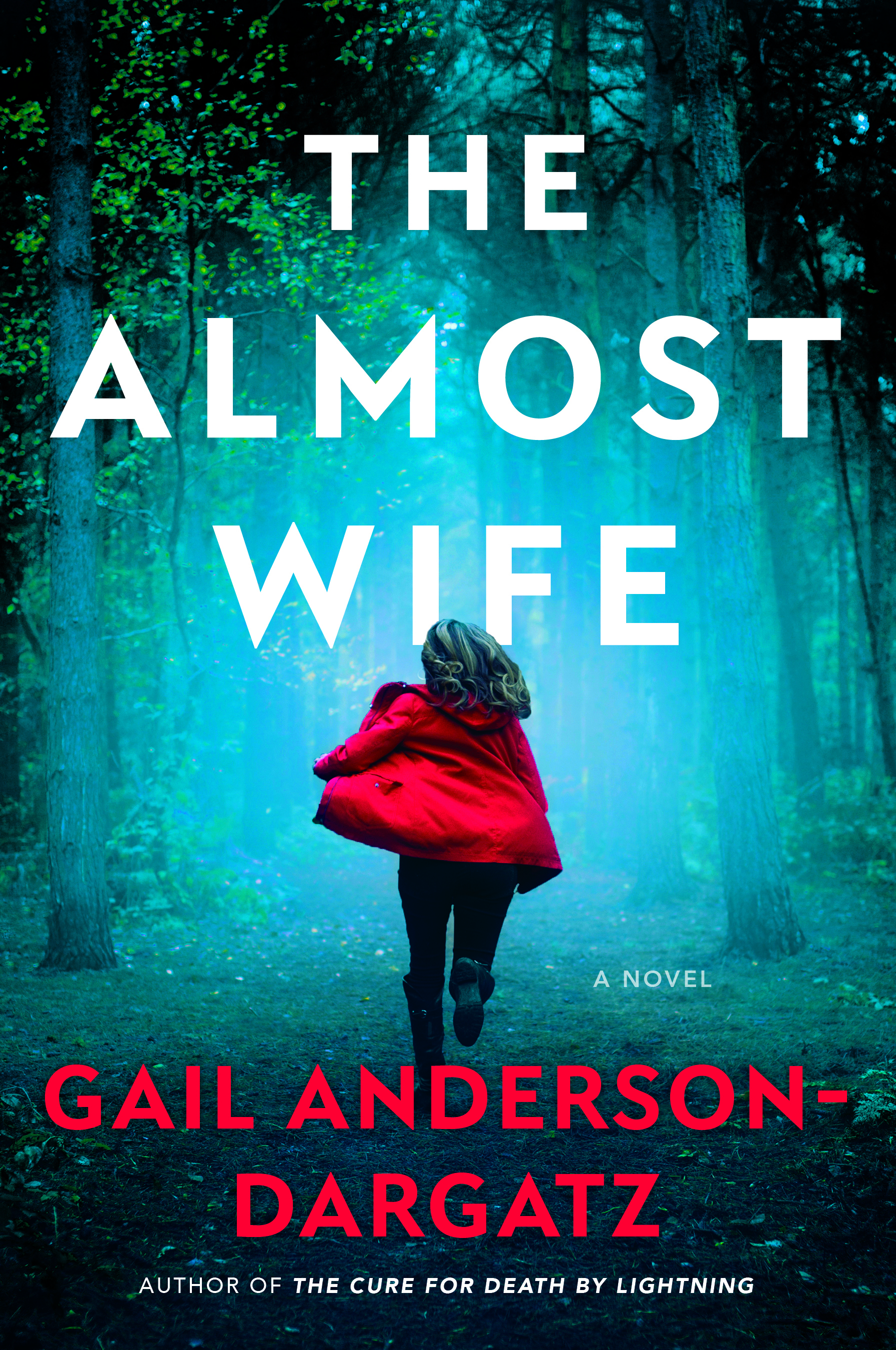
three poems by Fabrice B. Poussin

Fabrice B. Poussin

Trail conversations

“How you doin’? she asks
not waiting for the conformist answer
too busy taking a sip of her holy water
wrapped in plastic and early morning dew.

“Good mornin’!” they claim in bright accents
from North to South and other climes
boasting those ivory smiles
as if tomorrow would never come. 

“Have a good day!,” the gentleman softly speaks
in the path of a wife of fifty years
but she seems more interested in this lonely sight
as I snap another memorable landscape with a superzoom.

Voices echo as if words were spoken centuries before
in my head as they shake my achy muscles
ignorant of my inner thoughts, friends for a moment and
soon I ceased to exist for the chance encounters of these elusive friends.

It is an odd realization, albeit for a mere second
to feel human in the midst of a universe
that does not care too much 
whether they think you good or bad. 


Symphony for the eternal

Nothing is ever lost in the internet they say
it appears it is impossible to truly erase all
we ever said or ever did or ever wrote.

I think of the first cry of the first life
in this world a billion years ago
and wonder whether it too lingers in the waves.

Just like the butterfly batting its wings
resonates across the globe
perhaps we can still hear Chopin’s sonatas

as he played on the Parisian stage
despairing for his lost love
near so many tombs at Père Lachaise.

Then I too will write a symphony
with a single name inscribed into the ether
and sing for all atoms to vibrate in unison.

Perhaps then the syllables will reach her
and every fiber of her being too will tremble
so she may at last turn and extend her hand.


Contact

Blackness rules beyond the glass
perhaps there is still a ray of hope
deep in a night captured by fear.

Eyes morose bearing a somber tragedy
tears no longer evaporate upon the icy flesh
a palm ventures to touch the pane.

Stilled into the puzzling stance
awaiting for an answer never to come
he contemplates prints of another life.

Pondering what happened to a fancy
he holds onto the cruel void 
with a fist weary of too many battles.

All which remains is the faded warmth
of a brief touch upon the beloved satin
where he once listened to a fervent beat. 

Return to Journal

Fabrice B. Poussin is a professor of French and English. His work in poetry and photography has appeared in Kestrel, Symposium, The Chimes, and hundreds of other publications worldwide. Most recently, his collections In AbsentiaIf I Had a Gun, and Half Past Life were published in 2021, 2022, and 2023 by Silver Bow Publishing.  

WordCity Literary Journal is provided free to readers from all around the world, and there is no cost to writers submitting their work. Substantial time and expertise goes into each issue, and if you would like to contribute to those efforts, and the costs associated with maintaining this site, we thank you for your support.

One-Time
Monthly
Yearly

Make a one-time donation

Make a monthly donation

Make a yearly donation

Choose an amount

C$5.00
C$15.00
C$100.00
C$5.00
C$15.00
C$100.00
C$5.00
C$15.00
C$100.00

Or enter a custom amount

C$

Your contribution is appreciated.

Your contribution is appreciated.

Your contribution is appreciated.

DonateDonate monthlyDonate yearly
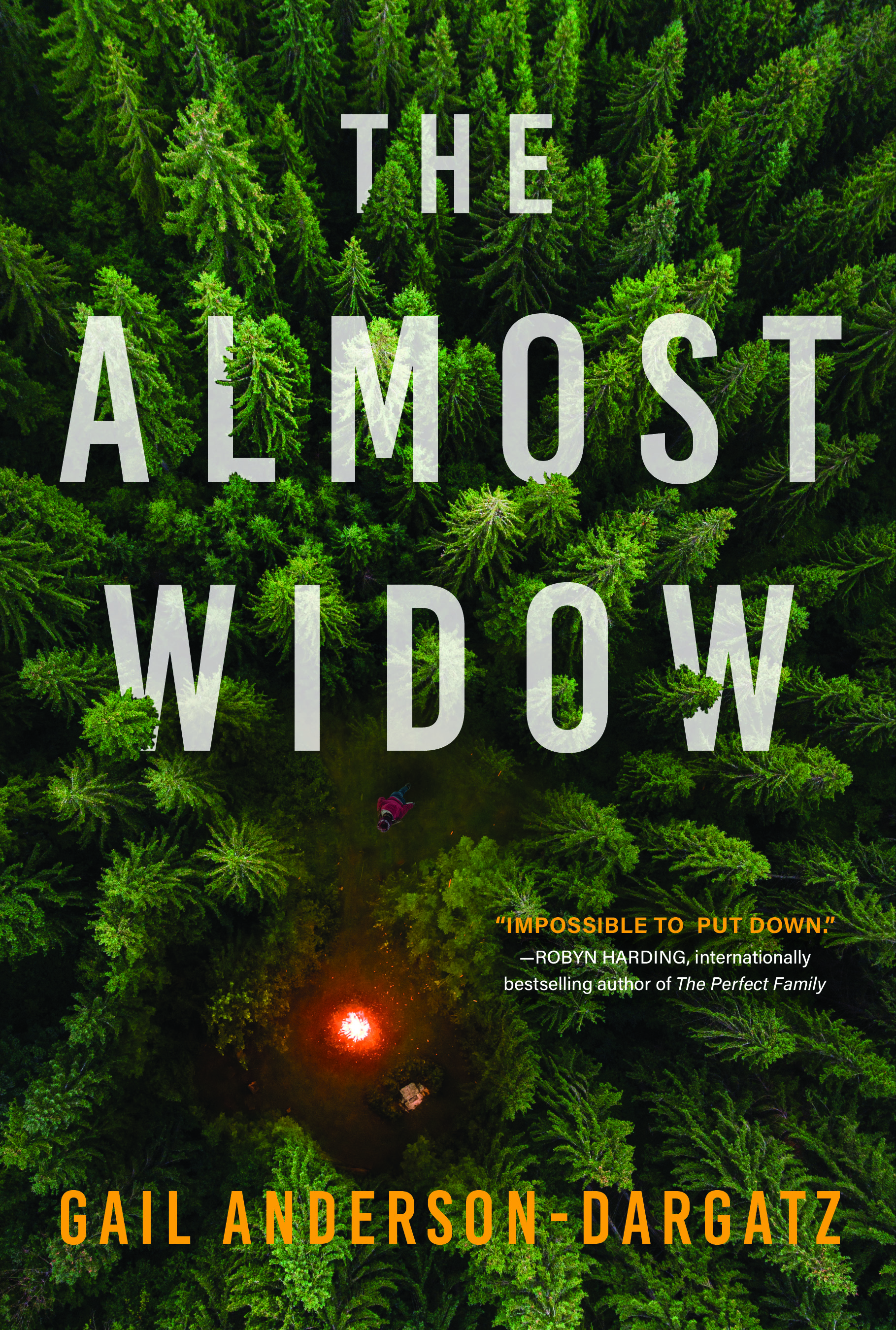
Plant a tree. a poem by Geraldine Sinyuy

ge500

Plant a tree

Walk today with those who will walk with you,
Should they leave you half the way, 
Plant a tree for them and mark the day,
So that if ever the road leads them back to  you again, you'll have at least a shelter to offer if not a fruit.
Walk on and as many as part ways with you
Keep planting trees
So that every embarrassment becomes a tree
A tree to give fresh air not for you alone but for humanity,
If you have no space for trees,
Plant a flower in a pot
It's still a beautiful thing
Today I teach you, each time you get tempted 
Just plant something
That's the new way of healing.
Healing for the self and for the planet
If the wound does not heal,
The tree will heal the earth.

Return to Journal

Dr Sinyuy Geraldine is a budding creative writer resident in the North West Region of Cameroon. Sinyuy trained as an English Language and Literature in English Teacher in the University of Yaoundé I in Cameroon. She earned her PhD in Commonwealth Literature from the same university in 2018. Dr Sinyuy started writing poems in her teens and most of her poems and folktales were read and discussed on the North West Provincial Station of the Cameroon Radio Television (CRTV) Bamenda where she was often a guest writer for the programme: Literary Workshop: A Programme for Creative Writing and Literary Criticism.  She is a critical book review editor at WordCity Literary Journal. She is also does copy editing and proofreading under the cover of the comply she founded in 2022, ‘The Rising Sun Editing Company Ltd’

WordCity Literary Journal is provided free to readers from all around the world, and there is no cost to writers submitting their work. Substantial time and expertise goes into each issue, and if you would like to contribute to those efforts, and the costs associated with maintaining this site, we thank you for your support.

One-Time
Monthly
Yearly

Make a one-time donation

Make a monthly donation

Make a yearly donation

Choose an amount

C$5.00
C$15.00
C$100.00
C$5.00
C$15.00
C$100.00
C$5.00
C$15.00
C$100.00

Or enter a custom amount

C$

Your contribution is appreciated.

Your contribution is appreciated.

Your contribution is appreciated.

DonateDonate monthlyDonate yearly
4 poems by Mansour Noorbakhsh

Mansour-Snow-2020 (resized)

Sometimes ponder why the sky looks blue

You force me to read your books. 
As you warn me from reading others. 
I’m wondering have you ever looked at the sky, 
at the bushes on your way, 
or at the sand and soil. 

Look at everything again. 
Sometimes stand under the rain 
till it washes your whole body 
including your eyes.
Then maybe you will realize that 
what you force me to read and believe 
has been considered forbidden words somedays.  

Those days that your ancestors were killed 
for reading forbidden words and believing them. 

Sometimes sit next to a stream
and stare carefully into the water 
that reflects your face. And your eyes too.
Maybe you will realize thus, 
you look more like the murderers of your ancestors 
than the ancestors whom you inherited your faith from.

Sometimes trust yourself and ask why the sky looks blue.


Reader’s journey 

These days I should read more poetry 
to not forget that no bird is mute. 
These days I need to read poems 
that out loud what I haven't had 
the courage to think about. 

Like the spread of dawn that makes 
sparrows eager to search for another day. 
And they, like the broad wings of sun, 
begin another flight as they chirp. 

Life starts with flying and singing these days. 
Humankind was the only species 
that invented writing 
and made cages for it too.
Forbidden. Profanity.

These days I should think about Dr. Zhivago. 
A forbidden book that made a long journey 
in the bulky boxes as the collection of 
photos of each page. 
Secretly. Exciting.

These days I should start a reader’s journey.


fictional life

no memoir is free of fiction pieces
that makes food delicious
and warms kisses 
within thousands of photos 
buried under millions of others 
autographed by emojis 

today i tried to call an old friend in iran
the voice was indistinct
i just heard, “internet access is very poor
i cannot even load a photo
they’ve turned it off 
to smother us”

i load a photo, and stray around messages
again and again, in a free country
to feel fictionally alive

then, my life turns to a question
nonfictional


Middle East
			 
Many years ago, a man who was selling cactus fruits on his handcart,
red and sweet, 
was peeling the fruits for his customers.
  
His hands were rough like cactus leaves, 
told us if I don’t peel the fruits, 
the thorns will hurt your hand and mouth.
  
There I have seen cactus and orange plants growing side by side,
while women and children were working together.
In a hungry and thirsty land surrounded by mountains, rivers, and seas.
Where the cradle of civilization is buried there.
  
Now, it’s said the bullets are planted there, and bombs were bloom.
  
And people have abandoned planting the drought resilient fruits, 
and the cradle of civilization near the oil wells, 
on a journey to beyond the drought.

I can imagine how the land continues growing sweet fruits resilient to the drought.
but I don't know whose

Return to Journal

Mansour Noorbakhsh writes and translates poems in both English and Farsi, his first language. He tries to be a voice for freedom, human rights and environment in his writings. He believes a dialog between people around the world is an essential need for developing a peaceful world, and poetry helps this dialog echoes the human rights. Currently he is featuring The Contemporary Canadian Poets in a weekly Persian radio program https://persianradio.net/. The poet’s bio and poems are translated into Farsi and read to the Persian-Canadian audiences. Both English (by the poets) and Farsi (by him) readings are on air. This is a project of his to build bridges between the Persian-Canadian communities by way of introducing them to contemporary Canadian poets. His book about the life and work of Sohrab Sepehri entitled, “Be Soragh e Man Agar Miaeed” (trans. “If you come to visit me”) is published in 1997 in Iran. And his English book length poem; “In Search of Shared Wishes” is published in 2017 in Canada. His English poems are published in “WordCity monthly” and “Infinite Passages” (anthology 2020 by The Ontario Poetry Society). He is a member of The Ontario Poetry Society and he is an Electrical Engineer, P.Eng. He lives with his wife, his daughter and his son in Toronto, Canada.

WordCity Literary Journal is provided free to readers from all around the world, and there is no cost to writers submitting their work. Substantial time and expertise goes into each issue, and if you would like to contribute to those efforts, and the costs associated with maintaining this site, we thank you for your support.

One-Time
Monthly
Yearly

Make a one-time donation

Make a monthly donation

Make a yearly donation

Choose an amount

C$5.00
C$15.00
C$100.00
C$5.00
C$15.00
C$100.00
C$5.00
C$15.00
C$100.00

Or enter a custom amount

C$

Your contribution is appreciated.

Your contribution is appreciated.

Your contribution is appreciated.

DonateDonate monthlyDonate yearly
Violining. a poem by Catherine Zickgraf

Catherine Zickgraf

Violining

Gusts blow wild sky off its clothes line,
and fog soaks into my coat.
I lift the gate latch, enter under 
a canopy of greens and into the courtyard.	

I stay this January in Carmen de la Victoria,
the stone and oak guest house 
of the Universidad de Granada. 
Halfway up the river valley,
I come home to the ghosts of former guests. 

I’m comfy now in a dry sweater.
The ladies feed me fish soup and red wine. 
This pale afternoon I settle into the dining room,
facing windows that gaze down the hill.

Across the river, the Alhambra is wrapped in storms.
It’s been enduring erosion from rain flowing 
down its foundation of mud cliffs. 
This Moorish castle—
pride of Granada’s generations,
its fountains cycling centuries of water—
will one day slide into the Darro.

Fed full and warm, I could nap
but instead climb the brick back stairs 
toward the sound of strings.  
A corridor echoes in its floor boards, up its tall walls.
The visiting violinist has invited me
to the conservatory in his temporary domicile. 

Lower levels fall quiet each after-lunch siesta 
while daily he labors in a lofty corner
of the Andalusian mansion.  
His violin lures me toward his quarters.
I follow the stairs in their cases, past a history of faces.  
A mahogany door stops the steps 
at the room in Carmen’s tower. 

I hear a furious stirring of his ceiling atmosphere.
Song streams through the keyhole.
Perhaps his abode holds a broad forest of attackers
at whom he aims notes with precision. 

Or maybe he stands steering his bed 
through a storm of distraction.
In there, leaning into his bow, 
he could be soothing the swell 
of floor-flooding disorder. 

Under his door his spirit overflows,
and I yearn for an art, a talent, 
the desire to work at something.
I’m haunting the halls, 
brought here by my dawning aspirations.

His room sounds full of Ancients
once traveling the Spanish paths.
They inspire this violinist into discipline.
May they immortalize him one day into stone.

Return to Journal

Two lifetimes ago, Catherine Zickgraf performed her poetry in Madrid. Now her main jobs are to write and hang out with her family. Her work has appeared in Pank, Journal of the American Medical Association, and The Grief Diaries. Her chapbook, Soul Full of Eye, is published through Aldrich Press. Find her on twitter @czickgraf. Watch/read more at www.caththegreat.blogspot.com

WordCity Literary Journal is provided free to readers from all around the world, and there is no cost to writers submitting their work. Substantial time and expertise goes into each issue, and if you would like to contribute to those efforts, and the costs associated with maintaining this site, we thank you for your support.

One-Time
Monthly
Yearly

Make a one-time donation

Make a monthly donation

Make a yearly donation

Choose an amount

C$5.00
C$15.00
C$100.00
C$5.00
C$15.00
C$100.00
C$5.00
C$15.00
C$100.00

Or enter a custom amount

C$

Your contribution is appreciated.

Your contribution is appreciated.

Your contribution is appreciated.

DonateDonate monthlyDonate yearly