
Make a one-time donation
Make a monthly donation
Make a yearly donation
Choose an amount
Or enter a custom amount
Your contribution is appreciated.
DonateDonate monthlyDonate yearly

Choose an amount
Or enter a custom amount
Your contribution is appreciated.
DonateDonate monthlyDonate yearly


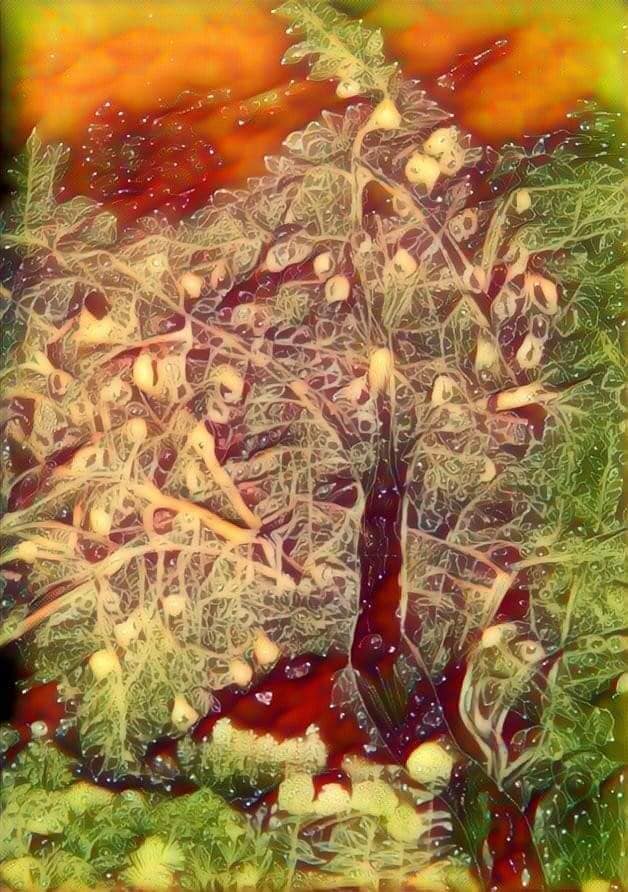
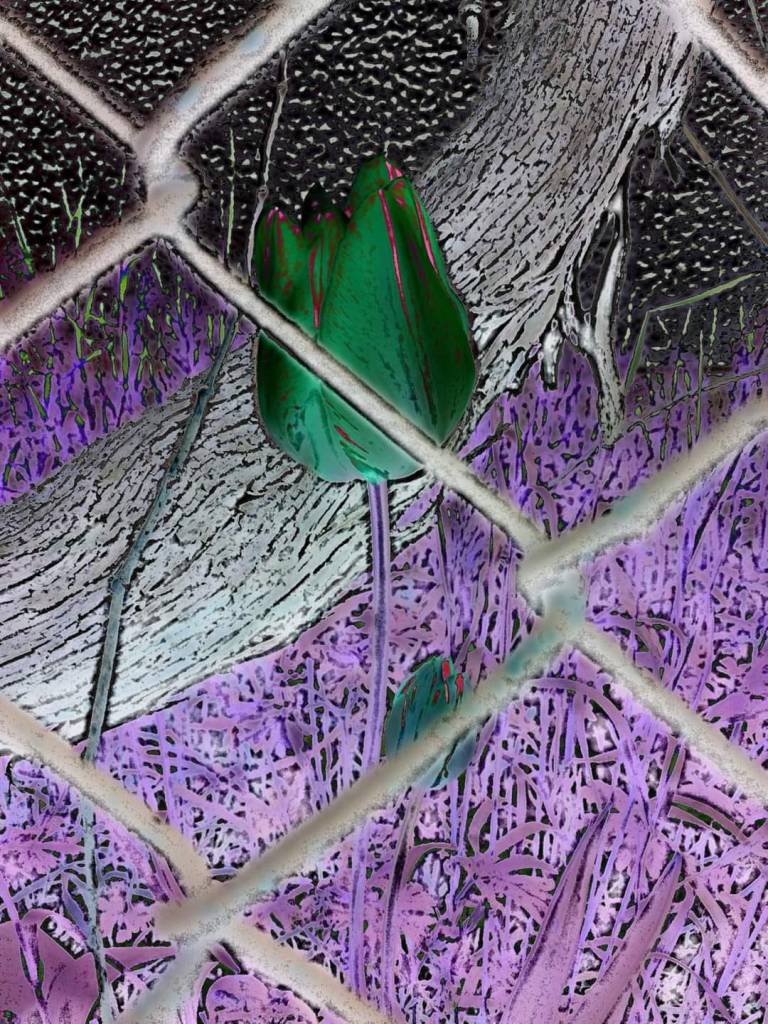

Miroslava Panayotova (Bulgaria) graduated from Plovdiv University, specialty Bulgarian philology and English language. She has published poems, stories, tales, aphorisms, essays, criticisms, translations, articles and interviews in periodical and collections. She has published the following poetry books: Nuances, 1994, God of the senses, 2005, Pitcher, 2014, Whisper of leaves, 2017, Green feeling, 2018; two books with stories: An end, and then a beginning, 2017, Path of love, 2018; two eBooks: Laws of communicatons /aphorisms/, 2018, Old things /poetry/, 2018. She is a member of the Union of the Independent Bulgarian Writers and a member of Movimiento Poetas del mundo. Miroslava Panayotova is an ambassador of IFCH (International Forum for Creativity and Humanity).
WordCity Literary Journal is provided free to readers from all around the world, and there is no cost to writers submitting their work. Substantial time and expertise goes into each issue, and if you would like to contribute to those efforts, and the costs associated with maintaining this site, we thank you for your support.
Choose an amount
Or enter a custom amount
Your contribution is appreciated.
DonateDonate monthlyDonate yearly
Fires Near Me
We went to bed with the sliding doors open, but smoke woke us at 4. Uncanny, how fast the sleeping brain reacts to fire. The slightest whiff, and bam! You sprang up and closed the doors.
Thanks. I stroked the back of your neck, C1 and C2, where you tense up. Aircon? you asked, not turning. Guess so. It clunked to life, covering everything we weren’t saying with its idling truck roar.
Essential travel only, the public safety announcements had said. But the roads were still open, and we wanted our holiday. Okay, I wanted it.
It’s all booked. No one says we can’t. The nearest fires are miles away.
You got that look in your eye. The one that said, I give in, but I like you a little bit less.
As we drove coastward, smoke came and went like a bad conscience. Bungendore: all clear. Braidwood: haze, throat-choke. Batemans Bay: a cinder on my tongue. Ulladulla: nada, bliss. Cloudlessness, frangipani nuzzling our windows, not quite a sea view but beyond the Norfolk Island pines, if you squinted …
I flopped into a green-striped deck chair on the patio, boneless with relief. Now our holiday could slide out of its jelly mould, quivering blue-green perfection.
You checked the Fires Near Me app at least 10 times before dinner. We were ringed by triangular icons. Mostly yellow. Two orange. No red, yet.
You flicked on the six o’clock news. Seventy-one fires burning. Smoke visible from space. Three firefighters perished.
Why do firefighters always “perish”? I asked. No plain old dying for them.
You flicked off the TV, spent a long time in the bathroom. After DoorDash Thai, you shuttled between Fires Near Me and TikTok. Four orange triangles, a trio of dancing goats in polka-dot pyjamas. I pretended to read. An orange-and-black jacketed Agatha Christie, And Then There Were None.
We didn’t fuck, just pushed the greasy pad see ew containers off the bed and turned out the light. After the smoke alert we lay braced, unsleeping. Your phone screen flickered yellow, orange, red.
I fell into a pixel-flimsy dream. Disco goats with burning hooves bleating pe-rish pe-rish pe-rish to the tune of Gimme! Gimme! Gimme!
Your voice cut the synth pop.
We should get out. Before they close the roads. It’s going to get a lot, lot worse.
Scrunched on the edge of the bed, you stared at the wall. As if you were holding a séance and the ghost of our future had just shown up.
Faye Brinsmead’s writing appears in journals including X-R-A-Y Literary Magazine, MoonPark Review, New Flash Fiction Review, Flash Boulevard, South Florida Poetry Journal and Twin Pies Literary. One of her pieces was selected for inclusion in Best Microfiction 2021; another was nominated for a Pushcart. She lives in Canberra, Australia, and tweets @ContesdeFaye.
WordCity Literary Journal is provided free to readers from all around the world, and there is no cost to writers submitting their work. Substantial time and expertise goes into each issue, and if you would like to contribute to those efforts, and the costs associated with maintaining this site, we thank you for your support.
Choose an amount
Or enter a custom amount
Your contribution is appreciated.
DonateDonate monthlyDonate yearly
CUT AS IF BY KNIFE
JOHNNY GARIBALDI trudged up the soft clover-covered hillside. A black strand of hair, fallen from his pompadour, lay curled on his forehead. Johnny’s shoulders were broad and he had egg-shaped biceps from working-out with the Charles Atlas Expander bar (3 easy payments 9.95 each). Donny Baguette walked beside Johnny: thin, long-legged Donny wore glasses and was pale skinned, even in the summertime.
Johnny stopped at the crest of the hill, leaned his arm against the split and lightening-blackened trunk of an oak tree.
“Come on, you guys,” he called. “Move it!”
Eddie Kelly, Jimmy Garibaldi, and Charlie Baguette tramped side by side up the hill. “We are sergeants,” Charlie said to the other two. “And they—“ he glanced downhill at Weed Garibaldi and Butch Kelly—“are privates.” Charlie snickered.
“I am a scout,” Eddie said, thinking of Kit Carson, subject of a book he had recently taken out of the library and read.
The hill top stood above an inclined stony white road that lay at the base of a rocky hillside. On a plateau above the hillside sat a group of disused rusted tin buildings.
Johnny and Donny emerged from the brush at the base of the hill and stepped out into the road.
“Come on you guys!” Jimmy Garibaldi called from the first hill’s crest. “Move it!”
“Yeah, move it!” Charlie said.
“Shut-up, Baguette,” Weed Garibaldi said. He and Butch moved crab-like on hands and toes.
“Wait for us!” Butch called.
“I am a scout too,” Jimmy said.
“Me too,” Charlie said.
“I thought you were sergeant?” Eddie asked Charlie.
“I can be sergeant AND scout, can’t I?” Charlie shouted angrily, face reddening.
“We will each be scout,” Jimmy said. “Like the Three Musketeers!” He put his arms around Eddie and Charlie’s shoulders.
Johnny and Donny moved along the road, past the tin buildings and up a steep incline between rock ledges and thick woods.
The steep road leveled out above a huge bowl-shaped rock quarry pit, hundreds of feet deep and a quarter mile across, strata of walls a colorful array of stone.
“Hello!” Donny shouted. “Hallo-lo-lo-lo…” the quarry pit answered. Johnny pushed a boulder over the edge of the pit; the boulder shattered on a ledge below and pieces of rock fell further to the quarry floor. Eddie, looking down, felt himself grow faint. To think of falling so far down, and of hitting the floor! He turned and walked ahead into a meadow of knee high grass. Springing grasshoppers bounced off his legs. The ground lumpy with red and yellow crab apples, fallen from a gnarly crab apple tree. From a thicket beyond the tree a partridge burst from the brush, its wings whirring like the tongs of an electric cake mixer.
“Look!” Eddie shouted, pointing.
Charlie raised his hands and, holding an invisible gun, blasted the bird.
Eddie led the way along a narrow path trodden into the ridge line. Thorny balls from picker-bushes clung to his shorts. He took off his cap and wiped sweat from his forehead. The grass along the path was speckled with white lime dust. Eddie heard the lime kiln roaring in the distance. Right of the path, a lime kiln road sat glowing, limestones sparkling in the sunshine.
“We will head down the road and walk up,” Johnny said.
“Alright Johnny baby,” Weed said. “You are the General.”
Along the roadside, dense woods thick with vines and brush. Above, the mid-day sun sat like a polished coin in the white sky.
“Quiet!” Donny said. “I hear something!”
“Scatter!” Johnny called.
Eddie leapt into the thicket. Dried leaves cupped like little hands crunched underfoot. He crouched behind a wheelbarrow-sized chunk of orange and white quartz crystal rock.
A pickup truck, loaded with kiln workers, passed by trailing a cloud of dust.
“Alright, let’s go,” Johnny commanded, wiping dust from his checkered Bermuda shorts.
The top of a narrow shoebox-shaped canyon came into view.
Eddie thrilled at the sight. The canyon stood like an upended box, the rock walls cut as if by a knife. The pinnacle of the canyon sprouted small crooked trees and mossy vegetation. A series of steeply pitched hills–dirt hills newly seeded with grass seed, rose in tiers from the road to the ridge line high above, parallel the top of the canyon. The new grass soft-looking as hairs on a baby’s head. Lime stone boulders sparsely scattered on the hillside.
Johnny stood gazing up at the canyon. “What do you think? Should we stay on the road or climb up and go along the ridge?”
Donny scratched his head.
“Stay on the road,” Eddie said. “It is shorter. We can climb the canyon trail.”
“Yeah, stay,” Jimmy said.
Johnny stared up the road. The steeply inclined road dipped a hundred yards distant, making it seem as if the road ended in the bluish-white sky. A drop of sweat ran down Johnny’s forehead.
“I say we climb the hill.” He tapped his chest. “I am the General, and I say we climb.”
“I am going up the road,” Eddie said.
“That is insubordination,” Johnny said. “You could be put up before a firing squad.”
“I don’t care,” Eddie said. The road is faster. Why kill ourselves climbing?”
“Let’s go,” Johnny ordered. He strode to the base of the tiers of hills and began climbing.
Eddie walked up the road. “Come on, Jimmy.” The road made more sense, Eddie told himself. It was easier, shorter…Johnny and the others were dopes. Let them kill themselves, he thought.
Eddie glanced back: like beads on a necklace, Johnny, Donny, Charlie, Jimmy, Weed, and Butch, climbing. Eddie groaned turning back.
Eddie’s sneakers sank into the soft loam; dirt and pebbles rolling downhill bounced off the visor of his cap. Should have kept to the road, he thought. It was stupid to—
The blast sounded like a shotgun going off beside Eddie’s ear. He glanced to the road. Rocks—small rocks—rocks the size of washing machines—fanned out through the sky, sailing through the white haze, their shadows flashing like birds across the landscape.
Eddie squirmed, wormed his way into the soil. Deep as he could get. But not deep enough. He wrapped his arms around his head. He heard rocks crashing into the woods as the blast echoed through the valley. He raised his head: Charlie Baguette ran, galloping downhill, Charlie’s arm twisted to reach behind to his back, hand reaching to a big red splotch on his white t-shirt. Charlie’s screams cut through the echo.
Eddie leapt to his feet and ran, listening, as his feet beat the sharp stones of the road, for the sound of the next blast.
Wayne F. Burke’s short stories have been widely published in print and online. He is author of a short story collection titled TURMOIL & Other Stories (Adelaide Press, 2020), as well as eight published poetry collections–most recently BLACK SUMMER, Spartan Press, 2021. He lives in Vermont (USA).
WordCity Literary Journal is provided free to readers from all around the world, and there is no cost to writers submitting their work. Substantial time and expertise goes into each issue, and if you would like to contribute to those efforts, and the costs associated with maintaining this site, we thank you for your support.
Choose an amount
Or enter a custom amount
Your contribution is appreciated.
DonateDonate monthlyDonate yearly

In the Beginning There Was Sound
In the beginning the sound incorporated the meaning of silence, too. Humming remembrance of the past. Of what happened, was imagined, or profoundly desired. Like an unventilated waiting room in a train station buzzing with flies. The door opens without a creak and the click-clack of heels announces an intriguing presence. Those high heels neither elongate nor hide her healthy short frame. They propel her. A well-tailored gabardine suit flatters her waist and her eye’s shade of green. Its skirt is cut above her knees – a sign she follows the new fashion. Individual freedom of expression trails the 1960s as they pierce through the Iron Curtain and take over the mind of Romanian women up to Romeşti, a Subcarpathian village along the Argeş river counting a few hundred as residents. Her black shoes – one less dusty than the other – match the small purse hanging over her shoulder.
She paces up and down the wooden floor as if challenging the time to move faster. The wall clock adorning the room remains unimpressed, moving its minute hand at the same speed it did before she came in. Now and then she shakes off a fly lost in her brushed up hair. It lands on a child half-asleep on a large piece of broken luggage showing its content: turnips to be sold on the city market.
From the clutch she retrieves a small round mirror and checks the room and her makeup. Impeccably smooth on her ripen peach face. Especially the red lipstick. Pretending to play some beautifying role on her slightly open lips divulging a string of perfectly sized, white teeth. The only flaw on this face of Titian’s penitent Magdalene is her nose, evidence of a past tense.
A man smoking a cigarette until it burns his fingers starts coughing and spits on the floor when the phlegm is too much to swallow. Three women with their heads covered in colorful scarfs engage in activities suiting their social station: the one alone reads a library book. The mother is busy clipping her kid’s nails. The youngest gazes far away with her head bouncing off her coughing man’s shoulder.
In his office, separated by a thin wall with an opening to watch over his flock, the station master, with his coat half-dressed, boxes in vain with the back fist the cursed hole in the other sleeve. His heavy sweat dwindling down his prematurely bald head and dripping down his nose impacts his determination. Finally, after a few failed trials, breaking through the sleeve, his hand rushes to a rolled newspaper lying on his desk and starts killing the flies. Through the opening, he finally takes in those waiting for his whistle. He spots his former elementary school crash and his heart attempts to beat harder. With a fat man’s heroic bent and a servile nod of his head, says a loud:
“Kiss’ur hand, Veronica,” the Romanian stand in for hello, săru’ mâna, Veronica,” through the wall opening.
Like everyone else in Romeşti, he’s in love with her, or confuses erotic dreams with love. He has followed her trajectory, away to Şcoala Normală de Învăţători, a specialized boarding high school producing elementary school teachers, and back as he was just starting as an apprentice. Twelve years ago. An unexpected retrogression for her family, though signs existed as tea leaves in the bottom of a cup. Her father, the pre-war mayor joined the Eastern Front effort a cheeky fellow only to return untimely with spells of violence alternating silence. Right on time to avert suspicion from his wife of having used a pitchfork to keep the German officer camped in their villa, Casa de la Şosea, away from their connubial bed. The past foretelling the future with the precision of the train-schedule. He dries up his forehead. It’s hot. And the station has neither running water nor a well. What is Veronica doing in his waiting room? Inadvertently, he blinks and catches remembrances of her legs in silk stalkings climbing the few stairs into second class compartments taking her to the city. She could have commuted. Not her. Never one for waiting around for life to happen. What is she doing on a Sunday in his train station? More importantly, when did she arrive without him noticing it?
A good conversation starter. He starts patting off the dust on his station master coat. Maybe today’s his lucky day. His wife, another primary school classmate, but she chose to stick around, is away at a Black Sea resort with their two children. Like her family, since 1962, she works in the local cooperative’s dairy farm. Each summer the cooperative gives his family two tickets to spend 10 days at the Black Sea. In a hotel for agricultural workers from all over the country. Two kids, their mother, and grandparents get to share a beautiful hotel room with two twin beds, a dresser, and a table, adorned with a small terrace from where they could see the Black Sea. The terrace door is locked if the room is on a higher floor, though. On the wall he pinned down all five postcards they mailed each summer featuring Perla, the hotel, a jewel of soviet architecture making each individual feel like a boss for ten days. Undeniable proof that Romania was a dictatorship of the industrial proletariat and their allies, the peasant workers.
The station master has a coughing fit. The dust he’s unsettled and the cigarette smoke from the waiting room take over his lungs. Dry. Defeated he watches Veronica opening the door and vanishing into the bright morning light. His gaze follows her outside through his regular window.
On the platform all the benches are taken by makeshift luggage. The few men and women around stand up next to their bags of vegetables and chat. The men lift their hats when she passes by them oblivious to their existence. Waiting are also a bunch of tied up clucking geese, a startled goat kid, and the summer morning behind the chestnut trees.
“Mama,” Veronica hears behind her and turns.
“Carl,” she sounds stunned, “what are you doing here?”
A skinny tall boy, knocking at the door of adolescence, but wearing sandals suited for a much younger lad, with worn-out socks hung by the lips, revealing ankles the same color as his thighs visible in his shorts, approaches her.
With Carl in front of her like a tall-building architectural problem, Carl is Veronica’s height, she leans against the station’s wall checking him out. His big blue eyes quietly tell the story of his devotion for his mother. She fixes his hair, sandy and straight reaching the root of his neck. Then she moves to the collar of his shirt wondering why he’s wearing that better T-shirt, instead of the collarless ones he wears to work. On her parents’ farm daily workers and family members exert themselves as hard as the owners, or they don’t have a chance of sticking around. If that’s what they’re after.
“Only the bride is missing!” The head of the station approaches them tenderly, showing a red face above the folds of his handkerchief. Veronica looks imperially at him forcing this acknowledgment:
“It’s coming.” She turns her head away looking at a moving black point making itself heard.
“It’s coming,” Carl agrees rushing to the edge of the platform.
“Carl, come back,” Veronica involuntarily shows her feelings.
Obediently and pleased at the attention received, Carl pulls himself back. A black point on the vertiginous horizon of the tracks approaches the station with hostility. They all wait, looking at the nervous tracks until Carl blurts it out.
“You’ve received a telegram.” He hands his mother a piece of paper which looks read a few times over.
The black point becomes a terribly angry train which goes ahead without stopping.
“Cargo.” The station master tells them. “The train will come any minute now.” He cannot take the direct heat. He looks for the trees’ shade. Over the rails. He returns to his office. Veronica’s attention is all squandered away.
“Can’t help.” That’s all it says. Why. No clue. With what. No explanation. The name sending the telegram: Paul. The only Paul she knows right now is Paul Galopenţa. She closes her eyes briefly under the weight of her longing. Surprised, she recaptures the present by folding the piece of paper with his impersonally typed name. Neatly. Done, she opens her bag and takes out a train ticket. She instructs her son to talk to the station master and see if he can take it back and refund her.
“Oh, would you throw the telegram in the trashcan?” She adds as an afterthought.
Carl obeys and goes in as the train slows down approaching the station.
At the window of one compartment, a man, overdressed in a similar manner like Veronica, stands out. His hair is combed backwards with care giving him an aura of non-proletarian sophistication. His view is quickly obliterated by the sun making them all blink. When the train comes to full stop, he gets out and comes directly towards her, as if he has expected this meeting. His suit is gabardine, too. His beautiful black hair matches his luscious mustache. His skin tone is tanned. So tanned that it looks charcoal. Veronica is hopeful. He has time to tan. But where? At the Black Sea? His shoes are shabby, indicating that all his money’s in the suit. She’s taken aback.
“Săru’ mâna, Veronica, or shall I say, V?” He says taking her hand as if to weigh it or following a script he doesn’t really agree with. Without kissing it and not really in a gesture of friendship moments later her lets it carefully go.
Veronica gives him a quizzical look. Something she’s not in the habit of engaging. She remembers everyone deserving to be remembered. Who is he? They have not met, obviously, and she cannot recollect having written to him. She does write a lot though. She teaches writing. She smiles. Stay focused V. She usually recalls names. Not his, nor why he’s there, in her worst nightmare. Paul was supposed to help her find a doctor to do it, or at least a nurse. Anyone. It’s early September 1966 and one of her taken for granted freedoms, the choice to decide whose child to bear and for how many weeks, dissipated with great pomp only days ago. The Romanian television broadcast the news elevating women to the better soviet product: they could bear all pregnancies to full term while working as hard as their men. Soviet heroines! Two months pregnant, Veronica has to find a solution. Fast. Who is this man afraid of touching her? Is she losing her magnetism? She’s can’t remember anyone dropping her hand without a languorous kiss. Paul, how she misses him. And his elaborate stories about his inability to marry her. Definitely not those.
“I can’t tell you how relieved I am you are waiting for me at the train station.” The sun doesn’t seem to bother him. “After that unforgettable night,” he stops to recollect himself, “I kept in touch with Paul.” Veronica has her answer. “When I told him I was ready and restless to start a family, he gave me your address.” He takes a piece of paper from his pocket. “Ticuţă, take the 7:00 AM, Monday train to Romeşti. Veronica will be waiting for you.”
Carl returns with the money with a savior’s smile.
“I did it, mom.” He hands her a banknote and a few coins. Veronica puts both the second telegram from Paul she reads that morning and Carl’s money in her clutch.
“And you must be Carl.” The man says smilingly showing his unpleasantly yellow and crooked teeth.
“I am Ticuţă, but I hope you will soon call me Tata.” He pinches Carl’s skinny cheek. That rather presumptuous introduction brings smiles on both the mother and son’s faces. Carl has never met his father (tata), and Veronica is desperate to cast this gift from Paul for the role of dad.
“Carl what do you say?” and taking Carl’s hand, she adds, “before I introduce you to my parents, can you tell me a bit more about you?” He looks older than her. Perhaps, he’s not 35, but not much older than 40-42, either. The small leather tote indicates he’s at least a factory clerk. Veronica’s face lights up. It’s Monday. How many days can he take off? One? Two? They start moving away slowly. How long does it take to get a marriage license in Romeşti?
The head master approaches them while signaling the train’s mechanic it’s time to go. The train whistles its departure absorbing all attention.
“So, what’s the occasion?” Veronica’s former classmate approaches the group breathing heavily with his handkerchief like a sweat sponge in his hand.
“Hi, I am Ticuţă,” he stops and the rest of his party with him. Ticuţă holds out his hand to shake the master’s. They do.
“We will see you again soon, if I can convince these two to come with me to Pruna,” the stranger doesn’t want to stop talking as if giving himself courage. “Carl would go to a city school. Wouldn’t you like that?” Carl ducks the second cheek-pinch nodding his head acquiescing. “Fifteen thousand people live in my city, Pruna, and most of them work at the factory where I am the HR chief assistant.”
The head master is quietly watching Veronica. She looks dreamy. Twelve years ago, Maria, her mother, didn’t give her a wedding. Too big a tummy. Too much gossip to contain. Veronica was dispatched and sent away by the night-time train to find a solution. She did, returning with a marriage certificate to show for the little boy and a divorce decree to explain her broken nose. Now she looks fit. Still young to have another child though. With Ticuţă? They seem to have just met. Did he kiss her hand? Ticuţă is holding his little bag with both hands.
Veronica slowly remembers how she met this intriguing man. Definitely not a catch, but he could stand in for one. Closing her eyes, she relives her last night on the beach. Returning to the hotel room as the sun was rising and the cool air was dissipating, hanging on Paul’s arm as a feather in love, this scared man approached them looking frightened. He looked comical, but no one was laughing. Ticuţă, full of sand, in some tattered boxers, was wearing the same shabby shoes. He mumbled about having gone for a swim and spending the whole night searching for his clothes. Paul jokingly said that he could tell a scorned lover when he saw one. Paul took off his pant suit and gave it to him. Veronica can’t take her eyes off Ticuţă. He’s wearing Paul’s suit. She comes closer to smell the sea lurking in the fabric. What a joker, Paul was. She looks at Ticuţă’s face. He seems genuinely immersed in this situation. Paul’s direction, but it is his own creation. A feeling of fondness comes over her. What pushed him to become outrageous? Could he be morphing into a marginal element? She can’t imagine how, but no one wants to be called that in party meetings. “Self-marginalized” as the meeting leaders would say, “because the new soviet men and women are powerful individuals able to decide their own destiny.” Or, acquiesce to it
Saying their goodbyes, they walk away to Casa de la Şosea. Veronica’s heels make a rhythmic noise, click-cluck, click-cluck on the platform, and then on the highway. Absent a sidewalk, they go one behind the other. Carl first. With the sun at the very end.
Veronica’s heels are the only soundtrack. With a passing car adding background noise. Ticuţă is suddenly quiet. Is he worried about what he is going to do? Or, like Veronica and Carl, does he have no luxury to worry about unexpected consequences, all too aware about what would happen to him, if he chose to wait and see? Click-cluck, click-cluck, Veronica’s heels offer the group direction. Comfortingly.
Dana Neacşu, a New Yorker expat, currently living in Pittsburgh has translated works of fiction from Romanian into English and non-fiction from English into Romanian. She is hard at work on a collection of stories about the 1970s Romania, the first decade in the life of her young protagonist, Trey. Her nickname extols the magical number three (trei) days one needed to survive in order to be. Their name was then listed into the public birth records.
WordCity Literary Journal is provided free to readers from all around the world, and there is no cost to writers submitting their work. Substantial time and expertise goes into each issue, and if you would like to contribute to those efforts, and the costs associated with maintaining this site, we thank you for your support.
Choose an amount
Or enter a custom amount
Your contribution is appreciated.
DonateDonate monthlyDonate yearly

Good for You
Dear Fellow-Writer in the West,
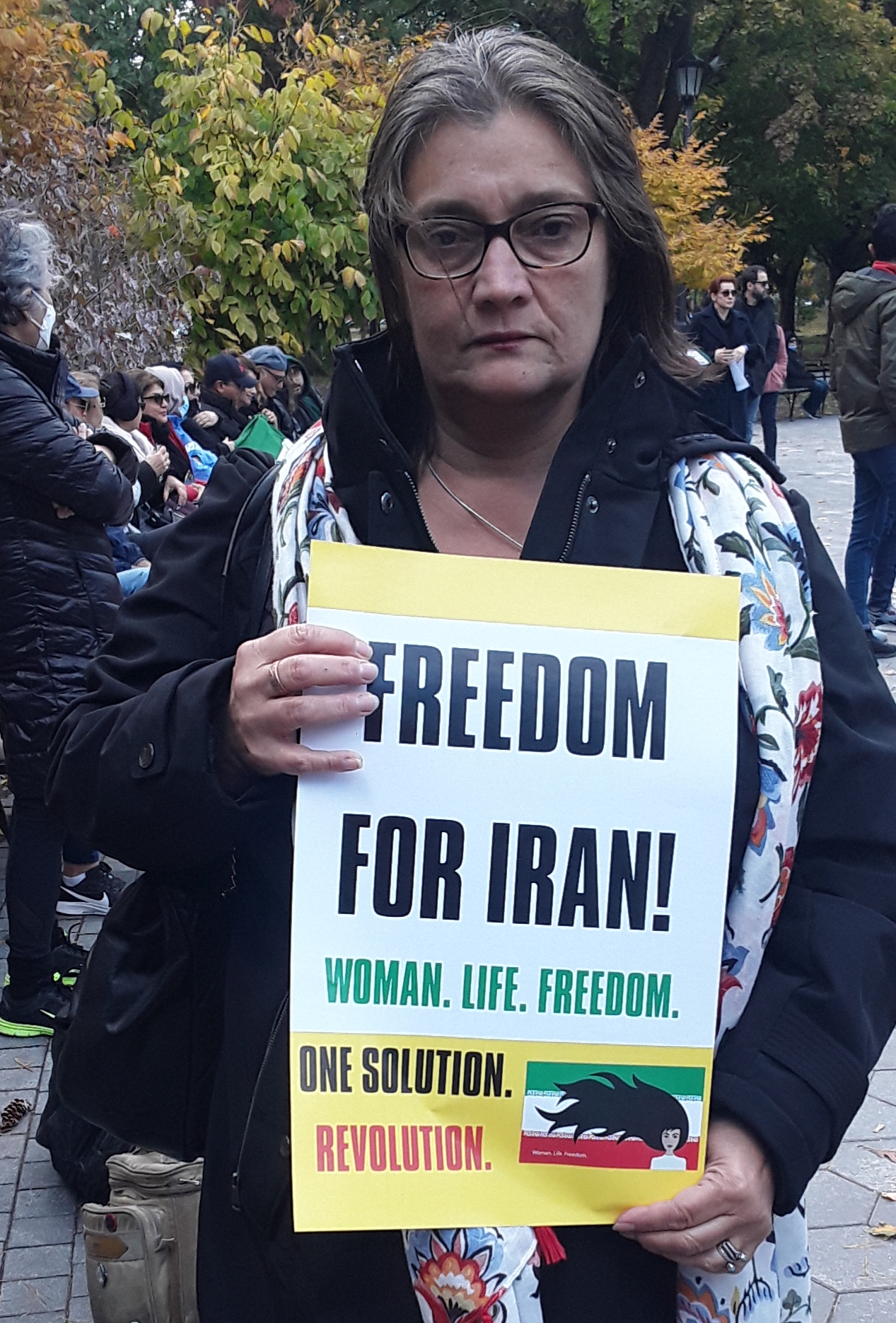
I see the uncomfortable expression on your face in the face of the ongoing protests in Iran. I see you cannot wrap your head around the fact that the citizens of a Muslim-majority country are demanding an end to an “Islamic” regime. I acknowledge that this is a very complicated concept for you. I see living in safety and privilege here in the West has robbed you of perspective. I see you!
Here are a few facts: The Islamic Republic of Iran has a “supreme leader,” a high-ranking Muslim cleric, an ayatollah, who is also the commander-in-chief. This means all the military, police, revolutionary guards, Basij militia, and plainclothes forces opening fire on unarmed citizens in Iran are under his direct command. It means he’s responsible for this new round of bloodshed (and countless others before).
The first protest against the compulsory hijab in the Islamic Republic dates back to March 8, 1979, immediately after the revolution that brought it into being. It came in response to Ayatollah Khomeini’s decree coercing women to cover up. In a larger historical context, Iranian women have been fighting against compulsory hijab imposed on them by custom and sharia law for more than a century.
In recent months, the regime has been using increasingly brutal methods to arrest, torture, beat, and kill women who defy the hijab mandate. In these protests, you see women burning their headscarves and appearing unveiled in public. The protests against compulsory hijab have also occurred in the most religious cities: Mashad and Qom, bastions of Shiite orthodoxy, and home to saints and seminaries.
Honestly, I have been trying to understand why so many of you bend backwards to justify the Iranian regime’s atrocity in the name of cultural relativism. “Every country has its custom and laws,” you say. You’re always quick to compare the human rights abuses in other parts of the world with the flaws of “Western democracies,” as if all regimes are equally unjust and brutal. But I am sure you know the difference, as you do not plan to immigrate to Afghanistan, Saudi Arabia, or the Islamic Republic of Iran, even if you go hungry and jobless here. On the other hand, millions of people learn a foreign language, invest money, and risk their lives to escape Islamic regimes, knowing full well that they will face racism and xenophobia in the West.
The truth is that living under racism is far more tolerable than living under totalitarianism and Islamic fundamentalism. It is far preferable to live in countries with “flawed democracies” than to live in countries with no democracy at all. If your Erewhonian logic demands that we put up with whatever inhumane laws are imposed on us in our home countries, then the least you can do is give the same allegiance to your own system: praise your Western democracies to heaven!
And who says human rights are Western values to begin with? It is another form of colonialism to think that non-Westerners do not aspire to freedom and dignity. Such thinking betrays ignorance of the histories of struggles for justice across the world. How dare you assume we cannot think independently? How dare you assume that equality is your invention — and your prerogative only?
The morally and intellectually bankrupt claim that uprisings in undemocratic countries, especially the so-called “enemies of the US,” can happen only as a result of foreign influence implies we’re not able to judge our governments, religions, or cultures. The implication is that we’re intellectually underdeveloped. It implies that most of us are content to be kept downtrodden in the name of Allah, or any other ideology disguised as nationalism or culture. In other words, it implies that this is what we want.
Whoever thinks that way must now be in shock at seeing Iranians protesting the sharia law. They must have a hard time denying the evidence before their eyes of countless Iranian women removing their hijabs and setting them on fire.
Listen! If the choice is between Islam and freedom, we Iranians, a Muslim nation, choose freedom; in the face of danger and death, in the face of torture and rape, and in spite of your silence and complicity with our murderers. We reject the imposition of any government on us in the name of Allah. If you try to explain or make excuses for our murderers and dictators, you’re their accomplice. We will not forgive. We will not forget.[i]
I have no patience with people who close their eyes to genocides and atrocities just because they’re committed by the enemies of the US — and only because they’re the enemies of the US. Some of these enemies of the US are first and foremost enemies of their own people. Some of them, like the Iranian regime, have no qualms about massacring their own citizens over and over, and then again to stay in power.
Freud said that biology is destiny. And you imply religion is destiny. You imply nationality is destiny. You insinuate culture is destiny. You do not believe in human destiny.
People who justify oppression and violence perpetrated by Muslim regimes and community leaders are guilty of the worst form of Islamophobia. They believe that Islam is what Muslim dictators, extremists, and fundamentalists say it is. They consider Islam synonymous with oppression, misogyny, homophobia, and other human rights abuses.
Islam, for your purposes, is the Islam you consider legitimate enough to heed its threats. It’s the Islam you respect out of fear. It’s the Islam you fear because it’s the Islam that mobilizes terrorists to silence free expression. Your Islam is the Islam of mullahs and demagogues who benefit sexually, financially, and politically from suppression of dissent.
If you’re not enraged by the increasing number of limitations on freedom of expression, you deserve your new slavery: slavery to fear. You are no longer free if you cannot express yourself freely. Anyone who lets go of freedom of their own “free will” is the most pathetic of slaves.
You are bending backwards to justify your befuddled idea of diversity: you are struggling to prove that it is better to be “diverse” than “free,” as if diversity is possible in the absence of freedom. Your unprincipled diversity and tolerance has come to mean tolerating dictators, oppressors, and genocide perpetrators.
I see you as the new colonizer, secretly relishing your cultural superiority, watching our massacre from a safe distance! You have learned to bend over backwards. You have become really good at mental gymnastics. Good for you!
[i] One of the chants in the ongoing Iran protests of 2022.
*Further Reading by Bänoo Zan from the CBC: Self-exiled poet covers Iran protests as a ‘war correspondent in verse’
Bänoo Zan is a poet, librettist, translator, teacher, editor and poetry curator, with more than 250 published poems and poetry-related pieces as well as three books including Songs of Exile and Letters to My Father. She is the founder of Shab-e She’r (Poetry Night), Canada’s most diverse poetry reading and open mic series (inception: 2012), a brave space that bridges the gap between communities of poets from different ethnicities, nationalities, religions (or lack thereof), ages, genders, sexual orientations, disabilities, poetic styles, voices and visions. Bänoo is the Writer-in-Residence at the University of Alberta, Canada, Sept 2022-May 2023.
LinkedIn:
https://www.linkedin.com/in/banoozan/
Facebook:
https://www.facebook.com/banoo.zan
Twitter:
Instagram:
https://www.instagram.com/banoo.zan/
Books:
Songs of Exile https://www.guernicaeditions.com/title/9781771830874
Letters to My Father https://www.amazon.ca/Letters-My-Father-Banoo-Zan/dp/1927396107
WordCity Literary Journal is provided free to readers from all around the world, and there is no cost to writers submitting their work. Substantial time and expertise goes into each issue, and if you would like to contribute to those efforts, and the costs associated with maintaining this site, we thank you for your support.
Choose an amount
Or enter a custom amount
Your contribution is appreciated.
DonateDonate monthlyDonate yearly
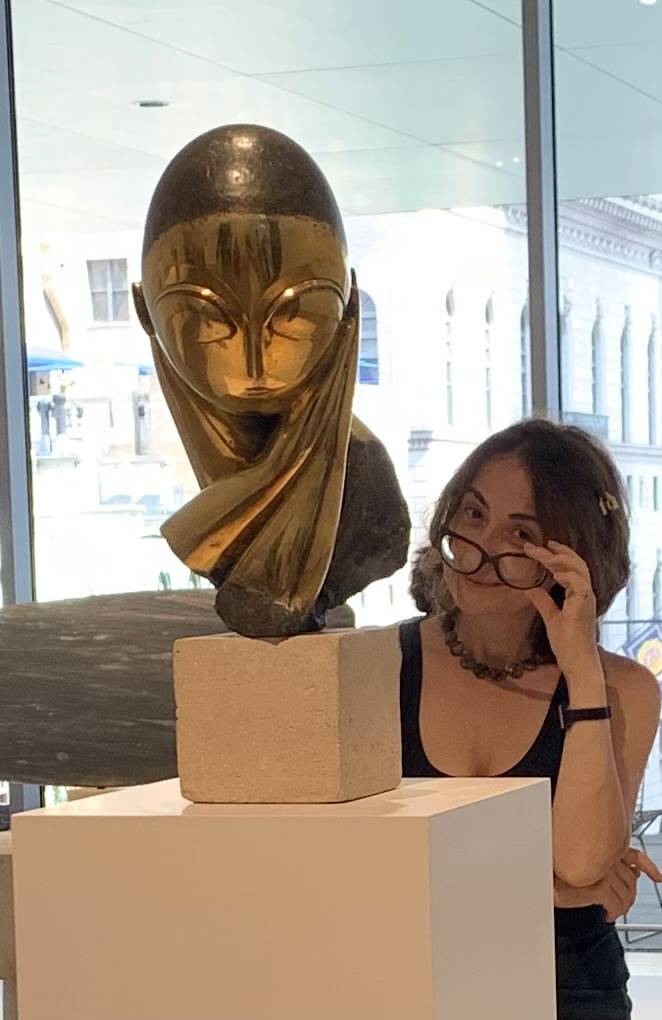
HELEN EASTMAN – KEEPING IT FRESH FOR POSTERITY
I’m delighted to have been able to pin down the human dynamo that is Helen Eastman for this wide-ranging and generous interview. Helen has so many roles, she’s a true creative, and someone who is more than prepared to give back to her community in so many ways.
Helen, so lovely to be able to discover more about you! Could you tell us a little about your background and how that motivated you to start Live Canon? How would you define Live Canon in its early days and how has it grown since then?
My first degree was in Classics and English (and I’ve got a doctorate in Classics), but vocationally, I trained as a theatre director, at the London Academy of Music and Dramatic Art (LAMDA).
For the first few years of my career I was working as a freelance theatre director, with new writing and political theatre, but then I ended up doing a lot more work with physical theatre, opera, and even circus. In about 2006/7, I suddenly realised it had been a long time since I’d directed any text (and a very long time since I’d worked with verse text).
Around the same time, I had a chat with the artistic director of Greenwich Theatre, James Haddrell, about how brilliant it was that spoken word had exploded as a genre, but how that meant that a lot of new work was experienced in performance while older work was read on the page; that can make it harder to experience both together. I had this idea of performing some of the ‘back canon’ as though it was fresh new work. James liked the idea and set aside some time in the theatre for a series of performances, which we called the ‘live canon’. I pulled together an ensemble of actors who were up for learning a lot of poetry and we got on with it. Some of our early performances featured Shakespeare, Keats, Shelley, Vita Sackville West, Virginia and Leonard Woolf, the War Poets and the Metaphysicals (Donne, Herbert etc). The series was really popular and other theatres asked us to tour it, and then various museums, festivals and other venues got in touch too. And that’s how ‘Live Canon’ was born. Five years on, we’d also added the publishing house, started to run courses, conducted outreach in schools and libraries and become a slightly sprawling poetry organisation that had sprung out of the liminal space between poetry and theatre.
I love that idea of the liminal space! How do you keep all the different aspects of Live Canon going? Do you have a team? What have been the challenges? Any memorable highlights/events?
Live Canon has no permanent employees and no regular funding. The team are all freelancers with multiple strings to their bows and we keep it going through sheer determination, and the commitment of lots of remarkable people.
The biggest ongoing challenge is fundraising and making sure we can pay everyone fairly for their time and work.
There are so many highlights. If I had to pick a few – our collaborations with the Victoria & Albert Museum, our season at the Boulevard Theatre, an eccentric bilingual gig at Abbey Road recording studios, a gig on the wrong end of Broadway, taking over an art gallery in Nine Elms (an area of London with massive inequality) for two months and plastering it with poetry, the annual thrill of the winner announcement for our international poetry prize… and the regular every-day thrills of getting to publish brilliant words by brilliant writers and pop their books into envelopes and send them out into the world.

What advice would you give to writers hoping to be published by Live Canon?
It is advice I would give about approaching any publisher. Do a bit of research, read the poets that we publish and see if you think you’d like to be part of the Live Canon ‘stable’.
Then get in touch with your work and give us the opportunity to read it. We are always looking for things which are so exciting that we think ‘this has to be published. We have to get this to readers’. Don’t be cross if we are slow to respond. We are a tiny team, with no regular funding and we have to fit in reading unsolicited work around everything else, but we are trying our best.
We run a competition for individual poems and one for pamphlets and one for collections (not just first collections), so that can be a good way to introduce us to your work. We have different guest judges selecting from these competitions, and it feels important to make sure there are different viewpoints and different poets selecting the work each year.
You are so inventive Helen! I loved your 154 project where 154 poets responded to Shakespeare’s 154 sonnets and your lockdown idea of pairing artisan chocolate with poetry books that could be sent as gifts or for Valentine’s Day and Easter. Do you have any other quirky future plans you can share or any past ventures which surprised your audiences with their inventiveness?
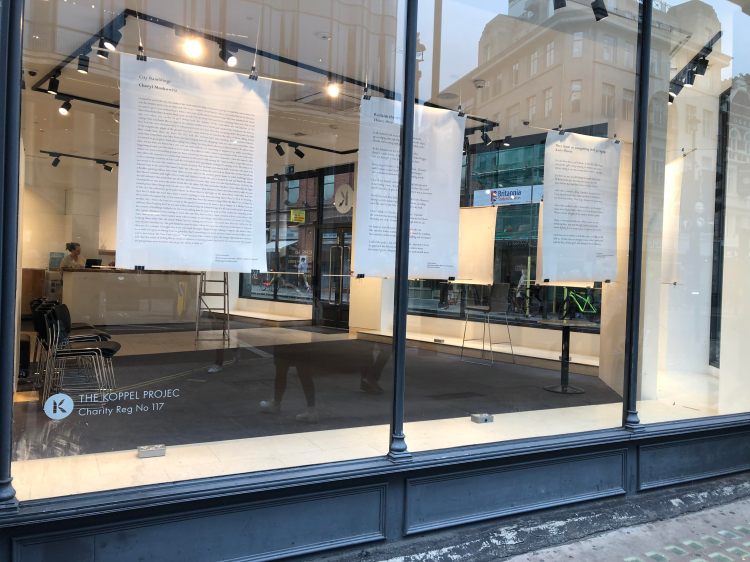
Thank you, that’s a lovely question. We love to find new ways to engage readers into poetry, and encourage people to make poetry part of their day. One of my favourite projects was a collaboration with Westminster University and their #disruptyoureveryday mission, where we hung poems in the windows of a store on Oxford Street – the UK’s busiest shopping street – in the run up to Christmas. People just paused, mid shop, and read a poem. And that felt like a really exciting way to get our poets’ work to completely new audiences.
We do have a big project brewing that builds on this idea. It’s a bit under wraps at the moment, but we’ll be making it happen in 2023.

Definitely a “watch this space” moment then! As well as publishing, you are also known as a director of theatre, film, TV and opera. What excites you about this world and how has your approach to your work changed since coming out of lockdown? What crossover skills feed from this world into Live Canon?
For me, all these art forms are about telling stories and communicating thoughts and ideas. As Emily Dickinson would put it, telling all the truth but telling it ‘slant’ – finding the right slant or angle from which to express each truth. Sometimes, for me, the right way is a play or a film, and sometimes the right way is a poem. I think because I cross between art forms a lot in my work, I have the privilege of matching content to form with a wide palette of genres.
On a practical level, my work in theatre and film has given me the skills to produce live poetry shows and events, programme poetry into theatres, and make poetry films.
Could you tell us a little about your own writing? It seems so varied, ranging from librettos to academic articles!
It is! I write a lot of lyrics and librettos – across quite a diverse range of musical genres – classical music, musical theatre, pop music (I’m currently mentoring young artists studying popular music at a conservatoire). I write plays. I write poetry when I can – I recently had some time as poet in residence on the Poetic Science project at Southampton University, which gave me the space to get some new poems written. I love finding the right form in which to write an idea, and try not to be afraid to try new genres when I need to. For example, I had been trying to write something about the politics of helium use for a long time, and suddenly I was asked to write words for a choral piece for the BBC singers and realised that was exactly the right form. Also, a work I thought would be a site specific opera piece became a web series in lockdown, and now it feels like that was always the right medium for it. And the theatre piece Planet Protectors evolved into a kind of online escape room eco-adventure and then developed back into a live show for festivals.
How do you make time for your own creativity, which is, at the same time, your livelihood? Do you have any advice for others who might be struggling with this kind of creative time management?
Good question! I actually find it quite helpful that I have to write to support my children and pay my bills because if I’m dithering over whether something is good enough to send, or finished, I just say to myself ‘that’s got to be ok, you have to finish it, because it’s a job and you need to get paid’ and that helps me push past insecurities and just finish things.
When I did my PHD I was supervised by Prof Edith Hall, who is a brilliant and prolific academic and passionate feminist. At the start I think I was fantasizing about having time to read and ponder and think for days in the library, and she gave me a stern talking to, because realistically that wasn’t going to happen in the mad juggle of parenting and earning and studying. She encouraged me to do all the ‘thinking work’ first while washing up/cooking /commuting, then made me make a really detailed structure for the whole PHD, so that whenever I then had an hour available, I could get something written, even if it was only a paragraph. She taught me how to write within the life I was actually living, and not to fantasize about another life with way more time! I apply that to everything now.
That’s such a good mantra, and she sounds an amazing woman to have as a supervisor. You seem to be an artist who is very concerned about current affairs and have the ability to weave these concerns into your work. Foreclosure Follies, for example, was a multi-disciplinary project which aimed at finding new ways to focus on fairness in financial markets. Could you tell us a little about this aspect of your work? Maybe a little on how your work responds to the climate crisis and also a little about the Ukrainian Cassandra project?
For twenty-five years, I’ve been concerned about the climate crisis, about injustice, and about social inequality and those concerns are always part of my work because that is part of who I am. I also believe in the arts as being an invaluable way to bring people together to have the important conversations and that joy is an essential component in helping people find the energy and solidarity to make change. So a lot of the work I make brings people together, in joy, to face up to the big challenges of our age. I’ve gathered people to think about climate crisis through plays, opera commissions, poems and events. One such show is Bicycle Boy, a musical for families which is genuinely powered by bikes – the audience have to get on them to keep the show going. It has toured to arts festivals, music festivals, theatres and schools. The most recent incarnation has been touring for five years.
One of the issues with climate crisis is that we find it hard to imagine overcoming the issue – it can feel insurmountable. That’s where we, as artists, have to step up and help people imagine a future sustainable world to move towards, positively.
Foreclosure Follies grew out of a chance encounter with a brilliant economist and lawyer, Prof Janis Sarra, when I was a visiting artist at the University of British Columbia (Vancouver). She realised that Live Canon could get people to think about the issues that concerned her in the wake of the financial collapse in a very different way. It led to us co-creating a cabaret show with CEOs of banks, corporate judges, and economists, and performing the show to an audience from that sector (as well as the general public) in financial districts around the world. We could raise questions in different ways. Sometimes when you make political work you can end up in an echo chamber where your audience or readers already feel the same way as you. That was definitely not the case with Foreclosure Follies!
Our collaboration with the Ukrainian Institute has been extraordinary and humbling. A new translation of ‘Cassandra’ by the iconic Ukrainian playwright, Lesia Ukrainka (1871-1913), had won their translation prize and they wanted to make a production happen (the first in the English language). It felt urgent, politically, and a really important time to be amplifying Ukrainian literature. Putin’s attack on Ukraine is territorial but also cultural – an attempt to quash a national identity. Ukrainka’s work had always upheld the dignity of the Ukrainian language – often disparaged as being less suitable for ‘high literature’ than Russian. They wanted to make it happen, but at the same time were really stretched responding to the grass roots need to support displaced Ukrainians as they arrived in the UK (they set up a massive language school from scratch). So that’s where Live Canon could step in and make sure the production happened.
What’s next Helen? Anything bubbling under?
Next up is a collaboration with UK poet Glyn Maxwell on a searingly political rewrite of some patriarchal Victorian poetry, performed by Maxwell with members of the Live Canon ensemble. That feels pretty Live Canon. Politics, poetry, performance and (to quote John McGrath) a ‘good night out’.
Thank you so much, Helen! If you’d like to learn more about Helen’s work and Live Canon’s latest then see below:
Dr Helen Eastman is a writer and director, and the founder of Live Canon. She is an associate artist of the APGRD at Oxford University and teaches creative writing (poetry and playwriting) across the M.A. and undergraduate programmes at University of Westminster. She has recently been poet in residence on the Poetic Science project at Southampton University.
Helen trained as a theatre director at L.A.M.D.A., after graduating from Oxford University in Classics and English and has a doctorate in Classics from King’s College London.
As a librettist she has written commissions for Hackney Music Trust, W11, The London Children’s Choir and Aldeburgh Jubilee. Many of her poems have been set to music. She has recently written ‘Climat’ for Montpellier opera which premieres in 2023.
Recent theatre writing credits include: The Price, Ever Young (W11); 147, Chefs (Sheffield Crucible); She Sells Sea Shells, Don’t Tell Me Not to Fly (Underbelly); Hercules (Chester); Toybox (Hackney Music Trust); In the Night Garden Live (Minor/ CBeebies), Bing Live (Minor/ Acamar); Foreclosure Follies (Symphony Space, New York and world tour); Bicycle Boy (Without Walls, Brighton Festival, GDIF); The Nutcracker, Alby the Penguin Saves Christmas (Reading Rep), Dear Father Christmas, Father Christmas and the Icicle Bicycle (Oxford Playhouse).
Helen has directed work for companies including English Touring Opera, Cork Opera House, Opera Theatre Company, City of London Festival, The National Theatre Studio, Circus Space, RADA and Delphi International Festival and her work has been seen at venues including Trafalgar Studios, Soho Theatre, Birmingham Rep, Warwick Arts Centre and Glasgow Citz. From 2010 to 2016 she was guest director of the triennial Cambridge University Greek play. She has also worked as a casting director in theatre and television, most recently the BAFTA-nominated Moon and Me.
Helen co-founded Barefaced Greek with Mairin O’Hagan to make short films in ancient languages. The first three films, which she directed, were installed at the V&A museum in London.
https://www.heleneastman.co.uk/
Sue Burge is a poet and freelance creative writing and film studies lecturer based in North Norfolk in the UK. She worked for over twenty years at the University of East Anglia in Norwich teaching English, cultural studies, film and creative writing and was an Associate Lecturer in Creative Writing with the Open University. Sue is an experienced workshop leader and has facilitated sessions all over the world, working with a wide range of people – international students, academics, retired professionals from all walks of life, recovering addicts, teenagers and refugees. She has travelled extensively for work and pleasure and spent 2016 blogging as The Peripatetic Poet. She now blogs as Poet by the Sea. In 2016 Sue received an Arts Council (UK) grant which enabled her to write a body of poetry in response to the cinematic and literary legacy of Paris. This became her debut chapbook, Lumière, published in 2018 by Hedgehog Poetry Press. Her first full collection, In the Kingdom of Shadows, was published in the same year by Live Canon. Sue’s poems have appeared in a wide range of publications including The North, Mslexia, Magma, French Literary Review, Under the Radar, Strix, Tears in the Fence, The Interpreter’s House, The Ekphrastic Review, Lighthouse and Poetry News. She has featured in themed anthologies with poems on science fiction, modern Gothic, illness, Britishness, endangered birds, WWI and the current pandemic. Her latest chapbook, The Saltwater Diaries, was published this Autumn (2020) by Hedgehog Poetry Press and her second collection Confetti Dancers came out in April 2021 with Live Canon. More information at www.sueburge.uk
WordCity Literary Journal is provided free to readers from all around the world, and there is no cost to writers submitting their work. Substantial time and expertise goes into each issue, and if you would like to contribute to those efforts, and the costs associated with maintaining this site, we thank you for your support.
Choose an amount
Or enter a custom amount
Your contribution is appreciated.
DonateDonate monthlyDonate yearly 
Book Basking in Autumn
Books Referenced:
Dirtbag, Massachusetts, Isaac Fitzgerald (Bloomsbury 2022)
All Of This, Rebecca Woolf (Harper One 2022)
Elizabeth Finch, Julian Barnes (Random House 2022)
The Razor’s Edge, Karl Jirgens (The Porcupine’s Quill 2022)
A Minor Chorus, Billy-Ray Belcourt (Hamish Hamilton 2022)
We Are Still Here, Nahid Shahalimi, ed. (Penguin 2021)
Until Further Notice, Amy Kaler (U. of Alberta Press 2022)
Intimations, Zadie Smith (Hamish Hamilton, 2020)
The Most Charming Creatures, Gary Barwin (ECW 2022)
Tras-os-Montes, Jose-Flore Tappy (Mad Hat Press 2021)
*
Who could resist the title Dirtbag, Massachusetts? Or the notion that the book was a confessional and not just another memoir? Or the breezy chapter titles like “When Your Barber Assumes You’re Racist Too? “ Not I, sir, not I. While comparisons to the likes of Kerouac seem a tad overblown, the author does provide a guided tour through the seamier sides of life that your average page turner, pausing for a breather between one dull duty and another, might not be so thoroughly acquainted with.
Of course, we are not unfamiliar with the wounds that troubled, abusive families come armed with. Many are the memoirs that tout such souls construct their redemptions from after many decades of denial, avoidance, petty criminality, casual sex and more boozing and doping than you can shake a stick at. Fitzgerald manages to outpace the usual braggadocio of the abused child on several fronts, not the least of which is his claim to having a 17-year-old girlfriend when he was 12. As a matter of fact, who wouldn’t choose to do that as a means of escaping in stolen cars from the abusive, poverty-stricken, alcoholic and suicidal household to which he was condemned from the age of four?
Intriguing departures from the abuse shocker norm include a scholarship funded escape to a fancy boarding school where the wealthy kids, bucking the trend, treated him with an almost magical kindness, indulging the orphan in weekend trips to parent-provided pleasures of yachts and private aeroplanes, and indeed aeroplanes that take you to where those very yachts are moored, a six month traverse through San Francisco’s porn film industry, where he not only observed but acted, and an extended sojourn with a nominally Christian NGO surreptitiously providing material and medical aid to cruelly oppressed minorities in the remote jungles of Myanmar.
In line with Tara Westhover and J.D.Vance and their flag waving followers, our boy Isaac emerges triumphant from all that oppresses to join in family Thanksgivings and Christmases, where his siblings freely provide the cuddly gift of grandchildren to sooth the bruised memories, rendering the future somewhat bearable. And by the way, did you know the guy that founded VICE also went on to spawn that currently notorious band of Brothers the Proud Boys? I sure didn’t, but then I lead sheltered life, safe from such enticing ephemera. Perhaps only an author who has published best sellers on the no doubt fascinating tales behind people’s tattoos would have access to that kind of esoterica.
Sure, it takes all sorts to staff a society, and I for one, am glad to take a minor role unencumbered by such anguish as memoirs thrive on, never for a moment considering a family ascent of Kilimanjaro as an item on this bucket list thing that folks keep chattering about.
*
Not long after returning Abi Morgan’s memoir detailing her struggles with her husband’s six-month coma and the aftermath to its public perch I came across Rebecca Woolf’s rigorous self-examination All of This, a Memoir of Death and Desire in which her partner swiftly descended with virtually no warning into a four month chemo-assisted bodily collapse, resulting in death. A brutally honest and searing account of the long troubled marriage from which she craved some escape, but hardly the one she would have picked, this account deserves a praise-filled niche in an already crowded genre.
An electrifying affair, followed by a surprise pregnancy and an ill-advised marriage that spawned three more offspring, one successful career balancing another failure, a clean freak with a terminal slob, a monogamist versus a polyandrist in denial, temper flare-ups and endless arguments decided by the loudest voice, and what do you have but a perfect recipe for disaster. Perhaps her years of mommy blogging prepared her well, they must have as Woolf’s account is, been a surprisingly well written excavation of the avoidance and pretense that such a relationship requires. Somehow as a careerist and mother of four she manages affairs with both men and women while her spouse suffers the fate of a failed musician resorting to paycheck slavery to hold up his end. A love-hate relationship for sure and one that she never lets herself or us forget.
Cancer tales are all appallingly grim and I’m not sure one more recitation of the gruesome details serves any purpose other than the all-too-familiar rituals of horrors endured. For Woolf, it seems to bring out the selfless compassion that her years of self-indulgence precluded. Not long after her husband’s death and internment she resumes her romantic and erotic adventures on Tinder, having her share of ups and downs with dates who had no doubts about her requirements. After about a year she falls in love with some version of the southern gentleman.
As she comments: “When you have spent the bulk of your adult life in a tumultuous marriage it is very hard to understand its toxicity, until it’s over and you’re on the other side. For me, falling in love with a man who was not only kind but communicative, caring and concerned about my feelings was such a shock to my system that I became both euphoric and furious.” They move into what most of us would call an open relationship, seeming not to suffer when others were included. “Jake and I made plans to have dates with other people on the same nights so we could come ‘home’ to each other, our fingers smelling like the sex of other people. I found that there was nothing in the world that turned me on more than tasting another woman on his face after reuniting. I was ravenous for him after he went out with someone else in a way few people understood.” Me included I suspect.
Yet even after a year of this blissful seeming freedom Woolf finds herself once more claustrophobic and needing space, and so off she goes in search of, well, turns out to be a woman she’s known for years, a co-blogger also seeking otherness. Whether or not one feels appalled or admiring of Woolf’s remorseless quest, she has to be thanked for illuminating some dark corners of desire, those that many might hide in shame. Myself, I thought it wise to refrain from judgement.
*
In my mind Julian Barnes has fit quite snugly into the first rank of British novelists since the glory days of Flaubert’s Parrot and A History of the World In Ten and a Half Chapters decades back. During the intervening years there has been little, if any, slippage, leaving him firmly ensconced in that top shelf with the likes of Ian McEwan, Graham Swift, John Banville and Anita Brookner. The Booker win for 2011’s The Sense of An Ending was my most recent opportunity to indulge in his masterful command of narrative and characterisation, while my pleasure was only increased by the filmic variation with Jim Broadbent and Charlotte Rampling. And in my celebratory rereading of the novella I couldn’t help but notice that the narrator’s father is typified by “still fossicking around with those mysterious projects of his, doubt he’ll even finish anything”, not unlike our present narrator Neil who mocks himself by reporting his kids’ definition of their old dad as “the king of unfinished projects”. A small point perhaps but you never know, these have been built on less.
But to return to that river of praise, Barnes’s brilliantly subtle, witty and effective prose never fails to charm and intrigue, and this latest epistle from on high continues to shamelessly exploit that genius. And from a round-up of reviews, both print and video, it would seem all are agreed: more grateful genuflection is in order. Of course, with Barnes there is no resisting the tease of adjectives like ‘refulgent’, but by cleverly placing it close to the more reassuring ‘translucent’ he puts the reader’s puzzled brain at ease. The point in question being a description of a brooch worn by his tidy and deceitfully demure heroine, a night class lecturer for mature students and author of the conveniently out-of-print Explosive Women, concerning the undoubted contribution of female anarchists circa 1890/1910, and Our Necessary Myths, connecting nationalism to religion and family, doubtless with cliché-free, uncompromising rigour. This kettle of students, soon to be mates and rivals, are all keen to absorb her note free extemporising on Culture and Civilisation, the kind of generously wide sweep from Ancient Greece onward that primes the naïve with the illusion of understanding at the price of that messy, complicating detail that allows the idle to snooze under comforting slogans. Narrator Neil, a sort of failed-at-anything everyman in twice-divorced middle age, is now ready to be educated far beyond school and that diet of employment that provides without satisfying, but maybe not so impressed with the font of free-form wisdom as he later becomes.
Surprise, surprise, a personal relationship develops, though not of the fleshy variety, more the once-a month lunch with decorous nibbling and delicate proffering of views. While Neil is obsessed with his teacher’s radical revisions and questionings of accepted truths, she is obsessed with the internecine rivalries of Paganism versus Christianity, personified in the last Roman Emperor, the neoplatonist Julian the Apostate, who made the awful error of bringing in a policy of tolerance for the fighting mad Christians of his day, frustrating their lust for the martyrdom that would, without fail, usher them into paradise. Most bloody annoying and they never let him forget it, taking turns down the centuries to trash whatever was left of his reputation for the following millennium and more, making him over as some devilish apostate surrendering with his dying breath on the battlefield to the ‘Pale Galilean’ as proof of the vanquishing power inherent in the new dispensation. All tendentious mythmaking of course, as that scholar of note, the philosopher king, would doubtless see it from whatever perch in eternity became his preference.
Of course history is constructed out of ideologically motivated accusations, denials and counter accusations, our culturally sanctioned panoply of heroes and villains being tasked to play musical chairs throughout the centuries, as the shifting forces of righteousness rearranged the skittles to discover new sets of hapless souls to be harnessed and victimised. And not only history but the network of personal relationships that never ceases to undermine our sense of ourselves and that story from which our life is woven. Not surprisingly protagonist Neil inherits his teacher’s notebooks and library, from which he is sorely tempted to construct, if not a life then an affectionate memoir, perhaps not to justify his obsession but to counteract a tabloid led scandal from which Ms. Finch never really recovered. After pained consultations with her other now aging students and a classic what me? elder brother, he falters in defending his prophetess as others sought to defend Julian, without completion or success, such is the overwhelming tide of myth and its modern exemplar, gossip.
A noble failure for narrator Neil but a literary triumph for Barnes, whose power of the pen continues to provide the likes of you and me with those supreme pleasures of the text.
*
Pursuing the interlinked and intertwining narrative threads in Karl Jirgens ‘story’ collection, The Razor’s Edge, can be an intoxicating experience as the various themes range and curl around each other, folding back on themselves to spring fresh sprouts that constantly engage one in a tangled garden of memories and metaphors that cannot be hacked through for anything approaching meaning, you know, the independently verifiable kind, only admired for the brilliance of their subtle and hypnotic elegance. Prepare to be dazzled.
Blending the modernist and post-modernist approaches with the mundane, the mystical, high and low culture, the brutalities of war, the sensual pleasures of food preparation and the ruthless incisions of language unchained from common usage is a high wire act reserved for the star performer poised in perfect balance. Jirgens adopts that role with an ease that belies the discipline of long practice, producing for the open minded reader a dazzling play of narratives, all of which seem to agree on the many nuances of knowing that take their place in the playground between author, reader and text. It is a book that calls out for several re-readings as the magic of its tellings pass like clouds through the reader’s imagination. Such is the artful interweaving of themes and variations, almost symphonic in its intricacy, it would, I fear, be ruinous to extract quotes and risk disfiguring the whole.
Jirgens has passed this way before, particularly with Strappado (1995) and A Measure of Time (1985) and I’m tempted to say this could be his crowning glory, but who knows what undiscovered treasures still lie in wait? Many will know of his dedicated tenure as the progenitor and editor of the journal Rampike, now sadly at rest. But perhaps you are unaware that the complete archive is now easily and generously available on his website. If so proceed not with caution but celebration, it is also a carnival of delights.
*
Most novelists, when starting out, are content to make inroads to that already existing audience of story lovers, where character and motivation are subservient to plot, where what happens takes precedence over who makes it happen, and language is less an expression of individuality and more the vehicle the reader rides in as the resolution of conflict comes ever nearer.
Off in the fringes of tradition are the mavericks who seek to explore and expand the parameters by which narratives entice readers. For them the day may not dawn as many might expect, night may make a mockery of rest and refreshment, sentences may tackle the unsuspecting, paragraphs may manifest all manner of maze-like impudence while the authorial voice may emulate every attitude but the one it truly covets.
Billy-Ray Belcourt is one of those mavericks. His first novel, A Minor Chorus, as thinly veiled an autobiography as I’ve seen, abounds in such maze-making. The narrator seems lost in the several definitions of his existence: Cree, Queer, invisible, over-educated, – and seeks through wordy self-expression any portal of escape that might starve his past of its shadows and nourish the nascent individual breaking free of its egg. Already colonized by the dominant culture he doubles that distance with a college education replacing the rural isolation of his upbringing, reading him into an elite he despises and a language his contemporaries might never understand.
All this is conveyed with a dizzying array of erotic banditry and intellectual invective: “I’d been in the bathtub for almost an hour, but the smell of sex and displaced yearning still hung in the air. Flowing through me were the shock waves of intercourse: the euphoria of surrender, the catatonia of regret. An incitement to abstract thought as powerful as any.
“I was reading Agua Viva and in it Clarice Lispector wrote: ‘Writing is the method of using the word as bait.’ If nothing else, I thought, art could usher in a brief trace of another kind of embodiment, another experience of having a body that wasn’t already absorbed into the misery machine called life under white supremacist capitalist heteropatriarchy. At the very least it could do what sex did for me, give access to what Lispector called ‘whatever is not word’, what I believed to be another way of saying ‘the opposite of the present’.
“I felt an urge to text River. I reached for my phone perched dangerously on the toilet and wrote: inside my body it was loud like a body, or a city street. To which they responded: O desire!
So what if the present was an empty bathroom inside which I shivered. At least I had something to write about.”
Having something to write about: Yes, it often plagues the young and desirous, especially the educated ones that know all too well that it’s all been said before, regardless of which branch of the tradition you cleave to. Belcourt, despite the praise recently heaped upon him, has yet to find a niche sufficiently capacious to contain all the contradictory desires and critiques that outrage and self-pity contain him with. His gift of expressive prose, by turns jagged and smooth, yet exceeds the range of his experience, often resulting in descriptive overreach and the usual over-egging of the omelette.
But I am sure he does not need me to remind him of all those slings and arrows of outrageous fortune that do not refrain from reaching out as adulthood crowns the callow youth but continue their relentless
carving out to reveal the wizened, wise character that will undoubtedly emerge. He’s likely heard it all from elders, ancestors or the W.H. Auden or Toni Morrison he praises in between Grindr assignations with anonymous strangers from whom comfort is fleeting and friendship almost impossible.
Coming-of-age novels often have a narrow focus, one that can make the most of the dramas and tragedies that hem in the protagonists in their efforts to break the bonds, – cultural, personal, familial – that seem to prevent their free advance. The big picture of history is bypassed to avoid the dilution of the agonised innocent pleading their case. Belcourt’s bleating of wounds is not dissimilar to those of the FLQ, IRA, Black Panthers and Basque Separatists: all felt colonized and oppressed by a dominant culture determined to keep them in their place. His complaints are legitimate but hardly unique. Yes, the ugly truth must be faced and admitted but also seen in the context of passing centuries, where man’s inhumanity to man is, ultimately and unfortunately, the state of things. Profuse apologies are only persuasive in the short term, much as we might wish otherwise.
Recent anthropological and historical research, summarised by Andres Resendez’s The Other Slavery –
The Uncovered Story of Indian Enslavement in America (2016), provides ample evidence that in the hundreds of years before and after the arrival of Columbus, the buying and selling of indentured servants, serfs and slaves was common practice amongst tribes such as the Apaches and others, often as the result of raid parties and the harshness of starvation. To quote; “Slavery had been practised in Mexico since time immemorial. Pre-contact Indians had sold their children or even themselves into slavery because they had no food. Many Indians had been sold into slavery by other Indians as punishment for robbery, rape or other crimes. Some war slaves were set aside for public sacrifices and ritual cannibalism. Some towns even had holding pens where men and women were fattened before the festivities.”
In approaching the personal wounds that often produce memoirs such as A Minor Chorus it is salutary to recall, as Joyce noted, that history is a nightmare from which we are all trying desperately to awaken.
*
Cultural oppression and its accompanying cruelties are bad enough in first world liberal democracies, but completely beyond the pale in third world societies like Afghanistan, where being poor and female can hover on the edge of injury, imprisonment and a swiftly executed death sentence every other week.
We Are Still Here: Afghan Women on Courage, Freedom and the Fight to be Heard, an anthology edited by Nahid Shahalimi and introduced by Margaret Atwood, featuring contributions from thirteen almost citizens of that beleaguered country, will bring you up to date if that’s what you need to complete your anguished distaste for the state of the planet.
The essays and interviews included range from parliamentarians, writers, actors, NGO activists, print and visual media participants. Many recall the first fall of the Taliban in 2001 until their return to power in 2020 to be the onset of their happy and almost carefree days of personal adventure and opportunity. Not surprisingly several are now living in exile (Germany, US, Doha, etc.), many are from the country’s prominent families, those whose enemies might brand them as the elite, but as mothers and daughters they are hardly subject to the privilege that term implies.
As the former deputy minister of Internal Affairs, Hosna Jalil, writes: “In a society where every decision was made by the male members of my family, I decided to choose my own last name at the age of thirteen…. Choosing my own name gave me a sense of independence and individuality…. It was a step I took to build my identity and decide who I wanted to be.” Later we hear “Being in politics is difficult everywhere. But Afghanistan is one of the few countries where assassinations and personal attacks on politicians occur so frequently that they seem a normal part of political life.” And later: “I paid a heavy price for my new position. For the first time my ethical principles were questioned in the media, not just by the general public but by people I knew…. daily social media scandals emerged and were subsequently dissected… Many claimed that I, and other women in the government, had only received our positions in return for sexual favours.”
Prominent filmmaker Roya Sadat, whose first screenplay was written during the first Taliban era, prior to 2001, when “she and her five sisters were not longer allowed to go to school” and were instructed at home by their mother. Her first film “Se Noghta” (Three Dots) was produced by 2003 and won numerous awards. Later she founded the Herat International Women’s Film Festival. Her answer to Nahid Shahalimi’s first interview question (What do you think makes Afghan women special?) is as follows:
“Afghan women, whether in the fields of art, culture, politics or otherwise, have fought for their rights more than other women in the world, because there have been and still are many obstacles and winding paths still in front of them. Making art, in particular, is still a social taboo in Afghanistan, an unacceptable field of employment for women. How ever, women always try to use their knowledge, experience and assertiveness to advance in society. Afghan women should be judged based on their persistent skills and talents. In my view, a person’s mindset is more important than their background or gender, and that is also a central theme in my cinematic work.”
Later, in response to the inevitable how did you become a filmmaker question she adds, “Throughout my life of facing injustice and inequality I realised, more and more, that cinema and filmmaking gave me a voice. Making films is my life, and it is the birthplace of thought for me. My father was a respected man, who like many men, wanted to have a boy as his first child. In his opinion, the combination of abilities, passion and talent could only be reflected in a boy. Unfortunately, this misconception prevailed in my family, and as a result my sisters and I tried to be twice as good as the boys. Today all of my sisters work in various fields of art and culture. When my father saw our talents and abilities he recognised them, and from then on he has helped and supported us in all areas of our lives.”
I trust the aforementioned will adequately convey the general tenor of life for these educated and privileged women trying their utmost to combine personal ambition with a love for their culture and history and an almost desperate desire to see the lot of Afghan women improved beyond the cages demanded by religion and patriarchy. This small volume contains considerably more heartbreaking evidence that repeatedly testifies to the need for progressive change, and I wholeheartedly commend
its unending and enlightened mission.
*
From an almost permanently ingrained system of political and cultural repression we move, as seamlessly as style will permit, to one of temporary repression of individual freedom and choice. Amy Kaler’s Until Further Notice itemises her daily experience of restrictions imposed by the perceived public emergency unleashed in the virus panic years of 2020/21. A college instructor in sociology, a knowledge base I have found useful over the years, she reflects on her daily and weekly travails in and around Edmonton, Alberta, Canada. It is a balanced and sober account of the various frustrations and gloom inducing isolations and necessary adjustments during that bizarre interruption to our personal and familial lives, where digital media seemed to sweep us into its peculiar and enervating world, replacing social interaction with a supremely inadequate technological substitute. Saying hello to strangers and smiling never seemed so important.
Kaler is to be congratulated for refusing to uncritically broadcast the assumptions and projections of her scientific/rational worldview. She understands that it is a lens among many lenses, and refrains from optimizing her bubble’s belief system over others that may discomfort her, even recommending a colleague’s study of faith healing (Dennis Covington’s Salvation On Sand Mountain) that I found so persuasive I ordered the book myself.
In the chapter, “The End Of The Science World”, Kaler steps up to the plate by admitting that although she lives in Science World she recognises that many live in Enchanted World where falsifiable hypotheses and randomised control trials count for little, thanks apparently to Canadian philosopher Charles Taylor’s A Secular Age, “where transcendent intelligences make things happen, and powers and principalities move the furniture every now and then”, gathering fundamentalists, “spiritual-but-not-religious New Age types and the generally superstitious” under her politely disapproving umbrella, and never for a moment seeing that her own membership in “Good Science” with its “certainty that there is a reality independent of my perceptions” is based on the myth of objectivity and a raft of unquestioned assumptions, as are those of religion. Whether you believe that some patriarchal Jehovah created the world in seven days or the Big Bang accomplished it in some anonymous space before time caught up with it, you are out on a very precarious limb, supported only by some hearty backslapping community reassurance that either makes you feel cozy in church or grateful for that next foundation grant.
Of course what really drives her batty is virus denialism, which she equates with “bomb-throwing Russian anarchists, late stage drug addicts and poses struck by disaffected youth”, the recent upsurge in deconstructing the dominance of Louis Pasteur and his germ theory notwithstanding. Yes, everything seems to be up for grabs in these turbulent times, setting us afloat in a sea of options that many would prefer to view from shore.
One recent set of examples seems appropriate to mention. In the many trials, clinical and otherwise, administering psilocybin mushrooms to the terminally suffering and depressed which very often induces a celebratory gladness and a willing surrender into those facing apparent destruction. If these subjects under the influence see and feel an inner radiance in all that surrounds them, both animate and inanimate, and a more or less permanent joy that transcends pain and discomfort, is that reality more or less real than the disturbed observers of the newest gruesome civil war or extreme weather event who suspect we are at the end of the road where civilisation stupidly self-destructs? Two of several options with many historical precedents. Yawn, chuckle, ponder.
*
A fascinating comparison to Kaler’s contemplations that popped up along the way was Zadie Smith’s brief, (95 page) series of essays Intimations (2020), composed and published during the panic. With a variety of observations, street scenes and personal reflections, she constructs and then views the new world(s) she found herself inhabiting. In one chapter she recognises the bottom line in all creative endeavours, – acting, sculpting, singing, knitting, cooking – as the most reliable motivation she knows, which, when all said and done, with all things stripped away, as it was then, the truth of the matter is it’s something to do. “Why did you bake that banana bread? Why did you make a fort in your living room? Why did you dress the dog as a cat? Well it’s something to do isn’t it? Fills in the time.”
Such honesty and wit makes many repeat performances throughout and I recommend it as a refresher course in style, self-deprecating charm and thoughts that are all too often bypassed for reassuring clichés. All in a casually portable paperback easily lost in a purse or briefcase.
*
I have been following, in my rigorous application of the principle of meandering, the seemingly endless creative output of Gary Barwin – in image, text and sound – for the space the myriad creatures of time inhabit, decades jammed packed with seconds and so on. While the word continues to occupy center stage, music and image undulate seductively in the wings, always tempting the reader to reach and refocus.
Okay, maybe not the first renaissance man to tip his hat to the four winds and three fates, but he’s here and he’s now, broadcasting in as many media as will tolerate his daring impudence, and I advise as much participatory applause as you can reasonably afford to part with. His latest delightful effusion of verse The Most Charming Creatures only adds to the accomplishment of his selected, For It Is a Pleasure and a Surprise to Breathe from 2019.
Rather than waffling on in raptures, as I am wont to do in such circumstances, let me allow the following quotes to measure your desire to quiver:
John Clare Ghazal
mingle did her hair with her hair and clothes
although herons alight on the beach
it’s good to jump on the scales of justice
in the highest half of the tree
nest to his body he made his bed
wood cuts the light
in the place where darkness will be darkened
discuss
in gardens, you garden
25 trucks running
protect the soil with soil
now use these small branches and start again
Brainsnail
(after Lucretius 1.936-943)
just as eyebrows by the brain are raised
we touch the rim around the world
with sweet, golden liquor of thought
it tricks us
and works as far as the lips
so that meanwhile we drink down the raw
world’s juice
the intent is deceptive not malevolent
and we try to lift trees like eyebrows
squeeze history’s tectonics with our mind
make things with an I Dream of Jeannie nod
this possessive, this past, this gerund, this goat
this cow, echidna, ghost, carfentanil
pancakes, poems, dusklight
who is this “we” we make drink the world?
not birds but wingspeed
what Francis Ponge writes:
words. decency. out humanism.
Let those be your influencers, not paid but provocative, those that shape and shift your taste in our marketplace of flavours, forever refining our moods. Just put aside, if you can, his madly humorous surreal adventures in the universe of fiction, Yiddish for Pirates and Nothing The Same, Everything Haunted, and bask in these sweet breezes. A final word from Mr. Barwin (from Three):
let’s turn the paren-
theses inside out so that
we mean everything
*
The poetry of Jose-Flore Tappy, an honoured and award wining poet from Switzerland, comes to us, enriched as we are by the words living in word city, inhabiting our imaginations and provoking our thoughts, from her translator John Taylor and MadHat Press in Cheshire, Maryland. The poems in Tras-os-Montes (a remote region in northern Portugal) unfold a narrative, a beguiling one that enveloped me for weeks as I drifted in and out of its spell.
The stanzas of the dual text are in the main, brief and evocative, as they speak of a life lived in rooms and gardens, spaces infused by the protagonist’s spirit. “Servant of the smoky fireplace/she stoops down, straightens back up/ sweeps the walls/with her own smoke.” The poet follows the peasant, perhaps elderly perhaps widowed, though the passages of her remote rural life, at times shadowing her daily rituals like some envious ghost deprived of the struggles that exemplified her aging, at times seeming to merge with her subject, merge beyond the seductive rigours of metaphor and simile, to become one with her gaze.
Over time the verses seduce with their ambient, affectionate simplicity, inducing a light trance that admits the reader into the mystery of who and when and why without troubling the brain with reasons and motivations. Such is the gift of poetic utterance, tamed by the humility of confronting the divine as it leeches itself into the details of domesticity. One arrives at the end and wishes to begin again, life after life.
on a low chair,
she knows without knowing,
vanishes behind the lamp,
hastily folding around her
what little shines
wrapped in wool, rags,
her legs look like dolls
Beneath her blouse,
the raw onion blends with sorrow,
love, or whatever resembles it,
she holds it tight between her breasts,
remembers
the vigorous trail never weary
of guiding us, or of following us,
the stubborn waves that sweep away
the driftwood, their ebb and flow,
and that fragile moment when the lilac-coloured sky
shatters like eggshell pressed by a finger,
opening the way to the blank hour,
when between us the cement wall
crumbles, when the sandstone cliff
vanishes, between pink carnations
and asphodels
so high are the telephone wires, so steady
their crackling as our voices
pass through them, shadows
within the shadow, speaking to us,
forgetting us
*
Well, an intoxicating six weeks of reader’s bliss there friends, and yet another example of how vital our literary culture remains, despite the temptations of streaming video, major league skittles and the endlessly reworked reports of war and fear.
Gordon Phinn has been writing and publishing in a number of genres and formats since 1975, and through a great deal of change and growth in CanLit. Canada’s literary field has gone from the nationalist birth pangs of ’65 – ’75 to its full blooming of the 80s and 90s, and it is currently coping as well as it can with the immediacy and proliferation of digital exposure and all the financial trials that come with it. Phinn’s own reactions was to open himself to the practices of blogging and videoblogging, and he now considers himself something of an old hand. His Youtube podcast, GordsPoetryShow, has just reached its 78th edition, and his my blog “anotherwordofgord” at WordPress continues to attract subscribers.
Phinn’s book output is split between literary titles, most recently, The Poet Stuart, Bowering and McFadden, and It’s All About Me. His metaphysical expression includes You Are History, The Word of Gord On The Meaning Of Life.
WordCity Literary Journal is provided free to readers from all around the world, and there is no cost to writers submitting their work. Substantial time and expertise goes into each issue, and if you would like to contribute to those efforts, and the costs associated with maintaining this site, we thank you for your support.
Choose an amount
Or enter a custom amount
Your contribution is appreciated.
DonateDonate monthlyDonate yearlyFrom the WIBA Website: Established in 2016 to recognize excellence in Canadian self-publishing, the Whistler Independent Book Awards offers prizes in three categories: fiction, non-fiction and children’s books (new for 2022). There are three finalists in each category, with the winners being announced at the annual Whistler Writers Festival.
The Whistler Independent Book Awards are sponsored by The Writers’ Union of Canada.
1st Place: Churchill at Munich by Michael Carin

Everything that can possibly go wrong with a novel can and will be laid bare, then magnified in a novel that is written in letters. This is such an enduring truth that most authors should reconsider any thought of it. And yet. And yet! Michael Carin uses the form as a master weaver would use a loom.
Beginning in the first days of 1936, Carin’s Churchill at Munich presents itself as a historical document: a trove of letters written by Joffrey Pearson—a low-level German translator working at the British Foreign Office—to a woman not-his-wife living in the United States.
As Joff writes, we learn of the threat rising in Germany. Adolf Hitler tramples the Treaty of Versailles, while Prime Minister Neville Chamberlain plays his part as appeaser-in-chief. It is history as we know it, expertly, thrillingly, threaded with the letter writer’s own life.
One thread, richly coloured, is Joff’s marriage to his wife (a policewoman). Another, glinting off the page, is his daughter (nine, precocious, and a gifted historian). There are Joff’s work and colleagues at the FO. And Joff’s best friend since childhood, Damon Chadwich, a noted artist who has recently, alarmingly, become enamored with Berlin.
It’s with these threads that the vibrancy and pattern of history unfold. Until a singular event changes everything and Winston Churchill takes up residence at Downing Street. From there, Joff Pearson, whose name has been on the rise, is drawn into an alternate history that, on the page, feels as visceral and real as anything that’s ever happened.
“People have a weakness for messiah’s, sir. In the case of Germany, the weakness has become a contagion. A whole nation has found what it think is a deliverer,” Joff says to Churchill at a moment when every single thread of the novel starts to pull taut.
With evergreen themes that apply to our own moment in time, Churchill at Munich is a masterpiece of speculative history. A riveting story, stunningly told. A note-perfect composition, and one that could take its place on any literary podium.
Keep a copy for yourself. Give others as gifts. Gift it to public libraries. Make sure everyone you know has a copy and that each of them passes another along.
Finalist: Rez Dog Blues & The Haiku: A Savage Life in Bits and Pieces by William George Lindsay
![Rez Dog Blues & The Haiku: A Savage Life in Bits and Pieces by [William George Lindsay]](https://m.media-amazon.com/images/I/51ckUv2SqhL.jpg)
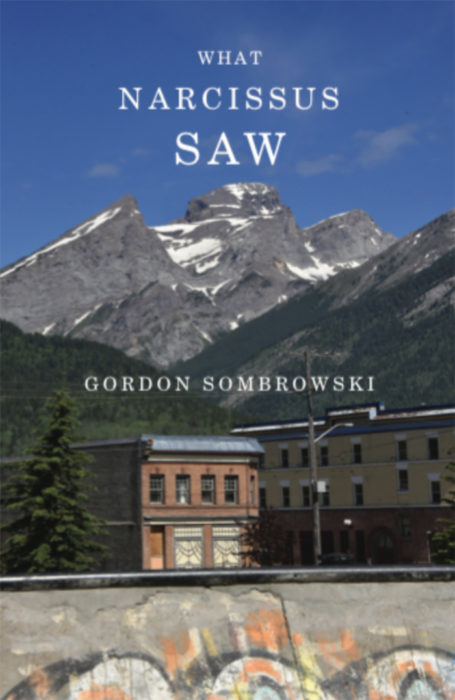
“Necessary” is a word that gets taken off the shelf often enough in book reviews that it has, according to recent social media memes, become meaningless. If true, then I’m going to reach for a few other words, and insist that William George Lindsay’s Rez Dog Blues is essential, needed, indispensable, crucial and vital.
And yet, I’m going to return to necessary. Because, as a reader, a writer and a great-granddaughter of Mennonite settlers of the Canadian Prairies, Rez Dog Blues is a necessary thorn. A thorn that I hope is allowed to prick the consciences, especially, of others like me.
In the quest for Truth and Reconciliation in Canada, Rez Dog Blues is truth. Fictional, yes. But fiction is often where great truths are told. And yet, there are a multitude of other reasons to sift these pages into our collective consciousness.
There is literary beauty and anguish in this prose, brought to us through first person protagonist Liam, a Cree teenager living on the West Coast.
The son of a Residential School Survivor, Liam is marked by the extensive generational scarring that accompanies such an inheritance. Liam’s scars have toughened him, to be sure. But they also make him compassionate and restless for more than a short and tragic “Indian” life. A life that asks, “What kind of society enables such behavior. Or causes it?” while recounting babies that sip whiskey from Pooh Bear sippy cups, and “kids doing unspeakable things to kids.”
And yet, even in this modern-day apocalyptic environment, born of both cultural and physical genocide, there are hands that reach out to catch Liam. Aunties on the Reservation, especially, are a saving grace. As are certain traditions that the author shows especially well through food. Importantly, certain teachers also help Liam believe in his own potential.
As much reverence as I have for Rez Dog, Author to author, I humbly suggest that, rather than a novel made of Liam’s journal, this novel might be further strengthened if were instead the eventual memoir to which Liam alludes throughout.
In past reviews, I’ve also suggested to writers that a preface, apologizing in advance for certain language and attitudes, doesn’t actually cover concerns nearly so well as engaging with literary technique within the prose itself. Young women, for example, are sometimes portrayed here as sexual exploits rather than fully human, when Liam has more than enough empathy as a pov character to clothe them in humanity beyond mere flesh. This would also serve to deepen Liam, already a compelling character.
And yet, I ask readers to take William George Lindsay at his foreword. To pick up this book and share it widely with others. To continue reading and engaging with stories by Canada’s First Nations authors. To read this and other Truth and allow it to be a catalyst for ongoing Reconciliation.
Finalist : What Narcissus Saw by Gordon Sombrowski

Too few men seem able to write women well. Fewer still able to clothe us in multiple dimensions, delving into the complexity and diversity of our inner worlds. This makes Gordon Sombrowski a rarity among men who write, and one who is much appreciated by this reviewer.
With Sombrowski’s short stories, set entirely in the mountain resort town of Fernie, What Narcissus Saw opens this collection on Christmas Day with “In First Tracks.” A young man, Matt, who’s raison d’etre thus far is to ski and party through the winter, and perhaps his entire life, wakes up in the morning and steps over the near-comatose bodies of his house mates. He takes a morning walk. Outside, Matt stops to shovel the walk of an elderly woman who invites him inside for hot chocolate. This is real hot chocolate, served from a silver chocolate pot. Not only that, but it is served by a real person with a real story. And as stories do, the woman’s telling awakens a longing in Matt for a deeper existence.
In “Prelude and Fugue,” a piano teacher with a gifted student and a less-than-ordinary son, listens to beautiful music. And “[t]hus [begins] the little tear in the blanket of her love for her son.”
“A Wendy” is infuriating in its understanding of how a wildly successful woman can let a lesser man chip away at her identity, time and worth until she’s in danger of letting herself be irreparably reduced to his level.
There are few stories in this collection feel in need of further development. For “Risk,” one of my most repeated pieces of advice comes to mind: Each character in a story should make the reader love to love, love to hate, or hate to love them. Straight up disliking an assortment of characters in a narrative makes for an unrewarding read (even if intended), as it usually indicates single dimensionality and repetitive character traits.
And yet, bookending this collection is “Friends.” Once again, Sombrowski shows his empathic gifts. In this is a deeply moving portrait of new companionship between a widow who attends to a friend as she dies, and the young trans woman who is her friend’s nurse.
“Violet felt a tuning fork of vibration touch her fingers, and from there, the frequency spread throughout her body so that when it reached her ears, they felt flooded by a choral sonorousness.”
Such is the power of a single touch. Also, as it turns out, a single story.
Darcie Friesen Hossack is a graduate of the Humber School for Writers. Her short story collection, Mennonites Don’t Dance (Thistledown Press), was a runner-up for the Danuta Gleed Award, shortlisted for the Commonwealth Writers Prize and the Ontario Library Association’s Forest of Reading Evergreen Award for Adult Fiction. Citing irreverence, the book was banned by the LA Crete Public Library in Northern Alberta. Having mentored with Giller finalists Sandra Birdsell (The Russlander) and Gail Anderson Dargatz (Spawning Grounds, The Cure for Death by Lightning), Darcie is represented by Rob Firing at Transatlantic Agency. Her first novel, Stillwater, will be published by Tidewater Press in Spring 2023. Darcie is also a six time judge of the Whistler Independent Book Awards. She lives in Southern Ontario, Canada, with her husband, an international award winning chef.
Darcie is the managing editor of WordCity Literary Journal.

Iran needs us, we need Iranian women
To Masha Amini and all women martyrs of the fight for freedom
“Women’s rights are human rights!” she gasps before
everything goes blue. “A dream I’m finally dreaming,” she thinks.
Blue girls and women walk, dance, whirl on the streets of Tehran,
throw their hijabs into the air,
their long blue hair raining down fire and burning sulfur
onto the walls of Evin prison, the Persian Bastille collapses,
their liberated laughter turning godless women’s guardians and state enforcers
into pillars of salt.
Whirling mothers, daughters, wives, and sisters refract joy,
female love to God’s love, life to life, freedom to freedom.
“Killing women is killing the human species,” she gasps
before everything goes dark, the world at a standstill.
Crushed breasts ooze blood instead of colostrum,
bees make venom instead of honey, suicidal seraphs smash themselves
into the bulletproof golden-rimmed windows of
dictators and forgers of religions
who turn profit from hunger and death.
“Say her name!” she hears in the darkness,
millions of all ages, races, and religions respond, chanting her name,
pulling her back
into the light.
NOTE: As one of the Romanians who faced the bullets, marching on the streets during our anti-communist revolution in 1989 and as a woman, I’m enraged about the death of Masha Amini on the hands of police and the imprisonment of innocent protestors, women, and children. This is my humble tribute to her and to all the martyrs of the fight for freedom. I pray Iranians will finally earn back their liberty!
Bucharest-born Diana Manole immigrated in 2000 and is now identifying herself as a proudly hyphenated Romanian Canadian scholar, writer, and literary translator. She holds a PhD from the University of Toronto and has been teaching at Canadian universities since 2006. In her home country, Diana has published nine creative writing books and earned 14 literary awards. The winner of the 2020 Very Small Verse Contest of the League of Canadian Poets, her recent poetry was published in English and/or in translation in the UK, the US, Belarus, Mexico, Brazil, South Africa, Turkey, Albania, China, France, Spain, Romania, and Canada. Her seventh poetry book, Praying to a Landed-Immigrant God, is forthcoming in a dual-language English and Romanian edition from Grey Borders Books.
WordCity Literary Journal is provided free to readers from all around the world, and there is no cost to writers submitting their work. Substantial time and expertise goes into each issue, and if you would like to contribute to those efforts, and the costs associated with maintaining this site, we thank you for your support.
Choose an amount
Or enter a custom amount
Your contribution is appreciated.
DonateDonate monthlyDonate yearly