The Shipbuilder and his Daughter. A poem by Lorraine Gibson

This image has an empty alt attribute; its file name is lorraine-gibson.jpeg-1.jpg

The Shipbuilder and his Daughter
 His blood froze in a Scottish winter. His daughter danced unknowing
 in a land of southern summers. Alone in his chair, Buttons the cat 
  
 stretched out along his thigh, it’s said he did not feel that mighty brain tide
 pound its damage. Her ‘Hi Dad’ phone-call rings unanswered in the empty flat
  
 as he lies waiting for his glacial earthen bed. Icy clay fleshed open
 by a clawing digger. Buttons, with no viable lodgings is sent to join him. 
  
 Shipbuilder mates peppered against arctic hulls sing their rivets out
 across an ancient Caledonia. Tall cranes branch out over the working river 
  
 hydraulic willows — weeping out bitter scour. Grief hails
 from a distance. It comes it floods across ten thousand miles.

Return to Journal

Lorraine Gibson is an Anthropologist, painter, and more recently a writer of poetry. She was born in Glasgow, Scotland, and has called Australia home for many decades. Lorraine holds a PhD. in Socio-cultural Anthropology from Macquarie University, Sydney, Australia. Her writing is published in academic journals, magazines and books, including:  Gibson. L. 2013. ‘We Don’t Do Dots: Aboriginal Art and Culture in Wilcannia, New South Wales’. Canon Pyon: Sean Kingston Publishing.

Bless Us Lord for the Sin-Free Life We Are Living. A poem by Megha Sood

This image has an empty alt attribute; its file name is meghasood.jpg

Bless Us Lord for the Sin-Free Life We Are Living
 First Published in “Lift Your Voice”, Kissing Dynamite, Oct 2019
  
 I stare with my gaping mouth
 mock and revere
 at this whimsical reality
 eyes rolling in disbelief
 head bowed in silence
 knees scraping at the pew
 to absolve my sins
  
 We only bow down to the fear of the unknown
 the fear of being punished
 by an exalted God in heaven
 carved in our faith
 surviving generation
 through reams of yellow-tinged holy scriptures
  
 Surrounded by a million slithering tongues and roving eyes
 flooded by the shining spotlight
 waiting for it to become a trend
 to become a sensation,
 for the ignorant minds to be aware
 of the writhing pain
 it has to catch fire and burn.
  
 Leaving marks on our suppurating skin
 seething with blisters in pain of losing
 a loved one,
 a life,
 a country,
 an identity.
  
 It takes a million to march and protest on the roads
 the sun scratching their faces
 burnt and scathed by the injustice
 screaming in silence--
 gutted like a fish in the open streets
 thick blood staining the curbside
 Of the lands we boisterously own
  
 The nakedness of humanity
 staring in the gaping hole in his chest
 shot in the broad daylight
 in the middle of the goddamn market
  
 We turn our eyes in shame
 moves our heads in disbelief
 and thank our gods in heaven
 to spare our loved ones
 the ones we love--
 the ones we really care
  
 We move with our twisted spine
 towards the house of gods
 to worship the one sitting in heaven
 to suck away all our pain
 and bless us with the sin-free life 
 we desire---a life in vain.

Return to Journal

Megha Sood is a New Jersey-based award-winning poet, editor, and blogger. She is an Assistant Poetry Editor for the UK-based Arts and Literary Journal MookyChick, Literary Partner in the “Life in Quarantine” Project by Stanford University, USA, and Associate Editor with Literary Journal “Life and Legends”. She is the author of a chapbook (“A Potpourri of Emotions”, Local Gems Press, NY). Her 500+ works have been featured internationally in literary journals, magazines, anthologies, newspapers, podcasts like Rising Phoenix Review, SONKU, Better than Starbucks, Poetry Society of New York, WNYC Studios, HUDSON Reporter, Kissing Dynamite, American Writers Review, Dime show review, Rainbow Project among others where she received her Pushcart 2020 Nomination. Megha is a Three-time NAMI NJ State Level Poetry Contest 2018/2019/2020 winner and National Level Spring Robinson Lit Prize 2020 winner. Shortlisted in Pangolin Poetry Prize 2019(USA), Adelaide Literary Award 2019 (USA), Erbacce Prize 2020(UK), iWomanGlobalAwards 2020(India), TWIBB Beyond Black Sakhi Awards 2020(USA), Poetry Super Highway 2020(USA). Her works have been selected numerous times by the Jersey City Writers Group and the Department of Cultural Affairs for the Arts House Festival. Chosen twice as the international panelist for the Jersey City Theater Center Online Series “Voices Around the World”.She co-edited anthologies (“The Medusa Project”, Mookychick) and ( “The Kali Project”, Indie Blu(e) Press). She blogs at https://meghasworldsite.wordpress.com/ and tweets at @meghasood16.

Sue Burge Introduces Hazel Press

This month I managed to pin down the trailblazing energy of Daphne Astor.

Daphne, you did something extraordinary in 2020!  You set up a new independent publishing press, Hazel Press. This seems such a brave thing to do in the middle of a pandemic with the world locking down around us.  I know you are a farmer and conservationist as well as a poet/writer and artist.  I gather the idea to create a new press came to you while you were digging!  Could you tell us more?

Setting up a press is a lot like digging and preparing the ground for planting, gathering seeds, designing the space, sniffing the air – at least that is how Hazel Press got going. I had been thinking about creating a press for years and throughout my life have been involved in many and various ways with making, growing, nurturing land and life as well as engaging with books, writers and artists.

I can’t even begin to imagine how you might get started on such a venture! What skills from former roles helped you to create the Press?

There are a few helpful roles that have endured since childhood and the most important has been keeping a journal/sketchbook/field notes since I was ten years old, basically making private books. And reading, I am addicted to reading!

Another is from the early 1970’s in NYC when I studied graphic design with Milton Glaser. He taught us to train and trust our instincts and to devote our lives to work in realms we love. Glaser believed in apprenticeship, collaboration and attention to detail, his four H’s were – hard work, humility, happiness, Helvetica. All wise lessons for life itself and embodied in the process of setting up Hazel. Perhaps this press is my fifth H?

I love the idea of the four Hs, that’s brilliant!  I know that the eco friendliness of the press was hugely important to you.  How easy was it to bring the ethical aspects of the press to fruition?

A central concern and rule for Hazel is to create books that have very light or positive environmental impacts including the process of creation, sourcing, shipping and use of materials. ‘Work local, think global’ is a useful motto.

Hazel’s office and origins are in my studio/study at home in East Anglia, (UK) production and design are local. I embarked on a few months of research online or by telephone and after many false starts discovered Anglia Print Ltd based in Beccles, Suffolk where director John Popely prints with vegetable dye ink, UK recycled paper (less resource material miles), his printing presses and processes are carbon positive. Hazel’s book designer Dale Tomlinson is in Cambridge and was suggested by my close friend Lida Kindersley. The font is Mrs Eaves invented by Zuzana Licko in the UK in 1996. Director and resident artist of North London art space C4RD Phil Goss’s art graces each of Hazel’s covers.

We launched online with four films by Eileen Haring Woods at the Cambridge Literary Festival last November and thanks to CLF the London Review of Books (LRB) Bookshop in London still sells our books as does The Aldeburgh Bookshop along with a few other indy bookshops. We also sell directly from our website and send the books from a small local Post Office in recycled envelopes and reused bubble bags and boxes collected by family and friends over many months. I am at the heart of Hazel Press, but the books are absolutely a collaborative and shared effort.


A fascinating insight into the process of getting the initial set-up going.  Hazel Press has brought out four inaugural books.  They are all very different.  Could you say a little about the selection process and why these four books felt important in terms of launching the press?

A friend referred to the inaugural Hazel books as ‘the quartet’ which feels right as they sit well together in terms of intention, content and design.  Each of the books reflect different facets of the prism of our credo as stated on our website ‘ Hazel Press is an independent publisher with a focus on the environment, the realities of climate change, feminism and the arts’.

I chose each writer because I knew and respected their work. I wanted to work with each of them and felt that they would be right for Hazel.

I first read Ella Duffy’s work in my role as patron to the Ginkgo Poetry Prize and invited her to perform at Poetry in Aldeburgh where we briefly met once. Early last year, I invited her to write something for Hazel, Rootstalk is the result and what a remarkable, accomplished and intoxicating poem it is. At first reading it took my breath away, lifted me out of time and into the loamy earth, mythology, botany, love, absence, mystery. Book One for Hazel.

Matthew Hollis, originally a Norfolk fellow, was one of my teachers at Faber Academy many years ago. He shared his own writing process with the class showing us cascading typed pages – many versions of each poem – redrafts, radical form changes, scrawled notes, explanations, references etc. That session was brave, thrilling, later I bought and treasured Stones his six-part single poem hand-sewn pamphlet carefully produced by Incline Press. I asked Matthew if he had something on the go, or if he would write a long poem for us. He gave Hazel Leaves, a profoundly moving poem about the perpetual choreography of autumn, a father and daughter, the five elements, time and balance. Hazel Book two.

I began to feel more confident about Hazel and to think about the four seasons, the farming calendar, four points of the compass and balancing Hazel’s debut with two female and two male poets. Also rather superstitiously about my birthday, the 22 December, two twos. Sometimes it falls on the winter solstice, other years the day after, but always on the day when light begins to return.

Next I contacted Sean Borodale whose poetry, especially Bee Journal and Human Work, are volumes I return to again and again. He responded that he had an essay about Sylvia Plath and would I like to read it? I read Re-Dreaming Sylvia Plath as a Queen Bee and found an illuminating and complex new path into Plath’s life, family context and writing. I always planned to publish essays and other forms alongside poetry so Sean’s Re-Dreaming was a compelling definite yes. Book Three.

In the autumn of 2019 poet and naturalist Anna Selby had invited me to attend an international conference about the endangered situation of salmon titled ‘The Science and Poetry of Salmon’ run by Cambridge Conservation Initiative and Pembroke College – Ted Hughes’s old college. We had met previously a few times at Poetry in Aldeburgh, I had heard Anna read one or two poems there in 2016, but we had never spent any time together. In honour of salmon we shared three days sitting side by side learning, listening and despairing about the plight and extremely tragic lives of salmon worldwide after which I invited Anna to do a residency here in a cottage at our farm sometime in the summer of 2020.

Around 12 March, Anna began her residency here early, as the spectre of Covid and lockdown were beginning to seem inevitable. I was still working on Hazel alone and had already asked her the previous year if we could publish Field Notes, which is a series of poems written over three years, mostly underwater in real time in pencil on waterproof notebooks. The poetry is simultaneously brave, compassionate and absolutely not anthropomorphic. Anna explores aquatic species and their environments with a naturalist’s sensibility, a poet’s gaze and pulse. Anna is still here on an extended residency, advises Hazel as a Consultant and Field Notes completed the 2020 Hazel quartet.

These are wonderful choices Daphne and the books are so beautiful to hold in the hand, slim and subtle works of art.  As a keen cold water swimmer, I was delighted to discover that Anna Selby actually writes while underwater – extraordinary!  So, what’s the gameplan now the first four books are out in the world?

In those early months while working alone I planned the first five years for hard copy books by Hazel Press. Since then we have established a website with various capacities to engage with online writing, a blog, direct sales and we hope to embrace many other online possibilities in the future. My youngest daughter Ella Astor has been essential for Hazel as she is skilled in digital work.

How do you see the future of poetry publishing?  Do you think the smaller presses are finding more of a voice and a place at the moment?

Poetry publishing seems to be healthy in the UK, there are many independent presses I admire, read and buy from. Poetry is an art that thrives online, as e-books and magazines and readings.  I also respect and learn from established publishers. Page, stage, radio and screen all are of interest and are arenas that Hazel has engaged with, we look forward to participating in live poetry events when they are again possible. Different mediums fit different kinds of poetry and we are happily in communication with, and selling to, people all around the world. As one of many small presses I feel Hazel has the pleasure and freedom to be nimble and experimental but making books is an expensive and time-consuming process that needs support, engagement and encouragement from readers.

You are very involved with the big picture both in terms of the poetry world and environmental concerns.  Could you tell us a little more about what you have been involved with in recent years and how you are taking your concerns forward?

The environmental crisis and situation have been evident for many decades, people know what is happening, feel concerned and yet we find it difficult to change our personal behaviour to live more sustainably. I am no expert but do know that the first steps towards change always rest on our own shoulders and would encourage everyone to make changes in their lives in support of the environment and common good.

The initial responsibilities are to inform ourselves, reduce our carbon footprints and find like-minded people to enjoy that journey with. Shop locally, fly and drive less, if you are in the countryside stay on footpaths and keep your dogs on leashes so that ground nesting birds can breed and wildlife is not disturbed – basic stuff. These simple things can all be seen as versions of informed respect for the planet and many, many people are already living with these ideas and taking action.

Finally, as a writer and a farmer, how influenced/inspired are you by farming and the farming year in terms of what you write?  Do you write to escape the day-job or does it seep into your writing? 

The rhythm of the farming year is a melody that affects all of us because it is a pattern in harmony with the seasons. As I type, here in January buds are growing on trees, the early snowdrops have appeared, we are planning vegetable gardens, seeing the first peach colouring on distant willows, sweet nettles and wild garlic abound, in darkness foxes are barking for mates, other mammals are pairing up and migrating birds are restless.

Everything is in some sense collaborative so when you eat a piece of toast spare a thought for how it came to be in your hand, all the people from farmers to bakers at all stages who contributed to that bite you’re about to enjoy…and read something while you are chewing. This farming year will be more complicated than most as Brexit and Covid will impact everything for birds, beasts, fish, insects, plants and humans. We will all do our best and next November Hazel Press will produce another quartet, maybe a quintet, after our 2021 poetry is gathered in and printed.

Thank you so much Daphne, this is a masterclass in how to set up a small press and so much more besides.  WorldCity wishes you all the best for the future of this important new voice in the publishing world!

Daphne Astor is an American-born British environmentalist and farmer working with literary and visual arts organisations in the UK since 1977. In 2016 she founded and curated Poetry in Aldeburgh, she is currently chairperson of C4RD and was a long-term trustee of the Poetry School. Her poetry has appeared in several anthologies and magazines including Magma, Finished Creatures, Edgewise and Coast to Coast to Coast. She recently became publisher and editor of Hazel Press.

Go here for more information on Hazel Press:   https://hazelpress.co.uk/

Return to Journal

Ava Homa Speaks to Sue Burge about The Why of Writing

This month’s writing advice is a little different.  Ava Homa’s brilliant, insightful and disturbing novel “Daughters of Smoke and Fire” is a must-read.  I found it unbearably moving and thought-provoking.  I read it in small snatches, breathing and pacing in between my readings, drawn back, compulsively to the next chapter and the next and the next.  It was gripping, elemental, absorbing and just would not let me go!  Below she writes about why she writes and this is of huge importance to all of us as writers.  We need to be engaged, passionate, motivated and know the why of it!

The Why of Writing – Ava Homa

Ava Homa

Before I discovered why I write, I couldn’t stomach all the rejection and racism I faced as a minority woman writing in my third language. Nowadays, however, gatekeepers don’t dishearten me too much. My lifework stands at the empowering intersection of literature and activism, my goal to evoke compassion and convert it into action. I believe in the power of storytelling to expand our understanding of each other. With some guidance from activists, the extension of our horizon can transform into action, into standing up for justice and inclusion, into casting ballots while keeping more than one’s limited interests in mind.

For a decade, I put blood and sweat into crafting my debut novel Daughters of Smoke and Fire (HarperCollins, 2020) to tell a powerful story that instead of reproducing best-selling tales, sheds light on the stakes faced by 40 million stateless Kurds, and to offer my readers a chance at expanding their hearts. My book is my attempt at giving back to the literary world that has offered a stateless, exiled migrant like me both shelter and purpose.

While writing an underrepresented nation into literature in English, I constantly thought about the complexities of the human condition. We are one race and we share universal experiences. That’s why fiction is enriching; it allows us to excavate ourselves by understanding others, seeing our pain and strength reflected in them, catching glimpses of the oneness. But the other side of this truth is that the accident of birth can easily and cruelly rob one of the taken-for-granted reality. Are you fully human when your country treats you as a subhuman? Think about Blacks in America, women in Iran, Kurds in Turkey, Indigenous people in Australia and North America, and more.

Oppressors dehumanize the disenfranchised and those who fight back are severely punished. Countless thousands of dissidents and intellectuals have been hanged or are languishing on death rows in Iran and around the world, subject to physical and psychological tortures, going through each horrible day in brutal conditions that have only worsened during the pandemic. The Kurdish Obama Selahattin Demirtaş has been behind the bars in Turkey for four years despite international demands for his release. Zahra Mohammadi was sentenced to a decade in prison in Iran simply for teaching her suppressed mother tongue. I narrowly escaped incarceration while working as a journalist in Iran. Difficult realities of my life have given me innumerable barriers to writing but also strong reasons to persevere.

I came of age in Kurdistan Province of Iran with the knowledge that, on one hand, I belong to the “unpeople,” and on the other hand, I am being subversive for merely breathing despite all the attempts at our annihilation. Ever since the end of World War I, when the allies promised Kurds a country and later denied it for their colonial interests, we have been under attack by four atrocious states that have perceived us as threats to be annihilated, never humans. From the 1937–1938 Dersim Massacre at the hands of the Turkish government, Saddam Hussein’s 1986–1988 Anfal Genocide in Iraq, the ethnic massacre in Syria, and the ongoing executions in Iran.

Kurdish women have survived national chauvinism of the ruling states, male chauvinism, misogyny of Islamic groups, ongoing war, and poverty. That’s why Kurdish women are at once among the most oppressed and the strongest women on earth. We fight ethnic subjugation alongside our men and patriarchy alone. We are the liberated women who defeated ISIS and the kidnapped women sold in ISIS markets as sex slaves. I have worked with exceptionally brave feminists and with devastated survivors of attempted suicide. I write about both groups of women and my protagonist in Daughters of Smoke and Fire is a survivor who blossoms into an artist, traversing the entire spectrum of womanhood and minority.

Therefore, writing is existential for me; it’s playing my part at eradicating voicelessness. My writing is my rebirth and resistance, it’s reversing the ongoing dehumanization. Knowing why I write has kept me going despite all the hardships, including the release of my debut into a pandemic. So, next time you face rejection, writing block, economic challenges of being a writer, ignorant comment of a neighbor or colleague, just remind yourself why you write. Let your reasoning to grow with you.

DaughtersOfSmokeAndFire

Return to Journal

Ava Homa is the critically-acclaimed author of DAUGHTERS OF SMOKE AND FIRE, an activist and a journalist. She holds an MA in English and Creative Writing from the University of Windsor. Her collection of short stories, Echoes from the Other Land, was nominated for the Frank O’Connor International Prize, and she is the inaugural recipient of the PEN Canada-Humber College Writers-In-Exile Scholarship. You can connect with her at www.AvaHoma.com

WordCity Book Reviews

Two Reviews by Tina S. Beier

34705827. sx318

This novel is wonderful. It has the perfect blend of historical detail, emotional depth, and action/intrigue.

The novel is set in the mid-1500s, on the island of Malta, during military aggression between the Ottoman Empire and the Knights of St John. The story features some battle scenes but mainly follows the life of two siblings (Domenicus and Katrina), who are well-off peasants who live in Malta. There are also some chapters devoted to Demir, a young boy living in Istanbul under a powerful and tyrannical father.

As much as the battle scenes are exciting and uncensored for violence, the regular life of the two siblings is the most fascinating part of the novel, as we are shown in detail how “regular” people lived in that time period. We are exposed to how they are socially constrained (in terms of gender roles and class) by the Order of Knights and physically threatened by raiding pirates and the Turkish invaders. Yet, the Turks are not vilified – both cultures are shown to be suffering from militant ideology and corruption.

What I particularly enjoyed was how the female characters were given as much attention and depth as the male ones. How the different women defied or adhered to the extreme patriarchy they are forced to exist in was realistic and relatable. The male characters were well-developed and likable, even the tormented Franco.

There is just enough exposition of the culture, landscape, and historical data to paint a vivid picture but not enough to get boring. I couldn’t put it down.

54118216. sy475

While Eight Pointed Cross takes a little to get going, as it has to acclimatize the reader to the time period and the characters, Falcon’s Shadow begins with a punch that leaves you breathless. The most horrific part about the treatment of prisoners in the 1500s is the fact that it actually happened. It’s a stark reminder of why human rights are something we shouldn’t take for granted, even today.

As with its predecessor, Falcon’s Shadow is clearly painstakingly researched. Every little detail feels authentic and Fenech does not shy away from the gory details of life before sanitation.

Part of what makes it feel so real is the dialogue. Unlike a lot of historical fiction that employs a formal speech pattern to suggest antiquity, this trilogy allows its characters to talk in a way that balances anachronism with realism. It’s extremely compelling.

Fenech excels at a number of different narrative facets, but for me, I was particularly engrossed by three aspects:

First, how she’s able to disarm not only the characters but the reader, about other characters’ true intentions. We’re given a limited perspective into five or six characters throughout the series. This leaves us able to understand and empathize with their actions, but we are given only small glimpses into other characters. This is done particularly well with Diana, a minor character who has a major impact.

Second, the battle scenes are utterly engrossing. I don’t read a ton of historical fiction, but I read a lot of fantasy. Fenech’s action is comparable to Steven Ericson or Joe Abercrombie. In fact, despite the story being wholly rooted in realism, I think military fantasy readers would also enjoy this novel as well as military history buffs.

Third, there is a deep critique of systematic power structures that rely on racism and sexism to cement control. This is seen with all the characters, but most viscerally by the heartbreaking way a character is treated after being manipulated by another character simply out of spite. Her sections were utterly frustrating with regard to female agency and bodily autonomy, even more so because treatment of similar nature still happens today. Only in a few countries today are women fully in control of their own bodies. This makes the general critique of these ancient, yet still existing, institutions all the more poignant.

I could go on further, but I’d be branching into spoilers. If you enjoy impressively researched history, realistic characters for whom you root and despair, and a story that dries out your eyes from compulsive reading, get Falcon’s Shadow.

Review by Darcie Friesen Hossack

Pilgrims of Zame: A Collection of Hybrid Narratives by [Mbizo Chirasha]

In Pilgrims of Zane: A Collection of Hybrid Narratives, Mbizo Chirasha first takes the reader to Zimbabwe for a spiritual celebration, to which the congregants bring their supplication for rain.

Here, millet beer flows freely and wafts the aroma of bread. “Men [sit] on leopard skin mats and women [sit] on sheepskin.” Nuns dance with a dignity that is written into the variety of the shapes of their creation.

Today, as I read and write about Chirasha’s narratives, my desk looks out onto a cold and wintry Canadian scene. Our places on this earth couldn’t be more different. And yet, the writer, the poet, the griot from Zimbabwe moves a mighty pen as he brings the warmth of his country all the way here, to the Northern Rocky Mountains of my home.

This—bridging the space between continents—is one of Chirasha’s many gifts.

In “Letters to God,” he reveals the poetic soul of an environmentalist as he writes:

“When the red glow of heat persisted like in hell. Silence and barrenness are weaved together onto red earth. While rivers become white washed skeletons of dry sand. Elders spoke in tongues to the wind… They are told to wash their feet and dance to Gods. They were punished for replacing forests with concrete jungles. Birds and spirits of the land were now vagabonds. They are told the earth is simmering in abomination and Gods are angry and choked with carbon laced fumes. They are warned of the coming of devil’s triplets: hunger, heat waves and cyclones. They paid their ornaments, applauded the gods and returned to their hovels underneath the fringes of Zvagona hills.

But it is not the poverty-stricken here, the ones housed in hovels, who are to blame, and we see the unfairness of the gods’ judgement on those who only ask for rain.

And then the rain comes.

“Midnight City,” finds the author “Downtown under the old bridge, [where] (d)elinquent boys, serial drunks, life rejects and diehard ex-convicts [ease] their bones after a day’s hunt of food in rubbish jungles. Today their dinner is a dozen of expired tins of beef and a crate of burnt bread crumbs.

“A lucrative dinner.”

Here, seediness and disease, drugs, prostitution and rape are driven by poverty and corruption. Because “(h)ere is where political players deposit the country’s future in pink bras. Mugs of cheap whisky castrate city leaders into useless imbeciles.”

In Pilgrims of Zame, celebration and violence erupt on the same page:

“[The] new year boomed to life with cheap firecrackers, sparking the heavens open for blessings. The faint scent of Christmas had vanished, long since fading into the burning heat. The latest music vibrated the entire village. We enjoyed so many assorted meats, their tastes were all as one in our mouths. Fanta and Coca Cola drinks soaked our okra-hardened bellies. We ate English and drank American that day…

“Yes, our joyful morning went by with its gossip-beat; the afternoon elapsed with sweet odors of roasted meat and sunset shadows, and then, the once-silent Mandoza took over our night by spewing gunshots, death threats, and insults.”

Celebration and violence are hand-in-glove in this collection. And through it, like an aroma permeating its pages, we discover the author’s love for his country, as infused into these stories as the scent of roasting meat.

Review by Marthese Fenech

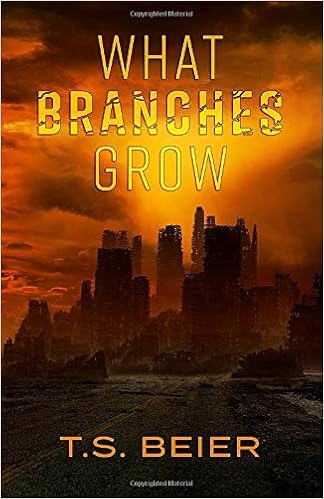
This image has an empty alt attribute; its file name is 41z+p-sBI+L._SX322_BO1,204,203,200_.jpg

What Braches Grow: a literary adrenaline rush

What Branches Grow pulls you into its vortex of action, spins you around and around (in the best possible way), and does not release you until you have read its beautiful final lines.

T.S. Beier applies a deft hand to the crafting of this Post-Apocalyptic tale and showcases a depth of perception when it comes to the human condition, human nature, and the human spirit. She manages to weave an elaborate plot brimming with tragedy but always offers just enough humour to balance the pathos.

Central characters Gennero and Delia are layered, fleshed-out characters whose personal struggles, sorrows, and triumphs carry What Branches Grow to its stunning conclusion. Readers will connect with these two individuals, root for them, suffer their hardships, and cheer their victories. Both characters undergo incredible arcs as a result of separate and joint experiences that transform them and force realizations that are often borne of shared trauma.

As a dog lover myself, I particularly enjoyed Beier’s treatment of Mort, the pug, a source of much-needed comic relief. I found myself laughing out loud—then remembering lines throughout the day and giggling to myself. Multifaceted protagonists Perth and Carn had the same effect while also inspiring empathy and affection from readers as they cope with the relentless challenges throw their way.

Her world-building is exceptional, making it easy to visualize the different towns, the barren landscapes, the night sky, the empty roads.

What Branches Grow is unflinching, exciting, and moving. You will tear up. You will laugh. And you will hope for a sequel.

Return to Journal

Leonard Cohen and Robert Fulford. An Essay by Gordon Phinn

GordonPhinnPhoto

Leonard Cohen and Robert Fulford

Leonard Cohen, Untold Stories: The Early Years by Michael Posner (Simon&Shuster, 2020)

Matters Of Vital Interest: A Forty-Year Friendship with Leonard Cohen  by Eric Lerner (DaCapo Press 2018)

Leonard Cohen: A Woodcut Biography by George A. Walker (Firefly Books 2020)

A Life In Paragraphs: Essays by Robert Fulford (Optimum Publishing 2020)

I first heard of Leonard Cohen while still living as a teenager in Scotland. His Sisters Of Mercy was played on my favourite radio show, Top Gear, and the disc jockey, John Peel, raved about waking up after an all-night gig, hearing the song for the first time, and feeling like he was waking up on another planet. It struck me immediately as beautiful in some mysterious unearthly fashion, maybe only similar in tone to some Simon and Garfunkel songs. You haven’t heard much when you’re fifteen.

Settling in Canada a couple of years later and adjusting to my new life in high school and then college, the beauties of his ballads had much more to compete with in the flush of great musical innovation then washing over the airwaves. Cohen’s Selected Poems seemed to be on every second bookshelf, and at various get-togethers I would sit to browse its pages. Often, one or other attendee tried the complex finger picking patterns behind the hypnotic melodies.

As the cultural bubble of my generation slowly expanded, my reading of his novels The Favourite Game and Beautiful Losers merged with the newer albums and earlier poetry books to form the beginnings of an oeuvre I found by turns fascinating and repellent. The sour taste left by the sword thrusts of The Energy Of Slaves (1972) shocked me with its bitter self-recriminations. Apparently, we were welcome to call him Len or Lennie now. It seemed, as he sang in Songs Of Love and Hate, that there were “no more diamonds in the mine,” and yet at the same time, on the same album, he sang that “love calls you by your name.” Such radical contradictions suffused his vision for decades.

The long career trajectory, from obscurity to cult fame to obscurity to world wide fandom, is well known by now. Interviews, articles, films, and at least two responsible biographies have provided us with many fascinating sketches of the riddles that made up his life—riddles that are being gradually embellished with a wealth of detail. Many of those details are present in Michael Posner’s oral biography, Leonard Cohen, Untold Stories: The Early Years.  The first of three volumes, which is just short of 500 pages, promises a trilogy of around 1,500. I don’t know about you, but I say, Wow!

Many of Cohen’s childhood friends, girlfriends, fellow writers, musical colleagues, and collaborators are quoted at length, often contradicting each other’s memories. It’s a charming complexity that Posner wisely refuses to smooth out with invisible edits, leaving us with an exhilaratingly bumpy ride as it meanders through childhood, summer camp, college, mid-sixties Montreal bohemianism, the paradise imbibers of Hydra, and the daring plunge into the New York music scene. We remember him well at that Chelsea Hotel even if we don’t think of him often.

Here is John Simon (producer of his first album): “I suggested we go to my parents’ house to go over the material. Leonard stayed up all night going through my dad’s library. I slept, he didn’t. He was a man, while other rock acts I worked with were boys. An established poet, real bright and clever with words. Had that finger picking triplet style, very impressive, sort of classical.”

Barrie Wexler (friend): “Leonard really understood the psychic glue that is Hydra. Call it magic, call it fairy dust—when you step away it dissipates. Love born on Hydra doesn’t travel.”

Leonard Cohen (on Birdland, a short lived Montreal jazz club, circa ’59): “I’d come on at midnight and improvise while Murray Kaye played piano, sometimes by himself and sometimes subdued arrangements of tunes, while I did my own riffs or set pieces like something from Let us Compare Mythologies.”

Seymour Mayne: (writer/friend) “For the Anglophone culture in Montreal, which had been very vigorous, French nationalism was a challenge. For younger Jews, who began to leave, it seemed to be a form of the nationalism that had oppressed Jews in Eastern Europe.”

Alexis Bolens: (Hydra friend): “I was standing close to him on the terrace when somebody said they’d dropped a tablet of LSD on the floor. Leonard immediately went down on his hands and knees, poking under the legs of tables, and other guests, tying to find the acid.  You’d have thought someone had lost a diamond earring.”

Julie Felix (folk singer): “I said, I can’t get into my place, and he said, ‘You can stay here.’  He had this tiny house with a great big double bed. Worried, I left my clothes on and hugged the side of the bed. He was very respectful. Next morning, with the window open, he was typing Beauty At Close Quarters when a gust of wind blew all the pages out into the street.  We ran out chasing them. I would have been upset but Leonard was laughing as we went running up and down.”

The above selection gives only hints of the depths explored in this first third of the opus. Even if you have perused the previous biographies, as I myself have, you will be impressed by the deep catch of Posner’s fishing expedition. It’s as fine an oral biography as I have had the pleasure to read.

As we await the later volumes, you might take some time to examine Eric Lerner’s 2018 memoir, Matters Of Vital Interest, commemorating his forty-year friendship with the poet, mostly from the era of that famed bungalow in LA, and the devotion to Roshi, the Zen master on nearby Mount Baldi. Very much a guy book, with a little too much boys-will-be-boys locker room talk for my taste, it does get quite real as both men age into infirmity and admit their failings, if only to each other.

Lerner, while interleaving many of his own gripes over career crashes and health disasters, illuminates some of Cohen’s later-in-life challenges. His relationships with his growing children, Adam and Lorca, and his sister Esther are recalled with fond insight. The “insistent perfectionism” of his composing and recording process, at a time when record companies paused their earlier enthusiasm, is evoked with precision, and as the bone marrow disorder that afflicted him for years sentenced him to recurring bouts of fatigue, we hear this: “Nothing could rush him. He became slightly mesmerized by the grains of sand streaming through the narrow neck of the hourglass. ‘It’s a race to the death!’ he proclaimed with caustic glee.”

Last but not least, we have George A. Walker’s Leonard Cohen: A Woodcut Biography (2020), which is exactly that. Many woodcuts (“on the endgrain of Canadian Maple”) depicting many stages of his life, some inspired by Sylvie Simmon’s biography I’m Your Man (2012).  Added to more mythical and metaphorical portraits are representations of Cohen with Ginsburg, Hendrix, Nico, Joni Mitchell, Lou Reed and Phil Spector. All are accompanied by pithily appropriate quotes, many of which will be familiar to fans. It’s an aesthetic celebration that will no doubt be treasured by many.

Whether Cohen was a projection of pure charisma or a mere pawn of the goddess charisma is a subject which will be debated for decades, I should think. That could not be said of Robert Fulford, now officially one of the grand old men of CanLit. He is more the intrigued inspector of spotlights than the object of one. A journalist, editor, and media personality of many years’ standing, he seems comfortable now, off to the side, ruminating and reflecting. I knew him best as the longtime editor of Saturday Night and his film reviews, which he penned as Marshall Delaney. His latest book, a collection of essays, originally appearing in Queen’s Quarterly, is A Life In Paragraphs (2020). And what an entertainingly thoughtful collection it is. I cruised through it with the kind of pleasure others find in yachting on a fine, slightly breezy sunny day. His concerns, though mainly cultural, are wide-ranging, and his probing intelligence transcends mere curiosity, catapulting the reader into that brainy vestibule of some museum of knowing, where every annex leads to fresh discoveries.

His musings on Margaret Atwood, Robertson Davies, and Alice Munro are as impressive as those on Walter Benjamin, Anton Chekov, H.G. Wells, Alan Bloom, and Emperor Julian. To pick out a favourite, as I might with “The Munro Woman: History as We Read It in the Stories of a Nobel Laureate,” would be unfair to equally fascinating contenders like “Under the Spell of the Tango,” “Talmudic Thought and the Pleasures of Disputation,” “Neither Times nor Literary nor Supplement,” “Slumberous Mumblement in Academe: Tortured Sentences, Strangled Thoughts.” But let me say this: I could not put down this delightful meander through the author’s interests and obsessions. Yes, it was my book at bedtime, but it also served as mid-morning diversion and late afternoon stimulation, not to mention its taking me back to his 1999 essay lectures, The Triumph of Narrative: Storytelling in the Age of Mass Culture, which explores with cool aplomb the guises of that ubiquitous form: gossip, legend, romance, history, novel, film and critical theory.

Years ago, I thought to praise the occasional essays of George Woodcock, as collected in the volume Powers Of Observation (1989), and I would have reviewed it, had anyone asked me, in those days before websites and blogs, when print seemed the only portal. But the good news is this: the essay form appears to be having a renaissance these days, and I applaud the young-ish women who seem to be following in the wake of Rebecca Solnit et al. in appending their thoughts to contemporary trends, issues, and outrages. Meanwhile let us salute the generation that is gradually passing into the immortality of cultural studies.

G.P. (Jan/21)

Return to Journal

Gordon Phinn has been writing and publishing in a number of genres and formats since 1975, and through a great deal of change and growth in CanLit.  Canada’s literary field has gone from the nationalist birth pangs of ’65 – ’75 to its full blooming of the 80s and 90s, and it is currently coping as well as it can with the immediacy and proliferation of digital exposure and all the financial trials that come with it. Phinn’s own reactions was to open himself to the practices of blogging and videoblogging, and he now considers himself something of an old hand. His Youtube podcast, GordsPoetryShow, has just reached its 78th edition, and his my blog “anotherwordofgord” at WordPress continues to attract subscribers.

Phinn’s book output is split between literary titles, most recently, The Poet Stuart, Bowering and McFadden, and It’s All About Me. His metaphysical expression includes You Are History, The Word of Gord On The Meaning Of Life.

Everywhere is Now. A graphic story by Rachel J Fenton

graphic.Fenton.Everywhere is Now1 of 2graphic.Fenton.Everywhere is Now 2 of 2

Return to Journal

Rachel J Fenton is an award-winning writer living in the South Island of New Zealand. Her fiction has won the University of Plymouth Short Fiction Prize, the Auckland University of Technology Creative Writing Prize, she came second in the Dundee International Book Prize, was longlisted for the Inaugural Michael Gifkins Unpublished Novel Prize, the Bristol Prize, and was shortlisted for the Cinnamon Press Debut Novel Prize. Her short stories have been anthologised in Stories of Hope Bushfire Relief Anthology (Aussie Speculative Fiction), Remembering Oluwale (Valley Press), Refugees Welcome (Co-Boox), Cooked Up, Food Fiction from Around the World (New Internationalist), and others. Also known as Rae Joyce, Rachel is Co-editor of Three Words, An Anthology of Aotearoa Women’s Comics (Beatnik).

http://snowlikethought.blogspot.com

https://twitter.com/RaeJFenton,

https://www.facebook.com/rae.joyce.5

Why the Scotiabank Giller Prize Keeps Getting Better (and What Literary Theorists Can Learn from the Sociology of Sport). An essay by Olga Stein

OLGA STEIN89

ESSAY: Why the Scotiabank Giller Prize Keeps Getting Better (and What Literary Theorists Can Learn from the Sociology of Sport)

I suspect that my sense of time has been distorted somewhat by the current pandemic, because when an email arrived from the Scotiabank Giller Prize last week, announcing the five members of its 2021 jury, I was a little surprised. So soon? It seemed like the 2020 award gala had taken place only weeks ago. This last celebration made a strong impression on me (as I’ll elaborate below). Perhaps that’s why it felt more recent than it was. Pandemic or not, I reminded myself, the 27-year-old Giller is by now like an ocean liner. It has a well worked out itinerary and schedule that must be adhered to if it hopes to complete its annual journey successfully and on time.

This year’s Giller jury has five members. Included are three distinguished Canadian authors, Megan Gail Coles, Joshua Whitehead, and Zalika Reid-Benta (serving as jury chair), a Malaysian writer, Tash Aw, and American Joshua Ferris. It’s an impressive committee for many reasons, and yes, the fact that the it now consists of five judges does matter (the judging panel was made up of three judges since the Giller’s founding in 1994, and expanded only in 2015). The result is, to put it simply, a more potent representation of Canadian fiction writing and its producers. Furthermore, the presence of foreign judges is also something positive—for the Giller and for Canadian literature. It safeguards the prestige of a Canadian literary prize which has worked long and hard to achieve national and international recognition, and it invites valuations of Canadian-made fiction that are more likely to be impartial, as well as worldly (in the best sense of the word). These aren’t just optics, it should be stated. Nor am I defending the Giller Prize—or not exactly.

Before the reader objects, pointing out my biases, my attachments, or my self-interest, let me explain that I am undeniably attached—to philosophy and the conceptual tools it makes available, to be precise. Let me say too that I’ve been preoccupied for a long time with a problem that is of consequence to all literary prizes, the large (international) and smaller (national or local) ones. What concerned me is the potential in a highly developed cultural sphere for carrying out prize-giving as a practice that genuinely supports literary accomplishment, and that is unencumbered by non-artistic considerations, particularly economic ones.

The Giller’s announcement of its 2021 jury brought to mind Sue Carter’s interview with Lawrence Hill, who chaired the jury in 2016. Carter’s “Q&A: Lawrence Hill” deserves to be read in full, but what struck me when I first read it were Hill’s statements: “I worked very hard to devise a system…where each juror would be heard and be able to express their preferences…. The main preoccupation was fairness to the writers whose books are being submitted…. My voice isn’t any more influential than the other jurors. In fact, it might be a little less influential because I have to be so careful about making sure everyone else is heard” (Carter n.p.). Without being explicit, Hill was declaring his commitment to ensuring agency—that is, all of the participants’ ability to effect the outcome of the deliberations and the eventual selection of a winner.

Hill’s assertion was of interest to me because for many years, as I researched and analyzed literary prizes, international ones like the Booker, and our own Giller, I was bedevilled by the problem/atic of agency. Agency has many meanings of course, both within and without academia, but my own concerns were more circumscribed. Since I was studying literary prizes in general, and a privately owned, highly promoted Canadian prize in particular, I found that I was trying to do two things at once: establish criteria for assessing institutional integrity in a specific instance (the Giller); and put the inquiry as a whole—that is, the possibility of art’s autonomy from economic exigency in the context of the literary prize and its cultural surround—onto firmer theoretical ground (I should add that it never felt firm at any point during my labours).

The question of judges’ agency is, as I understood it, part of a broader discussion of professional autonomy among cultural workers. The discussion, or aspects of it, was started some time ago by members of the Frankfurt School (famously founded in 1923 as part of the Institute for Social Research at the Goethe University Frankfurt). Most of them went on to make major contributions to 20th century thought by spearheading social theory/ies and critical philosophy. To be clear, cultural worker is a broad category; it spans a myriad fields, tasks, and job titles, including university instructor, book publisher, editor, museum curator, and literary judge. Of note too is that neither the gravity nor the complexity of the problem of agency waned over the past century. It has been carried, developed, scaled up, and branched out by cultural studies through the work of critical theorists, structuralists and poststructuralists (more and less Marxist), deconstructionists, feminist and race critical theorists, as well as postcolonialists, in a dizzying array of French, British, American, and Australian iterations.

In other words, I had tasked myself with untangling a very large knot—the narrower dimensions of the agency that I was hoping to parse notwithstanding. Theoretically speaking, and if we take into account the historic, political, and even linguistic dimensions, the problem is vast and unwieldy. In Canada, given the intellectual, academic, and political climate, it can also be snarly. Thankfully, the latter—in the graduate English Department at York University where I pursued my work—was critical and challenged me in ways that largely supported my project. What did prove to be difficult for me were the discipline-specific tools: the ones too readily available, those that were obscured by layers of theoretical go-to’s, and those that were simply absent from a tool box designed for literary studies and literary theory.

In hindsight, it is crystal clear that some of the frameworks and ideas associated with other disciplines, especially political theory (like the ones gleaned from Jürgen Habermas, Antonio Gramsci, and E. P. Thompson, to name but a few), were, and are still, indispensable for constructing a solid and generalizable philosophy that could work as a defence of literary prizes. As for the task I had naively assigned myself then—to disambiguate the problem of agency, and render it useful in the real-world context of literary prizes—for that I found myself increasingly relying on relatively recent texts with interdisciplinary approaches and purviews. These were the texts that made sense because they dealt with the subject of prizes, or less directly, with valuation, literary canons, institutional practices, popular culture, the media, and so on; and, to be more exact, they were the texts other texts pointed to.

I leaned heavily on the very few scholars who had produced book-length studies of literary prizes. Among them, James F. English’s 2005 study, The Economy of Prestige: Prizes, Awards, and the Circulation of Cultural Value, was my vade mecum, a blueprint for my Canadian project. In it, English readdressed the intertwining realities of economics and culture in relation to the publication, celebration, and resulting canonization of ‘prized’ contemporary fiction. He wrote: “There is no question of perfect autonomy or segregation of the various sorts of capital, such that one might occupy a zone or margin of ‘pure’ culture where money or politics or journalistic celebrity or social connections or ethnic or gender advantage mean nothing, or such that one might acquire economic capital that is free of all implication in the social, symbolic or political economies….” (p. 10) Further on in The Economy of Prestige, in a chapter aptly titled “Taste Management,” and maintaining the distinctly Bourdieusian conception of cultural work (outlined by Pierre Bourdieu in “Structures, Habitus, Practices”), English honed in on the question of judges’ motives and agency:

In observing that judges for cultural prizes are rarely paid even minimum wage for their labor, …[i]t is obviously not money that motivates people to do this kind of work but (ideally) the love of art, or (more realistically) a sense of obligation to the individuals or organizations involved,….None of these motives need exclude the others….[C]ultural efficacy [entails] the joining of ideal and material, aesthetic and economic, generous and self-profiting impulses into a single, complex (conscious/unconscious) disposition—what we can think of as the judging habitus.

Moreover, and in terms which I took to be qualifying his previous assertion that various types of “capital” might intervene in or influence a prize jury’s deliberations, valuations that are meant to be made on ‘purely’ literary/artistic bases, English added that

[J]udges nearly always approach the task seriously and honorably, and…as an act of genuinely artistic discernment. Whatever their suspicions regarding the “corruption” or “politics” of awards in general, they believe in the legitimacy and relative purity of the cultural work they themselves and their fellow jurors have performed.[i]

James English’s and Lawrence Hill’s observations were key, I believed: both exemplified Bourdieu’s concept of habitus as an acquired disposition—one molded by upbringing, education, and professional experience—that shapes decision-making and comportment. These and other concepts Bourdieu’s work made available, combined with my own research gave me the confidence to argue that certain broad critiques had been unjustifiably levelled at the Giller.

Canadian critics tended to reference cultural theorists Graham Brennan and Timothy Huggan, both known for their criticism of the global publishing industry, which they saw as complicit in Euro-American cultural hegemony. I pointed out that applying these ideas to the Giller involved making sweeping assumptions. Most glaringly, what was being assumed is that the entire Giller Prize structure—with all of its different, moving parts—operates monolithically, with one overarching (or all-consuming) vision, aesthetic and intellectual inclination, and, to put it more cynically even, a single set of loyalties.[ii]

Existing critiques too often failed to disaggregate the Giller into its various components: the writers and their fiction, the judges (a different panel every year), the administrators and corporate sponsors, and the national, historic, and political contexts wherein the Giller vies for cultural prominence. Indeed, James English’s examination of different institutional structures offered a perspective that framed prizes as living, breathing aggregates of many variables. Additionally, careful analysis of Bourdieu’s work suggested that a judging panel should be seen a site of contestation—not just between judges, but also between competing (or conflicting) artistic, social, and political values. In theory, the work of judging appeared to be an opportunity to serve in the interests of art/writing and the broader community of artists/authors and critics, national culture, and readers. Moreover, I reasoned that individual judges came armed with their own cultural and symbolic capital in the form of literary reputations. In this sense, the prestige they typically bring to their task empowers them to advocate for works that are postcolonial, or feminist, or representative of a full range of literary sensibilities and points of view.

To reiterate, I had endeavoured all along to find a solid foundation, a general formula if you will, for showing that literary prizes function as valuable members of their cultural communities by rendering verdicts that genuinely reward artistic achievement. My research of the Giller’s two and half decades showed that it was changing, growing more inclusive, its long- and shortlists more diverse, with as many women as men, and that it had become more attuned to literary production across the country. Nevertheless, the Giller was only one instance of an important literary prize, and I was looking to offer arguments based on principles that were applicable to all such institutions. Among other things, I hoped to fend off criticism that jury panels continued to be subject to ‘structural’ constraints or the invariable alignment between prizes’ ‘corporate’ interests and those of powerful international publishers whose books tended to dominate shortlists.

From the very start, I was aware that what required mitigating with solid arguments is the expressed lack of faith in institutional cultural activity, based on the suspicion that it’s just another instance of the commodification of culture. Faith or lack thereof may not seem that crucial at first glance. Yet where prizes are concerned, faith either props up or serves as a frontline attack on a prizing system that, for better or worse, shapes various literatures (and, however imperfectly, literary canons). Given my concerns, it was disconcerting to see James English’s assessment of the ways that cultural prizes tend to be perceived:

We are, rather, dealing with a kind of suspension between belief and disbelief, between the impulse to see art as a kind of Ponzi scheme and the impulse to preserve it as a place for our most trusting investments. Under these circumstances, cultural prizes can be, at one and the same time, both more dubious—more of a joke—than they used to be, and more symbolically effectual, more powerfully and intimately intertwined with processes of canonization. That is the central paradox of our contemporary awards scene. (p. 216)

Yet another difficulty arose when I discovered Sharon Norris, a scholar affiliated with the University of Glasgow. She had researched literary prizes, paying particular attention to the Booker, and “the general rise of business sponsorships of literary awards during the eighties.” Like me, she had made serious use of Bourdieu’s ideas. However, Norris emphasized different aspects of his work. In her 2006 scholarly article, “The Booker Prize: A Bourdieusian Perspective,” she invoked Bourdieu’s notion of corporate sponsorship to suggest that the Booker Prize “performs as both a site for social reproduction and symbolic violence.” Put otherwise, while conceding that the Booker McConnell Company has endeavoured to distance itself from its former guise as a colonial enterprise, Norris argued that certain conservative social values remained entrenched and operated as unspoken criteria. The regular presence of Oxbridge graduates among the judges and nominated authors was for Norris proof of social homogeneity (and of ideological hegemony). It meant that certain tastes or judgements of value prevailed, and that this should elicit a Bourdieusian scepticism regarding cultural institutions’ prerogative to make judgements about the “best novel.”[iii]

In effect, Norris had undermined the theoretical foundation I was invested in. Agency, as she made plain, was not merely a matter of having an expert’s prerogative to make the call, or, as in this case, to select the winning book. Where the Booker Prize was concerned, she was correct: there was reason enough to wonder about the baggage some of its judges were bringing to the task entrusted to them. The problem I had to face now was that a flaw attributable to one literary prize, meant that all prizes, no matter how carefully they managed their operations (and appearances), could be assailed on the same basis.

Norris had invoked the bugbear of “positionality.” This was by no means a new idea; what was new and a little bit different was that it had been brought into the domain of scholarship on prizes. In the US, the composition, social-political identifications, and work-related attitudes and practices had been part of curricular debates since the 70s and 80s. Numerous scholars devoted themselves to probing “judgements of value”—specifically, the kind that determined what is published, anthologized, or read in institutions where cultural work is performed.[iv] Early on in my project, I had consulted John Frow’s 1995 book, Cultural Studies and Cultural Value, to see whether something there could theoretically bolster my faith in the agency of professional cultural workers (for Frow, the “knowledge class”).

Frow had inquired into the institutional contexts that produce value judgements (pitting some against others), and the often unacknowledged “interests” of cultural workers who are granted authority by these institutions to “speak on behalf of others” (p. 128). The questions Frow was asking were pertinent also in the context of literary awards. Fundamentally, these were “ethical and political questions: who speaks? who speaks for whom? …who has no voice? whose claim to be powerless works as a ruse of power?” (p. 161). Frow’s analysis demonstrated the inadequacy of critiques of curricular canons and their implicit judgements of value—when they were of the anti-commercialism type or when they centered on the misrepresentation of indigenousness, or erasure of marginalized identities. It was clear that the more useful critiques burrow below the surface of the “politics of representation” to examine the inevitable power plays involved in assertions of cultural expertise and in evaluative practices. Such critiques, Sharon Norris’s included, should make us aware of the concessions that cultural workers often make to institutional and personal investments in disciplines, courses, and particular texts, as well as with the self-conscious accommodation to the realities of capitalism.

As for Frow and the problem of agency in relation to prizes, did his poststructuralist perspective on contemporary culture offer something of theoretical utility to my project despite the difficulties he had exposed? Perhaps yes. In the book’s concluding paragraph we find this:

The question of our relation to regimes of value is not a personal but an institutional question. A key condition of any institutional politics, however, is that intellectuals do not denegate their own status as possessors of cultural capital; that they accept and struggle with the contradictions that this entails; and that their cultural politics, right across the spectrum of cultural texts, should be openly and without embarrassment presented as their politics, not someone else’s. (p. 169)

The contentious politics provoked by clashing “regimes of value” always involve institutions (like university departments, publishing houses, galleries and museums, arts and culture sections of journals, and literary prize committees). Yet they also involve more parties or more competing “regimes” than Frow had expressly allowed into his analysis. Elsewhere in his book, Frow had referred to a social class that more than a century ago was defined as “lack[ing] the means of mental production.” The description is so general, so seemingly dated and indecorous that one would assume it is useful only in the most abstract sense. It certainly calls for dismantling, since, as with the traditional definitions of popular culture as “low,” it is fundamentally divisive. Frow had made clear that older totalizing theories of popular culture (and its consumers) fail to take account of the crucial mediating role of mass media, “which construct heterogeneous global audiences rather than class-specific audiences,” and of cultural institutions like schools and universities, “which rather than being directly tied to the reproduction of an elite, now has the more diffuse function of the differential formation of cultural capital” (pp. 86, 128). What, then, of these various now culturally competent “regimes” and their expectations with regard to institutions?

Given Frow’s redefinitions of current audiences, what I wanted to know was this: who are today’s readers of fiction? Who can we reasonably imagine as paying attention to today’s institutional purveyors of culture? This question is meant to underscore the competence of an ever-expanding portion of the public to engage with what can roughly be described as literary culture.[v] Its bearing on the notion of agency is not tangential; on the contrary, those who have long been assumed to be “subject to” the ideas of the dominant class are now increasingly able to acquire cultural competence by attending public colleges and universities (if not private or otherwise exclusive academies), by reading prize-winning and other lauded literature purchased from book publishers. They can also discriminate enough to equate the legitimacy of these interposing agents of culture with the degree of autonomy with which they offer their services. In other words, those who do cultural work must take into account the large and growing blocks of consumers/clients/patrons (of diverse working-class, lower-middle-class, and solidly middle-class backgrounds) who expect the educational and cultural services they purchase not to reproduce uncritically the values of the dominant segments of society, but instead challenge such values (and the structures and privileges they stand for) on intellectual and moral grounds, and with political and legal discourse backed by scholarly expertise and institutional authority.

This way, we may be able to see agency or autonomy not merely as a matter of negotiations between cultural workers and the institutions they work for; cultural workers are also accountable to students, various readers, and other types of clients (as are the institutions themselves). As Foucault argued, power is a two-way exercise of force and counterforce; it works from the “bottom up” as well as from the “top down.”[vi]

This is why cultural workers are able to exercise a greater degree of agency or autonomy than Frow was able to concede at the conclusion of his book. Frow had emphasized the need for transparency regarding personal and professional biases when cultural workers address their audiences “right across the spectrum of cultural texts.” He should not have assumed that the audience is undiscerning in the first place, or that cultural workers, at least in some sense, have to dissimulate. What went unstated in his work, and in so many of the other theoretical sources I waded through, are the crucial political concepts of accountability and legitimacy, and the idea that cultural agency is earned by way of negotiations with numerous and different regimes of value that exist outside of institutions, and have demands of their own.

The 2020 Giller gala, a wonderfully produced made-for-tv special, was in some respects exactly the kind of ‘show’ I had predicted in my own work. At the same time, I was surprised by the extent to which I enjoyed it—from Eric McCormack’s masterful hosting of the evening at the (emptied out) Vancouver Public Library, to Diana Krall’s performances, to McCormack’s repartee with last year’s winner Ian Williams, and, finally, the touching delivery of the prize to  the home of the lovely Souvankham Thammavongsa once it was announced that she had won with her collection of stories, How to Pronounce Knife. I could go on, but it may be more fitting to sum up my impressions: it was an eminently watchable, tasteful tribute to fiction writing in Canada and our writers. More important still, the show acknowledged the vital efforts of nurses and doctors during the pandemic. I was moved by the fact that various healthcare workers read selections from the nominated books. With this, in my estimation, the Giller had turned its gala into a celebration to which any Canadian with an interest in literary fiction would feel invited.

In my study of the Giller I had introduced with some trepidation the notion that prizes performed a public service, not unlike news providers, book publishers, and libraries. Considering that the Giller was privately owned, the televised 2020 gala, as I now saw, had come as close as a broadcast of this nature could to a public service. Nevertheless, my reservations persisted. After five years of work, I was still searching for something akin to the concept of social responsibility that I could attribute to prizes like the Giller, and make solid the case that they are a vital part of a nation’s literary culture. In the end, I found what I was looking for and more—the philosophical approaches, ideas, and, importantly, the impetus for working out the problem of agency—only not where I had expected to find them.

*. *. *

Recently, I started teaching the sociology of sport, and perhaps this has made me a little biased in its favour. Yet my investment in this discipline as an academic has so far been limited. I prefer to think of myself as a guest worker, a visitor (from the literary field). My position here is uncertain, and more likely temporary. My biases, as far as I can tell, are few, and if some aspects of sport sociology weren’t to my liking, I wouldn’t hesitate to say so.

What I will state is that for someone with my background, the sociology of sport is indeed another country. Besides the obvious differences, it’s unlike the literary field in its animating spirit and priorities. I’ll focus here on a few key differences. The study of the sociological factors and contexts that produce literature is overwhelmingly preoccupied with the authoritativeness of institutions, their stability or continuity, the balancing of literary culture’s centres and margins (the term “containment” is a staple of literary theory), as well as the distinctions (now more anxiously made) between elite and popular culture. By contrast, the sociology of sport openly aligns itself with those who question or reject the authority of long-established institutions. Contestation is part of its basic DNA. Furthermore, the sociology of sport is bent on inclusion, equality, and equity in ways many other sociologies are not. Sport is not just popular culture, but a form of culture practiced for the masses and by the masses. The sociology of sport therefore advocates on behalf of all athletes, young and old, professional and amateur, rather than on behalf of any particular class of practitioners or the institutions that benefit from the status quo—such as those that own sports franchises or run media conglomerates, or are otherwise empowered to determine the material, physical, and psychological conditions of participation in sport.

Activism and dissent may be problematic concepts in literary theory and the field as a whole (since it’s assumed that all forms of “knowledge” contain biases and are potentially oppressive), but in the disciplinary field of sport they are central, and part of broader set of ideas directed at social change. These include the concept of agency. The rationale for and capacity to challenge institutional power by making informed decisions and with requisite self-awareness are part of its academic orientation, and therefore its theory and discourse.

Importantly, if theorists of culture—which includes literary canons, and the conservative institutions that shape them—can draw distinctions, however vaguely, between the “knowledge class” and those “others,” said to have “lack[ed] the means of mental production,” then sociologists of sport aim to bury such distinctions and their connotations once and for all. The “dumb jock” stereotype, it must be recognized, has an ugly history, one that’s part of larger history of oppression. The mind-body dichotomy is only the tip of an abhorrent structure of binary oppositions that were and are still being used in sports to disenfranchise people on the basis of economic status, race, gender, and sexual orientation.[vii]

What some readers may not know is that the sociology of sport emerged as a subfield in the 1970s as a means of political contestation. In the US, it was a response to racism and the mistreatment endured by black athletes. Segregation in the wider American society had already been a focus of American sociology and politics, but with black athletes like Muhammad Ali, Kareem Abdul-Jabbar, Tommie Smith, and John Carlos speaking out, and literally taking a stand for human rights (look up Smith and Carlos’s raised fists salute at the 1968 Olympics), the conversation was broadened to include the endemic exploitation of the Black athlete by national sports organizations, university athletic departments, and America’s sports industry as a whole.                           Academics began to document the many instances of American Black athletes winning medals at international sports competitions only to return home and still be treated like second-class citizens.[viii] In the UK, in the 1980s, the relationship between the most popular sports—football (soccer in North America), rugby, and to a lesser extent cricket—and social stratification was taken up in sociology departments. Also studied were the pernicious effects of sectarianism—religious, ethnic, and racial—in sport. This work, which focused on the disadvantages experienced by athletes due to race, social class, and gender, laid the foundations for the sociology of sport.

There is an urgency in the scholarship that contributes to this field to effect change that’s frankly absent in many other disciplines, my own included. While there are the above-given historical reasons for this, the current conditions continue to be harmful in myriad ways to children, developing and high-performance athletes. This is occurring in sports clubs, private and government-funded organizations, even those that oversee national-level athletes. Sport is now all about making money and churning out elite athletes. This means that across the globe, children and youth from economically-challenged communities miss out on opportunities to learn and play sports. The youngsters who do get the chance to participate in competitive sport, are being overtrained or pressured by under-qualified coaches to perform in ways that leave them physically or emotionally injured. The focus is entirely on winning. At some point, they’ll quit. Statistics indicate that the drop-out rate among teens is high. Governments should take note because many of them never go back to sport, and as a result they miss out on the longterm health benefits and pleasures of sport participation as adults.

Widespread mishandling of young athletes in clubs and the exploitation of competitive athletes on university teams often compound other types of discrimination linked to race and gender. Even high-performance athletes are bullied into submission and silence in exchange for the opportunity to train and compete at national and international events. Revelations of sexual abuse by predatory coaches in USA Gymnastics (USAG), which have dropped like a cluster of bombs on America’s artistic gymnastics community, must be seen as part of a larger context of vulnerable athletes in organizations where authority and power is concentrated, and where those ‘in charge’ are accountable only to a handful of higher-ups, and only in terms of the number of medals their athletes win at major competitions.

The problems just described have an impact on the physical and mental health of millions of children, and hundreds of thousands of amateur and professional athletes world-wide. This is why sociologists of sport have been so insistent on bringing about structural overhauls. It is why from the get-go they have aimed to develop practical strategies and theoretical frameworks that can empower activists, athletes, and professionals employed by institutions such as universities to challenge change-resistant organizations.

The literature of this field is permeated with calls to action, and, more importantly, guidance for producing knowledge that can bolster agency and assist with the struggle against hegemony, and the discrimination, exclusion, and other harmful practices it perpetuates. The field draws on a combination of sources—texts from philosophy, political theory, critical sociology, psychology, and physiology. Not surprisingly, the disciplinary focus is unique to the sociology of sport. What did surprise me, I must confess, is its blend of analytical philosophy, critical theory, and pragmatism. Sociology of sport literature revolves around the structure vs agency problem as other branches of sociology do, but it does so more persistently,  and is more resolute about resolving it.[ix]

Early in this essay I wrote of my own frustrations at not being able to find the theoretical tools I needed for a fuller discussion of literary prizes and the contributions they make to their cultural communities. What I was aiming for exactly was to prove that agency is possible, and I was looking for convincing yet simple concepts—a theoretical backbone, so to speak—that would justify our taking prizes seriously. To be of real value, prizes must have the institutional capacity, which includes enabling those working on their behalf, to resist dominant values, increase diversity, and expand or revise literary culture’s “mainstream” to include new or different aesthetics, cultures, and priorities.

It goes without saying that this type of agency cannot be merely theorized or wished for, though conceptual framing of praxis (as particular types of practice or action) is indispensable. It must also be thoroughly explained, and shown to operate successfully in real-life contexts—as a praxis of praxis, so to speak. Precisely this is what I found in Power Games: A Critical Sociology of Sport (2002) and its collection of essays on the politics of sports institutions, and their effects on the rest of society. In “‘It’s Not a Game’: The Place of Philosophy in a Study of Sport,” for example, Graham McFee criticizes the Olympic International Committee and its organizers, but demonstrates first how a “theory of action,” as formulated by Wittgenstein and those who drew from him, like Edward Palmer Thompson and Anthony Giddens, can help critics overcome the impasse in orthodox sociology engendered by “the fundamental issue…[of] what role (within one’s account of social structure) to give to agency” (McFee, pp. 118-9). Philosophy in addition to knowledge and self-awareness, McFee explains, can empower sociologists of sport, as well as athletes and spectators to avoid idealizing institutions and engage in critique that relates to actual features, procedures, and organizational outcomes: “[T]he ability to recognize sleaze within the ‘Olympic Family’ is not equivalent to recognizing flaws in the Olympic Ideal. This is one consequence of our account of the nature of agency” (p. 133).

In “Critical Social Research and Political Intervention: Moralistic versus Radical Approaches,” Ian McDonald points out theoretical and case study methods to grapple with the conflicting aims of partisanship (as in loyalty to a particular cause or indebtedness to one’s institutional employer) and objectivity in scholarly research. McDonald explains that researchers who participate in political struggles can use “their research as a political weapon to secure political goals,” but they must never skew their conclusions, or compromise on the “intellectual rigour of their research and analysis” to achieve them (p.114). Agency is ultimately about having others’ trust or being seen as presenting evidence that is credible and objective. McDonald looks to Alvin Ward Gouldner, Howard Becker, and Richard Gruneau, among others, for theoretical support. He offers his own experience of successfully combining academic work (his findings on racism in English cricket) with political activism as a case study from which both academics and activists can take valuable tips.[x]

Like McFee, McDonald argues that ends must never be confused with or determine the means; the boundaries between research, even critical social research, and activism must not be violated. In this light we can see that literary prizes and those who evaluate books and select winners can also aim to dispel doubt about the integrity and credibility of their cultural work by engaging in a process—one not entirely screened off from outside observers—where ‘moral’ goals (values or ideologies) are acknowledged and then set aside to make room for the hard work of reading, comparing, hearing from others, deliberating, and making informed and unimpassioned decisions. The Giller Prize is increasingly doing this.

A few months ago, I picked up something else of value from the sociology of sport when I came across a reference to Erin Carter’s study, “Athlete Social Responsibility (ASR): A Grounded Theory Inquiry into the Social Consciousness of Elite Athletes.” Carter’s thesis was submitted to the Library and Archives of Canada in 2009, and the very concept and phrase he coined was adopted that same year by AthletesCAN (formerly known as the Canadian Athletes Association) to inaugurate an annual award to be given “to a national team athlete or former national team athlete in recognition of a significant contribution to society through sport and volunteer initiatives.” Carter himself intended to account for the “ideological shift towards social responsibility among elite athletes in Canada” (Carter p. 9). At the conclusion of his study, he observes: “Sport is fighting to maintain the way things have been done for years, while athletes are pushing the system to grow. As my interviewees suggested, the barriers preventing sport from growing are institutional, and the opportunities for change lie with the people. It is up to individual people in sport—athletes, coaches, leaders, and administrators—to collectively start not only talking about the change they want to see, but being that change” (p. 82)

ASR reminded me of my hesitation when proposing that prizes like the Giller performed a public service. What I was missing was a theoretical toehold, an idea with sufficient currency to postulate that institutions operating in the public eye and with a significant impact on culture have a sense of their social responsibility. Social media has transformed athletes’ relationship toward fans and the general public, and ASR captures the notion that athletes respect their fans, supporters, and critics. We should also acknowledge that the idea of responsibility is nearly synonymous with accountability. I propose that something like institutional social responsibility (ISR) is already in operation where major prizes are concerned. The Giller’s 2020 gala celebration demonstrated precisely this—its institutional sense of social responsibility and accountability to its followers and audiences. This is also why I’m convinced that the Giller keeps getting better.[xi]

END

NOTES

[i]English offers these observations on pages 121-2, in the chapter “Taste Management.” Also see p. 364, f.n.1. English is referencing Bourdieu’s “Structure, Habitus, Practices” in The Logic of Practice (1994), pp. 52-79.

[ii]Huggan’s The Post-Colonial Exotic: Marketing the Margins (2001), and Brennan’s At Home in the World: Cosmopolitanism Now (1997) should be read by anyone studying literature, but the wholesale application of their ideas today is, as I’ve argued elsewhere, misguided because it fails to take account of the changes brought about by the Internet, online publishing and social media, among other trends that democratize literary culture.

[iii]See Norris, pp. 139, 141, 145-7.

[iv]Barbara Herrnstein Smith’s cautionary remark on the situatedness of all valuation points to the challenges involved in any institutional context where discussion of aesthetic qualities, and inclusion or exclusion from a canon-like corpus takes place. See Smith’s thesis on the situatedness of all aesthetic judgement in “Contingencies of Value” (1983). Other texts dealing with this issue are Barbara Foley’s “What’s at Stake in the Culture Wars” (1995), Peter Shaw’s Recovering American Literature (1994), Peter Graff’s Beyond the Culture Wars: How Teaching the Conflicts Can Revitalize American Education (1992), and John Guillory’s Cultural Capital: The Problem of Literary Canon Formation (1993).

[v]In “The Public Sphere: An Encyclopedia Article” (1974), Habermas discussed the relationship between media and democracy. Habermas also introduced the idea of the “literary public sphere, [which was] more concerned with matters of taste and general social behaviour, although, of course, having profound political implications” (p. 141). This latter kind of “public sphere” is a notion that is even more relevant to the present discussion.

[vi]See M. Foucault’s The History of Sexuality (1978). John Fiske explains the concept in Television and Culture (1987): “Resisting this ‘top down’ force is the diversity of social groups with their diversity of social interests. Their power is expressed in the resistances to homogenization…and may be summed up as the exercise of the power to be different. This power to construct meanings, pleasure, and social identities that differ from those proposed by the structure of domination is crucial, and the area within which it is exercised is that of representation” (pp. 316-17).

[vii]In “The Racist Origins of the Idea of the ‘Dumb Jock,’” Professor Miles Spencer Kimball states: “[T]he most important writing [Patrick] Cooper did in Black Superman [: A Cultural and Biological History of the People Who Became the World’s Greatest Athletes (2003)] was his methodical evisceration of any supposed inverse link between physical and mental prowess. ‘The concept that physical superiority could somehow be a symptom of intellectual inferiority only developed when physical superiority became associated with African Americans,’ Cooper wrote. ‘That association did not begin until about 1936.” The idea that athleticism was suddenly inversely proportional to intellect was never a cause of bigotry, but rather a result of it. And Cooper implied that more serious scientific inquiry into difficulty issues, not less, is the appropriate path.’” [https://blog.supplysideliberal.com/post/88245059422/the-racist-origins-of-the-idea-of-the-dumb-jock]

[viii]Clearly, there are numerous books on the subject, but the earliest treatments include Jack Olsen’s 1968 book, The Black Athlete: A Shameful Story: The Myth of Integration in American Sport, and Harry Edwards’s seminal 1968 study, The Revolt of the Black Athlete.

[ix]Pierre Bourdieu never did fully resolve the problem of “situatedness,” according to most Bourdieu scholars. For him ‘interest’ and motivations were shaped by habitus, and these instilled values and ways of acting that were overwhelmingly linked to class, social position, and membership in particular groups—all structural barriers to independent thought and autonomy.

[x]Power Games: A Critical Sociology of Sport (2002), edited by John Sugden and Alan Tomlinson, published by Routledge. I found McFee’s and McDonald’s essays particularly relevant.

[xi]I propose something like a measure of institutional social responsibility (MISR), akin to the concept of “hierarchy of credibility,” introduced by Howard Becker in his 1970 book, Sociological Work (p. 126).

Return to Journal

Olga Stein holds a PhD in English, and is a university and college instructor. She has taught writing, communications, modern and contemporary Canadian and American literature. Her research focuses on the sociology of literary prizes. A manuscript of her book, The Scotiabank Giller Prize: How Canadian is now with Wilfrid Laurier University Press. Stein is working on her next book, tentatively titled, Wordly Fiction: Literary Transnationalism in Canada. Before embarking on a PhD, Stein served as the chief editor of the literary review magazine, Books in Canada, and from 2001 to 2008 managed the amazon.com-Books in Canada First Novel Award (now administered by Walrus magazine). Stein herself contributed some 150 reviews, 60 editorials, and numerous author interviews to Books in Canada (the online version is available at http://www.booksincanada.com). A literary editor and academic, Stein has relationships with writers and scholars from diverse communities across Canada, as well as in the US. Stein is interested in World Literature, and authors who address the concerns that are now central to this literary category: the plight of migrants, exiles, and the displaced, and the ‘unbelonging’ of Indigenous peoples and immigrants. More specifically, Stein is interested in literary dissidents, and the voices of dissent, those who challenge the current political, social, and economic status quo. Stein is the editor of the memoir, Playing Under The Gun: An Athlete’s Tale of Survival in 1970s Chile by Hernán E. Humaña.

Pushelat, Lithuania. Non-fiction by Dawn Promislow

Dawn Promislow2 pic

Pushelat, Lithuania

I was in Lithuania. I thought I would try to see the village of Pušalotas. My friend’s father came from there; it was a shtetl with two hundred Jewish inhabitants on the eve of the Second World War. The town was known, in Yiddish, as Pushelat.

So I hired a man to drive me, one day, the hundred-and-fifty kilometres from Vilnius to Pushelat. I would call it Pushelat. The man I hired charged far more than was reasonable and spoke almost no English. But he had a new black Mercedes, and he drove very fast. This was good.

Leaving the main highway at the city of Panevėžys, we found ourselves on a narrow road that went straight across a flat landscape. We slowed. I saw a rusty tractor, a windmill once, and some storks. A pedestrian and bicycle path ran parallel to the road, and a bicycle glinted in the sun, as a man pedaled alongside us for a while. We arrived after thirty minutes at a sign saying “Pušalotas.”

And so here was Pushelat. There were small wooden houses. The houses, timber worn, might be described as sheds. But they were houses. They sat mostly on the road, their doorways opening directly onto the street. Some houses had their doorways at the side or back, and someone had told me that these others, with doors at the back, were Lithuanian—not Jewish—houses. There were trees. One might even call it pretty. There was not a soul about.

We drove slowly along, and passed a large brick building, painted white. It stood, distinct, above the low houses and grey street. It was empty and boarded up, the brick broken in places and the paint peeling, but it had a plaque on its wall, that we saw right away, from the street. The driver pulled his car up alongside, and we climbed out. The sun was hot, and the air quite still. There was a stork on the roof of the building. It flapped its wings. The plaque, a black granite slab, was inscribed in Lithuanian, Yiddish, and English:

In memory of Pushelat Jews who lived and worked for centuries in peace with their neighbors, and in memory of those who were uprooted and murdered by the Nazis and their accomplices in 1941.

The building was the synagogue of Pushelat. This, I found out later.

The driver and I leaned against his car, watching the stork and the empty road. A lone woman came walking—weaving—along the road. The driver called to her and asked in Lithuanian whether there were other ‘Jewish’ places about. She became, at that, very animated, gesturing for us to follow her, as she led us, walking behind her, up the street. She weaved—sweating, a little. “Drinking,” my driver said. I’d not needed that explanation. It was two o’clock in the afternoon.

We walked behind her, I certain we were not going anywhere. A short way along we turned into a garden, the yard of a house. The house was yellow-painted wood. The garden was filled with apple trees, pear trees, plum trees, and shrubs with berries, in many clusters. The trees were laden with fruit, glowing with colour: red, orange, yellow. Another woman, now, came around the side of the house, and became engaged in conversation with the ‘drinking’ lady, all the while gesturing and gesticulating, and looking at me—particularly—with unveiled curiosity.

By this time I was carrying, in my hands, various pieces of fruit that the ‘drinking’ lady had picked and pressed upon me—and the driver (he, by now, eating a plum). We were led—they talking, I balancing crushed blueberries and my camera—twenty paces to a low wooden fence, beyond which was…an overgrown and tangled patch of ground, treed. We stood at the fence. There were tombstones scattered in the knee-deep growth. They stood quite close together. Some of the stones had fallen down, some had half fallen down, while others were quite straight. Some were intact, and others were less so. There were perhaps fifty of them, although there may have been more. They were very old, and the inscriptions on them were in Hebrew. This was, I saw, the Jewish cemetery of Pushelat.

The four of us—’drinking’ lady, fruit lady, driver and myself—stood in the hot sun (the sweating hot sun), swaying slightly, and surveyed the scene in front of us, in silence. And then the fruit lady started telling the driver, and with many gestures he told me, that “lots, lots of people come here to my garden, also people with tall hats and beards [rabbis], and they look here, they look.” She gestured widely and vaguely with her hand, several times. “They come from far away, far away.” She looked at me, and was silent. I had an image of the wide world at which she had gestured, which stretched, invisible and blue I was sure, behind us. And we, all four of us, stood and looked some more at the stones behind the wooden fence, in silence again.

And then we walked back, the driver and I eating plums, while the ‘drinking’ lady talked and talked, but what it was that she said I cannot say.

I saw a small river also, with a wooden bridge across. The shade of the trees there was deep and cool. My friend’s father had told her he used to swim in that river, next to the bridge. The girls, he said, used to swim on one side of the bridge, the boys on the other. The boys would spy on the girls, if they could. That all happened before 1936, before he emigrated from Pushelat, at the age of seventeen, to the New World.

The driver and I, cooled now by the shade at the little stream, got back into the car. I felt I should look for something else, perhaps there was something else I should see. I felt, perhaps, we should stay a while longer near the wooden bridge next to the stream. The driver looked at his watch. He didn’t mind. But no, I decided. There was nothing to see.

So we drove back along the narrow road, bumping a little, to where the sign for “Pušalotas” indicates, with a red line through it, that a visitor is leaving Pušalotas. And then, a little later, and past again a stork and a meandering cyclist, we reached the highway.

We drove, then, the driver and I, at a bracing speed. I sat in the front, not at the back, where I had sat on our journey out. We shared very little language, just a gesture or two, but he told me that he had three children, and I told him that I had two. This seemed of momentous importance at that moment, as though it was the most important thing we could ever say.

The driver returned me to Vilnius, to the narrow inn where I was staying, along a curving, cobble-stoned way. Vilnius glinted golden in the afternoon sun, we saw it ahead of us as we drove. Vilnius does glint golden in the afternoon sun, you would see that if you went there. It also glints golden in the morning sun, if you wake up early enough to see it.

I thought, of course, of Jerusalem.

******

I wrote this essay ten years ago, in 2010. What I forgot to write then, or chose not to write, was perhaps the most important thing: I am Jewish. Every known ancestor of mine is a Lithuanian Jew. Pushelat was the village of my friend’s father, but it could have been the village of my grandfathers.

The person I was ten years ago who visited Pushelat is not the person I am now. But I have revisited this essay, and Pushelat, for you. Or for me. And I will revisit it again, and write more about it, some day.

Originally published, in slightly different form, in Maple Tree Literary Supplement in 2010

Return to Journal

Dawn Promislow is the author of Jewels and Other Stories (Mawenzi House, 2010), which was long-listed for the Frank O’Connor International Short Story Award 2011, and named one of the 8 best fiction debuts of 2011 by The Globe and Mail. She has a novel forthcoming in 2022. She lives in Toronto.

BE WATER, MY FRIEND. Fiction by Edvin Subašić

OLYMPUS DIGITAL CAMERA

BE WATER, MY FRIEND

Damir stood first in the line that wrapped around Kino Kozara like a serpent. The master, the immortal Bruce Lee, was in town. It was the opening night, Dragon night—the spirit of the impossible. At last, Enter the Dragon was about to play in our tiny theater with yellow walls covered in sloppy graffiti and wooden seats cracked in the middle, pinching our bottoms every time we moved too abruptly. After the movie played for an entire year in the cities around Yugoslavia, and although it was over sixteen years old, it finally found its way to small towns like ours.

On the way to the theater, our crowd of teenage boys had slowly but steadily grown as we joined the caravan. Not Damir. Damir had already beat us by a good two hours, the crummy nunchucks he’d made himself resting under his arms, the sleeves of his white t-shirt rolled up, revealing his lean biceps and triceps. The rest of his outfit was simple: washed-out jean shorts and a disintegrating pair of blue Converse. He was ready, waiting patiently for Master to show him the way—inside the dragon’s nest.

That night we inhaled the movie in one big swig, our eyes peeled, afraid that if we blinked we’d miss something. We swallowed every move, every jump, kick, smash, and every line uttered by Master himself. Obviously, no one could capture the essence of the great warrior, the master of all masters. No one but Damir. On the way home he soared and kicked, blocked our shots, whirled his nunchucks. He whacked himself in the gut repeatedly, all the while pretending that nothing had happened, as if he didn’t feel the blow at all.

The way home was long since our little crowd hardly moved. We continued spitting out the lines from Enter the Dragon and from any other previously-seen footage of our hero. It was late and the words made more sense in the obscurity of the night, our imagination reaching the stars in the sky. Obviously, no one could keep up with the stars like Damir.

Before we separated, he looked me in the eye and said, “Be water, my friend. Remember this: Empty your mind, be formless…shapeless, like water.” He wiggled his fingers and spread his arms. Then he continued. “You pour water into a cup, it becomes the cup. You pour water into a bottle and it becomes the bottle. Pour it into a teapot, it becomes the teapot.” Damir tilted his head sideways, his dimpled chin pointing upward, his right eye squinting. “Now, water can flow or it can crash. Remember, Edi…be water, my friend.”

I beamed and bowed in awe. “Yes, master.”

So, the river tomorrow?” His face serious, dead serious, as if he had already turned into water.

“Yep, meet you here at noon,” I replied.

Like every summer afternoon, the next day we set out for the river. Damir, me, and two more kids, Mirjana and Amra. It took us more than half an hour to cover less than a mile. Damir brought his nunchucks and demonstrated the previous night’s freshly-acquired skills from Master. Now he had a special audience.

Mirjana and Amra pretended they were impressed for a moment, then switched to their thrilling discussion of Bros, the boy band every teenage girl in town heaved over. Damir’s improvements weren’t noticeable, but the bruises were—the plum-colored patches scattered all over his thighs and arms. He didn’t care, for only true suffering could measure a warrior’s heart.

When we got to the river, we witnessed more of the same, only in the water this time. He stood in the stream, balancing on one leg, against its flow. He wrapped the nunchucks around, drumming them over the water’s surface, terrifying the poor fish. Then he jumped and shifted to the other leg, raised high on the rock hidden in the stream. He plunged in, of course, at least a couple of times. The girls laughed, then continued their discussion about Bros, Guns ‘n Roses, and the rest of the popsicles. The restless river furiously streamed down the mountains on the way to the valley, now vividly green and scentless, in stark contrast to its usually rusty hue and rotten-egg odor. Every July, the paper mill upstream shut down for a whole month. Vacation time for both the Yugoslav working class and its rivers.

And if you thought that this would be the end of it, that Damir would lay off after a while, you were wrong. He traded his best comics for temporary ownership of Master’s book. He continued his journey. One autumn day, I was on the way home from school. It was early evening, six o’clock. I was in junior high, the afternoon shift. I ran into Damir in front of our school’s gym. He was in his black rubber boots.

His face was cool, but his voice cheery. “Okay, Edi, get out of your sneakers.”

“What?”

“Do not question. It’s for the greater good.”

“Why, what’s going on?”

“Need your sneakers, bro. They kicked me out. Didn’t like my boots. I have no other shoes. But I can get in again if I get yours.”

“Oh, karate practice tonight?”

“Yes, I signed up. And no, not karate, taekwondo. Have no money for the sneakers though. Gave them all I had to get in.”

“Okay, let’s do it,” I said. “Your feet are two sizes too big. You sure you want my sneakers?”

“Of course Edi, no worries. Just have to squeeze my toes a little. If you put water in a shoe… you know… Master says.”

“I guess so.” I laughed. “If Master says…”

That night, I waddled home in his giant rubber boots while he ran back inside the gym like a ballerina. The next day he returned my shoes. He was limping. We both pretended that didn’t happen. Nevertheless:

“Hey Edi, don’t need the sneakers again. They don’t like me there.”

“What happened?”

“Was a little too much for them.”

“Got it.”

Next day, I found out that he’d punched some rich kid in the nose, for real. The boy’s father was after him.

***

Three years later, movies stopped coming to our little theater and so did Master. It was time for a new kind of hero—men in uniform, nationalists, and war criminals. Most of my days and evenings I spent holed up inside, reading books under the pastel light of homemade candles that stunk of burnt animal fat, accompanied by the dancing shadows on the walls and the ceiling. My parents sat in the kitchen by the window, looking out on the street and whispering the latest news about villages scorched by the troops, battles in neighboring towns, the police picking up civilians and hauling them to the camp up in the mountains, or using them as forced labor on the front lines. Families were held at gunpoint and then disappeared without a trace. Rapes, murder, and the rest of the clichés from the war movies moved from the screen into our lives.

Every day I kept reading. just about any book that I could find at home or from the neighbors. I even read most of Zane Gray; my old neighbor, Neno the Cowboy, had an extensive collection, along with comics and books about the Old West. I knew that the answer to all that was happening around me was hidden in the lines, inside the time-worn hardcovers. The scent of print and parched paper blocked any trace of hopelessness and fear. I was safe in the company of the literary masters. It was the first time I truly understood Damir.

Like many others, Damir was nowhere to be found. He was lost in the whirling currents of war. He was a year older than me. When the war started, he was finishing high school. Six months later, he enlisted in the army. He told me he had to. He said that his family was out of food, living on whatever charity their neighbors shared with them: a few cans of sardines and spam, a small sack of flour or potatoes. Most of the international food donations went to the military and their families, not to us—not to Damir, and not to me. But worst of all, he was worried about his mom and his younger sister. Hordes of fighters returning from the front lines got drunk and harassed civilians, killing some, leaving some for later. We were inside the dragon’s nest, watching and waiting. We had taken a part in a typical civil war movie with all of its clichés, and there was no savior in sight.

“Times have changed and I have too,” he said to me the day before he left. There was no other way but join them, be one of them, for the sake of pure survival. The army would provide safety. The militias wouldn’t barge into their home at night if they knew he was fighting on their side. It was a matter of life or death. Damir shrugged his shoulders and shot me a remorseful look. “If only Father was alive,” he said. “He’d know what to do.”

Six months into the war, he was back from the front lines for a few days. That night I saw him for the last time. “Time to pack, Edi. You have to find a way to get out of here,” Damir started as soon as we met by the rusted lamppost in front of his house. “They’re coming, and when that happens… it’s over.” He shook his head nervously. He admitted that it had been a mistake to enlist. He wasn’t safe, either. His effort to save his family had been in vain.  His nunchucks were long gone. Instead, he slung a gun over his shoulder. On his feet were a pair of stiff military boots, his uniform wafted of naphthalene mothballs, moonshine, and cigarettes. It had been a long time since he’d mentioned Master. He was sullen and distant. He murmured, “I wish I’d gone with Father.”

He was eleven when his father died in the accident, down by the river, right outside of town. His Yugo skidded in the rain on the highway where the river curves like an angry snake guarding the underworld. It took the rescue teams three days to find him, hundreds of yards downstream. The rapid currents of the swollen river in April had taken his car and spun it into their muddy abyss.

During that time, Damir and his sister, Leila, stayed with me. Damir and I took this opportunity to practice hammer fist, elbow strike, crane beak punch, calf kick, ax kick, and sure enough, high and low blocks followed by a shower of kicks and punches. A true kung fu warrior knows how to defend.

Standing on the sidewalk by his mother’s overgrown jasmine, Damir continued muttering to me about everything going to hell, about the army’s plan to round us all up and take us out. A guy with connections in the command—his only friend in his unit—told him so. The best-case scenario was one day they might let us leave town, if we had survived by then. I looked at him carefully but couldn’t find a trace of the boy with nunchucks. The only part of him I still recognized were his big, bright-green eyes, inside them a hardly noticeable ember. Yet, before we parted he smiled, his eyes wistful in the insipid streetlight in front of his house. He said one more time: “Remember Edi… be water.

That summer, the river was as green and as pure as ever, as if life had returned to it in a new, crystal-clear form—emerald green and mysteriously bright. Industry was shut down, permanently, as was the whole country, perpetually in peril. The war had taken its toll. Our lives weren’t worth a dinar. But the river was resurrected as the pollution stopped. It ran strong and reckless.

Sometimes I snuck out to the river on my own, hiding among the bushes and the willows. I’d stand on a rock, knee-deep in water, trying to balance on one leg. Naturally, I’d nosedive—I was an amateur. Not a day went by that I wouldn’t spot at least one body floating down the river, mostly civilian. No one ever bothered to fetch them. The day before I left home for good, I counted four bodies at once, their faces down as if observing the fish. The only thing I could make of them were their clothes in camouflage green. One of them got caught on a fallen willow nearby, his face floating sideways. I couldn’t make out the features. It was puffed up, dissipating and dissolving into water molecules.

Be water, my friend,” I whispered and pushed the body away from the branch. “Be water.”

The river took him, submerged the whole body beneath its eddies and spat him out again several meters downstream. There was nothing that water couldn’t do. The water that gave this place its life took care of its dead, swallowed them piece by piece and ferried them to the other world, gently… quietly… fatefully…

Return to Journal

Edvin Subašić was born and raised in Bosnia-Herzegovina. At the age of 21, he immigrated to the US in 1997 as a war refugee and learned English. He lives in Boise, Idaho. He is the recipient of the 2018 Redivider Beacon Street Prize in Fiction, The Florida Review 2019 Meek Award, and the 2020 Glenn Balch Award. His work has appeared in McSweeney’s Quarterly ConcernThe Florida ReviewRedivider, Litro Magazine, The Blue Nib, B O D Y LiteratureMiletus International Literature Magazine, and more.