Call for Manuscripts. Indigenous Voices of Canada: Heart, Hope and Land

WordCity Literary Journal is pleased to amplify the following call for mss from the International Human Rights Art Movement.

Indigenous Voices of Canada: Heart, Hope and Land

an International Human Rights Art Movement, New York,Hear the Voices” publishing project


Kelly Kaur, Editor

Call for submissions! Submissions close May 1, 2024

Email your submission to kellykaur07@gmail.com

The International Human Rights Art Movement’s publishing initiative, IHRAM Press, is accepting submissions for Indigenous Voices of Canada: Heart, Hope and Land, a print anthology of Indigenous culture and experience in light of Indigenous history in Canada, highlighting Indigenous authors and artists.

Submission Guidelines: We would like to invite you to submit your unpublished works in one of the following categories,and we ask for first world rights.

  • Authors and artists may submit poetry or fiction, and essays up to 2500 words each or digital images of visual art.

  • All written work must be submitted in English; however, submissions originally written in other languages will be considered in tandem with its English translation.

  • Authors may submit (1) piece of written prose work or up to 3 poems in .doc or .pdf format, Times New Roman, Font size 12, Double spaced.

  • Artists may submit up to (5) pieces of visual art in .jpeg, .jpg, or .png format in hi resolution (300 dpi).

There is NO submission fee. Each writer or artist accepted will earn a $25 stipend.
Email your submission to kellykaur07@gmail.com before May 1, 2024, in the following format:
Subject Line: Indigenous Voices
1. Your full name and/or pen name.
2. A brief third-person bio (2-5 sentences)
3. A brief forward to your piece, explaining your inspiration for writing the piece, background information, explanation of key characters, and any other key insight for the reader.
Please ensure your submitted piece follows the above guidelines. Pieces will be judged for quality, as decided on by the IHRAM Publishes team, as well as adherence to our signature principles of beauty as a fundamental creative value; sincerity and vulnerability of presentation; opening doorways of engagement and celebrating the diversity of the Canadian experience at home and around the world. Each selected writer or artist will earn a $25 stipend, regardless of number of pieces accepted.

There is no fee to submit
Deadline: May 1, 2024


Click on Link at top of page to submit through the anthology’s official site, or email to kellykaur07@gmail.com. WordCity Literary Journal’s submission addresses should not be used a portal for this purpose, as we may mistake them as being for an upcoming issue.

Table of Contents. WordCity Literary Journal. Autumn 2023

This page is under construction!

Letter from the Editor. Darcie Friesen Hossack

Fiction. Edited by Sylvia Petter

Non-fiction. Edited by Olga Stein

Books and Reviews. Edited by Geraldine Sinyuy

Poetry. Edited by Clara Burghelea

Return to Journal

WordCity Literary Journal is provided free to readers from all around the world, and there is no cost to writers submitting their work. Substantial time and expertise goes into each issue, and if you would like to contribute to those efforts, and the costs associated with maintaining this site, we thank you for your support.

One-Time
Monthly
Yearly

Make a one-time donation

Make a monthly donation

Make a yearly donation

Choose an amount

C$5.00
C$15.00
C$100.00
C$5.00
C$15.00
C$100.00
C$5.00
C$15.00
C$100.00

Or enter a custom amount

C$

Your contribution is appreciated.

Your contribution is appreciated.

Your contribution is appreciated.

DonateDonate monthlyDonate yearly

WordCity Literary Journal. Autumn 2023

©®| All rights to the content of this journal remain with WordCity Literary Journal and its contributing artists.

Table of Contents

Letter from the Editor. Darcie Friesen Hossack

On October 7th, Hamas terrorists breached the fence separating Gaza from Israel and tortured, raped, mutilated and murdered at least 1200 women, men and children.

1200 women, men and children. Dead. Before taking an estimated 240 others into captivity as hostages.

Israel’s far-right leaders soon responded to these atrocities with war, and after weeks of bombardment, 14,000 Gazan women, men and children lie dead, with even more injured.

14,000 women, men and children.

Children.

Babies.

Sons and daughters.

Kids who should be counting their toes. Playing on playgrounds. Sleeping in their parents’ arms. Whispering with their friends.

And while there is an agony of very real history that the world is now grappling to understand, there are also opposite truths that too many are failing to hold in the same space:

Terrorism has no justification, and war is an atrocity.

Israel has a right to defend itself, and Palestinian lives matter.

The use of human shields by Hamas is a war crime, and those being used as human shields deserve life and protection.

We can want the bombs to stop, and at the same time, for the captives to be set free.

We can, each one of us, be on the side of humanity.

And yet, around the globe, we are lining up on opposite sides of the street to hurl insults at one another. Hate crimes against Jewish people and Muslims have spiked. Pictures of missing Israelis are being torn down and the stories of Israel’s victims and survivors mocked, celebrated and dismissed by people on the right and the left. While at the same time, millions of Palestinians are being painted with the same murderous brush as Hamas.

At WordCity Literary Journal, we stand on the side of humanity. Of peace. And yet, we understand that it’s impossible to negotiate peace with terrorists who consider violence their birthright. Who, in their very charter, call for the destruction of their neighbours.

We do not have any answers among us. Just our humanity. And with all of our compassion and grief and hope, we believe that all who are innocent deserve life and security and hope. We also understand that those who act with evil now were not born that way. Because we also know that despair is a powerful recruiting tool for extremists.

As journal editors and writers, we don’t know how to achieve peace, only that peace is the only answer. So we stand, here in this space we’ve created, with the broken in body and spirit, with the hopeful and the hopeless, and with those who are working for a better way forward.

It is our hope that you, dear readers, will stand here with us.


Fiction. edited by Sylvia Petter

Sylvia Petter
CrankySylvia

A Fly in Amber

My mother had a large piece of amber the size of my hand. She held it up to the light and I saw an entrapped insect. An ordinary fly. My mother said the amber came from Eastern Germany, from the Harz Mountains where she’d lived before the war.

Continue Reading

Darcie Friesen Hossack

Beet Roll (Chapter 2 of Stillwater)

Marie adjusted the waistband of her skirt, a consequence of Mrs. Schlant’s pancakes. Too much bran always made it tighten. So, for that matter, did Lizzy and Daniel whenever they disagreed. And since both of those things were true today—too much friction and too much fibre—it was difficult to know which to blame for the tightness that had begun to cinch her insides like the strings of a purse.

“How about we play a game while we drive?” Marie offered toward the backseat of the car, where Lizzy and Zach silently, if not patiently, passed the time. Both shook their heads and Marie turned back to face the road.

It had only been an hour or so since they had driven away from Stillwater. Already, though, daylight had become gritty and turned to dusk.

Without a word, Daniel switched on the headlights. They needed to be cleaned, Marie thought. Even on high beams, they barely spilled enough light for something to come into focus the moment it became too late to swerve. It could be a deer, Marie imagined. Or a rock the size of a chesterfield, slipped from an unstable bank. Or it could be one of those cheerless, soiled people who seemed, for no reason—thumbs in, they carried nothing—to drift between towns along the shoulder of the road.

Continue Reading

Non-Fiction. Edited by Olga Stein

Bianca Lakoseljac

Bianca Lakoseljac 2020

Excerpt from the Introduction to Rudy Wiebe: Essays on His Works

Why the collection, Rudy Wiebe: Essays on His Works? That is the question a number of my colleagues and friends asked when I talked about compiling and editing an anthology on Wiebe’s works.

During my graduate studies at York University, I took a course, “Special Topics: Frog Lake Massacre, 1885.” I read Rudy Wiebe’s novel, The Temptations of Big Bear, and found it transformative. My perspective on history, informed by so much—the Canadian colonial viewpoint; my inherited Eastern European history dominated by wars and continuous ethnic conflicts, which culminated in the breakup of Yugoslavia, the country of my birth and idyllic childhood; my family saga in Serbia which includes relations in Bosnia, Monte Negro, Croatia, among other regions; my personal life path which felt disconnected and discontented—all of that took on a different meaning. I began to look at life through a new lens; no longer did I see myself as a victim of circumstances, or wrong choices made, or unfortunate outcomes of providence. I turned to the “big picture,” to contemplate how other societies fared in this expansive, magnificent, wondrous, yet often astonishingly brutal world.

. . . . .

Rudy Wiebe: Essays on His Works examines Wiebe’s achievements as an author, editor, professor and mentor, who helped shape successful authors, gave rise to new approaches in the art of storytelling, and encouraged a passion for English Canadian Literature. The collection is a mosaic of critical essays, interviews, literary journal articles and reviews. It depicts the life and work of an author deeply involved with his Mennonite literary community, as well as with the English Canadian one, and who is among the most innovative, celebrated, and prolific. The main themes of Wiebe’s writing are bound up with his Mennonite heritage and his interest in Canada’s Indigenous past. The pieces featured in this collection are intended to create a conversation with one another, and to serve as witness to the changing times in English Canadian Literature.

A prelude to the collection is a witty and heartwarming cartoon, “Teaching Rudy to Dance … all true events,” by the iconic Canadian author Margaret Atwood. Rudy Wiebe’s comment that Atwood was trying to teach him to dance—“Classic ironic Peggy [Atwood’s name used by friends and family]. We’ve been friends since 1967”[i]—attests to this literary giant’s collegiality and good humour.

Continue Reading

Mozid Mahmud

Mozid Mahmud Author Photo (1)

Jibanananda Das: Nationalism and Internationalism

Jibanananda Das had tried writing poetry in English, had written a few essays in the language too. But those did not go quite well and even when they did, it meant nothing for Bengali literature and its readers. He did not try being (in)famous the way Madhusudan Dutta did; Madhusudan Dutta had realized quite early on that it amounted to begging abroad. Having been a student of English literature and a teacher, Jibanananda had mastered the tongue of his Colonial overlords. His deep connections to English literature acted as a solid foundation for his later work in Bangla. It could be said that most of the authors who had helped Bengali literature to flourish in the beginning of the twentieth century were well acquainted with the English cannon.

Jibanananda Das, however, felt it was necessary to understand English in order to critique the poets and the literature. In his essay, “Desh, Kal O Kobita,” he had discussed this matter at length — that it was necessary to know English for the sake of Bengali poetry. But he did not believe that English poetry was the best of them all, of course. He thought that as it had spread in most parts of the world, and regardless of how it achieved it, it would act as a helpful vehicle, one that would help us become familiarized with the literature of the world in other languages. English, he thought, connected him to the greater world outside.

Continue Reading

Brian Michael Barbeito

Brian Michael Barbeito

Sahasrara, Thousand Petaled Lotus

Prose Poem, Letters Home, Adventures in Creative Non-fiction

(a belles lettres epistolary episodic)

‘But we are all a bit broken, aren’t we?’

Maggie The Capricorn Woman.

Prologue: The Woodlands Whimsical and Wondrous, a Stone in my Shoe but the Fine Firmament Blue 

I am atop the hill, on the summit, and in the distance a solitary deer passes. I can see just above the flaxen feral reeds, swaying spectres in the autumnal winds, as I am over six feet tall. Then the deer is gone. The canines didn’t see it thankfully, and we stand alone then. There is a small stone that has gotten into my shoe and use the time there to lift my left foot, balance on my right, and get it away by shaking it out and then putting the footwear back on. This happens in one motion. I don’t fall in the fall. The fall is my season, a season of creativity and even providence. I succeed. I still got it, as they say.

Continue Reading

Tracey Keilly

Tracey Keilly photo

The Hitchhiker

I was driving down Beverly Boulevard in a gold 1971 Volvo that looked like a spaceship. My dad had purchased the car for me a year before from a disillusioned actress in the San Fernando Valley. When we arrived at her home to pick up the car, the actress let us in and began sobbing. She said she was moving to Mexico, away from all “this,” waving dramatically out the window to the valley below. My dad turned her vulnerability into an opportunity to haggle her down to an unreasonable price, and now I was benefiting from the woman’s shattered dreams, on my way to Virgil Frye’s home in the Hollywood Hills to take an acting class.

Virgil was an actor, former golden gloves boxing champion, and father of Soleil Moon Frye. He had an entire room in his home stuffed from floor to ceiling with plastic dolls of Soleil’s character Punky Brewster, from her hit ’80s TV show. Virgil was in his 60s and longtime friends with Dennis Hopper. He told me I had the secret of acting, which was “just enough craziness.”

Continue Reading

Olga Stein

olga-stein89

The Scotiabank Giller Prize: How Canadian. Excerpt from the Introduction by Olga Stein


But regardless of whether or not the Giller declares an interest in ideas of nation when selecting juries, the prize does present a vision of Canadian literature. The visibility of a select group of works chosen by an awards jury contributes to constructing the contemporary national literature for the reading public.

         — Gillian Roberts, Prizing Literature: The Celebration and Circulation of National Culture

Whether one agrees or disagrees with their mandates, loves or intensely dislikes the hype, glitz, and marketing surrounding them, literary prizes are here to stay. Like every other country, Canada is home to numerous literary awards, with the Griffin and Scotiabank-Giller prizes being perhaps our ‘biggest’ — the most spectacular, most followed and discussed. My own position is that literary culture needs prizes, and that the institutions that run literary prizes, despite the flaws we might attribute to them, perform an important public service.

My conviction derives in part from having been involved with the Books in Canada First Novel Award. That opportunity to contribute and learn about the administration of a literary prize was invaluable. Yet despite gaining an insider’s perspective on how literary awards are managed, and the privilege of observing first hand the joyful reactions of writers and publishers, I never arrived at a full appreciation of the cultural roles of literary prizes and their long-term and wide-reaching effects. Managing an award is not the same as studying it or thinking about it in ways that are dispassionate and informed by other types of scholarly understanding and research. My sense now is that prizes have grown more, not less important, especially as book reviewing in newspapers and respected literary journals has declined. This means that we need to understand their impact — good and bad — on literary culture in Canada. We need to conceptualize the kinds of practice/s prizes engage in, and grapple with the prizes themselves as institutions with specific kinds of cultural goals and corresponding influence.

Continue Reading

Literary Spotlight with Sue Burge Will Return Next Issue

Books and Reviews. Edited by Geraldine Sinyuy

Books for Your Christmas Lists!
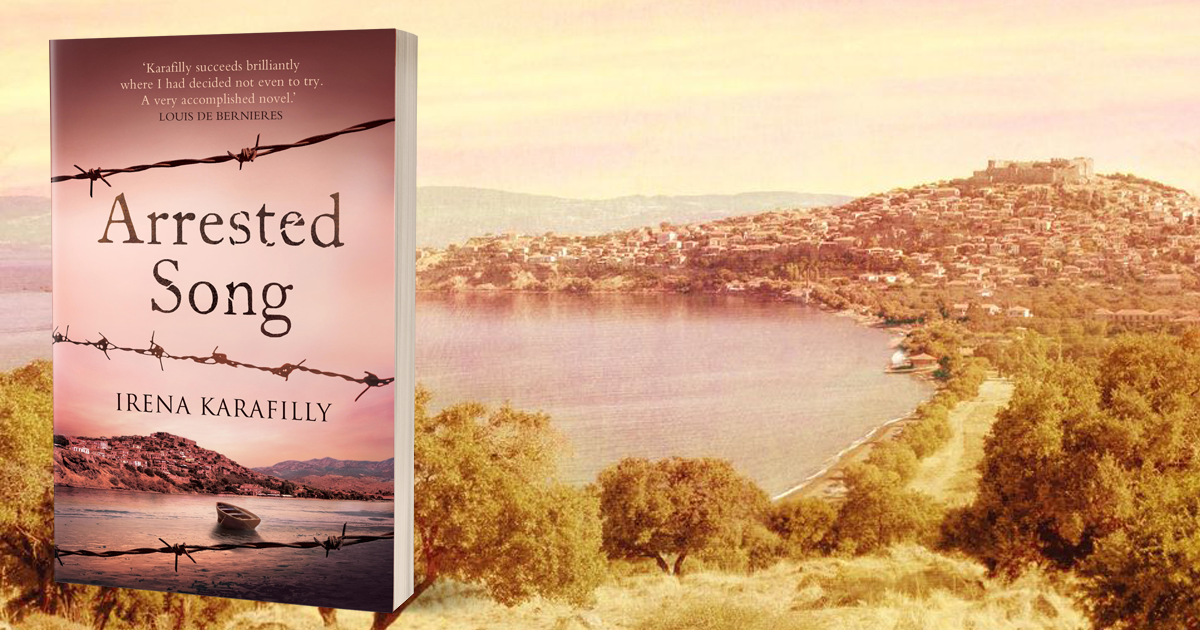
arrested song

Continue to more books

Gordon Phinn

Gordon Phinn

Words Ignoring Wars

Books Referenced:

Agent of Change, Huda Mukbil (McGill/Queens 2023)
Tabula Rasa, John McFee (Farrar, Straus &Giroux 2023)
Paper Trails, Roy MacGregor (Random House Canada 2023)
Notes on a Writer’s Life, David Adams Richards (Pottersfield Press 2023)
The Last News Vendor, Michael Mirolla (Quattro Books 2019)
Maze, Hugh Thomas (Invisible Publishing 2019)
Jangle Straw, Hugh Thomas (Turret House 2023)
CellSea, Sasha Archer (Timglaset Editions 2023)
Broken Glosa, Stephen Bett (Chax Press 2023)
All the Eyes That I Have Opened, Franca Mancinelli (Black Square Editions 2023)
The Last Book of Madrigals, Phillipe Jaccottet, (Seagull Books 2022) 
Mirror For You, Elias Petropoulos (Cycladic Press, 2023)
Fox Haunts, Penn Kemp (Quattro, 2018)
Poem For Peace, Penn Kemp & Others (Pendas Productions 2002)
Sarasavati Scapes, Penn Kemp & Others (Pendas Productions)
Incrementally, Penn Kemp (Hem Press Books 2023)

*

Memoirs make up a substantial part of every book season, and as we have noted, this boy’s interest level never seems to diminish.  I am fascinated by the wide swath they cut in our ever increasingly diverse culture. Memoirists, historically, have shown a tendency to ego-based untrustworthiness, their exaggerations and untruths taking years to be exposed and corrected by diligent biographers.  Meanwhile we read between the lines and learn what we can in the various pockets of society slumbering beneath that convenient category ‘subculture’.   Memoirs by former CIA, FBI and MI5 personnel are not unusual, but CSIS, now that is rare.  Huda Mukbil’s Agent of Change seeks to remedy that.  Emerging with her life intact from the bloody turmoil of Ethiopia and Somalia in the 70’s to the relative calm of Egypt and then safe haven of Canada, this ambitious young woman seeks and then secures employment with the security services.  Her experience is something of a double-edged sword, her conservative Muslim attitude and dress casting a shadow on her undoubted usefulness as a multi-lingual investigator in the era of Islamic Jihad and Isis affiliated terrorists groups and randomly inspired individuals.

Continue Reading

Diana Manole Reviews Clara Burghelea’s Praise the Unburied
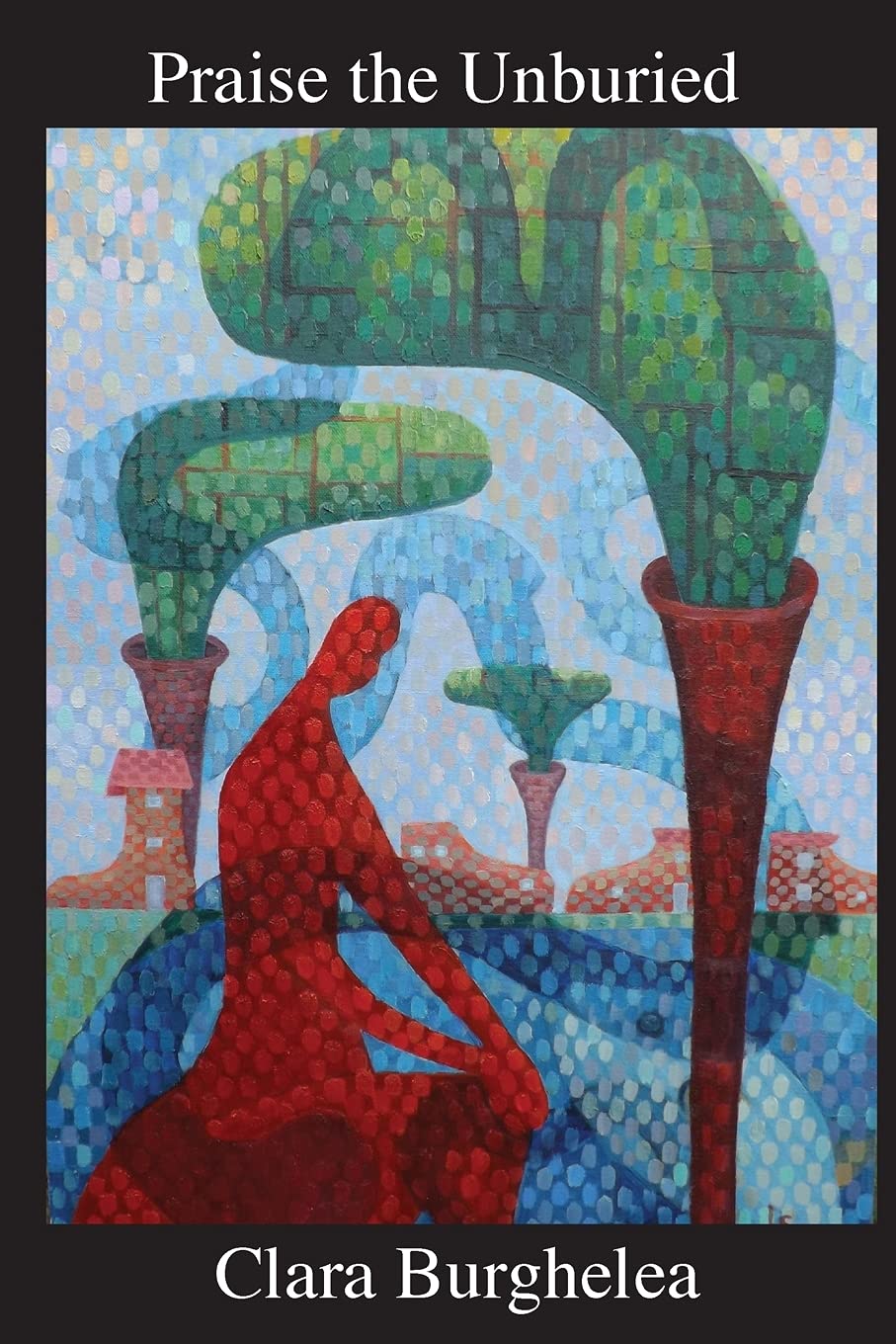
Love and Bilingualism as Survival Strategies

Clara Burghelea, Praise the Unburied (Dublin: Chaffinch Press. 2021)

Praise the Unburied, Clara Burghelea’s second poetry collection, starts with the motto, “Every poem is the story of itself” (Tracy K. Smith), foreshadowing a metaliterary discourse. In a postmodern gesture, the poet indeed allows each poem to testify about itself, while also sharing several intermixed stories. In Greek mythology, King Midas cursed his ability to turn everything he touched into gold that gods bestowed upon him at his own request. In a much more constructive way, Burghelea has the talent to transform everyday life experiences into poetry and an homage to language and emotion. All poems not only have a rich vocabulary and surprising imagery, but also a hypnotic rhythm, which is worth noting, as English is the second language of the Romanian-born poet, residing in the U.S.

Every time she glances at the world, “At the back of your mind, a poem ready to stain the page.” Ordinary details from Romania, the United States, and Greece are consistently given poetic meaning, while the abstract is casually turned into matter, like in “pain lived in the zippered pocket / of my purse, ruffling its silver scales” (“I haven’t thought about my mother in months”). In contrast, humans with a “languaged body” are broken into little pieces, sometimes down to atoms, until their raw emotions are uncovered: “Pain is hunger, / its roots curling into the flesh. / Tune your ear to its fire. Simmer the tendrils” (“Prayer with Lullaby Eyes”). Burghelea’s love poems focus on the body as a literal open book, “A man reads braille on your ribs, fingertips / soaking in flesh” (“Impermanence”), or on close-ups of the romantic partner, “My ear finds your chest, / then the dip of your neck / where flakes of fleur de sel / inhabit my lips” (“Day’s Seams”). After the end of a relationship, the speaker struggles to “overcome co-dependence,” but coincidental sensory details make it impossible, “quick at semaphoring your presence / when the Starbucks kid rolls the r / in my name” (“Some Morning Unease”).

Continue Reading

Sushant Thapa Reviews The Power of Words
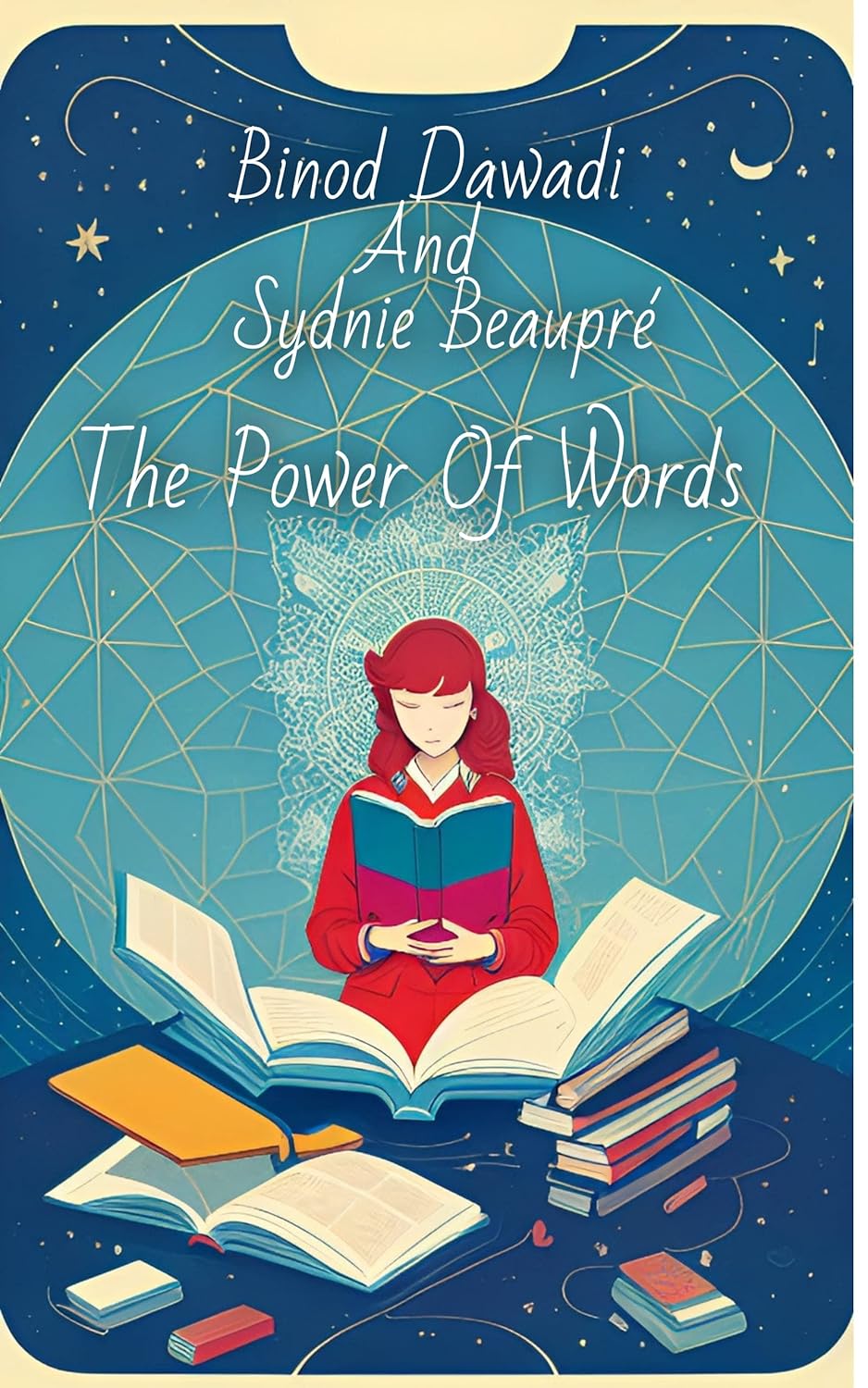
Critical Beauty of Words: The Power of Words

I am thrilled to have read “The Power of Words,” a poetry collection written by Binod Dawadi from Nepal and Sydnie Beaupre from Canada who doubles as editor. This collaboration of two poetic souls has created indelible marks on the sands of modern literature.

But it can also destroy human beings,

By its anger,

This is because human beings are,

Making earth their puppet and playing with it. (Earth) ( 24)

The above-mentioned poem titled “Earth” is a critical tribute to the mother earth. In this collection, there is a poem on war which calls for peace. The poems in this collection are comfortable, beautiful, not difficult to understand and peaceful. Readers of any age can find this book graspable. The discrimination between race, caste and gender should be stopped and the book stands with this idea. There is a path of guidance which is illuminating in this collection. Very precise and nurtured words take us to a journey in this book. Life is one and everyone has a precious life. When a poem is mentioning about life, it feels as if a larger-than-life idea is present in the depth of the poem.

Continue Reading

Dr Geraldine Sinyuy Reviews From Africa with Love

From Africa with Love: Voices from a Creative Continent curated and edited by Kelly Kaur in conjunction with Wole Adedoyin, Director, IHRAF African Secretariat. A Publication of the International Human Rights Arts Festival (IHRAF), 2023.

From Africa with Love: Voices from a Creative Continent is a collective call for revival, a revolution churned through all genres of creativity by emerging young African human rights activists. The throbbing of the heart of these committed African writers to see that the continent is entirely liberated from the shackles of all forms of human rights violation is like magma hitting the bowels of Mount Kilimanjaro. From Kenya to Zimbabwe, Nigeria, Ghana, Malawi and across the rest of Africa, the writers seem to sing the same song, a song of sorrow, a lamentation and a prayer for change to come soon.

Once you start reading the book from the first piece, your hair stands at its ends and goose pimples become part of you until you slam close the last page of the book. The first story in the anthology, “Dying to Audrey” by Abugyer Muse Stephani highlights the ordeal of a married career woman who has to give up her job as a bank worker in order to become a house wife when baby Doofan is born. As it often happens in Africa, Audrey’s mother-in-law having convinced the family that Audrey’s excessive demands are responsible for sending her son to the grave snatches her two children, Doofan and Terngu, 5 and 3 years old respectively.

Continue Reading

Poetry. Edited by Clara Burghelea

Mykyta Ryzhykh

Mykyta Ryzhykh

The sky is moving
The ant's gaze falls into the suggestion of life
Failure of life after adulthood

Older children are moving into the abyss
The abyss from which it all began

The iron tooth of a smile haunts the blind
The ash sketch of a heart beats like a real one

Who fell into whose life at that moment when a billion natural coincidences came together?
Gender, age, physical (etc...) contingencies of thought over the abyss of existence
Examination of immediacy, a patch of eyes, a rush of touch
And overhead the sky is in continuous motion

Continue to 2 more poems

Yuan Hongri

Hongri

Never-withering Light 
I can’t say the mystery of the gods yet,
the devil is coveting the diamond of heaven.
There is a golden kingdom whose light is like wine inside the ancient earth.
The smiles of the gods are beside you,
as if they are the rounds of invisible sun and moon.
And your soul is ancient and holy
twinkle with the never-withering light of stars.


不凋谢的光芒

我还不能说出那诸神的奥秘
魔王在觊觎天国的钻石
在这古老的大地的体内
有那光芒如酒的金色王国
诸神的笑容就在你身旁
仿佛一轮轮隐形的日月
而你的灵魂也古老神圣
闪烁辰星那不凋谢的光芒

Continue to 2 more poems

Charlotte Amelia Poe

Charlotte Amelia Poe


in this corner of the universe there is a constellation set aside for you

If you buy enough gold acrylic paint, and paint stars on your ceiling against the dark, then maybe, just maybe, the world won’t end.

And if it ends anyway, debris beating at the plasterboard as the ceiling groans and the stars start to crack and splinter, then god, at least you’ll have something to look at, to be less alone as home swallows you whole.

Continue Reading

Gordon Phinn

Gordon Phinn

For Charles Simic

Yes, you were here, for what
Now seems an unquantifyable idyll

In that picnic of horrors
Holding forth in the headlines.

Only now do I see that trail of
Breadcrumbs, artfully arranged

To tempt the idle into exploring
The maze of your curiosity.

Arriving at a semblance of center
One sees the all too predictable

Mirror, making an elegant mockery
Of the verse lovers' vanity, as the

Smile of the Buddha creeps up from
Behind, waiting to dislodge the

Sorrow and the pity.

Continue to 3 more poems

Mansour Noorbakhsh

Mansour-Snow-2020 (resized)


To the extent of all your surroundings

           __Dedicated to all working children.

           “It is easier to build strong children than to repair broken men.” __Frederick Douglass

Maybe you have been sitting for hours behind trees or in the shade of rocks and hills waiting for the train to come.

Maybe you are bored of waiting. Maybe you are disappointed. Maybe you have gone to the point of changing your decision and going back. When the afternoon heat has you drenched in sweat.

But the train has finally arrived. With his awesome noise like a roaring monster. With its imposing body that shakes the ground and your whole body with every rotation of its wheels.

After all this waiting, now it’s time to scream in unison with the terrible sound of the train and not worry someone shouts angrily “Shut up”.

You can shake your hands and your whole body with all your heart, like a little demon next to a big demon, next to a train that roars and grinds its chest on the ground and moves forward.

Shake your whole body and shout as you run side by side, next to the roaring train. Raise your hands with clenched fists and scream at the top of your lungs power. Run with all your body. Show yourself to all the phenomena around you, so that you forget everything, even the demon of the train.

All this doesn’t take more than a few minutes. Finally, the train passes there. You stop running and screaming. But what remains is a deep silence that casts a shadow over everything. It is as if everything has become silent in front of you with mixed respect and fear. Then you feel yourself more than before. You don’t scream anymore. You don’t run anymore. But you feel yourself, your body, though small, but you feel it as wide as all your surroundings.  You are calm now, like a river that moves in a wide bank with a peaceful appearance. Your restlessness and worries are temporarily over. You slowly return with a broader sense of all the things around you. Now you walk slowly, but you still feel that the ground is shaking under your feet.

Although you are now breathing slowly, but still those unfinished screams jump out of your chest like scattered coughs unconsciously for a while. It’s as if the little monster is spitting out all his suppressed feelings of injustice, humiliation, and the suffering of working as a slave, running barefoot, and sleeping hungry.

And your hot and feverish cheeks have bloomed now, as if they have tasted a real lovely kiss.

Continue to 2 more poems

Dominik Slusarczyk

Dominik Slusarczyk Photo

The Peasant’s Prayer

Yesterday I prayed so
Today I sit on my sofa and 
Wait for my prayers to come true.
Soon I will have
Someone to hug but
I won’t hug them in
Case I break them.

Continue to 2 more poems

John Grey

John Grey(2)

THE BULLY IN THE TREE

In the fork of a tree,
stands the bully boy.
Gripping a branch in each hand,
he puffs out his chest proudly.

Even if you can’t see him
from where you are,
you’re surely familiar
with the broken window,
the kid with two black eyes,
sobbing on the doorstep.

And you’ve no doubt heard
of the money stolen
from a neighbor’s purse
And the cuss words
uttered loudly in the school room.

A gust of wind tries
but can’t blow him down.
Someone shakes the trunk
but that doesn’t move 
him either.

But here comes 
the kid with the two black eyes
and he’s clutching some kind
of hand saw.

His eyes brighten
as he thinks ahead.

Continue to 2 more poems

Rachel J Fenton

Rachel Fenton(1)

Peas on Earth 
 
Seedlings greetings, I write in chalk 
on reusable labels, tuck them in the pots 
 
recycled and covered with paper then we walk 
to our neighbors. My son makes each stop, 
 
running up the steep gardens to learn 
kindness isn’t concrete, it must be grown.

Continue to 2 more poems

Claudia Wysocky

Claudia Wysocky

Heaven and Hell

Silence fills the air,
as I sit, alone,
among endless rows of graves.

I wish for heartbeats,
for laughter,
for tears.

I miss the noise.

But I know that I can't have it.

I can hear the footsteps of the living,
but there's no sound for me.

Silence surrounds me,
as I lay in my own void,
a void of life,
eternal and silent.

I will never know happiness again.
But I accept it,
lying here, alone,
among endless rows of graves.

It was fun being dead for a while,
to feel the quiet
and the peace.
I thought hell would have fire and brimstone,
but I guess that's only what they tell us.


I'm moving on now,
accepting my reality.
And I know that one day,
I'll find my meaning,
In the cold abyss.

But for now, all I have is silence,
a silence that never ends.

And I bet there's fire in heaven.
Foolish Understanding

The things I thought unmeetable—unattainable—as if from Eden—
Forever luring us with what could never be pure in value as it might have been—
Or so we've all been told: 
But why should my heart believe it this for so?  
This is what I know!  
My dreams! 
As clear as the words of my own ears—
Unencumbered by notions of what I was or would be. 
Just a child at that point in time; 
Unaware of the traps or whims of foolish understanding. 
Always trying, always striving.
And now, standing here--where was I standing before?

Continue to 2 more poems

Ioana Cosma

Ioana Cosma

Mother Earth
Pregnant is the earth and was from the beginning
its replenished womb bathes us all in light
it is forever birthing bringing forth offspring like
the sky once exploded to make room for life.

At times we hear its moans of labor, its trembling
voice from roaring falls, the naked skin of trees
that crack under the weight of time. A work of passion
of the earth who always forgives our childish crimes.

It is small and gigantic at once, not a star, but an
incandescent rock. Though it might feel like magic, her
creation is mostly an act of love superseding intelligent
design, the grace of artwork and man's climb up above.

We tread hurriedly and with no sympathy for its voluptuous
body that's nonetheless never vulgar even when it is raped
like the times when we scratch through its belly, suck on its
blood and cover its sumptuous breasts in concrete and glass.

Yet the earth remains pure waiting for the day when
its favorite children begin to see her devotion and selflessness
in the midst of the abundance of life that seems to have been
born for and through her, the smallest of gods.

Continue to 1 more poem

R. Gerry Fabian

RG Fabian

Seeking Asylum

What Freud jumble-juxtaposed?
Poor man. Forked helplessly
in great homo sapiens noodle soup.
(Chicken ego parlor play desire plus
sublimated id broth plus super ego
cemented noodle cocktail party
chatter.)  Imagine telepathic
sensory flashes visualized
as cajun bayou needle voodoo.
A code vacuum scramble
shields interior exercise message.

Continue to 2 more poems

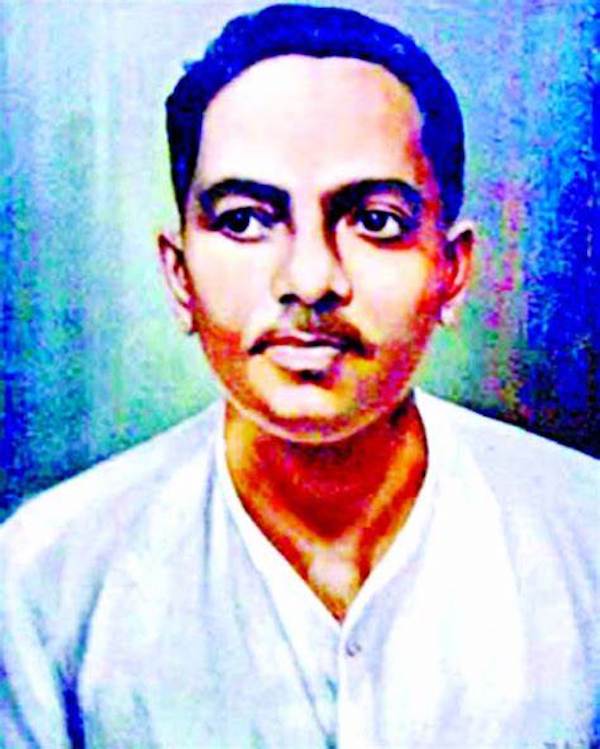
Abbas Maroufi

Abbas Maroufi

 
مرده‌ها از مرگ نمی‌ترسند
درد ندارند
رنج نمی‌کشند
تحقیر نمی‌شوند
کابوس نمی‌بینند
از جنگ نمی‌هراسند
به شکست نمی‌اندیشند
مرده‌ها بازجو ندارند
تحت تعقیب نیستند
محاکمه نمی‌شوند
حساب پس نمی‌دهند
جهان را وا می‌گذارند
مرده‌ها در کائنات می‌چرخند
تنها نمی‌مانند
با بال فرشتگان نوازش می‌شوند
احترام دارند
عشق من!
مرده‌ها برهنه می‌خوابند
و من
هر شب
در آغوش گرم تو
می‌میرم.
Every Night 
The dead have no fear of death.
They have no pain
And do not suffer.
They are not humiliated
And have no nightmares.
They don’t dread war.
They don't dwell on defeat.

The dead have no interrogators.
They are not prosecuted
Nor are they investigated
Or held accountable.

The dead leave the world behind
And wander in the cosmos.
They are not left alone
Always caressed by angels’ wings
Always respected.

My Love!
The dead sleep naked
And every night 
In your warm embrace
I die.
Continue to 4 more poems

Letter from the Editor. WordCity Literary Journal. Autumn 2023

On October 7th, Hamas terrorists breached the fence separating Gaza from Israel and tortured, raped, mutilated and murdered at least 1200 women, men and children.

1200 women, men and children. Dead. Before taking an estimated 240 others into captivity as hostages.

Israel’s far-right leaders soon responded to these atrocities with war, and after weeks of bombardment, 14,000 Gazan women, men and children lie dead, with even more injured.

14,000 women, men and children.

Children.

Babies.

Sons and daughters.

Kids who should be counting their toes. Playing on playgrounds. Sleeping in their parents’ arms. Whispering with their friends.

And while there is an agony of very real history that the world is now grappling to understand, there are also opposite truths that too many are failing to hold in the same space:

Terrorism has no justification, and war is an atrocity.

Israel has a right to defend itself, and Palestinian lives matter.

The use of human shields by Hamas is a war crime, and those being used as human shields deserve life and protection.

We can want the bombs to stop, and at the same time, for the captives to be set free.

We can, each one of us, be on the side of humanity.

And yet, around the globe, we are lining up on opposite sides of the street to hurl insults at one another. Hate crimes against Jewish people and Muslims have spiked. Pictures of missing Israelis are being torn down and the stories of Israel’s victims and survivors mocked, celebrated and dismissed by people on the right and the left. While at the same time, millions of Palestinians are being painted with the same murderous brush as Hamas.

At WordCity Literary Journal, we stand on the side of humanity. Of peace. And yet, we understand that it’s impossible to negotiate peace with terrorists who consider violence their birthright. Who, in their very charter, call for the destruction of their neighbours.

We do not have any answers among us. Just our humanity. And with all of our compassion and grief and hope, we believe that all who are innocent deserve life and security and hope. We also understand that those who act with evil now were not born that way. Because we also know that despair is a powerful recruiting tool for extremists.

As journal editors and writers, we don’t know how to achieve peace, only that peace is the only answer. So we stand, here in this space we’ve created, with the broken in body and spirit, with the hopeful and the hopeless, and with those who are working for a better way forward.

It is our hope that you, dear readers, will stand here with us.

Return to Journal

A Fly in Amber. Flash Fiction by Sylvia Petter

CrankySylvia

A Fly in Amber

My mother had a large piece of amber the size of my hand. She held it up to the light and I saw an entrapped insect. An ordinary fly. My mother said the amber came from Eastern Germany, from the Harz Mountains where she’d lived before the war. She said it came from the caves of old King Barbarossa, who sat asleep on his throne waiting for his nation to be reborn. When at reunification he didn’t wake up, my mother said it wasn’t just about borders that the minds of the people had to overcome frictions before they could really become one. Like this, she said, and ripped off tiny bits of the newspaper and placed them in her lap. She rubbed the amber on her sleeve and dipped it in the newspaper scraps. They clung to the amber, hiding the fly.

Return to Journal

Vienna born Australian Sylvia Petter trained as a translator in Vienna and Brussels.  Founding member of the Geneva Writers´ Group, she is a Humber College Toronto creative writing alumnus, holds a PhD in Creative Writing from UNSW (2009) and is a member of the Australian Society of Authors, Sydney, and GAV and IG_AutorInnen, Vienna.

Her stories have appeared online and in print since 1995, notably in The European (UK), Thema (US), The Richmond ReviewEclecticaReading for Real series (Canada), the anthology, Valentine´s Day, Stories of Revenge (Duckworth, UK), on BBC World Service, as well as in several charity anthologies, and flash-fiction publications.

Her latest book of short fiction, Geflimmer der Vergangenheit (Riva Verlag, Germany, 2014), includes 21 stories drawn from her English-language collections, The Past Present (IUMIX, UK, 2001), Back Burning (IP Australia, Best Fiction Award 2007), and Mercury Blobs (Raging Aardvark, Australia, 2013), and translated into German by Eberhard Hain, Chemnitz.

She has led flash-fiction workshops in Vienna and Gascony, France. Writing as AstridL, several erotic stories appeared in anthologies in the US (Alyson Books) and the UK (Xcite) and subsequently in her collection of 17 erotic tales, Consuming the Muse, (Raging Aardvark, Australia, 2013.)

In 2014, she organized in Vienna the 13th International Conference on the Short Story in English.

In March 2020, her debut novel, All the Beautiful Liars was published as a Lightning Bolt eBook by Eye & Lightning Books, UK, and came out  in 2021 in paperback and audio.

In July, 2020, she served on the jury for English-language flash fiction for the Vienna Poetry School’s second literary magazine “Gespenster” issued in October. Her antifa novelette in flash, Winds of Change, was published in April 2021 under her imprint FloDoBooks Vienna-Sydney. Sylvia blogs on her website at http://www.sylviapetter.com where there is more on her and her writing.

WordCity Literary Journal is provided free to readers from all around the world, and there is no cost to writers submitting their work. Substantial time and expertise goes into each issue, and if you would like to contribute to those efforts, and the costs associated with maintaining this site, we thank you for your support.

One-Time
Monthly
Yearly

Make a one-time donation

Make a monthly donation

Make a yearly donation

Choose an amount

C$5.00
C$15.00
C$100.00
C$5.00
C$15.00
C$100.00
C$5.00
C$15.00
C$100.00

Or enter a custom amount

C$

Your contribution is appreciated.

Your contribution is appreciated.

Your contribution is appreciated.

DonateDonate monthlyDonate yearly

Stillwater. A novel excerpt by Darcie Friesen Hossack

Beet Roll (Chapter 2 of Stillwater)

Marie adjusted the waistband of her skirt, a consequence of Mrs. Schlant’s pancakes. Too much bran always made it tighten. So, for that matter, did Lizzy and Daniel whenever they disagreed. And since both of those things were true today—too much friction and too much fibre—it was difficult to know which to blame for the tightness that had begun to cinch her insides like the strings of a purse.

“How about we play a game while we drive?” Marie offered toward the backseat of the car, where Lizzy and Zach silently, if not patiently, passed the time. Both shook their heads and Marie turned back to face the road.

It had only been an hour or so since they had driven away from Stillwater. Already, though, daylight had become gritty and turned to dusk.

Without a word, Daniel switched on the headlights. They needed to be cleaned, Marie thought. Even on high beams, they barely spilled enough light for something to come into focus the moment it became too late to swerve. It could be a deer, Marie imagined. Or a rock the size of a chesterfield, slipped from an unstable bank. Or it could be one of those cheerless, soiled people who seemed, for no reason—thumbs in, they carried nothing—to drift between towns along the shoulder of the road.

“Anyone need to get out?” Marie asked a short while later when a glow on the horizon told her they were nearing the city of Vernon.

If she were in charge, they’d pull over at the Dairy Queen on the highway. That’s what her own father used to do when she was a girl and he had taken her into Swift Current with him, whether it was to buy a used tractor or just to knock on watermelons together until they agreed on the perfect one.

“Zach? Lizzy?” she said over her shoulder as the Dairy Queen came into view. “Bathrooms?”

“I’m okay,” Zach said.

Lizzy, reading by booklight, didn’t reply, and before long they were swallowed back into an evening that seemed to have grown darker for every minute they had driven under streetlights. Alongside an inky pool that was Kalamalka Lake, a bank of lights sped toward them. Marie sucked in a gasp of a breath, holding it until a logging truck carrying a jumble of stripped-down trees had passed. “That one was close,” she said after they swept through its wake.

“It was fine, Marie. Or maybe you want to take over and drive us the rest of the way?”

No matter how long she lived in British Columbia—more than seventeen years, now—Marie had never been able to get used to its roads. She had learned to drive on the Prairies, with its stick-straight lines. BC was all ups and downs and hairpins that jumped out of the middle of nowhere and seemed to appear in a different place every time. And then, today, there was the weather. The snow from the morning had melted, but the temperature was dropping again. The water it left on the roads could freeze and turn into black ice.

“Mom, do we have anything to eat?” Zach said, and Marie relaxed a little at the sound of his voice.

“Why don’t we see what Mrs. Schlant put in our bag?” Marie reached between her feet for a paper grocery sack the director’s wife had handed to her on their way out of Stillwater.

“You’ll find a beet roll on top,” Mrs. Schlant had said. “It’s a new recipe, so next time you’re here, you’ll let me know what you think.”

Marie had promised she would. As she felt inside the bag, herhead was nearly on her knees when the front passenger tire of thecar thumped over something on the road.

“Cripes, anyway!” Marie said. “That could’ve been a . . .” She settled herself back down. Reason told her it was just a clump of ice, shed from the mud flap of a semi that had come over Roger’s Pass. But ever since she’d read a story about a mother out east who
had placed her infant son in a brown paper bag and left him on a highway, Marie imagined an abandoned baby under every bump in the road. “Everyone okay back there?” she said, giving herself an excuse to count her own children.

“We’re fine,” Lizzy said and turned a page.

Marie found Mrs. Schlant’s beet roll. Keeping a slice for herself, and one for Daniel, she passed the rest back to Zach.

Marie faced forward once again and touched her hand to her belly where her own seatbelt should have been fastened securely across her hips. For months now, the mechanism to pull the strap down had been stuck, but whenever she pressed Daniel to take a look, he told her that he’d get to it soon. “If the Lord decides it’s your time, Marie, a seatbelt won’t add an extra minute to your life,” he said. To which Marie replied, “Maybe He gave us seatbelts so He can worry about other things.” Which was as good as making sure it would never get fixed.

To keep her mind off the road, Marie bit into her beet slice, expecting, despite the name, to taste jam-filled sponge, and maybe a hint of something that resembled cream, reminiscent of the delicate cake and sweetened preserves her mother used to make. Instead, the beet roll lived up to its description. If they did end up at Stillwater,
the food was something she would have to get used to. And she couldn’t see how there would be many opportunities to go into town to get a little something sweet.

But when she passed Daniel a slice of what amounted to cooked beets rolled up and baked into dense bread, he ate his and reached for Marie’s, too.

Marie wiped away a few crumbs from her skirt before digging into the bag of yarn she travelled with. With a few twists, she began to cast chunky knots off the end of an oversized crochet hook, and her breath, which had risen high and tight into her throat, began to deepen and slow.

“You haven’t said much about the place,” Daniel said after a while, reaching across the space between them to touch Marie’s hand. She flinched and dropped a stitch. Even in so little light, Marie was self-conscious about her hands. As she saw them, they were all rough and red from years of scrubbing pots and potatoes. Just flesh, skin and knuckles with circular wrinkles like elephant knees.

“Oh, well I . . .” she said.

“I know it’s a big change,” Daniel said, returning both hands to the wheel. “But once we all get settled in there, it won’t take any time at all for it to feel like home. Don’t you think so, kids?”

From the back seat, a glutinous silence stretched out until Zach, finally, gave it some slack. “They have a nice kitchen,” he said, allowing Marie to dip her crochet hook back into the scarf she had begun to make. “And Mrs. Schlant knows a ton about food.”

The yarn slid and looped its way through Marie’s fingers, reminding her of the way they’d felt the first time Daniel had ever touched them. Slender and elegant. Piano hands. Even though her fingers had always been too short to span an entire octave.
From behind, Marie felt her daughter’s feet push into her seat. A reminder. “Lizzy, do you want a scarf that’s long enough to wrap a few times or just once?” she asked over her shoulder, casting for a reprieve.

“What colour is it?”

“You saw when I packed it this morning. It’s that purple.”

Lizzy was quiet for a moment. “Maybe just make it for yourself?”

Kilometers passed without anyone saying another word. The dark shapes of mountains and trees continued to unspool along the sides of the road.

“So do we think we could get ourselves out there by the end of the month?” Daniel said, more sternly than before.

“Mom,” Lizzy said.

“Well,” Marie began. “You know, those kids there. The school isn’t what we might have hoped. Less than we thought. And when I tried to give the children each a candy, they looked at me as though I’d offered them an onion. It’s not right for kids to not at least want a little sweet.”

“I see,” Daniel began to grip and ungrip the wheel. Little strangling sounds of skin against plastic filled the silence. “So, because a few children don’t want your pocket lint, I should what?”

“We don’t even know what will happen at work. Everything could be fine. Some people say Covid is still going to go away, so why don’t we just wait and see?”

For a moment, Daniel lifted both hands off the steering wheel, then slammed them back down.

“There is a lot to like out there.” Marie used her most placating tone. “But maybe we should wait a little while. Lizzy could finish up her schooling where she is, and we could see whether things get a little better for you at—”

Daniel’s fingers flexed open, his knuckles flashing white in the dark. Only the heels of his hands were touching the wheel, and Marie mistook it as a gesture of surrender.

“It’s not even all that long until she’s done,” she added, leaning against the passenger door. “I bet she could finish by the end of this school year, with all the extra classes she’s been taking. Isn’t that right, Lizzy?”

“That’s another eight months, Marie. I don’t have another eight months. Lizzy, this sounds a lot like you. Did you put your mother up to this?” He strangled the wheel a little tighter.

“Is this seriously a done deal? I don’t know if you saw, Dad, but all of those children’s eyes orange from all that carrot juice. And, really, that many people all living in the same house? It’s weird.”

Marie lifted her hand to her mouth and tasted yarn as she bit away a shred of skin next to a nail. Lizzy had nicked the taut string of Daniel’s patience and she could almost hear her husband’s thoughts taking shape as she continued.

“Dad, I won’t learn anything out there,” Lizzy said, leaning into the space between the front seats. “I could teach every class in that place.”

Marie, hands ravelled up in purple yarn, gently pushed Lizzy back.

“I’ll tell you what, Lizzy,” Daniel said. “School isn’t everything, and it worries me that you think it is.”

“Fine, then. I’ll just become a housewife.” She switched off her booklight with a tiny click.

In the silence that followed, it began to rain, small, spattering drops that quickly became half-frozen splashes drumming wetly against the hood and roof.

“Kalamalka Lake,” Marie said, just under her breath. “Duck Lake. Wood Lake.” She counted the various waters between Stillwater and home. By feel rather than sight, she dipped her crochet hook back into the scarf. Okanagan, Kalamalka, Duck, Wood. One, two, three, four. Over, dip, over, draw. Marie knotted their names into the yarn of the scarf. Soon, however, she had to unravel several rows she couldn’t account for.

Around a particularly tight bend, Marie slid sideways and, unrestrained, grasped Daniel’s arm to steady herself. “I’m glad we’re almost there,” she said with a nervous laugh.

Silence.

“Dad, you’re speeding,” Lizzy said, and after a moment, Daniel slowed to just under the limit.

The car lurched over a frost heave and Marie was lifted slightly out of her seat. Her hands flew out in front of her as she landed, and the seat seemed to count every unnecessary ounce against her.

Mennonite thighs, Marie thought, trying to regret the varenyky and cream gravy of her childhood. She had already been soft by the time she met Daniel. Two children later, and even though she had agreed to a vegetarian lifestyle, her belly had taken on the consistency of punched-down bread dough.

Marie relooped her yarn and tucked back a tendril of hair that had escaped from the bun at the back of her head. No longer light brown or dark blond or even grey, now it had become a shade that, whenever she washed another clump of strands down the shower drain, reminded her of the dead mice she found every autumn in the kitchen glue traps Daniel set inside her cupboards.

“Marie, why don’t we try some of that bread next?” Daniel said. The rain had stopped, although the road remained splashy with puddles. “Lizzy, I’m sure a future biologist will appreciate this. At Stillwater, they make their bread from sprouted grains. We can use
the rest for tomorrow morning’s toast.”

Marie could tell he was offering an olive branch and said a little prayer that her daughter would accept it.

“That’s botany,” Lizzy said.

“Why do they sprout it?” Zach asked, accepting the loaf Marie passed back. “Does it have better flavour that way?”

“You guys tell us,” Daniel said.

From the back seat came a crinkle of paper, after which Marie feltthe remaining loaf slide over her shoulder from behind. She took it and removed two slices, handing one to Daniel and keeping the other for herself. She was still working hard on her first bite when Zach offered an opinion.

“It’s like loofah!” he said with a note of horrified wonder.

Marie’s stomach flopped.

“Think of it toasted with some margarine and honey,” she said, encouraging him to say something nice.

“Honey on loofah is still loofah.”

“Nutty. That’s the word. It’s nutty.” She reached back into the bread bag and was about to offer everyone a second slice when Daniel gently lowered the bag back into Marie’s lap.

“What about you, Lizzy?” Daniel said.

“It tastes healthy. But Mrs. Wroblewski’s bread is a thousand times better and it’s healthy, too. And we don’t have to move to a commune to get it.”

“Kids, you know if it were up to your mother, we’d eat nothing but white bread. Fried white dough. Boiled white dough. And white gravy over it all.” He was laughing, but it felt like a trap. He and Marie had long ago agreed not to confuse the kids with ideas from a different time in her life. It was a promise Marie had occasionally broken, when
she found a particularly good watermelon to share with the kids, by frying up small batches of rollkuchen to accompany it when Daniel was at work. Mennonites always ate rollkuchen with watermelon in the summer.

“Not everything about where I came from was so bad,” she said, having nearly managed to keep the thought tucked in. “The kids might want to know about where they came from someday.”

This time when the car went over a heave in the road, Marie’s body lifted and came back down with a painful thump.

“The only thing anyone needs to know is where they’re going,” Daniel said, the words falling like hot coals from his mouth. “And if you keep up with this, I can’t be responsible for where that might be.”

Marie slipped her yarn-tangled hand behind her seat to find her daughter’s foot, surprised when Lizzy reciprocated with her own hand. She wanted to reach for Zach, as well, but knew she couldn’t do so without being noticed. “If the two of you could just agree,” she said softly, toward her lap.

“Mom, it’s okay. We don’t have to talk about it anymore,” Lizzy said and pinched her nails into Marie’s palm.

Marie felt Daniel’s foot twitch on the gas. “Well, let’s just get home, then,” he said.

“Fine with me,” said Lizzy.

Daniel picked up speed. Faster and then faster, round curves and through gullies while the road, it seemed to Marie, threatened to slide out from beneath them at every turn. Her hands had begun to tremble, and she slid them under her legs. She had a habit of reaching for the door handle when startled, and if something made her do that now, without a seatbelt, she would spill right out onto the road. It was uncomfortable, though, sitting on her hands. Her hangnails caught on the polyester of her skirt. She had no lotion in the car to soothe the dryness that caused them.

She longed to be home, massaging Vaseline into her fingers while seeing the kids off to bed. Or home in her mother’s kitchen, where hands that handled lard never needed a pump of Jergens. Or simply back at Stillwater, where Mrs. Schlant kept a glass bottle of something that smelled of rosemary next to the homemade soap on every sink.

Wood Lake was finally alongside them, with its too-fast bend in the road up ahead. Marie reached for her seatbelt and gave it a tug. It clunked inside the housing and refused to be moved.

“For God’s sake, Marie,” Daniel said and his arm flew across her. He grabbed the seatbelt and yanked it hard three times. “There,” he said as a shard of plastic cracked away from the door and the belt suddenly unspooled.

There was too much slack in the shoulder, but Marie clicked the latch in gratefully and snugged the belt tightly around her waist.

“Dad, let’s just get home safely,” Lizzy said as the rain returned as slush. “We’re already really close. It’ll just be a few minutes extra if we go slow.”

Marie began to hum. A squeak of a sound at first, and barely audible. But as the notes seeped from her, they grew louder until they finally flattened out into a hymn her mother had taught her to sing whenever she felt far from home. Nearer my God, to Thee, nearer my God; thin and thready, like a bow dragged across the strings of a
dried-out violin.

“For crying out loud, Marie,” Daniel said. “You’d think I was trying to kill us.” And though it hadn’t seemed possible to Marie that they could go any faster, he coaxed yet another measure of speed from the car, whose frame began to rattle.

“I don’t know if God would want you up there if you sing like that,” Daniel said. It was an attempt at a joke, and Marie rewarded it with a little laugh.

“Well, I just think—” Marie said but didn’t get to finish.

Daniel accelerated into the bend and Marie was shoved against the inside of her door like a load of wet laundry as the road and mountains spun around them. For a few seconds, her chest felt tight, and her head clunked heavily from shoulder to shoulder.

Something struck Marie’s side of the car with a terrible noise. Glass from the passenger window shattered and was followed by the sudden shock of coming to a full stop. Marie’s body, only half restrained, was flung forward and her hands, raised to protect her face, smashed into the windshield before falling into her lap.

At first, Marie didn’t recognize the cold that began to climb toward her knees as water from the lake inched its way up her legs. Even as it began to lift them, and she pushed them back down with hands that made crunching sounds like bags of loose marbles,
the kind she used to take outside on warm summer days.

“O, mein Gott,” she said, lapsing into Low German as the water reached her waist and recognition crept in. “Daniel?” she said, with water at her neck, but when she turned to look for him, he was gone.

“Zach? Lizzy?” she said and inhaled a breath that filled her nose and mouth with lake.

BEET ROLL
1½ cups warm water
¼ ounce active dry yeast (1 packet)
¼ cup honey
3 tbsps baking margarine, softened
3½–4 cups whole wheat flour
½ cup wheat bran
½ tsp kosher salt
2 medium beets

Sprinkle the yeast over top of warm water and set aside in a warm place to proof for 5 minutes. Transfer to the bowl of a stand mixer fitted with the
dough hook attachment. Add honey and margarine.

Mix in 2 cups of the flour and the salt until moistened. Beat on medium speed for 3 minutes. Add more flour, just until dough pulls away cleanly from the sides of the bowl.

Turn out and knead on floured surface, adding remaining flour, until dough is smooth and elastic, about 10 minutes. Place dough in large greased bowl and cover with a clean tea towel. Let rise in warm place until doubled in size, 30–45 minutes.

Meanwhile, cook two medium beets in salted water until tender to the tip of a knife. Rub away the skins using a paper towel. Chop into small dice, and mash those slightly with a fork.

Lightly grease a sheet pan. Punch down the dough and roll it out to the size of the sheet pan. Spread beet over the surface, leaving room along the edges. Roll up like a jelly roll and transfer to the greased baking sheet.

Cover loosely with a tea towel and let rise in warm place until doubled in size, 30–45 minutes.

Preheat the oven to 350°F. Uncover roll and bake 40–45 minutes or until roll sounds hollow when lightly tapped.

Return to Journal

Darcie Friesen Hossack is a graduate of the Humber School for Writers. Her short story collection, Mennonites Don’t Dance (Thistledown Press), was a runner-up for the Danuta Gleed Award, shortlisted for the Commonwealth Writers Prize and the Ontario Library Association’s Forest of Reading Evergreen Award for Adult Fiction. Citing irreverence, the book was banned by the LA Crete Public Library in Northern Alberta. Having mentored with Giller finalists Sandra Birdsell (The Russlander) and Gail Anderson Dargatz (Spawning Grounds, The Cure for Death by Lightning), Darcie is represented by Rob Firing at Transatlantic Agency. Her first novel, Stillwater, was published by Tidewater Press in Spring 2023. Darcie is also a seven time judge of the Whistler Independent Book Awards. She lives in Northern Alberta, Canada, with her husband, an international award winning chef.

WordCity Literary Journal is provided free to readers from all around the world, and there is no cost to writers submitting their work. Substantial time and expertise goes into each issue, and if you would like to contribute to those efforts, and the costs associated with maintaining this site, we thank you for your support.

One-Time
Monthly
Yearly

Make a one-time donation

Make a monthly donation

Make a yearly donation

Choose an amount

C$5.00
C$15.00
C$100.00
C$5.00
C$15.00
C$100.00
C$5.00
C$15.00
C$100.00

Or enter a custom amount

C$

Your contribution is appreciated.

Your contribution is appreciated.

Your contribution is appreciated.

DonateDonate monthlyDonate yearly

Excerpt from the Introduction to Rudy Wiebe: Essays on His Works. By Editor Bianca Lakoseljac

Bianca Lakoseljac 2020

Excerpt from the Introduction to Rudy Wiebe: Essays on His Works

Why the collection, Rudy Wiebe: Essays on His Works? That is the question a number of my colleagues and friends asked when I talked about compiling and editing an anthology on Wiebe’s works.

During my graduate studies at York University, I took a course, “Special Topics: Frog Lake Massacre, 1885.” I read Rudy Wiebe’s novel, The Temptations of Big Bear, and found it transformative. My perspective on history, informed by so much—the Canadian colonial viewpoint; my inherited Eastern European history dominated by wars and continuous ethnic conflicts, which culminated in the breakup of Yugoslavia, the country of my birth and idyllic childhood; my family saga in Serbia which includes relations in Bosnia, Monte Negro, Croatia, among other regions; my personal life path which felt disconnected and discontented—all of that took on a different meaning. I began to look at life through a new lens; no longer did I see myself as a victim of circumstances, or wrong choices made, or unfortunate outcomes of providence. I turned to the “big picture,” to contemplate how other societies fared in this expansive, magnificent, wondrous, yet often astonishingly brutal world.

. . . . .

Rudy Wiebe: Essays on His Works examines Wiebe’s achievements as an author, editor, professor and mentor, who helped shape successful authors, gave rise to new approaches in the art of storytelling, and encouraged a passion for English Canadian Literature. The collection is a mosaic of critical essays, interviews, literary journal articles and reviews. It depicts the life and work of an author deeply involved with his Mennonite literary community, as well as with the English Canadian one, and who is among the most innovative, celebrated, and prolific. The main themes of Wiebe’s writing are bound up with his Mennonite heritage and his interest in Canada’s Indigenous past. The pieces featured in this collection are intended to create a conversation with one another, and to serve as witness to the changing times in English Canadian Literature.

A prelude to the collection is a witty and heartwarming cartoon, “Teaching Rudy to Dance … all true events,” by the iconic Canadian author Margaret Atwood. Rudy Wiebe’s comment that Atwood was trying to teach him to dance—“Classic ironic Peggy [Atwood’s name used by friends and family]. We’ve been friends since 1967”[i]—attests to this literary giant’s collegiality and good humour.

The collection opens with Miriam Toews’ thought-provoking article, “Peace Shall Destroy Many,” which echoes the theme of Wiebe’s debut novel (with the same title) and, interestingly, his ongoing battle to help bring change to the Mennonites’ ways. Toews, one of the most respected Canadian female writers of her generation, whose drive to expose the injustices of certain Mennonite communities has provided an impetus to her writing, describes the time she spent with Wiebe during a book tour in a Mennonite community in Germany. At the time, Toews was promoting her novel, A Complicated Kindness, an insightful coming-of-age story about a 16-year-old girl’s struggle with the strict dogma of her Mennonite community. After Toews’ reading, a woman from the audience addressed her angrily, in Plautdietsch, or Low German, which Toews does not speak. However, through translation, Toews quickly understood that the woman’s disapproval was her attempt to disgrace the author for daring to expose the wrongs within her community. Wiebe, who fully understood the woman’s criticism, addressed the woman in Low German. He explained that Toews was “advocating for necessary change within the Mennonite culture,” and justifiably holding the community accountable for its actions. In her essay, Toews states that “on that day Rudy Wiebe stood up in front of a Mennonite ‘congregation’ and fought for me.”

The next piece, Hildi Froese Tiessen’s delightful essay, “Between Memory and Longing: Rudy Wiebe’s Sweeter Than All the World,” is a comprehensive discussion of Wiebe’s ninth novel, Sweeter Than All the World. The essay opens a broad view into Wiebe’s Russian Mennonite heritage, which has influenced and permeates his work. It is important to note that although Wiebe has been advocating for change, he has remained devoted to his Mennonite community. The novel is a remarkable odyssey into his heritage, a voyage of self-discovery that follows the story of the Mennonite people from their persecution in the Netherlands of the 16th century to their emigration to Danzig, London, Russia, and the Americas, and eventually to their settlement in Canada.

Another essay that presents a window into Wiebe’s background as an author is “Literary Genealogy: Exploring the Legacy of F. M. Salter,” by George Melnyk. It offers a perspective into the early development in Canadian literature and the work of Dr. Frederick M. Salter who mentored Rudy Wiebe, W. O. Mitchell, and Robert Kroetsch (who would in turn guide another generation of talented authors). Melnyk’s essay also reminds us that in 1939, Professor Salter, who taught English at the University of Alberta, launched a creative writing course—the first in any Canadian University.

I am pleased to present my interview with Aritha van Herk, a renowned author and a professor at the University of Calgary, as it offers a witty and heartwarming glance into her work with Rudy Wiebe, who was her mentor and later her colleague and collaborator on a number of publications. Van Herk’s reflection on her earlier work is also an instructive reminder for aspiring writers that an author’s journey is a bumpy one, often involving much compromise and hard work.

Scot Morison’s informative piece, “The ‘Rudy Wiebe Room,’” leads the reader to get to know Wiebe not only as an author and academic, but also as a friend. The essay includes a photo of Wiebe with Atwood, a tribute to their lifelong friendship. Morison, Wiebe’s former student, defines his relationship with Wiebe as “centred on coffee and conversation every few months in a Second Cup several blocks from Wiebe’s home in the Old Strathcona area of Edmonton.” A staunch admirer of Wiebe’s writing, Morison confesses, “We are friends now but he still intimidates me. Part of it is his talent and output. Wiebe is one of the finest writers this country has ever produced.”

Reading Morison’s account reminded me of how I met Wiebe at Toronto’s Harbourfront. This iconic writer seemed an imposing figure. If he had not mentioned his “lucky shoes” in his talk about the award, most likely I would have walked away quietly after having my book signed. I was about to do just that when I recalled how affably he chuckled as he told his story. And the next moment, I heard myself saying, “As a Master’s student, I wrote an essay on your characterization of Big Bear and got my ‘A’.”

Wiebe had looked up suddenly, his gaze intense. “I’m always glad to hear from students who did well,” he had said.

As an educator, I could totally relate to Wiebe’s sentiments. As for my essay, I am including a revised, updated, version of the same essay in this collection.

Paul Tiessen, who authored “Memoir and the Re-reading of Fiction: Rudy Wiebe’s of this earth and Peace Shall Destroy Many,” has written extensively about Wiebe’s work and is preparing a monograph that investigates in broad terms the nature of the Canadian Mennonite Brethren community out of which Wiebe wrote his first, controversial novel. Paul Tiessen’s in-depth knowledge of Wiebe’s work and the history of the Mennonite community and culture enriches his essays and offers the reader insight into Wiebe’s fiction and nonfiction. And so does Hugh Cook’s comprehensive interview with Wiebe in 2016. First published in Image, a quarterly literary journal, it is a far-reaching discussion of Wiebe’s background and his lifelong commitment to writing.

Midway, I happily tucked in Olga Stein’s insightful essay, “The ‘Wistful, Windy Madness of a Gift’: Rudy Wiebe’s Books for Young Readers,” which focuses on Chinook Christmas (1992) and Hidden Buffalo (2003), Wiebe’s two books for children. Stein, who earned her PhD in English also at York University presents a succinct and vivid depiction of each book’s plot and characters, and entices the reader to examine yet another fascinating side of Wiebe’s storytelling. In addition, Stein delineates some of the literary trajectories these books are part of, thereby offering valuable additional appreciation of Wiebe’s writing.

Wiebe’s innovative vision and his distinctive voice have led to his works being widely studied not only nationally but also internationally. Milena Kaličanin, Professor at the University of Niš,  in Serbia, explores in her eloquent essay, “Fact vs. Fiction in Rudy Wiebe’s Where is the Voice Coming From,” a central theme that runs through and simultaneously binds much of Wiebe’s fiction: that of questioning the accuracy of historical accounts. In Wiebe’s stories, historical elements come into play as a way of troubling conventional historiography and, in Kaličanin’s words, “decoding the past.” Kaličanin reasons that in Wiebe’s fiction, “the narrator uses the reported facts and creates a work of art based on them, [which] testifies to Wiebe’s … desire to go beyond the crude and dubiously objective message of history in order to liberate an indigenous voice, visionary in its origin.” In addition, Uroš Tomić, who teaches Anglophone Literature and Academic Writing in Belgrade, in his essay, “Is Grief Rational? Loss and Pain in Rudy Wiebe’s Come Back,” contemplates the nature of grief. Tomić concludes that “Wiebe has shown us that there is nothing and everything rational about grief…[and] that grief must be lived through and then subsumed into the core of our life force.”

Three book reviews offer valuable perspectives on Wiebe’s writing at different points in his career and in different genres. One is Hugh Cook’s piece, “Salted with Fire”—an examination of Wiebe’s novel, Come Back.” The review expounds on certain vital aspects of this highly complex novel—complex in theme, structure and imagery. The novel, one of Wiebe’s most affecting, is brilliantly composed and not to be overlooked. The second is Myrna Kostash’s 1973 review of The Temptations of Big Bear, which recognizes Wiebe’s novel as a major step in English Canadian literature by depicting the wise Cree chief Big Bear with all his human strengths and weaknesses. In Kostash’s words, “[the novel offers] the People’s point of view, their version of events and their commentary on the experience—perhaps because we have never been instructed in it—which is the single most important accomplishment of the novel.” The third review is Maureen Scott Harris’s “A Gift of Understanding.” This is a perceptive discussion of Wiebe and Yvonne Johnson’s collaboration on Johnson’s biography, Stolen Life: The Journey of a Cree Woman. Harris explains that Johnson’s biography “…teaches about humanity.”

Following this section are two articles. One is Katherine Govier’s astute piece, “A Gentle Eye from Afar,” in which Govier fittingly sees Wiebe as “an inspiration and a giver of insights into the shape of the world.” The second is John Longhurst’s intriguing “Peace of Mind,” which offers a window into Wiebe’s perspective on his place as an author within the Mennonite community, and on his books about Indigenous Peoples in Western Canada.

George Melnyk’s second essay featured in this collection, “The Other Wiebe: Decoding a Novelist’s Nonfiction,” offers a cross-discussion of Wiebe’s nonfictional work. This essay is of particular interest, for it makes a connection between Wiebe’s fiction and nonfiction and the creative process that writing in different genres often entails. It also offers a glimpse into Wiebe’s involvement with the writers’ communities. Wiebe served as chair at the Writers Union of Canada doom 1986 to ’87. In 2005, he presented the Margaret Laurence Lecture at the Annual General Conference of the Writers Union, a literary organization of which Melnyk and I are members and served as board members. The Lecture, “A Writer’s Life,” is a reminder that Wiebe’s writing, in Melnyk’s words, “[h]as been framed by the meeting of cultures and peoples.”

Wiebe’s fiction and nonfiction, his essays and lectures, attest to his emphasis on the importance of the milieu that nourishes the creative process. At the Conference on Mennonite/s Writing at Goshen College in Indiana in 2002, Hildi Froese Tiessen, who has been Wiebe’s long-time colleague and friend (and is Professor Emerita at the University of Waterloo) offered valuable insight concerning the importance of a writer’s life to the work created. Froese Tiessen, whose parents, like Wiebe’s, immigrated to Canada from Stalin’s Russia in 1930, spoke to an audience of mostly Mennonites:

… Rudy Wiebe is ours! (And, I would add, Patrick Friesen and David Waltner-Toews and Di Brandt and Armin Wiebe and Sarah Klassen and Sandra Birdsell and Andreas Schroeder and Victor Jerrett Enns and John Weier and Ed Dyck and Jack Thiessen and Al Reimer and David Elias and David Bergen and Barbara Nickel and Miriam Toews and … .) I recognize myself and the people among whom I was nurtured in these authors’ stories and poems. I believe that I share with these writers a greater than usual understanding of certain subtexts. The tastes, smells, sounds of extended family gatherings, the inimitable rhythm of Low German and the tug of certain High German expressions of piety, the powerful force of four-part congregational singing, the paradoxical sense of belonging—while living self-consciously on the margin of the dominant culture, the ambivalence about matters relating to faith and salvation, the memories of fragments of Bible stories, the compelling revelations of Mennonite history from the martyrs to the arrival in Canada of the poor post-World War Two refugees— all of these things, among others, the writers and  most of us hold in common.[ii]

Froese Tiessen’s compelling account illustrates how the communities impact their writers, and in turn, how the writers and their stories impact the communities. It also affirms Wiebe’s continuous involvement with the cultural and literary societies that shape the nature of his writing.

One of the highpoints of compiling and editing this essay collection was having the honour of interviewing Rudy Wiebe—this Canadian legend whose writing I’ve admired for decades. With the Covid-19 crisis and the distance between us (Wiebe lives in Alberta and I in Ontario), an e-mail interview seemed the best option. A wonderful surprise and a bonus for our readers is Wiebe’s inclusion in our correspondence of four of his poems.

“Everything,” evocatively begins with Wiebe’s friend, Robert Kroetsch’s line, “I’m getting old now.” The second poem, “hands in the time of pandemic,” is a poignant reflection on the crisis caused by Covid-19. In response to my question about his ability to continue writing during the pandemic, Wiebe included two poems: “Departure Level” and “The Question.” Here the author reflects on the current issues and our place in the world. Wiebe’s masterful use of imagery reappears in his verses, as seen in a stanza from “Departure Level”:

And then coyotes were howling. …

Their wild slivers of trickery

bounced off the cliffs, shivered through bending

willows and there came the moon, huge

as a domed wildfire rising out of the trees.

Wiebe, who is 87 years old, explains: “I’m fading into poetry.…These are the first poem[s] I’ve published in over half a century.”[iii]

In “Bibliography: Through the Eyes of Rudy Wiebe,” I set out to compile a comprehensive Bibliography of works by and about Wiebe, written so far. I assembled just over 270 titles, as the body of writing by Wiebe and about his fiction and nonfiction is extensive, nationally and internationally. For certain essay collections, in addition to books, I also listed the essays by title to make it easier for researchers and scholars to locate them. I hope our readers will find the information helpful in their own work on Wiebe, one of Canada’s most distinguished authors.

Endnotes

[i]Wiebe, Rudy. Email received by Bianca Lakoseljac, 28 March, 2021.

[ii]Tiessen, Hildi Froese. Email received by Bianca Lakoseljac, 25 Nov. 2020.

[iii]Wiebe, Rudy. Email received by Bianca Lakoseljac, Oct. 1, 2020.

Return to Journal

Bianca Lakoseljac, editor, Rudy Wiebe: Essays on His Works (Nov. 2023), is a novelist, short story writer, poet and essayist. Her publications include two novels: Stone Woman (the Book Excellence Award winner), and Summer of the Dancing Bear; a collection of stories, Bridge in the Rain; and a book of poetry, Memoirs of a Praying Mantis. She holds an MA in English from York University, and has taught communications at Humber College and Toronto Metropolitan University. She is the recipient of the Matthew Ahern Memorial Essay Prize from York University. Her work has been anthologised nationally and internationally, including in 50+ Poems for Gordon Lightfoot, (the Stephen Leacock Museum). www.biancalakoseljac.ca

WordCity Literary Journal is provided free to readers from all around the world, and there is no cost to writers submitting their work. Substantial time and expertise goes into each issue, and if you would like to contribute to those efforts, and the costs associated with maintaining this site, we thank you for your support.

One-Time
Monthly
Yearly

Make a one-time donation

Make a monthly donation

Make a yearly donation

Choose an amount

C$5.00
C$15.00
C$100.00
C$5.00
C$15.00
C$100.00
C$5.00
C$15.00
C$100.00

Or enter a custom amount

C$

Your contribution is appreciated.

Your contribution is appreciated.

Your contribution is appreciated.

DonateDonate monthlyDonate yearly

Jibanananda Das: Nationalism and Internationalism. an essay by Mozid Mahmud

Mozid Mahmud Author Photo (1)

Jibanananda Das: Nationalism and Internationalism

Jibanananda Das had tried writing poetry in English, had written a few essays in the language too. But those did not go quite well and even when they did, it meant nothing for Bengali literature and its readers. He did not try being (in)famous the way Madhusudan Dutta did; Madhusudan Dutta had realized quite early on that it amounted to begging abroad. Having been a student of English literature and a teacher, Jibanananda had mastered the tongue of his Colonial overlords. His deep connections to English literature acted as a solid foundation for his later work in Bangla. It could be said that most of the authors who had helped Bengali literature to flourish in the beginning of the twentieth century were well acquainted with the English cannon.

Jibanananda Das, however, felt it was necessary to understand English in order to critique the poets and the literature. In his essay, “Desh, Kal O Kobita,” he had discussed this matter at length — that it was necessary to know English for the sake of Bengali poetry. But he did not believe that English poetry was the best of them all, of course. He thought that as it had spread in most parts of the world, and regardless of how it achieved it, it would act as a helpful vehicle, one that would help us become familiarized with the literature of the world in other languages. English, he thought, connected him to the greater world outside.

Jibanananda Das

One must, however, keep the danger in mind in such a discussion regarding the poet. We cannot always talk of the life and work of great men without a little apprehension. Aside from the truth, there’s also a projection directed toward their lives, which is the only respite for the casual reader and the obsessive devotee. Buddhadeva Bose had from the very start stamped Jibanananda as a “poet of solitude,” and the label had stuck ever since with the Bengali reader, for it seems now that as a race we preferred the guides and their generalist, mediocre interpretation to the actual books themselves.

Of course, Buddhadeva Bose was an honest critic. He had done the brave thing of bringing Jibanananda Das close to the readers. Before Jibanananda’s Grey Manuscript had come out in 1936, Bose had written about the novelty in Jibanananda’s works in his journal Progoti. Jibanananda, however, had been neglected throughout much of the twentieth century, as evidenced by the 1972 Sahitya Academi’s list of notable Bengali poets, which included many later, relative nonentities, but left Das out. Even Rabindranath wasn’t unambiguous in his praise for the poet. He had remarked to him, a little annoyed, “No doubt you have the power of poetry in you, but why do you force yourself too much to the language?”

Yet it is the mark of a great poet to wrestle with the language and manage to tame it. Despite Tagore’s works being leading-edge for the most part, there was a conservatism apparent in him when it came to the use of language. His (in)famous argument with Nazrul is a case that reflected this. Though he had won the Nobel Prize for his own work, he couldn’t claim his Bengali as the language of all India. Jibanananda, on the other hand, had said, “The stage Bengali is right now, it is only natural for it to be the national language of India.”

Perhaps one reason he had been neglected was that he wrote like no one else: a pioneer of unconventional poetry in the language. Maybe it is for poetry that he is a subject of contempt. If he hadn’t become famous, his coolness would’ve been lost in history. Like Michael Madhusudan, Rabindranath, and Nazrul, he too had his own brand of uniqueness. Their views on life, religion and belief, even their subject matter and literary style, were all unique to them. These four chief-priests of Bengali poetry had all arrived through unconventional means. They were anti-establishment, and, in that sense, rebellious and against the coteries.

However, the damage to Jibanananda had already occurred. There have been stories of how he was so embarrassed of confrontation that he would take a longer path just to avoid people he knew. He would go sit on the lone chair in the house, violating etiquette. It was said that he’d stay up all night to hear the sound of dew. These select eccentricities may have been true, but can we believe that Eliot’s devotees and Tagore-worshippers always spoke the utmost truth? Moreover, when many of his contemporaries were taking up posts as diplomats, Jibanananda had remained only a poet. Miroslav Holub was an immunologist, Neruda an ambassador, and Niccanor Parra a physicist. While it is hard to believe that Jibanananda was forced to withdraw from everything he attempted, this is something we must accept. Lavanya Das, his wife, had opposed this image of passivity: “When I hear these things, it surprises me, for I don’t recognize this as him. I’m unaware of an inert Jibanananda that I’m told about,” she said.

All of Jibanananda Das’s diverse and huge literature hasn’t reached us yet. The information we do have, thanks to the tireless work of literary researchers and critics, such as Abdul Mannan Syed, tells us that Jibanananda had a deeper sense of emotional pull than most of his contemporaries. Yet the poet’s image is disappointing and calls for a deliberation. One did not see Christ himself offer the other cheek when he was slapped on one in the film, The Last Temptation of Christ. Such was his personal investment in rebellion that he couldn’t side-step any pardon. His crucifixion was sedition.

Jibanananda Das had lived during a time of great upheaval in the Indian subcontinent. Two World Wars were fought during this time. A Marxist, socialist state was established in Russia, bringing widespread change in the political landscape of the globe. Groundbreaking scientific innovation lay the foundations of a new dawn. Moreover, there were the eventful days of the independence movement, especially the nationalist and internationalist movements that took place in the early half of the twentieth century.

The rise of Fascism in Europe and the Bolsheviks in Russia, the revolutions in China and the expansionist policies of imperial Japan—one could find nationalist thought gaining momentum in every part of the world, from Latin America to Africa. One could argue that this nationalist zeal arose in part from the internationalism beginning to be felt around the world at that time. In the midst of a time like this, perhaps it’s understandable that the most masterful poet in the Indian subcontinent could be forgotten. Why else would we call him a poet of Beautiful Bengal? Was the poet himself satisfied with this image created of him? If this was the case, why didn’t his manuscript of Beautiful Bengal see the light of day during his time. Though written in the forties, it came out in the sixties, three years after his death in 1954.

Analysis of Jibanananda Das is often hindered by asking whether he should be labelled the poet of solitude or the poet of Beautiful Bengal. What had Jibanananda Das done that we had to dig out his works even fifty years after his death. He had, really, tried to take us through the complexities of man and matter, of mortality and immortality, of the pain of eternal relationships, of how we may not be masters of our own minds and thoughts. He had helped us negotiate the web of language that riddled our minds. Even now there are many we aren’t acquainted with. The poet had questioned whether there was any difference between the prey and the predator. He had said: “How far are they from Vaikuntha and hell?  The mouse goes laughing with a bolt, the cat gobbles it up in revolt.”

Perhaps we should take a moment to clarify our stance regarding Jibanananda Das’s nationalism and internationalism. It’s a discussion made from an international perspective and language. Political fame here has always been irrelevant for the poet. Though nationalism has a political and geographic component, in the context of poetry internationalism is geared towards universalism. Nepal Chandra Majumder had written two volumes of works on Rabindranath’s nationalism and internationalism. Of course, with Tagore, internationalism did come to mean something in the political sense. Rabindranath thought of the world political order at length, inaugurating an internationalism in the intellectual sphere. He had praised and condemned the political systems of both Europe and Asia throughout. We have learned about those experiences during his travels to America and China.

Jibanananda, however, had probably never been out of the Indian subcontinent. Still, he was a wanderer his entire life — a sailor and horseman. Seeing him in this context could’ve given some respite to his image. The Indian lands had always lacked two of these components of war: horses and a navy. This has been a significant reason for the inferior army of Bengal. The land had always been ruled by the lord of the horses and the seas. But as a fugitive in riverine Barisal, Jibanananda Das yearned for the horse and the sea. Wanderlust and hunting are principle themes in his works, where the pervasive desire to travel was universalized. Such desires often remain latent in one’s life, expressed only occasionally. However, Jibanananda Das was able to materialize this sensibility. In his writings, we see horses of various shades, white and grey, roaming the vast wilderness of antiquity.

The poet discovers what’s in the human heart — capturing with words the omnipresent cry of a lover, the mother’s love for her child, and the longing for the body’s immortality. The depth of his art is measured by the intensity of the conflict between style and content. In this regard, there isn’t much difference between poets of today and those of five thousand years ago. Even the Greek Poet Homer can be compared with the Bengali poet Muhammad Sagir. Priam’s wailing at his son Hector’s death in the Iliad is not any different from Yakub’s cries at losing his son in Yusof-Julekha. Priam had begged for the return of his son’s body. Yakub had professed of converting to any religion that would bring a dead son back. It is often said that great men think alike; perhaps, that also is the case for great poets, whose ideologies undoubtedly arrive from their nation and contemporaries. This is the reason why the poet Sagir had brought the Israelite Yakub to the Indian plains in his works, and made Julekha and idol-worshipper.

In this sense, Jibanananda Das is fully nationalist and internationalist in sensibility and expression. One or two examples can be provided here to drive the point home. The poet thought about death and universalism, but his mode of expression was dependent on the nation. In the words of Tagore, though he did force language a bit too much into his works, yet even then this rendered his works too difficult for appraisal in any other tongue. Because what he said were merely words in the end. It could not reach the deeper crevices of the reader’s mind. The words could not travel on their own. They arrived with the help of Bengal’s rivers and vast plains, on the back of the horses, in the stars studied by astrologers and on tram lines. In this sense, he may have been a bit too nationalistic. Even more so than his contemporary Jasimuddin, famously known as a pastoral poet. Jasimuddin was adept at using all manner of tricks to mold the language. But Jibanananda’s works, sometimes fast-paced, sometimes lethargic, were immersed in the nature of Bengal.

He talked about the milestones he’d accomplished with the publication of The Grey Manuscript:

Had I never taken the farmer’s plow in my hand,
Never drew water from a bucket?
The times I went to the fields with a sickle,
The river docks to fish
I had turned
The moss of the pond; the sweat clinging to my back
Its smell envelops

Other than his Fallen Feathers phase, Jibanananda Das was never vocal about the underlying issues of the time. Still, the misdeeds of the then-colonial rule, the prejudice of the Bengal of the past, the call for the triumphs of the soldiers of freedom are ever present in his poems. He had written about Mahatma Gandhi, Chittaranjan Das, and had dedicated his books to political leaders such as Humayun Kabir. Stalin, Nehru, Freud and Marx, among others, had found their way into his poetry. His nationalist credentials become obvious with his tributes to the heroes of liberation, famine, and communal riots. Jibanananda Das’s poetry wanders the edges of the world while we come to terms with the complexities that the poet had wrought inside our hearts.

The following is an example of the poet’s nationalist and internationalist geo-political thinking:

This city could be of any nation, of any identity
Today the human race is at the pinnacle of decay
In the noise of endless traffic, factories, trucks and cranes

What the heart had lost it calls
Mechanically from the beyond

“Are you Greece, Poland, Czech, Parish, Munich
Tokyo, Rome, New York, Kremlin, Atlantic,
London, China, Delhi, Egypt, Karachi, Palestine?
One death, One role, one law.”
The machine says. The captain speaks up:
“All the land must be built anew
In the history I have made,
The limits of the new time – it’s all my doing.

I preserve their touch, present them their rights
I am the union of all our people – blood, yellow, blue
Green, white, obscene.
The Laws must be revoked with black
Chase them away with grey bricks
The crowd of my followers are a bar of darkness
What, then, is the light of the insular family

Jibanananda Das explored a world exhausted after waging two world wars. He had lived not just a poet’s life, but also gave an answer to how man could survive amidst dictatorial machines on a horrific, futile planet: “Knowing of the smokeless joy in our bones/ we float away in the muddy waters of time.” The degraded man of the contemporary world also come up in his poetry: “The leper laps up water off the Hydrant/Or it could be that the Hydrant had got stuck.”

Such discussions do not carry much importance for a poet of Jibanananda Das’s caliber. Yet it is undeniable that the reader loves the harmony his words carry and how they signify the relations of their own lives. Jibanananda Das did not keep himself far from the national and international politics that poets of his era busied themselves in, especially Rabindranath and Nazrul. Even Madhusudan, the pioneer of modernity in Bengali poetry, had his Meghnath Bod Kavya reflect the times he lived in.

A number of poets had established themselves in the world market of Europe and the Americas around his time: T.S. Eliot, W.B. Yeats, John Crowe Ransom, Hart Crane, Ogden Nash, W.H. Auden, Stephen Spender, Dylan Thomas, Robert Lowell, Walker Gibson, Nicolas Guillen, Pablo Armando Fernandez, César Vallejo, and Carlos Oquendo de Amat. One could find the influence of Eliot on Jibanananda Das. He was a decade older than Das, but was also able to leave his mark on English poetry at the time. Rabindranath had translated a few of Eliot’s works. A lapsed catholic, he had the attention of atheists as well as vaishanavas.

Our understanding of world poetry has principally been through translation. Poetry from languages other than English was only known about through the limited understanding of English. One can say that in translation poetry is diminished, since the translator has to relinquish the elegance and prosody of the original. Yet it is also true that since antiquity most of the great literature has reached us through this transcreation. The poet’s own language not only pulls the reader toward him but also creates barriers. A poet’s style is often able to influence the reader of his own language, whereas in the case of poets in foreign tongue we rely on the material itself to enjoy the work. The Mahabharata and many other epics had reached us through translation. Even T.S. Eliot’s allusions, his code switching and mixing do nothing for Bengali reader as long as we are not acquainted with their meanings. Eliot is separated from readers due to the diglossia apparent in the language. Therefore, translation is quite necessary if the literature is to leave a mark.

But who must take responsibility for translating the language of a subjugated people? Rabindranath had translated The Gitanjali himself, when wanting to have his English acquaintances read his works. It is often said that Yeats had helped him in this regard, polishing the poet’s English, but that is a complete lie. There is no reason to undermine Rabindranath’s grasp of the English language. It should have been more proper for Yeats to translate Tagore’s works. However, being a speaker of the Master’s tongue prevented him from doing this. Moreover, though he was three decades younger than Tagore, he had his own works translated by Tagore.

If the light of translation had fallen on Jibanananda Das, his worth would have been priceless to the international community. Perhaps this could have helped his financial difficulties as well. Jibanananda, too, considered his poetic life to be part of society at large. He had said, “The poet must have faith in talent, for one day the world would require his work to help sow the heart in the fields of immortality.”  But how will this union take place? Was there any way other than through translation? The pleasures we find in reading Eliot come from our discoveries of what his words mean. Does Jibanananda’s work reveal itself to us in the same way?

I began this essay by talking about Jibanananda writing in English. It has been more than sixty years since his death. English still dominates as an international language. The poet had once said in a discussion on the future of Bengali language and literature that “English was going away. Hindi is becoming a state language. Compared to English, Hindi is weak, made for poor literature.” He had always considered Bengali to be stronger in this regard. But since English is considered the language of knowledge and science, it would obviously remain in its privileged position. Still in his essay, “English in Education and Literature,” he said, “Most educated people in this country have little taste or understanding of English literature. They don’t have the power to talk of these things genuinely. It is the same in the case of Bengali literature. The Bengalis should strive better to know Bengali literature more so than English literature.”

None of Jibanananda’s nationalism and internationalism has gone beyond the scope of logic. In an essay, “Logic, Inquiry and the Bengali,” he stated, “America, Britain, Soviet Russia — today all the countries in the world are nationalistic.” Yet he also thought that it wasn’t possible for a country to achieve its maximum development solely through nationalistic pursuits. “It’s impossible to change a particular nation’s idea and way of working,” he had said, “without changing what’s in its heart.”

Return to Journal

Mozid Mahmud is a poet, novelist, and essayist based in Bangladesh. Some of his notable works include In Praise of Muhfuza (1989), Nazrul – Spokesman of the Third World (1996), and Rabindranath’s Travelogues (2010). Mahmud was awarded the Rabindra-Nazrul Literary Prize and the country’s National Press Club Award, among others.

WordCity Literary Journal is provided free to readers from all around the world, and there is no cost to writers submitting their work. Substantial time and expertise goes into each issue, and if you would like to contribute to those efforts, and the costs associated with maintaining this site, we thank you for your support.

One-Time
Monthly
Yearly

Make a one-time donation

Make a monthly donation

Make a yearly donation

Choose an amount

C$5.00
C$15.00
C$100.00
C$5.00
C$15.00
C$100.00
C$5.00
C$15.00
C$100.00

Or enter a custom amount

C$

Your contribution is appreciated.

Your contribution is appreciated.

Your contribution is appreciated.

DonateDonate monthlyDonate yearly

Sahasrara, Thousand Petaled Lotus. Adventures in Creative Non-fiction by Brian Michael Barbeito

Brian Michael Barbeito

Sahasrara, Thousand Petaled Lotus

Prose Poem, Letters Home, Adventures in Creative Non-fiction

(a belles lettres epistolary episodic)

‘But we are all a bit broken, aren’t we?’

Maggie The Capricorn Woman.

Prologue: The Woodlands Whimsical and Wondrous, a Stone in my Shoe but the Fine Firmament Blue 

I am atop the hill, on the summit, and in the distance a solitary deer passes. I can see just above the flaxen feral reeds, swaying spectres in the autumnal winds, as I am over six feet tall. Then the deer is gone. The canines didn’t see it thankfully, and we stand alone then. There is a small stone that has gotten into my shoe and use the time there to lift my left foot, balance on my right, and get it away by shaking it out and then putting the footwear back on. This happens in one motion. I don’t fall in the fall. The fall is my season, a season of creativity and even providence. I succeed. I still got it, as they say.

The dogs and I then continue down the hill to a secret path that leads to wild sumac framing the way, and then open fields. These are private lands that we have permission to be on. An old farmer owns a forest and field. We will roam there and then head out, a solid 30-minute walk. I shall take pictures and think of what the tarot readers said, or what I have dreamt, plus myriad other things. Lately I have been drawing the Tower, a worrying sign, but the more hope-inspiring Magician also. These are major Arcana cards. The next day I have to leave on an airplane to Las Vegas of all places.

One

Remembering Thomas, the Man from the Coast

There is a man and his wife sitting adjacent to me in the airport. He reminds me of Thomas from years ago, an old friend. He was the superintendent of a condominium in Pompano, Florida, on South Ocean Blvd. I lived in apt. 304 at 1750 South Ocean Blvd. to be exact. Sometimes he would skip out with us and go on adventures. He said he had to work, but we’d insist, “C’mon,” to which his reply, one that had everyone smiling on a clear day, was, “Well it looks like rain anyways.” This meant that he had outdoor work planned, but couldn’t very well accomplish that in such difficult weather. Rugged. Salt of the earth. Kind. Somehow grounded and even magnetic. He passed away too early. This man has that look. This airport man. He could be his brother, Thomas’s kin. Oh well. Life goes on. I wonder where old Thomas is these days. His soul. His essence.

Two

The Prostitutes and the Quiet Cafe, or I Gotta Make the Bus

In the mornings in Vegas it is still night, or there is no time, or time doesn’t apply. Something like that. I am in a rush. I am going to the Grand Canyon and have to get to the tour bus. “Where you goin’,” they ask, “stop and talk to us.” But I tell them I have to go. I don’t stop. I wanted to get a coffee, but they sort of block the way, and I skip the coffee because I don’t want to get involved in talk. The ceiling is painted blue with clouds. Jeeze, it really is day all the time. I walk briskly and hear music coming from a speaker that has bottles of Corona and Dos Equis alighted on the black top. So many people, all kinds, and you can see who they are. I don’t know whether it’s the third eye or what, but a knowing is there, a gnostic thing. Most people are grey in their selves, struggling with something. Some are dark. These are the easiest to discern, like a putrid smell or unsightly thing. And some, rare, are of a purer light. I listen to Steve Miller as I go past.

Three

Steve Miller, not Tolstoi, Knows Everything

Good bye to all my friends at home,

Good bye to people I trusted,

I got to go out and make my way,

I might get rich you know I might get busted.

…and I’m going with some hesitation,

You know that I can surely see,

That I don’t want to get caught up,

In any that, funky shit going down in the city.

Jet Airliner.

-Steve Miller.

Steve Miller is a modern prophet. Some say there are no more prophets. They are wrong. There are lots. A woman soon after is speaking in English but reading Tolstoi not in English. I can tell by the spelling of Tolstoi. She could be a super model naked and I would first look at what she’s reading before glancing at her body. I’m not exaggerating. She’s okay, though on the nerdy side. The land where we watch the desert is vast, with only a few signs. There are thousands of Joshua Trees. Our bus guide’s name is Princess America, and she says in the day someone thought the branches looked like Joshua’s arms in the Bible, his arms outstretched and facing upwards praying to God. Right away I like that very much. I named my son Joshua long ago. This name is not too common, and yet not too strange. It’s just right. Trucks pass along the one lane road through the desert. It feels like or is a type of causeway. I feel benevolence when I look at the sky then. I am a strange one surely. I would like to eat the blue sky, the vast and light pastel firmament. Then I could not only taste it, something surely infinite and sagacious (having seen everything). Then it would also be a part of me forever, and I, part of it, hooked into its wisdom, patience, and its silence too, leaving the discordant din of the world behind.

Four

The Bad Man Wears Good Shoes, Buyer Beware and Crystal Meth Fights the Shadows

Something unexpected occurs. I am in the Las Vegas night. I have learned that I love Nevada and also, across state lines, Arizona. But I walk past a man whose aura I can sense. He’s in a crowd of hundreds right there, if not thousands. I stop and turn around. He’s a bad man. I have to take a deep breath. He’s dressed like any other, and perhaps ‘better,’ by societal terms. But there is something wrong with him. He’s not inebriated or high, but he’s watching, waiting for something. No cop or even detective would be able to pick this guy out. I leave. I carry on. He’s  a dark entity in a world of grey and sometimes light entities. I look around. The lights aren’t bad, the coloured electric lights that hit the ground, that marry the walls, that cascade along the clothing of casino patrons, and sometimes sit still somewhere, as if resting, as if centring themselves. Outside the doors, an upset and troubled addict shadow boxes and yells at the invisible. Tree branches bend in the night for wind. A woman smoking cigarettes beside him is not intimidated but ‘lends’ him a smoke even, and listens to his talk, responding sometimes with a smile or a couple of words. She could easily excuse herself. Great. Great of her and her tolerant soul, I think.

Five

A Mystic Being in the World, or Life Ain’t What it Used to Be

I sit and think about the day. I go through it again almost psychically. The roads to the Canyon are clean and clear, and the sky meets the earth in many places, like two people having an affair, who have finally come out and decided to be with one another in front of the world. It turned out to be love after all.

Red rock, gnostic clouds, little strange bushes and lizards that watch me curiously, tiny, more like ghosts than real things. Birds overhead. The visiting sets and sounds of people from all over the world. What magnificence. I read that even countries and places have their own karmas, and I can see and sense they have personal vibrations. I wonder if they have something like a chakra system, and if so, where is the Sahasrara, the crown opening? Is it hidden from sight in the vast and rugged desert? Or in the little cavernous mountains? Is it just above the earth there, or against logic and reason, high in the sky above, waiting for something?

Six

Virgo Gemini Leo

My Virgo queen and Leo friend are people watching, trying to guess the what is what with so and so that passes by. It is the Las Vegas night. I don’t regularly drink, but had a hankering for a draft beer. Strange. They point behind me with their eyes. “What about him?” I turn and glance. “Nice guy,” I think and say. Though I could be wrong, I always try my best, and that’s one of the four agreements from that book about Toltec wisdom. Sometimes your best will be very good, and sometimes not, it says. I like all that. That is the true spiritual warrior, in my opinion and experience; the right path, not the Ayahuasca trip and lofty pie-in-the-sky spirituality. I continue my countenance of the night: colourful electric lights, glasses clinking, the hum of a thousand conversations at once.

Women often look at the shoes. Look at his shoes. They are regular shoes, like my shoes. Nondescript. Not Italian leather on one hand or high-end Nikes or something on the other. He has working hands. Football t-shirt and hat. His favourite team. This is important to him. He cut his arm somehow earlier. It is healing. Not a player or part of the convention set here for conferences. Not even a big gambler. It is strange that he’s having white wine instead of beer. This part doesn’t fit. But I still think he’s part of a big trade union, is a pipe fitter or something. By this time he makes a lot of money per hour. It has been decades. He’s at least 50 now, the low end of 50s. Waiting for his friends. I think of the Stones song, before my time, “I’m not waiting on a lady, I’m just waiting on a friend.”

“I think whatever he is, he is a recent divorcee,” says Virgo queen, “and is a bit lost. And I think you are wrong about something. I feel he’s a high roller. Has a lot going on there. They know him in here, but he doesn’t thrive on that per se.” The Leo drinks a dirty Martini. Gives me a sip. I don’t like it. The Virgo gives me the rest of her drink. Rye and ginger ale. It’s generous with rye. Strong as hell in fact. Maybe I, an insomniac, will be able to sleep tonight. I drink the draft beer in two gulps. I’m a bit buzzed. We go back to other conversations: friends; travels; this; that. Soon it’s time to move on. I notice nobody showed up for the poor guy, who’s not poor, the trade unionist high roller, but non-showy American football fan, as we have him. Not a woman. Not a friend. Nobody in over an hour, maybe an hour and a half.

It’s a lonely world.

I wonder what the truth is.

Yes where is the seventh chakra?


Seven

Lucky Seven and the Birthers’ Blues

Want the truth? Sometimes I pass the Mandalay Bay Towers, and I have to take a deep breath because I can’t forget what recently happened there in history. It makes me sick to my stomach, nauseated. The old problem of evil, pure evil. In non duality, and with the spiritual set, they say it doesn’t exist. But it exists. Trust me on that one. I move on physically and in my thoughts. I don’t usually drink, but it’s hot; it’s incredibly hot and I walked a long time in the high afternoon heat. I have some beers and will bring them into the pool. But they check. I wait just outside security for a group. Some people who look like Birthers walk past. I stand up off the hot parapet where some leaves dance shapes on the cement form near where I was sitting on, and join them, but on the far side. They are stopped and security goes through all their bags. I walk by. One security person sees me and I can read her thought, which is, “Him too,” but then she becomes distracted and thinks, ‘Ah fuck it.’ I walk in with the beers in my cargo short pockets and then I smile,— the opposite of a Birther in every way, but I look like them, dress like them, resemble them aesthetically because of all the Carhartt, the trucker caps, the work pants, the so on.

Eight

Ice Water, the Spiritual Adoption of Heroes,

but the Dark Side of Life

Jack Kerouac, the hero writer of all time forever and great spiritual figure of eternity, said, irresponsibly perhaps? Who wouldnt give a thirsty man a glass of water? And what Jack was saying was that he might not be a normal society member, being a poet and all, but that he would do the right thing, by God, by other humans. Well, I’ll note something else, which is that a spirit medium that didn’t advertise, that didn’t have a card, that only went by word of mouth, a spirit medium that a world famous talk show host was looking for, had a house beside a Costco. I went there and spoke with her for hours — well, listened. She said Jack was here.

In any event, I notice a woman is trying to help her friend who is having a big problem. From far away it looks like sun stroke or drunkenness. I tell Virgo to go ask if they want a glass of water, because I’m a male and don’t want to frighten any females. There are so many creeps in the world that us good guys pay the price for their creepiness and criminality, the harm they do to women. They accept her help. I run and get the glass of water. The one lets the other drink some and holds the cold cup to her face. She asks Virgo to help them inside because the one who’s in distress needs to cool off. It’s when they walk by that I notice they are working, working for trap. Hmm. I didn’t notice that from far away.

Okay. Okay. What would Jack Kerouac do? What would I do? Well, we got the glass of water. In lieu of the continuing global wide opioid crisis, some medical attention could mean the difference between life and death if the one is overdosing. I ask, “Do you want medical help for her? I can get someone. They will assess her, and at least take her blood pressure, see if she’s really okay.” They look at me as if I have said the worst thing imaginable. I don’t know what’s going on. They are more frightened at the prospect of medical help than anything. They leave immediately.

Outside their pimp appears. He’s obviously a creep and beyond, and starts asking people questions. In a way, the day has gone away. The entire thing feels and is dark. New thought process: the pimp is about a buck seventy-five, maybe a buck eighty, and not short but shy of being a six footer. I am over two bucks, and over the six feet. His affect is not aggressive, but he could be like a cobra. He looks methodical. He’s engaged but aloof, but his aloofness is an immense coldness. If he lunges with fists or has a knife all bets in all of Vegas will suddenly be off. I’ll hit him faster and harder than my daddy hit me, which was fast and hard. Hope for the best and prepare for the worst. He’ll be sorry he got out of bed this morning. But I remain cautious. Never underestimate your enemy. If he has a gun, a fire arm, this will be a different story, but a story with a similar feel.

Ah Jack, Jack in heaven, how is eternity, and do people need water in heaven?

Nine 

Worlds, Songs, Trees and Moons

Dusk is when the lights begin to appear. Electric light hues, blue, red, green, orange, yellow, pink. Music sounds out. Believe it or not, The Steve Miller Band again. Then other things. The strip is long. Drummers bang sticks on overturned plastic buckets. Patrons at a bar listen to live country music. The police talk to the driver of a car, and then three other police cars pull up to assist. I see flamingos and ducks, coy fish and birds. I hear a siren. The smells of food wafts through the air, and open-doored candy shops boast a hundred shapes sizes and colours, packages for any taste in containers of every size. An old-style movie theatre and marquee lights. A Ferris wheel reaches to the heavens. The world is spinning. And not like a chakra. I feel some beauty but mostly chaos. Is this the world, our collective goal? Are we happy with this? The worship of self; and not in a good way, as they say. Maybe somewhere far from here is a palm tree, a coast line, and a pathway from a road to the shore line, yes. There the palm leaves speak to the moon, sharing fun gossip, dancing awkwardly in the wind. The moon and the trees share secrets ancient and new. Kundalini rises. Things are clear and cleansed. Let the past be only a dream. “Phew,” we shall say together, “I thought that old world was real for so long, and it was getting me down. How glad and grateful I am to be home now…”

Ten 

Henry Miller Please Send me an Angel

I used to hear angels singing sad songs. I miss them. They were real. Miller said he could hear them talking in an airplane, when he was at a higher altitude. I think about all

sorts of things like that, and nearly all the time. They say, “Don’t think so much,” and I smile and use good form, and don’t say what I really think, which is that they don’t think nearly enough, let alone read or create anything at all.

The pool is huge. A group of us throw coins in an adjacent water pond, its cement painted dark blue, and I wish for the health and protection of loved ones instead of the generic hopes of others: monetary gain, maybe recognition, whatever the vast majority hope for. There is music playing and I remember I read that once the Buddha became the Buddha, he bowed in all four directions thanking the universe. I’m not the Buddha, but I do it anyhow, right in the middle of Sin City, in a pool where patrons sip from over-priced drinks. A chlorinated spiritual seeker amidst the gathering neon lights, wondering about the crown chakra and its opening always, even ‘round alcohol and the scents of the weed smokers, the bet takers, the smiling lonely collective.

Epilogue: The Capricorn Woman and the Flower Garden, or Sanctuaries Sacrosanct in Sin City.

Maggie is nice. She maintains a spiritual place in a shop amidst the confusion and psychic discord of a city that never sleeps — one that uses up souls, and caters to the baser needs and appetites. That takes a special type of person and gift, plus dedication. I look at the gem stones and she talks a bit, a talk that is kind and knowledgeable. I like her right away somehow. Originally from upstate New York, she has found her way here during her life path. I am amazed that her area is not bothered or influenced by the crazy world literally footsteps outside. She knows her work. Sage. Stones. Spiritual help. Other good things such as those. She’s not like the other people or her city. She’s more with her soul. Some crowds go past. Not high vibration people. I notice her aura is clean. It affects her skin, her eyes, which are clear and even glow. I wonder if she knows. I feel inspired by her and the sight of the stones and the space. I thank her for the talk and move on. She mentions a place then, just as I’m walking off. There is a flower garden inside a grand hotel. I thank her once again and go in that direction. I’ll have to go through the night crowds to get there. I am like an alien on earth, and especially in this root chakra city of all places. But I’ll make it. I’ll make it if I can. Oh angels and guides, anything willing, be with me and my crown, my literal double crown for a Gemini head, and my spiritual chakra also.

I told Maggie that I thought it was open, if a bit broken. She said right away, “No doubt. But we are all a bit broken, aren’t we?” I had nodded in agreement.

Maybe there will be a thousand petals at this flower garden. Maybe it is the Sahasrara, the seventh chakra. I’ll see, I think, and then ask the universe to protect and keep me in any event.

Please I ask. I’m not proud. I’ll do what I can. I’ll try my best.

Return to Journal

Brian Michael Barbeito is a Canadian poet, writer, and photographer. Work appears at various on line and print venues such as Fiction International, Indicia, and Literary Orphans. His novelette, Indigo Gemini Seven, was chosen by The University of Notre Dame as the on line feature from their 50th anniversary print edition. Brian is the author of the prose poem collection, Chalk Lines (Fowl Pox Press). He currently continues work on the visual and written nature narrative, Mosaics, Journeys through Landscapes Rural.

WordCity Literary Journal is provided free to readers from all around the world, and there is no cost to writers submitting their work. Substantial time and expertise goes into each issue, and if you would like to contribute to those efforts, and the costs associated with maintaining this site, we thank you for your support.

One-Time
Monthly
Yearly

Make a one-time donation

Make a monthly donation

Make a yearly donation

Choose an amount

C$5.00
C$15.00
C$100.00
C$5.00
C$15.00
C$100.00
C$5.00
C$15.00
C$100.00

Or enter a custom amount

C$

Your contribution is appreciated.

Your contribution is appreciated.

Your contribution is appreciated.

DonateDonate monthlyDonate yearly

The Scotiabank Giller Prize: How Canadian. Excerpt from the Introduction by Olga Stein

olga-stein89

The Scotiabank Giller Prize: How Canadian. Excerpt from the Introduction by Olga Stein

But regardless of whether or not the Giller declares an interest in ideas of nation when selecting juries, the prize does present a vision of Canadian literature. The visibility of a select group of works chosen by an awards jury contributes to constructing the contemporary national literature for the reading public.
— Gillian Roberts, Prizing Literature: The Celebration and Circulation of National Culture

Whether one agrees or disagrees with their mandates, loves or intensely dislikes the hype, glitz, and marketing surrounding them, literary prizes are here to stay. Like every other country, Canada is home to numerous literary awards, with the Griffin and Scotiabank-Giller prizes being perhaps our ‘biggest’ — the most spectacular, most followed and discussed. My own position is that literary culture needs prizes, and that the institutions that run literary prizes, despite the flaws we might attribute to them, perform an important public service.

My conviction derives in part from having been involved with the Books in Canada First Novel Award. That opportunity to contribute and learn about the administration of a literary prize was invaluable. Yet despite gaining an insider’s perspective on how literary awards are managed, and the privilege of observing first hand the joyful reactions of writers and publishers, I never arrived at a full appreciation of the cultural roles of literary prizes and their long-term and wide-reaching effects. Managing an award is not the same as studying it or thinking about it in ways that are dispassionate and informed by other types of scholarly understanding and research. My sense now is that prizes have grown more, not less important, especially as book reviewing in newspapers and respected literary journals has declined. This means that we need to understand their impact — good and bad — on literary culture in Canada. We need to conceptualize the kinds of practice/s prizes engage in, and grapple with the prizes themselves as institutions with specific kinds of cultural goals and corresponding influence.

A small number of books about the Booker, Nobel, and the Pulitzer do exist, along with some critical essays, which look at the sociological contexts in which they operate, and the implications for national book culture when certain books are valorized while others escape well-deserved notice. Nevertheless, there hasn’t been a field established for the study of prizes. There is no road map, in other words, that would direct a scholar to the most fruitful analytic framework for engaging with literary awards. Nor is there a way to ascertain from the outset the parameters of a book-length study of a single prize like the Scotiabank Giller.

For me, charting the way came down to formulating sets of questions, starting with the more obvious ones: When we speak of prizes and prize culture, what do we mean? How do literary prizes lend themselves to carrying out theoretical work that has scholarly value? How does a study of literary prizes fit within established academic disciplines? How do we document and theorize the function of prizes within existing networks of literary institutions or the literary field (champ littéraire), as conceived by cultural philosopher Pierre Bourdieu? What is the impact of literary prizes, collectively and individually, on publishers, writers, literary critics and academics — all agents involved in producing and circulating literature?[i]

The larger scope of the project soon started coming into view. Yet before I could properly attend to the first set of questions, I realized that I had to think about the political and economic contexts governing the ‘behaviour’ of national prizes. These contexts include variables like the state of a nation’s publishing industry, its politics and official and dominant discourses, as well as its ambient and more ex-centric literary culture/s — the diverseness of literary traditions, regions, and languages, as well as its pedagogical and critical practices. What is the role of literary prizes, I also had to ask, at a time when authoritative institutions and traditional means of shaping literary opinion (through newspapers and book reviewing) are limited on the one hand, while on the other, online zines and commentary are proliferating and democratizing literary culture?

Other related questions arose: How are prizes shaped by current technologies and practices (the multiple digital platforms that sell, market, and enable wide reader participation in the daily lives of prizes)? In other words, how do we relate prizes to the new digital marketplace, where literary news, such as prize-related announcements and celebratory assessments of books, become ‘content’ that is leveraged to grow audiences? This also forced me to consider whether prize-related interventions are confined to a local/national economy of literary production or whether they seep into and influence the literary cultures of other nations (and vice-versa) by way of assumptions and expectations concerning fiction.

Finally, I circled back to asking why a study of the Giller was needed. Is the Giller exceptional in terms of its interventions in Canada’s literary culture? If the answer is yes, then what is the currency of a contemporary prize like the Giller, and what do we make of prestige tokens like the logograms we see embossed on the front covers of nominated and winning books, which are the sticker equivalent of a trophy? What is their impact on critical reception? And further, how do these markers or tokens function and reinforce an established (albeit evolving) ecosystem that recognizes, processes, trades in, or leverages these imprimaturs? How do we measure, interpret, and codify this activity? And lastly, what links can we hypothesize between all of this and contemporary fiction in Canada?  

There were other important questions, certainly. The ones just posed are merely a sample, intended to offer readers some sense of my project’s contours. They were also a necessary starting point for thinking about the economy of prestige.

The Scotiabank Giller Prize is an emblematic prize. Its rapid growth since its founding in 1994, its generous funding, and its embrace by the media, make it an ideal case study for examining the emergence of a new-ish type of institution: a critical ‘machinery’ for valorizing literary fiction in Canada. Founded in 1994 by Jack Rabinovitch (1930 – 2017), the Giller has come to preside over a field that has, over the past four decades, expanded with the participation of new institutional actors, literary journalists and critics, as well as new communities of readers. For better or worse, present-day literary culture, which includes the whole range of discussion, criticism, and pedagogy surrounding literature, is increasingly linked with awards-related celebration, and the marketing of and commerce in books associated with prizes.

In Consuming Fictions: The Booker Prize and Fiction in Britain Today (1996), Richard Todd asserted that academics have been “reluctan[t] to accept the real extent to which contemporary literary canon-formation is subject to powerful, rapidly changing market forces…, [and] that the academic reader of contemporary serious literary fiction must reflect on the impact of such forces on the general reader” (9).[ii] In Canada, the Scotiabank Giller Prize is an instance of a generative and organizing locus of both market and cultural activity. Seen as the most glamorous of the country’s literary awards by journalists and literary critics, the Giller influences both the economics of publishing (“market forces”), and Canada’s literary culture, which includes the valuations engaged in by its various communities.

The Books in Canada First Novel Award (now the Amazon Canada First Novel Award) grew in nation-wide recognition and importance during the 1990s. My personal involvement with this award, from 1995 to 2008, allowed me to witness firsthand its changing status. By 1995, the First Novel Award, although modest by today’s standards, appeared to be of considerable worth to debuting authors for its capacity to pluck writers out of obscurity. It was also of great importance to their publishers — not just in monetary terms, but also in terms of the approval that even a nomination betokened. These, it should be underscored, are the paratextual effects of prizes identified by Gérard Genette in Paratexts: Thresholds of Interpretation (1987). Likewise, they are the intertextual meanings, discussed by Tony Bennett in Outside Literature (1990), invariably attached to books and their authors in a context of increasingly public celebration and spectacle making.[iii] Yet even today, it is difficult for writers, publishers, and other professionals in literary publishing (reviewers, editors) to assess or explain the significance of a literary award. Herein lies the problem, as I came to understand it. This is why we need to ask about the relationships being forged between a contemporary national literature and a country’s most prominent literary contests?

The volume and persistence of journalistic commentary published in Canada suggests that the Giller is the most esteemed among domestic literary awards. We glean information about the Giller through such commentary, and from news about nominees, judges, and winners the Giller itself directs at the public. The Giller offers carefully worded press releases, blurbs on its website and social media pages, and a collection of highly crafted audiovisual presentations with judges’ comments on shortlisted books, which are featured at the annual gala before winners are announced. Beyond this, we have little access to the internal life of this well ensconced institution. Over the course of its 30 years, there have been very few scandals or revelatory leaks surrounding nominations and selections of winners, unlike the case with the Nobel Prize for Literature. Word of minor glitches occasionally surfaced: for example, when the 2000 Giller was awarded to both Michael Ondaatje for Anil’s Ghost and David Adams Richards for Mercy Among the Children, Rabinovitch declared that the prize must never again be awarded to two authors in one year. Criticisms about selections of winners have been published, such as Stephen Henighan’s critique of the Giller, “Kingmakers,” in Geist magazine [no 63], and his less critical follow-up piece, “How a Giller Critic Got Invited to the Party” [Nov, 2015]). A small number of scholarly essays allege that literary awards are now a realm of cultural activity that is ‘colonized’ by neoliberalism or, more simply, capitalism. They also assert that the Giller exemplifies the failures of Canadian multiculturalism by subscribing to the most commercially advantageous, and therefore specious versions of cultural inclusivity. However, apart from such critical essays, and a few journalistic attempts at sideswiping, there is no substantive body of information on the Giller. There is no available archive of judges’ opining (the assessments posted by the Giller, one presumes, are filtered and edited for maximum dramatic and promotional effect), and there has been no apparent effort to compile and scrutinize the commentary from the past 30 years — that is, until I undertook a study of the Giller for my PhD.

Given the prestige-making currency of modern day prizes, it is surprising that in Canada literary prizes, and the Giller in particular, have escaped scholarly attention to such an extent. Prize-based imprimaturs, prestige — in the abstract sense (of celebrity, for instance), but also in the form of the aforementioned ‘markers’ or visible ‘tokens’ — have real, quantifiable and measurable effects. Their value is acknowledged by all the stakeholders: i.e., the authors, their publishers, editors, and consumers. My book-length study aims to make this value more apparent. It does this by mapping the relationships between the Giller’s celebrations and the larger cultural context of book discussion, publishing and bookselling, as well as pedagogy and criticism surrounding Canadian literary fiction.

In The Scotiabank Giller Prize: How Canadian, I surveyed 26 years’ worth of existing commentary, statements, press releases, and other coverage of the Giller. The book offers a sustained effort to relate this material to critical writing on Canada’s literary field of the past five decades, and expands on existing narratives and critical work on the Giller. Moreover, the intention here is to broaden the foundation for the pursuit of scholarship on literary prizes in Canada by suggesting new analytical avenues. For instance, the Giller provides a test bed for understanding a new digital landscape and economy, one that aggregates and channels ‘markers’ of prestige across complex search spaces and marketplaces. The availability of ‘big data’ from electronic sales systems, social media, and online analytics constitutes raw material from which one can develop an analytical model of this prestige-driven economy. In time, these tools will tell us more and with great accuracy, but we are able even now to demonstrate that Canada’s prize-based ecosystem — with the Giller at its centre — both monetizes the prestige value of the award, and plays a crucial role in shaping literary opinion.

There are many ways to demonstrate that the Giller exercises enormous influence. There is the Giller’s impact on book sales (raising the number of readers for nominated and winning books), its trackable capacity to generate journalistic and scholarly interest in its listed and winning books, and the number of Giller followers. These and other available metrics or measures of prestige and cultural influence suggest that the Giller functions as one of the paratextual features of the current-day literary marketplace, determining authors’ and publishers’ success. The award has a demonstrable impact on authors’ status and careers, on the status or reputations of their publishers, and on the ways contemporary Canadian literary fiction is conceived (or re-conceived) as a result. Furthermore, if a contemporary Canadian fiction canon, however provisional or fluctuating, can be postulated, then we need to examine the relationship that exists between it and the Giller.

The project itself belongs to a particular and relatively new domain of scholarship. American and British scholars of prizes, James English and Richard Todd respectively, were instrumental in fostering it in the past three decades, but it is part of an older discipline to which the French sociologist and philosopher Pierre Bourdieu (1930-2002) made an immense contribution. This study brings Bourdieu’s conceptual framework to bear on the unique features of Canada’s literary field to examine how these helped shape the Giller Prize in its first decade, and its evolution since then. It shows, in other words, how the Giller succeeded in entering this field, how it is both defined by and redefines the field, and how it maintains its position of cultural prominence and authority therein.

….

Today’s Prizes

In what is a significant departure from the traditional practices of academic institutions (and what John Guillory’s institutional sociology sums up as the “pedagogic imaginary”[iv]), present-day prize-giving agencies like the Giller are increasingly working to close the gap between their own institutional “high” or exclusive culture, and that of the nation-state or the national reading public. How well this is being done, and to what extent this is reflected in nominated and winning books has yet to be fully answered. Meanwhile, what cannot be disputed is that a study of prizes must come to terms with both the impact of altered cultural practices of the past four decades, and the corresponding changes in institutional attitudes and strategies. 

In The Economy of Prestige: Prizes, Awards, and the Circulation of Cultural Value (2005), James English carved out a theoretical space for studying the more current phase of the sociology of literary prizes. A major development in prize culture, he argued, paralleled or coincided with other cultural and economic transformations. The initial broadcasting and televising of the announcement of Booker Prize nominees and its winner in 1981 is one instance of this. The broadcasting of award proceedings — the introduction of the televisual into prize culture — fundamentally altered, according to English, not just the internal institutional culture of the Booker Prize and other prizes emulating it; it altered, he asserted, the material and cultural conditions for the production of literary fiction in the book publishing industry. It is highly relevant then that the phase discussed by English in a book published in 2005 preceded the transformative period covered by this study.

The last decade and a half in particular encompasses a number of major changes: shifts in the delivery of information and entertainment; increasing industry convergence, causing adjustment in corporate approaches to the marketing of culture (“convergence culture”); and the onset of televisual ubiquity, which includes the Internet, all forms of social media and web-based audience engagement. These changes produce a dynamic, interactive, and audience-driven context that current-day prizes deploy to dominate their prize space. This points to another way that the study of prizes can branch out. New technologies force us to recognize that Bourdieu’s notion of prestige, particularly as regards the sources of collective acclamation or consensus in valuation, is in important ways rendered obsolete or challenged by these conditions. This is especially the case at a time when cultural prestige is contingent on (and measured by) the number of followers or viewers a prize secures, and when even high culture relies on clever marketing.

Vastly extended practices of marketing literary culture are used to attract as large a following as possible. Moreover, media and industry convergences alter significantly consumers’ collective response to and participation in shaping the practices and strategies used by cultural institutions. Some of these practices converge with and adopt the strategies of televisual industries through their paratexts (texts about the nominated or winning texts). This too must be acknowledged for its capacity to affect the writing of fiction since all cultural producers are aware of what sells best (even if the target market is comprised of consumers of literary fiction), and what makes the selling/marketing effective. Consequently, the question of how televisual paratexts, when mediated by prizes, leave their mark on current-day fiction also needs to be raised.

The changes just discussed have led to the popularization of literary prizes in general, or, to put it another way, the perviousness of Bourdieu’s “field of restricted production” and all variations thereon (including the process/es entailed in literary prize adjudication and related announcements) to the interests and ‘tastes’ of a larger segment of the reading public. The current-day striking overlap of what were formerly separate zones of cultural production, as conceived by Bourdieu, has resulted in, among other things, the “Oscarization” of literary prizes with all of the accompanying fanfare and televisual broadcasts, as well as in the celebrity of authors and their works.

As an institution, the Giller navigated the cultural, political, and economic exigencies of Canada’s literary field from the time of its founding. It has adapted to a variety of other developments, and has shown itself to be amenable to change. It is clear, for example, that the Giller works to promote, brand, and secure larger audiences for its products and activities. One needs only to look at its media partnership with the CBC, which livestreams the annual gala nationwide, rebroadcasts the event on its website (CBCBooks.ca), and parlays it into book-related content for the general public.[v] These and similar institutional/corporate relationships are ways the Giller contributes to a certain culture of reception, valuation, and literary production. It interpolates popular culture (which should not be equated with low culture) into literature-related celebration and celebrification of authors. We can observe this being done when the Giller taps into or repurposes narratives for far-reaching audience appeal (with popular variations on the triumph-over-adversity story, for example).

The Giller has provoked criticism in the past for being Toronto-centric, and for privileging a particular coterie of writers and international publishers, especially the Bertelsmann group. The criticism or negative publicity, whether warranted or not, is, as James English argued, indicative of the perceived importance a prize and the social and cultural ‘duties’ ascribed to it. The Giller is expected to function as a reliable arbiter of literary excellence. Moreover, since it purports to be a national prize, it is expected to represent the diverse literatures of Canada’s main regions.[vi] Meanwhile, the prize can be seen striving to fulfill other representation-related obligations — pertaining to gender (of writers and judges), visible minorities, and other types of diversity. We can criticize the under-representation of Indigenous authors on its lists precisely because we expect the Giller to include our nation’s margins — the writing of its peripheries as well as its centre. The kinds of criticism touched on above also suggests that the Giller has an obligation to support Canadian-owned, independent publishing houses. This is why its long-lists and shortlists are assiduously checked for the presence of small Canadian presses by those reporting on the nation’s literary culture.[vii]

The Scotiabank Giller Prize: How Canadian provides analyses of trends and transformations based on quantitative data with a view to assessing the Giller’s performance in response to claims (made in both scholarly and journalistic venues) that the award has failed to be sufficiently representative or inclusive. The same section also functions as an overview of the hundreds of books that comprise the Giller’s catalogue of nominated and winning authors. The analyses of trends in particular will assist anyone wishing to engage in an informed discussion of the Giller and its books. Crucially, what is demonstrated is the Giller’s changeability and adaptability — its responsiveness to the economic and sociopolitical matrix surrounding it. In particular, we see that the growing diversity among books the Giller has long- and shortlisted (more noticeably since 2006) increasingly accords with public discourses calling for diversity and inclusivity in the arts, and the corresponding changes in federal and provincial arts funding. The latter are integral to the types of conditions — the larger context — governing cultural production in Canada.

The problematic of the Giller remains, it must be stressed, and this problematic involves long- and shortlists, winning books, their publishers, and readers/audiences. Nominated and winning books are a source of valuable insight. They shed light on how their authors ‘imagine’ Canada, which ideas/images judges deem most relevant to the largest number of Canadian (or foreign) consumers, and how some constructions of the nation’s reading public compete with or even dominate others. Any inquiry into the Giller must engage with these quandaries, particularly in view of the Giller’s present-day courting of large swathes of Canadian consumers (a facet of popularity is homogeneity). Additional reasons for questioning the Giller’s administration arise from the difficulty of reconciling its mandate with the absence of French-language contenders (fiction in French is not eligible if it is not translated into English), the under-representation of Indigenous authors, the imposition of entry fees which act to exclude small, independent (ironically, Canadian) publishers, and, finally, its intention to turn itself into an international-caliber prize. These and other concerns necessarily prompt efforts to ascertain how much of Canada is being portrayed in Giller books, and which Canadas/Canadians have the least representation in its celebrated narratives.

While this project’s overriding concern is with the Giller Prize, there are significant differences between the chapters, their aims and corresponding approaches. One chapter departs from the investigation of a single prize to look at the broader cultural and technological forces affecting current-day prize culture — the mix of celebrity, marketing, and cultural policy that constitute the national (now internationalized) literary field. Different vantage points for examining the high-stakes, competitive arena of literary prizes are needed if one is to arrive at a clear understanding of prizes as institutions that operate strategically to satisfy a large number demands and interests when they stage events and opt to advocate for certain books and authors.

Despite the different approaches, a number of constants should be apparent. For instance, the notion that prestige is cultural capital and a source of power/influence is applied throughout. This approach informs the premise that the Giller maneuvers, as all ambitious prizes do, to achieve the highest possible cultural clout. It explains why this form of cultural capital can be leveraged in a variety of ways in an economy of prestige — by institutions, judges, authors distinguished by awards, and their publishers. It also encourages us to look at the implications of prize culture for those, authors especially, working with and against it.

Global/Local Contrariety

Another recurrent theme in The Scotiabank Giller Prize: How Canadian, and an organizing principles of this project, is the tension between the local/national and the global/international, which plays out at different levels of institutional decision-making and with different degrees of nuance. Prizes like the Giller epitomize this tension by constructing themselves as national awards while striving for international repute. For James English the latter ambition is typical of deterritorializing tendencies, which manifest themselves in the fiction (in themes and settings) that prizes esteem because they are bound to appeal to international as well as Canadian readers, and in the use of award-winning foreign judges who are presumably more acquainted with international literary trends and preoccupations.

A crucial dimension of the national/global contrariety is the influence exerted by a network of powerful international prizes with the collective capacity to establish literary and aesthetic trends, and influence national scales of value.  In The Economy of Prestige, English argued that “world” prizes increasingly determine (or cause readjustments in) national literary hierarchies and valuations, and that ambitious national prizes (the Griffin included) that aspire to the renown of “world” prizes, remake their own criteria to reflect the kinds of work being distinguished on the world stage. This internationalized economy of prestige competes with — or is in tension with — the requirement to leverage national capital through the narration and celebration of the life of the nation. From a slightly different angle, it is not just that the “markets for literary esteem” are international and international-izing (an aspect of cultural globalization); it is that prizes like the Giller are inexorably hooked into their system of values/rankings, their discourses and rationales — including those that identify and celebrate particular types of texts. By aspiring to compete in both the local and global “symbolic economies,” prizes like the Giller are as much subject to the decisions of other major prizes — because of the publicity and journalistic, critical, and scholarly work surrounding them — as they are bound to shape opinion through their own accumulated authority or cultural capital.

Finally, the relationship between prizes like the Giller and the literature that prizes succeed in mainstreaming can be made more explicit. Prizes play a role in crystallizing and certifying certain features of the books they distinguish (although they do this in conjunction with critical and scholarly work). In fact, their contribution to a cogent rubric for describing texts, and as a touchstone for appraising them, must be fully understood to appreciate their role in canon formation. As a prestigious and influential institution, and one that embodies the tensions described above, the Giller performs this vital role. This too is an important dimension of the Giller’s 30-year-old corpus of winning and nominated books.

I hope that this study demonstrates that opportunities for conceptualization and analysis across a number of contiguous disciplines are many. For this reason I ask readers to keep in mind that this project was envisioned as a starting point. It is an attempt to come to grips with a multifaceted subject, and with its narrow and broad parameters. From the outset, I have tried to ascertain what theoretical ground existed already, and what new development was possible. The project encouraged me to delve into a number of what are generally considered discrete scholarly fields. Finding my bearings within them was challenging. I apologize in advance for any and all shortcomings. At the same time, it has been extremely rewarding to discover ways that connect a study of prizes with other fields — for example, with the field of popular culture, its subfields of media and televisual studies, and the new but burgeoning field of social media. Other connections are made in The Scotiabank Giller Prize: How Canadian, but these are obvious and do not require elaboration. Yet numerous additional avenues for researching and theorizing the Giller and prizes in general remain. I hope that the approaches taken here will encourage others to refine and expand on this and similar projects.

References

Bennett, Tony. Outside Literature. 1st ed., Routledge, 1990, https://doi.org/10.4324/9780203987407.

Bourdieu, Pierre. The Rules of Art: Genesis and Structure of the Literary Field.

— Distinction: A Social Critique of the Judgment of Taste. Trans. Richard Nice.

Cambridge, Mass.: Harvard University Press, 1984.

Dewar, Elaine. “How Canada Sold Out Its Publishing Industry.” The Walrus: Books & Fiction, Jun 8, 2017. Internet. June 4, 2018 <https://thewalrus.ca/no-one-blinked/>

English, F. James. The Economy of Prestige: Prizes, Awards, and the Circulation of Cultural Value. Cambridge, MA: Harvard UP, 2005.

Genette, Gerard, et al. Paratexts: Thresholds of Interpretation. Cambridge University Press, 2009.

Guillory, John. Cultural Capital: The Problem of Literary Canon Formation. Chicago: Chicago University Press, 1993.

Narbonne, Andre. (2013). “Review of Roberts, Gillian, Prizing Literature: Celebration and Circulation of National Culture.” H-Canada, H-Net Reviews. https://scholar.uwindsor.ca/englishpub/16

Roberts, Gillian. Prizing Literature: The Celebration and Circulation of National  Culture. Toronto: University of Toronto Press, 2011.

Todd, Richard. Consuming Fictions: The Booker Prize and Fiction in Britain Today London: Bloomsbury, 1996.

York, Lorraine. Literary Celebrity in Canada. Toronto: U of Toronto P, 2007.

— “‘He should do well on the American talk shows‘: Celebrity publishing, and the future of Canadian literature.” Essays on Canadian Writing 71 (2000): 96-105.

Endnotes

[i]This books takes a Bourdieusian approach (Bourdieu, 1930-2002) to theorizing cultural prestige as cultural capital and a source of influence in a competitive and hierarchical sphere of activity. See Bourdieu’s The Field of Cultural Production (1993) and The Rules of Art (1996).

[ii]“Market forces” consist of many things, including marketing, book sales, and the unique dynamic of celebrity created by literary prizes. For Todd, canon formation is a process that registers and responds, considerably more than in the past, to the celebrity achieved by authors or by particular works among literate segments of the public. Todd’s focus on the impact of present-day prizes risks undervaluing the importance of literary prizes in the past, however. A historical analysis of prize culture would have to acknowledge the career-defining effects of prizes like the Dodd, Mead and Company Best Novel of the Year Award, and the Atlantic Monthly prize for fiction in the 1920s and 1930s. Martha Ostenso won the former in 1925 for Wild Geese, and Mazo de la Roche received the latter prize in 1927 for Jalna. See Lorraine York’s Literary Celebrity in Canada (2007).

[iii]See Andre Narbonne’s review (2013) of Gillian Roberts’s book with respect to the “construction of values” and  “paratext[s]”: “Roberts argues that literary prizes are paratexts that significantly influence the way prize-winning novels are understood as cultural markers” (Narbonne 1).

[iv]See John Guillory’s Cultural Capital: The Problem of Literary Canon Formation,  38-9.

[v]Entirely pertinent to the discussion here is the Giller’s February 18, 2020 announcement that it was nominated for three Canadian Screen awards. One of the nominations was in the category of Best Live Entertainment Special. On May 6, the Giller announced it had won two of these “televisual” awards: “Shelagh O’Brien won for Best Direction, Lifestyle or Information and Rick Mercer won for Best Host, Live Entertainment Special.”

[vi]This is an aspect of the Giller’s cultural clout, which draws its power from the importance ascribed to what Gillian Roberts, in Prizing Literature, refers to as “national capital.”

[vii]If accurate, Elaine Dewar’s stats (appearing in a June 2017 article published in the Walrus magazine), furnish the context for such expectations. To summarize her main point: “Multinational-owned publishing houses utterly dominate the Canadian publishing marketplace in spite of decades of support for Canadian-owned entities, and laws and policies aimed at changing that balance” (Dewar np).

Return to Journal

Olga Stein holds a PhD in English, and is a university and college instructor. She has taught writing, communications, modern and contemporary Canadian and American literature. Her research focuses on the sociology of literary prizes. A manuscript of her book, The Scotiabank Giller Prize: How Canadian is now with Wilfrid Laurier University Press. Stein is working on her next book, tentatively titled, Wordly Fiction: Literary Transnationalism in Canada. Before embarking on a PhD, Stein served as the chief editor of the literary review magazine, Books in Canada, and from 2001 to 2008 managed the amazon.com-Books in Canada First Novel Award (now administered by Walrus magazine). Stein herself contributed some 150 reviews, 60 editorials, and numerous author interviews to Books in Canada (the online version is available at http://www.booksincanada.com). A literary editor and academic, Stein has relationships with writers and scholars from diverse communities across Canada, as well as in the US. Stein is interested in World Literature, and authors who address the concerns that are now central to this literary category: the plight of migrants, exiles, and the displaced, and the ‘unbelonging’ of Indigenous peoples and immigrants. More specifically, Stein is interested in literary dissidents, and the voices of dissent, those who challenge the current political, social, and economic status quo. Stein is the editor of the memoir, Playing Under The Gun: An Athlete’s Tale of Survival in 1970s Chile by Hernán E. Humaña.

WordCity Literary Journal is provided free to readers from all around the world, and there is no cost to writers submitting their work. Substantial time and expertise goes into each issue, and if you would like to contribute to those efforts, and the costs associated with maintaining this site, we thank you for your support.

One-Time
Monthly
Yearly

Make a one-time donation

Make a monthly donation

Make a yearly donation

Choose an amount

C$5.00
C$15.00
C$100.00
C$5.00
C$15.00
C$100.00
C$5.00
C$15.00
C$100.00

Or enter a custom amount

C$

Your contribution is appreciated.

Your contribution is appreciated.

Your contribution is appreciated.

DonateDonate monthlyDonate yearly