Before Russia brutally, tragically invaded Ukraine, we at WordCity Literary Journal had been planning a human rights issue for May 2022. We are keeping to that theme, but will now dedicate those pages to solidarity with Ukraine. Our hope is for poetry and prose that speaks to, but is not limited to the inhumanity of war, and to calls for peace.
Please interpret this theme broadly, as we are already including a novel excerpt from, and interview with, Dawn Promislow, author of the forthcoming apartheid-era novel Wan (Freehand Books, spring 2022). We hope to shine light on Ukraine directly, but will also feature current and historic human rights abuses from around the world, including fallout from the past. It is all relevant to what’s happening right now. The collection will be published in honour of Ukraine.
We especially (though not exclusively) hope to hear from writers whose similar experiences can reach the hearts of the Ukrainian people, wherever they may be. We also appeal to Russian people around the world to stand against this war through their words and art, although we do not ask you to put yourselves or others in danger.
Leonard Cohen: Untold Stories, from this broken hill, Vol.2 Michael Posner ed. (Simon & Shuster 2021) Flower Diary, Molly Peacock (ECW 2021)) Imagined Truths: myths from a draft-dodging poet, Richard Lemm (Tidewater Press 2021) We, Jane, Aimee Wall (Book*Hug Press 2021) Danger Flower, Jaclyn Desforges (Palimpsest Press 2021)
With From This Broken Hill, editor and compiler Michael Posner continues the fascinating saga of that Canadian icon of poem and song, Leonard Cohen. Oral biographies, with their multitude of memories and opinion, some wildly contradictory, can paint a much fuller picture than a conventional biography, however well researched. With Posner’s cache of around 550 contributors, a claim I find completely believable, such is the smorgasbord of delicacies to be savoured and digested at post-prandial length, the reader, far from being overwhelmed, begs to stay at the banquet well past bedtime.
With long time boyhood friends, musical collaborators, literary friends, stoner pals, lovers satisfied and frustrated, all throwing in their two and twenty cents on every conceivable incident in bedroom, stage, plane and hotel, we enter not just one era but several. From Montreal rebel Jew and arts crowd partier to sixties hippy bohemian to seventies Euro-folk star to eighties jet setting zen savant, on and on we go giddily, wondering how it all could have been packed in, what with all that songwriting and merry-go-round of ladies in waiting.
A busy boy that L. Cohen, juggling his assignations in Hydra, Athens, New York, London and L.A. with long multi-city tours, uncalled-for kindnesses to promising artists who usually failed to ignite, record companies who grouched sooner than gambled over the genius in their midst. Stories I could tell you:
How about this: “En route to Eastbourne (the 74 tour), the tour bus broke down. To stop traffic Cohen adopted a yoga pose – Sirsasana – standing on his head in the middle of the highway, until help arrived” Or this, (Barrie Wexler):- On the way, we passed a janitor sweeping the hallway who greeted Leonard in Spanish. Leonard stopped, took the guitar off his shoulder and started strumming a flamenco riff. The janitor had tears in his eyes. Cohen gave him a little salute and then took the stage. No matter how insignificant the moment seemed, Leonard had the ability to completely disregard the noise around him and be totally present.” Or this: “Returning to Hydra, Cohen met a young American lesbian couple, Rebecca and Karin, from San Francisco. (Barrie Wexler):- He wanted Rebecca. Everyone did. He was completely infatuated. He arranged a menage a trois in Athens at the St. George Hotel. Then, as if by some bizarre sexual symmetry, Suzanne called from Hydra – she was about to have an orgy with three gay Frenchmen. A day or so later they were all at the Byzantino Café in the Hilton. Everyone was staring at Rebecca, even the waitress. … He’d earlier gone to see a doctor who’d said the antibiotics he’d given him had cured his gonorrhea. (Posner):- It seems almost certain that Rebecca, his innamorata del momento, was the inspiration for Songs for Rebecca.”
With a career in lust rivalling that of the likes of Anais Nin and Gore Vidal, it is only fair to balance the scales with the following to a Polish audience in the midst of the rise of the Solidarity movement: “I know that there is an eye that watches all of us. There is a judgement that weighs everything we do. And before this great force, which is greater than any government, I stand in awe and I kneel in respect.”
And so it went, the meandering path through everyday suffering and pleasure to artistic immortality. One awaits volume three with pleasured anticipation.
From the fireworks of the L. Cohen trajectory we move to the subdued intimacy binding the artistic career of Mary Heister Reid, a name perhaps known only to habituees of the Art Gallery of Ontario and the National Gallery in Ottawa. In Flower Diary, as compiled, composed and edited by Molly Peacock in a beautifully produced volume featuring many fine full colour prints, we have before us as welcome a tribute to this pioneering woman artist as we could hope for. All at ECW Press and editor Susan Renouf are to be congratulated for such a handsome volume, and one that would make a perfect gift for the art lover in your circle.
Unfortunately, this would-be biographer is hampered by a grim paucity of source materials, a brief biography of the artist’s better-known husband George Reid being the main source. She mourns the lack of letters and diaries, sensing the type of righteous paper burning relative we are familiar with in other 19th century lives. And she is likely correct in this estimation. Unfortunately, the result is much fantasizing over what might have happened in this sitting room and studio or during the days and nights of that long journey, of which Mary and George managed several. Sensitive imaginative recreations delivered with passages of sensuous poetic language they might be, but as solid biography they fall short.
Peacock also indulges in several ‘interludes’, where the details of her own very 20th century personal and artistic life are related with much curious enthusiasm but to this reader, significantly shaky relevance. Rebecca Mead similarly performed in her My Life in Middlemarch but she was not essaying a biography, more a memoir with literary references. It is perhaps not my remit to critique the work under survey, but Mary Heister Reid’s much praised by Peacock still lives and landscapes seem to me pleasant but unremarkable in the main, with a few of the chrysanthemum and rose studies evincing little more than a delicate drawing room charm. While Peacock’s admiration for what she sees as a brave female pioneer in 19th Canadian Art, a deeper and perhaps more realistic view of her and her husband’s achievements can be gleaned from A.R. Prakash’s 2015’s Impressionism in Canada, which includes I might add, chapters on two other pioneering woman artists, Laura Muntz Lyall and Helen Galloway McNicoll.
A final note: That George Reid married a longtime family friend and student eight months after Heister Reid’s death, their partnership lasting a further full thirty years, is not matter for scandal, even 19th century style, despite Heister Reid’s witnessed whispered deathbed instructions to her successor, “George will need a wife now”. Regardless of Peacock’s prurient interest in such scenarios, there remains no evidence whatsoever for any salacious menage a trois. Transplanting 21st century assumptions to an earlier era, while intriguing, definitely has its drawbacks.
Speaking of modern times and their trends and attitudes, much is revealed in Richard Lemm’s memoir Imagined Truths. Subtitled Myths from a Draft-Dodging Poet, Lemm surrounds us with a 1960’s suburbs of Seattle childhood, and contrary to many other memoirs of the period an ethnically diverse one. Raised by grandparents dedicated to his welfare in a mother’s absence, he allows us to join him in that epic journey to college and beyond, beyond being the draft of the Vietnam era, and his strident opposition to an illegal and immoral conflict which manifested initially in a claim of Conscientious Objection and finally a bus ride to Vancouver, which almost immediately lands him as a helper in a benefit for The Georgia Straight, the radical weekly then challenging the mores of the city and province.
Meetings with Harry Rankin and Milton Acorn and a part-time position at the legendary Duthie Books serve to cement the foundations of his new identity, which continues through the decades culminating as a professorship at the University of P.E.I. The author can be brutally honest in confronting his wavering attitude to his mother’s confinement as a mental patient back in Oregon, relentlessly exposing his own selfishness and his mother’s unrelenting forgiveness. Like many in her position she has regular periods of loving lucidity, where the timid child triumphs over the paranoid loony, and charms everyone in her area. Lemm evokes the consciousness of boyhood and adolescence with a poet’s sensitivity to language and emotion, making the trek through cultures and epochs all the more enjoyable.
Speaking of enjoyable, Aimee Wall’s short novel We, Jane unspools an intriguing narrative with the style and spiky grace that 21st century feminists employ as they seek to inhabit the myths of matriarchy established by that grandmother generation of the 60’s and 70’s. The author’s long experience as a translator from the French has served her well in this, her first full length fiction. I was carried along in the waves of disappointment, despair and fresh enthusiasm as Marthe and Jane meet and become entangled in the milieu of artsy downtown Montreal, the post college wanna-bes surfing through inebriation and broken relationships as their projects wither on the vine amidst the couch surfing homeless and the middle ages escapees searching for fresh beginnings.
Both are from rural Newfoundland, rebels seeking the liberation of that wide world of thrills and opportunities and retreating when beaten back. As they flirt with the notion of same sex bonding they seem to act out the archetypes of mother and daughter, at least to me, the man along for the ride. Their project is to evoke and repeat the “Jane” experience from mid-century Chicago, when a loosely linked group of women provided abortion services to the needy trapped by poverty and patriarchal law makers. I am just old enough to remember those times well, as the teenagers desperately seeking terminations mixed with the many young men frantically escaping the war machine down south. I drove by the Morgentaler clinic many times in those now distant decades as the posse of right-to-lifers eagerly sought their prey.
Once reestablished in small town Newfoundland, undergoing its by now recognizable boom and bust cycle, and reigniting friendships with midwives operating under the radar before legalization, the relatively young Marthe watches as Jane and her old friends, all of whom have either ditched or been ditched by husbands, leaving what seems to be a women-only circle of pals, petting and scratching as life throws them curve balls in a conservative rural society. Fascinating material and Wall handles it with aplomb, keeping the pot boiling with plenty of undercurrents and sub-plots, never allowing her post-feminist sympathies to drown the very human drama with raging rhetoric. Wall is a writer to watch and I look forward to her next fictive adventure.
And adventure is an apt descriptor for the weeks I have spent with Danger Flower, Jaclyn Desforges debut. An editor for the Hamilton Review of Books, she swims in familiar waters with those poets who prefer the unfathomable and shocking to the predictably shapely, the brittle metaphor to the pacifying simile. I am not unused to such sampling of the mysterious and macabre, but her fearless exercising of that privilege had me spinning in my assumptions. The shock of the new, the nip of the threat. A companion to those shifting sands of that hypnagogic drift between waking and sleeping when language and image slips and spins. Let me leave you with one such delight in the delirious:
Episodic Depression

There is a cul de sac
There is a tangle of fishing line in an oak tree

The cicadas leave their skins behind
They won’t stop crying

The room inside of me is empty
I’m not here anymore there’s been a murder

Nature is as unknowable as a cumulus cloud
That ice cream truck’s been circling the block for days

When I get back I’ll give myself a scolding
And a rat to care for with a long soft tail

Their father is here but this isn’t his house
Everything’s gridlike, he can’t move diagonally

My daughter’s apron is covered in flour
All she does is cry and knead
Gordon Phinn has been writing and publishing in a number of genres and formats since 1975, and through a great deal of change and growth in CanLit. Canada’s literary field has gone from the nationalist birth pangs of ’65 – ’75 to its full blooming of the 80s and 90s, and it is currently coping as well as it can with the immediacy and proliferation of digital exposure and all the financial trials that come with it. Phinn’s own reactions was to open himself to the practices of blogging and videoblogging, and he now considers himself something of an old hand. His Youtube podcast, GordsPoetryShow, has just reached its 78th edition, and his my blog “anotherwordofgord” at WordPress continues to attract subscribers.
Phinn’s book output is split between literary titles, most recently, The Poet Stuart, Bowering and McFadden, and It’s All About Me. His metaphysical expression includes You Are History, The Word of Gord On The Meaning Of Life.
It’s been two years now since Covid-19 circumvented the Globe. Two years of mitigations. Two years of sickness and loss. Two years of missing family, friends and the life events that bind us together. It’s also been two years of science denial. Of the continued rise of conspiracy theories and theorists. Two years of protests that endanger our already stretched-thin hospitals and medical staff.
So much has happened that hasn’t happened before in our lifetimes.
Meanwhile, wealthy countries have learned what it is to live with the kind of uncertainties the developing world knows all too well. We’ve also seen how the same wealthy countries can queue at the front of every line for life-saving vaccines.
For all of these and so many other reasons, WordCity Literary Journal is dedicating it’s March 2022 issue to matters of the pandemic.
We invite you to send works that touch on this in any way the theme moves you, and thank you in advance for your interest in our journal.
Since Solstice, here in the North, we’ve gained a few precious minutes of daily light. Some days it’s hard to tell. It’s colder now, so the warmth of the sun can feel far away. And yet, as certain as the earth’s path through the solar system, the light is returning.
This issue, we are thankful to our consulting editor, Lori Roadhouse, for our theme of Writing Towards the Light. In a season where hope feels all too needed, watching for even these few extra minutes, as they accumulate towards spring, is a balm.
For writers, the literal light can be especially helpful, dispelling some of the inner darknesses that we use to ink our pens. And so, towards that, I’m going to turn over the rest of my space here to our regular book reviewer, Gordon Phinn, who offered us the following thoughts on writing and the light.
Gordon Phinn
Writing Towards The Light
When, as creators, engaged in that endeavor, writing towards the light, our attempts can be envisaged in a number of ways:
(1) We are writing ourselves out of the darkness of doubt, despair or depression, by evoking a more salubrious state, one perhaps charmed by dashing chipmunks, hovering hummingbirds, shows of spring flowers, the giggly dance of sugar-maddened children.
(2) We are aiming to be our own ambulance out of anger, our own arrow flight to the empyrean where we might live for a few precious and careless moments before falling back to the anxieties of Earth that are all too easy to remember.
(3) We are providing roadmaps to others we assume or suspect are in need of such assistance. The artist as inspirer or miniature messiah, a domesticated shaman showing the way. But the way to where exactly? The carefree? The couldn’t-care-less? The haughty castle of contempt? The humble cabin of contemplation? The merry carnival of convenience?
As wordsmiths we are often drawn to describing wounds, the ways out of injury into the story of submission and serene acceptance, the escape route out of vengeance and the righteousness of retribution, all so we might repair to that simple gleam of understanding, and knowing how we arrived there, dripping with luggage, and how we let it go and ran through the sand to the lapping waters, to splash and squeal like the little ones around us.
Sure it’s a story, telling and retelling itself to all those who would be activators, audience or armchair critics, the circle completed and begun once again.
Fiction. Edited by Sylvia Petter
The theme for this end of year and beginning of next was Into the Light, which seven fictions approach in very different ways.
We begin with “This Christmas” by Marzia Rahmanin, a flash fiction with the year in review, yet containing an element of hope.
Then we have an atmospheric story by Nightingale Jennings entitled “Before the Seagulls” which also points to the light despite a most disconcerting past.
Then follows Dave Kavanagh´s Irish “Wedding Gift” in which both the giver and receiver experience happiness.
Next is “1992” by DC Diamondopolous which has a political edge and shows how an act of bravery brings two very different people together.
Another story with a political edge is Mansour Noorbakhsh’s story “And Still Burning” in which a clash of ideologies is finally seen through the light of streetlamps in the pelting rain.
Then we have “Carol” by Julia Abelsohn which is about letting go and told from various perspectives.
And finally, we have Pat Jourdan with “Sister Thresa’s Acting Class” which unexpectedly prepares pupils for “the real thing”.
Marzia Rahman
This Christmas
This year, Christmas will come quietly, unceremoniously. There won’t be any Christmas party this time. Santa will come, wearing a mask, riding a chariot but he will avoid the crowd.
April is the cruelest month—T. S. Eliot once wrote in his epic poem, The Waste Land—Ryan, a young Bulgarian poet in his early twenties, wonders why? December seems to be the hardest. Eating a slice of blueberry cheesecake on a Christmas night, alone, he checks up the pictures of his former girlfriend in Facebook.
Mark Zuckerberg tweeted he is excited to roll out the new real-time stream home page to Facebook.
Rahim, a little boy in Nepal, has never heard of Mark Zuckerberg; he doesn’t like chewing hard roti and cries for cake or pastry. He lives with her mother, two young siblings and a very old grandmother in a slum which reeks of rotten fish and urine. His sixty-years old grandmother pretends to be blind when she goes out to beg in the morning.
In a condominium in Singapore, a young woman lights a scented candle in a late afternoon and looks out of the window.
An empty road, deserted. A cat sits close to a water fountain, licking its leg.
Ruby was noticeable in a crowd thanks to her jet-black hair and upright posture. At age 12, people referred to her as the girl with waist-long hair. Her hair had never grown below just a drop down from shoulder-length. Ruby tried, but it didn’t help to argue even when she was able to prove herself right. She looked at herself in a mirror, found her looks and figure nothing more than standard, and tried to see the attraction to her hair. Although she couldn’t see through the fuss, she thought better of complaining and gracefully accepted the special treatment people so willingly offered. It came with a price until she was fully groomed into a lady of social calibre, just the way her friends and family wanted to see her.
There were limits to keeping out of trouble at such an early age. Hair was not at all the foremost interest in her mind. Ruby’s carefully guarded thoughts were deeper and darker. She knew many truths were naturally best left unspoken. For example, she’d be caught dead before she dared say anything about Great Aunt’s incredibly bad breath, or the kindly neighbour’s clammy hands which absolutely made her shudder. There were more tangible problems she was curious about. Like the pistol Aunt Z kept in her purse. Why did she have it?
Mum’s response was never accommodating. “Stop being inquisitive, it’s not safe for you to know so much.”
Dublin wept like a moody middle-aged woman, her tears cascading in a saccharin sleet of cherry blossom, the park littered with their detritus. Spring is so untidy.
Despite the sunshine, a breeze cut in directly across the Mourne Mountains with fingers of Baltic ice that quickly made my skin feel raw. I pulled my scarf across my veined cheeks and whiskey red nose.
I was returning home from a morning of tormenting staff and stockholders. It was early and the city still lay in the daze of a somnambulant Saturday morning. The streets were quiet, with only an occasional dazed fellow or a stumbling couple, all making their way back to cots in which they would waste the freedom of a weekend morning on sleep and rutting. Spring Goddamn it!
From Stephen’s Green to the canal, I walked along the tangle of green were the moderately wealthy and the senior staff of various foreign embassies lived. My own residence was a mile or so further on.
I considered hailing a cab, but I hadn’t a mind to listen to a halfwit driver. I yearned for the days when drivers sat atop hansom cars with a pair of ponies in harness thus leaving the passengers to their rest and leisure.
A black cloud of smoke near the intersection of Florence and Normandie drifted toward Mrs. Kim’s California Dry Cleaning store in South Central Los Angeles. She turned the sign to closed and locked the door. Her husband phoned telling her to come home. The jury had acquitted the four white police officers accused of beating Rodney King. Trouble had begun.
She’d seen the video of the policemen clubbing the man when he was down. Didn’t seem right.
The Kims, in their 50s, socialized with and hired only other Koreans. With their two daughters, they lived the American Dream in a Korean cocoon.
A year before, Soon Ja Du shot Latasha Harlins, a black teenager, in the back of the head in Du’s convenience store and spent no time in jail. Since then, Mrs. Kim’s black customers would grab their clothes and leave without saying good-bye. She didn’t kill the girl, but she felt guilty.
Mrs. Kim hurried as she took the money out of the cash register and put it in a bag with the day’s receipts. She wanted to leave before Mrs. Johnson came for her 6:00 Wednesday pick-up. She was a good customer, and they used to make friendly chitchat about their children. But an awkwardness had grown between her and the tall black woman with dark-red hair and pretty fingernails.
We — my colleague, and I —were in Rome, Italy, in the mid 90s. We had travelled there as the engineering team of an Iranian project to work with the vendor. The Iran-Iraq war had ended and some industrial projects had been re-started in Iran. As soon as we arrived and were settled in our hotel, my colleague, whom I would call Hypocrite, started talking to me about his dreams of drinking and seeking enjoyment during our short period working in Rome. Although he was acting ridiculously composed when we were in front of our bosses or other coworkers, you probably know what I mean….
One Friday evening when we were back at the hotel, he started saying: “It’s our weekend, let’s go to a bar and a beautiful cabaret, it’s our free time, why not?”
He knew that I drank occasionally. Eventually, we went to a bar close to our hotel. After some drinks he insisted on finding other places. I tried to tease him, and said we should go to Campo de’ Fiori.
“Where is it?” Hypocrite asked.
“That’s a very beautiful place and it is the place where Giordano Bruno was burnt alive,” I said, but Hypocrite didn’t believe me and assumed I was joking. Then I started to explain about Giordano Bruno and the Dark Ages. I said: “Such people were sacrificed to teach us how to think.”
There’s no easy way to say this – I think I’m dead. I know I tend to be a pessimist – glass half empty or whatever – but I do believe that I’ve passed on to the other side. It’s because I’m having trouble moving my legs. I’m trying to move my left leg and then my right leg, but nothing doing – just not happening. Then again, maybe I’m just paralyzed – that’s seeing the glass half full, isn’t it? Perhaps I’m morphing into becoming an optimist. That would be a switch after my 50 plus years on the planet. They say that you come into the world with specific attributes, characteristics, things that make you uniquely you. There are theories about that, nature or nurture, but I’m firmly of the opinion that I came into this world like this.
I was always the last one to dip my toe into the water at the beach and the last one to get out of the water when Muzzy called us in for lunch. I wasn’t the smartest one in my class and not the prettiest, but I always got okay grades and had a couple of close friends that I could always count on. Of course, being the middle child had its challenges, like when my older brother George tried to stretch me with one of his buddies using a technique that I believe they call the modified rack, an instrument of medieval torture, now banned for obvious reasons. Or when my sister Cath could devour a double fudge sundae with Oreo cookie sprinkles on top without even thinking about the calories and never even got one zit afterwards. Sure, that hurt, but mostly my sibs and I get along pretty well.
And now I’m having trouble moving my left arm. It’s just pretty much lying there like a loaf of day-old bread on the shelf that nobody wants. Speaking of which, my bread-making skills have really taken off. I think my sourdough starter is strong now, and my Banneton bread-proofing baskets have given my loaves a very professional look.
A card on the school noticeboard announced that any girl wishing to join Sister Theresa’s Acting Class should go to the hall in the lower corridor after school on Tuesdays.
At four p.m. exactly, with all our homework packed into bags and briefcases, eight of us showed up. The first evening was a warm-up session. We learned about breathing. Counting up to three, holding it and then semi-whistling it out brought us, at first, to something like complete breathlessness. Pauline Murray started to go red in the face and was obviously doing it wrongly.
In no time, Sister Theresa moved us on to laughter. We were asked to giggle, then to laugh politely, then to screech, and then to hold onto our ribs with laughter. This actually happened, it got out of control, as, just like sneezing, it became infectious. Margaret O’Sullivan collapsed on a chair with tears running down her face, while even Sister herself had to use a large white handkerchief to camouflage gulps of laughter. We finished the evening by going through The Train by W.H. Auden and wandered home, very pleased with ourselves.
2
Next week was even more dramatic – we had to shout after someone, to project our voice, louder and louder and we tried out anger.
Theodor Adorno famously declared that “To write poetry after Auschwitz is barbaric.” One might just as well observe that to paint sunflowers after Van Gogh is arrogant. But how can anyone fascinated by colour not attempt this most charismatic of blossoms? For Van Gogh himself, they invited an almost scientific investigation of chromatic possibility using newly-invented yellow pigments. He made two series of sunflower paintings; the first, in Paris in 1887, consisted of five studies of the flowers lying on the ground; the second series of seven, painted in Arles in 1888, depicted them standing upright in a vase. They remain among his most beloved and iconic works.
In a letter he sent from Arles to fellow artist Arnold Hendrik Koning (1860-1945) on 22 January 1889, Van Gogh notes that he had recently painted “two flower-pieces with nothing but Sunflowers in a yellow earthenware pot. Painted with the three chrome yellows, yellow ochre and Veronese green and nothing else.” In a letter to his brother Theo, dated 11 April 1888, he had specified that the three chrome yellows are “orange, yellow and lemon.” These happen to be the same colours I used, instinctively, in my own painting, but I also added a little Cadmium red and even Alizarin crimson. I was not trying to evoke Van Gogh but rather to get out from under his looming shadow. Still, a sunflower is a sunflower, and must therefore be sunny! (As for “Veronese” green, that is usually called “Viridian”; I used a similar pigment—Phthalo green, blue shade—sometimes tinting it with lemon yellow, other times with white).
“A man can only tell where it started raining on him, but not where he’ll get dry.”
—Igbo proverb
Chapter 1. Mbenge Mboka
i.
We lived in many houses in the years of my boyhood, but the plank house on the street of Mbenge Mboka, in Mbonge, located in Southern Cameroons, in the Republic of Cameroon, is the most memorable to me. The slim chopped planks of the house, or karabot as it is locally called in the town of Mbonge, tugged on one another with termite-infested ribs. It was a big house, with rough lumps of earth that clumped in every nook and cranny, like mottled tree bark, or the swellings in the stomach of a sickle cell victim. They were hardened by the fire rack — located at the far left corner of the house when one entered through the front door — such that each time I hit my toe against any of the lumps, it bled with red open flesh that was peppery.
I was five years old and always barefooted. I loitered that way in the family compound, and sometimes even followed Grandma on bare feet to the market to sell plantain. Mamma was tired of buying me flip-flops because I always returned home without them, and I couldn’t recall where I left them.
“I won’t buy you any more flip-flops because you always throw them away. Do you think I harvest money from a tree?” Mamma demanded.
I didn’t know what to make of her ranting. It didn’t strike me that I had done something wrong. So I went barefooted, and all my toes had their share of flesh ripped open by the clumps of earth in the house, which left me hopping like a bullfrog each time it happened.
Thomas Graves: Getting to the bottom of Ben Mazer’s poetry
“Mazer is good enough not to care for contemporary fashion”
Reading Ben Mazer’s poems one after the other, or in no particular order, gives the reader the impression of what holding a diamond in the palm of one’s hand must be like: one can turn it this way and that to admire its special schiller, enjoying the cool firmness against one’s hot skin.
I find that this is due to Mazer’s technique of tight-roping between searing candour and calculated conceit: or rather it should be further specified that Mazer’s poetry is at the same time highly culled and dizzyingly human. Thomas Graves, the poet and critic who runs Scarriet, has himself riffed on this idea in his book, Ben Mazer and the New Romanticism (Spuyten Duyvil, 2021), an effusive and lively manifesto unlike any other work of criticism I have read as of yet (save, perhaps, for Ben Lerner’s The Hatred of Poetry, which too deviates from the traditional academic form). This important point encapsulates within itself two salient aspects of this unusual text: its success in convincing readers of Mazer’s value, and that Graves’ style in itself signals a new, personalized and emotive way of writing and analysing authors.
Leonard Cohen: Untold Stories, from this broken hill, Vol.2 Michael Posner ed. (Simon & Shuster 2021) Flower Diary, Molly Peacock (ECW 2021)) Imagined Truths: myths from a draft-dodging poet, Richard Lemm (Tidewater Press 2021) We, Jane, Aimee Wall (Book*Hug Press 2021) Danger Flower, Jaclyn Desforges (Palimpsest Press 2021)
With From This Broken Hill, editor and compiler Michael Posner continues the fascinating saga of that Canadian icon of poem and song, Leonard Cohen. Oral biographies, with their multitude of memories and opinion, some wildly contradictory, can paint a much fuller picture than a conventional biography, however well researched. With Posner’s cache of around 550 contributors, a claim I find completely believable, such is the smorgasbord of delicacies to be savoured and digested at post-prandial length, the reader, far from being overwhelmed, begs to stay at the banquet well past bedtime.
With long time boyhood friends, musical collaborators, literary friends, stoner pals, lovers satisfied and frustrated, all throwing in their two and twenty cents on every conceivable incident in bedroom, stage, plane and hotel, we enter not just one era but several. From Montreal rebel Jew and arts crowd partier to sixties hippy bohemian to seventies Euro-folk star to eighties jet setting zen savant, on and on we go giddily, wondering how it all could have been packed in, what with all that songwriting and merry-go-round of ladies in waiting.
Literary Spotlight with Sue Burge: Featuring Helen Dewbery
Helen Dewbery
Helen, thank you so much for taking the time to think about these questions. To begin with, I think maybe people mistakenly think a poetry film is a film in which a poet or an actor reads a poem and this is most definitely not the case. It seems to be a genre in its own right. How would you define a poetry film?
Thank you for inviting me to talk about poetry film. Your question is a good place to start.
The common conventions of any poetry film will be to include all or part of a poem that is combined, in some way, with images and sound. Beyond that, the answer to defining a poetry film may lie in what values one wants to prioritise. Is it a film genre, a poem, an artwork, or some sort of hybrid work? There are poetry films that can be defined within all these categories.
I have been studying and researching poetry film for many years and I have closely followed its development. I have become increasingly convinced by my idea that there’s a formation of words, images and sound that can intrinsically be described as a form of poetry. And in this form of poetry, every poetic and film device can used – rhythm, repetition, metaphor, and so on. Structure and syntax come from words and images. Frames and transitions give space for enjambment. Not all poetry film will fall into this literary definition, but the idea that poetry film might be described as a form of poetry is the area of poetry film that interests me the most.
December Lights

The blinds opened at night let in the moon,
who paints the dreams of someone loved.

When cars give hasty glances through the windows,
the morning sunrays join you for breakfast.

An old shop shedding a flood of glass tears
reminds you of innocent hands.

The hopes glimmering on people’ faces
roost in your mind every time you meet someone.
Night and Day

We cannot see it
Or feel when it arrives
Even our ears are helpless
In separating this reality
From nothingness
Except we now learn
That it is not a thing
Or even a million
But the detritus
Cast off in waves
From the heart
Of beating atoms
Within a beating heart
And becomes
A leap of faith
When eyes see the light.
Lilith

The legend says that I’m a witch
                  hunched over seven times.
With killer
       breath, and killer bite.
I torment wimps. Embryo pose:

      lies dormant, then sniffs and slips in sweat.

Swinging a snake-headed crutch, lured by
                     the gap-toothed sickle of the waning moon.
I’ll contaminate the mercenary, the hangman,
              the feeble servant.
He who executes is as despicable
as the tyrant,
that forgotten place

Where the grey light meets the green air
The hermit's chapel, the pilgrim's prayer
		- T.S. Eliot, Landscapes  III

There’s a place that time’s forgotten
beyond the hermit’s chapel
   beyond the pilgrim’s prayer
Brooks burble with words of wonder
and chirrups fill the air

There among larkspur and bluebell
a bed of softest moss
   a symphony of sweet sad strains
Desires dance in Celtic knots
creatures graze without a care
The Scream

You know
I could have chuckled into my tea
Morning time six thirty-three
With a promise of blue sky
But rain again
Against library skylight.
Will it ever stop raining this summer in France?
email box gave me a message.
Drama queen at best, manic depressive at worst.
Never hear. Don’t hold the purse strings.
Already I’m thinking, Is it worth writing this? You can’t publish. Too personal.
Read it properly and all poetry is too personal. The poet’s soul.
Dark armies

They have arrived
monsters under cover of three pieces
including tie and a good old book.

A great star of light and life still shines
far above the darkening land
perhaps it waits to pounce at last.

They are closing on to the innocent
faces of grins and mocking smiles
as they take another step too close.

Skins ooze with a stranger perfume
bellies swollen by decades of self-satisfaction
legs wobble under the ignorant mass.

Fist of fat fingers in the air almost unable to close
they protest and scream at the living
who still believe in loving a neighbor.
House of Glass

what in the name
of a rose
requires a respite
from awesomeness
and youth

is the thing
that nags like a
disk on replay
now and then
the daylight
of my skin.

the first creases,
almost invisible.
then it gets thicker
and deeper like
killing ivy.

the other day,
I saw this teenager
with long black hair.
Looked like me
twenty years ago
Homecoming

And the lost crows return home:
No more dead nights but dawn
Of new old days brooding crows
On spun arms of baobab brows
Preaching spiced phrases of days bygone.

And they’ve changed shapes:

They have undergone plastic surgery
And have become sane again
For new tricks in the book of pain
Yet haven’t left their banging crockery.

And they still sing their sweet slogans:
Calendar Cubes

We sat together, two numbers
facing out, changed each day
on that doctor’s desk for years.
Remove us from our slanted seat,
note we were one of many freebies
by a company who manufactures
Norpramin® so doctors might
write more prescriptions.

We, like our siblings, remained
on desks and bookshelves,
listened to distraught patients
of psychiatrists, who begged
for relief and had emotions blunted,
neutered instead. We heard you
when you cried, saw the doctor
take notes, scowl, and roll his eyes

behind your back while you lay
on his leather couch. When he spoke
Inheritance

Age four    maybe five    she opens her mother’s    jewelry box
    to star-fire    dispersion, the strange     mechanics of lobster claws,    chain clasps
bracelets    broken-jawed, ropes    of amber and jade,    heavy fruit of gems,
    of grandmothers    she never knew,    bulky shanks of pewter, of silver  pinked like the sky at dusk—all the ways    light can be caught    and kept—finds
    a pouch   black velvet, finger-sized,  opens it 	 	 (don’t),
inside it a star, a crumb of light, the lowest common denominator between
Lost Stranger

Headphones and earring:
a model of youth on one
pushing into his fourth decade.

Prides his hair, all teased spikes
and shave grades, with extensive
sideburns that defy his jawline.

Perhaps that high-pitched giggle
from down the alley is at his expense.
He’ll never know, beer and ignorance.
EROS
Angels and demons aren’t mere folklore and myth;
Freud said they are signs of our unfulfilled yearnings.
Stories of gods who are wanton or wrathful
Recreate our frustrations and deep-seated longings—
Discontents that puncture civilizational veneers,
Shake the so-called foundations of millennial faiths,
And rattle the shackles of psychic wraiths
Who pattern and shape our subliminal fears.

Either praised or reviled Eros has been
Since Helen’s amour was decried as obscene
By those dreading excess—theologians, logicians,
And, oddly, some addled metaphysicians.
My Heart

Hard heart, let me in, please don’t shut me out,
I have no home, no family, no love, just you.

What will become of me without your pulse?
How can I sleep without the embers of your warmth.

It is not I you seek to punish, dear heart,
I have not betrayed or hurt you.

If I have, I was not aware; forgive me,
Accept my foolishness and helplessness,
I vow to hold and love you, with respect and kindness,
Open up my heart, what shall become of us without each other?
Poets Die (V2)

Why do poets die;
linger in youth
addicted to death.
They create culture
but so crippled.
They seldom harm
except themselves—
why not let them live?
Their only crime is words
they shout them out in anger
cry out loud, vulgar in private
places like Indiana cornfields.
In fall, poets stretch arms out
their spines the centerpiece
on crosses on scarecrows,
they only frighten themselves.
They travel in their minds,
or watch from condo windows,
the mirage, these changing colors,
those leaves; they harm no one.
Thank you for reading, appreciating and sharing the stories, poems, interviews and podcasts brought to you each month by the editors of WordCity Literary Journal. If you would like to donate to keep our work going, our Stripe account accepts contributions below.
Since Solstice, here in the North, we’ve gained a few precious minutes of daily light. Some days it’s hard to tell. It’s colder now, so the warmth of the sun can feel far away. And yet, as certain as the earth’s path through the solar system, the light is returning.
This issue, we are thankful to our consulting editor, Lori Roadhouse, for our theme of Writing Towards the Light. In a season where hope feels all too needed, watching for even these few extra minutes, as they accumulate towards spring, is a balm.
For writers, the literal light can be especially helpful, dispelling some of the inner darknesses that we use to ink our pens. And so, towards that, I’m going to turn over the rest of my space here to our regular book reviewer, Gordon Phinn, who offered us the following thoughts on writing and the light.
Gordon Phinn
Writing Towards The Light
When, as creators, engaged in that endeavor, writing towards the light, our attempts can be envisaged in a number of ways:
(1) We are writing ourselves out of the darkness of doubt, despair or depression, by evoking a more salubrious state, one perhaps charmed by dashing chipmunks, hovering hummingbirds, shows of spring flowers, the giggly dance of sugar-maddened children.
(2) We are aiming to be our own ambulance out of anger, our own arrow flight to the empyrean where we might live for a few precious and careless moments before falling back to the anxieties of Earth that are all too easy to remember.
(3) We are providing roadmaps to others we assume or suspect are in need of such assistance. The artist as inspirer or miniature messiah, a domesticated shaman showing the way. But the way to where exactly? The carefree? The couldn’t-care-less? The haughty castle of contempt? The humble cabin of contemplation? The merry carnival of convenience?
As wordsmiths we are often drawn to describing wounds, the ways out of injury into the story of submission and serene acceptance, the escape route out of vengeance and the righteousness of retribution, all so we might repair to that simple gleam of understanding, and knowing how we arrived there, dripping with luggage, and how we let it go and ran through the sand to the lapping waters, to splash and squeal like the little ones around us.
Sure it’s a story, telling and retelling itself to all those who would be activators, audience or armchair critics, the circle completed and begun once again.
Gordon Phinn has been writing and publishing in a number of genres and formats since 1975, and through a great deal of change and growth in CanLit. Canada’s literary field has gone from the nationalist birth pangs of ’65 – ’75 to its full blooming of the 80s and 90s, and it is currently coping as well as it can with the immediacy and proliferation of digital exposure and all the financial trials that come with it. Phinn’s own reactions was to open himself to the practices of blogging and videoblogging, and he now considers himself something of an old hand. His Youtube podcast, GordsPoetryShow, has just reached its 78th edition, and his my blog “anotherwordofgord” at WordPress continues to attract subscribers.
Phinn’s book output is split between literary titles, most recently, The Poet Stuart, Bowering and McFadden, and It’s All About Me. His metaphysical expression includes You Are History, The Word of Gord On The Meaning Of Life.
WordCity Literary Journal is provided free to readers from all around the world, and there is no cost to writers submitting their work. Substantial time and expertise goes into each issue, and if you would like to contribute to those efforts, and the costs associated with maintaining this site, we thank you for your support.
This year, Christmas will come quietly, unceremoniously. There won’t be any Christmas party this time. Santa will come, wearing a mask, riding a chariot but he will avoid the crowd.
April is the cruelest month—T. S. Eliot once wrote in his epic poem, The Waste Land—Ryan, a young Bulgarian poet in his early twenties, wonders why? December seems to be the hardest. Eating a slice of blueberry cheesecake on a Christmas night, alone, he checks up the pictures of his former girlfriend in Facebook.
Mark Zuckerberg tweeted he is excited to roll out the new real-time stream home page to Facebook.
Rahim, a little boy in Nepal, has never heard of Mark Zuckerberg; he doesn’t like chewing hard roti and cries for cake or pastry. He lives with her mother, two young siblings and a very old grandmother in a slum which reeks of rotten fish and urine. His sixty-years old grandmother pretends to be blind when she goes out to beg in the morning.
In a condominium in Singapore, a young woman lights a scented candle in a late afternoon and looks out of the window.
An empty road, deserted. A cat sits close to a water fountain, licking its leg.
The woman wants to pray but could not find her prayer beads. Did she have one? She reads a magazine with pictures of dogs and cats instead. She always wanted a pet.
A young boy draped in a yellow robe, chants quietly. He gazes up at the red prayer flags, fluttering in the winter wind at a mountain-top monastery in Bhutan.
A middle-aged woman in India opens her window, the pure, fresh wind of early morning brushes against her face. She looks at a tree, opposite her building. Two green parrots perch on the tree, pecking at the branches.
A man in a bicycle passes by; half of his face covered by a mask.
A few wildflowers bloom unanimously by the road-side. A hawker sits nearby with two bundles of saris and salwar suits. He will buy a Christmas suit for his son to go to the church if he could sell most of his fares today.
Sagarlata—a sprawling vine sprouts in the empty sea beaches of Cox’s Bazar in Bangladesh. “It grows where humans don’t tread,” says a surfer in a red wetsuit looking at the red crabs crawling on the sandy beach.
“There is no toilet paper, no hand sanitizer on the shelf” a young wife says to her husband standing in a queue in a supermarket, 2 metres apart. The queue gets shorter and shorter until the only man left in the shop is the salesman, a bulky young boy of sixteen who misses his mother.
His mother worked in a sweater factory and brought woolen jumpers for him; she died of Covid last Christmas. He puts earphones, listening to a hip hop song, trying to be merry even if there is nothing much to be merry about.
A middle-aged man turns on tv after a day’s work at office.
A gigantic tornado has ripped through a suburb of Oklahoma City.
Boris Johnson ‘s aides joked about Christmas party in Downing Street while London was in lockdown.
Shane Warne named his top five current batters in test cricket and included one player from India in the list.
He turns off the TV. Bored. He misses drinking in a pub, catching up with his friends, and taking a walk in the park. He misses his wife who died of cancer, not Covid.
A very old grandmother in Singapore fondly remembers her childhood days. She waits for her son to visit her. No one comes.
A migrant worker returns home. Quarantined. Waits for 14 days to embrace his wife and kids.
A man looks for the doctor in an empty corridor; the male nurse asks him the symptoms. Whether he has fever, cold, headache? If he has returned from South Africa? He nods; he has come from a different country with a difficult name he finds hard to pronounce. He is waiting for his wife who has come for an ultrasound. He has two sons, he wants a girl this time. He will name her after Ma Durga, the Goddess of power, energy, strength and protection.
A small boy flies a kite in a big open field in Kabul, his grandmother grins at him every time he looks at her. The kite flies higher and higher in the winter wind.
A young dancer dances to the happy tunes of a happy song; she will return to her home for Christmas after two years. She smiles looking at the bright light, seeping through the window of the auditorium.
A middle-aged writer writes about people being brave and resilient. Haven’t we survived two World Wars, Hitler, Spanish Flu, Atomic Bomb? We will survive this too. His dog, Patty wags its tail, proudly. A bird sitting on the open window near the writer’s desk flies away in a bright sunny sky.
Marzia Rahman is a Bangladeshi fiction writer and translator. Her writings have appeared in several print and online journals. She is currently working on a novella and a collaborative translation project on Shahaduz Zaman’s Ekjon Komlalebu. She is also a painter.
Thank you for reading, appreciating and sharing the stories, poems, interviews and podcasts brought to you each month by the editors of WordCity Literary Journal. If you would like to donate to keep our work going, our Stripe account accepts contributions below.
There’s no easy way to say this – I think I’m dead. I know I tend to be a pessimist – glass half empty or whatever – but I do believe that I’ve passed on to the other side. It’s because I’m having trouble moving my legs. I’m trying to move my left leg and then my right leg, but nothing doing – just not happening. Then again, maybe I’m just paralyzed – that’s seeing the glass half full, isn’t it? Perhaps I’m morphing into becoming an optimist. That would be a switch after my 50 plus years on the planet. They say that you come into the world with specific attributes, characteristics, things that make you uniquely you. There are theories about that, nature or nurture, but I’m firmly of the opinion that I came into this world like this.
I was always the last one to dip my toe into the water at the beach and the last one to get out of the water when Muzzy called us in for lunch. I wasn’t the smartest one in my class and not the prettiest, but I always got okay grades and had a couple of close friends that I could always count on. Of course, being the middle child had its challenges, like when my older brother George tried to stretch me with one of his buddies using a technique that I believe they call the modified rack, an instrument of medieval torture, now banned for obvious reasons. Or when my sister Cath could devour a double fudge sundae with Oreo cookie sprinkles on top without even thinking about the calories and never even got one zit afterwards. Sure, that hurt, but mostly my sibs and I get along pretty well.
And now I’m having trouble moving my left arm. It’s just pretty much lying there like a loaf of day-old bread on the shelf that nobody wants. Speaking of which, my bread-making skills have really taken off. I think my sourdough starter is strong now, and my Banneton bread-proofing baskets have given my loaves a very professional look. Of course, I’ve been monitoring how much bread I eat, that’s what that app is for, but I give a lot of the bread to Cath and the kids and of course, Muzzy when she was still eating. I love to cook and bake; that’s been my downfall and also my greatest joy. But unlike Cath, I just have to look at a piece of cake and to quote Joan Rivers: I don’t know whether to eat that cake or apply it directly to my hips.
***
My dearest childhood friend Carol died of an aneurism. She was there one minute, riding her bike in Park Slope, and the next, she was on the ground; her head must have hit the sidewalk, although it was her hip at the time that fractured.
She was in the best shape of her life; she’d lost 50 pounds but not on a crazy fad diet; slowly, meticulously, she shed her way into the life that she’d always longed for. The ‘skinny girls’ that she’d always envied, yea, she became one. She looked terrific, and yet to me, she was always amazing, no matter what the scales said.
I wake up in the morning and have this strong impulse to pick up the phone and call her. She was one of those rare people that you could be apart from for months, even years, and pick up the conversation as if you’d just had coffee together at Starbucks. I was missing her badly; hell, she was one of the good ones – the world doesn’t have so many of those to spare.
That got me wondering, was she missing me as much as I was missing her? What else might she be missing about being alive after leaving this earthly plane? And that got me thinking: What would I miss when I die?
What I’ll miss when I die is sitting on the veranda in the afternoon sun listening to the cicadas; the sound of the Mediterranean surf crashing against the rocks below; the sound of the engine revving on my scooter on a narrow mountain pass. I’ll miss the taste of cold beer on a hot, dusty day. I’ll miss inhaling the first cigarette with my morning coffee. I’ll miss the feeling of a hot shower on a cold morning.
When I die, I’ll miss shopping. God, Carol loved shopping. She loved walking the streets in New York and finding wonderful little shops like The Refinery that sold handmade bags and CB I Hate Perfume that made crazy custom perfumes. My favourite from the latter was Faggot, which smelled like wood charred in a campfire, but I think Carol was partial to Beach, which smelled like suntan lotion and reminded her of the ocean.
***
Now my right arm is acting kind of funny too, like I can’t move it at all, so it’s joined my other limbs in this permanent dormant state. I feel like a sack of potatoes lying here like this. I have an excellent recipe for potatoes au gratin with blue cheese, the really lovely cheese that I get at the Saturday market from that sweet couple from New Jersey. That recipe is super rich, and I don’t think I’d want to enter the number of calories into my app. What’s the point? It takes all of the enjoyment out of it, don’t you think? But I’ve been good at entering every single thing that passes my lips for over a year now. And, I’ve really been good going to those meetings that I thought would be a crock of shit. Being with a bunch of fatties stepping onto those scales and the whole room clapping or whatever, and if you don’t lose a pound or two, even more mortifying. I hate being the centre of attention. But actually, I found the meetings okay, better than okay, because I don’t feel like such a big fat loser. When the pounds started falling off I began to feel something that I have never felt before in my entire living memory – slim. Slim is not a word in my lexicon that I have ever applied in reference to myself. Not until now, of course. I love that I can go straight into a designer store and buy clothes right off the rack. I’ve never actually enjoyed shopping, but now I can fit into all kinds of cute things, and I actually tried on a pair of Stella McCartney pants in size 10 the other day, and they fit me like a glove. I’ve never spent that much on an article of clothing in my entire life, but it was worth it. I’m in the best shape of my life. So why the hell can’t I sit up and have a sip of water?
I don’t know how long I’ve been here, in this hospital, but I’m pretty sure it’s dark outside, and I haven’t been home all day. My babies must be getting worried; they know I’m always home shortly after dark. But not today – I don’t know when I’ll get home.
***
We didn’t hear the news in the ordinary way, of course, it’s just that we never got our dinner that night, and that was highly irregular. Hesse was desperately agitated and kept jumping onto the window ledge perusing the street, but of course, there was no sign of her. I, on the other hand, was waiting patiently, as usual, amusing myself by observing the changing patterns of light cascading onto the living room floor as the afternoon sun began to sink lower and lower on the horizon. Hesse, of course, would not leave me to my reveries for long but insisted on making loud, mournful wails, and when that had no effect, she jumped and tackled me to get my attention. “Herman, Herman, this is highly irregular,” she wailed. “Where is Carol, and why isn’t she giving us dinner?”
I must admit I was beginning to get somewhat concerned myself – after all, our routines were pretty regular, weren’t they? However, it was quite a lot later, after all the streetlights had come on and the little boy with the scooter from the second floor came bumping up the stairs with his father and after the blonde woman from the third floor came stomping down the stairs in her high heeled boots and then everything was too quiet for far too long that we realized that we may well be in a pickle. No dinner? Unheard of!
***
Shit, my throat is parched, and I could kill a cold crisp glass of Chardonnay right now with maybe a dozen or so Malpeque oysters on the side with lots of lemon and freshly grated horseradish. But I just can’t seem to sit up or roll over or move my mouth or even open my eyes. But like I said, I’ve been working out, riding my bike a lot all through the streets of Brooklyn and I love discovering new neighbourhoods. For years I subscribed to Joan Rivers’ advice on exercise: I don’t exercise. If God had wanted me to bend over, he would have put diamonds on the floor. Only in my case, it would have been a cappuccino from Gorilla Coffee or possibly a Krispy Kreme donut on the floor.
***
Carol’s sense of humour cracked me up. While on vacation together in Newfoundland, she found a store that sold beaver hats, the likes of which Davey Crocket would have been proud to wear and almost bought it just for the sheer fun of imagining wearing it in trendy Brooklyn.
She also longed for adventure; walking the salty shores of Labrador was on her bucket list. We never made it there, but travelling together in California, Carol came alive by the sea and voiced the romantic fantasy of chucking it all in and starting a new life on the coast. She imagined getting a job at the Cowgirl Creamery in Point Reyes and selling fine artisan cheeses.
When I die, I’ll miss walking through a Japanese garden and becoming as still as the stones. I’ll miss a light rain at midnight on a hot August night. I’ll miss sinking my teeth into fresh feta cheese and the soft earthy smell of baby goats.
I’ll miss laughing in that out-of-control way we used to when we couldn’t catch our breath and almost pissed our pants. I’ll miss watching Netflix, eating popcorn smothered in butter and talking about our sex lives. I’ll miss losing control to Afro Techno and dancing until the sweat pours off our bodies.
***
If this is the hereafter or heaven or worse, why am I not seeing any bright light, soft music, pearly gates, or anything that looks vaguely like what I imagine death to be like? And where are all the dead people that you’re supposed to meet after you die? I don’t see Lou, my dearest, kindest dad whom we lost 15 years ago. I always looked forward to playing backgammon with you on the other side, dad. But no Lou and definitely no David Bowie or Heath Ledger are here to greet me so does that mean I’m still alive? Even though I can’t move any of my limbs, open my eyes or speak, I think I can still hear. I’m pretty sure that I’m actually dead, but if I can still hear, that’s a good sign, isn’t it? What are they saying now?
“Asystole. I think we lost her. Time of death – 14:45”
***
The following day, just as the sun was coming up, we heard a noise and went rushing to the door; we were so excited that one of us knocked over the little table by the fireplace, and that coconut-scented candle came crashing to the floor. Hesse started to cry quite pathetically, although I maintained my decorum. But it wasn’t Carol; it was Lizzie, Carol’s best friend, who was standing at the door making shushing sounds. Where was Carol? Nevertheless, Lizzie cared for us and gave us our dinner, which had now become breakfast, of course, but we didn’t care; we were famished.
I must admit we were delighted to see Lizzie. She is a kind and generous soul, and we were relieved to have someone provide for us in Carol’s absence. We were willing to forgive the transgression of having our needs overlooked the night before and start with a clean slate. But then one day turned into a week, and Lizzie kept coming to feed us and freshen our water bowls and, of course, the litter. Finally, we learned the awful truth, Carol was never coming home, and we were orphans. What a sad and terrible truth to be alone in the world; thank goodness Hess and I have each other.
I don’t understand what happens when you die, but I imagine that it’s something like that story that Carol would read aloud to her nephews when they came to visit, now what was it called? Anyway, at the end, one of the main characters, Aslan, a very large and majestic cat, leads the humans from the dead world and into his own country, the Garden within the Western Wild of the Narnia (oh, that’s the name of the books). Maybe death is like that, just another different but magical world. In the meantime, Hess and I sincerely hope that Lizzie will take us home to live with her permanently next time she comes. We’d love to purr at her feet in the mornings, and in my estimation, I believe she is rather taken by us.
***
Sometimes when I see something funny or go through a rough patch, I’ll reach for the phone to give Carol a call. Then, when I remember that she’s dead, the pain pulsates through my whole body. It’s like phantom limb syndrome; it continues to ache long after it’s been severed.
Carol never had children, but she loved her cats like they were family. So I think she’ll be very pleased to know that they are purring on the couch beside me. Whenever one of them curls up beside me like this, it’s like I still have a piece of Carol to love. That’s something, isn’t it?
***
Well, it’s not like everything completely stops, is it? I can still see the nurses scurrying around even though I can’t make out what they’re saying. And that doctor with her hair all piled up on top of her head, she looks pretty worn out. I don’t have a clue what comes next, but I’m already feeling a little lost here. It feels utterly unfamiliar, although not that terrible. At least my head doesn’t hurt anymore, and I’m glad to be feeling less pain, no, make that no pain. There is a feeling of relaxation; yes, that’s it, like deep relaxation. Like Savasana at the end of yoga class, that was always my favourite part of the class anyway. Corpse pose. Like my yoga teacher always says, just let go. I guess that’s kind of what it’s all about. I may not be the best yogi on the planet, I was never all that flexible, but I think I’m getting pretty good at this letting go business.
Julia Abelsohn has spent over 25 years as a journalist, editor and corporate writer and is now enjoying creative writing pursuits. She has been published in The Raven’s Perch, The Mindful Word, The Globe and Mail, Flash Fiction Magazine, Pigeon Review and Retreat West.
Thank you for reading, appreciating and sharing the stories, poems, interviews and podcasts brought to you each month by the editors of WordCity Literary Journal. If you would like to donate to keep our work going, our Stripe account accepts contributions below.
A black cloud of smoke near the intersection of Florence and Normandie drifted toward Mrs. Kim’s California Dry Cleaning store in South Central Los Angeles. She turned the sign to closed and locked the door. Her husband phoned telling her to come home. The jury had acquitted the four white police officers accused of beating Rodney King. Trouble had begun.
She’d seen the video of the policemen clubbing the man when he was down. Didn’t seem right.
The Kims, in their 50s, socialized with and hired only other Koreans. With their two daughters, they lived the American Dream in a Korean cocoon.
A year before, Soon Ja Du shot Latasha Harlins, a black teenager, in the back of the head in Du’s convenience store and spent no time in jail. Since then, Mrs. Kim’s black customers would grab their clothes and leave without saying good-bye. She didn’t kill the girl, but she felt guilty.
Mrs. Kim hurried as she took the money out of the cash register and put it in a bag with the day’s receipts. She wanted to leave before Mrs. Johnson came for her 6:00 Wednesday pick-up. She was a good customer, and they used to make friendly chitchat about their children. But an awkwardness had grown between her and the tall black woman with dark-red hair and pretty fingernails.
Mrs. Kim grabbed her keys. She remembered the folding security gate had to be closed, but when she got to the door, she saw Mrs. Johnson park her car. Mrs. Kim rushed to the back and hid, waiting for the woman to leave.
*****
No justice, that’s what Mrs. Johnson thought when she parked her car in front of the dry cleaning store. Times like this made her heart drag, made her so angry she wanted to go to that Simi Valley Courthouse and burn it down, down to where her heart lay. Then she saw the closed sign on the door and caught the birdlike figure of Mrs. Kim scurrying away.
Ever since the Du woman went free, Mrs. Kim, once good-hearted and sociable, never looked her in the eye, never smiled, not even a good-bye.
She considered changing cleaners but she’d been going to the Kims for years. She liked how they cleaned her hospital uniforms and choir robe, and could depend on her weekly 6:00 pick-up.
KFWB reported incidents of rioting. Mrs. Johnson locked her car. Smoke funnels dotted the late April sky. She wanted to get her cleaning and get home to her husband and two sons.
As she walked to the door, she didn’t like the unchristian feeling she had toward Koreans she did business with, but why treat all black people as if we were going to rob them?
Mrs. Johnson knocked on the door. With no answer, she pounded. “I saw you, Mrs. Kim,” she shouted, rattling the door. “I need my clothes now!”
*****
Embarrassed, Mrs. Kim came out from the back. Trembling, she unlocked the door and opened it. “So sorry. Husband wants me home.”
She went behind the counter and reached for the conveyor switch when a loud crash spun her around.
Mrs. Johnson shrieked.
Across the street, young men were throwing bricks at Mr. Choi’s liquor store. They ransacked his business, darting out with cases of beer and cartons of cigerettes.
“Call the police,” Mrs. Johnson shouted.
“Line dead.”
A mob of looters smashed the windows of Mr. Lee’s shoe repair shop. Rioters charged down the block, raiding stores then setting them on fire.
Security alarms blared over car horns, breaking glass, screams, and hooting.
Mrs. Kim sobbed. She watched paralyzed by the violence as real as the Korean War of her childhood. The whole block went up in flames. “Oh no, they come for me.”
Mrs. Johnson shouted, “Do you have a gun?”
Mrs. Kim turned to answer when a brick crashed through her front window. Glass shattered. They both screamed.
“No. Ball bat. We go out back.”
Mrs. Johnson ran around the counter and snatched the bat from Mrs. Kim.
*****
A loud boom rocked the building. Mrs. Johnson ran to the window. In the alley, a gang
of teenagers was smashing car windows, pouring gasoline inside, and torching them. One of the boys wore a Lakers jersey, another an LA Dodger cap turned backwards. Those boys could be her sons. Their rage was her rage.
Yet she held onto Dr. King’s teachings of love and nonviolence.
“We trapped,” Mrs. Kim cried, standing beside her. “Where police?”
The front of the shop exploded. The smell of burning plastic overwhelmed them.
Mrs. Johnson slid the bolt back and opened the door.
“I go too.”
“No. Stay here.”
Ball bat in hand, Mrs. Johnson, as pissed-off as she’d ever been, walked into the alley, into the smell of gasoline swirling in thick smoke and the sound of sirens wailing and dogs howling. Her heart ached for her people, but burning down their own neighborhood? She prayed to Jesus as she walked into the madness.
“You with the Laker jersey,” she yelled. “I know your mama.” She choked the handle of the club. “You think she’d be proud of you?”
“You wiggin out, lady,” he said, strutting toward her, moving his hands gangsta style. “You don’t know nothin.”
At 5’10” she was at least 4 inches taller. She took a step forward. “Get your homies and get out of here, or I’ll tell your mama what you’ve been up to.”
They were locked in a stare down.
His dawgs stopped to watch.
“C’mon,” Laker jersey said to his homeboys. “You don’t tell my mama nothin,” he muttered and swaggered away.
Mrs. Kim ran to her van, unlocked it, started the engine, and opened the passenger door.
Mrs. Johnson jumped in. She thanked the Lord for their deliverance.
“Glad you come,” Mrs. Kim said with tears in her eyes as she floored the gas peddle and tore down the alley.
DC Diamondopolous is an award-winning short story, and flash fiction writer with over 300 stories published internationally in print and online magazines, literary journals, and anthologies. DC’s stories have appeared in: Penmen Review, Progenitor, 34th Parallel, So It Goes: The Literary Journal of the Kurt Vonnegut Museum and Library, Lunch Ticket, and others. DC was nominated for the Pushcart Prize twice in 2020 and also for Best of the Net Anthology in 2020 and 2017. DC’s short story collection Stepping Up is published by Impspired. She lives on the California central coast with her wife and animals. dcdiamondopolous.com
Thank you for reading, appreciating and sharing the stories, poems, interviews and podcasts brought to you each month by the editors of WordCity Literary Journal. If you would like to donate to keep our work going, our Stripe account accepts contributions below.
We — my colleague, and I —were in Rome, Italy, in the mid 90s. We had travelled there as the engineering team of an Iranian project to work with the vendor. The Iran-Iraq war had ended and some industrial projects had been re-started in Iran. As soon as we arrived and were settled in our hotel, my colleague, whom I would call Hypocrite, started talking to me about his dreams of drinking and seeking enjoyment during our short period working in Rome. Although he was acting ridiculously composed when we were in front of our bosses or other coworkers, you probably know what I mean….
One Friday evening when we were back at the hotel, he started saying: “It’s our weekend, let’s go to a bar and a beautiful cabaret, it’s our free time, why not?”
He knew that I drank occasionally. Eventually, we went to a bar close to our hotel. After some drinks he insisted on finding other places. I tried to tease him, and said we should go to Campo de’ Fiori.
“Where is it?” Hypocrite asked.
“That’s a very beautiful place and it is the place where Giordano Bruno was burnt alive,” I said, but Hypocrite didn’t believe me and assumed I was joking. Then I started to explain about Giordano Bruno and the Dark Ages. I said: “Such people were sacrificed to teach us how to think.”
He still though I was joking, although I was serious. We left the bar discussing Campo de’ Fiori, Giordano Bruno, and the Dark Ages. I dumped on him all I had read about the humanity and the history of philosophy, and shamefully I thought that I knew a lot.
We reached a cinema. We were Probably talking seriously and loudly in Farsi for we attracted the attention of a man who was attaching some photos to the board of the cinema.
He turned to us and sardonically said in Farsi: “Gentlemen, please calm down” as an invitation to a conversation. He looked like Omar Sharif in Dr. Zhivago, so here, I will call him Omar Sharif or Dr. Zhivago; you may call him whatever you like. When we started talking together, I realized that Omar Sharif was very overwhelmed and had been looking for a moment of rest after a long working day. But soon he wanted to leave, and said that his working time was over, and that he had to rush to see a sick relative.
But I asked him to drive us to Campo de’ Fiori because his working time was over, and we were ready to pay him for the drive. Inn the car I sat beside the driver and Hypocrite on the backseat. Hypocrite, apparently drunk and asked Omar Sharif to drive us somewhere enjoyable. I was interested to know about Omar Sharif’s life and why he was living in Rome, etc. But I realized that he was hesitant to talk in front of Hypocrite, assuming the latter was spying on him.
When I asked Omar Sharif about his life, instead of an answer he asked me: “Why are you interested in Campo De’ Fiori?” and again I tried to impress him with all I had read in the books.
“I have read some of these books too…I was a communist…I escaped after 1980…You might have heard about that time.” Omar Sharif said.
I was interested to know more but he hesitated to continue. After more questions and trying to reassure and relax him, he continued to speak vaguely; I understood that. he had been a university student but had to escape from Iran because of his ideology and having participated in protests with other students at the university against restrictions enforced by the strictly religious revolutionary government. And after several months of living in trouble, he had been lucky to arrive in Italy. And now he was working as a handy man in different places and his job in that cinema was the cleanest one.
“Your energy,” he said, “when you were talking about the Dark Ages reminded me of those days after 1979 in Iran and political arguments with my friends.” His political activities had been limited to distributing some newspapers and participating in some political gatherings. That was all the political activities he had done in Iran or elsewhere.
Then he asked me again: “Why are you interested in seeing Campo de’ Fiori?”
I explained that I wanted to open the eyes of Hypocrite, but he just replied to me with a cynical smile.
After a long drive we arrived in a an area that did not seem very beautiful or comfortable In street filled with apartments. He parked the car and told us: “Follow me.”
After passing a long staircase we reached a very small apartment. He opened the door and we entered. The apartment was filled with the smell of fever and sickness. A very sick skinny lady was lying on the bed, burning with bad fever.
Omar Sharif said, “There you go, here is Campo de’ Fiori…and the burning Giordano Bruno…see…he is still burning.” Some copies of a book in a foreign language that I was unable to read were piled beside that lady’s bed.
“Who is she?” I asked as I took one of the books.
“She is a refugee from the Balkan war. Don’t you know that a brutal war is ongoing there? She was a writer and escaped from this brutal war between formerly communist armies…like me a communist student who escaped from a religious country.”
Hypocrite was badly agitated and shouted at me angrily: “Let’s leave here soon.”
But I was interested to know more. I looked at the book, a green cover with a portrait of that lady on the cover page. For a few seconds I felt that I drowned into nothingness. I felt I was flowing in nowhere.
Hypocrite rushed to the stairs scolding me and went out onto the street. I wanted to give Omar Sharif some money, but he looked at me sadly. I felt ashamed, but I collected myself and said, “I want to pay for this book…I want to buy a copy.”
“You cannot read it, I cannot read it either; why do you want to buy it?” Omar Sharif said.
“Oh, yes, I even want to buy two copies, one for myself and one for my colleague,” I said. Omar Sharif looked through the window and said, “For Him? A book?”
I looked out at the street, and we both saw that Hypocrite was vomiting into a garbage bin.
We left the apartment. Omar Sharif was ready to take us back to our hotel because we were very far from it, and it was too hard for us to come back alone in that late night.
“What about that sick woman?” I asked, and he explained: “She will be sleeping by the time I get back”.
After vomiting, Hypocrite scolded me saying: “You ruined my night…Campo de’ Fiori…Campo de’ Fiori.”
In the car, Hypocrite rambled on in the backseat with unstoppable hiccups.
Omar Sharif was just burbling, probably because his heart was eagerly looking for an intimate conversation. He was speaking about the refugees of Balkan, and said, “I don’t believe in communism anymore and I don’t believe in any religion. Probably all I wanted as a student at university during the days of revolution was justice, which I couldn’t find anywhere.”
Between hiccups, Hypocrite was nagging that I had ruined his night by continually saying, “Campo de’ Fiori… what a night! Campo de’ Fiori…what a stupid friend!”
I felt I was sitting between two ruined lives, two ruined worlds, one who was driving the car and the other who lolled on the backseat seeking enjoyment.
I felt that I was sitting between one person who was mincing his words and the other who was nagging and hiccupping. It had started to drizzle.
After a long pause Omar Sharif asked me, “Do you… still want to go to Campo de’ Fiori?”
I didn’t answer, I didn’t have an answer. Instead, I closed my eyes so as not to see the striking row of streetlights running fast towards us and smashing on the car´s windshield through the rain drops and the darkness of night.
Mansour Noorbakhsh writes and translates poems in both English and Farsi, his first language. He tries to be a voice for freedom, human rights and environment in his writings. He believes a dialog between people around the world is an essential need for developing a peaceful world, and poetry helps this dialog echoes the human rights. Currently he is featuring The Contemporary Canadian Poets in a weekly Persian radio program https://persianradio.net/. The poet’s bio and poems are translated into Farsi and read to the Persian-Canadian audiences. Both English (by the poets) and Farsi (by him) readings are on air. This is a project of his to build bridges between the Persian-Canadian communities by way of introducing them to contemporary Canadian poets. His book about the life and work of Sohrab Sepehri entitled, “Be Soragh e Man Agar Miaeed” (trans. “If you come to visit me”) is published in 1997 in Iran. And his English book length poem; “In Search of Shared Wishes” is published in 2017 in Canada. His English poems are published in “WordCity monthly” and “Infinite Passages” (anthology 2020 by The Ontario Poetry Society). He is a member of The Ontario Poetry Society and he is an Electrical Engineer, P.Eng. He lives with his wife, his daughter and his son in Toronto, Canada.
Thank you for reading, appreciating and sharing the stories, poems, interviews and podcasts brought to you each month by the editors of WordCity Literary Journal. If you would like to donate to keep our work going, our Stripe account accepts contributions below.








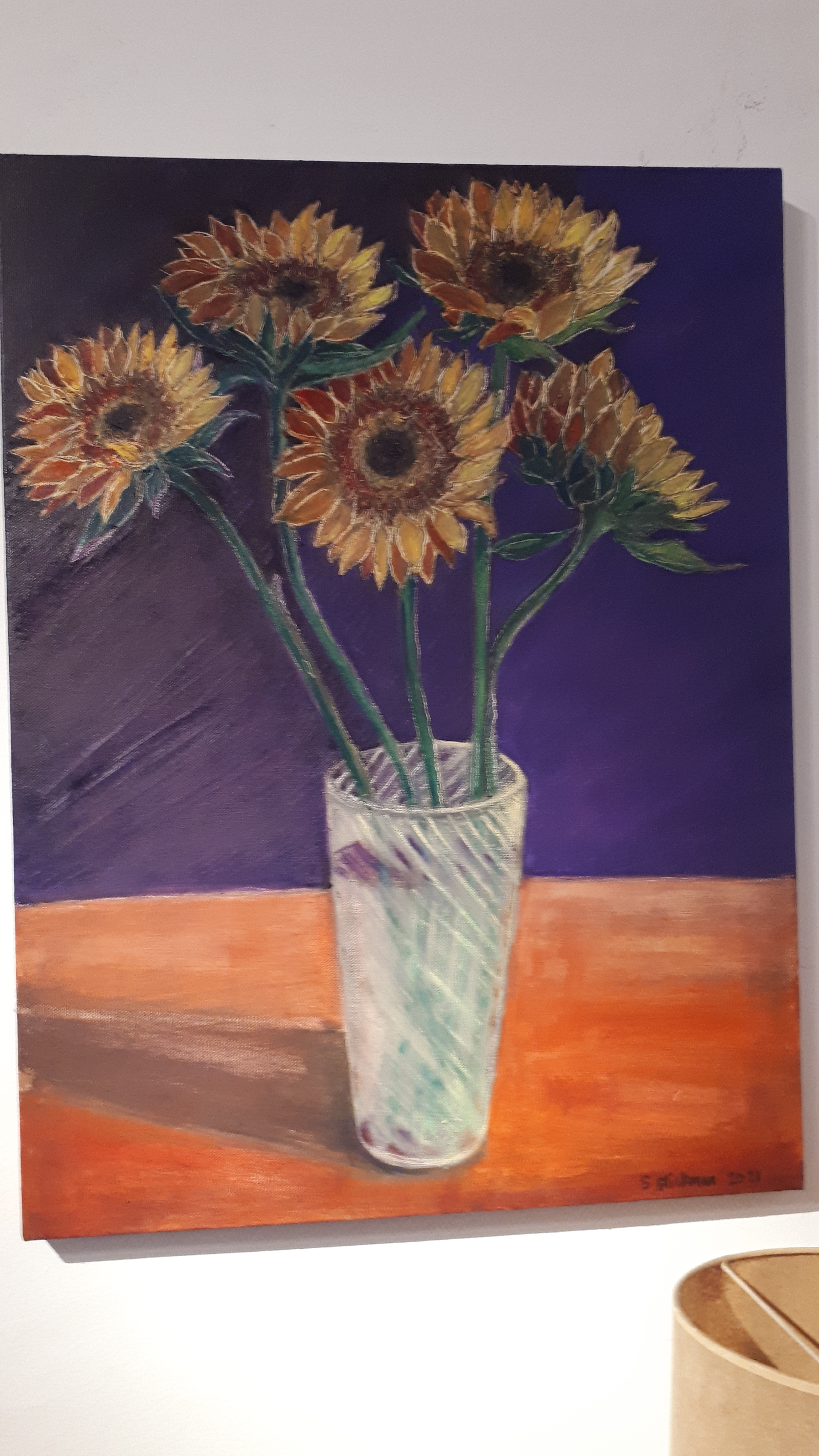














 WordCityLit