




it was the land

no one knew the evil men could do
behind closed doors
no one spoke of it
no one said sorry
and in the end
it was the land
the very land itself
that spoke

it was the land
that carried the secrets
that knew the truth
that yielded a million sorrows
that stopped us like a thunderbolt
in the streets.
god forgive us
the whispers were true

it was the land that spoke for thousands
denied a life. denied a family
denied a mother tongue
and as our grief-filled days
stretched out before us
like a blanket of fear
from the land of the Mi’kmaq to Haida Gwaii
we were numb with disbelief

for it was the land
the very land itself
that spoke to us in the darkness
in the sacred smoke of our ancestors
and in the voices of our children
who whispered on the wind
guiding us
showing us the way

telling us
there will be a time
for coming together
as a nation. as a people. and as a family
to celebrate now
and lift our brothers and sisters
as never before
our tears are never far from the surface

it always gets darker before the light comes back


June 24 2021
pj johnson Poet Laureate of the Yukon
Bio
*PJ Yukon Poet Laureate
On Canada Day July 1st 1994 PJ Yukon (formerly pj johnson), the daughter of a Yukon trapper was formally invested and given the title Poet Laureate of the Yukon during a ceremony in Whitehorse where she became the first officially-invested poet laureate in Canada.
As an oral/visual artist from a Northern storytelling culture her poems, stories, plays and songs have been televised and performed at various venues across Canada and around the world. Her creative works have been published in books and journals globally; translated into several languages, and published widely.
Diagnosed with a learning disorder called ‘Nonverbal Learning Disorder’ or NVLD in 2005, PJ Yukon encourages people with a learning disability to realize they can still pursue their dreams.
Active in the arts for decades as an oral/visual storyteller, mentor, and performer at various venues across Canada, PJ Yukon is also an author, playwright, actor, musician, composer, teller of stories and Yukon ambassador. – If it’s creative she’s probably been there.
Her poem “it was the land” was recently published in McLean’s Magazine and featured at The Lawrence House Centre for the Arts in Ottawa and has been translated into several languages and published around the world. The poem is also available on YouTube performed by PJ Yukon featuring scenes of the Canadian North. https://youtu.be/9oZP7Xl69GQ
Known as the Yukon Raven Lady, in 1985 PJ led a successful campaign to have the Northern Raven declared the official symbol of the Yukon Territory. She is also a passionate animal rights advocate currently campaigning to protect the northern sled dogs.
On Canada Day July 1st 2022 PJ Yukon celebrated her 28th anniversary as Poet Laureate of the Yukon. She is the longest-serving Poet Laureate in Canada.
Her book “it’s howlin’ time!” about the life and times of a northern Canadian poet laureate is available at Mac’s Fireweed Books in Whitehorse. Her Official Website is located at: https://www.yukonpoetlaureate.com/
You can also join PJ Yukon on Facebook and on Twitter!
©®| All rights to the content of this journal remain with WordCity Literary Journal and its contributing artists.

Every so often, we leave our theme open to whatever may be on the minds and hearts (and also in the files) of writers and poets around the world. It feels important for us to not always plan ahead.
For this, our July 2022 issue, that decision has brought about a collection of work that together feels like a humming hive of connected and separate stories and ideas, people, images and laments.
Life happens both inside and outside of the news cycles.
Since our May issue, my own life has moved nearly 4,000kms east of where I was. From Canada’s Northern Alberta Rockies (where I spent three years after leaving the Sea to Sky region of British Columbia), Chefhusband and I drove to Southern Ontario, near the banks of one of the Great Lakes, well below the 49th parallel.
This is wine country. Culinary farms country. A sometimes progressive province. And it is also close enough to the Canadian-American border that I felt the ground move when our neighbour’s Supreme Court stripped away the reproductive rights of women, girls, trans men and non-binary people who can become pregnant.
It felt almost across the street when a ten-year-old Ohio rape survivor had to travel to another state for access to an abortion. (I hesitate to invoke her experience. Not because of the horror, to which we should all bear witness, but because a child becoming a lightening rod feels like a violation of its own).
For people who may be or become pregnant, and may need abortion care, it is a terrifying time.
Because of this, and because access to abortion care is not only an American, but a global, concern that affects millions of women every year, WordCity Literary Journal’s September issue will be dedicated to reproductive rights.
Beyond that, we will also focus on all other kinds of rights and experiences of women and girls, including those of trans women and girls, and people whose physical bodies are or were capable of pregnancy or who couldn’t conceive. The voices of all allies will be welcome, as well.
If you write, or are a visual artist, we hope you will consider adding your voice. If you read, we hope you will watch for us in September.
Our September call for manuscripts can be found here.

Prelude
This month, we have some strange and stunning stories.
First there is an atmospheric and imaginative piece, “Silent Bleat”, full of balloons and rainbows by Mehreen Ahmed, a Bangladesh-born Australian.
Then there is a story by Canadian Mitchell Toews with ruminations on the role and essence of sanctuaries.
“The Rainbow in the Window” by Canadian Stacey Walz is her first short story and follows the heartbeat of a young girl at the end of her life journey in Pediatric Palliative Care.
From Thomas Paul Smith, an Englishman in Dubai, we have “Faithful”, a quirky story, engaging with the seasons and told from the point of view of a store mannequin, making me think of a myriad of AI possibilities.
Finally, “Powdery Wings”, a fiction piece by poet Mansour Noorbakhsh to reflect “the increased sense of despair felt by the young generation under the influence of dictatorship, which leads to illusions and crime in the younger generation, especially in potentially rich countries such as Iran.” No rainbows, but there are butterflies.
Silent Bleat
The sheep floated on the blue, etched on the cloud’s sphere. In the short time that I wrote my story in the sky, they had reshaped into vapour, then pelted down. The rain fell over a garbage dump of a used plastic pond. Children of the narrow alley played in the rain as they crossed it precariously over the wavering surface. The only way to decipher a pond underneath, was by the liquid walks of the nimble feet.
Eight, seven, and nine, the children tiptoed. Only their parents knew their names. They were headed towards a destination—a balloon factory. Hired to make party balloons of many colours, blue, yellow, pink, and red, they made a rainbow of balloons and stacked them up in a corner. Balloons, to be used for birthday parties.

Sanctuary Quandary
When I was quite young, I read somewhere that all places of worship are sanctuaries. Literally.
I took it upon my bored, 1963 Saturday morning self to investigate. Empirically.
I reasoned that if they were to offer sanctuary, churches would have to be open. Unlocked, so that anyone who sought sanctuary would be able to enter and be protected. My litmus test would be to see if the churches of Hartplatz were indeed open.
Our small prairie town was well-equipped to test my theory. In an easy one-hour stroll, I could check the status of a dozen churches.
#
“Mitchell! Waut jefft?” Mr. Vogel said, his big bass booming. “What gets you up so early on a Saturday?”
(photo coming)
The Rainbow in the Window
35 days before Abby died, her family brought her to the children’s hospice in a pain crisis. She wanted to stay at home. It was the only place she wanted to be. In her own bed, in her own room. But this morning her head had started to hurt in a new way. Instead of the usual dull pressure she had become used to, the pain came sharp and fast. Her parents called the palliative doctors and gave her the new dose of pain medication as directed. But when Abby couldn’t keep the medicine down, they decided as a family to go in for help. Abby squinted at the light as her mom pushed her wheelchair towards the building. She was having a hard time focusing but she was relieved to see the building looked like a large colorful house and had plenty of windows. If she had to be here, at least she could still have her rainbows.
33 days before Abby died, she took an amazing bath. With the help of the doctors and nurses she had come out the other side of her pain crisis and could no longer stand the way she smelled. Yes she was sick, but she didn’t want to look sick. Her nurse and her health care aide for the day pushed her bed to the room with the big bathtub while her mom followed close behind. Her nurse turned on her favorite music. The health care aide asked how many bubbles she wanted. Abby said, “All of them!” and her mom helped her get undressed. This wasn’t like her bathtub at home. She could stretch her arms and legs out completely and the tension that had been in her neck and shoulders for weeks, ebbed. She could float. She decided it was wonderful. She stayed in the water until her fingers and toes pruned and her mom made her get out.

faithful
new year’s eve
Sometime before midnight, he walks out onto a balcony. He climbs onto the ledge and stands there — on the tails of an old year, inching precariously toward the new. He spots me below, on the other side of the street. He stops. It has been raining all night. The road holds reflections of the city skyline on the ground, like a dazzling kaleidoscopic painting on a wet canvas. Water drips into the drains, reflecting lights like electric fire. He climbs off the ledge; his eyes remain fixed on me. He smiles but looks embarrassed. Across the road from me, he is two floors up from a tree-lined boulevard. He disappears back into his apartment. I return my attention to the street again. Most of the snow has melted during the day, and now a glossy sheen covers the roads. A small group of revellers come into view, giggling and swigging drinks. They kick and throw what’s left of the snow at one another. Later on it becomes busy. People are rushing hither-thither, I guess from one party to another, before the midnight hour strikes. He has returned to the balcony, now brandishing a flute of champagne in his hand. As the clock strikes midnight, I hear cheering from the cafes and bars. He raises his glass to me and mouths “Happy New Year”. Somewhere fireworks go off. I watch their dazzling colours reflect in the apartment windows in front of me. I scan from window to window, stealing delight from celebrations never intended for me. He remains out in the cold for another hour or so before waving goodbye and returning to his apartment.

Powdery Wings
Perhaps, I have already told you that some years ago I used to work in a small factory located in the south of Tehran. It was close to a large oil refinery plant, and a large cemetery, too. My home was uptown, in a wealthy neighborhood. Unfortunately, the neighborhood of that small factory and refinery and cemetery, so called south-town was poor. The streets were not very different to those of the north-town, but the lifestyle was.
I used to call a taxi for commuting to my workplace every day. You know I am not very fond of driving especially for such long distances. I called an agency close to my home every morning to take me to my workplace and, at the end of day, I called another agency close to that factory to take me back. Uber or Snap and such virtual agencies were not established in those days. A whole year long, I repeatedly made this trip, and experienced a recurring pain, every day.

Networks: Sublime Omnipresence
July 8 was a type of freaky Friday. Rogers’ communications networks went down across the country, which meant that on the morning of July 8 no Rogers customer could use their cell phones, computers, or watch TV anywhere in Canada. But that was just the beginning. Currently, I’m not a Rogers customer (at home we’ve switched from Bell to Rogers and back, depending on who frustrated us least), but when, after a tiring 40-minute walk in the heat, I couldn’t use my debit card to pay for a small, cold bottle of Perrier at our local Fortinos, I realized—damn it!—that I am in fact shackled to Rogers. My bank, it turns out, relies on Rogers to process purchase transactions.
As I stood at the counter, thirsty and unable to buy a drink, it dawned on me that I was lucky to be relatively close to home, unlike many of the folks who drove to work that morning. They could find themselves stranded because they wouldn’t be able to pay for gas—never mind that they’d have to go without a Starbucks or meal the whole day. Nowadays, do people normally carry cash in their wallets? We’re always being reminded not to leave home without it. Is that cash or a card we’re supposed to have with us at all times?
For me, that July 8 Friday was like a day spent in an alternate reality. Rogers went down and consequently I experienced what is known in literary studies as “defamiliarization,” which produces a feeling of estrangement from our daily lives and the larger world. My world felt different; going anywhere now required some planning because I too could be stranded by an empty gas tank, or have our car locked behind the gates of a lot where I couldn’t pay the parking fee. I was also troubled by a frightening, nagging suspicion that something truly awful must have happened to have caused this nation-wide network outage (surely, it wasn’t due to plain old incompetence on Rogers’ part?!). Were we hacked by the Russians, I asked myself, my neighbours, and random people on the street? Haven’t we been warned by experts that we’re all in for a big shock, and that the veneer of smooth, reliable functionality, with all of the conveniences and comforts we’ve come to expect in our lives thanks to a plethora of technologies, was going to be disrupted and we’d get a taste of apocalyptic times or a crisis on a very large scale? What would that look like? I’d wager it would start with us being disconnected, cut off, and unable to perform the many tasks we’ve come to think of as utterly routine.
As you can see, we had reasons for suggesting networks as a theme for our July 2022 issue of WordCity. It’s also possible that no reason was necessary since we also invited readers to be creative, go ahead and interpret the term and idea of networks in the most broad-minded, freewheeling manner. Our reasoning was that any slant or twist, not to mention wholesale reconceptualization, would do because when one stops to think about it, networks are ubiquitous. What’s worth thinking about too is that they epitomize our present way of life much more than was the case even a generation ago. Almost all of our everyday routines, tasks, and even our attempts at rest (now often dubbed ‘unplugging’) involve one or several kinds networks. Moreover, networks have a way of shaping our personal — individual and family lives — as well as our careers in ways many people probably don’t view as salutary but can’t avoid.
A Rainbow
My wife Leslie wanted to tour the Biltmore, but I said we should get a guide and go fly fishing because of the adventure, the natural beauty, and to learn something new. In all my years fishing in lakes and ponds with a rod and reel or a cane pole, I hadn’t attempted my bucket list item of learning to fly fish. I certainly didn’t want any more decorating ideas from a place like the Biltmore for our twice renovated bungalow.
For our guide, we landed an Asheville college student named Blake who was majoring in Recreation. Normally, two people are hired as guides, particularly if a boat is used, but since he understood my wife wasn’t overly interested, and since our son and daughter were teens, he felt he could handle the family by himself. We did pay him extra, however, for gear rental. I knew at some point the teens would be bored and find a place near the visitor’s center to get a signal for their phones. When they were younger and we went to Disney. They enjoyed the pool more than the rides in the theme park or the life-sized characters, which made me feel we could have saved that money for another household honey-do list. When we visited the Grand Canyon, they stood against the fence, gazed into the canyon, and exclaimed, “It’s just a big crater.” I had faith that our fly-fishing excursion might be a bit different.
I Like the Shades
The world is filled with advice on how to deal with one of its most common events: death. The advice is meant to tell you how you should feel, and what will happen. From the funeral home, I received The Reality of Grief, I Know Someone Who Died colouring book, and Thoughts for the Lonely Nights, among others that I can’t remember. I found the whole recommended process of processing loss a bit stifling, a bit cold, a bit black and white. These well-wishers, experts, people at the grocery store, and others — they were all missing one very key component: that they weren’t my dad and therefore couldn’t possibly know what he would’ve said, or what he’d have wanted.
I smiled and nodded and accepted all the sympathy and support with the gratitude these deserved. I glazed that smile, tuning out whenever the sympathy and support tried to morph into a lesson, a lecture. But then one of these conversations took a different turn, when a pair of kind old eyes looked at me and told me a story about their own journey in such a way that I didn’t feel I had to act a certain way. I could just take their offering of humanity, of caring, and put it in my box of things that comfort me. This box was one I pulled out frequently during this time, as I tried to piece together all the parts of my dad without him there to confer with. These eyes created such a shift in perspective that I began to document similar instances to tuck away alongside.
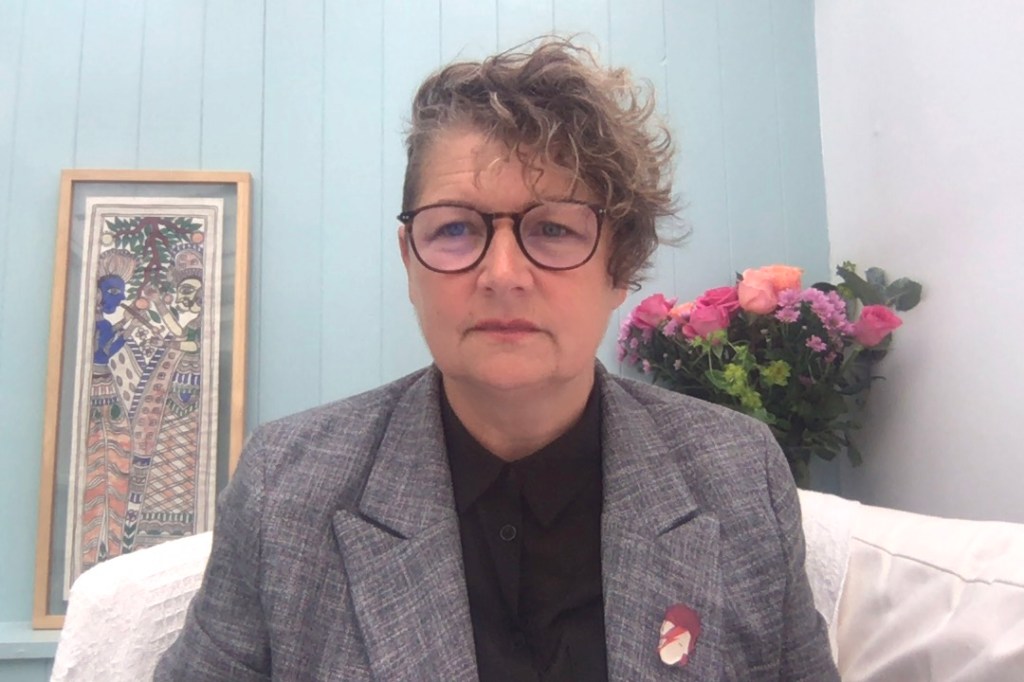
For this issue of WordCity I’m beyond excited to be interviewing Kaite O’Reilly. Kaite is a multi award-winning writer and dramaturg. Her body of work includes, poetry, prose, radio drama, screen and theatre.
Kaite, I hardly know where to start, you are such a Renaissance woman and there are so many questions I’m desperate to ask! Maybe it’s best to start at the beginning. What drew you to the world of dialogue – scriptwriting, screenwriting, playwriting? Did you love role-playing as a child? Was this part and parcel of your studies?
Thank you for such a warm and lovely opening! I come from a family of storytellers – people who enjoy communicating and sharing experiences, the words alive in their mouths. Both of my parents were wonderfully entertaining and inventive with spoken language – they hadn’t received a huge amount of formal education, but like many Irish people, they were engaged and curious about the people and the world around them and were always talking, having a bit of craic. I learnt from them the richness and joy of communication. My mother and father were wonderful talkers. No wonder I became a playwright.
What a lovely way into this world of creativity!
I think many writers find dialogue quite tricky and in a play or film the characters’ speech is really exposed and has to be absolutely spot on. What advice would you give writers who want to improve their dialogue skills and find distinctive voices for their characters?
I think you have to love language and delight in paying attention to it in order to write good dialogue… listen to how people around you talk – what foibles, linguistic gymnastics or rhythms they use. Pay attention.
Read aloud any dialogue you write, noticing how it flows, where you may stumble because there’s a syllable too many, etc.

The Pitfalls and Pleasures of Summer Reading
Books considered:
No Escape, Nury Turkel (Hanover Square Press 2022)
Bad Trips, Slava Pastuk (Dundurn 2022)
Sea of Tranquility, Emily St. John Mandel (HarperCollins 2022)
Pure Colour, Shelia Heti (Anansi, 2022)
The Book of Smaller, Rob McClennan (University of Calgary Press 2022)
My Grief, the Sun, Sanna Wani (Anansi 2022)
Arborophobia, Nancy Holmes (University of Alberta Press 2022)
Beast At Every Threshold, Natalie Wee (Arsenal Pulp Press 2022)
The Butterfly Cemetery, Franca Mancinelli (Bitter Oleander Press 2022)
One of the reasons we regularly indulge in our literary pleasures is escape from the harsh realities of the world, those situations that oppress our sense of the sanctity and dignity of the individual citizen and their freedom from the unlawful activity of criminals or malign state apparatus. Obviously, the pleasures of the text itself cannot be denied or ignored, yet the escape mechanism is all too real. And it is daring, fearless reportage that often brings that harsh reality to our ken.

Ribbon

I've seen it, unexpectedly enough,
a few times, as I've hurried through my day,
hushed and losing things, everything really,
that I've ever cherished, wanted to keep.
Have you, from the window of your Uber,
ever caught a glimpse of the foil paper,
the need-me crimson ribbon with the ruffled bow?
I don't go back. No. But there it will be,
across the avenue, shining with rain.
Once, dangerously close, I touched the tape,
frayed, unstuck, like you'd also been right here,
not peeling back the wrapping for a peek of
the gift that's addressed to the two of us.

Small opportunities are often the beginning of great enterprises.

After years of living on earth,
searching for that next great enterprise,
I gave up trying, deciding to wait my time

until I entered the next phase of existence,
whether it was Heaven or Hell, one of
the last two opportunities in my next life,

then begin the process all over again, and when
that time comes, I will be rooting for heaven,
dreaming of a second chance.
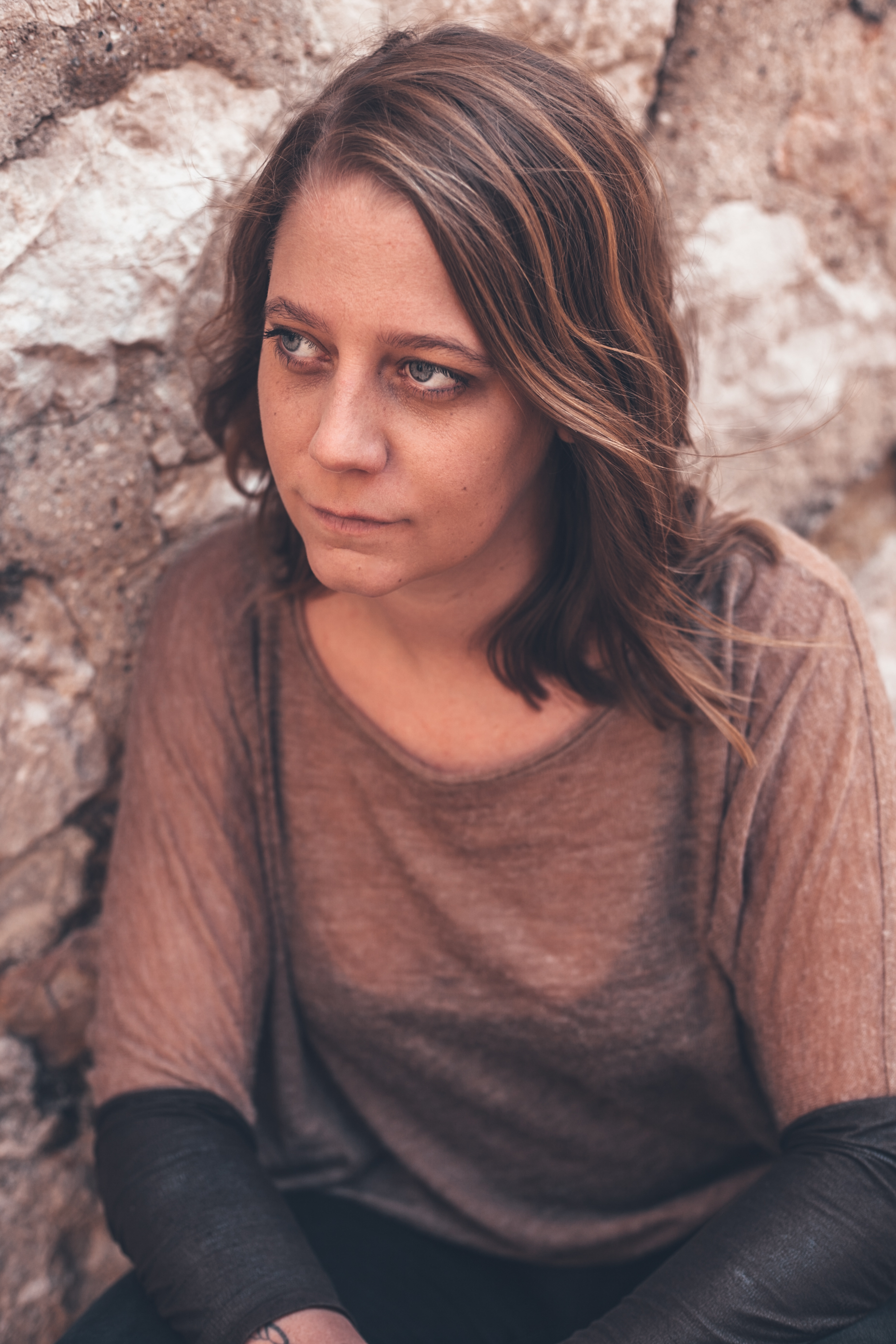
Poetic Prose from Dialyzing
That woman, having sunk into what, from now on, is no longer her: a desire will deliver her into the world, through her membranes. Her birth will always be an injunction, a bleeding. An oedema on the sea.
By way of illustration, this is how desire overwhelms her. It calls her Aurore.
*
Here she is, in her soul, at the edge of a cliff;
Facing the ocean, standing there, at the brink of the sky.
An in-between moment.
She erects a membrane there.

Elegy for Goldfish II: A Failed Acrostic

“…[M]ost errors consist only in our not rightly applying names to things.” Baruch Spinoza, The Ethics

Stillness swam so uninformed!
Obviously uniformed,
Limit-touching creatures loved you.

Oafish me; love’s interstate
Mastered loss. The interest rate
Operated on what loved you

Nearly as long as the strife-
Stricken striving in each life
Held you. Ferruginous slush funds loved you,

Extra sure and iron-rich.
Frozen by reason’s heat: my sitch…
Famous sylvan skylines loved you.
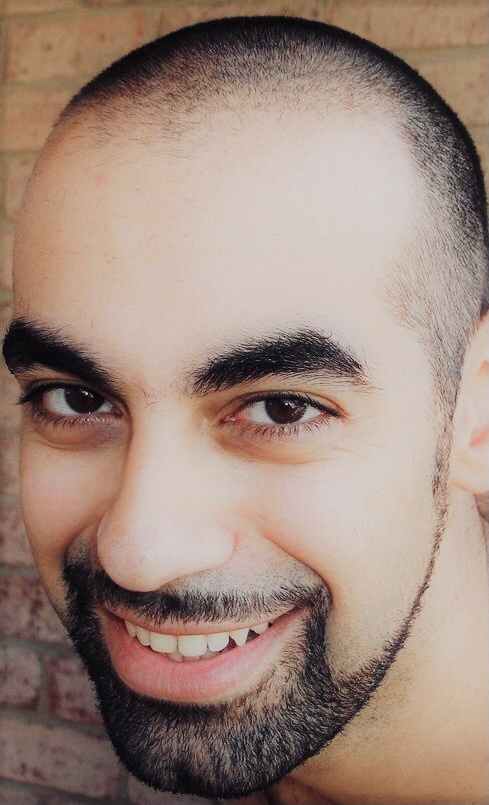
What is the Desert?

It’s forgetfulness
of trivia
and noise:

the city
or ego

Remembrance
of essences:

silence
stillness
and G_d.

It’s the stormy story of the sea
recollected in tranquility

death and birth and death
and transformation—

a gift granted only
to the patient
who surrender.
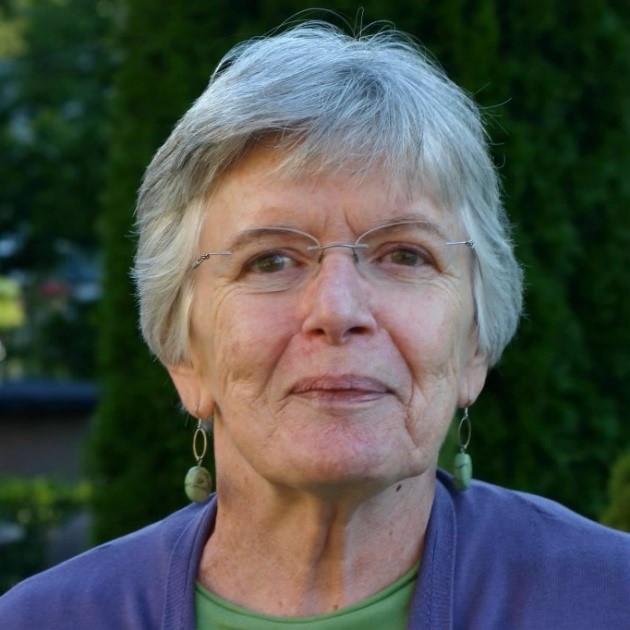
The Ties That Bind

I am of fieldstone walls,
thundering seas. I am of salt air,
of sand squeaking in summer heat,
of snow squeaking in winter cold.

I am of Tammany Hall and the chicken
it put in my childhood pot. I am
of urban grit, its attendant grind.
I am of unskilled labor,

of the guy who knows a guy who’ll fix
your furnace when the landlord
won’t and while he’s at it
fix your parking tickets.
Lament for America
Jackboots on the ground!
I hear jackboots on the ground
That unmistakable sound
Of black polished leather
Smashing onto asphalt
That thunderous thud of spit polished boots
Striking the ground in unison
Worn by young men
Idealistic young men
Who believe their cause to be true.

In far away lands they dream
One day they will live in America
The American dream
Free expression
Rule of law
Where no one is above the law.
along the glass door

this poem is supposed to talk
about your character
but i don’t know you much

it’s not true too if i say
i don’t know you, since
i know how much you have changed me

if it talks about changes you made to me
thus, it speaks about you
Unrelenting

Word sentence stanza,
Metaphor a portal

To image and after,
the form taking shape

Despite incessant shifting,
the delightfully imprecise

Shaking free of perception,
The writer being written

Out of the narrative
As the hat is fitted

On the outgoing head,
The rain unrelenting.

Cherish The Memory of the Heaven

Today I would like to thank the world that looks like the hell.
It makes the fire that cherish the memory of the Heaven burning inside me;
it reminds me of the precious fruit of the sweet golden tree.
Those palaces and towers swirling music from outer space,
those giants whose bodies are limpid and happy,
those oceans are blue cocktails,
those rivers are the nectar of the soul;
However, those mountains float in the sky like clouds, layer upon layer.
None of stone has no transparent smile.
The wind pass through the body and sings mysterious words.
None of flowers will wither,
as if old sun is both eternal and young.
Tellus's Plea

Call Cyclops!
People with two eyes have become blind!
Have lost their sane mind
have lost the spirit of being kind.
They lie, cheat, deceive and rob
do not leave a single grain, on the cob
Call Cyclops!
for he may see
the cruelty killing and rape
the guilty making good their escape.
Call Cyclops!

I Rise

I rise above every sickness,
I dwell in the realm of good health.
I rise above every stagnation,
I dwell in the realm of progress.
I rise above every hatred,
I dwell in the realm of love.
Float

Bills change hands. The politician
keeps a pen in his pocket for autographs
a separate one for thorazine injections.

Babies require handshakes. He has
an unreasonable fear of bridges.
Wind across the elms banks left,
sends another flock of laws across the mall.

Only in cherry blossom season
is this kind of graft common,
or even permitted. Two hunters
in camouflage raise their twelve-
gauges, gaze through scopes.
Monkeys cling to the Jefferson Memorial.

The Defendant

Say what you will. Swear by the lifted book.
Slowly lift up your gentle face and look.
There shall be no safe questions. I sit to trace
Your life beyond the confines of the case.
When all is said and done, there must remain
Among the detritus of slipshod rain,
Between the callous solace and the real,
In fine, the fine print of the broken deal.
Beyond the foofaraw of life spent in
The fearful meditation on loss and ruin,
There is a country where the trees all knot
Into the stunned kinesics of a thought,
And lift up crooked waftures to the sky —
There shall you be exiled. To dream and die.
WordCity Literary Journal is provided free to readers from all around the world, and there is no cost to writers submitting their work. Substantial time and expertise goes into each issue, and if you would like to contribute to those efforts, and the costs associated with maintaining this site, we thank you for your support.
Choose an amount
Or enter a custom amount
Your contribution is appreciated.
Your contribution is appreciated.
Your contribution is appreciated.
DonateDonate monthlyDonate yearlyMitchell Toews. Sanctuary Quandary
Stacey Walz. The Rainbow in the Window
Mansour Noorbakhsh. Powdery Wings
Olga Stein. Networks: Sublime Omnipresence
Niles Reddick. A Rainbow. College Graduation
Grace Curry. I Like the Shades
Gordon Phinn. The Pitfalls and Pleasures of Summer Reading
Kaite O’Reilly. Multi award-winning writer and dramaturg
pj Yukon, Poet Laureate of the Yukon. it was the land
Charline Lambert. translated by John Taylor. Poetic Prose from Dialyzing
Mary Alice Williams. The Ties that Bind
Jameson (Jason) Chee-Hing. Lament for America
Mansour Noorbakhsh. along the glass door
Yuan Hongri. translated by Yuanbing Zhang. 5 poems
Anjum Wasim Dar. Tellus’s Plea
WordCity Literary Journal is provided free to readers from all around the world, and there is no cost to writers submitting their work. Substantial time and expertise goes into each issue, and if you would like to contribute to those efforts, and the costs associated with maintaining this site, we thank you for your support.
Choose an amount
Or enter a custom amount
Your contribution is appreciated.
Your contribution is appreciated.
Your contribution is appreciated.
DonateDonate monthlyDonate yearly
Every so often, we leave our theme open to whatever may be on the minds and hearts (and also in the files) of writers and poets around the world. It feels important for us to not always plan ahead.
For this, our July 2022 issue, that decision has brought about a collection of work that together feels like a humming hive of connected and separate stories and ideas, people, images and laments.
Life happens both inside and outside of the news cycles.
Since our May issue, my own life has moved nearly 4,000kms east of where I was. From Canada’s Northern Alberta Rockies (where I spent three years after leaving the Sea to Sky region of British Columbia), Chefhusband and I drove to Southern Ontario, near the banks of one of the Great Lakes, well below the 49th parallel.
This is wine country. Culinary farms country. A sometimes progressive province. And it is also close enough to the Canadian-American border that I felt the ground move when our neighbour’s Supreme Court stripped away the reproductive rights of women, girls, trans men and non-binary people who can become pregnant.
It felt almost across the street when a ten-year-old Ohio rape survivor had to travel to another state for access to an abortion. (I hesitate to invoke her experience. Not because of the horror, to which we should all bear witness, but because a child becoming a lightening rod feels like a violation of its own).
For people who may be or become pregnant, and may need abortion care, it is a terrifying time.
Because of this, and because access to abortion care is not only an American, but a global, concern that affects millions of women every year, WordCity Literary Journal’s September issue will be dedicated to reproductive rights.
Beyond that, we will also focus on all other kinds of rights and experiences of women and girls, including those of trans women and girls, and people whose physical bodies are or were capable of pregnancy or who couldn’t conceive. The voices of all allies will be welcome, as well.
If you write, or are a visual artist, we hope you will consider adding your voice. If you read, we hope you will watch for us in September.
Our September call for manuscripts can be found here.
WordCity Literary Journal is provided free to readers from all around the world, and there is no cost to writers submitting their work. Substantial time and expertise goes into each issue, and if you would like to contribute to those efforts, and the costs associated with maintaining this site, we thank you for your support.
Choose an amount
Or enter a custom amount
Your contribution is appreciated.
Your contribution is appreciated.
Your contribution is appreciated.
DonateDonate monthlyDonate yearly
Powdery Wings
Perhaps, I have already told you that some years ago I used to work in a small factory located in the south of Tehran. It was close to a large oil refinery plant, and a large cemetery, too. My home was uptown, in a wealthy neighborhood. Unfortunately, the neighborhood of that small factory and refinery and cemetery, so called south-town was poor. The streets were not very different to those of the north-town, but the lifestyle was.
I used to call a taxi for commuting to my workplace every day. You know I am not very fond of driving especially for such long distances. I called an agency close to my home every morning to take me to my workplace and, at the end of day, I called another agency close to that factory to take me back. Uber or Snap and such virtual agencies were not established in those days. A whole year long, I repeatedly made this trip, and experienced a recurring pain, every day.
You know, I am a terrible speaker, because I used to talk to drivers all the time during those travels.
A few drivers worked in each agency, so each day of the week one of those drivers came with his own car. But sometimes it so happened that a new driver only came for that trip and did not come back. I presume he moved to another place or had been hired somewhere else and hopefully not struck with illness or other misfortune.
Did I say pain? Yes, everyday pain, you know, I am a terrible speaker. What we talked about during each trip was different depending on the driver and the direction. The drivers of each direction had some differences in their ages, habits and so on. Most of the drivers from the north-town agency were middle aged, retired men. As such, their conversations’ focuses were normally illnesses like backpain, knee pain and/or inflation and how to manage their income. The drivers from the south-town agency were almost the opposite—mostly very young men, many of them jobless, hopeful to become educated, wealthy, and sometimes suffering from a breakup because of unstable income and social position. Those who never reappeared to drive me home, likely faced such struggles or misfortunes. Did I say some drivers just came for one trip and disappeared after that? Yes, it happened.
One incident surely stuck with me. One afternoon, in a hot and long summer day, a very young man came with his car to drive me home. He was a new driver, well dressed, shaven, with neatly combed hair. Well, you know such boring days when sunrays scorch that godforsaken oil refinery alongside the cemetery. I don’t remember how our conversation started. Though it was clearly not a two-sided conversation he was probably talking to himself most of the time; and didn’t so much need an audience to believe him, he just needed me to help him aspire to more.
He recounted how he finally had found his mother, who was living in Denmark. At one of the Internet Cafés established around the city in those days, he had been sending some emails to someone he presumed was his mother. Never having seen his mother —he had been raised by his father in early childhood, then later by his uncle or aunt. (It was hard for me in this heat to keep track.). He seemed deeply sad, but he was pretending to be happy because he had access to the internet and was self-assured and educated enough to send and receive emails. He talked about moving to Denmark as if it were next door. Although I am a terrible speaker, I was mute, totally mute at that point and unable to join in the conversation.
Do you remember when we spotted a butterfly and tried to catch it, we had to hold our breath and avoid making any noise, worried about losing the butterfly? Then the butterfly was scared and flew away as always. Conflicted with my inner thought and feelings at that moment, I was afraid of saying the wrong thing and ruining his dreams.
We left the oil refinery close to that cemetery behind, and up to having almost reached my place, he was talking about how he was sure about the future and his mother in Denmark. Suddenly, his car rattled, slowed down, and eventually stopped in the street. Those godforsaken cars. I’m not even sure how they were able to get around the city in those cars. Left with no better choice, we jumped out of the car and together pushed it to the curb. He had to call a mechanic. He was going to call another taxi for the rest of my trip. I paid him and, after a warm thank you, I declined and said I’d like to walk the rest of the way. Although we were still a bit far from my home, it was possible to walk. After a few steps I turned, I don’t know why, but I turned, then saw that he was walking desperately around his car, looking downward. My last memory of him is him kicking his car tire angrily.
Mansour Noorbakhsh writes and translates poems in both English and Farsi, his first language. He tries to be a voice for freedom, human rights and environment in his writings. He believes a dialog between people around the world is an essential need for developing a peaceful world, and poetry helps this dialog echoes the human rights. Currently he is featuring The Contemporary Canadian Poets in a weekly Persian radio program https://persianradio.net/. The poet’s bio and poems are translated into Farsi and read to the Persian-Canadian audiences. Both English (by the poets) and Farsi (by him) readings are on air. This is a project of his to build bridges between the Persian-Canadian communities by way of introducing them to contemporary Canadian poets. His book about the life and work of Sohrab Sepehri entitled, “Be Soragh e Man Agar Miaeed” (trans. “If you come to visit me”) is published in 1997 in Iran. And his English book length poem; “In Search of Shared Wishes” is published in 2017 in Canada. His English poems are published in “WordCity monthly” and “Infinite Passages” (anthology 2020 by The Ontario Poetry Society). He is a member of The Ontario Poetry Society and he is an Electrical Engineer, P.Eng. He lives with his wife, his daughter and his son in Toronto, Canada.
WordCity Literary Journal is provided free to readers from all around the world, and there is no cost to writers submitting their work. Substantial time and expertise goes into each issue, and if you would like to contribute to those efforts, and the costs associated with maintaining this site, we thank you for your support.
Choose an amount
Or enter a custom amount
Your contribution is appreciated.
Your contribution is appreciated.
Your contribution is appreciated.
DonateDonate monthlyDonate yearly
faithful
new year’s eve
Sometime before midnight, he walks out onto a balcony. He climbs onto the ledge and stands there — on the tails of an old year, inching precariously toward the new. He spots me below, on the other side of the street. He stops. It has been raining all night. The road holds reflections of the city skyline on the ground, like a dazzling kaleidoscopic painting on a wet canvas. Water drips into the drains, reflecting lights like electric fire. He climbs off the ledge; his eyes remain fixed on me. He smiles but looks embarrassed. Across the road from me, he is two floors up from a tree-lined boulevard. He disappears back into his apartment. I return my attention to the street again. Most of the snow has melted during the day, and now a glossy sheen covers the roads. A small group of revellers come into view, giggling and swigging drinks. They kick and throw what’s left of the snow at one another. Later on it becomes busy. People are rushing hither-thither, I guess from one party to another, before the midnight hour strikes. He has returned to the balcony, now brandishing a flute of champagne in his hand. As the clock strikes midnight, I hear cheering from the cafes and bars. He raises his glass to me and mouths “Happy New Year”. Somewhere fireworks go off. I watch their dazzling colours reflect in the apartment windows in front of me. I scan from window to window, stealing delight from celebrations never intended for me. He remains out in the cold for another hour or so before waving goodbye and returning to his apartment.
spring
Life has returned. People on the street look fresh and rested from their winter hibernation. It’s as if they too are sprouting the first shoots of optimism for what the year has in store.
One hazy morning I am forced forward with a violent strike. I’m stripped—my clothes torn away with impatient hands. An overweight woman huffs and puffs as she picks up my scattered clothes from the floor. She leaves. I’m left naked. A few people in the street notice me, but no one cares. Later that morning a young store assistant walks over to me. With gentle hands, she slips my arms into a white crepe shirt. The two top buttons left undone. She lowers me onto the worn carpet to get a pair of tights on me. This is something she hasn’t got the knack of. It takes her a long while to get them on; she has to wiggle my feet about to get them over my heels. It gives me a chance to look around the store. The other models are poorly made, and some are downright grotesque — missing limbs and decapitated bodies. I try not to judge, but some of the clothes they wear — good heavens! None of their outfits matches. Once I am back upright, she pulls a knee-length blue pencil skirt around my waist. The look is complete with a matching blazer. A business suit! I feel power and authority hum through my plastic body. The young woman repositions my arms before leaving. I now stand with authority, arms folded across my chest—the ruthless stance of the modern business age.
He says he wants to be my boyfriend. He tells me he loves me. Maybe he does. In the evenings I usually see him. He once told me this is his favourite moment of the day. I want to be a good girlfriend, so it is my favourite moment of the day also. When he first came into the store, he was nervous. It was only a couple of days into the new year. On a meandering journey towards my window, he stopped several times. He pretended to look at clothes on a rack or to look at his watch. When he stood by my side, he introduced himself, almost in a whisper. He often glanced around the store and touched his face when he spoke. He told me he felt the need to explain his actions from New Year’s Eve. He said it had been six months since he last spoke to Maria, his ex-girlfriend; we don’t like her or her new boyfriend, Kenny. He tells me they had been through difficult times before and assumed they would get through this one. They had a fantastic social life, both together and separately. Then one night, she left without warning. She phoned him two days later to explain that she’d met someone else. My boyfriend imagined Maria and her new boyfriend celebrating New Year’s Eve together. Maybe on some exotic beach — drinking fluorescent cocktails and giggling under a warm sun. He said that night in his apartment; he could hear their laughter echoing around his head. He said he would never have gone through with jumping. He tells me he is dependable.
summer
The endless days and humid nights can mean only one thing: summer has finally arrived. It warms the street, igniting the weeds and grasses that grow in the cracked pavement.
Customers now fill the store daily. They rush about, caught up in the heat and frenzy of the long days. Gone is my business attire. The young assistant has given me a beautiful cotton dress and matching sandals. My legs feel the warmth of the morning sun shining through the store window. I also have a new posture! It’s the pose of someone who should be carefree and ready to embrace the world — a hand on my hips, one arm flying in the air and a twist in my waist. The dress and happy-go-lucky demeanour do have their downsides; the men on the street leer at my breasts and hips and partially exposed legs as they walk past the window. My boyfriend never leers. When he tells me he loves me, I can see happiness on his face. There is no reply. My lips do not move. My face remains static. None of this matters. For the first time, he visits me during the workday. He should be in the office, but he is ill. He suffers from hay fever and has taken two days off. He comments on my new dress; he likes my new look. My boyfriend has more confidence now. He no longer appears awkward. He stands up straight. One day he says, ‘I got you this.’ He puts a thin silver bracelet on my wrist and beams. When he leaves, I hear the women from the department store snigger. They call my boyfriend a ‘weirdo’ and an ‘oddball.’ He sometimes talks about all the little things Maria said that upset him. He has a long list. I think this is why I appeal to him. Outside, people’s responses are unpredictable, frightening or demeaning in his world. Wrong reactions seem to upset my boyfriend. I give him a predictable comfort; I have never said an unkind word to him. I cannot offend him by being aloof or giving him an upsetting look. Our relationship is sterile but clean and free from the usual strains.
autumn
The nights grow darker, with the last of the summer fruits eaten. Leaves lay glossy on the rain-washed street.
I have a seductive bedroom look, a sensual bodysuit with a strappy open front and keyhole crisscross-lacing back. It’s made to thrill, complete with a bold red robe. My hand has been placed across the top of my chest, with the other resting by my side. It is a beautiful pose to bring out my desirability and femininity.
My boyfriend is taken aback the first time he sees my new look. He is nervous, like the first time we met in the store. After a few more visits, he gains confidence. When no one in the store is looking, he tenderly strokes my leg. Sometimes he holds my hand as he tells me about his day. His palms are always sweaty. He is thoughtful. He always asks me questions like, ‘Are you warm enough?’ He never looks at others as he walks over. His passionate eyes are permanently fixed on mine. Does it matter if I’m not real? It doesn’t matter to my boyfriend. When a man stares at a naked woman, is it her personality he is interested in? Is a woman’s personality not something that some men wish to escape from? One time his phone rang while we were together. He pulled it out and scoffed at it. ‘Now she calls when I’m finally happy again.’ He hangs up and replaces the phone into his jacket. I heard today he might be going to Hong Kong next month for a business trip. ‘It’s up in the air right now, but if it does happen, I’ll bring you back something nice.’ His gaze goes down my body before he looks back up at me and caresses my cheek. ‘It’ll only be for a week… Absolutely not, work only. I have no intention of visiting those places.’
winter
The bitter wind outside reminds us that winter is approaching fast. I observe frost glistening on the pavement in the morning half-light. Within the apartment block across the road are every child’s Christmas dreams.
A new store assistant dresses me. She is middle-aged and has a large face with plump lips and a thick mask of makeup. She handles me firmly but not with malice. She turns around as she removes my lingerie. I inspect the other models — they’ve not had a good year. Most have cracks in their skin, and all have scraggly hair. When the assistant is finished, I am back, staring out the window. I’m wearing a beautiful vintage-inspired mint-green winter coat, a perfect antidote to any winter blues. Made from luxurious, soft materials with a detachable hood and faux fur trim, she has even teamed my outfit with a pair of matching gloves and a cosy knitted scarf.
Snow begins to fall. I watch as cascading flakes dance on the wind. My boyfriend is walking down the street; plumes of his breath rise into the slate-grey sky. I see him approaching behind me in the reflection of the store window. We look like a washed-out photograph. When he does turn to face me, he still has snowflakes in his hair. He tells me he likes my new coat and says I look ‘homely’. Then he explains that he turned down his business trip because he couldn’t be away from me. The way my boyfriend looks tells me I should be happy, so I am happy. He reminds me it’s been almost a year since we first met. He tells me he has a particular question to ask me tomorrow. My boyfriend looks excited.
When the store is closed at night, a middle-aged store assistant talks to some men; I hear them say I will be relocated to a new flagship store in a big city. I take a last look across at my boyfriend’s apartment. I guess I am also capable of betrayal. I wonder what he wanted to ask me tomorrow. I’m escorted to a van. As I am driven away into the winter night, I guess we’ll see how much he really does love me, as he said he does.
Thomas Paul Smith is a writer from London, England. He works as a radio show producer in Dubai.
WordCity Literary Journal is provided free to readers from all around the world, and there is no cost to writers submitting their work. Substantial time and expertise goes into each issue, and if you would like to contribute to those efforts, and the costs associated with maintaining this site, we thank you for your support.
Choose an amount
Or enter a custom amount
Your contribution is appreciated.
Your contribution is appreciated.
Your contribution is appreciated.
DonateDonate monthlyDonate yearly
The Rainbow in the Window
35 days before Abby died, her family brought her to the children’s hospice in a pain crisis. She wanted to stay at home. It was the only place she wanted to be. In her own bed, in her own room. But this morning her head had started to hurt in a new way. Instead of the usual dull pressure she had become used to, the pain came sharp and fast. Her parents called the palliative doctors and gave her the new dose of pain medication as directed. But when Abby couldn’t keep the medicine down, they decided as a family to go in for help. Abby squinted at the light as her mom pushed her wheelchair towards the building. She was having a hard time focusing but she was relieved to see the building looked like a large colorful house and had plenty of windows. If she had to be here, at least she could still have her rainbows.
33 days before Abby died, she took an amazing bath. With the help of the doctors and nurses she had come out the other side of her pain crisis and could no longer stand the way she smelled. Yes she was sick, but she didn’t want to look sick. Her nurse and her health care aide for the day pushed her bed to the room with the big bathtub while her mom followed close behind. Her nurse turned on her favorite music. The health care aide asked how many bubbles she wanted. Abby said, “All of them!” and her mom helped her get undressed. This wasn’t like her bathtub at home. She could stretch her arms and legs out completely and the tension that had been in her neck and shoulders for weeks, ebbed. She could float. She decided it was wonderful. She stayed in the water until her fingers and toes pruned and her mom made her get out.
30 days before Abby died, she made a new rainbow sun catcher with the help of the Child Life Specialist. She still knew how to do it of course but her muscles felt so tired lately. Her parents let her put a rainbow in every window at home. There was nothing she liked more than the seeing the sun shining through the windows in so many colors. It was hard to talk about home, but it also felt good because it was all she could think about. So while she painted she shared how much she missed her big brother, who was at home with her grandparents. And how much she wished she could be with their dog Marty, who usually slept in her room at night.
28 days before Abby died, she started school again. It wasn’t the same as going her to junior high school but at least she knew the teacher. It was the same cheerful lady who had spent time with her when she was in the oncology unit. Abby was glad she could see her in this new house. In weeks past they would have worked on homework and school projects but today, Abby wanted to write letters. Two months ago Abby wrote in her journal every day but now using a pen for even a few minutes was difficult. So with the teacher’s help, Abby found the words for her parents and her brother. They put the letters in colorful envelopes and Abby asked her dad to keep them safe.
27 days before Abby died, she had a headache that ruined her day. It started before lunch while she was playing a board game with her parents and it kept getting worse. They moved her back to her room and her dad noticed that she kept turning her face away from her window. The light was making her headache worse. There was nothing she wanted less than to be stuck in a dark room, but she was too tired to find the words to tell him that. And so, her dad closed the blinds and unknowingly shut out her rainbow. Abby tried not to think about it while she tossed and turned.
26 days before Abby died, her favorite health care aide was working. She spent 40 minutes in Abby’s room giving her the most amazing neck massage. It helped, and Abby whispered, “Thank you.”
24 days before Abby died, they had a family meeting. The doctors, her nurse and the Social Worker were there. Abby liked her too. She made talking about sad things easier. Abby could see that her parent’s shoulders were tense as they all discussed how Abby had been feeling lately. Family meetings had been part of the deal she and her parents made 2 years earlier when they’d received her cancer diagnosis. Abby would always be included and today was no exception. The consensus was, that the best way to manage her pain at this point, was to stay at the hospice. Abby felt the tears come as she realized she would never again sleep in her own room. Her parents held her hands. She cleared her throat and made a request. The room listened closely as her voice was weak.
23 days before Abby died, her family officially moved into the hospice. Her whole family. Abby’s room reminded her of a hotel. Her bedroom door opened into the living area, which had its own small kitchen. Beyond that she could see the door to her parent’s bedroom. Her brother chose to sleep on the fold down bed next to Abby’s and even her beloved Marty was there. The nurses loved Marty immediately and it seemed like everyone in the house came to say hello and give him a pat. That night Abby announced that they were overdue for a family movie night. Even though she didn’t eat much of anything anymore, Abby insisted the popcorn was made and enjoyed. She smiled to herself as she watched her family and the movie started.
20 days before Abby died, her nurse talked to her family about mementos. They decided to make them in the afternoon once Abby had a good nap. They looked at the list of options and had a good chuckle about the ‘lock of hair’ idea. Abby’s hair had grown back a bit since the treatments stopped and she even had faint eyelashes, but unless they wanted to shave her head, there wasn’t much to work with. The handprints were cool. Abby chose all of the colored paper and made sure Marty and his paw prints were included as well. The Child Life Specialist came in to help with the hand molds. It was a bit tricky finding a comfortable way for them all to sit and get their hands in one bucket but somehow, they did it.
18 days before Abby died, she was excited. Her family and the house staff were working their hardest to organize a belated birthday party for her. Her 13th birthday had come and gone in the middle of her last round of radiation, and she had been so tired that they hadn’t done much that day. They told her that this party had no limits. So, she said yes to dancing, decorations, friends – all of it. She just hoped she would feel well enough.
17 days before Abby died, she had a spa day with her mom. Some wonderful volunteers came to the house, and they put a “NO BOYS (EXCEPT MARTY) ALLOWED” sign on the door. Abby felt like a princess as her nails were painted. Then she spent an hour picking out which clothes she would wear to her party the next day.
16 days before Abby died, she wanted to cry. It was the day of her party and she woke up feeling very sick. Her friends weren’t coming until the afternoon, so the doctors and nurses worked closely with her the whole morning to get her nausea under control. By lunch time she felt steady enough to sit up and her dad gave her the special surprise of a professional makeup artist who was there just for her. Once she was changed into her special outfit (she hoped she didn’t get sick on it), her nurse and health care aide moved her to the party room. Abby gasped when they brought her through the door. She had only been in this room once before when the floor to ceiling windows had the blinds down. But today, the blinds were up and all around her were dozens and dozens of rainbow sun catchers. She had no idea how they had made so many, but she had never seen anything so wonderful. For the rest of the afternoon Abby managed to forget her nausea. She laughed and smiled, soaking up every moment with her family and friends. She hoped that the sun would never set so the rainbows could glow forever.
12 days before Abby died, she couldn’t bring herself to eat or drink anything. It rarely felt like she had any breaks between headaches now. After a short bath she remembered feeling her muscles stiffen and then nothing else. She was told she’d had her first seizure. The looks on her parents faces told her it hadn’t been good. Her body was exhausted. The doctors and her nurse met with her family again. A new medication plan was made and this time they said, she would feel like sleeping a lot. Abby looked to her window and winced at the sun. Her parents hugged her as tightly as they dared. She reminded them of her one request. She turned her head away but watched the shadow of the window blinds as they slowly went down.
9 days before Abby died, she lost track of time. Sometimes she would wake up and for a few minutes see her loved ones close by. She caught glimpses of her grandparents, her aunts and uncles. Even her teacher and the oncology team who had seen her through the last 2 years came to see her. Her heart filled with love and then her eyes would close again.
6 days before Abby died, the morning shift staff learned that her breathing was starting to change. The charge nurse used words like “dusky,” “coldness to extremities” and “funeral plan.” A special lamp was placed on a table near the entrance to the house.
1 day before Abby died, her family slept in shifts. They were all determined to be with her when the time came. Marty never left her side.
The day that Abby died, the doctors stayed close by. The family’s favorite nurse was working. Abby’s room was still dark when her brother went to her window and started opening the blinds. Her parents watched as the shadows lifted and the rainbow glowed. “She made us promise,” he said. The last thing Abby felt was the sun warming her tired body. Surrounded by the people who loved her best, she took her last breath.
………………………………………………………..
In the first minutes after Abby died, tears flowed. Her family wept. Her nurse wept. The doctor confirmed a time of death and wept in her office. The health care aides and the unit clerk consoled each other. The cleaning staff and the house chef shared hugs. The office staff spoke in hushed tones. The special lamp at the entrance to the house was turned on.
In the first hour after Abby died, her body was cared for like it was when she was alive. The pumps were turned off and the nurse removed her IV line. Then she called the health care aide into the room, and they worked with her parents to gently wash and re-dress her. The unit clerk organized the special vehicle to take her to the main hospital. Abby had insisted that they do tumor banking to help with cancer research.
Two hours after Abby died, they came to take her. The staff lined up to show their respect and to say their silent goodbyes as she passed. Her parents and her brother walked beside her. They had placed a quilt with rainbows across her but they never covered her face. She could have been sleeping.
Three hours after Abby died, her family was together again. Her grandparents sat with her brother. Her favorite aunt took Marty for a walk. The staff brought in a cart with tea and snacks as the kind Social Worker came to check on them. Her parents worried that they should leave but her nurse insisted there was no rush, and they could stay until they were ready.
Six hours after Abby died, her family had packed all their belongings. They said their thank you’s and hugged the staff. Her dad held her special letters tight as they left through the same door that their daughter had just hours before.
……………………………………………………………..
The day after Abby died, her room was cleaned. A condolence card for her family was readied by the unit clerk for staff to sign. Her chart was dismantled. That afternoon, the staff gathered to bless her room. They stood quietly, remembering her spirit and acknowledging her special life. They steadied themselves and readied themselves – not forgetting, but keeping their hearts open for whichever family needed them next.
……………………………………………………………………
20 days after Abby died, her room at the hospice became someone else’s room. A small boy snuggled into his mom, unsure about the unfamiliar place. A nice lady came to say that she heard he liked dinosaurs and was it ok if she found him some special dinosaur toys? He nodded shyly and his mom smiled. Then he noticed some light dancing on his wall. He turned his head and smiled at the rainbow in his window.
Stacey Walz was born and raised in Calgary, adjacent to the stunning Rocky Mountains. She considers laughter and time with her family to be most important to her. If she’s not out in the yard with her husband and her son, you can find her at the dog park with their Westie, Norman. She has spent the last eight years as a Unit Clerk in Pediatric Palliative Care, where she has been privileged to witness love at it’s most powerful. The Rainbow in the Window is Stacey’s first short story.
WordCity Literary Journal is provided free to readers from all around the world, and there is no cost to writers submitting their work. Substantial time and expertise goes into each issue, and if you would like to contribute to those efforts, and the costs associated with maintaining this site, we thank you for your support.
Choose an amount
Or enter a custom amount
Your contribution is appreciated.
Your contribution is appreciated.
Your contribution is appreciated.
DonateDonate monthlyDonate yearly
Sanctuary Quandary
When I was quite young, I read somewhere that all places of worship are sanctuaries. Literally.
I took it upon my bored, 1963 Saturday morning self to investigate. Empirically.
I reasoned that if they were to offer sanctuary, churches would have to be open. Unlocked, so that anyone who sought sanctuary would be able to enter and be protected. My litmus test would be to see if the churches of Hartplatz were indeed open.
Our small prairie town was well-equipped to test my theory. In an easy one-hour stroll, I could check the status of a dozen churches.
#
“Mitchell! Waut jefft?” Mr. Vogel said, his big bass booming. “What gets you up so early on a Saturday?”
“Morjestund Haft Gold emm Mund…” I said, reciting a Plautdietsch expression my mother had taught me, hoping to impress him with my eloquence and telling of the beauty of the morning.
I also told him about my experiment.
“Apprise me of the results, when you publish your paper…” he said, sparkle-eyed. He slid a chocolate bar across the counter. I agreed.
“Oh,” he added as I left the store, my treat half-unwrapped. “A study on how to keep the squirrels out of the bird feeder? Next Saturday?”
As I made my churchly rounds, my dismay grew. I had gained entry, unbarred, to four sanctuaries but had jiggled unsuccessfully on the door handles of five others. Three more had functions underway, so I disqualified them from the results. That meant less than fifty percent were unlocked! And this was in 1963 rural Manitoba, where the Royal Bank, Obraumtje’s Jewellery and the cheese factory might have their stock and barrels locked, but for the most part, the town’s front doors were as open as a crypt on Easter Sunday.
#
Flash forward to years later, to the aftermath of yet another gun massacre. Yes, yet another — they happen all the time now. First the one in Texas, high in a tower, long ago. Then the horrible day in Quebec. Then more and more. Today, in a synagogue. Presumably, the person with the automatic weapons — the would-be “active shooter” — was able to just walk right on in. Early on a November Saturday morning, with the sun shining bright in a big city in 2018, not in a Mennonite village in 1963. An armed man was able to enter the sanctuary and in so doing, make it a sanctuary no more.
This made me remember my 1963 experiment and wonder about how to create a sanctuary. Locks or no locks? Or maybe the building is not the answer? Indiscriminate restrictions, like indiscriminate freedoms, offer a false sanctuary, it seemed to me in 2018.
In reports concerning today’s tragedy, I read that a former government official, a (living) expert on mass killing, suggested that places of worship would have to seriously consider aggressive security measures — that churches should be made “hard targets.”
This hard target proponent, this death-by-gun expert, this unflinching sooth slayer did not suggest making it harder to get guns in the first place. Instead, he only recommended making it harder for armed gunmen to get into the buildings where the people were.
Well, okay. But… how? And besides, isn’t that just more of the same logic as locking the sanctuary? Too little, too late? Not fixing what is really broken?
A little shook up and feeling like shit, and not liking death experts very much, or not at all, I prepared my written report, as promised long ago for my old friend, Mr. Vogel. On this early morn, with no gold adorned, I wrote my epistle to him:
“Dear Mr. Vogel,
Wherever you are today, sir, I have to report that my 1963 open church door experiment has failed,” I began. “I found more church doors locked than open, even in friendly little Hartplatz.
God, if you happen to see Him, may want to also consider some alterations to His grand experiment. He’s probably received the many thoughts and prayers — every day or two, a new rash of them — but it seems like maybe He needs to add some “hardening” to His church buildings. He must harden His sanctuaries. Not only should they be locked, but they need some modern military technology too. That’s the prevailing wisdom, these days. Schools — even elementary schools, I’m sorry to say — nightclubs, universities, grocery stores, and theatres all need retro-fitting, while He’s at it.
Sorry to have to report this to you, at this late date, but we’re assured it is the only solution.
— Tjindheit, audee; Scheide deet weh… Childhood, adieu; a parting to rue. Mitchell”
***
Originally published in Lunate Fiction. December 2019. (An 860-word version, titled “Holthacka’s Quandary.”)
Mitchell Toews has placed work in 100 literary journals and anthologies since 2016. A three-time Pushcart Prize nominee, he is a finalist in The Writers’ Union of Canada’s 2021 Short Prose Competition for Emerging Writers, the 2022 J.F. Powers Prize for Short Fiction and the 2022 Humber Literary Review/CNFC Canada-wide Creative Nonfiction contest. The author is currently working on his debut novel as a protege to Canadian novelist & playwright Armin Wiebe through a “Mentorship Microgrant” sponsored by TWUC.
Mitchell’s collection of short stories “Pinching Zwieback — Prairie Stories” will be published in 2023 by At Bay Press of Winnipeg.
WordCity Literary Journal is provided free to readers from all around the world, and there is no cost to writers submitting their work. Substantial time and expertise goes into each issue, and if you would like to contribute to those efforts, and the costs associated with maintaining this site, we thank you for your support.
Choose an amount
Or enter a custom amount
Your contribution is appreciated.
Your contribution is appreciated.
Your contribution is appreciated.
DonateDonate monthlyDonate yearly
I Like the Shades
The world is filled with advice on how to deal with one of its most common events: death. The advice is meant to tell you how you should feel, and what will happen. From the funeral home, I received The Reality of Grief, I Know Someone Who Died colouring book, and Thoughts for the Lonely Nights, among others that I can’t remember. I found the whole recommended process of processing loss a bit stifling, a bit cold, a bit black and white. These well-wishers, experts, people at the grocery store, and others — they were all missing one very key component: that they weren’t my dad and therefore couldn’t possibly know what he would’ve said, or what he’d have wanted.
I smiled and nodded and accepted all the sympathy and support with the gratitude these deserved. I glazed that smile, tuning out whenever the sympathy and support tried to morph into a lesson, a lecture. But then one of these conversations took a different turn, when a pair of kind old eyes looked at me and told me a story about their own journey in such a way that I didn’t feel I had to act a certain way. I could just take their offering of humanity, of caring, and put it in my box of things that comfort me. This box was one I pulled out frequently during this time, as I tried to piece together all the parts of my dad without him there to confer with. These eyes created such a shift in perspective that I began to document similar instances to tuck away alongside.
Green
I’m standing in my mom’s house, a record in hand, the wrapping paper in an uncharacteristic heap on the floor. The Christmas lights wink from the tree on my right but don’t register as my vision swirls with tears — of surprise at first, and then with a new picture altogether, a picture of a warmer day in the past, in a white room with a big window that I’m tall enough to see out of but still young enough to stare out of thoughtlessly.
He’s moving from the vehicle, with a wrench or some other tool in hand and a song from the radio following him out the passenger door. I know this vehicle. I know that behind this door, there is a thin film of cigarette smoke. Lying on the seat is The Calgary Sun and the crowbar that he never needs to look for because it’s in its proper place, riding shotgun. There are gloves for town and gloves for work. Sometimes, when I’m helping him, I put on the work gloves, dwarfing my own hands as I protect myself from the greasy task at hand.
“Here, put these on.” he says, and I do. This is later though; the me at the window hasn’t made her debut as tractor caretaker yet. That girl views tools, like the dishes she dries and the shed she feeds her cats in, just as parts of her life, without having any consideration for their use.
The window must be open, because the song has no trouble finding its way inside, drifting over the sewing machine on my left, before collapsing, exhausted in the hallway beyond. It’s pleasant, catchy, and the child at the window moves closer, pressing her ear to the screen in an effort to absorb it all. She doesn’t, can’t know that fifteen years later she’ll be looking at this scene again in a memory, staring intently at the figure in the John Deere green — seeing the way he moves, the way he lives. How utterly ordinary this moment is for the child and for him. And yet this moment means just everything to the older figure, who is already slipping away, back to the present.
As the tears clear up, the words on the record in front of me come together to form “The Road Goes on Forever,” that album my dad played so often.
Blue
Some gifts are perfunctory: little bottles of soaps grabbed from closets or gift cards to places most people know of. This one never is, however, even though I’ve been receiving one from the giver for so many years that I’ve lost count of the birthdays and Christmases and just because’s. For many of those years, we’ve both given each other a book, a running testament to our similar habits and tastes, and I’m excited to see what this year’s will be. There are three books in the brown paper bag, a real haul, but my eye is drawn to the two outliers. One is a country scene that looks like a puzzle I did with my mom as a child. I’m saying how comfy it makes me feel, when I see the second frame, the familiar coat, see myself! The scene is blurred in a pastel rub, but it’s unmistakably me, very small, and being held by the man who gave me so many things: my subdued eccentricity, my love of space, grass, and people who need love more than others.
We’re in a picture that I’ve seen so many times before, especially this last month, since it grounds me, assures me that he was in fact real. In this rendition though, those blue eyes, the ones that I didn’t quite inherit, are different from the other pictures, in which they twinkle just as people always remarked. Here the blue leaks out of them, dully and slowly. She made him so much sadder. And then I break a bit, as I see into him, look beyond the twinkle mask, or at another side of it.
Pink
I’m in a bar this time, my favorite, with two great friends and a guy that is purposefully provoking them. I’m amused at first, swirling gin, since I don’t have much invested in him and my friend is quite capable of handling the situation. Then, just as I’ve relaxed into a comfortable position, this acquaintance says something in a belligerent and insistent drawl I recognize. I’m taken aback, taken back, with that swirling sensation that’s starting to feel familiar. I’m landed in the kitchen chair of my childhood home. He’s on my left, blinking through scotch-slowed eyes, as he desperately tries to take me along on his mental journey.
“You’re Not Listening.” The irony was that he was the one who couldn’t hear others when he was in this state. I can feel the frustration oozing off my younger self.
The bar music is loud and so are the lights, and besides, I’m in public and aware I need to pull it together. So this trip is shorter, but only a little less tear-inspiring than previous ones. My friends, the guy, they’re all comforting, really kind. They give me a moment to stare quietly at the purses and well-cut coats passing outside the window. Looking around, the moment past, I make eye contact with the gruff bouncer, the one who looks like a mountain man and doesn’t hold much with pretty girl banter. Now he’s asking, I’m telling, and he’s telling his own story — a real moment of humanity bared under those very pink neon lights.
White
I drive down Highway 36 to a spot on the road that’s shocking in its familiarity to me. It’s mundane to everyone one else, the shelter belt a mile off the main road offering only a slight break in the sheet of snow-covered brown stalks flanking the asphalt. I’ve chosen this day because the Weather Network claimed that soon we’d be in for at least two weeks of -30 temperatures and leaving home in such conditions seems unnatural. Nevertheless, even this day feels colder than I would like as I cart boxes filled with books and bills and hop vines out of the old family home that had long ago been abandoned to the elements.
My mom told me that these boxes had been taken out of the new family home when I was seven in preparation for a window replacement project in the office, which explains all the bills. The new family home is gone now, turned into a pile of ashy foundation by a fire. That’s why I’ve bothered with this sad collection of forgotten records; they’ve been promoted to prime memorabilia by the removal of everything else.
When my fingers are finally too numb to grip boxes, I climb back in the seat of my truck. Moments later, I watch a significantly more character-infused pick-up come towards me. A wild looking, white-haired man with red-rimmed eyes jumps out of it. I’ve never met him before, but I’ve heard that he’s a black sheep and that he’d taken my dad to town for supplies (whiskey and pizza) shortly before the fire. I smile warmly at him.
“He was a…,” he says, and then speaks my dad’s name with a wry sort of grin, which is as concise and as nice a way as I’ve been able to put it yet.
Brown
Five days before the fire, I go to my favorite bar to meet friends for Halloween celebrations. I talk to a man ordering drinks, drinks I don’t approve of. Later in the week, we talk for hours over drinks that are more to my liking. After the fire, I take some time off from the world, then meet him again, and again, before he exits abruptly, and I conclude that is that. Then, small-town Calgary brings us together in a line up to that same bar, which leads to a we should, yes let’s, tomorrow at 2, it’s a plan, and…
It’s my first coffee of the day, yet I’m shaky, this time from a late night and not the usual caffeine high 2pm brings. Still, I’m calm about meeting him. The adrenaline that usually comes from close encounters with love interests hasn’t bothered to show up today. I don’t stop to consider until later whether this falls in line with the calm presentation I gave two days ago at work, when words that may have previously evaded me were at my service, ready to oblige. Or perhaps it’s because my conversations with him feel like the middle C scale: simple, requiring only the most basic of guidance to flow gracefully.
He’s exactly on time, tall and dark in the hat I recognize, with perhaps an involuntary grin breaking the smooth features when I make some comment about him, some joke.
“So we’re here,” he says, and goes on to describe himself. This annoyingly capable man is so unlike the person he’s claiming to be, a sort of Russian nesting doll of boxes, one whose perfect control of his life has been wrenched away, by me supposedly. I sip the overpriced but so-good coffee, trying to think on the spot. All I can come up with is that he doesn’t seem this complicated, not to me; maybe just a bunch of clear boxes then? There is a slight jolt on my heart side when he confesses that he’s stuck in his before-me life, and that my dreams of morning coffee on his high-rise balcony apparently won’t come to be. But I hold my composure and try to come to some sort of resolution in which all parties are treated kindly: me, this man, his long-term love affair. So now he’s my friend of sorts and I feel better than before, when I didn’t know. I can hope now that this will be less painful than life without him would be — without this man, who looked at me with sad eyes and tried so hard to express his sympathy, his understanding, his desire to help me through my journey.
Yellow
When I was little, my dad used to sing on the good days. For a man plagued by bouts of despair that could manifest as hostility, it was natural that my mom soon picked up on this. It became a casual remark, an expression of optimism regarding the day ahead. “Your dad is in a good mood today,” she would say, as a melody came from the porch where he was pulling on his boots.
In the typical fashion of childhood memories, I have a crystal-clear vision of him. He’s much taller than me, singing, “You are my sunshine, my only sunshine.” He picks me up and continues, “You make me happy, when skies are grey…” I’m laughing with the full joy of a five-year-old. “You’ll never know dear, how much I love you,” he sings, and his day-old stubble brushes my cheek as I hold on to something so solid, so indefatigable. “Please don’t take my sunshine away,” his voice trails away in my memory. This trailing away didn’t happen; it’s merely a product of the thinly veiled melancholy of the song, which is pulled into view for those like me who feel they need to look.
Last night, somewhere between 12 and 2 am, he was around again, once again that social pariah — his behavior having pushed away person after person until he was left sitting as he always did, head bent towards the floor. Throughout the course of this replayed scene, I somehow came upon the certainty that he only had a year to live, and the process I’d undergone in reality, where my anger dissipated without a trace and my sympathy rose in great waves, happened all over again. The only change was that this time I could vent that sympathy on that inclined head, causing those blue eyes to crinkle, causing the incline to lessen, causing my dreadful guilt to swell up and dissipate like the anger had so kindly done. This way I fulfilled my role as his sunshine.
Exponential Decay Never Reaches Zero
Now these instances, these hand-picked moments, they all came in rapid-fire succession because of course it was all fresh and on everyone’s mind. It’s expected that this will die down after awhile, these poignant moments spacing themselves out further and further apart. However, my guess (or maybe just my hope) is that someday in 2042 or 3 or 4, a Magenta or Burnt Orange moment will present itself and I’ll be left once again with that just slightly shifted perspective on this event, my dad, his life. This is comforting in its own right because no one wants to run out of moments, out of colours, out of things that have the same effect as stories emanating from kind eyes.
Grace Curry works as an engineer-in-training in Calgary, Alberta and spends her free time collecting experiences and then writing about them. Right now, her writing mainly focuses on her childhood in a very rural part of Alberta and how the rest of the world looks through the lens this childhood created.
WordCity Literary Journal is provided free to readers from all around the world, and there is no cost to writers submitting their work. Substantial time and expertise goes into each issue, and if you would like to contribute to those efforts, and the costs associated with maintaining this site, we thank you for your support.
Choose an amount
Or enter a custom amount
Your contribution is appreciated.
Your contribution is appreciated.
Your contribution is appreciated.
DonateDonate monthlyDonate yearly WordCityLit